
A/A
Selected natural figure and even colour on both faces, only small sound pin knots; no open splits or prominent patches on the show surfaces.
Application brief
Open shelves, room dividers and clear-finished furniture seen from both sides.
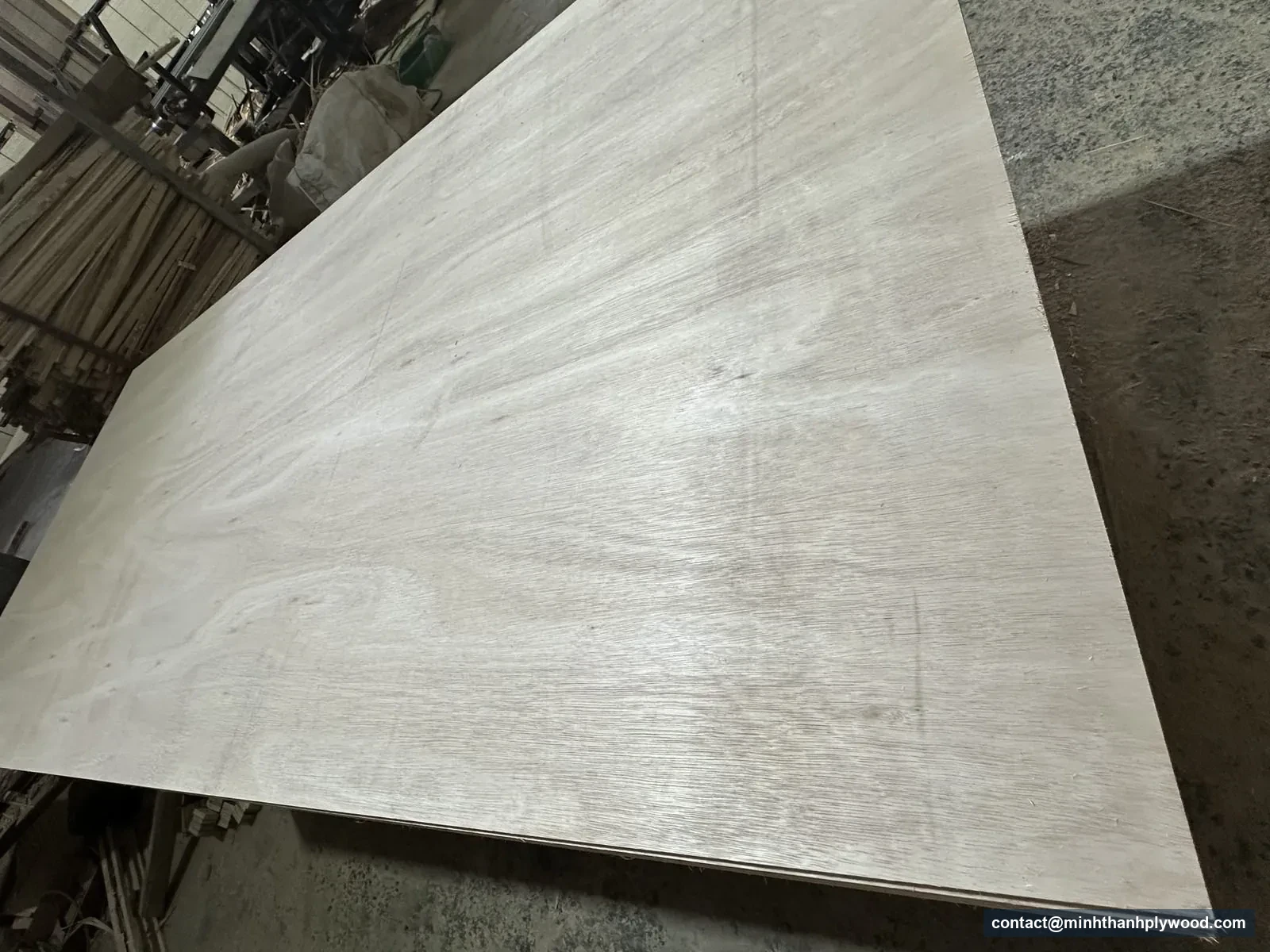
Eucalyptus faced plywood · Factory direct · Vietnam
In short
Eucalyptus plywood uses eucalyptus veneer on its face, in its core, or throughout the sheet. Minh Thanh Plywood makes eucalyptus-faced furniture panels on white Styrax or Eucalyptus cores in Vietnam. Choose the core for weight and machining, then the face for your finish. Sheets are 3–40 mm thick, double-pressed, sanded and polished, with UF glue at E0 emission as standard.
Our Ha Hoa, Phu Tho production serves furniture and interior buyers, with Europe as the main market. We match the surface to your finishing line and the core to your furniture parts. Annual capacity is 50,000+ m³; every export shipment is photographed and filmed before loading.
Video
Watch the buying route from a natural eucalyptus face to a finished export pack. The film explains the two core choices, surface preparation, emission evidence and the weight check behind a container quotation.
Real panels
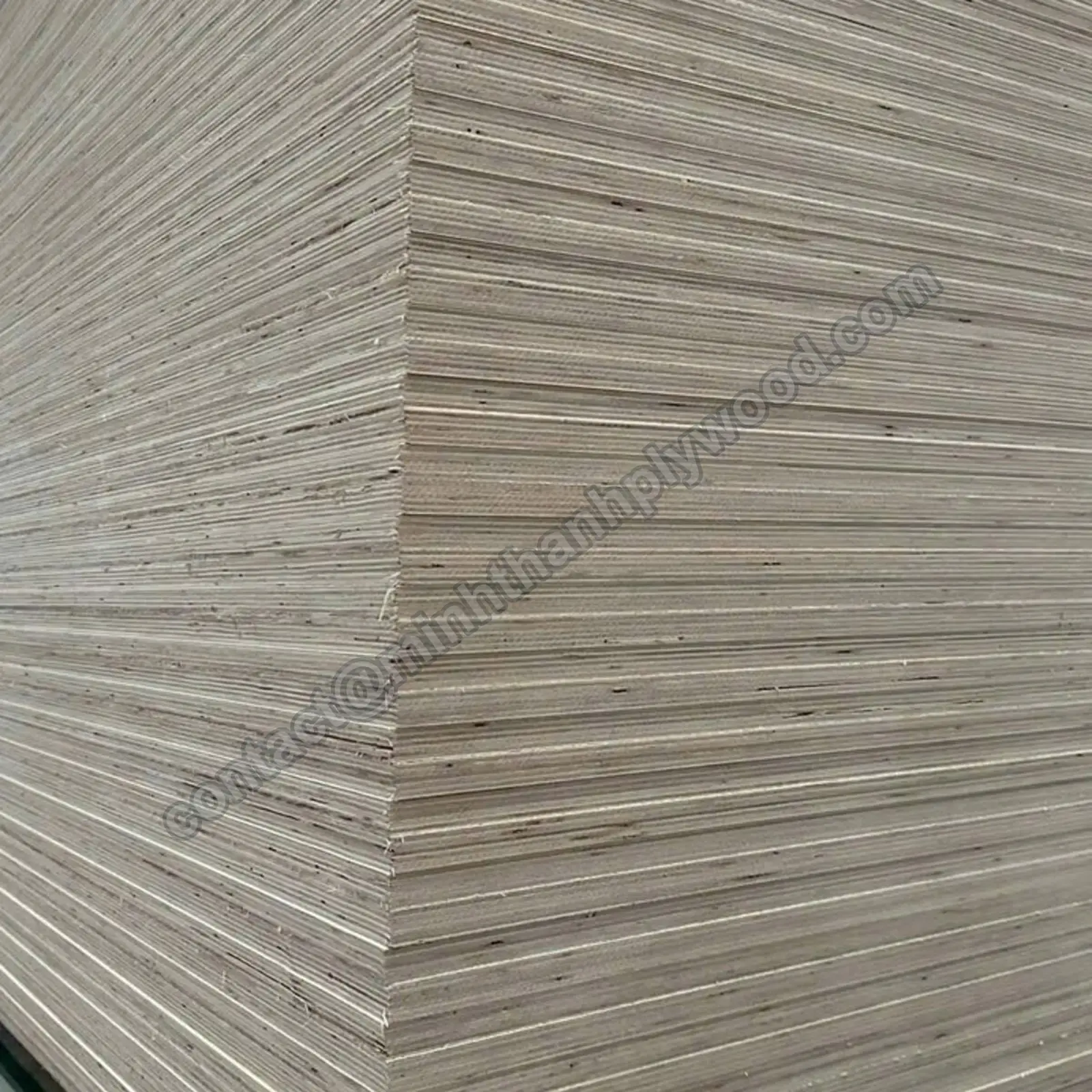
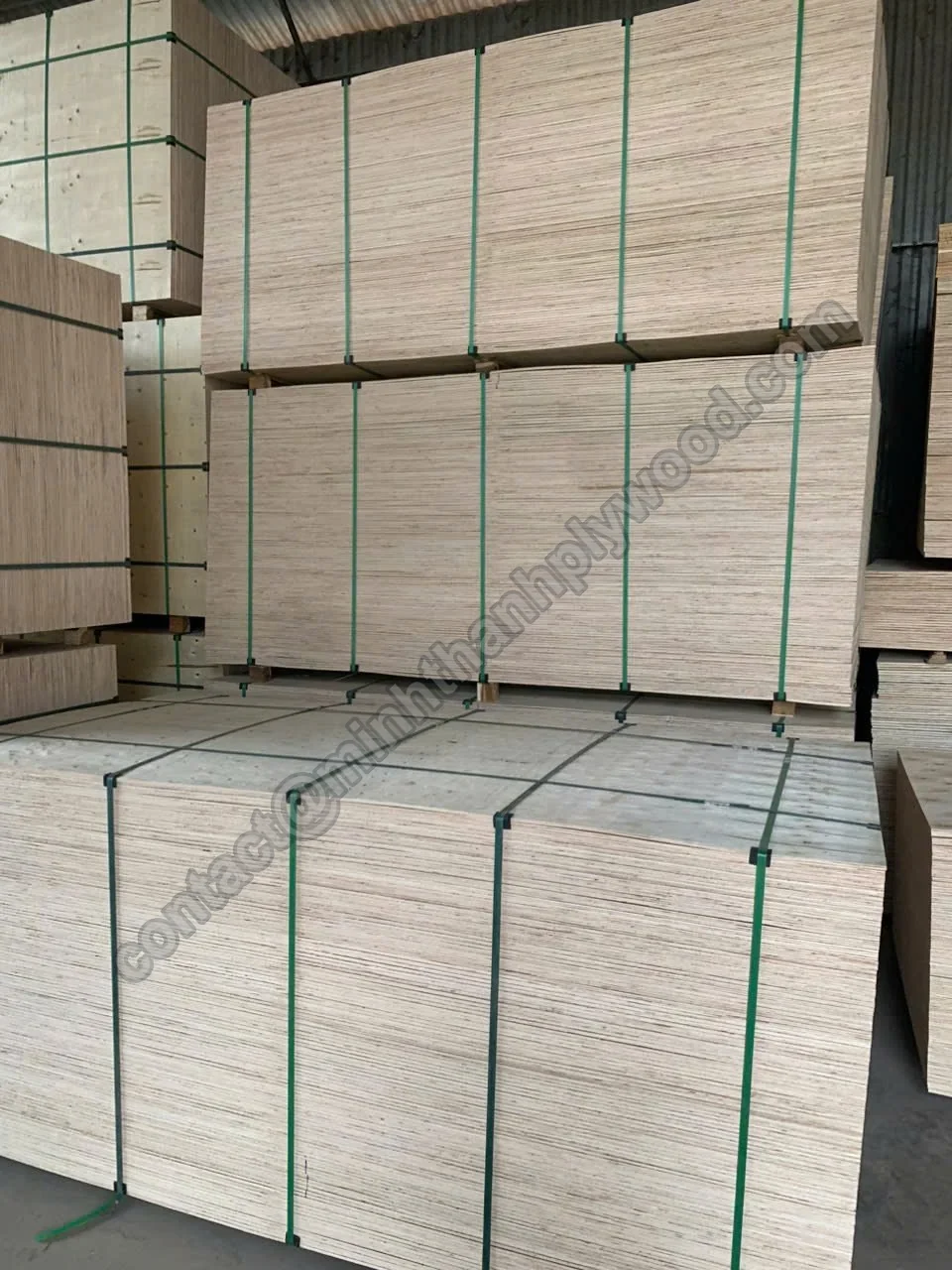
A eucalyptus face has natural rotary-cut figure, with changes in grain and colour across the sheet. These production photographs show the surface at sheet scale and the edges of stacked panels.
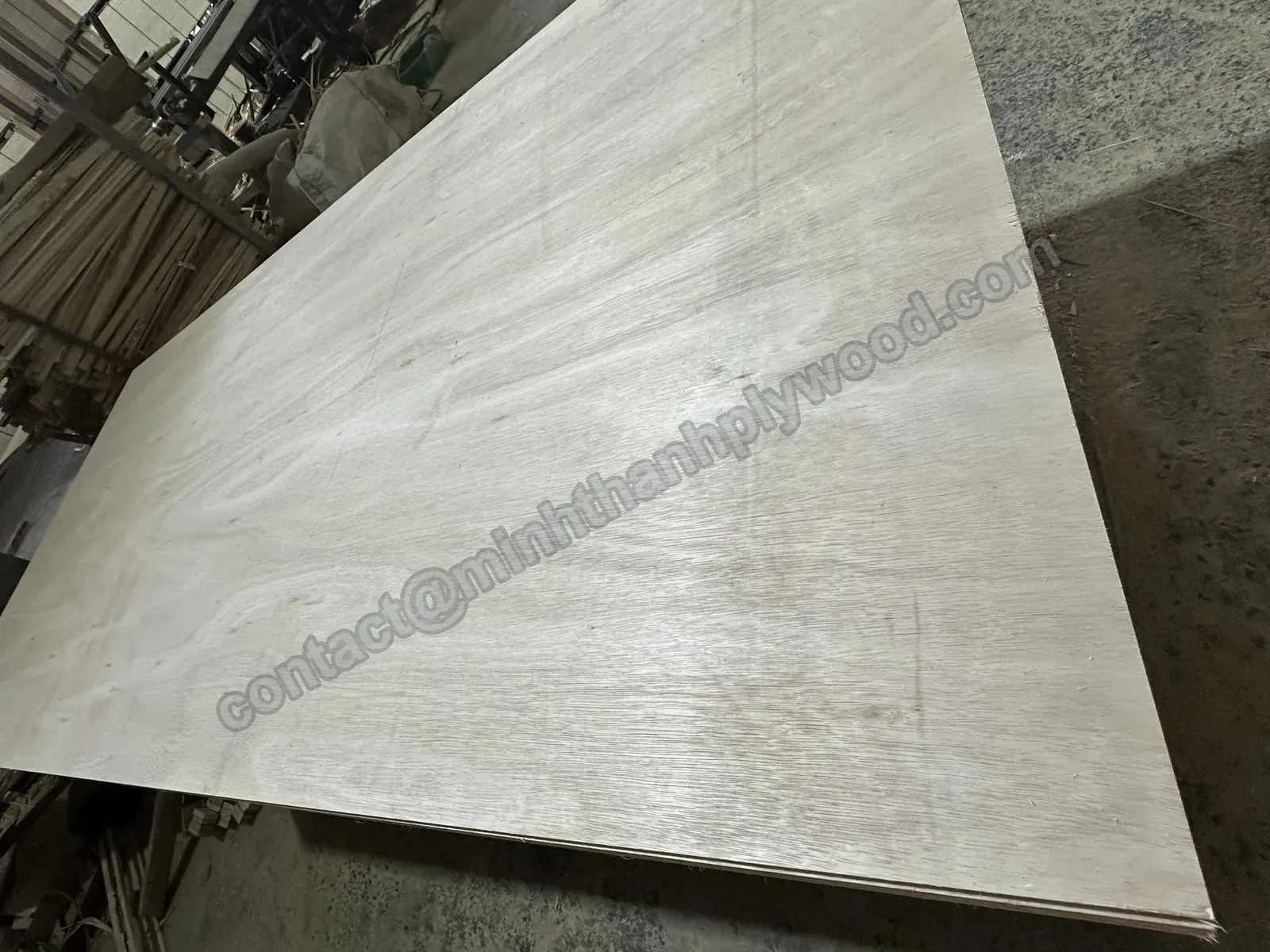
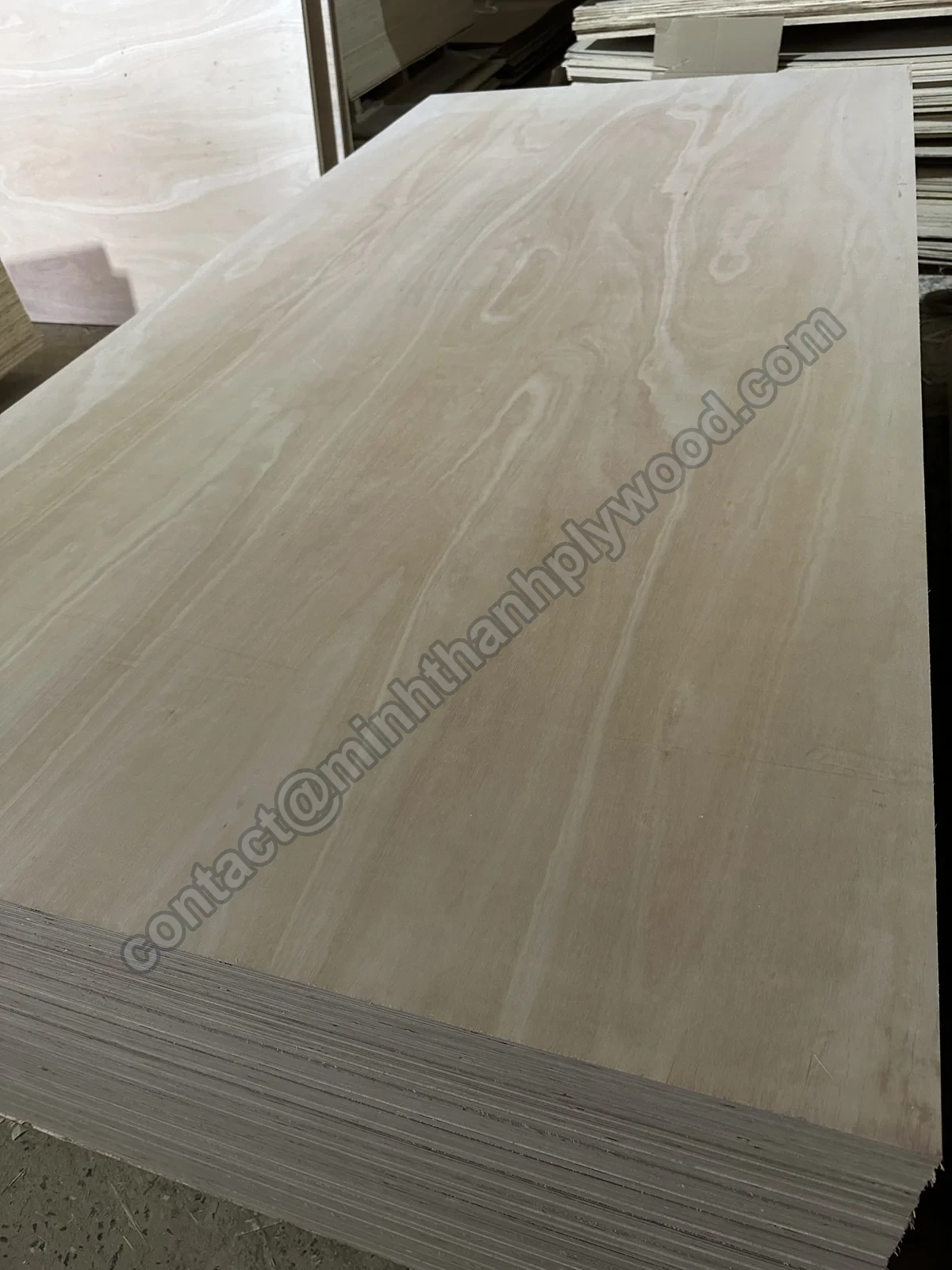
A small swatch helps choose a coating, while a full-sheet view shows how the grain will cross a door or a tall cabinet side. Read both together. Where neighbouring fronts need a consistent appearance, send a layout showing the visible parts and grain direction.
Our order inspection records both sides of the sheet and the pack edge. Ask for images in even light, including a view across the face and a close view of the cut edge. This lets your receiving team compare the incoming material with the sample used to place the order.
Specs
Eucalyptus faced plywood is supplied as a finished, sanded panel on a named plantation-wood core. The table separates surface, construction and bond requirements so your quotation describes the panel your line needs.
| Face / back | Eucalyptus veneer; face/back grades A/A, A/B or B/B, matched to the approved sample |
|---|---|
| Core species | White Styrax or Eucalyptus plantation timber |
| Core construction | Cross-laid veneers, stitched horizontally and vertically |
| Pressing | Core board pressed and calibrated; face and back applied in a second pressing |
| Thickness | 3–40 mm |
| Standard sizes | 1220 × 2440 mm; 1250 × 2500 mm |
| Custom sizes | 1220 × 2500 mm; 1220 × 2280 mm; cut parts from full sheets |
| Thickness tolerance | Down to ±0.2 mm on sanded furniture panels |
| Length / width tolerance | ±2 mm |
| Ply count | 3–6 mm: 5 plies; 18 mm: 11–13 plies |
| Density by core | Styrax about 500 kg/m³; Eucalyptus 650–750 kg/m³ |
| Moisture at dispatch | 8–12% |
| Standard adhesive | UF interior adhesive at E0 emission; E1, MR/melamine-fortified and phenolic WBP options to order |
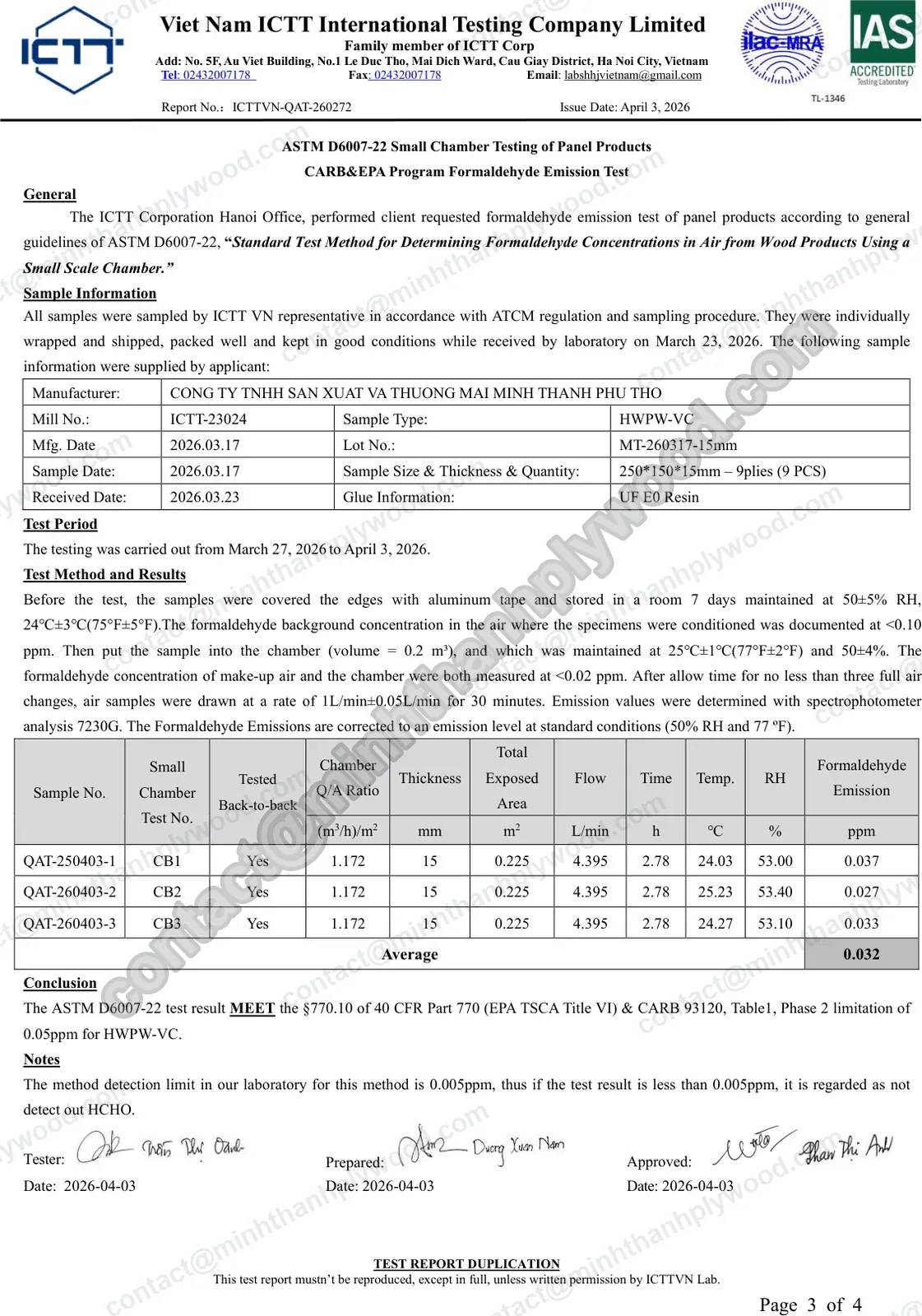
| Emission evidence | E0 furniture range; periodic chamber testing to ASTM D6007 |
| Surface preparation | Sanded and polished on both sides; UV-ready for your own coating |
| Face selection | A/A for two visible surfaces; A/B for one show face; B/B for painted or covered parts |
Write eucalyptus in the face and back fields when both outside veneers must be eucalyptus. Write it again in the core field for a throughout construction. A birch-faced panel with a eucalyptus core belongs to a different face product, even though its inner veneers use the same timber.
For repeat orders, retain the sample identification and the exact specification with your cutting programme. Face appearance controls the finished look; thickness controls machining fit; core construction controls the edge encountered by a cutter. Keeping those fields separate makes repeat purchasing easier.
Grades
Eucalyptus faces are graded A/A, A/B and B/B. A/A gives two clean show faces, A/B pairs a selected face with a utility back, and B/B suits painted or laminated components. We hold each face and back to the approved finish sample.
A/A
Selected natural figure and even colour on both faces, only small sound pin knots; no open splits or prominent patches on the show surfaces.
Application brief
Open shelves, room dividers and clear-finished furniture seen from both sides.
A/B
A selected A face with a sound B back; small knots, neatly filled repairs and broader colour variation are accepted on the reverse.
Application brief
Cabinet ends, wardrobe doors and wall panels with one visible face.
B/B
Sound knots, colour streaks and matched repairs on both sides; faces remain closed and sanded for an opaque covering.
Application brief
Painted carcasses, HPL substrates and concealed furniture components.
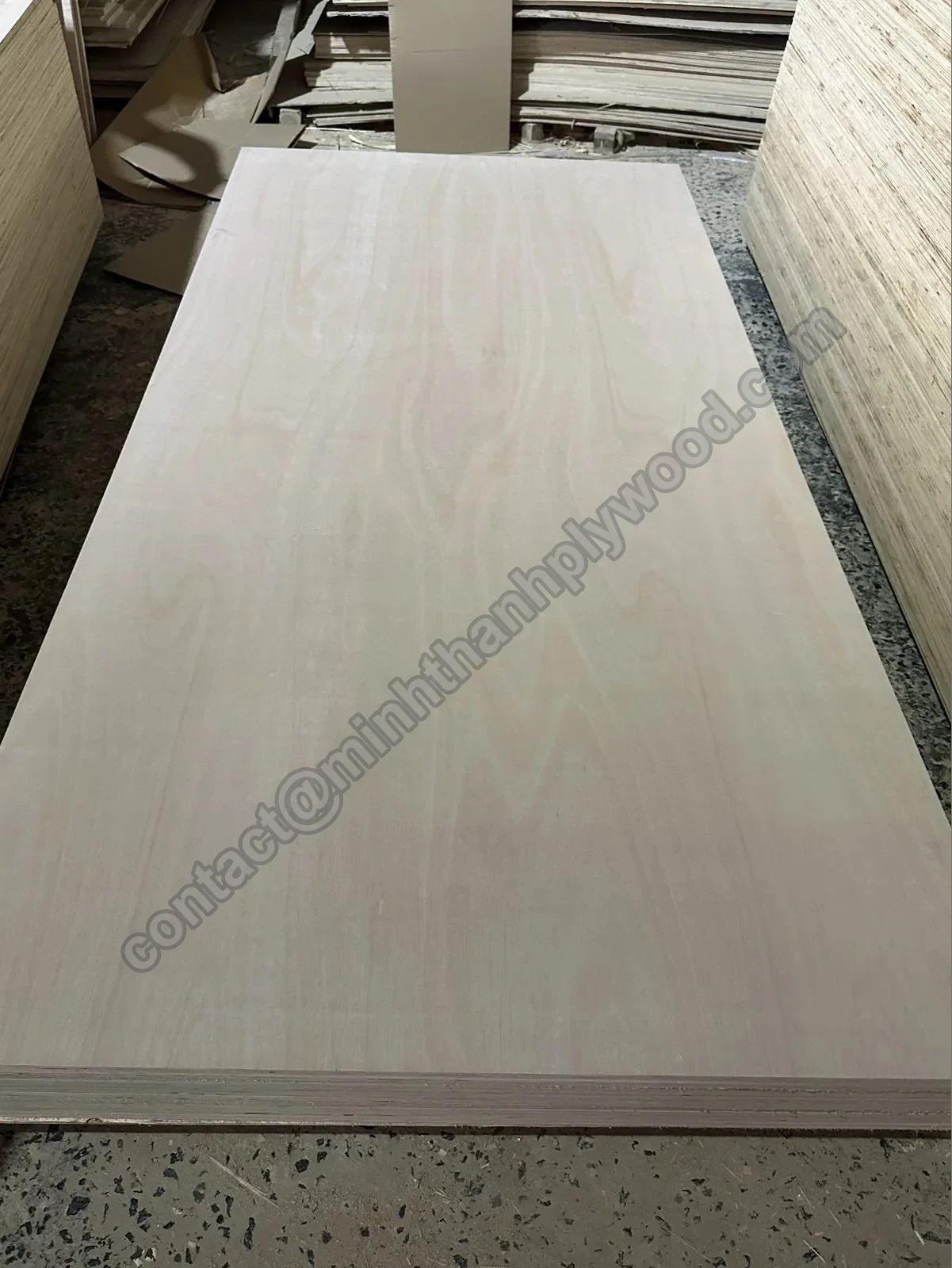
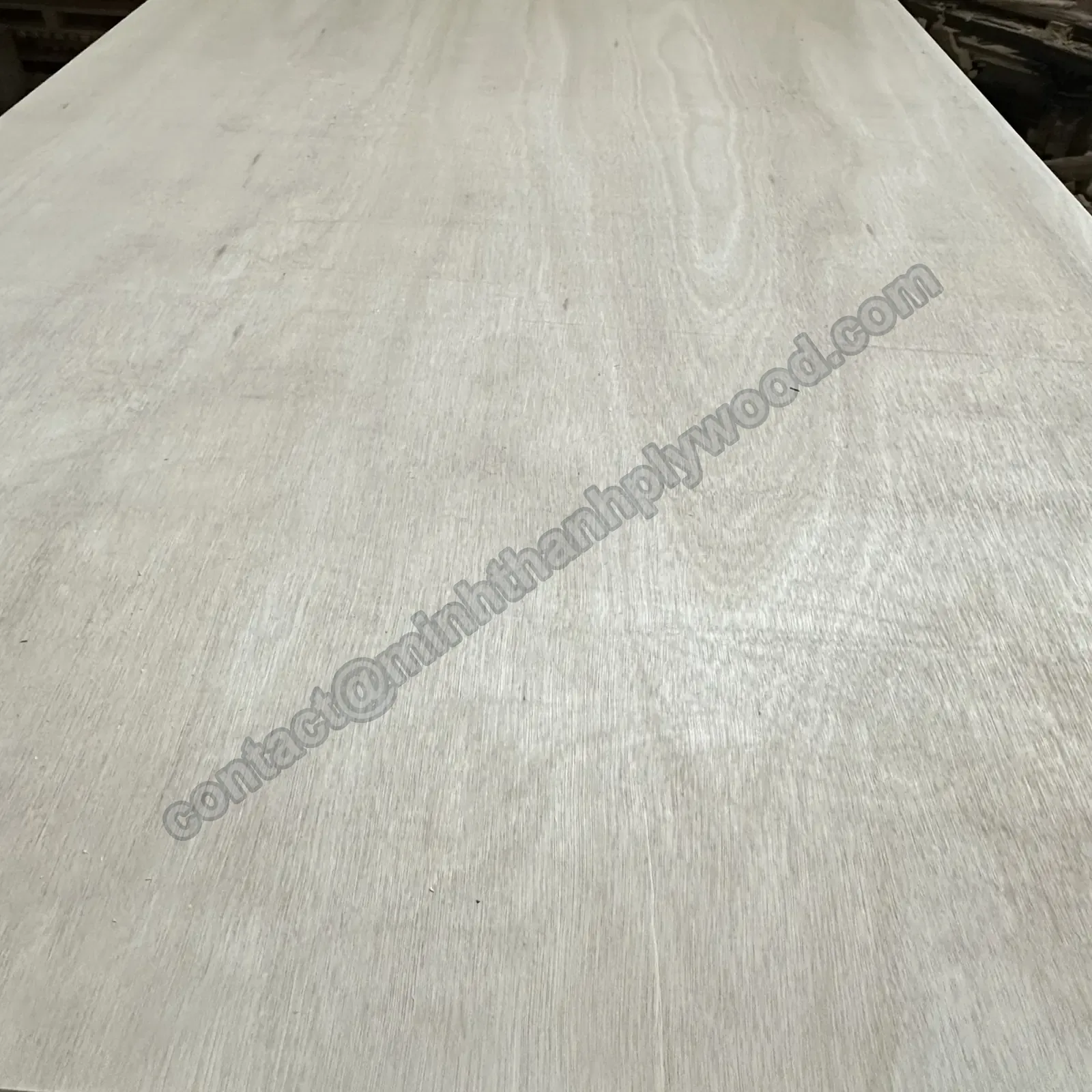
Natural grain is part of the appearance, rather than a machining defect. A clear coating makes colour changes more noticeable, while opaque paint and laminate hide the grain. For natural-finish furniture, compare several full sheets under the lighting used for final inspection, then keep the approved face sample beside the production line.
Face and back need different attention on a wall panel, but both faces matter on an open shelf. State which side will be seen after assembly and where hardware pockets will be machined. This avoids paying for a decorative back that is permanently enclosed, while protecting the sides a customer actually sees.
Order the face/back pair together with its finishing sample. A/A keeps both sides suitable for natural-finish work; A/B puts the selected surface where it is visible; B/B keeps the purchase focused on a sound base for paint or laminate. We inspect each side against that order sample.
Run the coating trial on the same face selection you plan to purchase. Inspect filled repairs after the final finish, not only on raw wood. If the finish exposes a repair outline, move that face selection to hidden or covered parts and retain the cleaner selection for doors.
Core
Styrax makes a lighter eucalyptus-faced panel; a eucalyptus core makes a denser sheet. For a 1220 × 2440 × 18 mm panel, calculated weight is about 26.8 kg on Styrax or 34.8–40.2 kg on Eucalyptus.
| Property | Styrax core | Eucalyptus core |
|---|---|---|
| Panel density | About 500 kg/m³ | 650–750 kg/m³ |
| 18 mm, 1220 × 2440 mm sheet | About 26.8 kg | About 34.8–40.2 kg |
| Edge appearance | Paler inner veneers | Darker inner veneers |
| Furniture selection | Lower handling and finished-unit weight | Denser material for specified joints and components |
| Loading constraint | Weight and bundle layout checked together | Dense core reaches the cargo weight limit with fewer sheets |
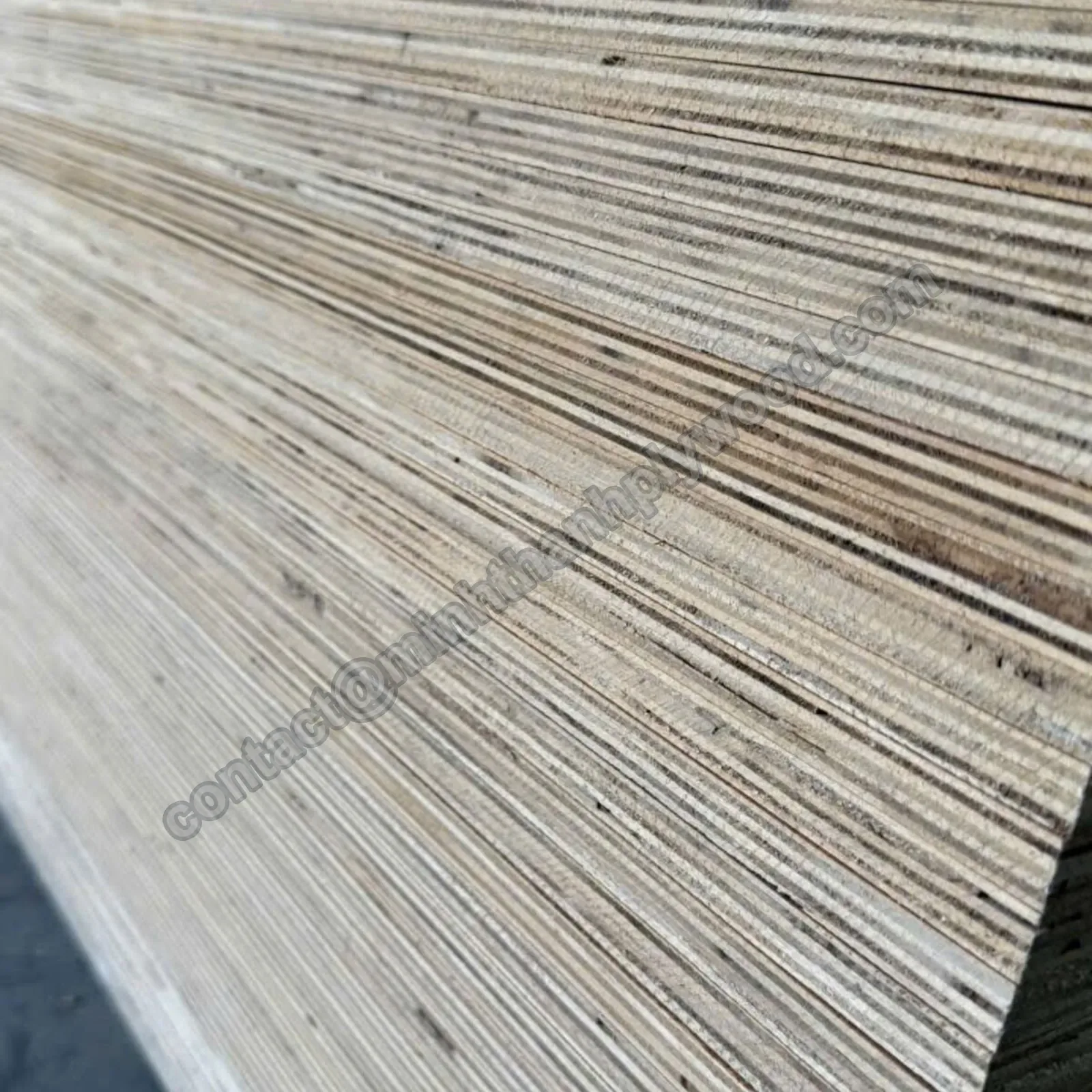
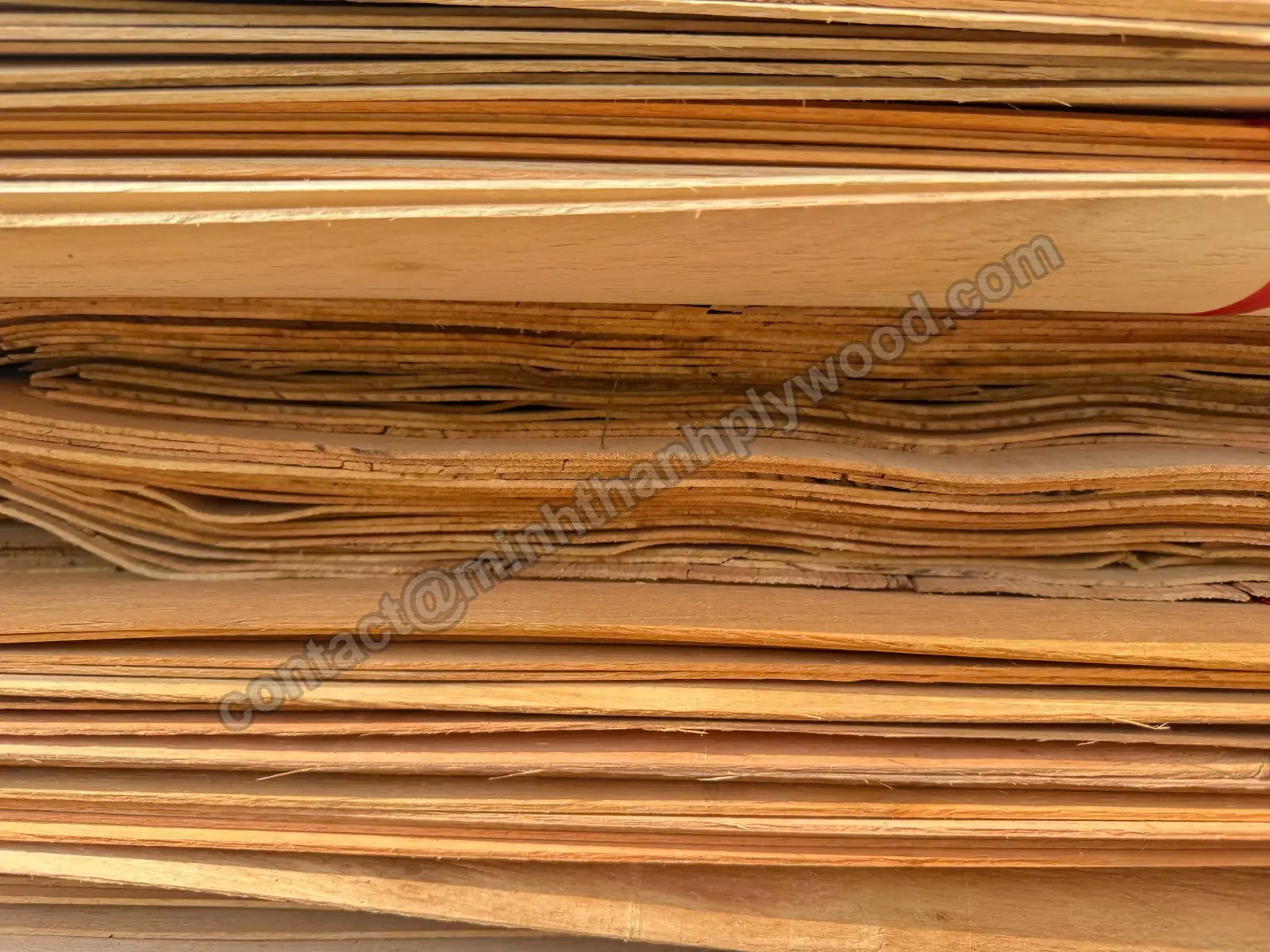
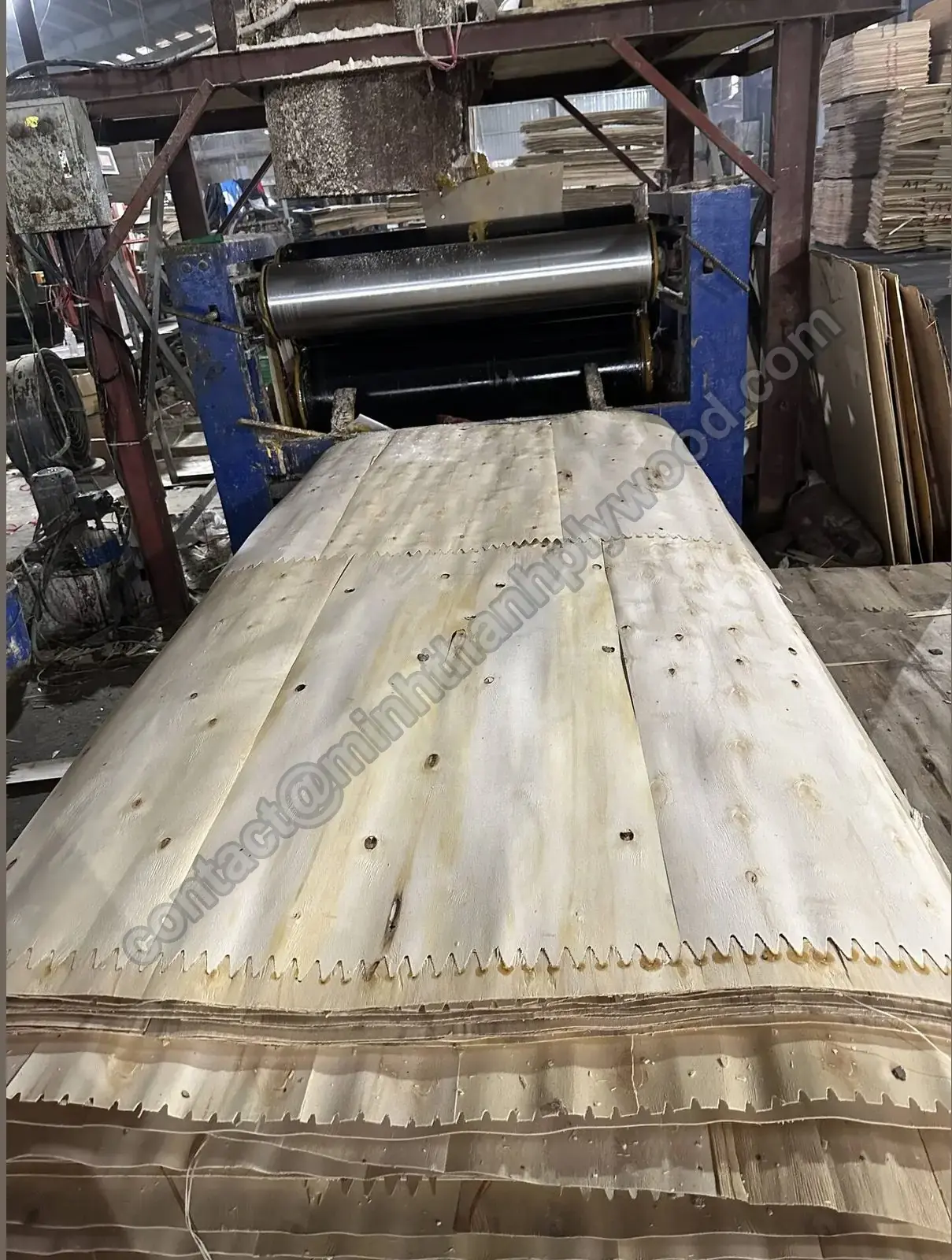
Choose Styrax for furniture handled repeatedly through cutting, edging and assembly, especially when reducing finished-unit weight matters. Choose Eucalyptus when your component specification calls for a dense hardwood core. Name the core explicitly: the visible veneer alone does not tell your team what is inside the sheet.
Dense core veneers give screw threads more wood to engage. The joint still depends on screw geometry, pilot drilling, edge distance and sound material around the fixing. For hinge plates, shelf brackets or knock-down fittings, machine the intended joint in the sample and assess it with the actual hardware before production.
Shelf stiffness also depends on thickness, span, grain direction and support. Increasing core density cannot replace a support rail on a long shelf. Send the part drawing and intended load when selecting a furniture construction. For flooring or load-bearing building work, use a panel specified and tested for that application.
Our stitched veneers keep adjacent pieces together during lay-up, limiting gaps and overlaps below the face. The core board is hot-pressed first and sanded to a consistent base. Applying the outside veneers in a second pressing gives the finishing face an even support surface, useful under thin decorative coverings.
Thin plywood of 3–6 mm has five plies. The 3 mm build uses a core veneer, two cross-bands and two faces; the thicker thin panels use three core veneers and two faces. An 18 mm furniture panel has 11–13 plies. Record the lay-up with the order when edge machining or routed joints require it.
Check an actual cut edge as well as the uncut factory edge. A routed pocket or a narrow strip exposes the material where fittings will sit. Closed joints beneath that area help keep a screw pilot or profile in solid wood, while a flat face helps the part seat properly in machining fixtures.
Calculated sheet mass = length × width × thickness in metres × density. Weigh production sheets to prepare the final loading plan.
Glue
Use UF interior glue at E0 emission for dry-room furniture, and specify a water-resistant bond for humid or exposed service. Eucalyptus is a wood species, not a waterproofing treatment; bond performance and formaldehyde emission are separate order fields.
| Order field | Available specification | Buyer decision |
|---|---|---|
| Interior adhesive | UF at E0 emission (standard); E1 option | Dry furniture and enclosed room components |
| Water-resistant bond | MR/melamine-fortified or phenolic WBP | Name humidity, exposure and required bond test |
| Emission class | E0; chamber test method on the order | Name the destination requirement and report method |
| Finishing | Customer coating and sealed cut edges | Protect the completed part for its intended service |
For cabinet parts near moisture, describe the service conditions and coating system along with the bond requirement. Seal cut edges and drilled openings during fabrication. A durable glue line protects the bond, while the finished surface and edge treatment manage water reaching the wood.
The standard furniture range uses UF glue at E0 emission. E1, MR/melamine-fortified and phenolic WBP options are made to the order specification. For a boil-test requirement, write the method and acceptance conditions on the enquiry; a water-resistance label alone does not describe the test your inspector will perform.
Our emission evidence comprises six chamber tests (three by Shanghai Hongjun, three by ICTT Vietnam) to ASTM D6007 on 9, 15 and 18 mm samples between April 2025 and June 2026. They averaged 0.014–0.032 ppm, and we repeat E0 testing every 3 months.
For an emission report to your destination’s test method, send the method with the panel specification. SGS can test the proposed construction to EN 717-1 or the method your buyer requires. The report identifies the tested sample and adhesive, so it stays attached to the construction you order.
European purchase orders separate bond quality under EN 314-2 from plywood use conditions under EN 636. Specify Class 1 for dry service, Class 2 for humid service or Class 3 for exterior service, and name the matching EN 636 use class. E0 describes emission, so it must not stand in for a bond class.
For a laminate substrate, check bonding after your own pressing cycle as well as on the supplied panel. The surface adhesive, press temperature and balancing layer act on the finished assembly. Keep the approved sample and process settings together so a later decorative-surface change does not alter the substrate specification.
Sizes
Order 1220 × 2440 mm or 1250 × 2500 mm sheets in thicknesses from 3 to 40 mm. Custom formats and cut-to-size components let you arrange eucalyptus grain and part yield around your furniture design.
| Standard formats | 1220 × 2440 mm and 1250 × 2500 mm |
|---|---|
| Custom format examples | 1220 × 2500 mm and 1220 × 2280 mm |
| Machining allowance | Calibrated full sheets; specify the final trimming allowance and finished component dimensions on your drawing |
| Parts to order | Full sheet divided into 4, 6 or 8 pieces, with grain direction and part identification |
Choose a sheet by the cutting layout, not just its outside dimensions. A tall door with continuous grain may nest differently from shelf parts under laminate. Include saw kerf and trimming allowance in your drawing, and mark the face grain arrow so it stays consistent across an assembled run.
Calibrating the panel before cutting helps parts enter the same routing and edge-banding setup. Measure the delivered thickness before setting a groove or a joint. The outside veneer is already sanded and polished, so use the finishing sample to establish your own light sanding sequence instead of treating the panel as thick solid timber.
For cut-to-size loads, we divide a full panel into 4, 6 or 8 pieces. Group identical parts in the packing list and keep visible faces oriented consistently. Include any final trimming allowance on the drawing; that distinguishes a transport blank from a finished-size component.
Applications
Eucalyptus faced plywood suits cabinet components, interior fittings and a sanded base for decorative coverings. Choose the face for the finish your customer sees, and select the core and adhesive for the component behind it.
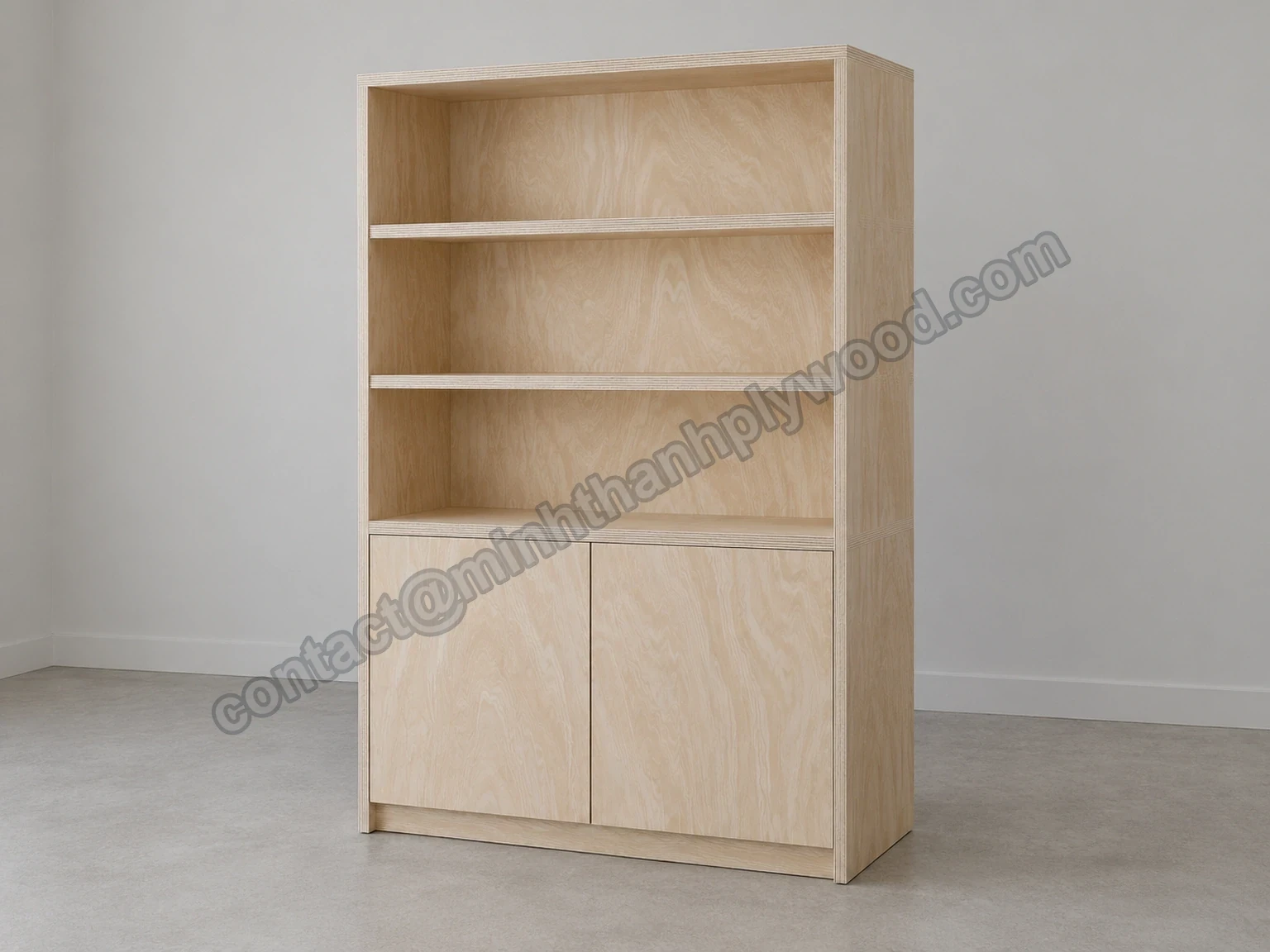
Use eucalyptus-faced panels for cabinet sides, shelf parts and internal dividers. Choose a lighter Styrax body for easy handling or a dense Eucalyptus build where the drawing specifies it. Test hinge and shelf-pin positions on the sample, then retain that construction for repeat machining.
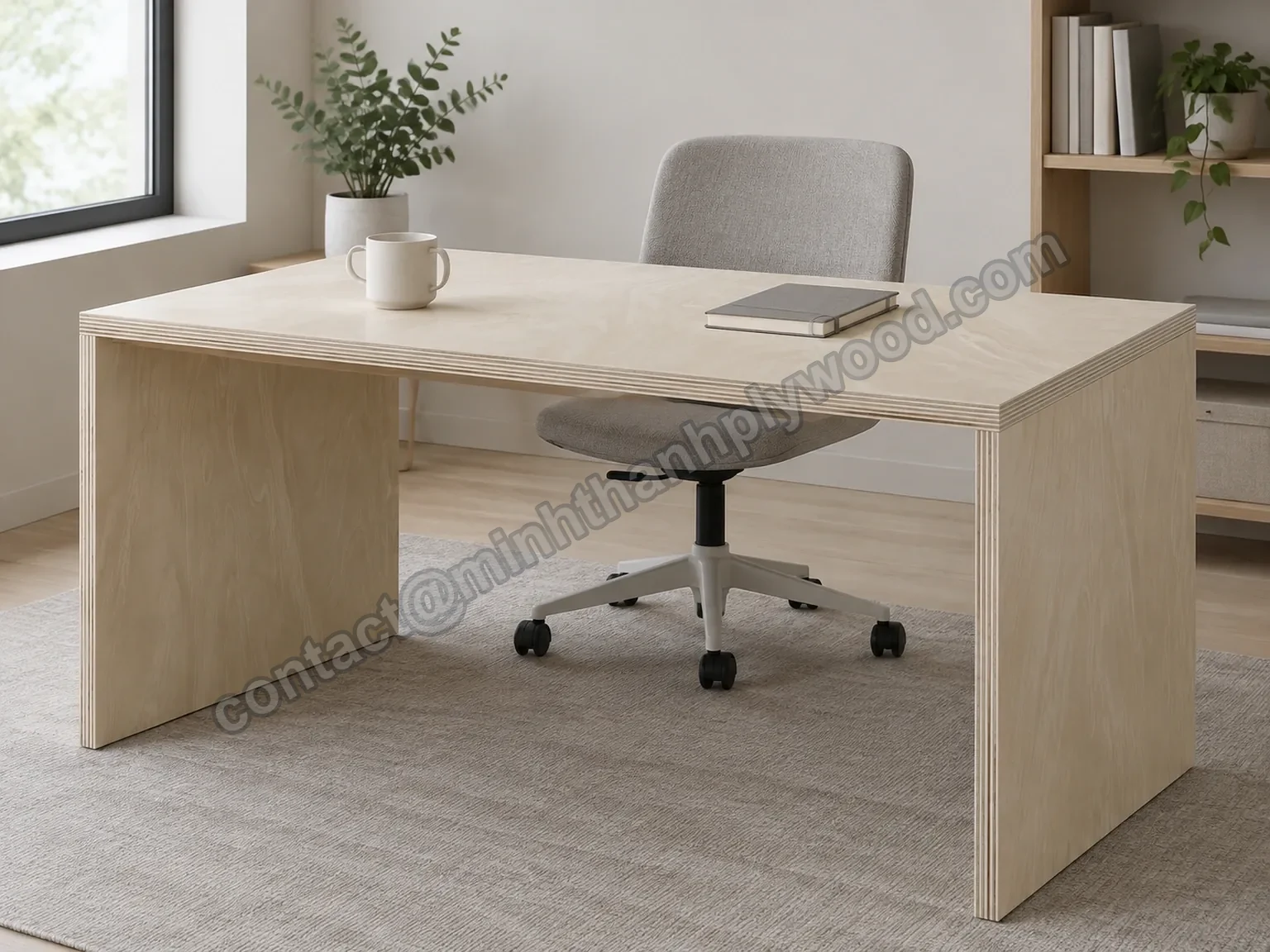
A flat, calibrated panel supports desk tops and surfaces receiving high-pressure laminate (HPL). Remove sanding dust, use the laminator’s adhesive and balance the reverse side. Check a pressing trial for flatness and repair outlines after the covering cools; the desk shows an exposed-edge furniture application.
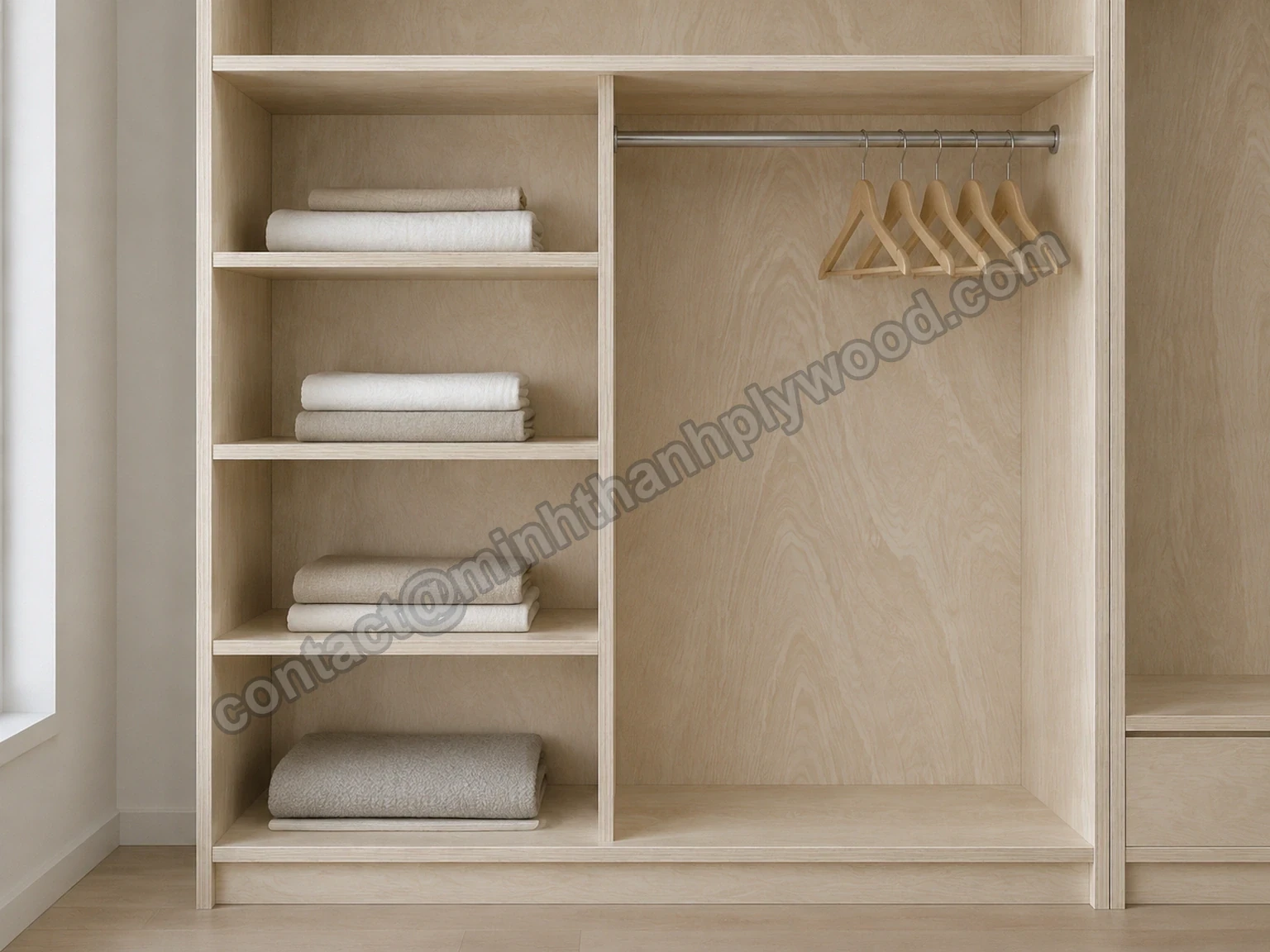
Rotary-cut figure gives wardrobe interiors and cabinet panels a natural wood appearance. Lay adjoining parts out before cutting and preserve grain direction on the visible run. Approve the fully coated sample because clear finishes change the contrast between pale grain and darker streaks.
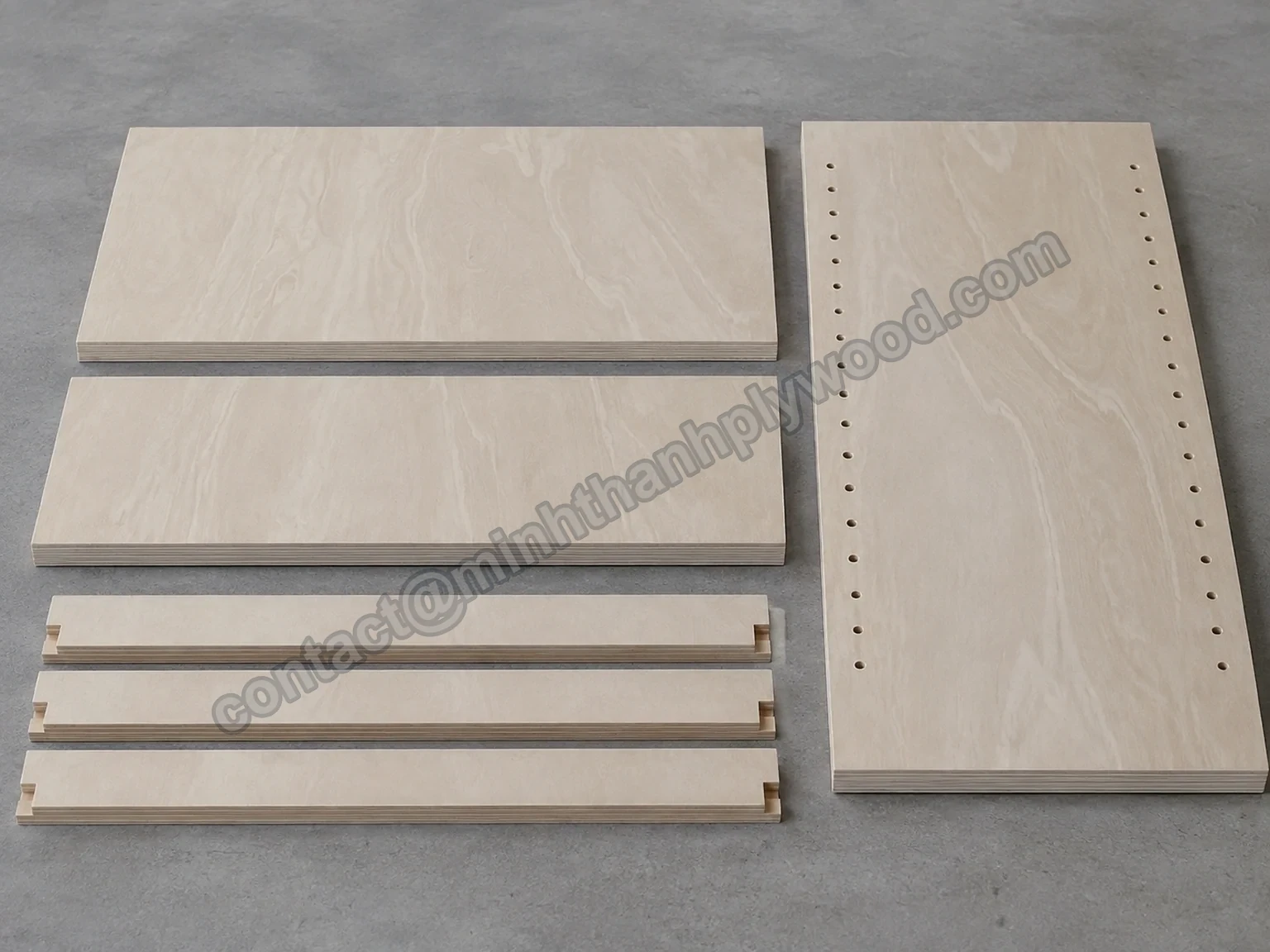
Counters, display units and furniture parts benefit from a finish chosen by viewing distance. Reserve cleaner faces for close-up surfaces, with covered selections behind opaque laminate. Mark part numbers and face orientation on the cutting schedule so assembly follows the approved design.
For engineered flooring substrates, provide the lamination build, balancing layer and bond specification before choosing a panel. Flooring production needs a process trial with the actual wear layer and press cycle. For concrete work choose film-faced plywood; for crates and industrial protection use the packing plywood range.
Flat-pack furniture needs repeatable machining as well as an attractive face. Test the intended fixing in both face and edge positions, then keep the approved core construction on repeat orders. A face substitution made only for colour should not silently change the core used by the hardware design.
Comparison
Choose eucalyptus for its natural figure, birch for a pale decorative face, or poplar for a plainer surface under paint and coverings. Compare them on the same named core: changing the face does not automatically change sheet weight or screw holding.
| Buyer criterion | Eucalyptus face | Birch face | Poplar face |
|---|---|---|---|
| Visible surface | Natural flowing figure | Pale fine grain and soft figure | Pale, plainer grain |
| Finishing route | Clear or tinted finish; opaque covering after sample trial | Clear lacquer or light decorative finish | Paint, paper, laminate or a plain natural finish |
| Under a clear coating | Flowing figure becomes more pronounced | Pale fine grain gives a lighter decorative look | Subtle grain gives a quieter plain surface |
| Finishing sample to check | Colour contrast along the rotary figure | Even stain uptake across the pale veneer | Primer coverage over fibres and repaired areas |
| Main buying priority | Figure and finish trial | Decorative face selection | Plain surface and processing value |
| Cost decision | Face selection, core and finish work | Imported face grade adds to the quotation | Use a covered-face selection when grain is hidden |
A comparison of full-eucalyptus with full-poplar plywood changes the core as well as the face. Full-poplar is typically the lighter option; dense eucalyptus cores suit buyers prioritising a heavier body and hardware engagement. Our poplar-faced furniture panels use Styrax or Eucalyptus cores, so quote a complete construction before comparing them with an imported full-poplar sheet.
For a natural finish, review eucalyptus and birch as full sheets, then apply the intended coating to both samples. Birch offers a pale, fine-grained appearance; eucalyptus shows stronger rotary figure in the available sheets. Poplar works well where an even base under an opaque finish matters more than decorative grain.
Compare price against usable finished parts. An inexpensive face that needs additional filling or rejects after clear coating can cost more on your line. For laminate work, put the budget into a flat, calibrated base and suitable core; for exposed fronts, prioritise the appearance selection and finishing sample.
Qc
Inspection checks the ordered face selection, calibrated thickness, moisture and core edge before packing. We send photographs and video of the shipment so your team can compare the goods with the approved specification before loading.
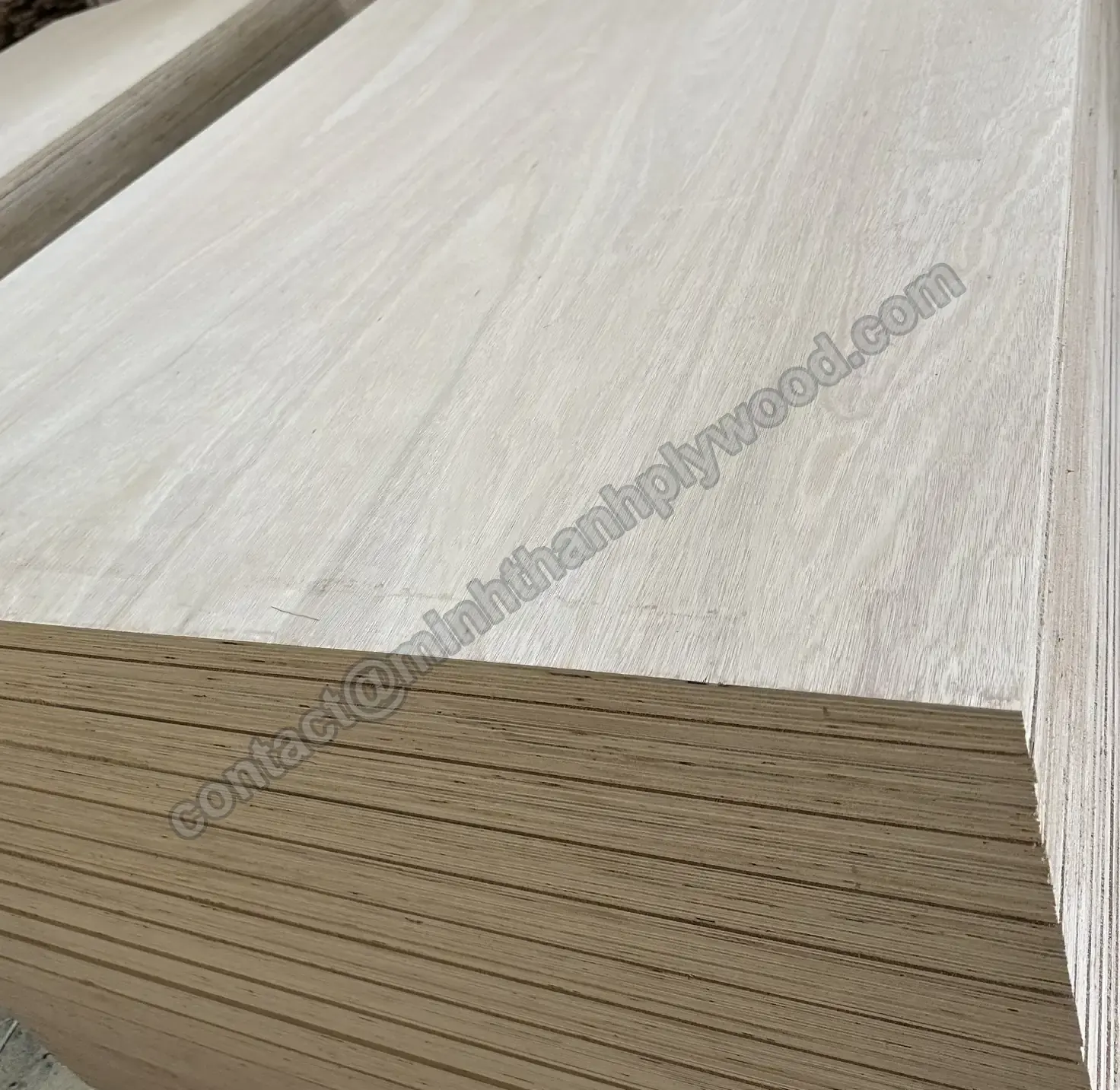
Compare face and back with the retained sample, including knots, repairs and colour variation.
Read thickness at several positions with a digital caliper; check sheet dimensions and flatness.
Inspect the layered edge and a machining sample for gaps, overlaps and sound material at fixing locations.
Record moisture against the 8–12% dispatch range and weigh sheets for the loading calculation.
Photograph the marked bundles, record sheet counts and film the loading sequence; third-party inspection is welcome.
A smooth top sheet alone cannot show the whole pack. At inspection, show faces from the selected bundles and turn a sheet over to record the back. Check that repairs remain sound after sanding and that the colour range follows the finish sample. Look along the face in raking light for raised joints.
At receiving, read the bundle labels before mixing stocks. Record packaging condition and compare counts with the packing list. Measure sheets from the different specifications, inspect a cut edge and check the moisture before moving panels into the production environment.
Use a sheet-weight check to review the load estimate, not as a species-identification test. Moisture and construction affect mass. The named core, production record and edge sample establish the ordered construction; weight is useful for finding a discrepancy that deserves closer inspection.
Store the sheets flat on aligned supports in a covered area, with the top face protected. Keep packs clear of wet floors and support narrow cut parts along their length. Let material settle into the workshop conditions before finishing; this helps the sample trial and production run behave consistently.
Certificates and documents
CARB P2 / TSCA Title VI (ICTT mill no. 23024), ISO 9001:2015 and TCVN 11902:2017 held; FSC and CE available*: see our quality documents.
Prepared with your shipment
Timber origin records and geolocation files for the EUDR dossier; invoice, packing list and transport documents.
View document →*Supplied directly or through qualified partner mills.
Packing
Our standard 40HC plan carries up to 28,000 kg of panels in bundles about 1,000 mm high. On that basis, 1220 × 2440 × 18 mm sheets load at 990 with Styrax core (18 bundles of 55) or 795 with Eucalyptus core (15 bundles of 53).
| Thickness (mm) | Sheets / bundle (Styrax / Eucalyptus) | Styrax: planned sheets / 40HC | Eucalyptus: planned sheets / 40HC |
|---|---|---|---|
| 4 | 250 / 241 | 4,500 | 3,615 |
| 6 | 166 / 160 | 2,988 | 2,400 |
| 9 | 111 / 107 | 1,998 | 1,605 |
| 12 | 83 / 80 | 1,494 | 1,200 |
| 15 | 66 / 64 | 1,188 | 960 |
| 18 | 55 / 53 | 990 | 795 |
| 25 | 40 / 38 | 720 | 570 |
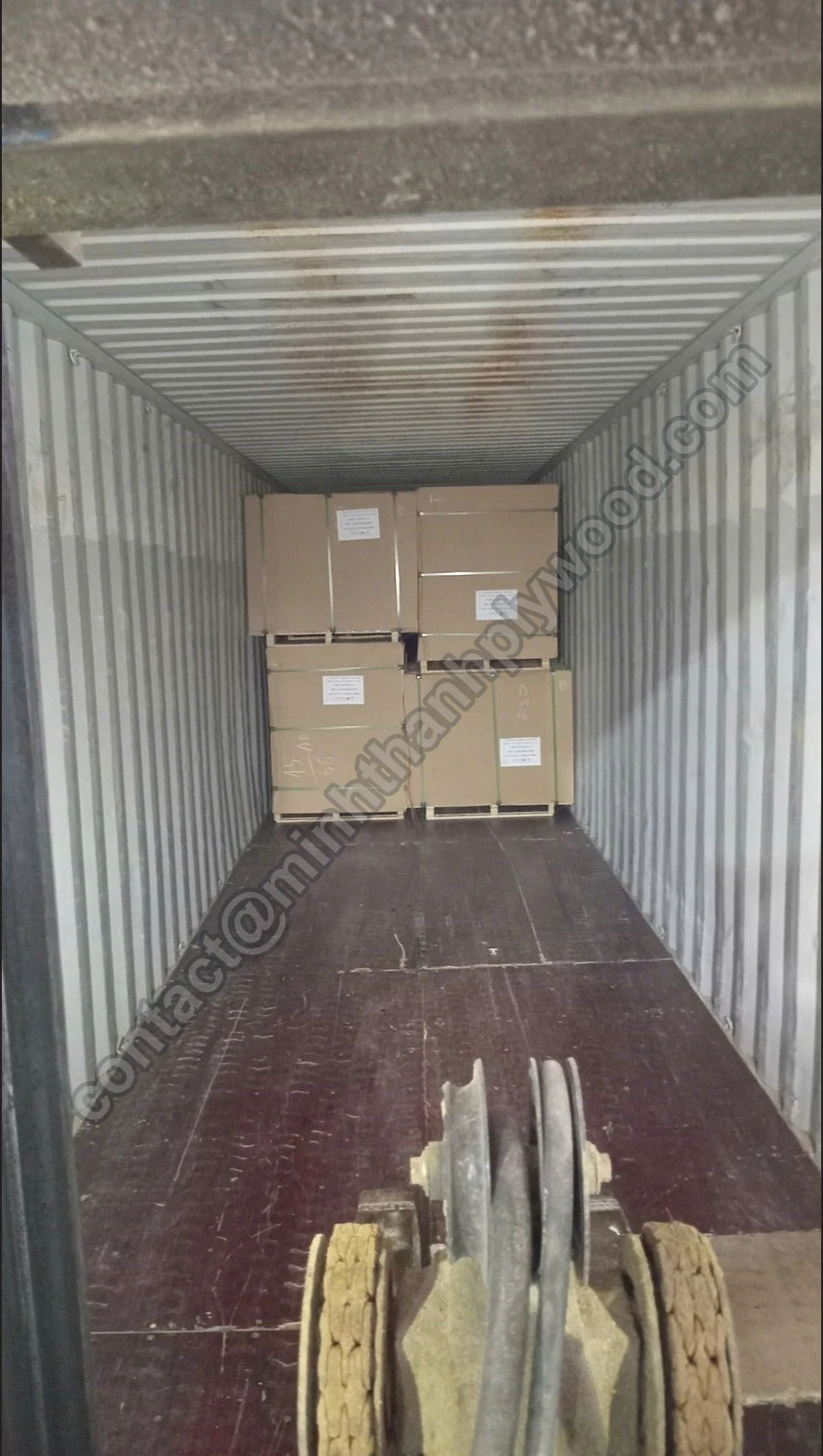
The eucalyptus column uses the reference density of 650 kg/m³. At 18 mm a sheet calculates to 34.8 kg, so 795 panels total about 27,690 kg, about 43 m³. Denser lots, up to 750 kg/m³, weigh more per sheet, so we recount against measured weight before loading.
For Styrax at 500 kg/m³, the same sheet calculates to 26.8 kg. A load of 990 sheets totals about 26,520 kg of panels, about 53 m³. Where a booking caps cargo at 26,000 kg including a 1,000 kg packing allowance, the counts fall to 932 Styrax and 717 Eucalyptus sheets; the dense core reaches the weight limit with fewer sheets.
Each bundle holds up to the whole-number count from a nominal 1,000 mm stack height divided by sheet thickness; on the dense eucalyptus core each bundle carries a few sheets fewer so the load stays within the payload. Record every bundle count on the packing list. Panel volume comes from the actual sheet count rather than a nominal container volume.
We weigh the production panels and packing before fixing the loading list. If the booked equipment or route allows less than the planning cap, reduce the count again. For larger sheet formats, rerun the length × width × thickness × density calculation instead of carrying across these counts.
Wrapped bundles protect the sanded faces from dust and handling marks. Straps and corner protection secure the pack; labels identify the thickness and order specification. Cut parts are grouped by part number so the receiving team can locate the right stock without opening every bundle.
Use our packing calculator for a first mix, then send the specification list and destination port for the weighed loading proposal. We photograph the bundles and container before closure. The packing list gives the panel count and gross cargo weight your receiving team will check.
Planning basis: 1220 × 2440 mm sheets, 28,000 kg of panels per 40HC, 18 Styrax bundles at 500 kg/m³ or 15 Eucalyptus bundles at 650 kg/m³, nominal 1,000 mm stack. Whole-sheet counts rounded down; panels only, the payload check uses your booking. Actual weighed packing and booked limits govern dispatch.
Trade terms
Order one 40HC container, with mixed specifications arranged on the quotation. Production runs 15–45 days after deposit. Standard payment is 30% deposit and 70% against the scanned bill of lading; free samples are available before ordering.
| MOQ | 1×40HC; mixed thicknesses, grades and faces by agreement |
|---|---|
| Production time | 15–45 days after deposit, by quantity and specification |
| Payment | 30% deposit, 70% against scanned B/L; T/T or irrevocable L/C at sight |
| Incoterms | FOB Hai Phong, CFR or CIF |
| Samples | Free samples |
| Documents | Commercial invoice, packing list, bill of lading, certificate of origin and insurance on CIF |
| Replies | Within hours, Monday–Friday, Vietnam time (UTC+7) |
Sea transit is additional to the factory production period. Give Lisa the required arrival date and destination port so the production window and sailing can be planned together. FOB Hai Phong, CFR and CIF quotations keep the delivery basis clear when comparing supply options.
For a mixed load, group quantities by thickness, core and finish selection. That provides a usable packing plan and a clear price for each construction. Confirm sample acceptance before the production slot so the grade and machining requirements travel with the order.
Furniture plywood starts from US$350/m³ (October 2026). Your eucalyptus quotation follows the face/back pair, core, bond, thickness and cutting format. Compare the same finished construction and delivery term when assessing price per usable furniture part.
Order steps
Send a complete specification and the destination port to receive a factory quotation. Free samples let your team check the eucalyptus face, machining and finish before the container order enters production.
Describe the end use and send the core, face/back appearance, glue and emission requirement, thickness, size and destination port.
Review the quotation with the delivery term, quantity and proposed packing count; check the weight allowance for dense-core loads.
Test the free sample on your cutting and finishing line; record the accepted face, back and construction.
Approve the proforma and arrange the 30% deposit, or an irrevocable L/C at sight.
Follow production and inspect the order photographs, caliper readings and packing list before loading.
Review draft shipping documents, settle the balance against the scanned B/L and retain the loading images for receiving.
A useful enquiry names the furniture part before listing the panel. For example, tell us that a face will receive HPL, whether the reverse stays exposed and where fixing holes will be routed. We can then quote the surface selection and core as separate decisions.
For eucalyptus plywood 18mm enquiries, write the nominal thickness with its required tolerance, sheet format and core species. Include the adhesive and emission method, face/back sample reference, sheet quantity and packing preference. Attach the drawing when grain direction or cut components matter.
Keep the signed specification, sample photographs and quotation together. On repeat orders, identify any change to the surface or core rather than referring only to the previous product name. This keeps a colour adjustment from becoming an unintended machining change.
Faq
These answers cover the construction, finishing and loading decisions behind a eucalyptus panel order. For a quotation, include the complete specification so the face name cannot be mistaken for the core.
Eucalyptus plywood describes panels with eucalyptus in the face, core or both. Our eucalyptus-faced furniture panels use natural eucalyptus outside veneers over a separately named Styrax or Eucalyptus core. Specify all three positions when you need eucalyptus throughout.
Eucalyptus faced plywood names the outer veneer; its core can be a different species. Full eucalyptus means eucalyptus through the face, back and core. Write each species field on the order so the appearance and internal construction are both defined.
A 1220 × 2440 × 18 mm sheet calculates to about 34.8–40.2 kg with a eucalyptus core at 650–750 kg/m³. The same sheet with a Styrax core at about 500 kg/m³ calculates to 26.8 kg. Use measured production weight for shipment planning.
A dense Eucalyptus core generally gives more material for fastener engagement than a lightweight poplar core. Compare complete constructions, not face names: our poplar-faced and eucalyptus-faced sheets can use the same Styrax or Eucalyptus core. Test the required joint and load on the specified panel.
No. Eucalyptus veneer does not make plywood waterproof. Specify the bond for the exposure, use a suitable coating and seal cut edges and openings; E0 is an emission designation, not a water-resistance rating.
Yes. The calibrated, double-pressed furniture panel provides a sanded base for decorative coverings. Trial the actual adhesive and press cycle, remove surface dust and balance the reverse side to control flatness.
Choose A/A when both faces stay visible under clear coating, or A/B when the reverse is hidden. Approve the fully coated sample to set the colour range and acceptable repairs. Use B/B for painted or laminated components.
Eucalyptus offers natural flowing figure, while birch gives a pale decorative face with finer grain. On equivalent cores, choose between them through appearance and a coating trial. Keep core species, thickness and bond unchanged for a meaningful price comparison.
Yes. We offer 1250 × 2500 mm alongside 1220 × 2440 mm and custom formats. Full panels can be cut into 4, 6 or 8 pieces; send the cutting layout with grain direction and final trimming allowance.
Yes. Our eucalyptus-faced furniture plywood has a double-pressed, stitched core, thickness tolerance down to ±0.2 mm and 8–12% moisture at dispatch. The E0 furniture range has six ASTM D6007 chamber tests with reported sample averages of 0.014–0.032 ppm; the selected face/back grade is held to the approved sample.
Plan 795 sheets at 1220 × 2440 × 18 mm on a eucalyptus core in a 40HC: 15 bundles of 53, about 43 m³. At the reference density of 650 kg/m³ each sheet calculates to 34.8 kg, so the panels weigh about 27,690 kg within our 28,000 kg standard cargo plan. If your booking caps cargo at 26,000 kg including a 1,000 kg packing allowance, the count drops to 717 sheets. The final packing list uses actual measured weights.
Order a construction-specific panel for formwork or structural floors. This page covers furniture and lamination panels; density alone does not establish a structural rating. Our film-faced and exterior ranges let you specify the required bond, surface and application separately.
Ask for the named core construction, full-sheet face photographs, a cut-edge sample and digital caliper readings. Trial the sample with your hardware and finish. Minh Thanh supplies shipment photos and video and welcomes third-party inspection.
The minimum is one 40HC container, with mixed specifications by agreement. Allow 15–45 days after deposit for production and additional time for sea transit. Payment is 30% deposit and 70% against the scanned B/L, with T/T or irrevocable L/C at sight.
Yes. We offer free samples for your machining and coating trials, then supply the EUDR compliance dossier with origin records and geolocation files for the order. Send the destination document list with your enquiry so it is included in the quotation.
Rfq
Tell Lisa what you make, then choose the face, core, adhesive and size. Include the destination port and quantity for a loading proposal and quotation; replies arrive within hours.
Describe the application, core species, glue and emission requirement, face/back appearance, thickness and sheet size, packing and quantity. Add your destination port and attach up to 3 drawings or specification files. Email [email protected] or WhatsApp Lisa on +84 988 586 601. Free samples.
[email protected]