
01
Protected exterior components
Exterior panels with the ordered water-resistant bond, finished on the surfaces and cut edges for their exposure.
Other plywood products · Vietnam
In short
Minh Thanh Plywood supplies construction plywood with C/D utility faces, melamine-fortified or phenolic WBP bonding, and 3–40 mm thicknesses at ±0.5 mm tolerance. Standard sheets are 1220 × 2440 and 1250 × 2500 mm. We also offer LVL members made from plantation veneers for frames, components and packing.
Locally grown plantation timber supplies our cores in Ha Hoa, Phu Tho. Furniture and commercial plywood are our principal lines; exterior panels and LVL extend the range for importers ordering construction and packing components. We supply the EUDR origin dossier with orders.
Video
Follow the choice from a supported sheet to a veneer member, then specify the exposure, inspection and load plan before requesting a quotation.
Range
Exterior plywood provides a sheet surface for the specified use. LVL provides a member with predominantly parallel veneers. Select between them by the shape and function of the part, then carry its drawing through sampling and production.
C/D utility-faced panels with melamine-fortified or phenolic WBP bonding for sheathing and outdoor components.
Face/back, bond, exposure and sheet size listed separately.
Veneer members specified by section, length and end use, from frames to packing components.
Predominantly parallel veneer layup; member drawing required.
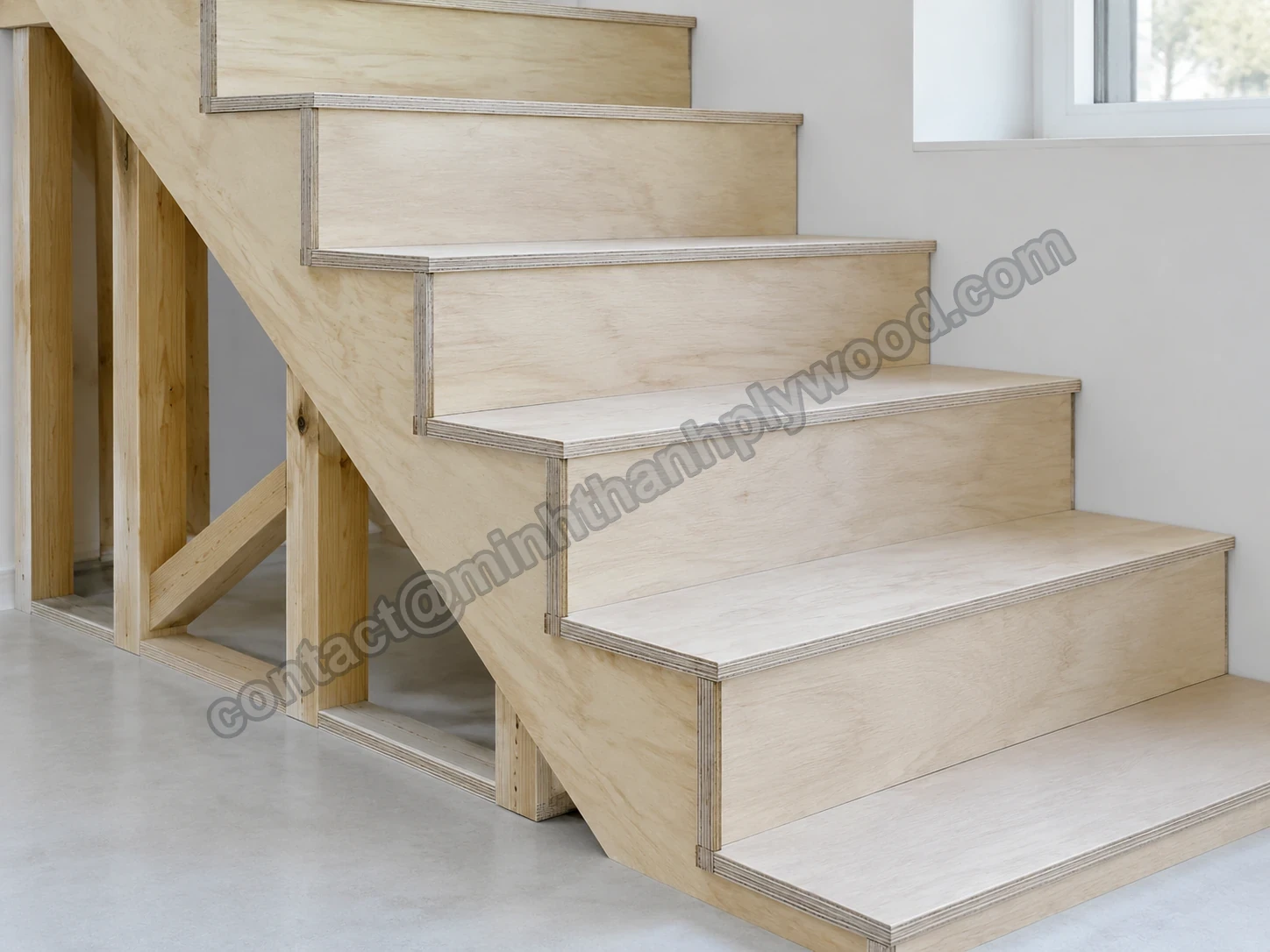
Our exterior/CDX-type range pairs utility C/D faces with melamine-fortified or phenolic WBP adhesive. Sheets serve sheathing, protected outdoor components and stair parts with the specified support and finish.
LVL aligns veneer grain predominantly along the member for frames, shelving components and packing supports. Acacia and Eucalyptus plantation veneers provide the core material.
Other products: Film-faced plywood and anti-slip plywood are available through their product pages. Smooth film serves concrete-contact surfaces; textured film serves flooring and access panels.
Related: Furniture and commercial plywood.
Real panels
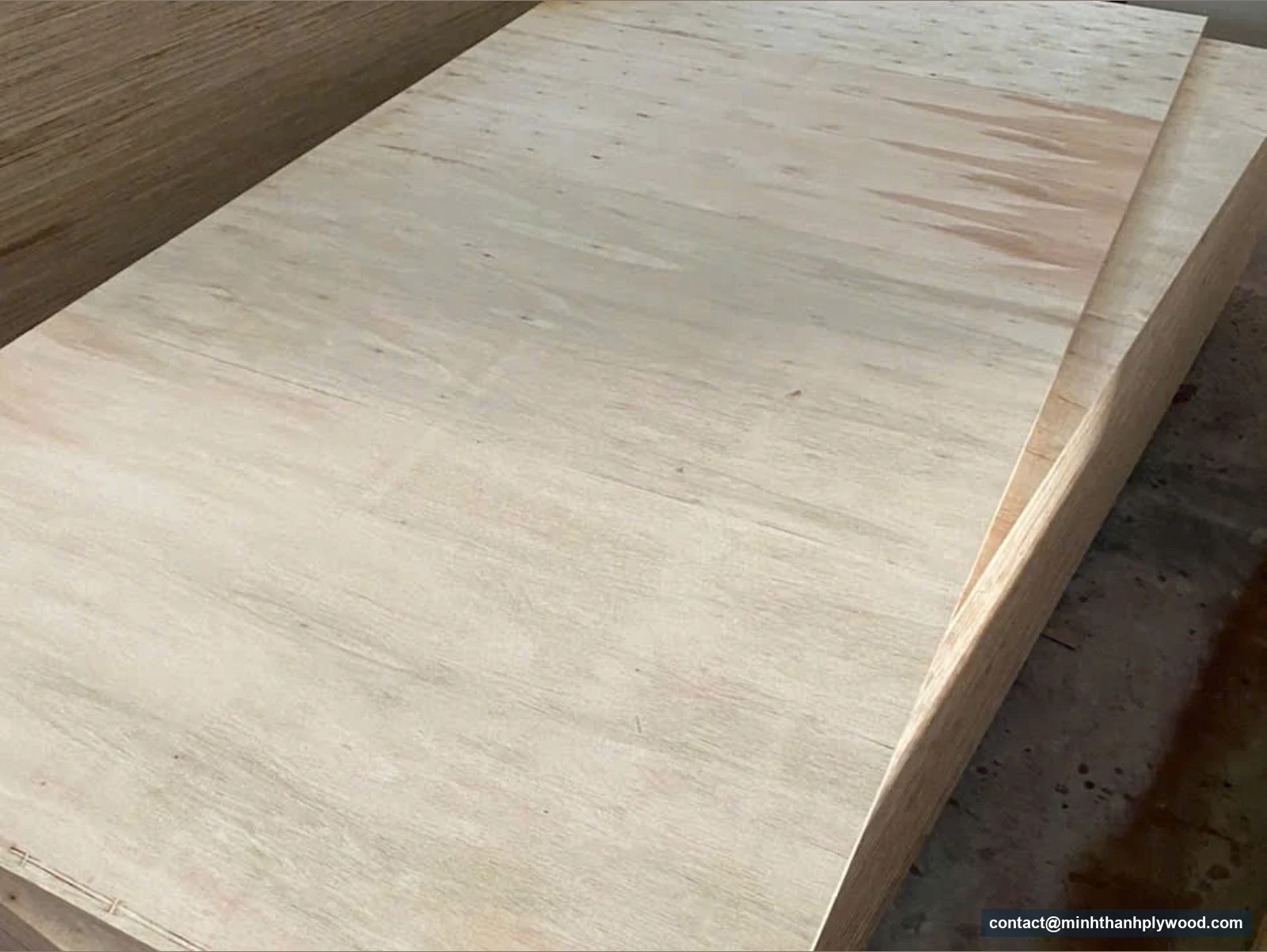
These utility sheets show natural knots, face appearance and the layered pack edge. C/D exterior orders use this practical surface with melamine-fortified or phenolic WBP bonding.
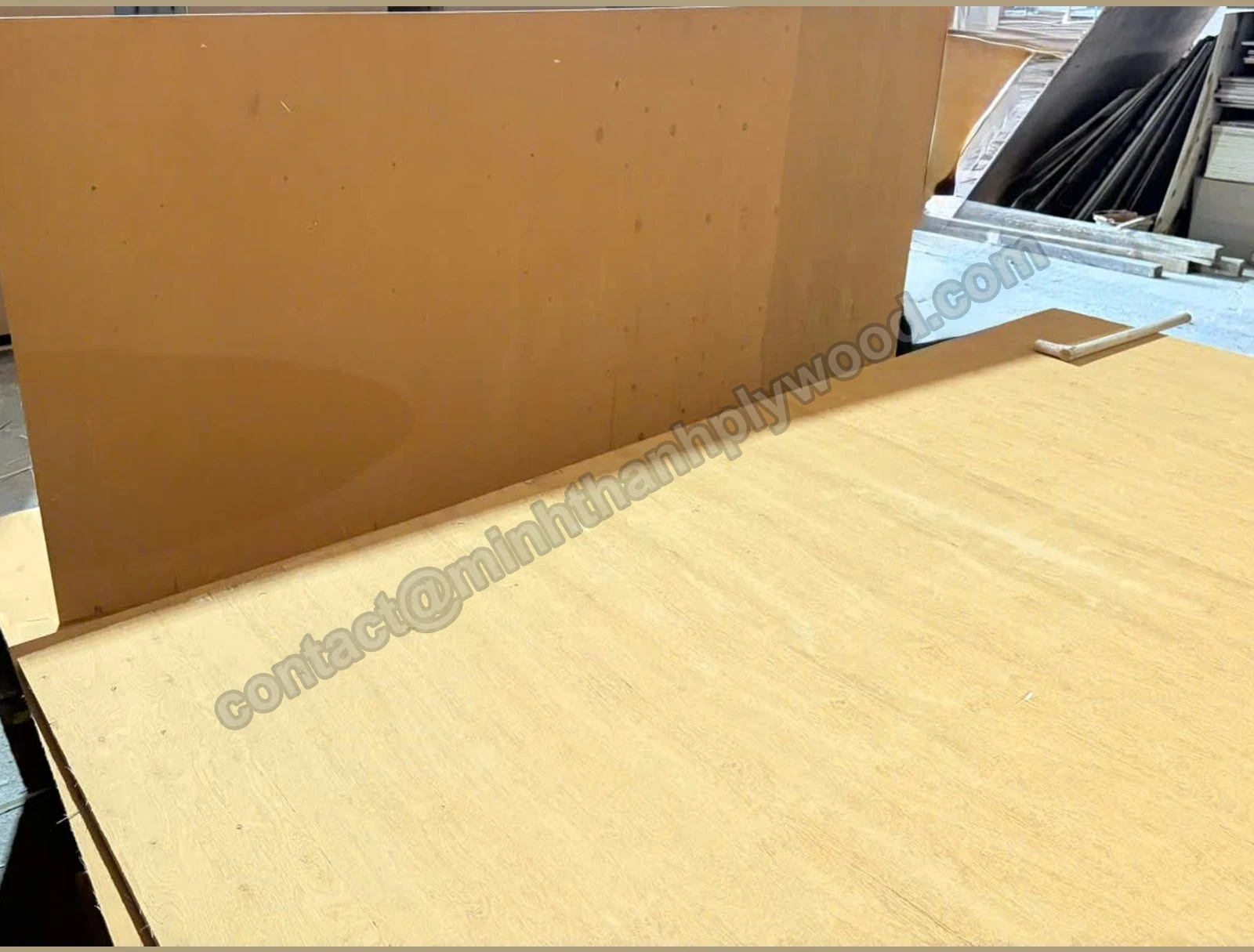
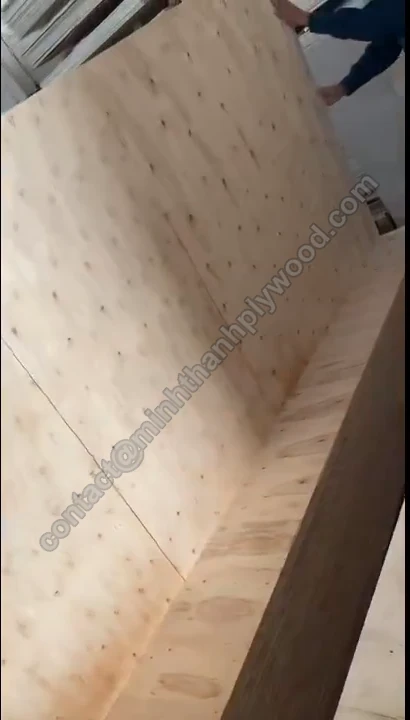
Full-sheet views show the utility veneer surface and layered panel edge. We photograph and film every shipment before loading, with bundle references matched to the packing list.
How to choose
Choose exterior plywood for a broad sheet surface and LVL for a linear frame member. We supply C/D utility faces, water-resistant bonding and trimmed formats, with the product construction matched to the finished component.
| Job | Product path | Order evidence |
|---|---|---|
| Supported outdoor sheet component | Exterior plywood | Exposure, bond, face/back and finishing detail |
| Permanent wall, roof or floor panel | Panel specified by the building design | Required product declaration, load properties and fixing schedule |
| Frame or packing member | LVL where its layup matches the design | Section, length, grain axis and connection requirement |
| Removable concrete-facing sheet | Film-faced product enquiry | Facing, bond, support system and finish requirement |
| Textured working surface | Anti-slip product enquiry | Surface pattern, test method and intended conditions |
| Face choice | Visible features to agree | Where the choice matters |
|---|---|---|
| Selected face | Natural colour and sound repairs judged on a sample | Visible protected surface |
| Utility face | Knots, patches and local surface repairs described in the order | Covered or concealed surface |
| C/D-type purchasing description | Face/back repair limits recorded separately | Utility exterior enquiry |
| Film or textured overlay | Surface appearance, defects and edge coating | Concrete contact or textured-surface use |
Utility C/D faces allow natural knots and repairs for covered or concealed surfaces. Selected outward faces and surface preparation suit painted panels; the face/back sample sets the appearance across the pack.
For ordinary sheathing enquiries, buyers commonly choose 9–18 mm sheets. We offer the 3–40 mm range and cut-to-size components; the project’s support spacing and fixing layout set the final thickness.
For concrete formwork, smooth film works with a Eucalyptus or Acacia core and melamine-fortified or phenolic adhesive. For working floors, the textured film provides the surface specified for pedestrian or vehicle traffic.
Specs
Construction panels are available in 3–40 mm, with ±0.5 mm thickness tolerance, ±2 mm length/width tolerance and 8–12% moisture at dispatch. C/D faces and the selected water-resistant adhesive complete the exterior build.
| Plywood sheet formats | 1220 × 2440 and 1250 × 2500 mm |
|---|---|
| Custom sheet formats | 1220 × 2500 and 1220 × 2280 mm |
| Panel thickness range | 3–40 mm; build selected for the application |
| Sheet length/width tolerance | ±2 mm |
| Commercial thickness tolerance | ±0.5 mm |
| Moisture at dispatch | 8–12% |
| Exterior adhesive | Melamine-fortified or phenolic WBP |
| LVL dimensions | Member drawing with section and length |
| Processing | Sheets cut into 4, 6 or 8 pieces from an agreed cutting list |
| Parameter | Exterior sheet | LVL member |
|---|---|---|
| Geometry | Length × width × finished thickness | Member length × width × depth |
| Veneer arrangement | Cross-laid panel construction | Predominantly parallel veneers |
| Surface | Face/back repair and finish specification | Face and edge requirement for the member |
| Bond | Melamine-fortified or phenolic WBP to the required exposure | Adhesive and intended service named in the order |
| Acceptance reference | Drawing, panel specification and approved sample | Member drawing, required properties and sample |
Standard sheets measure 1220 × 2440 or 1250 × 2500 mm. Custom formats include 1220 × 2500 and 1220 × 2280 mm, and sheets can be cut into 4, 6 or 8 pieces.
LVL uses predominantly parallel Acacia or Eucalyptus veneers. Member width, depth and length are set from the component drawing; the standard press formats provide the starting billet layout.
Related: LVL product page.
Comparison
Exterior plywood gives a cross-laid sheet with C/D utility faces and water-resistant bonding. LVL provides a predominantly parallel veneer member; commercial plywood serves dry interiors and packing; OSB uses oriented wood strands.
| Material | Construction | Main purchasing question |
|---|---|---|
| Exterior plywood | Cross-laid veneers, utility or selected faces, water-resistant bond | What exposure, panel properties and finishing detail are specified? |
| Commercial plywood | Veneer panel built for general-purpose interior or packing parts | What face preparation and tolerance does the part need? |
| LVL | Predominantly parallel veneers in a member | What section, axis, connection and properties does the design require? |
| OSB | Bonded oriented wood strands | Which board grade, surface and fixing arrangement are specified? |
| Film-faced / anti-slip plywood | Veneer panel with a smooth or textured overlay | Which facing, bond and use conditions belong in the order? |
Our exterior sheets combine melamine-fortified or phenolic bonding with 8–12% moisture, ±0.5 mm thickness control and standard export formats. The grade and finish are selected for the surface that remains visible.
Commercial panels use economical face preparation, while the furniture upgrade adds double pressing, tight calibration and polished faces. LVL concentrates the veneer direction along a frame or packing member.
Film-faced plywood provides a smooth concrete-facing surface. Anti-slip plywood has hexagonal or mesh texture for floors, with the film, core and bond selected together.
Applications
Exterior panels serve the stated outdoor or humid use; veneer members serve the specified frame or packing part. The installation drawing connects each material to its supports, fixings and protective finish.
Exterior panels with the ordered water-resistant bond, finished on the surfaces and cut edges for their exposure.
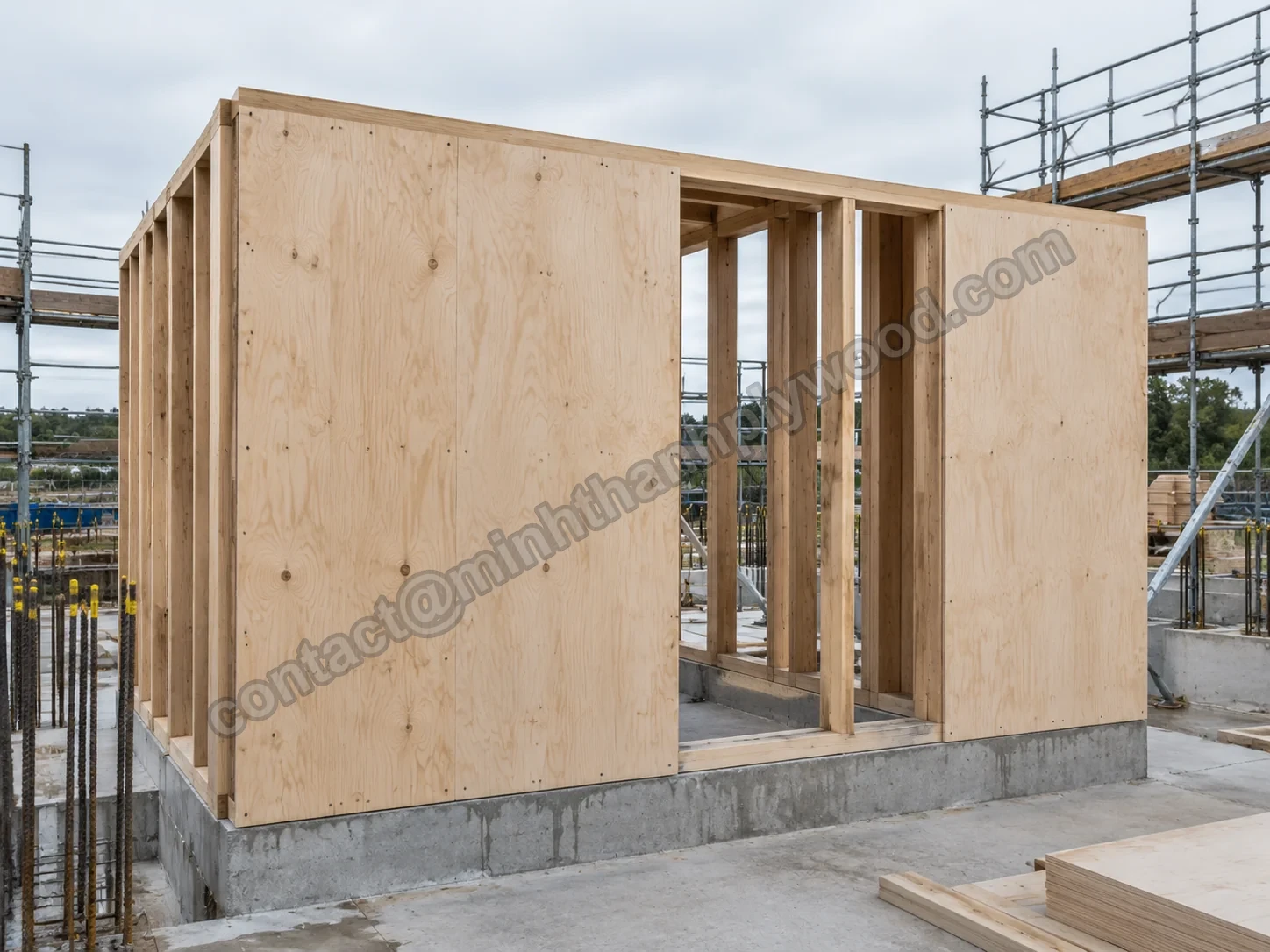
Sheet dimensions and grade matched to the wall or roof drawing, including the required properties and fixing schedule.
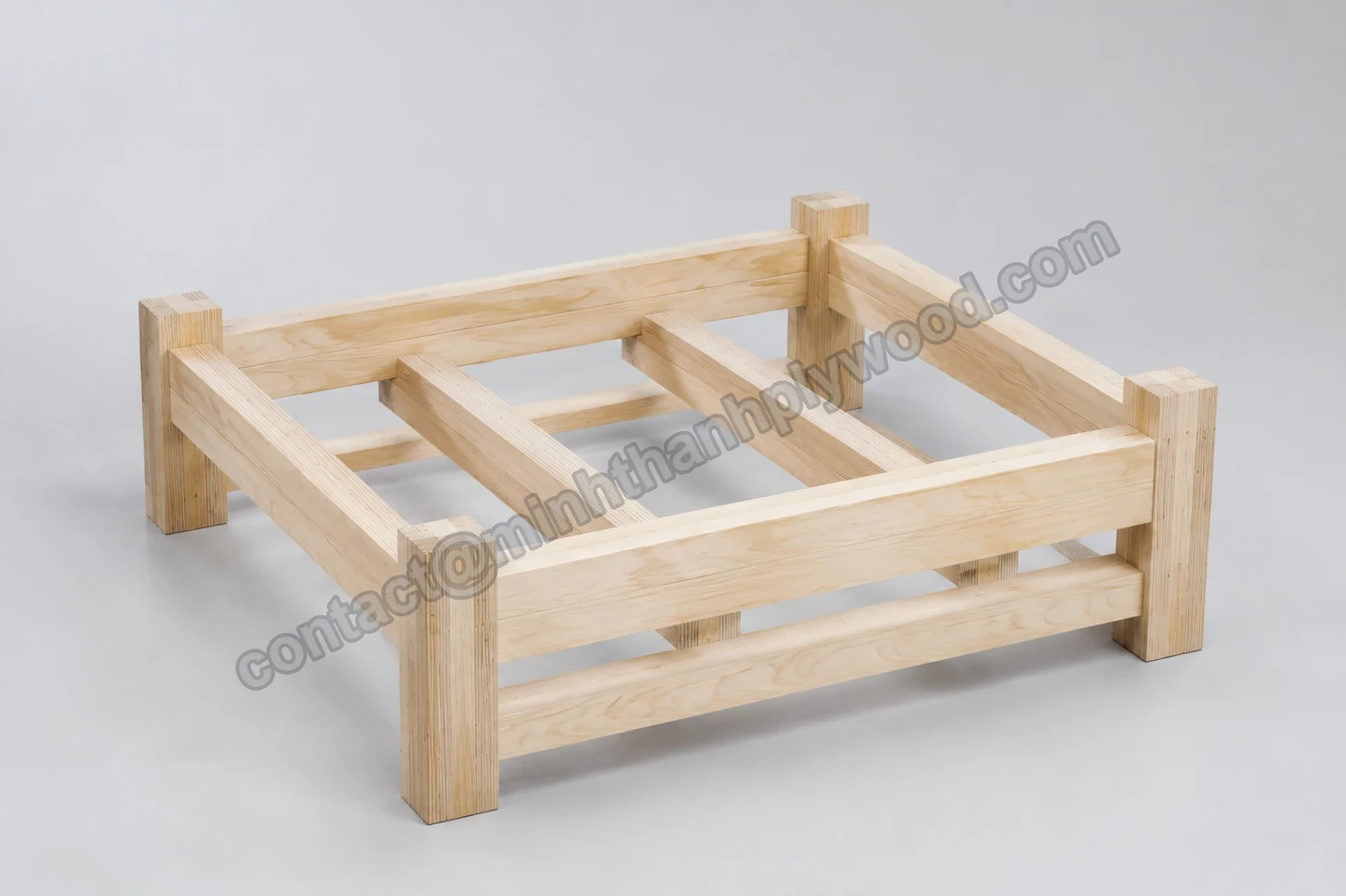
Veneer members specified by section and connection, with the grain direction shown on the part drawing.
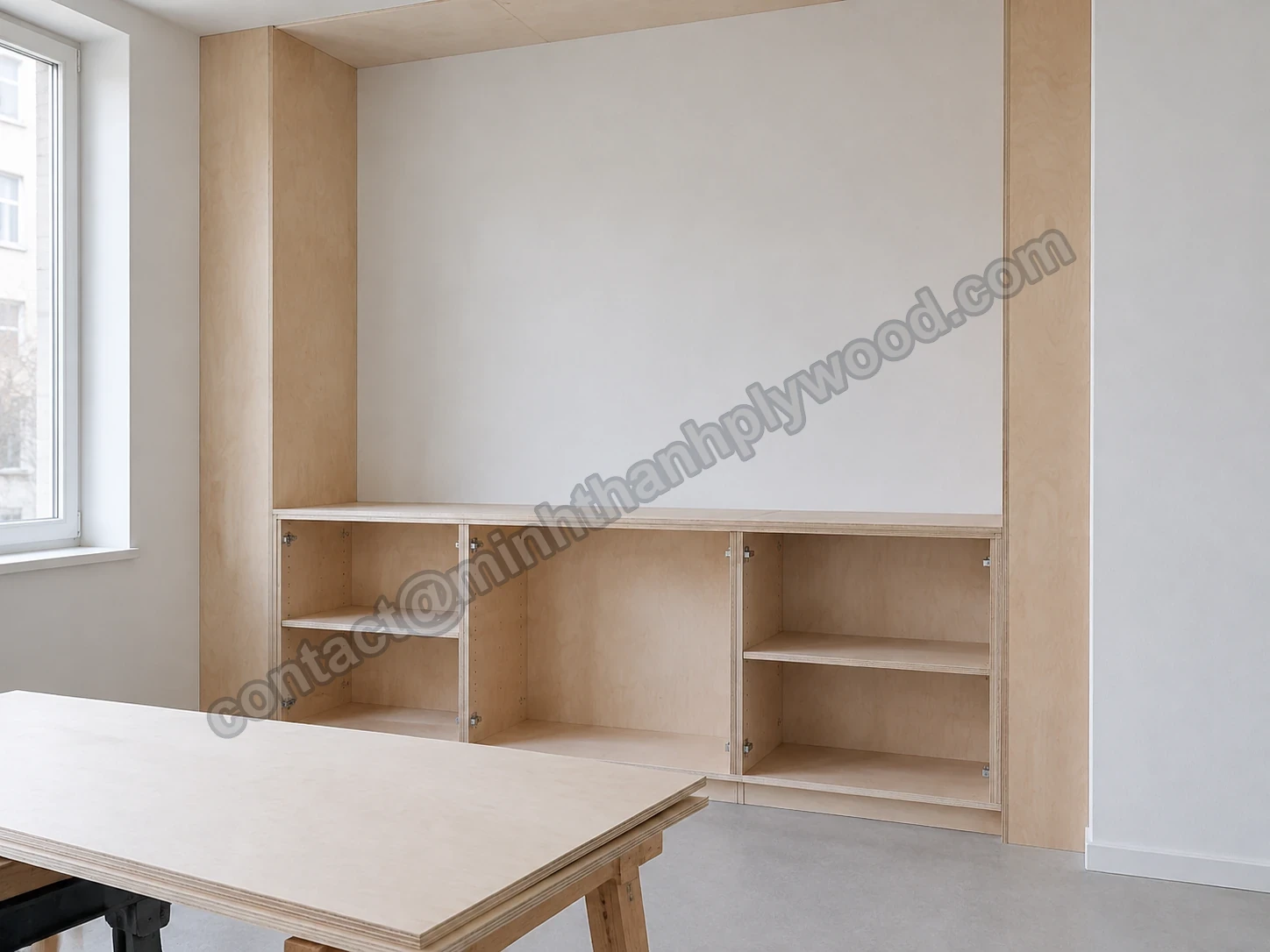
Commercial or furniture panels for fitted interiors, with the surface preparation and tolerance matched to the installation.
Exterior sheets are supplied for sheathing, protected stair components and supported outdoor panels. We offer C/D faces for covered work and selected outward faces for painted surfaces.
LVL members form frames and packing supports, cut to the required section and length. Construction sheets and members can travel in a mixed container with clear bundle labels.
Core glue
Construction sheets use Styrax cores at about 500 kg/m³ or Eucalyptus at 650–750 kg/m³; LVL and film-faced panels use Acacia at about 580 kg/m³ or Eucalyptus. Melamine-fortified bonding serves humid uses, while phenolic WBP serves exterior bonding. Moisture is 8–12% at dispatch.
| Build | Core | Adhesive / processing |
|---|---|---|
| Exterior sheet | Styrax about 500 kg/m³ or Eucalyptus 650–750 kg/m³ | Phenolic WBP · press 130–145 °C |
| Humid-use sheet | Plantation veneer core | Melamine-fortified · MR press 110–120 °C |
| LVL member | Predominantly parallel Acacia or Eucalyptus veneers | UF at E0 for interiors; melamine-fortified or phenolic for the service |
| Interior furniture upgrade | Styrax about 500 kg/m³ or Eucalyptus 650–750 kg/m³ | UF at E0; double pressed and calibrated |
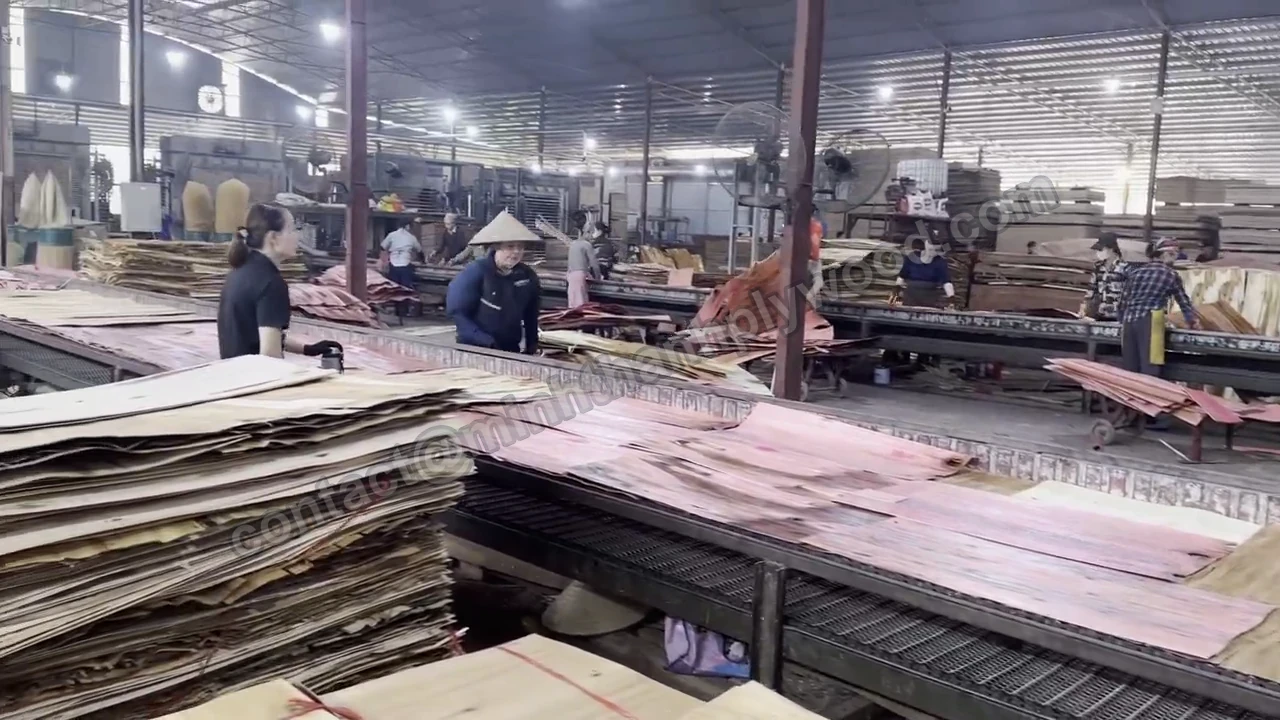
Plywood crosses the veneer directions through the sheet; LVL aligns them predominantly along the member. Our core supply comes from plantation-grown timber around northern Vietnam.
MR panels are hot-pressed at about 110–120 °C; WBP phenolic panels use 130–145 °C. The melamine-fortified construction serves a 12-hour boil requirement. A boil check examines the bond after conditioning; the result records the tested sample and method.
Our standard interior UF resin is specified at E0. Six chamber tests (three by Shanghai Hongjun, three by ICTT Vietnam) using ASTM D6007 averaged 0.014–0.032 ppm on 9, 15 and 18 mm panels between April 2025 and June 2026.
Related: EN 314-2.
Qc
We check thickness, sheet size, moisture, veneer edges and face quality before bundling. The retained appearance sample and production specification guide grading, and every shipment is photographed and filmed before loading.
Grade the face and back against the retained sample.
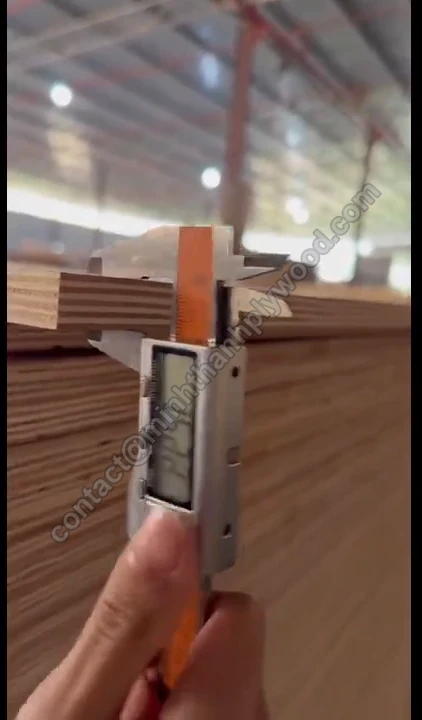
Check finished thickness to ±0.5 mm and length/width to ±2 mm.
Measure moisture against the 8–12% dispatch range.
Inspect veneer continuity at representative cut edges.
Protect and label the finished bundles.
Photograph and film the panels and loading sequence.
Calipers measure finished thickness at several points; a tape checks length, width and diagonals. The inspection record gives the bundle reference and measured results.
We inspect the cut edge for veneer continuity and the outward face for the agreed knots and repairs. Finished bundles are protected, labelled and photographed as part of the dispatch record.
Certificates
CARB P2 / TSCA Title VI (ICTT 23024), ISO 9001:2015 and TCVN 11902:2017 are held; see our quality documentation.
Packing
Load planning starts with the actual sheet or member dimensions, then checks both package geometry and cargo mass. The example below is for 1220 × 2440 mm plywood using the Eucalyptus reference density of 650 kg/m³.
| Thickness | Sheet mass | Sheets / bundle | Count / 40HC | Panel volume | Panel mass |
|---|---|---|---|---|---|
| 9 mm | 17.4 kg | 107 | 1,605 | 43.0 m³ | 27,950 kg |
| 12 mm | 23.2 kg | 80 | 1,200 | 42.9 m³ | 27,863 kg |
| 15 mm | 29.0 kg | 64 | 960 | 42.9 m³ | 27,863 kg |
| 18 mm | 34.8 kg | 53 | 795 | 42.6 m³ | 27,689 kg |
| 21 mm | 40.6 kg | 45 | 675 | 42.2 m³ | 27,427 kg |
This example follows our standard plan of 28,000 kg of panels per 40HC; the payload check, including packaging, uses the booking. It is a transparent planning case, with weighed bundles and the booked carrier’s allowance governing the final dispatch quantity.
A 1,000 mm panel stack holds the integer part of 1,000 divided by thickness in millimetres. The geometric reference allows 15 Eucalyptus bundles in a 40HC. The calculation then takes the smaller of that space count and the cargo mass divided by the sheet weight, keeping the 15 bundles of equal height.
At 18 mm, the calculated sheet volume is 0.0535824 m³ and the planning mass is 34.8 kg. A count of 795 sheets (15 × 53) uses about 42.6 m³ of plywood and weighs about 27,689 kg of panels. We plan dense-core loads by weight and bundle dimensions.
LVL members require their own packing plan from actual section and length. Keep their bundle dimensions and weights separate from the sheet table. Mixing members and panels changes the usable layout, so a mixed load is planned from the complete list of packages rather than by adding nominal cubic metres.
Terms
We quote the specified construction product from its drawing, quantity and destination. The standard minimum order is one 40HC, with production in 15–45 days after deposit and mixed specifications arranged in advance.
| MOQ | 1×40HC |
|---|---|
| Production window | 15–45 days after deposit |
| Payment | 30% deposit, 70% against scanned B/L |
| Payment methods | T/T or irrevocable L/C at sight |
| Delivery terms | FOB Hai Phong, CFR or CIF |
| Mixed orders | Usually 1–2 specifications; 3–6 by agreement |
| Sampling | Free samples |
For exterior panels, the price follows core, face/back, adhesive, thickness, format and surface preparation. For LVL, section, length and the required construction drive the quotation. A coated product adds its facing and edge-treatment requirements. Grouping unlike products under one generic sheet price makes those differences difficult to compare.
Mixed containers usually contain 1–2 specifications; 3–6 can be arranged. Identify the quantity for each item and keep the packing requirement on that line. For a site delivery, list which bundles need to be accessible first and how each size will be identified after unloading.
The shipping file includes commercial invoice, packing list, bill of lading and certificate of origin, with EUR.1 for EU shipments. Phytosanitary and fumigation documents are provided as required, and CIF includes insurance. Draft shipment details are checked before the final document set is issued.
Related: FOB Hai Phong, CFR and CIF.
Faq
Direct answers for the first material enquiry, before the order is narrowed to a particular sheet or member.
Our construction plywood is an exterior panel with C/D utility faces, melamine-fortified or phenolic WBP bonding, 3–40 mm thickness and ±0.5 mm tolerance. Standard sheets are 1220 × 2440 or 1250 × 2500 mm, dried to 8–12% moisture.
Structural orders follow the grade and performance requirements on the building design. We supply the named face, core, bond, thickness and supporting product evidence for that order.
Our exterior/CDX-type panels use C/D utility faces, melamine-fortified or phenolic WBP adhesive, and 3–40 mm thicknesses. CDX is a common trade description for utility-face sheathing; the order identifies the selected face/back grade and bond.
Phenolic WBP provides water-resistant exterior bonding. We pair it with C/D utility faces and 8–12% moisture; a suitable finish and sealed cut edges protect the installed sheet.
Choose LVL when the member design requires its predominantly parallel veneer construction. A strip cut from plywood keeps the panel’s cross-laid construction. Send the member section, length, grain axis and connection detail so the quote follows the required material.
Standard plywood formats are 1220 × 2440 and 1250 × 2500 mm, with custom options including 1220 × 2500 and 1220 × 2280 mm. Sheets can be cut into 4, 6 or 8 pieces. LVL uses a separate member drawing with section and length.
Common sheathing orders use 9–18 mm plywood. We supply the 3–40 mm range with ±0.5 mm tolerance; the project’s support spacing, loads and fixing layout determine the final roof or wall thickness.
Yes. Film-faced plywood is available through its product enquiry, and anti-slip plywood is accepted on order. State the facing, core, bond, thickness, dimensions and intended conditions. Surface texture and water-resistant bonding are separate specification items.
In the stated 1220 × 2440 mm planning example, 795 sheets (15 bundles of 53) at 34.8 kg each weigh about 27,689 kg of panels, about 43 m³. The example uses 650 kg/m³ and our standard 28,000 kg panel plan; a booking capped at 26,000 kg including 1,000 kg packaging gives 717 sheets. Actual bundle weights and the carrier booking determine dispatch quantity.
Send the application drawing, required product properties, face or overlay, core, adhesive, emission method if required, dimensions and quantity. Add packing requirements, destination port and delivery basis. Lisa replies within hours, and free samples are available for the initial trial.
Keep panels flat on aligned supports, under cover and away from wet ground. Protect open packs from rain and leave product labels accessible. Long veneer members need supports along their length, with material allocated by the bundle reference to the correct job.
The standard minimum is 1×40HC. Production is 15–45 days after deposit; payment is 30% deposit and 70% against scanned B/L by T/T or irrevocable L/C at sight. FOB Hai Phong, CFR and CIF are available, with mixed specifications arranged in advance.
Rfq
Send Lisa the application and part drawing, then identify the material, dimensions and required product evidence. Include the quantity for every size, the packing method and destination port. We reply within hours.
Email [email protected] or WhatsApp Lisa on +84 988 586 601. Attach up to 3 drawings or specification files. Free samples.
A clear enquiry can begin with one sentence: an exterior sheet for a supported outdoor component, or an LVL member for a packing frame. The attached drawing then supplies the support or connection detail. If the project already names a grade or performance document, include that exact reference.
Keep permanent building panels, removable facing sheets and veneer members as separate order items. That makes the sample, inspection record and bundle label easier to follow when the material reaches its final application.
[email protected]