
Veneer grading · Ha Hoa, Vietnam
Veneer grading: how we sort veneer and set plywood face grades
In short
Veneer grading is the sorting of every veneer sheet by thickness, moisture and visible defects before it goes into a panel. At Minh Thanh Plywood, core veneer is graded A for furniture panels and AB for commercial and packing panels. Face veneer is sorted for colour and grain and matched to the sample you approve: birch faces in grades D+, D and E, other natural faces in A and B.
Watch the film
Veneer grading: from core veneer sorting to plywood face grades
The 2:41 film shows veneer grading at Minh Thanh Plywood from log veneer to finished face: core sheets dried, metered, gauged and graded A or AB; face veneer sorted for colour and grain against your approved sample; birch faces graded D+, D and E; and every face graded again after sanding.
Chapter 1, core veneer: drying, the moisture meter, caliper and tape checks, then the A and AB core grades and the defects sorted out.
Chapter 2, face veneer: 0.2–0.5 mm sheets matched by colour and grain, birch D+, D and E, A and B for other natural faces, and one grade for EV.
Chapter 3, grade and order: how face grade sets price and use, the re-grade after sanding, the pre-loading photos and the free samples that fix your face.
Certified and tested
Veneer grading inside a certified quality system.
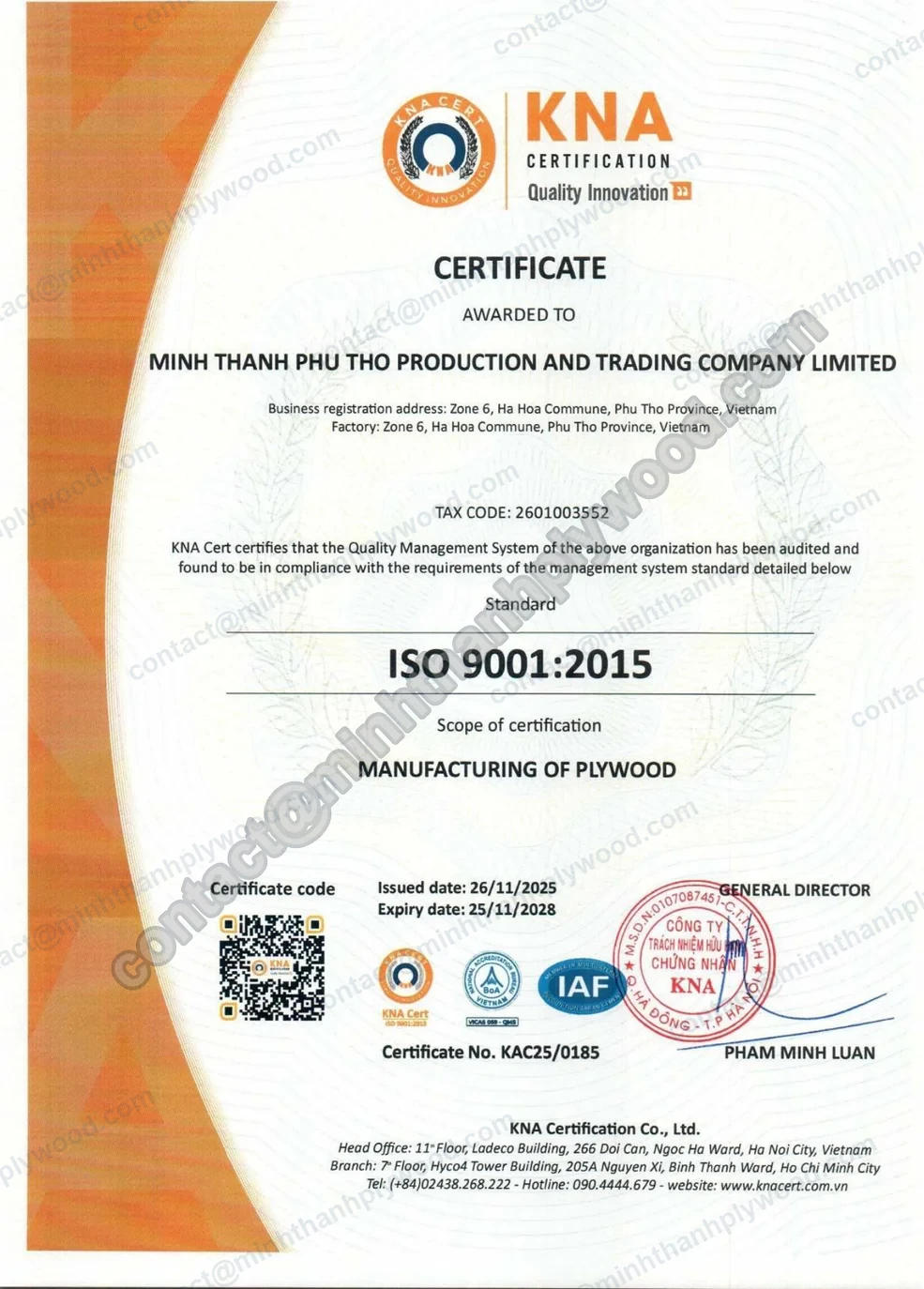
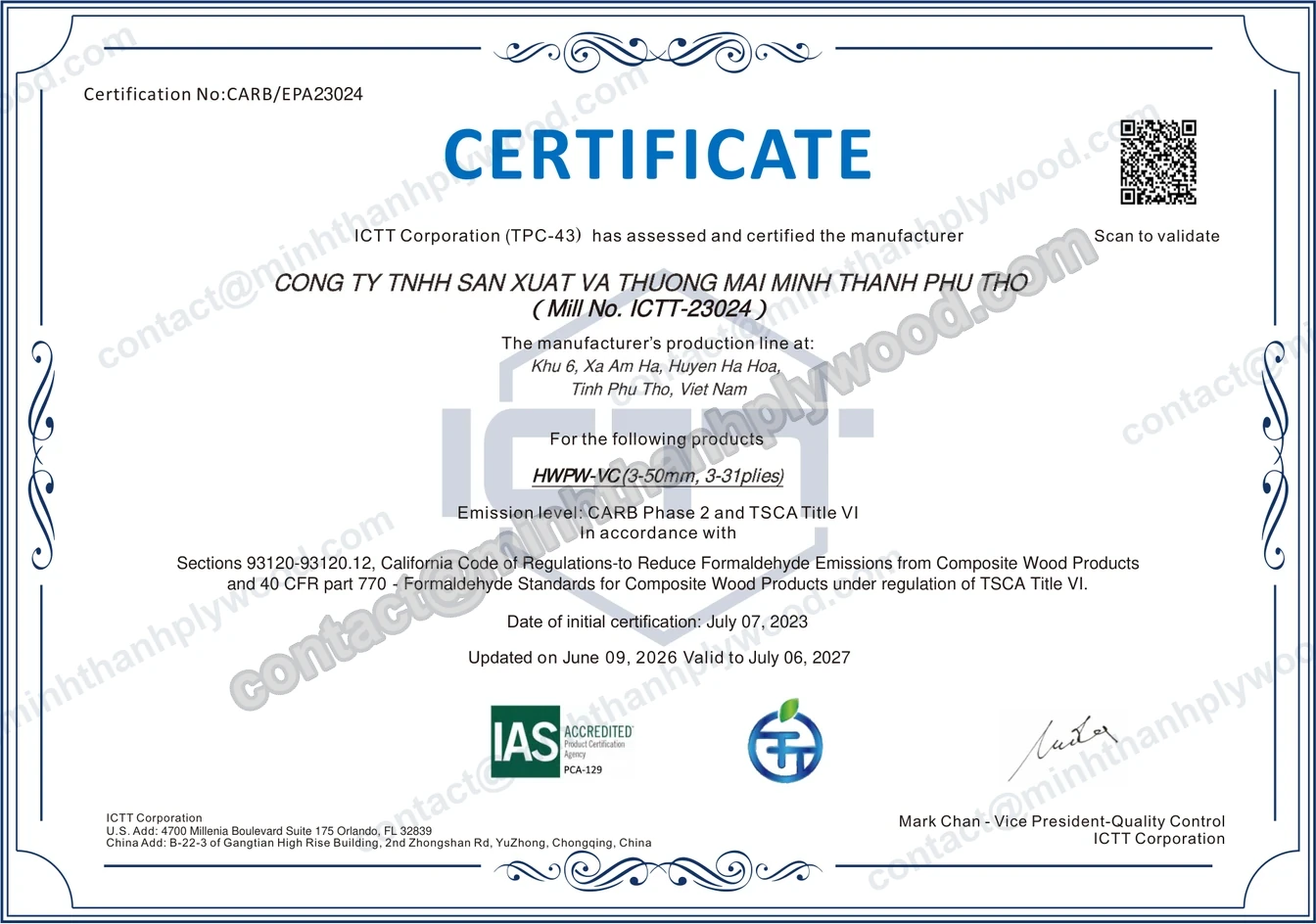
Veneer sorting runs under our ISO 9001:2015 quality system, and we hold TCVN 11902:2017 certification for veneer-faced plywood. These are the English originals; full copies go to buyers by email.

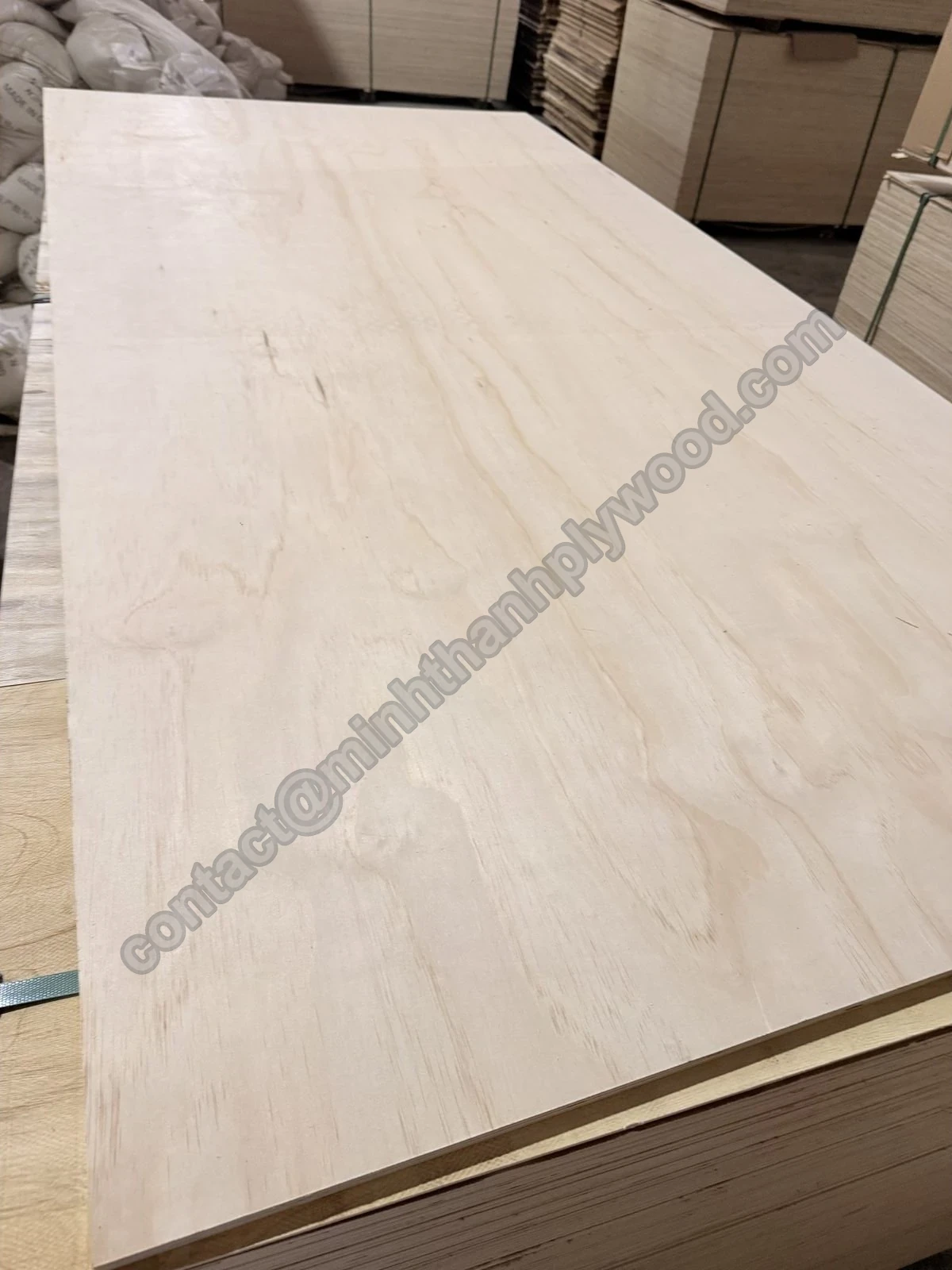
What is veneer grading?
Core veneer and face veneer are graded for different jobs.
A plywood panel has two kinds of veneer. Core veneer carries the strength and flatness; face veneer carries the look and most of the price. We grade each one to its own rules.
In shortVeneer grading sorts each sheet of veneer into a quality class by thickness, size, moisture and visible defects such as knots, splits, holes, patches and colour streaks. Core veneer grades decide how flat, solid and stable the panel is. Face veneer grades, called plywood face grades, decide how the panel looks and what it can be used for.
| Item | Core veneer | Face veneer |
|---|---|---|
| Job in the panel | Strength, flatness, stable thickness, clean edges | Appearance, finish quality, end use |
| Thickness | 1.4–2.0 mm; 1.3 mm in 4 mm thin panels | 0.2–0.5 mm; European orders often 0.3 mm |
| Species | White Styrax or Eucalyptus for furniture panels; Acacia or Eucalyptus for commercial and film-faced | EV, Poplar, Birch, Okoume, Pine; Bintangor, Eucalyptus, Gurjan, Sapele and others on request |
| Grades we use | A for furniture and interior; AB for commercial and packing | Birch: D+, D, E, quoted as pairs such as D+/D. Other faces: A, B. EV: one consistent grade |
| Joining | Outer 2–4 core layers stitched horizontally and vertically; all layers on request | Laid over the stitched core and pressed, then sanded and polished |
| What we check | Thickness, width and length, moisture, splits, holes, rot and soft wood | Colour, grain, knots, patches, splits, colour and mineral streaks |
| What the grade does not cover | Glue, emission class and panel tolerance, specified separately | Strength, bond and core quality, specified separately |
| Who fixes the grade | Our construction for the product line | The sample you approve before production |
| Where you see it | On every cut edge: ply count, joints, gaps | On the face and back of every sheet |
Minh Thanh grades veneer for its own panels only; we do not sell core veneer.
Plywood face grades by species
Plywood face grades for every face veneer we press.
Each species has its own colour, grain and natural features, so face grades are read per species. These are the faces we grade most, with the grades we use and the work they suit.
| Face veneer | Look | Grades we use | Typical use |
|---|---|---|---|
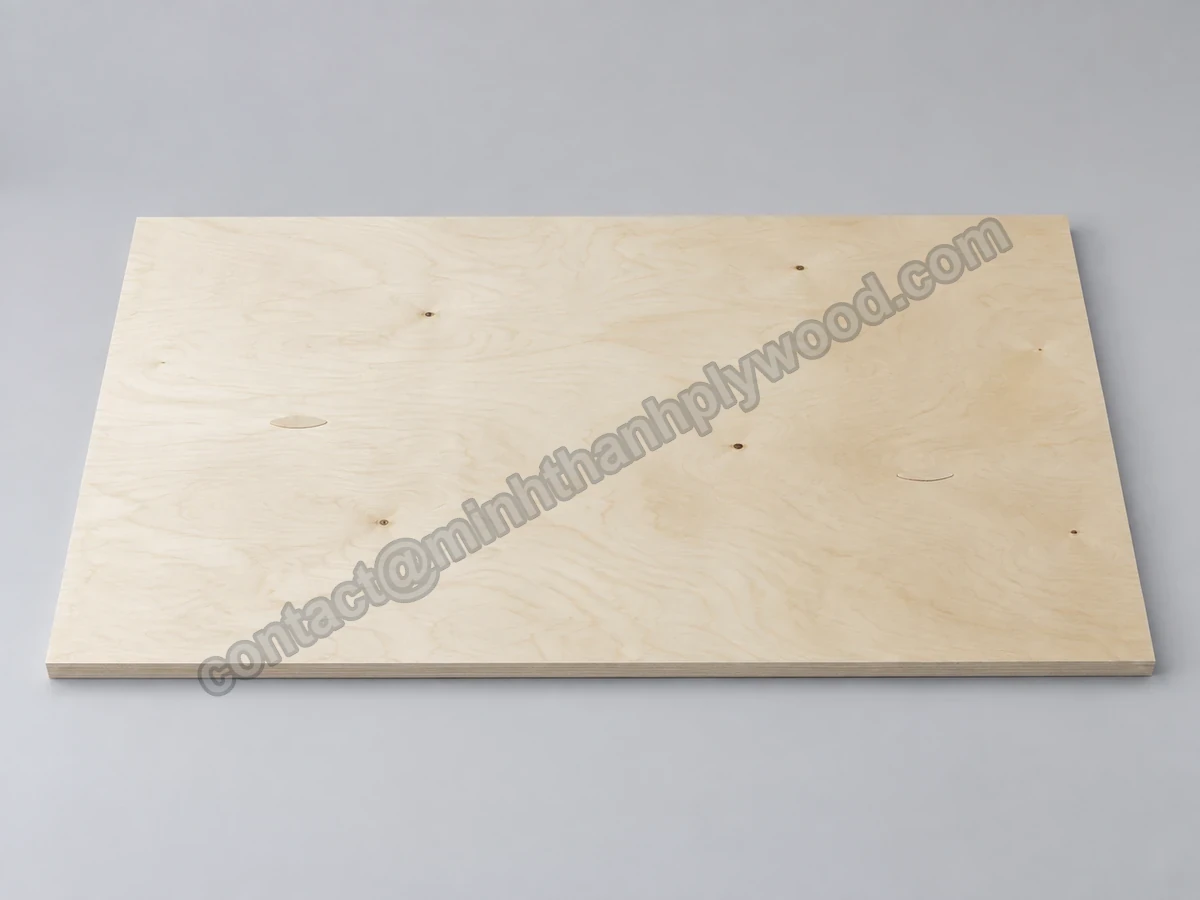
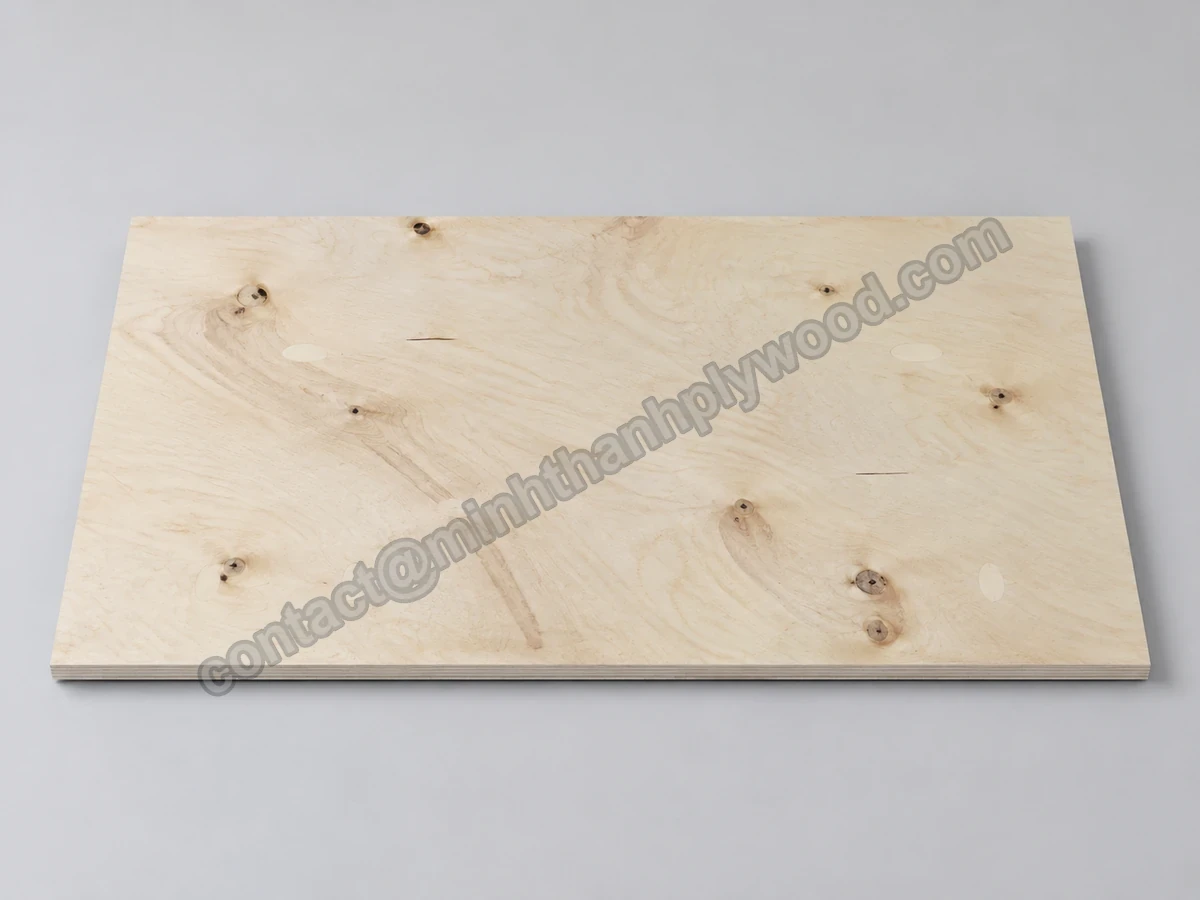
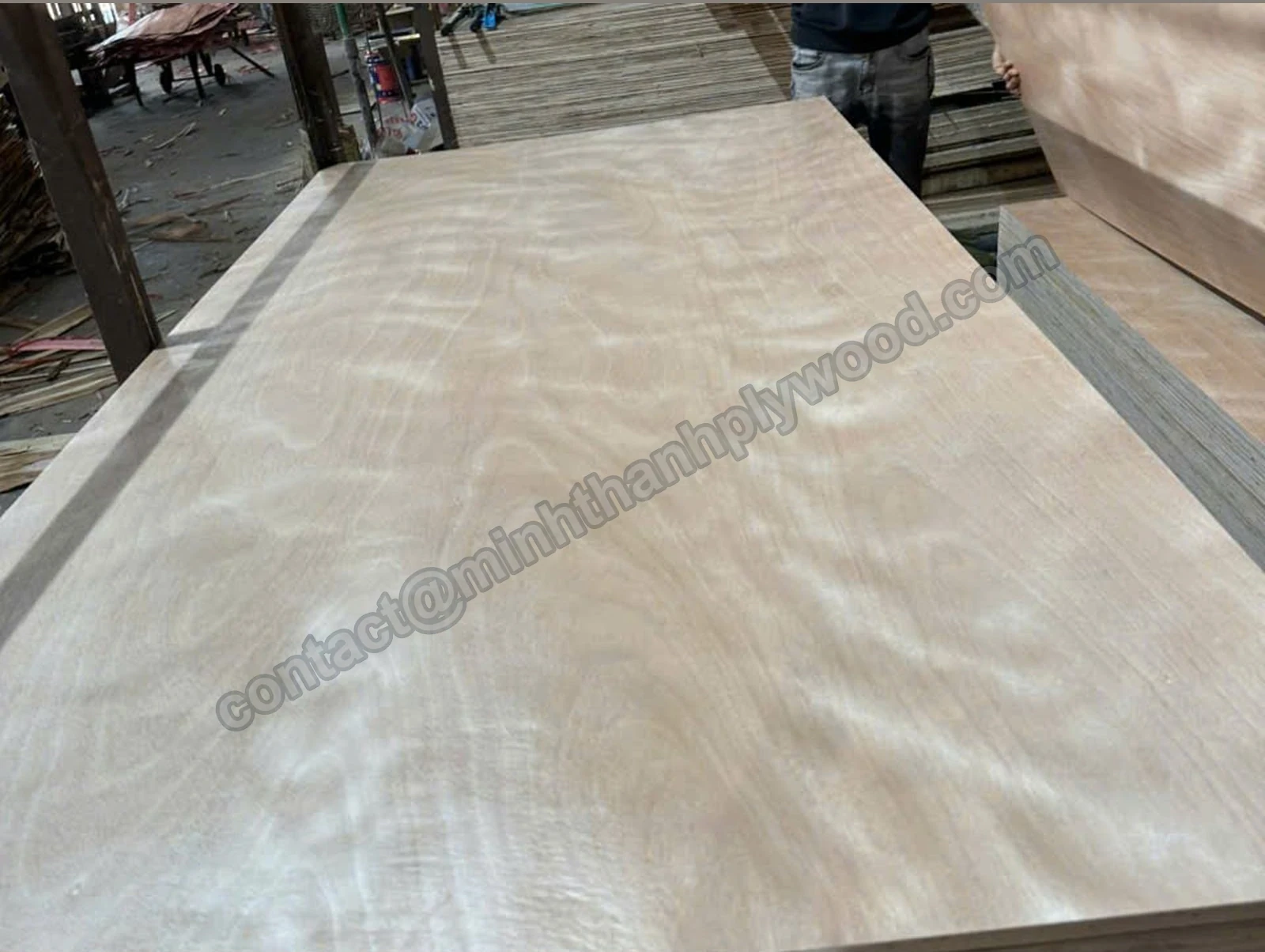
| Birch (imported veneer) | Pale cream, soft wavy figure, fine pin knots | D+, D, E; quoted as pairs such as D+/D or D/E | Furniture, cabinets, shelving, cut-to-size parts |
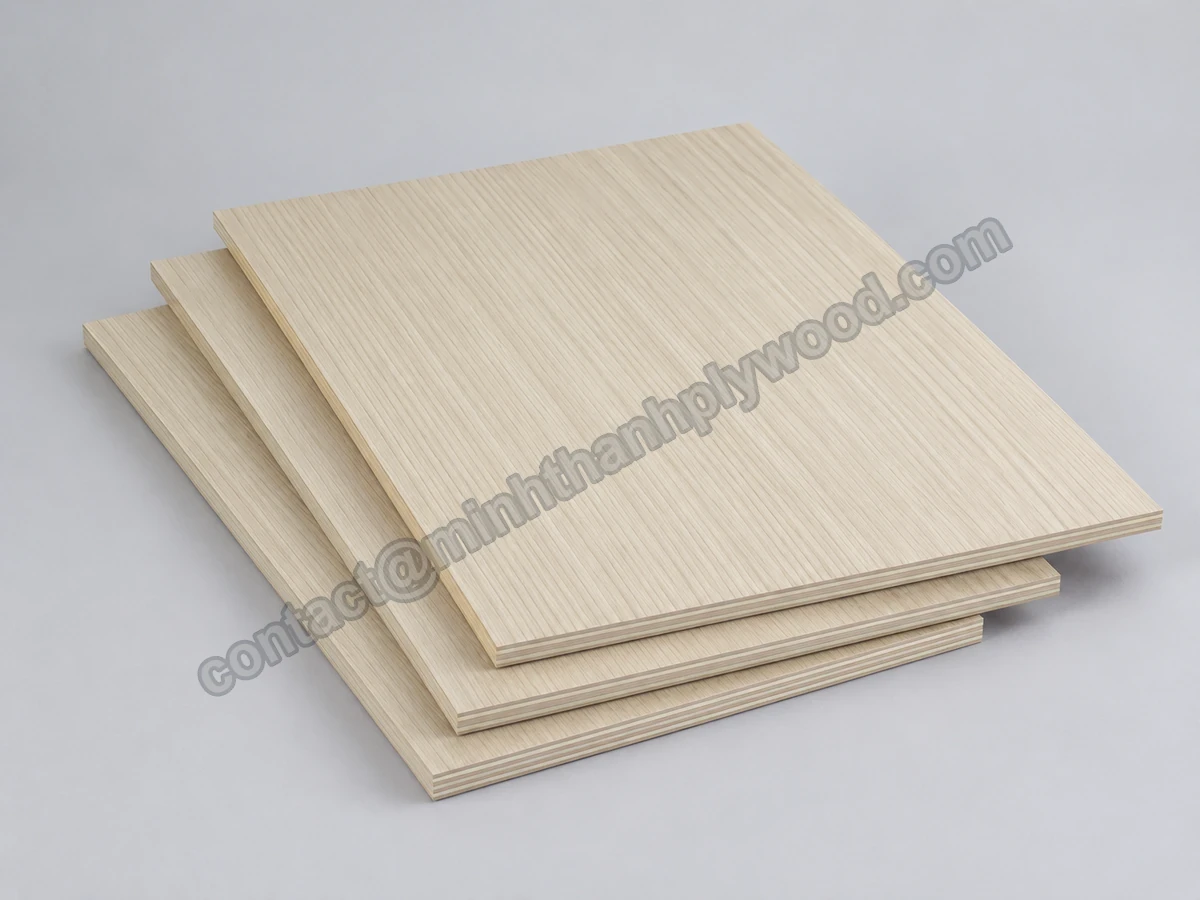
| EV (engineered veneer) | Straight, uniform grain and colour; colour to order | One consistent grade, matched sheet to sheet and batch to batch | Furniture and interior panels that must match across orders |
| Poplar | Creamy white, mild grain, occasional mineral streaks | A, B | Furniture, painted panels, commercial plywood |
| Okoume | Light pinkish-beige to pale salmon, even grain | A, B | Furniture, interior joinery, doors |
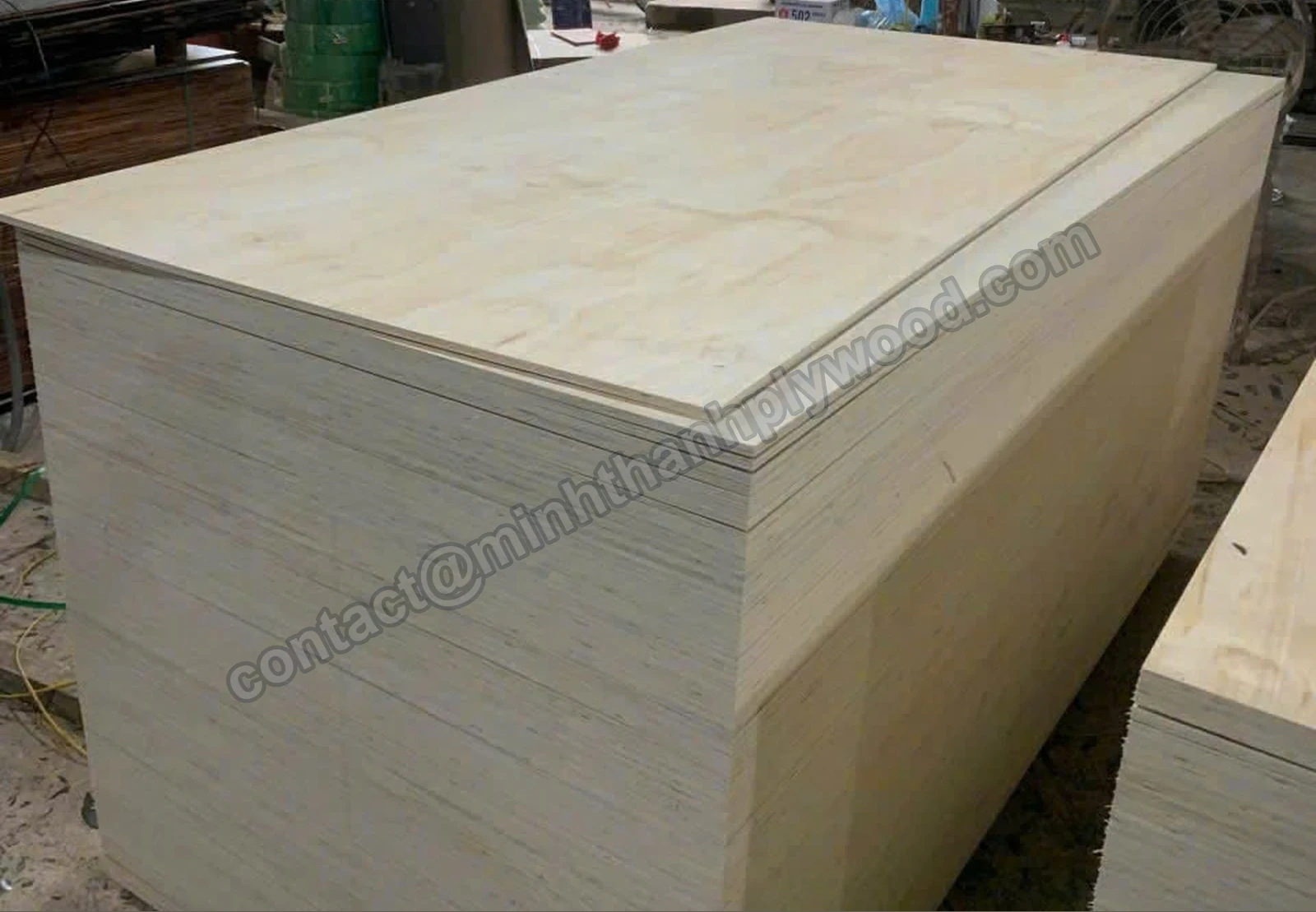
| Pine | Honey-yellow, bold cathedral grain, small tight knots | A, B | Furniture, shelving, decorative interiors |
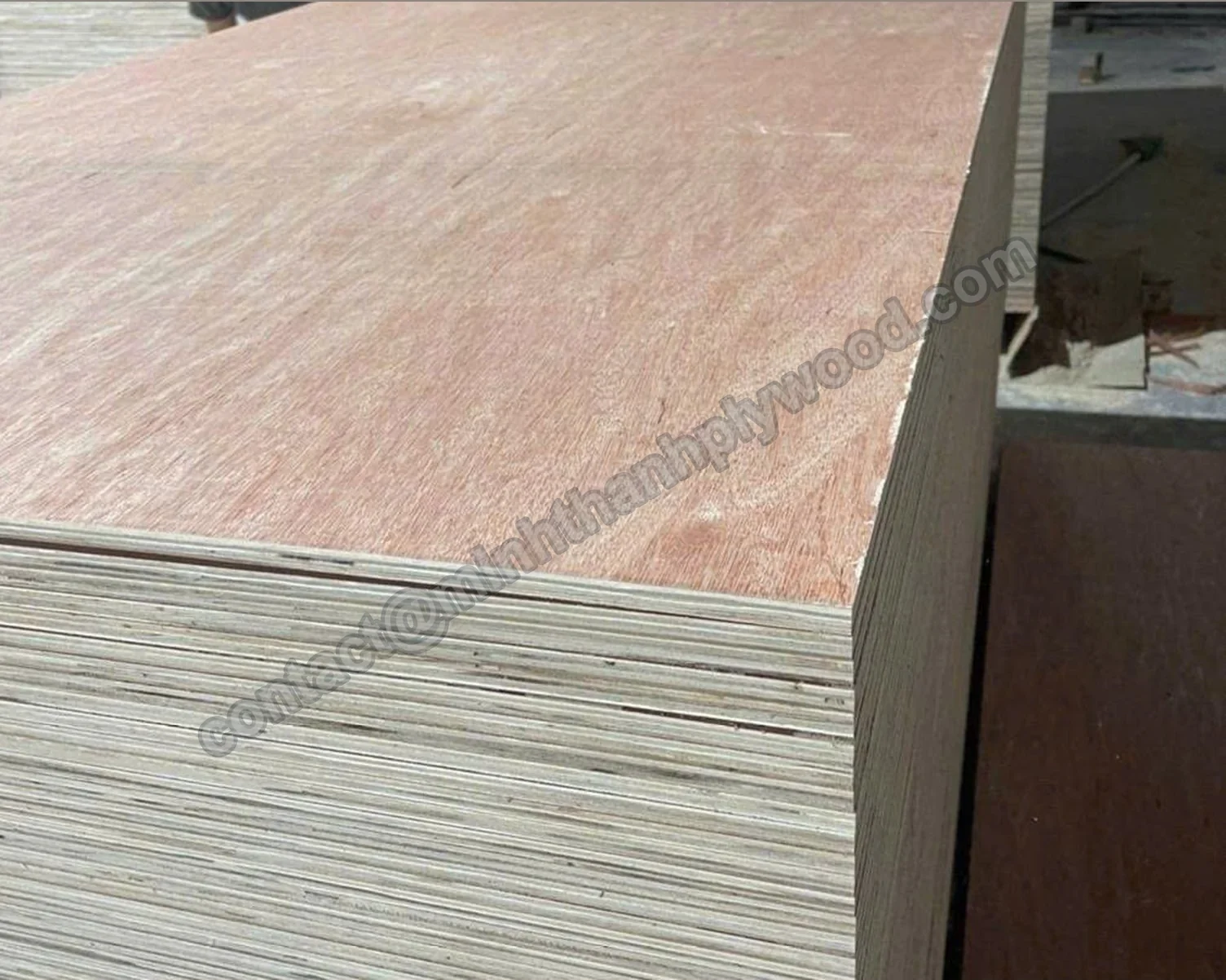
| Bintangor | Reddish-brown, interlocked grain | A, B | Furniture, doors, commercial panels |
| Gurjan | Reddish-brown, straight to slightly interlocked grain | A, B | Furniture, commercial and general-purpose panels |
| Eucalyptus | Light pinkish-brown, interlocked grain | A, B | Commercial, packing and painted panels |
| Sapele (on request) | Reddish-brown with ribbon stripe | A, B | Decorative furniture and doors |
| Film-faced | Brown or black phenolic film | Graded by film weight: 120–135 g/m², premium from 135 g/m² | Concrete formwork |
Face veneer is 0.2–0.5 mm thick; European furniture orders often specify 0.3 mm. Faces are sanded and polished and both faces are UV-ready.
Veneer sorting, step by step
Eight veneer sorting checks before a panel is packed.
Veneer sorting starts in the drying yard and ends with the graded face of the finished panel. A sheet that fails a check moves to a lower grade or out of the order; it never moves up.
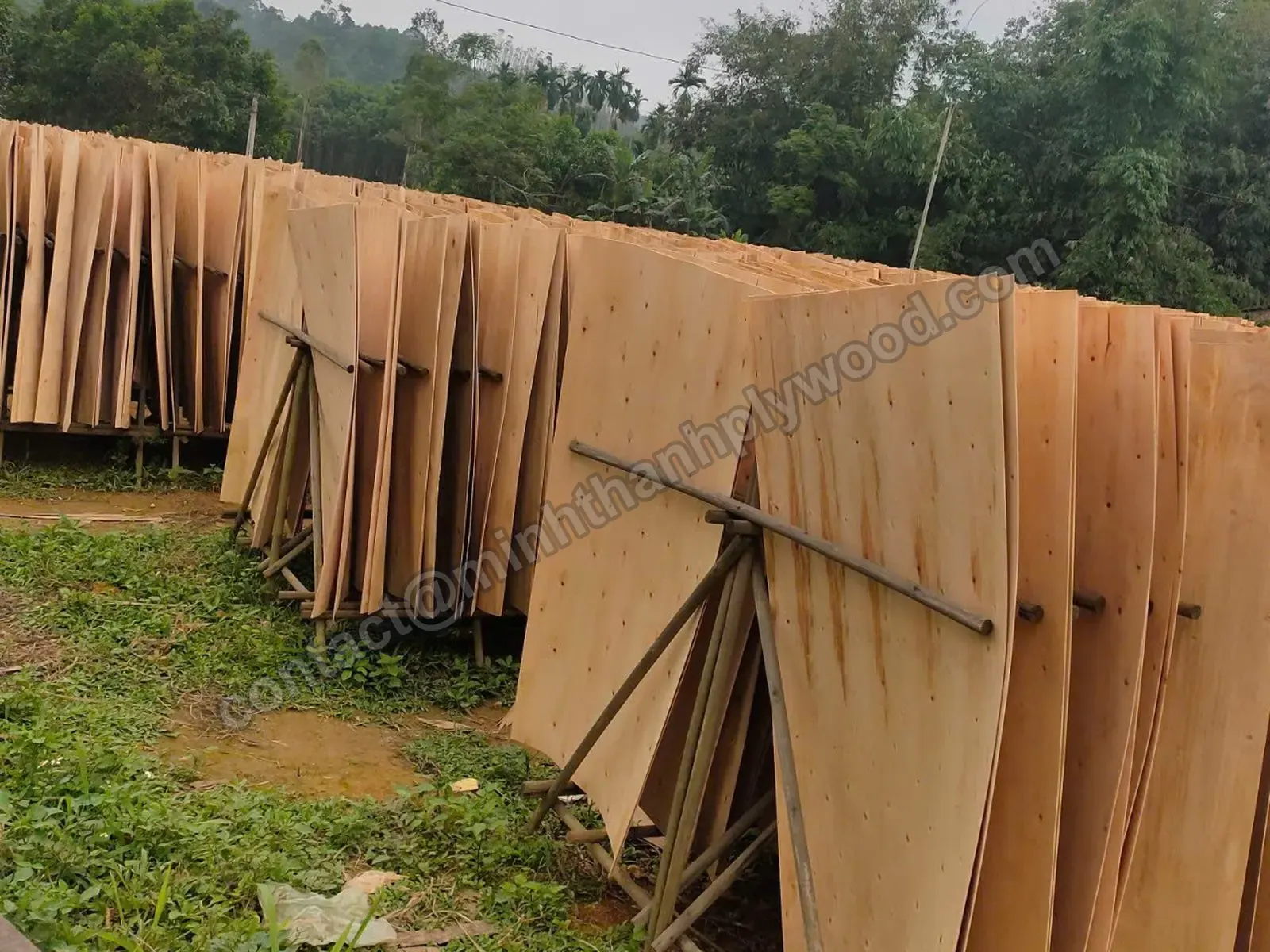
Fresh-peeled core veneer air-dries on racks before any grading. 01Core veneer intake and drying
Core veneer comes from plantation timber grown around Ha Hoa and is dried in racks. Sheets are dried before sorting, because wet veneer cannot be graded or glued properly.
- Styrax and Eucalyptus for furniture cores
- Acacia or Eucalyptus for commercial and film-faced cores
- Sheets dried before grading
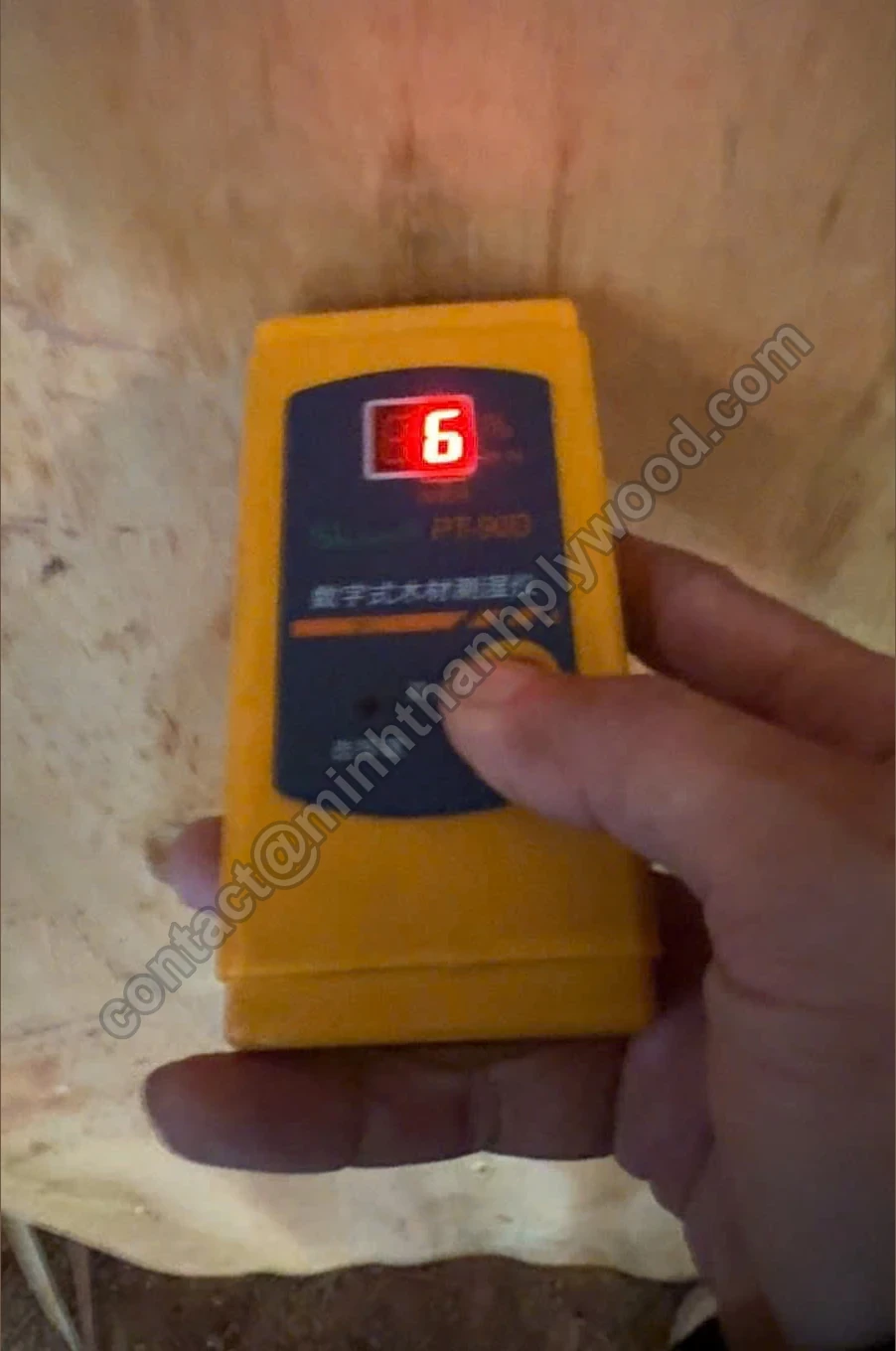
Dried core veneer checked with a moisture meter. 02Moisture check
Each lot is checked with a moisture meter. Damp sheets go back to drying, because moisture in the veneer causes blisters, weak bonds and warping later.
- Moisture meter on sheets from each lot
- Damp sheets returned to drying
- Only dry, metered sheets go to sorting
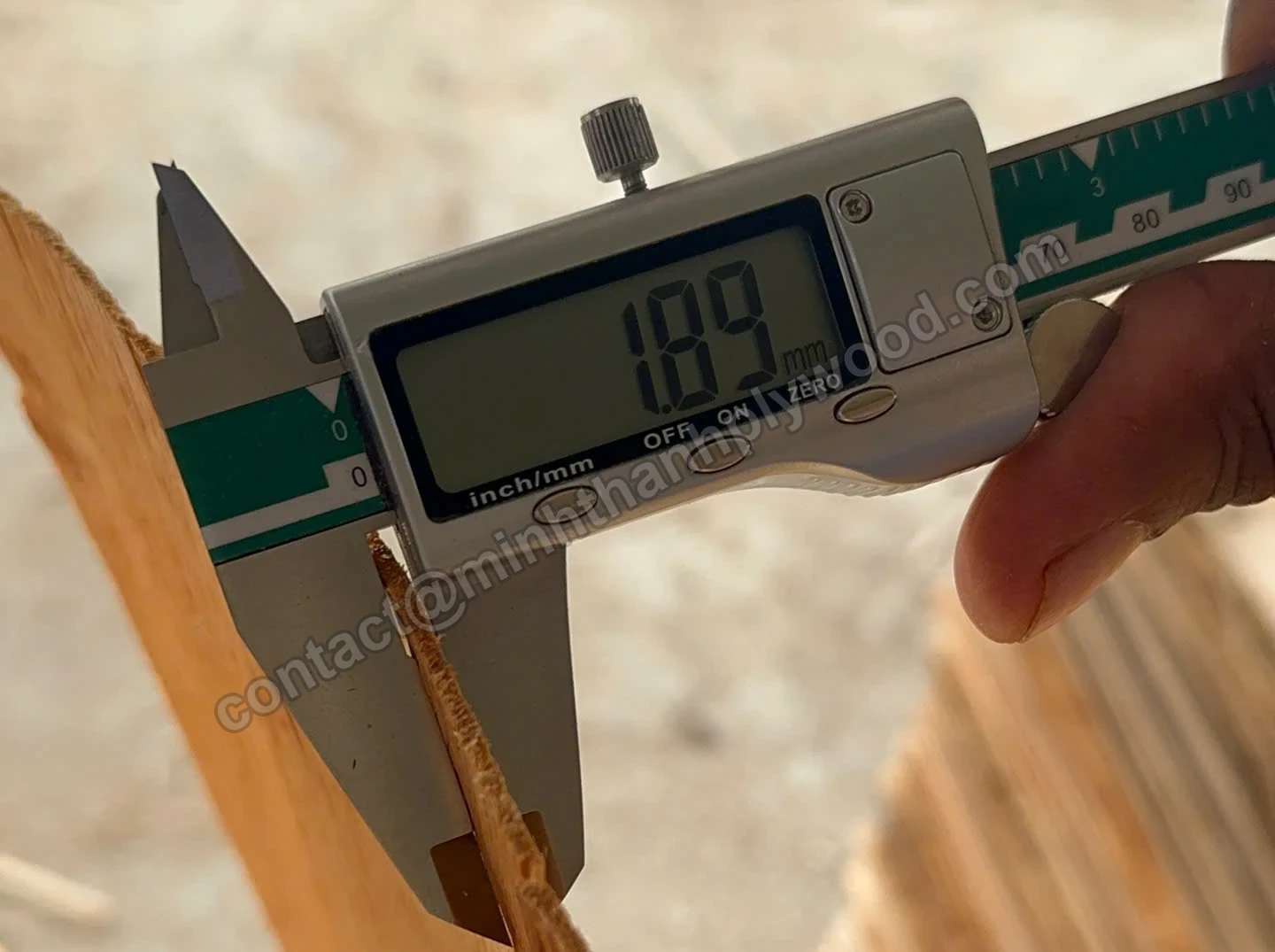
Each core sheet is gauged; this one reads 1.89 mm. 03Core veneer thickness
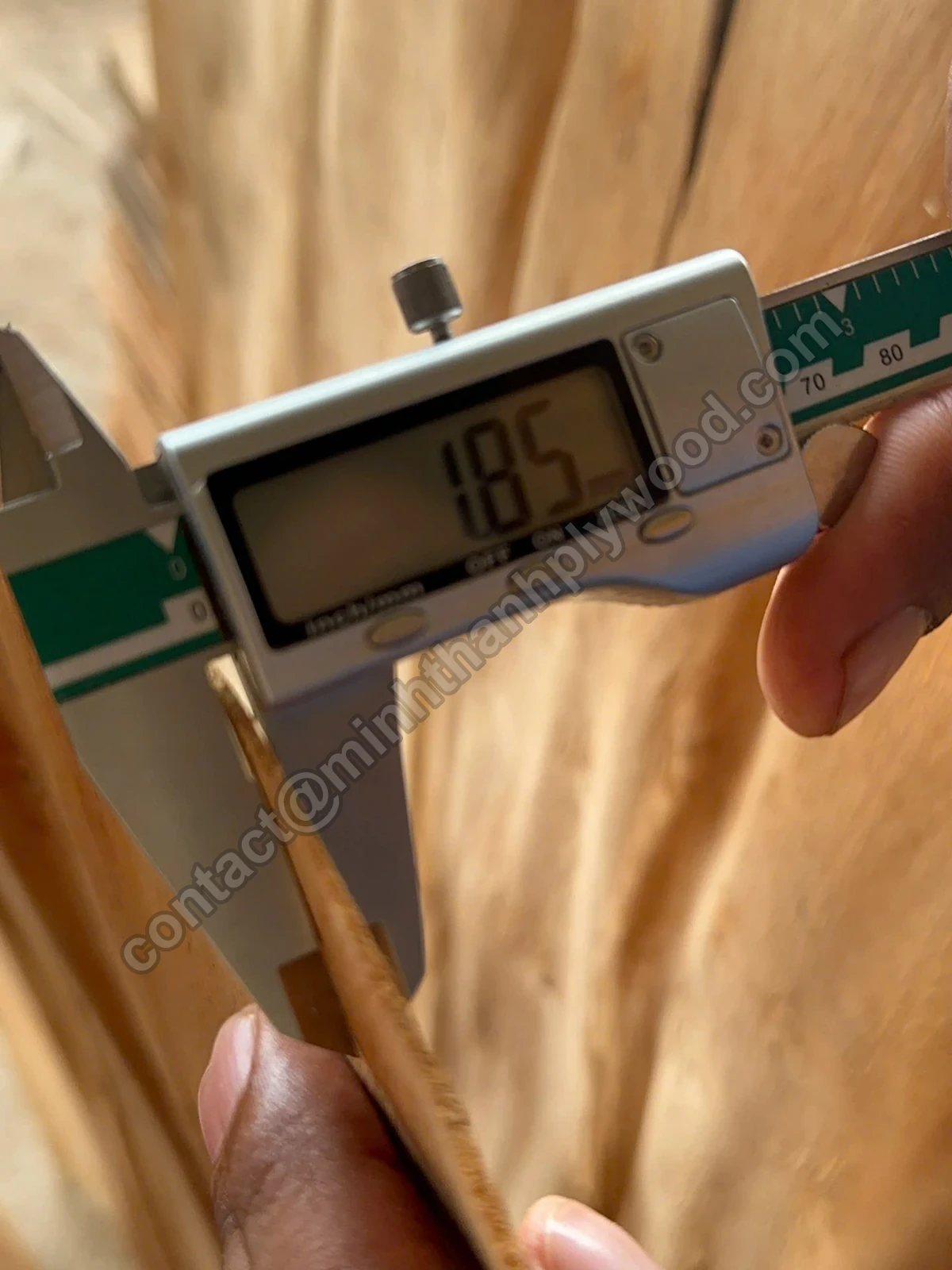
Core veneer is measured with a caliper or dial gauge. Even thickness across the core is what lets a sanded furniture panel hold ±0.2 mm later.
- Core veneer 1.4–2.0 mm
- 1.3 mm Styrax core veneer for 4 mm thin panels
- Sheets out of range moved to another construction
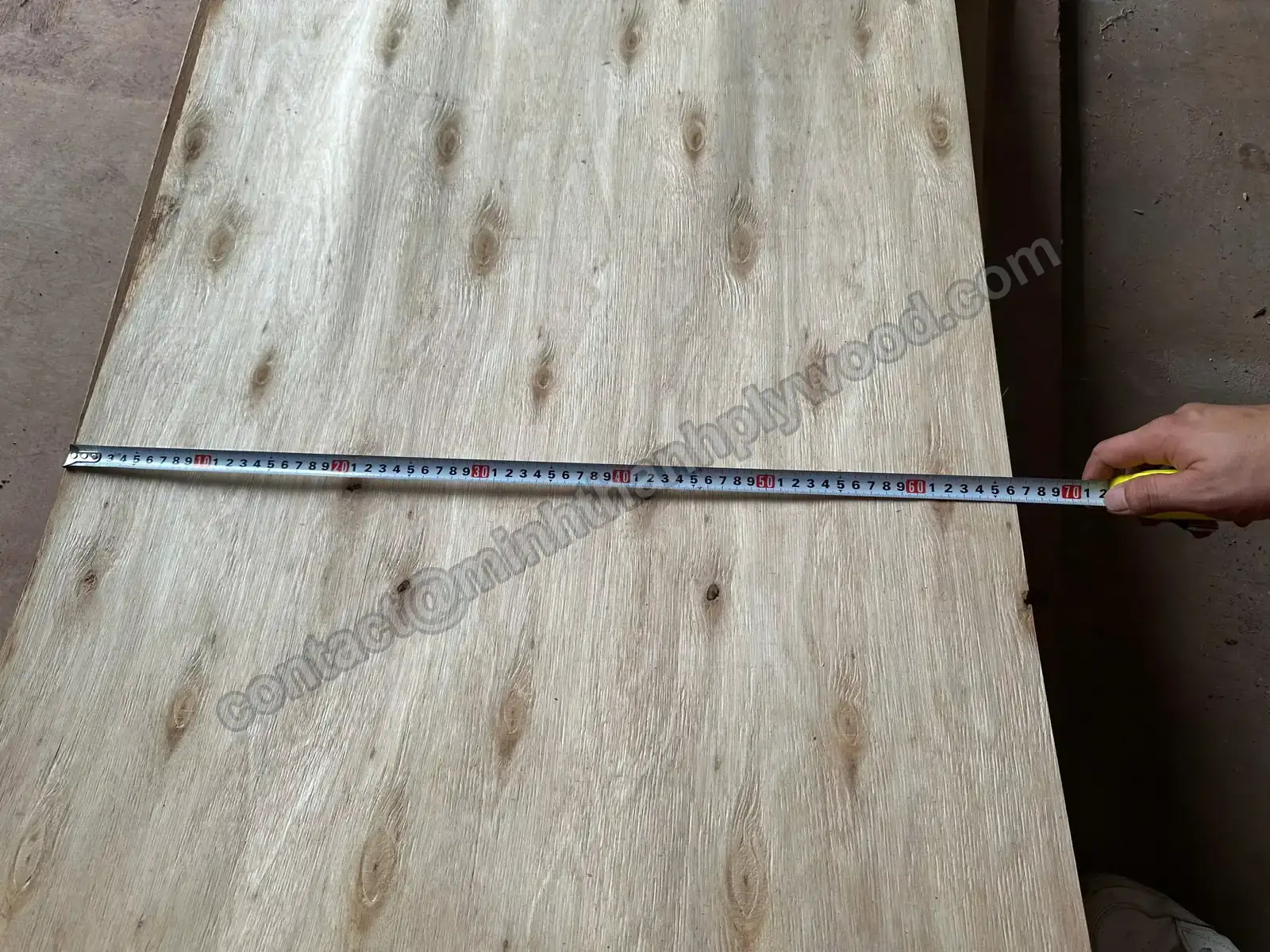
Sheet width and length taped before sorting. 04Width and length
Sheets are taped for length and width so each one covers the panel size without short ends. Short or narrow sheets go to smaller sizes or to joined cores.
- Sheet size checked against the panel format
- 1220×2440, 1250×2500 and custom sizes
- Short sheets kept out of full-size furniture cores
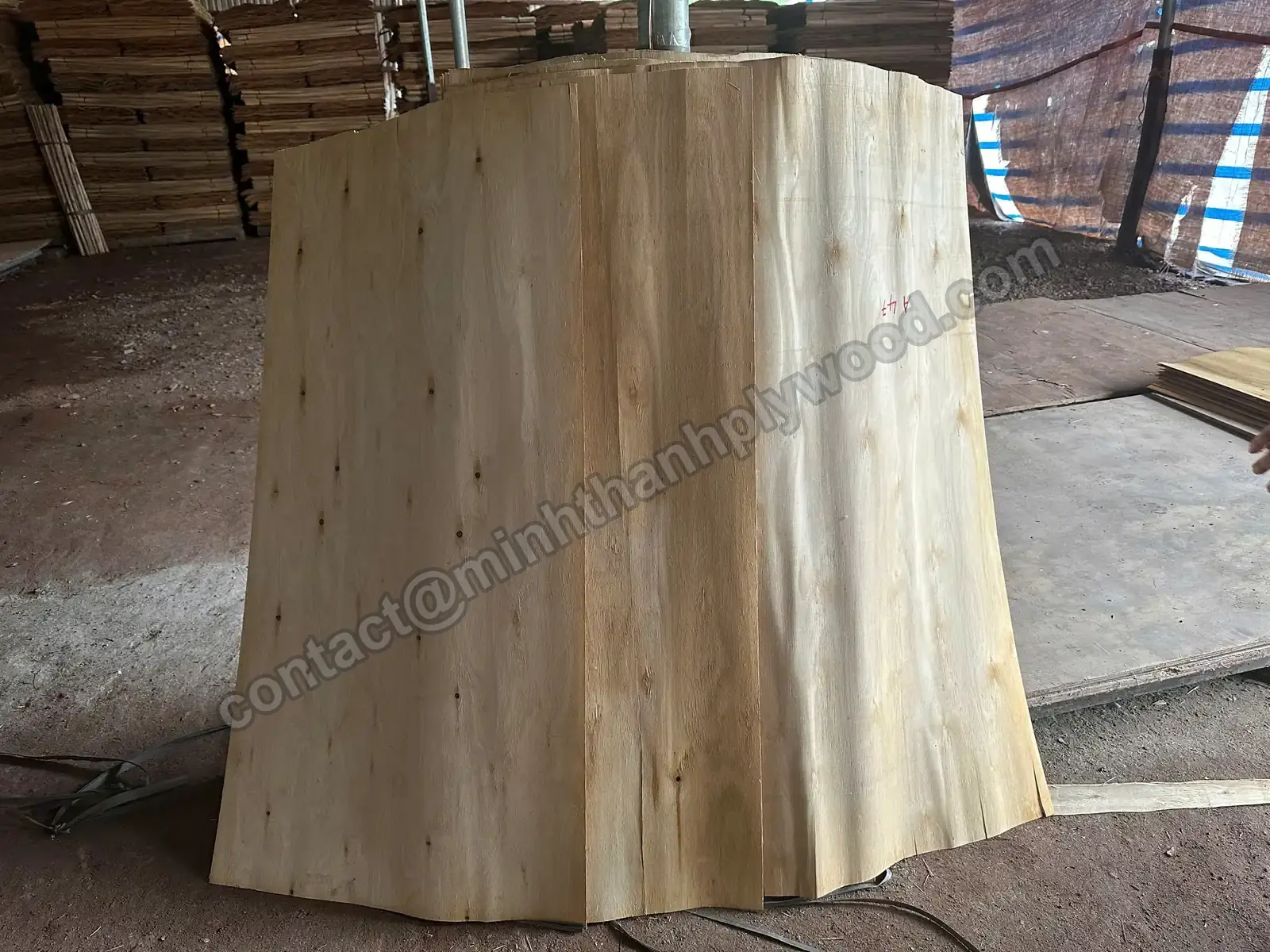
Sheets checked for splits and holes, then chalk-marked by grade. 05Core grading: A or AB
Each core sheet is graded by eye. A grade is solid, even and free of open defects, for furniture and interior panels. AB grade accepts small closed splits and minor defects, for commercial and packing panels.
- Splits, holes, rot and soft wood sorted out
- A grade for furniture cores, AB for commercial and packing
- Rejected sheets never reach the lay-up line
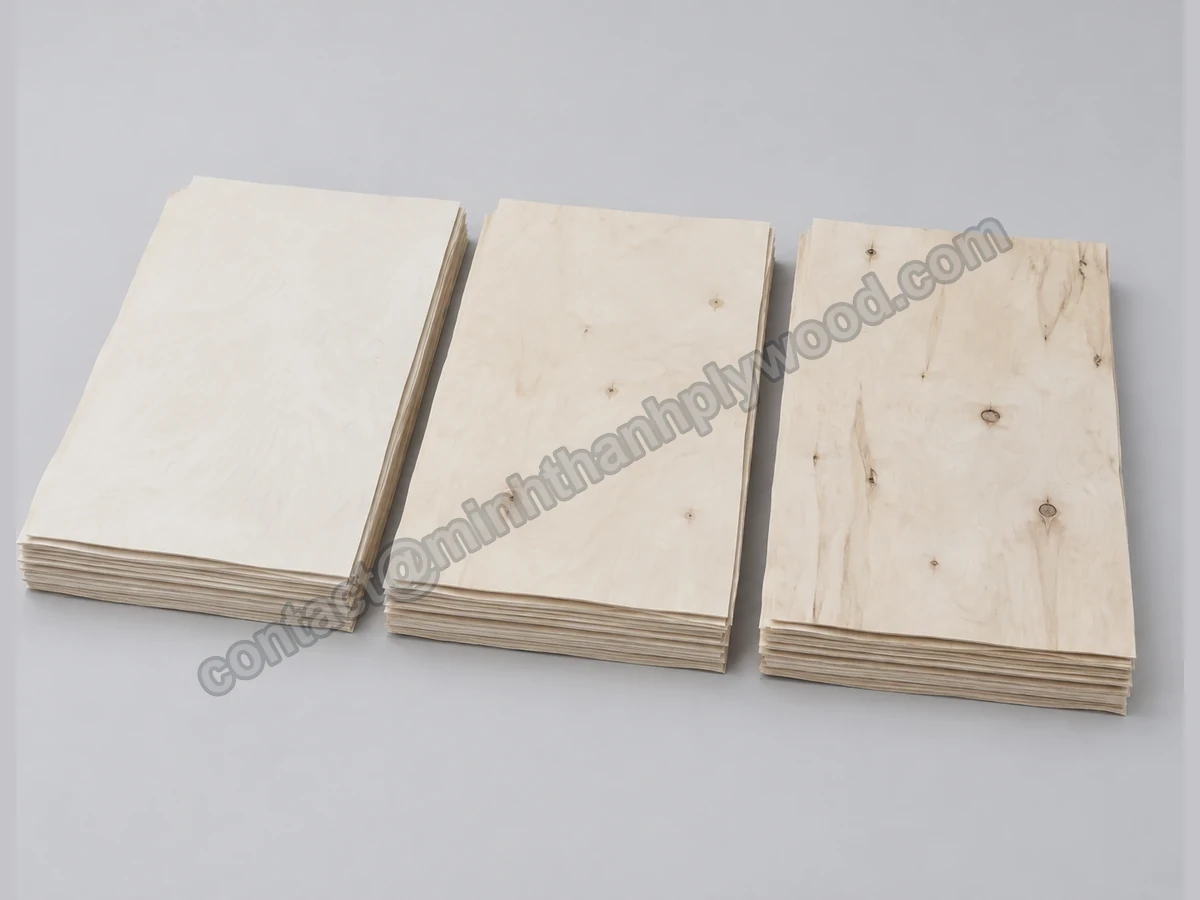
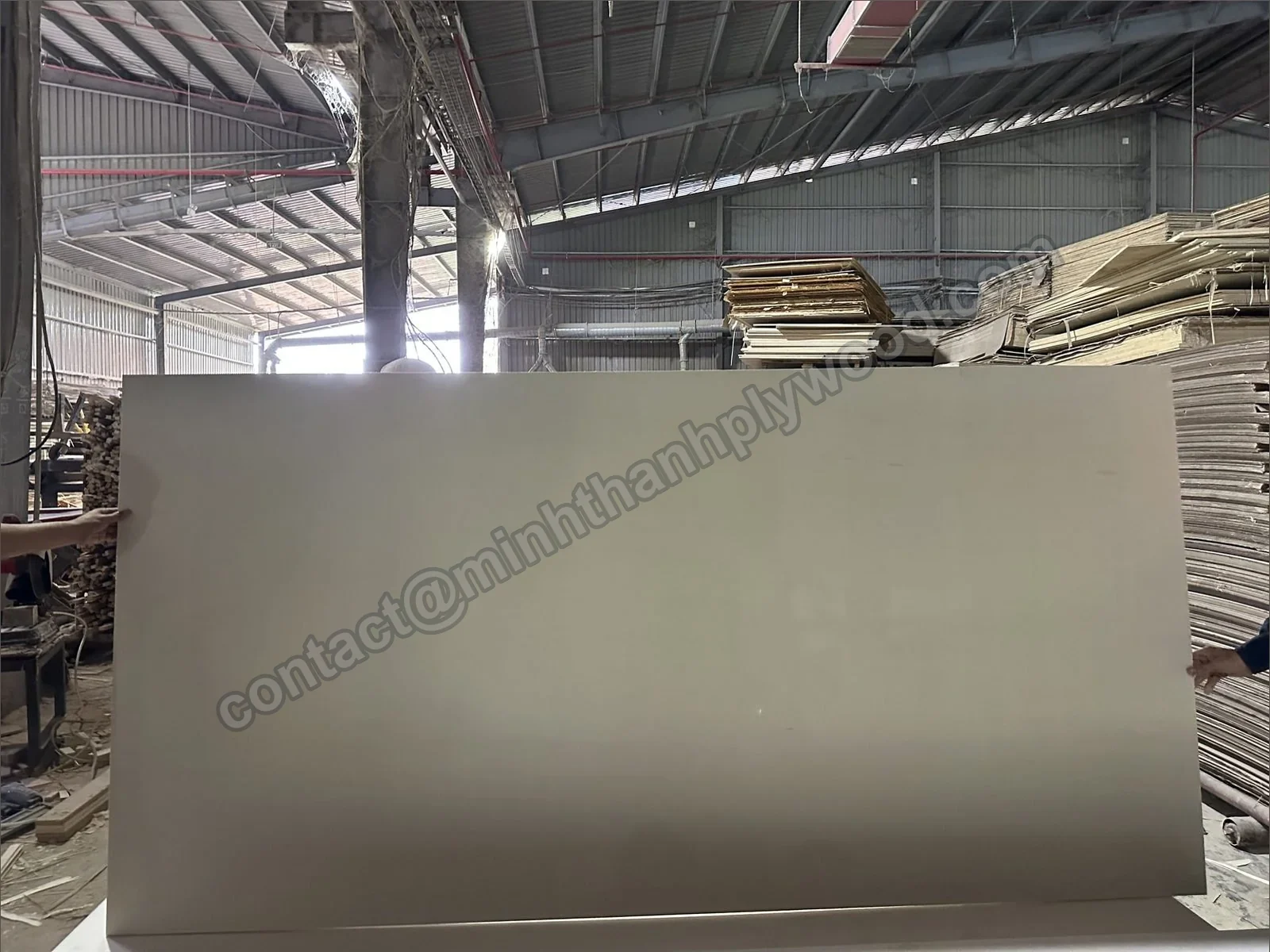
Face veneer sheets sorted into grade stacks before lay-up. 06Face veneer sorting
Face veneer is sorted sheet by sheet for colour, grain and natural features, then matched to the sample you approved. Sheets for one order are kept together so faces match across the container. Birch face veneer is imported; poplar, okoume, pine and the other faces are sorted the same way.
- Face veneer 0.2–0.5 mm; European orders often 0.3 mm
- Each sheet compared with your approved sample
- Faces for one order sorted and kept together
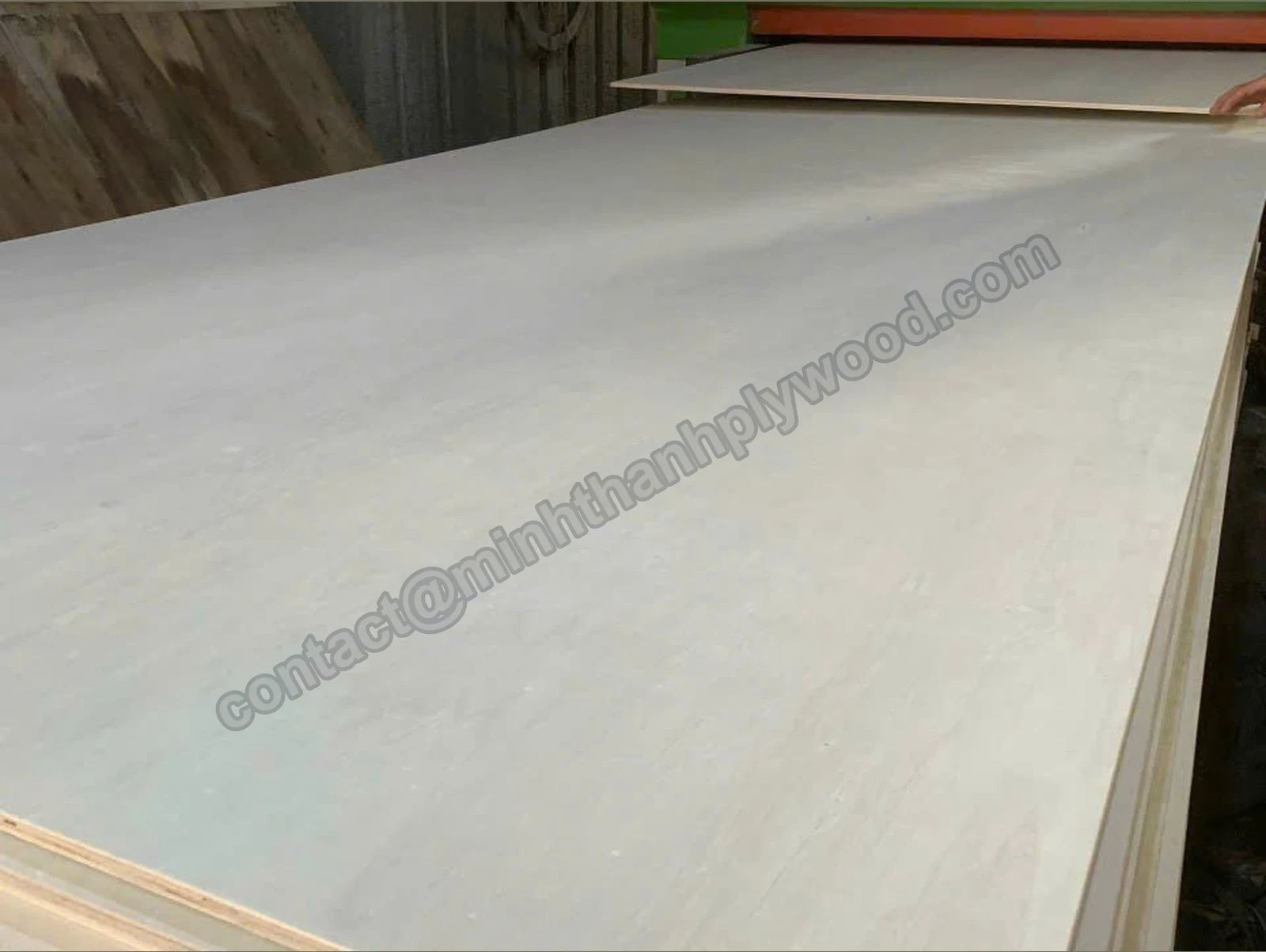
After sanding, the whole face is graded again. 07Face grading on the sanded panel
After pressing and sanding, every face is graded again on the finished panel, because sanding shows what the raw veneer hides. Repairable defects are filled and re-sanded; the rest move down a grade.
- Face and back graded on every sheet
- Open defects filled by hand before final sanding
- Panels below the ordered grade kept out of the order
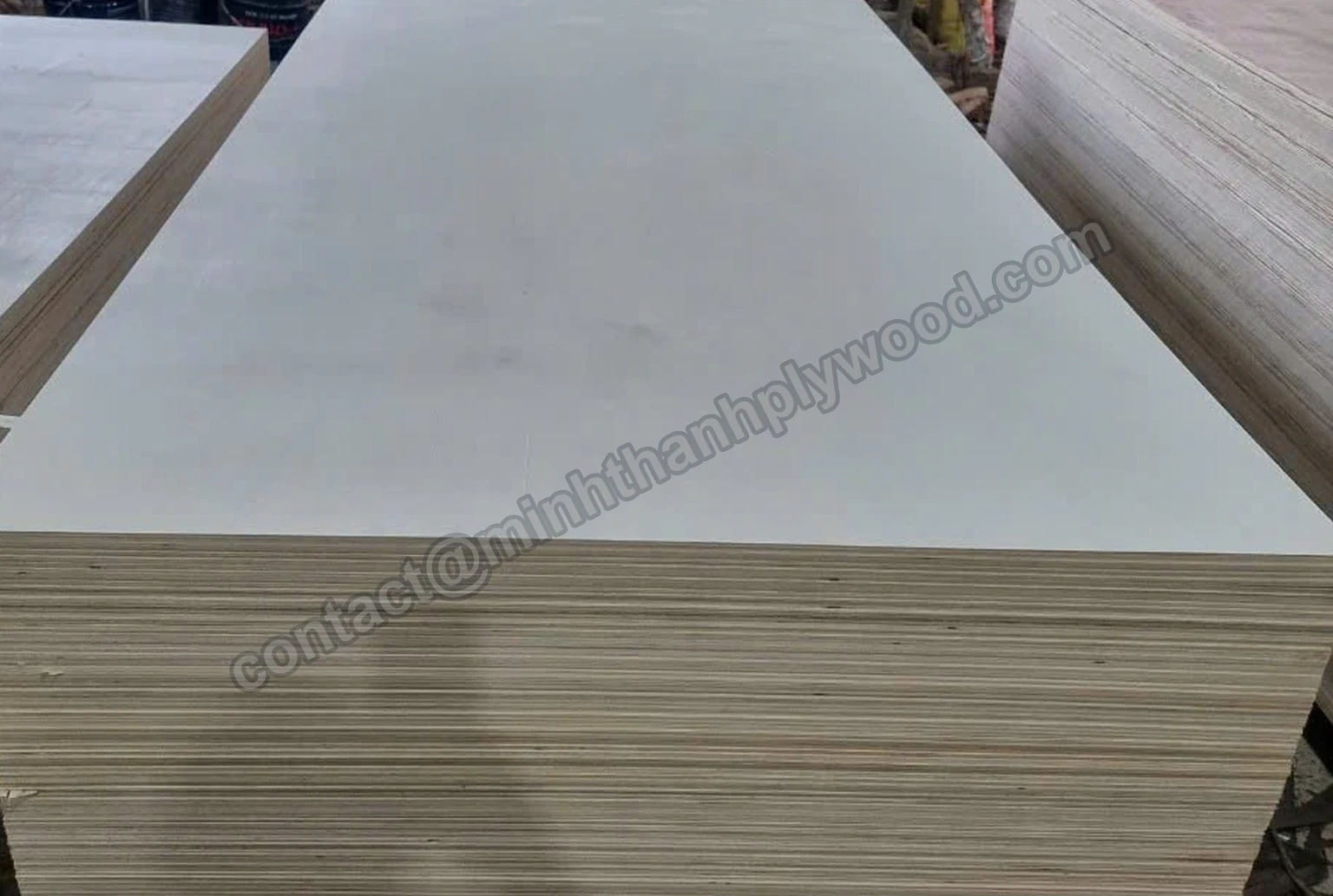
Finished panels stacked for final face grading and packing. 08Grade record before packing
Graded panels are stacked by grade and photographed. Faces, backs and edges of sample panels go to you with the shipment record before the container is sealed.
- Packs stacked and labelled by grade
- Face, back and edge photos of sample panels
- Record sent by email or WhatsApp before loading
Real veneer sorting videos
Watch veneer sorting and face grading on the floor.
Unedited clips from production show veneer grading as it happens, from core veneer sheets to the face of the finished panel.
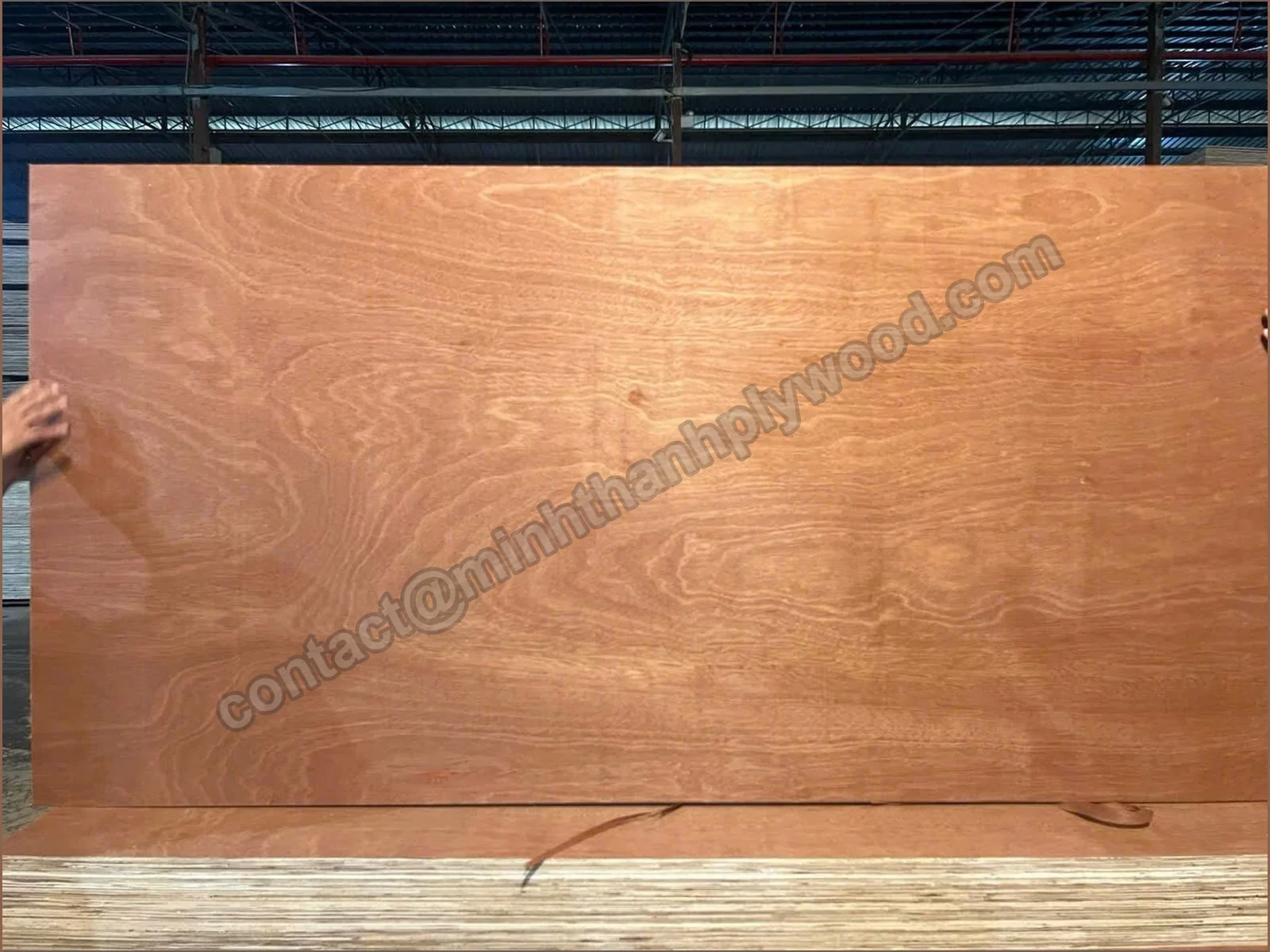
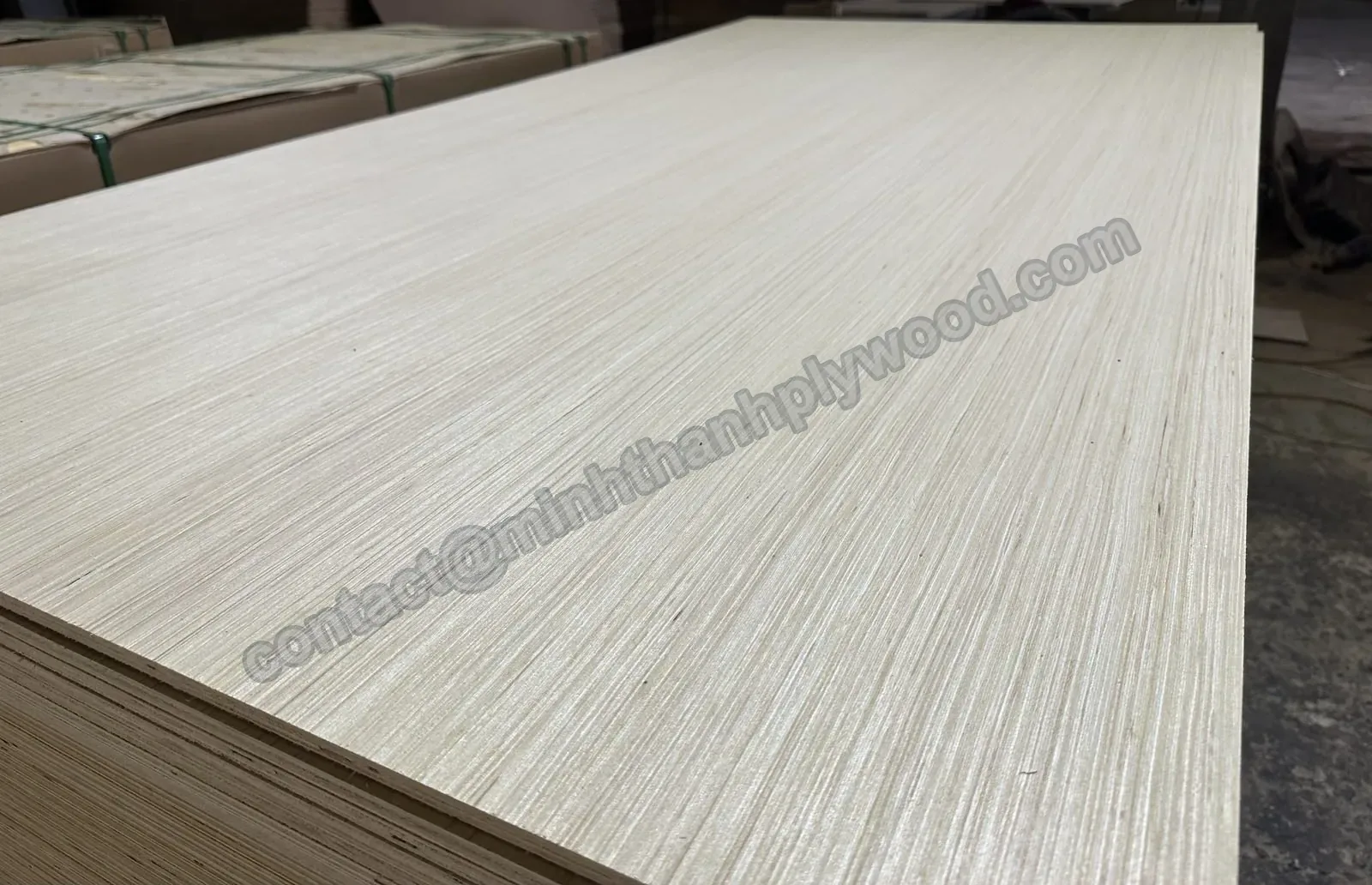
Defects allowed per grade
Plywood face grades: which defects each grade allows.
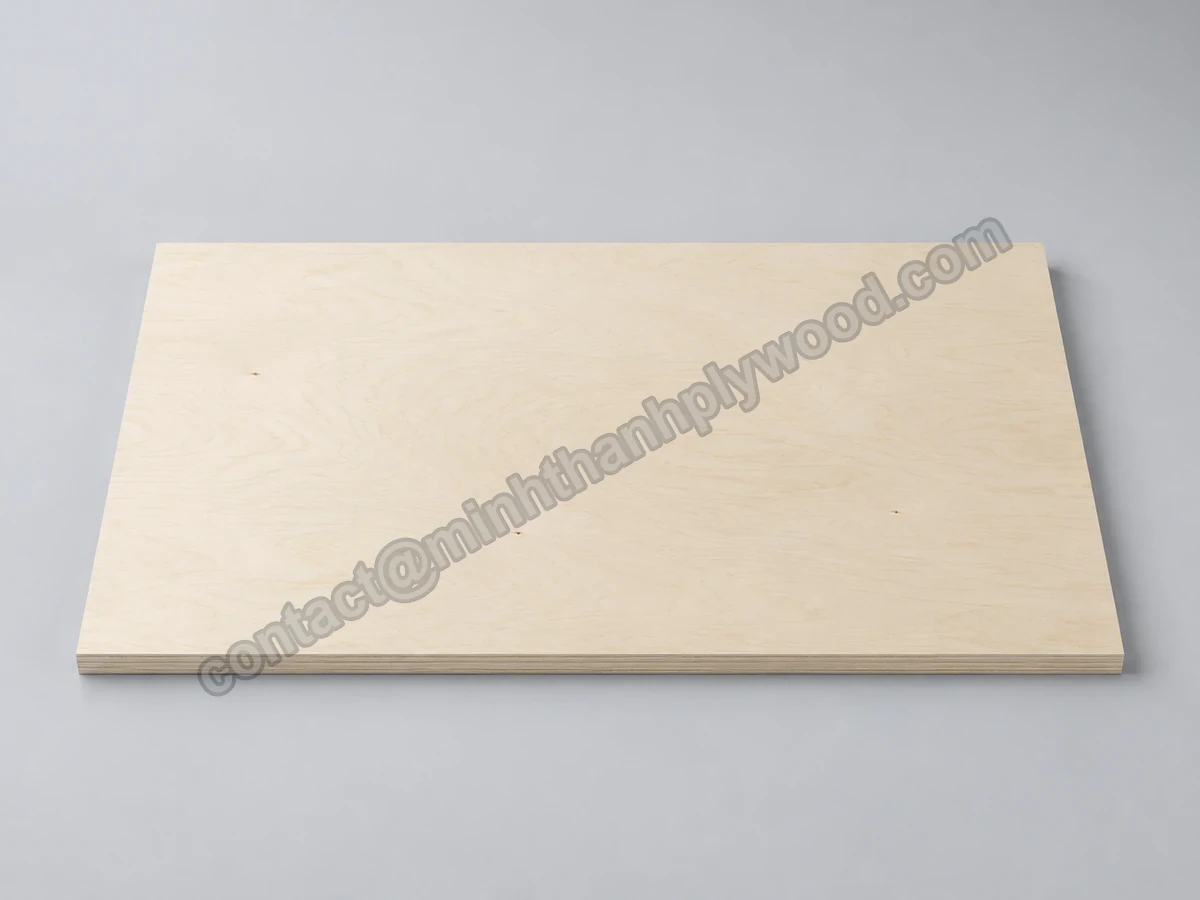
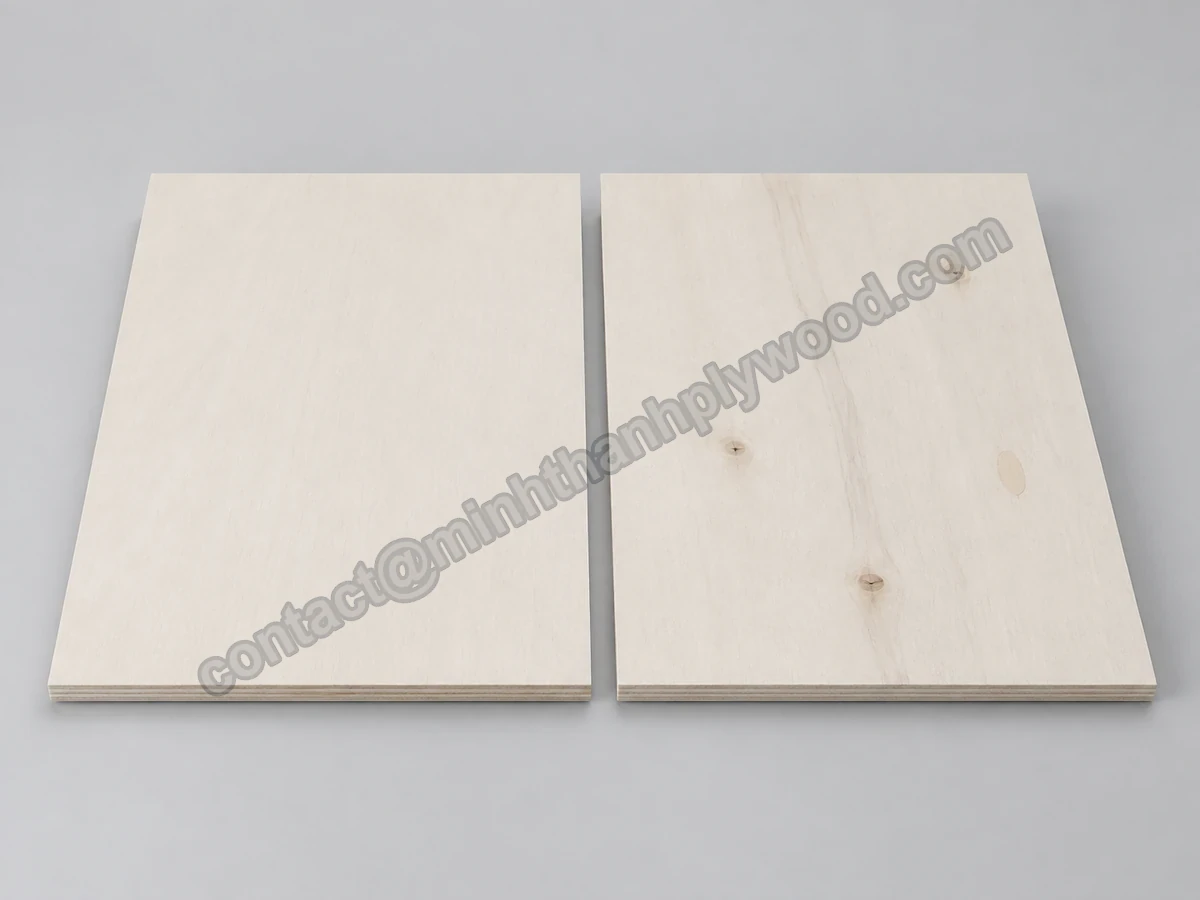
Each face grade is defined by the natural features and repairs it allows. Birch D+ allows only tiny pin knots; D adds small sound knots and neat patches; E accepts colour variation, filled knots and small closed splits. Other natural faces follow the same logic in A and B.
| Feature | Birch D+ | Birch D | Birch E | Other faces A | Other faces B |
|---|---|---|---|---|---|
| Colour | Even, pale | Slight variation | Clear variation | Even for the species | Variation allowed |
| Pin knots | A few, tiny | Some | Allowed | A few, small | Allowed |
| Sound knots | None to very few | A few, small | Several | Very few | Several |
| Open knots and holes | None | None | Filled | None | Filled |
| Patches (plugs) | None | A few, neat | Several | None to very few | Allowed |
| Splits | None | None | Small, closed or filled | None | Small, filled |
| Colour and mineral streaks | None | Light | Allowed | Light | Allowed |
| Best for | Clear lacquer, visible furniture faces | Furniture faces and backs | Backs, painted, foiled or hidden parts | Visible faces | Backs, painted and commercial panels |
Open defects are filled by hand before final sanding. The grade describes the face only; core, glue, thickness and tolerance are specified separately.
Veneer grading specifications
The numbers behind our veneer grading.
These are the limits we sort to: core veneer 1.4–2.0 mm graded A or AB by product line, face veneer 0.2–0.5 mm graded to your approved sample. Every value below is a factory sorting rule, checked sheet by sheet.
| Core veneer thickness | 1.4–2.0 mm; 1.3 mm Styrax for 4 mm thin panels |
|---|---|
| Core veneer grades | A for furniture and interior; AB for commercial and packing |
| Core defects sorted out | Splits, holes, rot and soft wood; short or narrow sheets |
| Core joining | Outer 2–4 layers stitched both ways; all layers on request |
| Face veneer thickness | 0.2–0.5 mm; European orders often 0.3 mm. A thicker face sands more safely and hides the core better |
| Birch face grades | D+, D and E (best to lowest), quoted as face/back pairs such as D+/D or D/E |
| Birch European equivalent | D+ ≈ B, D ≈ BB, E ≈ CP; B/BB ordered as D+/D, BB/CP as D/E |
| Other natural faces | A and B |
| EV (engineered veneer) | One consistent grade; colour and grain matched across batches |
| Film-faced | By film weight: 120–135 g/m², premium from 135 g/m² |
| Face preparation | Sanded and polished; both faces UV-ready |
| Glue and emission | E0 standard for furniture panels; E1, MR or WBP to order |
| Grade reference | Your approved sample |
Birch D+, D and E are the grade names used in Vietnam; the ladder is comparable to the European birch grades B, BB and CP, and the free sample you approve fixes the exact face.
Official sources: ANSI/HPVA HP-1-2024 hardwood plywood standard (PDF) · ISO 9001:2015 quality management (ISO) · CARB composite wood products program · TSCA Title VI formaldehyde emission standards (EPA)
Grade systems explained
How our plywood face grades compare with other grade systems.
Buyers name face grades from several systems, so we translate each one into our factory grades and fix the result with a free sample. Birch D+, D and E follow the European B, BB and CP ladder; HP-1, EN 635 and APA letters map onto A and B for other faces.
Birch-faced plywood is often bought by the European birch grades B, BB, CP and C, written face/back such as B/BB. Vietnamese mills name the same ladder D+, D and E, from best down: D+ is comparable to B, D to BB and E to CP. So a B/BB order is made as D+/D, BB/BB as D/D and BB/CP as D/E.
North American buyers name ANSI/HPVA HP-1 grades. Hardwood faces run from AA and A, the cleanest, through B, C and D to E; backs are graded 1 to 4 and inner plies J, K, L and M. An A1 panel has an A face and a 1 back. HP-1 grades the finished, spliced face sheet on the panel, as we do after sanding.
European buyers may use EN 635 appearance classes E, I, II, III and IV, with hardwood faces in EN 635-2. Softwood construction panels use APA letters A to D, often written BCX or CDX, where X marks an exterior bond. Those letters describe sheathing, a different product from furniture plywood.
All these systems grade the same things: colour match, knots, patches, splits and streaks. They differ in how many of each they allow per sheet and how strictly colour is matched. That is why we turn any grade name into a sample: one face and one back both sides can see.
How the veneer is cut also changes the look. Most plywood faces, including birch, poplar, okoume and eucalyptus, are rotary-cut: the log turns against a long knife, giving one wide sheet with a broad, wavy figure. Sliced veneers show straighter, narrower grain. EV engineered veneer is dyed, glued into a block and sliced again, so its straight grain repeats exactly.
Defect names are the same in every system. A pin knot is a tiny dark dot; a sound knot is larger, tight and solid; an open knot has fallen out and must be filled. A patch, or plug, is a neat piece of matching veneer set into a defect. Mineral streaks are grey-green lines in poplar; colour streaks are darker bands of heartwood.
Face grade is only half of the panel. A clean face on a gappy core telegraphs through a thin finish. Our core grading removes voids, overlaps and short sheets: A-grade core for furniture panels, AB for commercial and packing, with the outer 2–4 core layers stitched both ways. Furniture panels are pressed twice: core first, then face and back.
To check the grade on arrival, pull five sheets from different packs and lay them in even daylight beside the approved sample. Read face and back for knots, patches, splits and streaks, check the edges for gaps and overlaps in the core, and meter a few panels: furniture plywood normally reads 8–12% moisture.
How to approve a face grade sample
A sample turns a grade name into a face both sides can see.
- Name the face and the use. Tell us the species, the grade you buy today in any system, and what the panel becomes: clear-lacquered furniture, painted parts, or packing.
- Receive free samples. We send face samples of the grades that fit your use, with face and back marked.
- Approve one face and one back. Mark the sample you accept for the face and for the back. That pair becomes the grade reference for your order.
- Check the production photos. Before loading we send face, back and edge photos of panels from your order, graded against the approved sample.
- Keep the sample for repeat orders. We keep a matching sample, so the next container is graded to the same face.
| System | Clear-finish face | Furniture face or visible back | Painted or hidden back | Utility |
|---|---|---|---|---|
| Minh Thanh birch grades | D+ | D | E | Not used for birch |
| European birch ladder (GOST tradition) | B | BB | CP | C |
| Minh Thanh other natural faces | A | A | B | B |
| ANSI/HPVA HP-1 hardwood faces | AA, A | B | C, D | E |
| EN 635 appearance classes | E, I | II | III | IV |
Before loading
Every shipment's faces photographed and filmed.
Veneer grading ends with proof you can see. Before the container is sealed you receive photos and video of the faces, backs and edges of panels from your order, graded against your approved sample.
- Faces and backs of sample panels from different packs
- Close-ups of edges: ply count, core and joints
- Packs stacked and labelled by grade
- The container during loading and fully loaded
- Your own inspector or a third-party agency is welcome before loading
Want specific panels photographed? Name them in your order and we add them to the record.
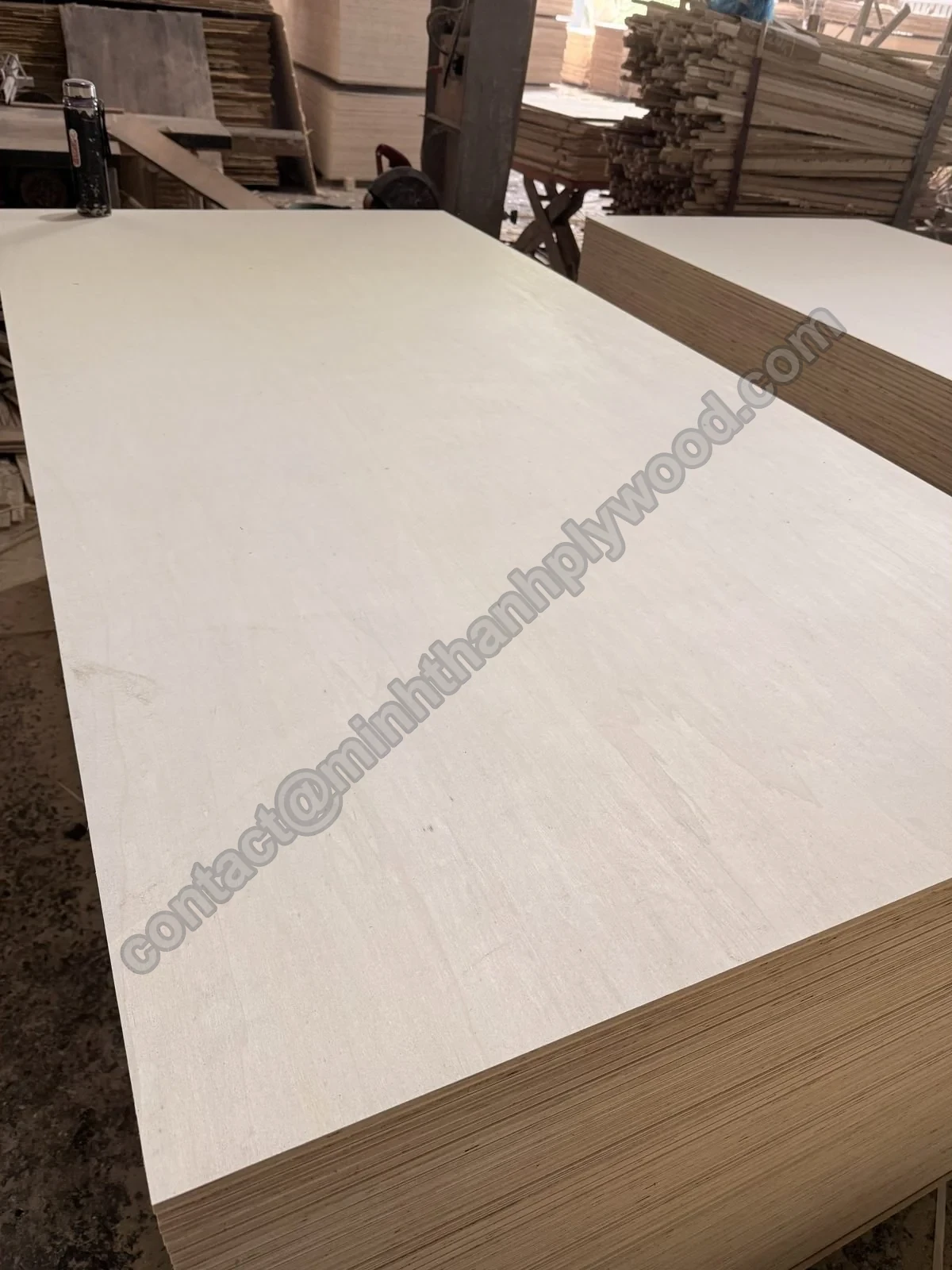
Grade, price and use
How face grade changes the price and the end use.
Face grade is one of the biggest price drivers in plywood. A higher grade needs more veneer sorted out to find each clear sheet, so pick the lowest grade that does the job.
European furniture orders
Most European furniture buyers take birch D+/D or D/E faces, 0.3 mm thick, on an A-grade white Styrax core with E0 glue, sanded and polished both sides.
Clear-lacquered furniture
Visible faces under clear lacquer or oil show every knot and patch. Birch D+ or A-grade faces, often with a D or B back.
Cabinets and carcasses
Inside faces matter less than doors. Birch D/D or D/E, or A/B in other species, keeps the visible side clean at a lower cost.
Painted and foiled parts
Paint, foil or laminate covers colour variation and filled defects. Birch E, B-grade poplar or eucalyptus faces cost less and paint well.
Matching across orders
When colour must match container after container, EV engineered veneer gives the same grain and colour every time.
Commercial plywood
AB core with B faces, light sanding or unsanded. Strong and flat for general joinery, shopfitting and building work.
Packing and crates
AB core laid loose and utility faces. Appearance hardly matters, so the grade is set for bond, size and price.
Two offers with the same product name may not be the same construction. Core grade, joining method, face grade, adhesive and tolerance all change the price.
Capacity
Graded veneer for 50,000+ m³ of plywood a year.
Veneer grading at Minh Thanh is built for volume: every sheet of core and face veneer goes through the same sorting checks on every container. Cores come from plantations around Ha Hoa, and our team has made plywood for over 20 years.
About the factoryHow to specify face grade
Specify the face grade in your order in six lines.
Most face disputes start with a grade name and no sample. These six lines give our veneer grading and your inspector the same reference.
- 01
Face and back species
For example birch face, birch back; or okoume face, eucalyptus back.
- 02
Face grade / back grade
In our grades (birch D+/D or D/E, other faces A/B) or in the system you buy today; we translate it.
- 03
Face veneer thickness
0.2–0.5 mm; state 0.3 mm if that is your European standard.
- 04
Finish and use
Clear lacquer, paint, foil, laminate or your own UV coating; sanded and polished, UV-ready.
- 05
Core grade
A-grade Styrax or Eucalyptus for furniture; AB for commercial and packing.
- 06
Approved sample
Ask for free samples and approve one face and one back before production.
Questions buyers ask
Veneer grading FAQ.
Short answers to the questions buyers ask most about veneer grading.
What is veneer grading?
Veneer grading is sorting each veneer sheet into a quality class by thickness, size, moisture and visible defects such as knots, splits, patches and streaks. Core veneer grades set how flat and solid a panel is; face veneer grades set how it looks and what it is used for.
What are plywood face grades?
Plywood face grades describe the appearance of the face and back veneer: colour, grain, knots, patches and repairs. We grade birch faces D+, D and E, and other natural faces A and B. The free sample you approve fixes the face for your order.
What does D+/D mean on birch-faced plywood?
D+/D is a D+ face with a D back; the first grade is always the face. D+, D and E are the birch face grades used in Vietnam, best to lowest. European furniture buyers usually order D+/D or D/E.
How do birch grades D+, D and E compare with B/BB?
They follow the same ladder. D+ is comparable to B, D to BB and E to CP, so a B/BB order is made as D+/D, BB/BB as D/D and BB/CP as D/E. A free sample fixes the exact face before production.
How is core veneer graded?
Core veneer, 1.4–2.0 mm thick, is checked for thickness, width and length, moisture, splits, holes, rot and soft wood. Solid, even sheets are A grade for furniture panels; sheets with small closed splits or minor defects are AB grade for commercial and packing panels.
How thick is the face veneer?
Face veneer is 0.2–0.5 mm. European furniture orders often specify 0.3 mm. A thicker face sands more safely and hides the core better; name the thickness in your enquiry.
Does face grade change the price?
Yes. Higher grades need more veneer sorted out to find each clear sheet, so D+ or A faces cost more than E or B faces. Choose by end use: clear-lacquered faces need the top grades; painted, hidden or packing parts do not.
Can the face and back have different grades?
Yes, and it often saves money. A cabinet side may need a D+ face and a D or E back; a painted panel can take B faces on both sides. Name both grades in your order.
How do you keep the grade the same on repeat orders?
We keep a matching sample of the face you approved and grade every container against it. For colour that must match across orders, EV engineered veneer gives the same grain and colour batch after batch.
Are patches and filled knots defects?
Not in every grade. Neat patches and filled knots are normal in middle and lower grades and disappear under paint or laminate. Top grades such as birch D+ and A faces allow none or very few.
Can I see the faces before the container is loaded?
Yes. Before loading we send photos and video of faces, backs and edges of panels from your order, graded against your approved sample. Your own inspector or an agency is welcome too.
How do I check the face grade on arrival?
Pull five sheets from different packs and compare face and back with the approved sample in even daylight. Count knots, patches, splits and streaks against the grade, check edges for core gaps, and meter a few panels: furniture plywood normally reads 8–12% moisture.
How do HPVA and EN 635 grades relate to yours?
ANSI/HPVA HP-1 grades hardwood faces AA, A, B, C, D and E; EN 635 uses appearance classes E, I, II, III and IV. Send us the grade you buy today in either system and we match it to our factory grades with a sample.
Which face grade should I choose for UV coating or clear lacquer?
Choose a top grade: birch D+ or an A-grade face. Clear finishes show every knot, patch and streak. Our faces are sanded and polished and both faces are UV-ready, so you can apply your own UV coating directly.
Which grade do European furniture buyers usually choose?
For birch-faced plywood, European furniture buyers usually choose factory grades D+, D or E, often D+/D or D/E face and back. Many also specify a 0.3 mm face veneer, an A-grade white Styrax core and E0 glue.
Get a quotation
Send your face grade and we send matching samples.
Tell us the face and back species, the grade you buy today, the face thickness, core, glue, thickness, size and quantity. Lisa replies within hours by email or WhatsApp. Free samples.
[email protected]