
Export packing · Ha Hoa, Vietnam
Plywood export packing that arrives flat, dry and counted
In short
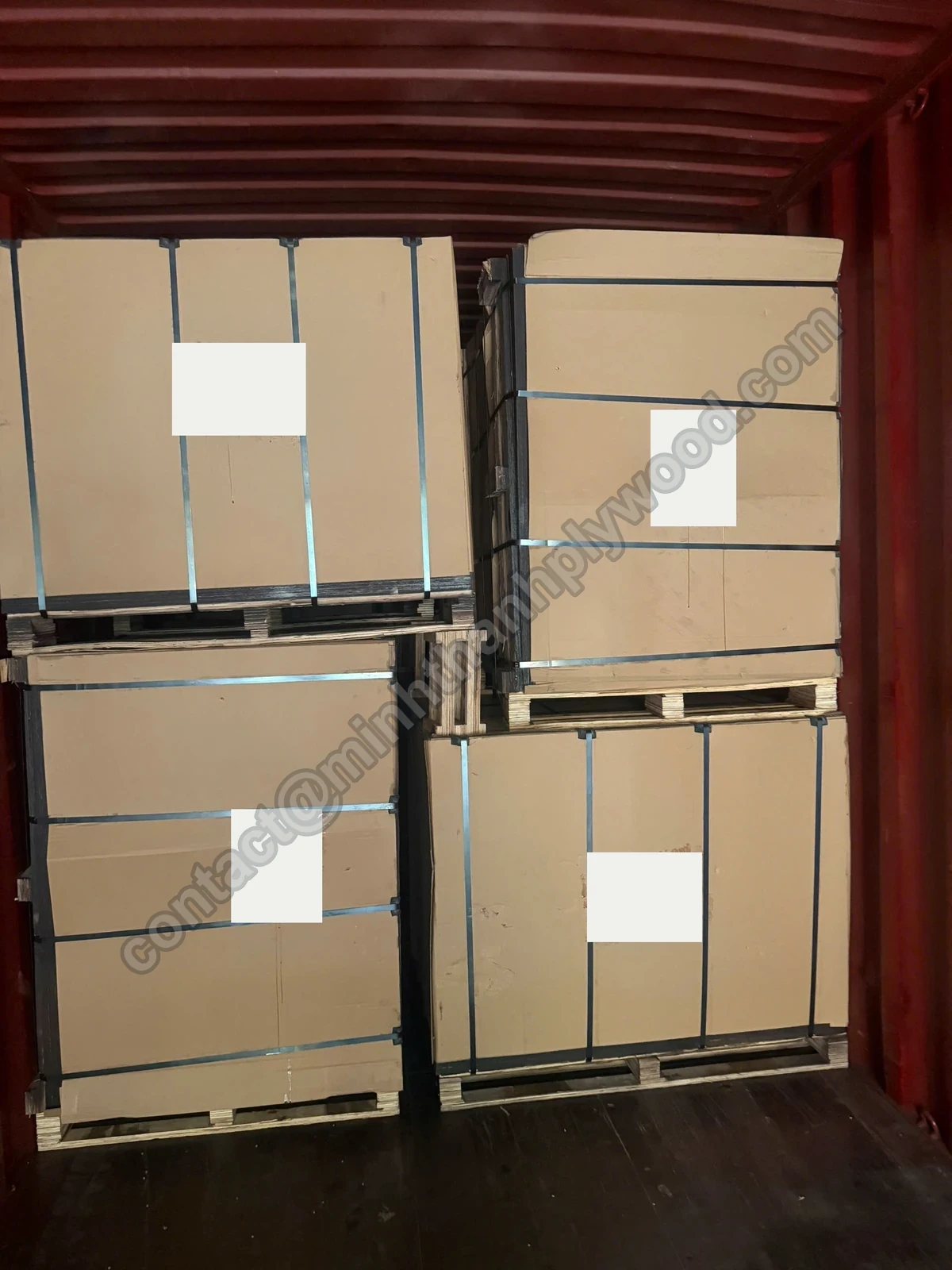
Minh Thanh Plywood builds every plywood export pack the same way: a pallet on plywood bearers, cover boards top and bottom, kraft cardboard, plastic film, corner guards and steel or PET straps, plus your labels. Packs stand about 1,000 mm high, so sheets per pack = 1,000 ÷ thickness, and every pack is photographed before the container is sealed.
Watch the film
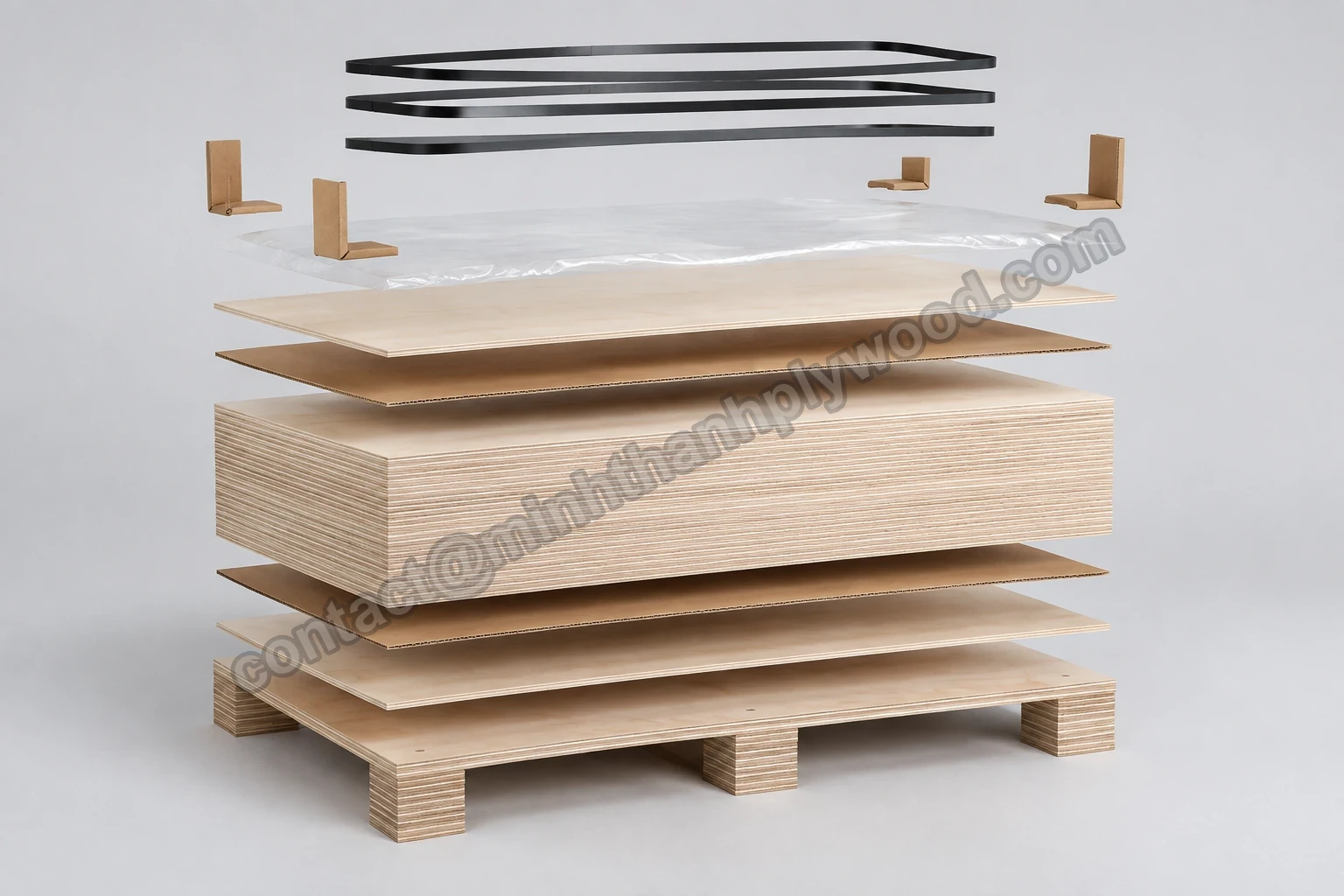
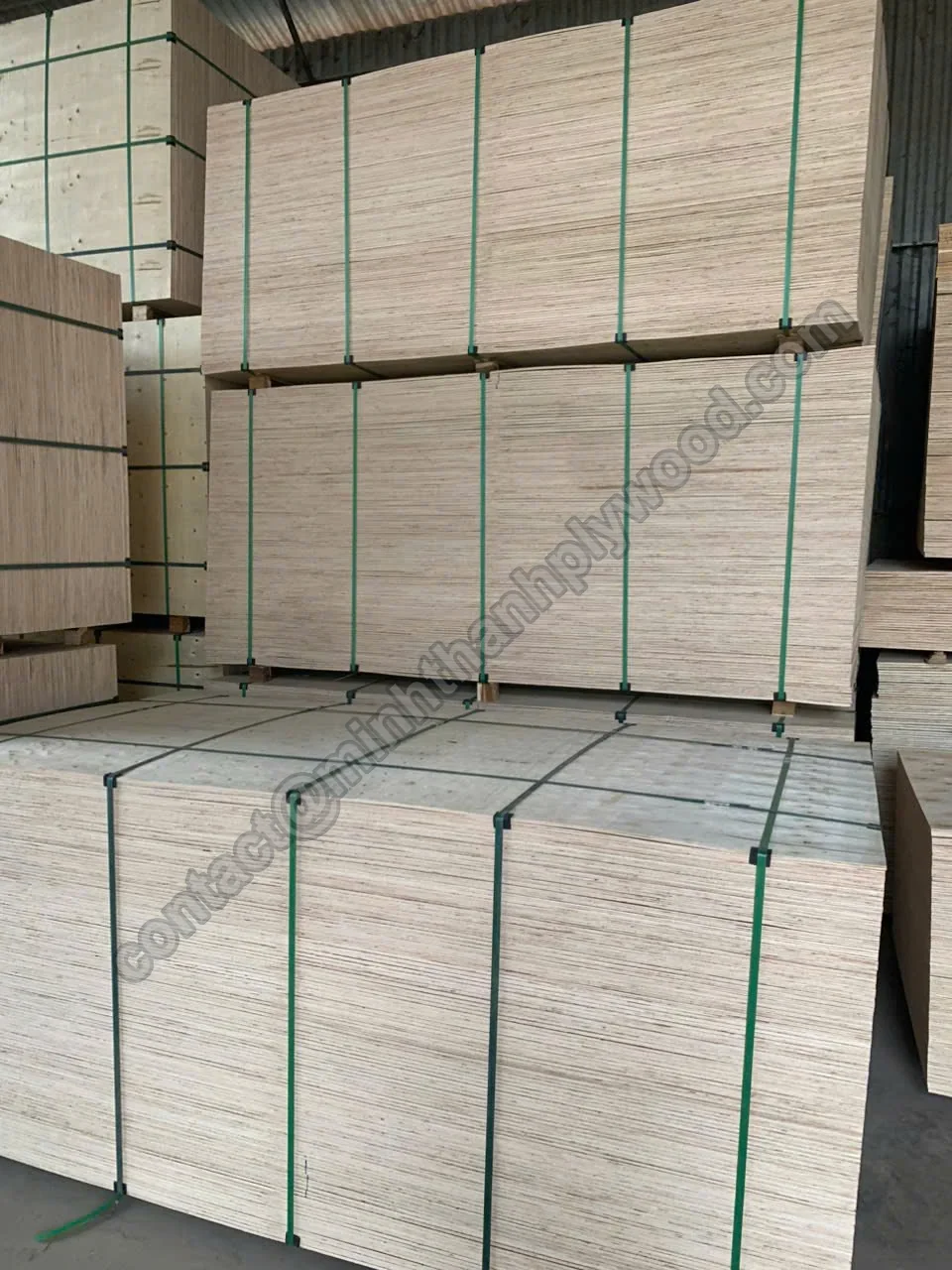
Plywood export packing: how an export pack is built, layer by layer
How Minh Thanh Plywood packs plywood for export: a pallet on plywood bearers, cover boards, kraft cardboard, plastic film, corner guards, steel or PET straps and labels. Packs stand about 1,000 mm high, so sheets per pack equal 1,000 divided by the thickness: 55 sheets of 18 mm. Pack weight follows the core: about 500 kg/m³ Styrax, 580 Acacia, 650 Eucalyptus. Up to 18 packs per 40HC with Styrax core, 16 with Acacia, 15 with Eucalyptus. Pallets meet ISPM 15, all four packaging materials passed an SGS heavy-metal test under the EU PPWR, and every pack is photographed before sealing.
Film (2:20): how a plywood export pack is built, sheets and weight per pack, and the shipment photo record, with real packing footage.
Tested packaging
Plywood export packing backed by a real packaging test.
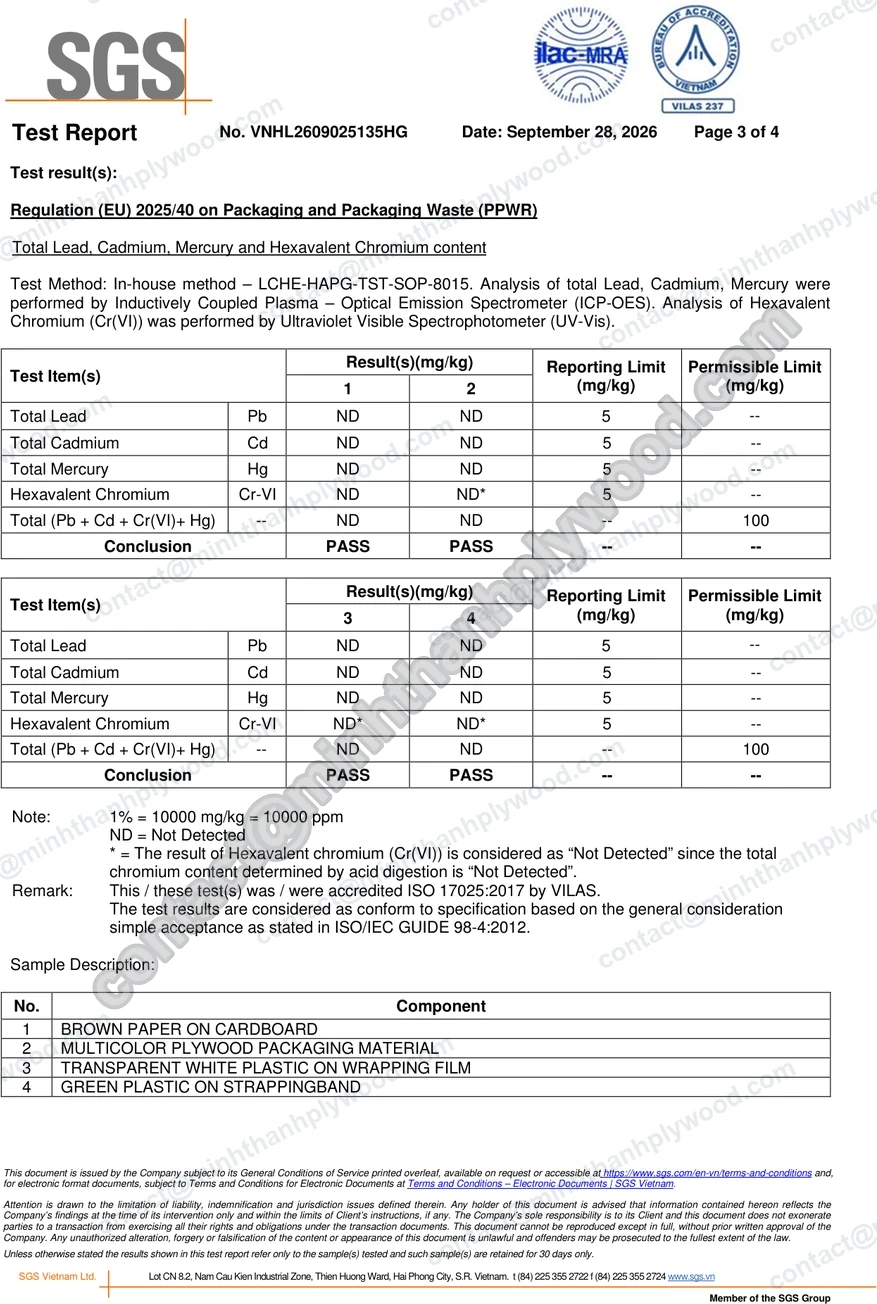
All four packaging materials were tested by SGS under the EU Packaging Regulation. These are English originals; full copies go to buyers by email.
What is plywood export packing?
Plywood packing for export: what each layer of the pack does.
A pack is a set of layers, and each one stops a specific kind of transit damage. This is our standard plywood packing for a 1220 × 2440 mm order.
In shortPlywood export packing is the way finished panels are stacked, protected and secured for sea freight: a pallet or bearers underneath, boards and cardboard over the faces, film against moisture, corner guards, straps and labels. A good pack keeps panels flat, dry, clean and countable from the factory floor to the buyer's warehouse.
| Layer | Material | What it prevents |
|---|---|---|
| Pallet base | Plywood deck on laminated plywood bearers, or plywood bearers only | Floor moisture, forklift damage, sagging |
| Bottom cover board | Thin plywood board, full sheet size | Scuffed and dented bottom faces |
| Bottom cardboard | Kraft corrugated cardboard | Scratches between board and face |
| Panels | 1,000 mm stack, sheets counted and squared | Overhang, miscounts, uneven loads |
| Top cardboard and cover board | Kraft cardboard, then a thin plywood board | Strap marks and dents on the top face |
| Plastic film | Wrapped round the pack or as a top sheet | Rain, condensation drips, dust |
| Corner guards | Cardboard or plywood angles under every strap | Crushed edges and corners |
| Straps | Steel or PET, across the width and along the length | Sheets shifting at sea and in handling |
| Labels and marks | Product label, shipping marks, your private label on request | Wrong pack at the wrong door, lost traceability |
Need a different build, such as a full cardboard box, plywood crate sides or no pallet for floor loading? Name it with the order and we quote it.
Packing options
Plywood packing options by order type.
Most orders take our standard plywood export packing. Long voyages, humid routes and retail brands add layers. Choose the option, or send your own packing specification.
| Item | Standard export pack | Humid routes and long voyages | Your own brand | Cut-to-size orders |
|---|---|---|---|---|
| Base | Pallet or plywood bearers | Pallet on bearers | Pallet on bearers | Pallet on bearers |
| Faces | Cover boards and kraft cardboard | Cover boards and kraft cardboard | Cover boards and kraft cardboard | Cardboard between piece stacks |
| Moisture | Plastic film | Full film wrap, desiccant bags in the container on request | Plastic film | Plastic film |
| Edges | Corner guards under every strap | Corner guards under every strap | Corner guards under every strap | Corner guards under every strap |
| Straps | Steel or PET | Steel or PET | Steel or PET | Steel or PET, more lengthwise |
| Labels | Product label and shipping marks | Product label and shipping marks | Your private label; edge printing on order | Label per piece size |
| Typical use | Furniture makers, distributors | Long sea routes, rainy-season loading | Retail and private-label programmes | Italy and other European markets |
Cut-to-size means one 1220 × 2440 mm panel cut into 4, 6 or 8 pieces; we pack each piece size separately so it is easy to count.
How we pack plywood for export
Eight steps from finished panels to a sealed export pack.
Our plywood export packing starts only after the final quality checks. Each step below adds one layer of protection, and the pack is photographed before it leaves the packing area.
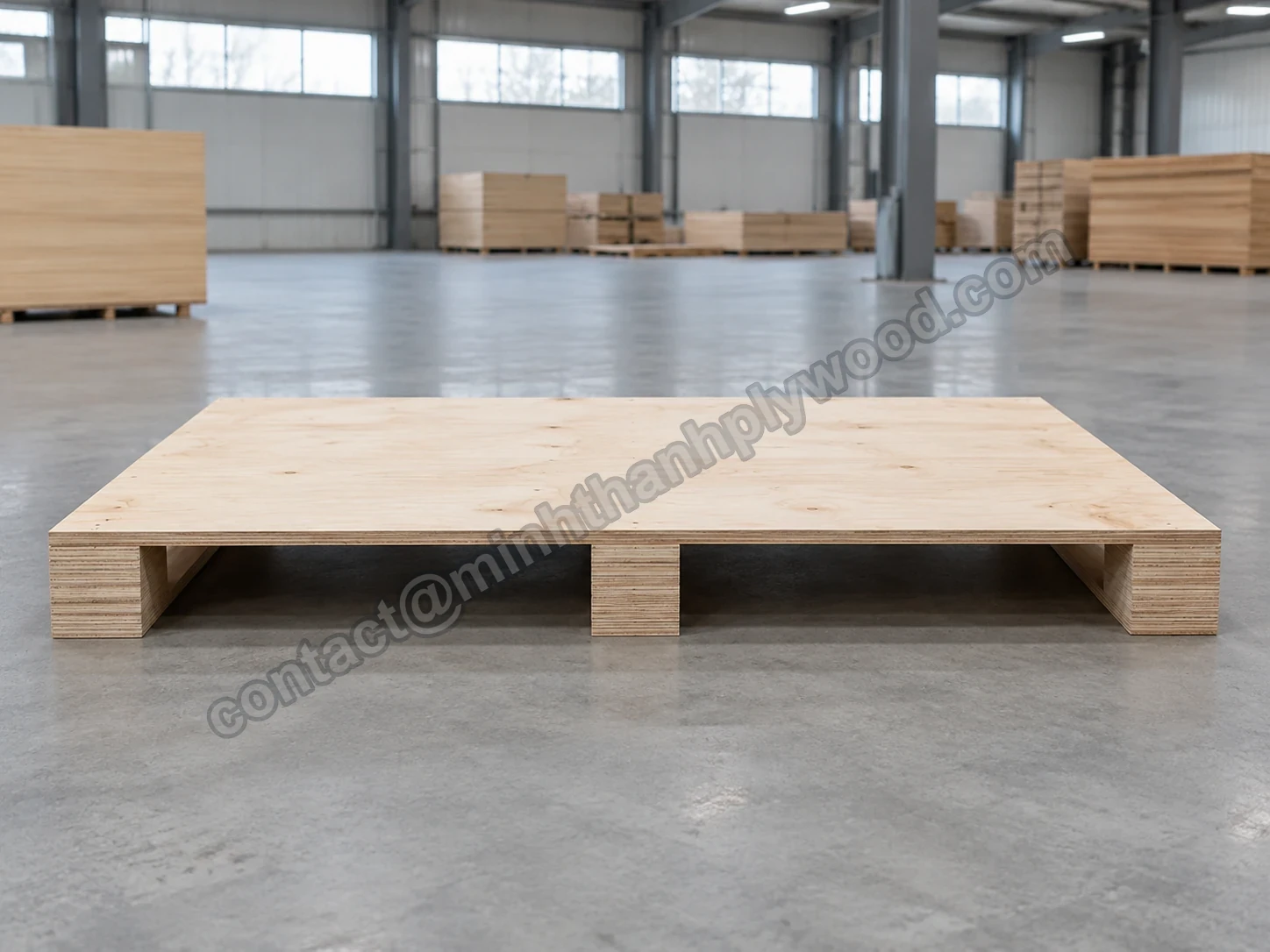
A plywood pallet base on laminated bearers. 01Pallet and bearers
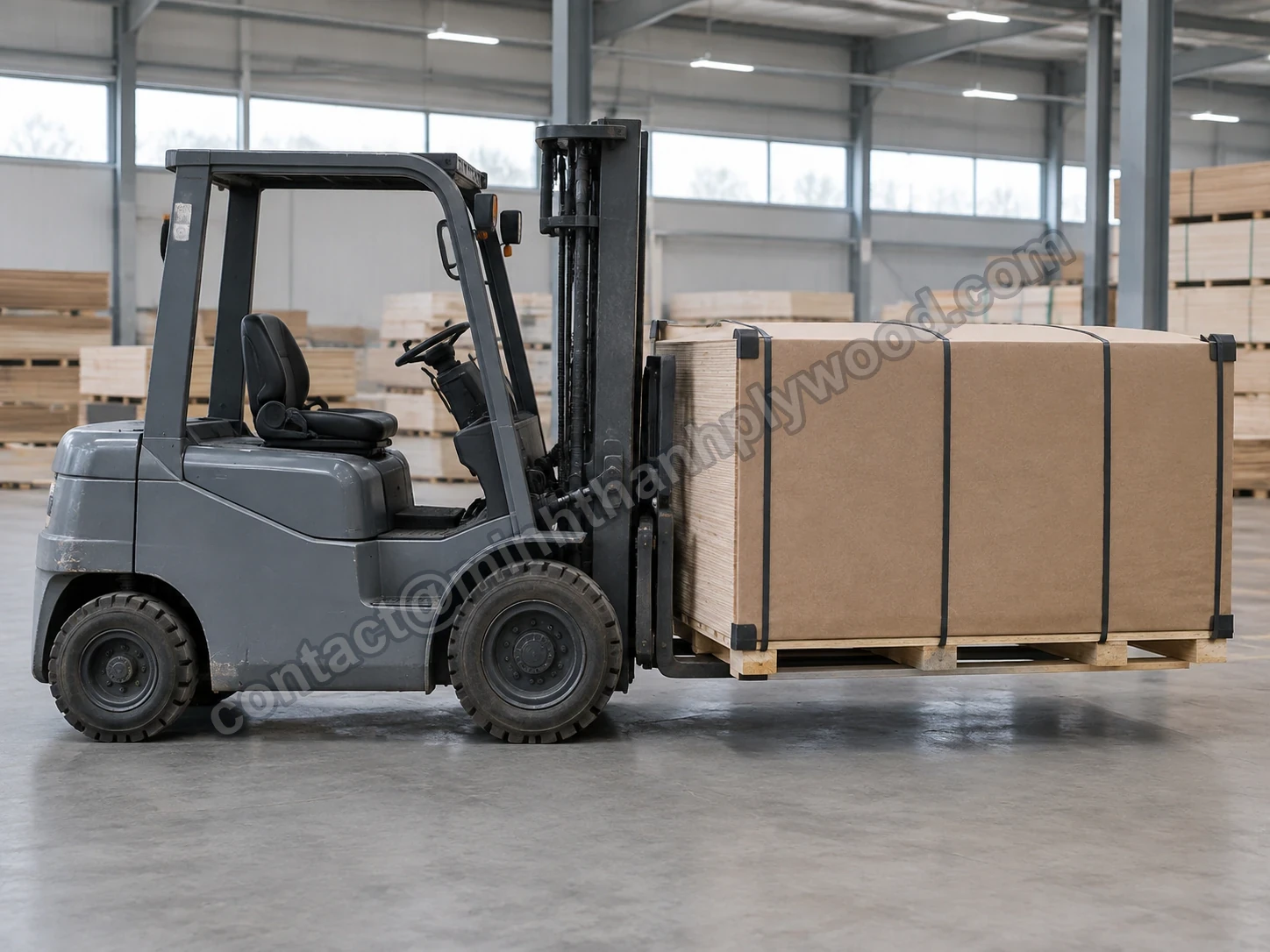
Every pack starts on a pallet or on plywood bearers that lift it off the floor and leave room for forklift tines. Bearers sit under the full width of the pack, so the panels cannot sag between them.
- Bearers under the full pack width
- Forklift gap on the long side
- Plywood bearers exempt from ISPM 15 as processed wood
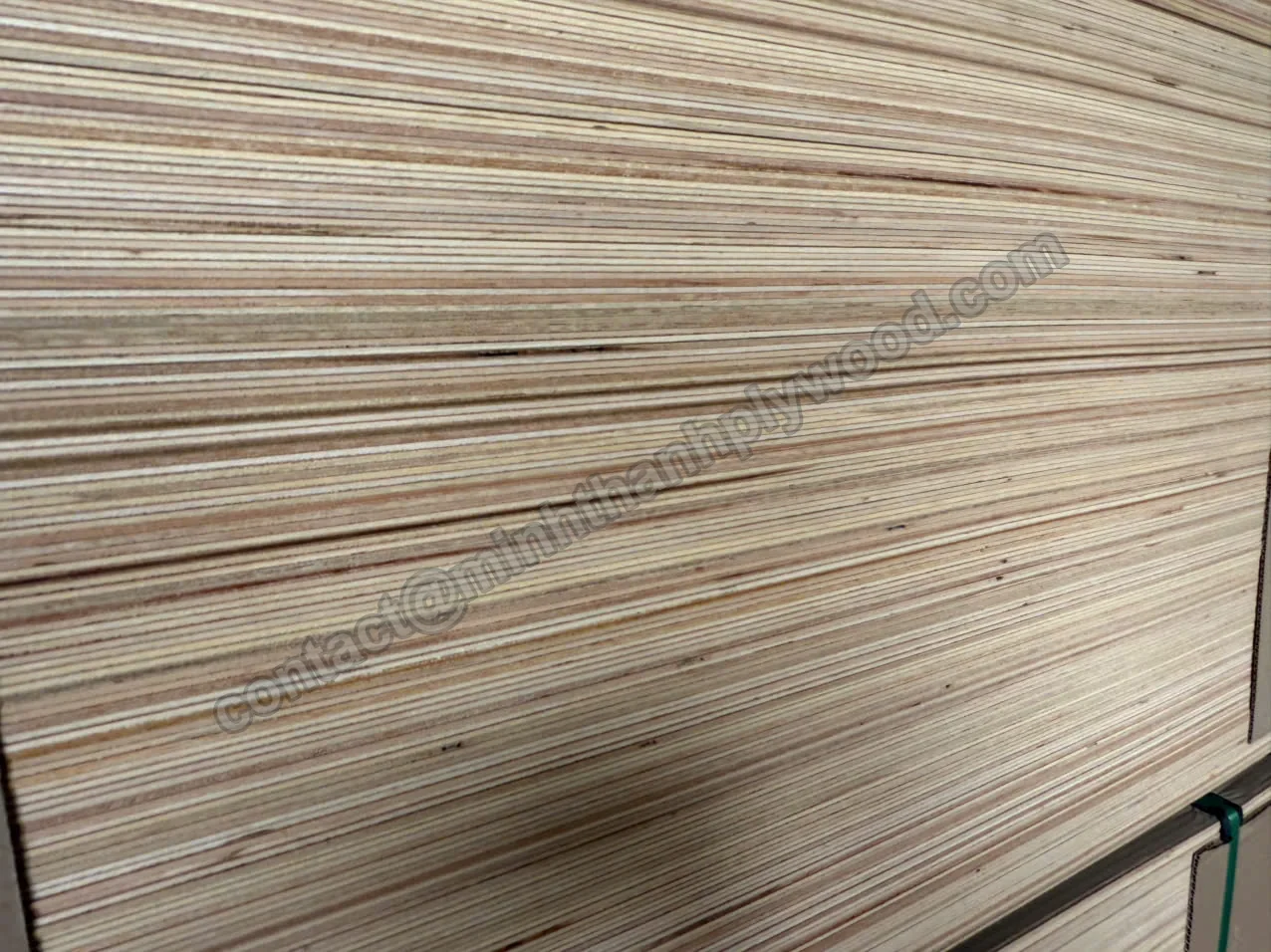
Squared sheet edges on the long side of a pack. 02Sheets counted and squared
Panels go onto a bottom cover board and cardboard, then are stacked to about 1,000 mm. We count sheets as they go on and square the stack, so the edges line up and no sheet overhangs.
- Sheets per pack = 1,000 ÷ thickness, e.g. 55 × 18 mm
- Count matched to the packing list
- Edges squared, no overhang
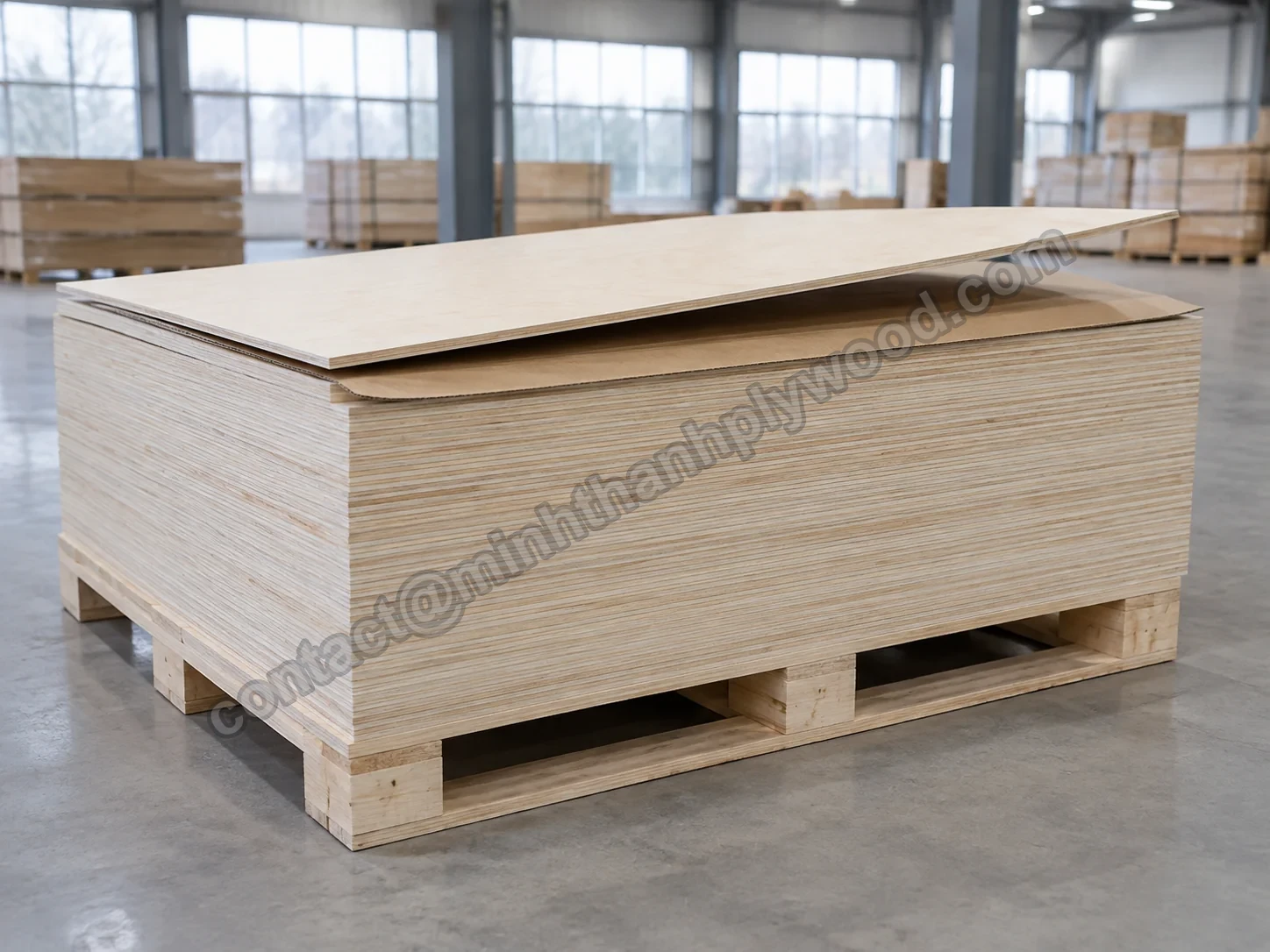
Cardboard and a cover board go over the top face. 03Top cardboard and cover board
A sheet of kraft cardboard goes over the top face, then a thin plywood cover board. Straps press on the board, not on your face veneer, so the top sheets arrive without strap marks.
- Kraft cardboard over the top face
- Plywood cover board, full sheet size
- Same build top and bottom
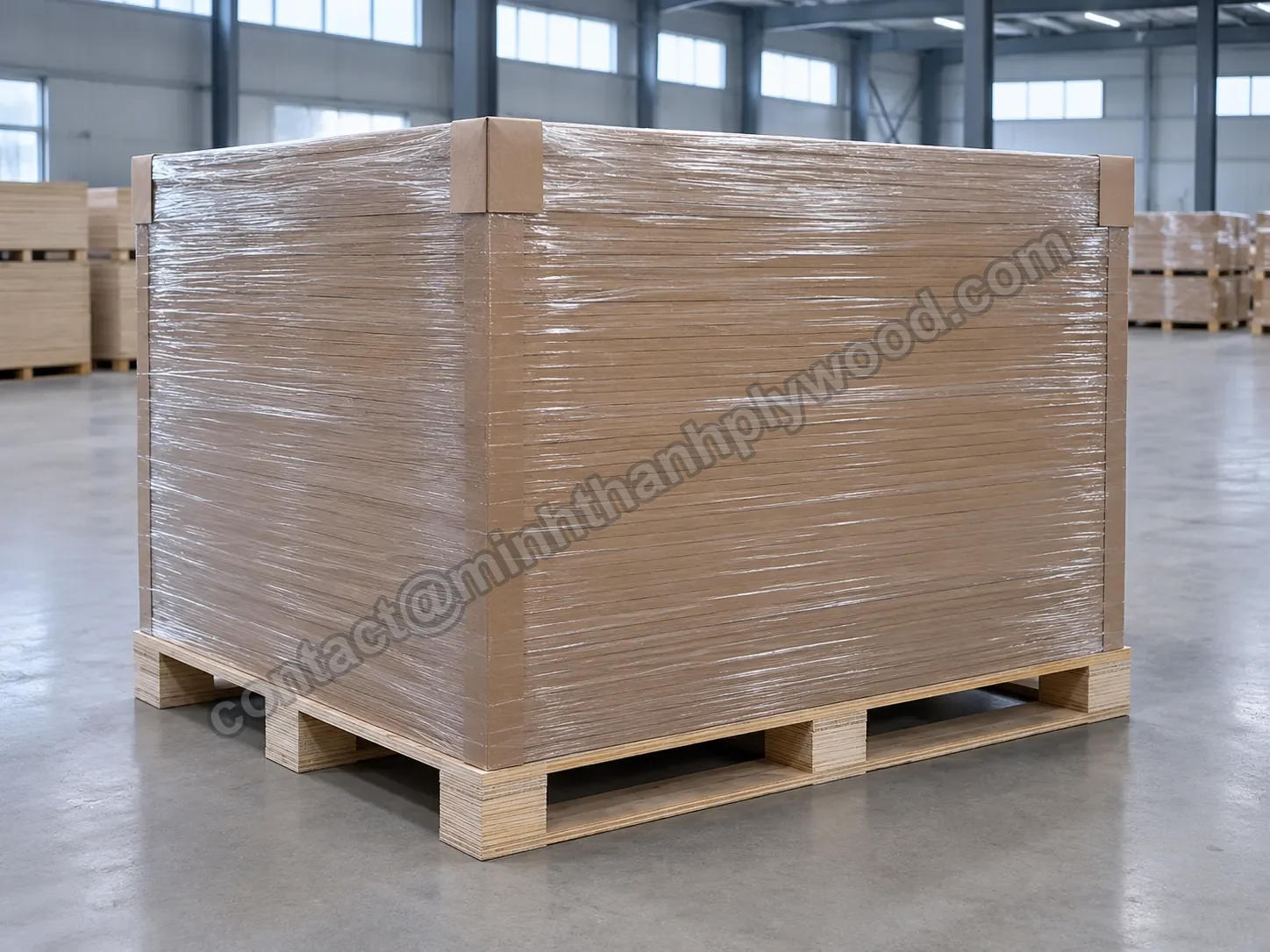
A pack wrapped in clear film over kraft cardboard. 04Plastic film against moisture
Plastic film is wrapped round the pack or laid as a top sheet under the cardboard. It keeps out rain at the port and condensation drips inside the container.
- Panels packed at 8–12% moisture content
- Film wrap or top sheet as agreed
- Packs stored indoors until loading
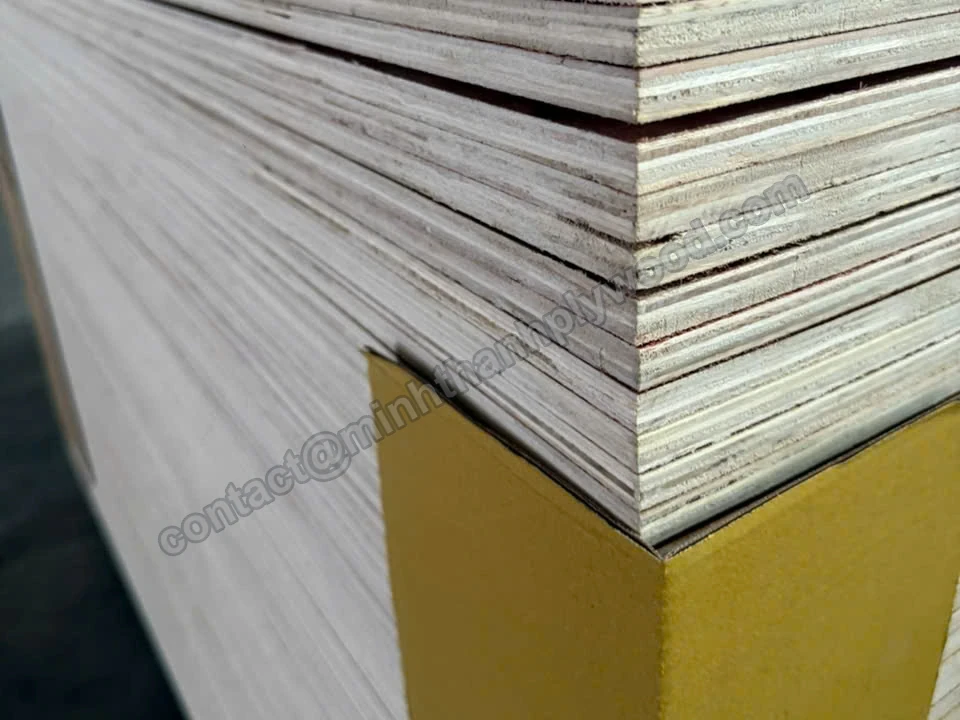
A corner guard on the edge of a pack. 05Corner guards
Corner guards go on every edge where a strap crosses. They spread the strap tension, so the outer sheets keep sharp, undamaged edges.
- Guard under every strap crossing
- Cardboard or plywood angles
- Top and bottom corners
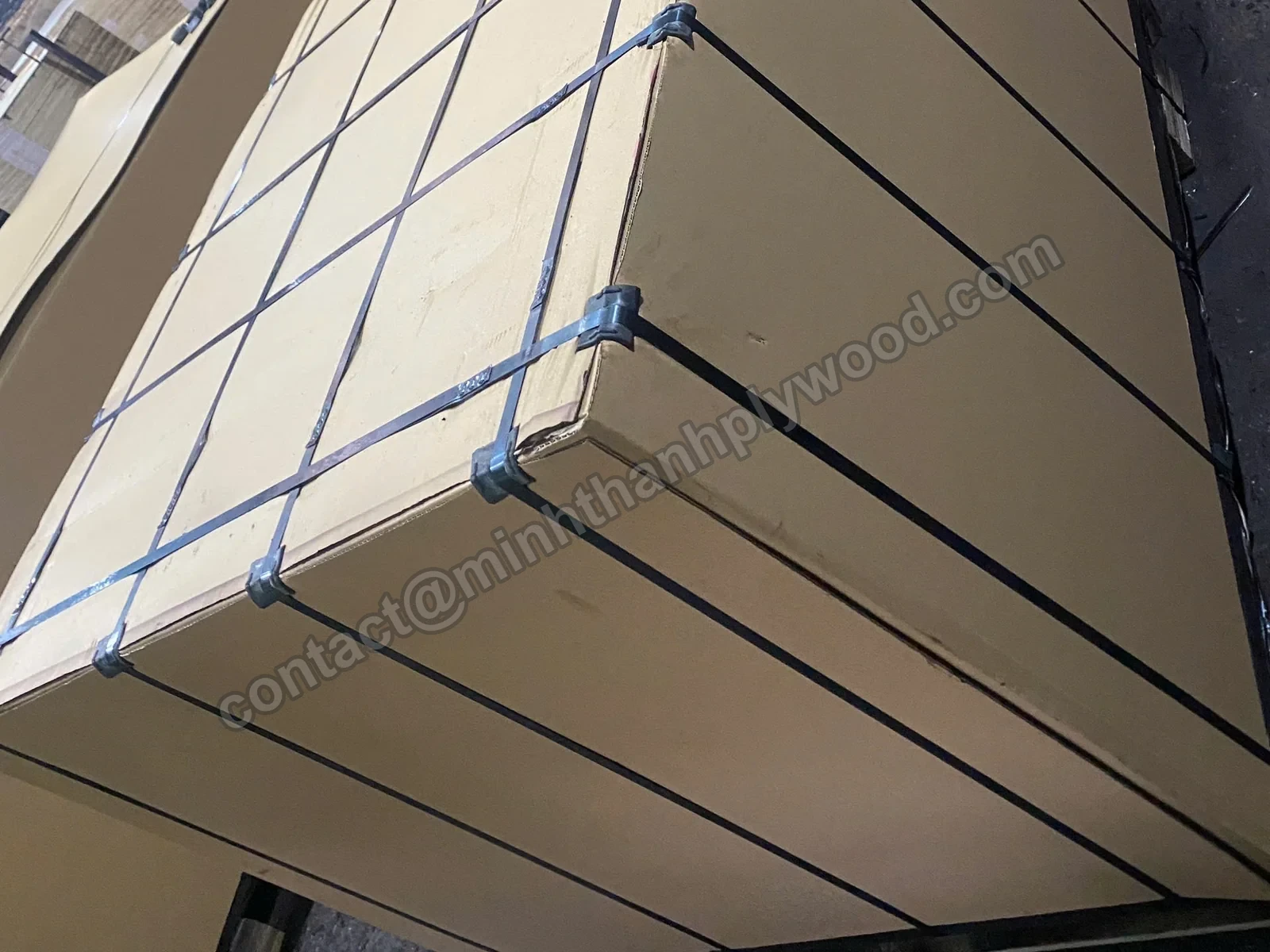
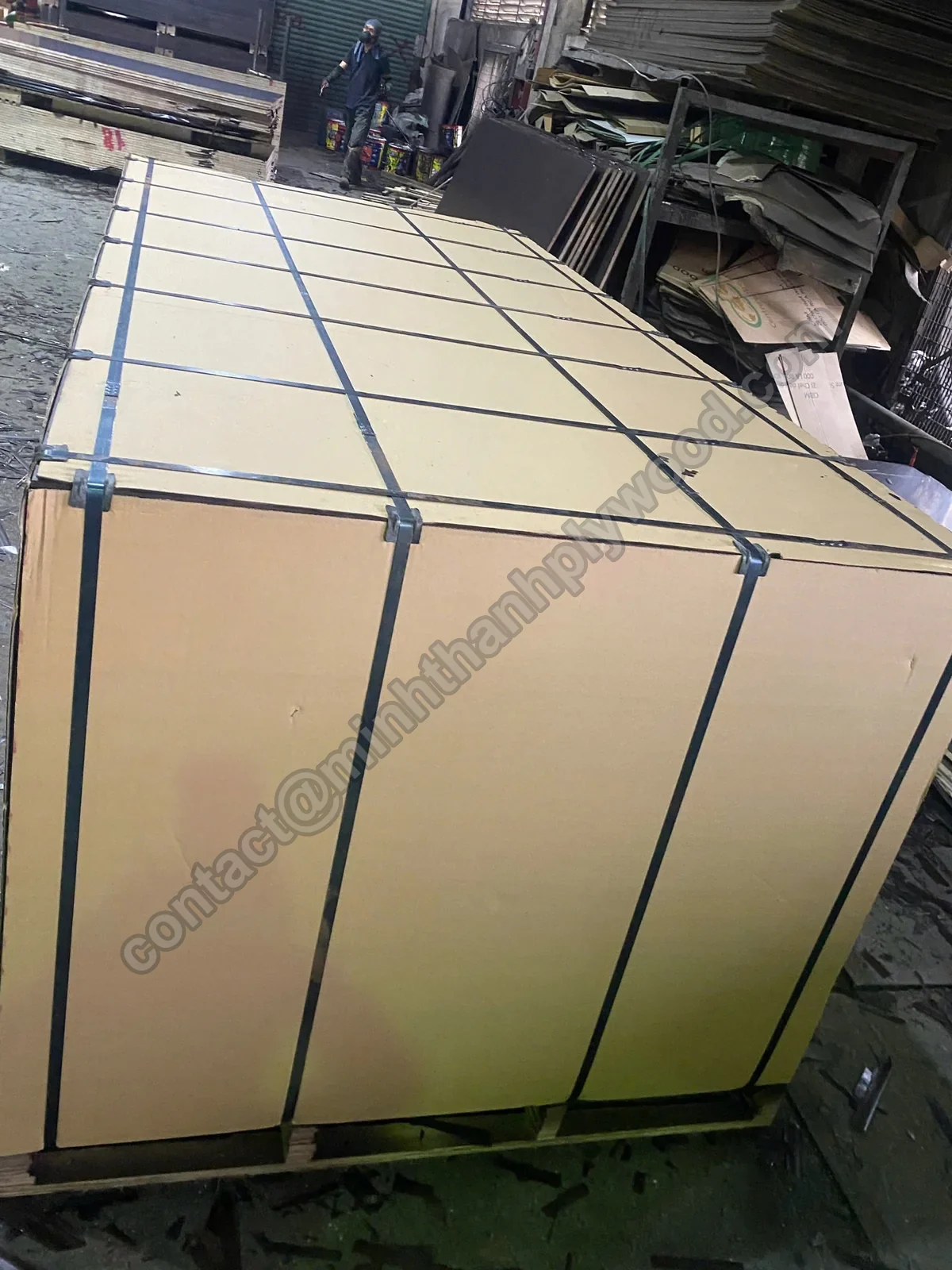
Steel straps and seals on a cardboard-covered pack. 06Steel or PET straps
Steel or PET straps run across the width and along the length of the pack, tensioned and sealed. Steel suits heavy packs and long voyages; PET does not rust and is easier to cut at your warehouse.
- Straps across the width and along the length
- Metal seals on steel straps
- Strap type to your preference
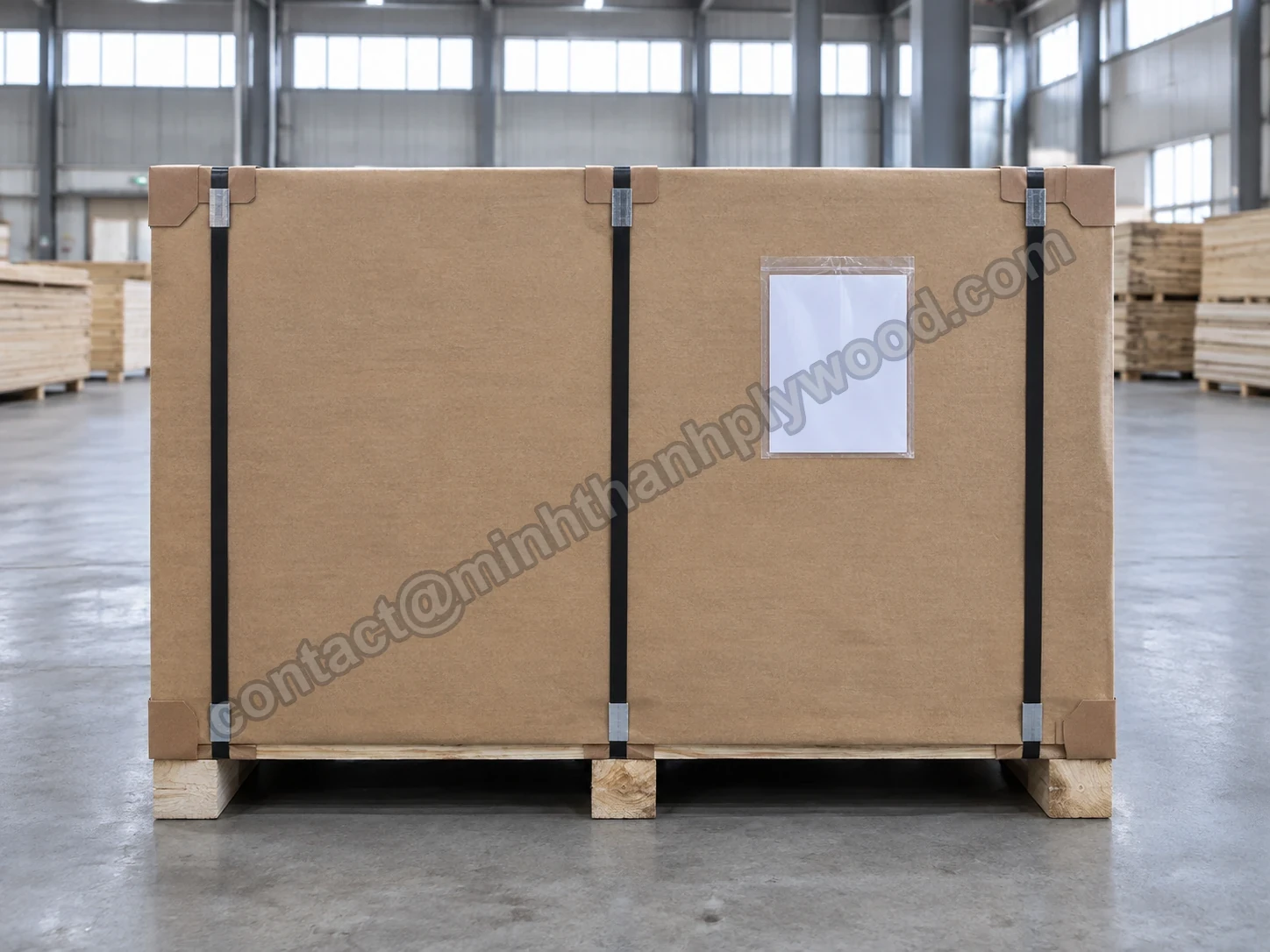
A label sleeve on the end of a strapped pack. 07Labels and shipping marks
Each pack carries a label with product, size, thickness, sheet count and pack number, plus your shipping marks. Private labels and edge printing are done on order.
- Product, size, thickness, sheet count
- Pack number matched to the packing list
- Your private label or edge printing on order
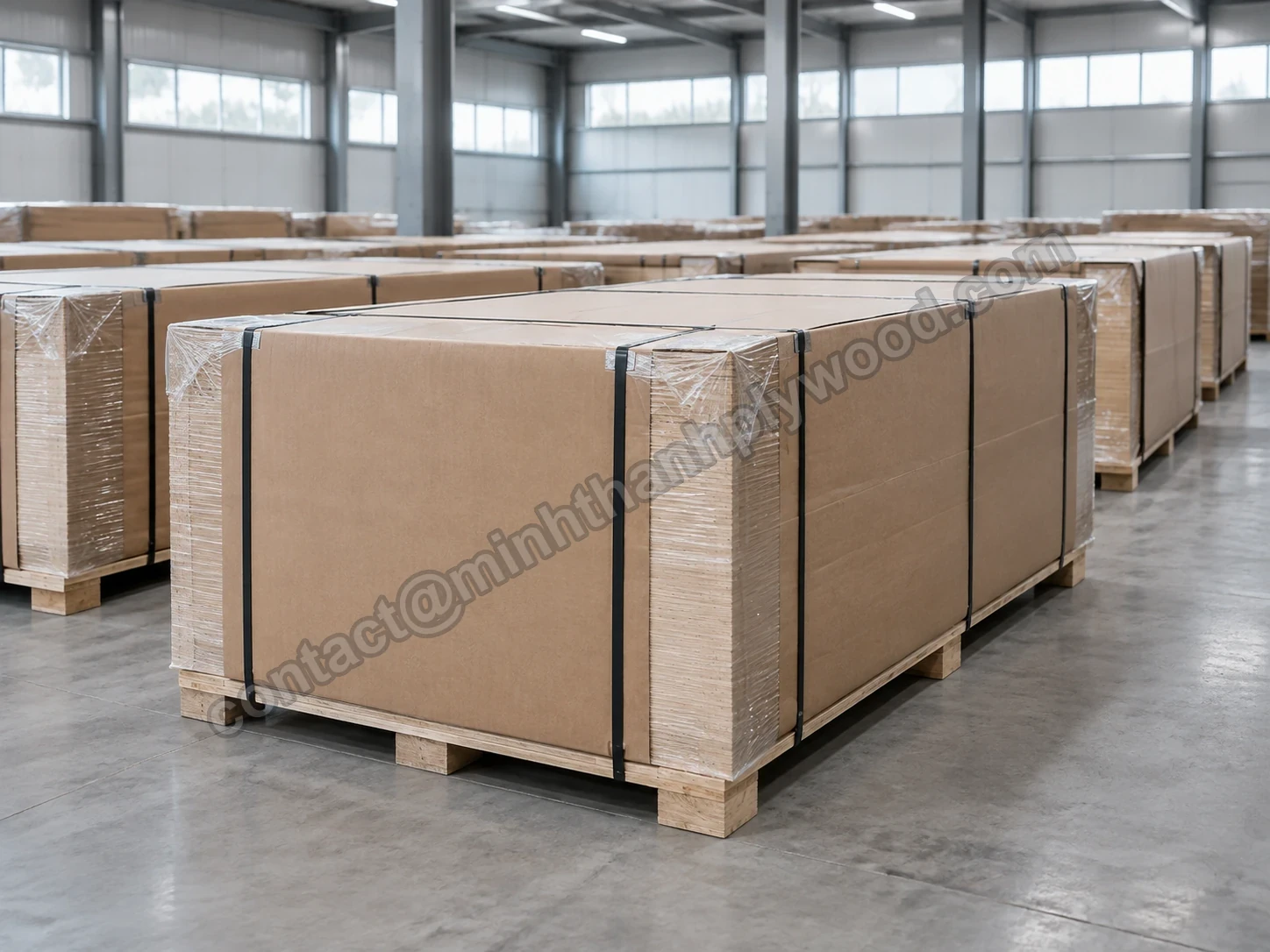
Finished packs stored dry, off the floor. 08Photos and dry storage
Finished packs are photographed and stored indoors on their bearers until loading. The photos go into the shipment record you receive before the container is sealed.
- Every pack photographed
- Indoor storage, off the floor
- Pack count checked again at loading
Real packing videos
Watch plywood packs being built.
Unedited clips from the packing area: sheets stacked, squared and checked before the cover boards and straps go on.
Transit damage we prevent
What goes wrong in transit, and how the pack stops it.
Plywood spends three to six weeks between our packing area and your warehouse. Good plywood export packing answers each common transit problem with one layer of the pack.
| Risk | Usual cause | How the pack prevents it | Step |
|---|---|---|---|
| Mould and stains | Wet panels, rain at the port, condensation | Panels at 8–12% moisture; film; dry indoor storage | 04 · 08 |
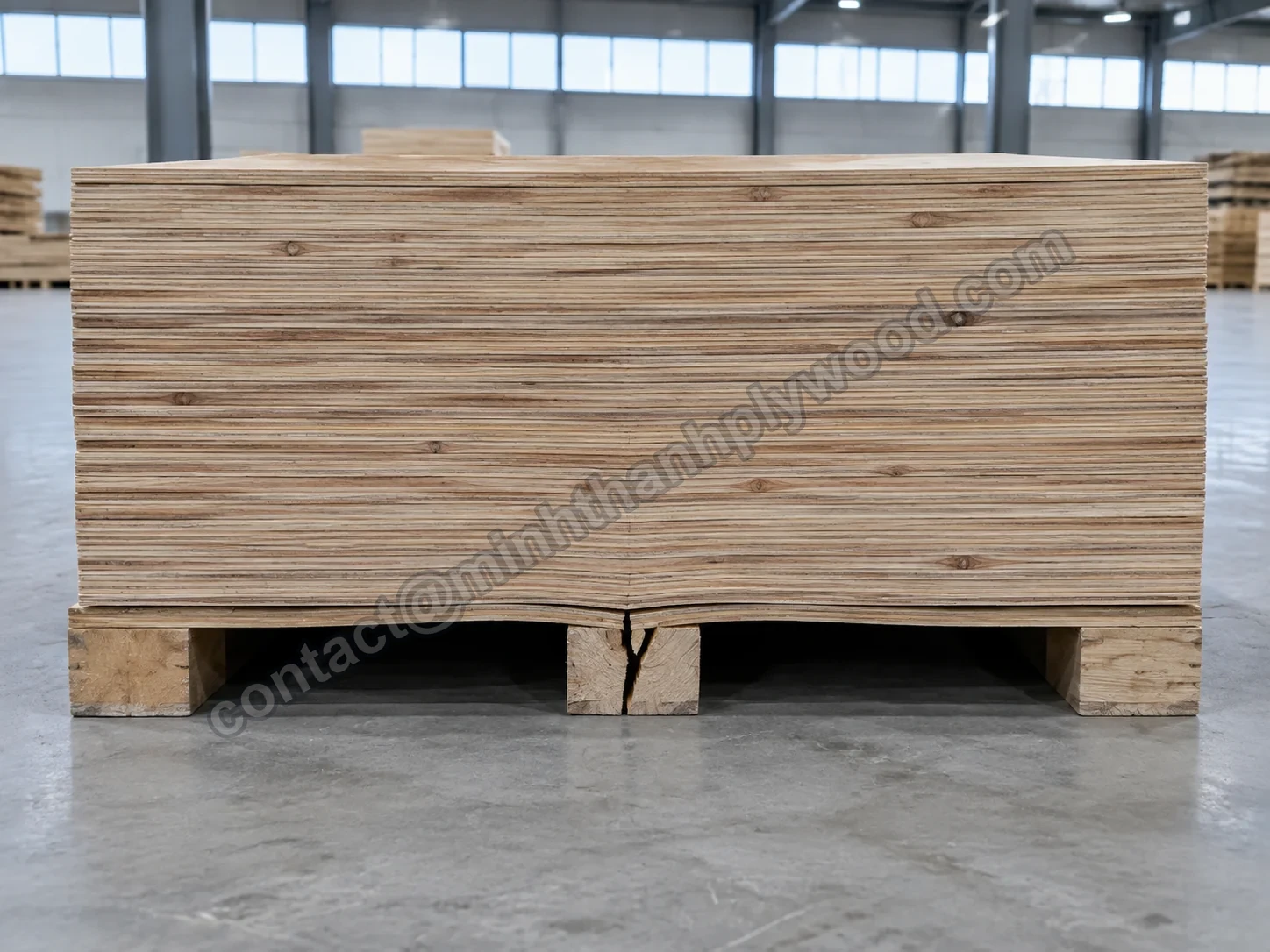
| Warped panels | Uneven support, moisture | Bearers under the full width; flat 1,000 mm stack; film | 01 · 04 |
| Crushed edges and corners | Strap tension, handling | Corner guards under every strap | 05 |
| Strap marks and dents on faces | Straps on bare panels | Cover boards and cardboard top and bottom | 03 |
| Sheets shifting | Loose or weak straps | Steel or PET straps across and along, sealed | 06 |
| Broken bearers | Packs overloaded or stacked too high | 1,000 mm height; packs per container capped by core weight | 01 · 02 |
| Wrong pack or count | Missing or vague labels | Labels with sheet count and pack number, matched to the packing list | 02 · 07 |
| Forklift damage | Tines under the sheets | Forklift gap between the bearers | 01 |
Never overload a pack or a container: forcing extra packs into a 40HC crushes the bearers and turns unloading into hand work. We cap packs per container by core weight, and we say so before you order.
Pack specification
Plywood export packing specification at a glance.
These are the numbers buyers ask for before they plan a container. Pack weight depends on the core, so we always state the core next to it.
| Pack height | About 1,000 mm of panels |
|---|---|
| Sheets per pack | 1,000 ÷ thickness, rounded down: 55 sheets of 18 mm, 83 of 12 mm, 166 of 6 mm |
| Panel volume per pack | About 2.9–3.0 m³ (1220 × 2440 mm); about 3.1 m³ for 1250 × 2500 mm |
| Core density (reference) | Styrax ≈ 500, Acacia ≈ 580, Eucalyptus ≈ 650 kg/m³; we weigh real panels for your order |
| Panel weight per pack | About 1.5 t Styrax, 1.7 t Acacia, 1.9 t Eucalyptus, plus pallet and packaging |
| Packs per 40HC | Up to 18 with Styrax core, 16 with Acacia, 15 with Eucalyptus |
| Volume per 40HC | About 53–54 m³ Styrax core; 46–47 m³ Acacia core |
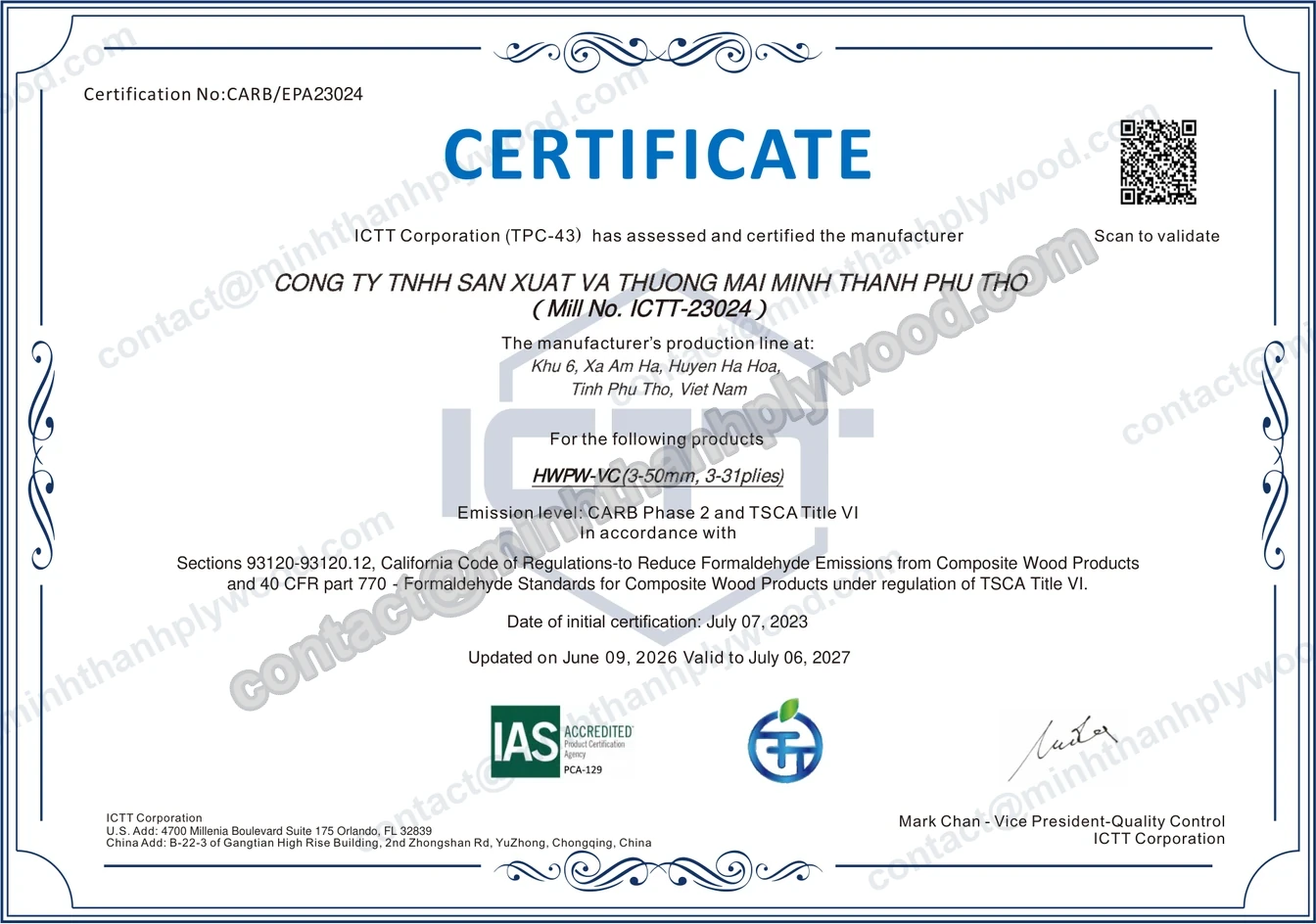
| Pallet | Plywood deck on laminated plywood bearers, or plywood bearers; ISPM 15 compliant |
| Protection | Cover boards, kraft cardboard, plastic film, corner guards |
| Straps | Steel or PET, across the width and along the length |
| Moisture content | 8–12% at packing |
| Labels | Product, size, thickness, sheet count, pack number; private label and edge printing on order |
We confirm sheets per pack, packs per container and pack weight for your exact panels in the quotation.
Sources: ISPM 15, regulation of wood packaging material (IPPC) · Regulation (EU) 2025/40 on packaging and packaging waste (EUR-Lex)
Sheets and weight per pack
How many plywood sheets are in a pack, and what it weighs.
In our plywood export packing a standard pack holds about 1,000 mm of panels, so the sheet count follows the thickness and the weight follows the core.
Divide 1,000 by the panel thickness and round down. An 18 mm pack holds 55 sheets, a 12 mm pack 83 and a 9 mm pack 111. Thin panels run to several hundred sheets: 166 of 6 mm and 333 of 3 mm.
Weight is volume times density. A 1220 × 2440 mm sheet covers 2.98 m², so a 1,000 mm pack holds close to 3 m³ of plywood. At about 500 kg/m³ a Styrax-core pack weighs about 1.5 t; Acacia at 580 kg/m³ about 1.7 t; Eucalyptus at 650 kg/m³ about 1.9 t.
Densities are reference values. Real panels vary with core grade, glue and moisture, and Eucalyptus can run from 650 up to 750 kg/m³. We weigh real panels from your order before we fix the pack weight on the packing list.
The core also sets how many packs fit in a 40HC. Lighter Styrax packs fill the container to 18 packs: 16 laid flat, four by four, and 2 standing at the door end. Heavier cores stop earlier because of payload: 16 Acacia packs and 15 Eucalyptus packs.
That is why many European furniture buyers choose Styrax core: a lighter sheet, a clean white core and more cubic metres per container. Use the packing calculator to try your own mix, then send it to us to confirm.
How to calculate sheets and weight per plywood pack
You need the panel size, thickness and core species.
- Find the sheets per pack. Divide 1,000 mm by the thickness and round down: 1,000 ÷ 18 = 55 sheets.
- Work out the pack volume. Multiply sheet length × width × thickness × sheets: 1.22 × 2.44 × 0.018 × 55 = 2.95 m³.
- Apply the core density. Multiply the volume by the core density: 2.95 m³ × 500 kg/m³ = about 1,470 kg for Styrax core.
- Add pallet and packaging. Add the pallet, cover boards and straps to get the gross pack weight on the packing list.
- Check the container. Multiply by the number of packs and keep the total inside the container payload; we confirm both in the quotation.
| Thickness | Sheets per pack | Stack height | Panel volume | Styrax core ≈ 500 kg/m³ | Acacia core ≈ 580 kg/m³ | Eucalyptus core ≈ 650 kg/m³ |
|---|---|---|---|---|---|---|
| 3 mm | 333 | 999 mm | 2.97 m³ | ≈ 1,490 kg | ≈ 1,720 kg | ≈ 1,930 kg |
| 4 mm | 250 | 1,000 mm | 2.98 m³ | ≈ 1,490 kg | ≈ 1,730 kg | ≈ 1,930 kg |
| 5 mm | 200 | 1,000 mm | 2.98 m³ | ≈ 1,490 kg | ≈ 1,730 kg | ≈ 1,930 kg |
| 6 mm | 166 | 996 mm | 2.96 m³ | ≈ 1,480 kg | ≈ 1,720 kg | ≈ 1,930 kg |
| 9 mm | 111 | 999 mm | 2.97 m³ | ≈ 1,490 kg | ≈ 1,720 kg | ≈ 1,930 kg |
| 12 mm | 83 | 996 mm | 2.96 m³ | ≈ 1,480 kg | ≈ 1,720 kg | ≈ 1,930 kg |
| 15 mm | 66 | 990 mm | 2.95 m³ | ≈ 1,470 kg | ≈ 1,710 kg | ≈ 1,920 kg |
| 18 mm | 55 | 990 mm | 2.95 m³ | ≈ 1,470 kg | ≈ 1,710 kg | ≈ 1,920 kg |
| 21 mm | 47 | 987 mm | 2.94 m³ | ≈ 1,470 kg | ≈ 1,700 kg | ≈ 1,910 kg |
| 25 mm | 40 | 1,000 mm | 2.98 m³ | ≈ 1,490 kg | ≈ 1,730 kg | ≈ 1,930 kg |
| 30 mm | 33 | 990 mm | 2.95 m³ | ≈ 1,470 kg | ≈ 1,710 kg | ≈ 1,920 kg |
| 40 mm | 25 | 1,000 mm | 2.98 m³ | ≈ 1,490 kg | ≈ 1,730 kg | ≈ 1,930 kg |
Before sealing
Plywood packing proof: every pack photographed.
Plywood export packing ends with a record you can check. Before the container is sealed you receive photos of every pack and the loading by email or WhatsApp, matched to the packing list.
- Every pack: cover boards, corners, straps and label
- Sheet count and pack numbers against the packing list
- Pallets and bearers under each pack
- Packs in the container during loading and fully loaded
- Your own inspector or a third-party agency is welcome before loading
Have your own packing or labelling instructions? Send them with the order and we pack to them.
Documents with every shipment
Packing records and export documents you receive.
Plywood export packing records and certificate files go to you before you confirm the order; draft shipping documents follow after loading, for your approval.
Packing list
Pack by pack: pack number, sheet count, thickness, size, volume, net and gross weight, matched to the pack labels.
Pack and loading photos
Every pack, its label and straps, and the container during and after loading, sent before the container is sealed.
Phytosanitary certificate
Plant health certificate issued for the shipment where the destination requires it.
Fumigation certificate
Fumigation arranged and certified when the destination or your buyer asks for it.
PPWR packaging test
SGS test of all four packaging materials under Regulation (EU) 2025/40: lead, cadmium, mercury and Cr(VI) not detected; PASS against 100 mg/kg.
Commercial documents
Commercial invoice, B/L, certificate of origin (EUR.1 for the EU), insurance on CIF, and the EUDR origin dossier with GeoJSON files.
Need a specific mark, certificate or document? Name it in your enquiry.
Capacity
Export packs for 50,000+ m³ of plywood a year.
The same pack build runs on every container, from a single 40HC to a regular programme. Mixed loads are packed and labelled by product, so each pack is easy to find at your warehouse.
About the factoryBefore you order
Packing instructions to send with your order.
Six lines give us everything we need for your plywood export packing, the way your warehouse and your customers want it.
- 01
Pack size
Standard 1,000 mm packs, or a maximum sheet count or pack weight for your forklifts.
- 02
Base
Pallet on bearers, plywood bearers only, or floor-loaded packs.
- 03
Protection
Standard film and cardboard, full film wrap, or desiccant bags for humid routes.
- 04
Straps
Steel or PET, and any strap count your customer asks for.
- 05
Labels and marks
Shipping marks, your private label, barcode text or edge printing.
- 06
Destination rules
Port, ISPM 15, phytosanitary or fumigation needs, and the documents you need.
Questions buyers ask
Plywood export packing FAQ.
Short answers to the questions buyers ask most about export packing.
How do you pack plywood for export?
On a pallet or plywood bearers, with cover boards and kraft cardboard top and bottom, plastic film, corner guards and steel or PET straps across and along the pack. Each pack carries a label with product, size, thickness, sheet count and pack number.
How many plywood sheets are in one pack?
Packs stand about 1,000 mm high, so sheets per pack = 1,000 ÷ thickness, rounded down: 55 sheets of 18 mm, 83 of 12 mm, 111 of 9 mm and 166 of 6 mm. We can pack smaller sheet counts if your forklifts need it.
How much does a plywood pack weigh?
About 3 m³ of panels per pack: roughly 1.5 t with Styrax core (≈ 500 kg/m³), 1.7 t with Acacia (≈ 580) and 1.9 t with Eucalyptus (≈ 650), plus pallet and packaging. We weigh real panels and state the weight on the packing list.
How many packs fit in a 40HC container?
Up to 18 packs with Styrax core (16 flat and 2 standing at the door end), 16 with Acacia and 15 with Eucalyptus. Heavier cores stop earlier because of payload. That is about 53–54 m³ for Styrax core and 46–47 m³ for Acacia core.
Why not put more packs in the container?
Overloading breaks the bearers and slows unloading at your warehouse. We cap packs by core weight (up to 18 packs per 40HC with Styrax core) and confirm the count in the quotation.
Are your pallets ISPM 15 compliant?
Yes. Plywood and laminated plywood bearers are processed wood and exempt from ISPM 15. When a pallet uses solid wood, it is heat-treated and marked, and fumigation is arranged when the destination asks for it.
Does plywood need fumigation?
Plywood itself is processed wood and normally does not. Some destinations or buyers still ask for a fumigation certificate for the whole shipment; tell us and we arrange it with the phytosanitary certificate.
Steel straps or PET straps?
Both are available. Steel suits heavy packs and long voyages; PET does not rust, does not mark the cover board and is easier to cut at your warehouse. Tell us your preference.
How do you protect plywood from moisture in the container?
Panels are packed at 8–12% moisture, wrapped in plastic film under cardboard and stored indoors until loading. For humid routes we add a full film wrap and desiccant bags in the container on request.
Can you put our own label or brand on the packs?
Yes. Private labels, your shipping marks and barcode text are applied on order, and panel edge printing is available on order too.
Is your packaging compliant with the EU PPWR?
All four packaging materials (cardboard, plywood and pallet blocks, strapping band and wrapping film) were tested by SGS in September 2026 under Regulation (EU) 2025/40. Lead, cadmium, mercury and Cr(VI) were not detected: PASS against the 100 mg/kg limit.
Will I see the packs before shipment?
Yes. Every pack is photographed, and you receive the photos and the loading record by email or WhatsApp before the container is sealed.
How are cut-to-size pieces packed?
Each piece size is packed separately on its own pallet, with cardboard between stacks and a label per size, so pieces cut into 4, 6 or 8 from a full panel are easy to count.
Can you mix products in one container?
Yes. A 40HC usually carries one or two products, and three to six by agreement. Each product is packed and labelled separately.
Get a quotation
Send your specification and packing instructions.
Tell us the panels, quantity and port, plus your plywood export packing needs: pack size, strap type, labels and destination rules. Lisa replies within hours by email or WhatsApp with sheets per pack, packs per container and pack weight. Free samples.
[email protected]