
Birch D+/D
Cleaner display face; natural figure and a separately graded back
Application brief
Visible fronts and cabinet sides
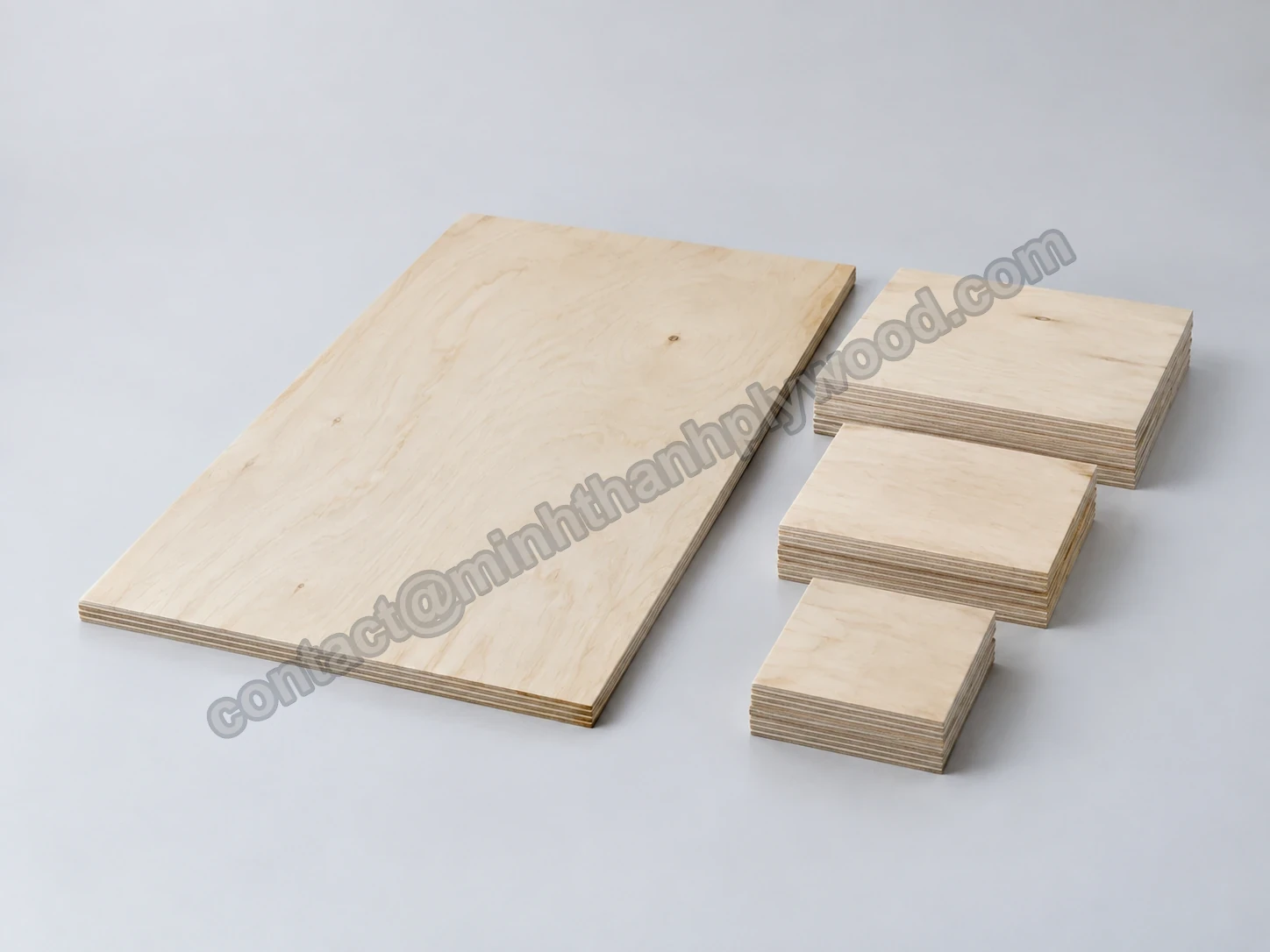
Cut to size plywood · Vietnam
In short
Minh Thanh Plywood supplies plywood cut to size for furniture factories and importers. Specify your finished rectangle, face direction and quantity; we cut full panels into 4, 6 or 8 pieces and pack them for export.
Regular cut-to-size shipments go to Italy and other European markets. Our furniture plywood combines a selected face with a stitched plantation-timber core. Cutting at the factory gives your receiving team smaller, clearly identified packs and leaves your machinery free for drilling, profiling and assembly.
From full sheet to furniture blank
See how the parent panel, grain direction, cutting list and bundle labels work together on an export order.
What to inspect on cut plywood blanks
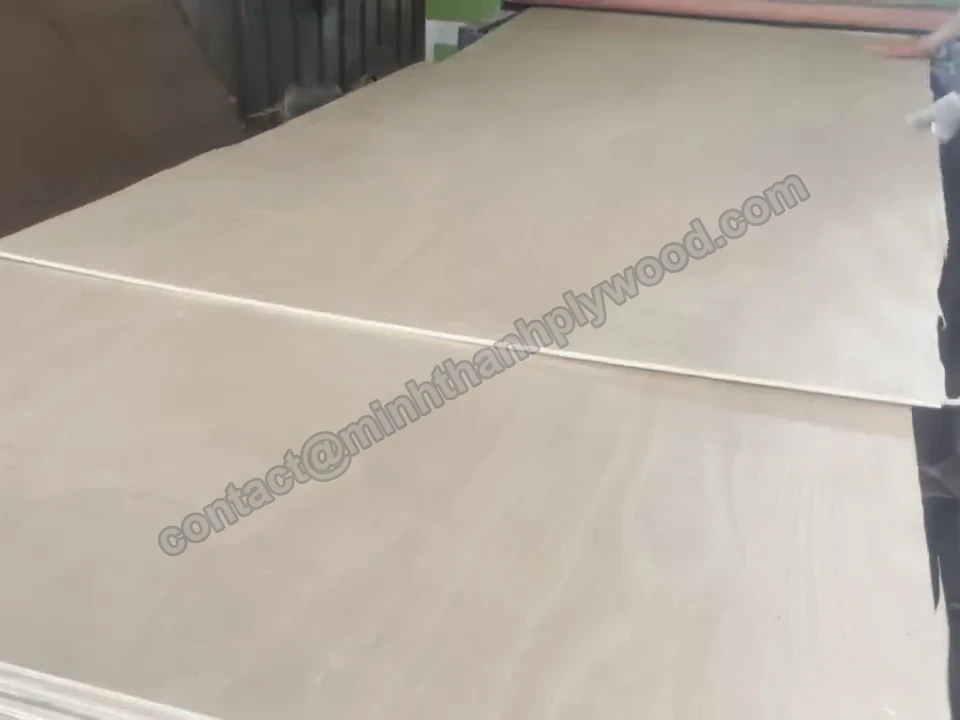
Watch furniture plywood being cut into rectangles, then see the freshly cut pieces stacked beside the saw.


The clip follows the actual cutting operation and the stack at the end of the run. The photographs show the saw table and cut-piece edges, so you can inspect the operation behind the service.
We check finished dimensions and sanded thickness before packing. Your cutting list sets the part dimensions and grain direction; the order photographs connect the produced pieces to that list.
Custom size plywood
Custom size plywood starts with the parent panel specification; cutting changes its dimensions, while the face, core and glue remain part of the order.
| Faces | Birch, Poplar, EV, Okoume, Pine, Bintangor, Eucalyptus or Gurjan |
|---|---|
| Core | White Styrax or Eucalyptus; stitched horizontally and vertically |
| Thickness | 3–40 mm |
| Parent formats | 1220 × 2440 and 1250 × 2500 mm; custom 1220 × 2500 and 1220 × 2280 mm |
| Thickness tolerance | Down to ±0.2 mm for sanded furniture panels |
| Moisture | 8–12% |
| Surface | Sanded and polished; both faces UV-ready for your coating |
| Adhesive | UF for standard interior work; melamine-fortified or phenolic WBP to specification |
| Emission | E0 standard, specified separately from adhesive |
| Part dimensions | Finished length and width to ±2 mm; grain direction on the cutting list |
| Packing | Separate identification for each part reference and specification |
Treat the cutting list and the material specification as one document. A correct rectangle with the wrong grain direction can still be unusable in a visible cabinet. Likewise, two pieces with identical dimensions need separate part references when their face grades or thicknesses differ.
Choose face grades for the finished component
Choose a face and back grade around what remains visible after the blank becomes furniture.
Birch D+/D
Cleaner display face; natural figure and a separately graded back
Application brief
Visible fronts and cabinet sides
Birch D/E
More natural variation or repairs than the cleaner face selection
Application brief
Internal parts and covered components
Eucalyptus A/A
Matched reference appearance on both visible faces
Application brief
Open shelving
Eucalyptus A/B
Display face selected separately from the back
Application brief
One-face-visible parts
Eucalyptus B/B
Sample defines permitted patches, knots and colour variation
Application brief
Painting or overlay work
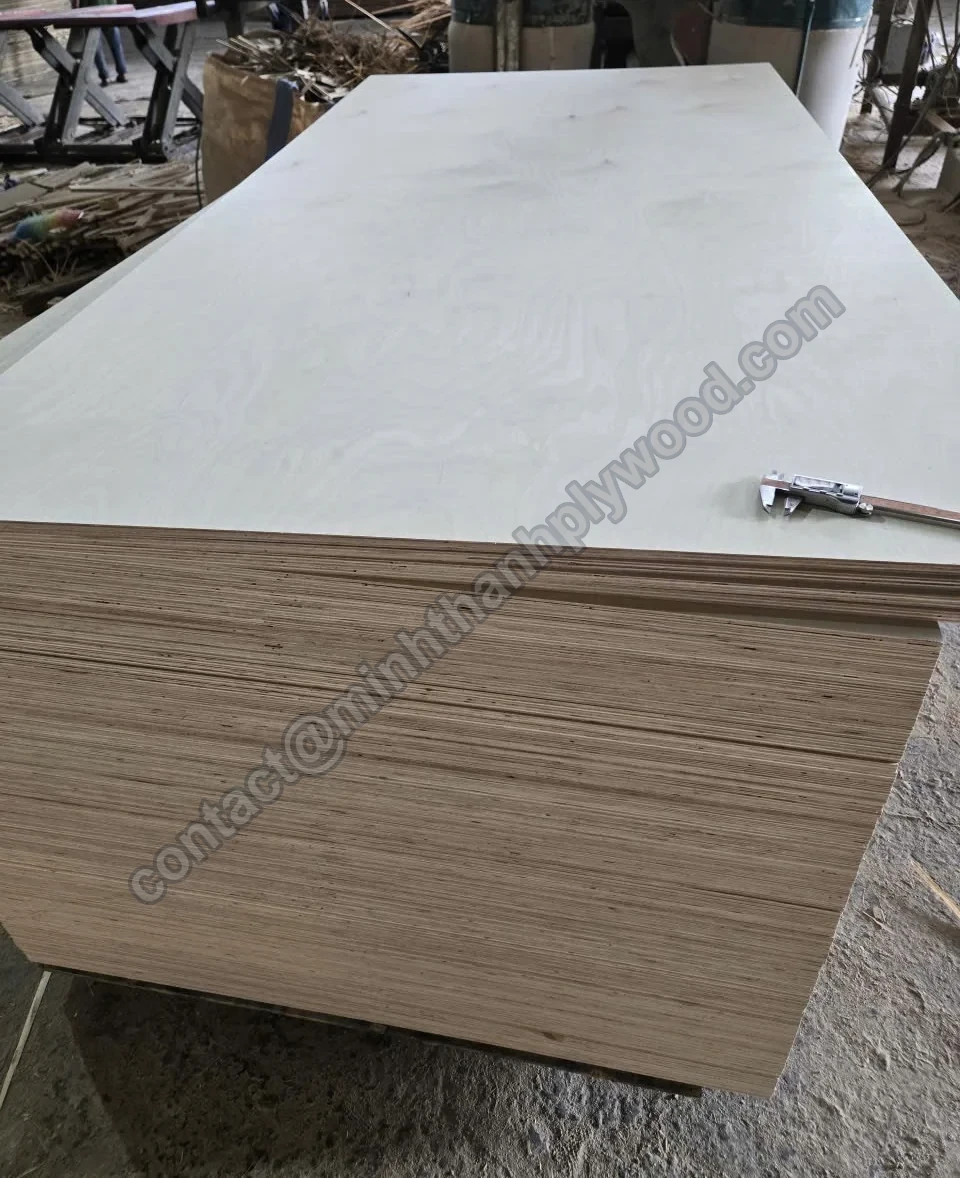
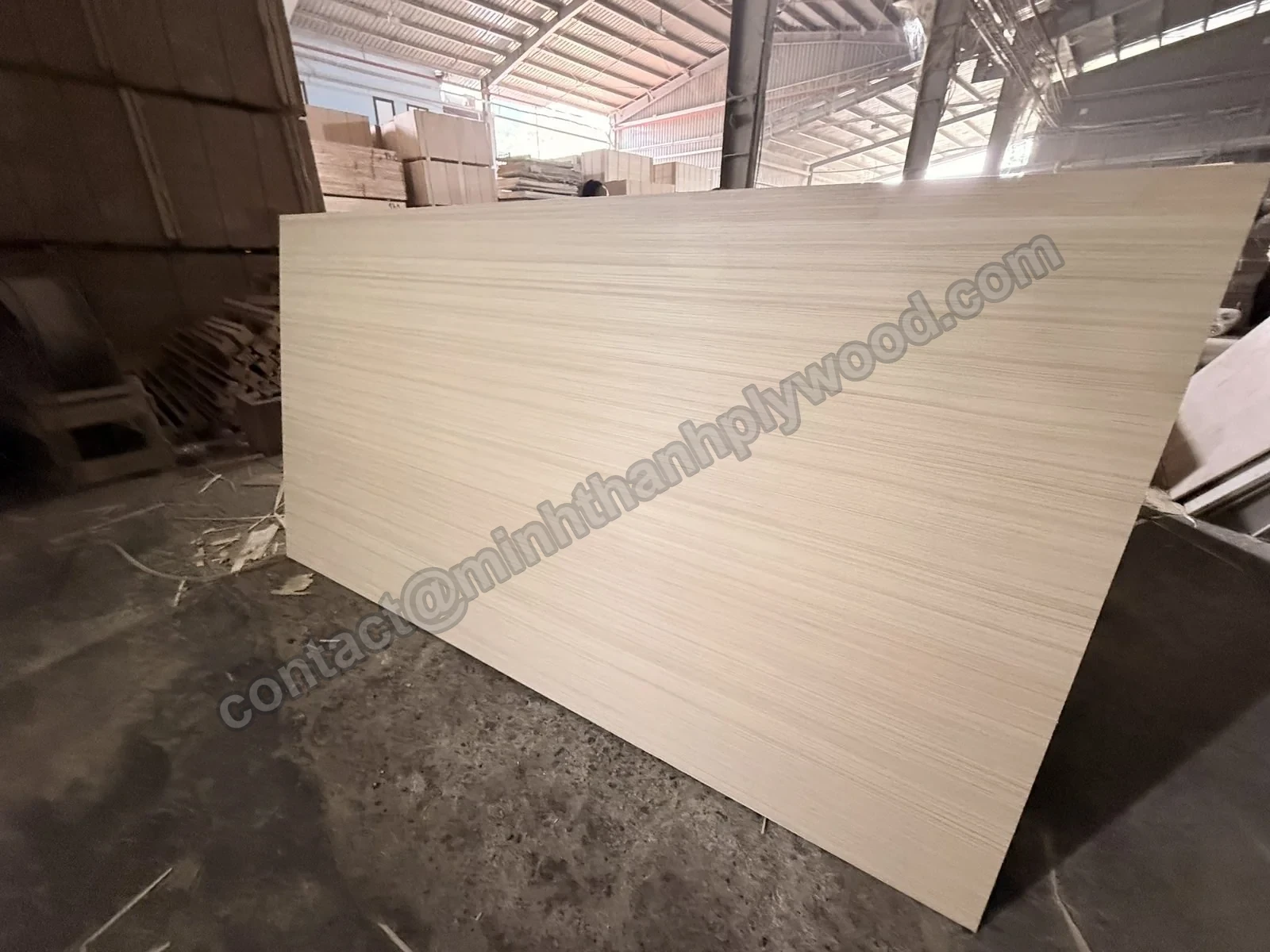
A cabinet side with one exposed surface does not need the same face/back pairing as an open shelf viewed from above and below. Mark the visible side on the drawing and send a reference finish with the sample request. Clear coatings show colour variation; an opaque finish changes what matters in the veneer selection.
Birch grades are quoted using the local D+, D and E names. Eucalyptus faces use A/A, A/B and B/B pairs. Keep those systems attached to their species: a letter from one grading system is not a universal description of every veneer.
Core choice affects every small part
White Styrax gives furniture blanks a lighter core; Eucalyptus provides a denser panel with a darker layered edge.
| Choice | White Styrax | Eucalyptus |
|---|---|---|
| Density | About 500 kg/m³ | 650–750 kg/m³ |
| Edge appearance | Pale layered core | Darker layered core |
| Component decision | Lighter furniture blanks | Denser furniture blanks |
| Construction | Stitched veneers; furniture panels pressed twice | Stitched veneers; furniture panels pressed twice |
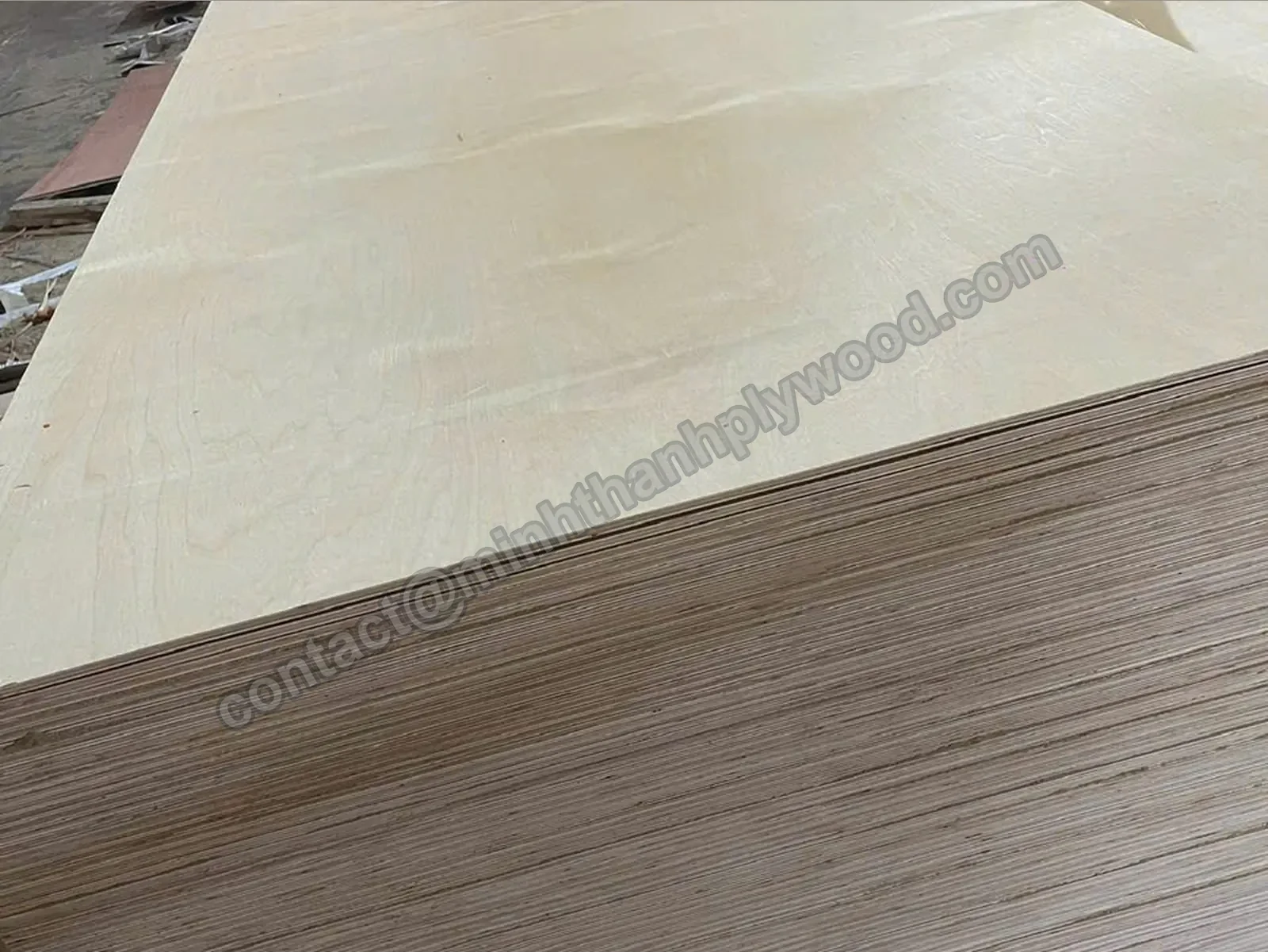
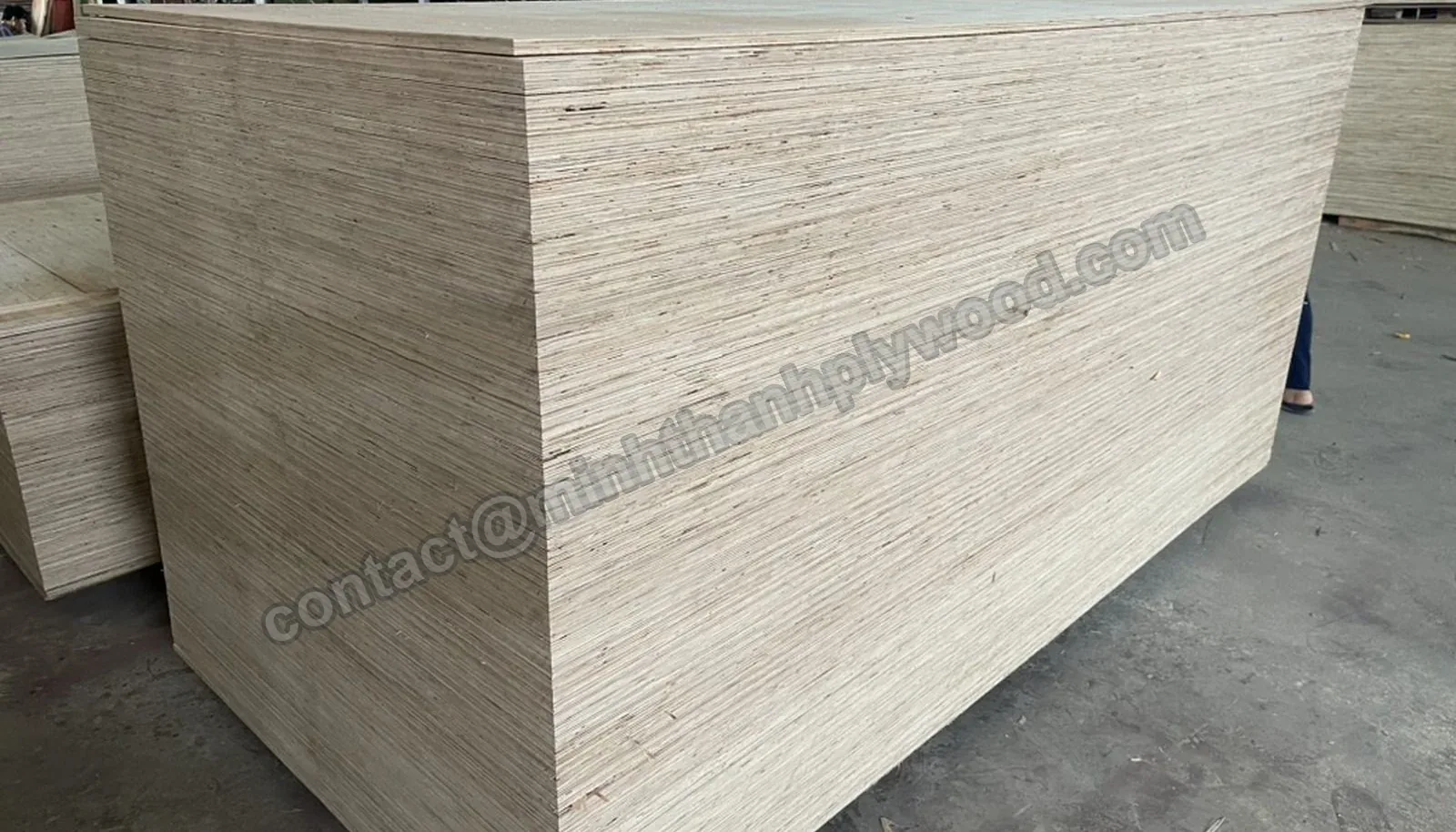
Styrax density is about 500 kg/m³; Eucalyptus is 650–750 kg/m³. Choose the core before comparing quotations, because a price for unspecified hardwood can conceal a different panel weight. Smaller pieces still carry that density difference into furniture handling and container planning.
Our core layers are stitched horizontally and vertically. On furniture panels, the core board is pressed and calibrated before the face and back are added in a second pressing. Calibration matters when parts from different stacks enter the same edge-banding or machining setup.
Thin 3–6 mm panels have five plies. A 3 mm construction has one core veneer, two cross-bands and two faces; 4–6 mm panels use three core veneers and two faces. For drawer bottoms, select the panel construction as carefully as the rectangle size.
Specify adhesive and emission separately
UF adhesive at E0 is the standard furniture specification; water-resistant glue is selected for the service environment.
| Order line | What it specifies | Furniture order detail |
|---|---|---|
| Adhesive | The bonding resin | UF standard; melamine-fortified or phenolic WBP for specified service |
| Emission | Formaldehyde release requirement | E0 standard for interior furniture panels |
| Test evidence | Method and material reference | ASTM D6007 chamber results for the tested samples |
| Edge finishing | Protection after cutting | Include exposed core edges in the downstream finish |
E0 describes formaldehyde emission, not the type of adhesive. Write the glue and emission requirement on separate order lines so an indoor cabinet specification cannot be confused with a water-resistant bonding requirement. Melamine-fortified and phenolic WBP options are ordered by the intended application.
Six chamber tests (three by Shanghai Hongjun, three by ICTT Vietnam) under ASTM D6007 on 9, 15 and 18 mm panels between April 2025 and June 2026 averaged 0.014–0.032 ppm. These are measured sample results. For furniture blanks, keep the material reference on the test report connected to the material reference on the cutting list.
Freshly cut edges expose the core. Include edge finishing in your downstream production plan wherever the furniture will encounter damp conditions. Surface coating and edge protection serve a different purpose from selecting the glue inside the panel.
Plan the cut around grain direction and saw kerf
Finished dimensions must allow for the material removed by the saw and any final trimming at your own factory.
| Cut arrangement | Finished size specification | Length / width tolerance | Grain and packing |
|---|---|---|---|
| 4 pieces per parent | Your rectangle within 1220 × 2440 or 1250 × 2500 mm parent | ±2 mm | Grain arrow; pack by part reference |
| 6 pieces per parent | Your rectangle, allowing for saw kerf | ±2 mm | Identify matching or rotated parts |
| 8 pieces per parent | Your smaller rectangle, with any machining allowance | ±2 mm | Support small stacks flat |
Do not obtain a finished part dimension simply by dividing the parent sheet on paper. Every separating cut consumes material. State the finished rectangle you need; use the proposed arrangement to compare yield and handling, then approve the actual cutting list.
Grain direction follows the face veneer. A rectangle rotated to improve sheet yield can place the grain across a cabinet door instead of along it. Use a grain arrow on every visible component and identify mirrored or paired parts where the appearance must match.
Distinguish a finished rectangular blank from a machining blank. A blank that your factory will profile or edge-trim needs the allowance included in its ordered size. Put that allowance into the drawing itself so the packing label, purchase order and receiving inspection refer to the same dimension.
Use separate columns for part reference, finished length, finished width, thickness, quantity and grain arrow. Put face/back selection and any downstream trim allowance beside the part, then give the whole list a revision reference. A sketch is useful for orientation, while the written dimensions control production.
Where cut-to-size plywood saves handling
Factory-cut rectangles suit repeat furniture components whose dimensions are fixed before the container is loaded.
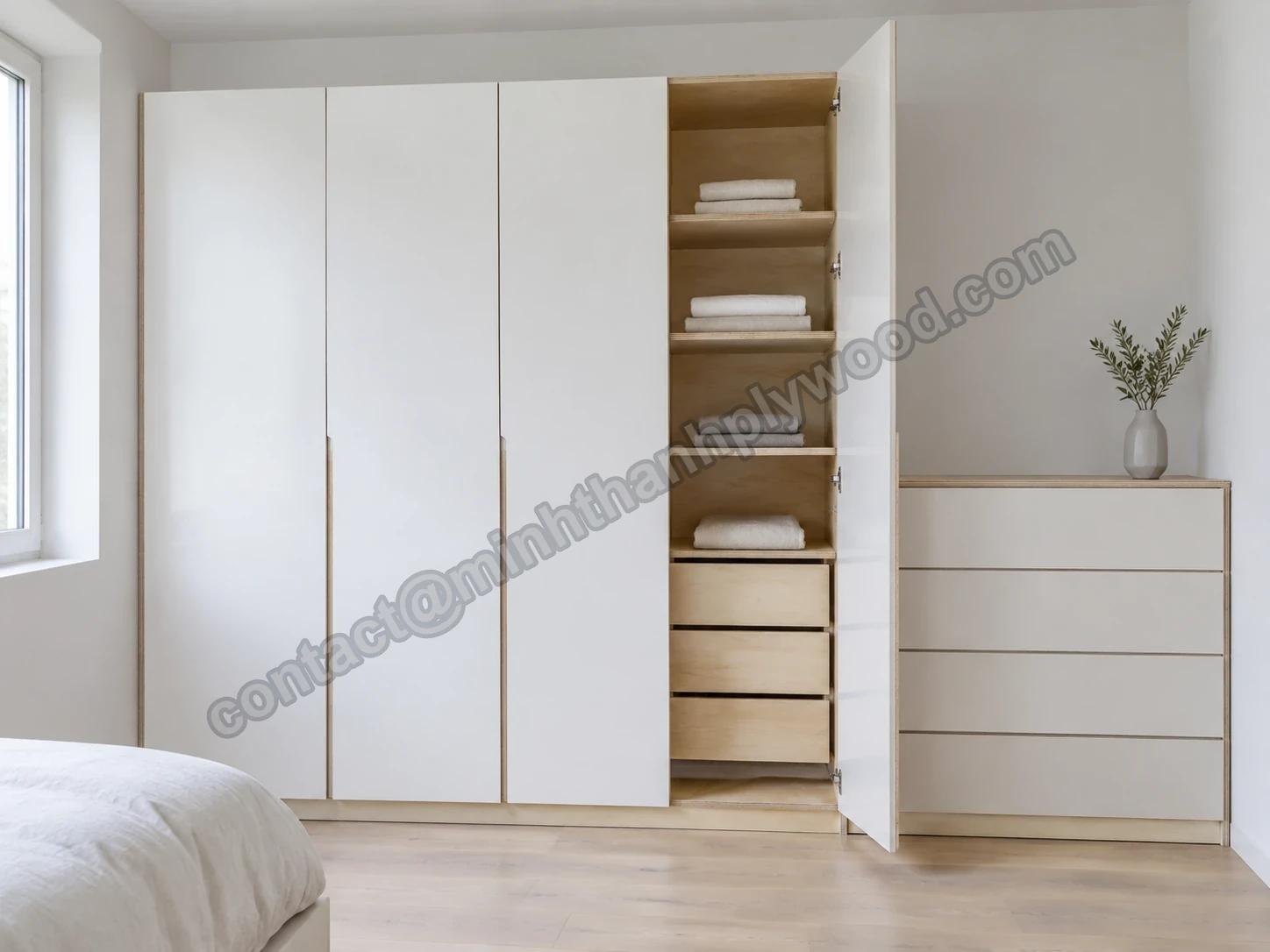
Order rectangles by visible face and grain direction. Keep shelves and carcass sides in distinct references even when they share a thickness, so operators do not need to re-sort the shipment.
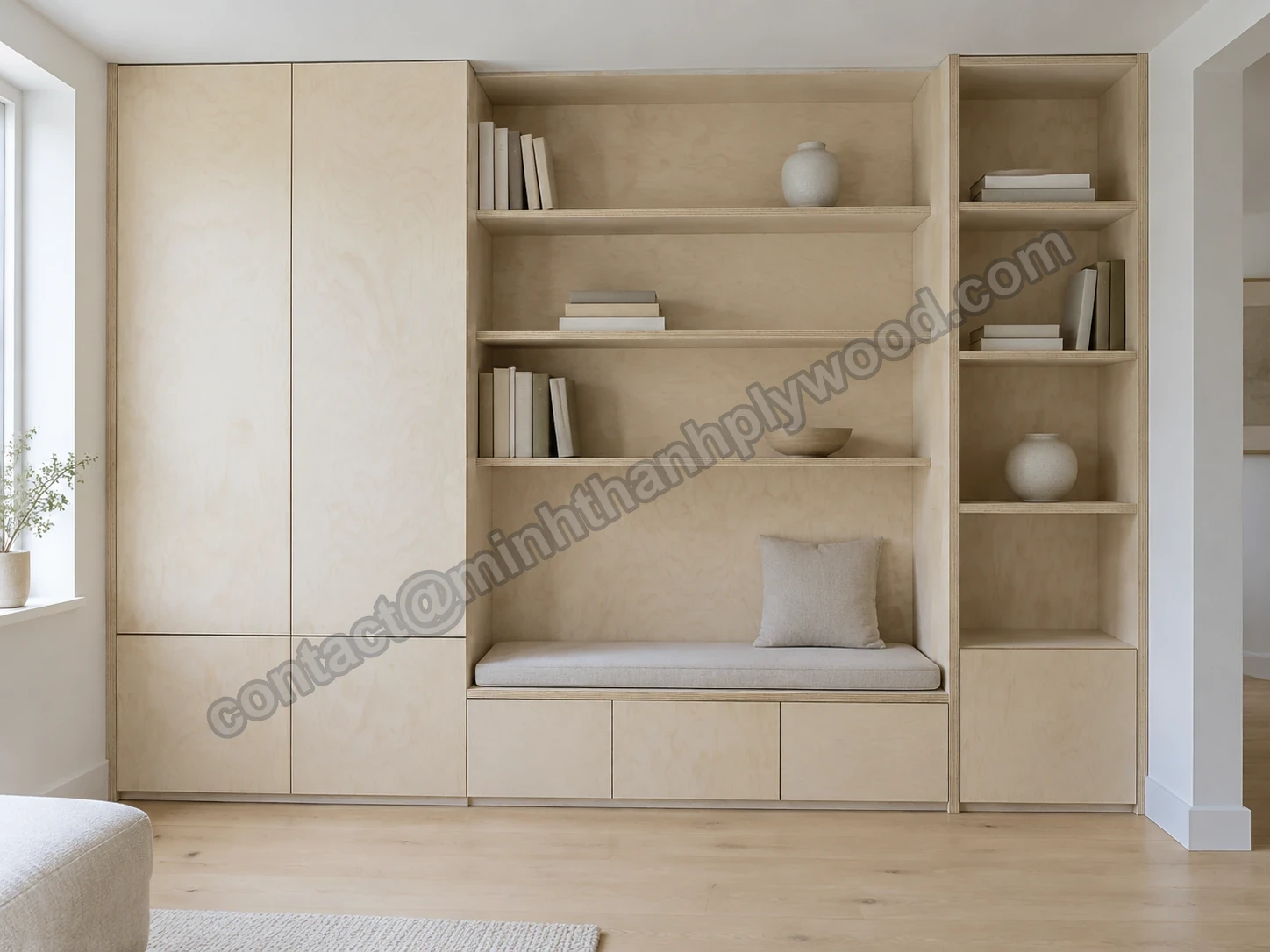
Five-ply panels in 3–6 mm become small components with consistent parent-panel construction. Pack each rectangle flat and keep support under the stack when moving it to the line.
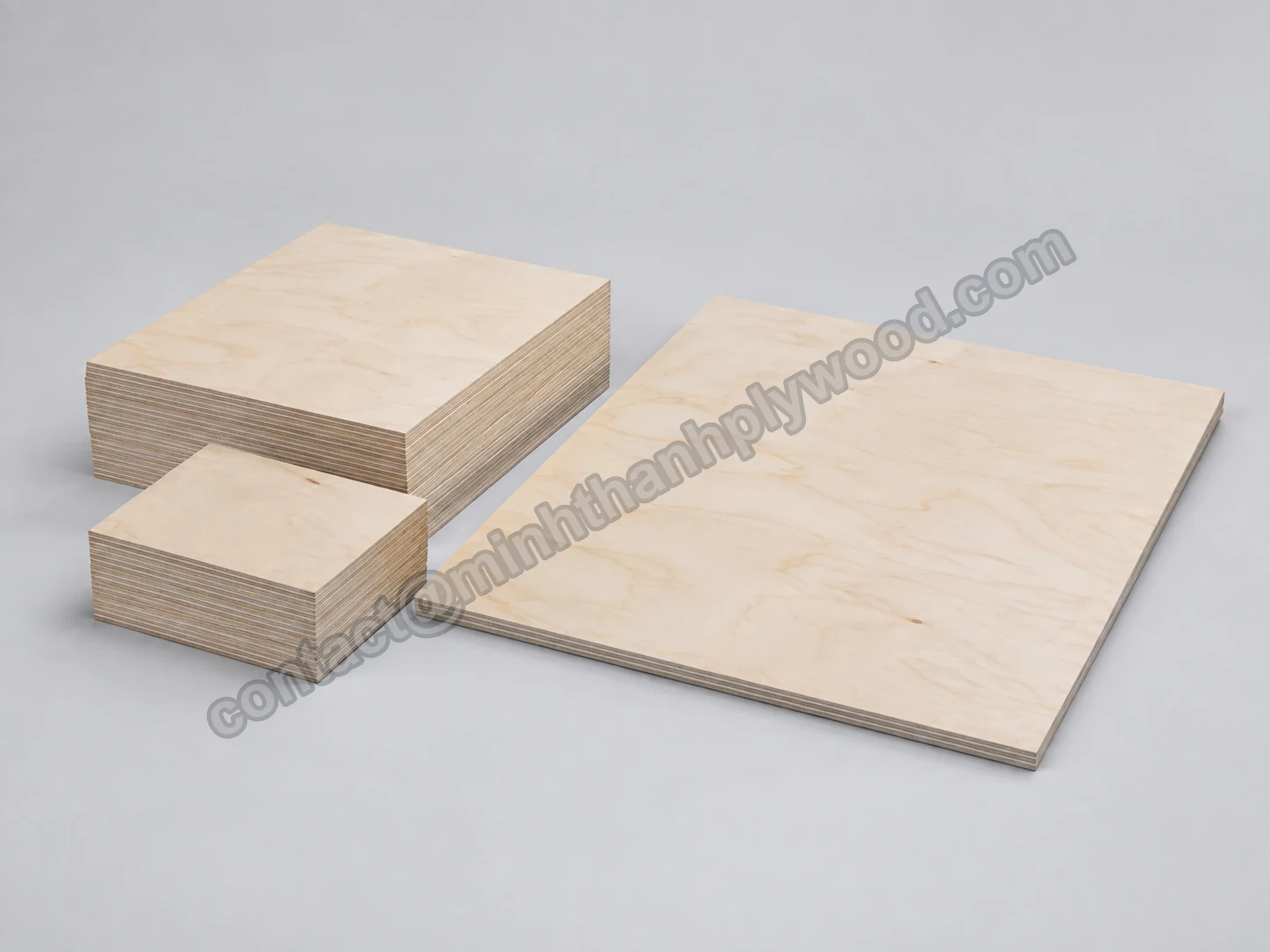
Supply the rectangular blank size before your own profiling, drilling or edge-banding. The ordered allowance belongs on the drawing, not in an informal note passed between operators.
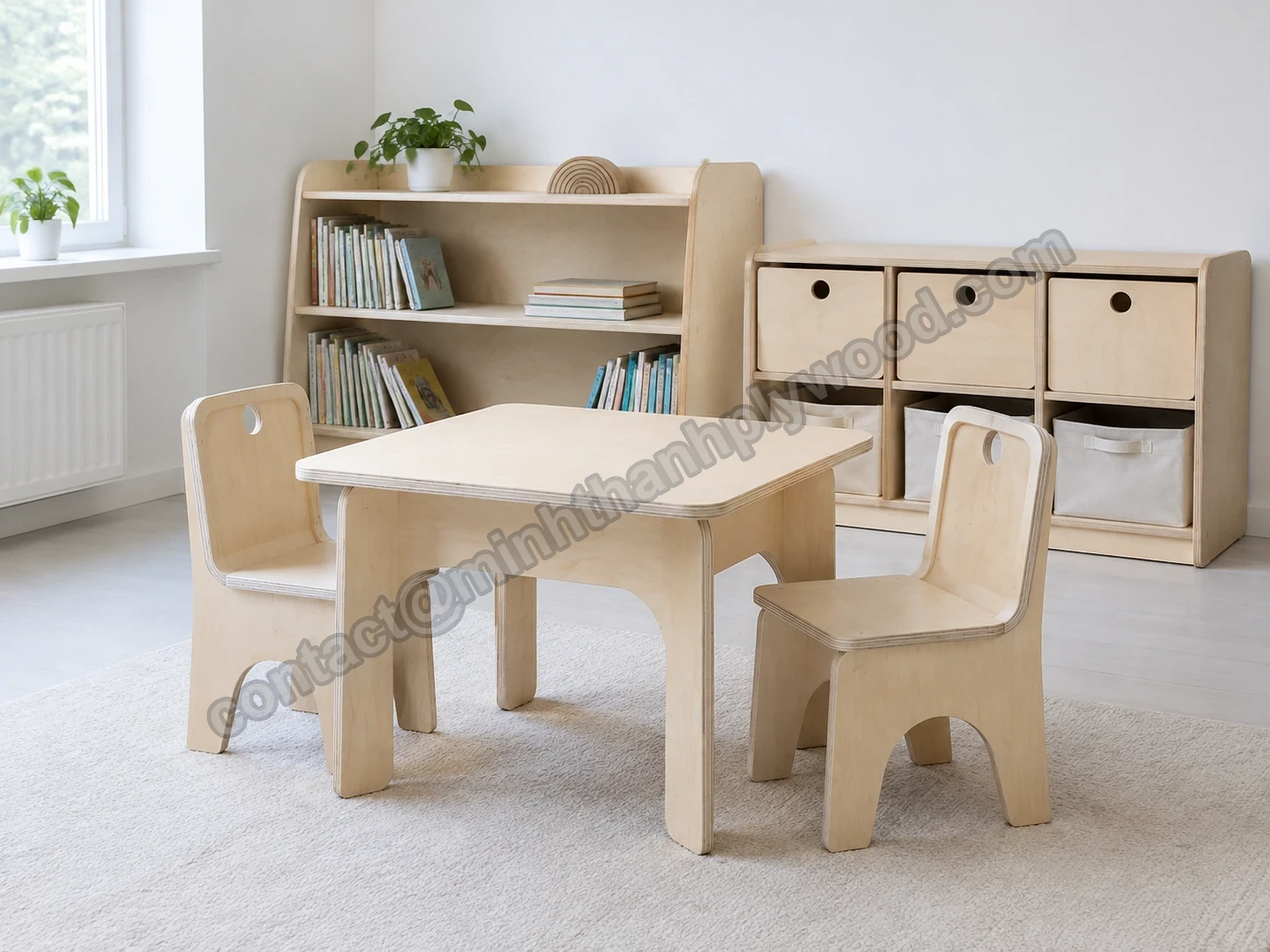
Repeated shelf and divider sizes can travel as identified packs. Match face direction across adjacent parts when a clear finish leaves the natural veneer visible.
Cutting is most useful when a buyer has a stable parts list. A mixed workshop producing one-off designs may prefer full sheets for flexibility. Repeat cabinet or drawer production can plan around a smaller set of component references and keep incoming stock closer to its machining sequence.
Cut-to-size blanks or full sheets?
Choose factory-cut blanks for repeated rectangles and full sheets when the cutting plan changes frequently.
| Decision | Factory-cut blanks | Full sheets |
|---|---|---|
| Receiving | Count by part reference | Count by parent sheet |
| Flexibility | Dimensions fixed before production | New cutting layouts remain possible |
| Grain direction | Marked in the approved cutting list | Managed during local cutting |
| Machining | Your plant profiles, drills and finishes the blanks | Your plant cuts before subsequent machining |
| Stock organisation | Separate smaller packs by component | Sheet stock by material and thickness |
| Best fit | Repeat furniture parts | Variable jobs and frequently revised designs |
Compare landed cost per usable component, not simply cost per parent sheet. Include purchased panel area, the cutting operation, handling, packaging and the freight allocated to the shipment. An offcut your workshop reuses has a different value from a strip that goes straight into waste.
For repeat orders, calculate yield using the actual approved layout and its grain restrictions. Changing the parent format can help a repeated cutting pattern, but it also changes the pack footprint. Compare the complete arrangement before making a permanent purchasing change.
A custom parent sheet and a cut blank solve different problems. The parent format defines the panel manufactured on the line; the cutting list defines the rectangles made afterwards. Our listed custom parent formats include 1220 × 2500 and 1220 × 2280 mm alongside the standard formats.
Inspect dimensions before parts enter the line
Check the approved part reference, face direction, thickness and rectangle dimensions before releasing a pack to production.
Match the pack reference to the approved cutting list.
Check face and back against the reference sample.
Measure length, width and diagonals on the finished blank.
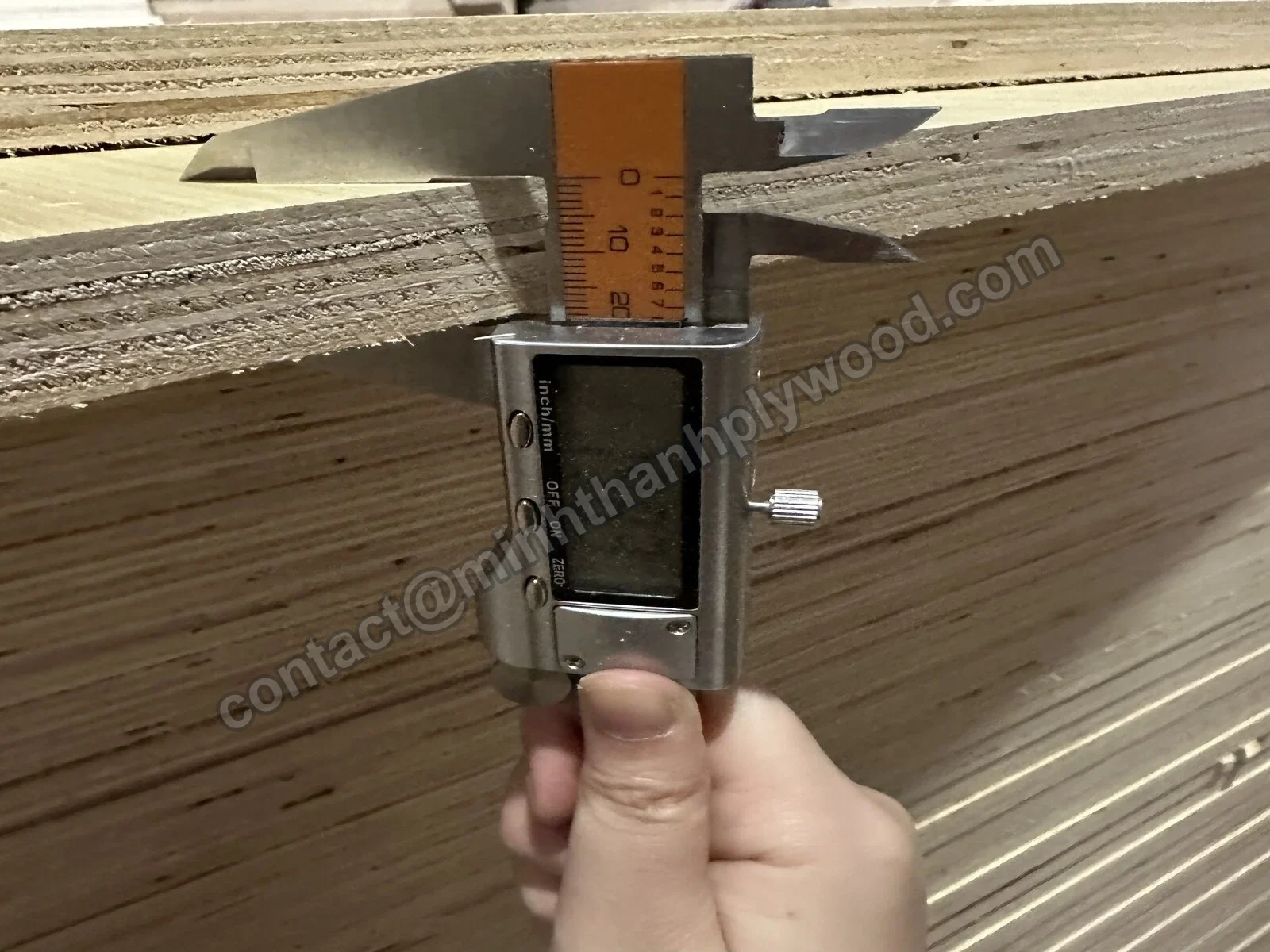
Read thickness at several points with a caliper.
Inspect newly cut edges and support the stack flat.
Record quantities by part reference before further machining.
We hold finished length and width to ±2 mm, and sanded furniture-panel thickness down to ±0.2 mm. The cutting list identifies the intended grain direction and any machining allowance. Check those details against the pack label before the first parts enter your line.
Use the first opened pack to check the label against the drawing revision. Measure pieces from more than one position in the stack, compare both diagonals for squareness, and inspect the exit edge for splintering. Retain the sample and photographs alongside your goods-received record.
Documents behind the component order
CARB P2 / TSCA Title VI, ICTT mill no. 23024; ISO 9001:2015 and TCVN 11902:2017. Quality documents and the EUDR dossier accompany the order.
Pack and count by component reference
Component packs should identify the part number, finished size, thickness and quantity so receiving staff can check them without opening every bundle.
| Core / parent-sheet weight | Parent-sheet equivalents | Parent bundles, up to 55 sheets | 4 pieces per parent | 6 pieces per parent | 8 pieces per parent |
|---|---|---|---|---|---|
| Styrax / 26.8 kg | 990 | 18 × 55 sheets | 3,960 | 5,940 | 7,920 |
| Eucalyptus / 34.8 kg | 795 | 15 × 53 sheets | 3,180 | 4,770 | 6,360 |
The loading example starts with 18 mm parent sheets measuring 1220 × 2440 mm. It uses our standard plan of up to 28,000 kg of plywood per 40HC, with packaging added for the booking check. Sheet weights are 26.8 kg for Styrax at 500 kg/m³ and 34.8 kg for Eucalyptus at 650 kg/m³.
For parent-sheet handling, a stack of 55 sheets is 990 mm high. The calculated quantities group into 18 parent-sheet bundles of 55 for Styrax or 15 bundles of 53 for Eucalyptus. Cutting changes the pack footprint and the number of finished-piece bundles; these figures are material equivalents for planning.
Use the packing calculator to establish the parent-panel volume, then plan the component packs around handling and the confirmed container payload. Piece dimensions, core density, protective packaging and bundle layout all affect the loading plan.
The booking payload limits the loaded mass, including packaging. Do not use the number of smaller pieces as a reason to raise the total plywood volume. For mixed orders, keep the packing list grouped by component reference so a shortage can be located without recounting unrelated parts.
Agree how your receiving team will move the packs. The pallet support should keep small panels flat, while protective boards and corner protection shield the exposed edges. Open a bundle on a level support and lift pieces cleanly rather than dragging a visible face against the next panel.
Illustrative 40HC material plan, before saw kerf: about 26,520 kg of panels for Styrax or 27,690 kg for Eucalyptus, packaging excluded; the payload check uses your booking. These are not guaranteed finished-blank capacities. Final piece quantities follow the approved cutting layout, bundle footprint, measured gross mass and confirmed booking payload.
Order quantities and production schedule
Orders start at one 40HC container, with production 15–45 days after deposit.
| MOQ | 1×40HC; mixed specifications by agreement |
|---|---|
| Production | 15–45 days after deposit |
| Samples | Free samples |
Mixed specifications are arranged with the cutting and packing plan. Send the quantity of each component rather than only a container total; the distribution determines how many parent sheets and separate packs the order requires.
Payment is 30% deposit and 70% against the scanned bill of lading, by T/T or irrevocable L/C at sight. We quote FOB Hai Phong, CFR or CIF. Free samples let you inspect the face and core before approving the production order. Sea transit is additional to production time.
Order from a single controlled cutting list
Send a cutting list with the panel specification, approve the sample and drawing revision, then release the order for production.
Describe the furniture application and selected core.
Specify glue and emission separately, then face/back grade.
List thickness, finished rectangles, grain direction and quantities.
Add packing requirements and destination port.
Approve the material sample, quotation and cutting-list revision.
Receive inspection images and check the packing list before shipment.
Give every different component its own reference. If the drawing changes after quotation, identify the replaced revision clearly and update the quantity schedule at the same time. That keeps purchasing, cutting and receiving aligned around one description of the order.
Questions about cut-to-size plywood orders
These answers cover finished rectangles, grain direction, material selection and container orders.
Plywood cut to size is a full panel divided into ordered rectangles before dispatch. Minh Thanh Plywood supplies 4, 6 or 8 pieces per parent panel for furniture factories and importers, with the face, core, glue and thickness specified before cutting.
Yes. The minimum order is one 40HC container, with mixed specifications by agreement. Send a piece quantity for each finished rectangle and a destination port so the quotation includes a workable cutting and packing plan.
No. The saw removes material at each cut, and machining blanks can require extra trimming allowance. Put the required finished length and width on the drawing rather than treating fractions of the parent sheet as final dimensions.
Specify the grain direction with an arrow on the cutting list. A rectangle rotated within the parent sheet changes its face direction, so visible cabinet components need a grain instruction as well as length and width.
Our plywood range runs from 3 to 40 mm. Thin 3–6 mm panels are five-ply and suit drawer bottoms and backs; choose the final thickness around the furniture drawing and downstream machining.
Styrax is about 500 kg/m³ and suits buyers seeking a lighter panel. Eucalyptus is 650–750 kg/m³ and provides a denser component. Name the core on the purchase order so quotations use the same material.
No. E0 is an emission requirement. UF adhesive at E0 is the standard interior furniture specification; melamine-fortified and phenolic WBP are separate bonding options selected for the application.
The faces are sanded, polished and UV-ready for your own coating line. Include the required finish and visible face grade with the sample request so the supplied surface suits the next production step.
Quantities are recorded by component reference. For a uniform arrangement, 100 parent sheets yield 400, 600 or 800 pieces when cut into 4, 6 or 8 parts. Container capacity also depends on density, packaging and the booked payload.
Send application, core, adhesive and emission requirement, face/back grade, thickness, finished dimensions with grain direction, quantity by part and packing instructions. Add the destination port and the drawing revision; Lisa replies within hours.
Production takes 15–45 days after deposit. Approve the material sample and the cutting-list revision before production begins; sea transit from Hai Phong is added to the production schedule.
Yes. Free samples let you check the selected face, back and core. Keep the approved sample with the cutting-list revision so final inspection uses the same material reference as the order.
Finished length and width are held to ±2 mm. Sanded furniture-panel thickness is held down to ±0.2 mm. Put the required rectangle, grain direction and any machining allowance on the cutting list so the finished part matches your drawing.
Get a cut-to-size plywood quotation
Send the drawing and component quantities; Lisa replies within hours.
Attach up to 3 drawings or specification files. Include application, core, glue and emission, face/back grade, dimensions with grain direction, packing, quantity and destination port. Email [email protected] or WhatsApp Lisa on +84 988 586 601. Free samples.
[email protected]Related: component specification.