
Vietnamese plywood can be EUDR compliant, but only when every wood layer has plot geolocation: the core and the face veneer. Most Vietnamese mills can document their plantation cores; the imported face veneer is where dossiers stop. Minh Thanh Plywood, one of the first Vietnamese mills to hold geolocation for both, shows the documents below.
See the EUDR dossier: every page, sensitive data masked
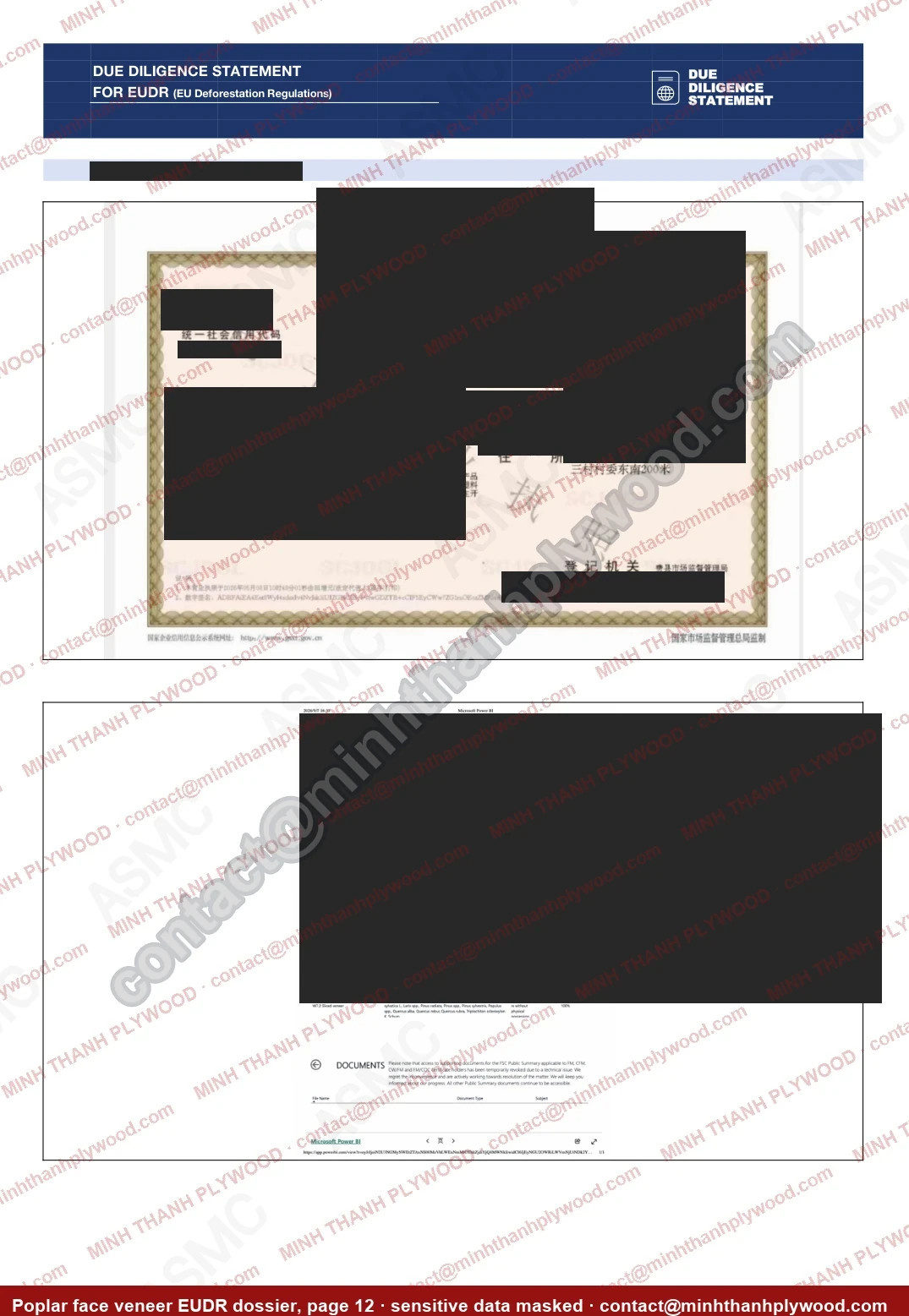
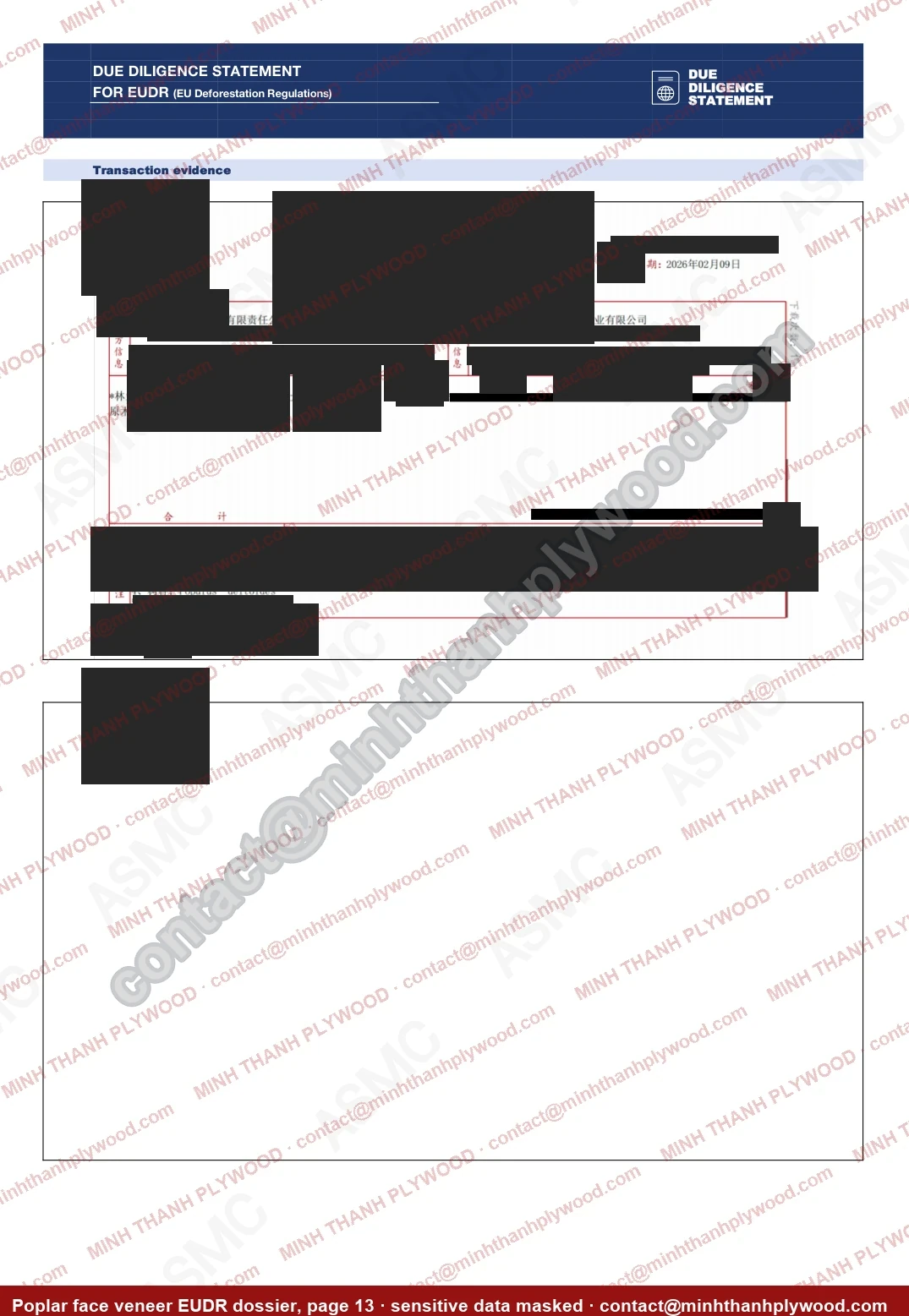
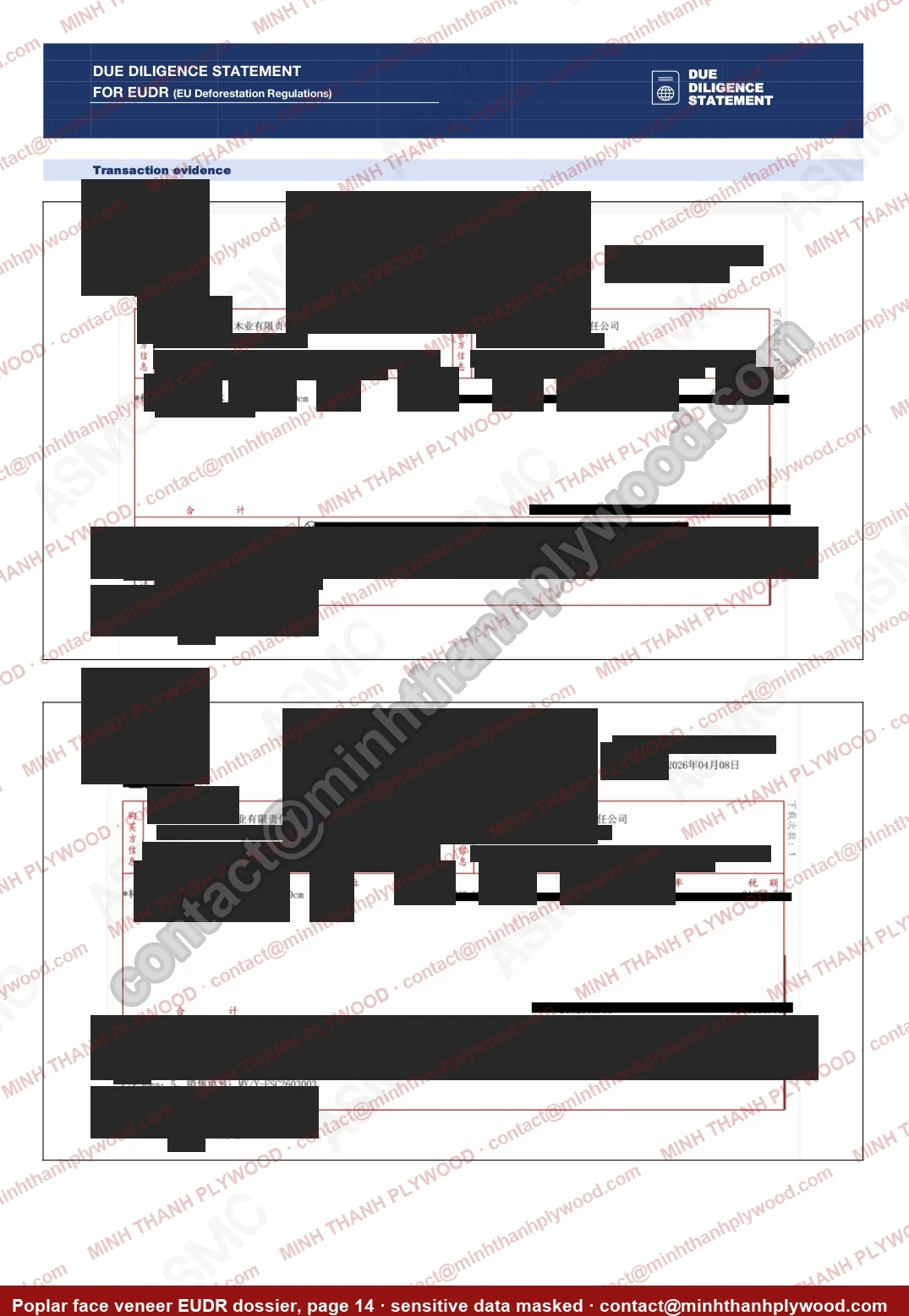
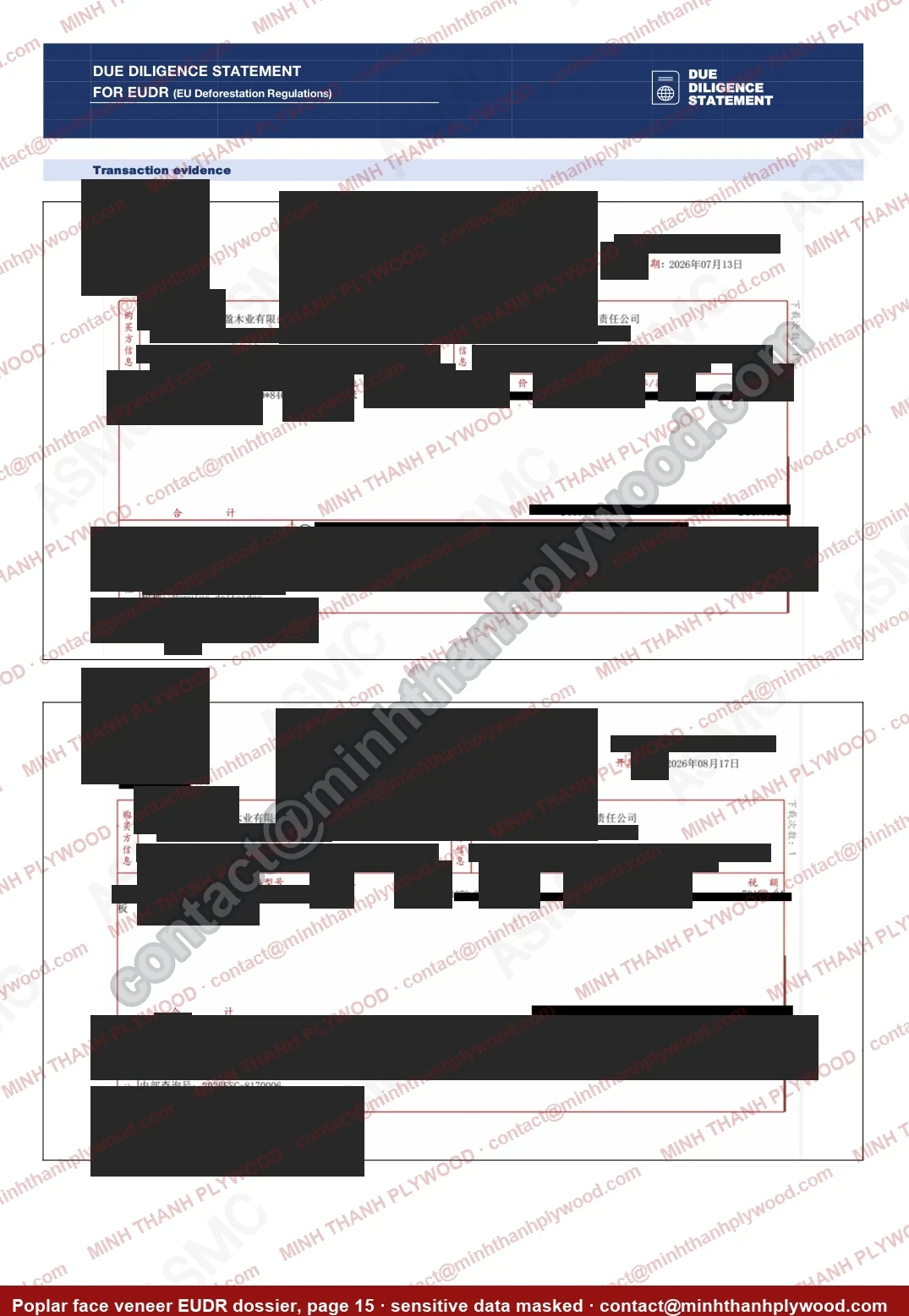
These are the real dossier pages behind our EUDR compliant plywood, shown in full. Names, addresses, ID, tax, bank, permit and certificate numbers, prices, seals and signatures are masked; species, quantities, harvest periods, plots and coordinates stay readable. Every page carries our email address. The unmasked copy goes to buyers by email from [email protected], stamped with a copy number.
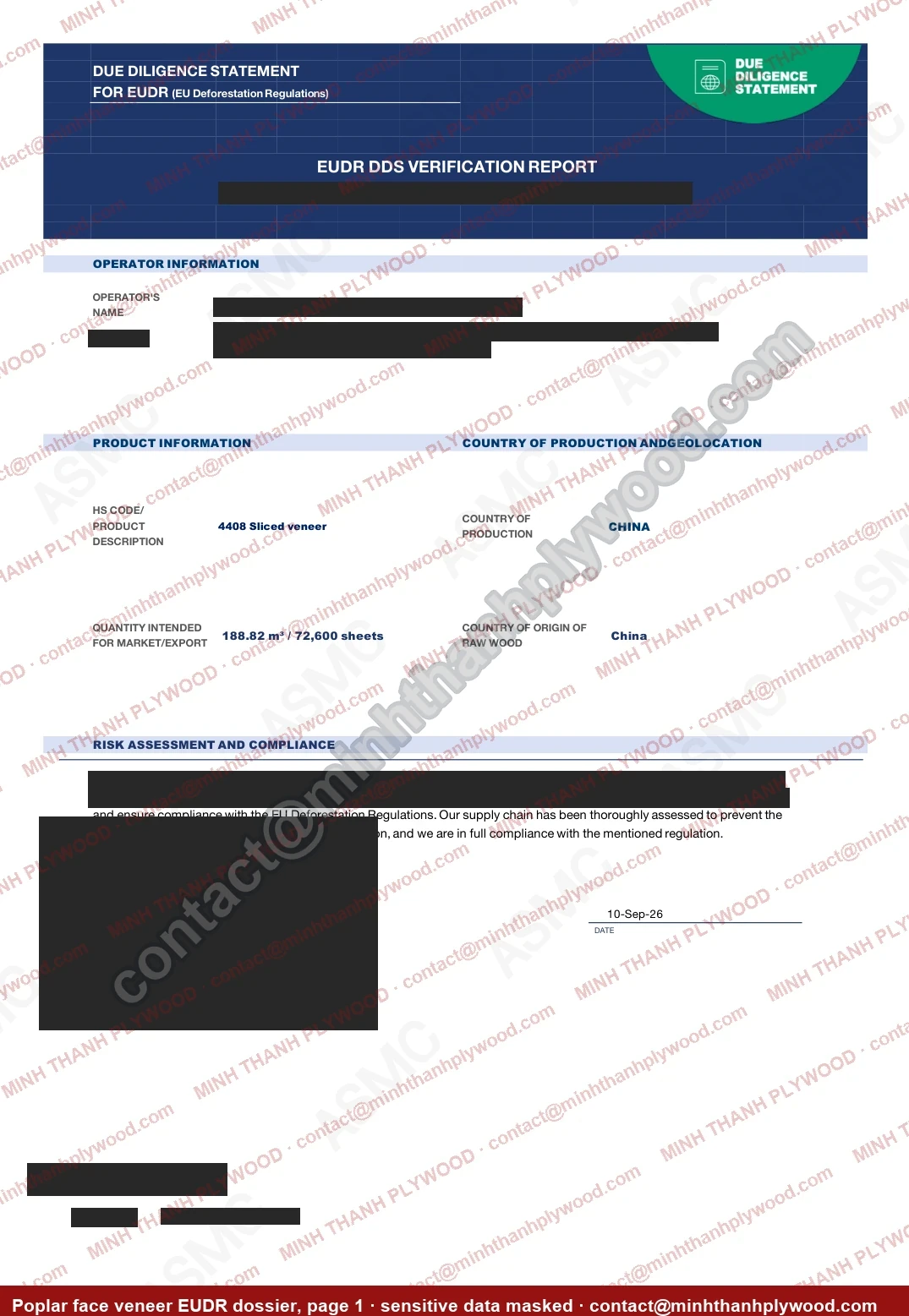
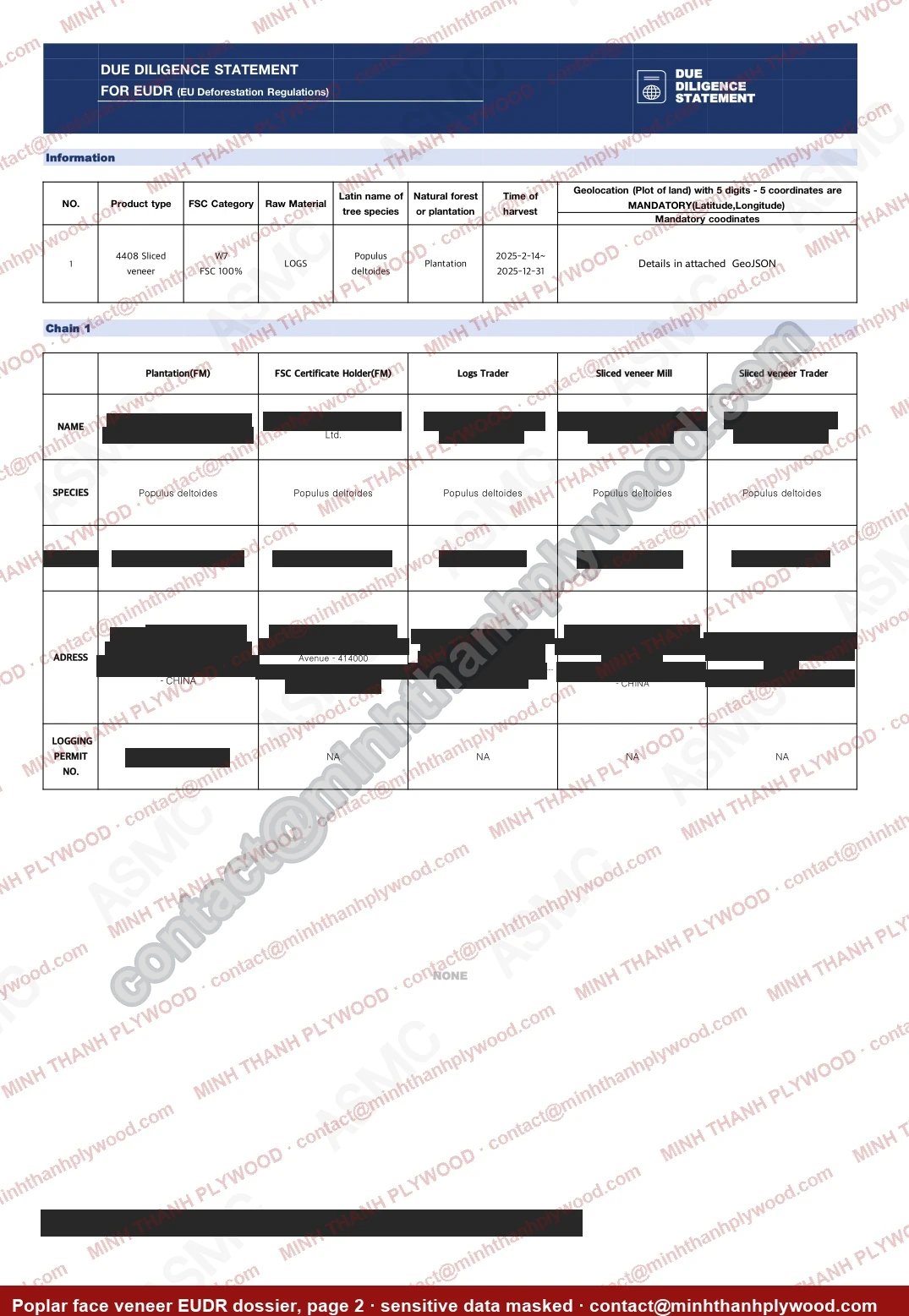
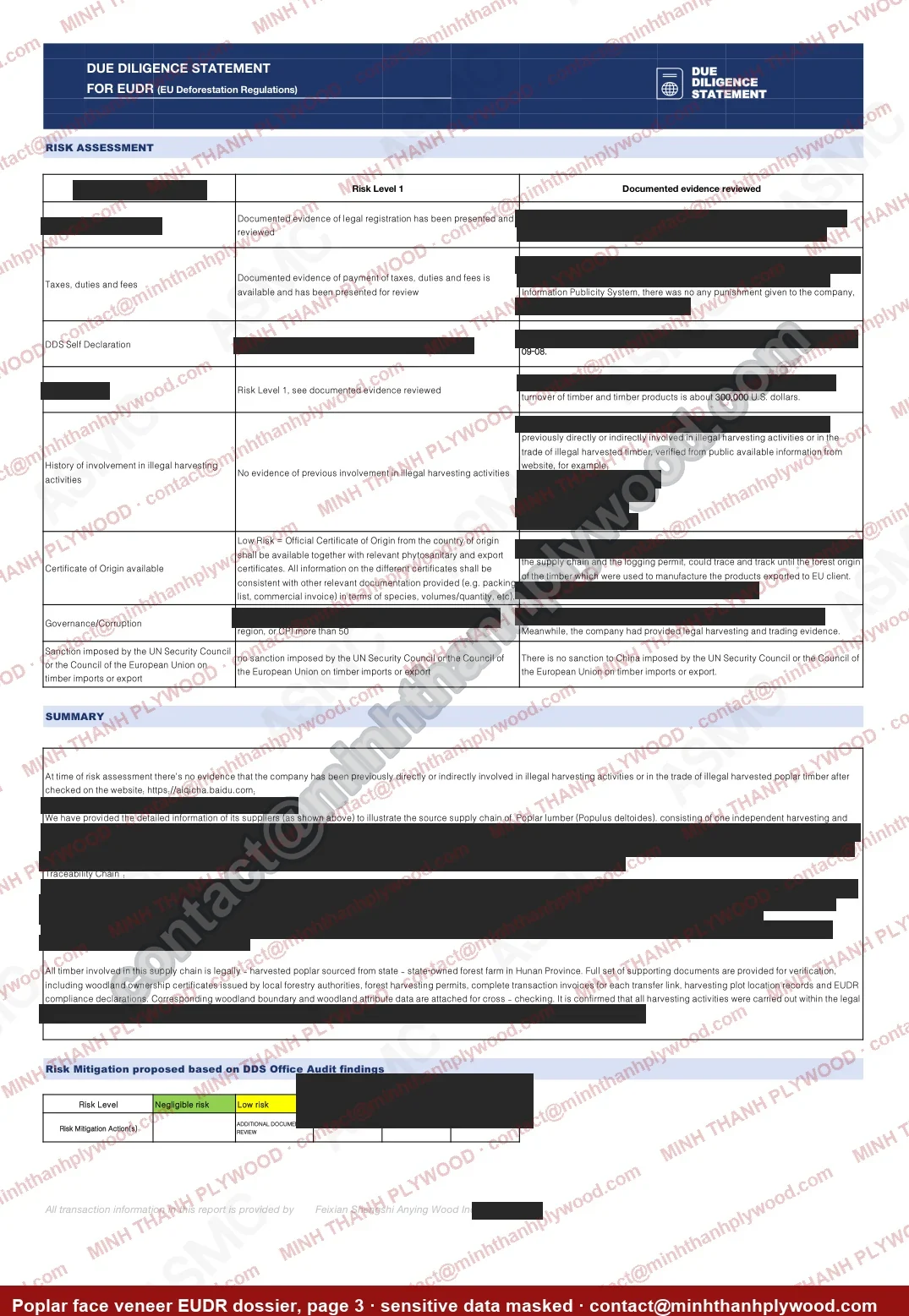
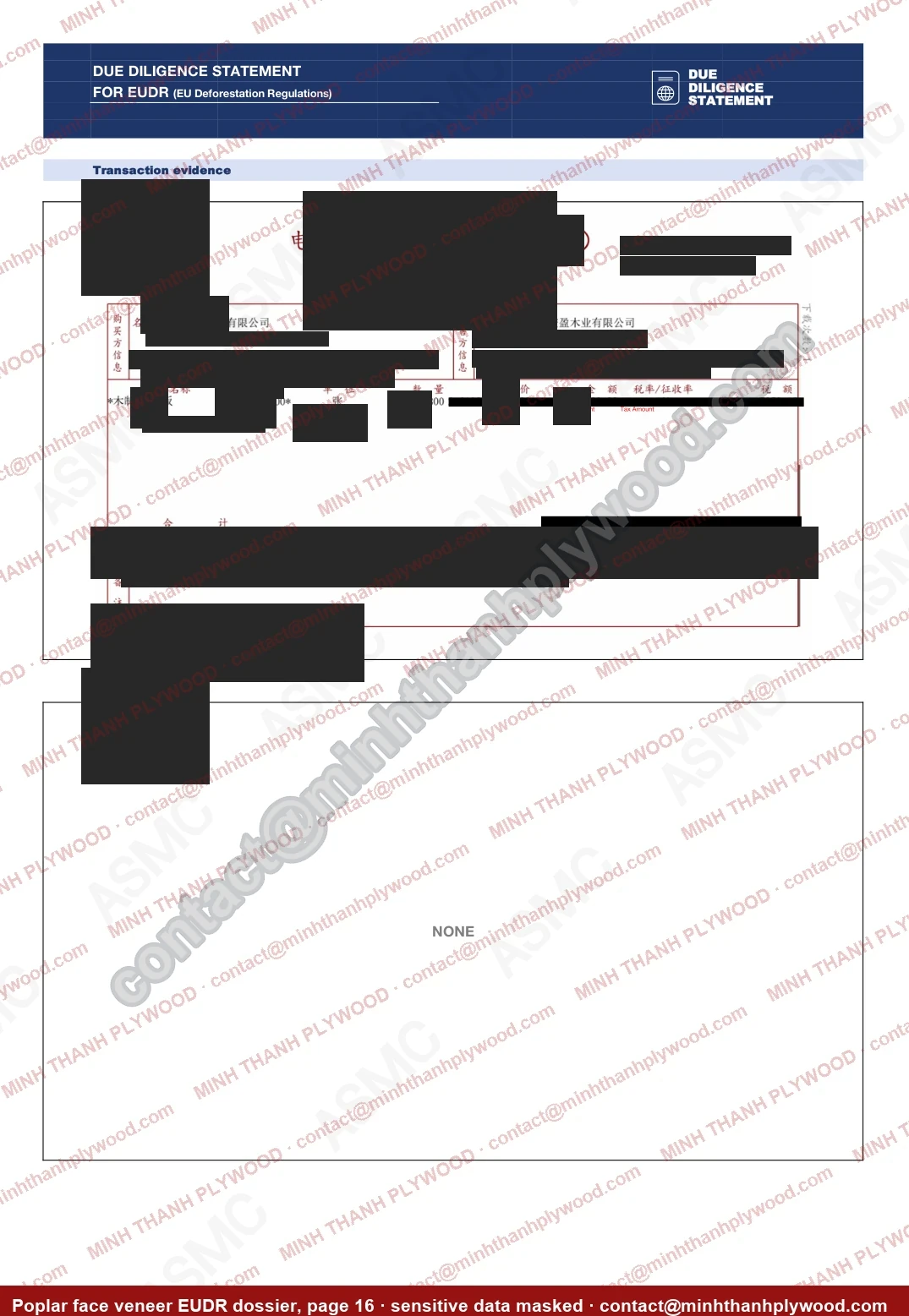
Face veneer, poplar: due diligence statement (16 pages)
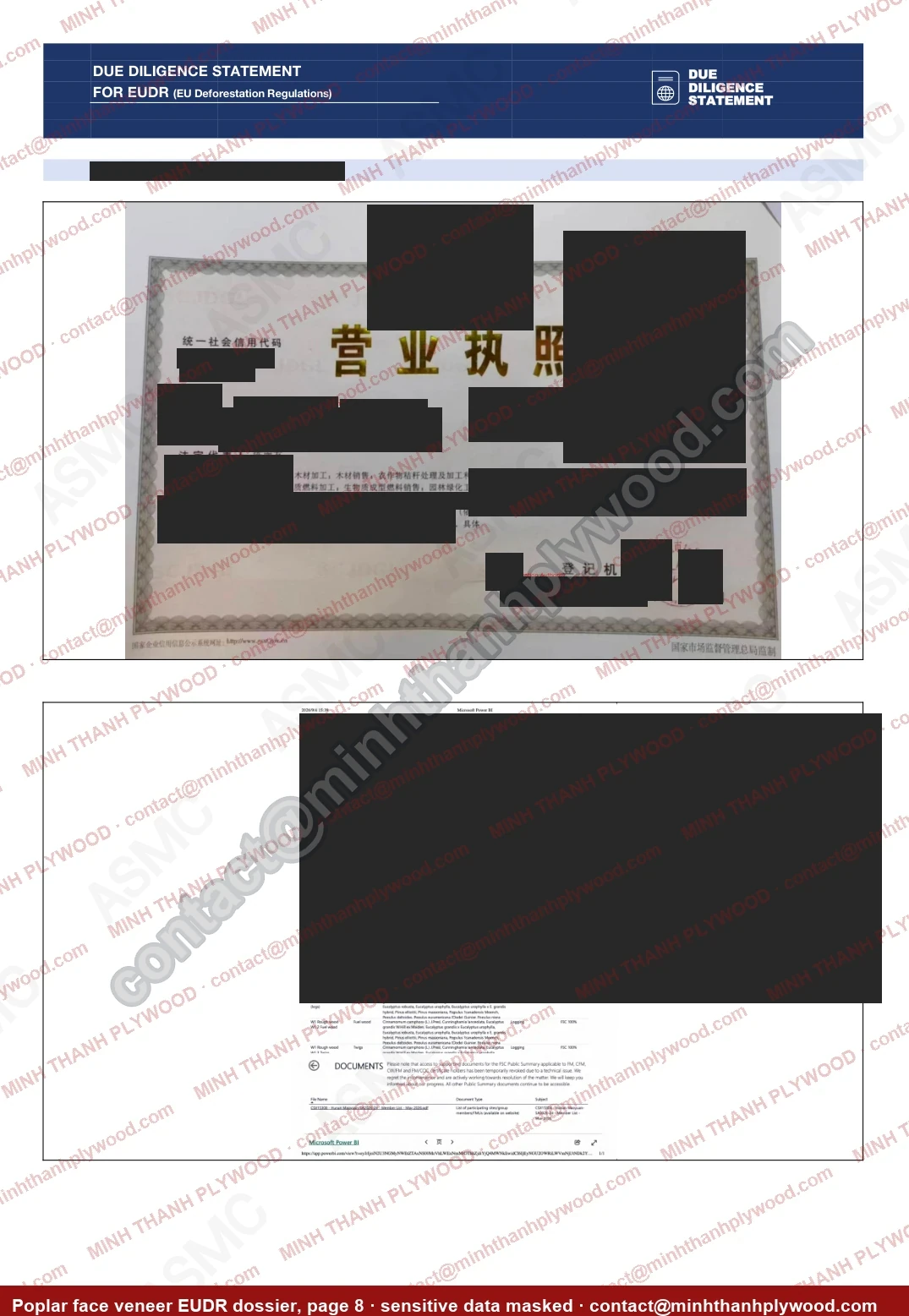
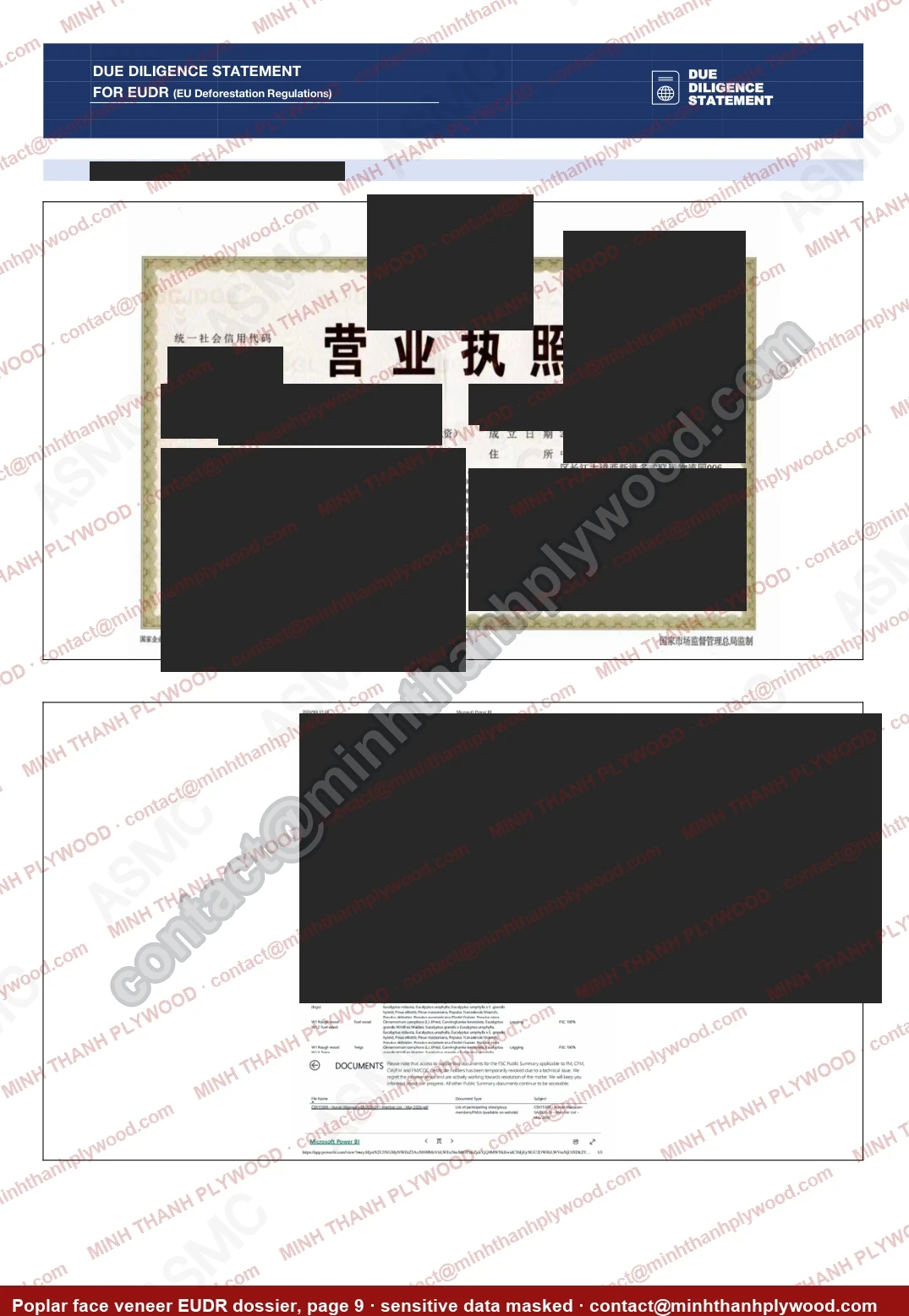
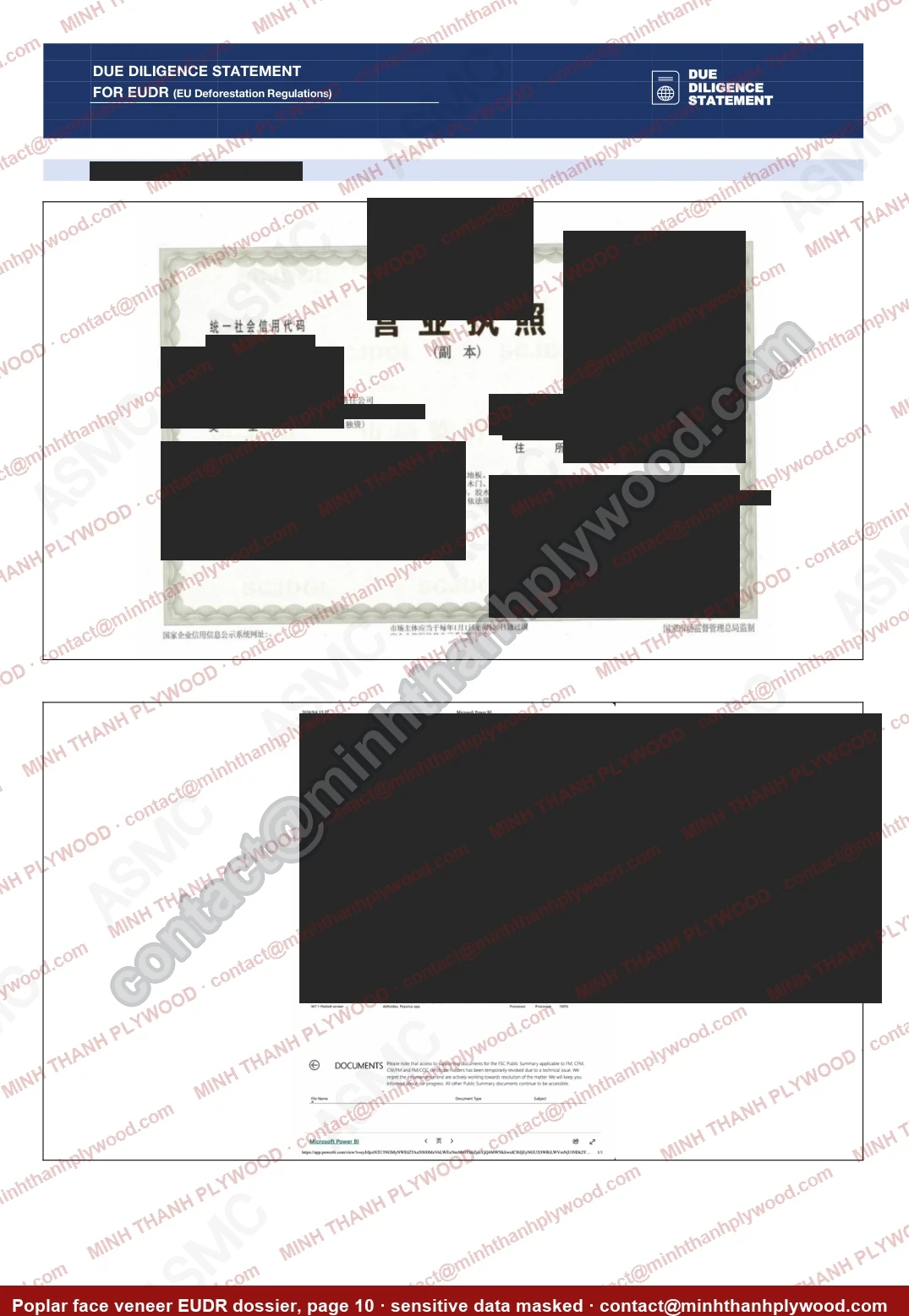
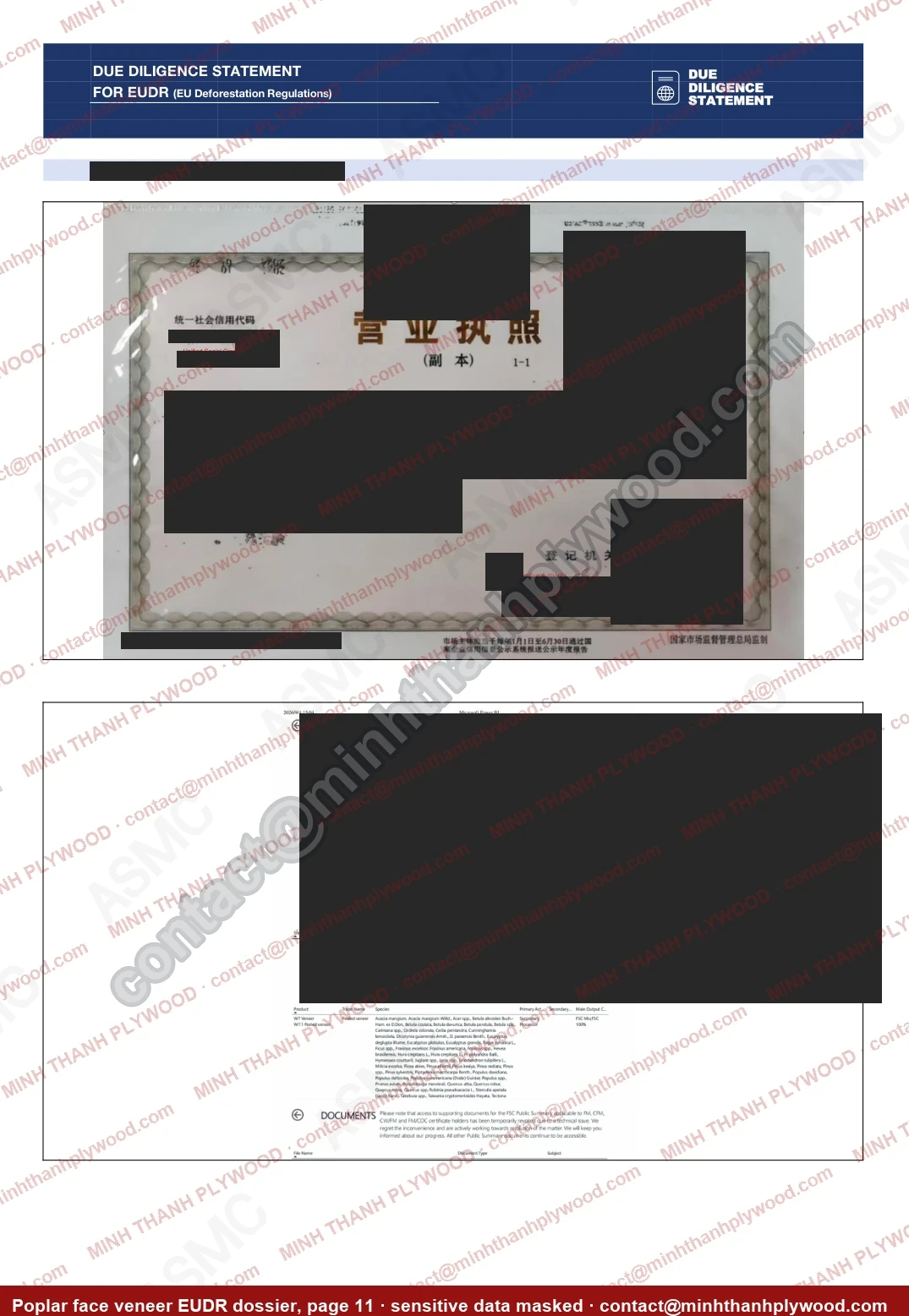
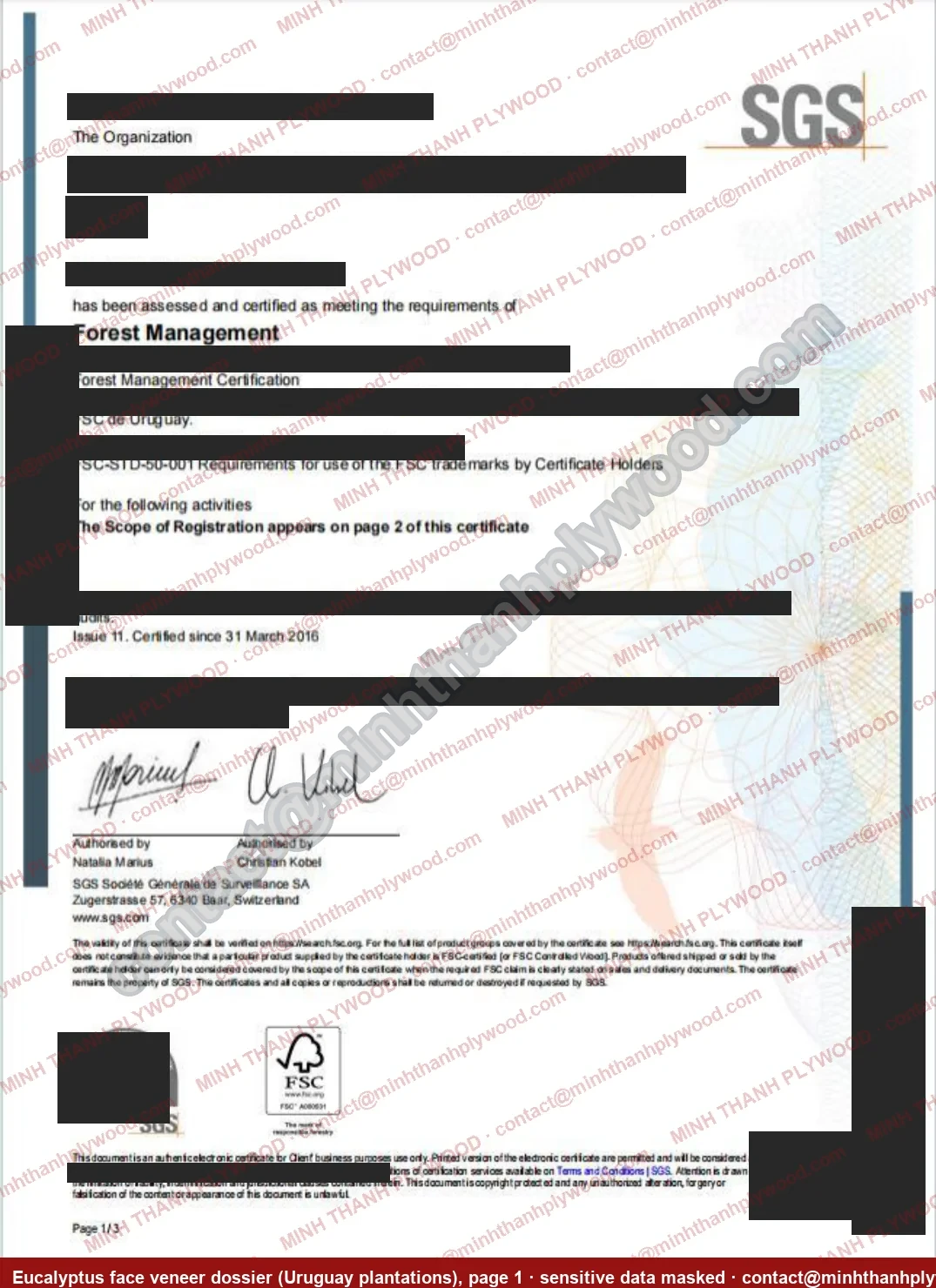
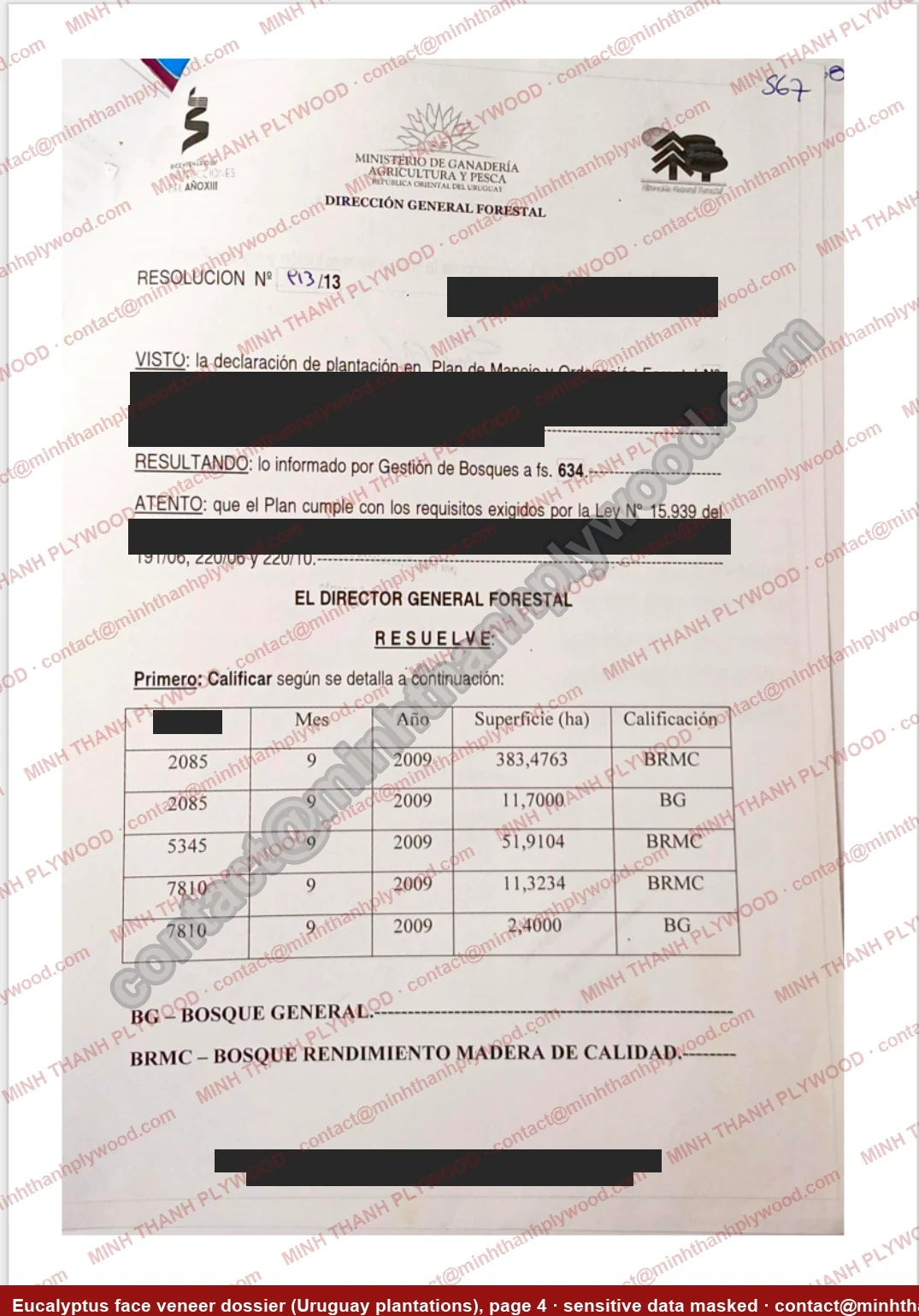
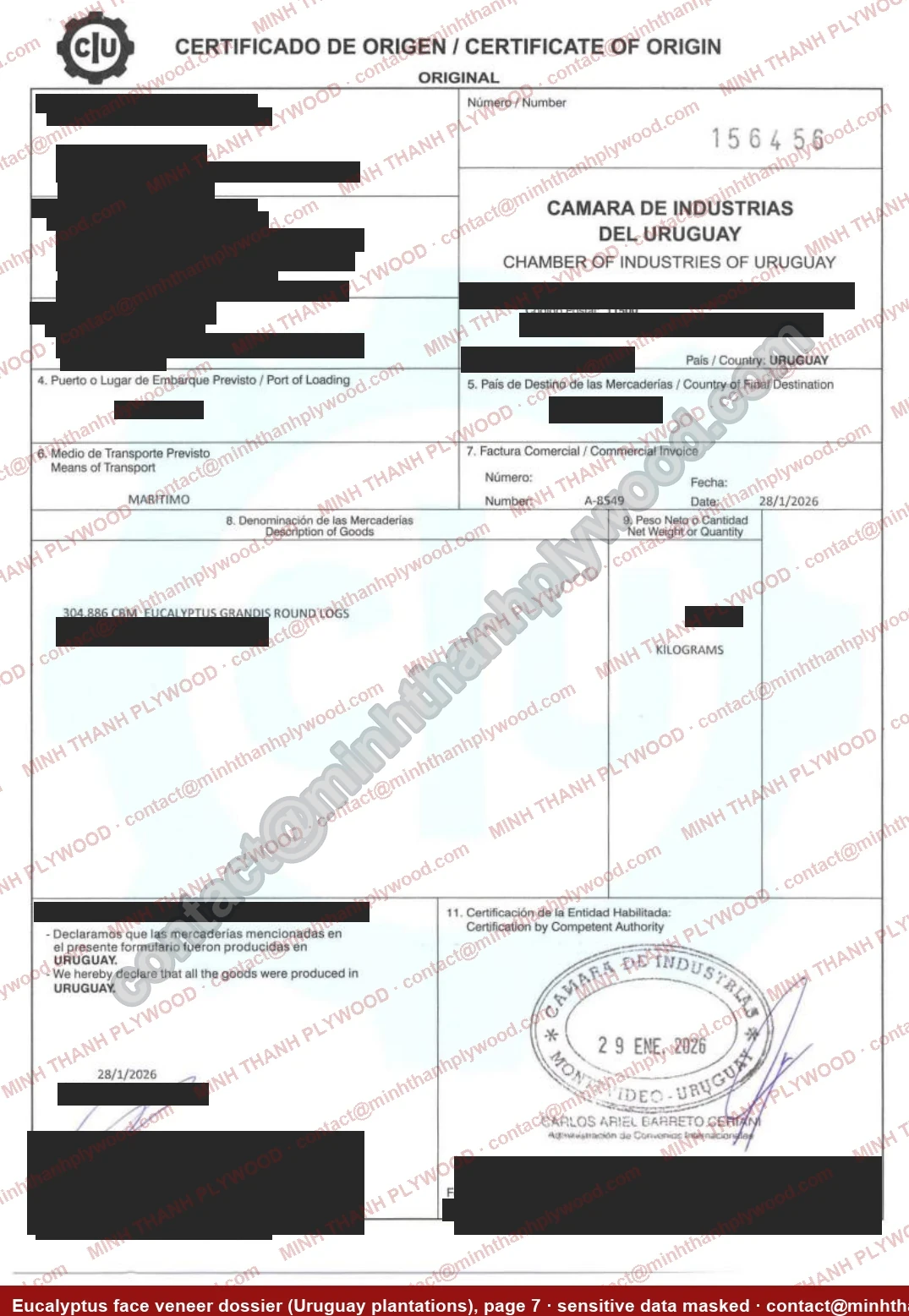
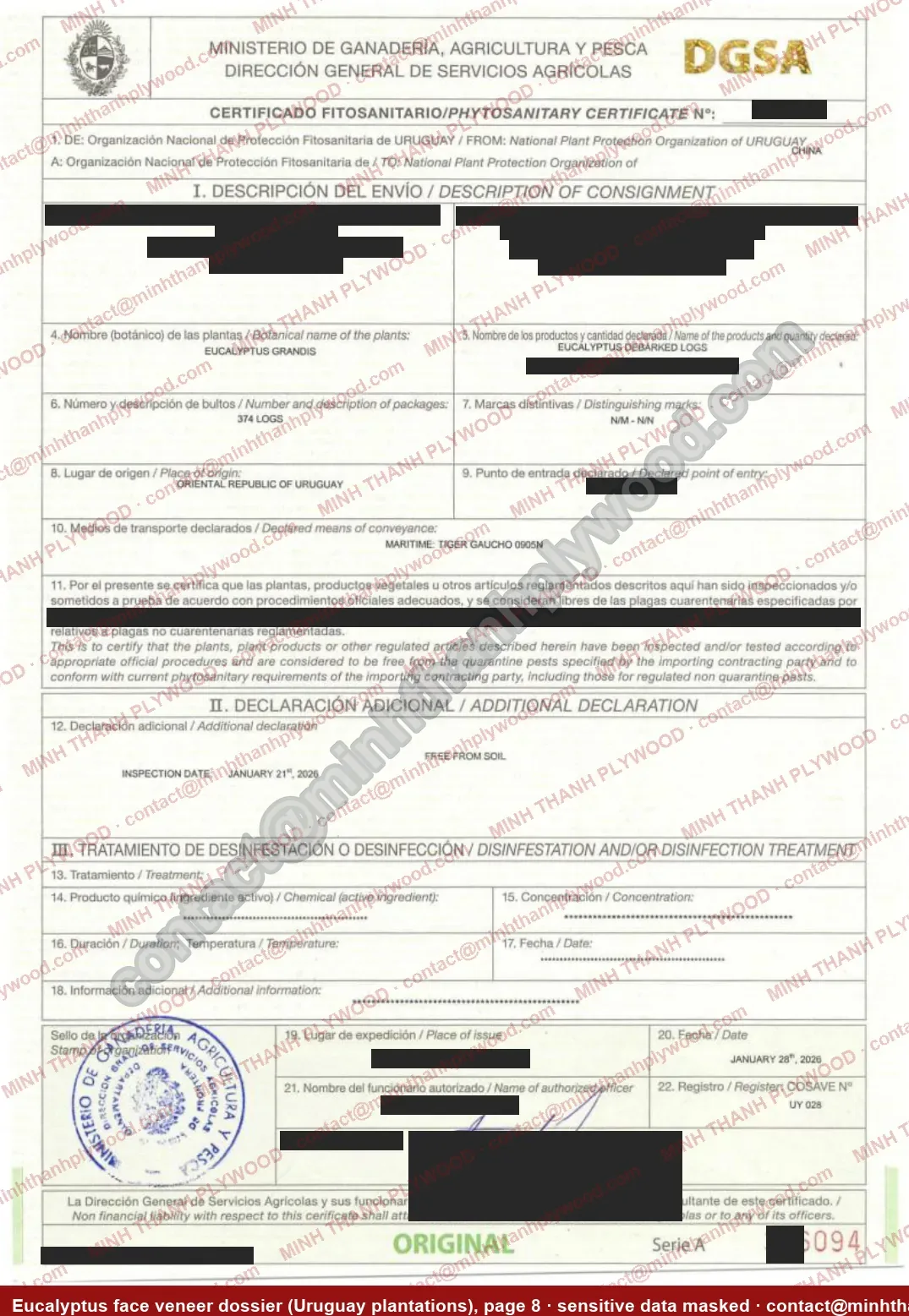
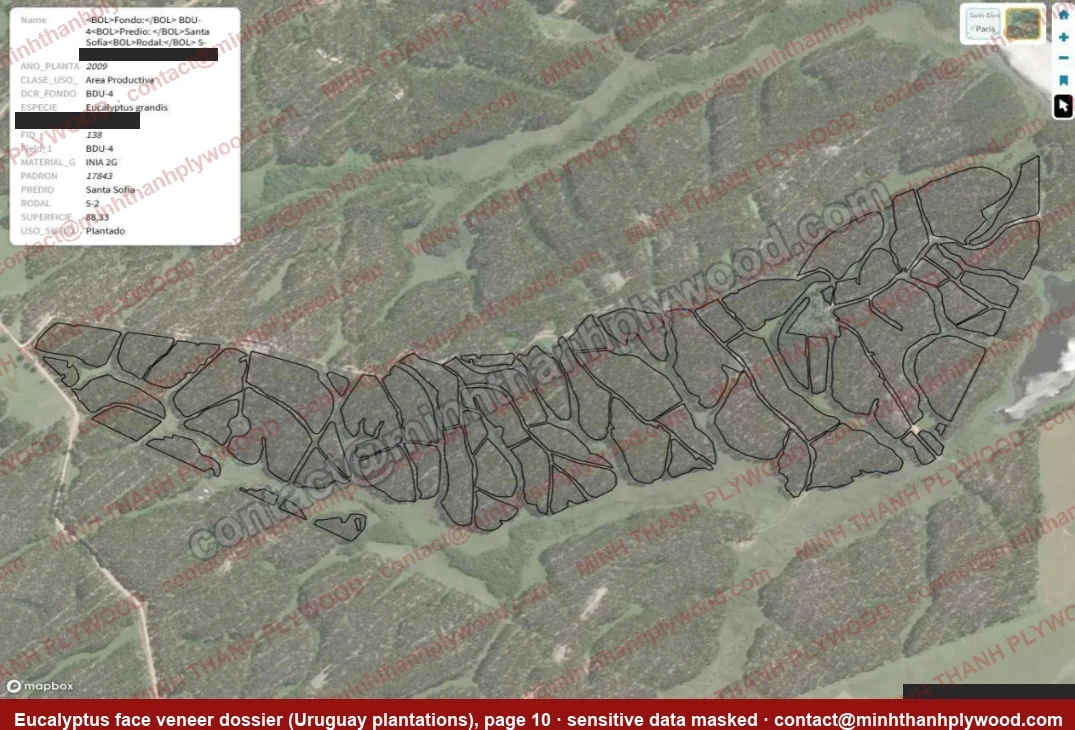
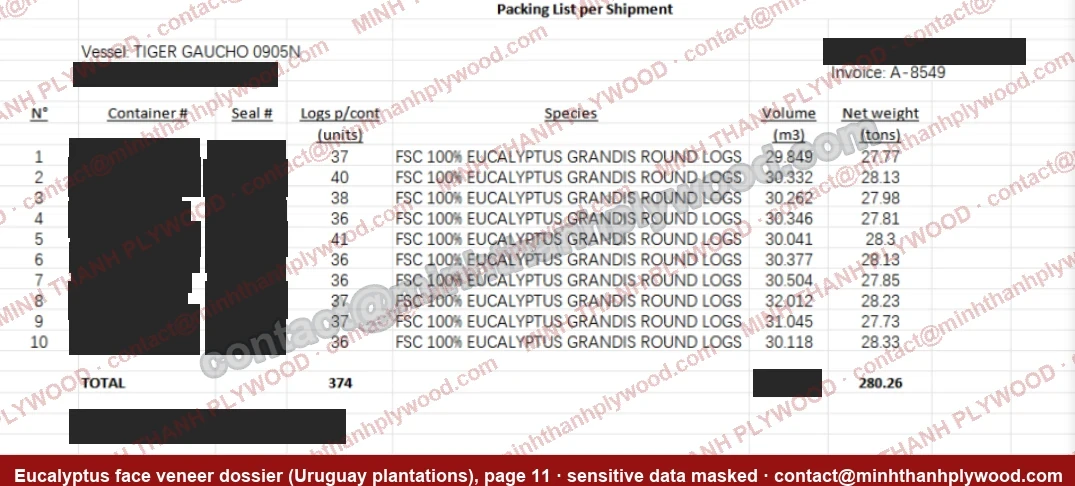
Face veneer, eucalyptus: Uruguay plantation records (6 key pages)
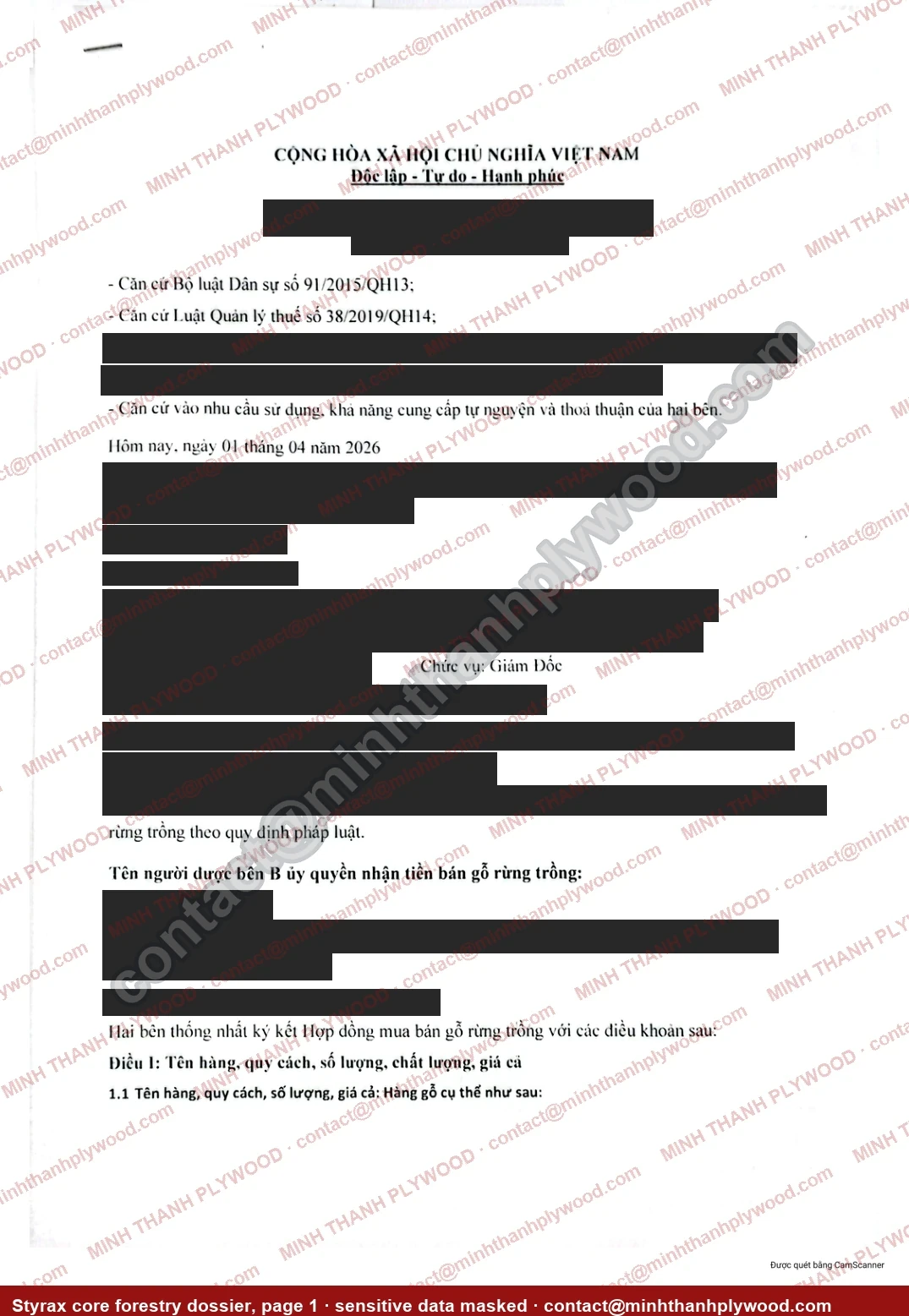
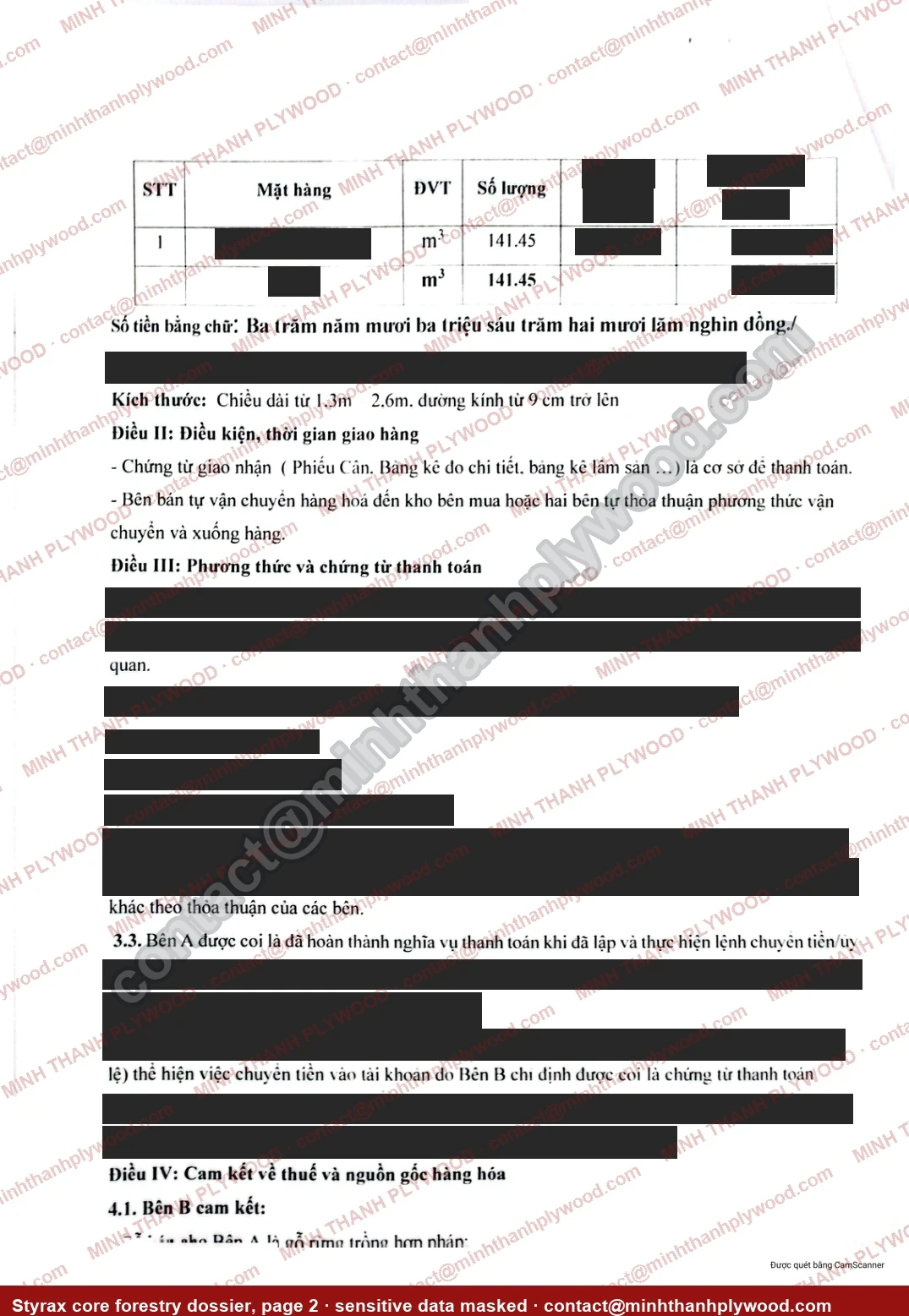
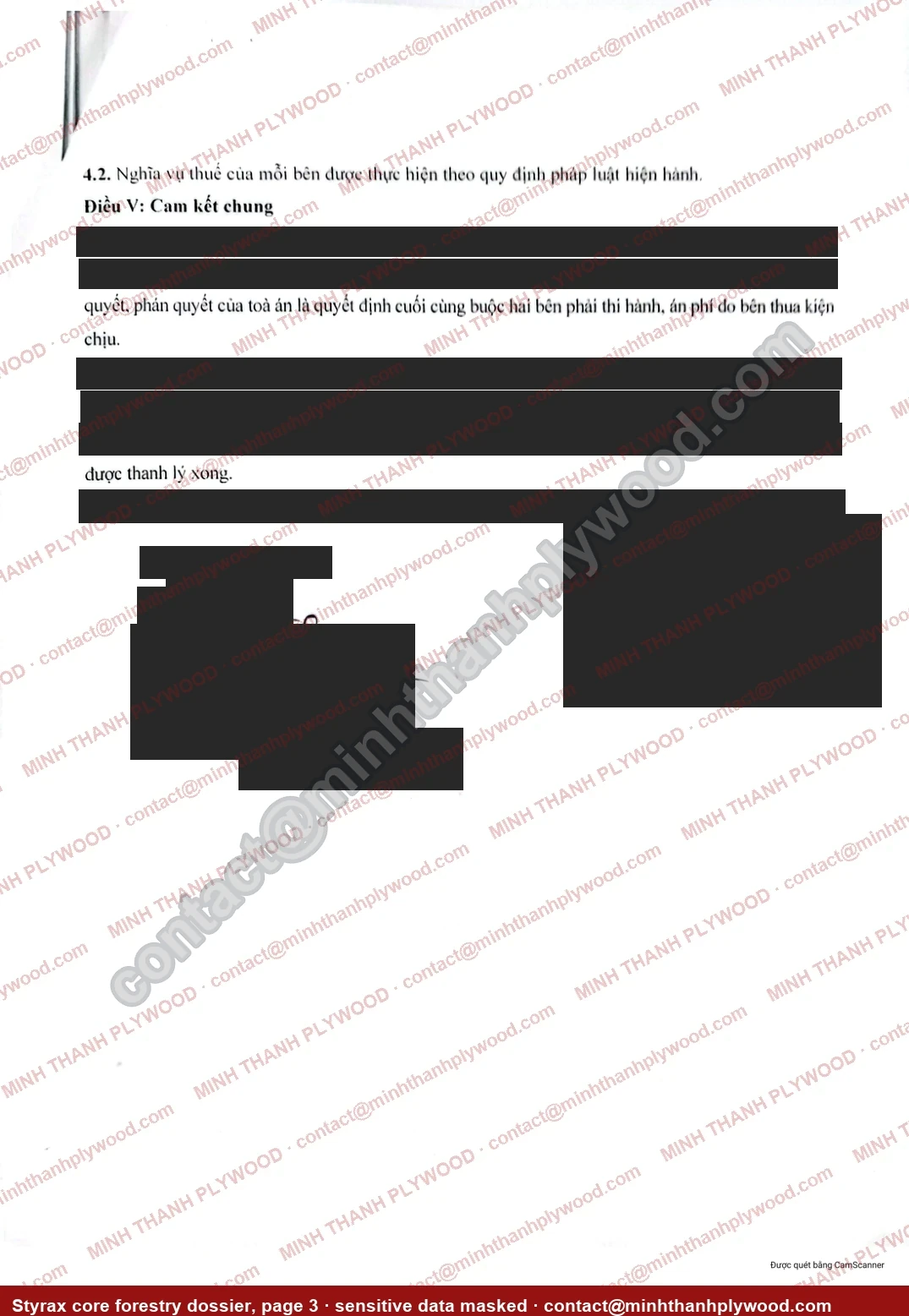
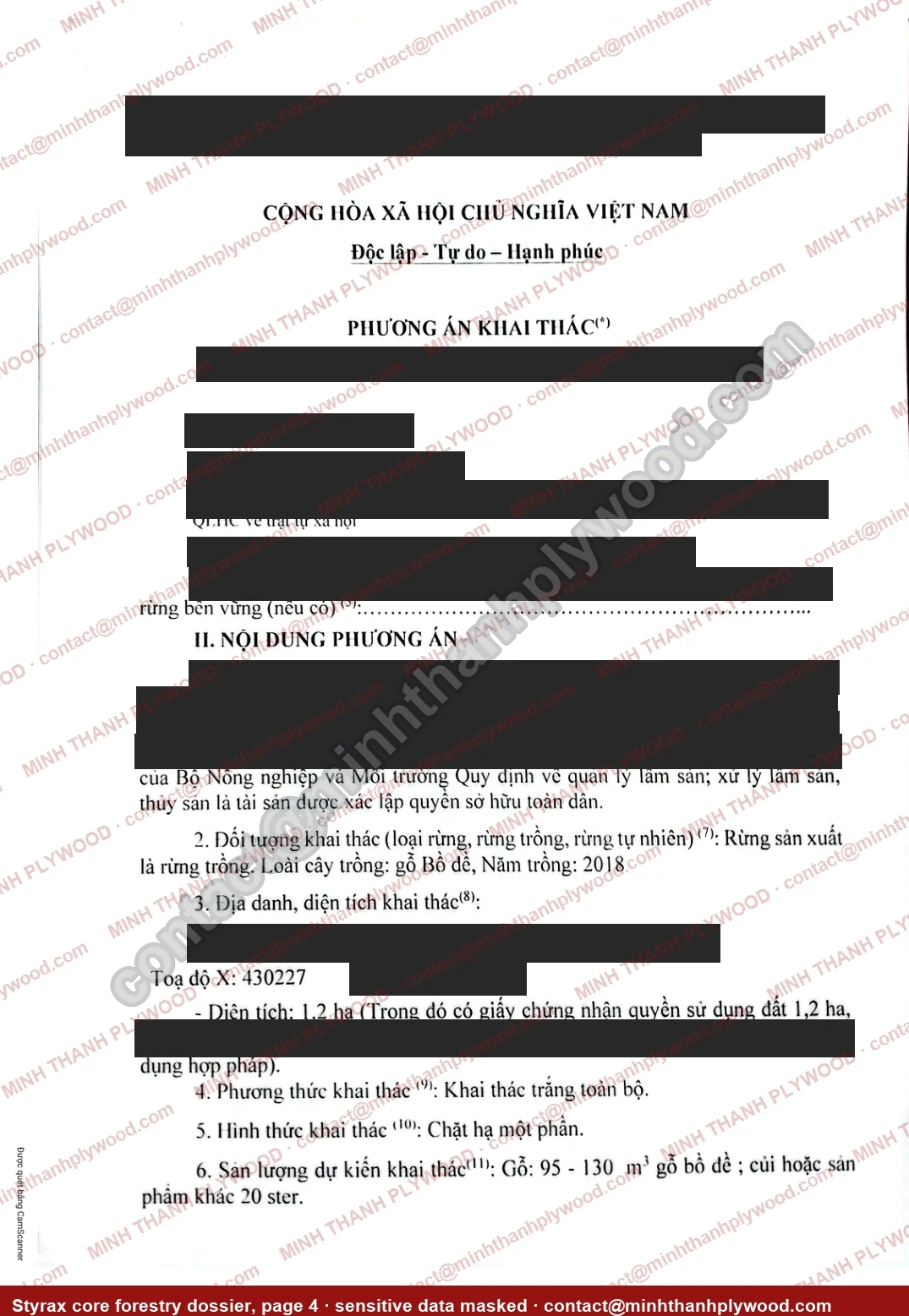
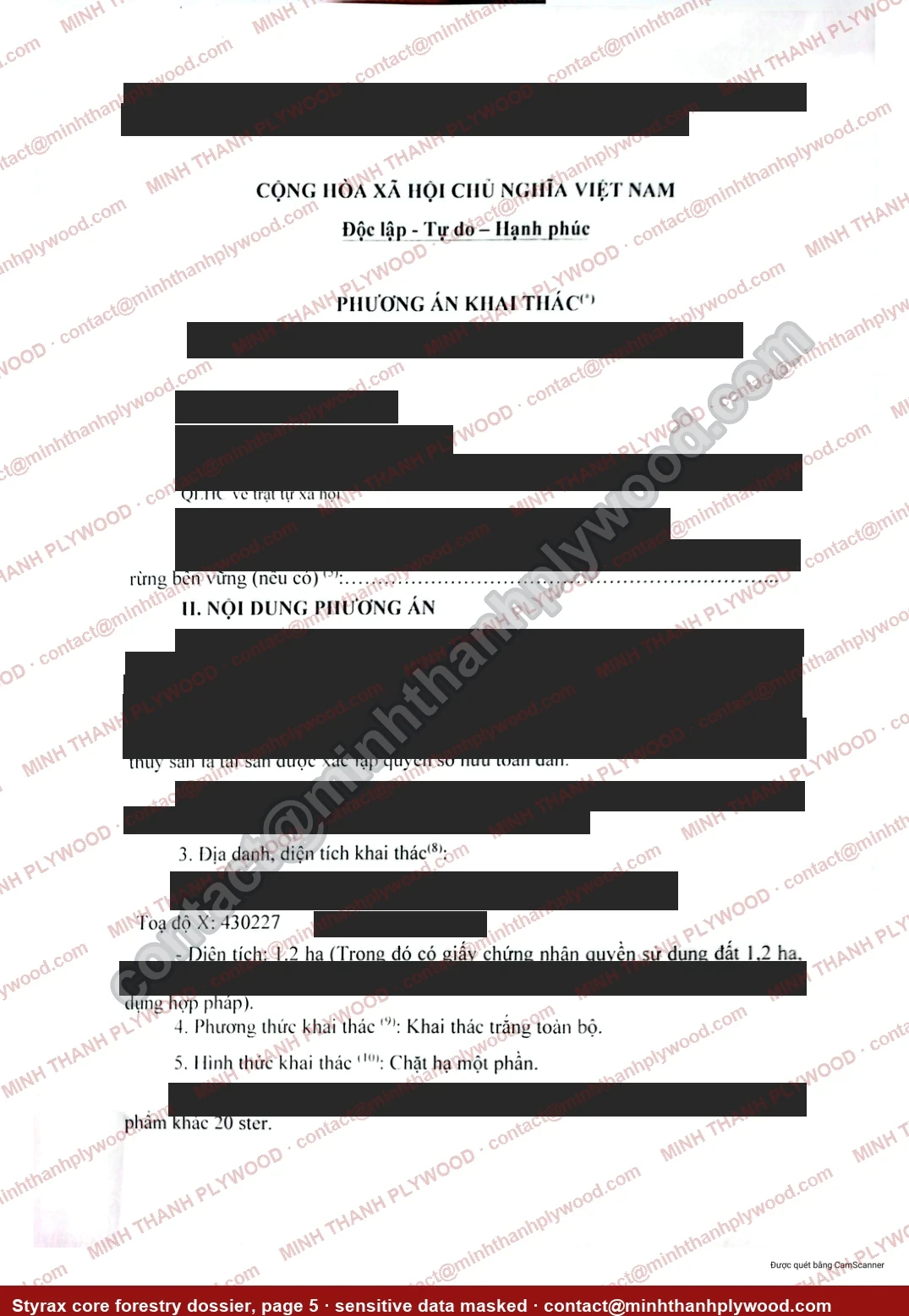
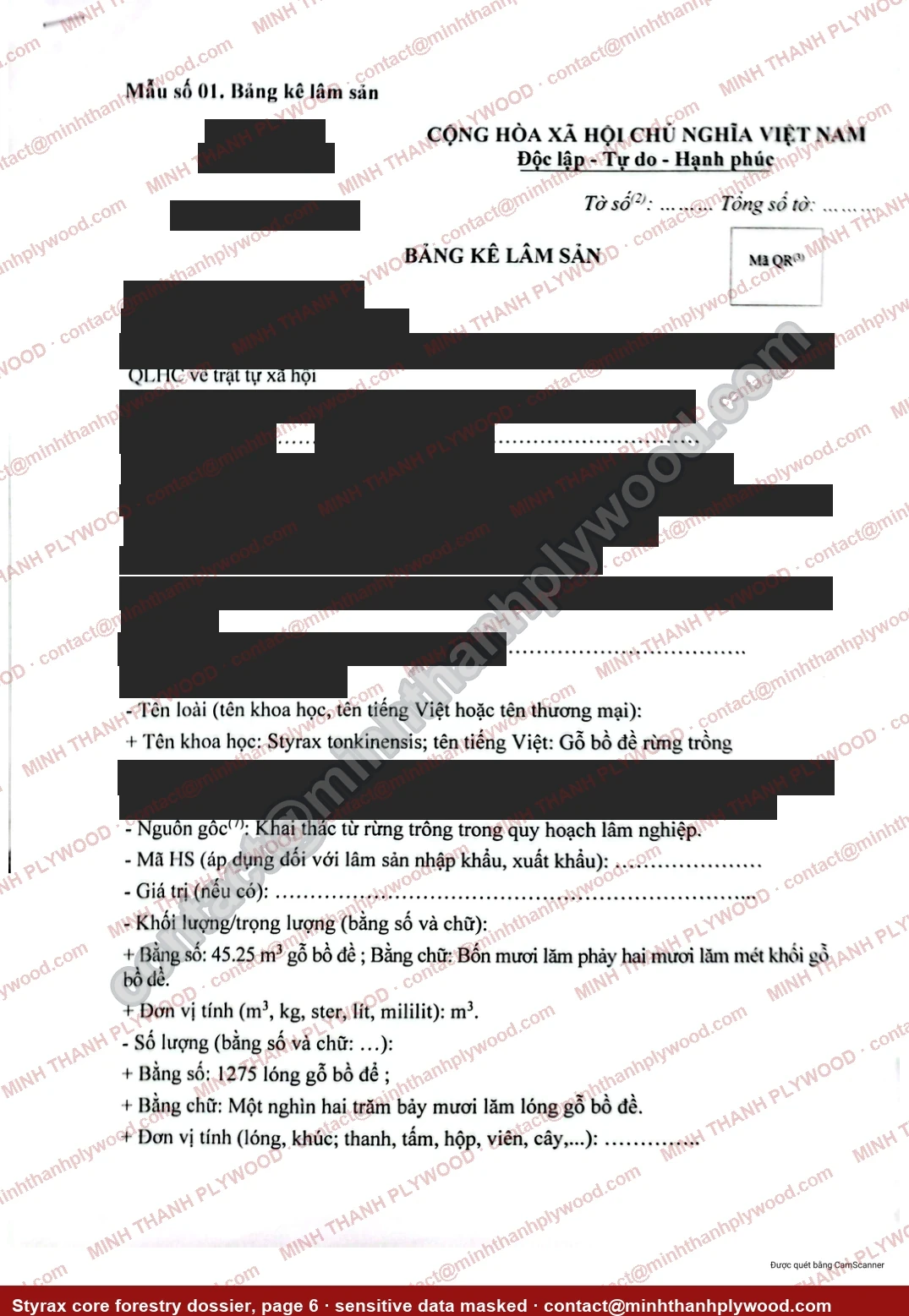
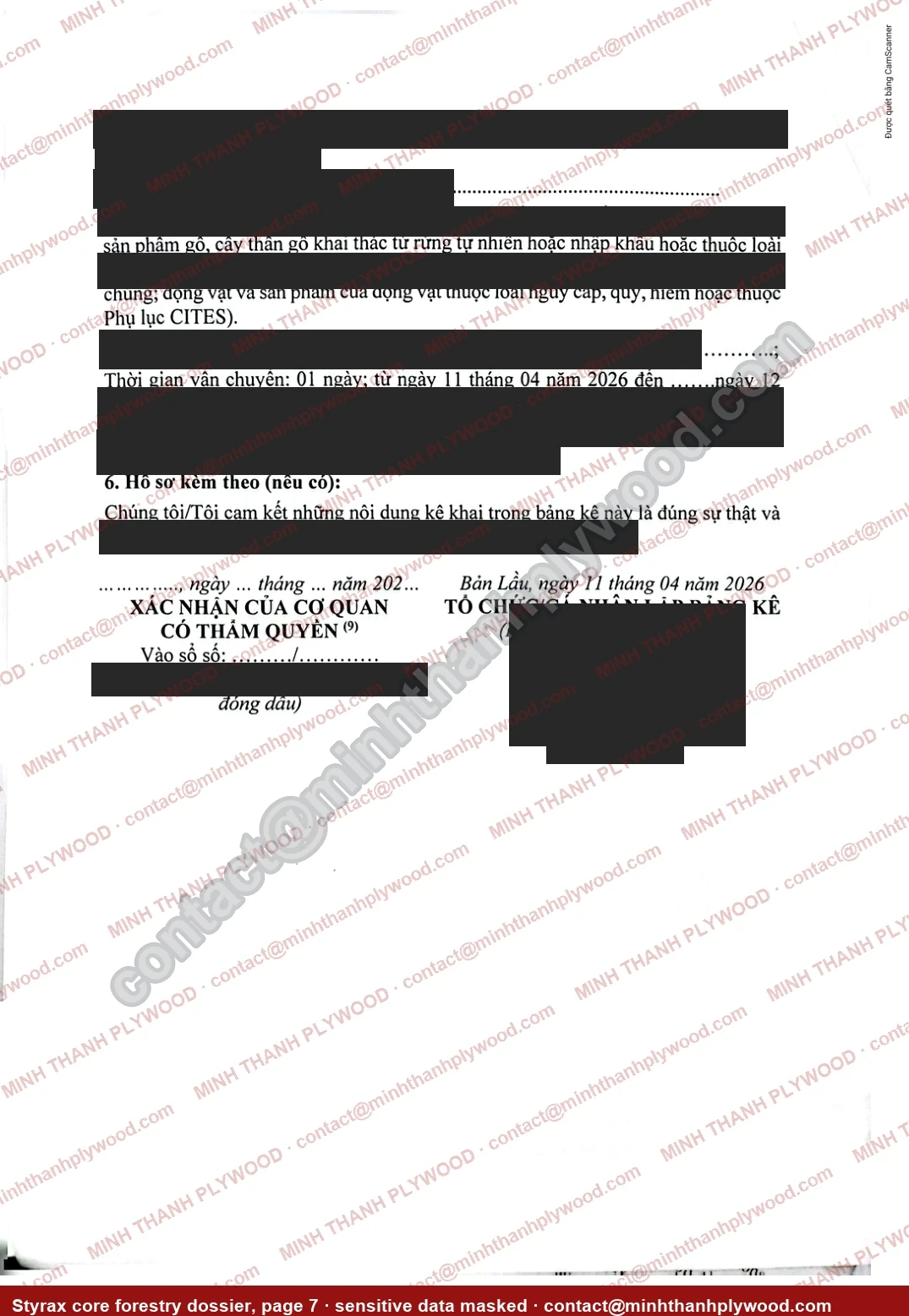
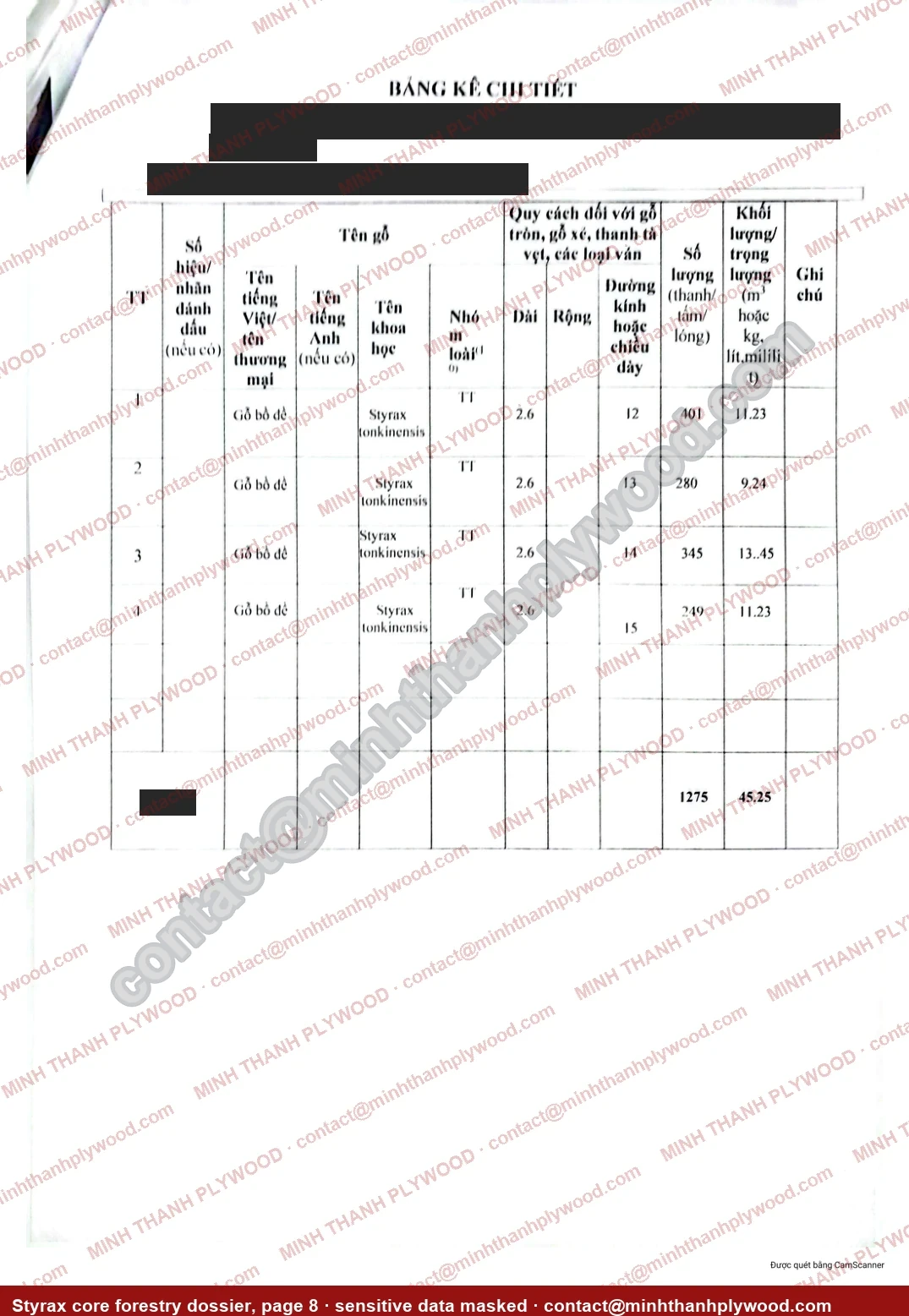
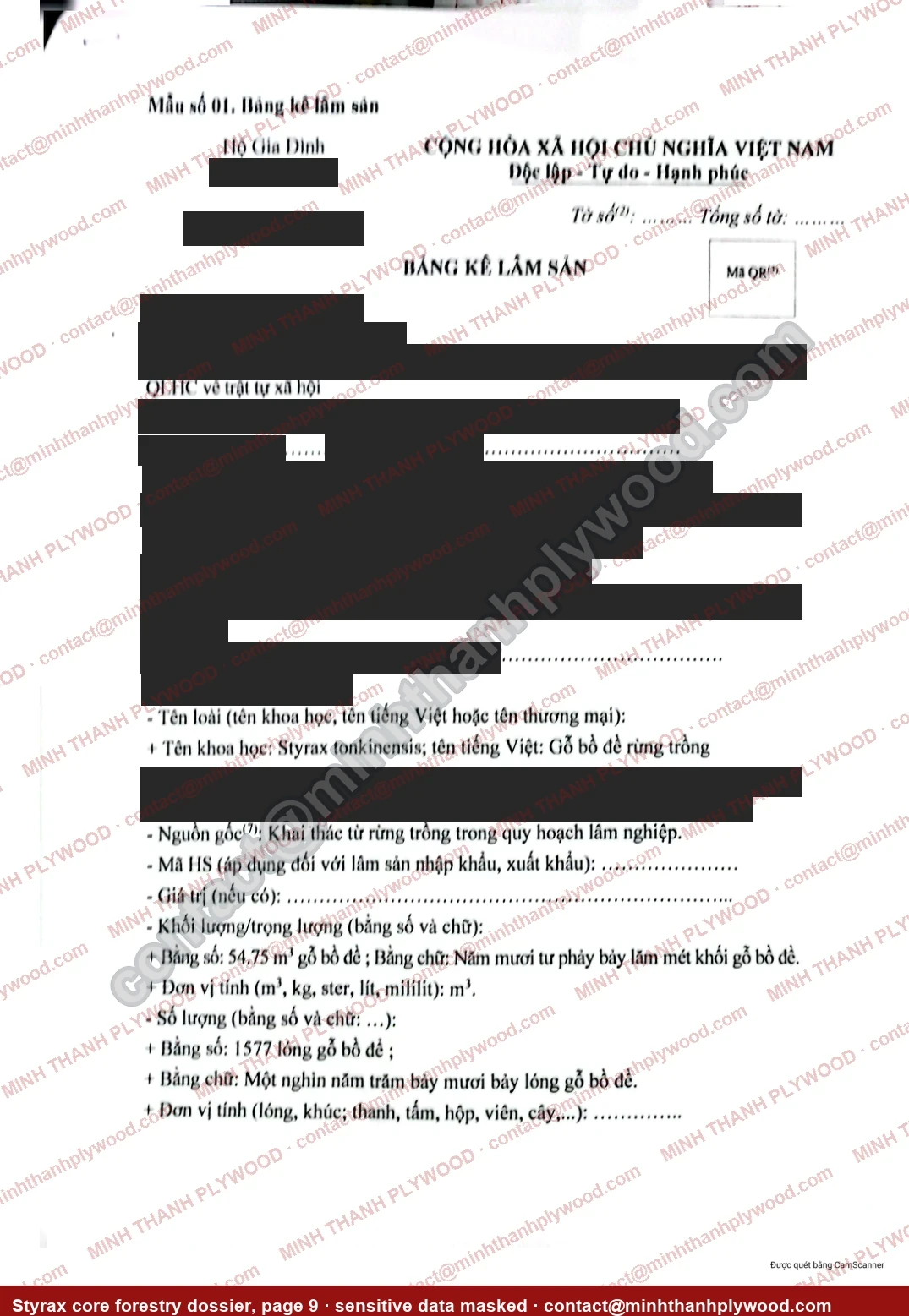
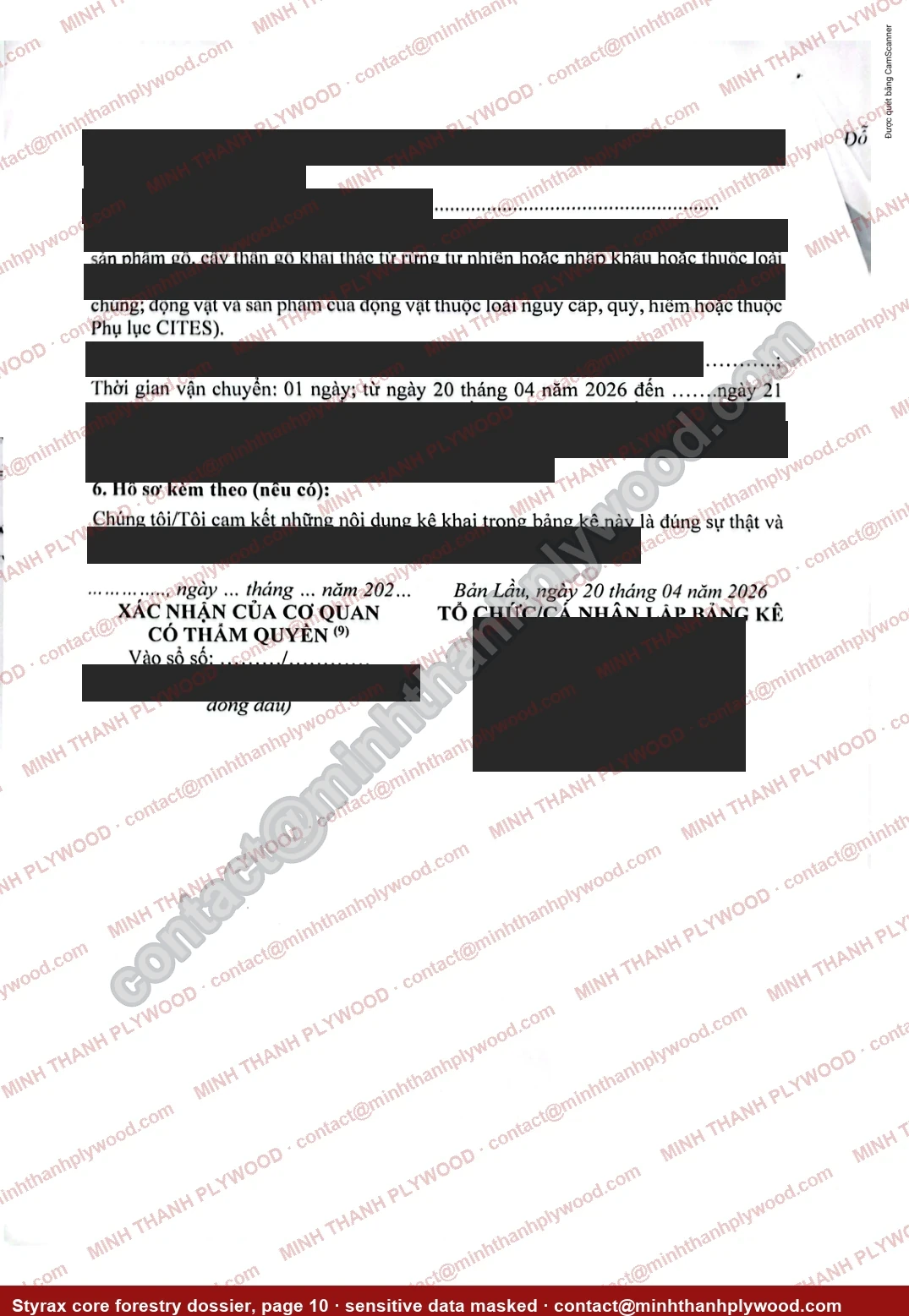
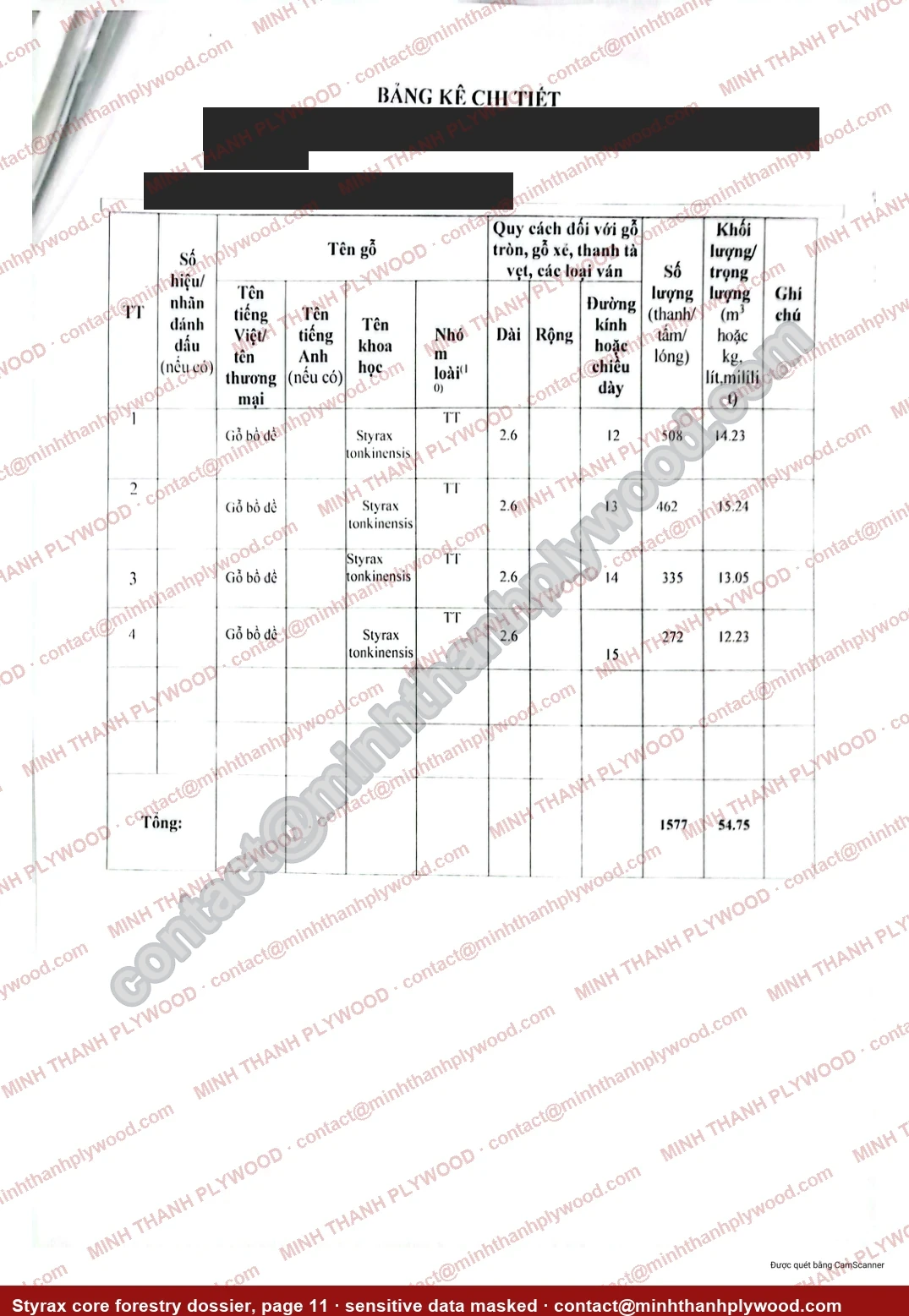
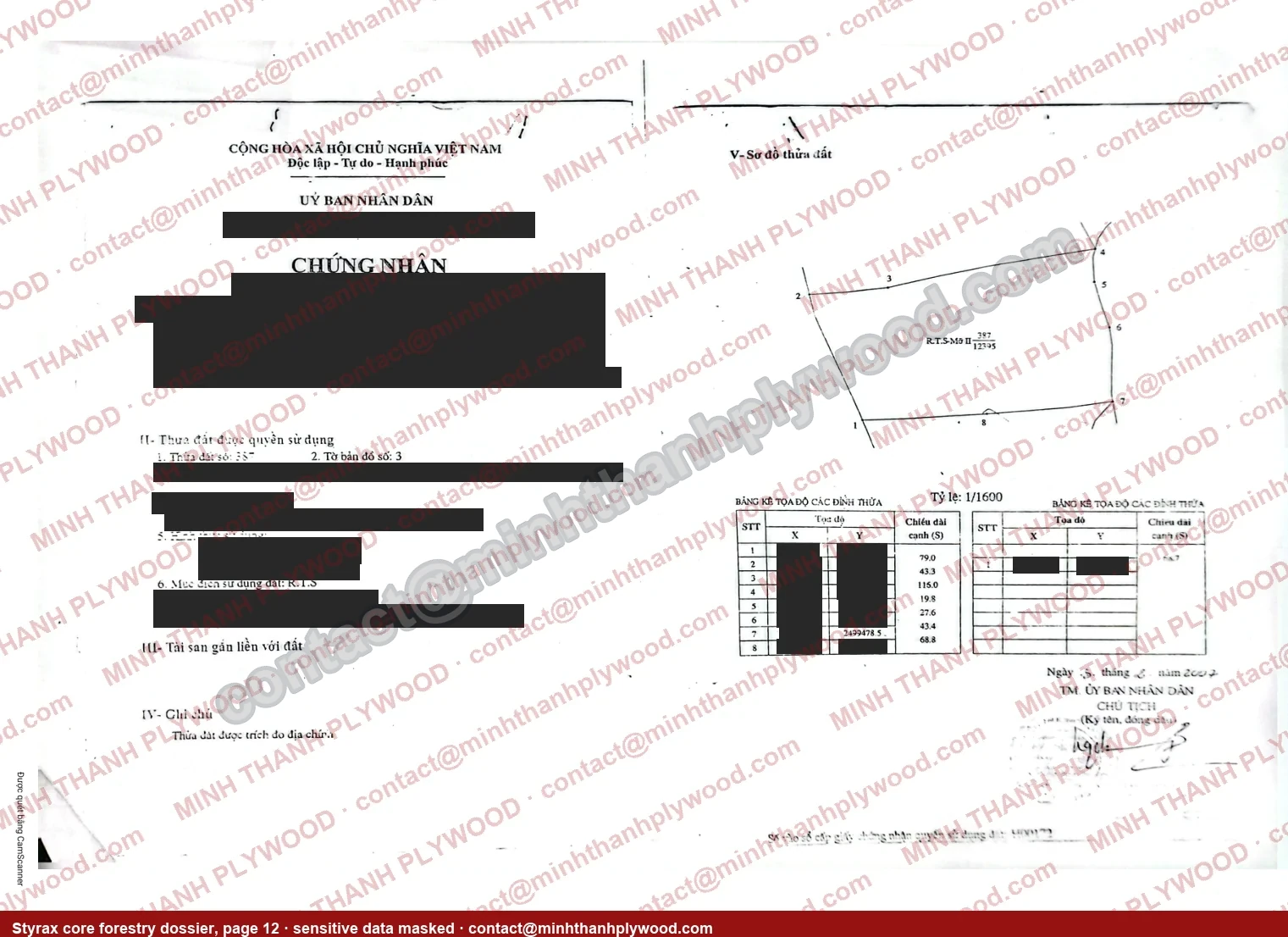
Core, Styrax: Vietnamese forestry dossier (13 pages)
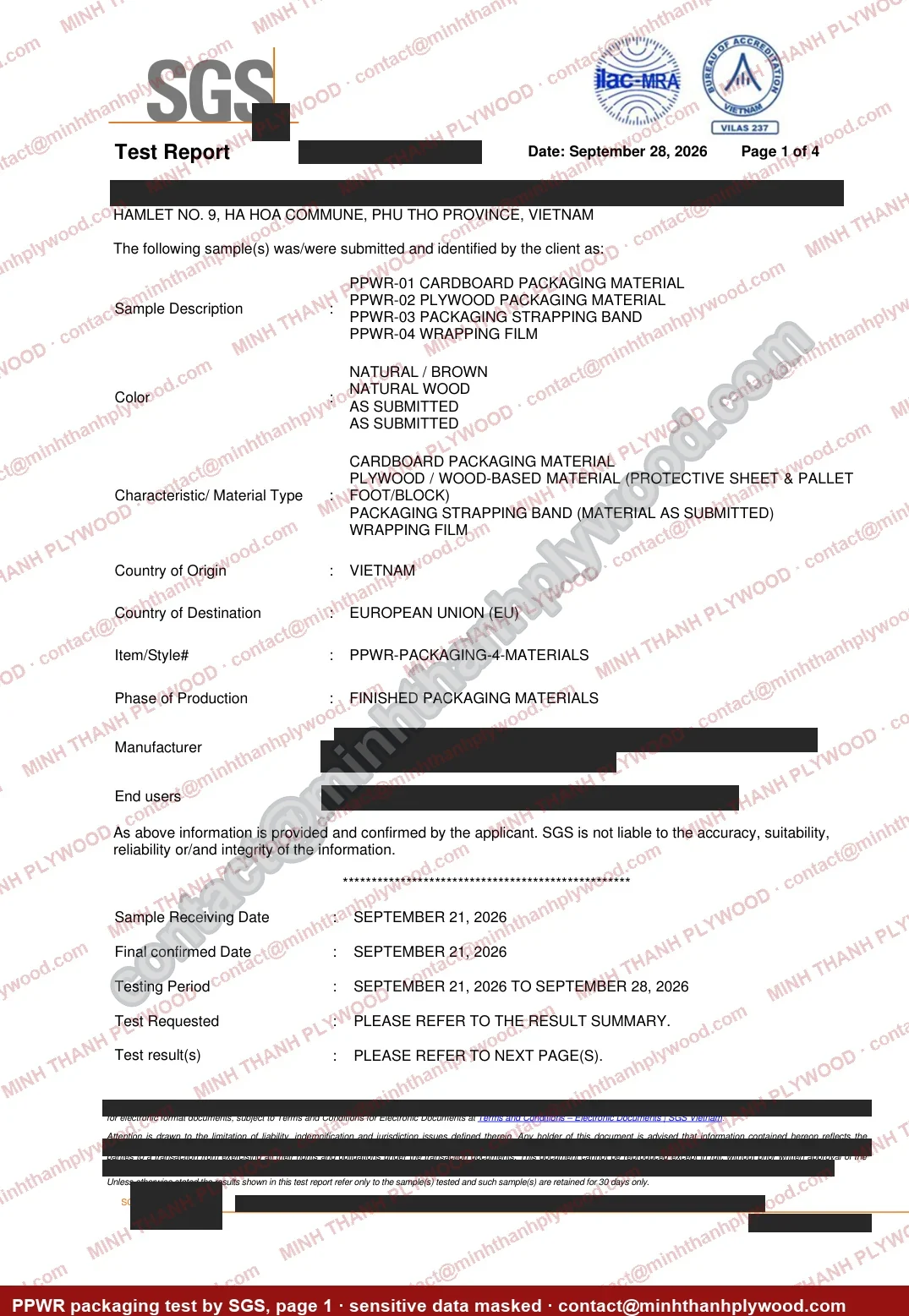
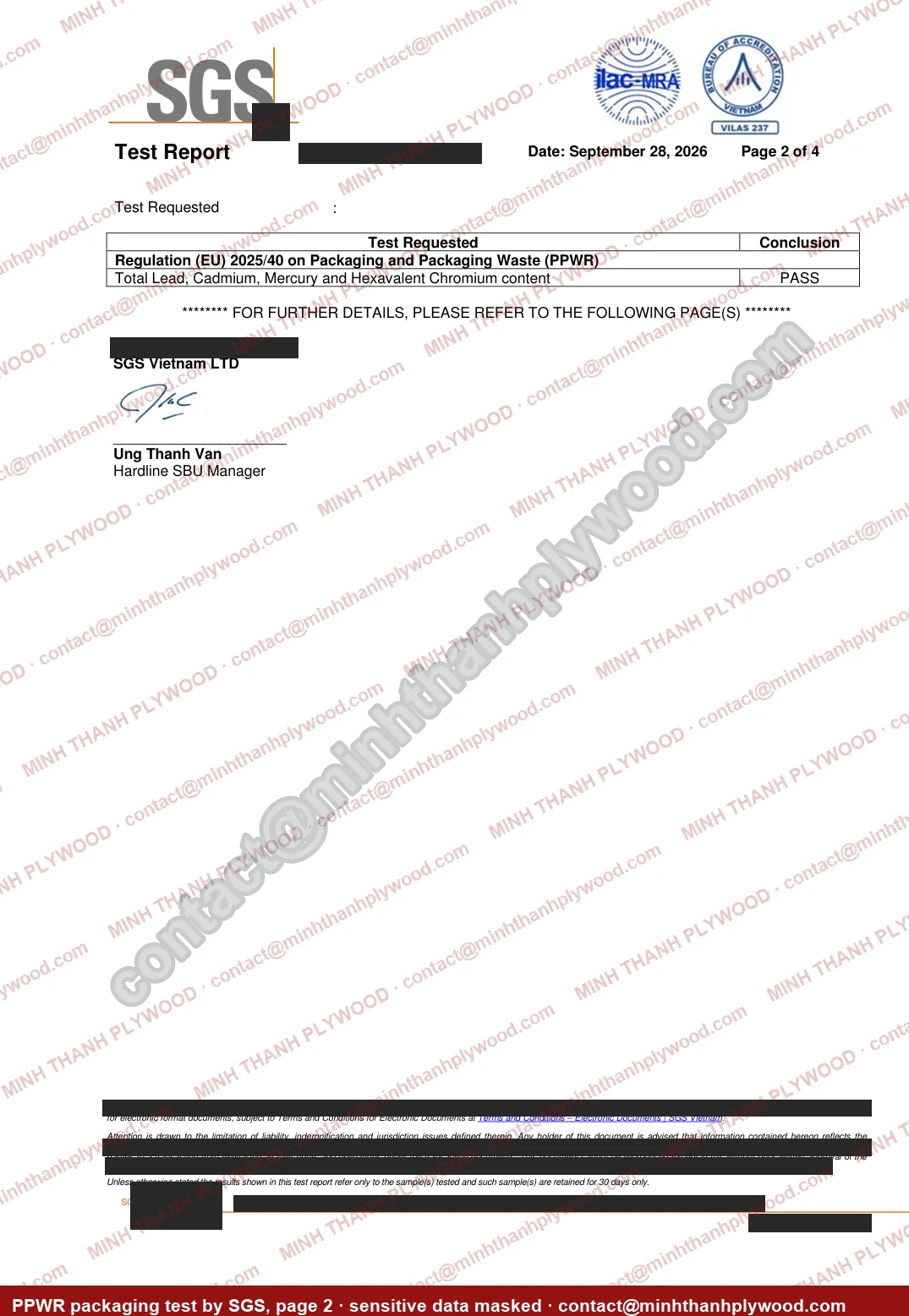
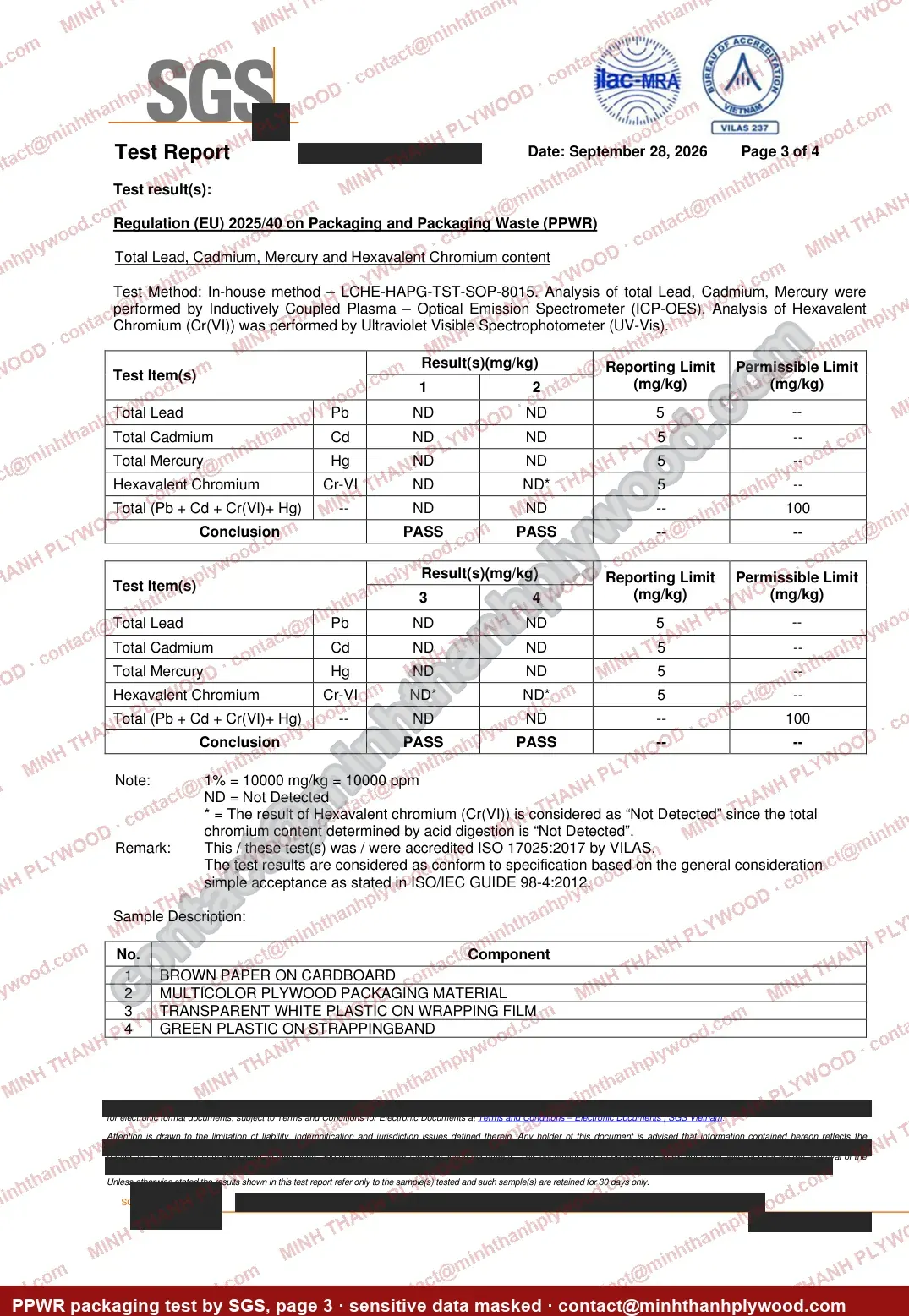
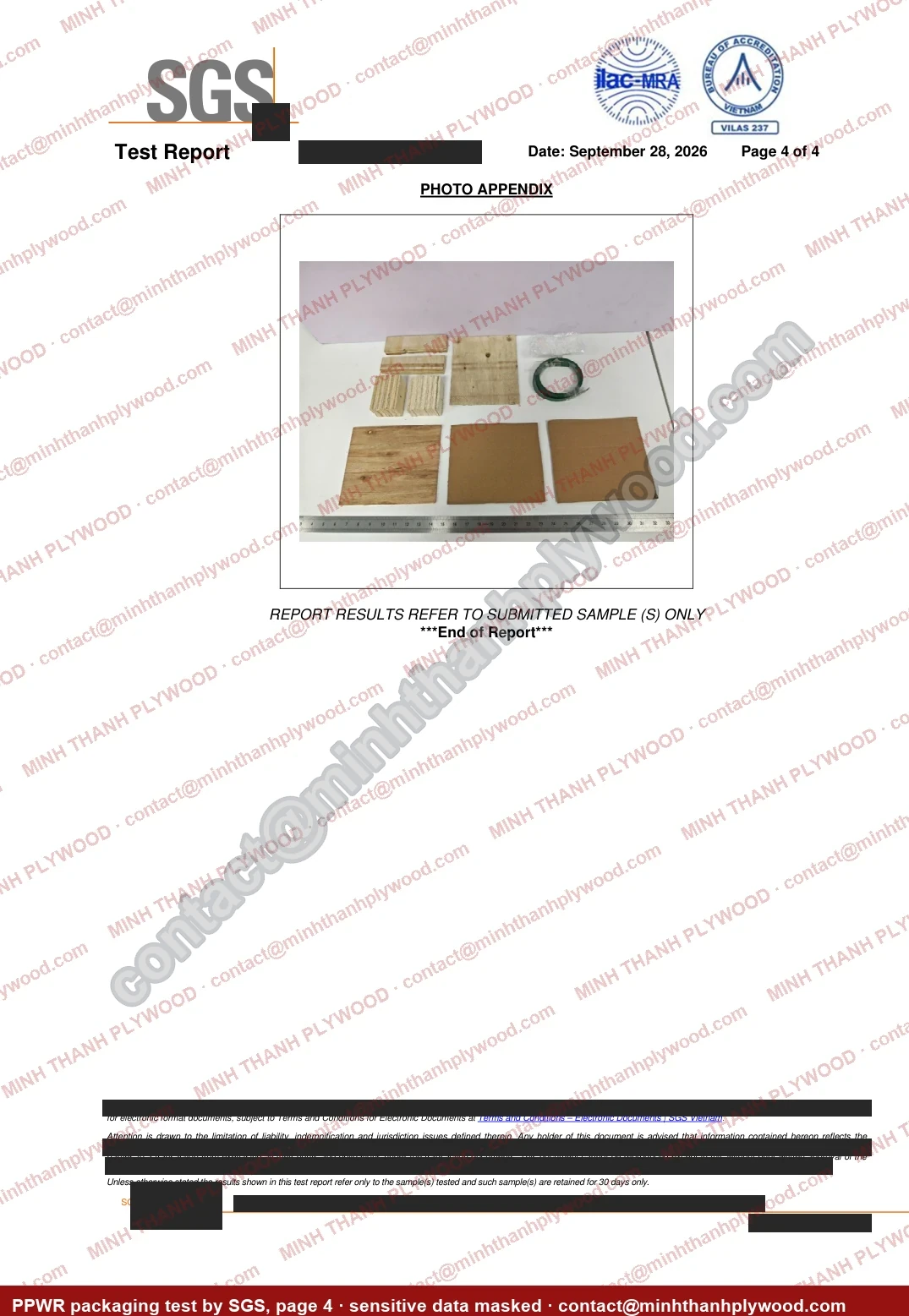
Packaging: PPWR test report by SGS (4 pages)
Is Vietnamese plywood EUDR compliant?
Vietnamese plywood can be EUDR compliant, and Vietnam is classified as a low-risk country. Compliance is not a country label, though. Each shipment needs plot geolocation, harvest dates and legality records for every wood layer. The core is usually documented. The imported face veneer is where most dossiers break, and where our dossier keeps going.
The EU Deforestation Regulation, Regulation (EU) 2023/1115, lists plywood under heading 4412 in its Annex I. From 30 December 2026 an EU importer may place plywood on the market only if it is deforestation-free, legally produced and covered by a due diligence statement (EUDR dates for plywood). The statement has to show where the wood grew: the regulation defines geolocation as “latitude and longitude coordinates” with “at least six decimal digits”, and as polygons for plots of more than four hectares (Regulation (EU) 2023/1115, Article 2).
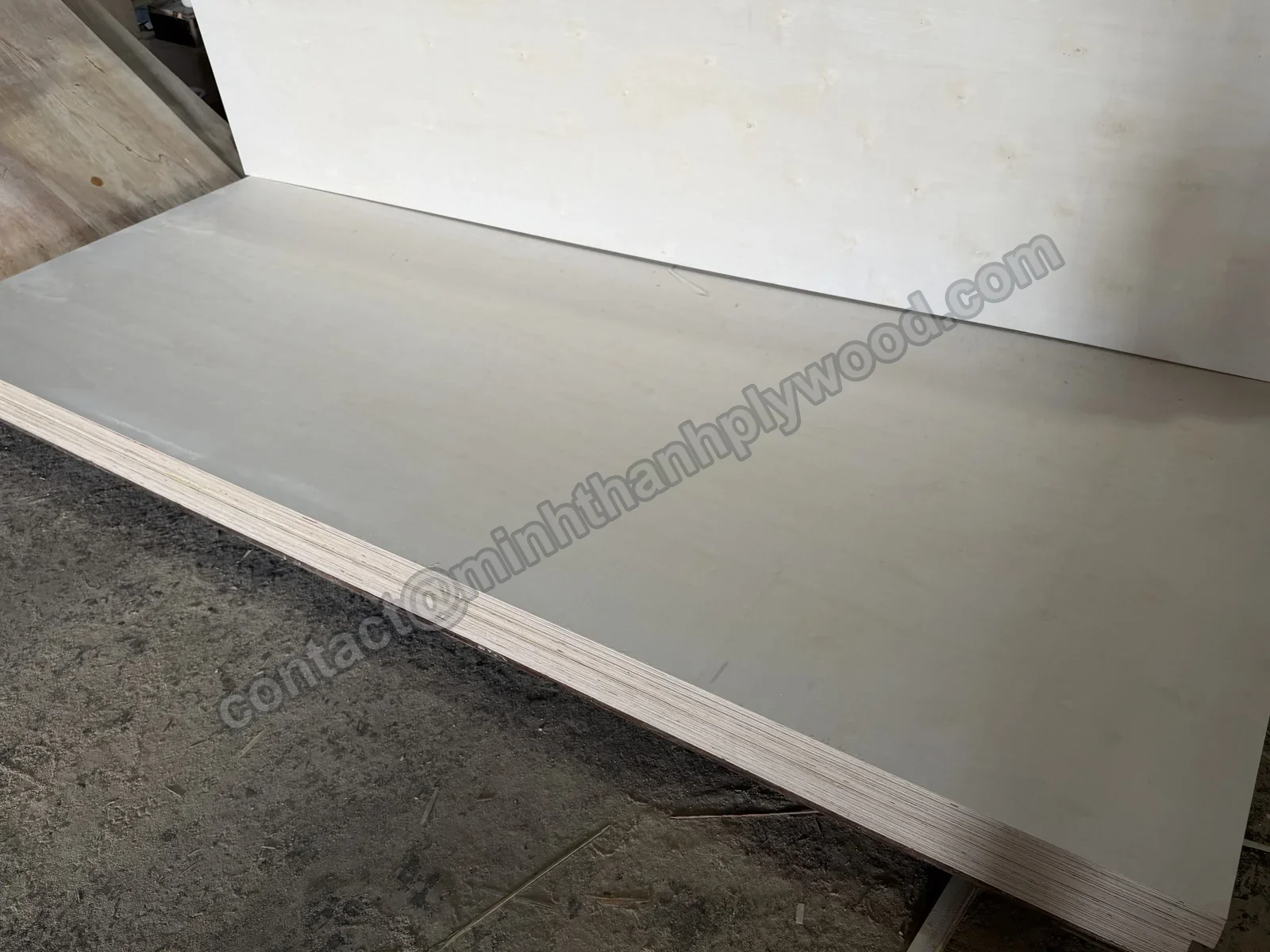
A panel is several woods pressed together. A furniture panel from our press typically carries a Vietnamese plantation core and a face veneer that was grown and sliced somewhere else. If any one layer has no plot data, the importer cannot file a clean statement for the panel.
What does the EUDR mean for plywood importers buying from Vietnam?
The importer, called the operator in the regulation, collects the information, assesses the risk and files the due diligence statement. The mill supplies the origin data that makes the statement possible. These are the points that decide whether a Vietnamese panel clears:
| Requirement | What it means for a plywood panel | Where it comes from |
|---|---|---|
| Deforestation-free | Wood from land not deforested after 31 December 2020 | Article 2 and Article 3 |
| Legally produced | Harvest, land use and trade complied with the law of the country of production | Article 3 |
| Geolocation | Coordinates for every plot, six decimals; polygons above 4 ha | Article 2(28), Article 9 |
| Species and quantity | Common and scientific name per layer; volume or weight | Article 9 |
| Harvest period | Date or time range of harvest for each plot | Article 9 |
| Due diligence statement | Filed by the importer before release for free circulation | Article 4 |
Vietnam is on the low-risk list of Commission Implementing Regulation (EU) 2025/1093, and so are China and Uruguay, the two countries our face veneers come from (Regulation (EU) 2025/1093, Annex). Low risk helps: under simplified due diligence the operator may skip the formal risk assessment and mitigation. It does not remove the information duty. Article 13 also asks the operator to rule out “the risk of mixing with products of unknown origin” (Regulation (EU) 2023/1115, Article 13). A face veneer of unknown origin is exactly that mixing risk.
How does the EUDR affect Vietnam plywood exports to Europe?
The EUDR splits Vietnamese plywood exporters into two groups: mills that can document every layer, and mills that can document only the core. European buyers can clear the first group’s panels and have to wait on the second. Vietnamese cores are the easy half. Styrax, eucalyptus and acacia cores come from local plantations, and the growers hold land-use certificates and forestry dossiers with coordinates. A mill that buys from those growers can copy the plot data into a GeoJSON file.
Face veneer is a different supply chain. Poplar, eucalyptus, birch and okoume faces used in Vietnam are mostly imported, a large share of them through China. A sheet of sliced veneer may pass from a plantation owner to a log trader, a slicing mill and a veneer trader before it reaches a Vietnamese press. Each of those companies has to hand the plot data to the next one. When one of them does not, the face arrives with an invoice and an FSC claim but no coordinates.
That is the gap most Vietnamese mills face today: they can answer for the core and have to promise the face. “We can provide it” is not the same as a file you can load into the EU information system. We work with long-standing partners across the face veneer chain, and every lot for our European orders comes with its forestry dossier and plot geolocation, face and core alike, as each lot came with its legality records under the EUTR. The face veneer guide explains layer by layer what to ask for.
EUDR compliant plywood from Vietnam: what our dossier shows, layer by layer
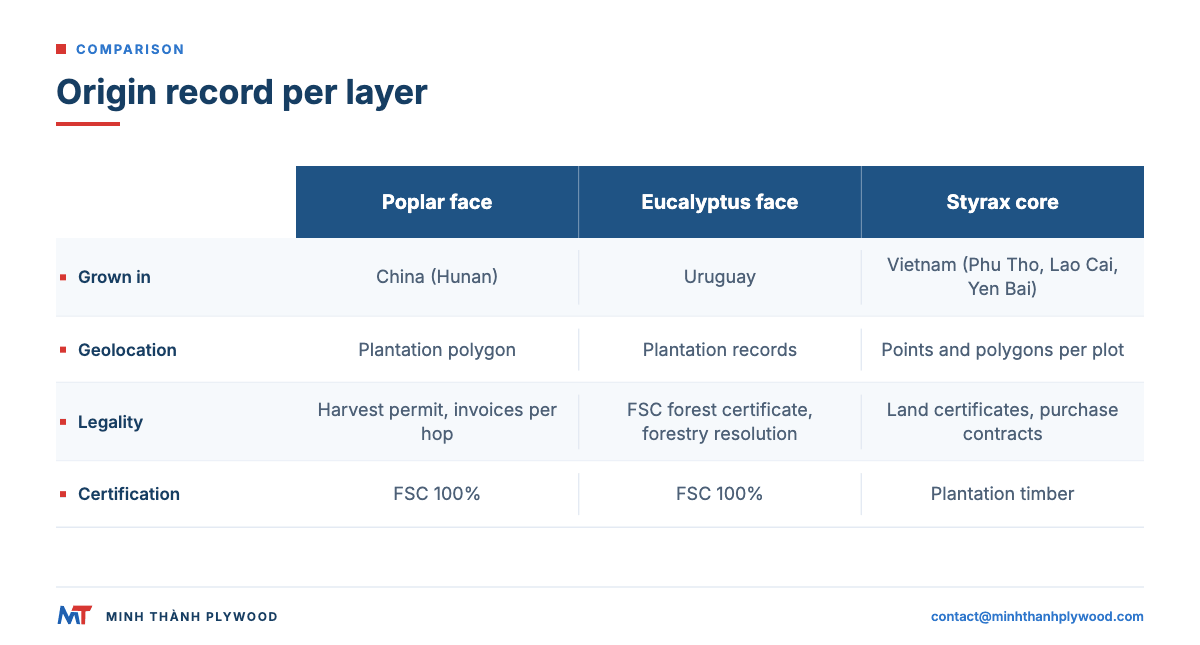
Our dossier lists every wood input of the panel, with its own origin record. These are the three chains behind the examples on this page; the dossier for your order shows the species you specify.
| Layer | Species | Country of production | Geolocation | Legality and custody evidence |
|---|---|---|---|---|
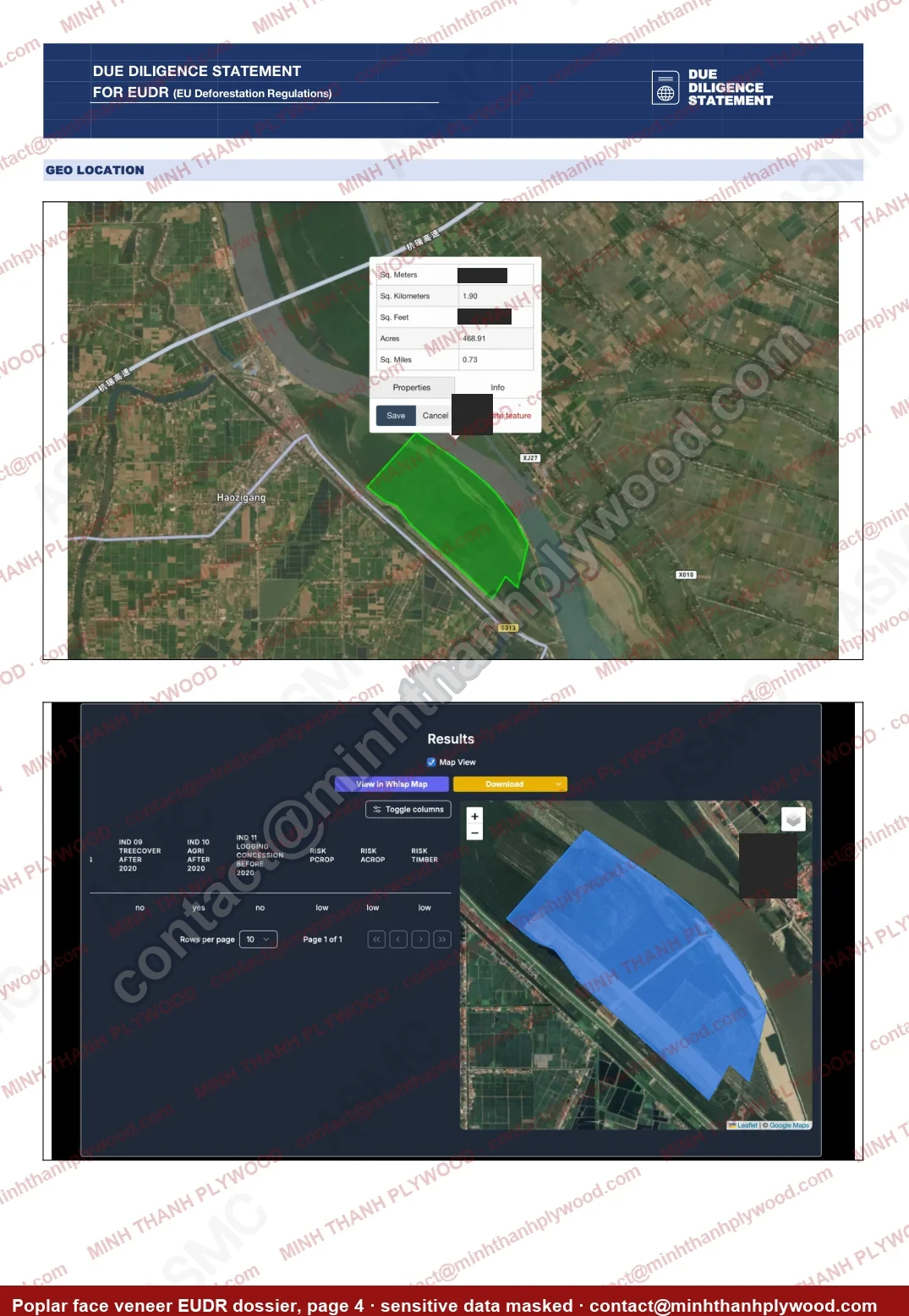
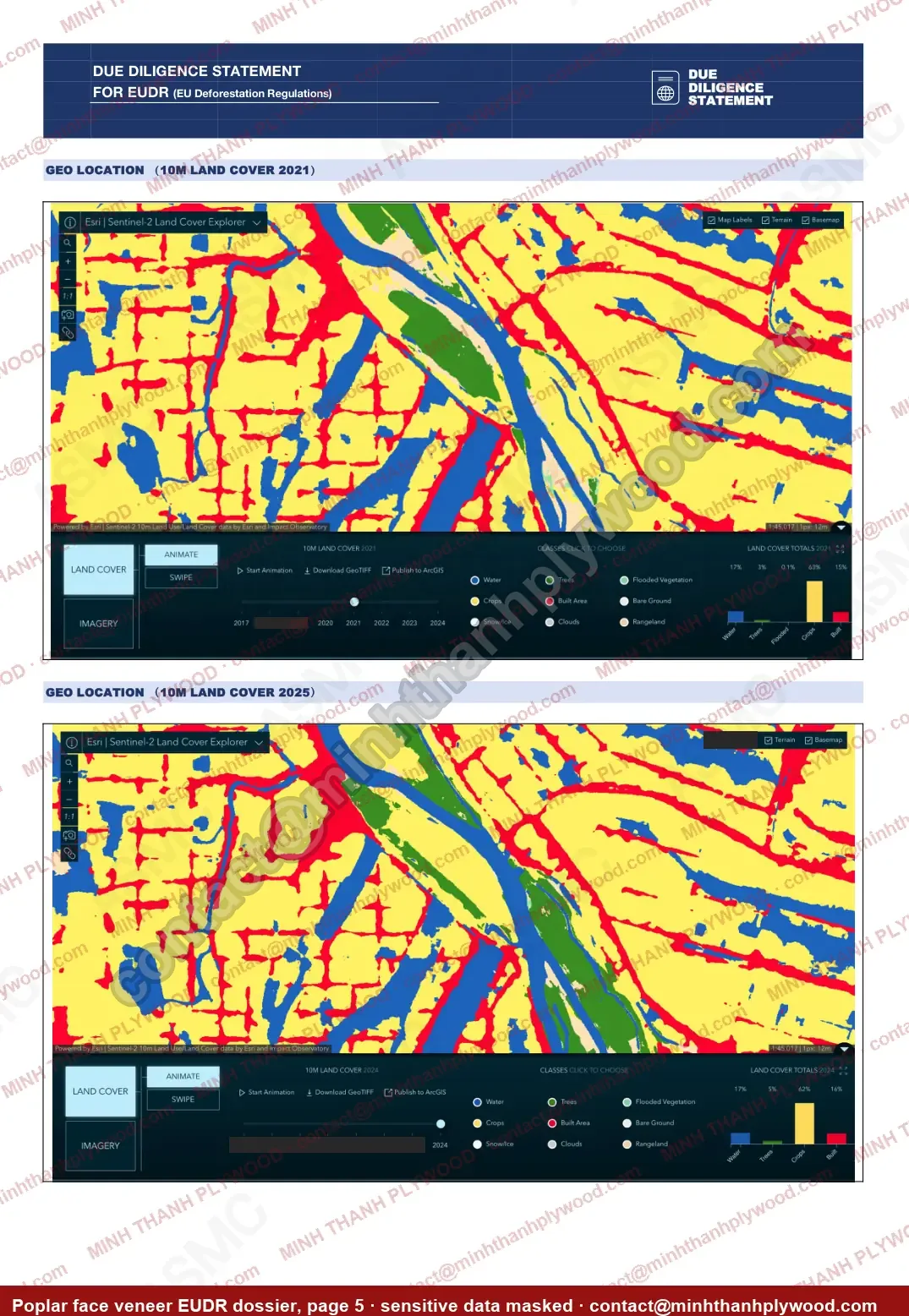
| Face (poplar) | Populus deltoides | China (Hunan plantation) | Polygon of the plantation plot, checked on 2021 and 2025 land-cover maps | Harvest permit 2025, FSC 100% claim at every hop, invoices per hop |
| Face (eucalyptus) | Eucalyptus | Uruguay (plantations) | Plantation records from the forest owner | FSC forest management certificate (SGS), forestry authority resolution, FSC 100% veneer |
| Core | Styrax tonkinensis | Vietnam (Phu Tho, Lao Cai, Yen Bai) | Points and polygons per grower plot, WGS84 | Land-use certificates, plantation timber purchase contracts |
The full dossier is sent as a PDF with your copy number and the GeoJSON file, so the plot data can be uploaded without retyping. Each record shows the source document and page it was taken from, so an auditor can follow any plot back to the paper behind it. When a source left something open, such as a coordinate with no stated datum, the record says so instead of guessing.
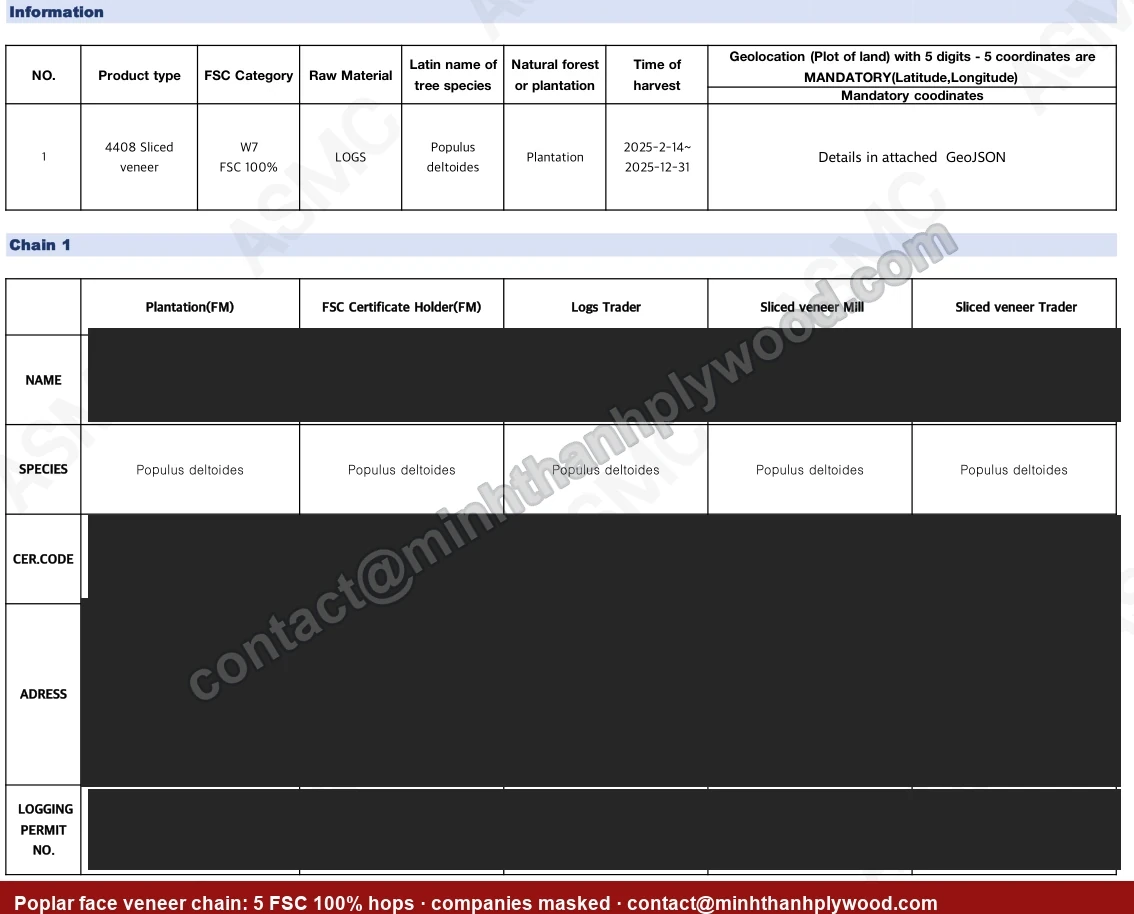
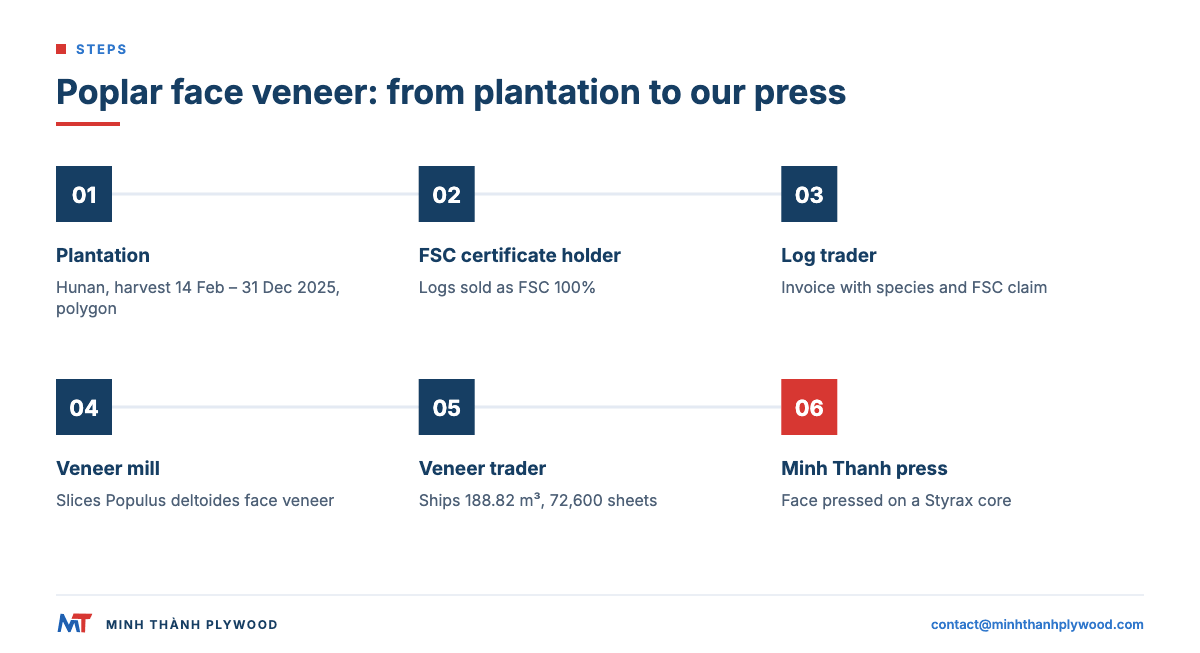
The poplar face chain: from a Hunan plantation to our press
The poplar face dossier dated 10 September 2026 covers 188.82 m³ of sliced veneer, 72,600 sheets of Populus deltoides. It follows five links of one chain, each with its own certificate code:
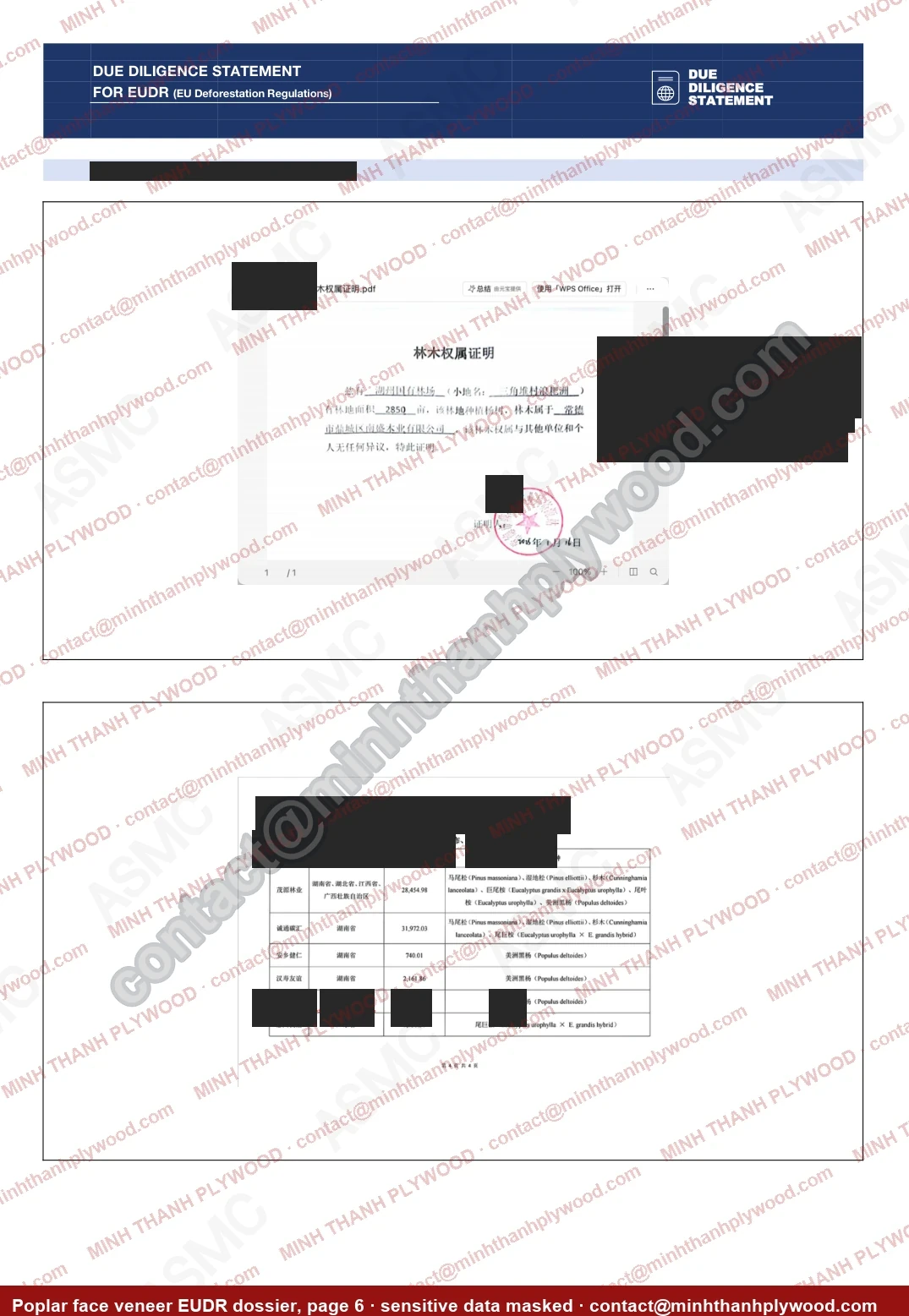
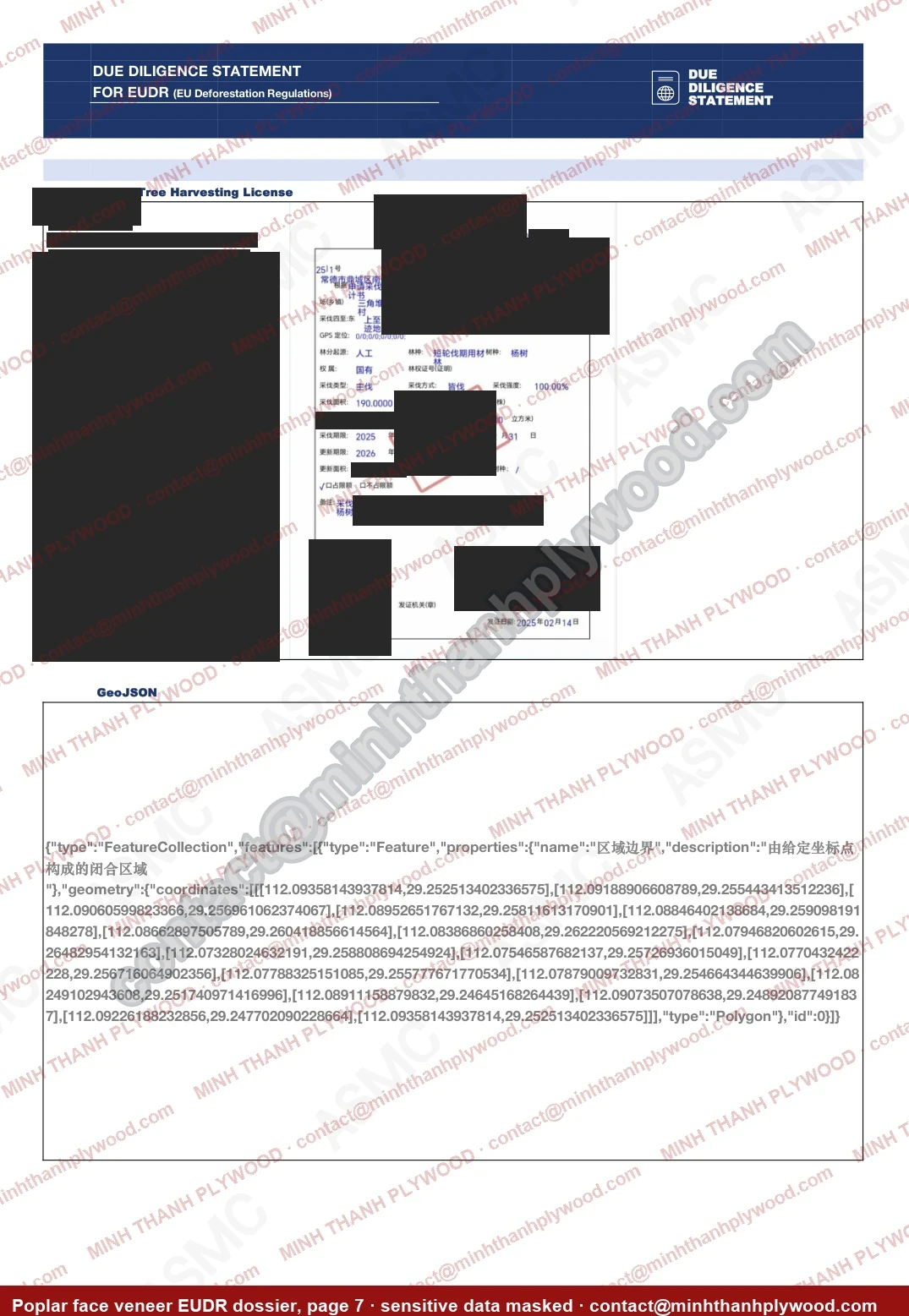
- Plantation. A poplar plantation in Hunan province, harvested between 14 February and 31 December 2025 under a forest harvesting permit.
- FSC certificate holder. The forest management certificate holder that sells the logs as FSC 100%.
- Log trader. The company that moves the logs to the slicing region.
- Veneer mill. The mill in Shandong that slices the logs into face veneer.
- Veneer trader. The exporter that ships the veneer to us.
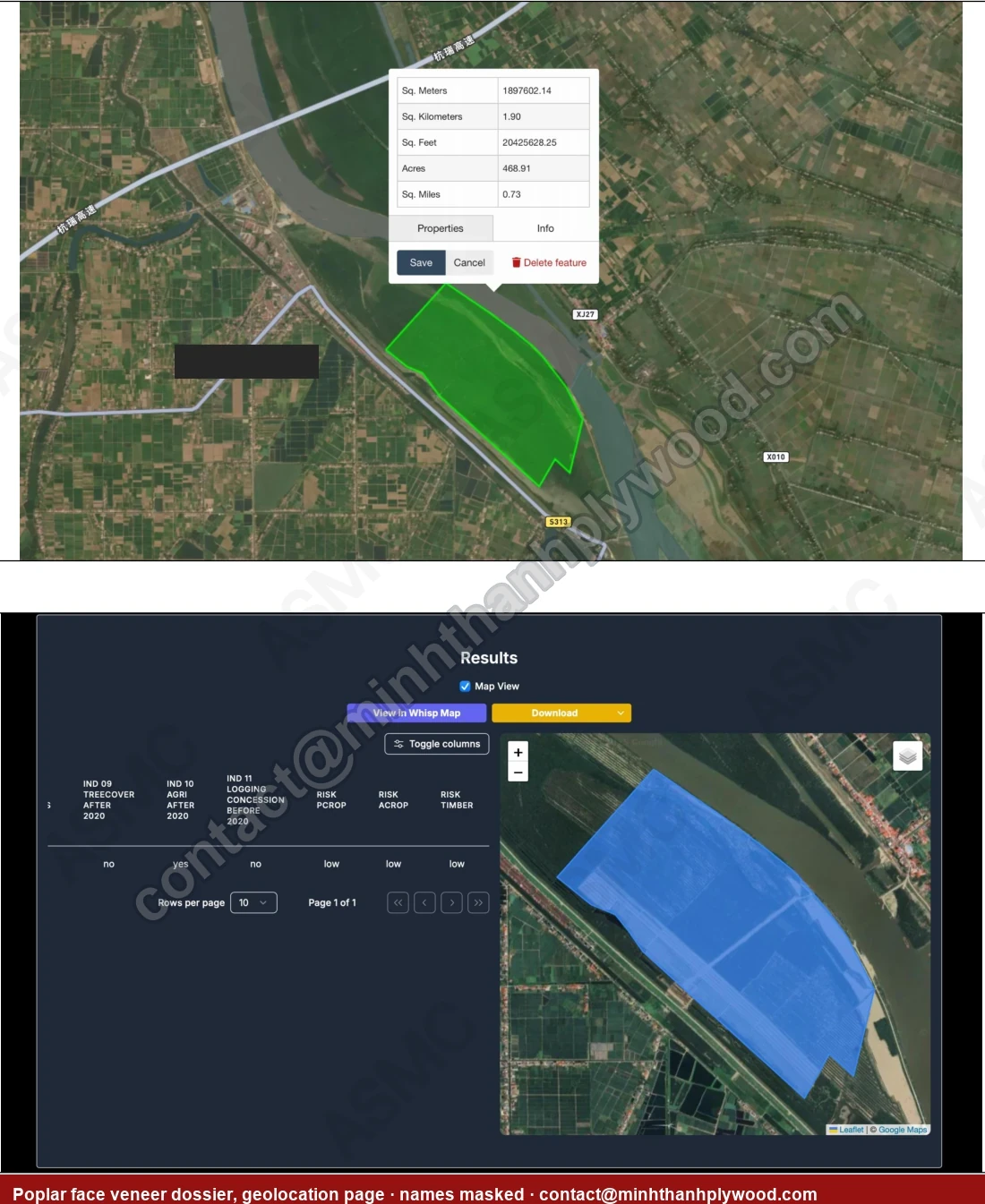
The geolocation page shows the plantation polygon, about 190 hectares, on satellite imagery, and the same area on 10-metre land-cover maps for 2021 and 2025. A Whisp check, an open geospatial tool used to screen plots for EUDR risk, rates the plot low risk for timber. Then come the forest ownership certificate, the harvesting permit, the business licences of each company and an invoice for each hop, every one carrying the FSC 100% claim and the species name. Prices on the invoices are blacked out by the supplier.
The eucalyptus face: FSC 100% from Uruguay plantations
Our eucalyptus face veneer starts in Uruguay. The logs come from plantations managed under an FSC forest management certificate issued by SGS, valid from April 2026 to March 2031, and the plantations carry resolutions from Uruguay’s General Forestry Directorate. The logs are sliced in China and sold to us as FSC 100% veneer.
For the EUDR this matters in one way buyers often miss: the country of production is where the tree grew, Uruguay, not where it was sliced. The dossier records Uruguay for the face and Vietnam for the core, so the importer’s statement names both countries.
The Styrax core: grower plots in northern Vietnam
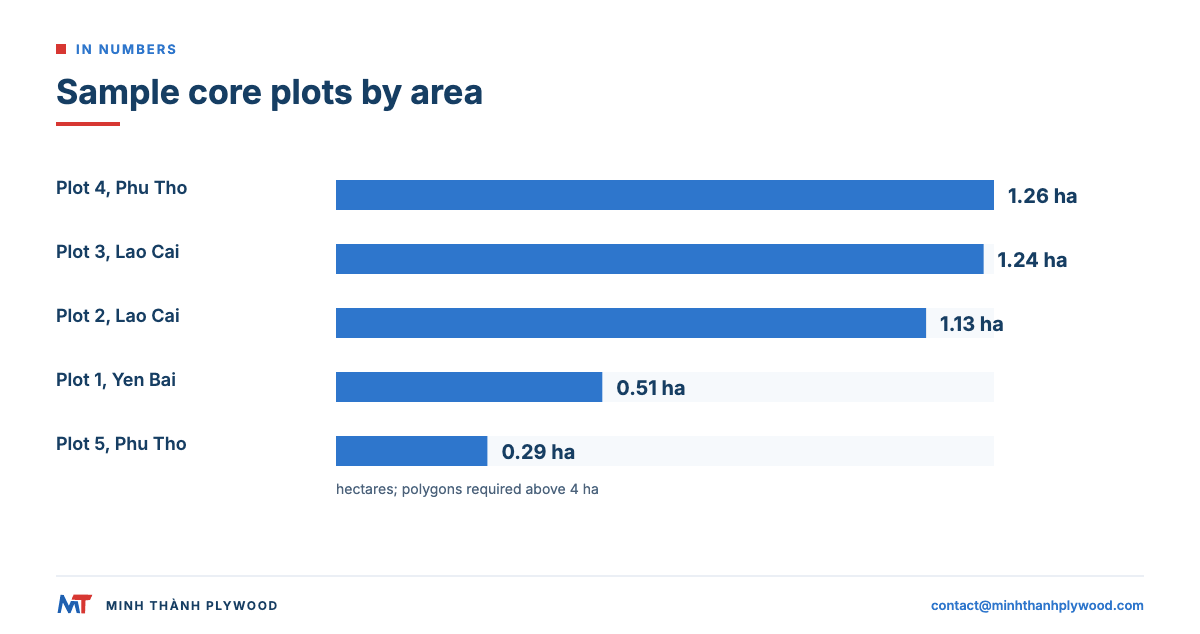
Our furniture cores are white Styrax (Styrax tonkinensis, “bo de” in Vietnamese) from smallholder plantations in Phu Tho, Lao Cai and Yen Bai provinces. For the five source plots in the sample dossier:
| Plot | Province | Area (ha) | Geolocation form |
|---|---|---|---|
| 1 | Yen Bai | 0.51 | Point |
| 2 | Lao Cai | 1.13 | Polygon, 12 vertices |
| 3 | Lao Cai | 1.24 | Polygon, 8 vertices |
| 4 | Phu Tho | 1.26 | Point |
| 5 | Phu Tho | 0.29 | Point |
All five plots are under four hectares, so a single point is enough under the regulation. Where the land certificate gives the cadastral boundary, we still supply the polygon. Those boundaries are written in the Vietnamese VN-2000 grid; we convert them to WGS84 longitude and latitude, the system the EU information system reads, and note the conversion in each record. The EUDR documents guide walks through the file field by field.
Each plot is tied to a purchase contract for plantation timber between our company and the grower, with the parcel number, the area and the species. The growers’ names and ID numbers stay in the private copy you receive; they never go on a website.
Why is the Vietnamese core the easier half to document?
Because it grows close to the mill, on land with a paper trail. Our factory is in Ha Hoa, Phu Tho, in the middle of northern Vietnam’s plantation belt. Styrax and eucalyptus are planted by households on allocated forest land, harvested in short rotations and sold to mills nearby. Each grower holds a land-use certificate with a parcel number, an area and, on newer certificates, a boundary drawn in the national grid.
That paper trail is what the EUDR needs. The grower’s certificate gives the plot; the purchase contract gives the species, the area and the date; the land use shows plantation forest, not land cleared after 2020. Vietnam’s low-risk classification in Regulation (EU) 2025/1093 reflects that the country’s wood is low risk overall. The mill’s work is to collect the records plot by plot, convert the coordinates and keep them linked to the production order.
The same short distance helps quality. Locally grown cores reach the peeling line fresh, and our furniture panels are pressed twice: the core board is pressed and calibrated first, then the face and back are pressed on.
How much wood does one container’s dossier cover?
More than buyers expect, which is why one face veneer lot can serve many orders. A 40HC of 18 mm panels in 1220 × 2440 mm on a Styrax core holds 990 sheets, about 53 m³, in 18 packs. Each panel carries two face veneers, the face and the back.
| Item | Value | How it is worked out |
|---|---|---|
| Panels per 40HC, 18 mm, Styrax core | 990 | 18 packs of 55 sheets, our standard container plan |
| Face and back veneers per container | 1,980 | 990 panels × 2 |
| Poplar face veneer lot in the sample dossier | 72,600 sheets | From the dossier dated 10 September 2026 |
| Containers one such lot can face, both sides | about 36 | 72,600 ÷ 1,980, before trim and grading losses |
The dossier for your container lists which face lots and which core plots went into your panels, with the quantity drawn from each. When a lot is used up, the next lot comes with its own record before it reaches the press.
What about buyers in the UK and the US?
The EUDR applies to the EU market only. Great Britain keeps the UK Timber Regulations, which ask for legality due diligence rather than plot geolocation, so the same dossier more than covers a UK order. Northern Ireland follows EU product rules for goods, so check with your customs adviser which regime applies to a shipment to Belfast.
For the United States, the Lacey Act declaration asks for the species and the country of harvest of each wood in the panel. On US orders we supply the face and core species and the harvest origin for the importer’s declaration, and the panels carry the TSCA Title VI label. A dossier built for the EUDR answers the Lacey Act questions as well, face veneer included.
How do you choose an EUDR plywood supplier in Vietnam: mill or broker?
An EUDR plywood supplier in Vietnam should be able to show the whole chain behind its panels. A complete EUDR dossier names every company between the forest and the press. That makes it the most practical supplier check an importer has had: the last company in the chain is the one that pressed the panels. A broker or trading company that buys panels from a mill and resells them cannot show the chain as its own, because the purchase contracts, harvest records and veneer invoices are in the mill’s name.
For buyers this works in three ways:
- You know who made the panels. The dossier shows the press, the cores it buys and the veneer it uses.
- You pay a mill price. No margin for a middleman who adds nothing to the panel.
- You get answers on documents. A mill holds its own records and can change them for your specification, such as a different face or a split shipment, without waiting on someone else.
Is EUDR a certificate a mill can hold?
No. There is no EUDR certificate for a mill or a product. The EUDR is a duty on the EU operator, who must collect information, assess risk and file a due diligence statement for each product placed on the market. A mill that says it is “EUDR certified” means, at best, that it can supply the information; the proof is the dossier itself.
What a buyer actually receives from us is a set of records per order, not a badge:
| What you receive | Format | What it is for |
|---|---|---|
| Origin record per wood layer | PDF pages in the dossier | Species, country of production, harvest period, quantity |
| Plot geolocation | GeoJSON file, WGS84 | Upload into the EU information system with the statement |
| Legality records | Copies of permits, certificates and contracts, under a confidentiality notice | Article 9 legality evidence |
| Custody chain | Invoices per hop for the face veneer; purchase contracts for the core | Shows no wood of unknown origin entered the panel |
| Deforestation-free evidence | Land-cover maps and risk screen of the face plot; land-use certificates for the core | Supports the 31 December 2020 cutoff |
| Copy number | Printed on every page of the PDF | Shows the copy was issued to you by us |
FSC certification and Vietnam’s timber legality system (VNTLAS) support the legality part. Neither carries plot coordinates, so neither replaces the dossier (is FSC enough for the EUDR?).
What happens if a plywood shipment arrives without plot data?
The importer cannot file a complete due diligence statement, and without the statement reference the panels should not be released for free circulation. The importer then has three choices, all expensive: hold the container at the port while the supplier looks for the missing data, send the panels back, or take the risk of placing non-compliant products on the market.
The regulation leaves penalties to member states but sets a floor. Fines must have a maximum of at least 4% of the operator’s total annual Union-wide turnover, and the authorities can confiscate the products and the revenue from them (Regulation (EU) 2023/1115, Article 25). For a buyer, one missing face veneer record can cost more than the container.
The checks are cheap by comparison. Ask for the dossier before the deposit, open the GeoJSON in any map viewer, and check that each layer in the product description has a plot.
Timing matters as well. A dossier gap found after loading costs sea days and demurrage; the same gap found at the quotation stage costs one email. That is why we send a sample dossier with the quotation when a buyer asks for one, and the order’s own dossier with the shipping documents, so the importer can prepare the statement while the container is at sea. A mill that can only promise the face veneer record “later” pushes that work, and the risk, onto the buyer at the worst moment: when the panels are already on the water and the deposit is paid.
How should an importer prepare before 30 December 2026?
Start with the supplier list, not the IT system. Every plywood supplier that will ship after 30 December 2026 needs to answer the same question: can it document every layer of the panel, face included?
- List the panels and their layers. For each product, write the face, back and core species and where each comes from.
- Ask each supplier for a sample dossier. One real dossier from a past or current lot tells you more than a promise.
- Check the face veneer record first. It is the layer most often missing.
- Test the GeoJSON. Open it in a map viewer: the plots should land on plantation land in the right province or country, with six decimals.
- Agree the dossier in the contract. Write “EUDR dossier with face and core GeoJSON required” into the specification line, so it is prepared with production.
- Register in the EU information system and run one test statement with a sample file before the first live shipment.
Buyers who finish these steps early also get the commercial gain the regulation brings: a supplier who can show the whole chain is a supplier who actually makes the panels.
Warning: brokers presenting our documents as their own
Some brokers, and staff of trading companies that once bought panels from us for the Vietnamese market, now send our supply-chain documents to foreign buyers and quote “Minh Thanh” plywood under their own terms. They are not us.
Minh Thanh Plywood quotes, takes orders and receives deposits only through [email protected]. We do not quote, take orders or ask for deposits from Gmail or any other personal email address. Our international sales team also answers on WhatsApp (Lisa, +84 988 586 601), and every quotation is confirmed from [email protected].
Every dossier we send is a stamped PDF carrying our email address and a copy number issued to one buyer. If you receive our documents from anyone else, write to [email protected] with the copy number and we will tell you whether it is genuine.
Is the packaging covered too? PPWR tested by SGS
The EU Packaging and Packaging Waste Regulation, Regulation (EU) 2025/40, limits lead, cadmium, mercury and hexavalent chromium in packaging to 100 mg/kg in total (Regulation (EU) 2025/40). It applies to the export pack around the panels, not to the panels themselves.
SGS tested the four materials of our export pack in September 2026, report VNHL2609025135HG: cardboard, plywood pallet blocks, strapping band and wrapping film. All four metals were not detected in any material, a pass against the 100 mg/kg limit. The PPWR packaging page shows the report.
How do you order EUDR compliant plywood from us?
Send the specification to [email protected] and say that you need the EUDR dossier. Orders start at one 40HC container, production takes 15–45 days after the deposit, and samples are free. The dossier goes out with the shipping documents.
What we need from you:
- Face and back species and grade, for example poplar B/B, eucalyptus A/B or birch D+/D, so we prepare the right face chain.
- Core, Styrax or eucalyptus.
- Bond and emission class, for example UF glue at E0 emission.
- Thickness, size and quantity per specification.
- Your EORI and company name, so the copy of the dossier is issued to you.
A line we can quote from: “18 mm poplar B/B both faces, Styrax core, UF E0, 1220 × 2440 mm, 1 × 40HC, EUDR dossier with GeoJSON required.”
Read more on our EUDR traceability page or ask for the dossier sample with your enquiry. We reply within hours, Monday to Friday, 08:00–17:00 Vietnam time, and the dossier sample comes from the same address as every quotation.
Buyer questions, answered
Is Vietnamese plywood EUDR compliant?
It can be. Vietnam is a low-risk country under the EUDR, but each shipment still needs plot geolocation, harvest dates and legality records for every wood layer, including imported face veneer.
Does the EUDR apply to plywood?
Yes. Plywood under heading 4412 is listed in Annex I of Regulation (EU) 2023/1115, so the EU importer must file a due diligence statement before the panels are released for free circulation.
When do EUDR obligations start for plywood importers?
On 30 December 2026, for importers of every size, because plywood was already covered by the EU Timber Regulation.
Does low-risk status remove the need for geolocation?
No. Simplified due diligence for low-risk countries skips the risk assessment and mitigation steps, but the operator still collects the Article 9 information, including the geolocation of every plot.
Which wood layers need geolocation?
All of them: face, back, cross-bands and core veneers. If the face veneer comes from a different country or forest than the core, it needs its own plot data.
Why is face veneer harder to trace than the core?
Most Vietnamese cores come from local plantations with forestry dossiers, while most face veneer is imported through several traders and mills, and each hop must pass the origin data along.
What does Minh Thanh's EUDR dossier contain?
Species per layer, country of production, plot geolocation (GeoJSON points or polygons), harvest period, quantities and legality records such as harvest permits, purchase contracts and FSC chain-of-custody invoices.
Is FSC certification enough for EUDR?
No. FSC chain-of-custody supports legality and the risk assessment, but the EUDR still requires plot geolocation and a due diligence statement.
How do I get the dossier for my order?
Email [email protected] with the specification. The dossier is sent with the order as a stamped PDF with your copy number, plus the GeoJSON file.
How can I tell if an offer really comes from Minh Thanh?
Quotations, orders and deposits go only through [email protected]. An offer from a Gmail or other personal address that uses our documents does not come from us.
Is the packaging covered too?
The EU Packaging Regulation applies to the export pack. SGS tested our cardboard, pallet blocks, strapping and wrap in September 2026: lead, cadmium, mercury and hexavalent chromium were not detected.