
01
PFAS limits
From 12 August 2026 PPWR limits PFAS in food-contact packaging. Plywood transport packaging is not food-contact packaging.
Certificates · EU packaging regulation
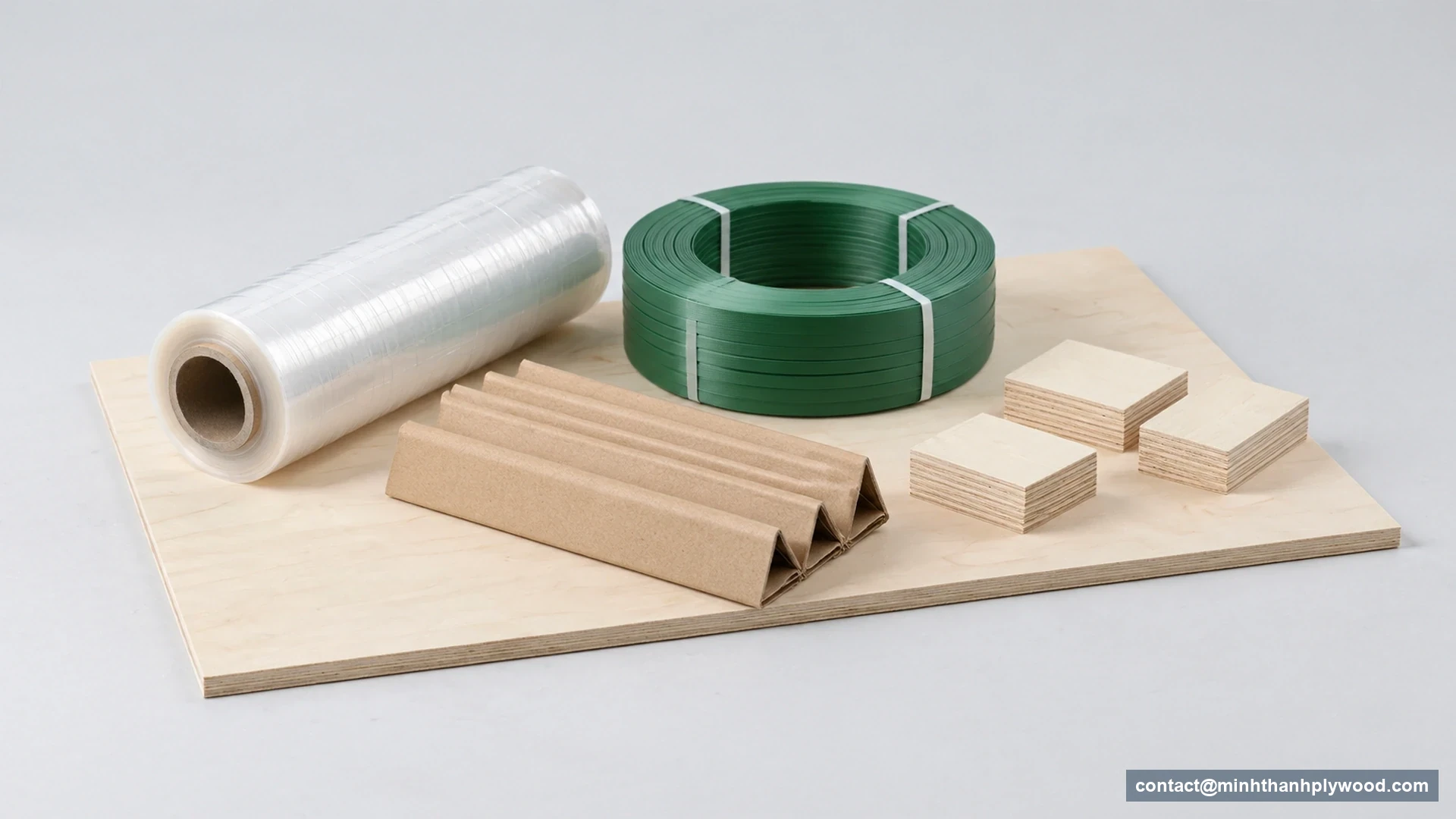
Minh Thanh Plywood had all four of its packing materials tested by SGS in September 2026 under the EU Packaging Regulation. Lead, cadmium, mercury and hexavalent chromium were not detected in the cardboard, plywood blocks, strapping band or wrapping film: PASS against the 100 mg/kg limit.
Watch the packaging film
What the regulation asks of plywood transport packaging, our test on each material, who signs what and how to check the report.
The short answer
The EU Packaging and Packaging Waste Regulation, Regulation (EU) 2025/40, applies from 12 August 2026. It sets a limit of 100 mg/kg for lead, cadmium, mercury and hexavalent chromium together in every packaging component, including the transport packaging around plywood.
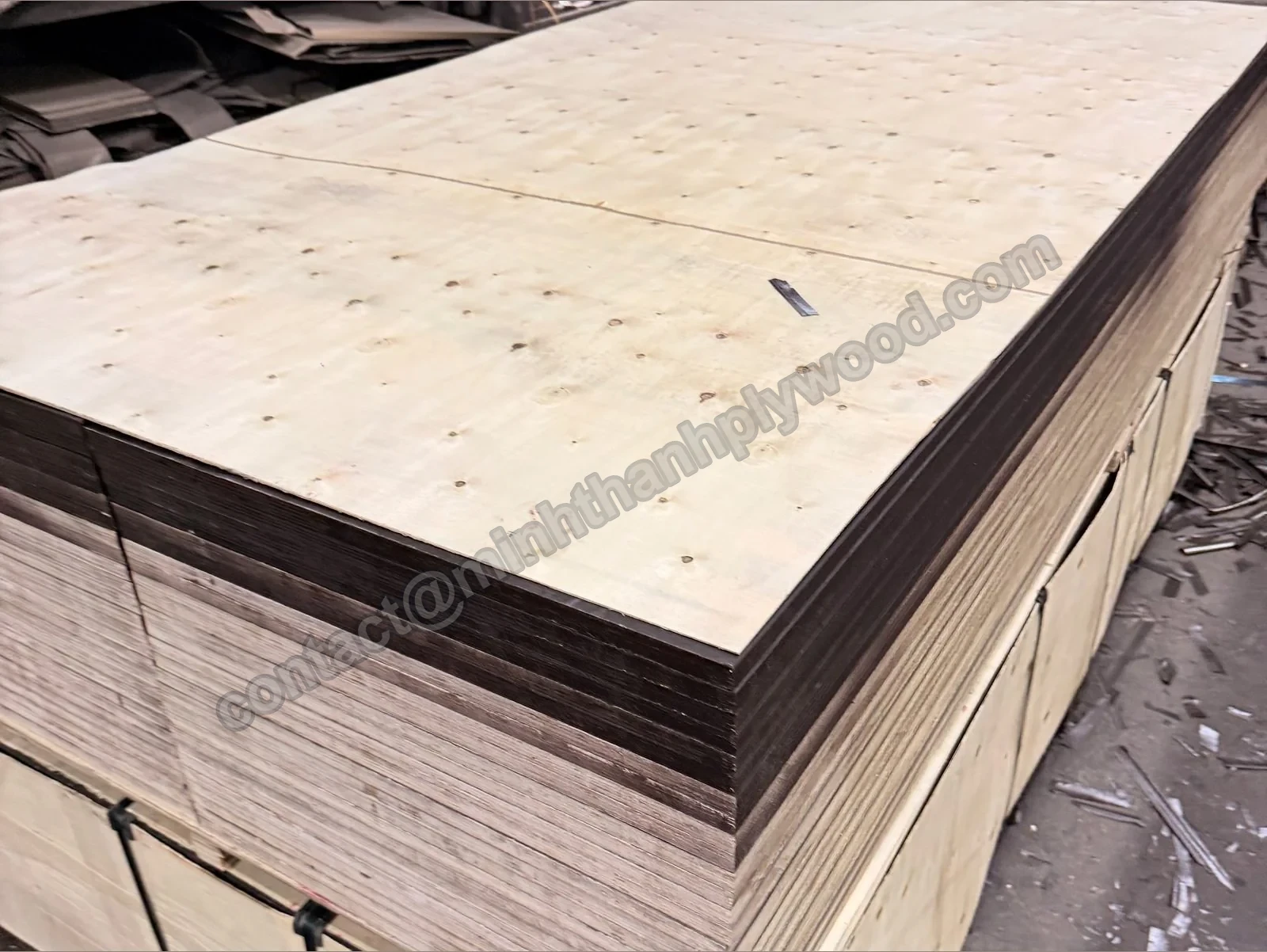
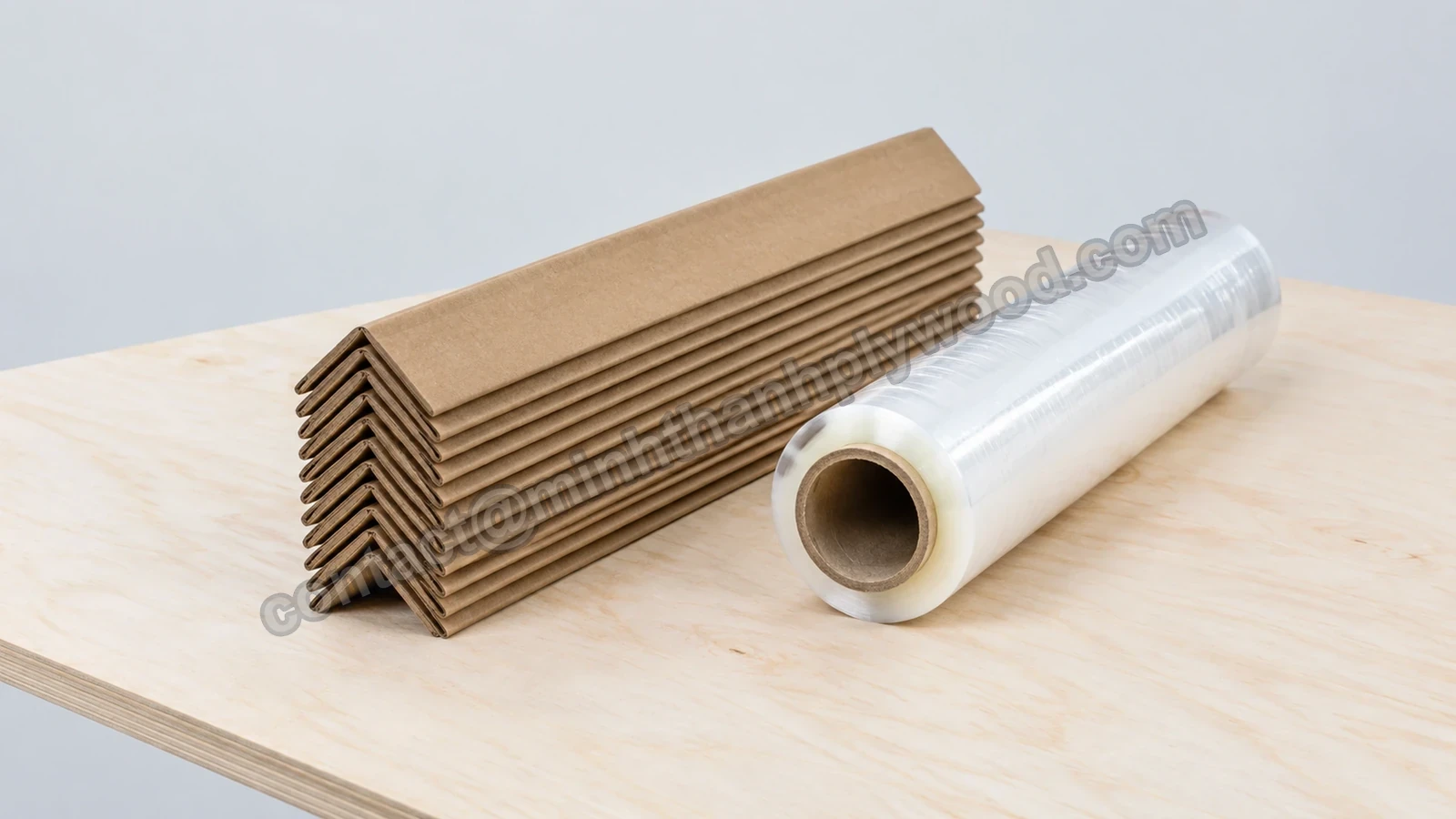
The plywood sheets are the product. The pack around them is packaging: plywood or wooden blocks and bearers, cardboard cover sheets and corners, strapping band and wrapping film. Each of those materials must stay under the limit.
The packing specification identifies the cardboard, bearers, straps and film used for your order. We supply the laboratory report with that component list, so your purchasing team can match the test to the finished pack.
As issued
Shown as issued by SGS Vietnam. Tap a page to read it in full; the PDF goes out by email with your quotation.
Packaging heavy metals test
Four materials, four metals each. ND means not detected: below the 5 mg/kg reporting limit of the method.
| Material | Lead (Pb) | Cadmium (Cd) | Mercury (Hg) | Cr(VI) | Result |
|---|---|---|---|---|---|
| Cardboard packaging | ND | ND | ND | ND | PASS |
| Plywood packaging: cover sheet and pallet blocks | ND | ND | ND | ND | PASS |
| PPWR-03 · green plastic strapping band | ND | ND | ND | ND | PASS |
| Wrapping film | ND | ND | ND | ND | PASS |
Limit: 100 mg/kg for the four metals together, per packaging component. See the method table below for the chromium testing route.
Test details
The method, the instruments and the dates, as printed on the report.
| Item | On the report |
|---|---|
| Laboratory | SGS Vietnam, Hai Phong |
| Accreditation | ISO 17025:2017 accredited test (VILAS) |
| Samples | Four finished packaging materials used on our plywood exports |
| Testing period | 21–28 September 2026 |
| Lead, cadmium, mercury | Total content by ICP-OES (inductively coupled plasma optical emission spectrometry) |
| Hexavalent chromium | Cardboard: Cr(VI) by UV-Vis, ND. Other three materials: total-chromium screening ND, reported as Cr(VI) ND. |
| Reporting limit | 5 mg/kg per metal |
| Conclusion | PASS for every material |
Reading the result
Each metal is measured on its own. When a reading falls below the method's reporting limit, the laboratory writes ND, not detected. The limit in the regulation is a sum: lead, cadmium, mercury and hexavalent chromium added together must stay at or below 100 mg/kg.
SGS concluded PASS for every material. All four metals ND at 5 mg/kg each: the worst case is under 20 mg/kg, far below 100 mg/kg.
Timeline
The regulation is in force now; its rules arrive in stages. The ones below touch the transport packaging around plywood.
| Date | What applies | For our packing |
|---|---|---|
| 11 February 2025 | Regulation (EU) 2025/40 enters into force | Start of the transition period |
| 12 August 2026 | General application, including the heavy-metal limit of 100 mg/kg and technical documentation | Tested and passed, SGS September 2026 |
| 12 February 2028 | Commission sets the method for the empty-space ratio | Packs already sized to the order |
| From 2030 | Recyclability, empty-space and reuse provisions enter their later phases | Component separation and pack dimensions feed the buyer’s packaging plan |
| From 1 January 2035 | Recycled-at-scale assessment, or five years after the implementing act if later | Component list with materials and weights supplied per order |
| 1 January 2038 | Only recyclability grades A or B may be placed on the market; grade C is excluded | Mono-material components (plywood, cardboard, PET/steel strap, plastic film) separate by hand for recycling |
Checked 6 October 2026 against EUR-Lex and European Commission guidance. Application dates for later phases follow the relevant implementing and delegated acts.
Who does what
PPWR places duties on several parties. For a container of plywood from Vietnam, they line up like this.
| Role | Who it is | Duty |
|---|---|---|
| Supplier of packaging materials | Our cardboard, strap and film suppliers | Pass on the information the packaging manufacturer needs |
| Packer and exporter | Minh Thanh Plywood | Packs the plywood, holds the SGS test and supplies the component list and weights |
| Manufacturer of the packaging | The manufacturer defined by Article 3, including own-brand commissioning arrangements | Technical documentation (Annex VII) and EU declaration of conformity |
| Importer | The EU company importing the plywood | Checks the documentation exists and keeps it available |
| Producer for EPR | The producer identified under Article 3 for the destination market | Registers and reports packaging volumes to that country's EPR scheme |
Our packing data (materials and weights per pack) is ready for your EPR reporting.
Declaration and file
The packaging manufacturer prepares the technical file and declaration of conformity. Manufacturer status follows the Article 3 definitions, including who manufactures the packaging or packaged product and any own-brand arrangement.
We provide the SGS report, packing component list and order weights. The importing company checks the file and identifies the responsible manufacturer and producer for its supply chain.
Our SGS report and component list go straight into it.
The responsible manufacturer signs the declaration.
Match the component list to the packaging used for the shipment.
Other PPWR rules
Heavy metals apply now. These rules apply to packaging in general; here is how they meet a plywood pack.
From 12 August 2026 PPWR limits PFAS in food-contact packaging. Plywood transport packaging is not food-contact packaging.
Article 24 introduces a 50 % maximum empty-space ratio for covered packaging from 2030 or the later implementing-act date. Pack measurements support that assessment.
Decision (EU) 2026/429 exempts pallet wrappings and straps from the 100 % reuse duties in Article 29(2) and (3). The separate 40 % framework in Article 29(1) remains.
Recyclability requirements phase in under Article 6 and its delegated criteria. Separate cardboard, plywood, steel or PET straps and film when preparing the recovery plan.
The producer in each EU country registers with its EPR scheme and reports volumes. Our component list gives materials and weights per pack.
Harmonised sorting labels follow later under implementing acts. We print pack labels to your layout.
Next to PPWR
Each rule answers one question about the shipment, with its own document.
| Rule | Question it answers | What we supply |
|---|---|---|
| PPWR (EU) 2025/40 | Do the packaging components meet the tested heavy-metal limit? | SGS report: PASS, all four materials |
| ISPM 15 | Is solid-wood packaging treated against pests? | Plywood is exempt; solid-wood bearers are heat-treated and marked when used |
| REACH entry 77 | How much formaldehyde do the panels release? | Panel emission requirements and test methods are covered on the emission page |
| EUDR | Where does the wood come from? | EUDR compliance dossier with every order |
Product or packaging
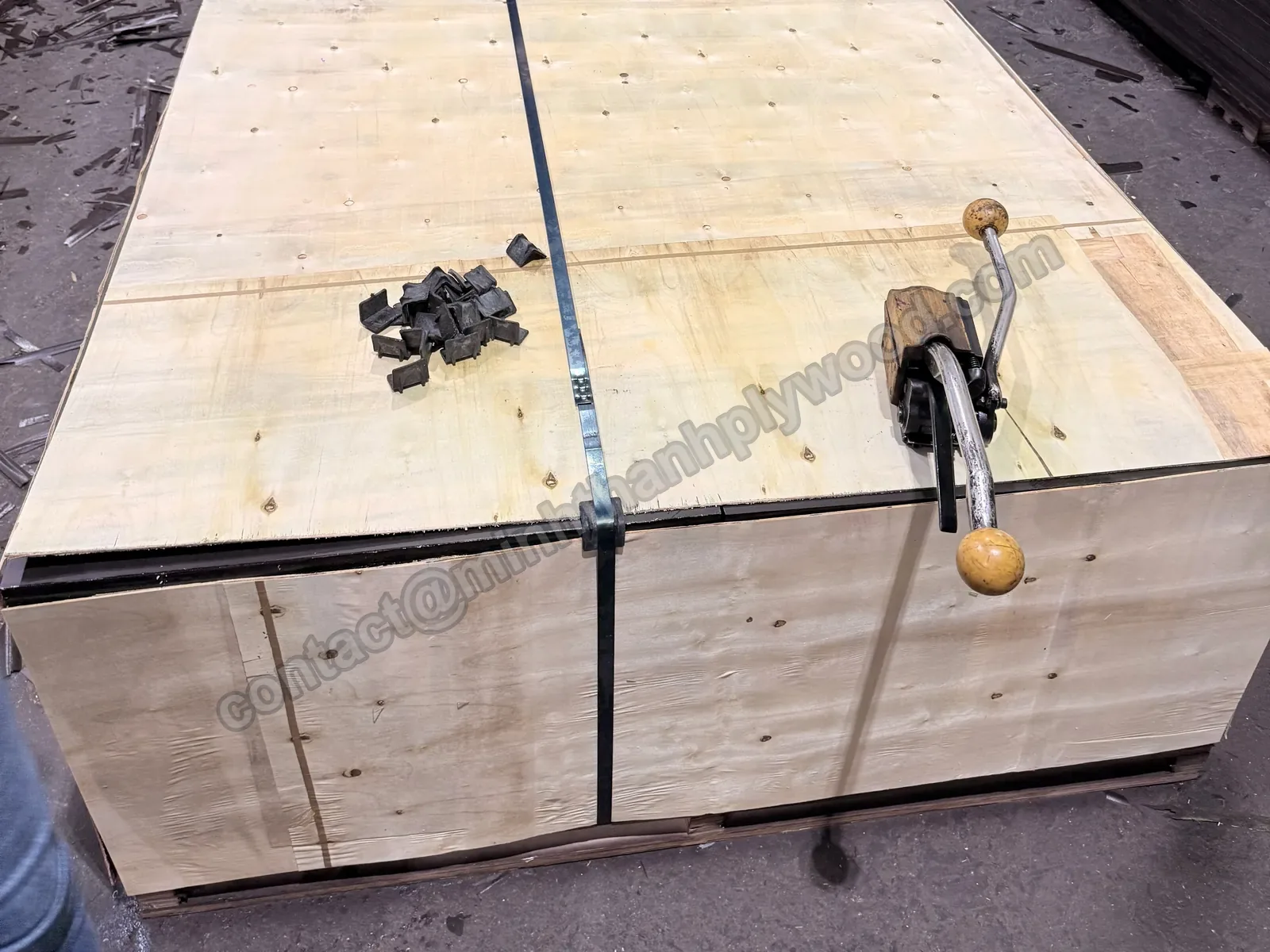
The plywood you buy is the product, even when it is packing plywood. What wraps and carries it to you is packaging: the wooden blocks or bearers under the stack, the protective plywood or cardboard cover, the cardboard corners, the straps and the film.
Each of those is a packaging component under PPWR, and each one was in our SGS test. The photo shows a finished pack on its bearers, ready for the container.
Pack by pack
One shipment uses several packaging components. Each has its own line in the evidence.
| Component | Material | Evidence | Where metals could hide |
|---|---|---|---|
| Pallet blocks and bearers | Plywood or wood | SGS: ND, PASS | Colourants or treatments in purchased components |
| Cover sheet | Plywood | SGS: ND, PASS | Surface treatments and coatings |
| Top cover and corner boards | Cardboard | SGS: ND, PASS | Printing inks and pigments: plain board |
| Straps | Green plastic band tested (PPWR-03); steel strap on request | SGS: ND, PASS | Pigments in coloured straps |
| Stretch film | Wrapping film | SGS: ND, PASS | Colourants and recycled content |
Real packing
Sheets are stacked flat on wooden bearers, topped with a protective cover, then strapped lengthwise and crosswise. Cardboard corners stop the straps cutting the edges, and film keeps the faces clean on the way to the port.
Every container is photographed and filmed before it is sealed, so you see the packs as they leave. Labels carry the order and packing date for traceability.
SGS sample PPWR-03: lead, cadmium, mercury and hexavalent chromium all not detected, PASS.
Sheets are stacked together with protective covers and handling supports.
Sent to you before the ship sails.
Documents
The SGS report goes out with the quotation; the order data follows with each container.
SGS test report
VNHL2609025135HG, 28 September 2026: four materials, all PASS.
Packing component list
Each component, its material and its supplier type.
Weights per pack
Kilograms of wood, cardboard, strap and film per pack and per container, for EPR reporting.
Pack labels
Order number, product, quantity and packing date on every pack.
Container photos and video
Every container photographed and filmed before it is sealed.
Supplier statement
Our statement that the tested materials are the ones used on your order.
Verify us
Four checks on the report itself and with the laboratory.
VNHL2609025135HG, issued 28 September 2026 by SGS Vietnam.
Cardboard, plywood blocks and cover sheet, strapping band and wrapping film: the same parts as on our packs.
ICP-OES and UV-Vis, reporting limit 5 mg/kg per metal, judged against 100 mg/kg.
SGS Vietnam can confirm the report number. We can also arrange a retest on your own shipment's materials.
SGS VietnamBefore shipment
Six checks that keep your packaging file complete from the first container.
Ask for a current third-party report covering every material on the pack. Ours is SGS, September 2026.
The tested materials should be the ones on your order; our component list names them.
Kilograms per material per container for your national packaging reports.
Identify the manufacturer responsible for the declaration under Article 3 and record it in the purchasing file.
There is no certificate for PPWR; the file is the test report, the technical documentation and the declaration.
Plywood is exempt; solid-wood bearers need treatment and the mark.
FAQ
The SGS report goes out today
Tell us the product and destination. We email the SGS report and our packing component list, usually within hours.
Request the SGS reportThe EU Packaging and Packaging Waste Regulation, Regulation (EU) 2025/40. It entered into force on 11 February 2025 and applies from 12 August 2026, setting rules for all packaging placed on the EU market, including transport packaging.
Yes. The pallets, blocks, cover sheets, cardboard, straps and film around a plywood shipment are transport packaging. The plywood sheets themselves are the product.
Lead, cadmium, mercury and hexavalent chromium together may not exceed 100 mg/kg in any packaging component. Our four packing materials tested not detected for all four metals.
Yes. SGS Vietnam tested our cardboard, plywood blocks and cover sheet, strapping band and wrapping film in September 2026, report VNHL2609025135HG. Every material passed.
Not detected: the reading was below the method's reporting limit of 5 mg/kg for that metal. With all four metals ND, the sum is far below 100 mg/kg.
No. PPWR works through technical documentation and an EU declaration of conformity signed by the packaging manufacturer. A test report like ours is the evidence in that file.
The packaging manufacturer signs it. Article 3 identifies that party through manufacturing and own-brand arrangements; an importer is not automatically the manufacturer. We provide the SGS report, packing component list and shipment weights.
No. ISPM 15 is about pests in solid-wood packaging; plywood is exempt, and solid-wood bearers need heat treatment and the mark. PPWR is about the packaging's content and design.
No. PPWR addresses packaging. Formaldehyde requirements for the plywood panels are covered on our E0 and E1 emission page.
No. The PPWR PFAS limits apply to food-contact packaging. Plywood transport packaging is not food-contact packaging.
Yes. We list the kilograms of wood, cardboard, strap and film per pack and per container with every order.
Yes. We arrange an SGS test on the packaging materials of your order on request.
Product, thickness, quantity and destination. MOQ 1×40HC, free samples. Replies within hours by email or WhatsApp +84 988 586 601.