
Standard formwork
Smooth black or brown film, 120–135 g/m²; Eucalyptus or Acacia core.
Application brief
Melamine-fortified glue; about 12–15 uses with proper handling, release agent and edge sealing.
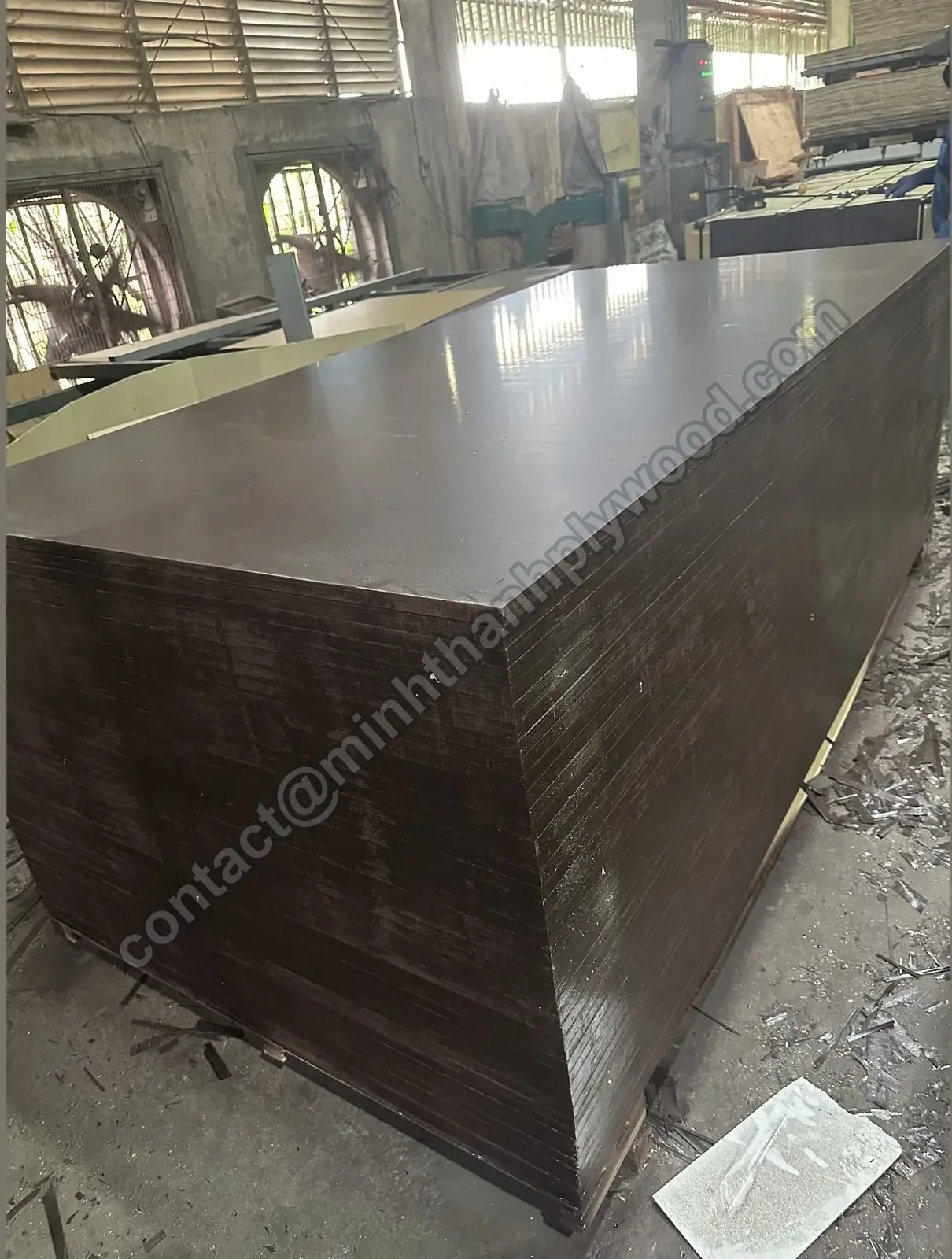
Smooth film-faced formwork panels
In short
Film faced plywood from Minh Thanh Plywood combines smooth film, an Eucalyptus or Acacia core and a water-resistant bond for concrete formwork. We offer 12–21 mm panels with ±0.5 mm thickness tolerance, 120–135 g/m² standard film or premium film from 135 g/m², in 1220 × 2440 and 1250 × 2500 mm sheets.
Video
Watch how film, core, adhesive and dimensions work together, then see what to inspect, how to care for panels and what to send for a container quotation.
Real Panels
Real finished film-faced sheets show the smooth contact face, sealed edges and dimensions. These are the product details we check against your approved sample before loading.
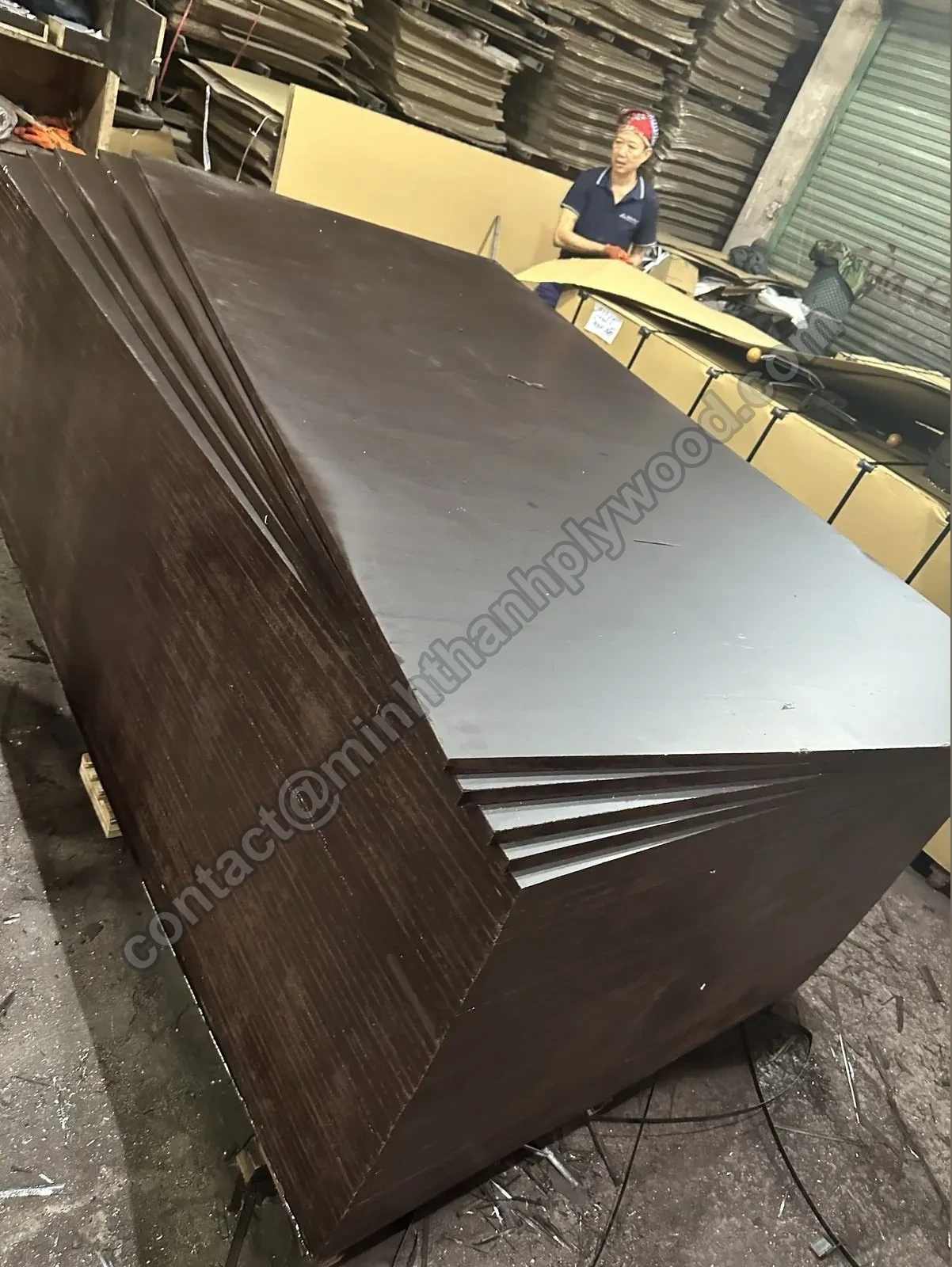
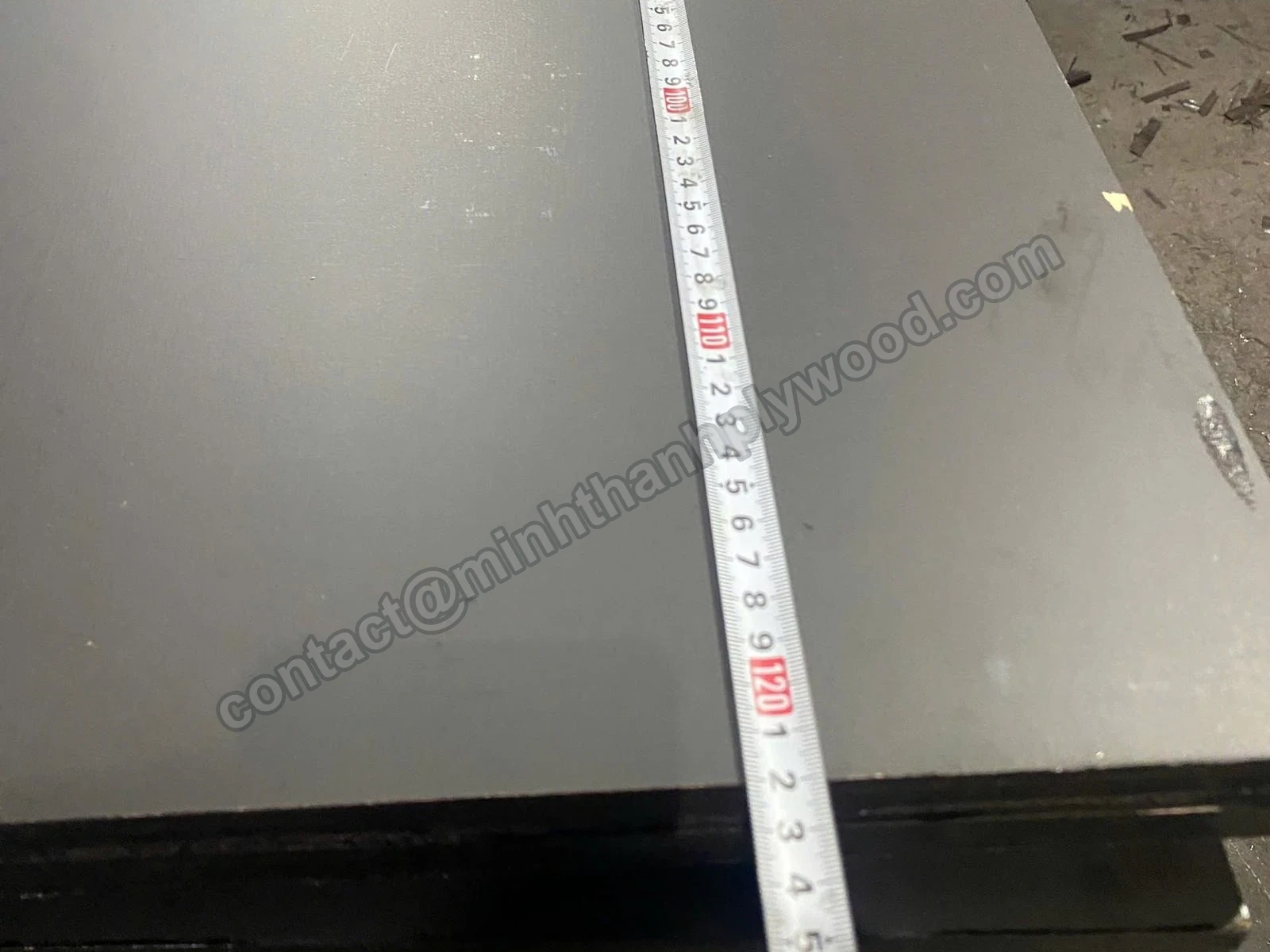
This is an additional supply line alongside our main furniture and commercial range. We send product photographs, dimension checks and loading records for the panels on your order.
Before a first container, check the supplied construction against its sample and ask for the relevant test report. A visit or live inspection can follow the panels from the production area to the marked export bundles.
Specs
Our film-faced build is 12–21 mm plywood on Eucalyptus or Acacia cores, with smooth film on both faces, melamine-fortified or phenolic WBP glue and sealed edges.
| Face film | 120–135 g/m² standard; premium from 135 g/m²; smooth black or brown |
|---|---|
| Back | Smooth film; colour and brand matched to the order |
| Core | Eucalyptus or Acacia plantation hardwood |
| Density | Eucalyptus 650–750 kg/m³; Acacia about 580 kg/m³ |
| Glue | Melamine-fortified or phenolic WBP |
| Emission | E0 or E1, specified separately from the adhesive |
| Thickness | 12, 15, 18 and 21 mm |
| Thickness tolerance | ±0.5 mm |
| Sheet sizes | 1220 × 2440 mm; 1250 × 2500 mm |
| Length/width tolerance | ±2 mm |
| Moisture | 8–12% at dispatch |
| Edge treatment | Sealed perimeter; cut edges and holes resealed before wet use |
The quotation identifies the film brand and colour, core, adhesive and finished dimensions. For repeated orders, the retained sample keeps the contact surface and edge finish consistent.
Film resin covers the face; adhesive bonds the veneers. Naming both gives you a clear comparison between quotations and a practical inspection checklist at delivery.
Grades
Standard film-faced panels combine 120–135 g/m² film with melamine-fortified glue for about 12–15 uses with proper handling, release agent and edge sealing. Premium panels use film from 135 g/m² with phenolic WBP for up to about 25 uses under the same care conditions.
Standard formwork
Smooth black or brown film, 120–135 g/m²; Eucalyptus or Acacia core.
Application brief
Melamine-fortified glue; about 12–15 uses with proper handling, release agent and edge sealing.
Premium formwork
Smooth film from 135 g/m²; Eucalyptus or Acacia core with the project’s required construction.
Application brief
Phenolic WBP glue; up to about 25 uses with proper handling, release agent and edge sealing.
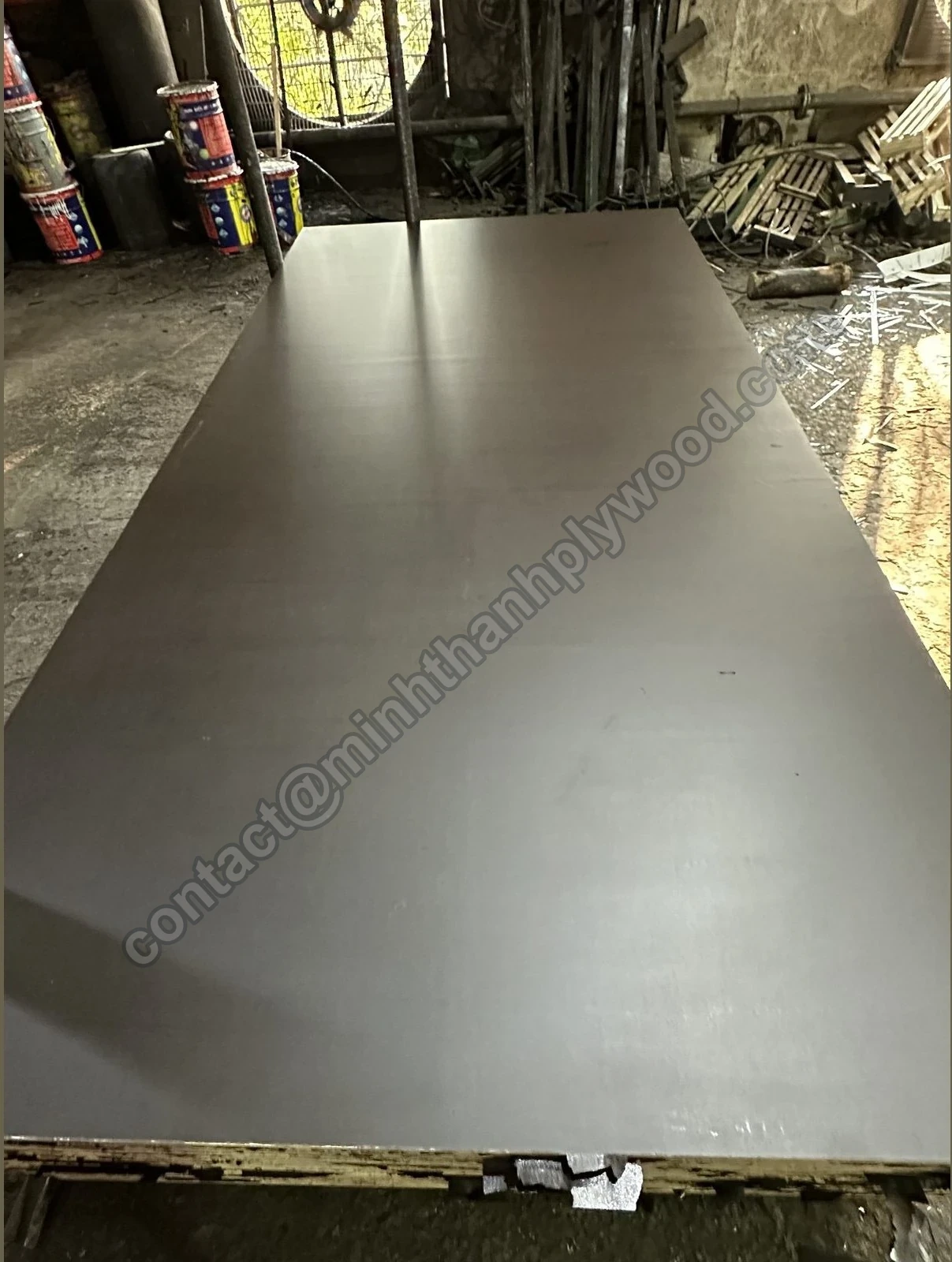
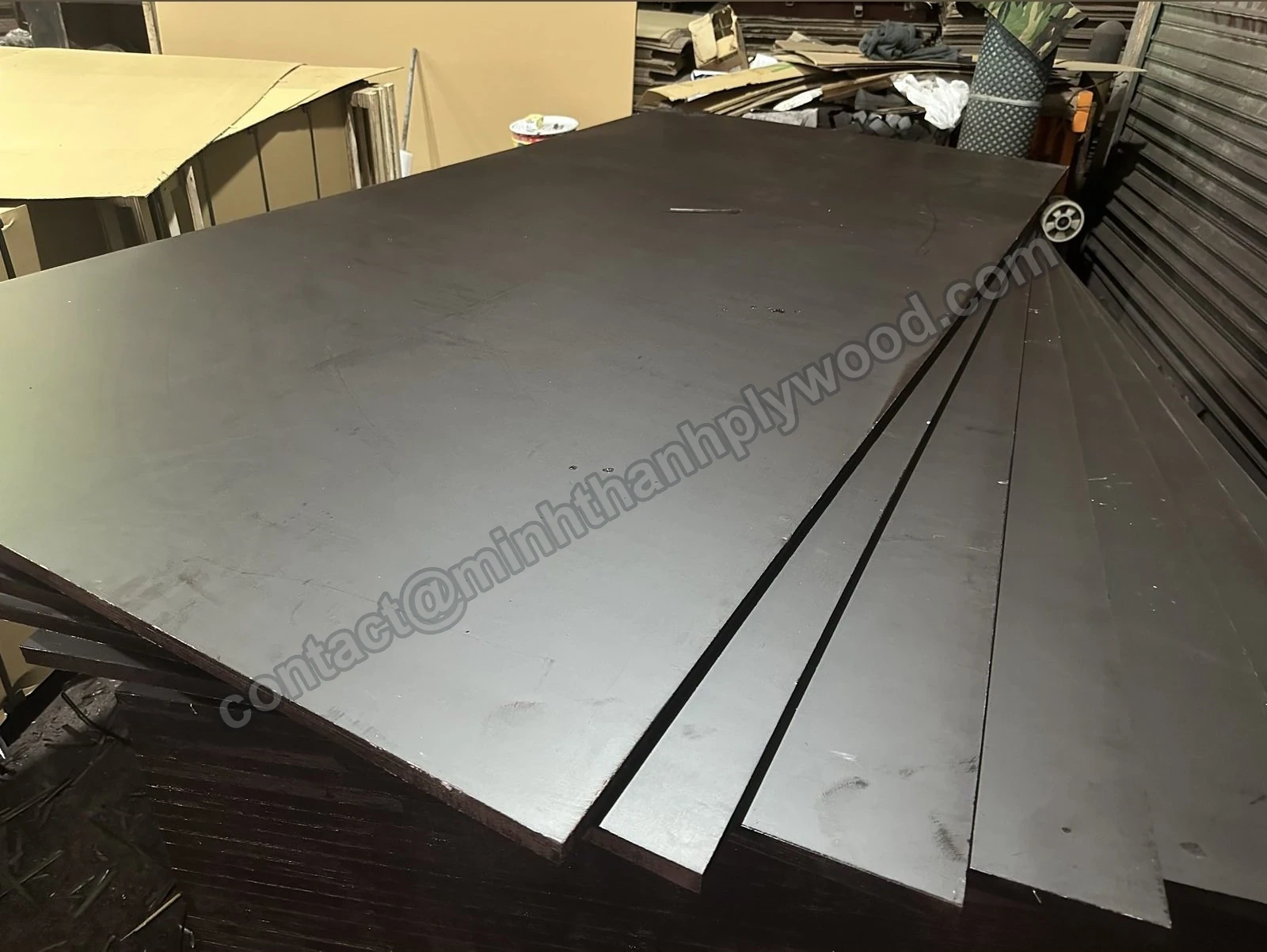
Select black or brown to match your purchasing standard, then compare film mass, adhesive and core. The sample fixes the contact finish; the quotation fixes the construction.
Reusable wall and column sets benefit from careful stripping and protected corners. On exposed concrete, approve the trial finish with the release agent and pouring process you will use.
Core
Eucalyptus cores are denser at 650–750 kg/m³; Acacia is about 580 kg/m³. Acacia reduces sheet weight, while Eucalyptus is a common choice for heavier-duty panel requirements.
| Core | Density | 18 mm sheet, 1220 × 2440 mm | Buyer benefit |
|---|---|---|---|
| Eucalyptus | 650–750 kg/m³ | About 34.8–40.2 kg | Dense core for demanding panel specifications |
| Acacia | About 580 kg/m³ | About 31.1 kg | Lower handling and freight weight |
An 18 mm sheet of 1220 × 2440 mm weighs about 34.8–40.2 kg on an Eucalyptus core, or about 31.1 kg on Acacia. The difference affects carrying, vehicle tare and how many sheets fit within the booked cargo weight.
Cross-laid veneers form the core. We specify the species and construction clearly, inspect edges for open joints and measure the finished panel. The project drawing sets the support arrangement and required panel properties.
The manufacturing sequence is veneer drying, glued core assembly, pressing, calibration, film application and edge sealing. A prepared, even core gives the overlay a flat base; sealed edges protect the exposed veneer layers.
Glue
Choose melamine-fortified glue for the specified moisture exposure or phenolic WBP for repeated wet service. The adhesive is named separately from the film and emission class.
| Formwork component | Order requirement | Separate evidence |
|---|---|---|
| Phenolic veneer adhesive | Required bonding method and result for repeated wet formwork | Emission report only where specified |
| Melamine-fortified veneer adhesive | Exposure and bond acceptance agreed for the formwork programme | Specified emission method remains a separate line |
| Contact film | Surface resin, mass and finish for the concrete face | Surface film and internal adhesive are identified separately |
Melamine-fortified panels suit humid and wet-use specifications with an agreed bond test. Phenolic WBP is the usual choice for repeated outdoor wetting. Fresh cuts and drilled holes receive edge sealer before the panel goes into service.
Six ASTM D6007 chamber tests (three by Shanghai Hongjun, three by ICTT Vietnam) on our 9, 15 and 18 mm UF-bonded plywood averaged 0.014–0.032 ppm using ASTM D6007. E0 and E1 emission options are available alongside the selected water-resistant bond.
When the project names EN 636 or EN 314-2, we quote against that requirement and the associated test method. Bond tests, including boiling tests, measure veneer adhesion; surface grip and wear are tested separately.
Sizes
12 mm film faced plywood is used for supported light forms and liners; 15 mm for closely supported slab soffits; 18 mm for wall and column forms; and 21 mm for heavier formwork components. The formwork drawing sets the final support spacing.
| 12 mm | Supported light forms, liners and small formwork components |
|---|---|
| 15 mm | Slab soffits on closely spaced supports |
| 18 mm | Wall, column and general formwork panels |
| 21 mm | Heavier formwork components and demanding project specifications |
| Regular formats | 1220 × 2440 mm; 1250 × 2500 mm |
| Finished tolerance | Thickness ±0.5 mm; length and width ±2 mm |
Full sheets come in 1220 × 2440 and 1250 × 2500 mm, with cut-to-size panels available for repeated formwork modules.
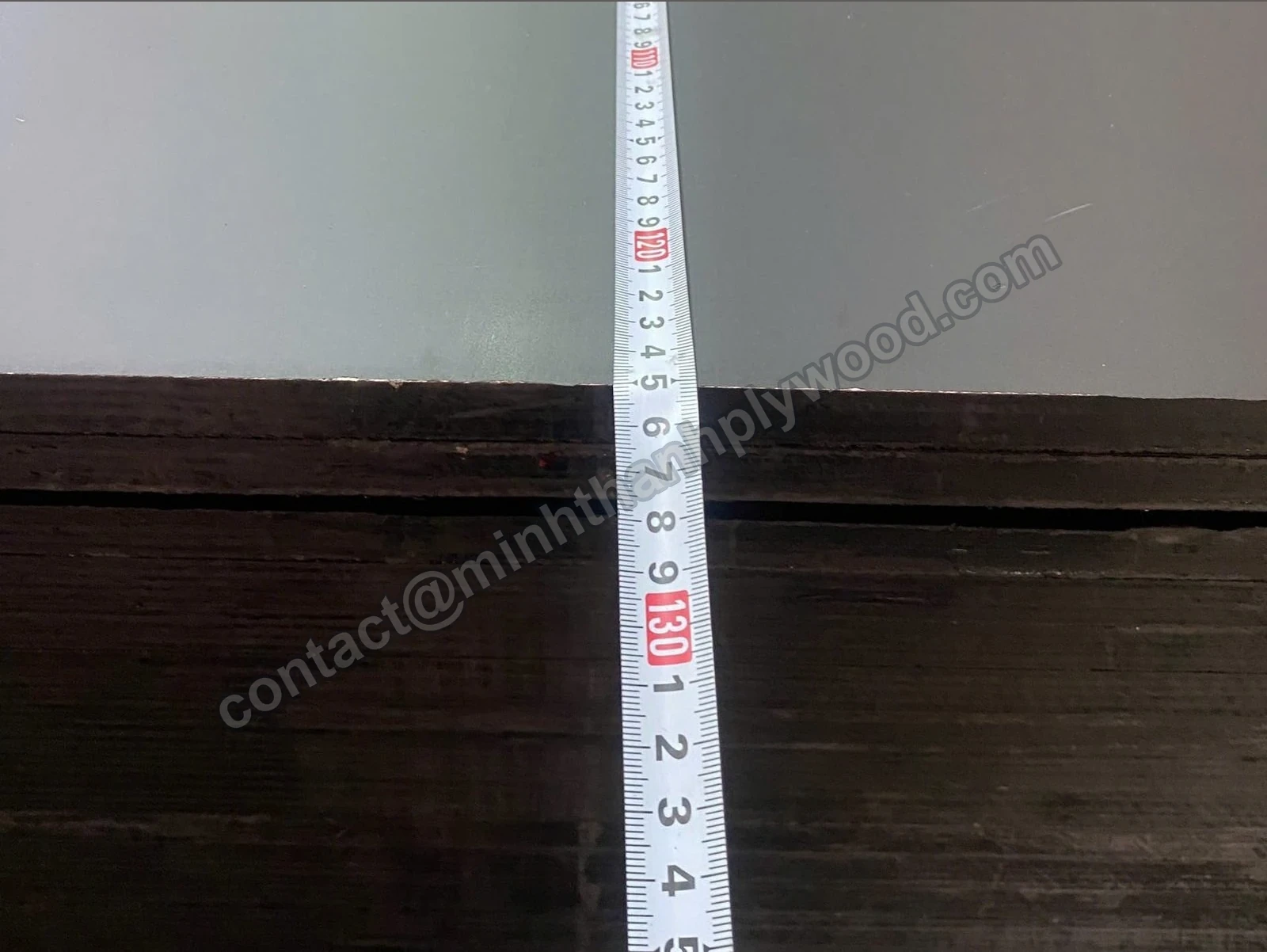
Related: formwork designer.
Applications
Smooth film faced plywood is used as the concrete-contact skin in walls, slabs, beams and columns. Its role is part of a designed formwork system, with supports and connections specified for the pour.
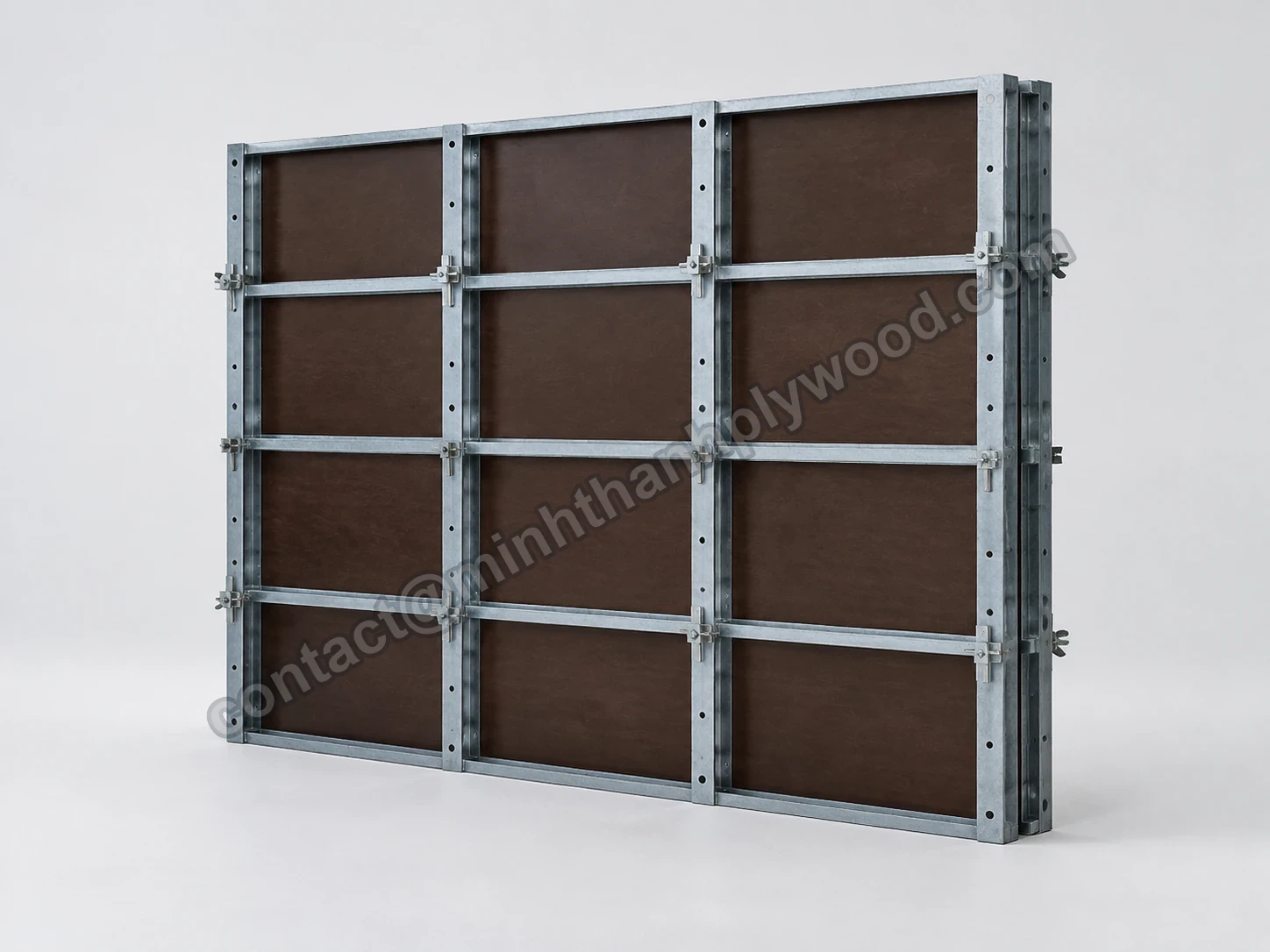
Smooth contact panels on a supporting frame form the vertical concrete surface. Specify panel joints, tie openings and the required finish. Careful handling keeps the film and corners intact between lifts.
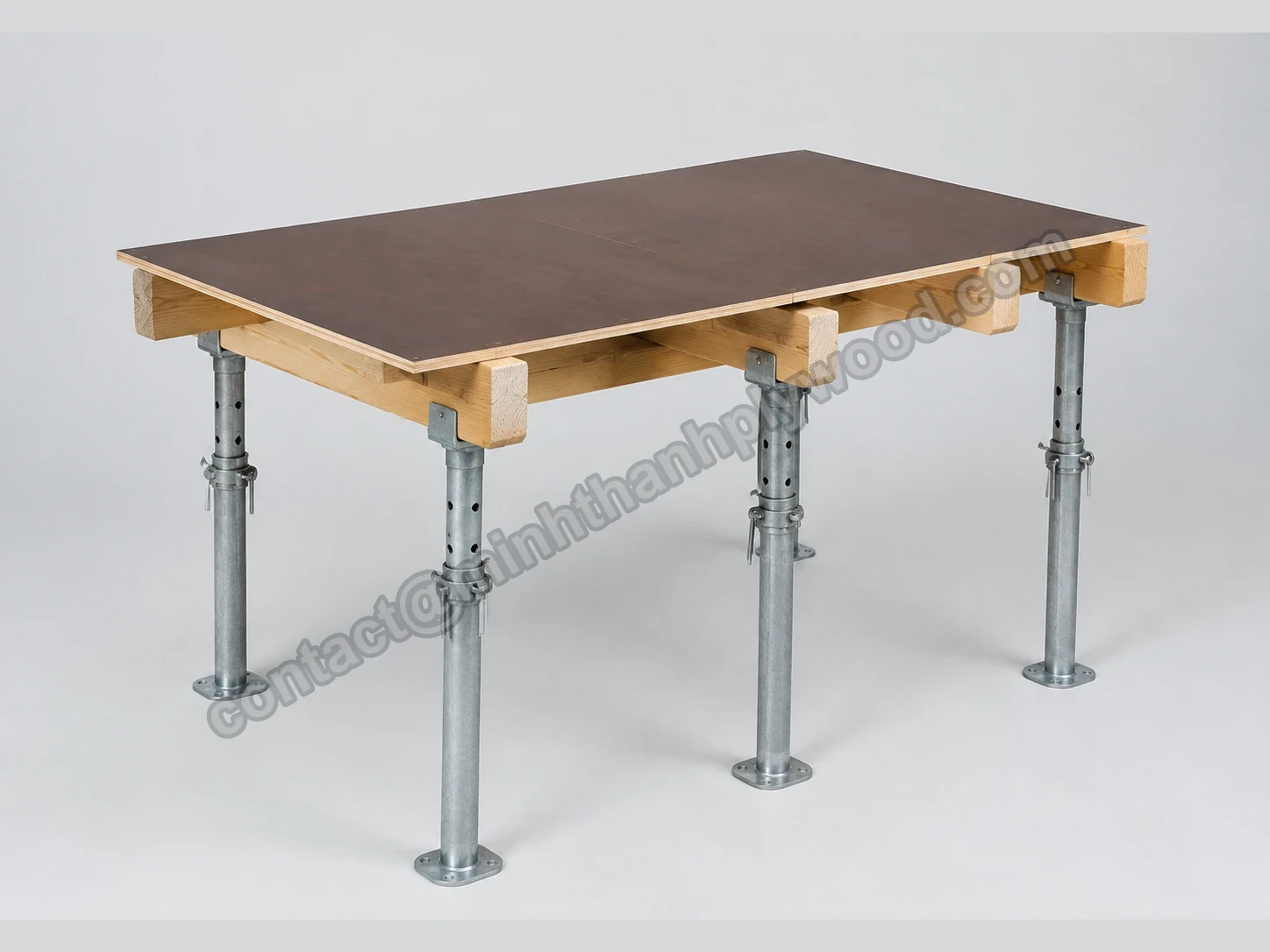
Panels provide the underside contact surface over the designed support arrangement. The design sets joist spacing and panel orientation. Keep sheet edges supported and joints fitted according to that drawing.
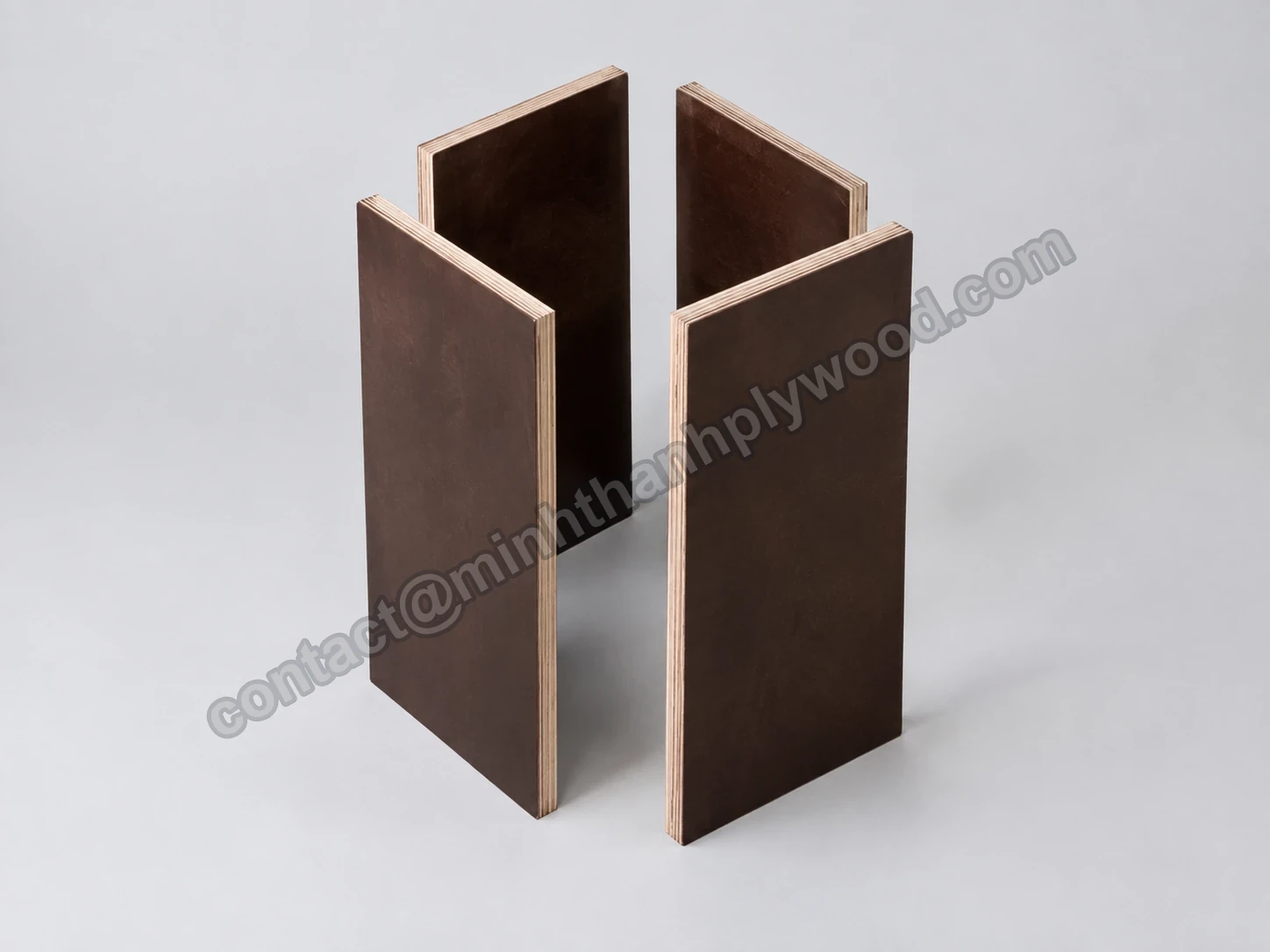
Repeated rectangular components can be cut and marked as sets. Record which face contacts concrete and the position of openings. Recheck edges and fixing areas before using the same set again.
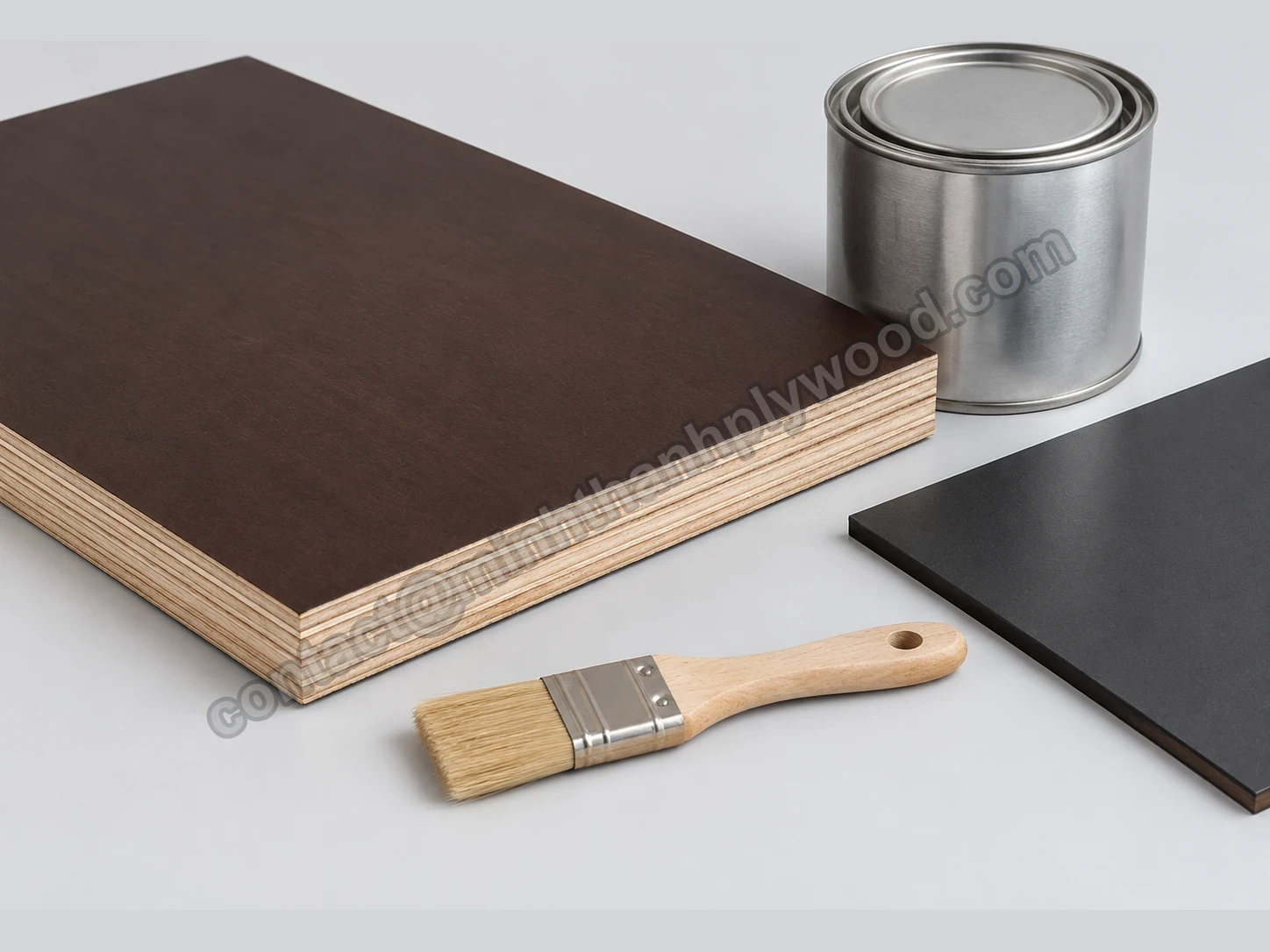
Clean the face without gouging it, apply the appropriate release agent and protect the sealed edges. Store sheets flat on aligned supports. Set aside panels whose damage would affect the next concrete surface.
Bridges, tunnels and civil works use plywood contact panels within engineered formwork systems. Send the project’s panel properties and finish requirement with the drawing so the supplied build fits the support layout.
For truck floors and access decks, choose anti-slip plywood with the floor’s load, wear and surface-test requirements. Smooth film serves the concrete contact face.
Comparison
Vietnamese film-faced orders commonly use Eucalyptus or Acacia hardwood cores. Chinese export ranges also include lighter Poplar and Poplar/hardwood combinations. Compare the named core, film mass and adhesive on each quotation.
| Buying point | Our Vietnam offer | Chinese export examples |
|---|---|---|
| Core | Eucalyptus or Acacia | Poplar, Eucalyptus or mixed Poplar/hardwood |
| Density | Eucalyptus 650–750 kg/m³; Acacia about 580 kg/m³ | Declared for the selected core construction |
| Film | 120–135 g/m² standard; premium from 135 g/m² | Several film masses and brands across the export range |
| Bond | Melamine-fortified or phenolic WBP | MR, melamine and phenolic options appear in export quotations |
| Formats | 1220 × 2440 and 1250 × 2500 mm | Standard and larger formats offered by different mills |
| Comparison method | Sample, core identity, film mass, bond test and delivered weight | Use the same specification and inspection method |
For concrete contact, choose smooth film-faced plywood. For a walking or vehicle surface needing texture, choose anti-slip plywood. Plain exterior plywood serves designs where an exposed wood face is preferred.
Formply and shuttering are buying terms for formwork panels. Include a named structural grade such as F17 when your project calls for it; the quotation then follows that classification and its evidence.
Plywood is within HS heading 4412. Your customs broker selects the destination subheading from the panel composition and product description.
Qc
Inspect sheets against the complete order specification: film finish, core build, thickness, edge sealing and the requested test evidence. Photographs are most useful when they carry the same item references as the quotation.
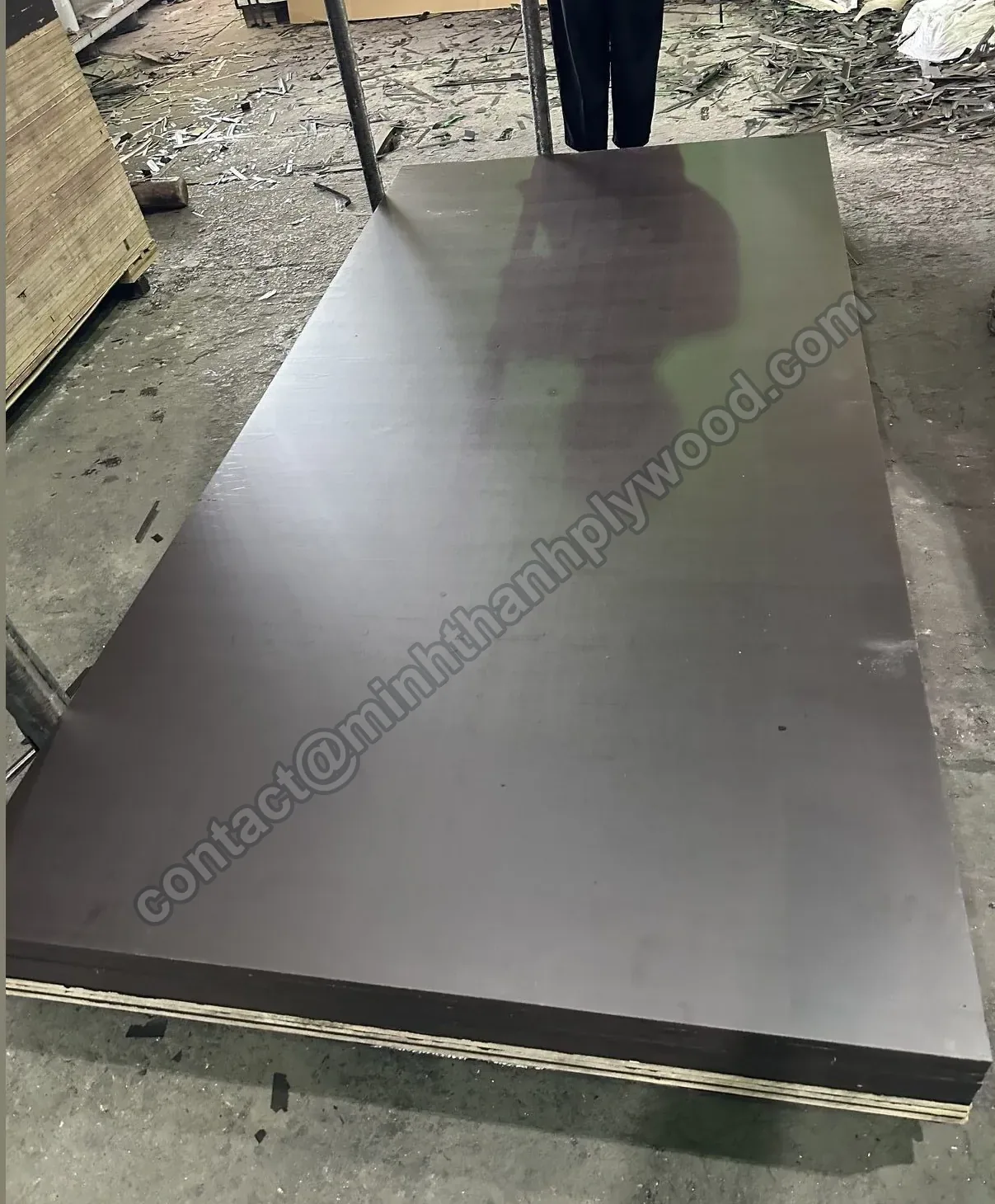
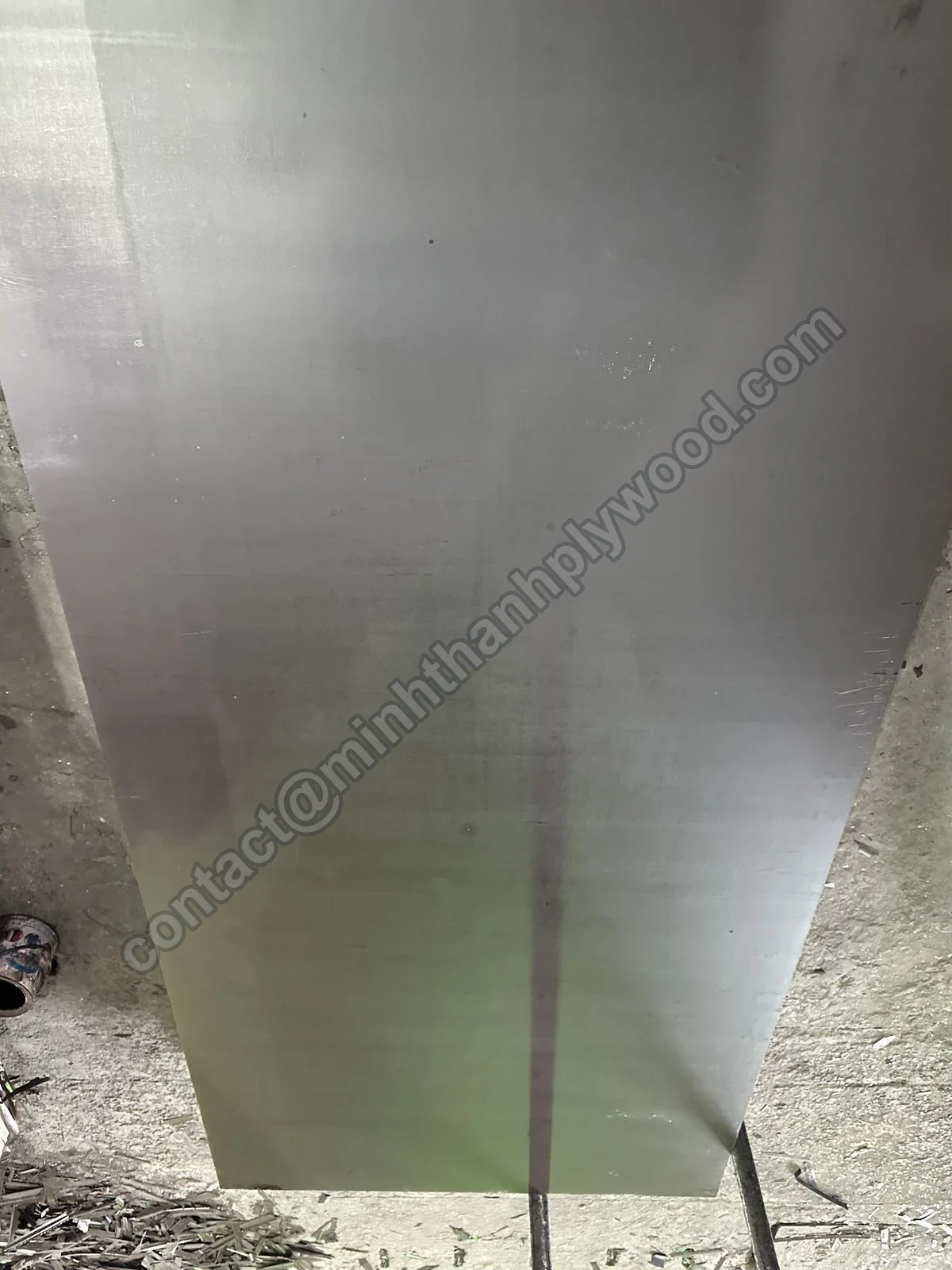
Check item references and bundle markings against the order.
Inspect film continuity and the required surface finish on both sides.
Measure thickness, length, width and squareness.
Inspect corners, core edges and edge-seal coverage.
Review the agreed bond and performance evidence for the construction.
Photograph packs and record the final sheet count before loading.
Inspect both faces under raking light to see scratches, wrinkles and bubbles. Check the corners and sealed perimeter, then measure thickness and squareness against the order.
The inspection record includes the panel construction, dimensions and specified bond result. A formal adhesion test follows its stated method, while photographs show the finished faces and bundle markings.
At delivery, reconcile pack references and sheet counts before sending panels to the cutting area. Keep the retained sample beside the inspection record for repeat orders.
Certificates and documents
Minh Thanh Plywood holds CARB P2 / TSCA Title VI (ICTT mill no. 23024), ISO 9001:2015 and TCVN 11902:2017; we supply the EUDR compliance dossier (origin records and geolocation files) and SGS packaging report. FSC and CE are available*. See our quality documents.
*Supplied directly or through qualified partner mills.
Packing
The 40HC loading plan follows the core weight, protected bundle arrangement and booked cargo allowance. At the same thickness, Acacia loads more sheets than the denser Eucalyptus core.
| Thickness | Eucalyptus mass for loading | Eucalyptus sheets / 40HC | Acacia mass for loading | Acacia sheets / 40HC |
|---|---|---|---|---|
| 12 mm | 23.2 kg | 1,200 | 20.7 kg | 1,328 |
| 15 mm | 29.0 kg | 960 | 25.9 kg | 1,056 |
| 18 mm | 34.8 kg | 795 | 31.1 kg | 880 |
| 21 mm | 40.6 kg | 675 | 36.3 kg | 752 |
Panels are wrapped, protected at the corners and strapped on suitable supports. Packs carry the thickness, film and item reference used on the packing list, so different configurations remain identifiable at the receiving yard.
The industry reference layout holds about 43 m³ of Eucalyptus-core film-faced panels or 47 m³ of Acacia. The cargo cap controls the quantity when that volume is too heavy: the worked load table uses our standard 28,000 kg of panels, with packaging added for the booking check.
At 18 mm, the loading masses are 34.8 kg per Eucalyptus sheet and 31.1 kg per Acacia sheet. The 28,000 kg panel allowance gives 795 Eucalyptus or 880 Acacia sheets. We confirm the final count from the weighed panels, packing and booked payload.
Calculated for 1220 × 2440 mm sheets: core-density planning values 650 kg/m³ Eucalyptus and 580 kg/m³ Acacia; up to 28,000 kg of panels, packaging checked against the booking. Counts are rounded down and capped by nominal 15/16-bundle layouts.
Terms
Melamine-fortified film-faced panels give about 12–15 uses and phenolic WBP panels up to about 25, with proper handling, release agent and edge sealing. Compare the delivered cost per usable pour.
| MOQ | 1×40HC; mixed specifications by agreement |
|---|---|
| Production | 15–45 days after deposit |
| Payment | 30% deposit; 70% against scanned B/L |
| Payment methods | T/T or irrevocable L/C at sight |
| Delivery | FOB Hai Phong, CFR or CIF |
| Samples | Free samples |
Apply the appropriate release agent, remove concrete residue without gouging the film, and reseal fresh cuts and holes. Lift sheets clear of rough ground and stack them flat on aligned supports.
Inspect the contact face, corners and fixing areas after stripping. Move worn panels to a suitable secondary task or replace them when they no longer give the required concrete finish.
For purchasing, divide the delivered panel cost by the usable cycles achieved, then include cleaning, handling and replacement. A trial set gives your site a practical basis for repeat ordering.
Order Steps
Send the engineered panel requirement and the surface specification together. Approve the sample and written quotation before production, then review the inspection and loading records.
Send film, core, bond, dimensions, quantity and destination with the formwork drawing.
Review a quotation with each specification repeated in writing.
Approve free samples and the required evidence for the intended application.
Confirm the proforma and deposit or agreed L/C arrangement.
Review inspection photographs, dimensions, test evidence and bundle counts.
Approve shipment documents and reconcile the delivered item references.
List the core species and build, adhesive and bond test, film type and mass, colour, dimensions, tolerance and edge treatment. Attach the drawing and any named product classification required by the project. This is more useful than a request for a generic premium or waterproof sheet.
For repeat orders, retain the sample and report references from the accepted construction. If the project changes the film mass or core, identify it as a new specification rather than silently replacing one line. Keep the required delivery date separate from production lead time so sea transit is allowed for.
Faq
These answers address the choices that change a formwork order: film mass, bond evidence, thickness, surface care and the intended application.
Film faced plywood is a cross-laminated veneer panel with a resin-impregnated film bonded to its surface. Smooth film panels are used as concrete-contact skins in designed formwork systems. The film protects the face; the core and internal adhesive determine other aspects of the panel construction. Specify all three together.
Shuttering plywood and formwork plywood are common terms for panels that mould fresh concrete. Our smooth-film range is 12–21 mm on Eucalyptus or Acacia cores, with melamine-fortified or phenolic WBP glue. When a drawing names a structural grade such as F17, include it in the enquiry with its required test evidence.
The film protects the face and the specified adhesive controls bond durability under the relevant test conditions. Exposed wood edges, cuts and holes still need protection. Seal fresh machining and keep panels out of standing water. State the service exposure and required bond test rather than relying on the word waterproof alone.
Melamine-fortified film-faced panels give about 12–15 uses and phenolic WBP panels up to about 25, with proper handling, release agent and edge sealing. Compare the delivered cost per usable pour. Keep the contact face clean, protect corners during stripping and store sheets flat between pours.
Choose black or brown for the finish your operation uses, then compare the film mass, core and bond. We offer 120–135 g/m² standard film and premium from 135 g/m². Proper release agent and edge sealing help both colours deliver their intended service.
Our standard film is 120–135 g/m², and premium starts from 135 g/m². Standard melamine-fortified panels target about 12–15 uses; premium phenolic WBP targets up to about 25, with proper handling, release agent and edge sealing. Choose the film brand and colour with the sample.
12 mm film faced plywood suits supported light forms and liners; 15 mm is common for closely supported slab soffits; 18 mm for walls and columns; and 21 mm for heavier formwork components. An Eucalyptus-core 12 mm sheet of 1220 × 2440 mm weighs about 23.2–26.8 kg; our 40HC plan carries 1,200 sheets (15 bundles of 80). Follow the engineered support layout.
WBP means weather and boil resistance in plywood trading. We state the adhesive family and bond-test requirement on the quotation. Phenolic WBP is the usual option for repeated wet formwork; the film mass and emission class appear as separate specifications.
Choose textured anti-slip plywood for floors needing a tested working surface. Smooth film-faced plywood is used for the concrete-contact finish. Flooring specifications also include support spacing, wheel loads, wear and the fixing detail.
Check pack references, sheet counts and any damage to wrapping first. Inspect both panel faces, corners and edge sealing, then measure thickness and dimensions on representative sheets. Compare the supplied construction and test records with the approved sample and purchase order before sending the panels into cutting or assembly.
Yes. Send finished part dimensions, quantities, face direction and the drawing. Include saw allowance in the cutting plan and identify who reseals machined edges and holes. Keep different thicknesses and film configurations under separate part references so bundle labels and the packing list can be checked against the order.
The minimum order is one 40HC, with mixed specifications by agreement. Production is 15–45 days after deposit; sea transit is additional. Payment is 30% deposit and 70% against the scanned B/L, by T/T or irrevocable L/C at sight. Request FOB Hai Phong, CFR or CIF terms and free samples.
The 18 mm quotation follows the core, film mass, adhesive and quantity. Eucalyptus sheets of 1220 × 2440 mm weigh about 34.8–40.2 kg; Acacia is about 31.1 kg. Send the core and grade you need with your destination for FOB Hai Phong, CFR or CIF pricing.
For repeated wet formwork, choose phenolic WBP plywood with premium film from 135 g/m² and an Eucalyptus or Acacia core. The usual thickness range is 12–21 mm. With proper handling, release agent and edge sealing, the phenolic build gives up to about 25 uses; the drawing determines the final panel and supports.
Rfq
Send your core, film, bond, dimensions and formwork requirement. Lisa replies within hours with the quotation steps and free samples.
Include the drawing, required panel properties, film mass and colour, adhesive and bond test, thickness, size, edge treatment, quantity and destination port. Email [email protected] or WhatsApp +84 988 586 601. Attach up to 3 drawings or specification files.
[email protected]