
Poplar A/A or A/B
Pale faces; agree visible repairs and colour variation on sample
Application brief
Reusable boxes, printed fronts and visible lids
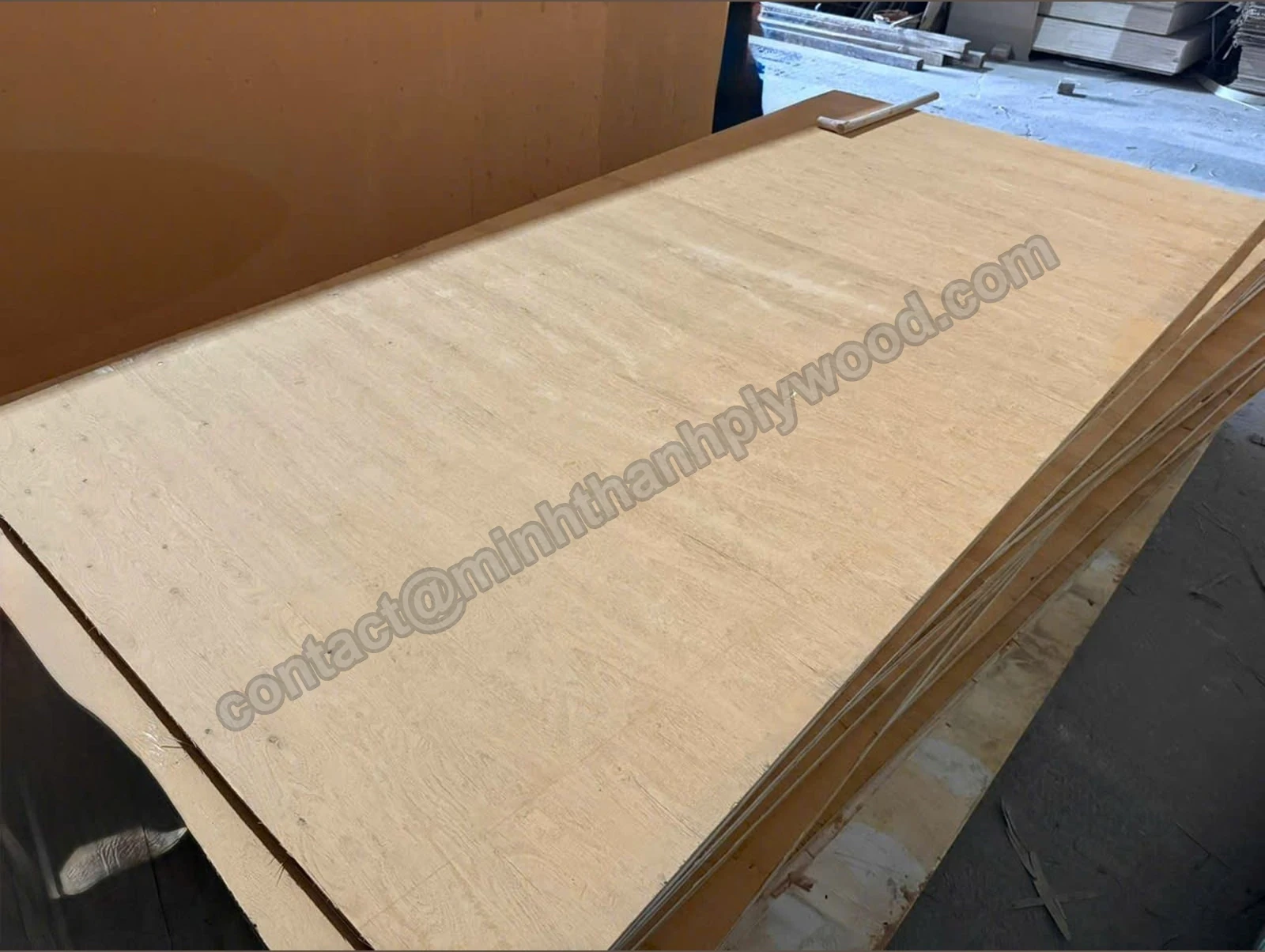
Crates, pallets and protective packaging
In short
Packing plywood is a cross-laminated wood panel selected for crates, pallet decks and protective packaging. Minh Thanh Plywood supplies packaging plywood on Styrax or Eucalyptus cores, with the face, thickness and bond matched to the part you make. Send the crate drawing, support spacing and exposure conditions for a factory quotation.
Video
Watch the route from a crate drawing to a panel specification: face quality, core weight, bond, cutting plan, inspection and export packing.
Real Panels
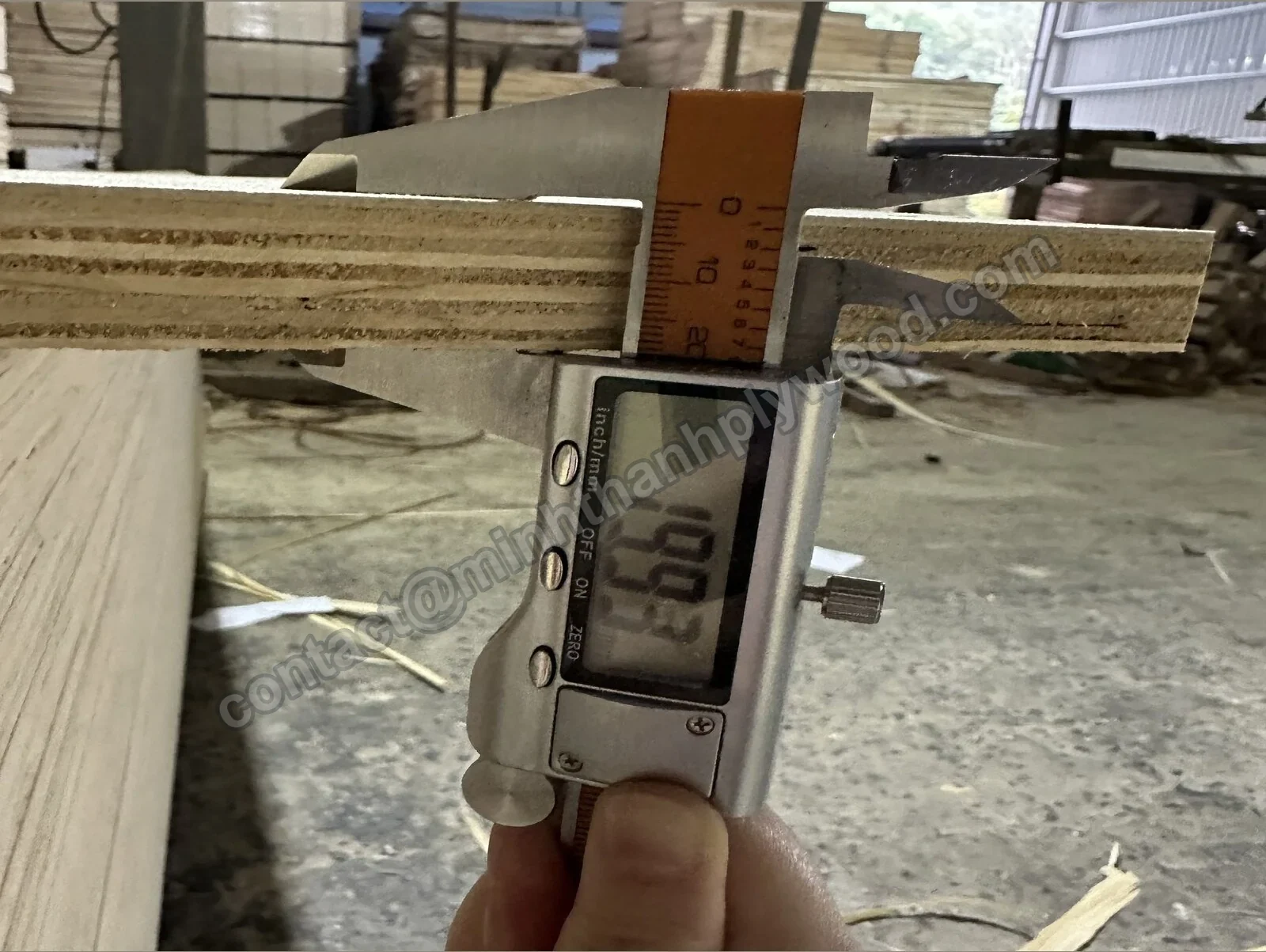
Plain panel faces, visible veneer edges and a real caliper check show the details a packing buyer needs: usable faces, consistent thickness and sound construction.
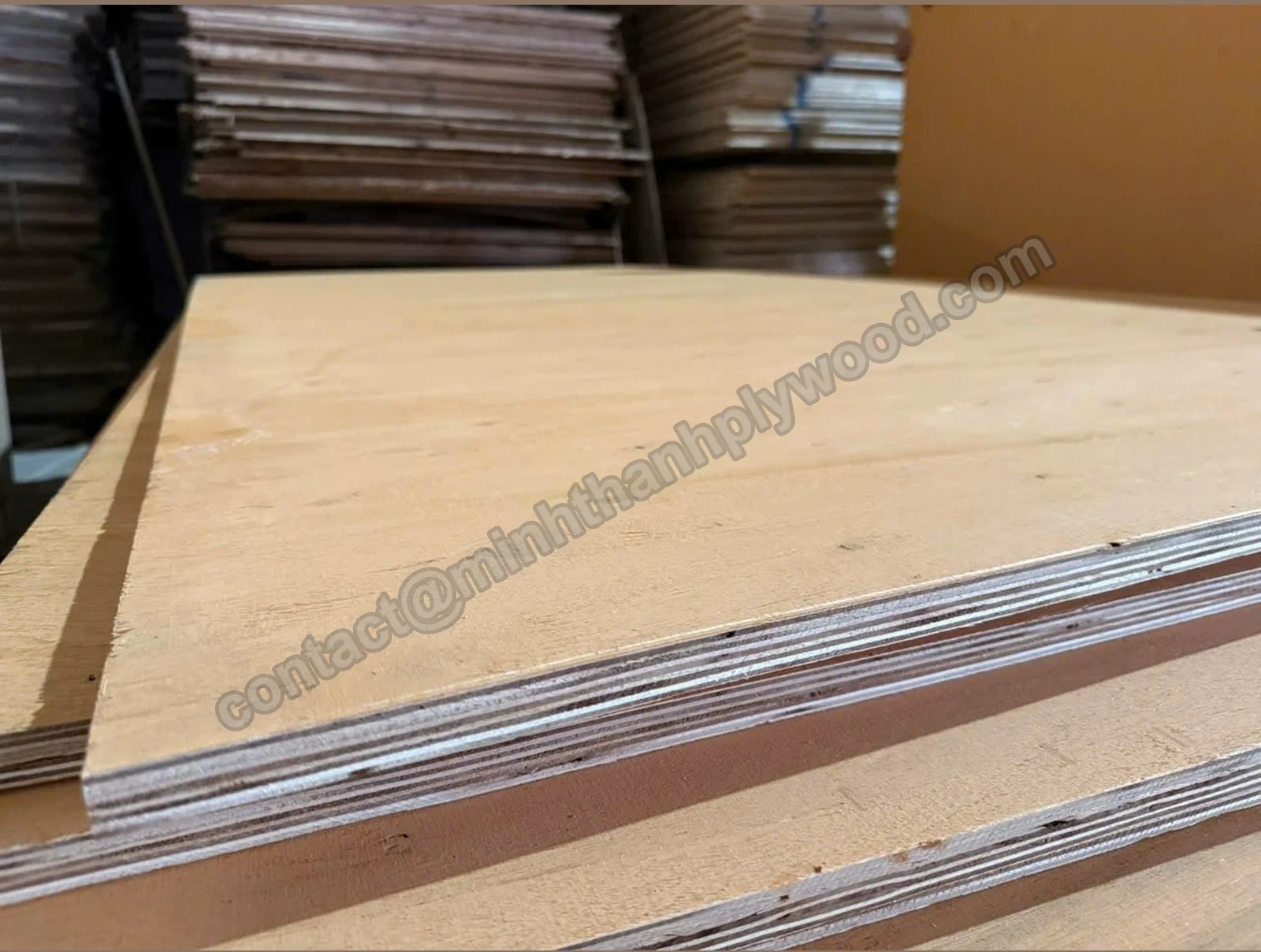
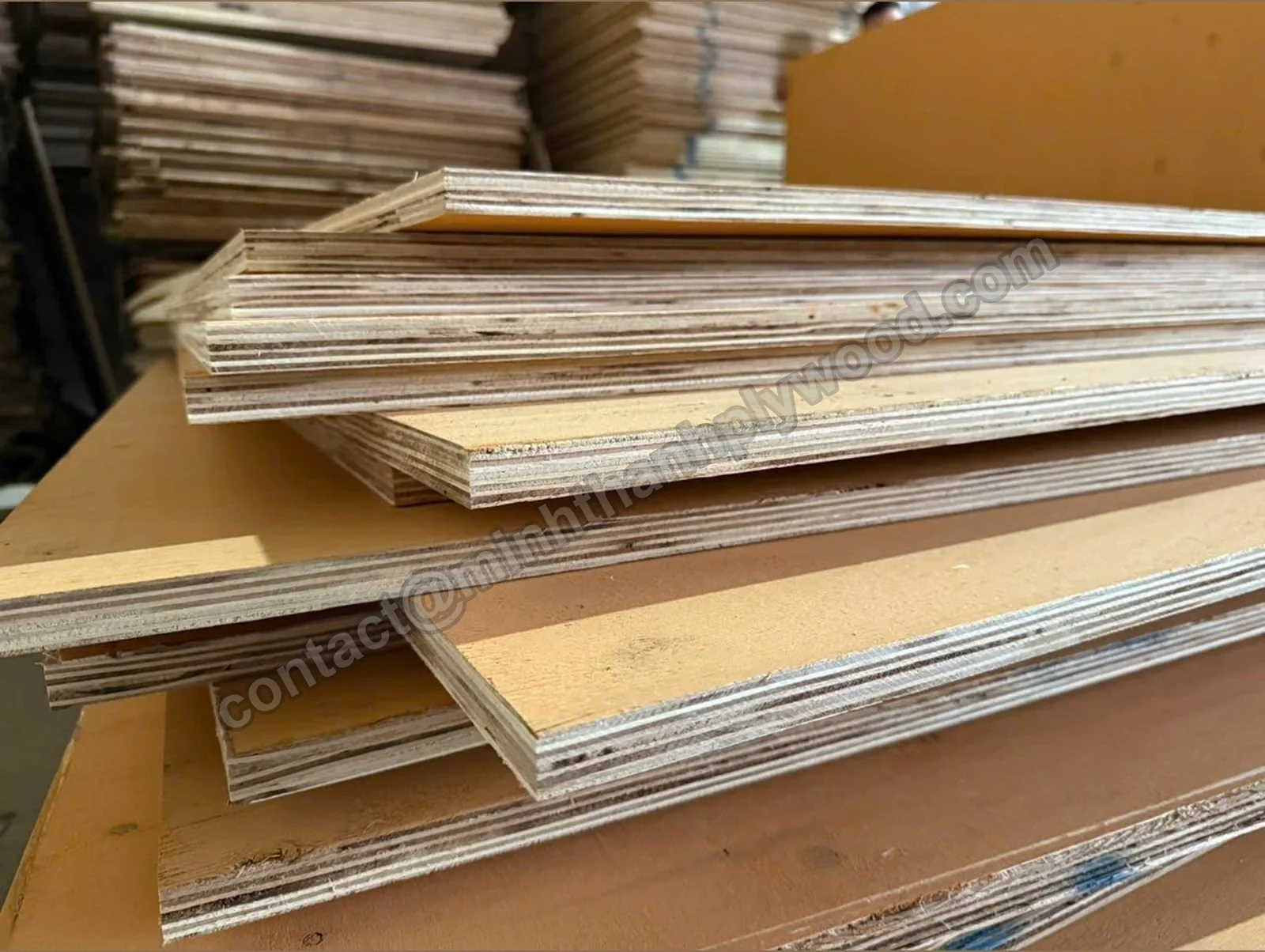
Minh Thanh Plywood makes furniture and commercial panels in Ha Hoa, Phu Tho. Packing orders bring that production experience to crate sides, lids, pallet components and protective sheets.
The photos show complete plain-faced sheets and their edges. Tell us which face touches the goods and where labels or fasteners go; the sample and production grading then follow the part you make.
Specs
Packing plywood pairs a practical face grade with the core and bond needed for crates, pallet components and protective sheets. We supply 3–40 mm panels with packing-grade thickness tolerance of ±0.5–1.0 mm.
| Product | Packing plywood for industrial packaging components |
|---|---|
| Faces | Poplar, Eucalyptus, Pine, Bintangor or other offered veneers; face/back sample agreed |
| Core | Vietnamese plantation Styrax or Eucalyptus |
| Density | Styrax about 500 kg/m³; Eucalyptus 650–750 kg/m³ |
| Thickness | 3–40 mm |
| Construction | Cross-laid veneer; 3–6 mm panels have 5 plies; 18 mm usually 11–13 plies |
| Sheet formats | 1220 × 2440 mm; 1250 × 2500 mm |
| Other formats | 1220 × 2500 mm; 1220 × 2280 mm; cut-to-size parts |
| Dimensional tolerance | Packing-grade thickness ±0.5–1.0 mm; length and width ±2 mm |
| Finish | Face preparation matched to labels, printing, sanding or hidden packing use |
| Moisture | 8–12% at dispatch |
| Adhesive | UF for dry use; melamine-fortified or phenolic adhesive for the specified exposure |
| Emission | E0 or the buyer’s required emission class, specified separately from adhesive |
The table is a starting specification for an enquiry. Mark the components on your drawing as lid, side, divider or deck so that the mill can quote each part against its actual duty. A thin side on a closely spaced frame and a free-spanning base perform different jobs even when both belong to the same crate.
Use the purchase order to fix measurable acceptance criteria. Record nominal thickness and tolerance, cut dimensions, face orientation and the approved surface sample. If a panel goes through an automatic feeder, include that requirement: thickness variation and bowed sheets affect feeding as well as the finished box.
Grades
Packing grade plywood allows the appearance to follow the packaging job. A hidden separator needs a sound, usable surface; a reusable presentation case needs a better face for printing and handling.
Poplar A/A or A/B
Pale faces; agree visible repairs and colour variation on sample
Application brief
Reusable boxes, printed fronts and visible lids
Poplar B/B or Eucalyptus B/B
Utility appearance with the repair pattern fixed by sample
Application brief
Crate sides, dividers and concealed covers
Pine B/C
More character on the utility back; inspect knots, patches and splits
Application brief
Industrial boxes with one outward face
Bintangor face to sample
Red-brown surface; approve face and back independently
Application brief
Commercial packing and mixed-purpose stock
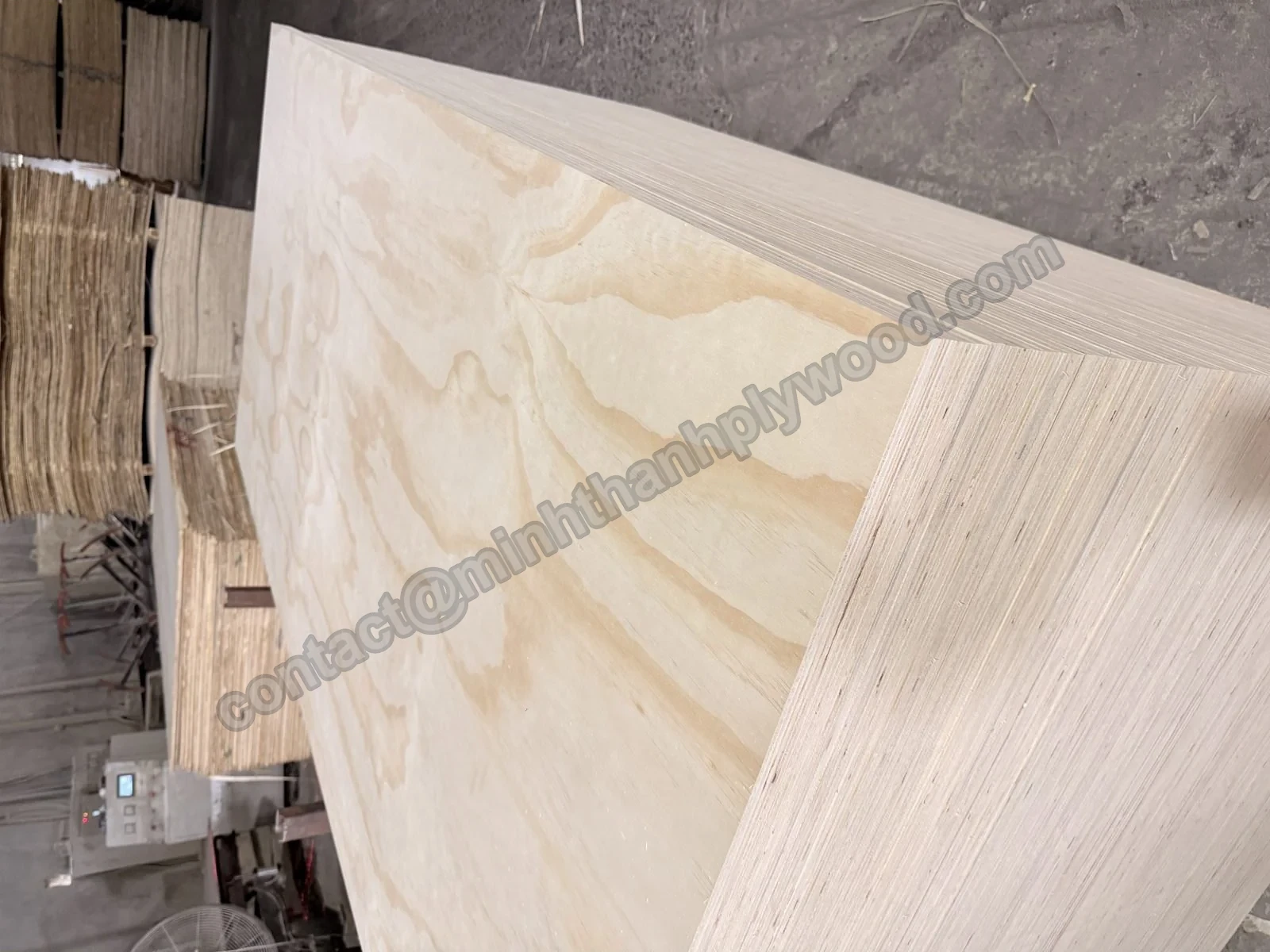
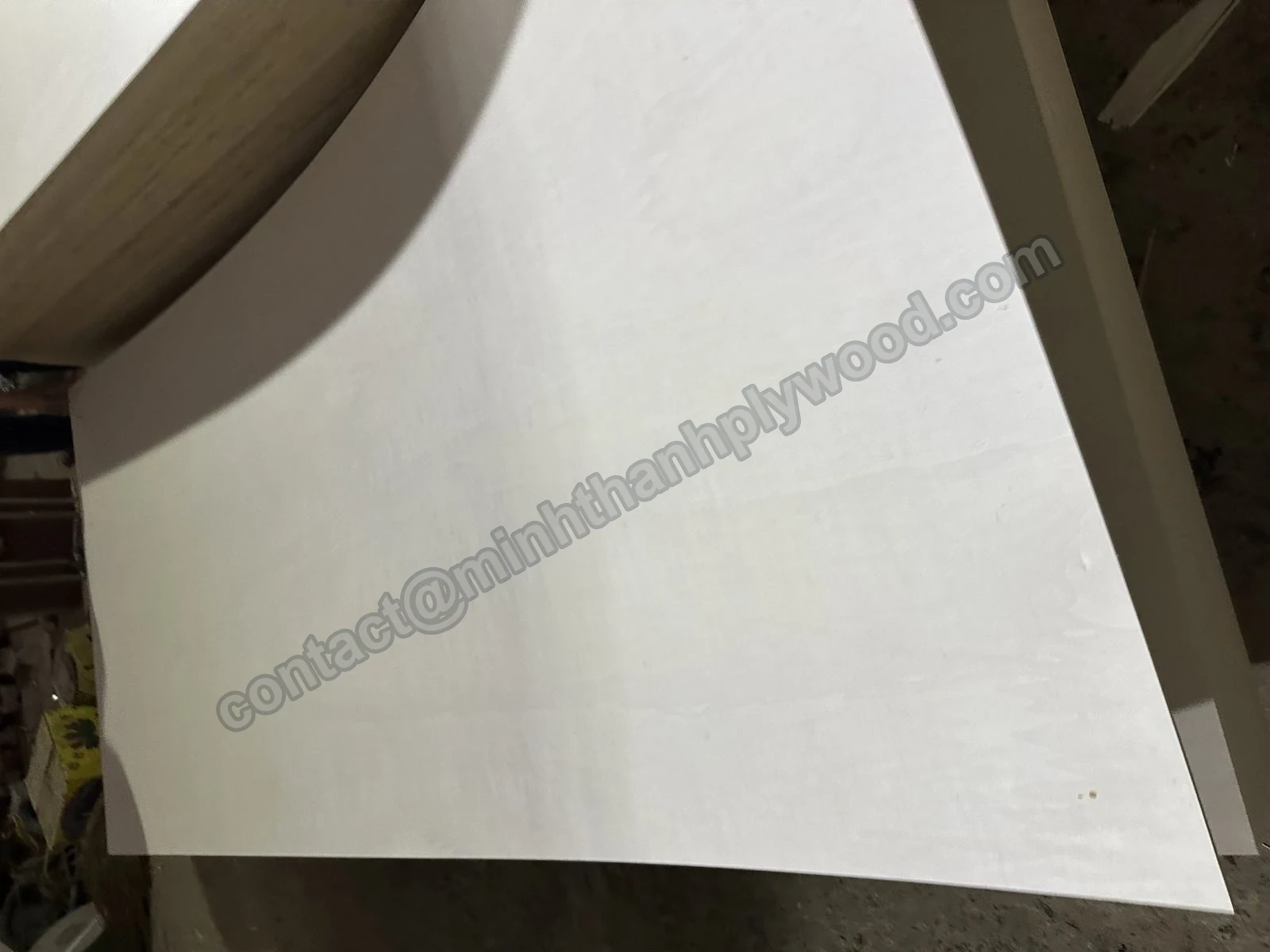
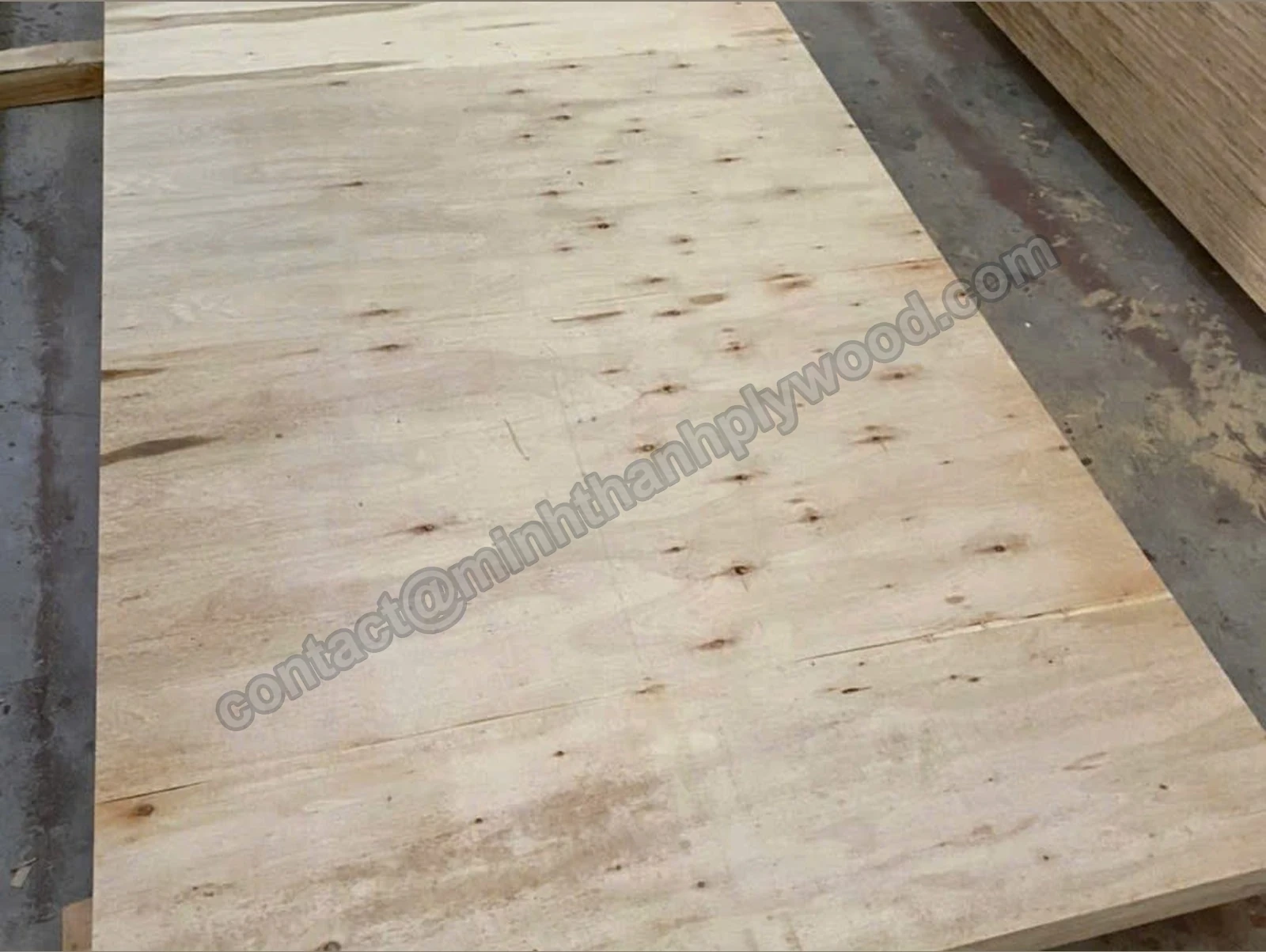
Choose the lowest appearance grade that still does the job well. Natural colour changes, repaired knots and patches can be acceptable on an industrial crate, while loose material, open damage beside a staple line or roughness against a finished product need attention. Put the acceptable features on the approved sample rather than relying on the word utility.
Pine and Poplar have different grain and repair patterns. Approve each species against its own face/back sample. The buyer’s grading code can sit beside the mill’s pair on the quotation, giving purchasing and production the same reference.
For printing, inspect both adhesion and legibility on an actual face sample. For a paper label, try the label stock and adhesive used in your warehouse. For an unlined equipment case, check that the inward face will not scratch the finish as the cargo vibrates in transit.
Core
Styrax makes the lighter panel at about 500 kg/m³; Eucalyptus gives a denser panel at 650–750 kg/m³. Choose the construction against the crate design and handling method, then use its weight to plan freight.
| Core | Density | 18 mm sheet weight, 1220 × 2440 mm | Planning priority |
|---|---|---|---|
| Styrax | About 500 kg/m³ | About 26.8 kg | Panel count, manual handling and lower tare weight |
| Eucalyptus | 650–750 kg/m³ | About 34.8–40.2 kg | Denser construction and gross shipment mass |
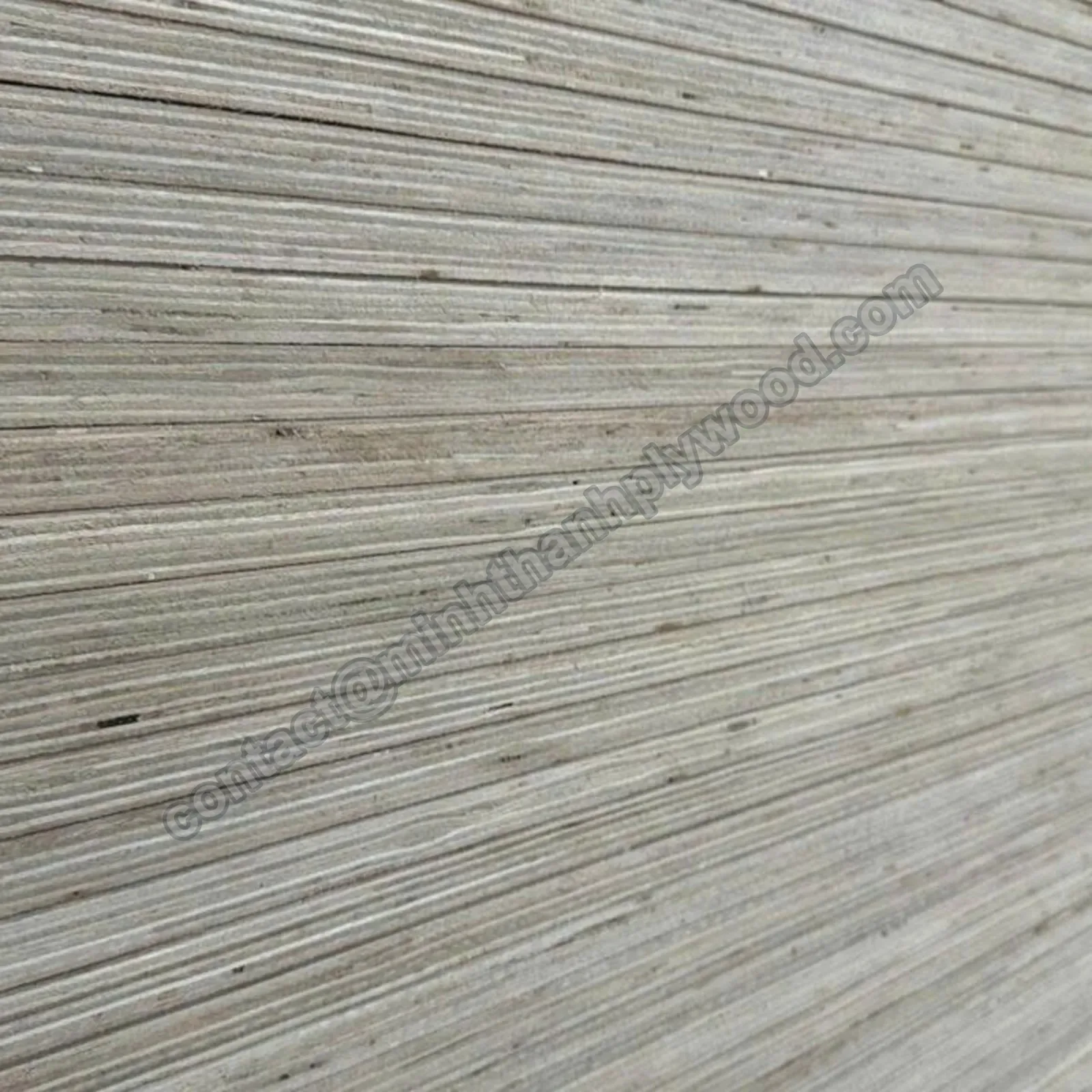
A 1220 × 2440 × 18 mm sheet contains 0.0535824 m³ of wood-based panel. At the stated densities that is about 26.8 kg with Styrax or 34.8–40.2 kg with Eucalyptus. These calculated panel weights exclude wrapping and pallets. A denser core changes both the mass your workers lift and the number of sheets allowed in a shipment.
The core veneers cross one another, so the panel works differently from a solid board laid in only one direction. Keep the face-grain direction on a cutting drawing when it matters to the part. Joint placement, veneer quality and bonding matter alongside the number of plies.
For screw or staple assemblies, trial the real fastener in the proposed panel and frame. Confirm penetration, edge position and whether the fixing goes into a sheet face, sheet edge or solid timber member. A good-looking edge is useful inspection evidence, but the completed packaging assembly is the right place to prove the design.
Glue
Packing plywood uses UF adhesive with E0 emission for dry service, with melamine-fortified and phenolic WBP options for moisture exposure.
| Component | What to specify | Emission line |
|---|---|---|
| UF | Dry crate and box service | Emission class and method specified independently |
| Melamine-fortified | Greater moisture exposure described in the order | Emission class and method specified independently |
| Phenolic | Specified wet-service bond requirement | Emission class and method specified independently |
UF adhesive is the standard choice for dry crates and boxes. Melamine-fortified adhesive suits humid storage and loading; phenolic WBP is the option for repeated wet exposure. We make the bond to the conditions your packaging will meet.
Our packing panels use UF glue at E0 emission. Six chamber tests (three by Shanghai Hongjun, three by ICTT Vietnam) to ASTM D6007 averaged 0.014–0.032 ppm. Melamine-fortified and phenolic WBP bonds are available for wet-service packaging.
Seal cut edges on panels exposed to rain or washdown, and use the liner or cover selected for the goods. Send the storage and transport conditions with the drawing so the quote includes the right bond.
Sizes
Start with 1220 × 2440 mm or 1250 × 2500 mm sheets, then compare the usable parts yielded by each format. The best sheet is the one that fits the cutting list and assembly process.
| 1220 × 2440 mm | Regular full-sheet stock and crate component nesting |
|---|---|
| 1250 × 2500 mm | Alternative nesting for European component drawings |
| 1220 × 2500 or 1220 × 2280 mm | Alternative order formats when they fit the cutting list |
| Cut into 4, 6 or 8 pieces | Repeated rectangular packing components; saw allowance included |
| 3–6 mm, 5 plies | Thin skins and dividers in supported assemblies |
| 9–12 mm | Crate side or lid candidates, selected with the frame design |
| 15–18 mm | Deck and base candidates, selected with supports and applied load |
Send a cutting schedule with a part reference, finished length, width, thickness and quantity. Include saw kerf and finishing allowance in the nesting plan so the yield matches production.
Separate symmetrical parts from parts whose face must point outward. If you make left and right panels, specify whether they are interchangeable before arranging bundles. Keep thin dividers apart from thicker bases so an operator can identify the right part without measuring every piece.
For repeated crate sizes, cut-to-size supply can reduce handling at your plant and make pack counts easier to check. For changing designs, full sheets keep flexibility in your own saw shop. Compare the total cost per finished part, including offcuts, cutting labour and storage space.
Applications
Packaging plywood forms crate skins, pallet decks, reusable boxes and protective partitions. Choose thickness with the applied load and supporting frame.
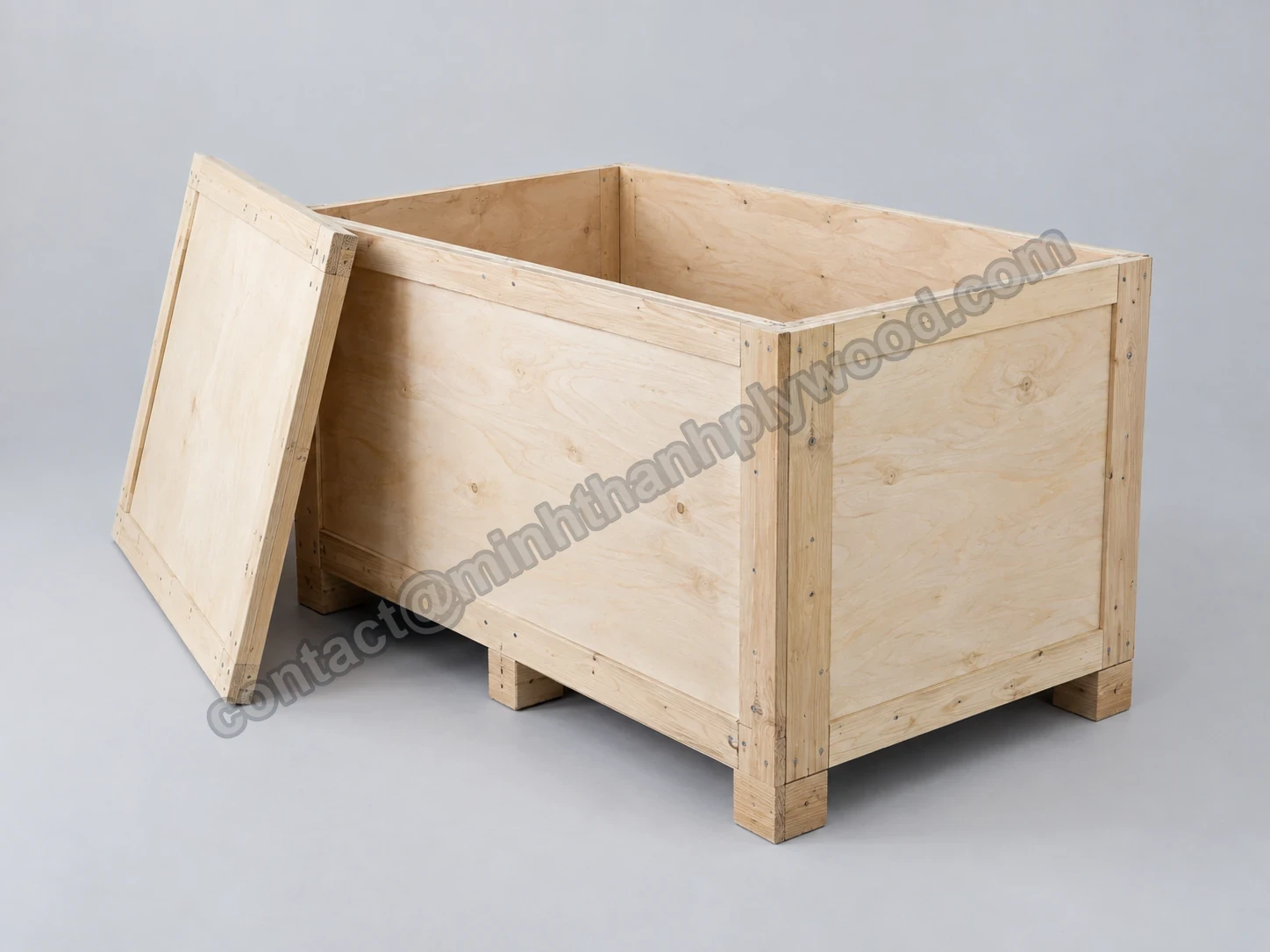
Use plywood sides and lids on a supporting frame to enclose equipment. Show the frame spacing, fixing lines and openings on the drawing. Keep the face against painted machinery smooth or separate it with the specified liner.
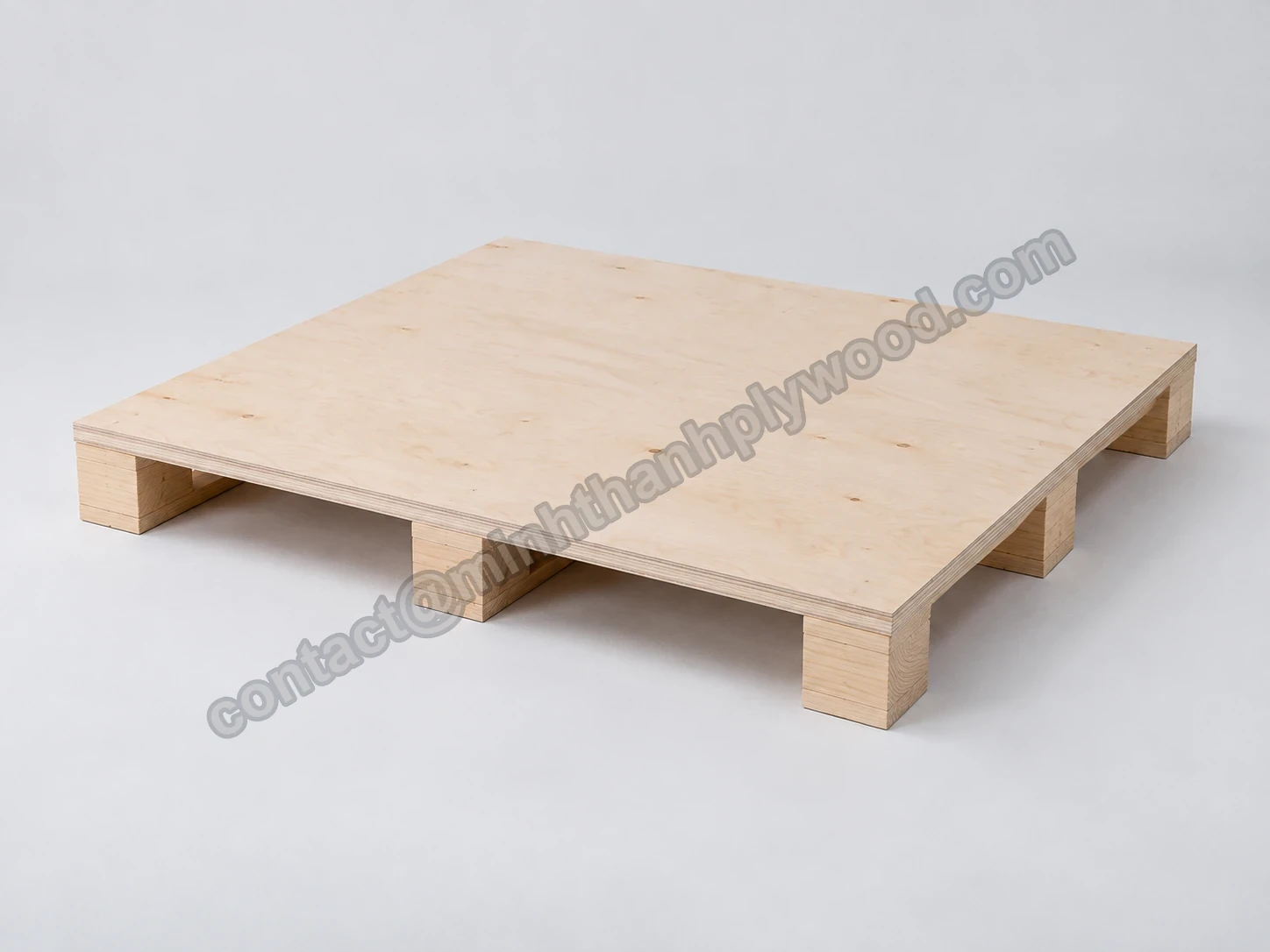
A sheet deck gives packaged goods a continuous surface over the supporting pallet. Match the panel to the bearers, forklift openings and cargo contact points on the pallet drawing.
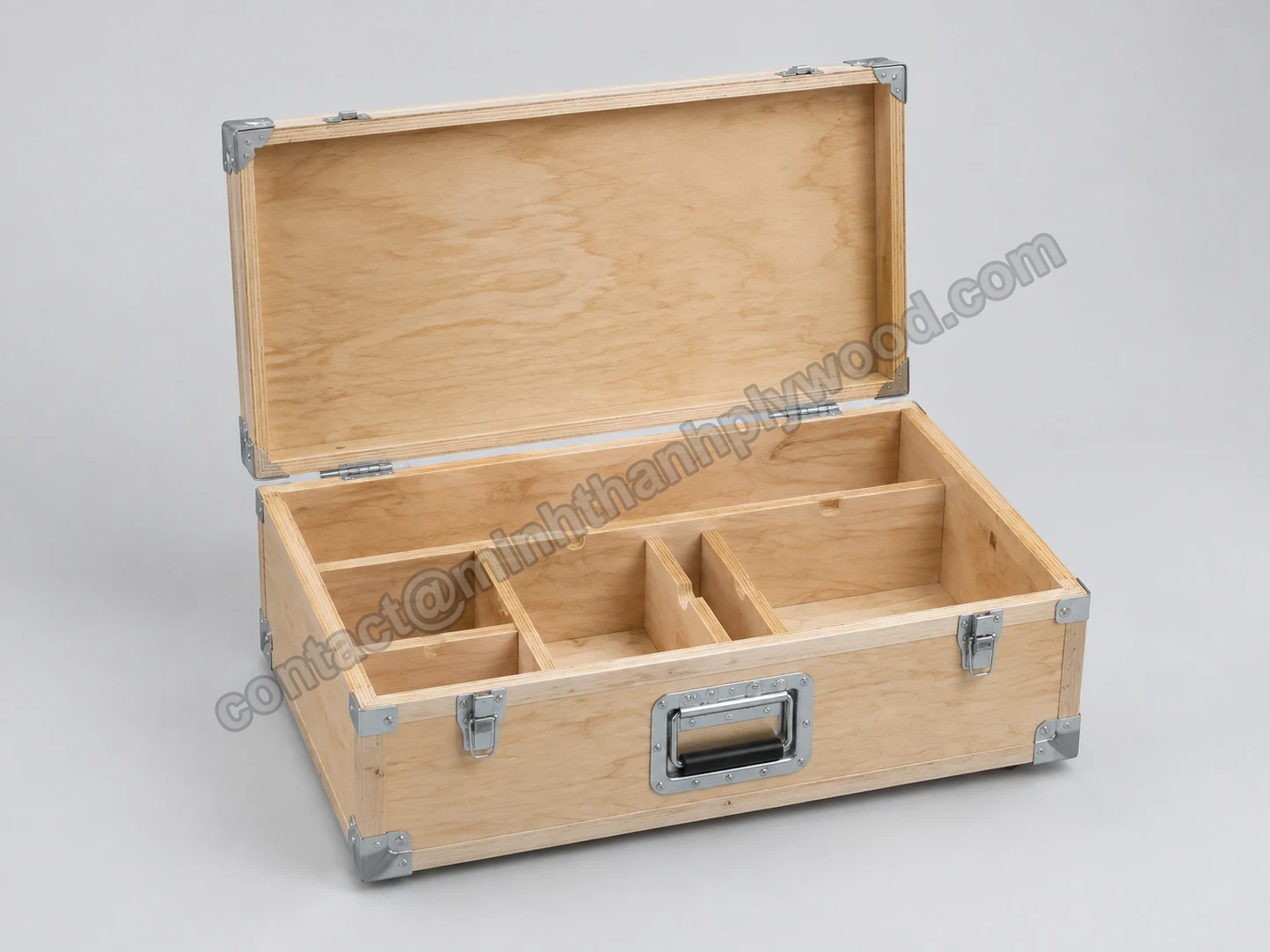
Choose an outward face that accepts the intended label or finish and an inward face suited to the contents. Check lid alignment, hinge positions and fastener holding on a trial assembly before ordering the production batch.
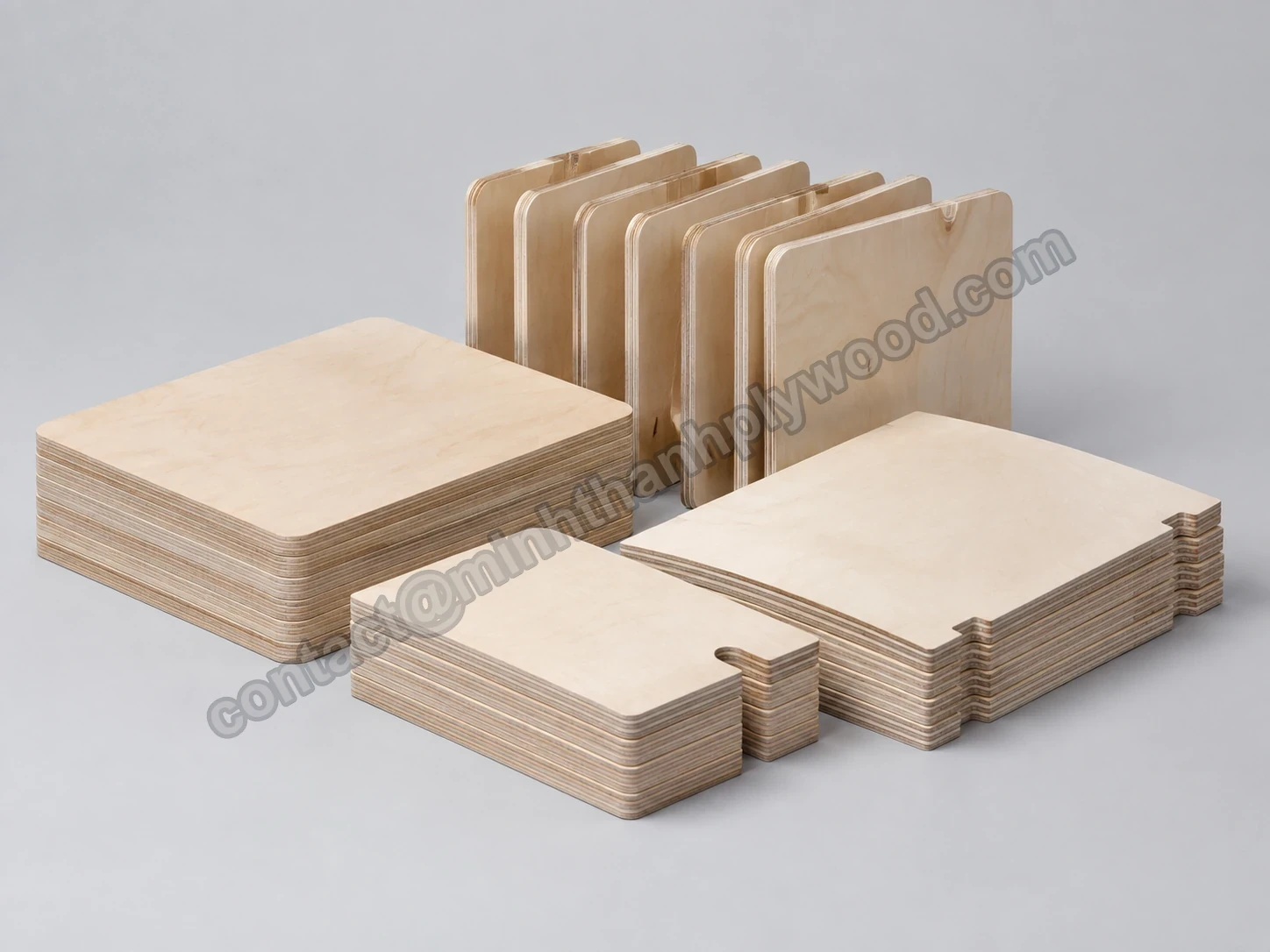
Thin panels separate products and protect surfaces inside the transport system. Support their edges, prevent rubbing against the cargo, and pair dividers with the designed blocking and restraint.
Circular flanges and packing covers require a cutting drawing with diameters, openings and fixing positions. Quote the plywood blank separately from machining and assembly so every production responsibility is clear.
Plywood can provide a continuous surface over an existing support system. Match the sheet to that support spacing and the stored goods, and keep panels dry and flat before installation.
For every load-bearing application, send the supported span, goods weight, contact area and handling arrangement with the drawing. A concentrated machine foot loads a panel differently from evenly distributed cartons. Forklift entry and lifting points belong on the same design sheet as the plywood dimensions.
Comparison
Choose packing plywood when a continuous, cuttable wood panel fits the design. Solid boards, OSB and cardboard each suit different parts of a packaging system.
| Material | Construction | Useful packaging role | What to specify |
|---|---|---|---|
| Packing plywood | Cross-laid veneers with an application-selected face | Crate skins, decks and reusable box panels | Core, bond, thickness, face sample and support arrangement |
| Commercial plywood | Cross-laid veneers with a more visible face requirement | Printed boxes, display cases and mixed-purpose stock | Face/back pair and finish as well as the packing design |
| Solid timber boards | Individual lengths of sawn timber | Frames, bearers and fixing members | Species, section, joints and relevant treatment |
| OSB | Bonded wood strands | Panel skins where the strand surface suits the job | Panel class, service condition and fastener details |
| Corrugated cardboard | Paper liners and fluting | Light protective packaging and surface separation | Board specification, moisture protection and stacking design |
Compare like-for-like assemblies rather than only the price of a sheet. A plywood skin over a frame, a solid-board wall and a corrugated carton have different joints and supports. Include the protective liner and the expected handling cycles before deciding which system is economical.
Commercial plywood suits printed boxes, reusable displays and other visible packaging. Packing-grade faces save appearance cost on hidden parts, while the core and bond stay matched to the job.
Qc
Inspect the panel where a defect would affect assembly: fastener lines, cut edges, cargo-contact faces and automatic feeding surfaces. Our pre-loading photos and clips show the goods before the container closes.
Match the order references to the face/back sample and core specification.
Check faces for the permitted repairs and the required cargo-contact finish.
Inspect cut edges for open layers and damage around fixing zones.
Measure thickness and dimensions at several positions.
Record moisture and look for damage from wet handling.
Photograph marked bundles, counts and loading before dispatch.
Use an approved panel sample as the common reference for the factory and your receiving team. Keep photographs of both faces and an edge with the order record. A packing panel can accept cosmetic repairs while still requiring sound bond lines and a surface suitable for the protected product.
Measure several points on sheets from different bundles. Look for consistent thickness where panels enter grooves or automated fixtures, and check squareness against the cutting requirement. A stack viewed only from the top hides the inward faces and lower-sheet condition.
On arrival, inspect the wrapping before opening it and note any wet or damaged areas. Store panels flat on aligned supports, off the floor and under cover. Allow air around the pack and keep it clear of rain; replacing damaged wrap helps preserve the condition achieved at dispatch.
Certificates and documents
Minh Thanh Plywood holds CARB P2 / TSCA Title VI (ICTT mill no. 23024), ISO 9001:2015 and TCVN 11902:2017; we supply the EUDR compliance dossier (origin records and geolocation files) and SGS packaging report. FSC and CE are available*. See our quality documents.
*Supplied directly or through qualified partner mills.
Packing
Packing plywood leaves in protected, strapped bundles marked by thickness and order reference. The loading plan balances sheet count, core density and the booked cargo limit.
| Thickness | Sheets per nominal bundle | Styrax: sheets per example 40HC | Eucalyptus: sheets per example 40HC |
|---|---|---|---|
| 4 mm | 250 | 4500 | 3615 |
| 6 mm | 166 | 2988 | 2400 |
| 9 mm | 111 | 1998 | 1605 |
| 12 mm | 83 | 1494 | 1200 |
| 15 mm | 66 | 1188 | 960 |
| 18 mm | 55 | 990 | 795 |
| 25 mm | 40 | 720 | 570 |
Calculate the final permitted number of sheets as the booked payload less all packaging mass, divided by measured or specified sheet mass, rounded down. Then apply the physical bundle layout limit. Confirm route limits as well as container payload before fixing the order quantity.
Keep outer protection, straps and support feet suited to forklift handling at destination. Mark each pack with the part or sheet reference, thickness and count. The packing list should use the same references as your order so receiving staff can reconcile mixed thicknesses quickly.
Plywood packaging is exempt from ISPM 15 because it is processed wood made with glue, heat and pressure. Solid timber bearers and crate frames are assessed separately. The IPPC standard explains this distinction.
Example 40HC load: our standard plan of up to 28,000 kg of panels, packing checked against the booking; 1220 × 2440 mm sheets, Styrax 500 kg/m³ or Eucalyptus 650 kg/m³. Whole-sheet quantities are limited by payload and the 18/15-bundle layouts of equal height. At 18 mm, 26.8/34.8 kg per sheet gives 990/795 sheets. Final loads use the weighed goods and booked limit.
Trade terms
Order from one 40HC container, with mixed thicknesses and grades by agreement. Production takes 15–45 days after deposit; sea transit is additional.
| MOQ | 1×40HC; mixed thicknesses, grades and faces by agreement |
|---|---|
| Production time | 15–45 days after deposit, by quantity and specification |
| Payment | 30% deposit, 70% against scanned B/L; T/T or irrevocable L/C at sight |
| Incoterms | FOB Hai Phong, CFR or CIF |
| Samples | Free samples |
| Replies | Within hours, Monday–Friday, Vietnam time (UTC+7) |
Build the order around your consumption pattern. A crate maker using thin lids and thicker bases can send both cutting schedules together, then agree separate bundles within the container. Keep the quantities explicit so the mill does not have to infer your preferred mix from a total volume.
Price follows face selection, core, adhesive, thickness, size and cutting work. Compare quotations on those same lines and the same delivery term. The useful measure for a packaging plant is the cost per finished usable component, including cutting yield and freight, rather than a headline price detached from the specification.
Order Steps
Send a drawing and cutting list, approve the panel sample, then place a container order with the specifications written into the proforma. We photograph and film the goods before loading.
Send the crate or pallet drawing, component list, application and destination port.
Compare a quotation stating face, core, bond, emission, dimensions and delivery term.
Approve free samples and trial your cutting, fasteners, labels and finish.
Confirm the proforma, bundle references and payment arrangement.
Review production photographs, clips and inspection records before loading.
Check shipping documents and the packing list against the order before arrival.
Your first enquiry should describe the goods being protected, total weight, support positions and exposure to moisture. Add the sheet or component dimensions, quantity by thickness, face quality and destination port. For an existing package, photographs of the assembled crate help explain details that a cutting list alone misses.
Keep a marked reference sample at your own factory after approval. Give the order specification to both purchasing and production so a change in glue, surface or thickness is considered before it reaches the assembly line. Reorders can then cite the same agreed construction while changing quantities.
Faq
These answers cover the decisions that change a packing order: component design, surface grade, moisture exposure, cutting yield and shipment mass.
Packing plywood is a cross-laminated veneer panel selected for industrial packaging: crate sides, lids, pallet decks and protective components. Its face appearance follows the job rather than a furniture finish. Choose the core, bond and thickness separately, then approve a sample that shows acceptable repairs and the surface against the goods.
Packing grade plywood uses faces selected for practical packaging. Cosmetic patches and colour variation suit hidden crate parts; cleaner faces suit printed or reusable boxes. Our packing-grade thickness tolerance is ±0.5–1.0 mm. The approved face/back sample defines acceptable appearance for production.
Thin 3–6 mm panels suit supported skins and dividers; 9–12 mm are candidates for sides and lids; 15–18 mm are candidates for decks and bases. Final selection comes from the frame spacing, applied load, fixing detail and handling method. Test the assembled design with the proposed panel before volume production.
Choose UF adhesive for dry service, melamine-fortified glue for humid exposure or phenolic WBP for repeated wet conditions. Seal exposed edges and protect the goods with the appropriate cover or liner. The quotation records the bond and emission requirement separately.
Yes. ISPM 15 exempts packaging made wholly from processed wood such as plywood, made using glue, heat or pressure. Solid timber framing, blocks or bearers in the same package require their own assessment. Identify the material of each component instead of treating a mixed plywood-and-timber crate as wholly processed wood.
Styrax is the lighter option at about 500 kg/m³, compared with 650–750 kg/m³ for Eucalyptus. A 1220 × 2440 × 18 mm sheet is about 26.8 kg with Styrax and 34.8–40.2 kg with Eucalyptus, calculated from density and volume. Packaging mass is additional; choose the construction against the actual crate design.
Yes. Send finished dimensions, thickness, quantity and a part reference for each panel. Show face direction, allowance and any matching left/right parts. We offer cutting into 4, 6 or 8 pieces; the cutting plan includes saw allowance. Separate machining or assembly requirements clearly from the supply of rectangular plywood parts.
Yes, mixed thicknesses and grades are available by agreement within a 40HC order. Supply quantities for each item and keep them in separately marked bundles. Final loading follows gross weight including pallets and wrapping, as well as the physical arrangement. The packing list repeats the order references for receiving checks.
Store it flat, under cover and off the ground on aligned supports. Protect open packs from rain and splashes while allowing air around them. Inspect any wet or damaged wrapping at delivery before putting sheets into production. Keep different thicknesses identifiable so operators take the intended panel for each crate component.
Compare the same core, adhesive, emission requirement, face sample, thickness tolerance and cutting dimensions. Add the delivery term and proposed packing quantity. Calculate usable component yield rather than comparing only price per sheet. A slightly different format may produce more parts, while a heavier core can alter freight cost and manual handling.
The minimum order is one 40HC container. Production runs 15–45 days after the deposit, with sea transit added for the destination. Standard payment is 30% deposit and 70% against the scanned B/L; T/T and irrevocable L/C at sight are available. Delivery terms are FOB Hai Phong, CFR or CIF.
Minh Thanh Plywood supplies packing panels from Ha Hoa, Phu Tho, alongside its furniture and commercial plywood range. Send Lisa your drawing, thicknesses, core and bond requirements, quantities and destination port. Contact [email protected] or WhatsApp +84 988 586 601 for a quotation and free samples; replies arrive within hours.
Rfq
Send the crate drawing, component quantities and destination port. Lisa will quote the panel specification and packing plan, with free samples.
Include the application, supported spans, core, bond and emission requirement, face sample, thickness, cutting sizes and quantity. Attach up to 3 drawings or specification files, or contact [email protected] and WhatsApp +84 988 586 601.
[email protected]