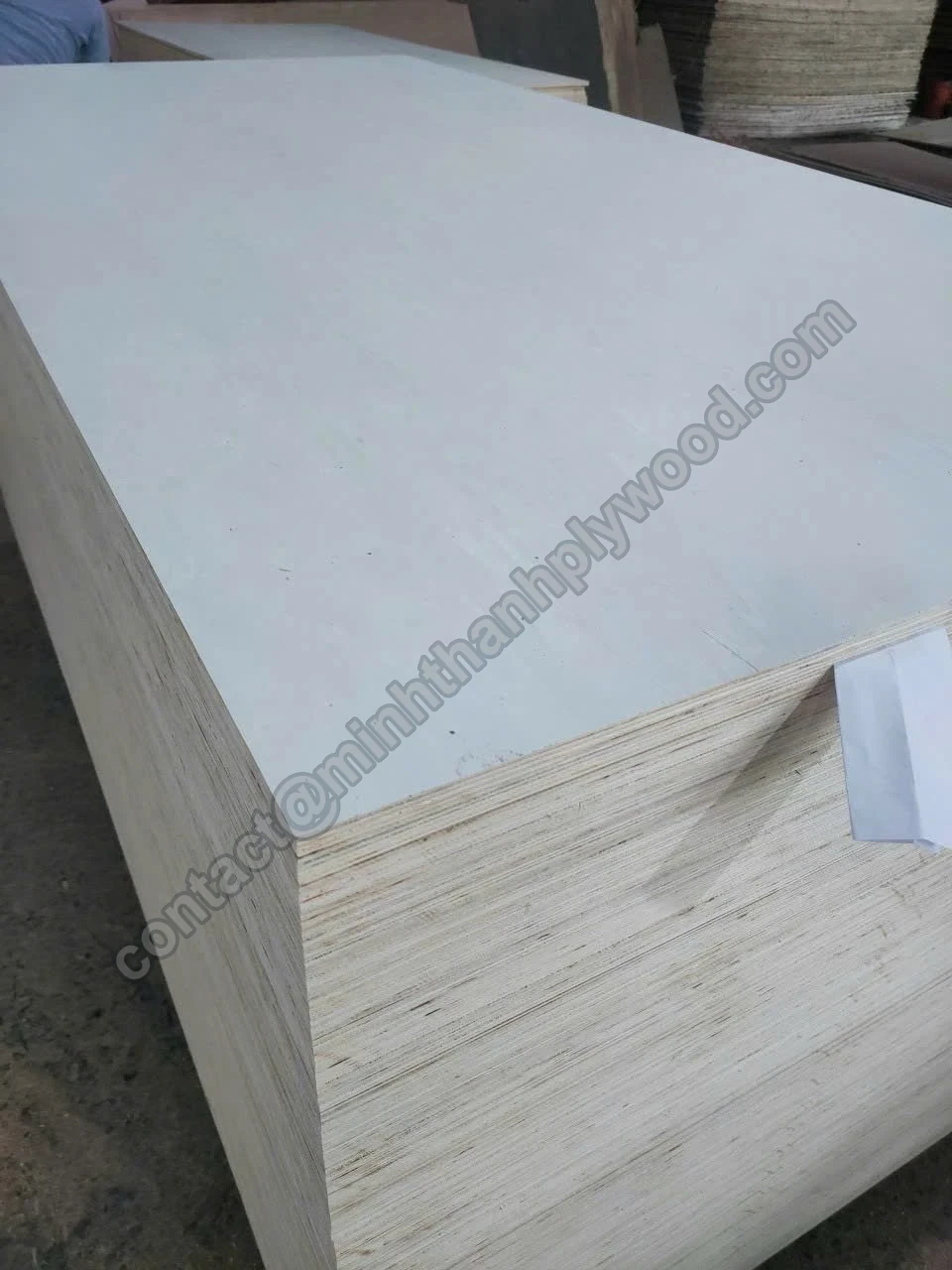
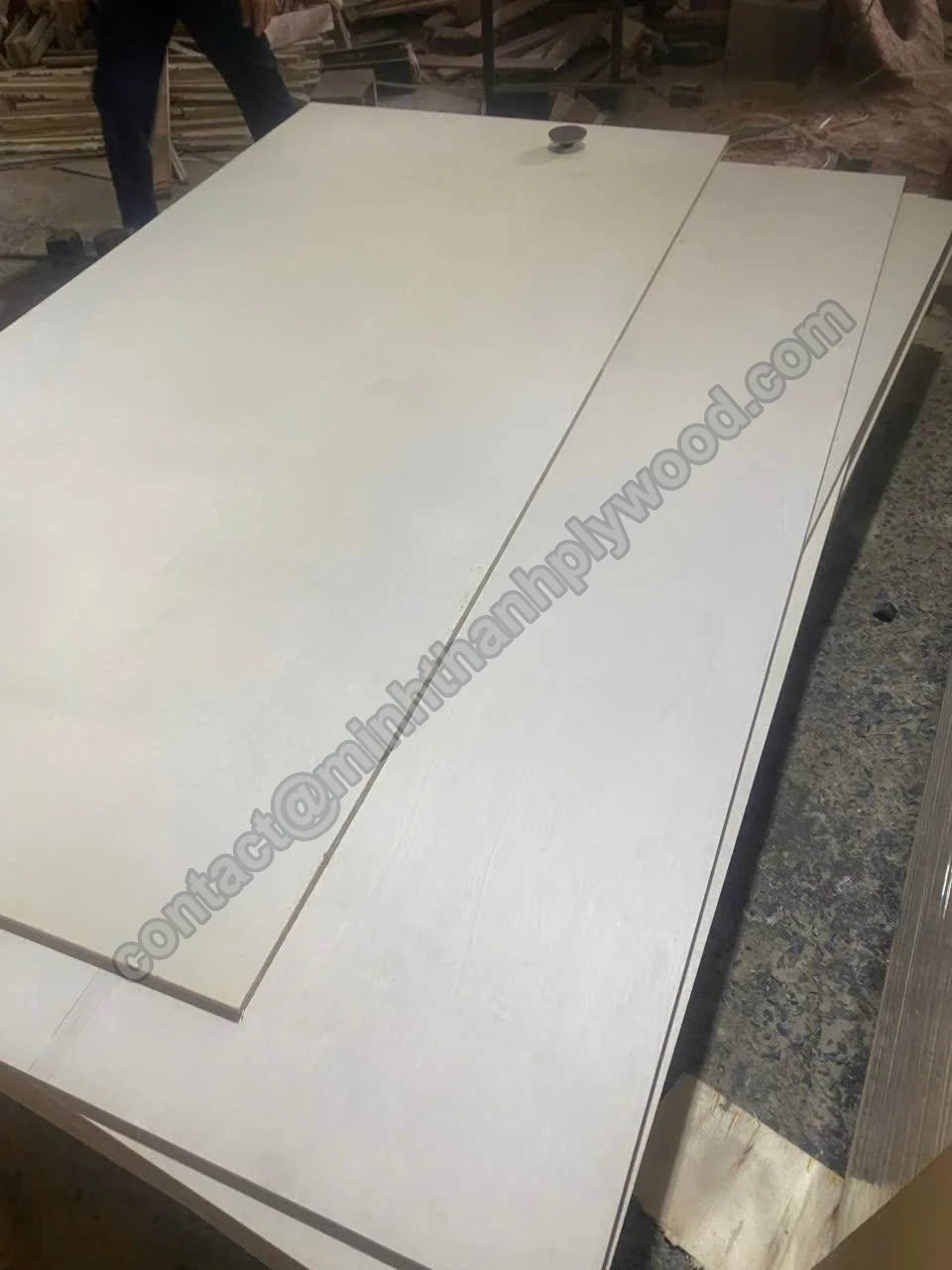
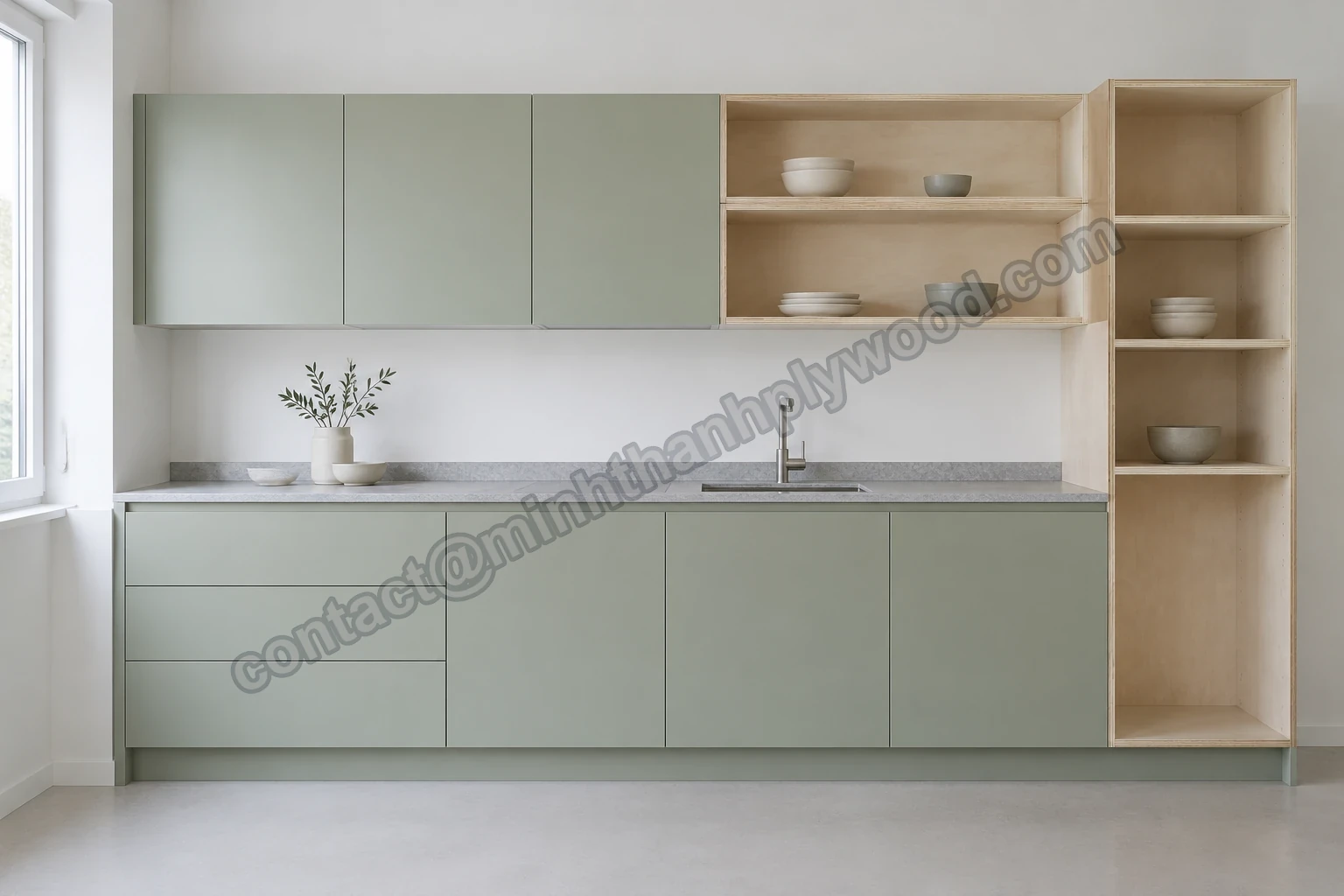
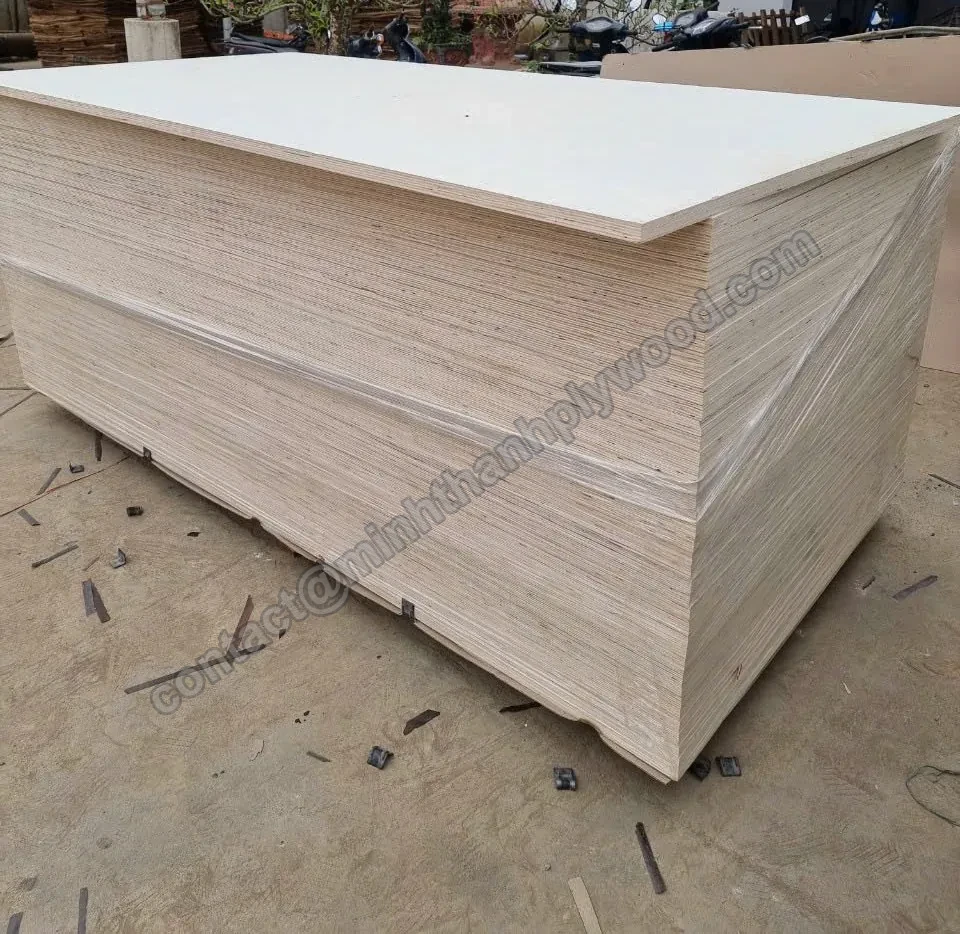
Vietnamese mills make no poplar cores, so Vietnamese poplar plywood always has a local hardwood core. The face gives the product its name. White core in a trade enquiry means a pale core. On our panels that is white Styrax, a light plantation timber grown in northern Vietnam around Ha Hoa. Acacia, at about 580 kg/m³, belongs to our commercial and film-faced lines.
Two poplar quotes that look the same on paper usually part ways in the core. Ours is laid from grade A core veneers stitched in both directions. Joints stay shut in the press and never print through paint or foil as faint lines. Outer plies are always stitched; ask for every ply stitched when edges will be routed or left on show.
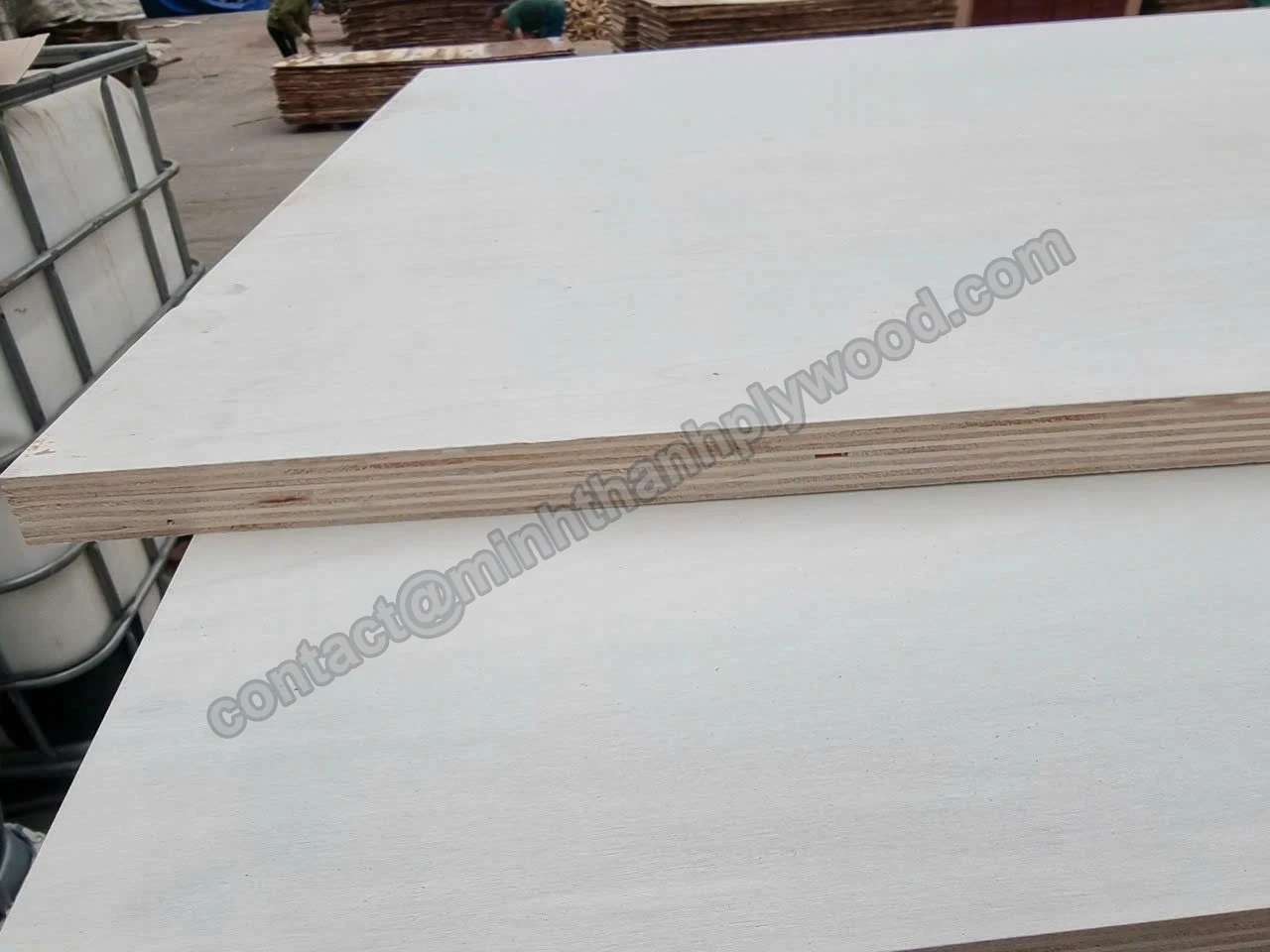
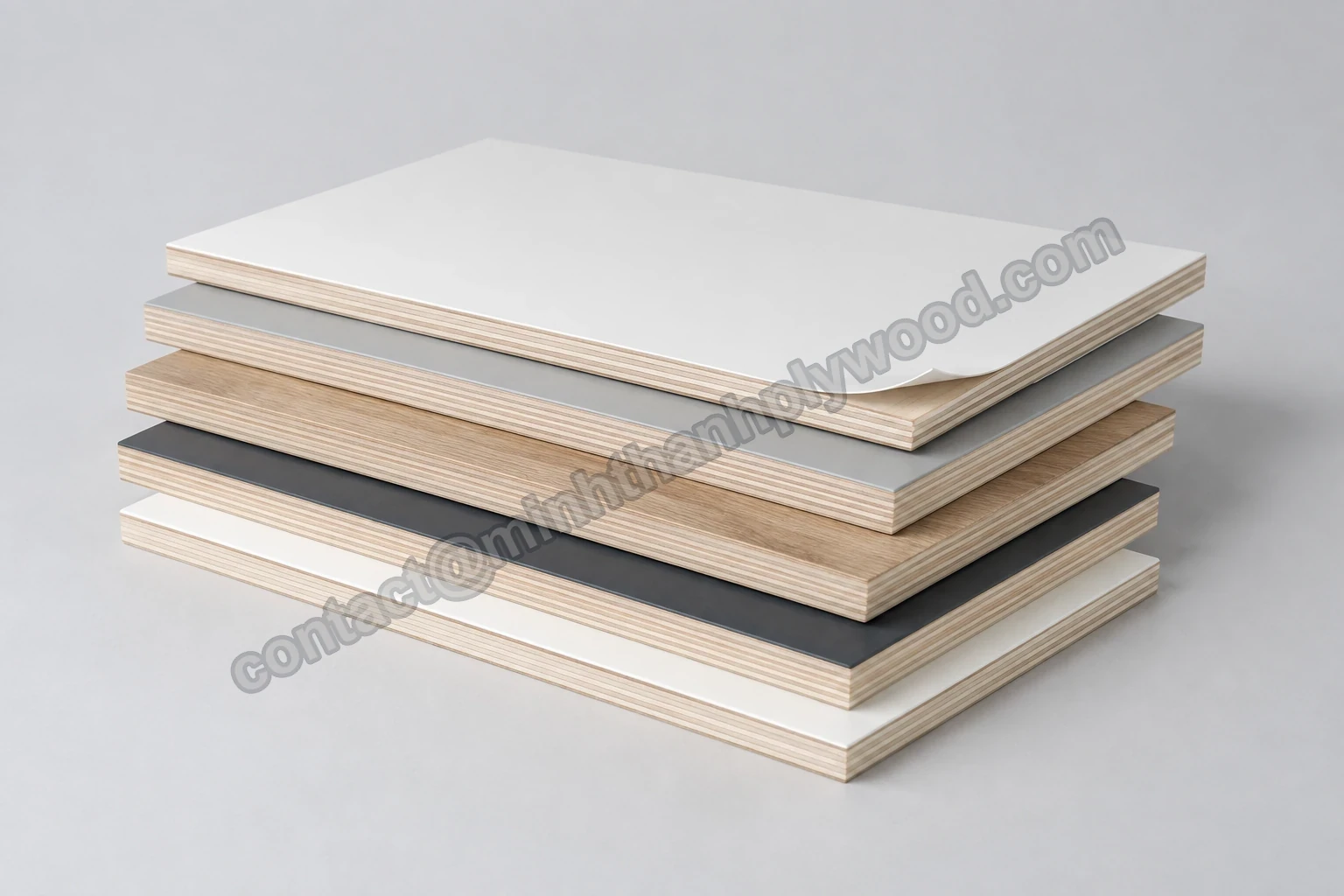
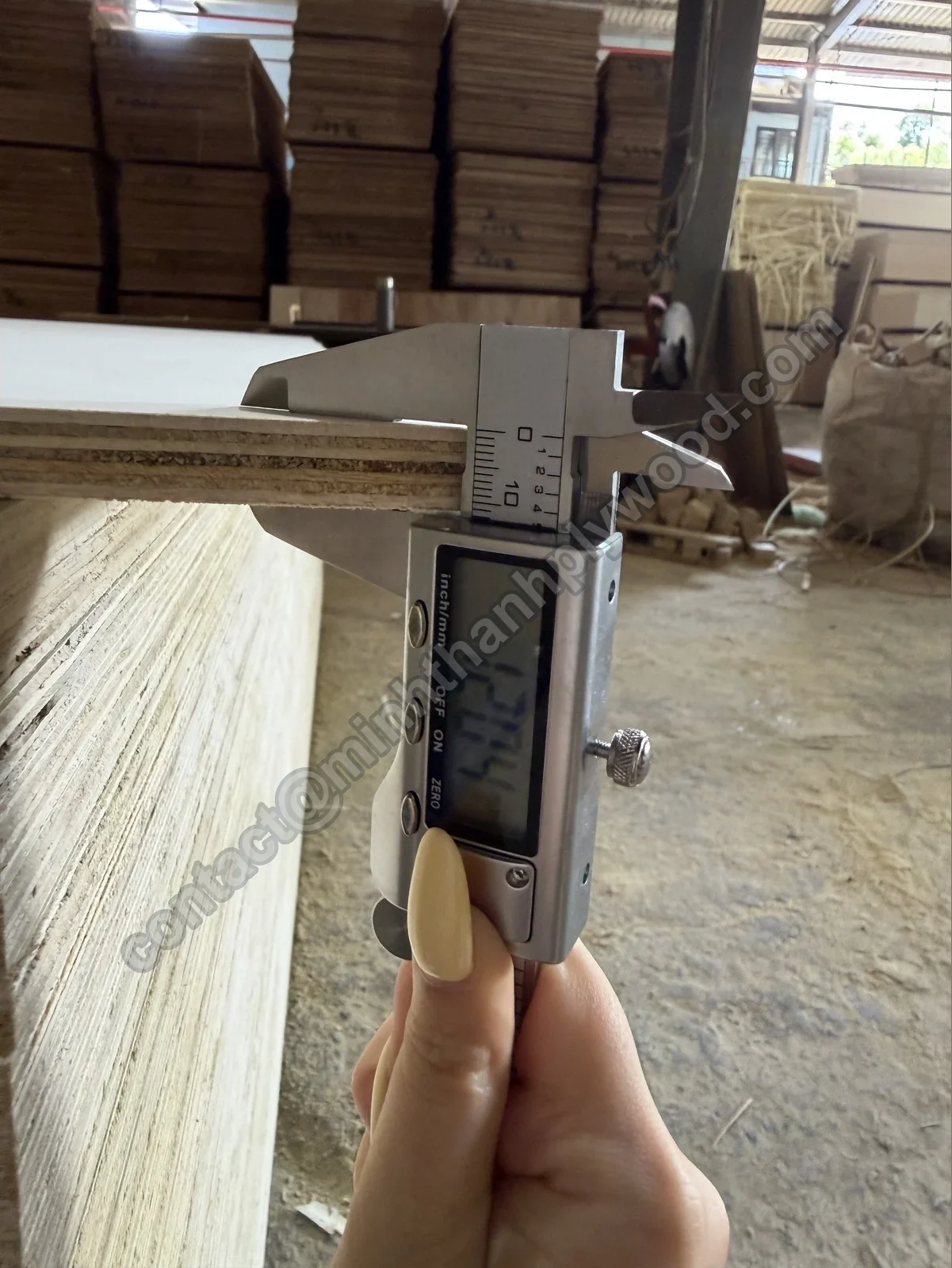
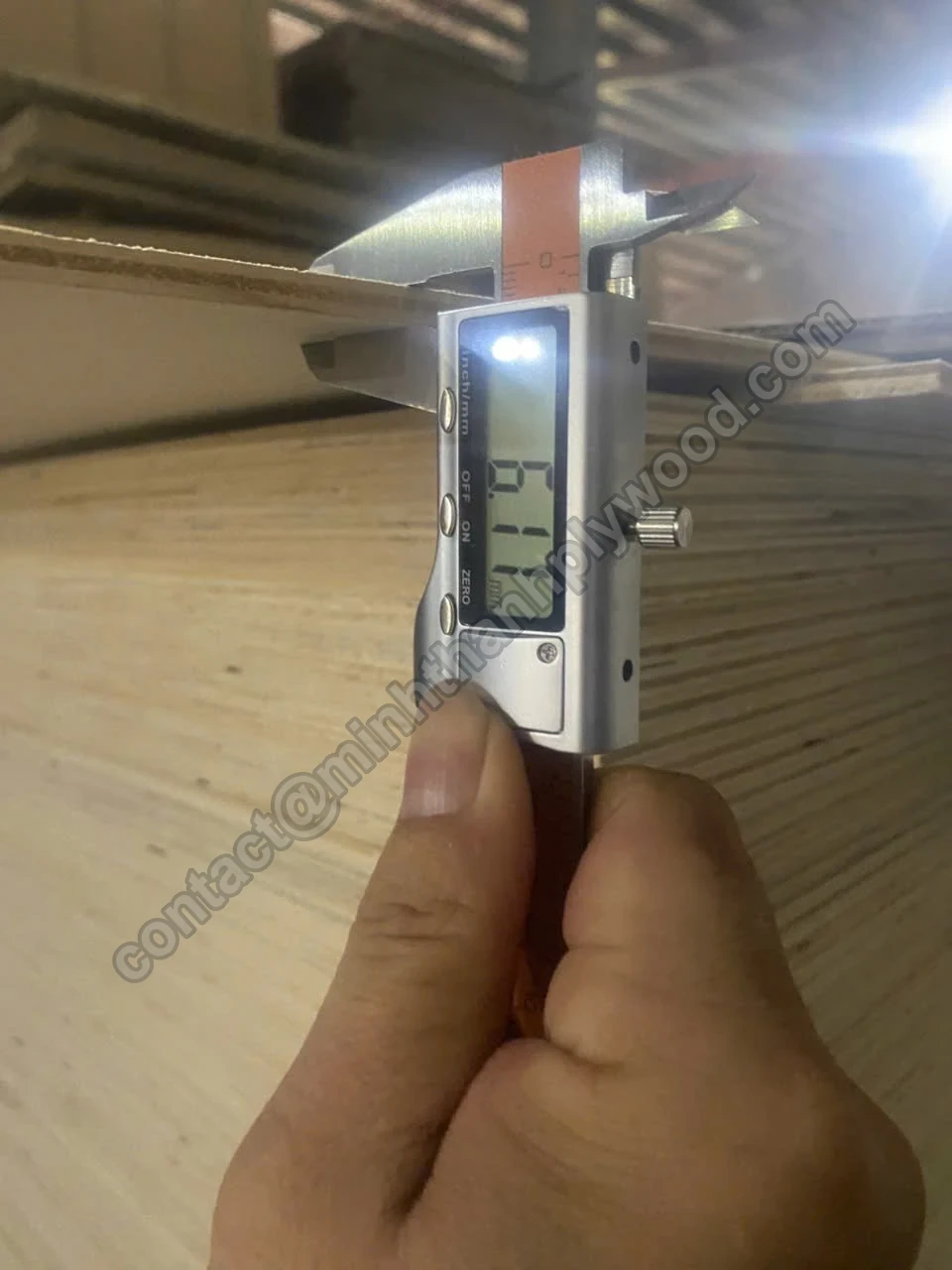
Thickness sets the number of plies. Every 3–6 mm panel has five: at 3 mm, one core veneer, two cross-bands and two faces; at 4, 5 and 6 mm, three core veneers and two faces. At 18 mm there are 11–13 plies, usually 11, built from core veneers 1.4–2.0 mm thick before pressing.
Furniture-grade poplar plywood goes through the press twice. Plantation logs are peeled, and the veneers dried, glued and cross-laid into a core board, which is hot-pressed and then sanded to a calibrated thickness. Only then do the poplar face and back go on. The second pressing runs at about 110–120 °C for MR glue and 130–145 °C for phenolic WBP. That flat, calibrated base is why a thin poplar face stays smooth after paint.
Sheet weights follow from the core density times the sheet volume.