
Birch D+/D
Cleaner face; limited sound pin knots and colour movement; back allows more natural character
Application brief
Visible cabinet back with a clear finish
Five-ply furniture panels · Made in Vietnam
In short
Thin plywood from Minh Thanh Plywood is a 3–6 mm furniture panel built with five plies at every thickness. Choose a white Styrax or Eucalyptus core, then specify the face and back for your finish. We make 3mm plywood and 4mm plywood for cabinet backs, drawer bottoms and interior components, alongside 5 and 6 mm sheets.
A thin back panel has to slide into its groove without splitting at the edge or spoiling the finished cabinet. Our furniture plywood range starts with the part you make: the visible face, its support and the way you cut and coat it. We manufacture in Ha Hoa, Phu Tho, for furniture buyers in Europe and other export markets.
Video
Watch the five-ply construction, compare face and core choices, and follow the checks that matter before thin sheets enter your furniture line. The film includes real production and measurement footage.
Real Panels
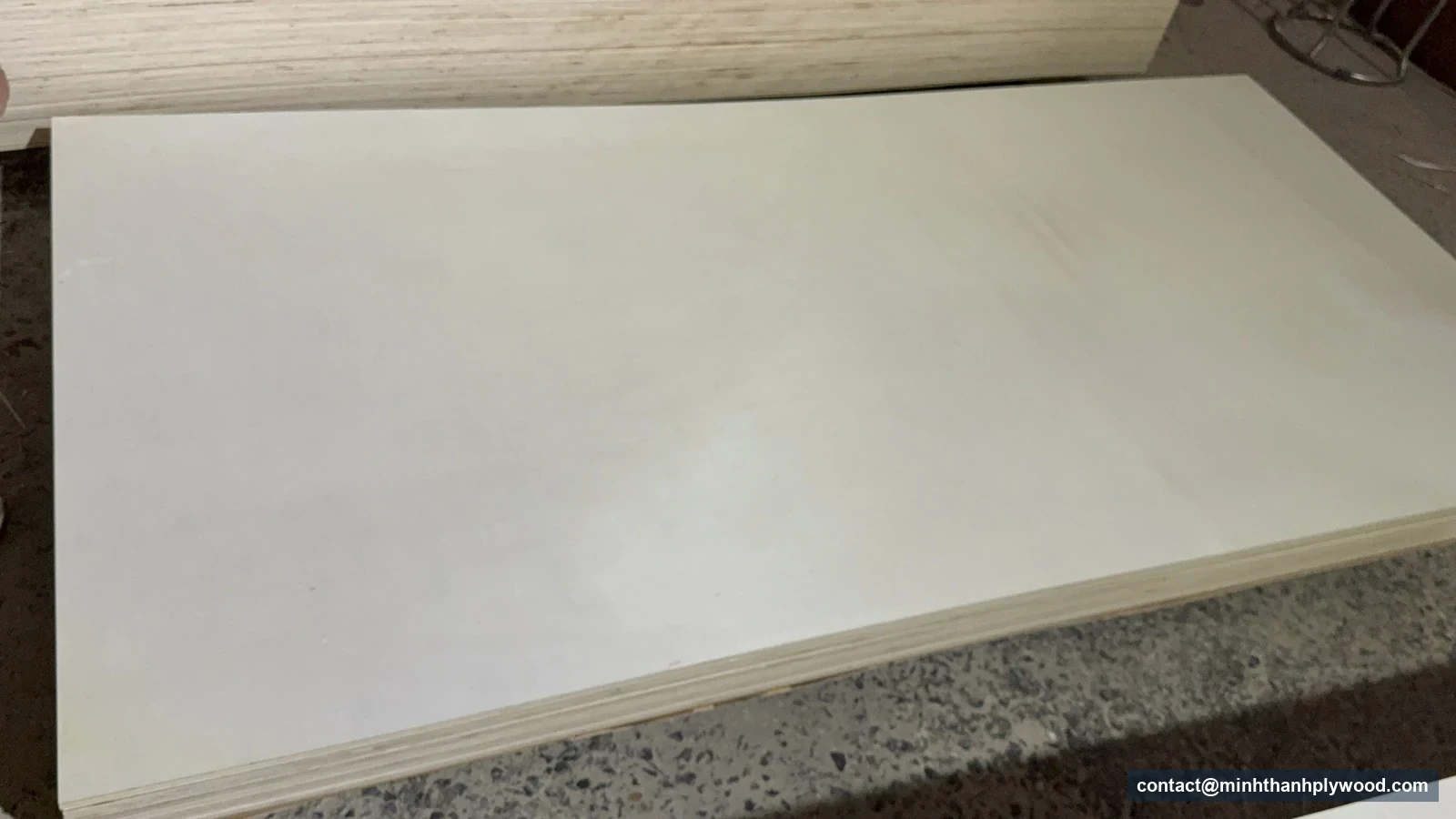
The Poplar-faced sheet lies flat across a finished pack; the upright Birch-faced sheet shows the pale grain across its full face. Close views show the sanded surfaces and layered edges used in our furniture panels.
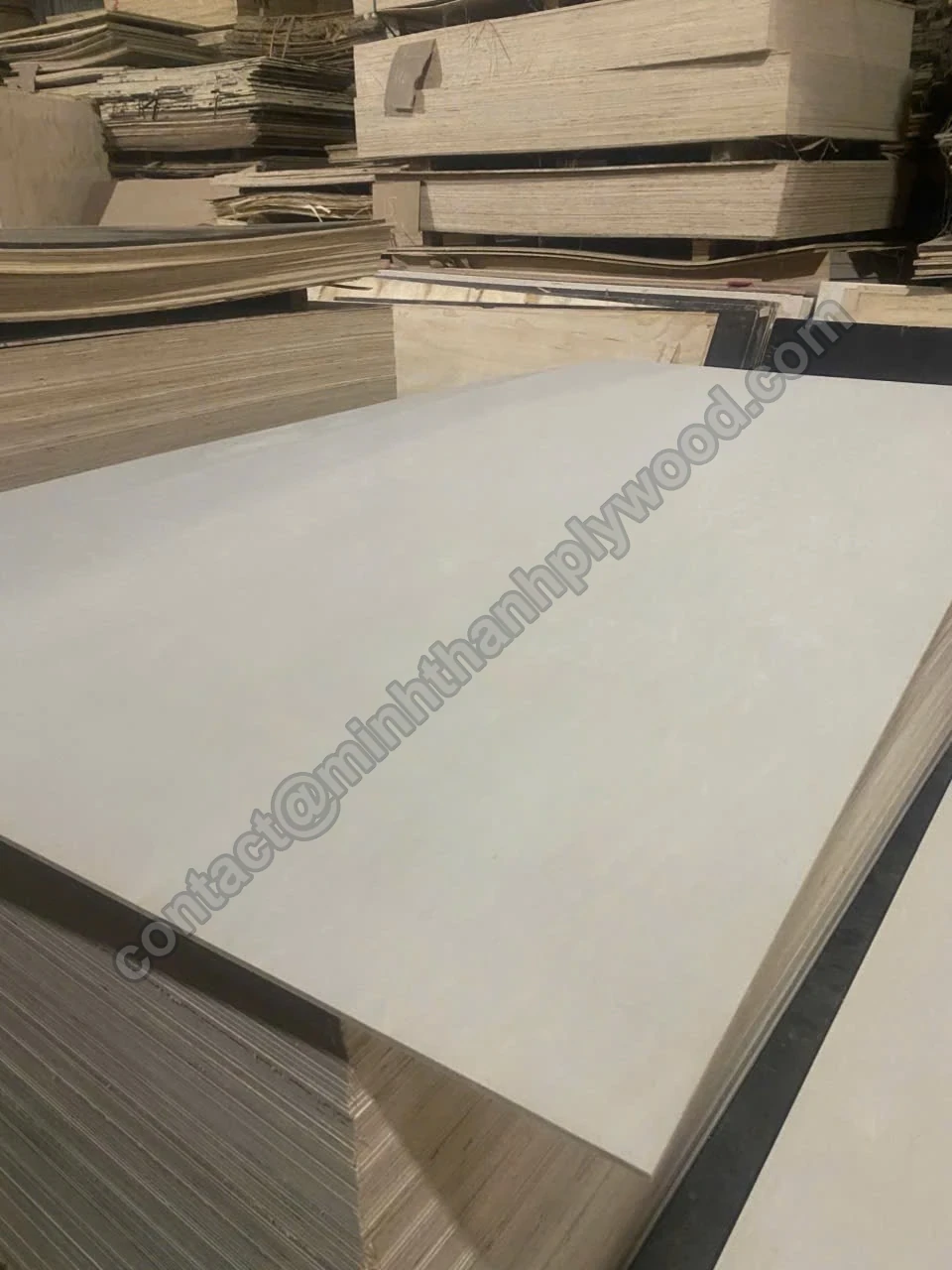
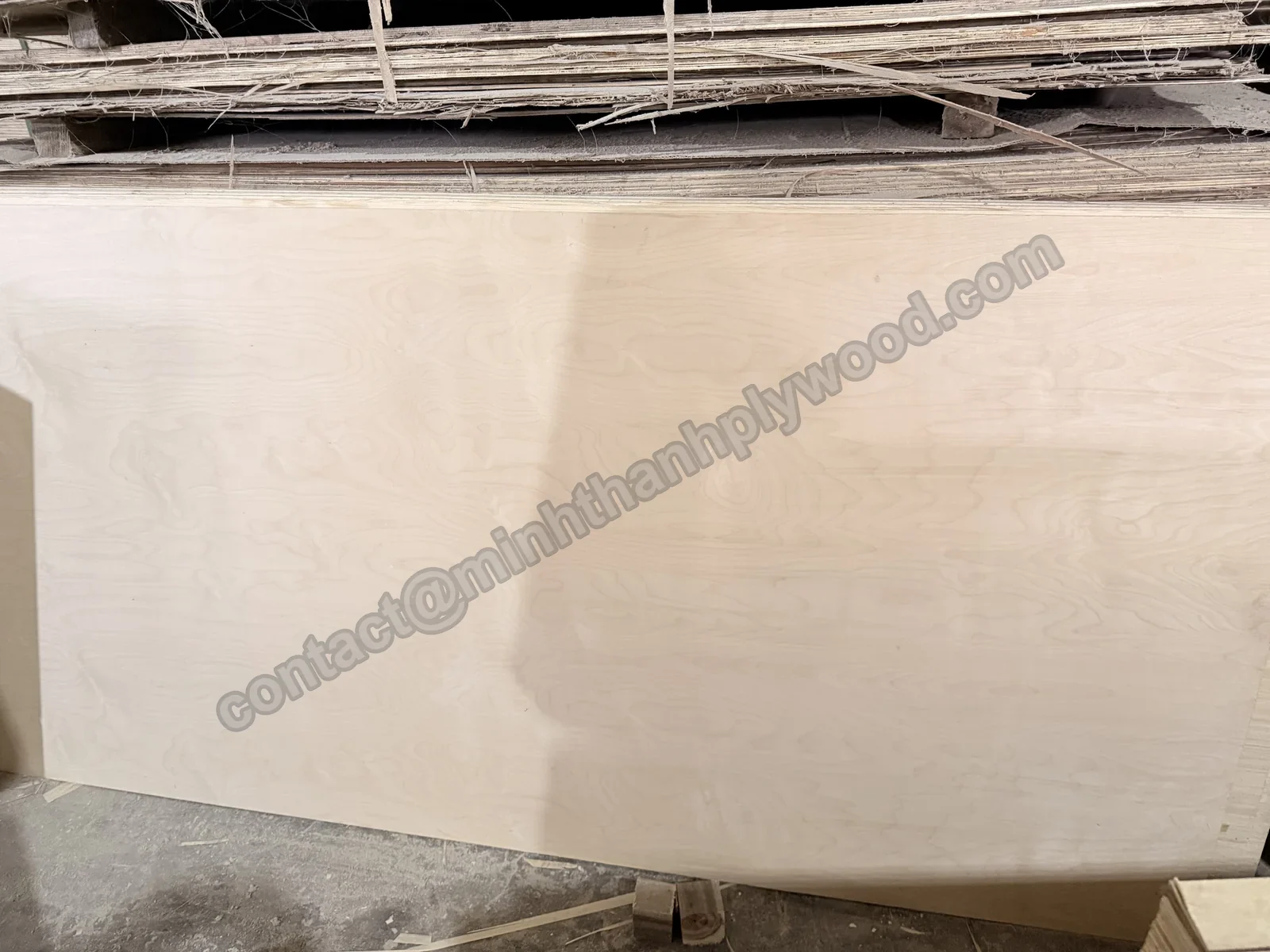
A full sheet reveals grain variation and repairs across the area you will nest. An exposed cabinet back benefits from a selected face and a cutting layout that makes the most of its grain. Concealed backs use a sound, economical face with a clean cut edge.
Before dispatch, we send full-face views, reverse-side pictures and close views of cut edges from your production sheets. Your receiving team can compare the shipment record and retained sample with the delivered panels.
Specs
The specification starts with the finished thickness and five-ply construction, then separates the face, core, adhesive and emission class. This keeps a decorative face name from hiding a different internal build.
| Face and back | Birch, Poplar, EV, Okoume, Pine and other face veneers; specify each side |
|---|---|
| Thickness | 3, 4, 5 or 6 mm, all five-ply |
| Core species | White Styrax or Eucalyptus plantation timber |
| Core joining | Veneers stitched across and along the panel |
| Adhesive | UF for dry interiors; melamine-fortified or phenolic WBP for specified water resistance |
| Emission class | E0 standard for furniture; E1 to order, specified separately from adhesive |
| Thickness tolerance | Down to ±0.2 mm on sanded furniture panels |
| Length and width tolerance | ±2 mm |
| Moisture at dispatch | 8–12 % |
| Full sheets | 1220 × 2440 mm; 1250 × 2500 mm |
| Custom formats | 1220 × 2500 mm; 1220 × 2280 mm |
| Face preparation | Sanded and polished; both sides UV-ready for your coating |
| Nominal density for weight planning | Styrax: about 500 kg/m³; Eucalyptus: 650–750 kg/m³ |
For a grooved cabinet back, nominal thickness alone is not enough: try the panel in the actual groove after finishing. Paint and lacquer add to the fit. A production sample cut with your tooling tells you more than choosing a wider groove from the nominal dimension alone.
A 1220 × 2440 mm sheet covers 2.9768 m². Volume is that area multiplied by thickness in metres; estimated weight is volume multiplied by density. The construction and weight table uses the stated core-based planning densities. Actual finished-panel mass also reflects the veneers, adhesive and moisture, so the loading plan uses weighed bundles.
Grades
Thin panels can carry a decorative face on both sides or a better face with a more economical back. Name the veneer first, then the face/back pair: grade letters belong to that veneer’s grading system.
Birch D+/D
Cleaner face; limited sound pin knots and colour movement; back allows more natural character
Application brief
Visible cabinet back with a clear finish
Birch D/E
Sound knots or neat repairs on face; more patches and colour variation permitted on back
Application brief
Interior drawer bottoms and covered backs
Birch E/E
More repaired areas and grain variation; sanded, closed surface
Application brief
Painted or laminated concealed parts
Poplar A/A
Two clean, pale surfaces; match colour and repair limits
Application brief
Partitions with both sides visible
Poplar A/B
Selected face, more natural marks or sound repairs on reverse
Application brief
One-sided cabinet backs
Poplar B/B
More colour movement and repaired marks on both sides
Application brief
Foiled or painted back panels
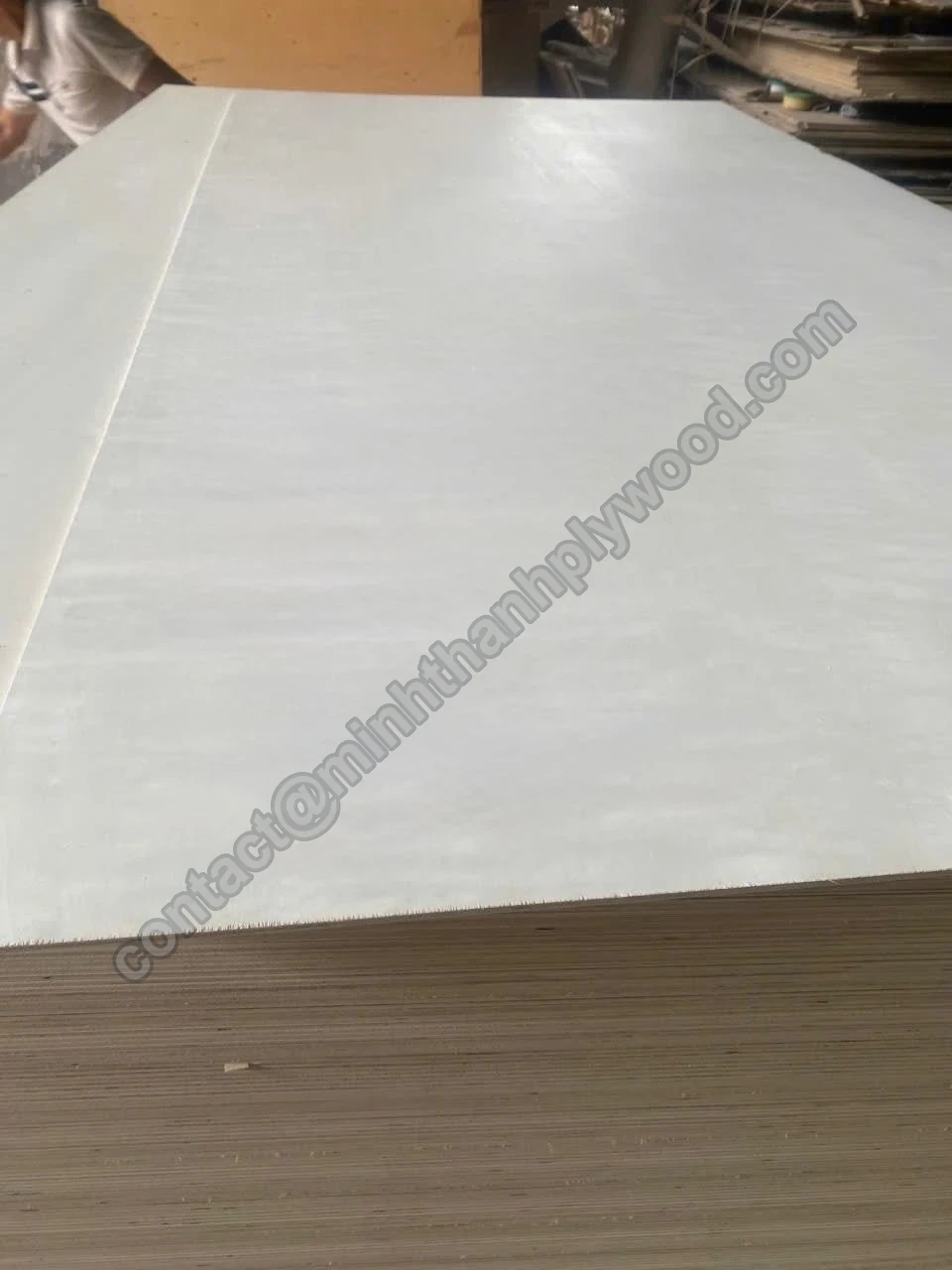
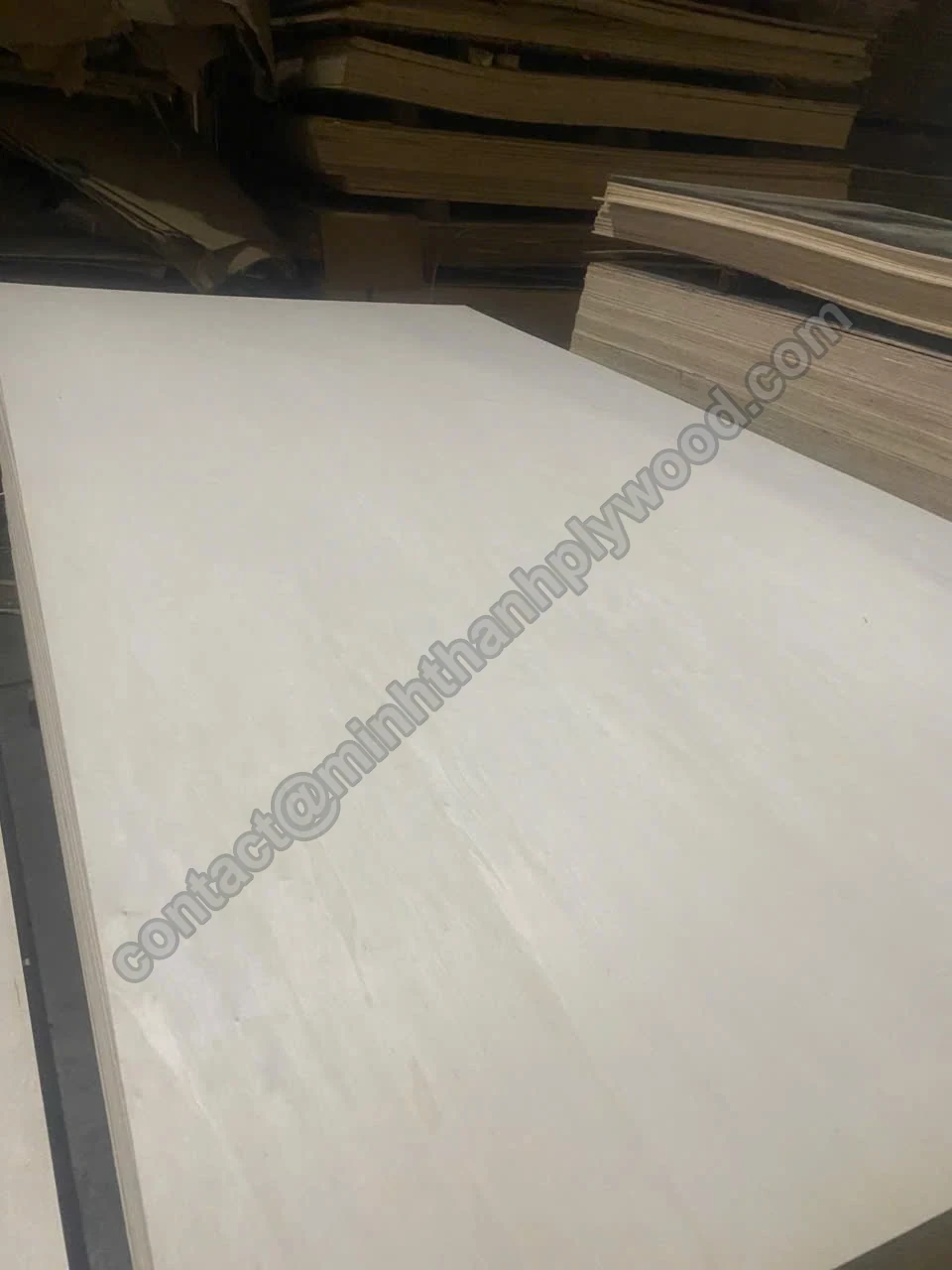
Birch has a fine pale grain suited to clear lacquer. Poplar has a quieter cream face for paint or foil, while EV gives a controlled grain pattern across repeated cabinet parts. Okoume brings a warmer pink tone and Pine a more pronounced natural grain. The decorative choice does not change our five-ply thin construction.
These grade pairs give ordering examples for Birch and Poplar. Natural colour, sound knots, repaired patches and closed splits are judged against the approved sample on each side. Specify which repairs can remain visible after your finish; a filled area acceptable under paint can show strongly through clear lacquer.
We select other face veneers from your finish sample or a photograph of the look you want, then agree the appearance before production. The photographs show smooth Poplar faces, fine natural grain and the thin edge above the stacked sheets.
Core
Every Minh Thanh thin panel has five plies. The 3 mm layup uses one centre veneer, two cross-bands and two faces; the 4–6 mm layup uses three core veneers and two faces, with veneer thickness adjusted to the panel. On a phone, swipe across the table to see every column.
| Thickness / total | Internal layup | Volume / sheet | Styrax / sheet | Eucalyptus / sheet |
|---|---|---|---|---|
| 3 mm / 5 plies | 1 centre veneer + 2 cross-bands + face/back | 0.0089304 m³ | 4.47 kg | 5.80–6.70 kg |
| 4 mm / 5 plies | 3 core veneers + face/back; calibrated after pressing | 0.0119072 m³ | 5.95 kg | 7.74–8.93 kg |
| 5 mm / 5 plies | 3 core veneers adjusted for finished thickness + face/back | 0.0148840 m³ | 7.44 kg | 9.67–11.16 kg |
| 6 mm / 5 plies | 3 core veneers adjusted for finished thickness + face/back | 0.0178608 m³ | 8.93 kg | 11.61–13.40 kg |
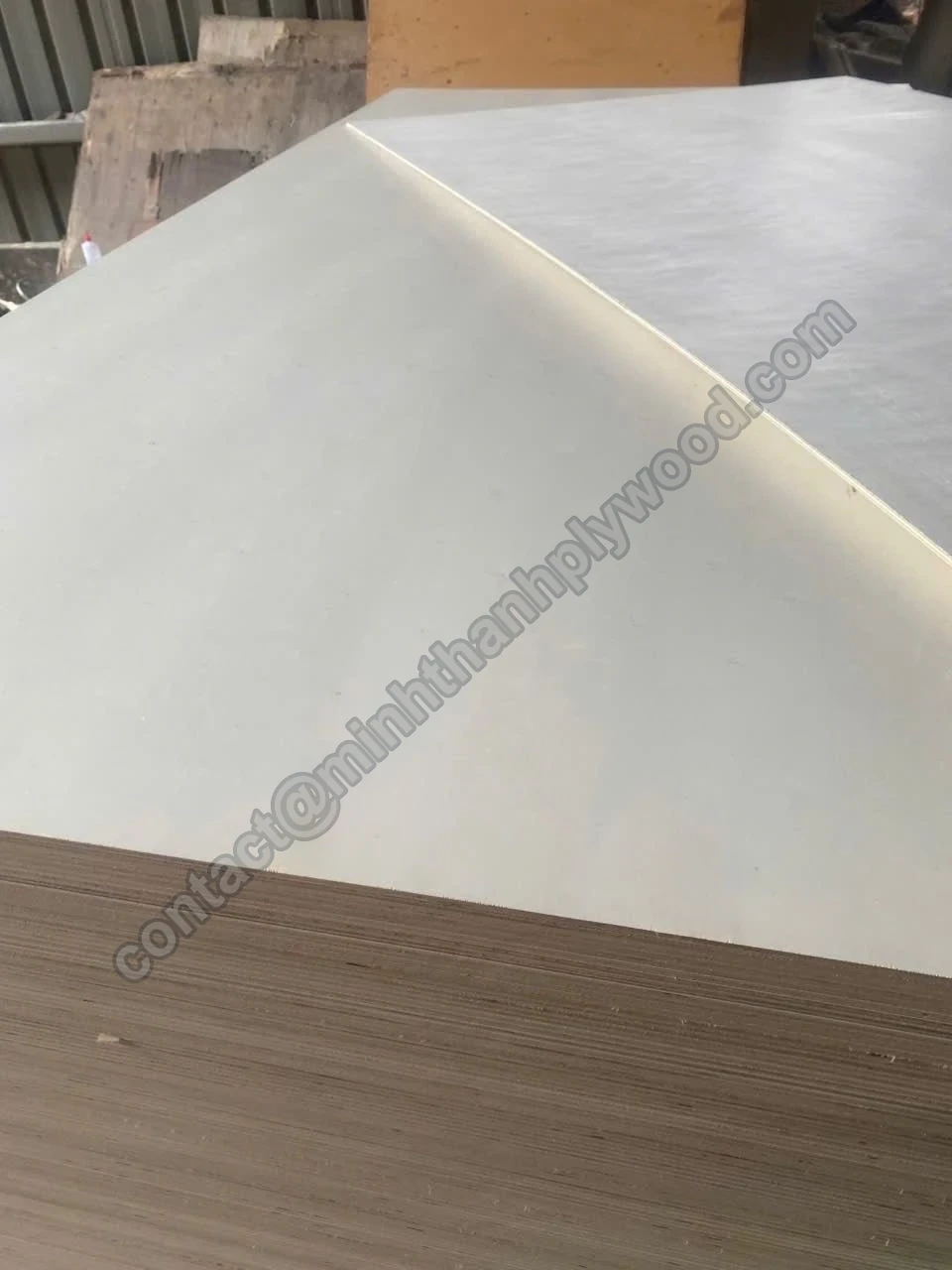
A 3mm plywood sheet measuring 1220 × 2440 mm contains 0.0089304 m³: 111 whole sheets per m³, weighing about 4.47 kg each with a Styrax core.
A 4mm plywood sheet measuring 1220 × 2440 mm contains 0.0119072 m³: 83 whole sheets per m³, weighing about 5.95 kg each with a Styrax core.
One 4 mm furniture build uses three Styrax core veneers of about 1.3 mm before pressing. These are input veneer dimensions, not a finished-layer sum: compression and calibration occur before the panel reaches its specified thickness. The final caliper reading is the measurement used for the furniture part.
White Styrax gives a pale, lighter core. Eucalyptus makes a denser panel with a darker edge. For a back panel inside flat-pack furniture, lower mass can matter across the whole carton; for a buyer specifying a denser build, Eucalyptus provides that choice without changing the decorative face.
Core joints are stitched horizontally and vertically. The furniture process presses the core first, calibrates it, and then presses on face and back veneers. A balanced layup and controlled moisture reduce uneven movement across a thin sheet. Support the panel after machining as carefully as during manufacture.
Thin plywood bends more readily than a thick furniture panel, but its cross-laid construction still has direction. Keep the long grain direction on the drawing when nesting parts. Rotating a drawer bottom to gain one extra piece from a sheet can change how that part behaves under load.
Sheet figures use 1220 × 2440 mm and the planning densities in the specification table.
Glue
UF adhesive at E0 is the standard interior specification; melamine-fortified or phenolic WBP bonding serves water-resistant requirements. E0 describes formaldehyde emission, while the adhesive specification describes the bond.
| Adhesive | Use in a thin panel | EN 314-2 bond class to specify | Order detail |
|---|---|---|---|
| UF | Dry furniture interiors | Class 1 · dry | E0 emission; EN 636-1 dry-use specification |
| Melamine-fortified | Furniture in humid conditions | Class 2 · humid | Bond test and emission method for the order |
| Phenolic WBP | Panels requiring exterior bonding | Class 3 · exterior | Exposure, edge protection and emission requirement |
For wardrobe backs in dry rooms, UF adhesive at E0 provides the standard interior build. Melamine-fortified bonding and sealed cut edges suit components exposed to humidity.
Six chamber tests (three by Shanghai Hongjun, three by ICTT Vietnam) using ASTM D6007, from April 2025 to June 2026, reported sample averages of 0.014–0.032 ppm on 9, 15 and 18 mm panels. The same UF resin at E0 goes into our 3–6 mm furniture panels. Periodic E0 testing takes place every three months.
Our furniture panels meet European and US buyer requirements. SGS tests your ordered thickness to EN 717-1 on request. The quotation records the emission method alongside the adhesive and bond class.
For laser-cut parts, a trial on the ordered build establishes the settings for clean release and an acceptable edge colour. The panel’s core continuity and adhesive both affect the cut, especially around small slots and narrow bridges.
EN 314-2 sets bond-quality requirements for dry, humid and exterior conditions. EN 636 specifies the panel’s intended use. We record both requirements on European orders so the bond, panel construction and intended service match.
Sizes
The range covers the common 4 × 8 sheet format and the larger European furniture format, with custom sheet dimensions and cutting into 4, 6 or 8 pieces. Use the finished part drawing to select the format with the least usable offcut.
| 4 × 8 format | 1220 × 2440 mm for standard furniture cutting layouts |
|---|---|
| European format | 1250 × 2500 mm for wider or longer back parts |
| Custom sheets | 1220 × 2500 or 1220 × 2280 mm |
| Pre-cut order | One panel into 4, 6 or 8 pieces; specify finished part dimensions |
| Part identification | Separate bundles by thickness, face/back specification and part reference |
Thin sheets need support on both sides of the saw line. A suitable sharp blade, a supported exit face and a trial cut help control splintering at the back. Mark the visible side and grain direction so the operator keeps the same orientation across a batch.
A sheet divided into four pieces does not produce four parts at the exact mathematical quarter size: the saw kerf consumes material. Put finished length, width and cut direction on the drawing. If you will trim again after coating, include the trimming allowance in the ordered part rather than leaving it to the receiving operator.
Applications
Thin panels work best as supported parts: cabinet backs, drawer bottoms, door skins and decorative interior linings. Thickness is chosen with the frame, span and fixing method, rather than as a standalone load rating.
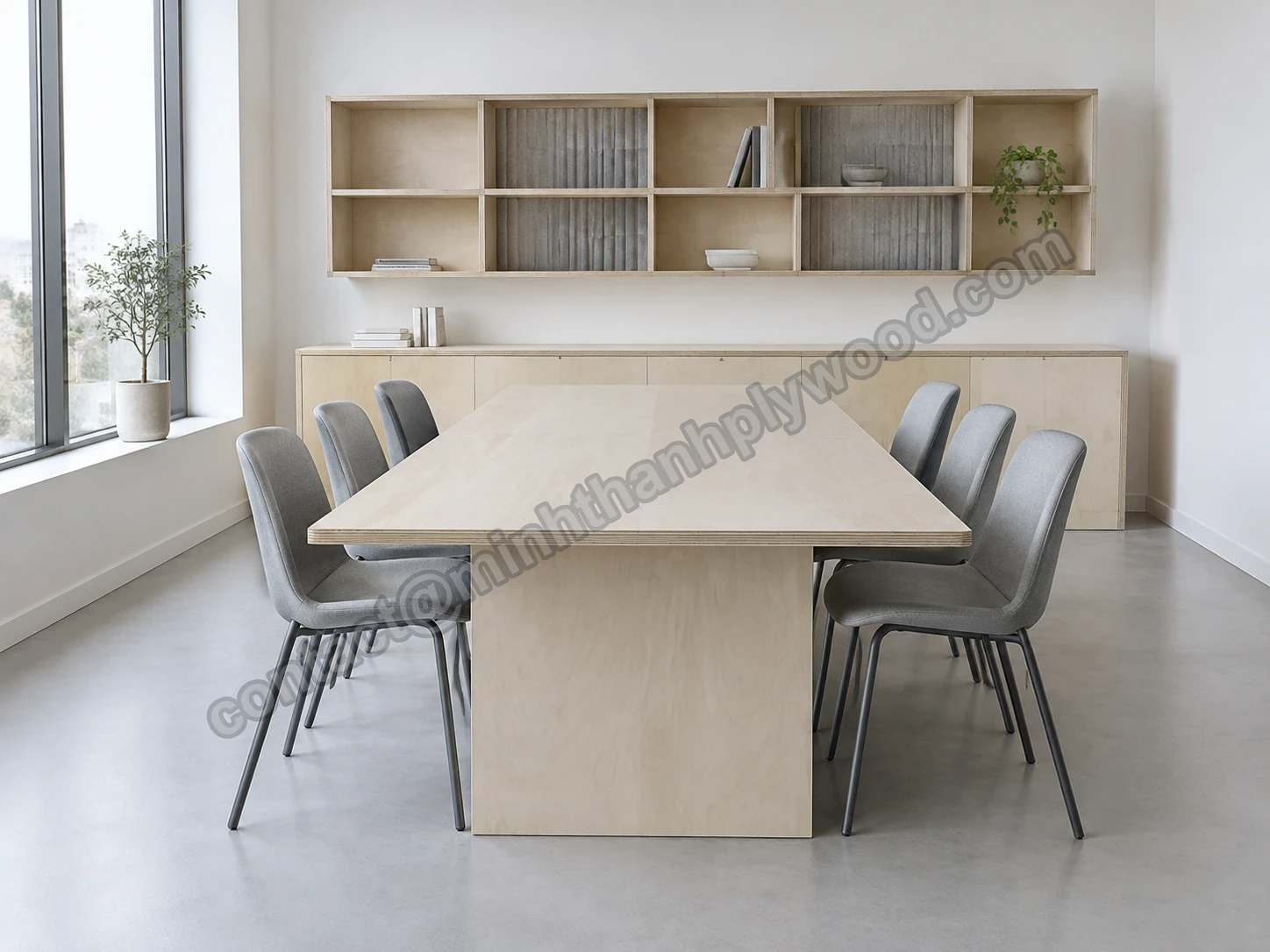
A 3 or 4 mm back panel can be captured in grooves or rebates around the cabinet frame. Select the visible face for the interior finish, and test the coated panel’s fit before cutting the full run.
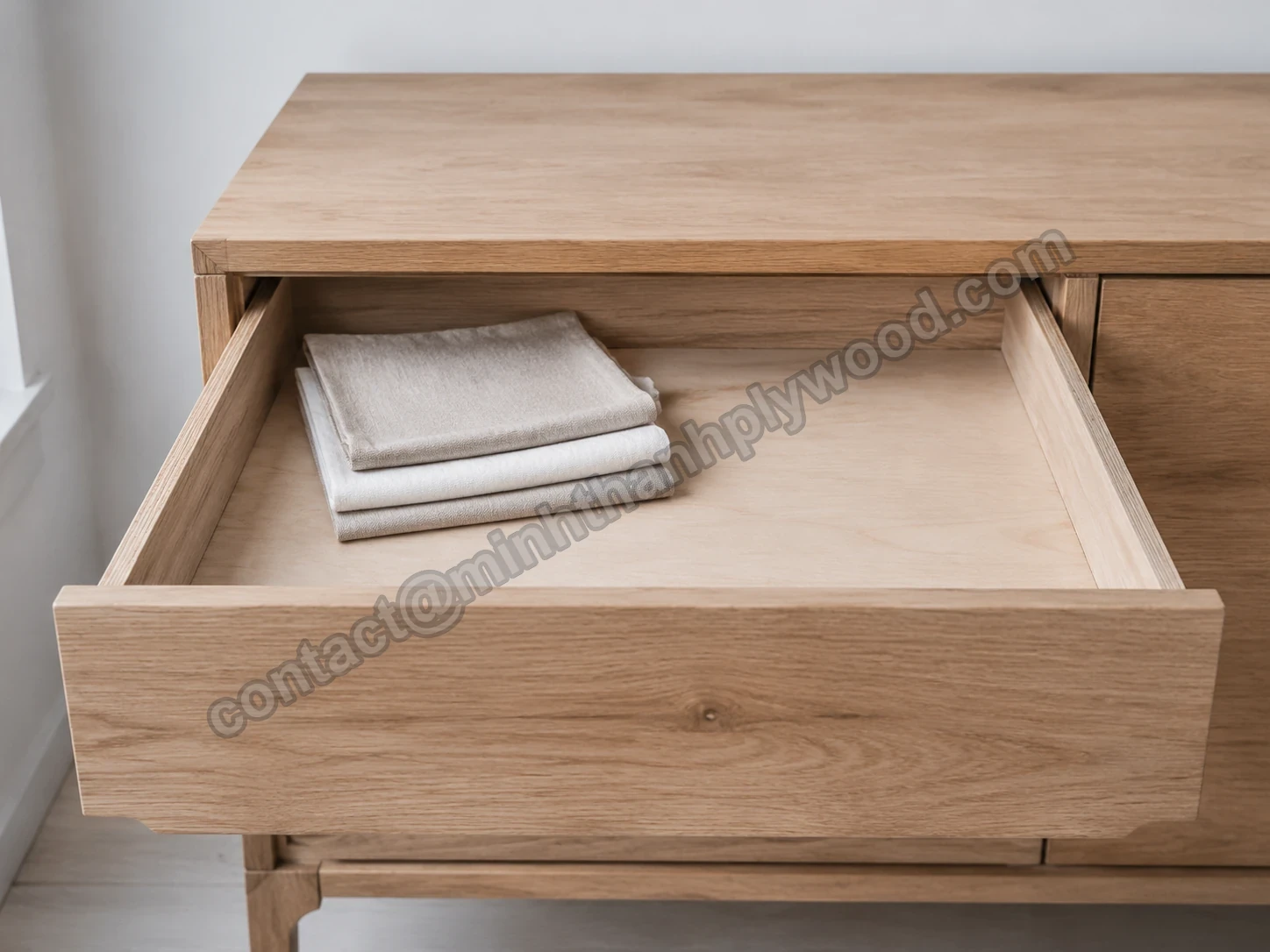
A bottom captured around all four edges works with the drawer frame to carry the contents. A 4 mm sheet suits light-duty small drawers; 6 mm adds stiffness for wider drawers and heavier contents. A centre rail reduces the unsupported span.
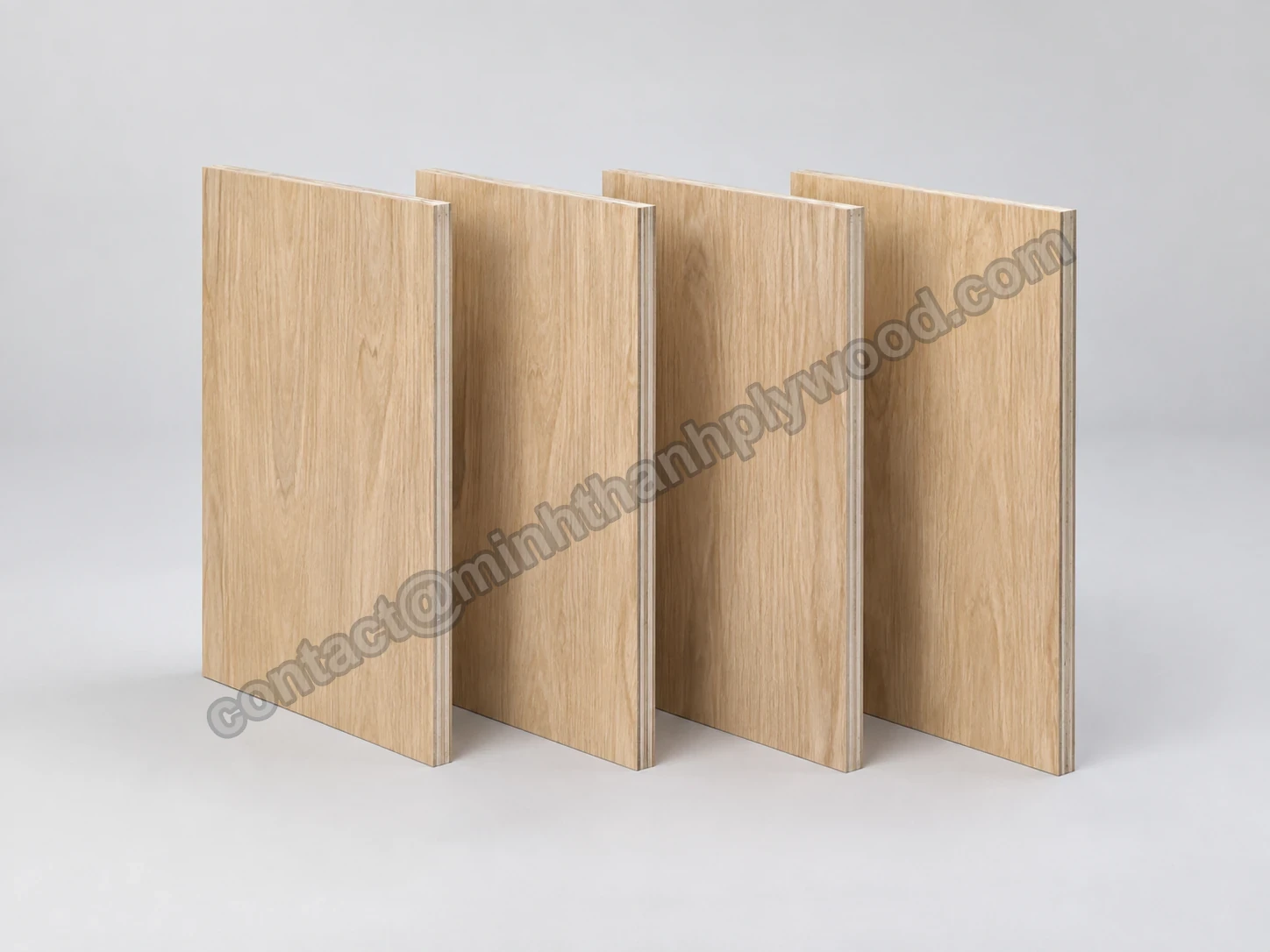
Thin decorative sheets form skins on framed interior doors. Matching skins and a balanced bonding arrangement help the finished door stay flat after adhesive cure.
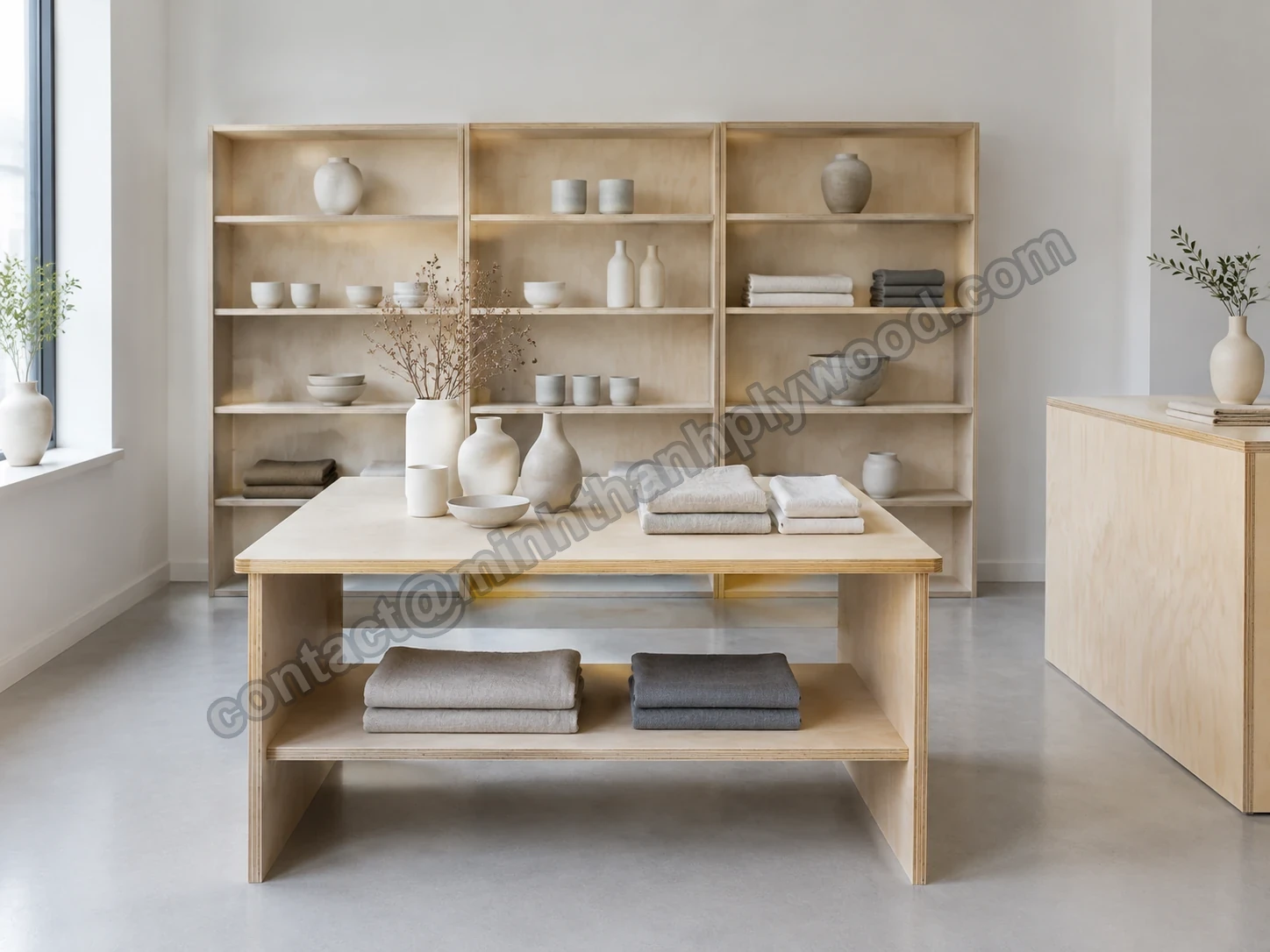
A light veneer-faced lining puts the selected wood appearance on a supported interior surface. Keep joints deliberate, support sheet edges and finish both sides as required by your coating system to control uneven moisture uptake.
For small drawers holding clothing or light accessories, a 4 mm bottom captured in grooves on all four sides is a practical starting point. Choose 6 mm for wider drawers or denser contents such as cutlery and tools. A centre rail supports a broad bottom, and an assembled load trial establishes the final thickness and support layout.
Models, toys and laser-cut components benefit from a continuous core and firmly bonded faces. The sample trial includes the smallest slot and narrowest bridge, followed by edge sanding. The order can include the finished-product test requirements for the intended use.
Thin five-ply panels form gentle curves, with different bending behaviour along and across the face grain. A sample formed to the intended radius and finished with your coating establishes the production method. Specialist bending plywood suits designs needing a tighter curve.
Comparison
Choose five-ply furniture plywood when the part needs a wood veneer face over a cross-laid core. Fibreboard alternatives offer a different surface and edge, while full-birch and poplar-core plywood change the veneer construction inside the sheet.
| Panel | Construction / surface | Best purchasing check |
|---|---|---|
| Minh Thanh thin plywood | 3–6 mm, five plies; decorative face over Styrax or Eucalyptus | Face/back sample, core species, groove fit |
| Thin MDF / HDF | Wood-fibre board; smooth, non-veneered base unless surfaced | Coating route, edge finish and specified board grade |
| Hardboard | Compressed wood fibres; back-panel surface finish by product | Surface texture, fastening and moisture grade |
| Finnish / Baltic full-birch | Birch veneers through the panel | Ply schedule, exposed edge and named birch grade |
| Poplar-core thin plywood | Poplar veneers in the core; face specified separately | Actual ply count, core gaps and finished thickness |
MDF or HDF can be attractive under an opaque finish because the surface has no grain figure. Hardboard is another established choice for concealed backs. Compare the complete finishing route and fastening detail, not only the uncoated sheet price: a veneer face can remove a separate decorative covering step.
Finnish or Baltic full-birch is appropriate when a drawing names birch throughout or the visible layered edge is part of the design. Our birch-faced thin panel uses birch on the outside and a Vietnamese core inside. Chinese poplar-core thin plywood is another construction buyers compare; our Poplar product name refers to the face, with Styrax or Eucalyptus specified separately.
Thin five-ply construction combines a natural veneer face with useful flexibility for supported parts. Fixing the sheet around its edges and finishing both faces evenly keeps the component flat in its frame.
Qc
Thin-panel inspection checks the fit and surface that your furniture line will use. We inspect the approved construction before packing and provide a shipment record with photographs and video.
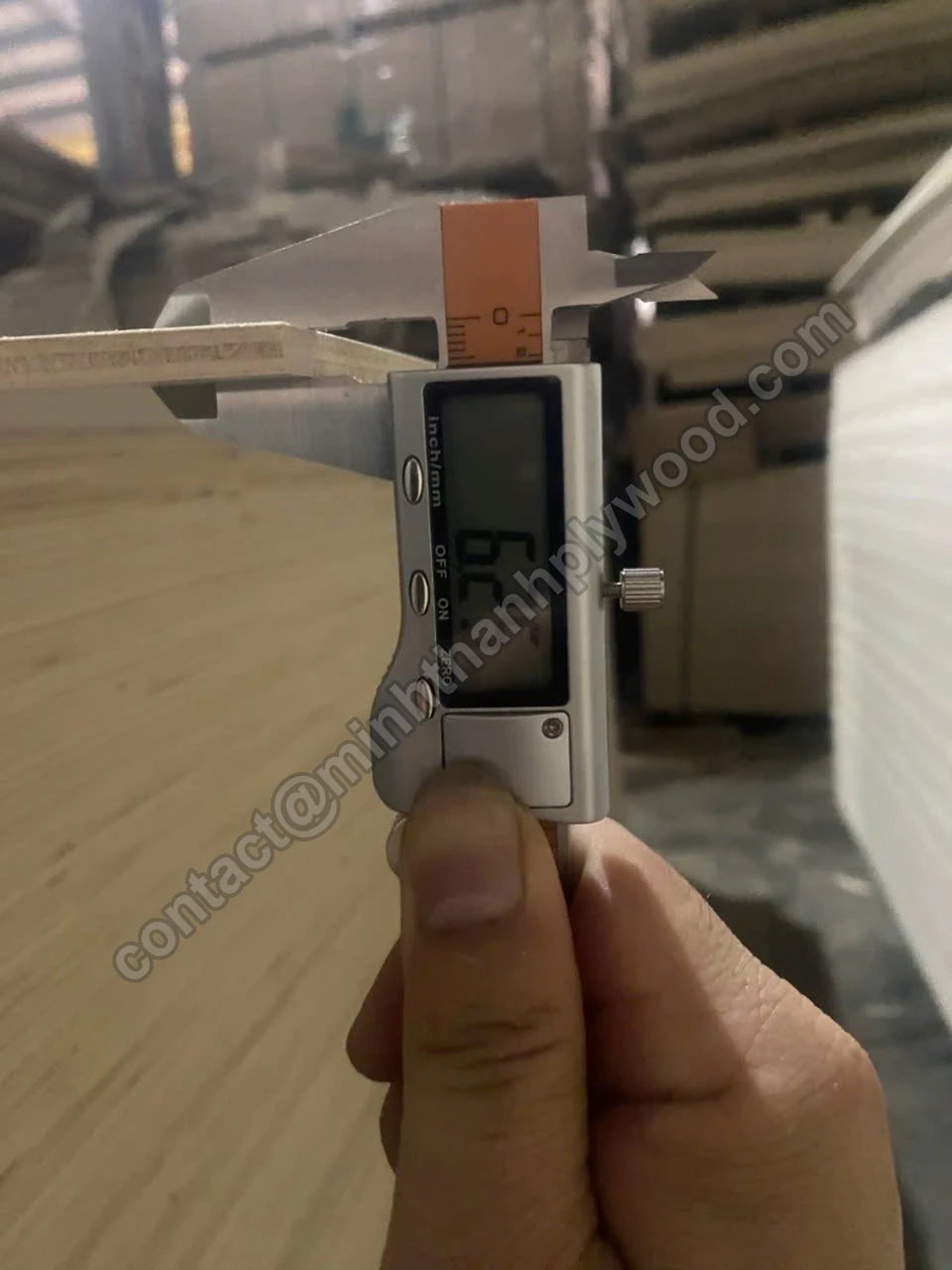
Match the bundle label to thickness, face/back, core and part reference on the purchase order.
Check both surfaces against the retained sample under the lighting used for finish inspection.
Measure thickness at several edge positions on representative sheets, recording readings by bundle.
Inspect core continuity at exposed edges and on a sample cut used for your part trial.
Check flatness, diagonal measurements and the fit of the panel in the actual furniture joint.
Approve the photographed bundle count and loading record before the cargo leaves the factory.
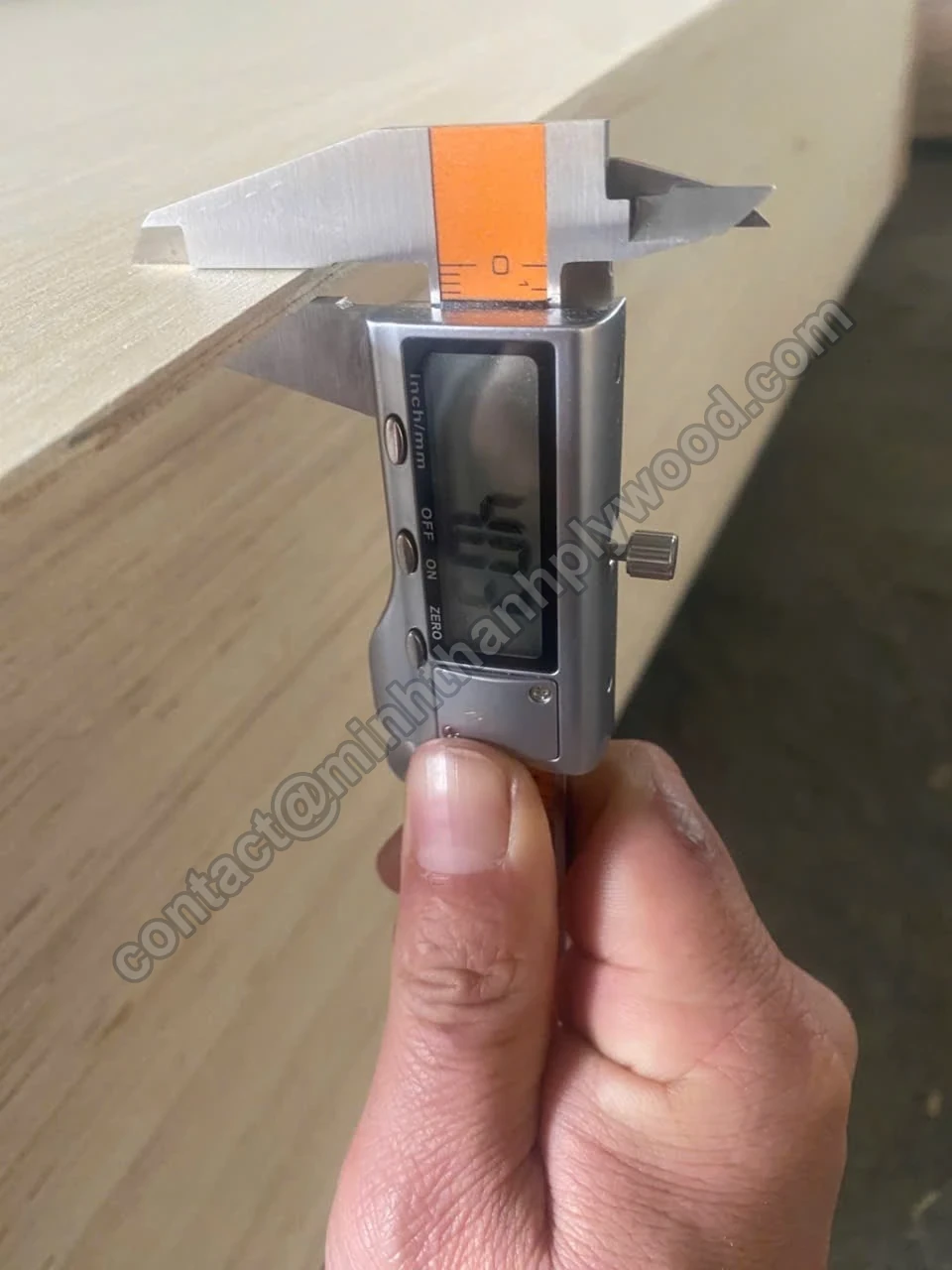
Digital calipers check finished thickness at multiple positions; the jaws should sit squarely without forcing the veneer down. A single reading on the corner is insufficient for a grooved back. Compare sheets from different positions in the bundle to catch variation before the batch reaches assembly.
Flatness is checked on a level, supported surface with a straightedge along the edges and diagonals. Comparing both diagonals checks squareness. A sample cut reveals core joints, while face inspection picks up sanding marks, repairs and handling damage.
At receipt, keep the bundle label and packing list with the inspection record. Try a panel in your groove or fixture before cutting the rest, and inspect fresh cuts for tear-out. Separate damaged sheets promptly and send clear pictures showing the label, affected area and measurement.
Certificates
CARB P2 / TSCA Title VI (ICTT 23024), ISO 9001:2015 and TCVN 11902:2017 are held; see our quality documentation.
Packing
Thin-sheet loads are planned by weight as well as bundle height. The example below uses 1220 × 2440 mm sheets and our standard plan of 28,000 kg of panels; the payload check, including packaging, uses your booking. On a phone, swipe across the table to see every column.
| Thickness | Sheets / full bundle | Styrax: count / panel mass | Eucalyptus: count / panel mass |
|---|---|---|---|
| 3 mm | 333 | 5,994 sheets / 26,764 kg | 4,815 sheets / 27,950 kg |
| 4 mm | 250 | 4,500 sheets / 26,791 kg | 3,615 sheets / 27,979 kg |
| 5 mm | 200 | 3,600 sheets / 26,791 kg | 2,880 sheets / 27,863 kg |
| 6 mm | 166 | 2,988 sheets / 26,684 kg | 2,400 sheets / 27,863 kg |
The geometric bundle count assumes approximately 1,000 mm of panels per bundle: divide that height by nominal sheet thickness and round down. The layout limit is 18 bundles for Styrax or 15 for Eucalyptus. These are space limits, so the sheet count is reduced whenever the weight calculation reaches the cargo ceiling first.
For the weight check, this table uses 500 kg/m³ for Styrax and the reference 650 kg/m³ for Eucalyptus. Each bundle keeps the same height, and the whole-sheet count is rounded down. The displayed mass is panels only; slightly smaller Eucalyptus bundles account for the difference from a full bundle layout.
The final dispatch plan uses actual bundle weights and the booked carrier’s permitted cargo load. A larger sheet format or heavier packaging changes the result. Use the packing calculator for your dimensions and list each specification separately when planning a mixed load.
Protect thin edges with firm cover panels, corner protection and straps that hold the bundle without crushing it. Keep part labels accessible for receiving staff. Flat, aligned supports prevent the bottom sheets taking the shape of uneven dunnage during storage.
After unloading, store panels flat and covered in a dry indoor area. Keep them clear of wet floors and direct airflow from heaters or open loading doors. Move large thin sheets with support across their area rather than dragging a single corner off a stack.
Planning example: panels only, within 28,000 kg; packaging is added for the booking check. Actual weighed bundles and the carrier booking determine dispatch quantity.
Terms
Furniture and interior plywood starts from US$350/m³ as of October 2026. A thin-panel quotation prices the chosen face, core, adhesive, size and quantity; premium thin veneers make the 4 mm schedule especially important.
| Minimum quantity | 1×40HC; usually 1–2 specifications, 3–6 by agreement |
|---|---|
| Production window | 15–45 days after deposit; allow extra sourcing time for premium thin veneer |
| Payment | 30% deposit, 70% against scanned B/L; T/T or irrevocable L/C at sight |
| Delivery basis | FOB Hai Phong, CFR or CIF |
| Sampling | Free samples |
| Shipping file | Commercial invoice, packing list, B/L, certificate of origin; shipment documents and CIF insurance as ordered |
Thin veneer of the required quality is scarce, so 4 mm orders can take longer than the usual production window. We keep the specified construction and face standard. Share the required delivery date early so veneer sourcing, sampling and the vessel schedule can be planned together.
Compare offers at the same finished size and build. Price per sheet changes with format and thickness, whereas price per cubic metre helps compare material volume. Neither measure replaces the specification: an economical back grade can reduce cost without changing the face your customer sees.
Order Steps
Start with a drawing or a description of the furniture part. We turn that requirement into a panel specification, then use the approved sample to guide production and inspection.
Send the application and part drawing, marking grain direction and the visible side.
Select the core, face/back grade, adhesive and emission class for that part.
Set the finished thickness, sheet or part dimensions, quantity and destination port.
Trial the free sample with your cutting tools, groove, finish and assembled load.
Approve the quotation and proforma, arrange payment and agree the production schedule.
Review inspection pictures, bundle identification and loading documents before shipment.
A useful enquiry says which side is visible, how the edges are supported and whether the panel will be painted, laminated or clear-coated. Include a groove detail for cabinet backs, the assembled span for drawer bottoms, or the former shape for curved parts. This lets us recommend a build before you compare prices.
Faq
Use these answers to prepare the part specification and sample trial.
Thin plywood is a low-thickness veneer panel used for supported furniture components and interior details. Our range is 3–6 mm, with five plies in every thickness and a choice of decorative faces over Styrax or Eucalyptus cores.
Our thin range starts at 3 mm. Specify 3, 4, 5 or 6 mm for furniture orders; very thin model or aircraft plywood is a separate product category.
3mm plywood suits framed cabinet backs, interior skins and small decorative parts. Its five-ply construction fits supported furniture assemblies, with the face and core chosen for the finish.
4mm plywood suits small, light-duty drawers with the bottom supported in grooves on all four sides. Choose 6 mm for wider drawers or heavier contents, and add a centre rail across broad unsupported areas. The assembled load trial establishes the production design.
No. A thin panel’s face, cross-band and core veneers have different jobs and can have different thicknesses. Five-ply states the total number of veneers; the final calibrated panel thickness determines the furniture fit.
Thin plywood can form gentle curves, with different behaviour along and across its face grain. Trial the chosen build on your former before ordering production quantities. Specialist bending plywood has a different layup and should be specified for designs that require it.
Yes, thin plywood is used for laser-cut parts. A trial on the ordered adhesive and core build establishes clean cut-through, edge colour and the smallest slots that release cleanly. The machine settings and extraction arrangement form part of that production trial.
Our panels arrive sanded and polished. Use light preparation suited to the coating system, because aggressive sanding can cut through a thin face veneer. Check a sample under the full primer and topcoat process before sanding production parts.
Keep the five-ply panel flat on aligned supports, capture its edges in the cabinet frame and finish both faces evenly. Our thin sheets are dried to 8–12% moisture before dispatch.
No. Choose melamine-fortified bonding for humid furniture and phenolic WBP where exterior bonding is required, with protected cut edges and a suitable finish.
Premium veneers thin enough for the required construction are scarce. We source those veneers to preserve the agreed grade, so a 4 mm order can require extra time. Include your delivery date with the first enquiry.
Match finished thickness, five-ply layup, core species, face/back grade, adhesive, emission class and sheet size. Then compare packing, quantity and delivery basis. A decorative face name alone does not identify the material inside the sheet.
Rfq
Send Lisa the part drawing, thickness mix and destination port. We reply within hours with the recommended construction and quotation. Attach up to 3 drawings or specification files.
Include the application, core, adhesive and emission class, face/back grade, finished dimensions, packing and quantity. Email [email protected] or WhatsApp Lisa on +84 988 586 601. Free samples.
[email protected]