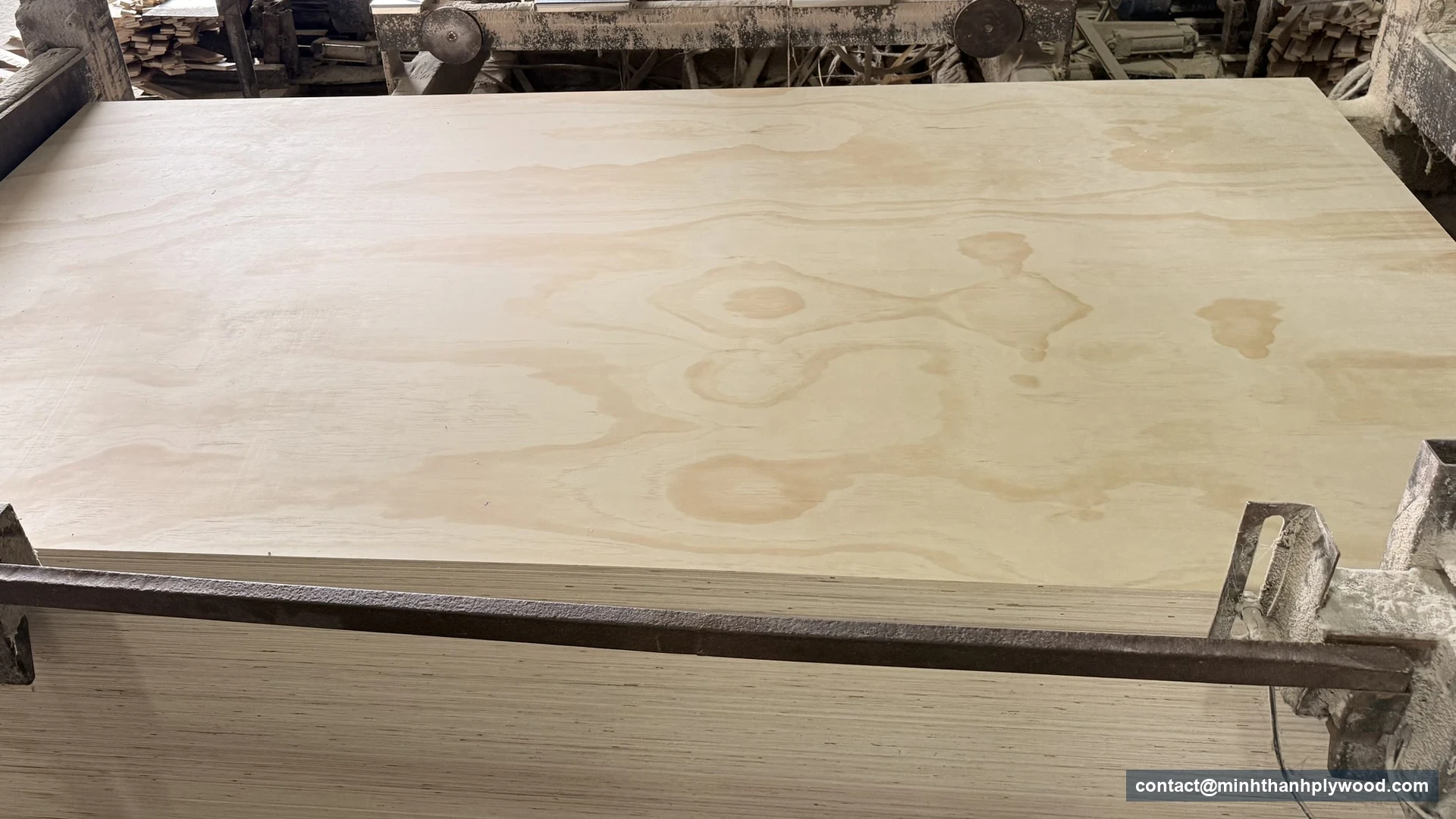
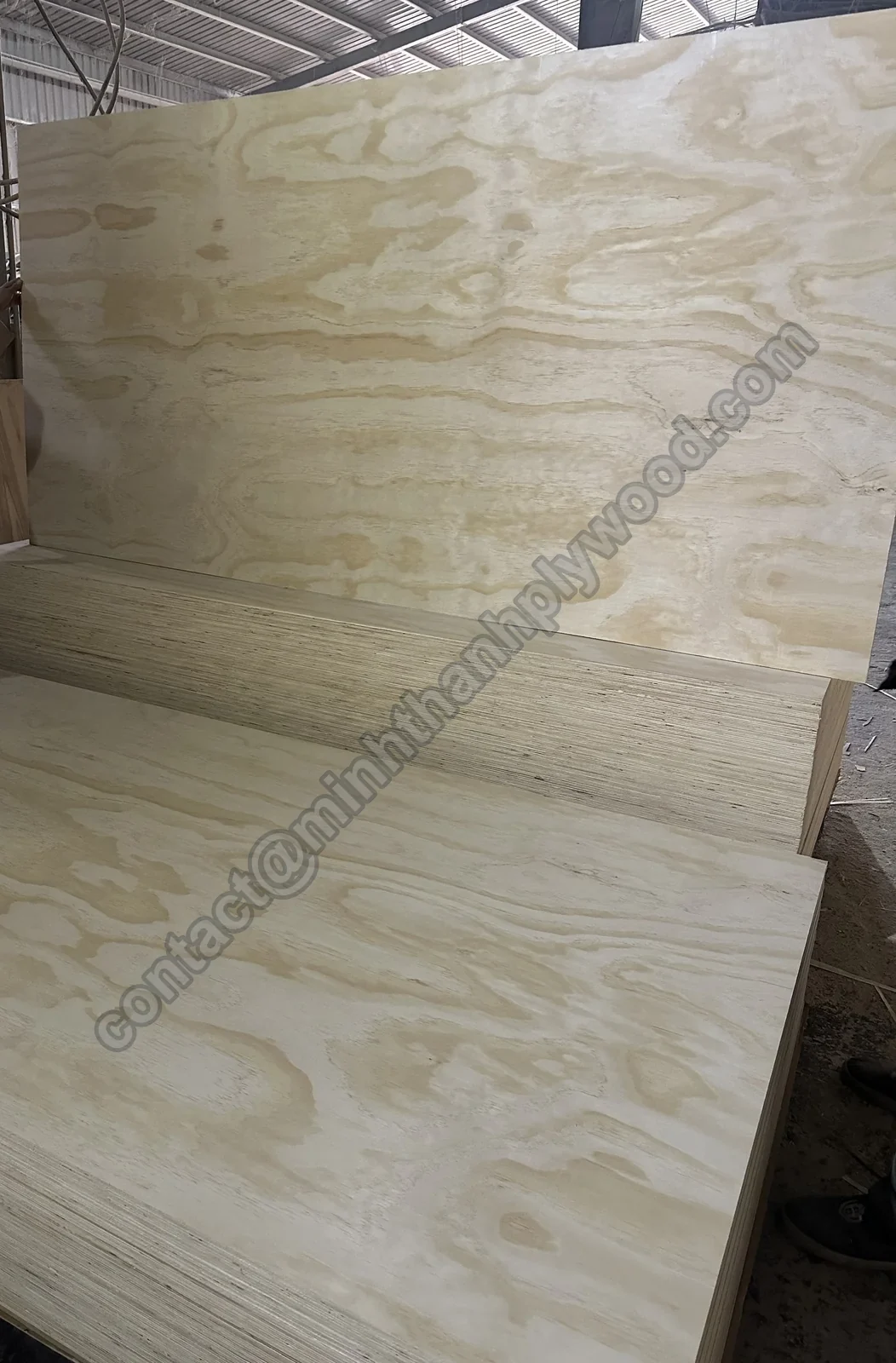
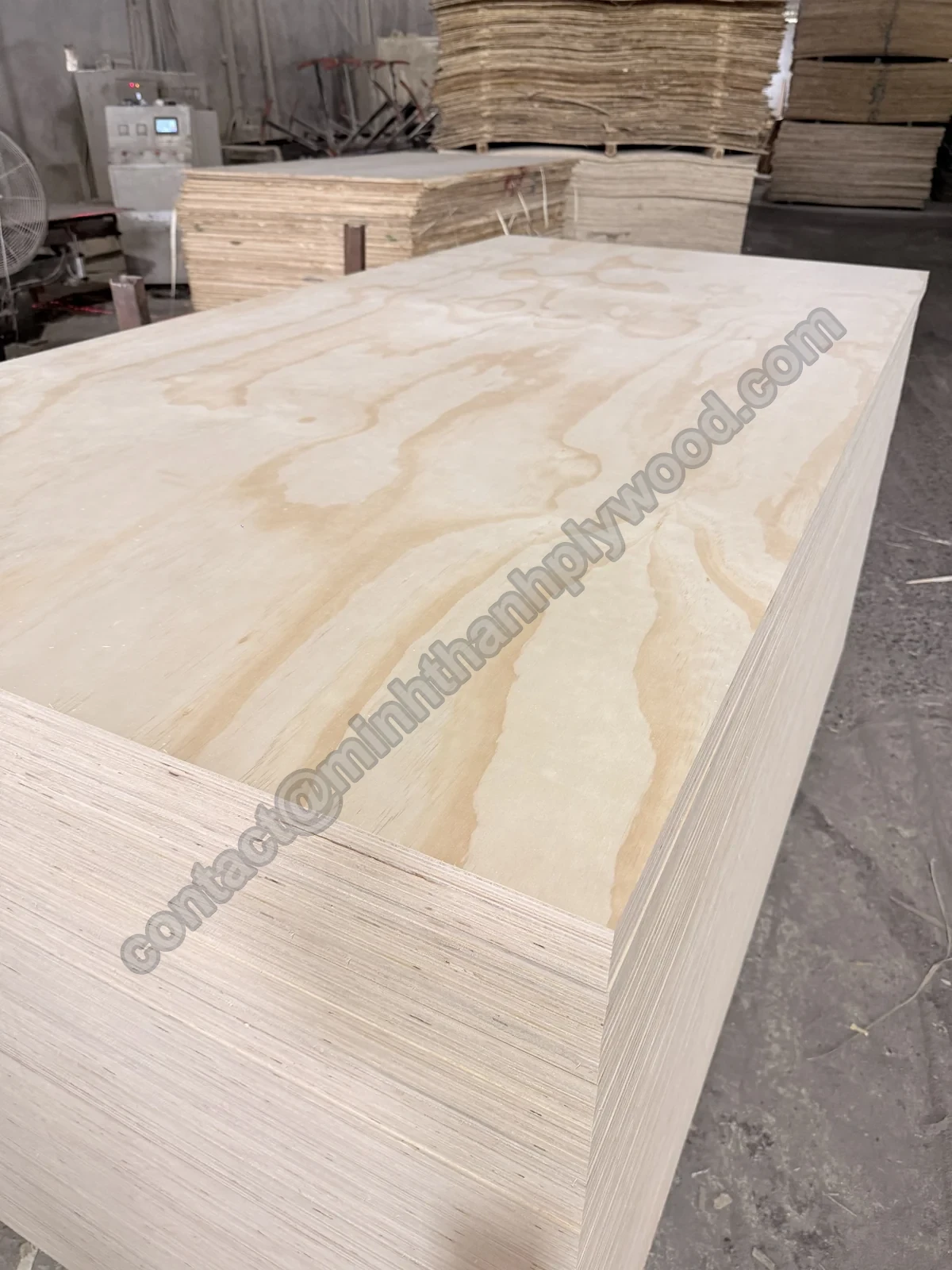
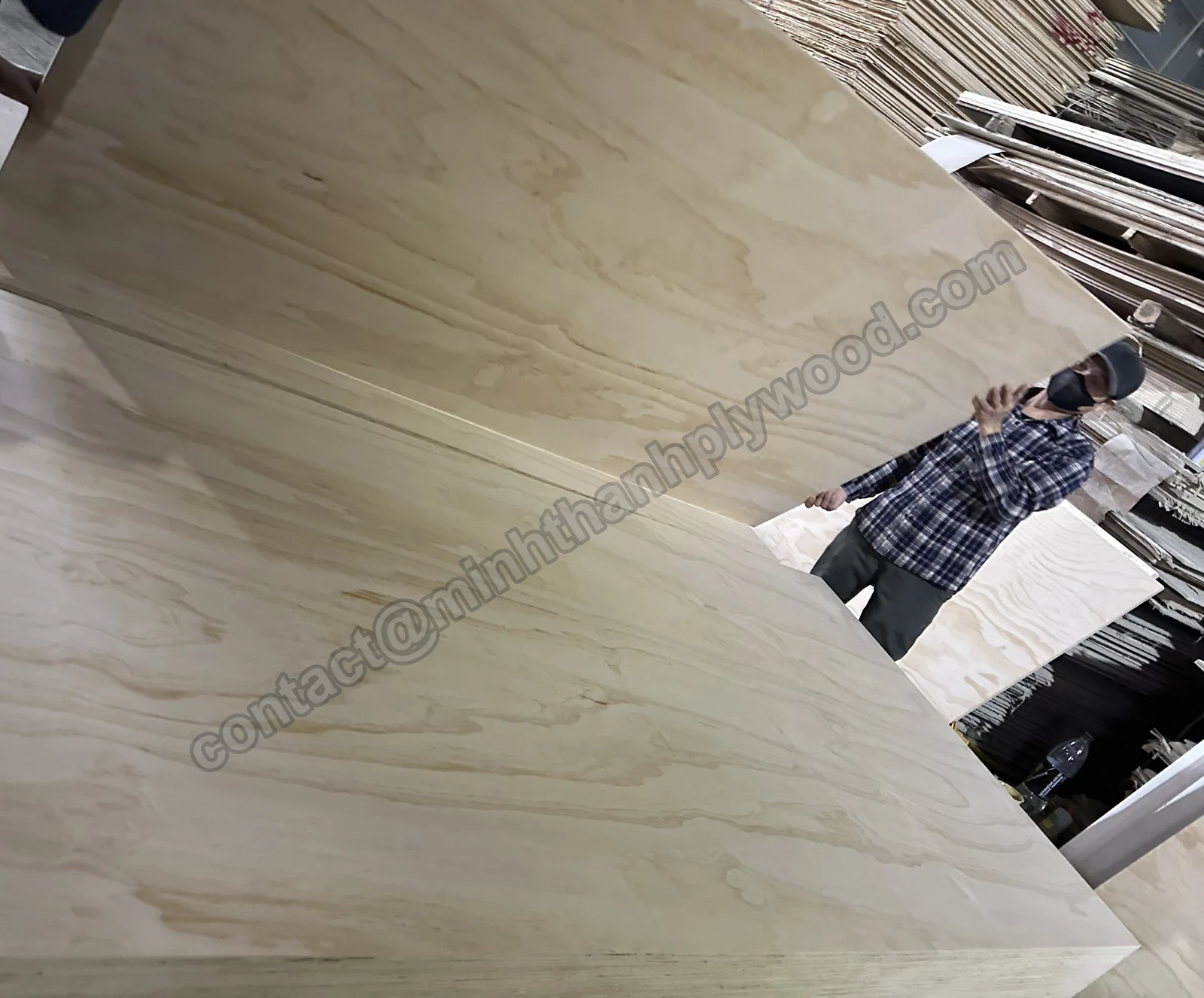
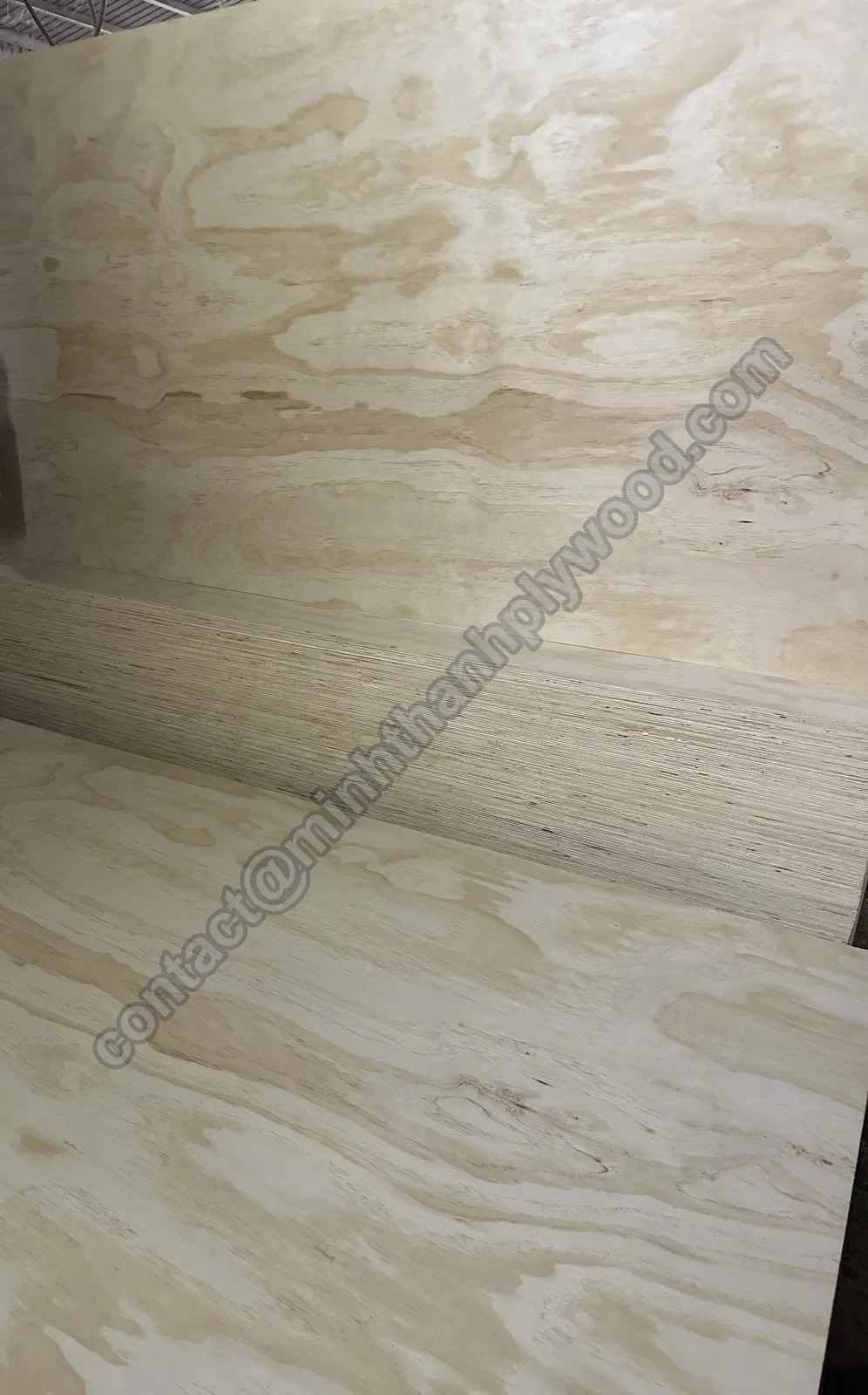
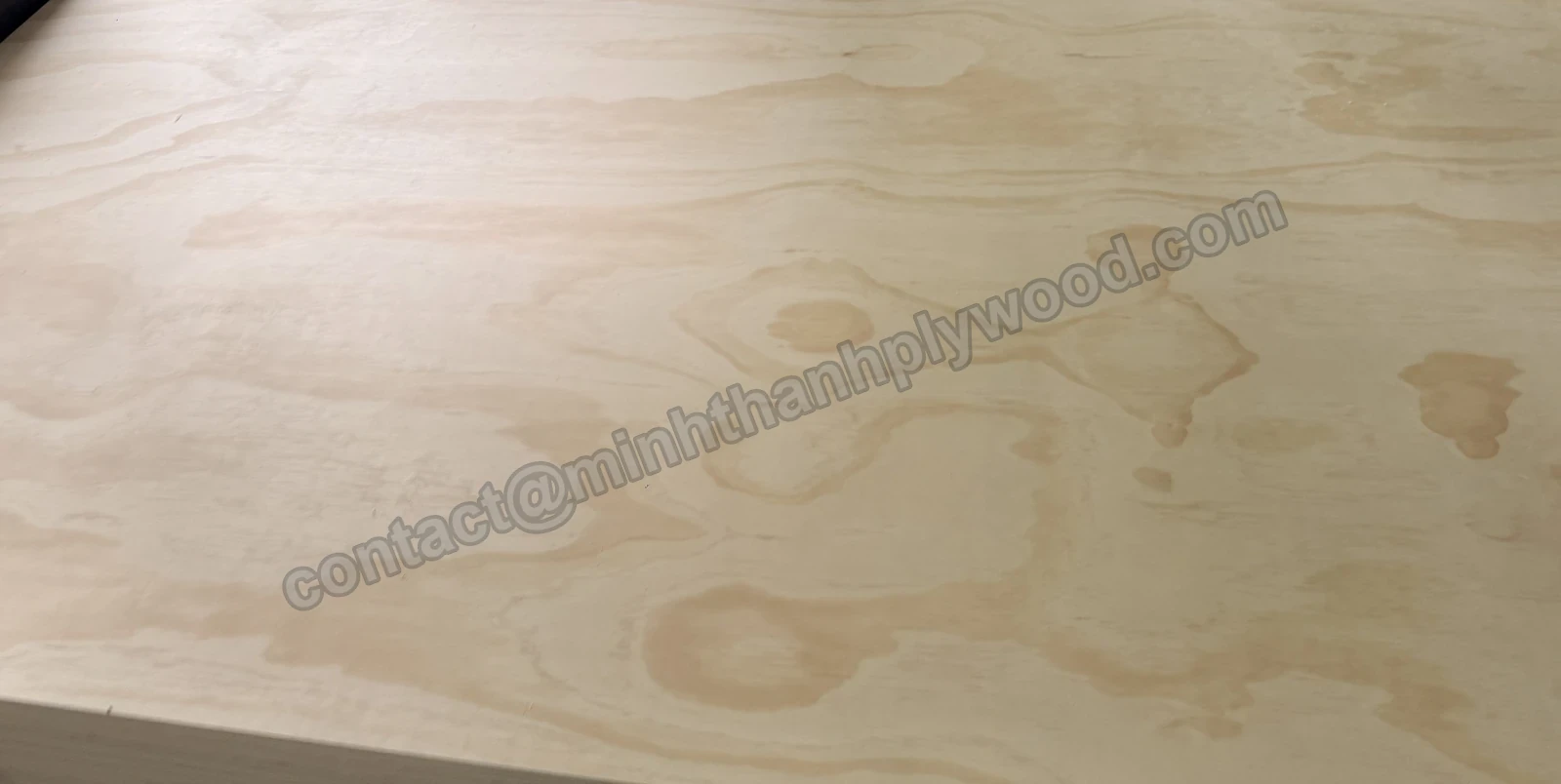
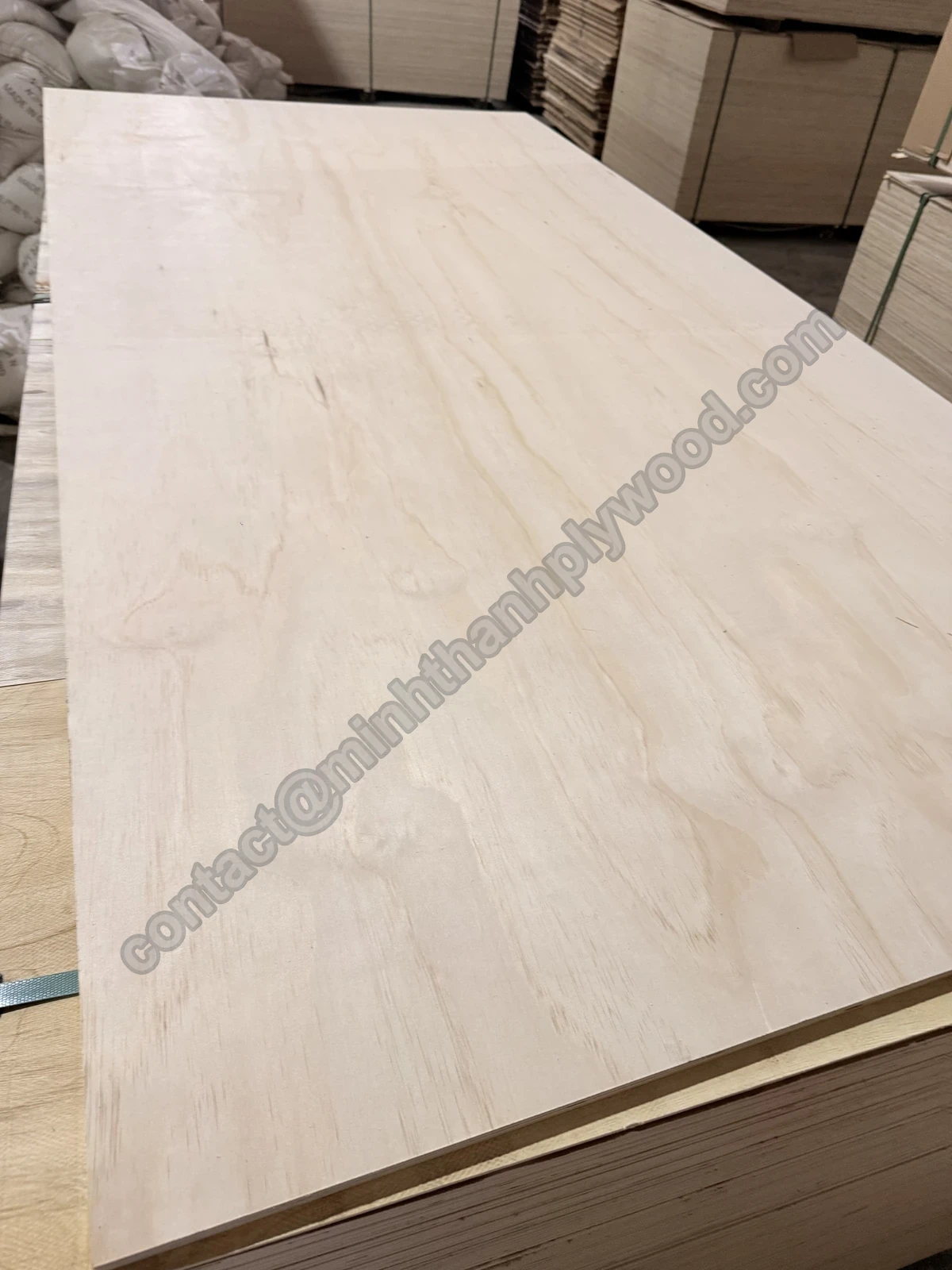
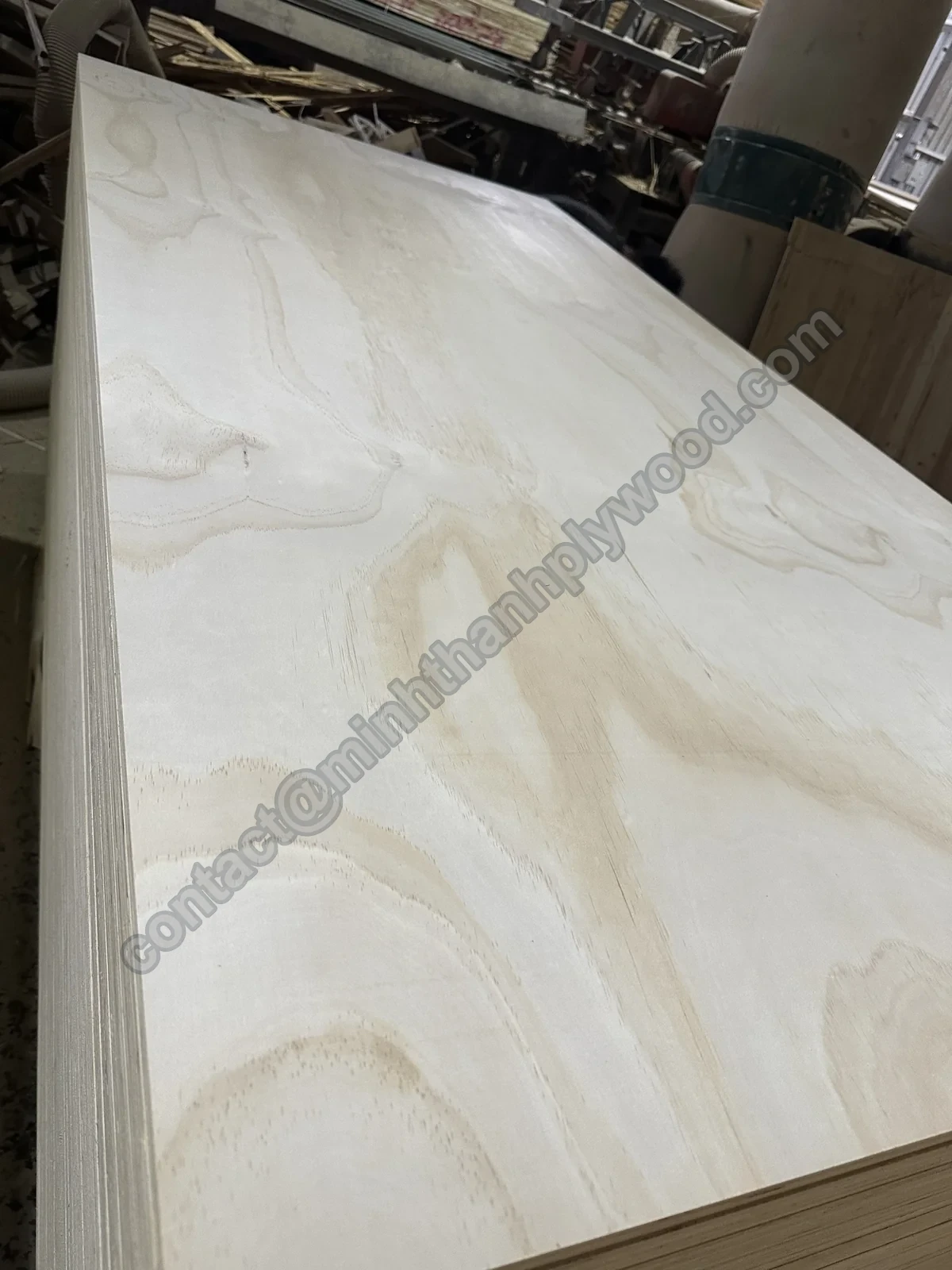
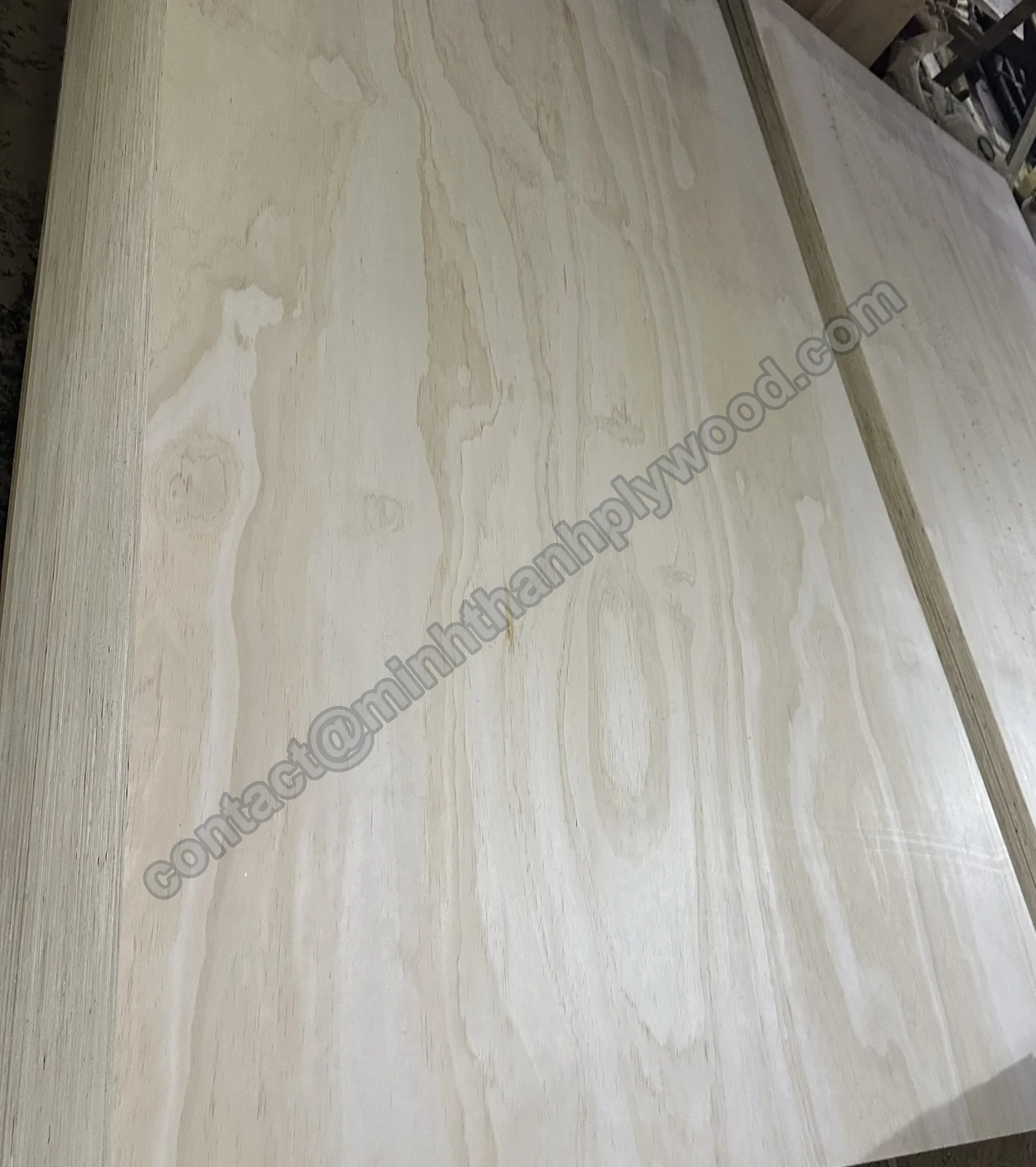
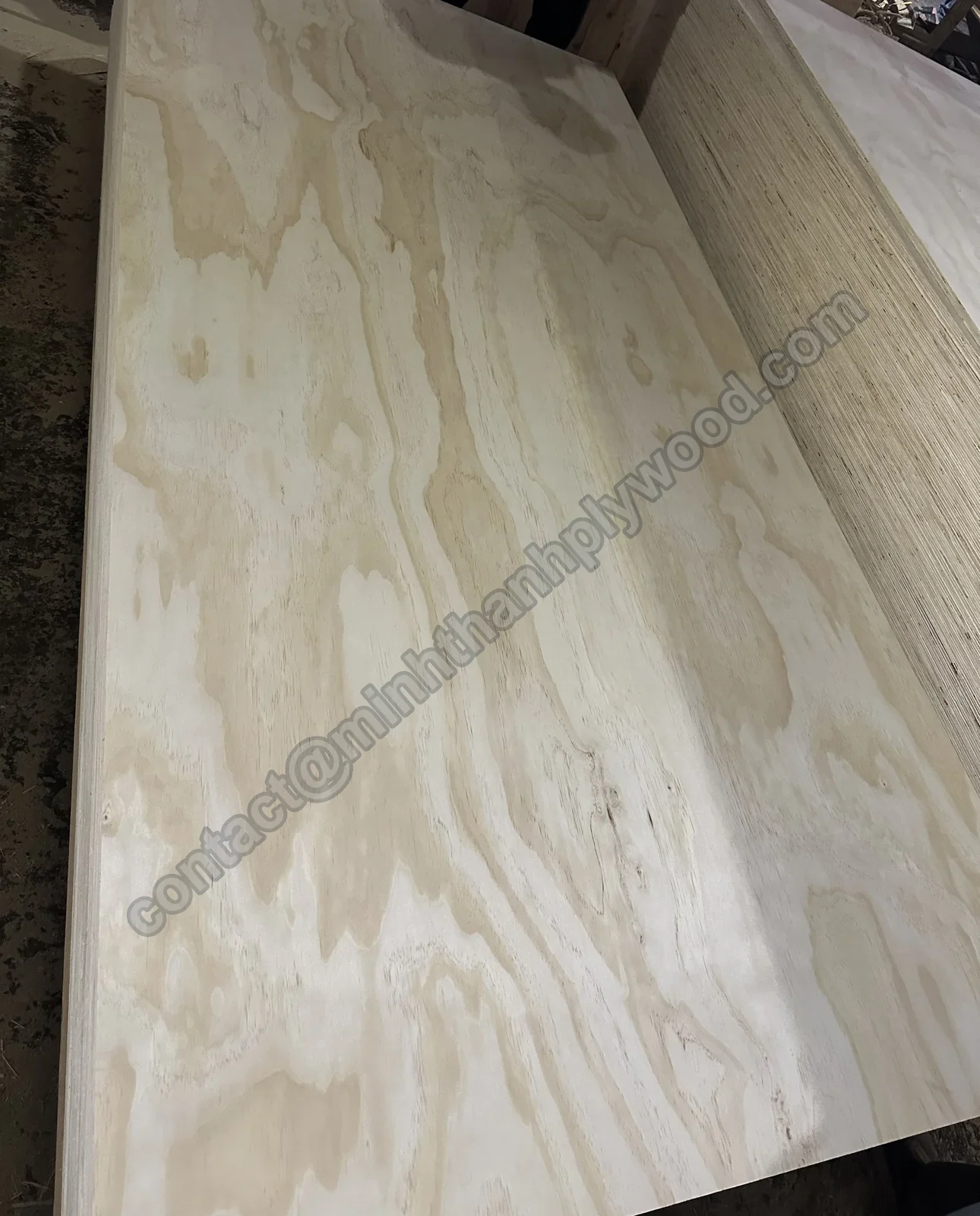
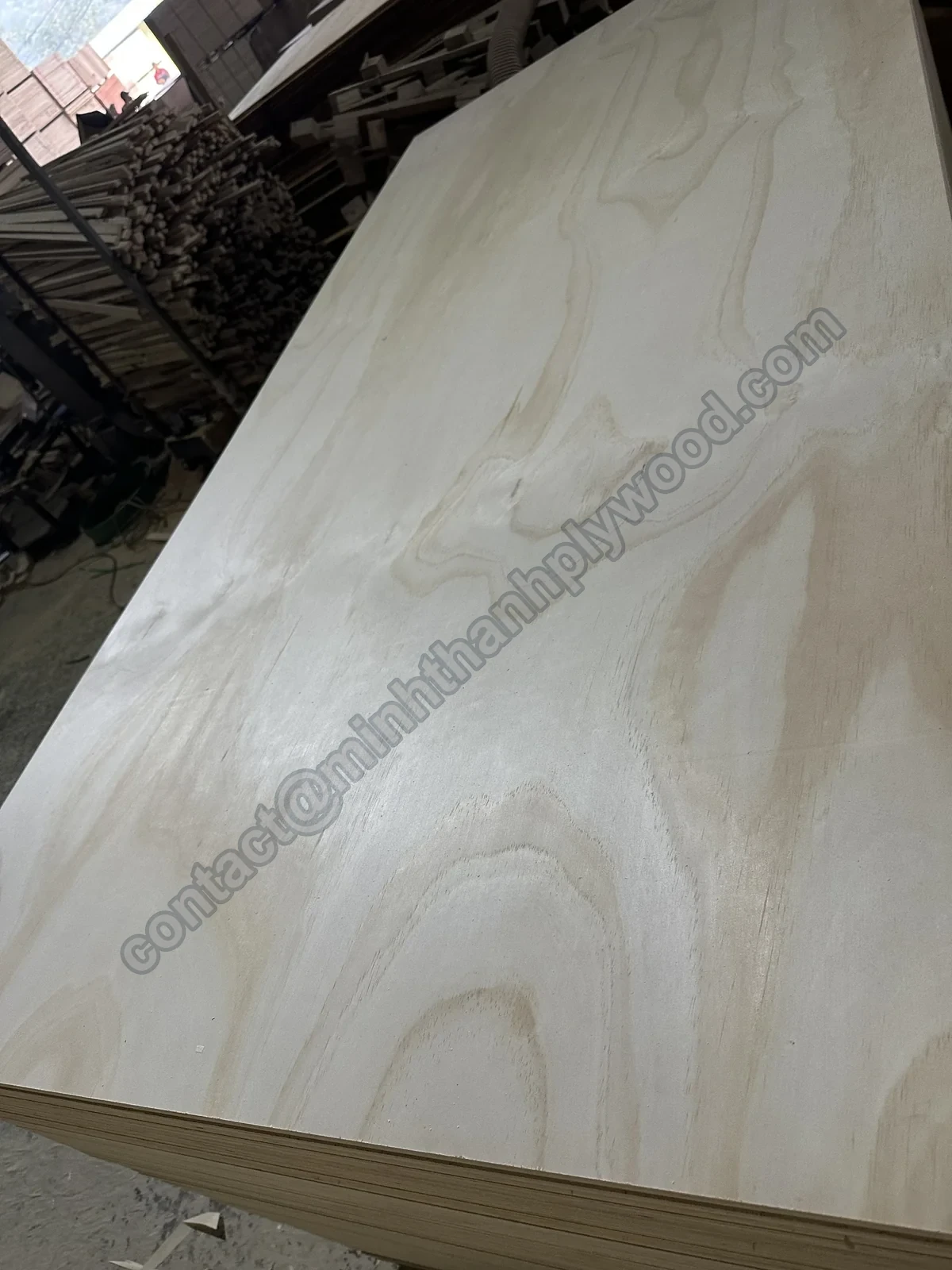
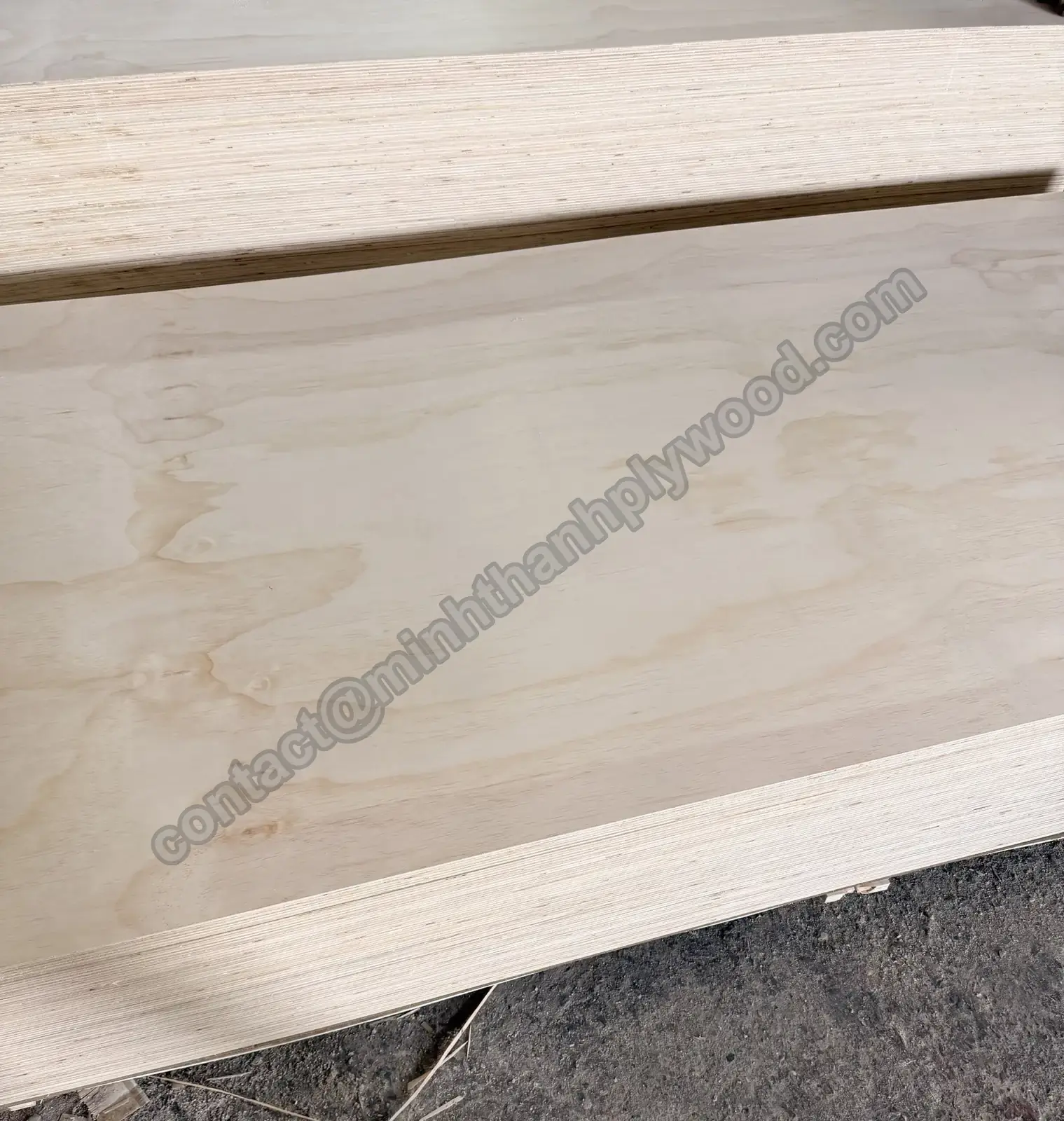
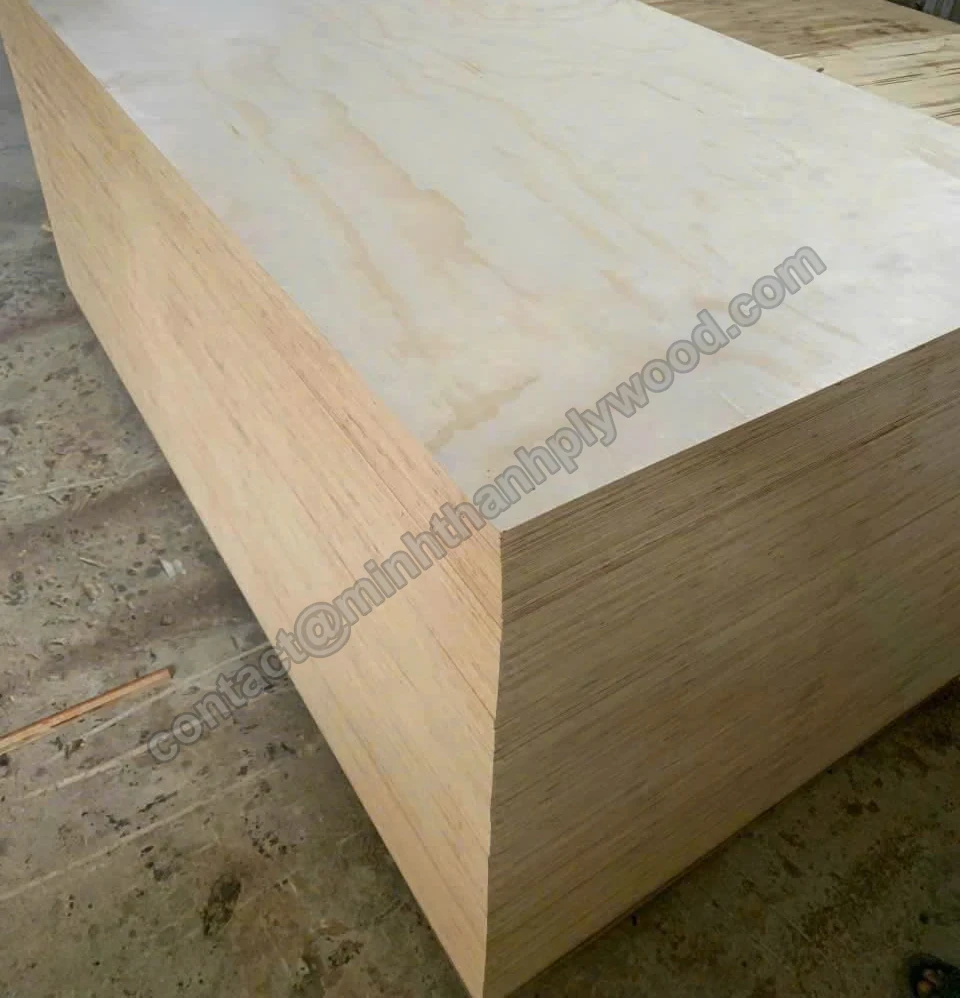
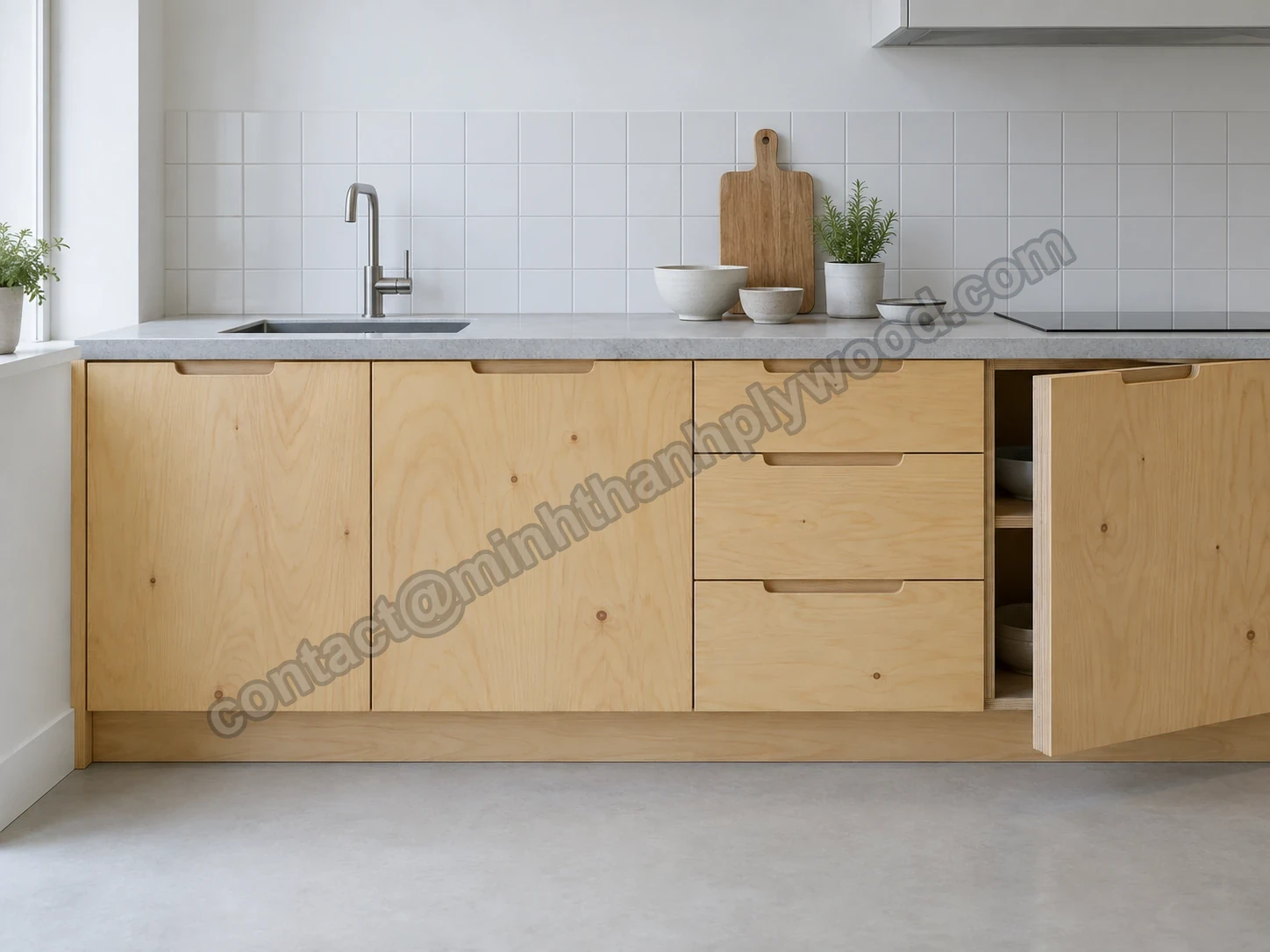
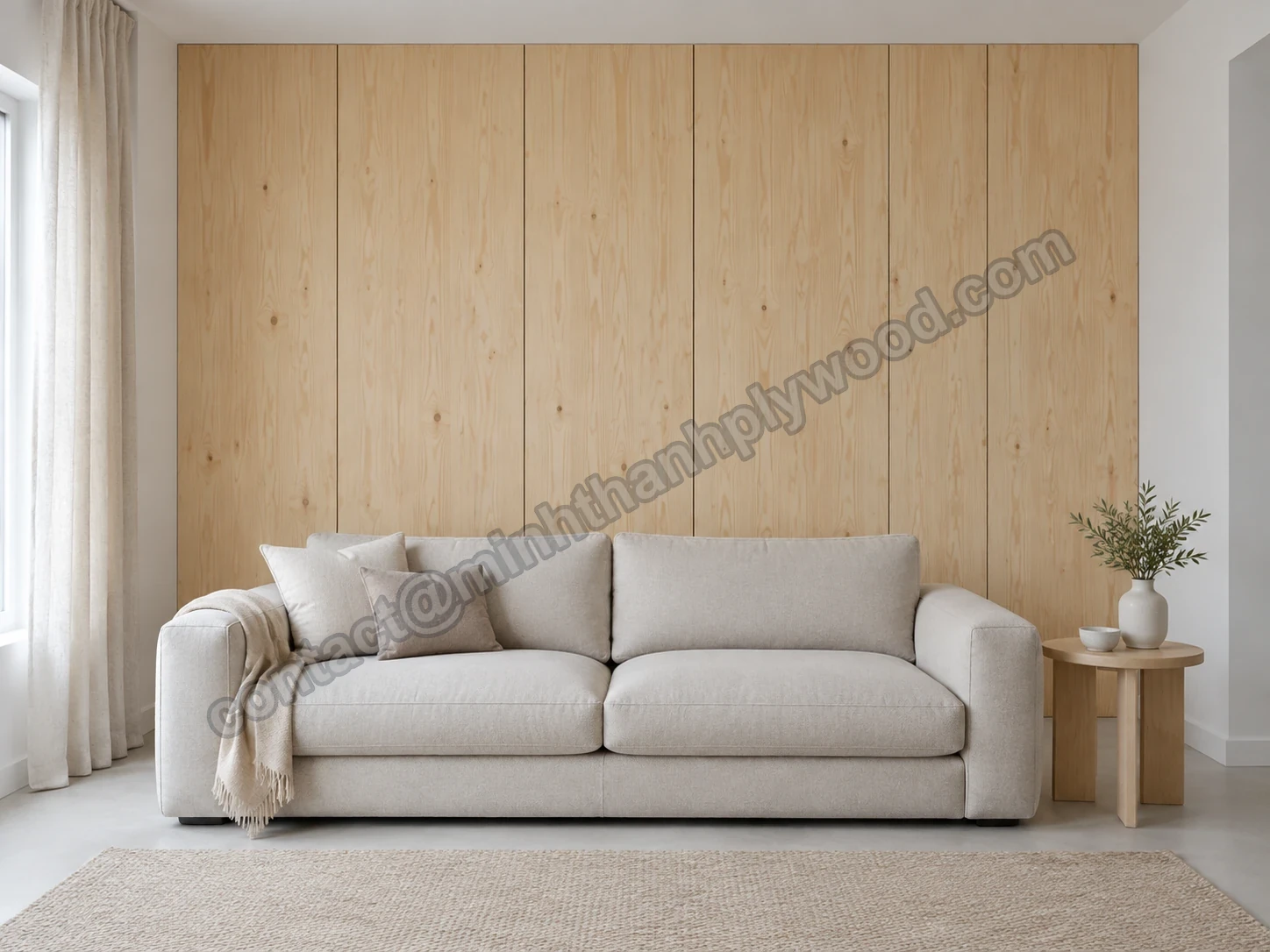
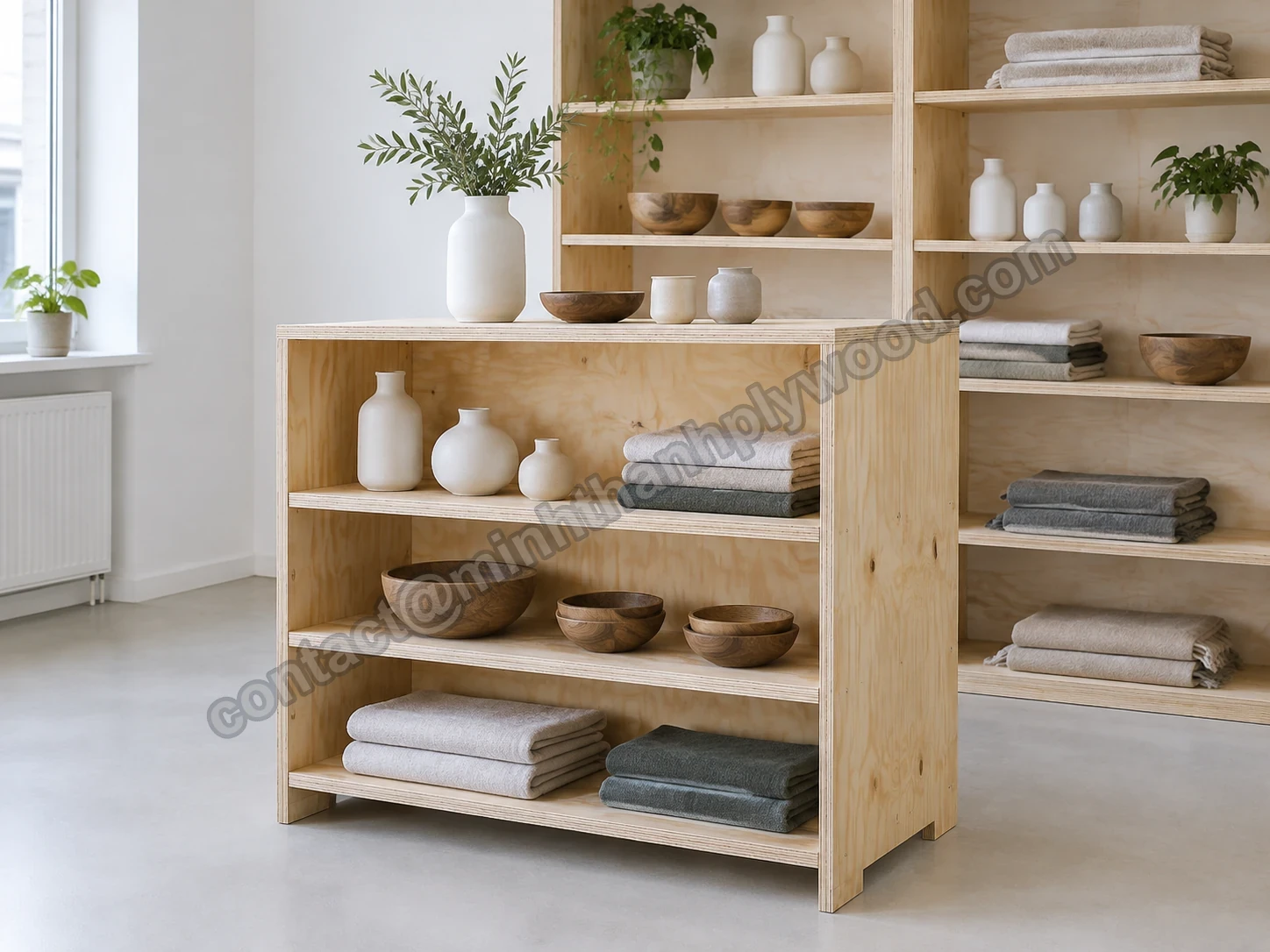
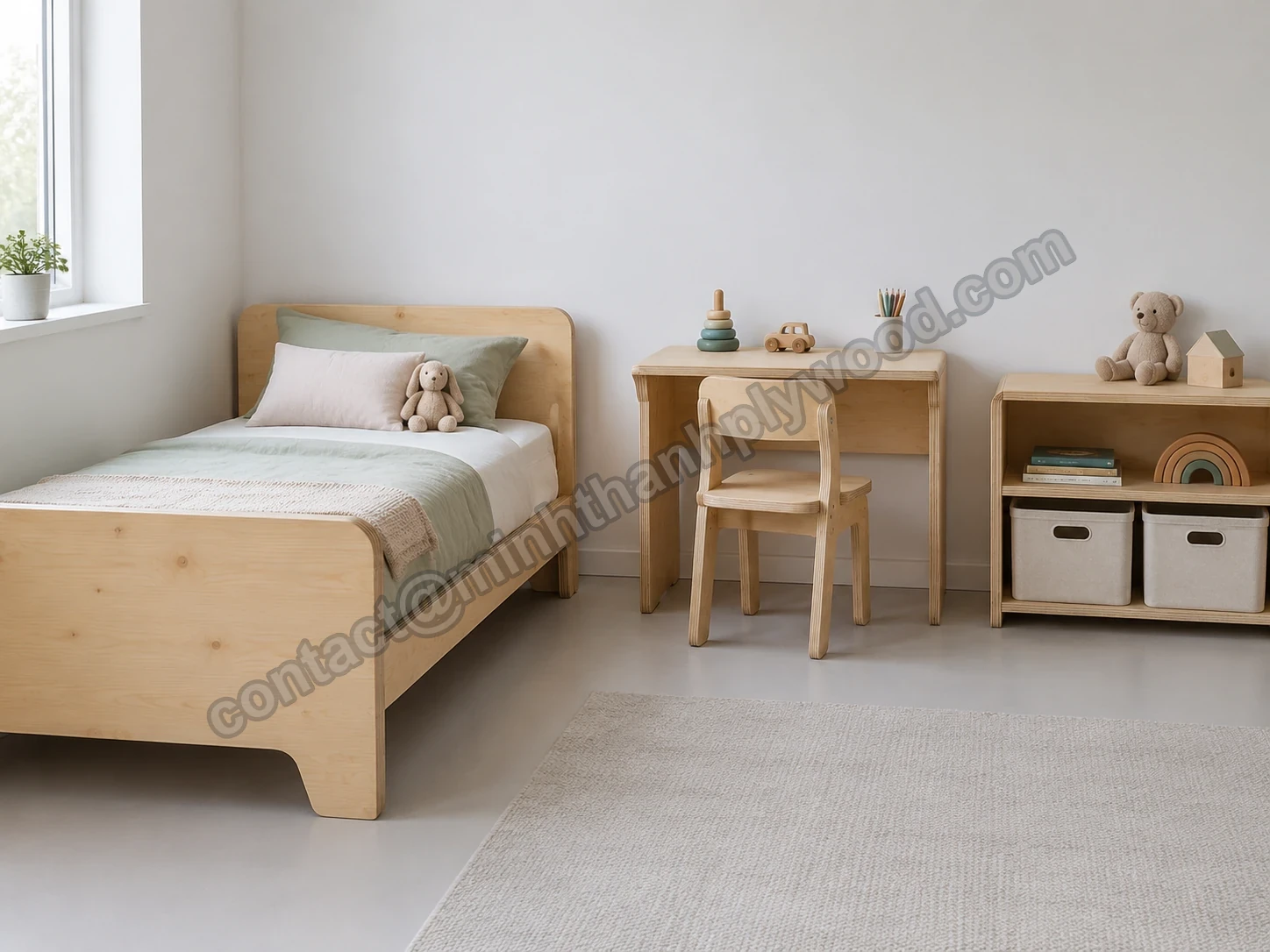
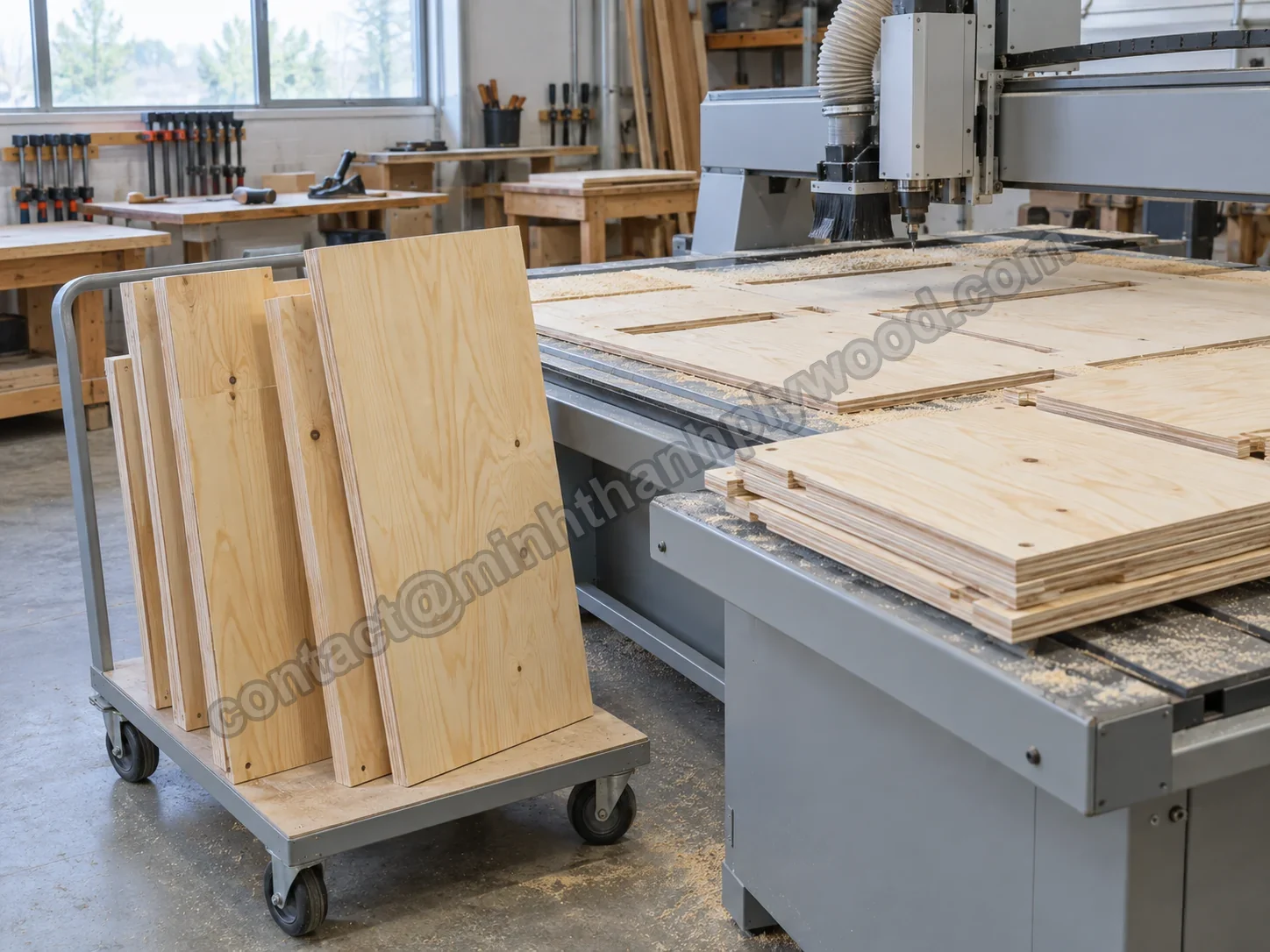
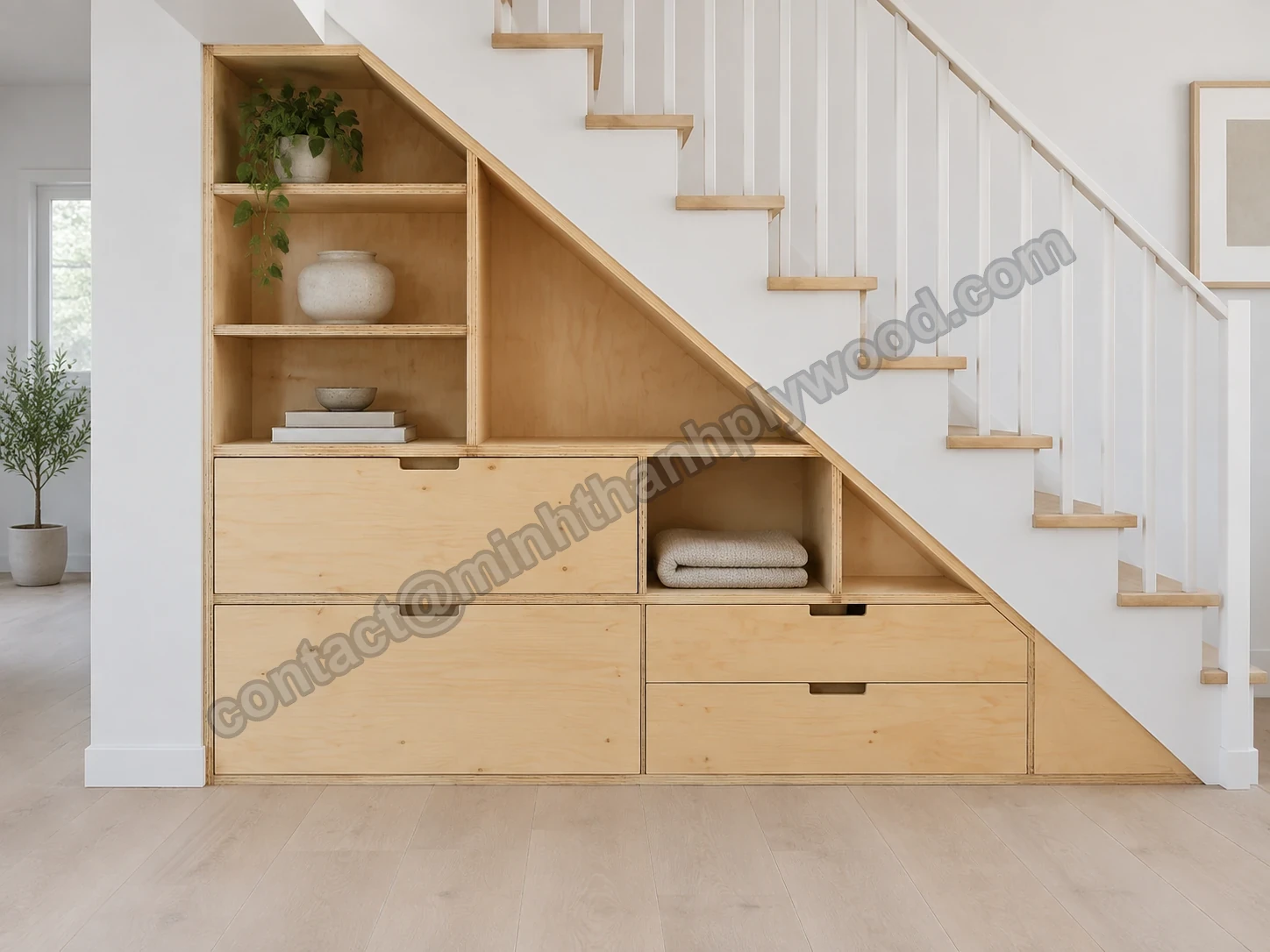
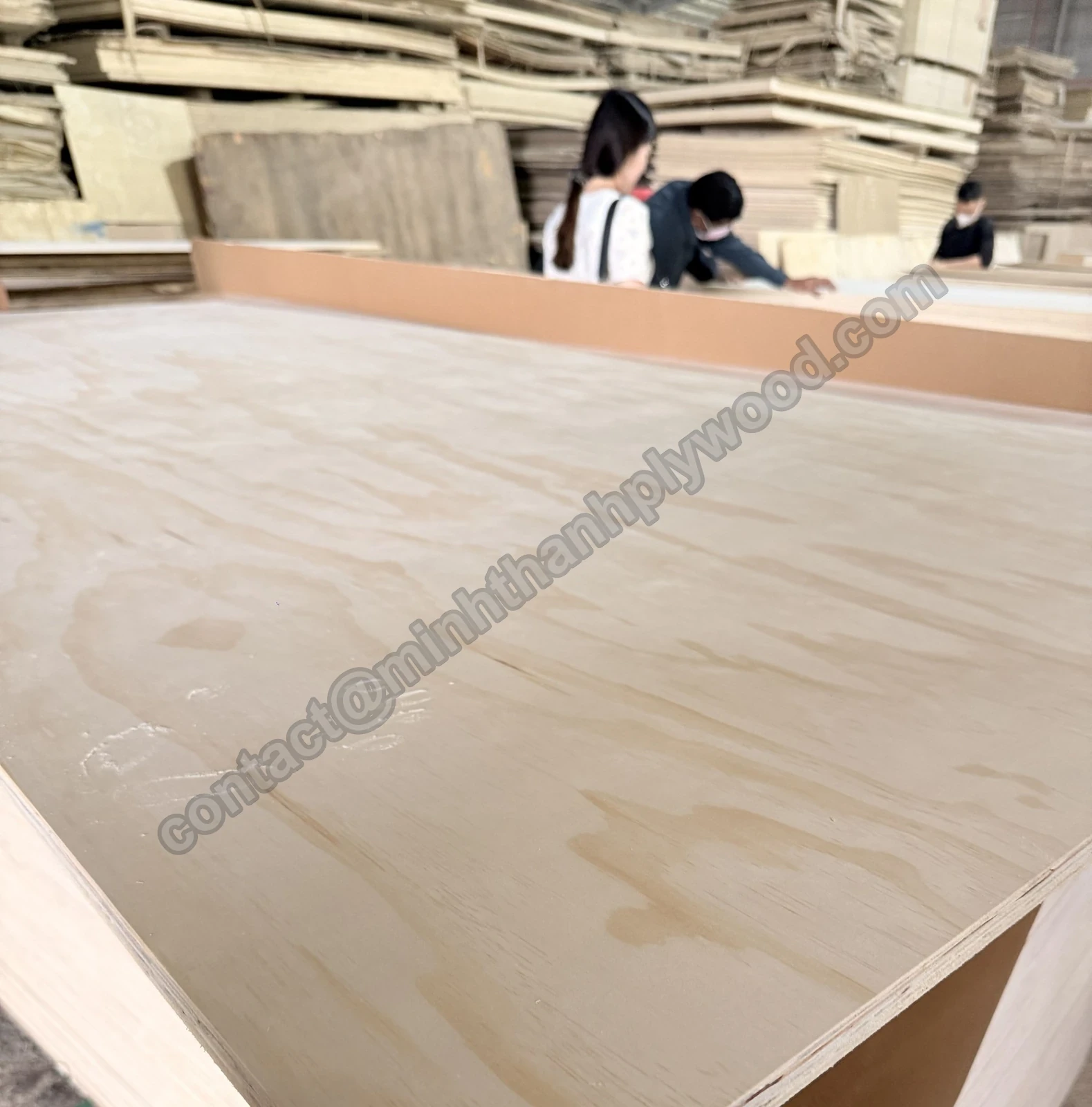
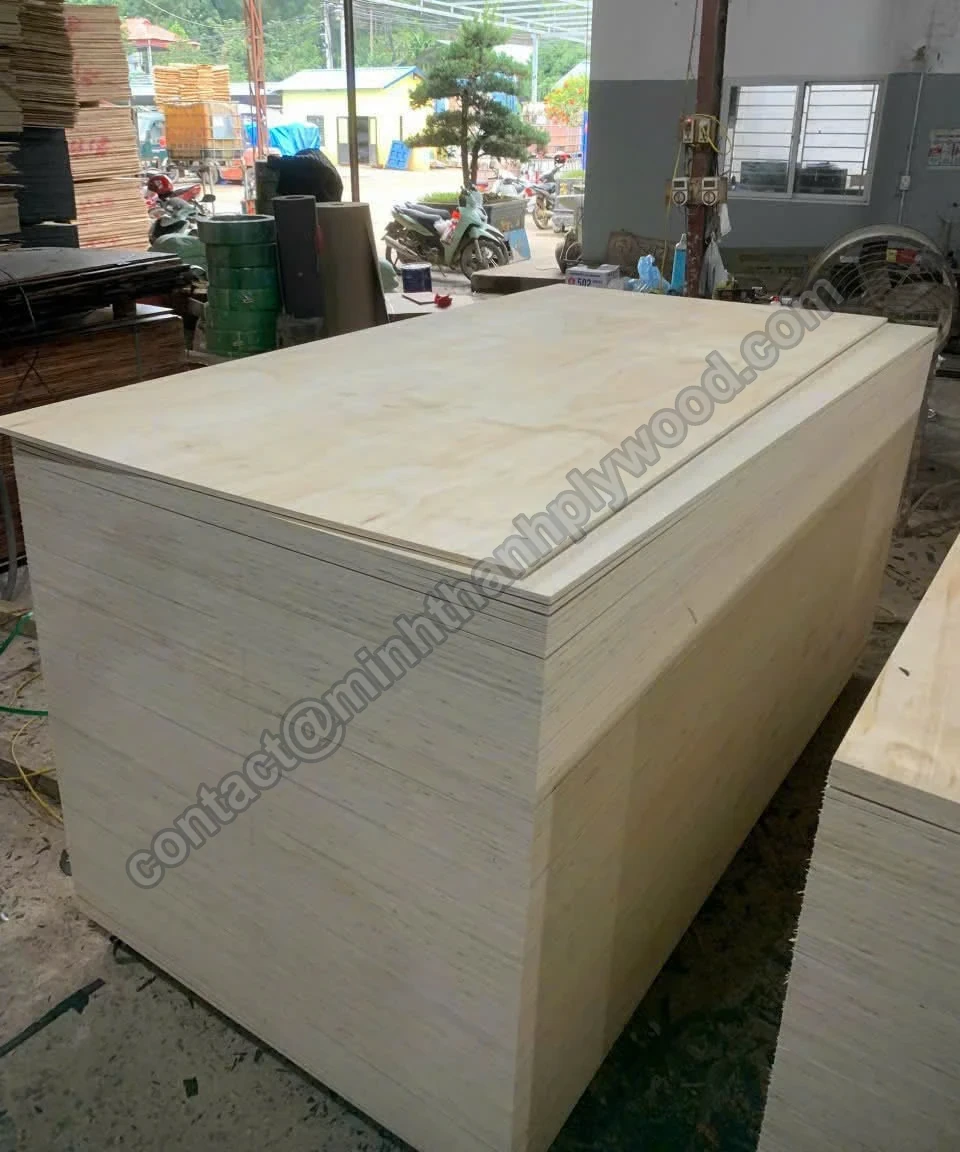
The plantation core carries the panel and the pine is the face. That makes ours pine-faced plywood, not an all-pine panel where every ply is pine. You get the pine look on the surface. The core you pick sets the weight and how firmly the panel holds screws: Styrax stays light, and the denser Eucalyptus grips fixings harder.
Core veneers are grade A, laid crosswise and stitched horizontally and vertically so joints stay closed under the press. Outer plies are stitched as standard and every ply on request, which matters when CNC cutting leaves the edge on show.
Thickness sets the number of plies. Every pine panel from 3 to 6 mm is five-ply: at 3 mm one core veneer between two cross-bands and the two pine faces, at 4, 5 and 6 mm three core veneers under the faces. An 18 mm pine panel is built from 11–13 plies, and most leave the press with 11. On 9 mm and thicker panels each core veneer is usually 1.4–2.0 mm before pressing; 3–6 mm panels use thinner core veneers sized to fit five plies.
Furniture-grade panels are pressed twice as standard. The core board is hot-pressed and calibrated by sanding. Then the pine face and back are laid on and the panel goes under the press again, at about 110–120 °C for MR glue and 130–145 °C for phenolic WBP. The second press is what gives a flat, tight face.
Weights per sheet: core density multiplied by the sheet volume.