
In short, beech plywood uses beech veneer in a declared construction: all-beech layers and beech faced plywood over another core are different products. Specify the layup, appearance, bond, dimensions and furniture trial before buying beech plywood sheets. Minh Thanh Plywood supplies alternative birch, poplar and other approved faces over Styrax or Eucalyptus furniture cores.
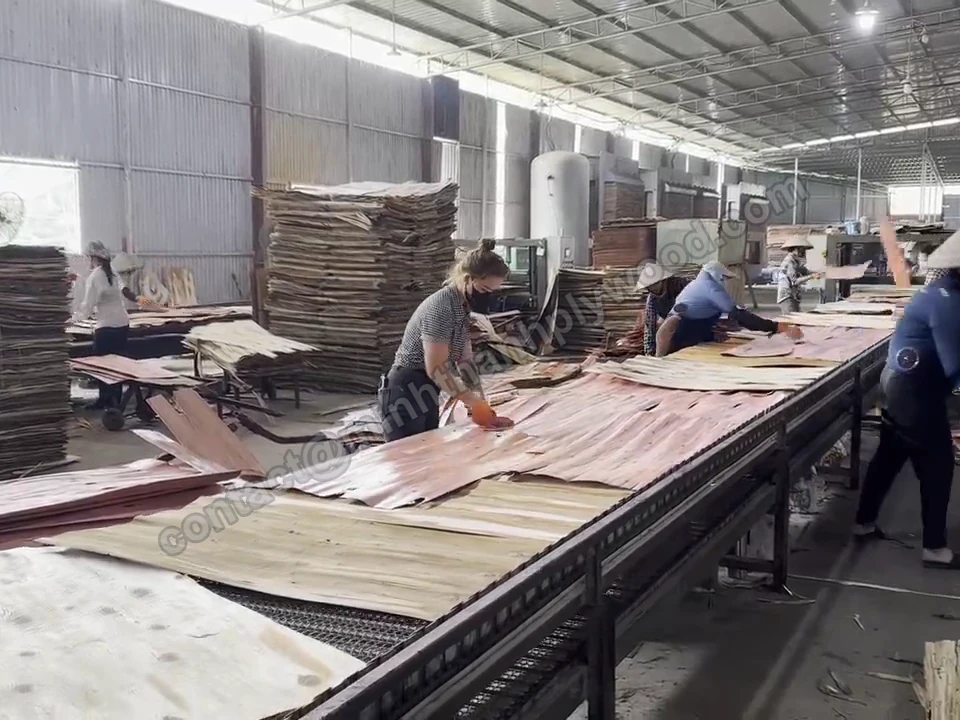
What is beech plywood, and what does its name leave open?
Beech plywood is a veneer-based panel with beech in its declared construction; the quote must say whether beech runs through the layup or only forms the decorative face. That distinction determines what you are buying. It also prevents a beech surface from inheriting performance claims belonging to a different internal panel.
An all-beech veneer panel uses beech throughout the stated layer arrangement. Beech faced plywood uses a beech outer veneer over a separately specified substrate. A beech-on-birch product is one possible decorative-face construction; a beech-veneered fibreboard is another product category. Purchasing should name the actual substrate instead of grouping all three under beech plywood.
The front and back also need their own description. A visible beech front with an unspecified reverse face can disappoint after a door opens or a freestanding divider is installed. If both sides show, require both surfaces to meet the appearance brief. If the back is hidden, allocate its grade deliberately while keeping the required layup and performance.
Minh Thanh’s furniture plywood range offers approved faces such as birch, poplar, EV and okoume over selected Styrax or Eucalyptus furniture cores. Beech is an alternative discussed here so buyers can read and compare its specification. This guide does not add beech to that offered range.
How do you distinguish full-beech from beech faced plywood?
Request a layer description and a representative section sample, because the face photograph cannot establish the internal construction. Name face, cross-bands, core and back separately where the supplier’s language uses core narrowly. Match the sample to the quoted product code.
| Specification field | All-beech veneer panel | Beech faced plywood |
|---|---|---|
| Visible front | Declared beech veneer and grade | Declared beech decorative veneer and grade |
| Internal wood | Beech throughout the stated veneer layup | Named core and cross-band construction |
| Reverse face | Ordered beech grade | Ordered back veneer and grade |
| Layer evidence | Layup description and readable section | Face thickness requirement plus substrate description |
| Mass reference | Complete all-beech panel density | Complete faced-panel density |
| Mechanical evidence | Report for the all-beech construction | Report for the actual faced construction |
The USDA Forest Products Laboratory describes how constituent elements and their arrangement affect engineered-wood products in Wood Handbook, chapter 11, 2021 edition, accessed 8 October 2026. This supports the purchasing distinction: a decorative face is one element of a complete composite panel.
At Minh Thanh, furniture core layers are stitched horizontally and vertically. The core board is pressed and calibrated first, then the selected face and back are pressed onto it. An alternative beech producer’s quotation needs its own construction description; do not transfer this factory practice to a product simply because both are plywood.
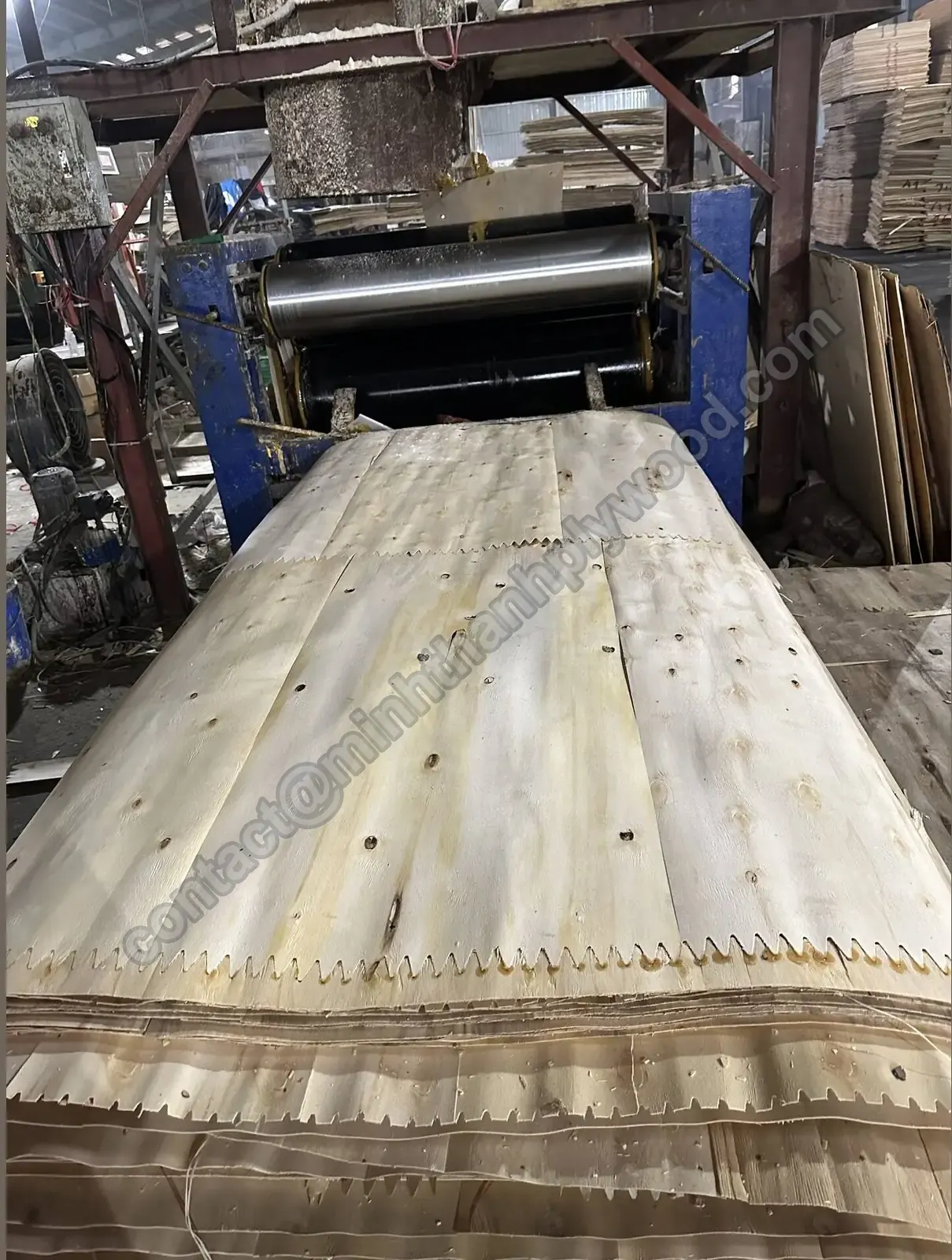
Specify the supplied decorative veneer thickness and its finished condition as separate quote fields. If production needs additional sanding, state the required remaining face and trial the actual sanding sequence on the supplier’s panel. Do not assume the sanding allowance of an all-beech layup also applies to a thin beech decorative face over another substrate.
Inspect the machined section required by the drawing. A sawn corner shows the construction at that corner, while a recessed fitting or routed channel shows another part of the internal panel. Both can be useful during qualification.
Which beech face appearance should the order specify?
Specify the beech appearance through a labelled range sample and the intended coating, because colour and figure are production requirements for visible furniture. White and steamed beech should be treated as separate commercial visual references. The order should identify which reference production approved.
Start with the furniture finish. A clear coat leaves the wood figure and repairs visible; a tinted finish changes the colour but still shows the substrate; an opaque finish has different acceptance concerns. The face sample must pass the finish actually used in the programme. An attractive uncoated veneer is insufficient for a finished colour approval.
Record the permitted patches, veneer joints, colour range and local figure in the useful component area. A small clean offcut can hide the variation visible across a broad door front. Adjacent fronts also need grain direction and any matching requirement described in the cutting schedule.
Minh Thanh’s birch alternative uses ordered D+, D and E face/back pairs; the poplar alternative uses A/A, A/B and B/B pairs matched to the approved sample. These are product-specific ladders. Do not relabel a beech quotation with birch grades unless the supplied grading definition explicitly supports the comparison.
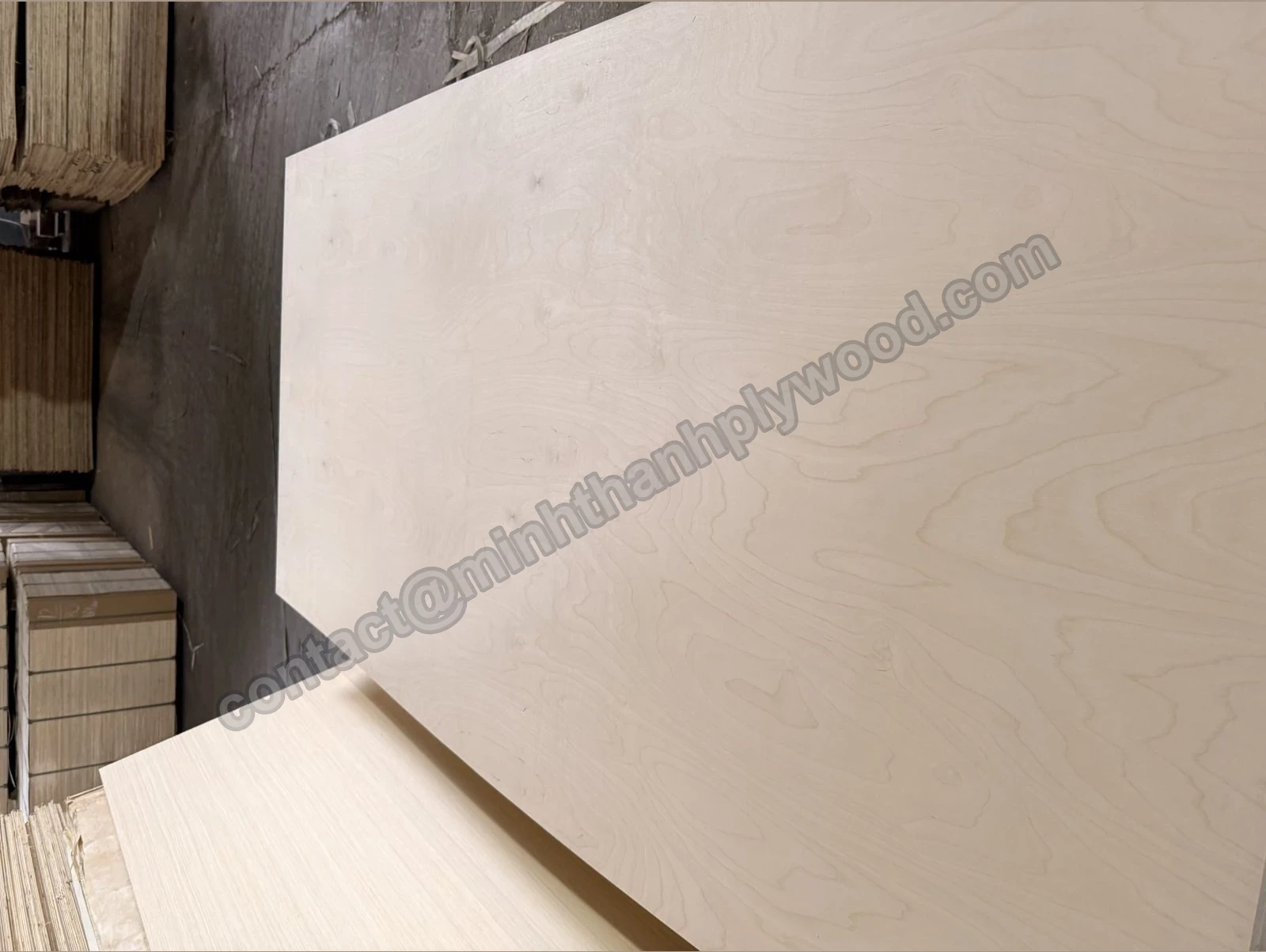
For the buyer, the practical result is an accepted appearance range with a revision label. Carry that label into the quote, production instruction and receiving record. It prevents a later dispute over what a short grade code was intended to mean.
What thickness, size and tolerance should beech plywood sheets have?
Order beech plywood sheets by finished dimensions and required tolerances, then check the fit and nesting on the component drawing. A producer’s available sheet sizes describe its range, not a standard format for every beech panel. Use the actual quotation for the product being considered.
A thicker sheet can be appropriate for one part while adding unnecessary mass and cost to another. Separate cabinet sides, backs, dividers and door blanks in the component schedule. State the function, finished thickness and critical machining for each. Buying one thickness for the entire range can obscure opportunities to use the correct format by part.
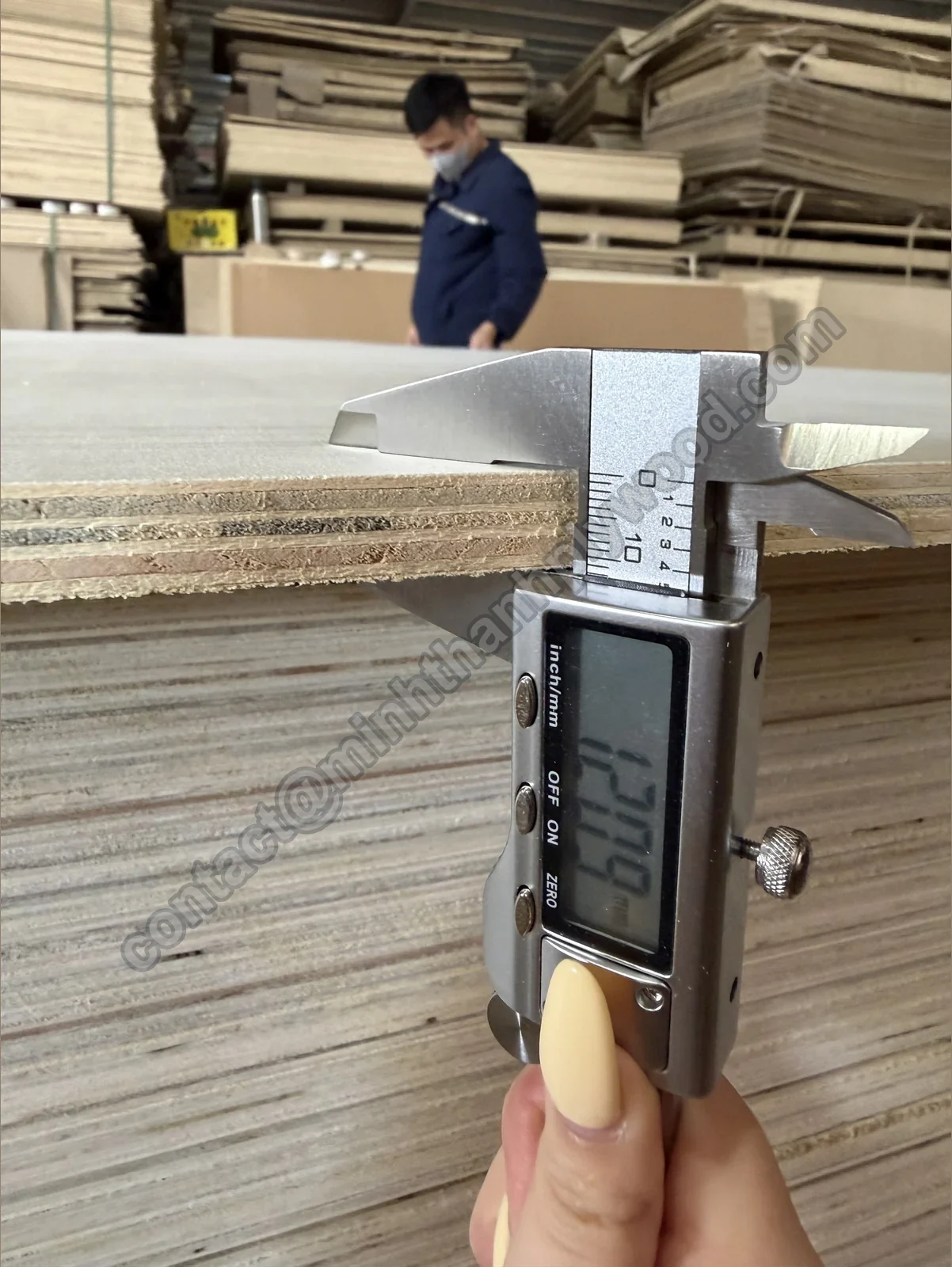
For a fitted groove, the relationship between the panel and groove matters more than the nominal label. Inspect panel thickness at agreed positions and trial the actual groove after the planned finishing process. A bare sample that slides into a slot does not define the fit after edge treatment or coating.
Minh Thanh’s available furniture alternatives span 3–40 mm and standard formats including 1220 × 2440 and 1250 × 2500 mm, with thickness tolerance down to ±0.2 mm. These are this factory’s offered specifications, not a claim about all-beech products elsewhere. The thickness guide explains the component decision in more detail.
A format comparison should include trim allowance, kerf, grain direction and the delivered cutting scope. Full sheets and cut-to-size pieces create different receiving and packing tasks. Keep those distinctions visible when comparing a beech quotation with an alternative panel quote.
How do you estimate panel and component weight?
Use complete-panel density and finished dimensions to calculate sheet mass; use the whole bill of materials to calculate furniture mass. A solid-beech value does not establish a mixed-panel density. A supplier’s all-beech density does not describe beech faced plywood with another core.
The planning relation is length × width × thickness × density, with dimensions in metres and density in kilograms per cubic metre. Ask the supplier for the density basis and compare it with weighed representative sheets. Moisture basis and construction should be stated alongside the number so buyers do not combine unlike references.
For Minh Thanh alternatives, white Styrax has a core planning reference around 500 kg/m³ and Eucalyptus uses a 650–750 kg/m³ planning range. A birch or poplar face over the selected core should be evaluated as that complete faced construction. Changing the decorative surface does not replace most of the core wood with another species.
For a completed unit, add hardware, supports and the applied finish. Compare the accepted furniture design rather than one panel in isolation. A material that requires an extra support changes both assembly mass and manufacturing cost.
Transport planning has another boundary. Packed cargo includes protective material and bearers as well as sheets. The sheet-mass estimate is one input to the loading plan, not a completed container weight statement. Use the ordered quantities and packing design before approving the shipment plan.
What establishes strength for a beech plywood component?
Strength belongs to the tested panel construction and completed component, so request data for the actual layup and qualify the drawing. A beech species description cannot establish a shelf load. Thickness, layer arrangement, grain direction, support and joints all matter to the furniture result.
The USDA Wood Handbook’s composite-mechanics chapter, 2021 edition, accessed 8 October 2026, treats plywood as a wood-based composite requiring product mechanical information. Keep that information distinct from solid-timber properties. A high solid-wood bending value does not supply a rating for a veneer-faced board with an unrelated core.
For a shelf, define span, depth, load arrangement, support, duration and allowable deflection. Short-term breakage resistance and long-term acceptable shape are different acceptance criteria. A trial report should state which one it evaluates. If a panel report gives properties in two directions, use the direction relevant to the cut part.
For a cabinet assembly, include back-panel restraint and connectors in the assessment. Changing a back detail or adding a support can alter the result without changing the face species. Buying a heavier all-beech panel should therefore be justified against the actual part requirement, not an assumption that heavier always performs better.
At Minh Thanh, double pressing and core calibration are established furniture preparation. They support the production description but are not a kilogram shelf rating. Send the component performance requirement with any enquiry for a qualified alternative.
What should CNC and hardware trials reveal?
Trial the deepest machining and actual fittings, because the plywood name does not reveal what a hinge cup, edge connector or routed channel will expose. Test the candidate construction with the planned tools and drawing. Retain an identified finished trial rather than approving an unmachined offcut.
A useful CNC sample includes narrow webs, recessed pockets and visible edges from the production part. Inspect breakout, local core continuity and the finished profile. If a component receives an edge band, run the intended edge preparation and banding operation. A clean outer corner can coexist with a problem in a critical internal cut.
For hardware, record the fitting, pilot hole, insertion depth and edge clearance. Distinguish face screw withdrawal from edge withdrawal and assembly stripping. They load different areas of the panel. A generic statement about beech hardness cannot answer all of those details.
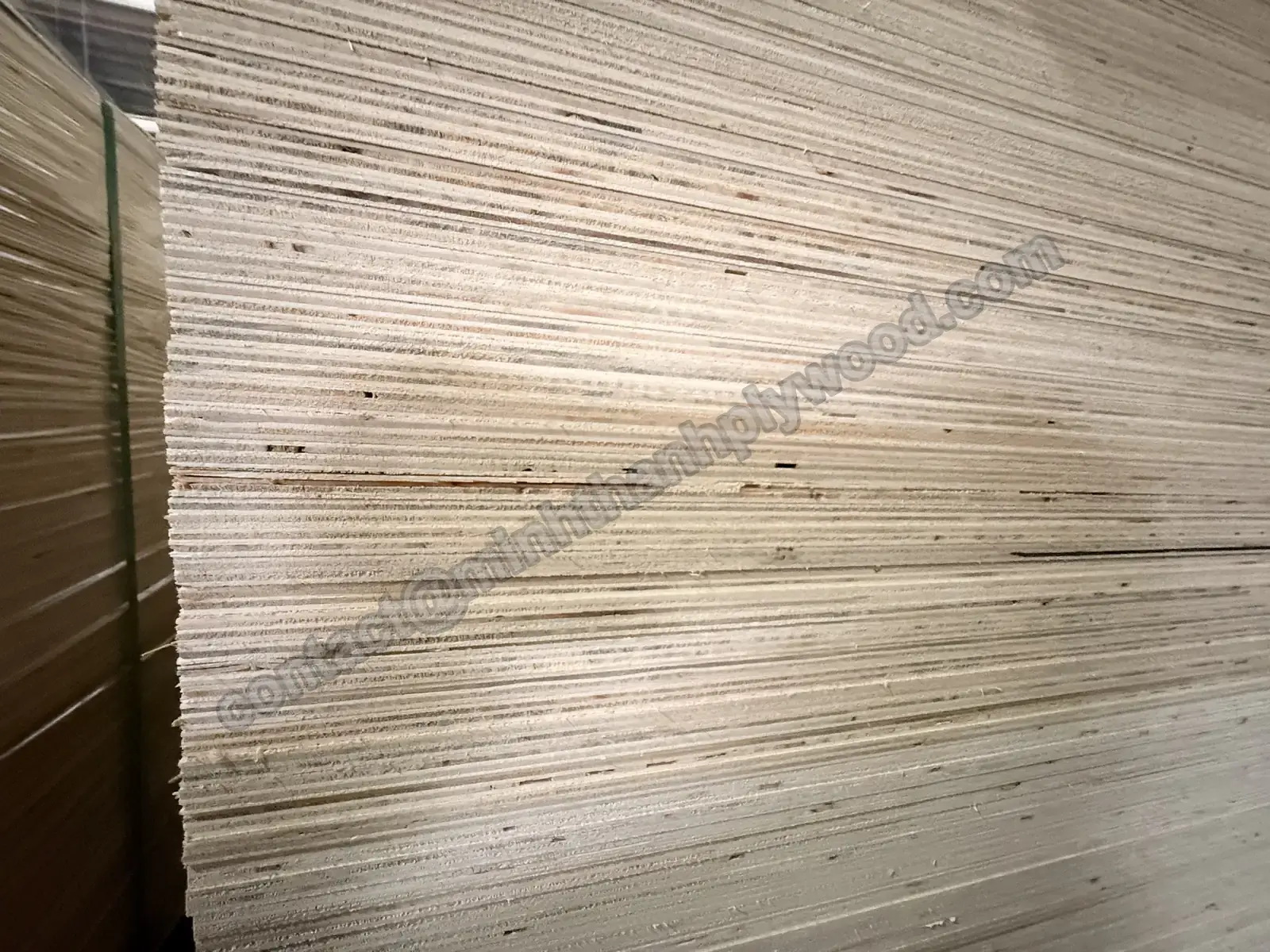
A beech-on-birch or beech-over-another-core quotation should be trialled as its declared construction. The decorative beech surface does not change the identity of the layers holding an edge fitting. If the existing programme used all-beech, a substitution must update the construction record and hardware trial.
Minh Thanh supplies calibrated alternative furniture panels and free samples. Pair those samples with the actual component drawing to compare production suitability. Approving the visible face and qualifying a connector remain separate conclusions in the trial report.
Is beech plywood suitable for paint or clear coating?
Qualify beech plywood under the intended finish, because paint and clear coating reveal different surface features. A clear finish preserves colour, figure and repairs; an opaque finish can show sanding or patch boundaries. The right face grade depends on that finished result.
For clear-coated beech, approve the accepted figure and colour range after curing. The front and back should be treated as the buyer’s visible surfaces, not as a good face and an unspecified leftover. Mark orientation when neighbouring doors need a consistent presentation. The production cutting instruction must preserve the approved design.
For paint, trial primer coverage and repair visibility across the component. A high-gloss finish places different visual demands from a textured opaque system. If the design conceals the wood identity completely, compare a suitable poplar-faced alternative rather than paying for a beech decorative surface that contributes nothing to the required appearance.
Minh Thanh supplies sanded and polished faces and UV-ready preparation for the customer’s coating process. The purchaser applies its own UV finish. State whether the quote includes only the prepared substrate or a separate downstream finishing stage; those scopes should not be blurred in a material comparison.
The qualification record should identify substrate, sample revision and coating sequence. A successful finish on one beech product cannot automatically approve another core, veneer preparation or visual option. The final component is the acceptance reference.
Does WBP or an exterior label make beech waterproof?
A water-resistant bond does not make the beech wood or finished furniture permanently waterproof. Specify the adhesive performance, intended exposure and complete product evidence separately. Beech is a species description, while an exterior or marine requirement describes a different part of the purchase.
At Minh Thanh, standard interior furniture plywood uses UF glue at E0 emission. Melamine-fortified and phenolic WBP bonds are made to the customer’s specification. E0 and E1 are emission classes; neither names a resin or an exterior service class. The enquiry should contain the bond and emission requirement as separate lines.
A component’s cut edges, fixing penetrations and water-trapping joints need to be included in the service design. A coated broad face with bare routed edges is not the same exposure condition as a fully protected component. Document the design and finish that were tested rather than quoting only the glue name.
For a marine enquiry, identify the applicable product standard and the designer’s required evidence. A list of industries that sometimes use beech plywood does not qualify a particular sheet for boats, aircraft or load-bearing building work. Those uses require their own product and application specification.
The waterproof-plywood guide explains the distinction between bond durability and the completed wood assembly. Use that distinction when comparing a supplier’s beech sheet with a furniture alternative: quote each product for the service it is intended to perform.
Which documentation should accompany a purchase?
Ask for records tied to the exact product description and destination, including species, origin, layup, bond and applicable emissions evidence. A document for a different panel or a broad species brochure cannot complete the purchase file. The sample and quoted construction should match the product described in the records.
For covered US composite-wood products, the EPA formaldehyde guidance, accessed 8 October 2026, addresses certification, labelling and records. A decorative beech face does not remove the need to identify the applicable complete composite product. Keep the destination requirement with the panel quotation.
Minh Thanh’s quality page presents its CARB P2 / TSCA Title VI certification and third-party testing context. That evidence belongs to the offered plywood range. It should not be represented as certification of beech plywood merely because this guide discusses the alternative.
Origin records should separate wood harvest and finished-panel manufacturing. A beech-faced mixed panel can contain multiple internal species, so the decorative face alone is an incomplete wood description. Ask the product record to identify the components declared for the order. Minh Thanh supplies its EUDR compliance dossier with orders for the available range.
For a mechanical requirement, identify the report’s panel layup, thickness, direction and method. For an appearance requirement, retain the accepted finished sample. The documentation file is useful when receiving can connect each record to a specification field it actually checks.
How do you qualify beech plywood before a bulk order?
Qualify the proposed beech plywood sheets as the actual machined and finished component before placing a bulk programme. Use one drawing and acceptance brief for the beech option and any alternative. The outcome should say which requirement each sample passed.
- Specify all-beech or beech-faced construction, then identify every relevant internal layer and the reverse face.
- Select the visual option and approved appearance range. State the finish and visible useful surfaces.
- Freeze finished dimensions, tolerances, service requirements and critical machining on the drawing.
- Machine representative samples and install the actual hardware. Record fitted dimensions and the observed joint result.
- Apply the production finish and inspect the whole component after curing. Complete the required load or exposure trial.
- Issue the approved construction, sample revision and acceptance record as the purchasing and receiving reference.
A failed appearance trial can require a different face selection while retaining the core. A failed joint trial can require a construction or fitting change while retaining the accepted face. Separate those decisions so the factory can act on the relevant requirement rather than replacing the entire specification unnecessarily.
A comparison also needs production cost. Record extra finishing or machining operations and usable part yield. The lowest sheet quote is not automatically the lowest cost per accepted furniture part. The beech, birch and poplar comparison covers that panel-construction decision in detail.
How can you request an available furniture alternative?
Send Minh Thanh the component requirements and identify beech as the reference material if the original drawing calls for it. The factory can quote approved furniture faces over Styrax or Eucalyptus cores. A transparent construction comparison makes the proposed substitute reviewable.
For a pale natural design, start with birch-faced plywood. For an opaque-painted or covered component, compare poplar-faced plywood. Add the finish and accepted appearance sample so the replacement is judged against the design rather than a species label alone.
Give the application, front/back grades, core, bond and emission requirements, thickness and tolerance, sheet or part dimensions, packing and quantity. Include the fittings and critical machining on the drawing. Identify the current panel’s mechanical or exposure requirements where they govern the substitution.
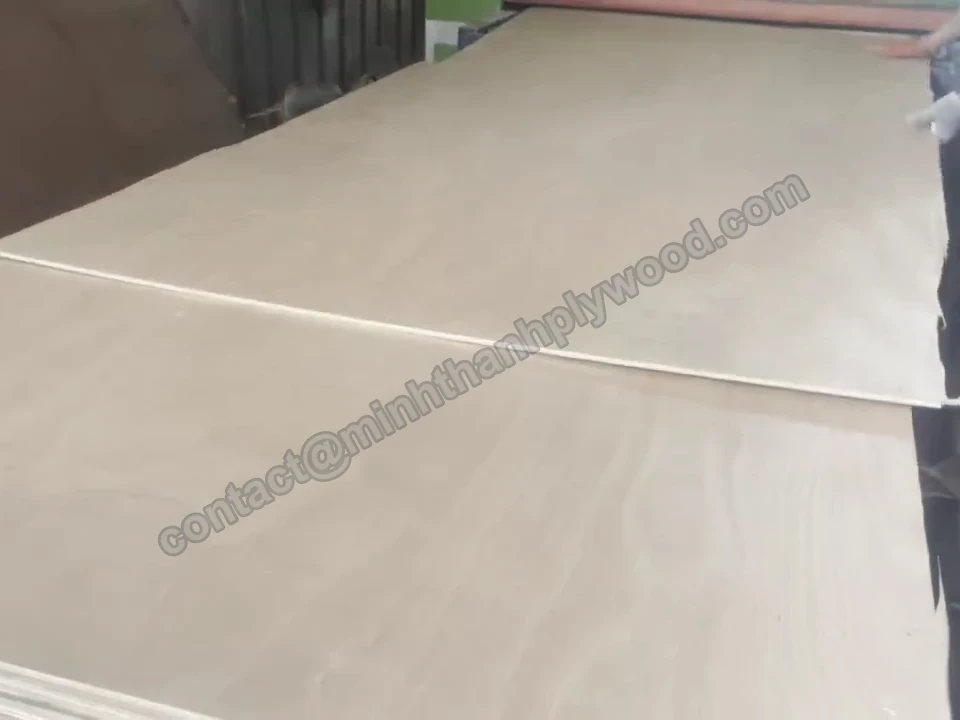
Minh Thanh’s MOQ is one 40HC and its standard production lead time is 15–45 days after deposit. Free samples support the available-range qualification. Send the enquiry through Contact with the destination and desired delivery term. The purchasing goal is an accepted furniture construction, with beech and any proposed alternative described accurately from face to core.
Buyer questions, answered
What is beech plywood?
Beech plywood uses beech veneer in its declared panel construction. The quotation must distinguish all-beech layers from a beech face over another core. The name alone does not state the adhesive, emission class or component load capacity.
What is beech faced plywood?
Beech faced plywood has a beech decorative veneer on a separately specified substrate. The back and internal core can be different species or materials. Request the complete layup and an edge sample before treating it as an all-beech panel.
Are all beech plywood sheets the same density?
No. Use the density stated for the actual complete panel, with its moisture basis, and check sheet mass on representative samples. An all-beech product and beech faced plywood over another core are different constructions. A solid beech density is not a mixed-panel density.
Is beech plywood waterproof?
Specify the bond, application and finished-component protection separately from beech species. A water-resistant adhesive does not make exposed wood permanently waterproof. Marine and exterior applications need the required product standard and evidence for the complete panel.
What is the difference between white and steamed beech veneer?
They are commercial appearance options that should be approved as separate visual references. Identify the supplied option on the quotation and test it under the actual stain or clear finish. A single unlabelled beech photograph is insufficient for a repeat colour specification.
Is beech plywood stronger than birch-faced furniture plywood?
Compare reports for the complete panels and the same thickness, direction and test conditions. Then qualify the actual furniture component with its supports and joints. A solid-wood species ranking cannot establish the load capacity of either panel.
Can beech plywood have a birch core?
A beech decorative face can be applied over a birch veneer core when that is the producer's declared construction. The quote should say beech face and birch core rather than leaving the layers implicit. That product is distinct from both all-beech and all-birch plywood.
Does Minh Thanh offer beech plywood?
The available range described here includes birch, poplar, EV, okoume and other approved faces over Styrax or Eucalyptus furniture cores. Beech plywood is discussed as an alternative purchasing specification. Send the furniture drawing for a quotation on the available range.
What should I check before CNC cutting beech plywood?
Identify the full layup, finished thickness and tolerance, then trial the deepest pockets, narrow webs and required edge appearance. Use the intended tools, feed programme and hardware on representative panels. Record the accepted construction and drawing revision together.
What is the right specification for a beech plywood quote?
State all-beech or decorative-face construction, front/back grades, veneer appearance, core, dimensions, tolerance, bond and emissions. Add the component drawing, finish, packing and quantity. Require relevant reports and a representative machined sample for the intended use.