
Birch plywood for furniture works best when the face, core, thickness and finishing process match the component. Choose the grain for visible surfaces, then qualify the joints, hardware and supported load. Minh Thanh Plywood makes birch-faced furniture panels with stitched Styrax or Eucalyptus cores and double pressing. Use a finished component sample to define the repeat order.

Where does birch plywood fit in a furniture range?
Birch plywood fits furniture ranges that need a pale natural veneer, a prepared panel surface and construction chosen for the part being made. Cabinets, desks, drawer components and storage furniture can use the same visible species with different thicknesses and cores. The useful buying decision begins with a component list.
Separate every visible face, exposed edge and functional connection on that list. A cabinet side needs a clean inside appearance and reliable hardware positions. A table top needs the chosen surface treatment and support arrangement. A drawer bottom needs its groove fit and load trial. Calling all these parts “birch ply furniture” does not tell production which panel to use.
Minh Thanh’s furniture plywood range uses stitched, double-pressed construction with white Styrax or Eucalyptus core. The birch product specification adds the natural face choice. For a new furniture collection, qualify the demanding part first, then document which other components can use the same approved construction and which need a separate order line.
What exactly are you buying: face, core or all-birch?
Birch-faced plywood specifies the outside veneer; all-birch plywood specifies birch through the internal layers as well. Both can appear under the broad name birch plywood, so the order must say which construction is required. Looking only at the front face cannot resolve that difference.
Minh Thanh’s furniture panels combine birch faces with Styrax or Eucalyptus core. This gives the buyer a separate choice of appearance and internal construction. The factory stitches core veneers horizontally and vertically, presses and calibrates the core board, and then presses on the face and back. That production route is relevant to the prepared surface and machining trial.
Use identified samples to compare constructions. Saw through a part, machine the intended fittings and inspect the usable face under the finish. If the furniture design requires the appearance or previously qualified performance of an all-birch edge, preserve that requirement in the drawing. The Baltic birch furniture guide explains the approval route when an established all-birch material is being compared with a birch-faced alternative.
Which panel specification suits each component?
Specify the panel by the component’s visible finish, supported function and manufacturing operation. A shared face species helps the collection look coherent, but the hidden construction need not be identical across every part. Split the bill of materials wherever the requirements change.
| Furniture part | What the factory needs to know | What the workshop should approve |
|---|---|---|
| Cabinet sides | Inside/outside visibility, connector drawing and edge tape | Both finished faces, drilled fitting positions and assembled corner |
| Clear-coated fronts | Grain direction, neighbouring-front layout and appearance pair | Colour relationship, permitted repairs and coating result |
| Desk top | Frame supports, underside fittings and surface finish | Complete supported top, finished edge and hardware seats |
| Bench or seat | Seat geometry, supports and joint drawing | Completed assembly tested to its specified loading and repeated-use method |
| Bookcase shelves | Span, supports, intended load and exposed edges | Shelf assembly and the buyer’s chosen load/deflection method |
| Drawer sides | Runner hardware, joints and visible inside face | Runner fit, assembled drawer and finished groove |
| Drawer bottoms | Groove design, support and selected thin construction | Fit and performance in the completed drawer |
| Wardrobe backs | Fixing or groove arrangement, finish and panel format | Squareness, installation fit and rear-surface preparation |
Put the part code beside the panel specification. This makes the quote, cutting programme and receiving inspection refer to the same item. It also prevents a cleaner face intended for visible doors being consumed on a hidden back while the door run waits for material.
How do you select the face and back grades?
Select the face/back pair by what remains visible after assembly and finishing. Birch appearance includes grain, natural colour, knots and repaired areas. An approved grade must describe the whole usable part, including a reverse face that becomes the inside of a cabinet.
Minh Thanh quotes birch grades D+, D and E. D+ approximately corresponds to European B, D to BB and E to CP/C. The pair D+/D is approximately B/BB; D/D is approximately BB/BB. Use these as appearance comparisons alongside the approved sample, rather than exchanging trade codes without a visual reference.
The August 2024 manufacturer’s surface-quality guide, reviewed on 8 October 2026, separates surface grade from mechanical properties and illustrates permitted repairs. This distinction matters to your order: a cleaner surface can improve visible yield without establishing a shelf load rating. Approve repairs under the intended finish and record whether their location matters to the component layout.
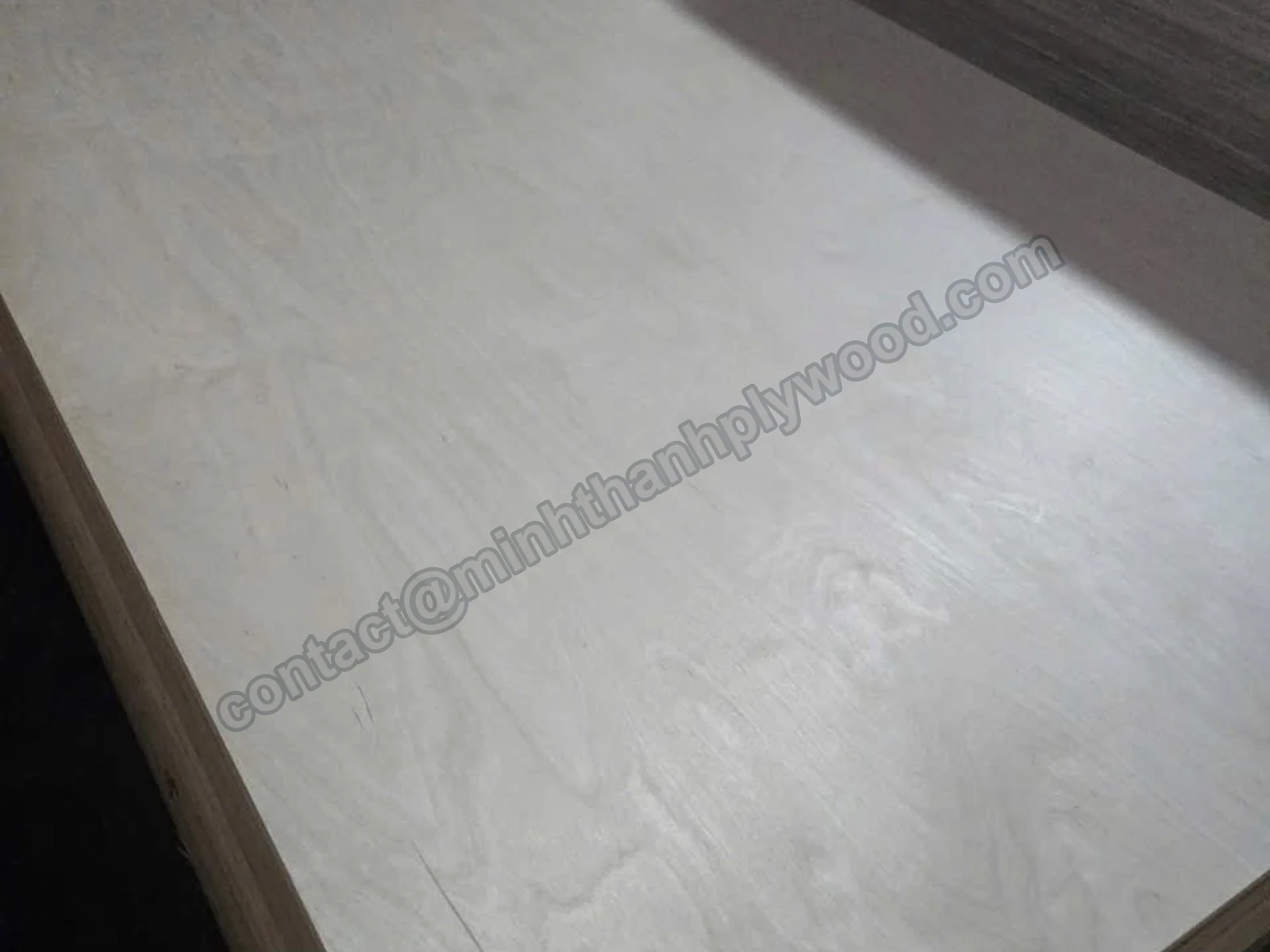 Grain and colour need a finished appearance reference as well as a grade name.
Should you choose Styrax or Eucalyptus core?
Choose the core by machining, handling and the completed furniture trial. Styrax is the lighter standard furniture-core option; Eucalyptus gives a different panel mass and internal material. Neither choice can be made from the birch face alone, and neither needs an unsupported claim about every possible assembly.
Ask for the same face/back, thickness, bond and preparation when comparing cores. Machine the actual component from each identified sample, then observe edge quality, drilled fittings and assembly. For a portable cabinet or furniture part handled repeatedly on the line, panel weight belongs in that comparison. For a long shelf, include the designed support and load method.
For a 1220 × 2440 × 18 mm sheet, the volume is 1.220 × 2.440 × 0.018 = 0.0535824 m³. Using Minh Thanh’s planning densities of 500 kg/m³ for Styrax and 650 kg/m³ for Eucalyptus gives about 26.8 kg and 34.8 kg respectively, excluding packaging. Use these calculated reference masses to plan handling, then measure the finished sample for the component comparison.
Record which core passed for each part family rather than approving “birch” for the whole range. Minh Thanh’s furniture-core preparation and double pressing are part of both the material description and the production evidence. When a core change is proposed on a repeat order, compare it using the same component reference. This keeps the useful selection visible to purchasing, the factory and the receiving team.
How should you buy shelves and bookcases?
Buy shelves against their actual span, supports and expected service load, with the face and edge appearance specified separately. A birch veneer does not make a universal shelf thickness or unsupported span. The panel construction and complete assembly must satisfy the design.
Show whether the shelf is fixed, adjustable or part of a carcass joint. Mark any front reinforcement, lip or edging that contributes to the finished shape. Then use the proposed panel in that exact arrangement and the buyer’s chosen load and deflection test. Check the support holes and the surrounding material as well as the centre of the shelf.
For an open bookcase, inspect both broad faces and the layered or taped edge after coating. If a natural edge is part of the design, approve the visible core rather than assuming the birch face predicts it. If the edge is covered, include the actual tape and adhesive in the reference part. Carry the successful core, thickness, machining and finishing instructions into the order; the thickness guide supports the dimensions discussion.
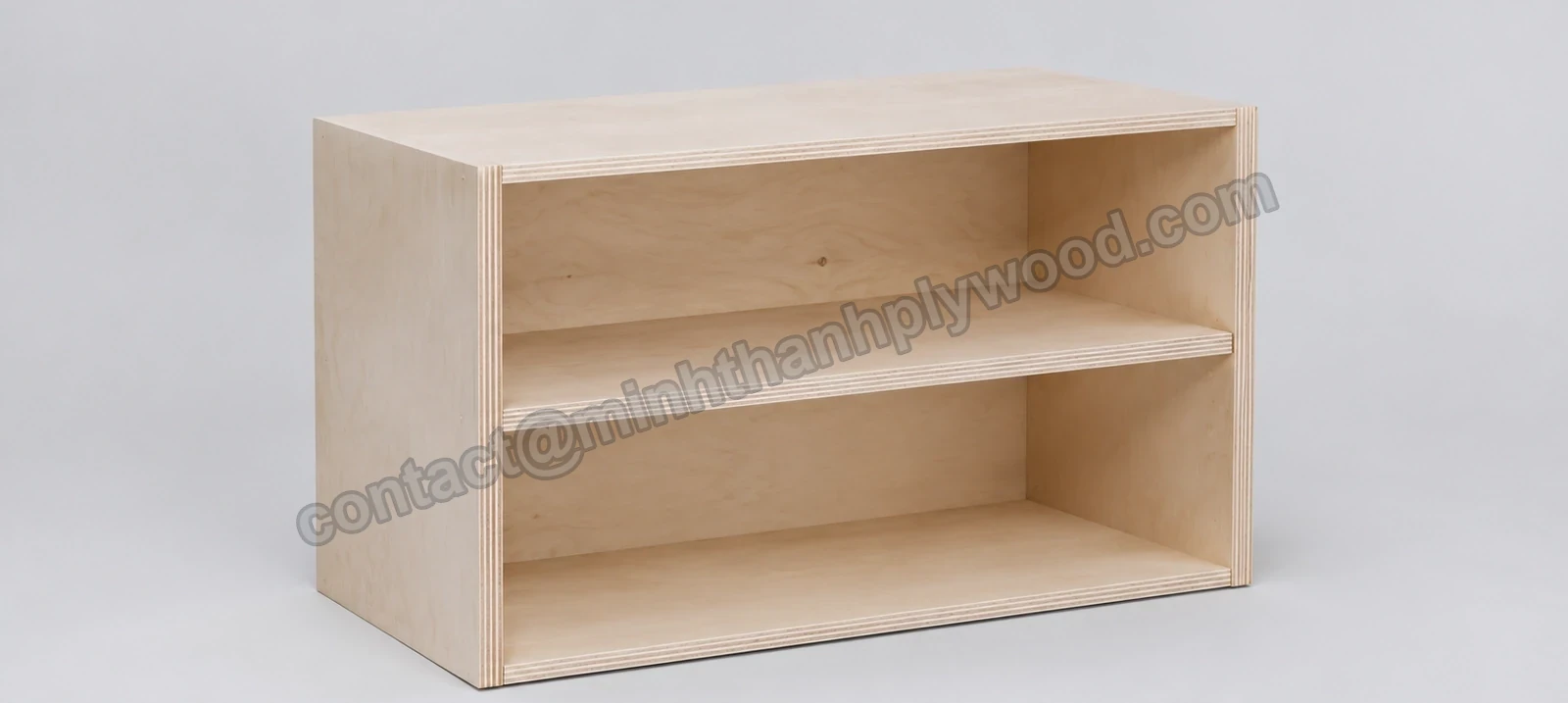 A shelf approval includes its supports, finished edge and surrounding cabinet assembly.
What should a desk or table-top trial include?
A desk or table-top trial should include the supporting frame, underside hardware and the completed surface treatment. Approving a flat offcut answers only part of the question. The tabletop experiences its service conditions as an assembly, with loads transferred through the selected supports and fittings.
For a dining table, include the largest unsupported area and the intended edge profile in the design’s acceptance test. For a coffee table, include any storage shelf and leg connection. Finish the top with the production coating and apply the buyer’s specified spill and surface-mark tests to that finished assembly.
Machine the fastener seats and inspect the material remaining around each hole. If the design includes cable openings, exposed curves or thin edge details, include those features in the sample. Finish the underside according to the drawing as well as the visible top. The complete trial then shows the surface, connections and edge protection together.
Minh Thanh supplies sanded furniture panels, including UV-ready preparation for the buyer’s coating process. Use the sample to qualify that surface on the actual finishing line and keep the resulting top as the reference. Do not substitute an attractive bare face for a coating approval. When a laminate is specified, test the chosen adhesive and reverse treatment as part of the completed panel rather than treating the decorative upper surface as the whole specification.
How should you specify drawer sides and bottoms?
Drawer sides and bottoms need separate material lines because they interact with different joints, supports and hardware. The side may carry a runner or an assembly fitting, while the bottom must fit its groove and support the intended contents. Their shared birch appearance does not make their thickness requirements identical.
For sides, show the joint type, runner model and visible interior face. Trial the drilling and assembly with the actual hardware, then check the fit after the chosen finish. For bottoms, assemble the drawer with the proposed thin panel and test the bottom within its real support arrangement. A loose thin sheet does not represent the finished drawer.
Minh Thanh’s thin plywood from 3–5 mm uses five plies. Specify the chosen thickness and prepared surface rather than assuming thin material has the same construction as a thicker stock panel. Label the bottom and side samples separately, keep the groove dimensions with the approval, and identify any cut-to-size pieces by part code so the receiving team does not mix similar-looking components.
What matters most for wardrobes and storage units?
Wardrobes need coordinated appearance and accurate assembly across large sides, doors, shelves and backs. Start with the complete unit drawing, including the visible internal faces and hardware. A purchasing list that names only the main door veneer leaves much of the user’s view undefined.
Mark door orientation and the colour relationship among neighbouring fronts. Identify where a long side carries hinges, where shelf supports are drilled and how the back locates in the carcass. Machine those details on the specified panel and assemble a representative unit. Check the finished openings and hardware fit before approving the material for a production run.
For knock-down storage units, keep connector fit and assembly sequence in the approval record. Surface finish can affect a friction-fit detail, and a small edge gap can affect a narrow connector seat. Minh Thanh’s stitched cores and calibrated furniture construction should be evaluated through these actual details. Store the successful reference with the drawing revision so a repeat order reproduces the chosen assembly rather than only the visual face.
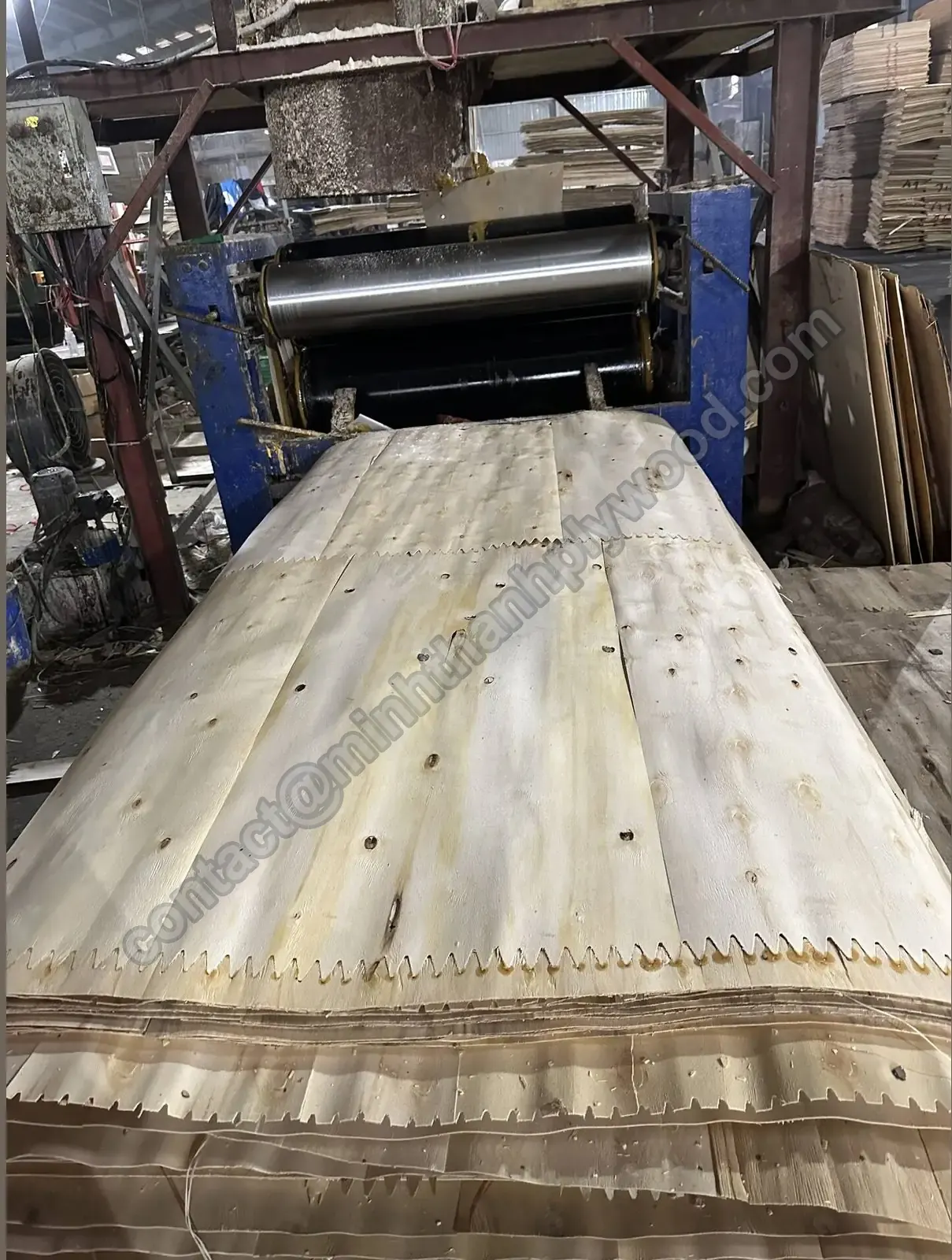 Core preparation is relevant to the machined parts hidden inside a storage assembly.
How do thickness, format and grain affect cutting yield?
Calculate usable components from the actual sheet format, grain direction, trimming and saw kerf. Sheet area alone overstates what the cutting programme can produce. A face repair or orientation requirement can also remove a position that looks available in a simple area calculation.
Minh Thanh’s standard formats are 1220 × 2440 mm and 1250 × 2500 mm, with custom formats such as 1220 × 2500 mm and 1220 × 2280 mm. Keep the required grain direction on the drawing. A layout that rotates a door to gain yield can change the appearance across an otherwise matched furniture front.
Specify thickness against the groove, fitting and finishing process. Sanded furniture panels are supplied at ±0.2–0.3 mm, down to ±0.2 mm for the specified order, with length and width tolerance of ±2 mm. Put the required tolerance on the quote and order, then check the sample at the positions that matter to the part. Use the cut-to-size service when a divided-panel format suits the production flow; allow for kerf and final trimming in the cutting plan.
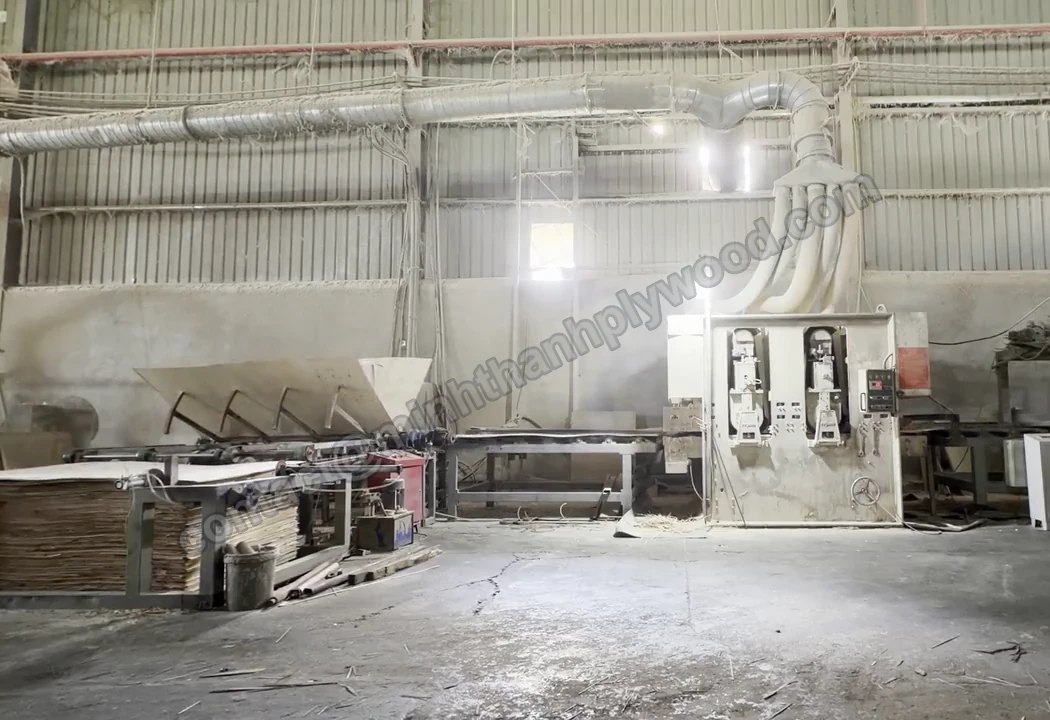 Panel calibration is part of preparing material for the required finished dimensions.
What is the right machining and sample-approval sequence?
The right sequence follows production from the raw panel to the accepted furniture part. It should expose the features that cause rejection and identify the process that made a successful sample. This makes approval repeatable when another operator or inspector uses it.
- Record face/back pair, core, thickness, bond and prepared surface.
- Mark the sheet orientation and the visible component areas.
- Cut the layout with the intended tooling and workholding.
- Route grooves and pockets, drill fittings and install the specified hardware.
- Apply the edge treatment and finish to both relevant faces.
- Assemble the component and perform the acceptance test from its drawing.
- Keep the finished part, uncoated reference and inspection record together.
Record defects at the operation where they appear. Face tear-out during drilling is different from a finish mark or damage during transport. This detail helps the workshop correct tooling or handling without changing the panel unnecessarily. Minh Thanh provides free samples; use them to create this complete reference before placing the container order, rather than approving a face photograph alone.
How do you control painting, staining and clear coating?
Control the finish by qualifying the same coating system, surface preparation and accepted appearance that production will use. Birch can be finished in several ways, but a specific colour or film result belongs to a tested process. The factory’s prepared panel is the starting substrate.
Clear coating makes natural grain and repairs visible. A stained finish needs colour approval across the permitted veneer appearance, including repaired areas. An opaque paint system needs a smooth prepared face and a satisfactory primer and topcoat result. Keep references for the real grain and acceptable repaired areas instead of selecting only a clean spot for the finishing trial.
For Minh Thanh UV-ready panels, run the sample through the buyer’s own line and record the successful preparation. The supplied plywood has prepared faces; the buyer applies the coating. Compare the staining guide, painting and priming guide and surface-finishing guide for the separate finishing decisions. Keep the final finish choice attached to the part code so purchasing does not change its face requirements independently.
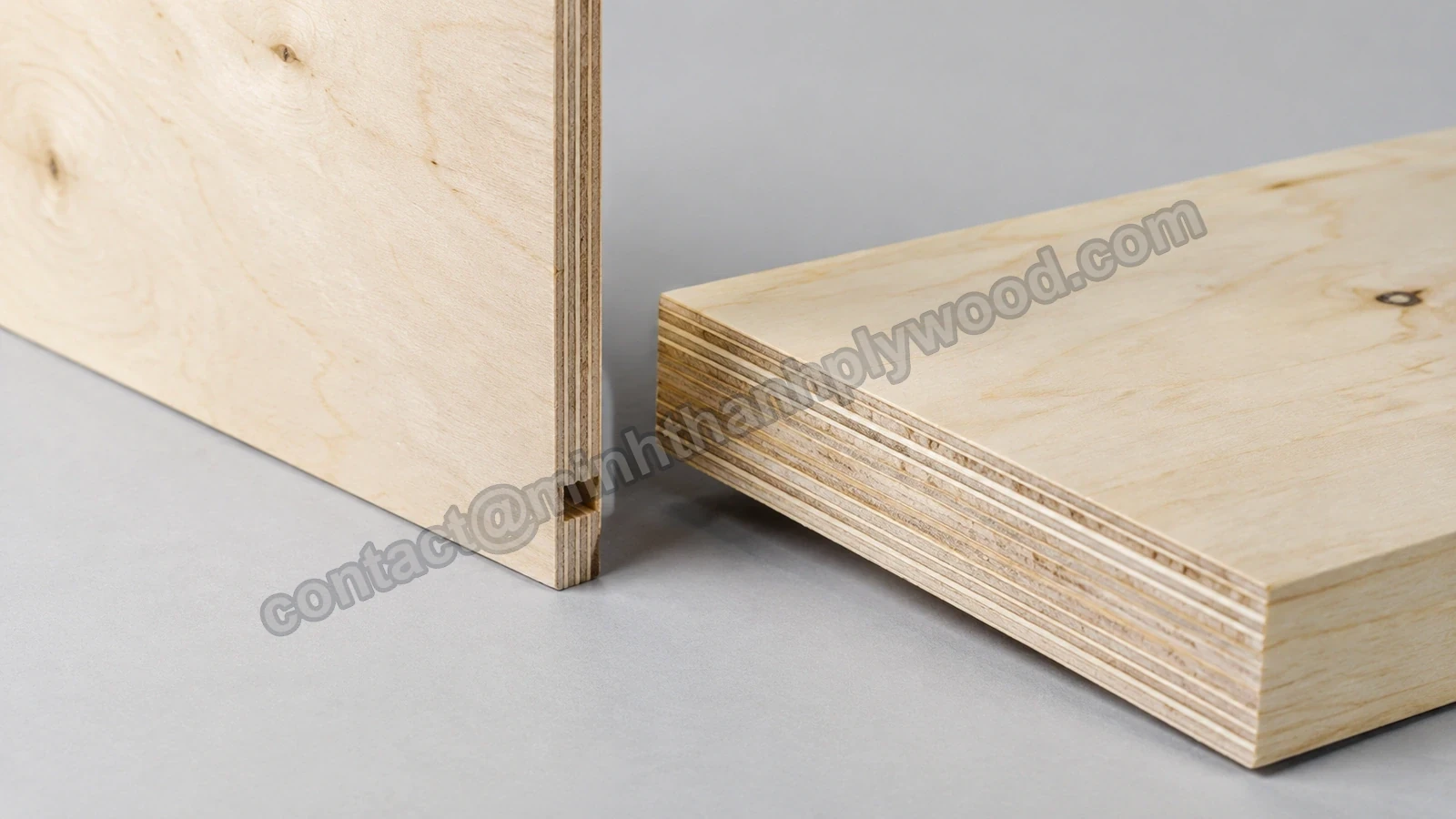 Finishing approval should include the details the customer will see after machining.
What bond and emission specification belongs on the order?
Put the adhesive or bond performance and the emission requirement on separate order lines. Furniture application determines the exposure brief; destination requirements determine the product documents and test method. E0 describes emissions and is not the name of an adhesive.
Minh Thanh’s standard furniture panels use UF glue at E0 emission. Specified melamine-fortified and phenolic constructions serve orders with different bond requirements. For humid or wet-service details, identify the edges, holes and joints exposed in the completed furniture and qualify their treatment along with the panel bond.
For the United States, EPA’s composite-wood rule guidance, reviewed on 8 October 2026, explains certification and labelling for regulated panels and finished goods containing them. The limit for veneer-core hardwood plywood is 0.05 ppm under EPA’s emission-limit guidance. In the EU, Regulation (EU) 2023/1464 sets 0.062 mg/m³ for furniture and wood-based articles from 6 August 2026. Minh Thanh holds CARB P2 / TSCA Title VI certification, ICTT mill no. 23024, and provides the US-order labels and documentation. European buyer test methods, including EN 717-1, are arranged through SGS on request. The quality hub holds the wider evidence; include the required method in the RFQ so it refers to the panel being ordered.
How should panels be packed, received and stored?
Keep the furniture specifications identifiable and protect finished faces and edges throughout handling. Receiving should compare the load with the approved reference before stock is mixed. Straightforward material identification is especially useful when several thicknesses share a pale birch face.
Agree pack protection, part or specification labels, and quantities in the packing list. At arrival, inspect packaging and corners, then compare representative sheets with the face/back, dimensions and preparation in the order. Record packaging damage separately from material defects. Support panels flat in the workshop and keep the identified constructions separated through the cutting queue.
Minh Thanh photographs and films every shipment before loading and sends the records to the buyer. Use those images with the packing list to plan unloading and establish the shipment’s condition. Mixed loads are available by agreement, starting at one 40HC. Keep each approved panel specification distinct within the load, including any thin backs or cut-to-size material, so a receiving label can be traced directly to the furniture bill of materials.
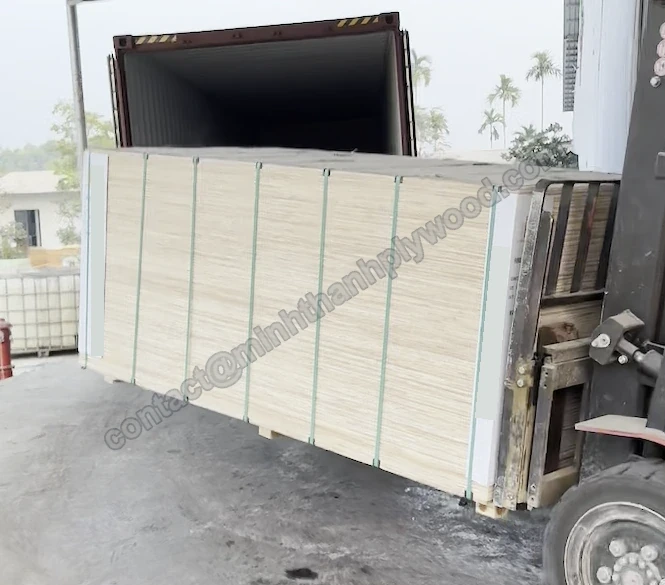 Packing records and visible protection help receiving identify and inspect the material.
How do you compare quotes by usable furniture output?
Compare quotations for the same panel and the cost of accepted components produced from it. A sheet price excludes cutting yield, coating work and the effect of a different format. The sample trial provides the useful measurements for that comparison.
Record actual accepted parts, sheets consumed and rework from the production trial. Include an additional finishing or edge operation when it is required by a candidate construction. Use a common delivery term and quantity for the material quotations. This keeps material and workshop decisions connected without assuming a fixed waste allowance or inventing a savings percentage.
Minh Thanh quotes the face/back, core, dimensions, bond, preparation and packing as a defined order. Keep these fields visible when comparing Styrax and Eucalyptus options. We supply the EUDR compliance dossier with origin records and geolocation files; destination document requirements belong in the comparison as well. A reliable decision ends with one approved specification for each component family, followed by a repeat-order reference that the factory and workshop can both use.
What should you send to order birch furniture plywood?
Send the component drawing and a specification that connects the face to the core, operations and finish. Begin with the most demanding part and its acceptance sample. This turns a broad request for birch plywood furniture into a quotation for a panel your production team can approve.
Include application, face/back grades, core, finished thickness and tolerance, sheet format, grain direction, bond requirement, emission method, sanding or UV-ready preparation, edge treatment and quantity. Add packing, destination and delivery term. Note which parts are clear coated, which are painted or laminated, and where the reverse face or layered edge remains visible.
The component-selection pillar compares other faces and materials; the cabinet guide develops the kitchen brief. Browse the applications topic for related purchasing decisions, then send the drawing through Contact. Minh Thanh offers free samples, production in 15–45 days after deposit, and FOB Hai Phong, CFR or CIF terms for the agreed furniture specification.
Buyer questions, answered
Is birch plywood good for furniture manufacturing?
Birch-faced furniture plywood gives manufacturers a natural pale face on a specified veneer core. Match the core, thickness, bond and finish to the component. Approve machining, hardware and the completed assembly before placing the repeat order.
Does birch plywood mean a birch core?
Birch plywood can describe either an all-birch construction or a birch face on another core. Minh Thanh manufactures birch-faced panels with white Styrax or Eucalyptus core. List the face and core separately on your specification.
Which birch face grade is suitable for clear-finished furniture?
Start with the appearance required on the finished component and approve the veneer under the chosen coating. Minh Thanh quotes D+, D and E as face/back pairs; D+ approximately corresponds to B, D to BB and E to CP/C. Grade selection must also define permitted patches, colour and grain.
Can I use birch plywood for long shelves?
Select the thickness, core and support arrangement using the shelf drawing and intended load. Trial the complete shelf with its edge treatment and fittings. A birch face alone does not establish a span or load rating.
What makes furniture plywood different from a general-purpose panel?
Furniture production needs prepared surfaces, calibrated thickness and a core that works through the planned joints and fittings. Minh Thanh furniture panels use stitched cores and double pressing, with the core board calibrated before the face and back are applied. The approved sample defines the required finished appearance.
Can I order thin birch-faced backs and drawer bottoms?
Minh Thanh supplies thin 3–5 mm plywood with five plies. Use the actual groove, support and finished component to select the thickness. Record thin parts separately from the thicker sides, shelves or doors in the order.
Does UV-ready mean the panel already has a UV finish?
UV-ready means the faces are prepared for the customer's coating process. It does not mean Minh Thanh has applied a UV coating. Run the sample through your intended line and retain the finished approval reference.
Can birch-faced panels be edge banded?
Yes, qualify the production edge tape, adhesive and machining sequence on the specified panel. Inspect the finished corner and bond along the working edge. Keep the tape and finishing system identified with the approved component.
How do I order matching birch furniture fronts?
Mark the grain direction and which fronts sit beside each other on the cutting drawing. Approve the acceptable colour relationship and repairs under the final coating. Keep a finished reference rather than relying only on a bare-veneer photograph.
What are the standard panel formats and tolerances?
Minh Thanh's standard formats are 1220 × 2440 mm and 1250 × 2500 mm. Sanded furniture-panel thickness tolerance is ±0.2–0.3 mm, down to ±0.2 mm for the specified order; length and width tolerance is ±2 mm. State the required finished dimensions and tolerance on each order line.
What should I put in a furniture plywood RFQ?
Include the application, component drawing, face/back pair, core, thickness and tolerance, format, bond, emissions, finish and quantity. Add grain direction, exposed edges, packing and destination. Minh Thanh provides free samples for the component approval.