
Maple ply has a maple veneer face over a separately specified core. For furniture, define the maple species, colour selection, veneer cut, face/back appearance and finished thickness, then trial the finish and hardware. Minh Thanh Plywood offers birch-faced and engineered-veneer furniture panels as separate options when the design permits another surface. Approve the complete component before buying sheets in volume.
What is maple plywood?
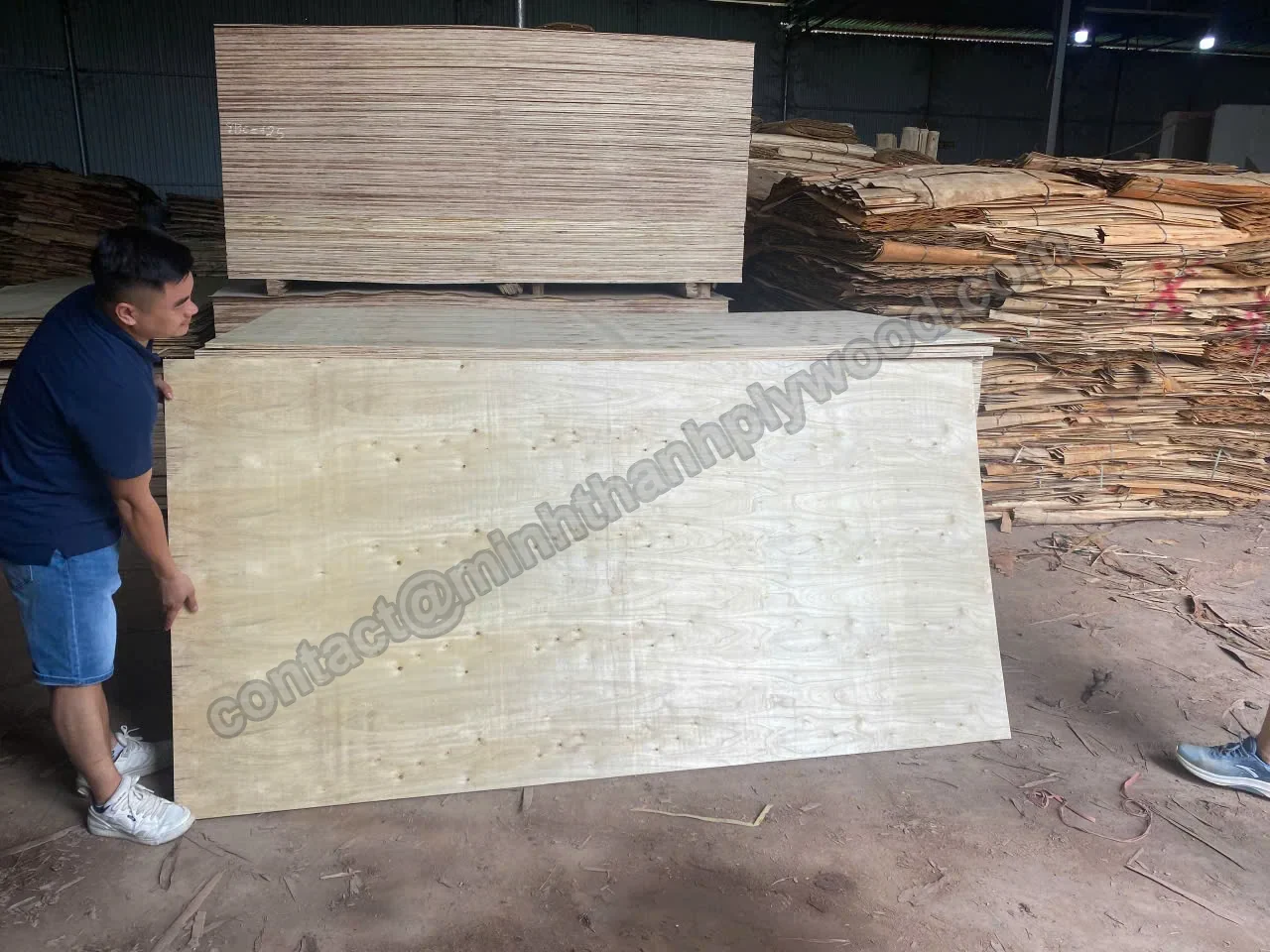
Maple plywood is a decorative panel with a maple veneer face bonded to a core; the visible species does not determine the construction inside. Buyers also encounter the names maple faced plywood, maple ply and maple wood plywood. Use the full construction description on the order rather than relying on any of those trade names.
A cabinet door, drawer side and tall shelving panel can all carry a maple face yet require different thicknesses, cores and backs. The veneer provides the surface appearance. The complete panel, its joints and the support arrangement determine how the finished part works.
Begin with the component drawing and the finished appearance reference. Our guide to furniture plywood connects those choices to the core, hardware and surface preparation. When the design accepts a different pale hardwood, compare an identified birch-faced furniture panel as a separate candidate. A face substitution belongs in the design approval, even when the unfinished samples look close.
Which maple species and colour selection do you need?
Specify the maple species or accepted species group, then define the colour range separately. Hard maple and soft maple are distinct trade descriptions; a quotation that says only maple leaves room for a different surface from the one the designer approved.
The American Hardwood Export Council identifies American hard maple as Acer saccharum and Acer nigrum. Its hard maple species guide, consulted on 8 October 2026, describes creamy sapwood, reddish-brown heartwood and a fine texture. These are species characteristics, rather than a promise that every veneer leaf has one uniform tone.
For a pale kitchen interior, request a white or sapwood-selected face and describe any accepted darker inclusions. For furniture where natural colour is part of the design, provide the darker end of the allowed range as well. Mineral streaks, pith fleck and figured areas need their own appearance instruction. Calling the face clear does not settle all of those questions.
Keep the approval on actual veneer under the planned finish. A camera’s white balance can make cream look white and obscure a pink cast. Place the samples beside the edge banding and the cabinet interior they must coordinate with. This turns colour selection into a repeatable receiving decision.
How do veneer cut and matching change the face?
Choose the veneer cut and leaf matching together, because a species name alone cannot describe the grain across a large panel. Rotary veneer produces a broad pattern; plain-sliced veneer gives a more recognisable lumber-like figure. A figured maple brief needs selected leaves, not a general promise of decorative maple.
Sliced leaves are narrower than the finished face and must be joined. Book matching reverses alternate leaves to produce a mirror relationship. Slip matching places consecutive leaves in the same orientation. The manufacturer’s hardwood plywood grading guide, 2015 edition, consulted on 8 October 2026, illustrates those cuts and matches. Use these terms to describe the required appearance, then approve the supplier’s real face assembly.
For a bank of doors, state whether adjacent components must continue a grain pattern or merely belong to the same colour range. If an elevation requires continuity, send that drawing before the veneers are allocated. Cutting random stock and sorting it afterwards creates a different job.
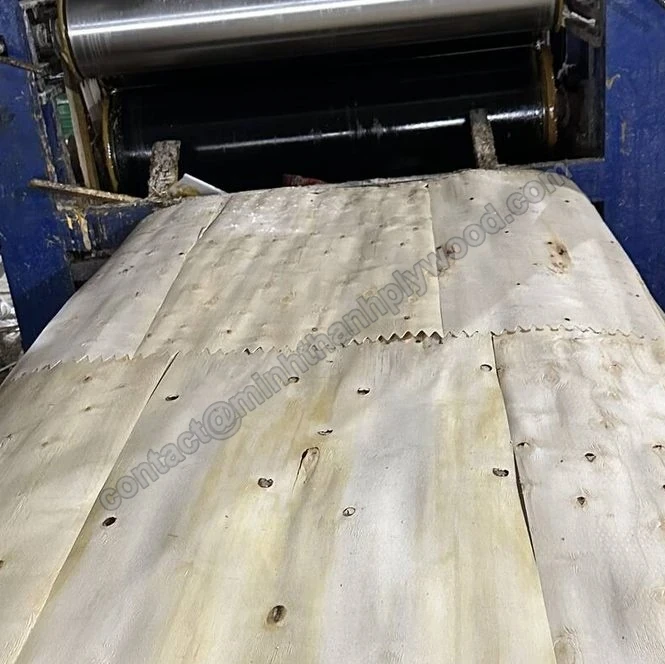
Joined core veneer sheets beside metal rollers. Decorative face-leaf matching is specified separately from internal veneer assembly.
What should the face-versus-core specification include?
Use separate fields for the decorative face, back and internal core. The table below is a purchase-order checklist, not a standard maple product offered by Minh Thanh.
| Specification field | What to write | What the sample must resolve |
|---|---|---|
| Maple face | Species, colour selection, cut and leaf match | Finished colour, grain and splice appearance |
| Reverse face | Species and its own appearance requirement | Visibility inside the furniture and panel balance |
| Core | Veneer species or other substrate, construction and permitted repairs | Cut-edge quality, machining and fixing performance |
| Finished thickness | Drawing dimension and agreed tolerance after sanding | Groove fit, hinge drilling and edge alignment |
| Bond | Required service exposure and documented bond performance | Suitability for the intended interior conditions |
| Emissions | Destination requirement and named test or certification route | Records belonging to the actual panel construction |
| Surface preparation | Unfinished, sanded or an identified coating system | Workshop preparation and the agreed finished reference |
| Order identity | Part, batch, grain arrow and matched-set identification | Sorting and traceability after the sheets are cut |
For the emissions line, name the rule of the destination market. The US limit for hardwood plywood with a veneer core is 0.05 ppm under EPA’s TSCA Title VI requirements, and the EU limit for furniture and wood-based articles is 0.062 mg/m³ from 6 August 2026 under Regulation (EU) 2023/1464.
Make each thickness and face/back combination its own line item. Mixing them beneath one description such as cabinet maple makes the receiving team depend on guesswork. Include a revision identifier on the drawing and the sample so a repeat order does not accidentally return to an earlier colour or hardware decision.
Which core suits maple faced plywood cabinets?
Select the core by the component’s machining, weight and attachment needs. A veneer core, an MDF core and a combination core can carry similar faces but behave differently at an exposed edge, routed pocket or fixing point.
Cross-banded veneer cores suit many furniture assemblies where part weight and conventional joinery matter. MDF provides a fine, even substrate for decorative surfacing; its mass and fixing details must fit the design. Combination constructions need an exact layer description, because the word combination does not tell you where the fibreboard sits or which wood forms the centre.
Inspect a cut section through a hardware location. Look for unsupported veneer, an open gap at the intended screw path and surface irregularity beneath the face. Then drill and assemble the actual part. A showroom surface sample cannot answer a question about a hinge cup or an edge connector.
For comparison, Minh Thanh’s furniture panels use white Styrax or Eucalyptus core as standard. Core layers are stitched horizontally and vertically. The core board is pressed and calibrated before the face and back are applied in a second press. These are useful construction details to compare alongside a maple supplier’s panel; they do not make birch or engineered veneer into maple.
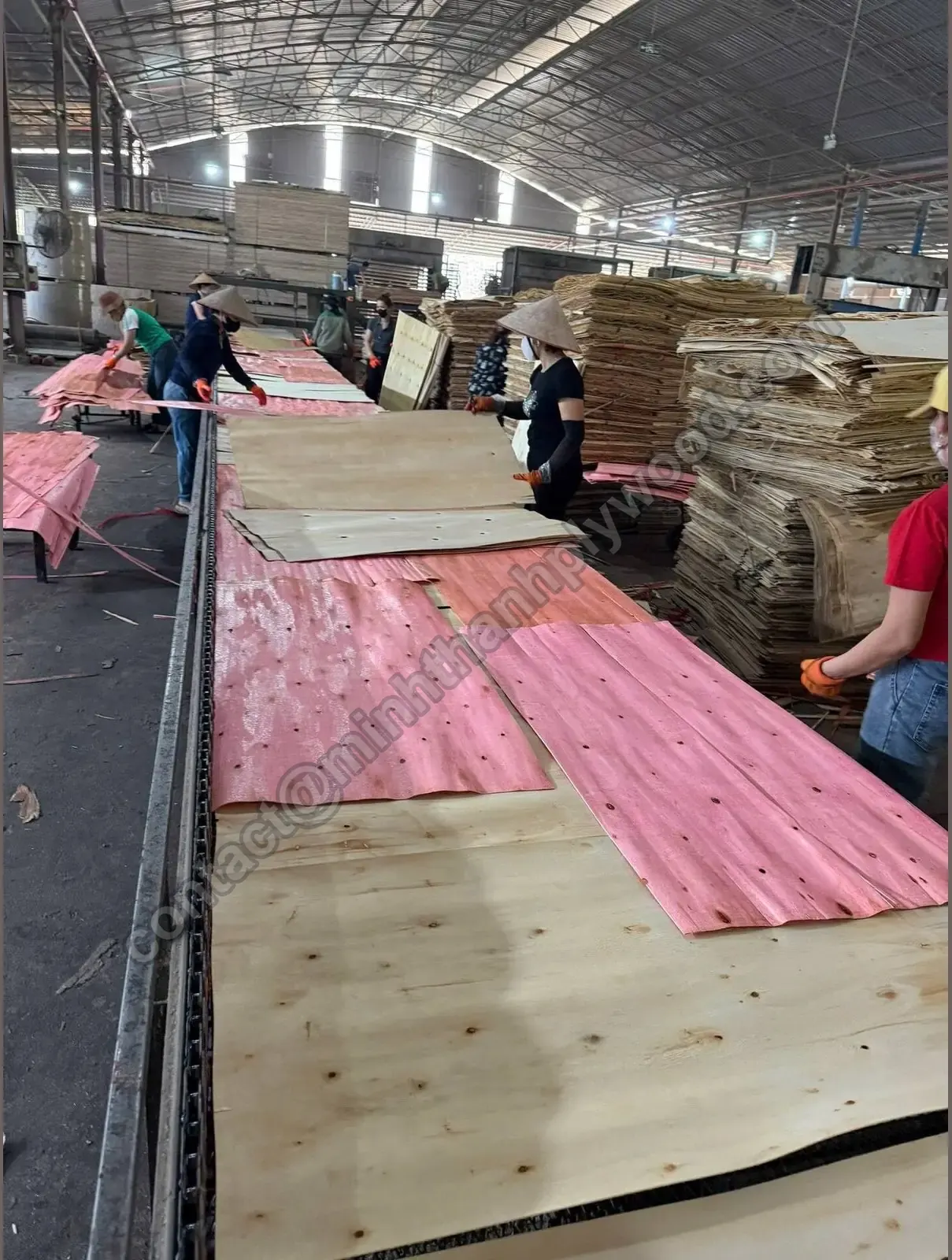
The layers inside a furniture panel are a separate manufacturing choice from the decorative face.
Will maple plywood warp after finishing?
Maple-faced plywood still responds to moisture, even though cross-banded construction controls movement across the sheet. Specify the face and reverse construction together, support sheets during storage and evaluate flatness after the intended finish. A maple face does not establish how the entire door or side panel will behave.
Trial a representative component rather than a small colour swatch. Apply the actual face and back finishing schedule, condition the part in the workshop environment and inspect it before and after fitting the hardware. Record how flatness is measured and which condition the approved reference represents. A door checked on a bench and a door mounted on hinges answer different acceptance questions.
For a change from maple to a Minh Thanh birch-faced or EV panel, preserve the component drawing and run that same trial on the new construction. Cross-banding, core preparation and double pressing provide a defined substrate; the complete finishing and assembly trial establishes the result the furniture buyer accepts.
How should you specify finished thickness and machining fit?
Order the finished thickness the drawing needs and the tolerance the assembly can accept. Nominal sheet names are a purchasing shorthand; the groove, hardware pocket and finished edge work against the thickness of the supplied panel.
Measure samples at several positions, including near the edges and within the sheet. Use the agreed measurement method and compare results with the drawing. For paired doors, variation can show as an edge step after assembly even when each leaf looks flat on its own. For drawer bottoms, the important check is the combined fit of panel thickness and the machined groove.
Minh Thanh supplies furniture panels in a published 3–40 mm range, with sanded furniture-panel tolerance of ±0.2–0.3 mm, down to ±0.2 mm. Those are our stated capabilities for the specified range. Request the corresponding finished tolerance from a maple supplier rather than transferring those figures to an unrelated panel.
Keep sheet thickness distinct from face veneer thickness. The total panel dimension does not tell a finisher how much maple remains after factory sanding. Ask for the face thickness at the supplied stage and the allowed workshop preparation before setting up the finishing line.
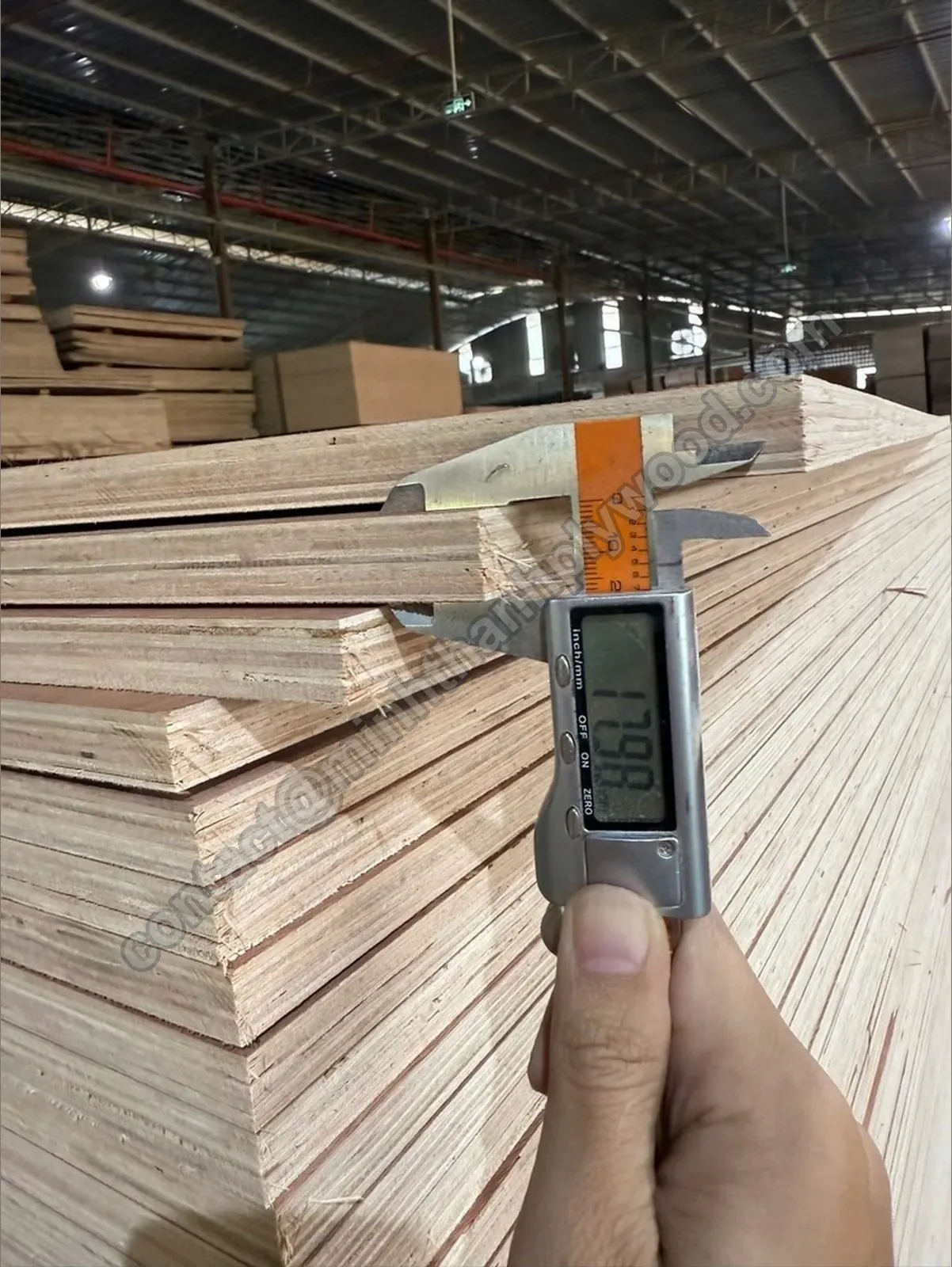
A thickness check on plywood. This photograph is a process example, not a measurement of maple-faced stock.
Where does maple ply work best in furniture?
Maple-faced plywood fits furniture where a pale, fine-grained visible surface is part of the brief. Choose the complete construction for the particular component instead of assigning one panel to the whole cabinet.
| Component | Main purchasing priority | Workshop approval |
|---|---|---|
| Cabinet side or interior | Finished colour, back visibility and fixing construction | Hinges, shelf pins and the intended cleaning routine |
| Flat door or drawer front | Face continuity, flatness and edge treatment | Finished door mounted with production hardware |
| Shelf | Thickness, support arrangement and core | Deflection and assembly under the design load |
| Decorative back | Surface appearance and groove fit | Cut part, installation and clear finish |
| Wall panel | Matched layout and attachment detail | Finished elevation with lighting and movement allowances |
A smooth maple face is useful on an exposed interior that will be wiped clean, but the coating supplies the finished cleanability. A shelf needs a load and support decision even when maple has a reputation for hardness. A panel that will receive an opaque coating deserves a surface and primer trial; buying more expensive figure adds little when the design hides it.
For the cabinet bill of materials, mark concealed and visible parts before selecting grades. Reserve the appearance selection for surfaces that need it and preserve suitable mechanical construction throughout.
Is maple plywood better than birch, oak or MDF?
The best choice is the panel that delivers the approved finish and passes the component trial. Compare visible surfaces and internal construction separately rather than ranking species as universal winners.
| Option | Reason to consider it | Main issue to settle |
|---|---|---|
| Maple-faced panel | The design specifies maple’s pale, fine-grained character | Species, white selection, figure and stain response |
| Birch-faced panel | A different pale hardwood surface is acceptable | Real veneer appearance, grade pair and core identity |
| Oak-faced panel | Visible pores and stronger grain are wanted | Oak species, veneer cut and pore treatment |
| MDF for opaque coating | Fine substrate and painted appearance suit the component | Mass, edge treatment, fixings and exposure |
| Engineered veneer | A specified repeated decorative pattern is wanted | Pattern identity, repeat, orientation and finished colour |
Comparisons such as maple is always stronger than birch confuse the surface veneer with the whole sheet. Use the same component dimensions, support and hardware when evaluating different candidates. Compare weight and machining directly, and keep the finished appearance samples beside the results.
Our engineered-veneer furniture panels provide another decorative route when the designer approves the pattern. They need their own specification and sample. A product name or photograph that resembles maple is not a species substitution approval.
How do you avoid sanding through the maple face?
Base sanding on the delivered face thickness and its condition, with extra care at edges and repairs. A veneered sheet cannot tolerate the same material removal as a solid board.
Inspect the face under light from a low angle before sanding. Glue residue, lifted grain and a local repair call for different handling; applying more sanding pressure to every blemish risks exposing the substrate. Trial the planned sequence on an offcut that includes a splice and an edge, then examine it under the finish.
Set up handling as carefully as the abrasives. Clean bearers and benches before laying a face down. Keep clamp pressure and conveyor contact from marking visible parts. Corners are often the first places to lose the decorative layer because a hand sander can tilt or dwell there.
Minh Thanh’s furniture sequence calibrates the core before applying the face and back. This puts the main thickness correction into the core-board stage. When comparing a maple construction, establish how it is calibrated and supplied, and which preparation is left for your workshop.
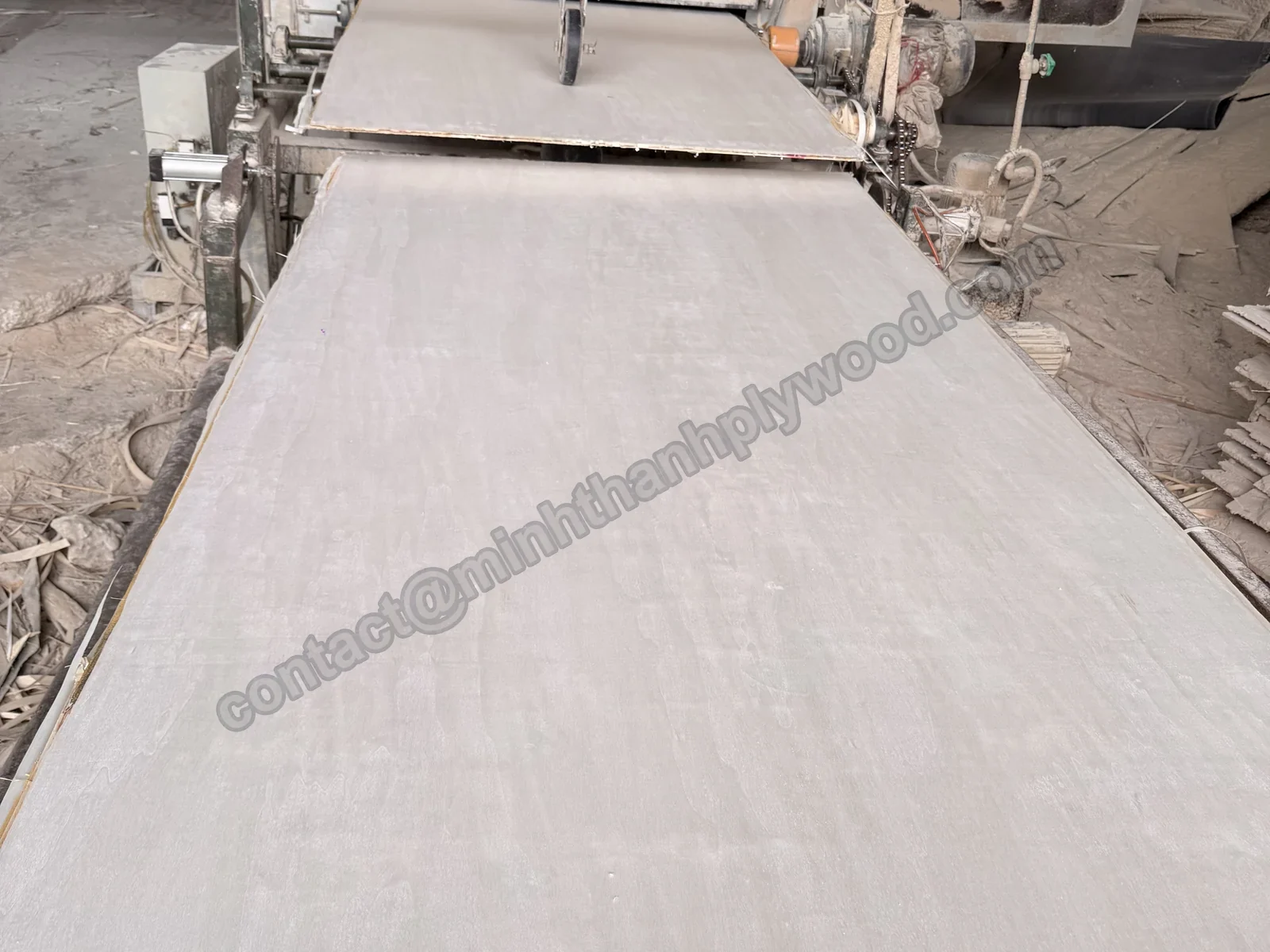
Panel sanding on a production line; the photograph illustrates preparation, not maple species or a sanding allowance.
How should you approve clear coating and stain?
Approve the entire finishing schedule on the supplied veneer, including surface preparation and edge banding. Maple’s pale surface can make uneven colour, glue marks and sanding differences prominent.
For a clear finish, compare the unfinished face with the cured coating and the adjoining solid components. Keep the lighter and darker accepted references. For a stained finish, trial the finishing supplier’s preparation, sealer or conditioner and stain system rather than treating one generic conditioner as a guaranteed solution.
Write the application sequence down. The same stain name can produce different results when the sanding, application method or drying sequence changes. Include an edge-banded corner in the sample so the finisher can judge both species colour and the adhesive line. If the panel is factory finished, ask how cut edges and workshop repairs will be completed.
After the finish has cured, judge the part in its installed orientation and lighting. A horizontal swatch beneath bright workshop lights answers a different question from a vertical door in the intended room. Keep the approved samples covered and identified so they remain useful references for the next delivery.
How do cutting and edge banding affect usable yield?
Plan the cut layout around grain direction and appearance groups before calculating how many parts fit on a sheet. Geometric yield and usable finished-part yield are different figures.
Allow for saw kerf and final trimming in the cutting file. Mark a grain arrow for each part and keep door pairs together. On selected white maple, a darker zone can be acceptable on a concealed back yet unacceptable in the centre of a visible drawer front. Assign it deliberately instead of discovering it after the cutting run.
Match edge banding under the final finish. A strip sold as maple can differ in colour selection from a sapwood-selected face. Where a solid lipping will be profiled, compare the face, lipping and profile as one finished assembly. Sanding a projecting strip flush must also protect the veneer beside it.
Record yield from the sample batch by component. Rejected finish, damaged edges and mismatched pairs belong in that record. A lower price per sheet can become a higher cost per usable door if the workshop needs more sorting or rework. That comparison is more useful than an unsourced price ratio between maple and another species.
Can maple plywood handle water or outdoor use?
The face species does not establish wet-service suitability; the complete bond, core and protection detail must match the exposure. Interior cabinetry should keep standing water away from edges, joints and cut-outs.
Separate a kitchen interior that is occasionally wiped from a sink unit with leak exposure. Specify the required bond performance to the panel supplier and the finish protection to the coating supplier. Treat openings and trimmed edges as part of the design. A finish on the main faces does not protect an untreated plumbing hole.
Do not transfer solid maple flooring performance to a thin decorative plywood face. A hardwood wear layer, a decorative face and a structural panel have different specifications. Flooring, outdoor furniture and structural applications require the relevant documented product and design, even when a maple surface is desired.
At receiving, examine edge swelling, face lifting and staining before machining wet or suspect panels. Keep photographs and pack identity with the inspection record. Drying a damaged sheet does not automatically restore the original bond or appearance.
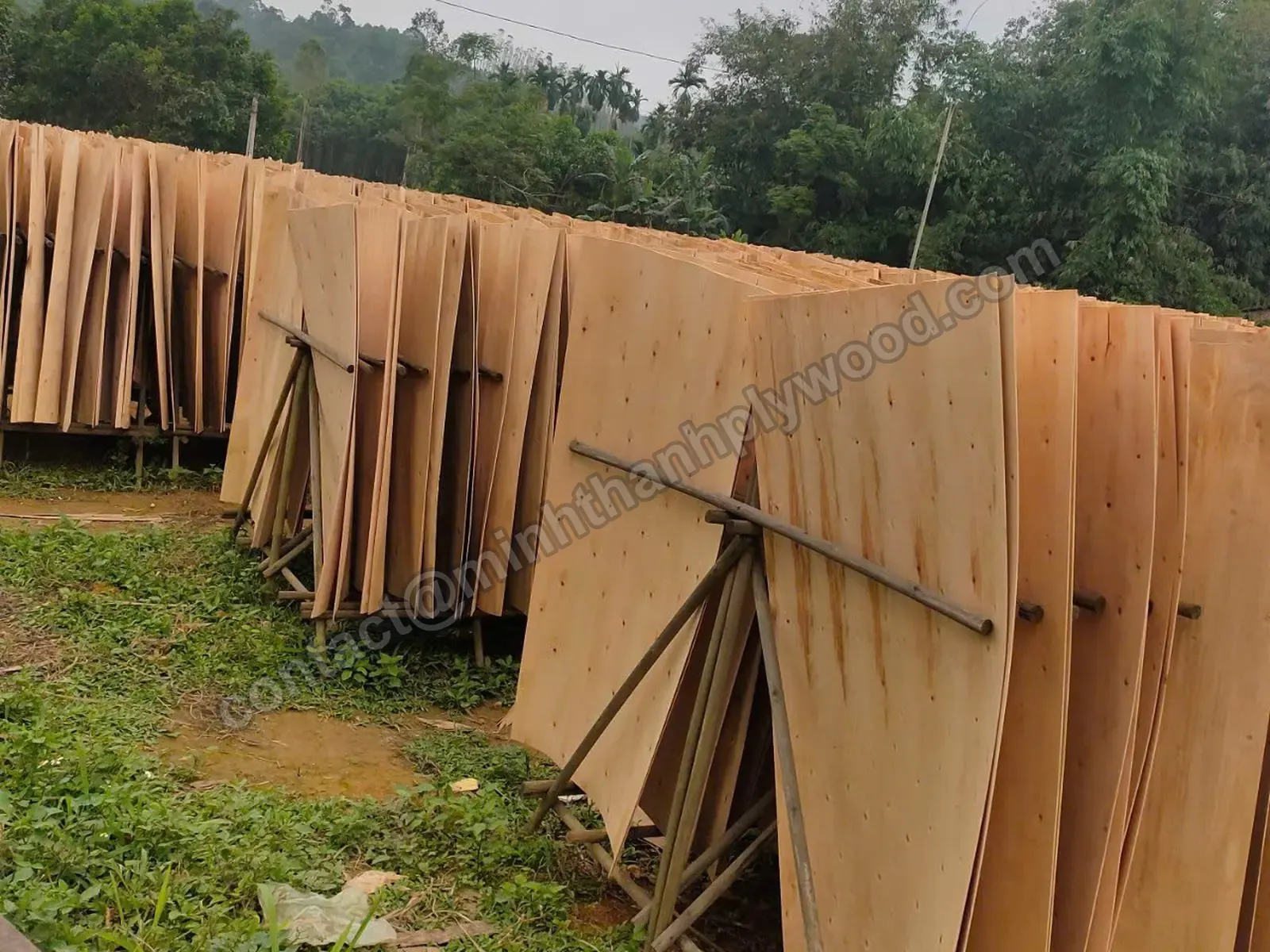
Veneer drying is one manufacturing step. A maple face name still needs a separate bond and service-exposure specification.
Which sample checks belong before a volume order?
Approve a finished component and the appearance range, not only a small uncoated swatch. The sample must represent the construction proposed in the quotation.
- Identify face/back, colour selection, core and production revision.
- Inspect the full surface and a cut edge, including permissible natural features.
- Measure finished thickness and the fit of production grooves or connectors.
- Cut and rout using the tools planned for the order.
- Apply the edge treatment and complete finishing schedule.
- Assemble the hardware and check the component in its service orientation.
- Keep approved references for colour, repairs and the complete finished part.
A distributor’s attractive display sample can differ from the panel they will quote. Ask for the sample identity on the quotation and the shipment labels. If the supplier changes the face selection, core or finish preparation, repeat the affected trial before accepting the new construction.
For a pale-panel comparison, Minh Thanh provides free samples of its offered furniture constructions. Use the same cutting file and finish reference when evaluating birch or engineered veneer beside a separately sourced maple panel.
How do you compare quotations and receive the shipment?
Compare identical specification fields and usable-part output, then inspect delivery against the approved references. Sheet price alone cannot show the value of colour sorting, face preparation and core construction.
For delivery into the EU, ask for the origin records early: plywood under heading 4412 is a relevant product of Regulation (EU) 2023/1115, the EU Deforestation Regulation.
Separate panel cost from matching requirements, workshop finishing, freight and packing. Get quantities by construction and identify whether sequence sets must be kept together. Ask how protected faces, corners and finished edges will be packed. For container planning, use actual or stated panel mass plus packaging and the booking limit; the pale face gives no reliable indication of weight.
On arrival, photograph unopened packs and their labels before separating them. Check a representative selection through the pack rather than only the clean top sheet. Compare face and back, thickness, panel condition and finish trials with the approved range. Keep colour groups and matched sets identified when moving the panels into production.
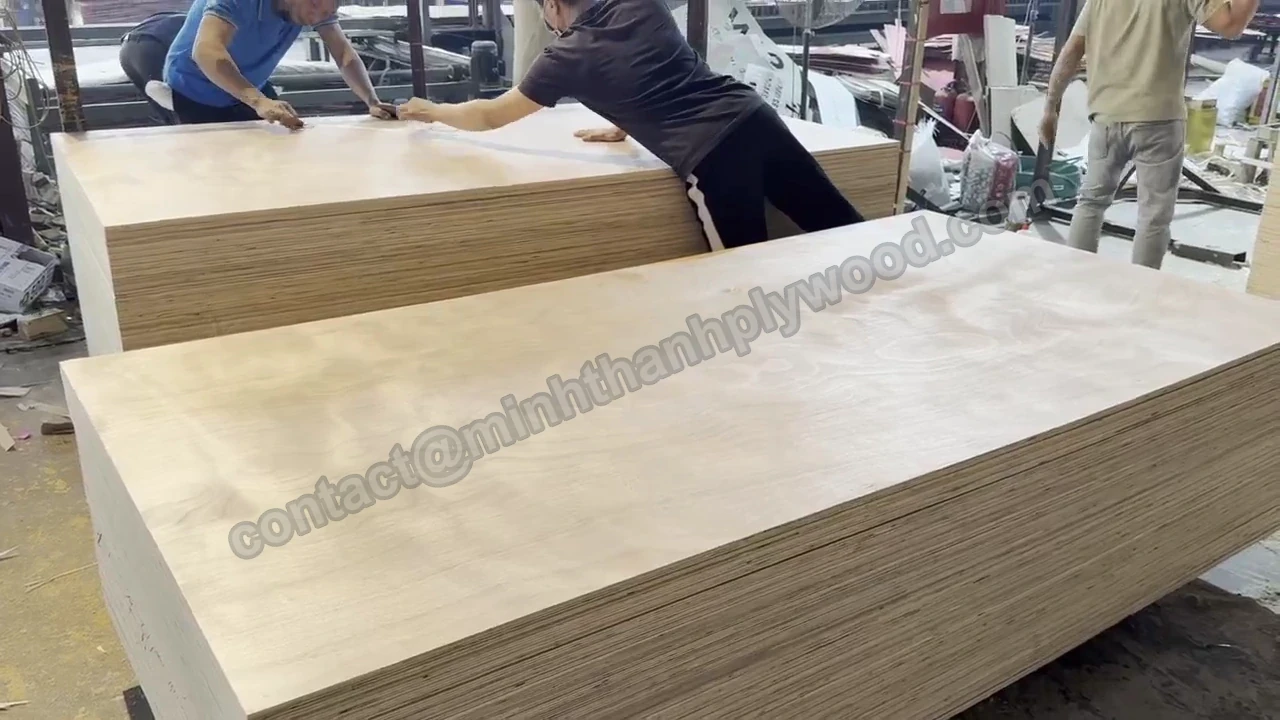
Finished plywood stacks at the packing stage. Keep appearance approval and pack identity connected through receiving.
What can you specify for an alternative from Minh Thanh?
When the design allows another face, specify an offered Minh Thanh furniture panel and approve it as its own material. Birch-faced and engineered-veneer plywood are useful candidates for different visual briefs.
The standard furniture cores are white Styrax and Eucalyptus. Furniture panels use stitched core assembly and double pressing. UF glue at E0 emission is the standard furniture/interior adhesive specification; bond performance and emission requirements remain separate order fields. Read our veneer grading process for how the surface and core decisions connect.
Send the application and part drawing, required face/back appearance, selected core, finished sheet dimensions and tolerance. Add the adhesive or bond, destination emission requirement, sanding or finish preparation, quantities by component and packing needs. Include the destination port and the approved appearance sample so the comparison refers to a real furniture specification.
Request a furniture plywood quotation with that specification, or request free samples of the offered birch and engineered-veneer constructions for a workshop comparison.
Buyer questions, answered
What is maple plywood made of?
Maple plywood has maple veneer on its visible surface and a separately specified substrate. A veneer core uses cross-banded wood layers; other decorative panels use MDF or a combination construction. The maple name alone does not identify the core or back.
Is maple plywood good for kitchen cabinets?
Maple-faced panels suit indoor cabinets when their core, thickness, joints and finish match the component. Approve the actual hinge fixing, shelf arrangement and cleaning exposure on a finished sample. Select the cabinet interior and outside face separately.
Does maple plywood have a maple core?
A maple face does not mean maple throughout the sheet. Specify the core species and construction independently and inspect a cut edge. The decorative surface and the layers that hold the hardware perform different jobs.
What is the difference between white maple and natural maple plywood?
White maple is a colour selection intended to favour the pale sapwood appearance. Natural maple accepts a broader mix of sapwood and heartwood colour. Define the permitted range using finished reference samples because these descriptions do not replace the supplier's grading rules.
Is maple plywood better than birch plywood?
Choose maple when the design calls for its species and appearance; choose birch when an approved birch surface fits the brief. Compare matched core constructions and finished components. A pale face on either panel says little about its screw holding, flatness or shelf performance.
Can maple plywood be stained dark?
Yes, but the finishing trial must establish the stain system and acceptable colour variation. Test sealer or conditioner, stain and topcoat together on the ordered face veneer. Keep the successful sample and application schedule for repeat production.
Can I sand maple plywood like solid maple?
Sand a veneered panel within the remaining face thickness and the supplier's preparation allowance. Aggressive sanding at corners, glue marks or splice lines can expose the core. Use a trial offcut to establish the workshop process before finishing the visible components.
Is maple plywood waterproof?
The maple face does not define the bond or wet-service suitability. Ordinary interior cabinet panels need protection from standing water, including at edges and cut-outs. Buy a documented construction for the intended exposure rather than treating a clear finish as a waterproof specification.
Should I order maple plywood with two matching faces?
Specify two visible faces for doors, partitions or open shelving seen from both sides. A concealed back can use a different appearance requirement while retaining the necessary panel balance. Mark each visible side on the drawing and approve both surfaces.
Does Minh Thanh offer an alternative for pale furniture panels?
Minh Thanh supplies birch-faced furniture plywood and engineered-veneer panels over specified furniture cores. Birch and maple remain different species, and an alternative needs its own appearance and finishing approval. Free samples help compare the component before ordering.
What belongs in a maple plywood purchase order?
List the face species, colour selection, cut, match and back, followed by core construction, finished size and tolerance. Add the adhesive or bond requirement, emissions, sanding or finish, component quantities and packing identification. Attach the approved appearance range and machining trial record.
Can an E0 label tell me which adhesive a panel uses?
E0 is an emission designation and does not name the adhesive. Keep the adhesive or bond specification separate from the emission requirement and test method. Minh Thanh's standard furniture construction uses UF glue at E0 emission.