
In short, choose birch plywood suppliers that make the panel themselves, name the core in writing, grade faces on a ladder you can check, and send production samples. Minh Thanh Plywood manufactures birch-faced furniture plywood on white Styrax or Eucalyptus cores in Ha Hoa, Vietnam: stitched cores, double pressing, ±0.2–0.3 mm tolerance and CARB P2 / TSCA Title VI certification.
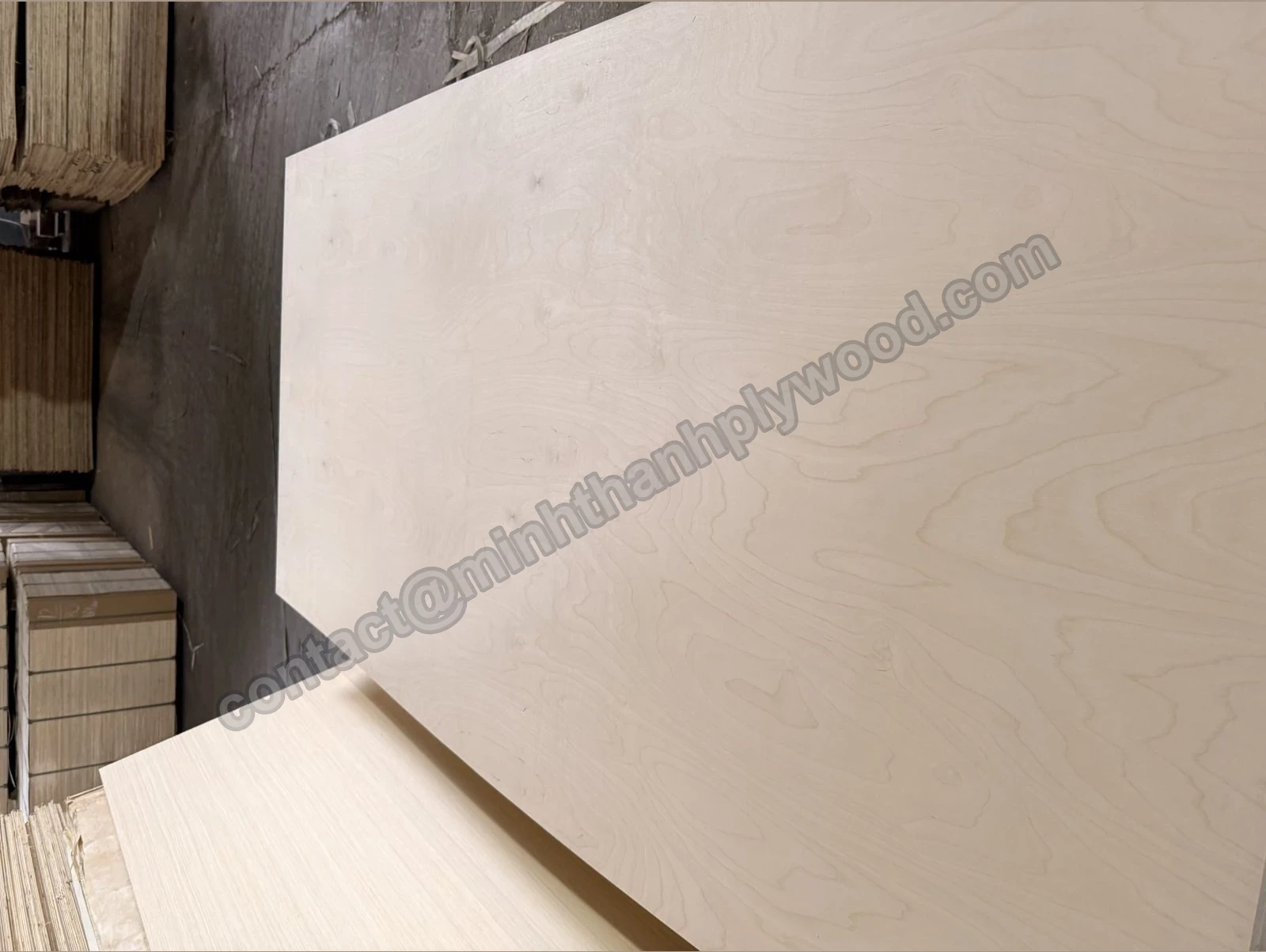
What should birch plywood suppliers be compared against?
Compare birch plywood suppliers against a completed component specification, not a country ranking or a general quality adjective. The specification should identify what the panel must look like, how it will be machined and the conditions the finished part must meet. That gives purchasing an objective basis for selecting a supplier.
Start with a component schedule for cabinet sides, shelves, doors, backs or other repeated parts. Mark the visible face, exposed edge and intended finish. Include the hardware and grooves used in assembly. Different parts can justify different face/back pairs while sharing a qualified core construction.
When you ask birch ply suppliers for quotations, send the same schedule to every candidate. A comparison is only meaningful when the offers describe equivalent dimensions, appearance and delivery responsibility. If a supplier proposes a different construction, identify that change as a separate alternative for qualification.
Minh Thanh’s birch-faced furniture plywood uses Styrax or Eucalyptus cores. The manufacturing offer includes stitched core layers, double pressing and calibrated furniture surfaces. Use those specific features in the trial rather than interpreting a pale face as a complete technical description of the panel.
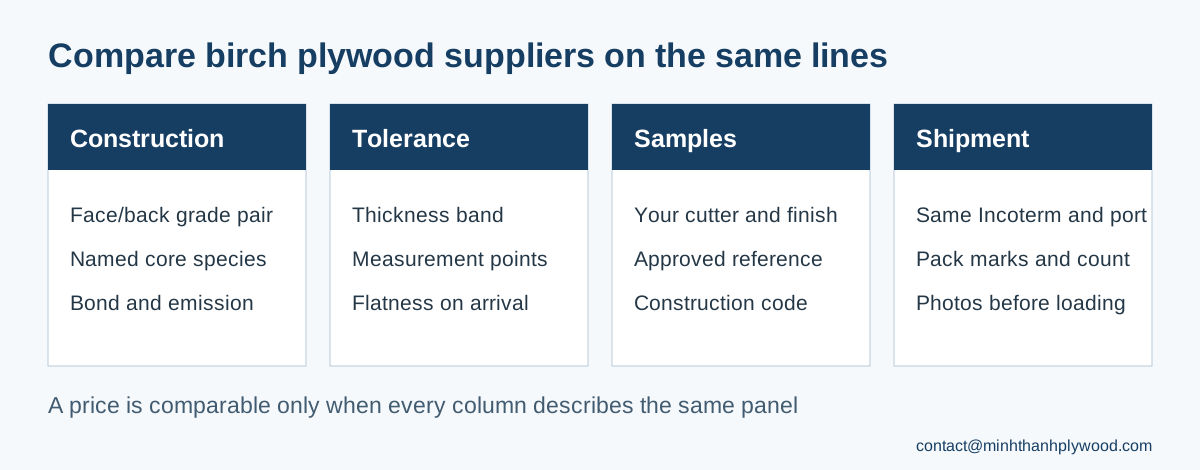
Put every supplier offer into the same columns before ranking prices.
What should a birch plywood manufacturer show you?
A birch plywood manufacturer should show you its own production: the peeling or veneer intake, core layup, presses, sanding line and packing, on video and on a factory visit. It should hold its certificates in its own name and send samples cut from production sheets, not from a showroom stock.
| What to ask for | What a manufacturer can show | Minh Thanh |
|---|---|---|
| Factory video and visit | Core layup, hot press, calibration, sanding | Own factory in Ha Hoa, Phu Tho; real factory photos and videos |
| Core in writing | Species and layup per thickness | White Styrax or Eucalyptus, stitched both ways |
| Face grade ladder | Named grades with photos | D+, D, E, comparable to B, BB, CP/C |
| Certificates in its own name | Certificate holder matches the invoice | CARB P2 / TSCA Title VI (ICTT mill no. 23024), ISO 9001:2015, TCVN 11902:2017 |
| Emission test reports | Laboratory, method, date, sample | Six ASTM D6007 tests, 0.014–0.032 ppm |
| Capacity | Annual volume | 50,000+ m³ per year |
| Shipment proof | Photos and video before loading | Every shipment photographed and filmed |
Ask each supplier the same seven questions and keep the answers next to the price. A supplier who cannot show the press line or name the core is reselling someone else’s panel, and the quality of the next container depends on a mill you have not seen.
Which construction is actually being offered?
The offered construction should state the face, back and internal species separately. Birch plywood can mean an all-birch product or a birch-faced panel over another core. Those descriptions should become distinct purchase-order lines whenever both enter a supplier comparison.
An all-birch panel declares birch internal veneers as well as its faces. A birch-faced furniture panel names its core independently. The manufacturer’s WISA birch construction reference, accessed 8 October 2026, provides an example of a specific producer declaring birch throughout its panel. Apply the same request for a construction declaration to the actual product you are evaluating.
A core described only as “hardwood” leaves purchasing without the species information needed to compare machining and shipment weight. Ask for the named core and layup, then relate them to the sample. Inspect internal continuity with fresh crosscuts and the grooves which your component will actually contain.
Minh Thanh manufactures the birch-faced furniture construction described in this article. Standard cores are white Styrax or Eucalyptus. Specify the required one in the quotation so the sample, production order and delivered panel remain the same material. Do not approve a sample by face colour and leave the core unspecified.
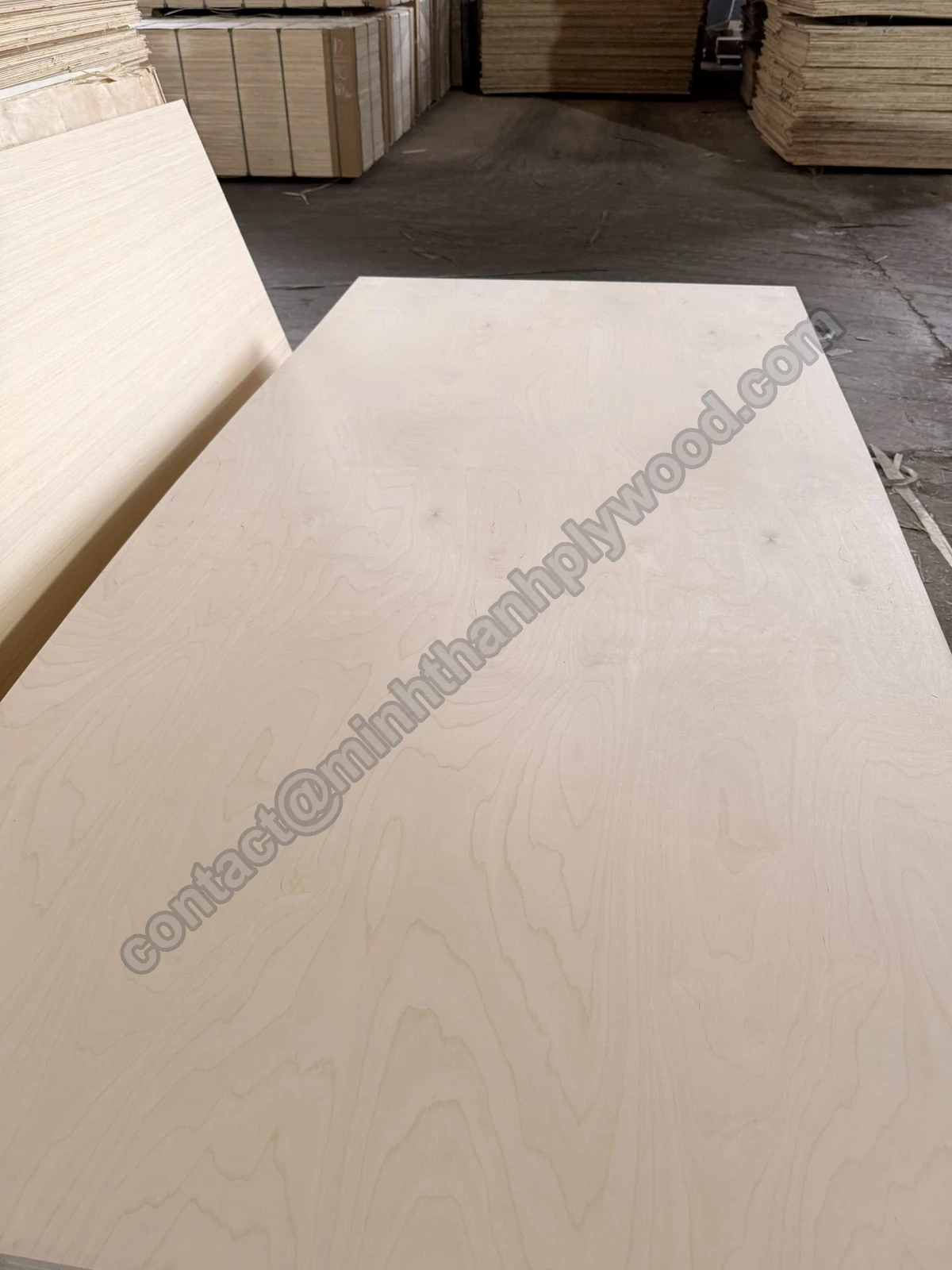
How should the component decide the core choice?
Choose the core by the component’s handling, machining, hardware, edge appearance and performance requirements. A core is the material your grooves and fasteners reach beneath the birch face. Qualifying those operations is more informative than choosing from a species name in a catalogue.
Styrax and Eucalyptus offer different panel-mass references for the same dimensions. Minh Thanh’s planning densities are approximately 500 kg/m³ for Styrax and 650 kg/m³ for Eucalyptus, with actual Eucalyptus panels at 650–750 kg/m³. These references help compare handling and shipment planning; they are not substitute bending or screw-withdrawal test results.
For a cabinet side with concealed edging, check the routed connector locations and edge-banding result. For an exposed edge, approve the actual layer appearance after finishing. A core which meets one part’s requirements can need a separate trial for another part with a deeper pocket or tighter edge detail.
Use the furniture plywood selection guide to organize the part schedule. Keep the core consistent within a qualified item, and list any approved alternative explicitly. This lets purchasing buy to an accepted construction without forcing a new material decision each time the workshop orders stock.
How should you compare birch face and back grades?
Compare face/back grades through the producer’s definitions and a finished appearance sample. Letter pairs organize the quotation; the sample establishes what the customer accepts on the part. Keep core quality on a separate line so the appearance discussion does not obscure machining requirements.
Minh Thanh’s Vietnamese birch grades are D+, D and E. Individual D+ approximately compares with B, D with BB, and E with CP/C. The pair D+/D approximately compares with B/BB, while D/D approximately compares with BB/BB. These are buying comparisons, with the actual appearance fixed by the approved sample.
For clear-finished visible parts, inspect grain, colour and accepted repairs after coating. For painted or covered parts, assess whether repaired areas finish consistently and whether the surface supports the intended overlay. A part hidden at installation still needs sound material around hardware and joints.
Record which side is the face on the component drawing and cutting schedule. A two-sided shelf can require a different pair from a one-sided cabinet panel. When several visible parts meet in one assembly, approve their colour relationship together rather than judging each loose sheet independently.
What should a supplier comparison table contain?
A supplier comparison should contain the properties which affect accepted components and repeat orders. Enter the offered values or construction in each column, then attach the corresponding sample record. Keep unsupported sales claims out of the decision table.
| Criterion | Request from each manufacturer | Minh Thanh furniture offer | Component check |
|---|---|---|---|
| Core identity | Named internal species and declared construction | White Styrax or Eucalyptus core | Fresh cuts and the actual routed features |
| Appearance | Face/back pair and producer's repair definitions | D+, D and E, quoted in pairs and matched to sample | Visible surfaces after the intended finish |
| Pressing route | Sequence of core preparation and face application | Core pressed and calibrated, then face/back pressed on | Surface and thickness through the full part |
| Furniture thickness | Nominal thickness and permitted variation | ±0.2–0.3 mm; specifications down to ±0.2 mm | Grooves, fixtures and hardware on measured samples |
| Surface preparation | Condition of both faces before the buyer's finish | Sanded, polished and UV-ready faces | Coating adhesion and appearance on the finished part |
| Resin and emission | Separate bond and emission requirements with method | UF glue at E0 emission for standard furniture panels | Documents for the ordered construction and market |
| Supply plan | Production schedule, quantity and delivery basis | One 40HC minimum; production 15–45 days after deposit | Stock coverage and receipt at the buyer's workshop |
Do not give a manufacturer a numerical quality score without measured evidence behind it. A qualification matrix should show whether the offered panel passes the agreed component requirements. Once acceptable offers are identified, compare cost and replenishment on the same delivery basis.
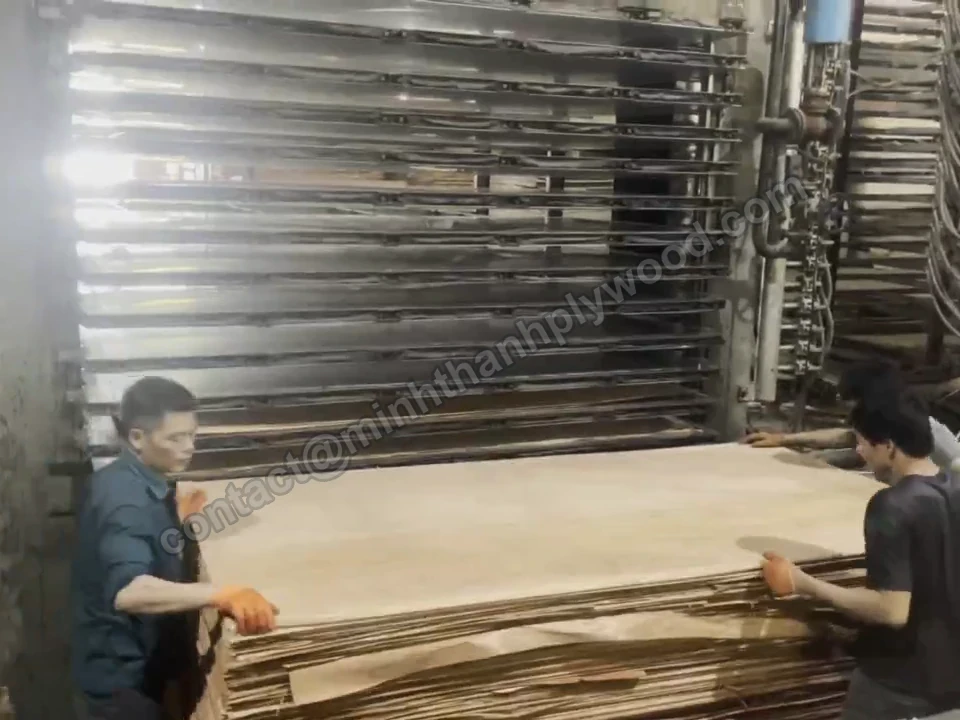
Why does core calibration before face pressing matter?
Calibrating the core before face pressing prepares the substrate beneath the decorative veneer. The face follows that substrate, so surface preparation starts before the final face is attached. This is a useful manufacturing question for buyers comparing furniture-panel finishing.
At Minh Thanh, furniture panels are pressed twice as standard. The core board is pressed and calibrated, then the decorative face and back are pressed on. Core layers are stitched horizontally and vertically. The route connects internal preparation with the surface that enters the buyer’s machining and coating line.
Qualify the result on the completed panel. Inspect across the face under raking light, measure thickness in more than one place and machine the actual part. A supplier’s process description helps explain the panel, while the sample demonstrates its fit to the component specification.
Retain that sequence in the accepted product description when it is part of the buying decision. A replacement quotation should identify whether its construction and manufacturing route match the approved item. The manufacturing page shows the broader factory process for discussing those requirements with production.
What does UV-ready mean for the buyer’s finishing line?
UV-ready means the supplied faces are prepared for the buyer to apply its UV coating. Surface preparation and the completed coating are separate stages. Specify both clearly so the panel manufacturer and the furniture finishing team work towards the same reference part.
Minh Thanh supplies sanded and polished furniture faces, with both sides prepared as UV-ready. The buyer should trial its intended sealer and coating sequence on representative sheets. Include repaired areas and edges where they remain visible in the completed furniture.
Clear finishes can emphasize colour changes and veneer repairs. Opaque coatings can reveal local unevenness or a different surface texture. Assess both using the actual coating, curing routine and viewing conditions which determine acceptance of the furniture. An unfinished sample is incomplete for a finished-surface approval.
Keep the intended additional sanding controlled. Excessive sanding changes the finish veneer and can expose the layer beneath it. Record the buyer’s approved preparation with the reference component, and distinguish panel variation from a later workshop change in sanding or coating.
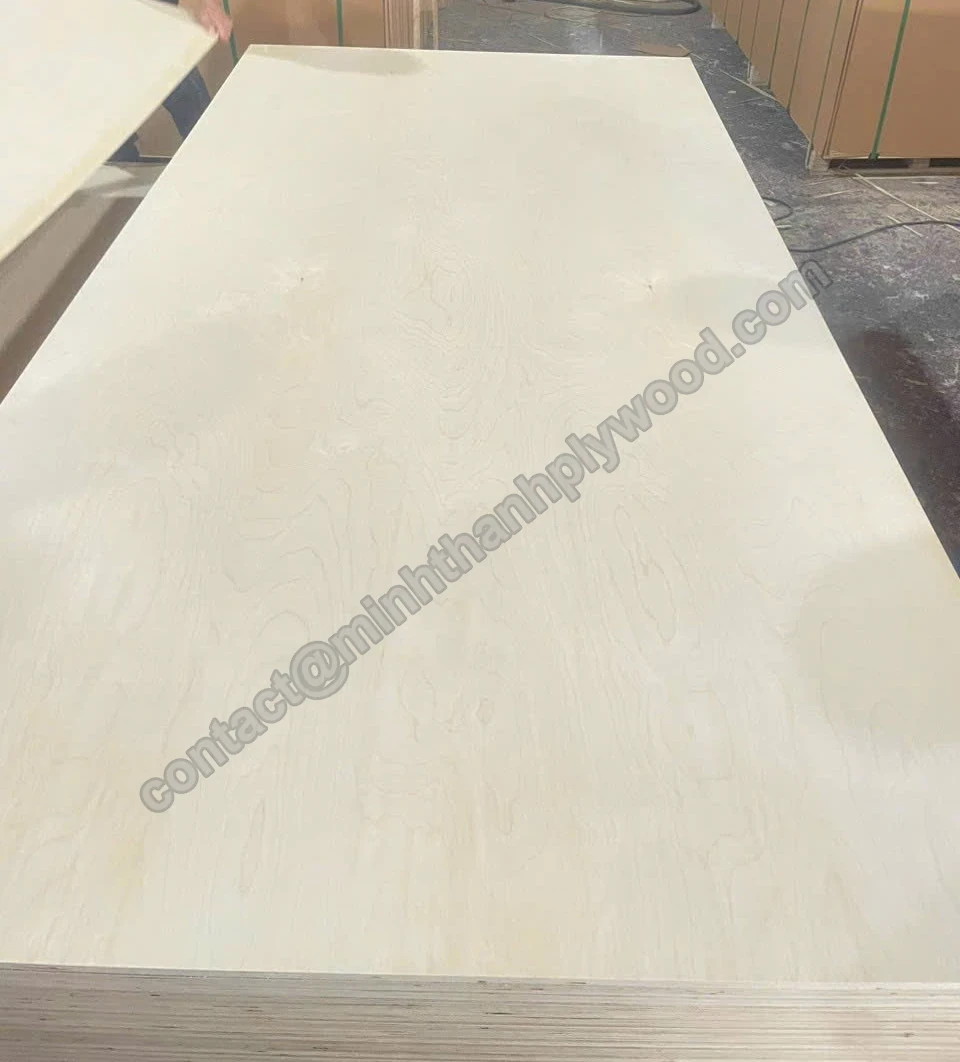
How should thickness, flatness and machining fit be checked?
Check dimensions on a representative panel and fit on the completed component. Thickness affects grooves and hardware, while flatness affects fixturing, assembly and surface appearance. A single good caliper reading at a trimmed edge does not describe the whole sheet.
Minh Thanh’s sanded furniture thickness tolerance is ±0.2–0.3 mm, with specifications down to ±0.2 mm. Length and width tolerance is ±2 mm. Write the required specification into the order and check positions across the panel using the agreed method.
For a fitted groove, combine the plywood tolerance with the machining tolerance. Keep the smallest and largest measured sample conditions in the trial. Check the joint after finishing if a coating reaches its mating surfaces. The plywood thickness guide explains the connection between nominal size and practical component fit.
Veneers and finished panels are dried to 8–12% moisture content at dispatch. Store them flat and protected before machining, and record workshop conditions during a new qualification. Panels measured immediately after receipt and parts tested later under different conditions should have their inspection stages identified.
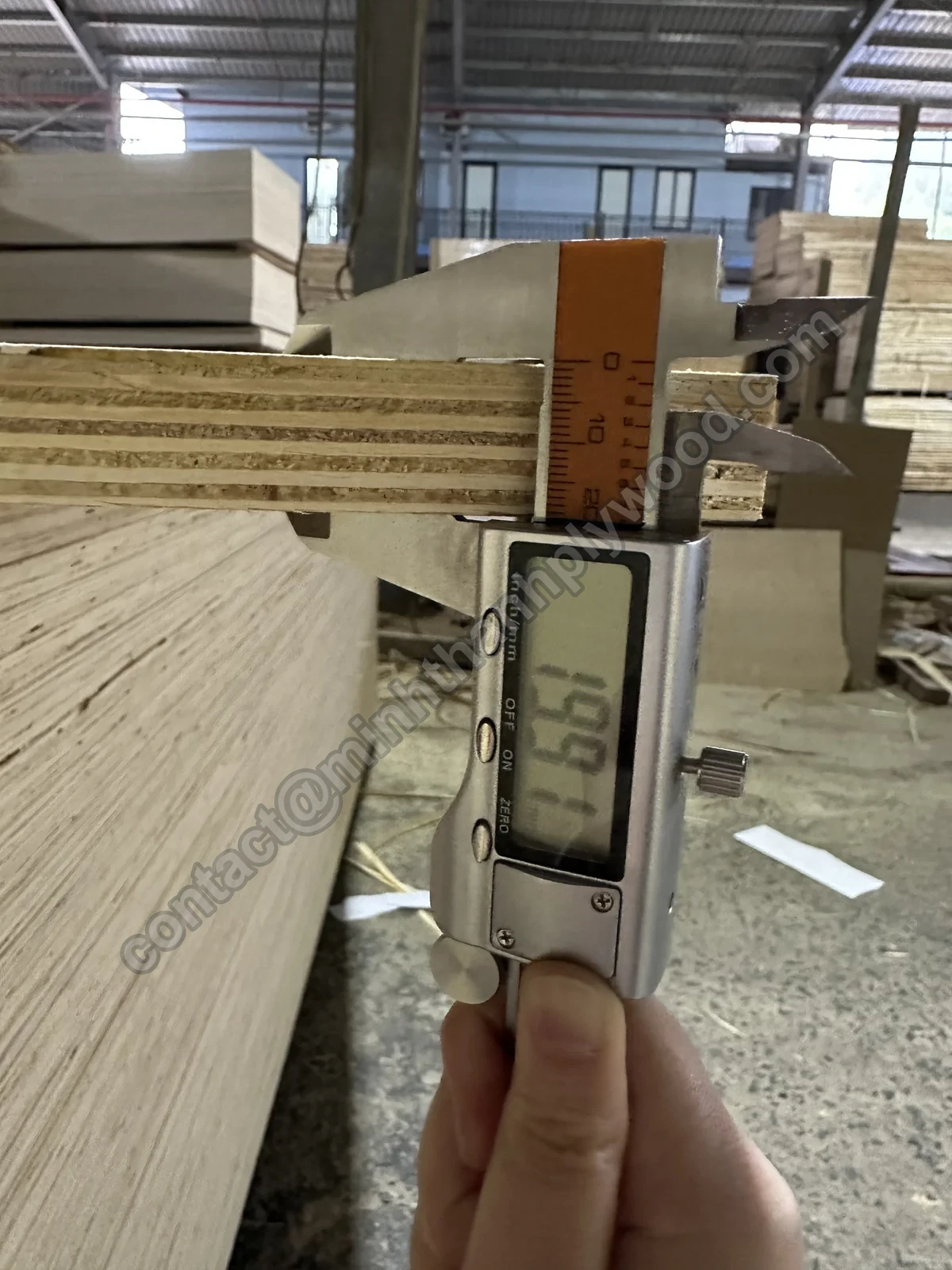
Which machining features reveal core quality?
Deep grooves, hardware holes and through-cut profiles reveal the core your component depends on. Include those features in the supplier trial. A decorative-face inspection alone cannot show how an internal veneer supports the tool path or assembled joint.
Saw strips in both sheet directions and inspect their freshly exposed edges. Look for continuity beneath the face, cavities within layers and separation at bond lines. Describe each observation separately so corrective action addresses the actual feature rather than a broad label such as “rough core.”
For CNC work, use the intended cutter and hold-down arrangement on the real drawing. Inspect small corners and the underside of through-cuts. Compare a qualified reference panel under the same settings when diagnosis is needed. A loose part or unsuitable cutter can spoil the edge independently of the plywood.
Assemble the intended fasteners and hardware into trial parts. Use the real edge distance, pilot preparation and finishing sequence. Approval should follow the completed component’s requirement, rather than a general assertion that one species always holds every screw better than another.
How do you specify bond and emissions correctly?
Specify bond for the service environment and emissions for the applicable product requirement, with the test method identified. These are different characteristics. An interior emission description does not automatically provide the bond needed for a moisture-exposed component.
Standard Minh Thanh furniture plywood uses UF glue at E0 emission. MR/melamine-fortified and phenolic bonds are made to the customer’s specification. Tell the manufacturer whether the component is in dry interior service or needs a different exposure requirement, then keep that bond line separate from the emission line in the order.
For regulated US interior hardwood plywood, the EPA stakeholder guidance, checked 8 October 2026, explains product scope and the supply-chain participants. Obtain the documentation for the applicable product rather than interpreting an isolated emission label as the complete US order specification.
Minh Thanh holds CARB P2 / TSCA Title VI certification, ICTT mill no. 23024. The quality page provides the supporting factory context. Keep producer, product construction and shipment identity connected when comparing certification files from different offers.
What evidence should support a European furniture order?
A European furniture order should connect the component specification with the offered panel’s quality and emission records. Minh Thanh panels meet the emission and quality requirements European furniture buyers ask for. The order should state the buyer’s required method and the panel construction being assessed.
Minh Thanh’s supporting evidence includes CARB P2 / TSCA Title VI certification and six ASTM D6007 chamber tests between April 2025 and June 2026. Tested 9, 15 and 18 mm samples averaged 0.014–0.032 ppm. Those are sample results with their method and configuration, suitable for reviewing the production evidence.
Third-party testing to the buyer’s method, including EN 717-1, is arranged through SGS on request. Include the method in the enquiry when a retailer or furniture program has a particular testing requirement. Do not convert results from different methods into a single apparent ranking.
We supply the EUDR compliance dossier, comprising origin records and geolocation files, with orders. Keep that origin package alongside the product and shipment records requested by the buyer. The enquiry should identify the destination market and end use so the documentation follows the actual furniture order.
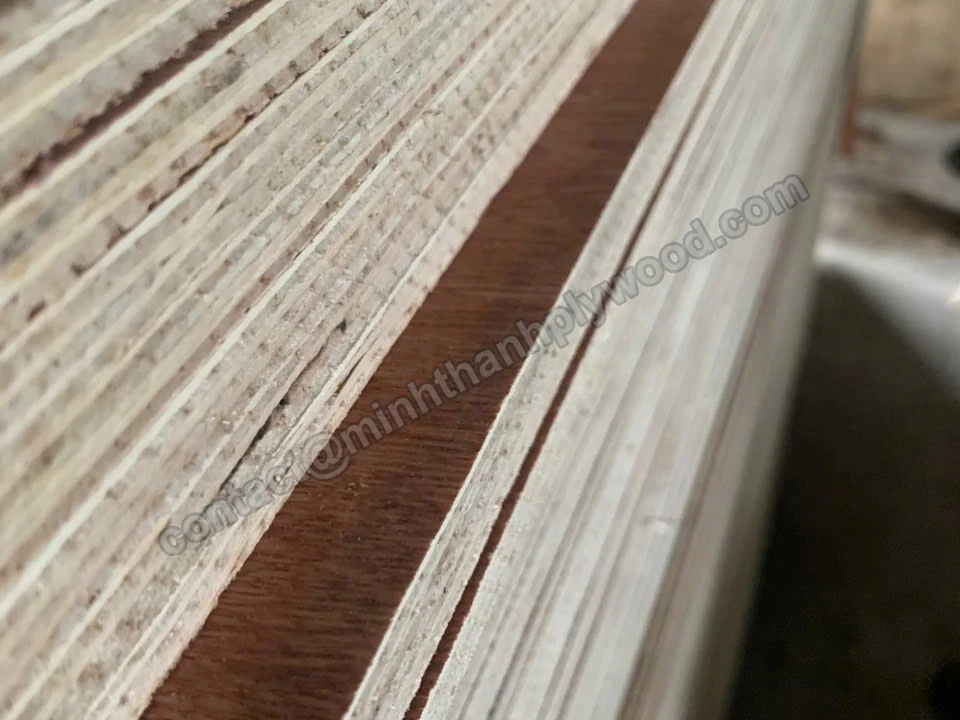
How should samples become an approved production specification?
Turn the sample into a production specification by recording the panel identity and the finished part which passed the trial. Retain the physical reference. That creates a repeatable purchasing standard and prevents a sales sample from becoming an undefined appearance promise.
- Identify face/back pair, core, bond, emission requirement, format and thickness on the sample record.
- Inspect the full face and back, then make fresh cuts and record the internal construction.
- Produce representative parts using the intended saw, CNC program and hardware preparation.
- Apply the complete finishing sequence and assess the parts in the intended viewing conditions.
- Agree acceptable appearance, dimensions and machining features against the drawing.
- Retain the identified reference part and attach its specification to the production order.
- Set receiving and repeat-order checks against the same reference and construction.
Include the difficult features from the drawing, not just the largest easy rectangle. A small connector pocket or exposed radius can decide the qualification. Send those findings to the manufacturer while the order specification is still being established.
Minh Thanh offers free samples for this qualification. Use them to prove the component in your workshop and to refine the order lines. Once the material is approved, purchasing can ask for a repeat quotation using its identified specification rather than restarting with “best birch plywood.”
How should you compare the cost of accepted parts?
Compare accepted-part cost using equivalent materials, component yield and delivery terms. Sheet price alone leaves out the consequences of format, face allocation, machining, finishing and rejected parts. Your own trial provides the most relevant data for that calculation.
Use the same drawing and grain orientation for each panel layout. Allow for saw kerf and edge trimming, then count the components which meet the appearance reference. Add workshop time and the finish sequence required by each accepted alternative. Record any construction change alongside the cost result.
For direct import, add freight, destination handling, inland delivery and stock holding under the quoted terms. Use the destination port in the RFQ. Compare that result with a local supplied product on the same delivered basis. The plywood cost guide provides the structure for a landed-cost comparison.
Mass also affects the supply plan. Use the named core and actual packing schedule when planning shipment, including packaging within the permitted payload. A theoretical sheet count based on container volume is incomplete. Keep the final load quantity tied to the agreed booking and transport limits.
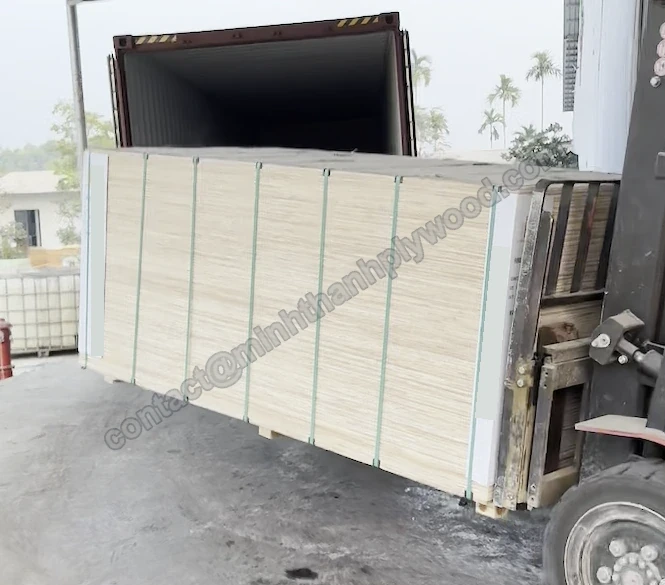
What should repeat orders and shipment inspection preserve?
Repeat orders should preserve the qualified construction, appearance reference and component requirements. Inspection should connect those requirements with the packed product. A successful first trial becomes useful only when purchasing can order the same accepted panel again.
Keep the product code, drawing revision, core and face/back pair visible on order and pack records. Identify mixed thicknesses and formats in the packing schedule. Agree how the buyer will recognize each item on arrival before the stock reaches the machining line.
Minh Thanh photographs and films each shipment before loading and provides those records to buyers. Compare faces, thickness checks and pack condition with the order. Receiving teams should record transport damage before dismantling packaging, then sample the received panel against the retained reference.
If a later change in core, bond, grade or surface preparation is proposed, qualify it as a new material decision. Record approved alternatives clearly. This allows the manufacturer to plan repeat production while the buyer retains control over the furniture appearance, machining and documents its customer needs.
How do you buy birch plywood from Minh Thanh?
To buy birch plywood from Minh Thanh, send a component-specific RFQ and we quote the furniture construction and supply plan you need. The most useful enquiry states what will be made and how the buyer will judge it.
Include the application and drawing; Styrax or Eucalyptus core; bond and emission requirement; birch face/back pair; final finish; thickness and tolerance; full-sheet or component dimensions; grain direction; edge treatment; packing; quantity; and destination port. Add the current panel specification when qualifying a replacement construction.
The minimum order is one 40HC, with mixed specifications agreed in the order. Production is 15–45 days after the 30% deposit. Standard balance is 70% against scanned B/L, or an irrevocable L/C at sight; delivery is FOB Hai Phong, CFR or CIF.
Read our birch plywood product page for the full specification, compare panel types in the birch Baltic plywood guide, and check the grade ladder in birch plywood grades. For other products, see Baltic birch plywood suppliers and film-faced plywood suppliers. Send your birch plywood specification and request free samples; we reply within hours.
Buyer questions, answered
How do I choose between birch plywood manufacturers?
Compare the same component drawing, face/back appearance, named core, bond, emission requirement, dimensions and delivery basis. Test sawing, routing, hardware and the complete finish on representative samples. Select the supplier whose identified panel meets that specification with a repeatable order and inspection process.
What is the difference between birch-faced and all-birch plywood?
Birch-faced plywood has birch decorative veneers over a separately specified core. All-birch construction uses birch internal veneers as well. Minh Thanh manufactures birch-faced furniture panels with Styrax or Eucalyptus cores, so record that construction explicitly when comparing offers.
Which birch face grades does Minh Thanh use?
Minh Thanh uses the Vietnamese grades D+, D and E, quoted as face/back pairs. Individual D+ approximately compares with B, D with BB, and E with CP/C; D+/D therefore approximately compares with B/BB. The approved finished sample fixes the order's appearance.
Is a high face grade also a high core grade?
Face appearance and core construction are separate requirements. A clean decorative face does not describe the layers reached by grooves and hardware holes. Inspect fresh cuts and trial the actual component while recording the required core species and construction.
What is double-pressed furniture plywood?
At Minh Thanh, the core board is pressed and calibrated first, then the decorative face and back are pressed on in a second operation. This prepares the substrate before applying the finish veneers. Qualify the resulting panel against the component's flatness, thickness and finishing requirements.
Does Minh Thanh apply the buyer's final UV coating?
Minh Thanh supplies both faces prepared as UV-ready for the buyer's coating line. Approve the finish using the intended sanding, sealer and coating sequence on the supplied panel. Record the surface preparation and final coating as separate stages in the component specification.
What thickness tolerance should a cabinet buyer specify?
Set tolerance from the grooves, fixtures and hardware used by the cabinet drawing. Minh Thanh's sanded furniture panels have tolerance of ±0.2–0.3 mm, with specifications down to ±0.2 mm. Check multiple positions on the trial sheet and use the measured range when approving machining fit.
Is UF glue at E0 emission an exterior bond specification?
No. UF identifies the resin system, while E0 describes an emission requirement with a stated test method. Write the intended exposure and required bond separately. Minh Thanh makes MR/melamine-fortified and phenolic bonds to the customer's specification.
Do Minh Thanh panels meet European furniture buyer requirements?
Yes. Minh Thanh panels meet the emission and quality requirements European furniture buyers ask for. CARB P2 / TSCA Title VI certification and chamber testing provide supporting evidence, and third-party testing to the buyer's method is arranged through SGS on request.
What should I inspect in a supplier sample?
Inspect the full face and back, fresh cut edges, thickness at several positions and the core exposed in representative machining. Assemble the intended hardware and apply the complete finish. Keep an identified finished reference part and record its panel construction, drawing and acceptance criteria.
How much plywood must I order from Minh Thanh?
The minimum order is one 40HC, with mixed specifications agreed in the order. Production is 15–45 days after the deposit. Send the quantity by thickness, size and face/back pair so the production and packing schedule can follow the component plan.
What goes into a birch plywood RFQ?
Send the application and drawing, core construction, bond and emission requirements, face/back grade, finish, thickness and tolerance, sheet or component dimensions, packing, quantity and destination port. Include the existing panel specification when qualifying a replacement. Minh Thanh offers free samples for the component trial.