
In short, the Baltic birch plywood price is set by its all-birch core, B/BB-type face grades and heavy sheet weight. Vietnamese birch-faced plywood keeps the birch face over a lighter plantation core. Minh Thanh Plywood quotes it from US$350/m³ (October 2026), and a 40HC carries 990 sheets of 18 mm against about 768 all-birch.
What drives Baltic birch plywood cost?
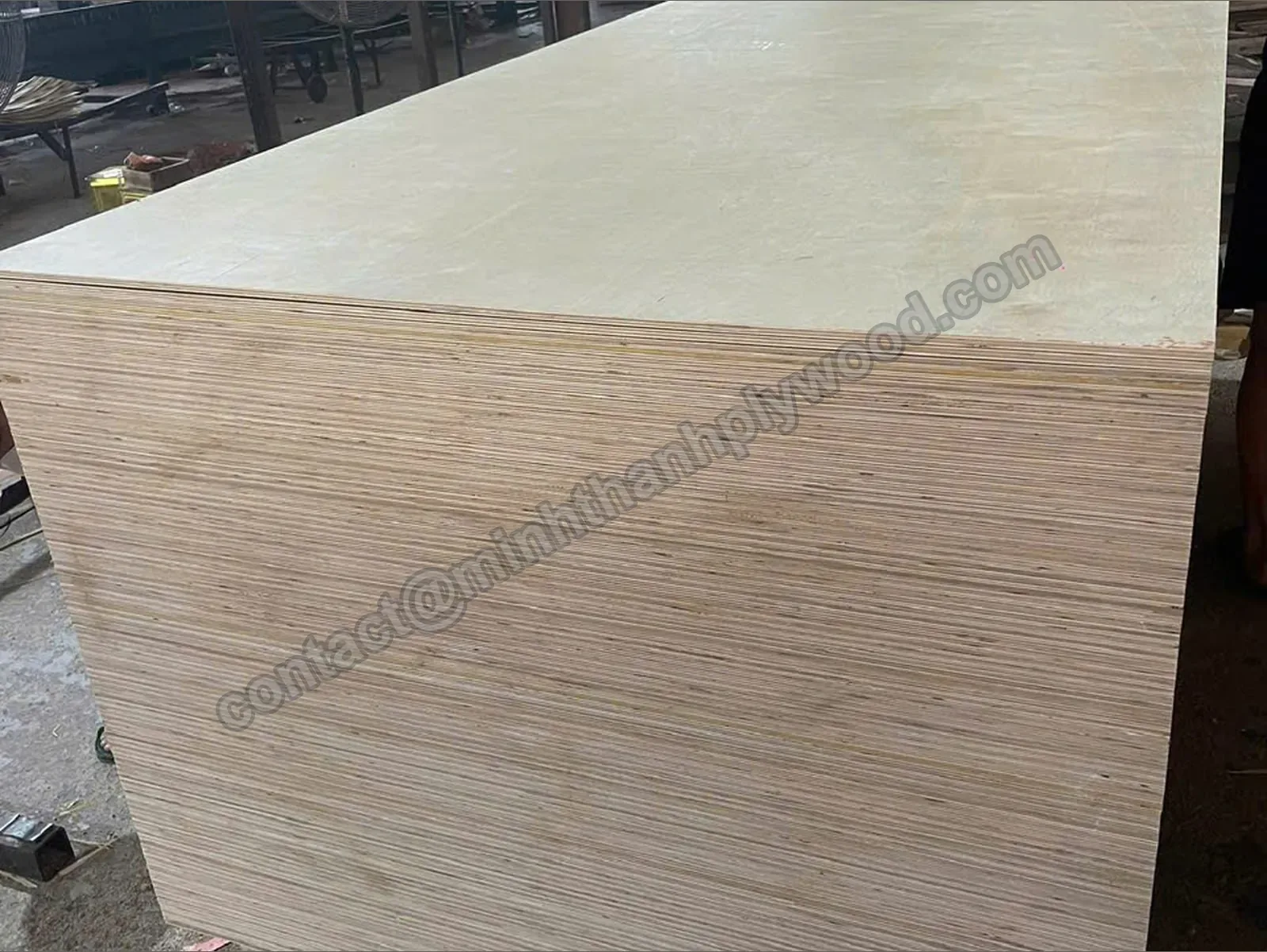
Baltic birch plywood cost is driven by four things: birch veneer in every layer, the face/back grade pair, sheet thickness and format, and the delivered freight on a heavy panel. The all-birch core is the biggest single item, because every ply is graded birch rather than plantation core veneer.
Supply also tightened. Since July 2022 the EU has banned imports of Russian wood products, plywood included, under Council Regulation (EU) 2022/576 (consulted 8 October 2026), and the UK applies a similar ban. Russia had been the largest birch plywood exporter, so European buyers now draw all-birch panels mainly from Finland, the Baltic states and other producers, which keeps the Baltic birch price high.
An official Metsä Wood birch product datasheet, consulted 8 October 2026, describes its birch panel as cross-bonded birch veneers throughout. That is the construction behind the Baltic birch plywood price, and it is the reference a birch-faced alternative is compared against.
Minh Thanh makes birch-faced plywood with white Styrax or Eucalyptus cores. It does not manufacture an all-birch core panel. The pale face is a furniture surface choice; the plantation-timber core is a separate part of the construction and cost. Put both species fields on the purchase order.
For the buyer, the practical question is which panel produces the approved component. An enclosed cabinet side with covered edges and an exposed-edge display stand have different reasons for choosing a core. The birch product page describes our furniture construction; use the existing panel’s full specification as the reference when evaluating it.
Which quotation fields must match before prices are compared?
Match the entire specification and delivery point before ranking quotations. A common thickness or face grade cannot make two different cores equivalent. Ask each supplier to return deviations as a separate list rather than silently substituting a cheaper construction.
| Field | All-birch reference | Birch-faced alternative |
|---|---|---|
| Outer veneers | Birch face and back, named grade pair | Birch face and back, named grade pair |
| Interior veneers | Birch through the specified build | Styrax or Eucalyptus, named explicitly |
| Appearance | Repairs, colour and veneer matching | Same component acceptance criteria |
| Dimensions | Physical length, width, thickness and tolerance | Same drawing and agreed tolerance |
| Bond | Required service class and evidence | Required service class and evidence |
| Preparation | Sanded, coated or ready for buyer finishing | Ordered sanding and surface preparation |
| Application evidence | Performance needed by the existing design | Evidence and component trial for substitution |
| Delivery | Currency, named term and delivery point | Same currency and comparison boundary |
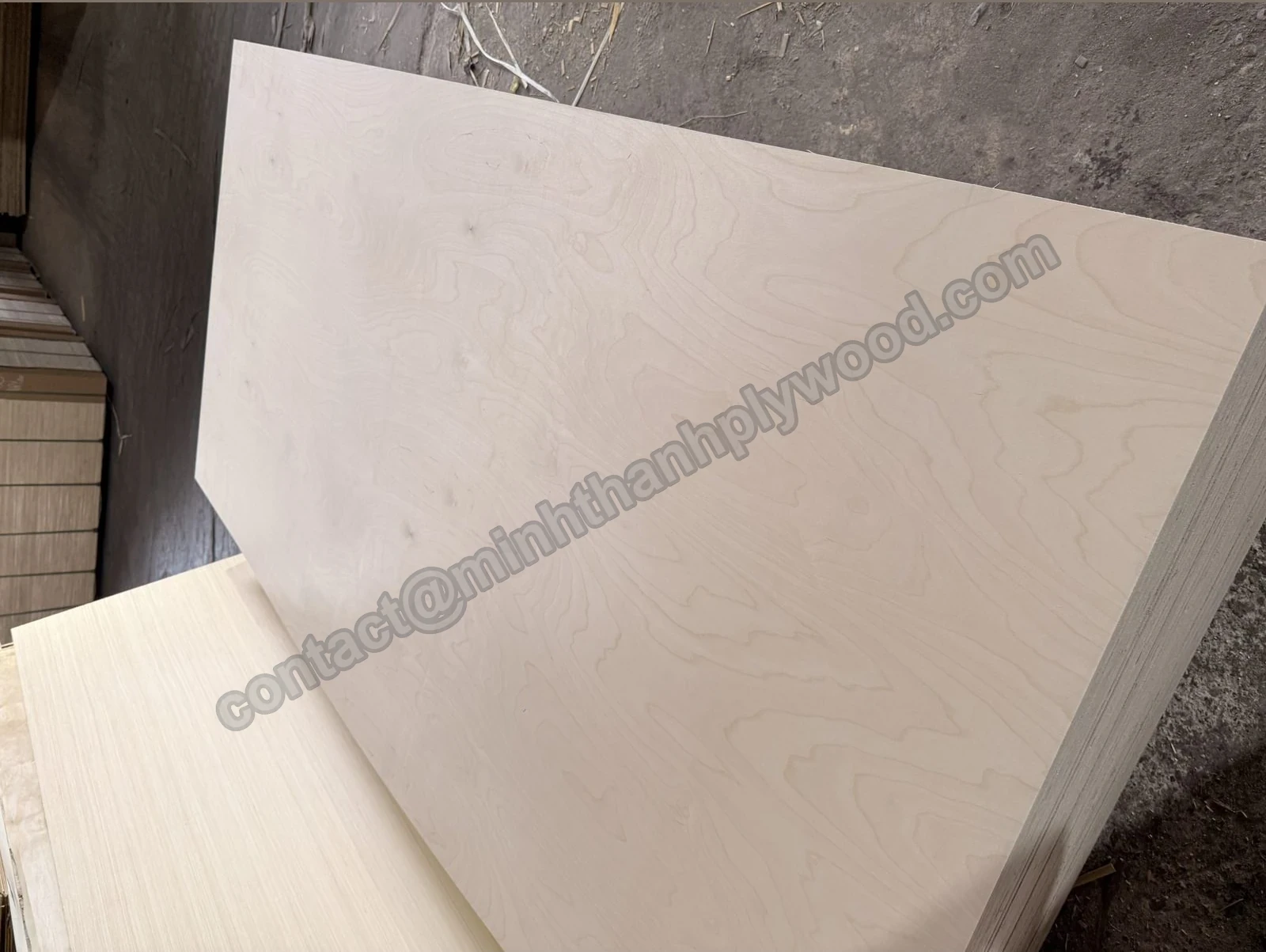
Keep the drawing revision and sample identifier beside the quoted grade. A quotation can be technically detailed but still refer to a surface the customer has never accepted. The approved sample anchors the description to a real face, reverse and cut edge.
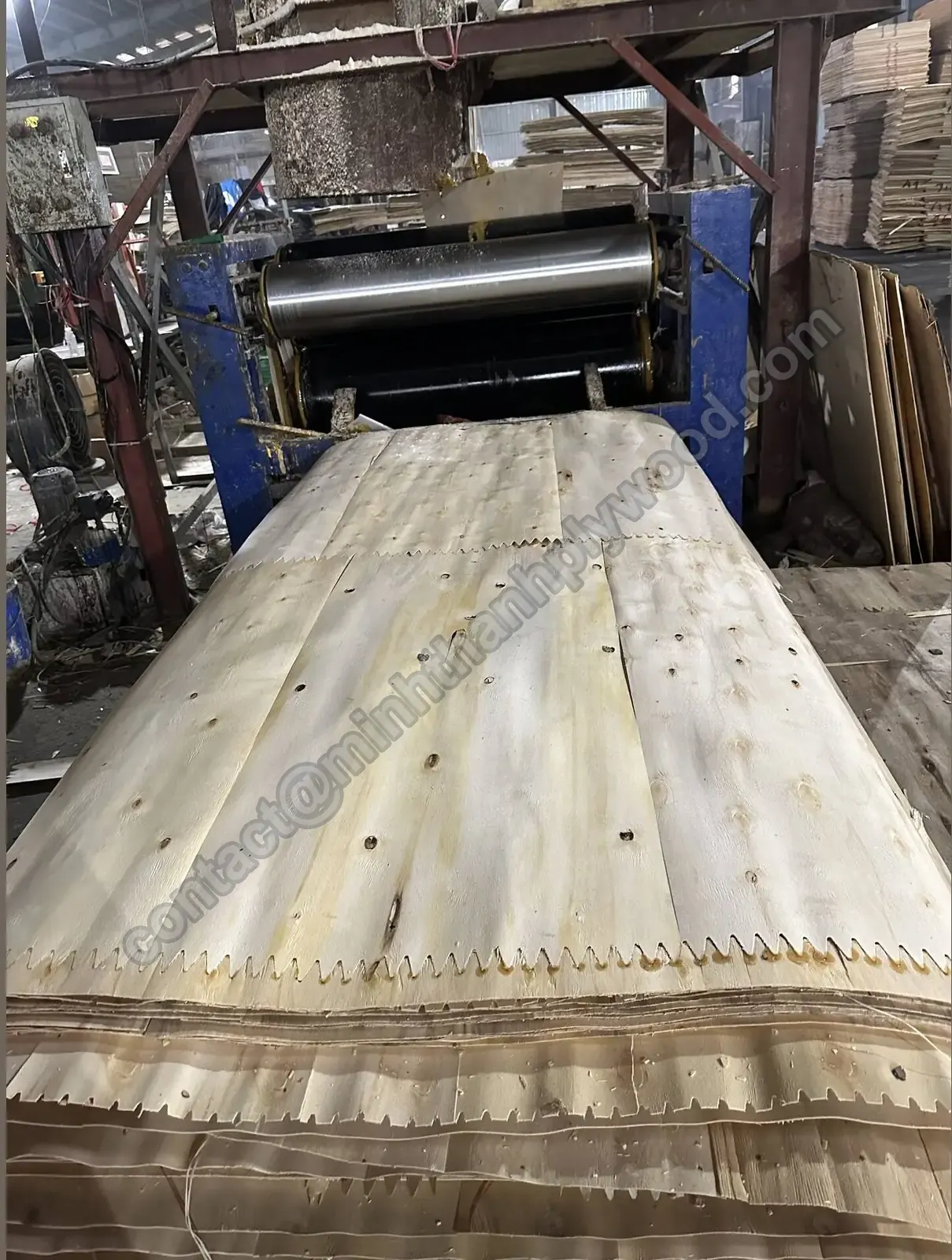
At Minh Thanh, furniture panels are pressed twice: the core board is pressed and calibrated before the face and back are applied. Record that production route when comparing furniture substrates. It explains what sits underneath the decorative veneer and helps the buyer compare the work left for its own workshop.
Is Vietnamese birch plywood cheaper than Baltic birch?
Yes. Is Vietnamese birch plywood cheaper than Baltic birch? For the same face grade and thickness it is, because the inner plies are plantation Styrax or Eucalyptus instead of birch, and the lighter sheet ships more pieces per container. Minh Thanh’s birch-faced furniture plywood starts from US$350/m³ in October 2026, FOB Hai Phong.
| Cost line, 18 mm 1220 × 2440 mm | All-birch (Baltic birch) | Minh Thanh birch-faced, Styrax core |
|---|---|---|
| Core | Birch veneers throughout | White Styrax, stitched both ways |
| Density | About 680 kg/m³ | 500 kg/m³ |
| Sheet weight | About 36.4 kg | 26.8 kg |
| Sheets in a 40HC at 28,000 kg | About 768 (weight-limited) | 990 |
| Volume per 40HC | About 41 m³ | About 53 m³ |
| Starting price | Producer quote | From US$350/m³ |
The freight line is the saving buyers miss. At the same container rate, 990 sheets instead of about 768 cuts ocean freight per sheet by roughly 22%. The face can be the same grade; what changes is the core and the edge colour, which matter only where the edge stays exposed.
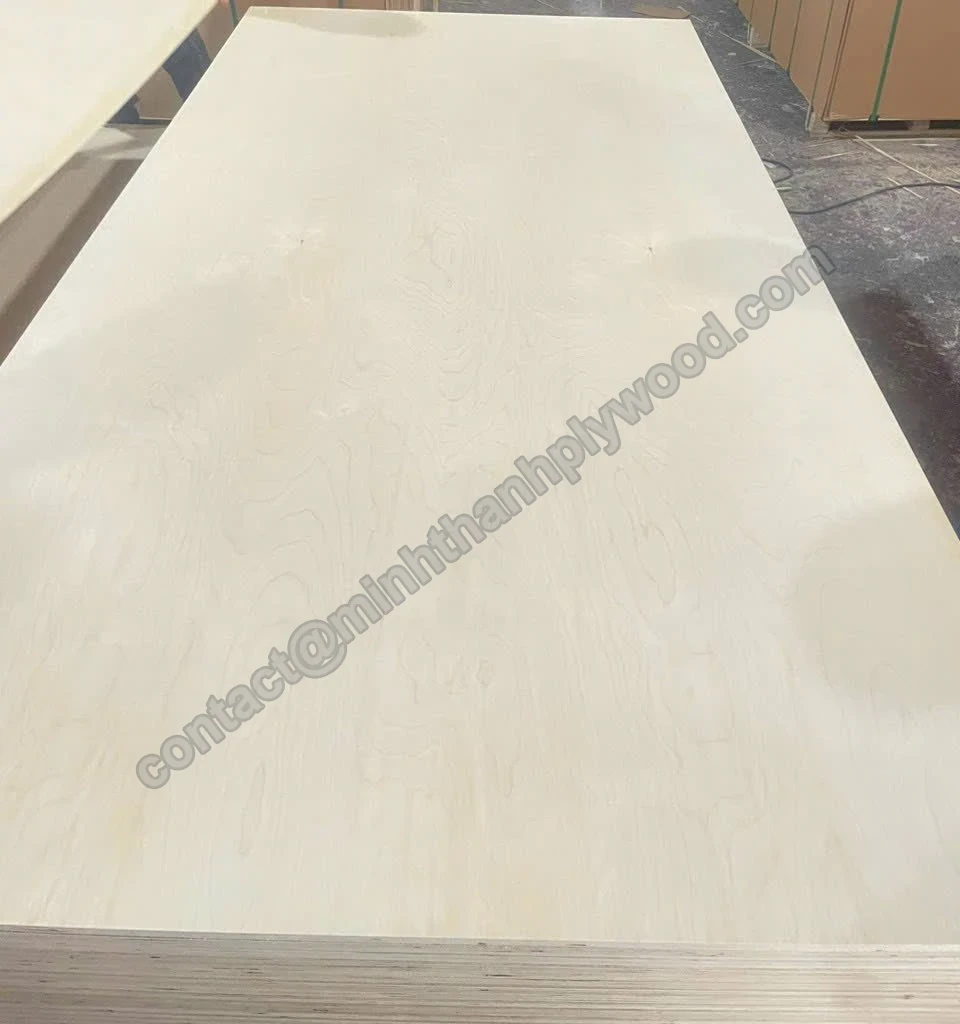
Our general plywood price guide explains the export cost layers. Keep the quotation date, validity, currency and shipment window beside the price. A historic retail screenshot can document a previous purchase, but a replenishment decision needs the current delivered offer for the quantity being bought.
How do you turn a Baltic birch plywood price per m³ into a sheet price?
Multiply the quoted rate by the panel’s volume in metres to calculate sheet cost. For 1220 × 2440 × 18 mm, the volume is 1.220 × 2.440 × 0.018 = 0.0535824 m³, so sheet price = quoted US$/m³ × 0.0535824. Our birch-faced furniture rate starts from US$350/m³ in October 2026; the order quotation sets the exact rate for the grade, core and thickness you choose.
| Calculation input | 1220 × 2440 mm format | 1250 × 2500 mm format |
|---|---|---|
| Sheet area | 2.9768 m² | 3.1250 m² |
| Volume at 18 mm | 0.0535824 m³ | 0.0562500 m³ |
| Sheet price | Quoted US$/m³ × 0.0535824 | Quoted US$/m³ × 0.05625 |
| Area difference | Reference format | 4.98% greater, calculated from areas |
The larger sheet costs more at the same volume rate because it contains more material. Whether it is better value depends on the parts layout. Keep full precision in the spreadsheet and round money at the final display; repeated rounding of volume can distort a full order.
How do face and back grades change usable value?
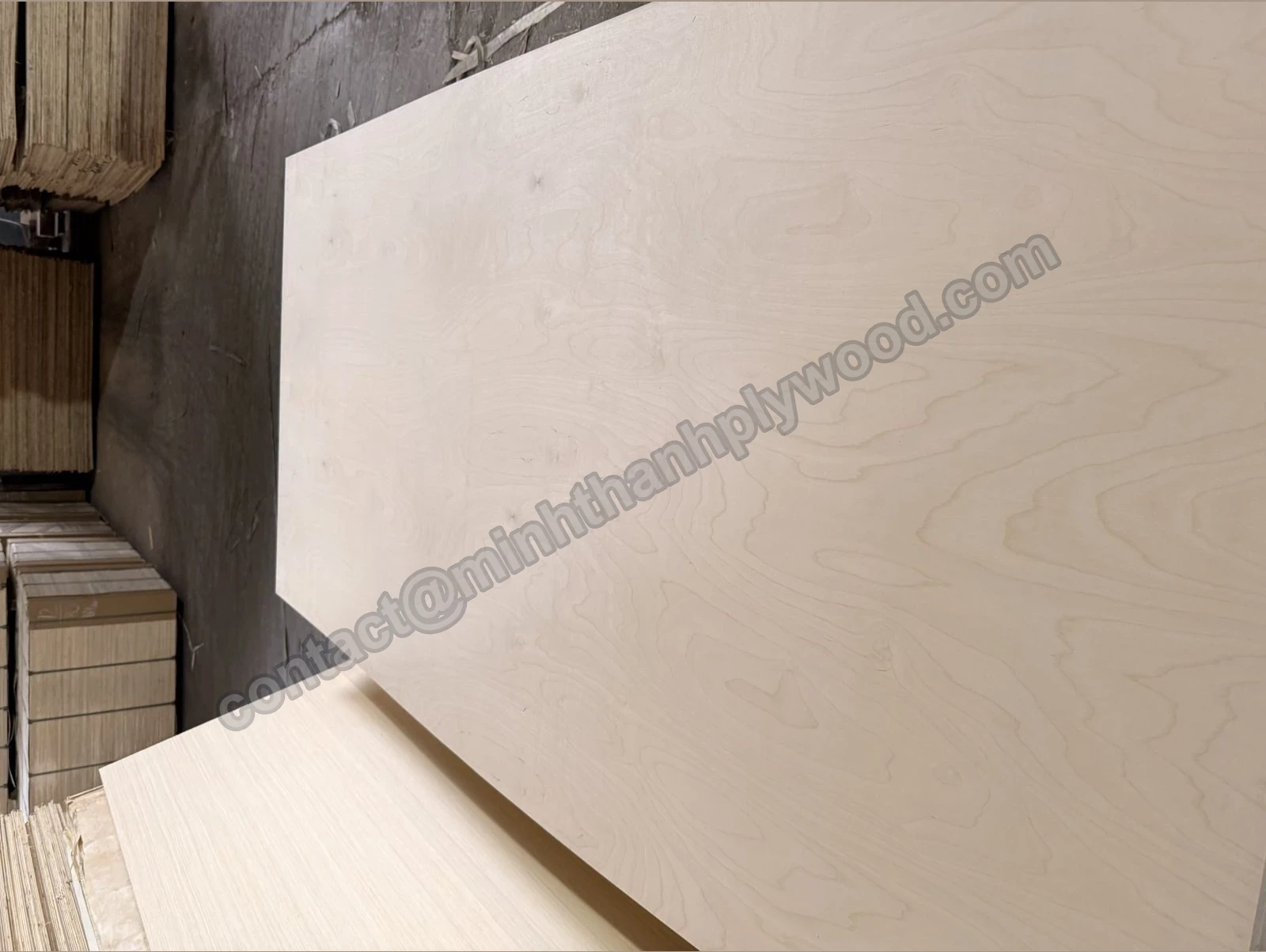
Face and back grades change which pieces can be cut for the finished design. Choose the appearance required on each exposed side. A cabinet door visible from both sides needs a different grade pair from a panel whose reverse is concealed.
Minh Thanh’s birch face names are D+, D and E, from higher to lower appearance grade. Individual D+ is comparable to B, D to BB, and E to CP/C in the European buying ladder. Thus D+/D is comparable to B/BB and D/D to BB/BB, and the approved sample fixes the order’s appearance.
Grade letters do not describe the full core or replace the buyer’s repair rules. Write down the allowable patch appearance, colour spread and placement of defects relative to visible parts. Review both sides after the intended clear coating or opaque finish, because a permitted repair can look different after finishing.
For a recurring product line, mark visible areas on the cutting drawing. A less demanding back face can reduce the required appearance tier without changing the visible result. Keep a higher grade where grain and repairs remain visible. That is a controlled specification change, rather than treating every part as a candidate for the lowest face price.
Which core differences matter in a furniture substitution?
Core differences matter where the component is machined, fixed or left exposed. A birch-faced panel can satisfy a furniture surface requirement while producing a different cut edge from all-birch plywood. Trial that edge rather than approving a substitute from the face alone.
Minh Thanh’s furniture cores are stitched horizontally and vertically. Core preparation and calibration precede the face press. For a buyer using concealed connectors, route the actual groove and drill the fixing pattern in the sample. Inspect the machined surfaces and assemble the joint using the intended production settings.
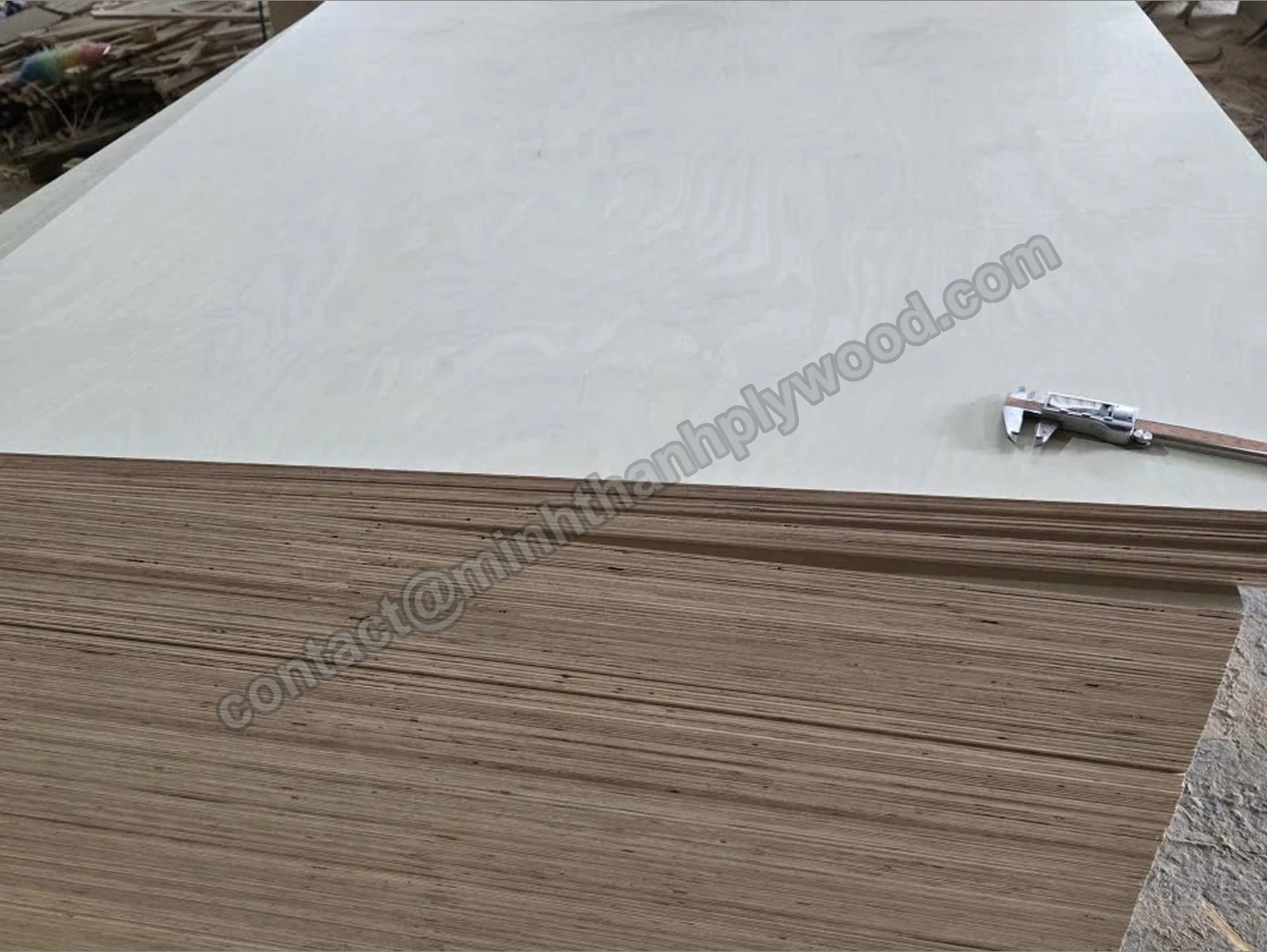
An exposed layered edge needs separate aesthetic approval: veneer colour, layer pattern, corner finishing and the final coating all enter the comparison. Edge banding changes that requirement but adds its own workshop operation. Include its material, labour and accepted finish in the cost per component.
The selected core also changes handling and freight mass. A lighter panel can help a furniture design or shipment budget, while a denser construction can suit other component requirements. Keep all-birch where a design depends on a documented all-birch rating; for furniture faces, cabinet sides and covered edges, birch-faced Styrax or Eucalyptus plywood does the job at lower cost.
How should thickness and tolerance enter the cost comparison?
Compare thickness as a drawing requirement and a purchased volume, with the tolerance written alongside it. A cheaper rate is of little use when the component misses a groove or finished assembly dimension. Check several locations on the sample and preserve the measurement method for incoming inspection.
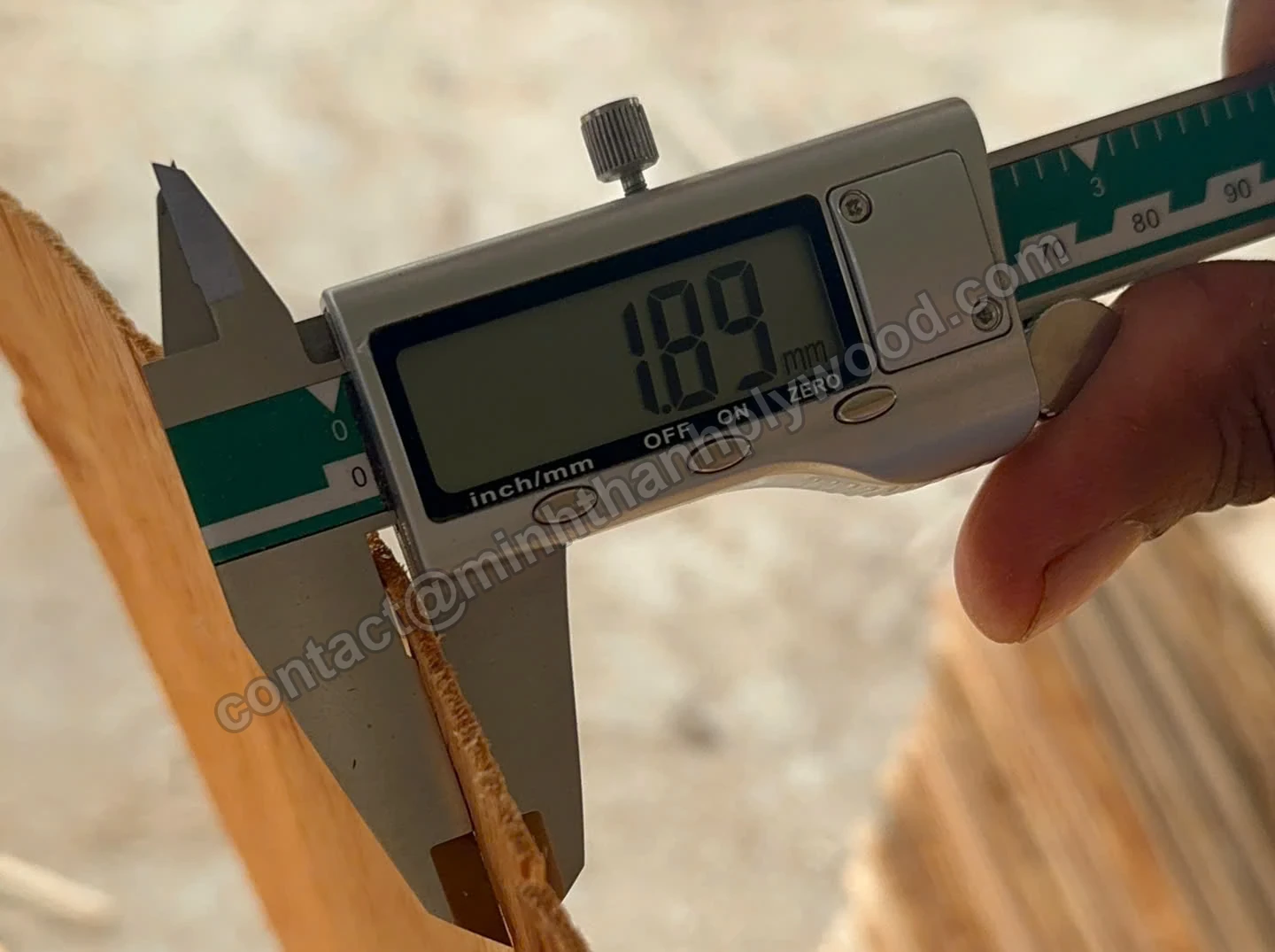
Minh Thanh’s sanded furniture tolerance is ±0.2–0.3 mm, down to ±0.2 mm for the required specification. The selected value belongs on the quote and order. Measure a sheet edge without trapping dust or pressing the caliper into a surface repair; record the positions so the receiving workshop repeats the same check.
At a fixed sheet area and m³ rate, increasing thickness from 12 to 18 mm increases purchased volume by 50%. That proportional calculation does not mean the real rates per m³ are identical. Layup, face preparation and the availability of suitable veneers affect the manufactured specification.
Use the thickness guide to connect nominal descriptions to the part. When replacing a legacy inch-labelled panel, read the supplier’s actual thickness declaration and trial the assembly. Converting the trade name alone is insufficient to define the replacement.
When does a larger format save money?
A larger format saves money when it increases accepted cutting output enough to cover the extra purchased area and handling. Use the actual part dimensions, grain direction, trim and saw kerf in the nesting calculation. The nominal sheet area alone cannot show the saving.
Minh Thanh’s standard formats include 1220 × 2440 and 1250 × 2500 mm. When an existing all-birch reference uses another format, start the substitution with a fresh cutting layout instead of assuming that the old layout will transfer.
Divide the quoted sheet cost by the number of accepted components the drawing yields. If two candidate layouts produce different quantities, compare that result before their per-sheet prices. A larger purchased sheet can be cheaper per finished part even when its headline sheet price is higher.
Keep leftover material in a separate column. Count an offcut as useful only if a scheduled component consumes it. A warehouse full of nominally reusable remnants is not a saving. For repeat work, compare cut-to-size supply with full sheets; include the workshop operations and pack identification that each option needs.
How do sanding, finishing and machining affect the true saving?
The true saving is the reduction in accepted component cost after machining and finishing. Evaluate the sample using the intended cutter, feed settings and coating, then record what work is required. Buying the same pale face at a lower sheet price is only the beginning of that assessment.
Minh Thanh furniture panels have sanded and polished faces, with both sides UV-ready for the buyer’s coating process. The customer applies its own UV coating. State the required preparation in the quotation so the receiving workshop can compare it with the material it currently buys.
A clear-finished part needs a coating trial that includes patches and changes in grain. A routed part needs edge and groove inspection after machining. An assembled part needs the actual fixing and finishing sequence. Test these operations on a representative sample rather than modifying the workshop recipe only after the container arrives.
Separate avoidable rework from normal processing. Record sheets rejected for visible appearance separately from parts lost to a cutting setup error. That distinction shows whether a panel specification, a layout or an operation needs changing. The furniture selection guide connects those workshop decisions to the face and core requirements.
Which bond and emission documents belong in the quotation?
Specify service exposure and emission evidence separately because they describe different requirements. Minh Thanh’s furniture/interior standard is UF glue at E0 emission. Melamine-fortified and phenolic bonds are made to the buyer’s specification. An appearance grade does not identify either requirement.
For US furniture supply, retain the product’s applicable CARB P2 / TSCA Title VI evidence and labelling requirement. Minh Thanh holds that certification, ICTT mill no. 23024. Our quality pages connect the product evidence to the furniture range.
The US EPA composite-wood framework, consulted 8 October 2026, provides the official regulatory context. The panel’s application and destination determine which evidence belongs in the order.
For European buyers, specify the required emission method and documents with the request. Third-party testing to the buyer’s method, such as EN 717-1, is arranged through SGS. Include that scope before comparing totals. Subtracting a required test or changing the bond creates a different offer, even if the face and sheet dimensions remain the same.
How do you compare FOB, CIF and a local delivered price?
Compare all alternatives at the buyer’s chosen receiving point. An FOB export price and a local warehouse price cover different cost boundaries. Build a bridge between them instead of claiming that their difference is the import saving.
Minh Thanh quotes FOB Hai Phong, CFR or CIF. The ICC Incoterms 2020 rules, consulted 8 October 2026, define the allocation of transport obligations, costs and risk. Write the term, named port and edition in the order. Add the buyer’s remaining costs once, avoiding duplicate freight or handling already included in the offer.
The landed worksheet should carry the goods, ocean transport and insurance, applicable duties and taxes, clearance, terminal charges, inland delivery, bank costs and financing. Obtain current destination rates for the actual product; do not use a tariff chosen from the word “birch” alone. Keep recoverable taxes distinct from costs that remain with the business.
For a local stockist, record the delivered quantity, tax treatment, unloading and credit terms. A container wins when your consumption absorbs it: Minh Thanh’s MOQ is one 40HC, usually one or two specifications and three to six by agreement, produced in 15–45 days after the 30% deposit, with 70% against the scanned B/L or an irrevocable L/C at sight. Keep the local stockist for urgent small top-ups. The trade terms page explains the commercial basis.
How does core mass change freight per sheet?
Core mass changes how many sheets can travel within the booking’s cargo limit. Use panel volume multiplied by density for a preliminary board-mass calculation, then add packing and reconcile with measured shipment weights. A volume-only sheet count cannot complete a container plan.
For 1220 × 2440 × 18 mm, the volume is 0.0535824 m³. At the Styrax reference density of 500 kg/m³ the sheet weighs 26.8 kg; at the Eucalyptus reference of 650 kg/m³ it weighs 34.8 kg; an all-birch sheet at about 680 kg/m³ weighs about 36.4 kg. Our 40HC plan at 28,000 kg carries 990 Styrax-core or 795 Eucalyptus-core sheets at 18 mm.
Keep density conditions and panel moisture beside the reference. Use measured sheet and packing masses for the booked order, and check pack dimensions, handling access and route limits. The sheet count must satisfy both the arrangement and the cargo mass.
Freight per sheet is the total allocated shipment cost divided by the actual delivered quantity. A denser core can therefore change logistics cost even when the quoted m³ rate is attractive. Compare that result with the component requirements; switching to a different core solely to maximise sheet count can alter the product being bought.
How do you calculate the cost per accepted furniture part?
Divide the complete material cost by accepted output and add the workshop operations each alternative requires. This gives purchasing and production a common basis for the substitution decision. Keep the grade, part drawing and finish constant throughout the comparison.
Use this worksheet sequence:
- Enter the landed sheet cost from the completed transport calculation.
- Enter the number of parts cut per sheet using the approved nesting layout.
- Remove rejected parts using the sample trial or documented production acceptance record.
- Divide material cost by the accepted parts.
- Add machining, edge treatment and finishing per accepted part.
- Compare the totals with the existing all-birch component.
A useful additional check is the break-even yield. If an alternative has lower landed sheet cost, it can tolerate only a corresponding reduction in accepted output before losing the saving. Express the relationship as alternative cost ÷ reference cost ≤ alternative accepted yield ÷ reference accepted yield when processing costs are equal.
Take the rejection rate from your own trial, not a rule of thumb. A clean appearance sample fixes the intended grade, and a machining trial shows what that construction yields in your workshop.
What should you send for an accurate birch-faced alternative quote?
Send the component requirement and full panel schedule so the factory can price a meaningful alternative to the existing all-birch material. Attach the drawing or finished-surface reference and identify where the core edge is visible. This gives the sample evaluation a clear purpose.
Use the following specification lines in the request:
- Application: furniture component, drawing revision, visible faces and edge detail.
- Core: existing all-birch requirement, plus Styrax or Eucalyptus alternative to evaluate separately.
- Bond and emissions: service exposure, required adhesive/bond evidence and destination emission documents.
- Face and back: birch grade pair, permitted repairs, matching and finished sample acceptance.
- Size: length × width × thickness in millimetres, tolerance, grain direction and cut-to-size schedule.
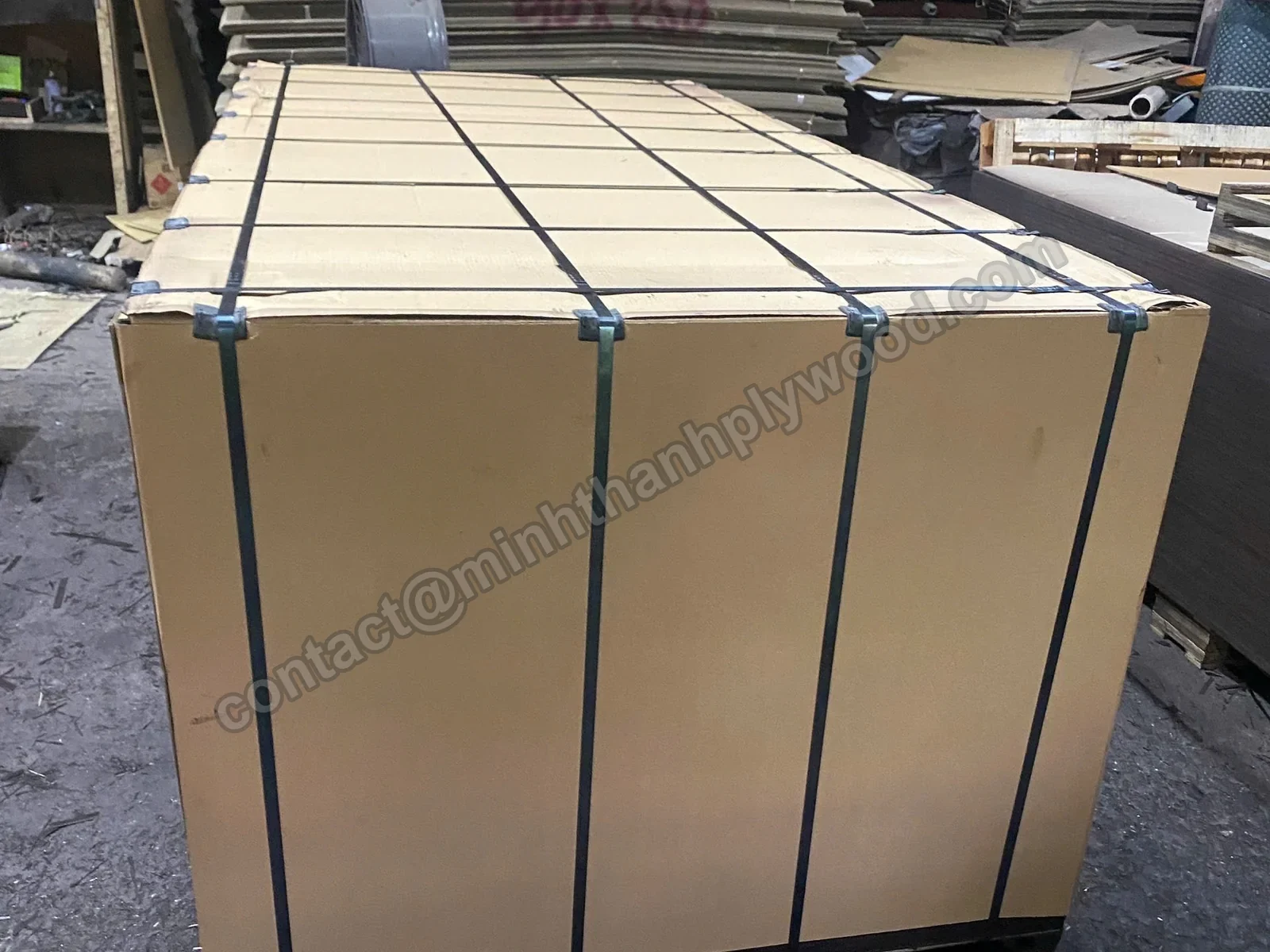
- Packing and quantity: sheets per specification, handling needs, mixed-load schedule and destination.
Request the same named delivery basis for every offer, together with quotation validity, production window and document scope. Keep the technical deviations beside the price so a change in construction remains visible to purchasing and production.
Minh Thanh provides free samples and replies within hours. Send the specification for a quote or email [email protected]. Continue with the birch-faced product, the price guide and sande versus birch-faced comparison for the panel and workshop checks behind the purchase.
Buyer questions, answered
How much does Baltic birch plywood cost?
Baltic birch plywood is priced per m³ or per sheet by grade pair, thickness and format. All-birch construction, B/BB faces and its 680 kg/m³ weight keep it at the top of the furniture plywood range. Minh Thanh's birch-faced alternative starts from US$350/m³ in October 2026.
Is Vietnamese birch plywood cheaper than Baltic birch?
Yes, for the same face grade Vietnamese birch-faced plywood costs less, because the core is plantation Styrax or Eucalyptus instead of birch. It also weighs less, so a 40HC carries 990 sheets of 18 mm on Styrax core against about 768 all-birch sheets.
Is all-birch plywood the same as birch-faced plywood?
All-birch plywood uses birch veneers through its construction, while birch-faced plywood identifies the outer veneers and needs a separate core description. Minh Thanh's birch-faced furniture panels use Styrax or Eucalyptus cores. Those alternatives need their own evaluation for exposed edges, machining and specified performance.
How do I convert a birch plywood m³ price into sheet cost?
Multiply the quoted m³ rate by the sheet volume. A 1220 × 2440 × 18 mm sheet contains 0.0535824 m³, so sheet price = quoted US$/m³ × 0.0535824. Minh Thanh's birch-faced rate starts from US$350/m³ in October 2026.
Why does a B/BB birch quote cost more than a BB/BB quote?
A B/BB grade pair requires a higher appearance grade on one face than BB/BB within the applicable grading system. That matters for visible furniture faces and clear finishes. Grade the back separately, define repairs and colour acceptance, and approve a finished sample before paying for a face the component does not need.
Can I replace Baltic birch in an exposed-edge furniture design?
An exposed-edge substitution needs approval of the actual layered edge after cutting, routing and finishing. Birch-faced Styrax or Eucalyptus plywood has a different internal veneer appearance from all-birch plywood. Trial the drawing's edge detail and fixing positions before approving the replacement.
Does a heavier birch plywood sheet mean better quality?
Sheet mass reflects dimensions, moisture and construction; it does not establish the face grade or finished-part performance. Minh Thanh uses reference densities of 500 kg/m³ for Styrax and 650–750 kg/m³ for Eucalyptus. Evaluate the required machining and product evidence, then include the measured mass in freight planning.
Does a CIF birch plywood price include warehouse delivery?
CIF names a destination port and includes the seller-arranged ocean freight and insurance, rather than all costs to the buyer's warehouse. Add the applicable destination handling, import clearance, taxes, inland delivery and other buyer costs. Specify the same delivery point when comparing a local stockist with an import quotation.
What is Minh Thanh's minimum order for birch-faced plywood?
Minh Thanh's MOQ is one 40HC, with mixed specifications by agreement. Production takes 15–45 days after deposit, followed by transport and import clearance. Send the sheet schedule, packing requirement and destination with the quotation request.
What should I send for a birch plywood price comparison?
Send the component application or drawing, face/back grades, full core construction, bond and emission requirement, sheet dimensions and tolerance, surface preparation, quantity and packing. Add the delivery term and named destination. Minh Thanh provides free samples for evaluating its birch-faced construction.