
In short, birch plywood grades describe face and back appearance: B (near clear), BB (matched patches), CP and C (more repairs and colour), quoted as pairs such as B/BB or BB/BB. Minh Thanh Plywood grades birch faces D+, D and E, comparable to B, BB and CP/C, over Styrax or Eucalyptus cores, with the order fixed by your approved sample.
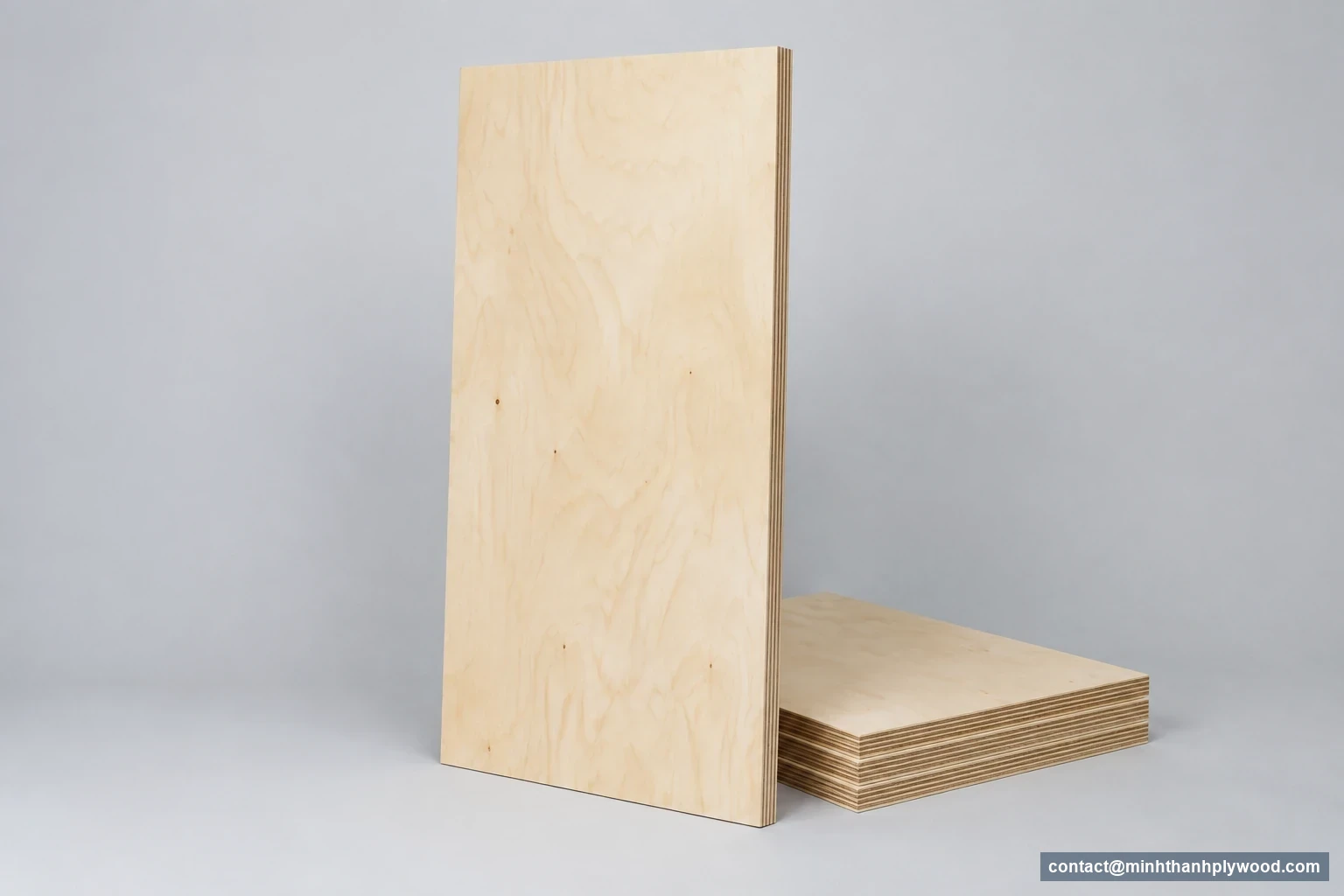
What do birch plywood grades tell the furniture buyer?
Birch plywood grades tell a furniture buyer which surface characteristics the face and back can contain under the specified grading rules. They help select the appearance entering the finish line. They do not describe the whole panel or rank every product by strength.
For B2B purchasing, start with the component. A door, cabinet side, shelf and hidden back use the face differently. The decorative face of a door remains in view; a shelf can expose its underside; a concealed back may need a sound substrate without the same colour selection. Those differences belong in the grade decision.
Then name the grading basis. An offer for B/BB birch plywood, another for C2, and a third for D+/D can refer to different systems. Putting them in one price column without the definition makes the comparison incomplete. The useful comparison is the surface each offer will deliver after the intended finish.
Minh Thanh’s birch-faced furniture plywood uses D+, D and E face names. It combines the ordered face pair with Styrax or Eucalyptus core. This guide connects those buying names with a sample approval and an inspection instruction that the workshop can repeat.
How does B/BB birch plywood differ from BB/BB birch plywood?
B/BB birch plywood has a B face, almost free of repairs, and a BB back with matched oval patches; BB/BB birch plywood has BB appearance on both sides. The choice turns on the visible surfaces of the finished component. Keep the back in the decision even when the quote highlights only the face.
| Offered face/back pair | Appearance decision | Suitable question for the sample trial |
|---|---|---|
| B/BB | Different appearance requirements on the two sides | Can the component keep the B side outward and use the BB back acceptably? |
| BB/BB | Same named requirement on both sides | Do both finished faces accept the permitted repairs? |
| BB/CP or BB/C | More selective face with a more permissive back in the stated rules | Will the back remain concealed or receive a finish that meets its purpose? |
| D+/D | Minh Thanh factory pair, approximately comparable with B/BB | Does the approved D+ face and D back match the component? |
| D/D | Minh Thanh factory pair, approximately comparable with BB/BB | Does the D appearance satisfy both sides? |
| D/E | Minh Thanh factory pair with different face/back selections | Can the E side enter the specified covered or concealed use? |
BB birch plywood is often offered without repeating the slash notation in marketing copy. Ask for the complete pair in the quotation. That lets receiving inspect both sides against the order instead of assuming the unmentioned side is identical.
Do the same in fabrication. Identify the intended face on the part schedule before nesting. If an operator flips the panel to reduce waste, the better appearance can end up inside the cabinet. A clear face instruction prevents a suitable panel from becoming an unsuitable component.
What does C2 mean, and why should you keep it separate?
C2 means a C face with a number 2 back when the offer uses the ANSI/HPVA HP-1 hardwood plywood system. The letter and number describe different sides. They should not be read as a lower step in the B/BB birch ladder or as a structural rating.
The Decorative Hardwoods Association hardwood plywood handbook, accessed on 8 October 2026, summarises letter face grades and numbered back grades separately. Its C face permits broader colour and natural characteristics than more selective faces. Read the full applicable specification for the product you are ordering.
The ANSI/HPVA HP-1-2024 standard, accessed on 8 October 2026, also addresses sanding and finished-panel appearance. This makes a practical distinction: a veneer grade and a surface ready for your finish are separate instructions. Do not infer your required coating result from C2 alone.
If purchasing compares C2 with Minh Thanh D/E, use finished samples and a component schedule. Establish whether repairs, colour and preparation are acceptable for that use, then inspect the proposed core. Keep each supplier’s original grade name in the approved description rather than inventing a direct code conversion.
How are Vietnamese birch plywood grades named at Minh Thanh?
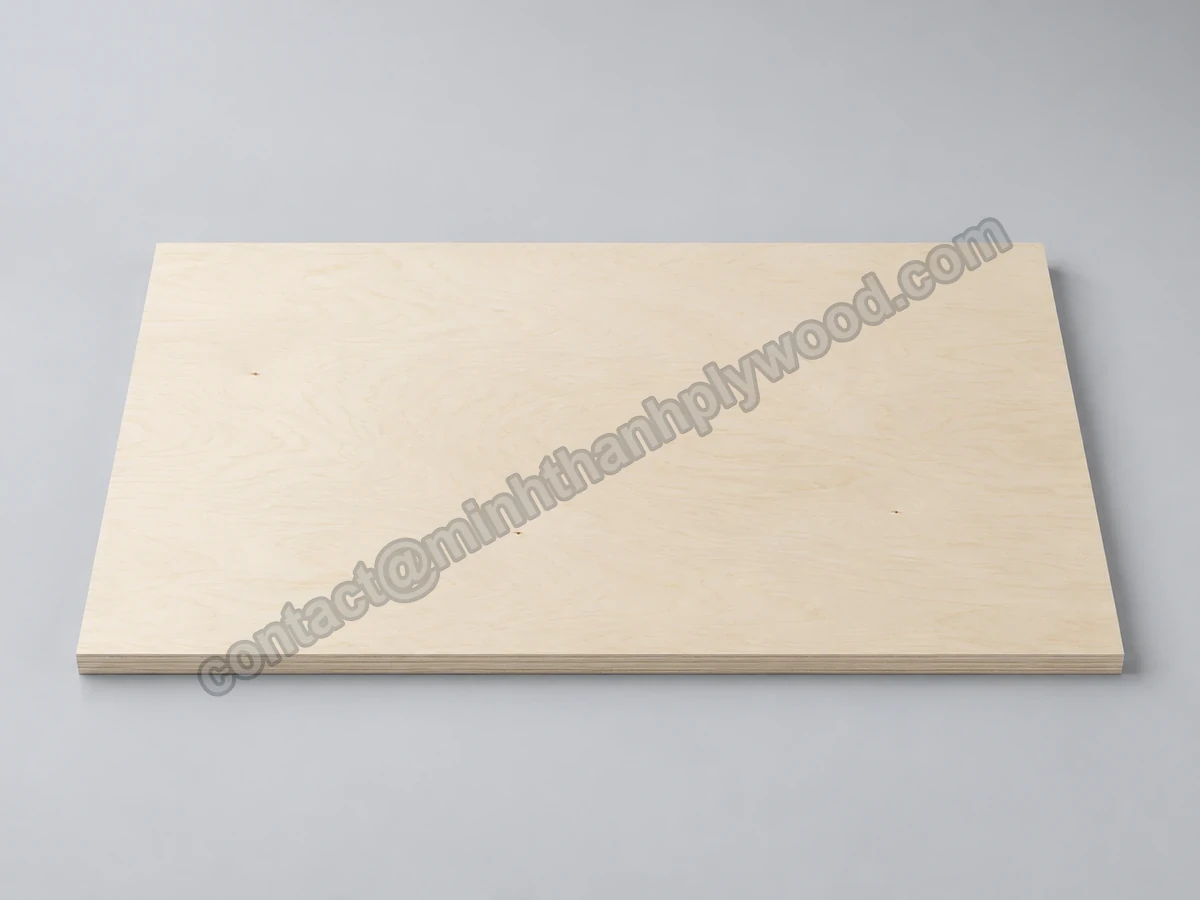
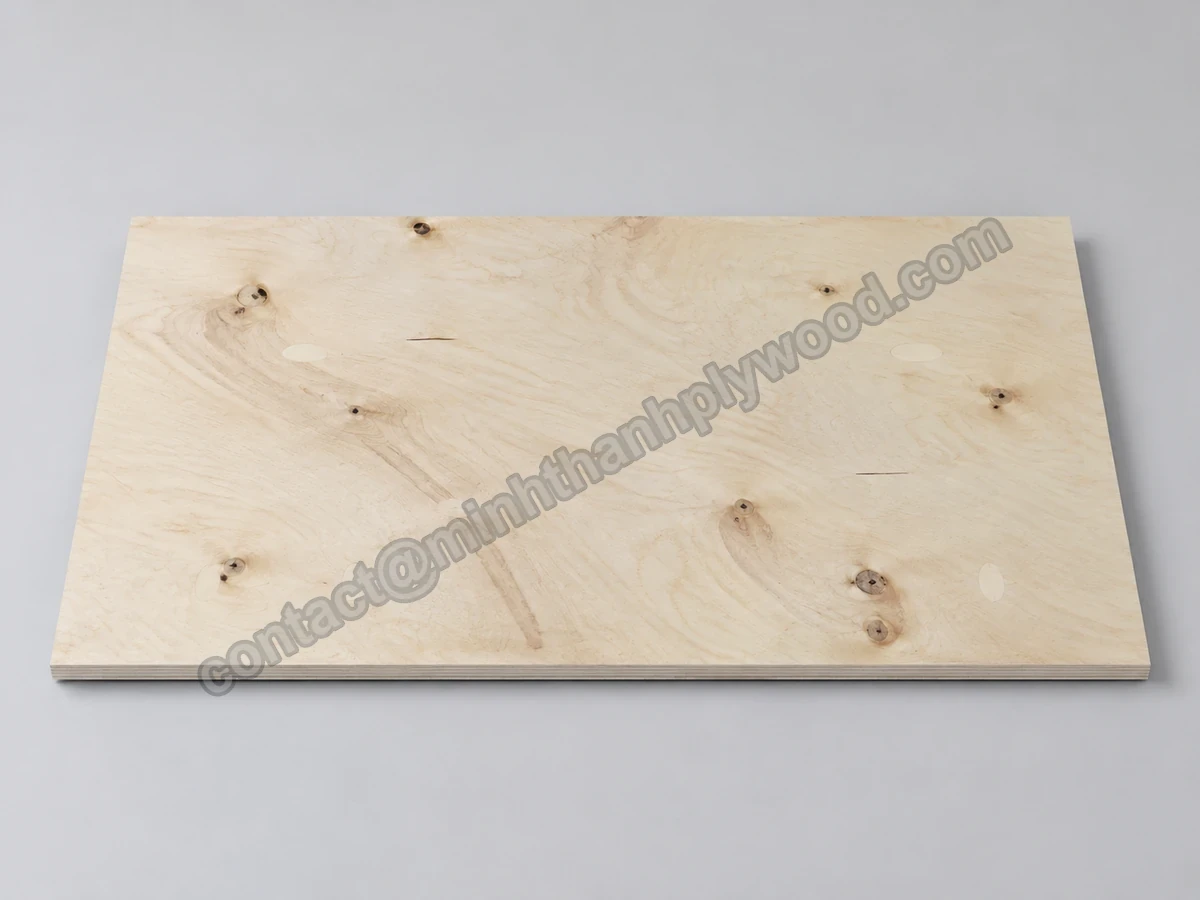
Minh Thanh names birch faces D+, D and E, ordered from E through D to D+ as the appearance becomes more selective. A complete quotation states the face/back pair. D+/D and D/E therefore describe different surface selections even when both use the same core and thickness.
| Grade (European ladder) | Allowed on the face | Minh Thanh grade | Best use |
|---|---|---|---|
| B | Pin knots and slight colour change, no patches | D+ | Clear-lacquered doors and visible panels |
| BB | Sound knots, matched oval veneer patches, mild colour variation | D | Cabinet sides, stained or painted parts |
| CP | More patches, colour streaks, sound surface | E | Painted parts, overlay base, hidden sides |
| C | Open knots and splits, filled where needed | E (with CP) | Hidden structure, backs |
For buying comparisons, D+ corresponds with B, D with BB, and E with CP/C. D+/D compares with B/BB, while D/D compares with BB/BB. These comparisons explain the appearance ladder; the approved sample gives the order its precise visual target.
Write both descriptions when the existing furniture programme uses an imported grade code. For example, the enquiry can identify the current B/BB specification and request Minh Thanh D+/D samples against the attached finished reference. The accepted quotation then names the factory pair and sample identification together.
If the programme needs a defined maximum repair size, distribution or restricted visible zone, put that requirement in the appearance schedule. Purchasing should be able to point to an agreed criterion that both the factory and inspector can apply.
Use veneer grading to understand the face selection within the manufacturing process. Choose the face for the look the buyer orders, then connect it to the core, preparation and coating that the component actually needs.
Which faces need the more selective grade?
The surfaces that remain visible after assembly and finishing need the appearance selection appropriate to the furniture design. A component’s name does not decide that selection on its own. Mark the visible zones on the drawing before buying one grade for an entire programme.
Consider a cabinet side. Its outer face may sit against another cabinet while its inner face remains visible whenever a door opens. The side called the back of the raw panel can therefore be the more important visible surface in the finished cabinet. A drawer side can expose both faces and its top edge.
For doors and wall cladding, decide how adjacent parts must relate. Matching colour and grain between neighbouring components goes beyond the individual panel’s grade. Add a grouping or selection instruction when the finished design needs it. Otherwise, panels that individually meet their grade can still look unsuitable side by side.
For a concealed substrate, concentrate on the required soundness, preparation and machining. Specify its appearance at the level the final use needs. The furniture selection guide helps separate components; the wall-panel guide explains the visual questions where broad surfaces stay on display.
How should repairs be specified for clear-finished birch?
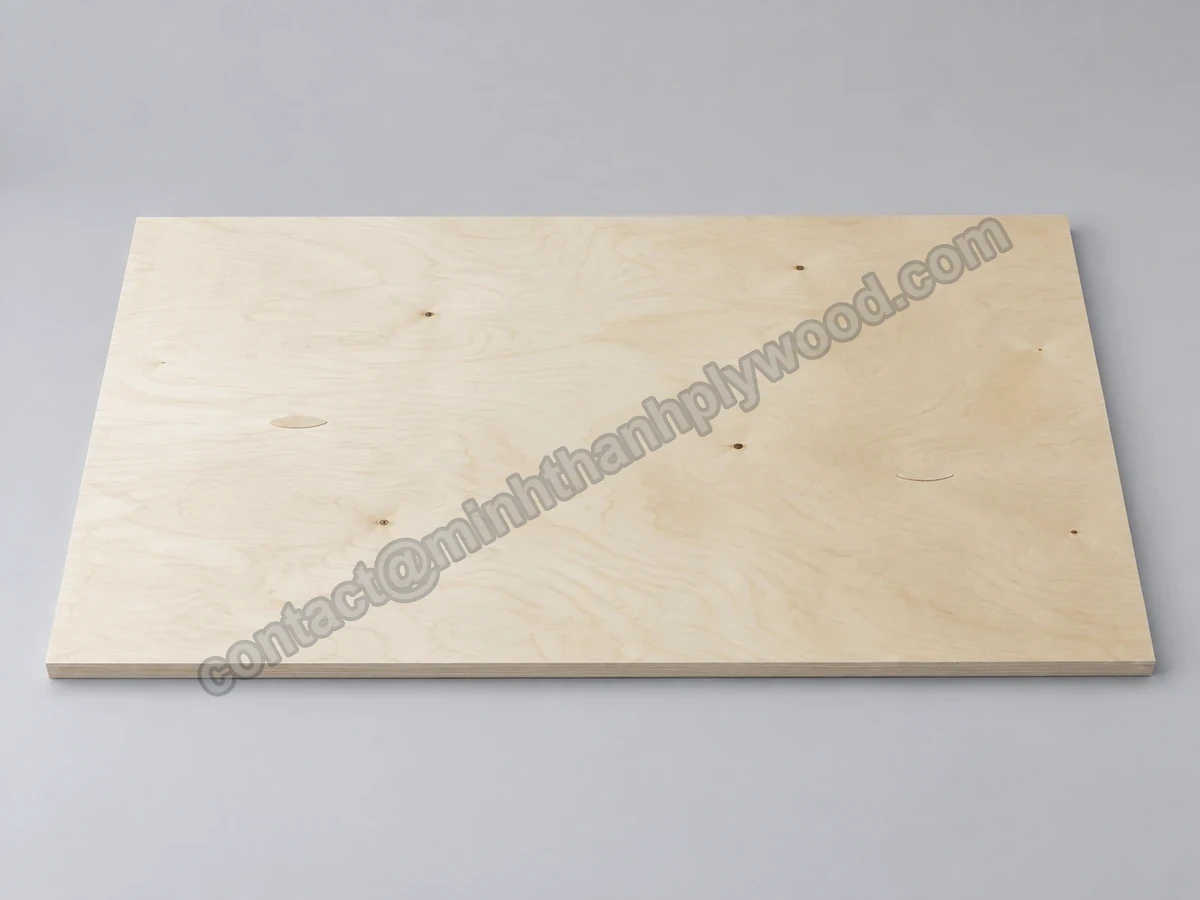
Specify repairs by type and finished appearance when birch remains visible beneath a clear coating. Veneer plugs and filler can read differently from surrounding wood after staining or lacquering. Approve the repair in the production finish before deciding that the face grade suits the part.
Separate a sound knot from an inserted veneer plug. The knot is a natural feature within the veneer; the plug replaces an area that has been removed. A filler repair uses filling material. Record each in the approval set rather than writing one broad instruction about patches.
Check colour and grain at the repair boundary. A plug can be neatly seated while its grain direction remains visible. A filler area can be flat yet take stain differently. These are appearance decisions for the design, so photograph acceptable examples and identify the component zones where they can be used.
Grade selection becomes more useful when the factory knows the finish and visible area. Send a coated reference piece and a marked drawing. If the buyer accepts a repair on a cabinet interior but excludes it from the door face, state both decisions. This supports sensible face allocation instead of rejecting every repaired sheet regardless of its intended part.
What should the paint and overlay trial check?
A paint or overlay trial should check the completed surface after the actual preparation and finishing sequence. Opaque coverage hides grain, but it does not automatically remove a repair contour or a preparation mark. The appropriate face is the one that meets the finished-surface requirement.
Apply the intended sanding, sealer, primer and coating to representative face areas. Include repairs permitted in the offered grade. Check after curing under the specified lighting and sheen. Raking light is useful for finding local raised or depressed areas that a face-on inspection misses.
For an overlay, trial the real adhesive and pressing arrangement. Inspect the surface and the freshly machined perimeter after bonding. Record the substrate preparation and the finished acceptance requirement. A label such as paint grade is less useful than a sample that demonstrates the expected result.
The manufacturer’s WISA birch range guidance, published in 2018 and accessed on 8 October 2026, separates lacquering, painting and technical applications within its product range. Use that application-led reasoning in your own approval. Minh Thanh supplies sanded and polished furniture faces; the buyer’s coating trial defines the finished appearance to match.
Why does the core stay outside the face-grade decision?
The core stays outside the face-grade decision because furniture machining and joints reach beneath the decorative veneer. A selective birch face cannot describe what a hinge bore or routed groove will encounter. Specify the internal construction and inspect it through the component operations.
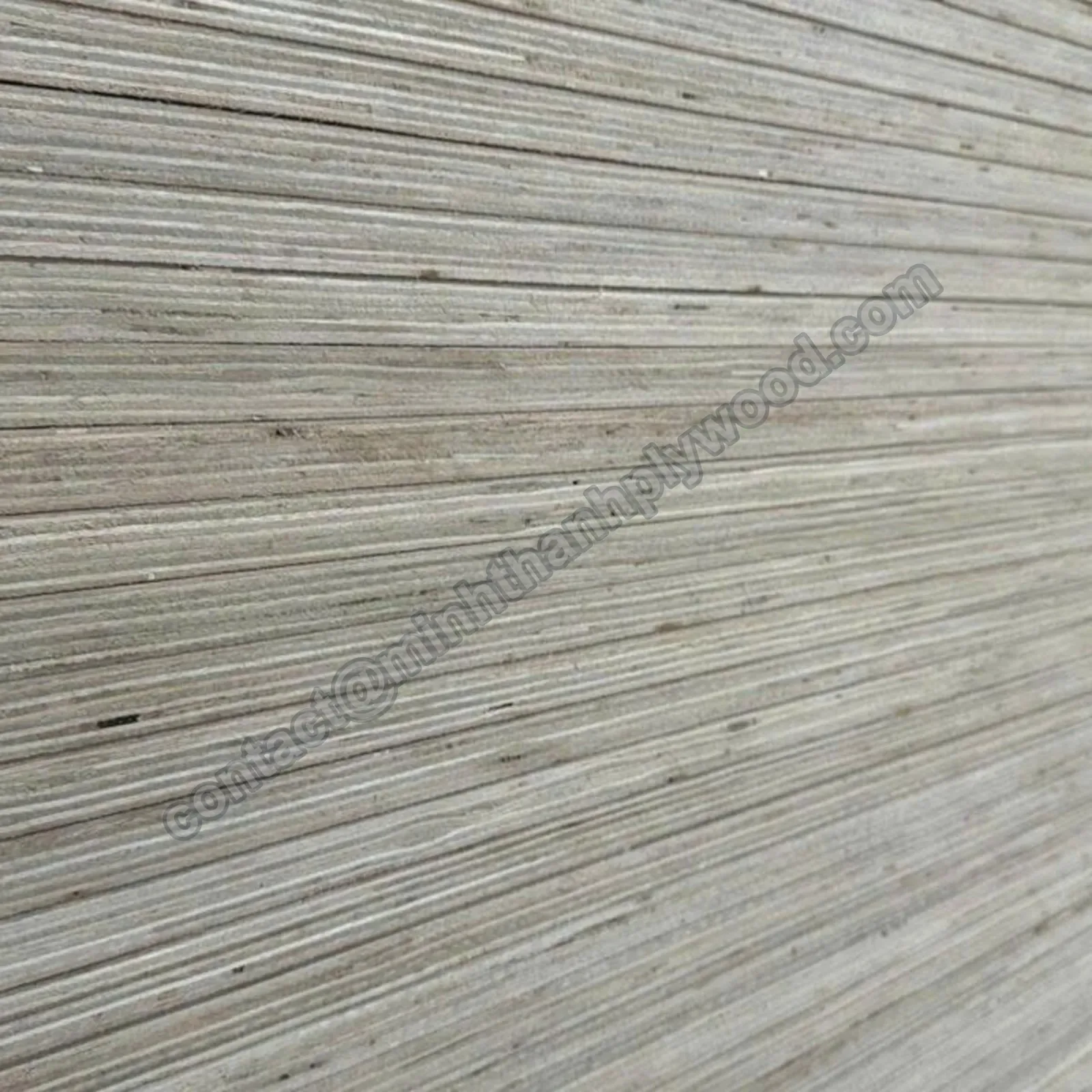
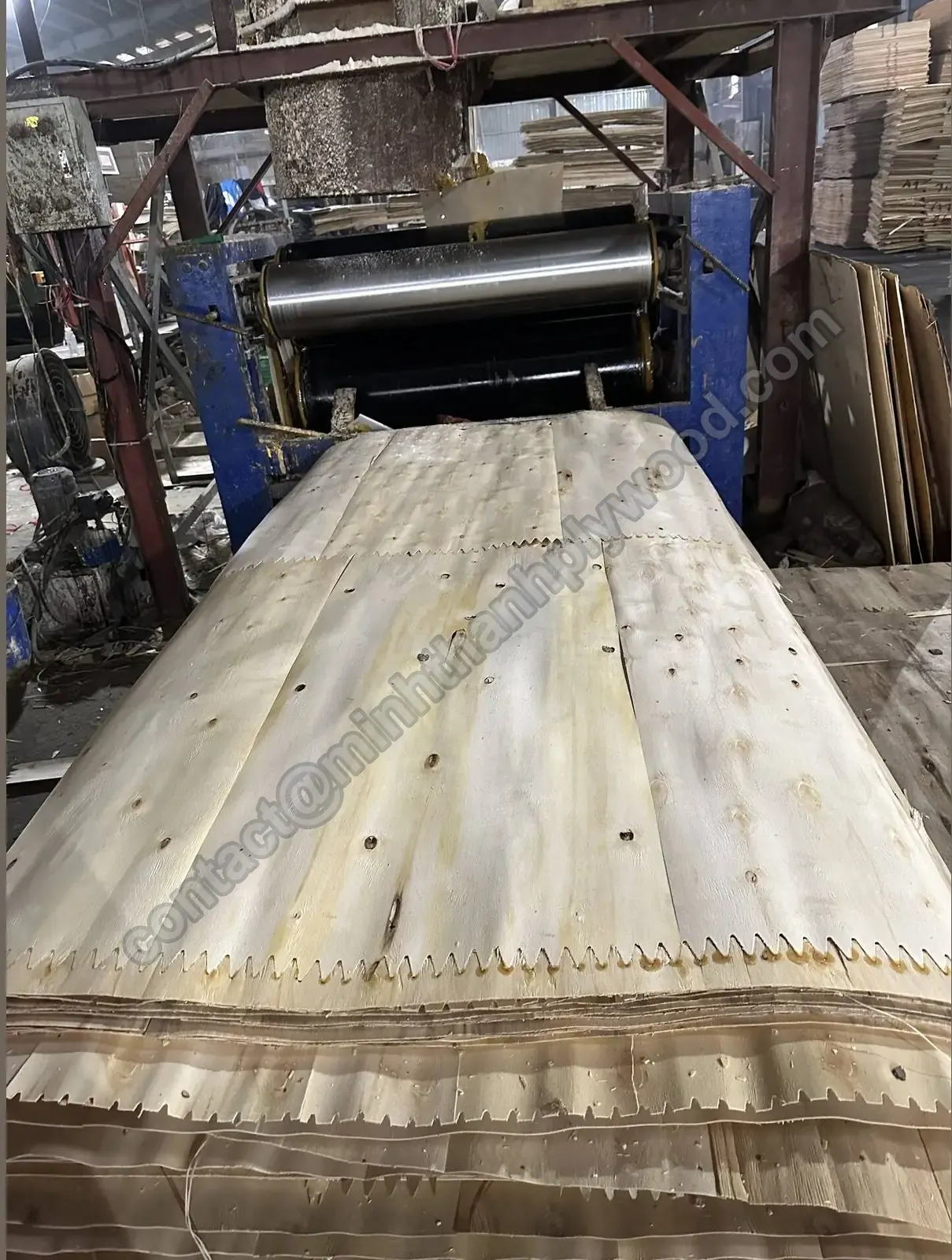
Minh Thanh’s standard furniture cores are white Styrax and Eucalyptus. The core veneers are stitched horizontally and vertically. Furniture panels are pressed twice: the core board is pressed and calibrated before the face and back are pressed on. This prepares the substrate beneath the decorative birch veneer.
Keep the core name in the sample record. If two samples have identical birch faces but different cores, they are separate qualification candidates. The eventual purchase order should use the construction that passed the production trial rather than a broad birch description that allows the internal material to change.
If the existing specification is all-birch, use the Baltic birch acceptance guide to assess the change. All-birch means internal birch veneers as well as birch outer faces. Minh Thanh’s birch-faced furniture construction needs its own machining and component approval as an alternative.
What should a machining sample show?
A machining sample should show the production cuts, grooves and hardware positions that decide whether the component works. Make those features from representative panel locations. The approval must cover the material the workshop will use, including its exit edges and narrow sections.
Cut fresh strips and inspect their layer continuity. Then make the intended groove, rebate or connector bore using the workshop’s production tooling. Photograph the exposed core and note any local opening, loose layer or breakout at the relevant location. A clean original sheet edge alone gives a narrower view.
Specify the consequence as well as the observation. An opening on a covered edge and an opening that removes support behind a connector have different effects. Define the core requirement at each sensitive feature. This helps the inspector classify the actual component risk instead of applying one visual judgement everywhere.
Record the tool and support arrangement used for the trial. Veneer breakout at a cut exit can reflect the machining setup as well as the supplied material. Keep the process constant when comparing candidate panels, then approve the finished edge under the selected coating or edge band. The manufacturing guide connects these checks with the furniture production route.
How should thickness and surface preparation be ordered?
Order the nominal thickness with its required tolerance and surface preparation, then check the measured panel against the component fit. A thickness label does not specify variation across the sheet. Likewise, a sanded face needs a finishing instruction appropriate to the programme.
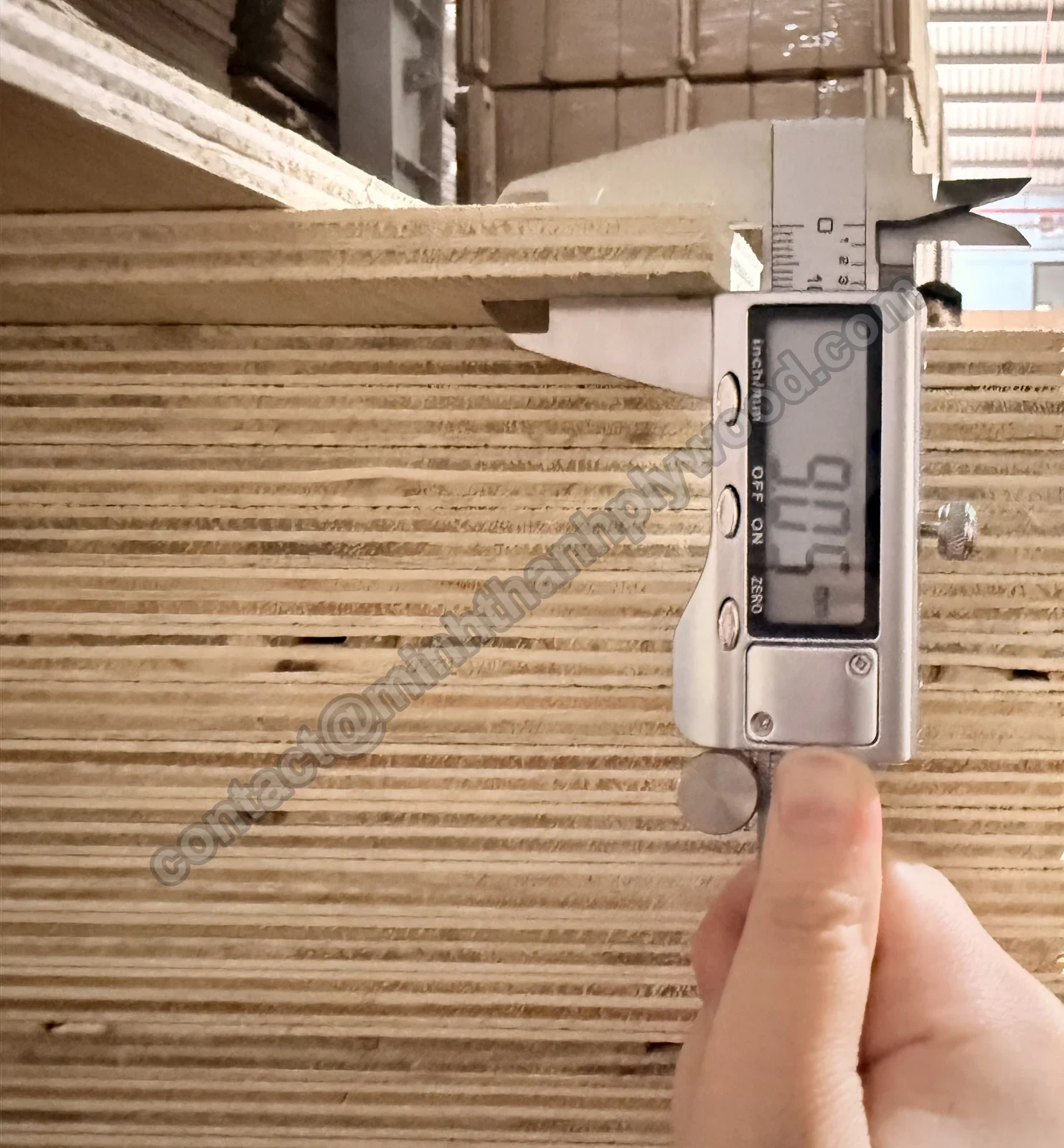
Minh Thanh’s sanded furniture panels use ±0.2–0.3 mm thickness tolerance, with requirements down to ±0.2 mm. Length and width tolerance is ±2 mm. Specify the selected tolerance in the enquiry so the quotation and machining trial use the same target.
During sample approval, measure at representative sheet locations rather than taking one convenient edge reading. Trial the groove or connector fit with those actual dimensions. Identify whether the workshop trims the supplied perimeter or uses factory-cut edges in the final assembly; that changes which dimension controls the finished part.
Inspect the prepared face under angled light for sanding marks and local unevenness. Avoid aggressive resanding merely to remove a visible wood characteristic: the decorative veneer has a finite thickness. Use the thickness guide for the dimensional questions and agree the finishing sequence before production approval.
Does a face grade tell you the glue or emissions?
A face grade tells you neither the adhesive bond nor the emission requirement; both need their own lines in the order. B/BB, D+/D and C2 describe appearance within their systems. They do not select a bond for a humid component or identify a chamber-test method.
Minh Thanh uses UF glue at E0 emission as standard for furniture and interior plywood. Melamine-fortified and phenolic bonds are produced to the customer’s specification. The bond choice should follow the intended service, while the emission instruction follows the buyer’s product and destination-market requirements.
The factory holds CARB P2 / TSCA Title VI certification under ICTT mill no. 23024 and supplies European and US furniture buyer requirements. Third-party testing through SGS is arranged to the buyer’s method. Use the actual product records for the quoted construction alongside the face acceptance schedule.
The US EPA formaldehyde guidance, accessed on 8 October 2026, explains the framework for composite wood products including hardwood plywood. For water exposure, consult the plywood bond guide. Keep each requirement tied to its purpose so a familiar surface code cannot conceal a missing technical specification.
How do you approve a repeatable face sample?
Approve a face sample that shows the accepted appearance range, including repairs and colour differences allowed on the relevant parts. An unusually clean sample establishes only that sample’s appearance. A repeat programme needs a reference set that purchasing and receiving can both apply.
- Name the face/back pair, grading basis and core construction.
- Identify the visible and concealed component zones on the drawing.
- Select representative raw face and back areas, including permitted repairs.
- Finish them with the production coating sequence.
- Mark acceptable and unacceptable appearances for each zone.
- Connect the approved set to the quotation and inspection instruction.
Keep a whole-sheet view with the close-up samples. The whole view shows grain distribution and repair placement; the close view shows the boundary and finished texture. Use consistent lighting and a physical finished reference when colour matching matters.
For repeat orders, update the reference when the coating, visible-component design or grade specification changes. Keep the old and new approvals distinct. That lets the supplier quote the current appearance and keeps receiving from applying a previous finish requirement to a newly approved panel.
What belongs in the birch face acceptance schedule?
The birch face acceptance schedule should identify what each side must look like and how the inspector decides it. Use the table as a blank order structure and fill its limits from the agreed grade rules and approved sample. It is an appearance worksheet, not a replacement grading standard.
| Field to complete | Buying instruction | Inspection record |
|---|---|---|
| Face and back | Factory pair plus buyer’s original reference grade | Side inspected and matching reference |
| Visible component zone | Clear-finished, painted, covered or concealed | Marked panel area and planned component |
| Colour and grain | Approved range and adjacent-part matching requirement | Whole-face view and comparison sample |
| Natural characteristics | Permitted knot and streak appearance | Type, location and observed condition |
| Repairs | Allowed veneer plug and filler appearance by zone | Close view plus finished appearance comparison |
| Surface preparation | Ordered sanding and final finishing criterion | Angled-light observation and coating trial |
| Core | Ordered species and requirements at machined features | Cut, groove and bore results |
| Dimensions | Nominal format and agreed tolerances | Instrument, positions and measured values |
| Decision | Order acceptance rule and authorised disposition | Pass or nonconformance against a named criterion |
Agree the sampling plan before inspection, including how panels are selected across bundles and how the back is reached. Note every observation against a panel identification and location. This turns a photograph into evidence that another inspector can interpret.
Keep any permitted reallocation explicit. A sheet rejected for a clear-finished front can still suit an approved concealed component, but that does not change the front’s requirement. Recording the allocation preserves the appearance target for the next order.
How do you choose the economical grade for a furniture programme?
Choose the economical grade by the cost of accepted components after cutting and finishing. The least expensive sheet can consume extra sorting, sanding or rework. A more selective face has value where it improves yield on visible parts, while covered parts can use a different appearance selection.
Split the component schedule before comparing quotations. Group doors, visible sides, shelf faces and concealed backs by their real appearance requirement. Nest each candidate using the same sheet format and record the accepted parts from the trial. This gives purchasing a yield figure connected to the ordered grade.
Add the workshop steps that differ between offers. Track extra filling, coating and handling separately, and compare complete panel constructions. If a quote changes the core or bond as well as the face, identify that change instead of assigning the entire cost difference to grade.
Use your current quotations and production records in the calculation. Divide material and processing cost by accepted finished parts. That comparison helps decide whether D+/D, D/D or a more permissive back is appropriate for each part of the range. It also gives the factory a concrete target for quoting the face selection the programme needs.
What should you send to order the right birch grade?
Send the finished component requirement with the requested face/back pair so Minh Thanh can quote a defined furniture panel. Include a drawing that marks visible surfaces and the appearance sample to match. Keep the core and technical requirements separate from the grade name.
The enquiry should state the application, Styrax or Eucalyptus core, bond and emission requirements, face/back grade, repair and colour acceptance, dimensions and tolerance. Add the finishing reference, packing, order quantity and destination port. Attach machining details for grooves, exposed edges or connectors that need a specific core condition.
Request free samples for the face and component trial. Minh Thanh’s quotation can name D+/D, D/D or D/E with the approved appearance reference and selected construction. That gives the workshop and receiving inspector the same panel description before the order enters production.
Send the enquiry through the contact page, and use the specifications category for related inspection guides. An approved sample, clear face pair and complete construction line make the grade meaningful in every repeat purchase.
Buyer questions, answered
What do birch plywood grades measure?
Birch plywood grades classify face and back appearance, including permitted natural characteristics and repairs, within the specified grading rules. Core construction, adhesive bond and component performance need separate requirements. The ordered grade should be linked to an approved appearance sample.
What does B/BB birch plywood mean?
B/BB means a B face and a BB back under the named grading system. It provides different appearance requirements on the two sides. Mark which side must face outward on the component drawing and approve the back for its actual use.
Is BB/BB birch plywood good for furniture?
BB/BB can suit furniture when both surfaces and their permitted repairs fit the finishing specification. Check a completed component rather than selecting by the grade label alone. The core, dimensions and joints still need to meet the design requirements.
What does C2 birch plywood mean?
In an ANSI/HPVA HP-1 description, C2 combines a C face with a number 2 back. It is a different grading system from B/BB and BB/BB. Specify the applicable rules before comparing a C2 offer with European or Vietnamese face names.
How do Vietnamese birch plywood grades D+, D and E compare?
Minh Thanh's birch appearance ladder runs E, D, then D+ from more permissive to more selective. D+ compares approximately with B, D with BB, and E with CP/C for buying purposes. The sample and repair criteria define the ordered appearance.
Is D+/D the same as B/BB?
D+/D is an approximate appearance comparison with B/BB, not a statement that every grading allowance is identical. Minh Thanh quotes its factory grade pair alongside the approved sample. Core construction remains a separate line in the order.
Can a high birch face grade cover a poor core?
A selective face does not establish the condition of every internal layer. Inspect fresh cuts, production grooves and connector locations on representative panels. Require the core condition needed for the finished component separately from its face appearance.
Does Minh Thanh make all-birch plywood?
No. Minh Thanh makes birch-faced furniture plywood with white Styrax or Eucalyptus cores, graded D+, D and E on the face. It replaces all-birch in cabinet, shelf and door parts with covered or edge-banded edges.
Which birch face grade should I use for painted cabinets?
Choose the grade that meets the finished paint appearance after your sanding, primer and topcoat sequence. Check permitted repairs under the specified sheen because paint can reveal local contours. D/D or D/E can be evaluated for appropriate painted or concealed components against the approved sample.
Are birch plywood grades also emission grades?
No. A face/back grade addresses appearance, while E0, test methods and destination-market requirements address emissions. Minh Thanh uses UF glue at E0 emission for furniture plywood and holds CARB P2 / TSCA Title VI certification. Specify the bond and emission requirements separately.
How should two visible faces be ordered?
Define the appearance on both sides and mark any matching requirement between neighbouring components. A shelf underside or cabinet interior can remain visible even if it is labelled the back of the sheet. Select and approve the face/back pair against that complete view.
What information is needed for a graded birch quotation?
Send the furniture application, component drawing, visible faces, core, bond and emission requirements, face/back grade with appearance sample, size and tolerance, packing and quantity. Include the coating reference and destination port. Minh Thanh offers free samples for approval.