
BCX plywood is a trade description for a B-quality face, C-quality back and exterior-type adhesive. Buy the actual panel classification and construction for the intended part. Minh Thanh Plywood explains the checks for painting, exposure, dimensions and structural requirements, and offers specified furniture panels and exterior/CDX-type plywood in its listed range.
What is BCX plywood?
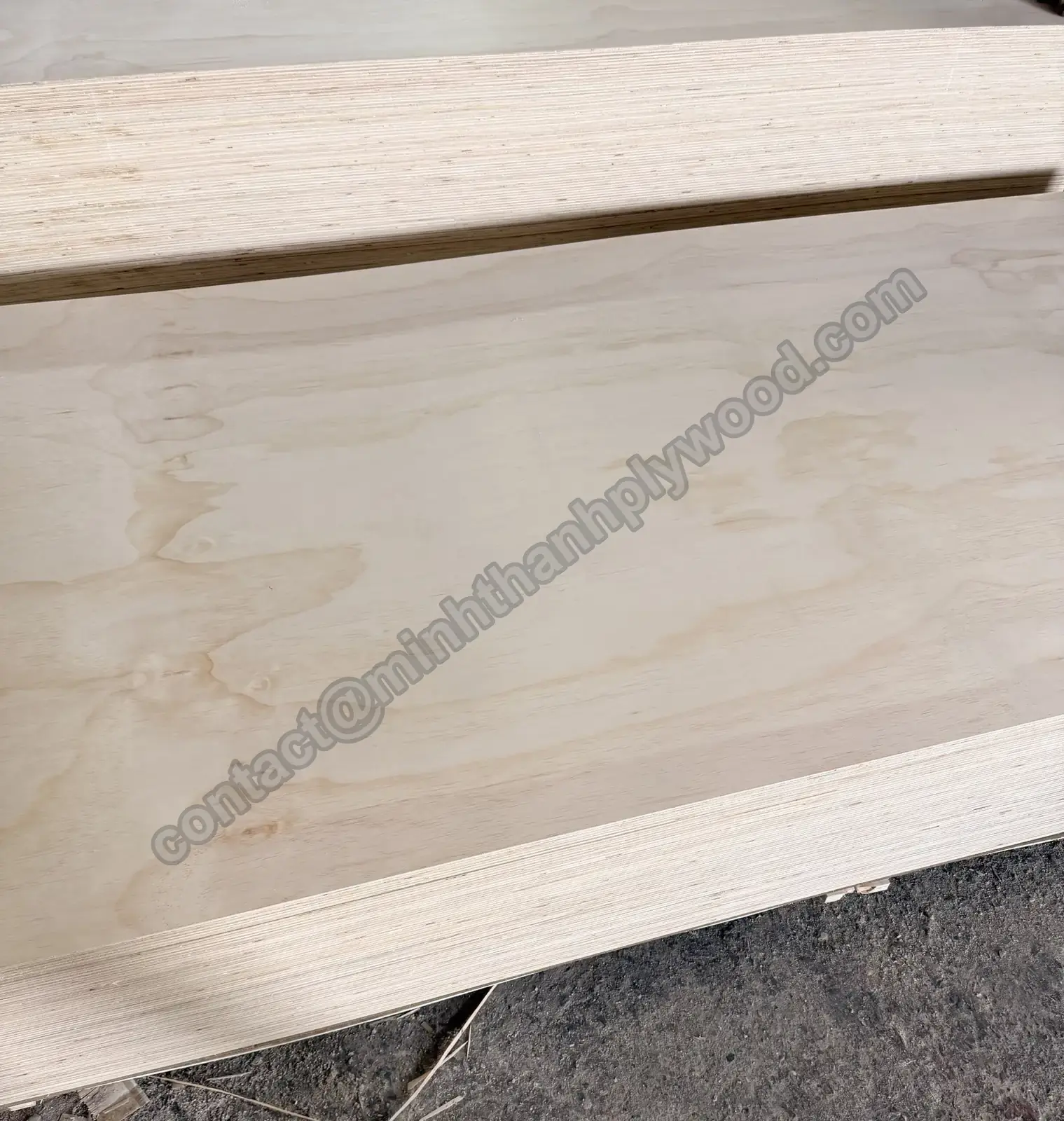
BCX plywood is trade shorthand for a B-quality face, a C-quality back and an exterior-type adhesive description. It is considered when a practical sanded face suits the component without requiring the appearance of a more selected face. The order still needs the complete panel requirement.
The material name is only the starting point. A painted utility cupboard, an external lining and structural sheathing are different uses. They require different finish, exposure and performance evidence even if a seller puts BCX on all three catalogue descriptions.
For an order to a structural standard, write the actual grade and classification. For an appearance-led utility or furniture purchase, state the face/back sample and the required core and bond. The latter gives a mill an achievable visual reference without silently adding a structural qualification.
Minh Thanh’s Pine-faced furniture plywood includes appearance pairs selected against a sample, including B/C for utility parts. The exterior/CDX-type range is a separate route for the specified outdoor product. Choose from the product range by the job the panel must perform.
This guide turns BCX plywood meaning into an order that a production team and receiving inspector can use. It concentrates on the B face, comparison with RTD descriptions, actual bond service and the practical checks that decide useful-part yield.
What should a B face and C back look like?
A B face allows defined natural characteristics and repairs; a C back has a more utility-oriented appearance. A B face does not mean patch-free decorative veneer. Inspect both against the applicable grade and the approved finished sample.
PS 1-22, the current edition listed by NIST (checked 8 October 2026), includes B-C Exterior as a sanded grade and sets its minimum inner-ply quality. Its veneer descriptions allow specified sound knots and repairs in B material. Use the detailed standard when conformity is ordered, while separately approving the appearance needed by your finished part.
| Surface | What the buyer evaluates | Where the requirement earns its value |
|---|---|---|
| B face | Permitted knots, repairs, sanding and finished appearance | Painted or practical visible surface |
| C reverse | Permitted utility characteristics and back preparation | Hidden or agreed utility surface |
| Cut edge | Layers, exposed openings and edge finish | Machined joints or visible edges |
| Complete panel | Dimensions, bond and relevant properties | Assembly fit and functional service |
For opaque paint, include repaired areas in the finish trial. For a clear finish, approve their visibility and the face grain. If the buyer wants uninterrupted matched grain, state that decorative requirement directly instead of expecting a B structural face description to provide it.
Review the reverse with the component drawing. A panel whose back is hidden against a wall has a different appearance requirement from a shelf whose underside remains visible. Mark both sides on the approved sample.
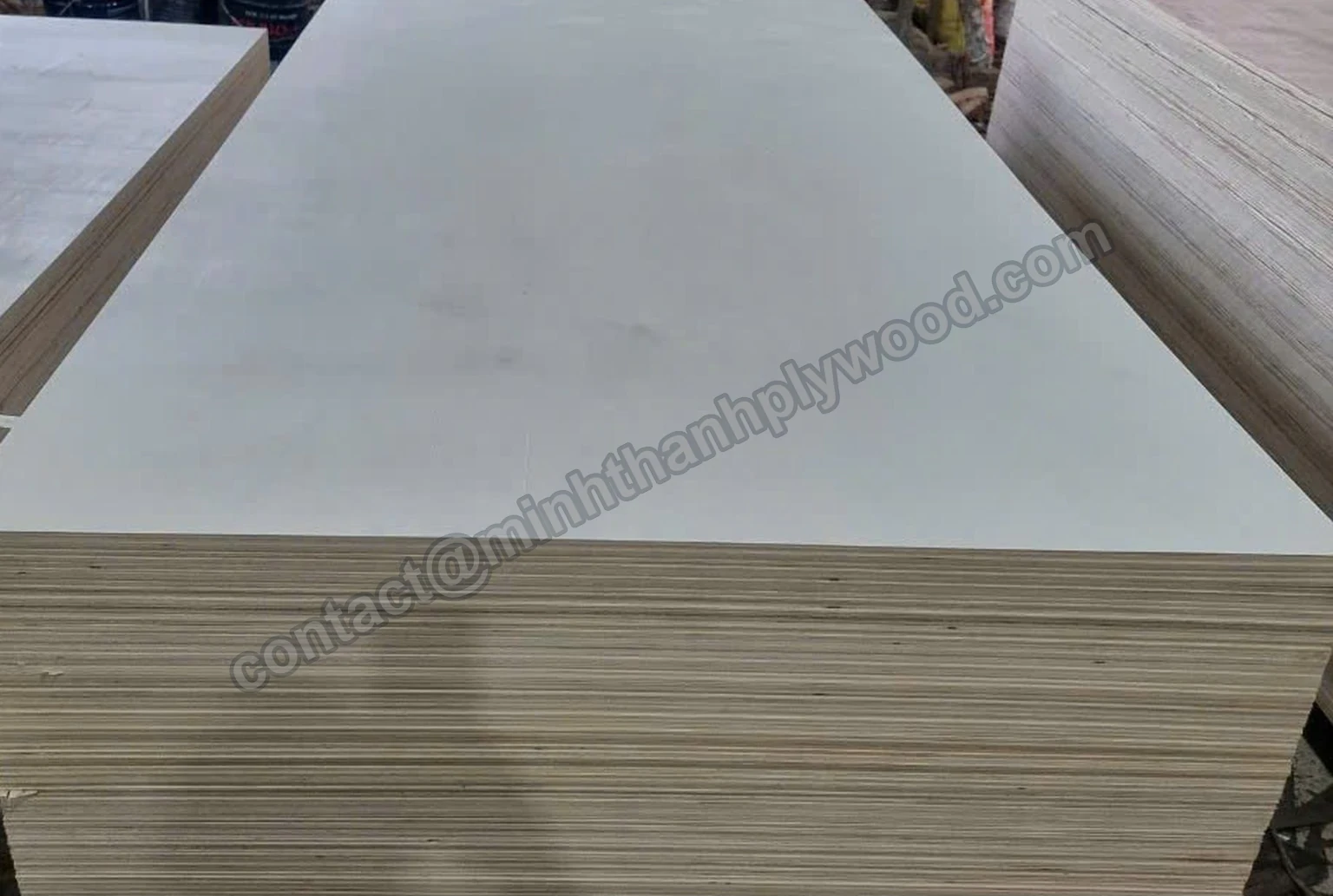
Inspect both surfaces and identify the side presented in the finished component.
What does BCX sanded plywood mean for finishing?
BCX sanded plywood describes a stated appearance pair with a supplied sanding finish. It gives the finishing line a starting surface, while the coating trial determines the finished result. It does not remove permitted repairs or establish a particular decorative matching pattern.
Record whether the supplied panel needs further sanding before the chosen coating. Include repairs, grain transitions and areas near the edge in the trial. Inspect after curing, because patch outlines and texture differences can appear differently in a cured finish from a wet coat.
Keep substrate preparation consistent across samples. Comparing one panel under a heavier primer build with another under a lighter build changes the finish test. Use the buyer’s intended production process so the result predicts preparation time and accepted yield.
For edge-banded parts, trial the fresh cut edge and the banding adhesive. For exposed edges, apply the actual finish and inspect routed corners. The reverse needs its planned treatment too when the component receives coating on both surfaces.
At Minh Thanh, furniture faces are sanded and polished, and panels are prepared for the buyer’s finishing process. The core board is calibrated before face and back pressing. Include that supplied construction and finish stage in the sample record, then approve the final component under the intended coating.
Can BCX be used outside?
BCX belongs outside only when the selected panel’s actual classification and completed component design suit the exposure. Require Exterior for continuing weather service. Exposure 1 covers limited exposure before protection or similarly limited service.
APA’s moisture-exposure guidance, revised December 2017 and checked 8 October 2026, treats exposure classification as a panel selection requirement. A seller’s exterior-type adhesive description is less specific than an identified product classification.
State the intended water contact in the request. A panel behind a functioning weather barrier differs from a painted sign repeatedly exposed to rain. Edges, fasteners and joints can receive more water than the middle of the face, so include them in the component detail.
Preservative treatment is a separate field where the service needs decay protection. An Exterior bond does not mean treated wood. Similarly, marine-grade naming describes a different specified product and does not automatically provide preservative treatment.
Choose the panel for the service first. Specify coating, edge protection and drainage after that selection. A good top-face coating alone leaves cut edges and penetrations to be addressed. The waterproof plywood guide explains these different moisture paths.
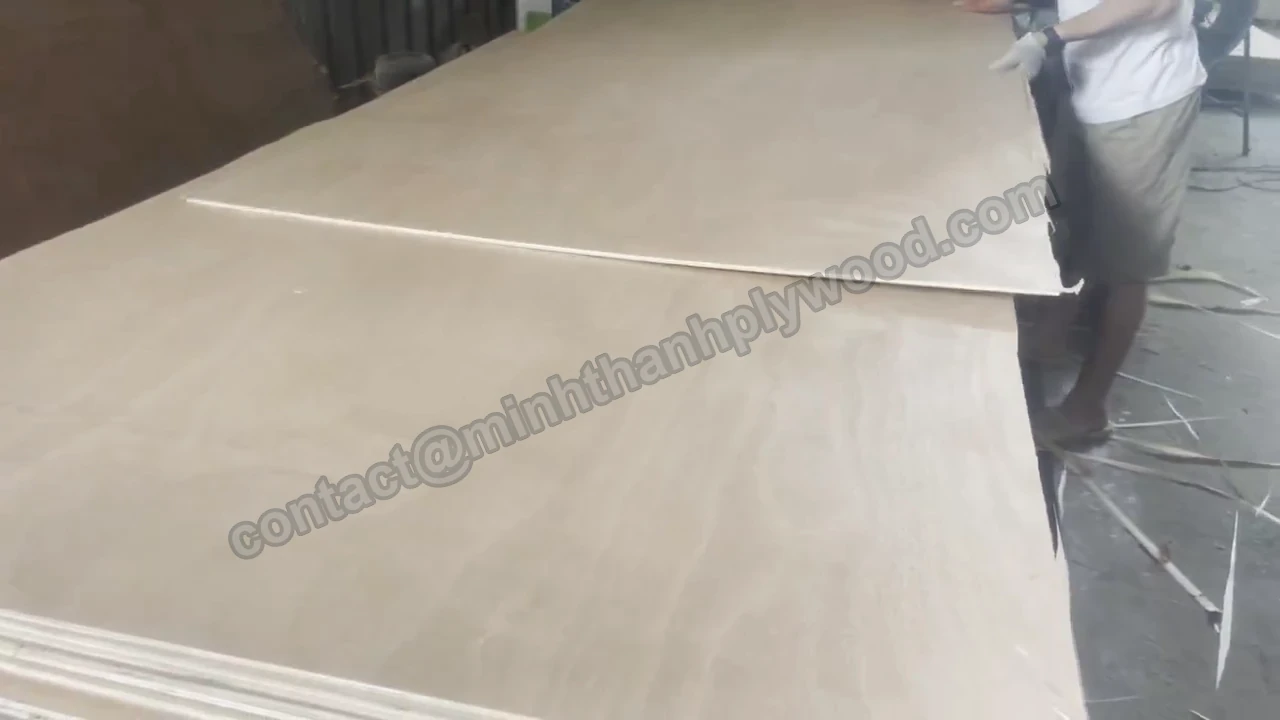
The ordered exposure classification and finish details accompany the physical panel inspection.
How should you compare BCX and RTD plywood?
BCX describes face/back appearance in trade usage; RTD Sheathing is shorthand for Rated Sheathing. The APA Help Desk explanation, checked 8 October 2026, identifies RTD as an abbreviation for Rated. That designation can cover plywood or oriented strand board (OSB), so identify the panel material before comparing a sheathing offer with BCX plywood.
Do not assign strength or weather performance from the RTD term. Ask for the full panel description behind it. Then compare the documented grade, bond classification, actual thickness, construction and structural properties or rating on the same basis as the BCX offer.
| Field to compare | Offer called BCX | Offer called RTD |
|---|---|---|
| Face/back | Identify the claimed B/C grade and governing rules | Read the actual face/back or end-use grade |
| Bond service | Read the panel classification | Read the panel classification |
| Actual thickness | Use declared value and limits | Use declared value and limits |
| Structural use | Required product record and design | Required product record and design |
| Surface preparation | Supplied finish and coating trial | Supplied finish and coating trial |
| Acceptance result | Useful parts from the intended component trial | Useful parts from the intended component trial |
A comparison such as “RTD versus BCX” puts an end-use designation beside a face description. For roof or wall sheathing, compare the required span rating, performance category, exposure classification and panel material. For a painted cabinet, inspect the face, core and finished sample. A panel sold as rated sheathing and a panel selected for visible joinery need different acceptance records.
For an established production programme, record a proposed RTD-labelled alternative as a material revision. Use the same cut list, finish and hardware trial before releasing it. That preserves a testable replacement decision rather than relying on a catalogue term.
When should a buyer choose BCX rather than ACX or CDX?
Choose the B/C appearance level when it meets the finished component requirement at a useful total cost. An A/C face can earn its cost on a more appearance-sensitive part. A utility C/D product can fit concealed work when its performance and exposure service meet the design.
The ACX plywood guide covers the more selected face option, while the three-grade comparison puts them side by side. Keep structural requirements and bond service fixed before attributing a buying advantage to the face grade.
For a painted utility cabinet, cut and finish representative parts from both proposed appearance levels. Record preparation and accepted pieces. B/C is commercially attractive when its allowed characteristics fit the actual finish without disproportionate rework.
For hidden panels, assess whether a better face contributes anything to the result. The important expenditure can instead be the correct core, thickness control or required qualification. Conversely, a visible retail fixture can lose useful yield when repairs fall in unavoidable exposed positions.
Do not rank these labels as universal strength classes. An A face can be used on one construction and a B face on another. Compare the selected products using their relevant properties and the intended design, then judge appearance independently.
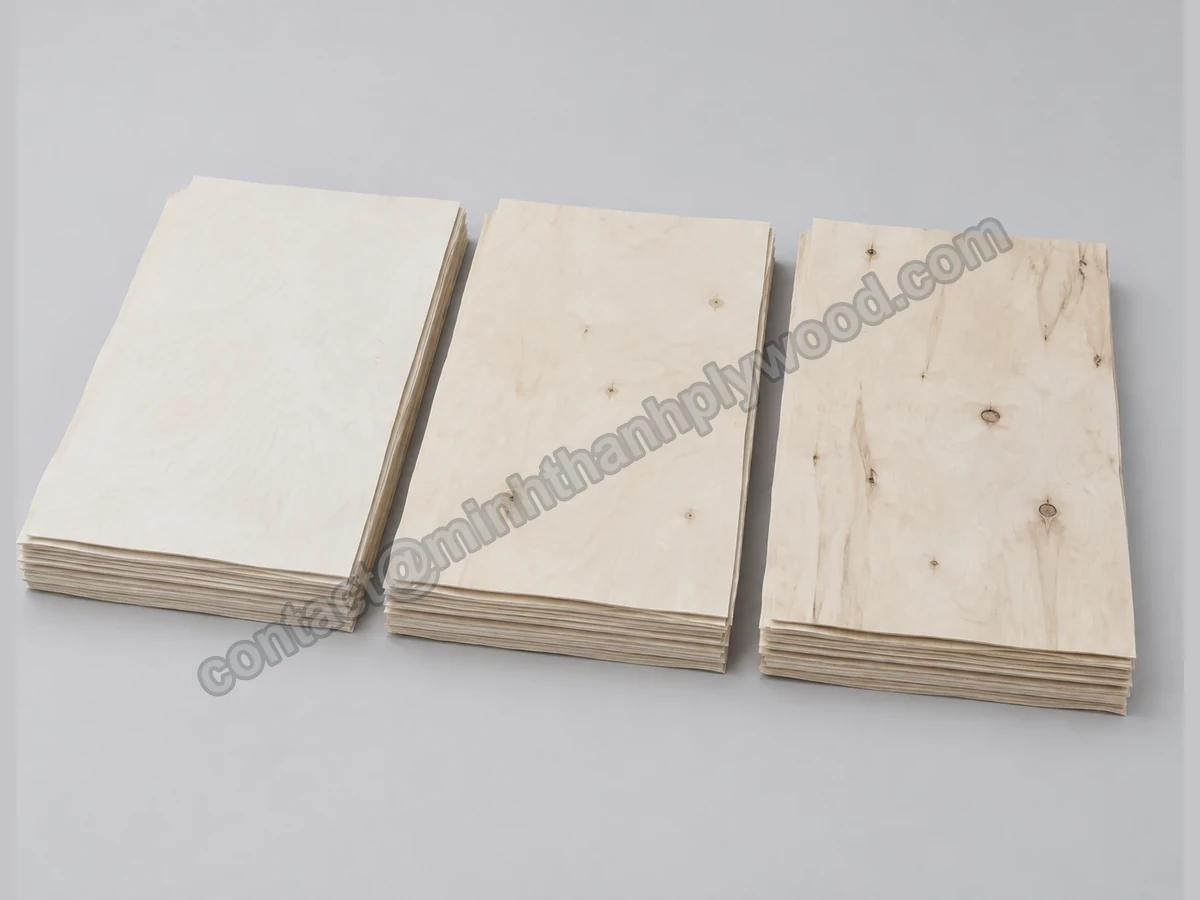
Illustrative face differences help frame sample approval; assign the ordered grade using its own rules and the actual supplied face.
Which construction and core should the order identify?
Identify the panel’s actual construction, including the core and any species requirements. The BCX initials do not supply those details. A repeated order should preserve the construction that passed the component trial.
Inspect a fresh cut edge from the quoted sample. For routed furniture, inspect the groove or recess too. A raw edge photograph can explain layer construction, while a routed sample reveals the material encountered by the buyer’s actual tooling.
If fixing performance matters, trial the selected screw or connector in the intended location. Face insertion and edge insertion are different operations. Record the hardware, pilot hole and assembly procedure alongside the material identity so the result can be repeated.
Minh Thanh’s furniture construction uses Styrax or Eucalyptus core, with layers stitched horizontally and vertically. Furniture panels are pressed twice: first the core board is pressed and calibrated, then the selected face and back are pressed on. A Pine face/back choice belongs on top of that named construction in the quotation.
Keep core changes visible in the material schedule. A supplier can offer an appealing B face while changing the hidden construction. Requalify the edge, hardware and dimensional fit when that happens, even if the catalogue name stays unchanged.
What thickness and sheet size should buyers specify?
Specify actual finished thickness and sheet dimensions together with their permitted limits. Retain a commercial class or performance category separately where the product uses it. Assembly and nesting should use the actual material requirement.
Literal 1/2 in converts to 12.7 mm and 3/4 in to 19.05 mm. These calculations use the exact inch definition in NIST’s length reference, checked 8 October 2026. A 12 mm or 18 mm order is a different metric dimension, not an exact conversion of either fraction.
For a groove, trial the thickest and thinnest accepted panels with the actual finished part. For connectors, check the hardware position and remaining material after routing. For edge banding, inspect the flush result across the accepted thickness range.
For sheet nesting, identify usable dimensions after edge trimming and the locating corner. State grain direction where it affects the appearance of neighbouring components. A panel can fit the nominal sheet family yet yield a different cutting plan when the usable area changes.
Minh Thanh lists furniture sizes of 1220 × 2440 mm and 1250 × 2500 mm, with custom formats and 3–40 mm thickness. Furniture thickness tolerance down to ±0.2 mm is available in the public specification. Apply those facts to the named offered construction rather than transferring them to an undefined product label.
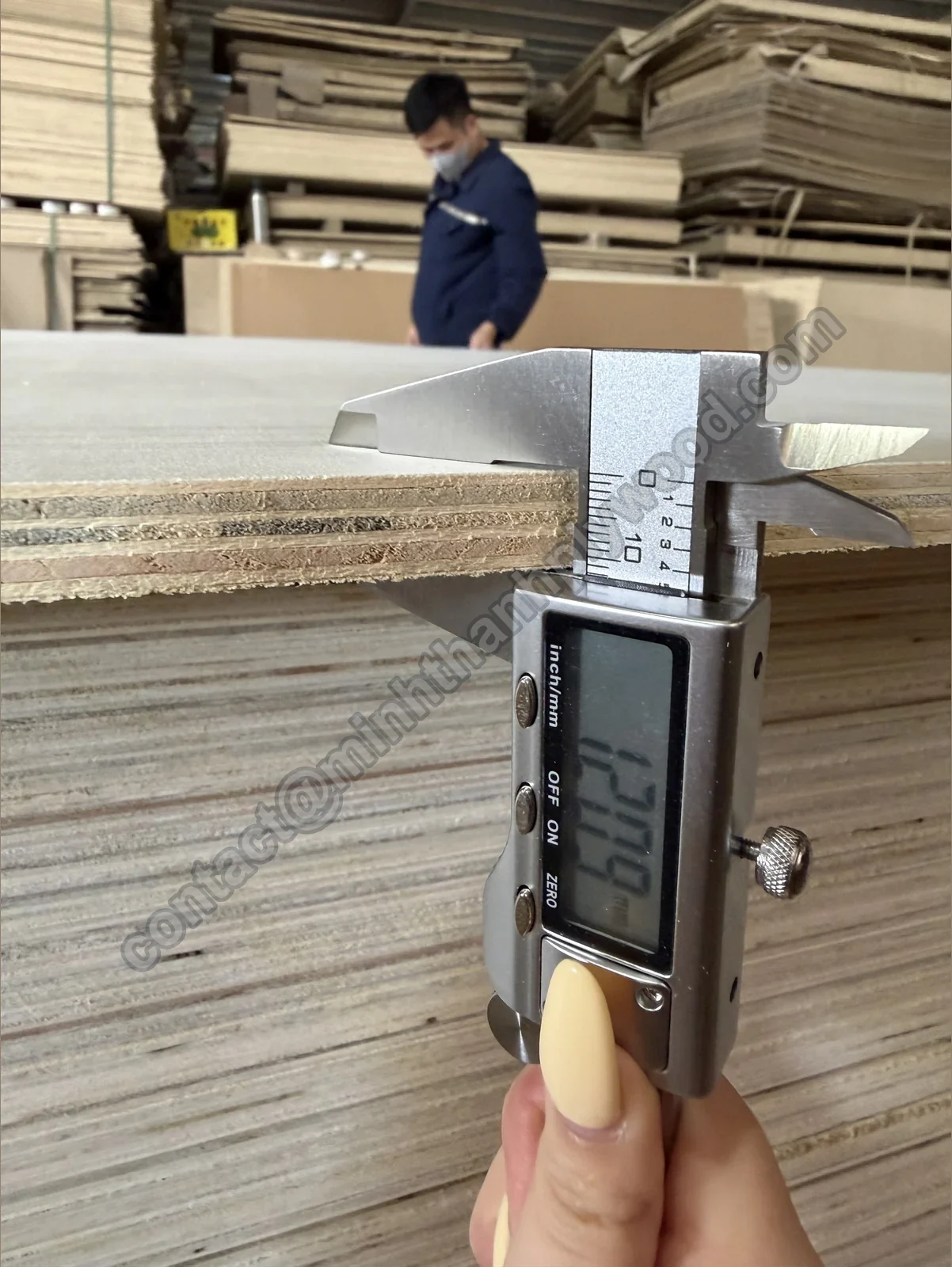
Use actual supplied dimensions in the machining record.
Can BCX serve as a floor panel or underlayment?
A floor application needs the qualified product for its particular layer. Structural decking, underlayment beneath a covering and a visible finished floor are different material requests. A B face does not approve all three.
For structural decking, identify design loads, support spacing, edge support, fastening and the required panel record. Include the final weather protection. Where a rated panel is specified, the delivered product must meet that requirement in addition to the accepted face appearance.
For underlayment, start with the instructions for the chosen floor covering and panel. Surface finish and the internal construction can affect the finished result. BCX sanded plywood does not become a specified resilient-floor underlayment simply because its face looks smooth.
The APA frequently asked questions, checked 8 October 2026, separates the underlayment surface requirements for different coverings. Use the appropriate selected product with the installation system, including joints and fastening.
For a decorative floor, evaluate the finish’s abrasion, cleaning and maintenance requirements as well as the veneer appearance. A construction-grade appearance pair is a different purchasing instruction from a finished walking surface. Show the complete floor build-up on the enquiry drawing so the supplier prices the intended layer.
How do you test BCX for shelves and utility furniture?
Test the completed component with its actual supports, hardware and finish. A face grade describes appearance; the shelf trial establishes whether the selected construction meets the functional requirement. Use the same design when comparing candidate panels.
Record the shelf’s clear span, depth and support positions. Include any centre divider, back restraint or front stiffener in the trial. Then apply the intended load pattern and assess deflection as well as damage. An uneven concentrated load differs from evenly distributed contents.
For a utility cabinet, assemble the selected hinges and connectors in production-cut parts. Check the panel edge around pilot holes, hardware seats and routed joints. The test should reproduce the manufacturing process so its result covers the actual component.
Include appearance acceptance at the same time. A shelf exposes its top, underside and front edge. A closed cabinet side can have one visible face and a concealed reverse. Mark those surfaces on the drawing before selecting the face/back pair.
Keep the accepted material sample and completed component with the released drawing revision. When purchasing repeats the order, the mill gets a construction and appearance reference that has passed the buyer’s useful test.
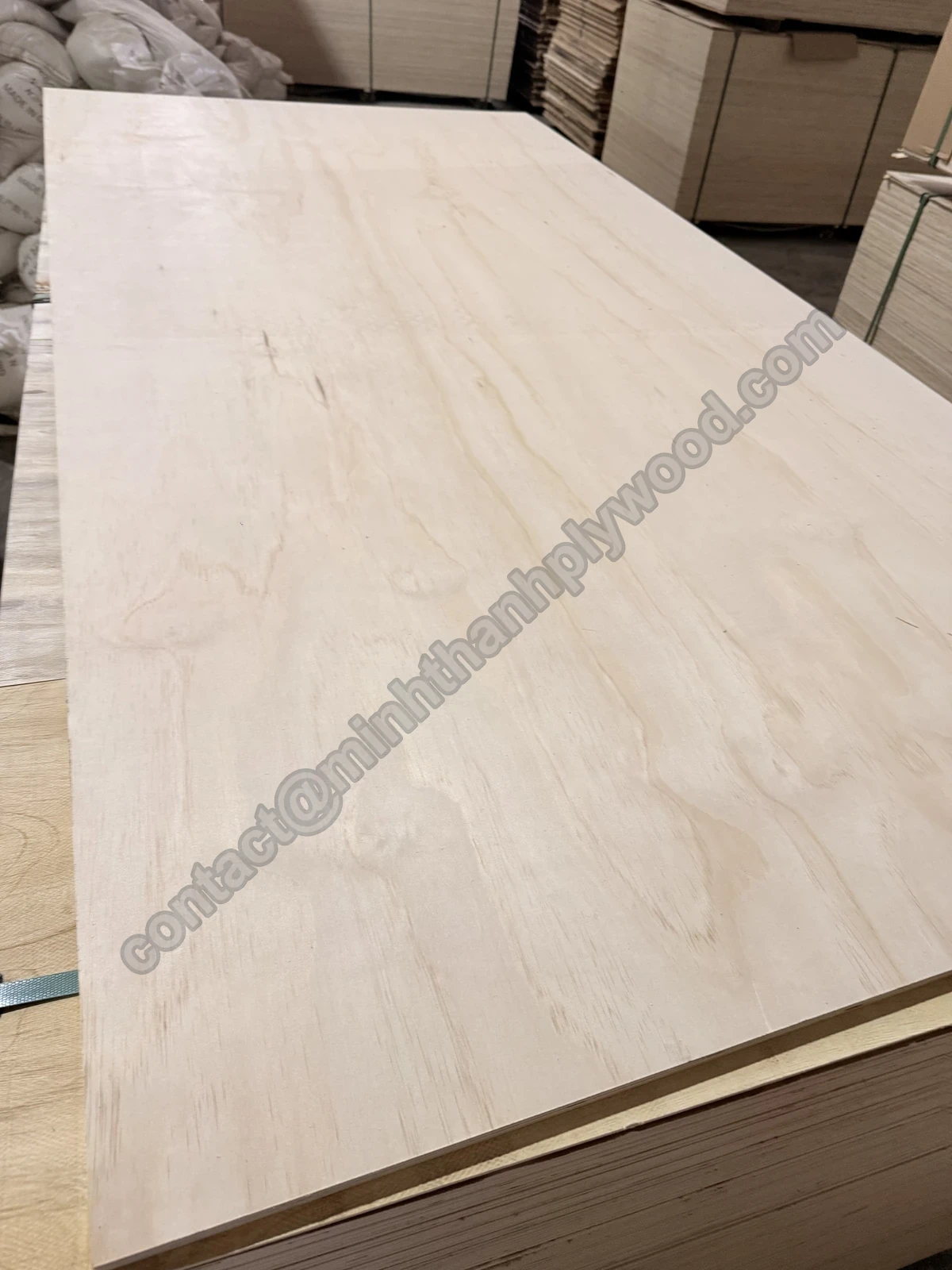
Assess each visible surface and the finished edge of the component, rather than the face alone.
How should the bond and emission requirements be separated?
Bond service and emission requirements describe different properties and belong in separate order fields. A water-resistant bond identifies moisture performance. An emission requirement identifies formaldehyde performance under a named system or method.
For a dry-interior furniture order, Minh Thanh’s standard construction uses UF glue at E0 emission. Where a European bonding classification is required, BS EN 314-2:1993 specifies bonding-quality requirements according to plywood end use. Water-resistant melamine-fortified or phenolic bonds are made to the customer’s specification. Describe the intended service when selecting the construction so the quoted bond is chosen for the component.
Do not substitute an emission document for an exterior-service requirement. Likewise, the term exterior-type glue does not state the emission classification of every possible construction. Keep the supplied product identity with each document so receiving staff can connect them.
Minh Thanh holds CARB P2 / TSCA Title VI certification for hardwood plywood veneer-core products, with the public certificate scope explained on Quality. That evidence belongs to the specified furniture product. A structural agency grade mark is a separate requirement with a different purpose.
For a quotation, list destination documentation and the product requirement separately. The buyer can then see what panel is offered, what evidence accompanies it and which acceptance test belongs to the completed component.
How do buyers compare usable yield and delivered cost?
Compare cost per accepted finished part using the same delivery term and component trial. A lower sheet price can be offset by extra preparation, trimming or rejected visible pieces. A better face can also add cost where the finished part does not need it.
Cut the proposed B/C material with the intended nesting plan. Record which allowed face characteristics land on visible parts, which can be placed in concealed parts and which force re-cutting. Use the buyer’s actual accepted-part count rather than an assumed improvement percentage.
Add finish preparation and the labour relevant to the trial. Keep the coating process consistent between candidate materials. If one panel needs filling or extra sanding, record that work separately so the purchasing decision shows why its total cost changes.
For imports, convert quotations to a consistent dimensional basis. Sheet, square-metre and cubic-metre offers can be compared only after actual thickness and size are identified. Include the same packing and freight scope in each comparison.
Plan shipment using finished sheet mass plus packaging and the booking’s permitted payload. BCX does not name a density or a container sheet count. Keep handling and loading estimates tied to the selected construction and approved pack plan.
What should receiving inspection preserve?
Preserve pack identity, ordered dimensions, material appearance and the result of the first component trial. Inspect against the approved specification rather than an attractive isolated face. Document transport damage before it becomes mixed with production findings.
Before unpacking, photograph the cover boards, straps and pack edges. Check for displacement or wetting. Keep those observations with the pack reference from the packing list, then inspect sheets according to the agreed sample plan.
Measure the supplied thickness at identified positions and the agreed stage. Preserve individual readings and outliers. Check the face and back, then inspect a fresh cut edge or routed sample relevant to the parts being made.
For a structural order, review the required product marks and technical record before installation. For a furniture order, compare the first finished pieces with the released sample and hardware trial. These are different acceptance actions and should keep their own results.
Minh Thanh provides photographs and video of every shipment before loading. Use that shipment record to compare the identified packs on arrival. Segregate suspect material while keeping its identity intact, and give the supplier the evidence needed to investigate the actual issue.
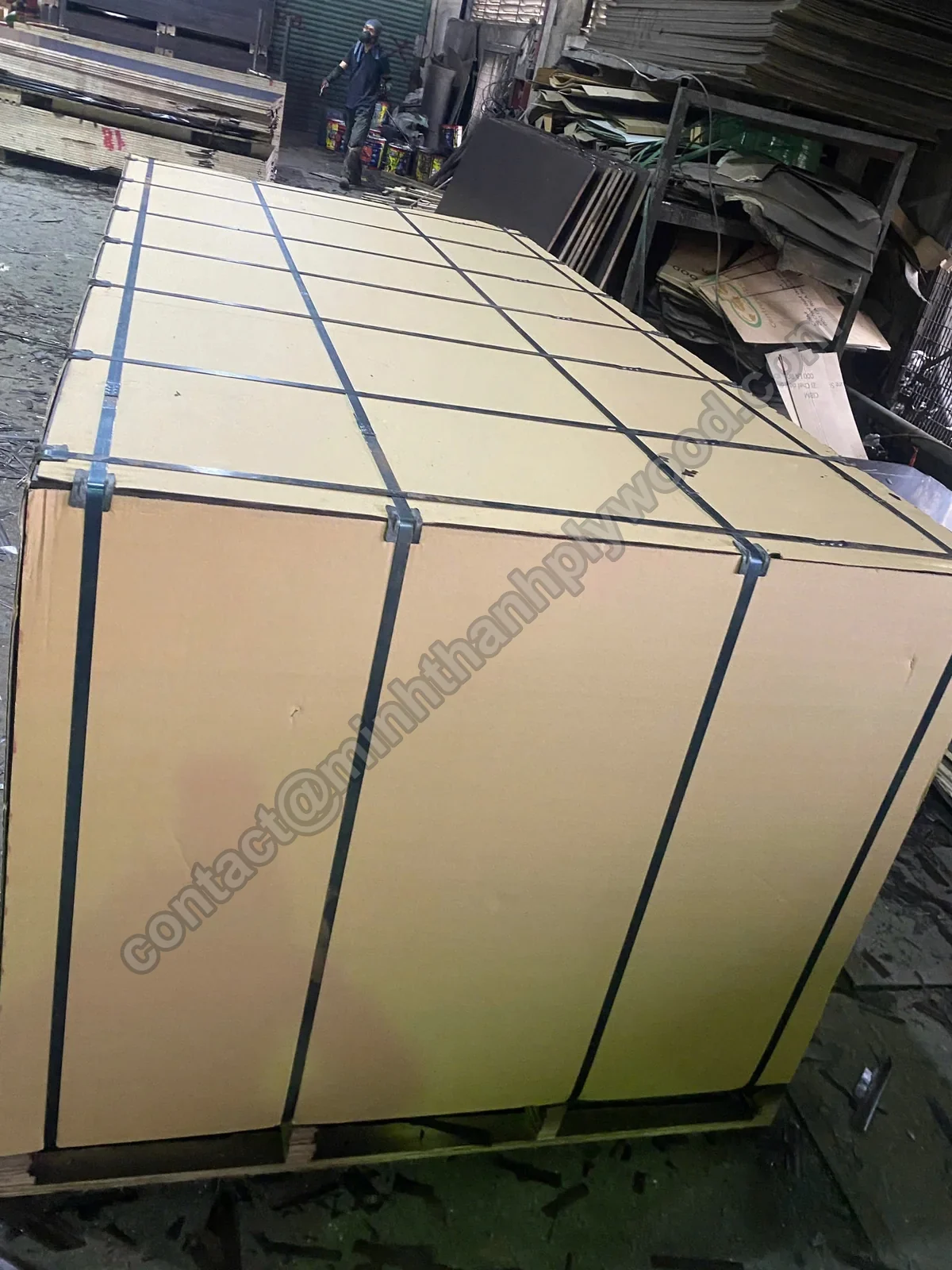
Record condition before unpacking and retain the pack identity through receiving inspection.
What belongs in a BCX plywood request for quotation?
Send a complete component specification with the BCX description. Identify which requirements come from a standard and which come from the appearance sample. This gives the mill a clear production target and the buyer a clear acceptance basis.
- Describe the component and mark every visible surface.
- State the required grade/standard or approved face/back sample.
- Identify core construction and actual dimensions with their limits.
- State bond classification, exposure and any independent treatment requirement.
- Add structural properties or rating where the design requires them.
- Include the finishing, machining and hardware trial reference.
- List required documents, product marks, quantities and packing.
- Give the destination and delivery term for comparable quotations.
For Minh Thanh’s listed Pine-faced furniture panels, choose the appearance pair against the sample, then specify Styrax or Eucalyptus core and the appropriate bond. When an exterior utility product is the better route, use the separate exterior/CDX-type page. Keep required structural standards and marks explicit in either enquiry.
Review the plywood catalogue and send the drawing through Contact. Free samples are available. Approve the material in the actual finished part before repeating the specification across a production programme.
Buyer questions, answered
What does BCX plywood mean?
BCX describes a B-quality face and C-quality reverse together with an exterior-type adhesive description in trade usage. A purchase order should state the actual panel grade, bond classification and construction instead of relying on those initials alone.
What is BCX sanded plywood?
It is a B/C appearance panel supplied with the stated sanding finish. Inspect its permitted knots and repairs under your actual coating; sanding does not remove the distinction between a B face and a decorative appearance specification.
Does a B face have to be patch-free?
No. B-grade appearance permits specified sound knots and repairs under its grading rules. Order a stricter finished appearance separately when the component needs it.
Is BCX plywood suitable outdoors?
Use the documented Exterior classification for continuing weather exposure and specify the finished component's edge protection, coating and drainage. Exposure 1 is for limited exposure, and the trade X shorthand cannot replace the product classification.
Is BCX pressure treated?
BCX does not identify preservative treatment. If decay protection is required for the service, specify the treatment and compatible finishing and fixing system separately.
Is BCX stronger than ACX or CDX?
Those face descriptions do not rank every panel by strength. Compare the actual construction and relevant structural properties or rating, or test the completed furniture component under the same load and support conditions.
What is the difference between BCX and RTD plywood?
BCX describes B/C face and back appearance in trade usage; RTD Sheathing means Rated Sheathing in APA terminology and can identify plywood or OSB. Compare the panel material, actual grade, span rating, performance category and exposure classification before selecting a structural panel; approve the finished face separately for visible joinery.
Can BCX plywood be painted?
Yes, with an approved preparation and coating system for the selected panel and exposure. Trial representative faces, patches and cut edges before accepting the finished appearance.
Can BCX be used beneath vinyl flooring?
Specify the underlayment required by the flooring system rather than choosing from face letters alone. Surface finish, panel construction, joints and fastening all need to meet that system's instructions.
Can I use BCX for a shelf?
Evaluate the actual shelf span, supports, construction, finish and load pattern. Check both deflection and hardware performance in the completed component; the B face describes appearance, not a shelf load.
What does Minh Thanh offer for a B/C appearance requirement?
Minh Thanh lists Pine-faced furniture appearance pairs including B/C for utility parts, selected against the approved sample. The core and bond belong in that product specification, with any required structural standard or mark stated separately.
What do I send for a BCX plywood quotation?
Send the component application, grade/standard or appearance sample, actual size and thickness limits, core, bond classification, structural requirements where needed, finish, quantity, packing and destination. Include the sample or drawing that defines the accepted result.