
CARB Phase 2 and TSCA Title VI set the same formaldehyde limits for plywood, 0.05 ppm for veneer-core hardwood plywood; CARB applies in California, TSCA Title VI across the United States, with near-identical certification, testing and labelling. Minh Thanh Plywood holds CARB P2 / TSCA Title VI certification, ICTT mill no. 23024.

What is CARB P2 plywood, and why do two rules exist?
Phase 2 formaldehyde is the second and stricter set of emission limits in California’s Airborne Toxic Control Measure for composite wood products, the rule buyers shorten to CARB P2. It caps how much formaldehyde a panel may release into indoor air, measured in a test chamber in parts per million (ppm).
The limit exists because formaldehyde is an irritant and a classified carcinogen, and cabinets and furniture sit in closed rooms for years.
TSCA Title VI is the federal rule. The Formaldehyde Standards for Composite Wood Products Act of 2010 added Title VI to the Toxic Substances Control Act, and the US Environmental Protection Agency built its rule on the California model, with the same limits. So the two rules are not competitors: California’s came first, and the federal rule extended the same limits to every US state.
Both are written up by the regulators themselves: the California Air Resources Board composite wood programme and the EPA formaldehyde emission standards (both checked October 2026).
Are the CARB P2 and TSCA Title VI limits the same?
Yes. CARB Phase 2 and TSCA Title VI set identical emission limits: 0.05 ppm for hardwood plywood, 0.09 ppm for particleboard, 0.11 ppm for MDF and 0.13 ppm for thin MDF. California’s rule came first and the federal rule copied its numbers, so one certification normally covers both. The table shows each product.
Phase 2 formaldehyde limits by product
| Product | CARB Phase 2 limit | TSCA Title VI limit |
|---|---|---|
| Hardwood plywood, veneer core | 0.05 ppm | 0.05 ppm |
| Hardwood plywood, composite core | 0.05 ppm | 0.05 ppm |
| Particleboard | 0.09 ppm | 0.09 ppm |
| Medium-density fibreboard (MDF) | 0.11 ppm | 0.11 ppm |
| Thin MDF | 0.13 ppm | 0.13 ppm |
For a furniture or cabinet importer buying plywood from Vietnam, the line that matters is the first one: 0.05 ppm for veneer-core hardwood plywood. The EPA’s TSCA Title VI requirements list that plywood limit alongside 0.11 ppm for MDF and 0.13 ppm for thin MDF.
CARB P2 vs TSCA Title VI: where do they differ?
The limits match; the differences are about who enforces what and where:
| CARB Phase 2 | TSCA Title VI | |
|---|---|---|
| Where it applies | Products sold, supplied or made in California | Products sold, supplied, made or imported anywhere in the US |
| Regulator | California Air Resources Board | US Environmental Protection Agency |
| Who certifies the mill | CARB-approved third-party certifier (TPC) | EPA-recognized TPC; CARB-approved TPCs can be recognized by EPA |
| Panel label | Producer, lot, TPC number, compliance statement | Producer, lot, TPC number, “TSCA Title VI compliant” |
| Import declaration | — | Importers certify TSCA compliance at entry |
| Records | Kept by mills, fabricators, distributors | Kept for three years by every party in the chain |
In practice a mill certified by a TPC that both agencies recognise holds one certification valid under both rules. That is why certificates and labels read “CARB P2 / TSCA Title VI”.
What does TSCA Title VI compliant for formaldehyde mean on a label?
It means the panel was made by a certified mill, within the limits, and is traceable to a production lot. A compliant label carries:
- Producer name (the mill).
- Lot or batch number of the panel. (The production date belongs on the fabricator’s label for finished goods.)
- TPC number of the third-party certifier.
- The statement “TSCA Title VI compliant” (and, for California, the CARB compliance statement).
On Minh Thanh’s US orders, the panels carry the TSCA Title VI label with producer, lot, certifier number TPC-43 and the compliance statement, and the commercial invoice and bill of lading state TSCA Title VI compliance. Finished goods made from compliant panels, such as cabinets and furniture, also carry a compliance label applied by their fabricator.
How are the emissions tested?
Both rules rely on chamber tests. The reference method is ASTM E1333, a large chamber; the ASTM D6007 small chamber is accepted when correlated to it. Testing runs on two levels:
- Third-party tests: the certifier samples panels from the mill and tests them in a laboratory.
- Mill quality-control tests: the mill tests its own production between the certifier’s visits, so a drifting batch is caught before it ships.
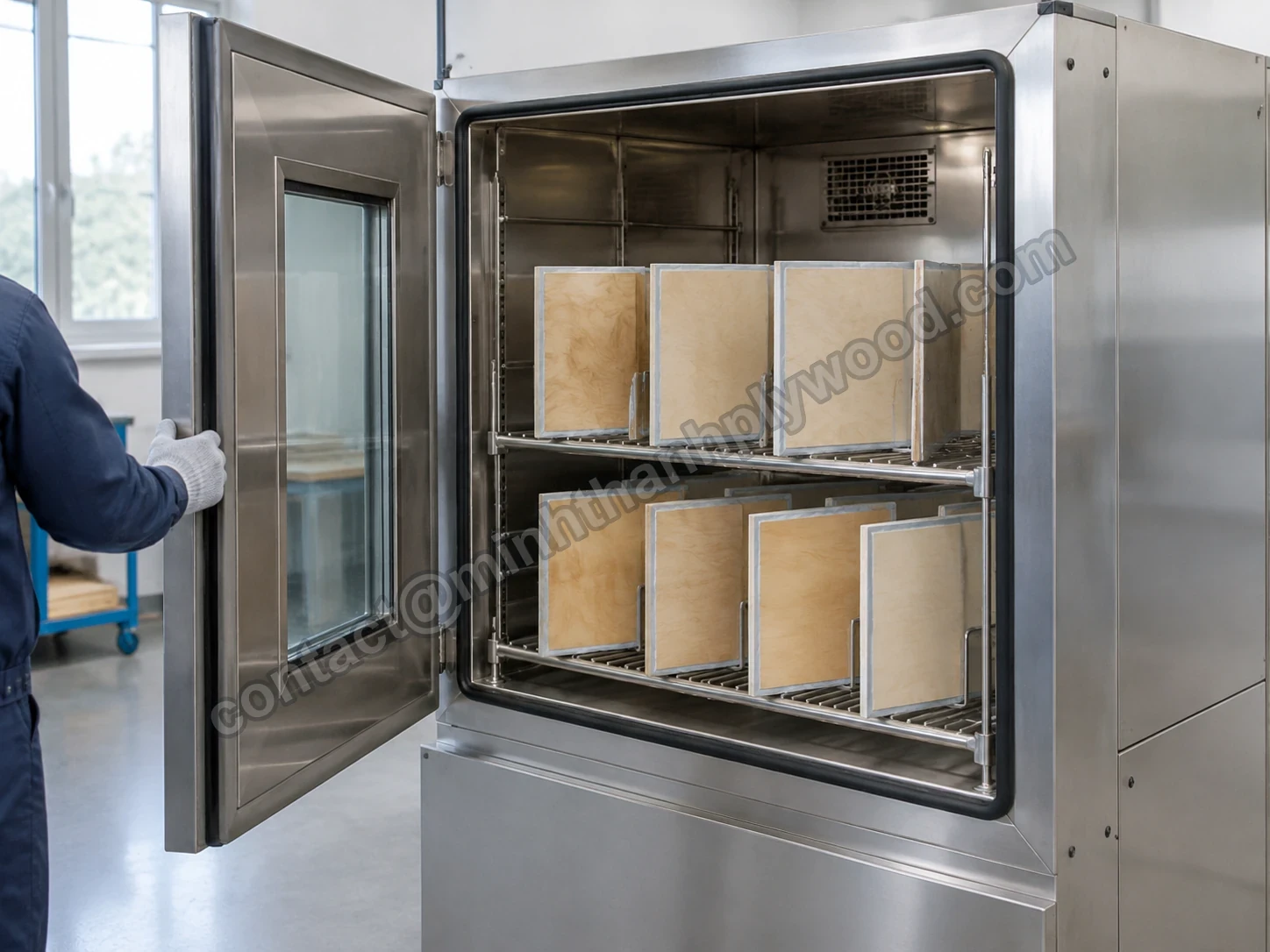
Minh Thanh’s results: six ASTM D6007 chamber tests between April 2025 and June 2026, on 9, 15 and 18 mm panels, averaged 0.014–0.032 ppm against the 0.05 ppm limit. Three were run by Shanghai Hongjun (HJ-QAT-250597, HJ-QAT-251303, HJ-QAT-261036) and three by ICTT Vietnam (ICTTVN-QAT-250841, ICTTVN-QAT-251173, ICTTVN-QAT-260272). Each result is reported with its method, laboratory and report number.
What are ULEF and NAF exemptions?
Both rules reward resins that emit less than the limit:
- ULEF (ultra-low-emitting formaldehyde): resins whose panels test well below the Phase 2 limits; once approved, the mill may test less often.
- NAF (no-added formaldehyde): resins made without formaldehyde, such as some soy-based or MDI binders; approved NAF products qualify for reduced testing and certification.
An exemption changes the testing frequency, not the limit. A ULEF or NAF claim on a quotation should come with the approval document, just as a CARB P2 claim comes with a certificate.
Is E0 the same as CARB P2?
No, and orders that treat them as the same get quoted wrong. E0 and E1 are emission classes used in Asian and European trade, tested by their own methods; CARB P2 and TSCA Title VI are certification systems with a certifier, chamber tests, labels and records. A panel can be E0 and still not be CARB P2 certified, if its mill holds no certificate.
Minh Thanh’s furniture panels are made with UF glue at E0 emission: UF is the resin, E0 the emission class. The factory holds CARB P2 / TSCA Title VI certification, ICTT mill no. 23024, for veneer-core hardwood plywood 3–50 mm. E0 emission is tested every three months. Formaldehyde emission classes compares E0, E1 and the chamber limits.
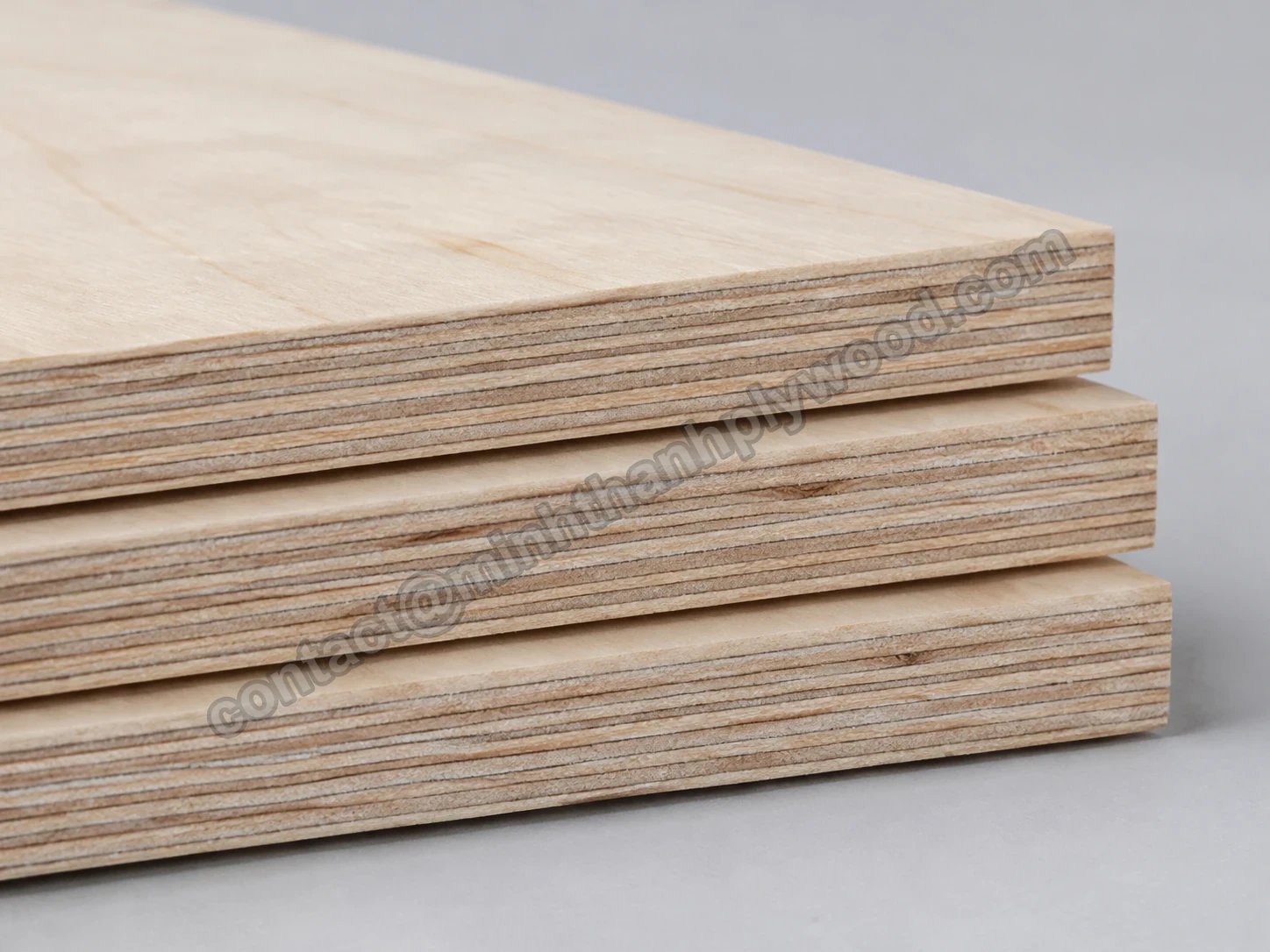
Which products and parts are covered?
Both rules cover the panel and what is made from it:
- Composite wood panels: hardwood plywood, particleboard, MDF and thin MDF.
- Finished goods that contain them: cabinets, furniture, flooring, doors and similar products, imported or made in the US.
- Laminated products, where a veneer is laid over a compliant platform, under conditions set in the rules.
Structural plywood made to US structural standards with phenolic resin falls outside the hardwood plywood limits; a WBP-bonded panel for exterior use is a different product from a furniture panel and is specified on its own line.
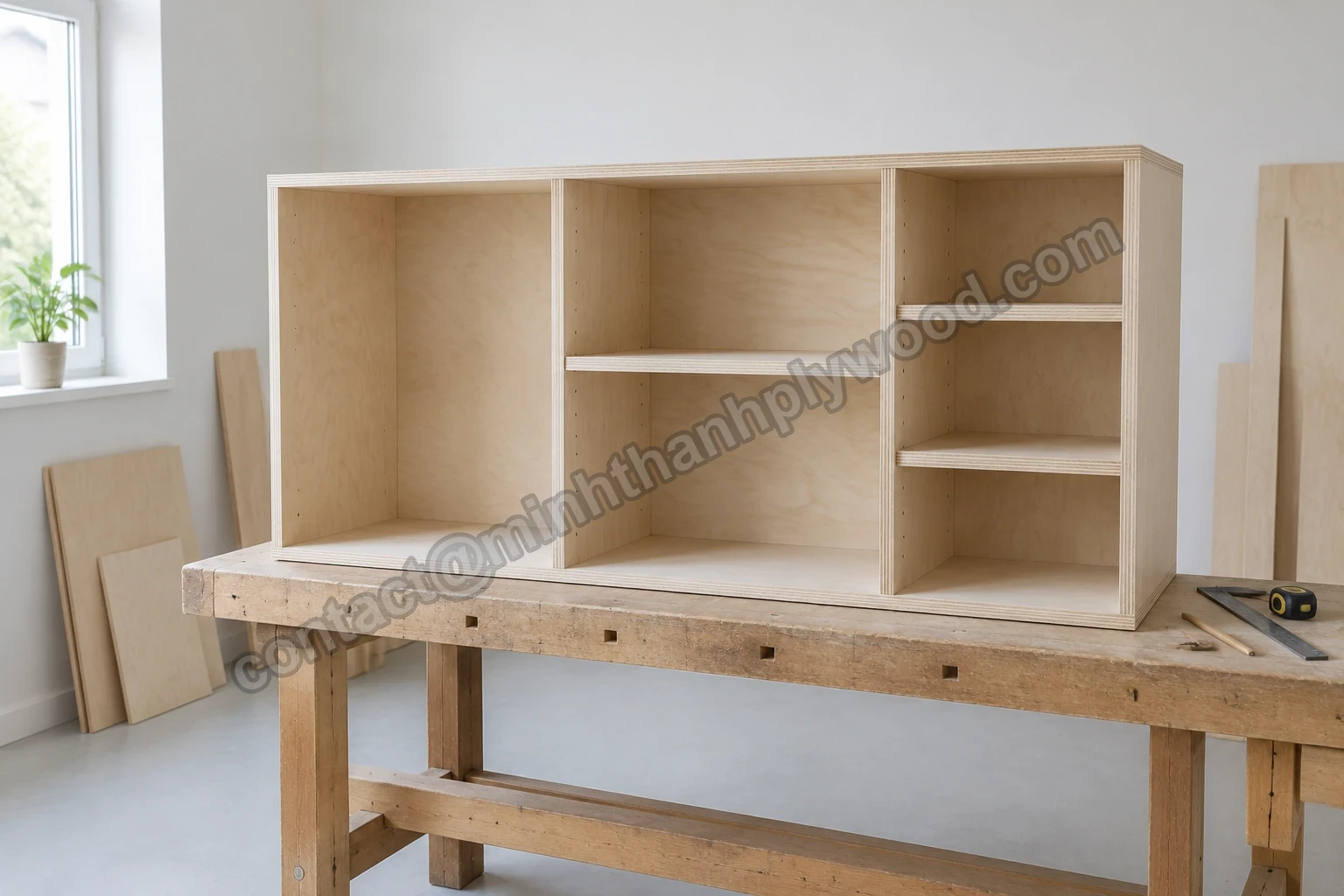
How did the two rules come in?
The order of events explains why certificates carry both names:
- California first. CARB’s Airborne Toxic Control Measure introduced Phase 1 limits, then the stricter Phase 2 limits, phased in by product between 2010 and 2012.
- Federal law. In 2010 Congress passed the Formaldehyde Standards for Composite Wood Products Act, adding Title VI to TSCA and taking the California limits as the national standard.
- EPA’s rule. EPA published its final rule in December 2016. Manufacturers, importers, distributors and retailers had to comply from 1 June 2018.
- Import certification. Importers of composite wood products, including those inside finished goods, certify TSCA compliance at entry.
The rules were written to work together: the same limits, recognised certifiers, and one certificate that a mill can hold under both.
What do fabricators of finished goods have to do?
A cabinet, furniture or door maker that uses plywood is a fabricator under both rules. The fabricator does not test emissions itself, but it must:
- Buy compliant panels, and keep the supplier’s certificate, invoices and bills of lading that state compliance.
- Label its finished goods with its name, the production date and the compliance statement, on the product or its box.
- Keep records for three years under TSCA Title VI, so each batch can be traced to compliant panels.
- Check laminated products: adding a veneer or a laminate to a compliant platform can make the fabricator a laminated-product producer, with its own obligations.
When Minh Thanh’s panels go into your cabinets, our certificate, labels and shipping documents are the panel half of that record.
Five mistakes that hold up a US shipment
- “E0” on the invoice instead of “TSCA Title VI compliant”. E0 is not a US compliance statement.
- No label on the panels, or a label without the TPC number.
- A certificate for a different product type, for example particleboard instead of hardwood plywood, or a thickness range that does not cover the order.
- No species and harvest country for the Lacey Act declaration.
- Missing records when a customer or an auditor asks for the chain from panel to finished good.
Each one is fixed before loading by putting it on the order: the compliance statement, the label, the product type and thickness range, the species, and the documents that travel with the container.
What does a US importer need from the mill?
Ask for these before the deposit and keep them on file:
- The certificate: TPC name, mill number, product type and thickness range. Ours: ICTT mill no. 23024, veneer-core hardwood plywood, 3–50 mm.
- Recent chamber test reports with laboratory, report number, method and date.
- Label sample with producer, lot, TPC number and “TSCA Title VI compliant”.
- Shipping documents that state TSCA Title VI compliance on the commercial invoice and bill of lading.
- Species and harvest country of face and core for your Lacey Act declaration, one line per species. Minh Thanh supplies them with the shipping documents.
- Records: keep the certificates, reports and documents for three years, as TSCA Title VI requires.
What is a CARB P2 certificate, and how do you check one?
- Read the certificate: it must name a third-party certifier and a mill number.
- Check the certifier is on CARB’s approved list and recognised by EPA.
- Ask the certifier to confirm that the mill number is current and covers the product type you are buying.
- Match the label on the delivered panels to the same TPC number and mill.
- For a first order or a new product, add an independent emission test: SGS testing to your method, for example EN 717-1 for a European customer, is arranged on request.
CARB P2 compliant plywood from Minh Thanh: what to send
For a US furniture or cabinet order, the compliance part of each order line has four entries next to the panel build:
| Entry | What to write |
|---|---|
| Emission | CARB P2 / TSCA Title VI, hardwood plywood, veneer core |
| Label | TSCA Title VI label on every panel, with lot and TPC number |
| Documents | Compliance stated on invoice and bill of lading; certificate and latest chamber report |
| Lacey Act | Each species in the panel with its own harvest country (Vietnamese core; imported faces from their origin) |
The panel build itself reads as usual, for example 18 mm poplar A/B, Styrax core, UF glue at E0, sanded UV-ready, 1220 × 2440 mm, ±0.3 mm.
Samples are free, and a first US container can carry mixed specifications by agreement; payment and lead time are on the trade terms page. Typical sea transit from Hai Phong is 20–30 days to the US West Coast and 35–45 days to the US East Coast. See our CARB P2 / TSCA Title VI certification for the certificate itself.
Buyer questions, answered
Is FSC plywood automatically CARB P2 compliant?
No. FSC certifies where the wood comes from; CARB P2 and TSCA Title VI certify formaldehyde emissions. A panel needs its own CARB P2 / TSCA Title VI certification whatever its FSC status.
Is CARB P2 the same as TSCA Title VI?
The limits are the same: 0.05 ppm for hardwood plywood, 0.09 ppm for particleboard, 0.11 ppm for MDF and 0.13 ppm for thin MDF. CARB Phase 2 is California's rule; TSCA Title VI is the federal rule built on it, so one certification normally covers both.
What does TSCA Title VI compliant for formaldehyde mean?
It means the composite wood product, or the panels inside a finished good, was made by a mill certified by an EPA-recognized third-party certifier and tested below the TSCA Title VI formaldehyde limits.
What is Phase 2 formaldehyde?
The stricter, second set of CARB formaldehyde limits for composite wood, 0.05 ppm for veneer-core hardwood plywood; TSCA Title VI uses the same numbers nationwide.
What is a CARB P2 certificate for plywood?
A certificate issued by an approved third-party certifier stating that a named mill, by mill number, produces a named product type within the Phase 2 limits. Minh Thanh's is for veneer-core hardwood plywood, 3–50 mm, ICTT mill no. 23024.
How is formaldehyde emission tested for CARB P2 and TSCA?
By chamber tests: ASTM E1333 large chamber, or the ASTM D6007 small chamber correlated to it, run by the certifier on samples from the mill, plus the mill's own quality-control tests.
What results has Minh Thanh's plywood shown?
Six ASTM D6007 chamber tests between April 2025 and June 2026, on 9, 15 and 18 mm panels, averaged 0.014–0.032 ppm against the 0.05 ppm limit; three were run by Shanghai Hongjun and three by ICTT Vietnam.
What label should CARB P2 / TSCA Title VI plywood carry?
The label names the producer, the lot or batch, the certifier number and the statement TSCA Title VI compliant. On Minh Thanh's US orders it carries certifier number TPC-43.
What are ULEF and NAF?
Ultra-low-emitting formaldehyde (ULEF) and no-added formaldehyde (NAF) are resin categories that qualify for reduced testing under CARB and TSCA Title VI when the mill proves the lower emissions.
Does E0 mean CARB P2 compliant?
Not by itself. E0 is an emission class used in Asia and Europe; CARB P2 and TSCA Title VI are certification systems with their own certifier, tests and labels. Minh Thanh's furniture panels are UF glue at E0 emission and CARB P2 / TSCA Title VI certified.
Do US importers need anything besides the CARB P2 certificate?
Yes: TSCA Title VI labels on the panels or finished goods, compliance stated on the invoice and bill of lading, records kept for three years, and the species and harvest country for the Lacey Act declaration.