
In short, the eucalyptus faced plywood Vietnam price at Minh Thanh Plywood starts from US$350/m³ (October 2026), the furniture/interior tier; multiply your quoted m³ rate by 0.0535824 for the price of an 18 mm 1220 × 2440 mm sheet. Face grade (A/A, A/B, B/B), core (Styrax or Eucalyptus), glue, thickness and quantity set the final quote.
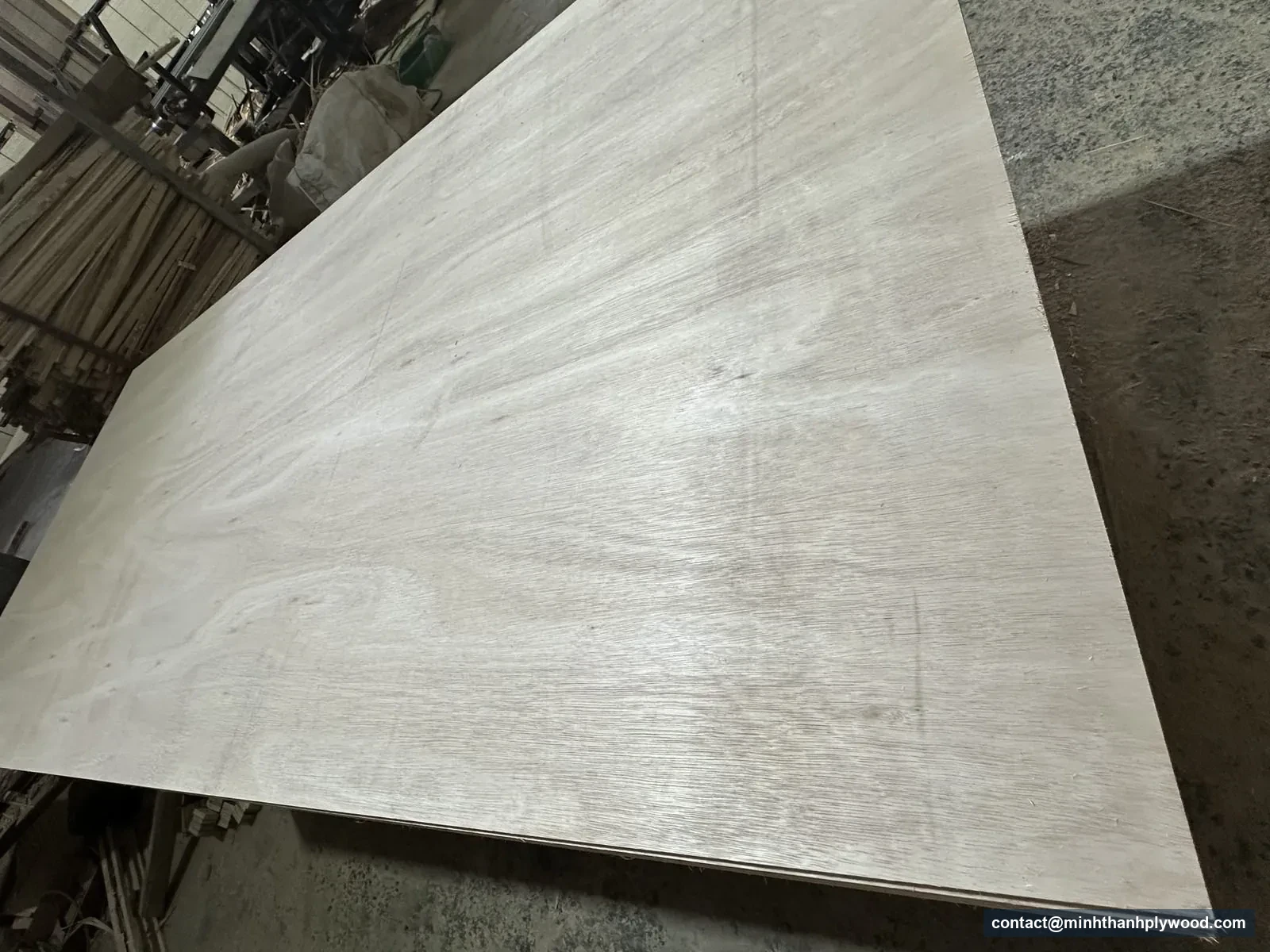
What does the eucalyptus faced plywood Vietnam price include?
The eucalyptus faced plywood Vietnam price covers a eucalyptus face and back over a named core, pressed, sanded and packed, priced per m³. Minh Thanh’s furniture/interior tier starts from US$350/m³ in October 2026. Core boards, furniture panels and film-faced formwork share the search term but differ in surface, manufacturing and acceptance tests.
For a cabinet side or display panel, start with eucalyptus-faced plywood. Specify its natural face and back, the appearance pair and the core beneath them. For concrete formwork, start with film-faced plywood and specify the overlay, core, bond and edge treatment. A construction quote cannot set the buying price for a calibrated furniture panel simply because both mention eucalyptus.
This distinction is especially useful when a quotation says only “hardwood plywood.” Ask for a written construction line. At Minh Thanh, furniture panels use white Styrax or Eucalyptus cores as standard. Acacia and Pine cores are made on order. A natural eucalyptus face can therefore sit over a separately chosen core; the visible grain does not settle that choice.
Keep the intended operation on the enquiry: CNC-routed cabinet side, painted shelving component or veneered furniture part. That tells the factory which face defects matter and where an internal core joint might meet a machined edge. It is more useful than requesting the “best” panel without a component drawing.
Which quotation fields need to match before comparing prices?
The quotations need the same construction, finish and delivery scope before their unit rates can be ranked. Write each field in adjacent supplier columns, and leave a missing field open for an answer rather than treating silence as an equivalent specification.
| Field | Matched comparison basis | Buyer consequence |
|---|---|---|
| Face and back | Eucalyptus veneer; specified appearance pair | Determines which faces can be exposed |
| Core | Named species; permitted mixed construction stated | Affects weight, machining and the loading plan |
| Core joining | Joining and stitching requirements | Important around routed edges and fasteners |
| Adhesive | Named resin and required bond performance | Matches the service environment |
| Emission | Requirement and test method | Keeps emission evidence separate from bond tests |
| Dimensions | Same nominal length, width and thickness | Establishes sheet volume and cutting yield |
| Calibration | Same thickness tolerance and surface preparation | Affects fitting, finishing and rework |
| Packing | Pack quantities, protection and identification | Affects handling and receipt inspection |
| Delivery | Same Incoterm, named place and quote validity | Establishes what the price includes |
Our furniture construction includes core stitching in both directions and double pressing: the core board is pressed and calibrated before the face and back are pressed on. Those operations belong in the comparison when a component needs a consistent surface. They should not disappear behind a shared species name.
For repeat programmes, retain the approved construction revision with the order. If a supplier proposes a lighter core or different face/back grade to reduce cost, price it as a separate alternative and run the component trial before accepting it. This prevents a cheaper revised panel from being mistaken for a reduction on the original specification.
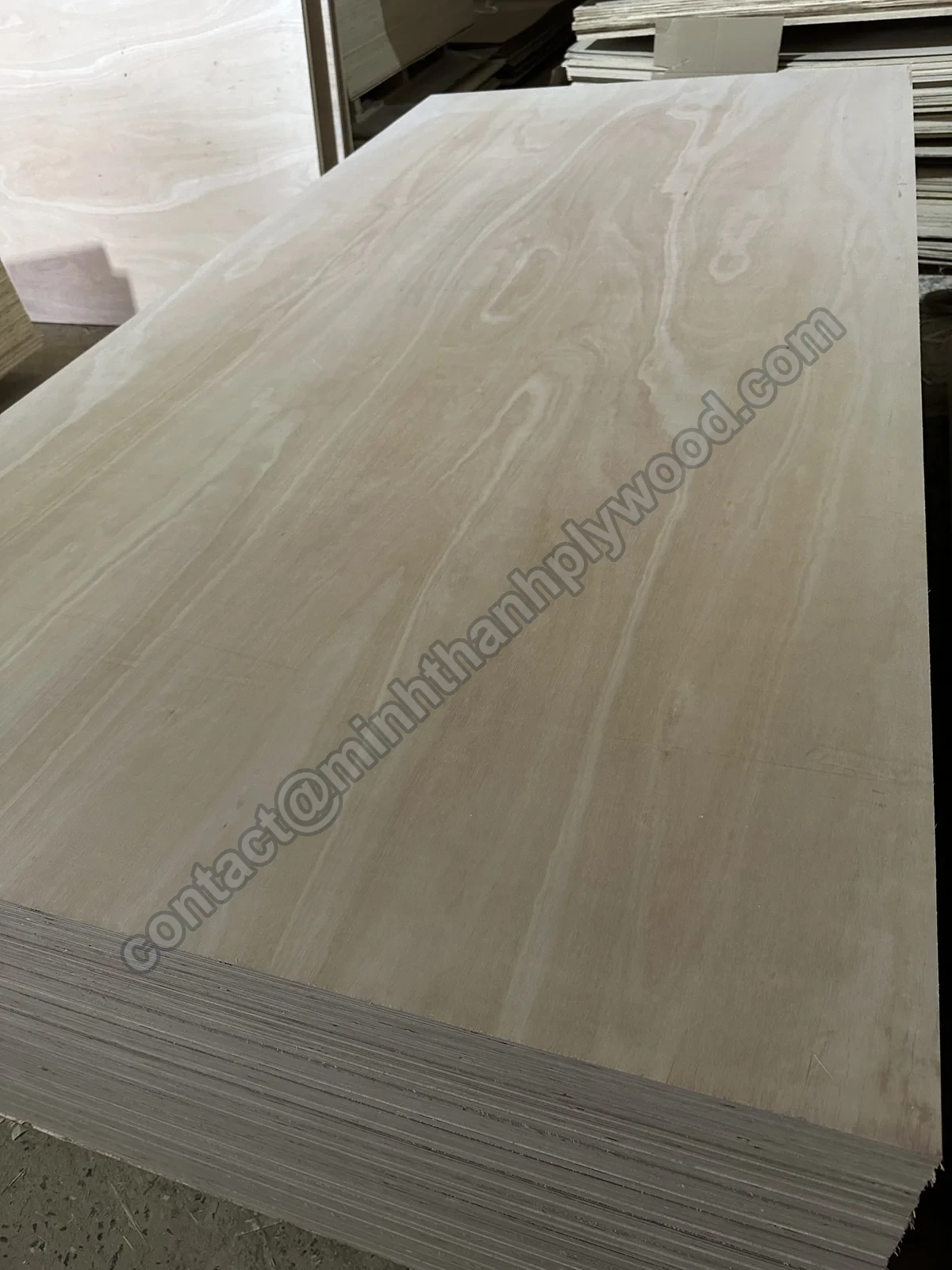
Natural veneer appearance is a buying choice. Judge the permitted grain and repairs against the finish the component will receive.
How do you compare an A/A face with A/B or B/B?
Choose the face/back pair according to the visible surfaces and the finishing process. Minh Thanh quotes eucalyptus appearance as A/A, A/B and B/B, matched to the approved sample. A/A suits two visible faces; A/B suits one; B/B serves painting or overlaying where the accepted preparation supports the finish.
The saving comes from buying the appearance the finished component uses. A cabinet side with an unseen back does not automatically need the same face pair as an open shelf visible from above and below. Conversely, substituting a paint-intended face for a clear-finished panel can move cost into filling, sanding and rejection.
Send photographs of the desired appearance and identify the viewing face on the drawing. Record acceptable colour variation, visible repairs and the sanding requirement against that reference. The factory can then select veneers for the job rather than interpreting a regional grade label without a sample.
Inspect an area of the full sheet as well as a small swatch. A decorative swatch helps choose grain, but a full-sheet view helps the buyer see how that appearance extends across the part layout. For clear finishes, include the actual coating in the trial. For painted parts, evaluate the prepared surface after the intended primer and topcoat.
How do you turn the eucalyptus plywood price in Vietnam into a sheet cost?
To turn the eucalyptus plywood price in Vietnam into a sheet cost, multiply the quoted rate per cubic metre by the sheet volume: an 18 mm 1220 × 2440 mm sheet holds 0.0535824 m³, so the material price per sheet is the quoted US$/m³ × 0.0535824. With length, width and thickness expressed in metres, sheet volume = length × width × thickness. Do the conversion from the exact ordered dimensions before rounding the displayed cost.
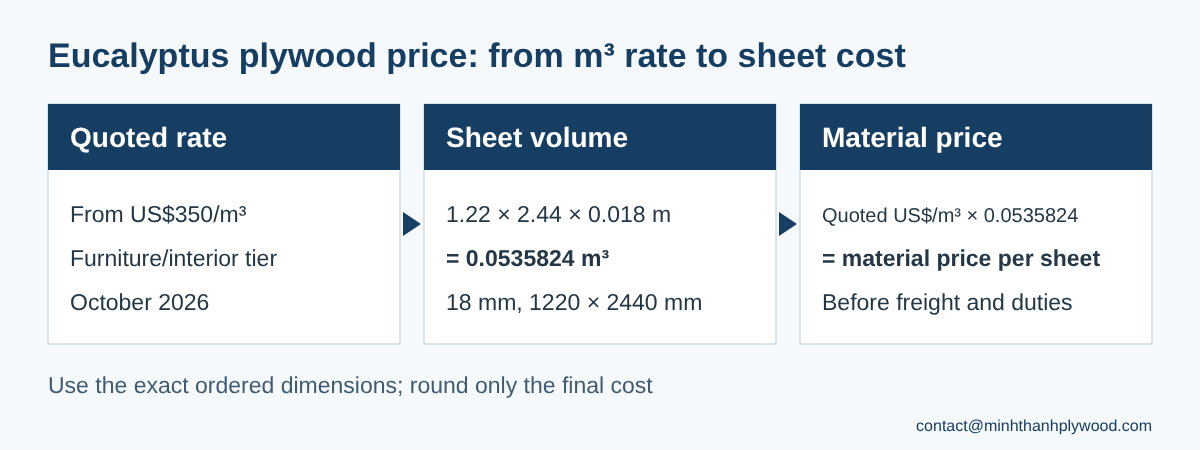
The m³ rate times the exact sheet volume gives the material price per sheet, before freight and destination costs.
| Nominal sheet | Volume per sheet | Material price at quoted rate P per m³ |
|---|---|---|
| 1220 × 2440 × 12 mm | 0.0357216 m³ | 0.0357216 × P |
| 1220 × 2440 × 15 mm | 0.0446520 m³ | 0.0446520 × P |
| 1220 × 2440 × 18 mm | 0.0535824 m³ | 0.0535824 × P |
| 1250 × 2500 × 18 mm | 0.0562500 m³ | 0.0562500 × P |
Multiply each volume by the rate on your quotation. The table shows why a larger sheet can have a higher sheet price at the same m³ rate. The 1250 × 2500 mm format contains about 4.98% more area and volume than 1220 × 2440 mm at equal thickness. Its economic value comes from the cutting layout, rather than the sheet count alone.
Use the ordered nominal dimensions for the invoice calculation when that is the agreed commercial basis. Use measured thickness for inspection and component fit. Combining those two purposes in one worksheet can create disputes over volume even when both parties are looking at the same physical sheets. Our sheet-size guide explains the standard formats and layout decisions.
How does core weight change eucalyptus plywood cost?
Core weight changes eucalyptus plywood cost per delivered sheet because it changes the panel volume that a container can carry before reaching its loading limit. Minh Thanh’s planning references are 500 kg/m³ for Styrax and 650 kg/m³ for Eucalyptus. At 1220 × 2440 × 18 mm, the dimensional model gives about 26.8 kg and 34.8 kg per sheet respectively, and our 40HC plan at 28,000 kg carries 990 Styrax-core or 795 Eucalyptus-core sheets of 18 mm.
That is roughly 8 kg more per sheet in the eucalyptus reference calculation. It is a shipping and handling difference, not a strength rating. Compare the actual sample’s weight and the final packed loading plan with the carrier’s permitted payload and inland restrictions. Allow mass for pallets, protection and other packing rather than assigning the full booking allowance to panels.
Use freight per usable m³ = shipment freight ÷ accepted panel volume to compare a weight-limited load. A heavier core can attract a higher freight allocation per m³ even when its factory rate is similar. For a programme quoted per sheet, keep the total delivered sheet quantity and total transport cost beside the unit rate.
The purchase decision still starts with the component. If eucalyptus is required for the chosen fastening or machining arrangement, budget its weight. If a Styrax-core alternative meets the approved component trial, compare that alternative’s complete delivered cost. Do not choose the heaviest panel as a substitute for a tested design. The packing calculator supports the loading discussion.
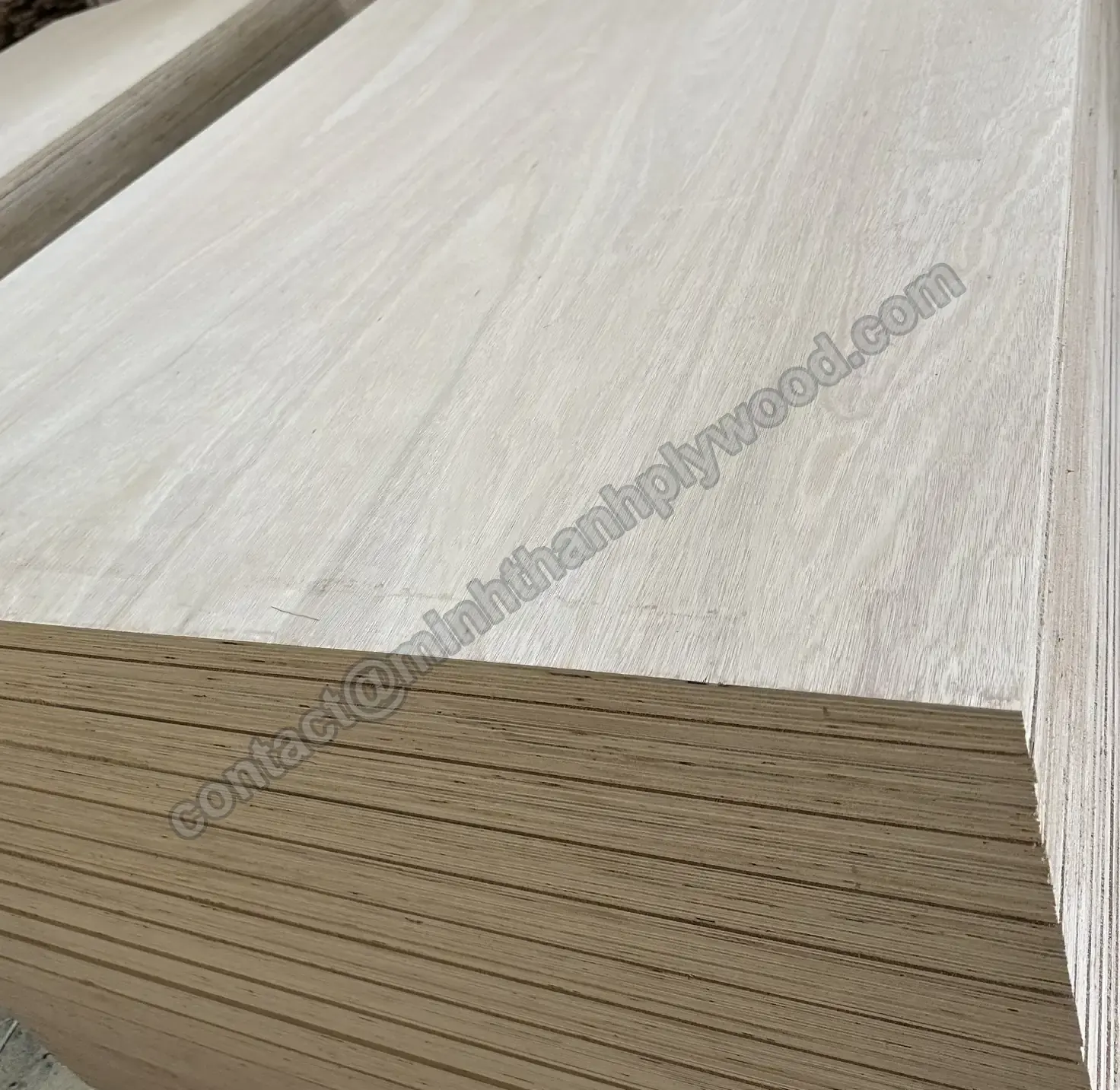
A pack-edge view helps inspect the layer arrangement; weigh samples separately for the shipment calculation.
Which processing details justify a higher furniture-panel rate?
Processing details justify a higher rate when they reduce an identifiable cost in the buyer’s component operation. For furniture panels, compare core joining, calibration, pressing and sanding against the routing and finishing steps in the drawing. Price the result the factory must deliver, rather than a list of production adjectives.
Minh Thanh stitches cores horizontally and vertically. The furniture core board is pressed and calibrated, followed by a second pressing for face and back. For a routed component, the useful inspection is a cut or groove through the selected construction at the intended location. It can reveal a joint or opening hidden by a decorative face.
For finishing, ask how the surface supplied will enter your coating line. Minh Thanh supplies sanded and polished furniture faces, with both faces prepared for the buyer’s own UV coating. “UV-ready” describes that preparation; it is separate from a supplied cured UV finish. Put any additional finishing step in your own cost model.
Evaluate the alternative through a short production trial. Count accepted parts, edge filling, sanding passes and tool changes using the same drawing and finish. A more expensive sheet earns its premium when the measured conversion saving exceeds the difference. If the process saving is absent, revise the specification instead of paying for preparation the component does not use.
How should adhesive and emission requirements enter the comparison?
Adhesive chemistry, bond performance and formaldehyde emission need separate quotation lines. Minh Thanh’s furniture and interior standard is UF glue at E0 emission. Melamine-fortified and phenolic bonds are made to the customer’s specification. The selected bond must suit the service environment, while emission evidence addresses a different requirement.
The USDA Forest Products Laboratory’s 2021 Wood Handbook, Chapter 11 distinguishes veneer-based plywood from other composites and discusses resin selection for the intended exposure. Its manufacturing discussion explains why the finished panel depends on veneer arrangement, adhesive and production control together. A species name alone cannot describe those properties.
For procurement, place the service exposure next to the required bond test and acceptance criterion. For an interior furniture programme, place the emission requirement and test method on another line. Avoid comparing one quotation’s boiling-test description with another quotation’s emission grade as if they were the same performance measure.
Minh Thanh holds CARB P2 / TSCA Title VI certification and arranges third-party testing to the buyer’s method through SGS on request. Use the quality and emission information to prepare the document request. When a destination has a specific requirement, match its method and product scope in the procurement specification rather than replacing them with an adhesive nickname.
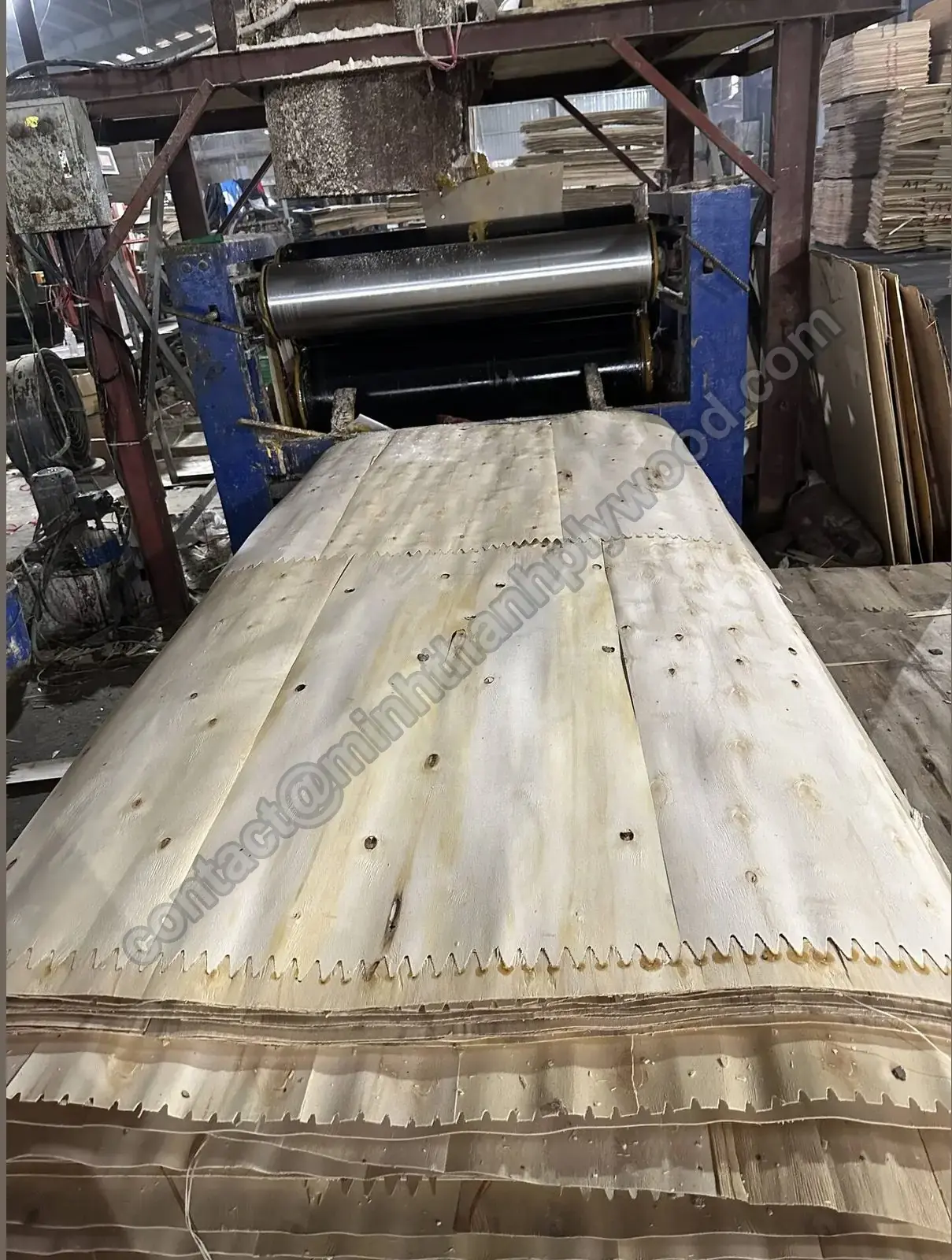
The core-veneer view shows joins before they are hidden beneath the finished faces.
How much does tolerance matter to the component cost?
Thickness tolerance matters most where the panel must fit a groove, connector or calibrated assembly. Minh Thanh’s sanded furniture panels use ±0.2–0.3 mm, down to ±0.2 mm. Commercial and film-faced panels use ±0.5 mm. Compare the tolerance appropriate to the product line and the drawing.
For example, 18 mm nominal with ±0.2 mm gives an arithmetic acceptance band of 17.8–18.2 mm. The same nominal thickness with ±0.5 mm gives 17.5–18.5 mm. Those bands can lead to different tooling and fitting decisions. They do not describe a measured shipment; the inspection records provide those readings.
Measure a trial panel at more than one position using the agreed instrument and contact method. Identify edge zones and central zones in the inspection plan, and check the component after the actual machining operation. This makes the supplier’s tolerance and the assembler’s fitting allowance part of the same decision.
The cost comparison should include any extra calibration, fitting or sorting needed by the wider band. There is little value in a lower sheet rate if the incoming panel forces the buyer to alter every groove or sort sheets into thickness groups. For components with no tight fitting requirement, a broader commercial tolerance can be an economical specification. Our thickness guide connects these decisions to use.
What is the cost per accepted component after cutting?
Cost per accepted component is the total cost allocated to a sheet divided by the number of finished components accepted from it. Include delivered panel cost, cutting, finishing and rework. Count usable output after the drawing’s grain direction, saw kerf, trim and appearance requirements have been applied.
Begin with a full-scale nesting plan. A geometric sketch that fits rectangles edge to edge can overstate output because it leaves no allowance for the cutter or edge trim. For natural eucalyptus faces, show the required grain direction and the face each component exposes. Those restrictions can change the best nesting pattern.
A useful break-even calculation needs no invented market price. If one specification produces 16 accepted parts per sheet and an alternative produces 15, the first can carry up to 16/15, or about 6.67%, more total sheet cost at equal cost per accepted part. These counts are an arithmetic illustration; replace them with the results from your own component trial.
Record the reason for lost output. Offcuts from layout, face rejection, machining damage and finish rejection call for different fixes. A custom format or cut-to-size enquiry can improve layout; a different appearance pair can address visible-face rejection; calibration can address fitting. This is how a buyer turns a price discussion into a specific manufacturing improvement.
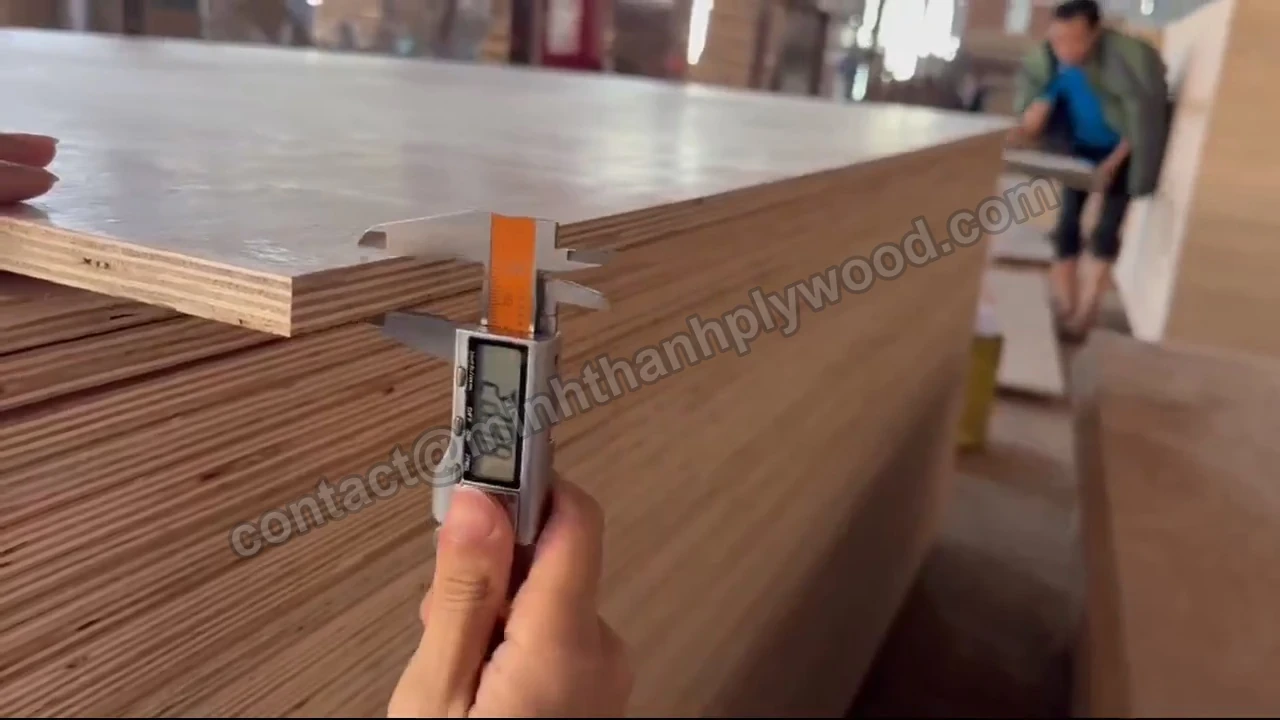
Thickness inspection connects the delivered panel with the component’s fitting requirement.
How do you put FOB, CFR and CIF offers on one cost basis?
Minh Thanh quotes FOB Hai Phong, CFR or CIF. Put each offer on the same destination warehouse: add ocean freight and insurance to FOB, insurance to CFR, and nothing to CIF for the sea leg; then add destination handling, duty and trucking to all three. The plywood price guide has the full landed-cost worksheet, and the trade-terms page explains our order basis.
What should buyers inspect before approving the first order?
Approve the free sample through your own cutting, hardware and finish, then let our pre-loading record do the rest: every pack is calipered against ±0.2–0.3 mm for sanded furniture panels, faces are graded against your approved A/A, A/B or B/B sample, and you receive photos and video before the container is sealed. At arrival, check pack labels against the packing list and caliper a few sheets before the first production run.
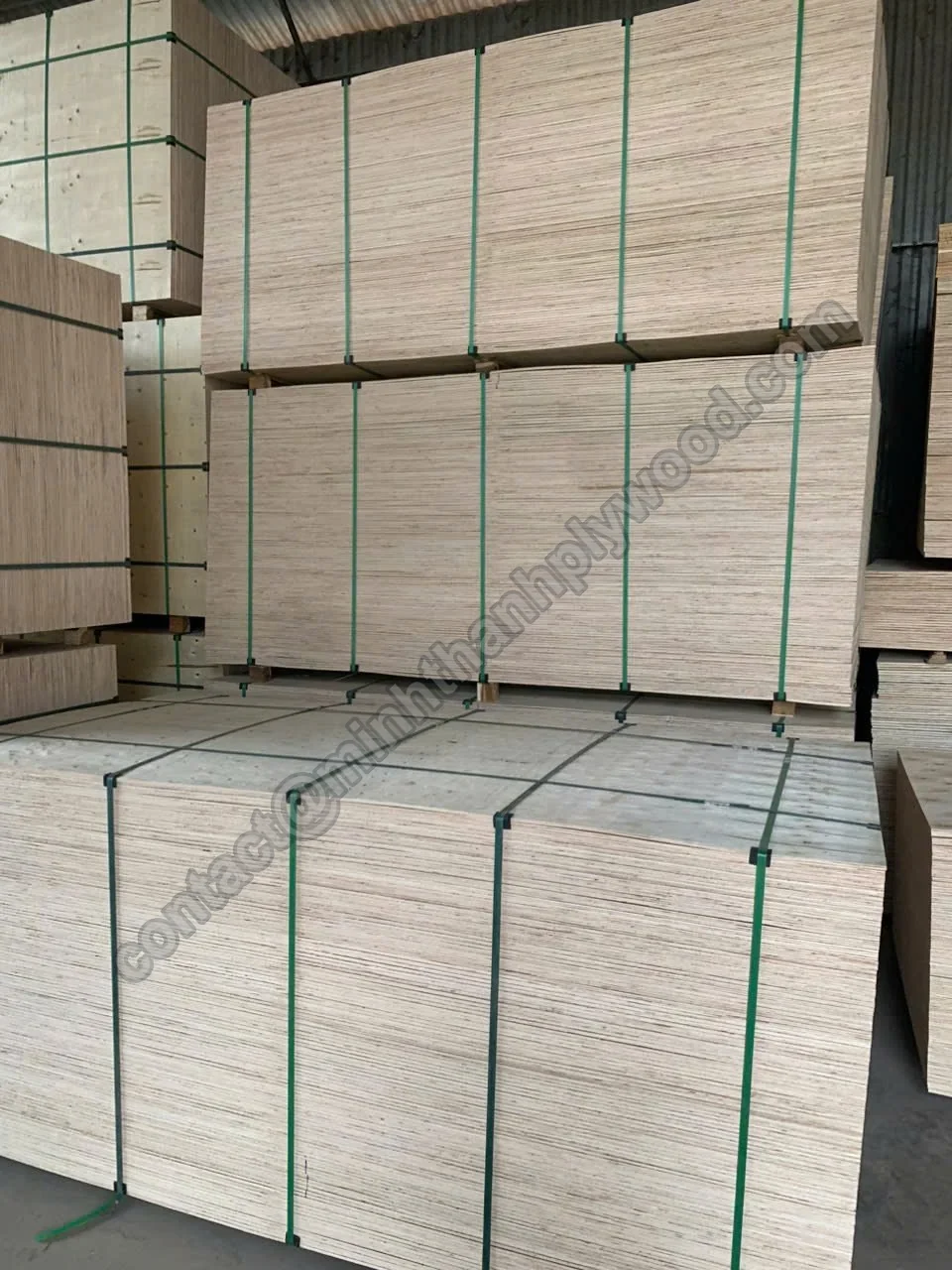
Pack quantities and protection belong in the delivered-cost comparison alongside the panel rate.
What specification should you send for a matched eucalyptus quotation?
Send one complete construction line and the component use so the factory can quote the eucalyptus panel you will actually convert. Minh Thanh’s minimum order is one 40HC, with mixed specifications by agreement; production takes 15–45 days after the deposit. Plan the production period separately from transport and receipt.
Include the following fields in your quotation request:
- Application, component drawing and intended finish.
- Eucalyptus face/back appearance pair and approved sample reference.
- Core species, joining requirement and permitted construction alternatives.
- Adhesive, bond performance, emission requirement and test method.
- Thickness, format, tolerances, any cut-to-size dimensions and grain direction.
- Quantity by specification, packing and receiving requirements.
- Delivery term, destination, required receipt date and order documents.
For a cost-reduction enquiry, identify which requirement can change. A second core option or a revised face/back pair is easier to evaluate than a request for an unspecified cheaper version. Price the original and alternative separately, then compare accepted component cost using the same trial procedure.
Begin with the eucalyptus product specification and the plywood price guide if the buying team needs a common worksheet. The decision becomes clear when construction, delivered cost and accepted output appear together. Send that specification to Minh Thanh Plywood for a factory quotation tied to your component and shipment plan.
Buyer questions, answered
Is there one eucalyptus plywood price in Vietnam?
Eucalyptus plywood covers several constructions, including eucalyptus-faced furniture panels and eucalyptus-core overlaid panels. Compare dated quotations for the same face/back grades, core, adhesive, emission requirement, dimensions and delivery term. A price without those fields cannot identify the panel you are buying.
Is eucalyptus-faced plywood always full eucalyptus plywood?
Eucalyptus-faced plywood identifies the outer veneers. The core must be specified separately: Minh Thanh's furniture panels use Styrax or Eucalyptus cores as standard, with Acacia and Pine made on order. State the core species and whether mixed species are allowed in the purchase specification.
How do I convert a eucalyptus plywood m³ price to a sheet price?
Multiply the quoted m³ rate by length, width and thickness in metres. A 1220 × 2440 × 18 mm sheet contains 0.0535824 m³, so its material price is 0.0535824 times the quoted m³ rate. Add freight and destination costs separately.
Why can the lighter core give a lower delivered cost?
A lighter core reduces mass at the same sheet dimensions and can allow more panel volume within a container's weight limit. Compare the actual loading plan and packed weight for both constructions. For furniture components, also test the required joint and fastening performance before changing the core.
Which face grade should I price for furniture?
Price A/A for two visible faces, A/B for one visible face and B/B for components intended for painting or overlaying, using the approved appearance sample. State the finish and accepted repairs on the drawing. Avoid paying for two display faces when only one is visible.
Does E0 describe the plywood adhesive?
E0 describes an emission grade; it does not identify adhesive chemistry. Minh Thanh's furniture and interior standard is UF glue at E0 emission. Specify the adhesive, required bond performance and emission test method in separate quotation fields.
What tolerance should I use in the cost comparison?
Minh Thanh's sanded furniture panels have a thickness tolerance of ±0.2–0.3 mm, down to ±0.2 mm; commercial and film-faced panels use ±0.5 mm. Compare the same tolerance and measurement plan. A component fitted into a groove can require a different acceptance limit from a packing panel.
How should an importer compare FOB and CIF prices?
Put both offers on the same delivered-warehouse basis using the same destination and shipment quantity. Add the costs outside each seller's scope, including destination handling, clearance, local delivery and applicable taxes. Keep recoverable taxes separate from operating cost in the buyer's worksheet.
What is Minh Thanh's minimum eucalyptus plywood order?
The minimum order is one 40HC, with mixed specifications by agreement. Production takes 15–45 days after the deposit. Send the component use, face/back grade, core, bond and emission requirement, dimensions, quantities and destination for a matched quotation.
Can I test eucalyptus plywood before placing the container order?
Minh Thanh supplies free samples. Test the selected construction with your actual cutter, finish and fastening system, then use the accepted sample and drawing as the order reference. Shipment photographs and video are provided before loading.