
Minh Thanh Plywood's October 2026 starting prices are from US$250/m³ for commercial plywood and from US$350/m³ for furniture/interior plywood. Compare plywood prices on identical face, core, bond, grade, dimensions and delivery terms. For an import decision, convert the quotation to cost per sheet, then add freight and destination charges and divide by the usable output.
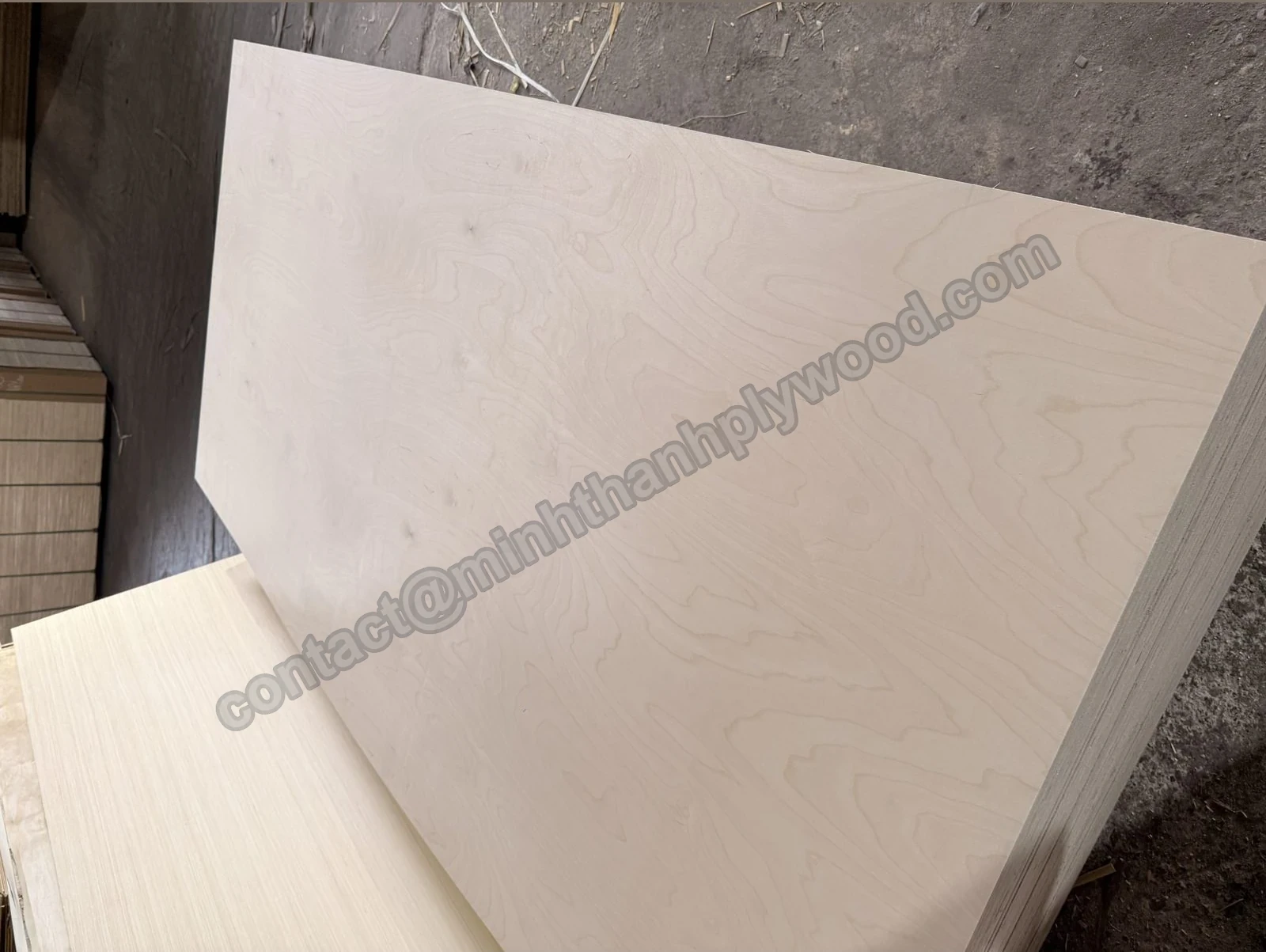
What plywood prices can you use for an export budget?
Use the dated factory starting prices to establish the product tier, then price the actual specification. Minh Thanh’s October 2026 references are commercial plywood from US$250/m³ and furniture/interior plywood from US$350/m³. The signed quotation defines the construction and delivery basis for the order.
| Product tier | October 2026 starting reference | What to specify before ordering |
|---|---|---|
| Commercial plywood | From US$250/m³ | Face/back, core, bond, actual thickness, dimensions, grade and use |
| Furniture/interior plywood | From US$350/m³ | Face/back acceptance, stitched core, calibrated thickness, surface preparation and emission requirement |
These are starting references for different product tiers. They are not a fixed price list for every veneer, thickness or bond, and the difference between them is not a premium for two otherwise identical boards. Keep that distinction when presenting a budget to a customer or purchasing manager.
A manufacturer sells the ordered construction. “Plywood, 18 mm” leaves too many fields open to create a useful buying comparison. A lower headline rate can describe a rougher face, a different core or a different delivery point. Complete the product line before asking several suppliers to price it.
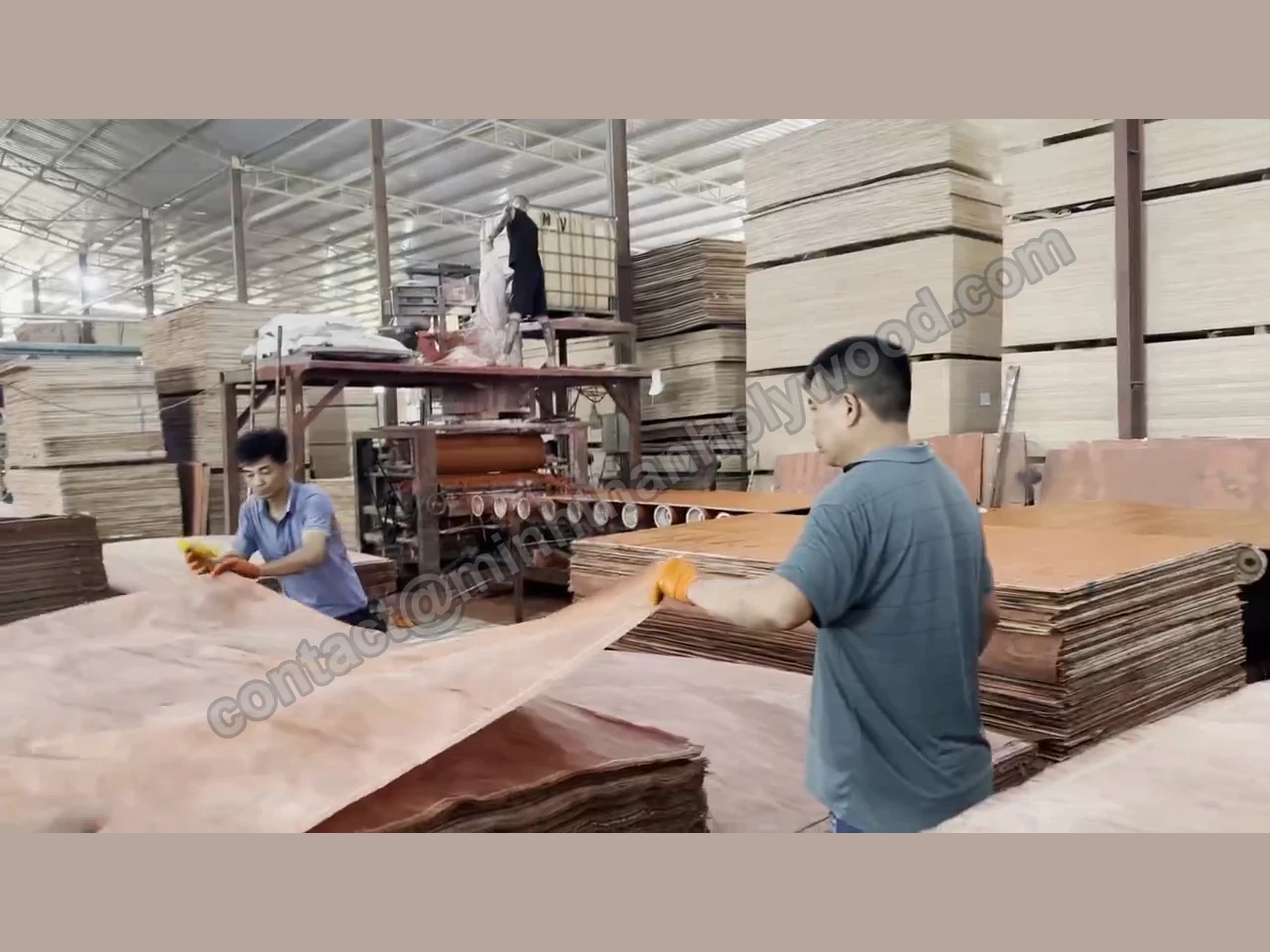
Choose the commercial range for its intended utility use and the furniture range for prepared furniture components. Minh Thanh uses locally grown plantation timber for cores in Ha Hoa, Phu Tho. Furniture production includes stitched cores, core calibration and a separate face press. Local plantation supply supports a competitive core cost, while those preparation operations belong in the comparison with the panel the workshop currently buys.
Record the quotation date, currency, validity and shipment period together. A saved internet price is useful context, but the purchasing budget needs an executable quotation covering the intended goods. Carry that same specification through sample approval, purchase order and receiving inspection.
How do you convert plywood cost from m³ to a sheet?
Price per sheet = price per m³ × length in metres × width in metres × thickness in metres. A 1220 × 2440 mm sheet has an area of 2.9768 m². At 18 mm, its volume is 1.220 × 2.440 × 0.018 = 0.0535824 m³.
The following table is a unit-conversion exercise using the published October 2026 furniture starting reference of US$350/m³ throughout. It is not a quotation for these thicknesses. Holding the rate constant isolates the effect of panel volume; a supplier’s actual rate also reflects the ordered construction.
| Nominal thickness, 1220 × 2440 mm | Calculated volume per sheet | US$350/m³ conversion, rounded |
|---|---|---|
| 9 mm | 0.0267912 m³ | US$9.38 |
| 12 mm | 0.0357216 m³ | US$12.50 |
| 15 mm | 0.0446520 m³ | US$15.63 |
| 18 mm | 0.0535824 m³ | US$18.75 |
| 21 mm | 0.0625128 m³ | US$21.88 |
| 25 mm | 0.0744200 m³ | US$26.05 |
For a quote per square metre, divide the sheet price by 2.9768. For a quote per square foot, divide the square-metre rate by 10.7639 (1 ft = 0.3048 m); keep the thickness beside the rate. Use the supplier’s stated physical dimensions when its format is described as 4 × 8 ft. An area price for a thin lining and an area price for a cabinet side are different products.
Retain full precision through the calculation and round the displayed money at the end. Multiplying a rounded sheet volume across a container creates avoidable discrepancies. The invoice’s measurement basis also needs to be explicit: ordered nominal dimensions and measured inspection dimensions serve different purposes.
Our sheet-size guide explains the formats, while the thickness guide connects nominal thickness to use and tolerance. For an import budget, put the original rate, conversion formula and ordered dimensions in adjacent worksheet columns so another buyer can reproduce the calculation.
Which specification fields make quotes comparable?
Compare plywood prices only after the quotations describe the same panel and delivery scope. Face veneer, core construction, bond, appearance grade and dimensions are separate specification fields. A shared product nickname cannot replace them.
| Quotation field | Write on both supplier lines | Why it changes the buying result |
|---|---|---|
| Application | Cabinet side, visible door, lining or packing component | Determines the required appearance and service exposure |
| Face and back | Veneer species, grade pair and repair acceptance | Determines the surfaces the buyer can use |
| Core | Species, joining and layup | Changes machining, mass and internal construction |
| Bond and emissions | Resin/bond requirement and required emission evidence | Sets exposure suitability and the documentation needed |
| Dimensions | Millimetres, format and agreed tolerance | Determines purchased volume and fit to drawings |
| Preparation | Sanding, polished/UV-ready surface or ordered treatment | Changes work remaining at the receiving workshop |
| Quantity and packs | Sheets per line, packing and mixed-load schedule | Determines the order value and loading arrangement |
| Delivery | Named port, currency, term and quotation validity | Defines the cost boundary being compared |
Keep a column for every supplier deviation. If a supplier substitutes a back veneer or changes the tolerance, that line needs a technical decision before its price enters the lowest-cost comparison. Blank fields are unresolved specifications; write them down rather than interpreting the lowest rate generously.
A useful comparison includes the approved sample identification. Photographs of a selected face are helpful, but a sample should also show the edge and permit the buyer’s actual machining and finishing trial. Link the quotation revision to the sample and drawing revision so the goods ordered are the goods that were evaluated.
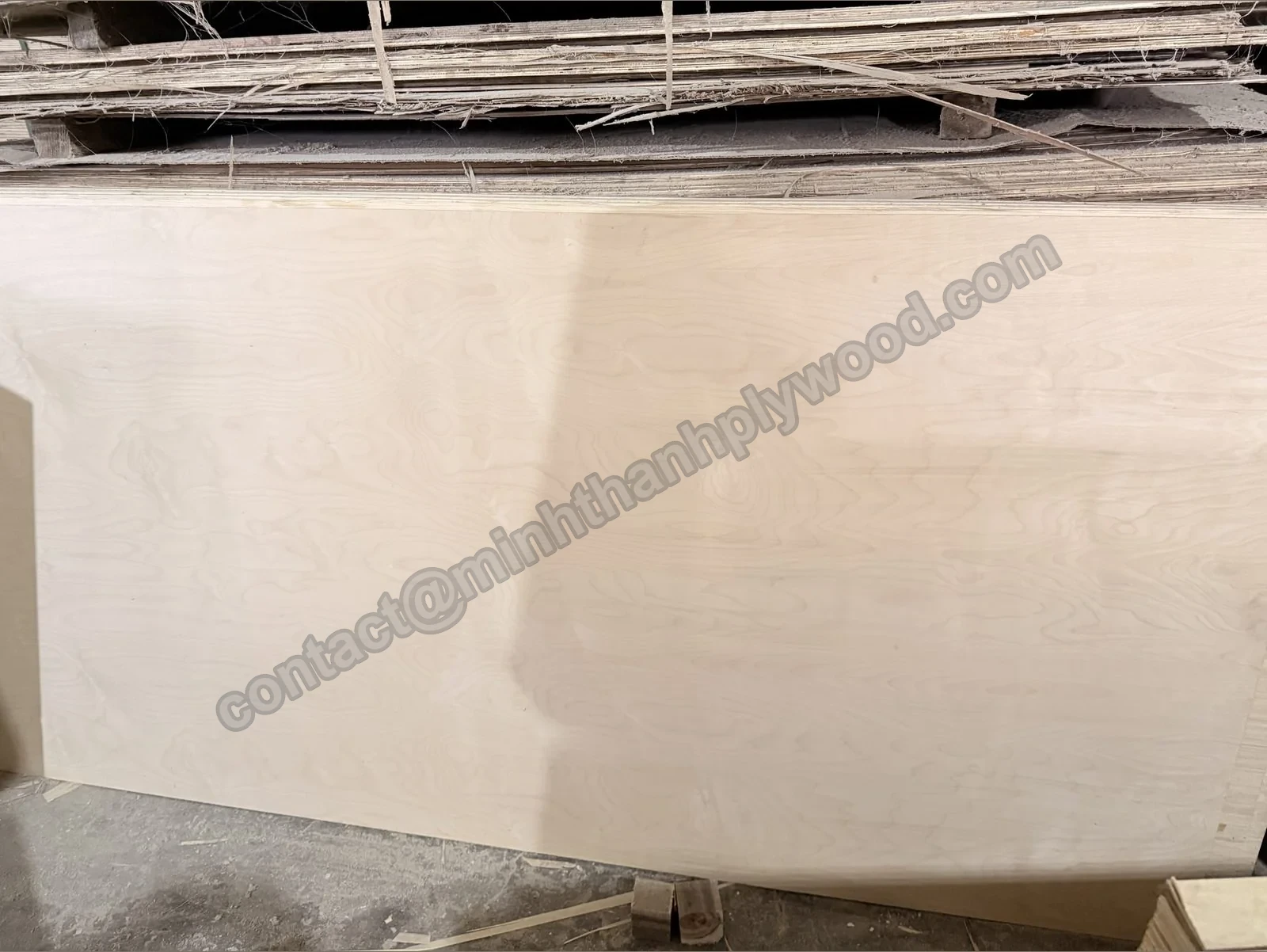
At Minh Thanh, birch, poplar, engineered veneer and pine are face choices; the face name does not define the furniture core. The product pages carry the individual face options. Purchasing can request an alternative face as a separate proposal while preserving the original construction for the main comparison.
Why do face veneer and face/back grade affect price?
Face veneer and appearance grade affect how much of a sheet can become the intended visible part. Pay for the appearance the finished furniture needs, including the reverse face when it is exposed. A clean front alone cannot establish the value of a door or open shelf.
A naturally figured birch face, pale poplar face and repeating engineered veneer pattern serve different designs. The cutting layout needs the correct grain direction and matching rule. A layout that maximises area while rotating visible door parts can produce the wrong appearance even when all dimensions fit.
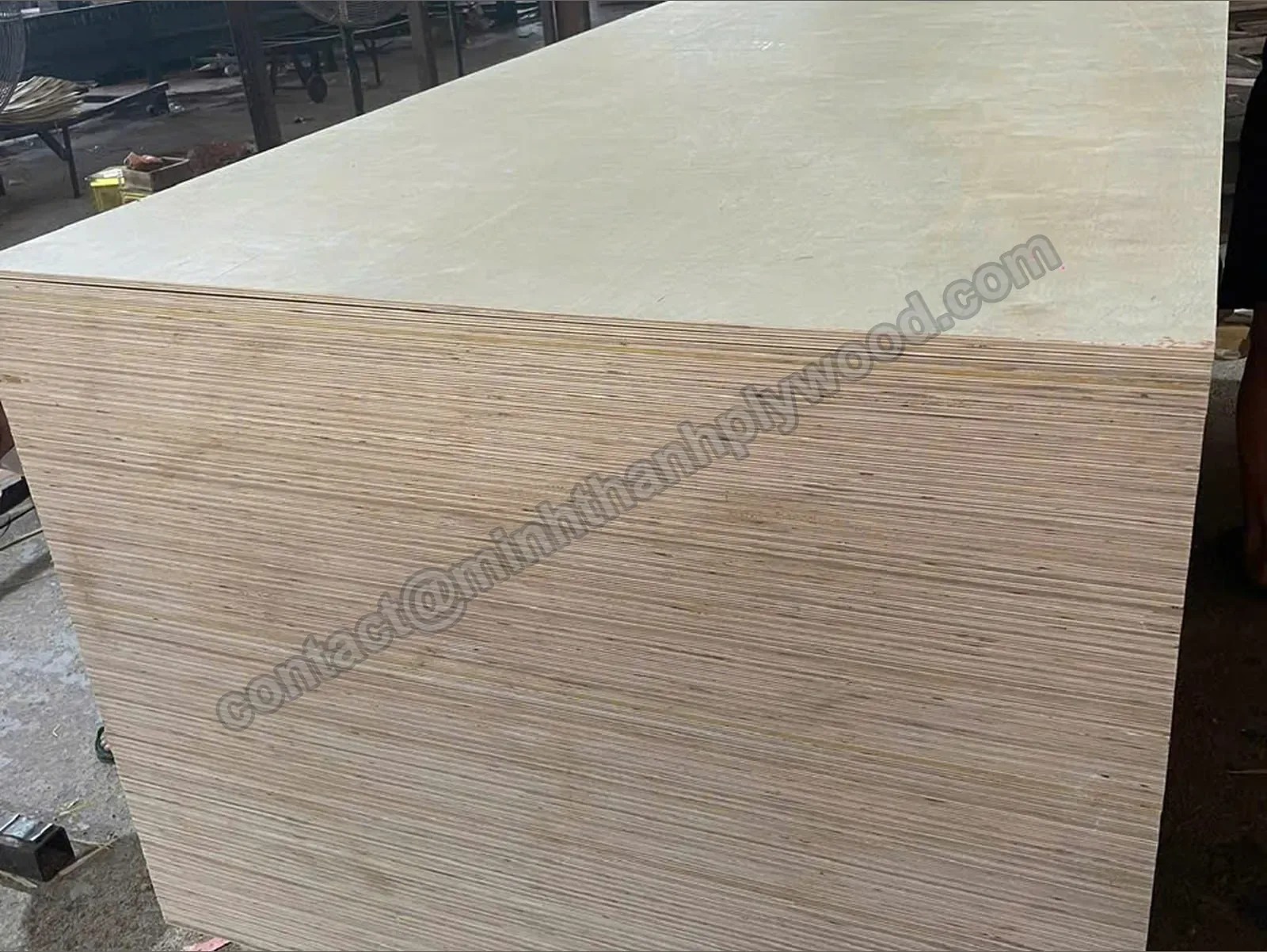
Specify allowed patches, knots, colour differences and open defects by the buyer’s agreed grade and sample. Grade letters are useful within their defined system; a letter from one supplier should not be silently equated with a letter from another. Put the permitted repairs and the part’s visible area on the acceptance sheet.
Inspect repairs under the intended coating. A patch acceptable beneath an opaque finish can interrupt a clear-lacquer surface. A premium natural face offers little value on a hidden back that will be completely covered, but replacing it with a utility face on a visible cabinet interior changes the product the customer receives.
For a repeat furniture line, organise the cutting schedule around visible and hidden parts. Separating those requirements can reduce face cost without reducing the approved appearance. Order each grade with a clear quantity and keep the packs identified during receiving.
The birch-faced plywood page and poplar-faced plywood page help choose the surfaces. Bring a finished component or drawing to the sample conversation so the factory can price the appearance the customer actually sees.
How do core species and joining change plywood cost?
Core species and assembly change the internal panel the workshop machines, even when two faces look alike. Minh Thanh’s furniture core choices are white Styrax and Eucalyptus. Furniture-grade cores are stitched and the panels are double pressed: the core is pressed and calibrated before the face and back are pressed onto it.
White Styrax uses a 500 kg/m³ reference density; Eucalyptus uses 650–750 kg/m³. These values explain mass differences. A heavier sheet alone does not identify better face quality, a stronger bond or a certified load capacity. Inspect the construction needed by the part and use the appropriate performance evidence for that part.
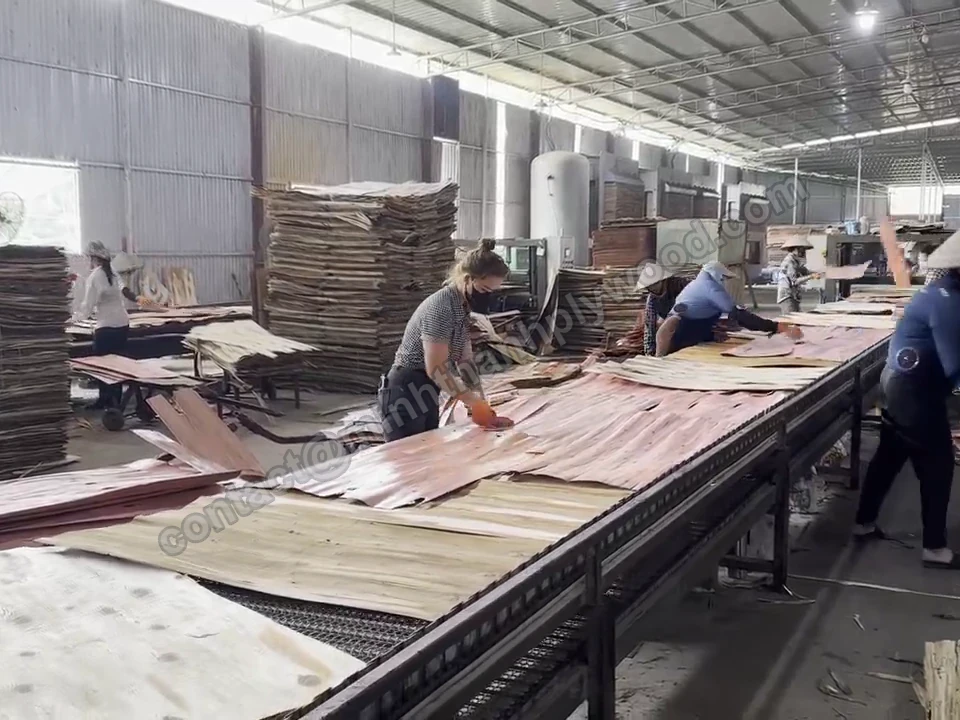
For a routed groove, concealed fixing or exposed edge, check where the machining passes through internal veneers. An attractive face can hide an internal gap until the tool reaches it. Trial the actual groove, drilling pattern or connector rather than accepting a sample solely from its front photograph.
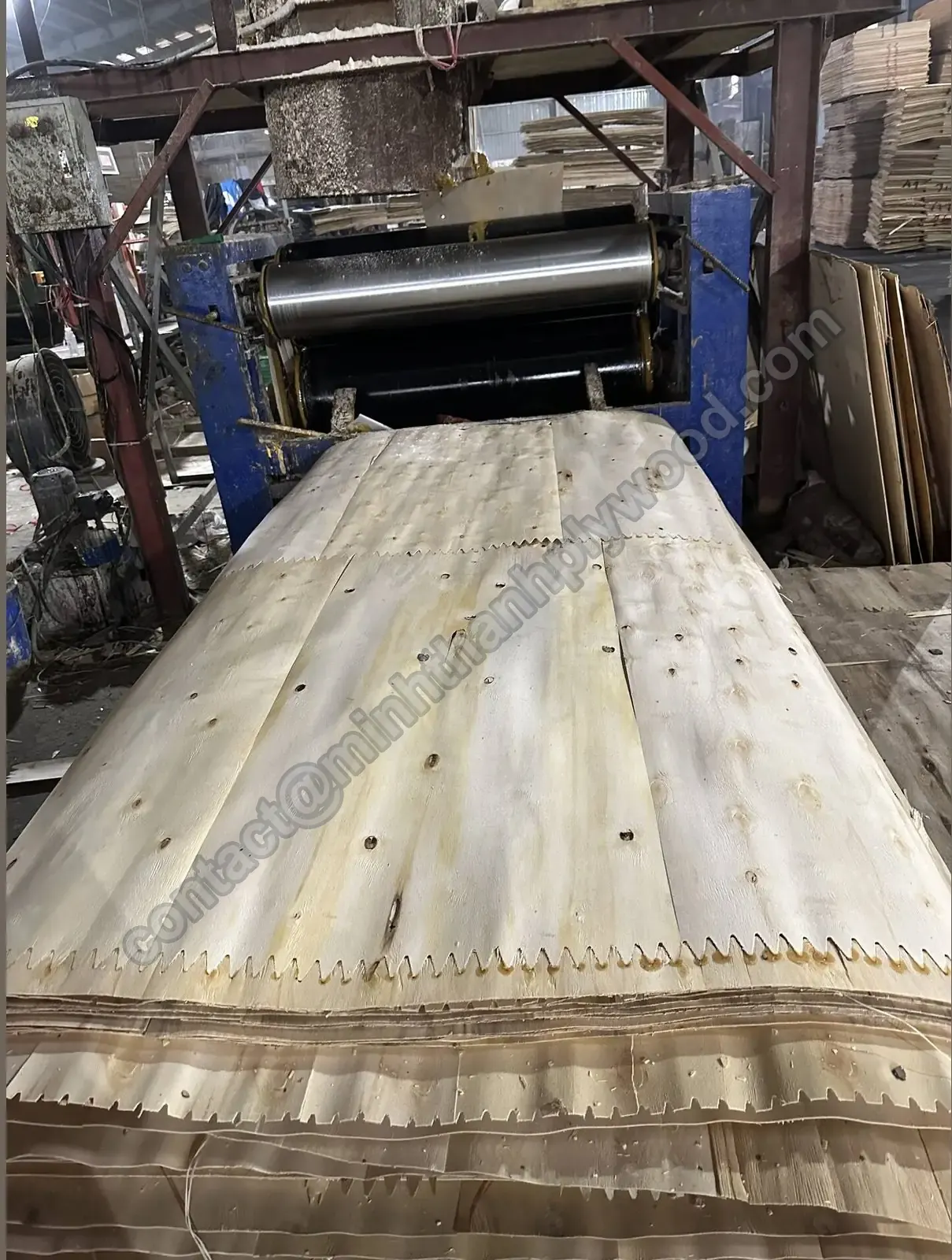
Stitching and calibration have a purpose in the purchased component. They prepare the core beneath the thin decorative face and support the specified finished thickness. Compare that construction with the alternative supplier’s actual joining and pressing route, rather than treating every veneer-core sheet as identical.
Birch-faced plywood is also different from all-birch plywood. Minh Thanh supplies birch faces over the selected furniture core; it does not manufacture all-birch core panels. A quoted all-birch sheet needs its own complete construction comparison. See the furniture selection guide for the connection between core, face and component acceptance.
Keep core choice consistent in the freight calculation as well as the product comparison. Switching to a denser core changes sheet mass and the container’s achievable quantity, which can change freight per sheet even before a manufacturing price difference is considered.
What are you paying for in bond and emission requirements?
Specify the bond for service exposure and the emission requirement for the destination and furniture application. These are different requirements. Minh Thanh’s furniture/interior standard is UF glue at E0 emission; MR/melamine-fortified and phenolic bonds are made to the customer’s specification.
An emission class does not identify an exterior bond. A film surface does not identify the adhesive inside a panel. Write the resin or bond requirement and the required test or documentation separately, then connect them to the selected product and use. The water-resistance guide explains that distinction in the buying context.
Minh Thanh holds CARB P2 / TSCA Title VI certification, ICTT mill no. 23024. Its published chamber-test evidence consists of six ASTM D6007 reports from April 2025 to June 2026 on 9, 15 and 18 mm panels, with sample averages of 0.014–0.032 ppm. Three reports are from Shanghai Hongjun and three from ICTT Vietnam. These are results for the tested samples.
The US Environmental Protection Agency’s formaldehyde guidance, consulted 7 October 2026, explains the composite-wood compliance framework. Our emission page supplies the product evidence. Match the buyer’s required method and records to the quoted panel; an unrelated report cannot complete that comparison.
For a price decision, preserve the required documentation on both quote lines. Removing an emission requirement or changing the service bond produces a different specification, not a saving on the same product. The factory can price an alternative construction separately when the application allows it.
Include sample testing and document preparation in the purchasing schedule. Approving the construction before the order avoids paying for material that the receiving workshop cannot use for its market. Spend on the evidence the application needs and keep it attached to the exact product description.
How do thickness, tolerance and preparation affect value?
Thickness sets panel volume, while tolerance and preparation affect fit and the workshop operations remaining. At an unchanged m³ rate and sheet area, an 18 mm sheet contains 50% more volume than a 12 mm sheet. Actual rates can differ because the layup and processing are different.
Select the thickness from the component design. Paying for thicker plywood everywhere can waste material; buying a thinner panel without checking spans, fixings and grooves can create rework. Group the purchase schedule by the parts it makes and retain the drawing’s requirements for each group.
Minh Thanh’s sanded furniture thickness tolerance is ±0.2–0.3 mm, with tight orders down to ±0.2 mm. Commercial plywood has a different ±0.5 mm reference. An 18 mm order at ±0.2 mm describes a permitted thickness band of 17.8–18.2 mm. Put the chosen band on the order when machining interfaces depend on it.
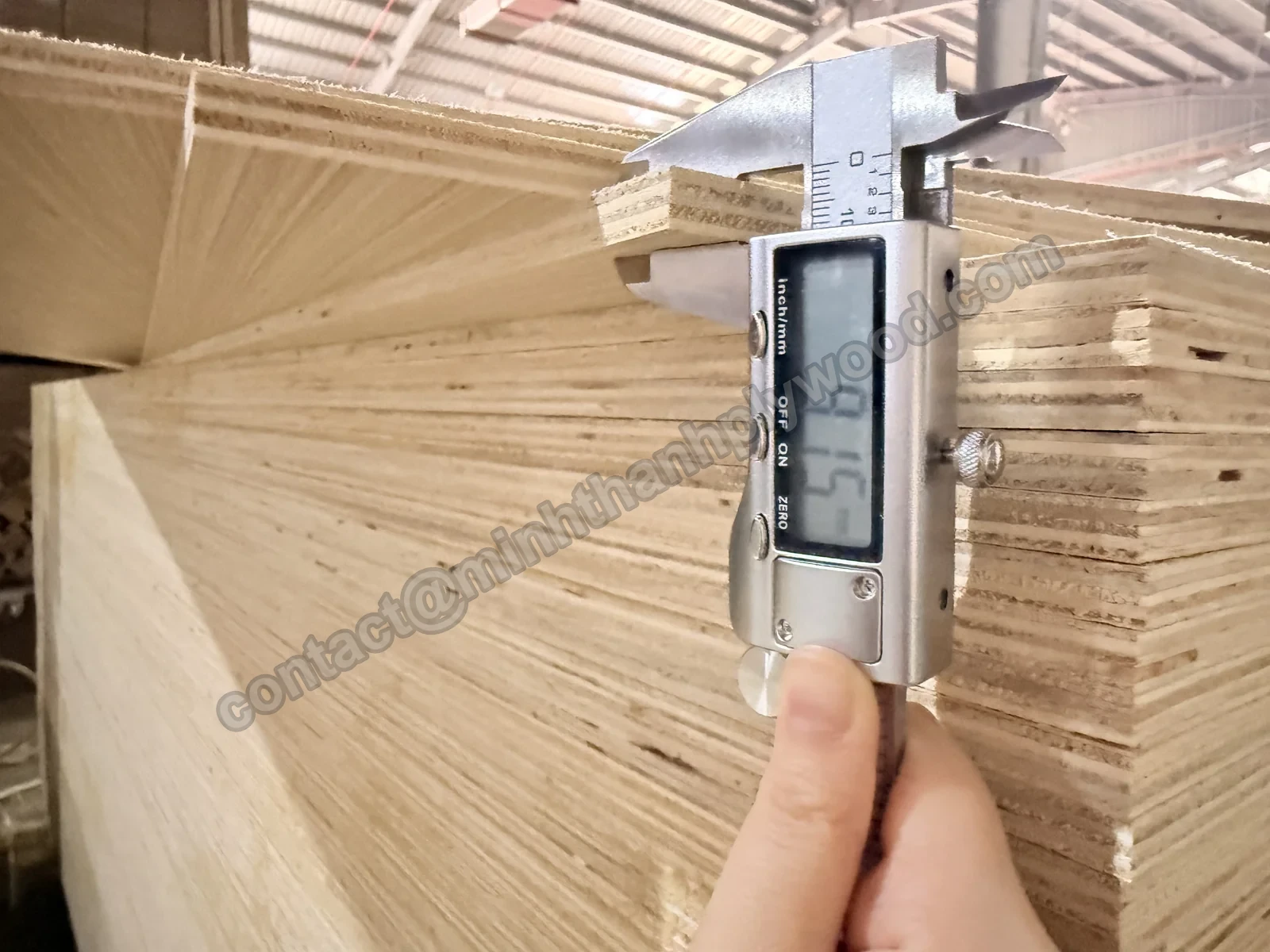
Compare preparation at the point where the sheet enters production. A workshop that must recalibrate or sand a cheaper board should allocate those operations to the component cost. Count setup, handling and accepted output alongside abrasive or machine cost; a sheet-price difference alone does not price that work.
UV-ready faces are prepared for the customer’s UV coating process. They do not mean the factory has supplied a cured UV finish. Run the actual coating trial on the sample, including face repairs and exposed edges, so the specified preparation delivers the expected surface.
The quality-control page explains the factory checks. Keep nominal thickness, measured raw thickness and the finished component thickness after coating or lamination in separate records. That separation helps purchasing identify a panel mismatch instead of blaming every fit problem on the sheet supplier.
How do sheet size and usable yield change the real price?
Usable-part cost equals the sheet cost divided by the accepted parts it produces, with machining and finishing added. A cheaper sheet loses its advantage when fewer approved parts come out of it. Calculate yield from the actual cutting layout, grain direction and defect rules.
For a transparent geometry example, take a 1220 × 2440 mm sheet and nominal parts measuring 600 × 400 mm. With the 600 mm side across the width and the 400 mm side along the length, a theoretical grid fits two across and six along: twelve parts. This is a geometry ceiling before saw kerf, edge trimming and appearance rejects; it is not a production yield claim.
A 1250 × 2500 mm sheet has an area of 3.125 m², versus 2.9768 m² for the smaller format. For the same twelve-part grid, the larger sheet buys additional area without increasing that theoretical part count. A different component or real kerf allowance can change the preferred format, so run the workshop’s layout rather than ranking formats by area alone.
Using the US$350/m³ arithmetic reference, the 18 mm smaller sheet converts to US$18.75384 and the larger to US$19.68750. At the theoretical twelve-part ceiling, purchased board cost is US$1.56 and US$1.64 per part respectively, rounded. These are calculated illustrations, not supplier quotes or accepted-output forecasts.
Replace the theoretical count with the accepted count from a cutting trial before approving the budget. Add saw kerf, trim, grain alignment, face repairs, machining rejection and any usable offcuts assigned to other parts. Credit offcuts only when the production schedule actually consumes them.
Minh Thanh supplies the standard formats and cut-to-size options. Compare full-sheet and cut-to-size proposals against the same finished-part schedule, including packing and workshop handling. A factory-cut part changes the purchased scope; it needs its own tolerance and acceptance record.
What does FOB, CFR or CIF include in plywood prices?
FOB Hai Phong, CFR and CIF put different transport costs into the supplier’s quotation. Write the named port and Incoterms® 2020 rule beside the price. A port price and a warehouse price are different cost boundaries even when the same goods are being compared.
| Quotation basis | Supplier’s transport scope | Buyer budget still needs |
|---|---|---|
| FOB Hai Phong | Agreed seller costs through delivery on board at origin | Main freight, insurance, destination/import costs and inland delivery |
| CFR named destination port | FOB scope plus seller-arranged main freight | Insurance, destination/import costs and inland delivery |
| CIF named destination port | CFR scope plus seller-arranged insurance | Destination/import costs and inland delivery; review insurance coverage |
Under these sea-shipment rules, risk transfers when the goods are on board at origin. Paying a CIF price does not move risk transfer to the destination warehouse. Price allocation and shipment risk are separate questions; the purchasing team needs both in the contract review.
The International Chamber of Commerce’s Incoterms® 2020 guidance, consulted 7 October 2026, explains the framework. Minh Thanh quotes the three terms in its trade terms. Ask for a destination-charge breakdown from the freight provider or broker alongside the factory proposal so the worksheet identifies costs outside the seller’s scope.
For CFR or CIF, examine terminal handling and unloading allocation in the quoted freight and contract. A charge already included in the seller’s transport bill should not be added again. A charge outside that bill should not disappear because the headline says freight included.
Specify insurance scope and claim arrangements when choosing CIF. Keep the policy evidence with shipment records and understand which losses it covers. A named port quotation can simplify freight purchase, but it still needs to connect to the buyer’s receiving location and stock plan.
How do you calculate landed plywood cost without double counting?
Landed plywood cost is the goods cost plus transport, insurance, import charges and delivery to a defined receiving point. Use one currency and an explicit exchange-rate date. Add only the cost lines outside the quoted delivery scope.
Landed cost per received sheet = total cost to the receiving point ÷ received sheets. For manufacturing, follow that with accepted-output cost: allocate the purchased material and processing spend across accepted components, using the actual yield.
- Convert the product quote to order value using the exact quoted dimensions and quantity.
- Mark which transport and insurance costs the term already includes.
- Add the forwarder’s remaining origin, freight and destination charges.
- Add broker-calculated import duties and taxes for the exact classification, origin and destination.
- Add inland transport, unloading and any storage or financing included in the comparison.
- Divide by received quantity, then connect the result to the workshop’s accepted-part calculation.
Keep recoverable import tax separate from permanent cost. It still affects cash needed at clearance, but its treatment in the economic comparison belongs to the buyer’s accounting basis. The same worksheet can therefore show cash required to release the shipment and cost carried into inventory as separate totals.
For a Philippine buyer, preserve the export quote in US dollars and the local delivered alternative in pesos until each is converted at the buyer’s chosen rate. Use the broker’s actual classification and assessment. A general plywood label cannot supply a defensible duty rate or tax calculation.
Do not insert a guessed freight number to make direct import appear attractive. Put the written freight quote, destination breakdown and validity into the worksheet. If the route or booking window changes, refresh those inputs and retain the product specification. That makes the price decision reproducible without pretending that a web guide can predict the next shipment’s freight.
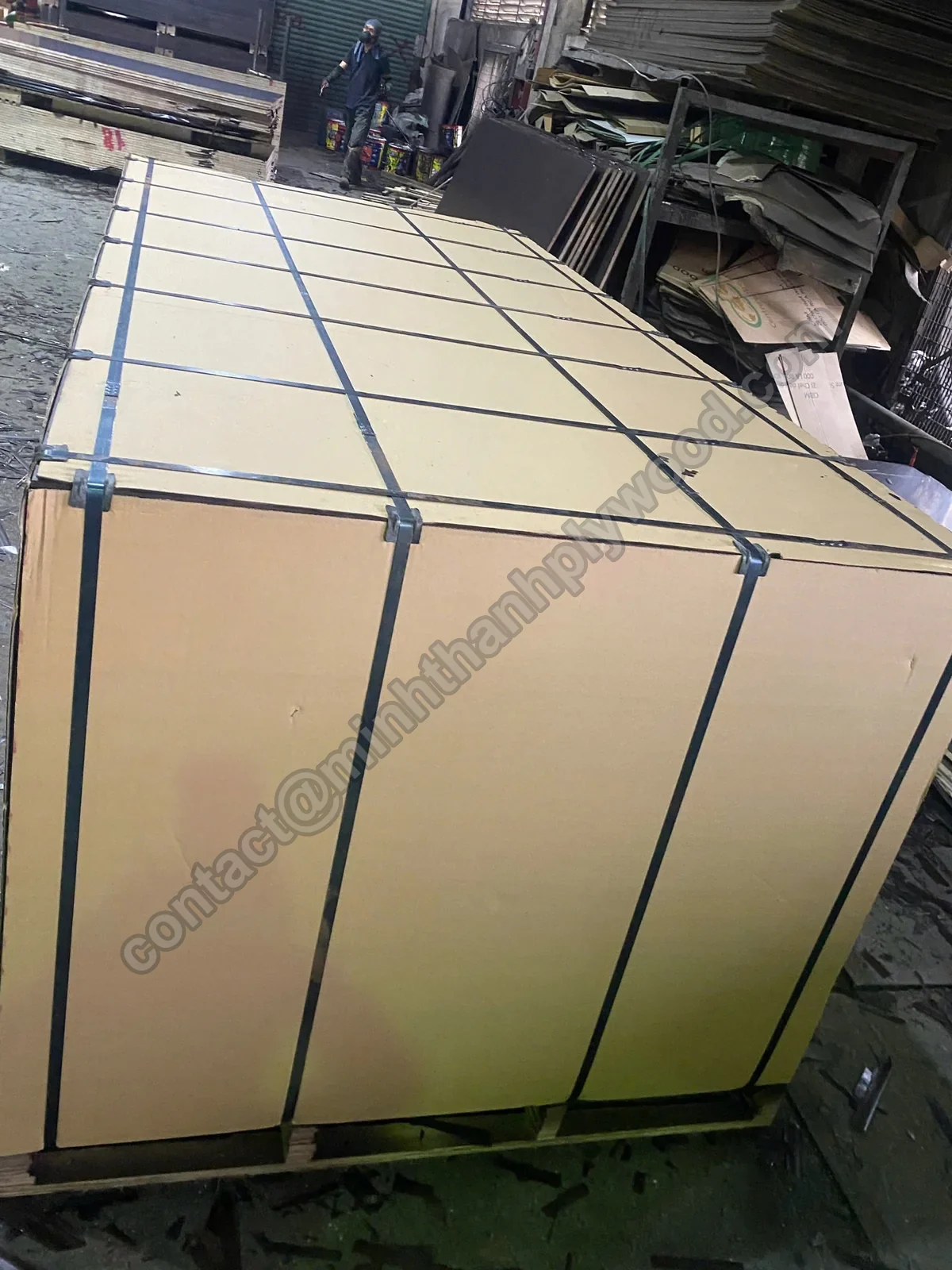
The factory’s packing list should reconcile with sheets, dimensions and volume. Check it against the quotation before shipment, then reconcile received packs and quantities at the warehouse. This closes the connection between the price calculation and the goods the buyer actually receives.
How does container loading change freight per sheet?
Freight per sheet equals the freight bill allocated to the container divided by its sheet count. Core mass and pack layout change that count. Comparing two core constructions using one assumed container quantity can distort the landed-price result.
For 1220 × 2440 × 18 mm sheets, the factory reference plans are 990 Styrax sheets, 880 Acacia sheets and 795 Eucalyptus sheets. The corresponding pack layouts use 18, 16 and 15 packs. These plans use a 28,000 kg board-only planning limit, excluding packing. Acacia is included as the packing reference comparison; Minh Thanh’s furniture core choices remain Styrax and Eucalyptus.
| Reference core | Density basis | Calculated 18 mm sheet mass | Board-only reference sheets/40HC |
|---|---|---|---|
| Styrax | 500 kg/m³ | 26.8 kg | 990 |
| Acacia reference | 580 kg/m³ | 31.1 kg | 880 |
| Eucalyptus reference | 650 kg/m³ | 34.8 kg | 795 |
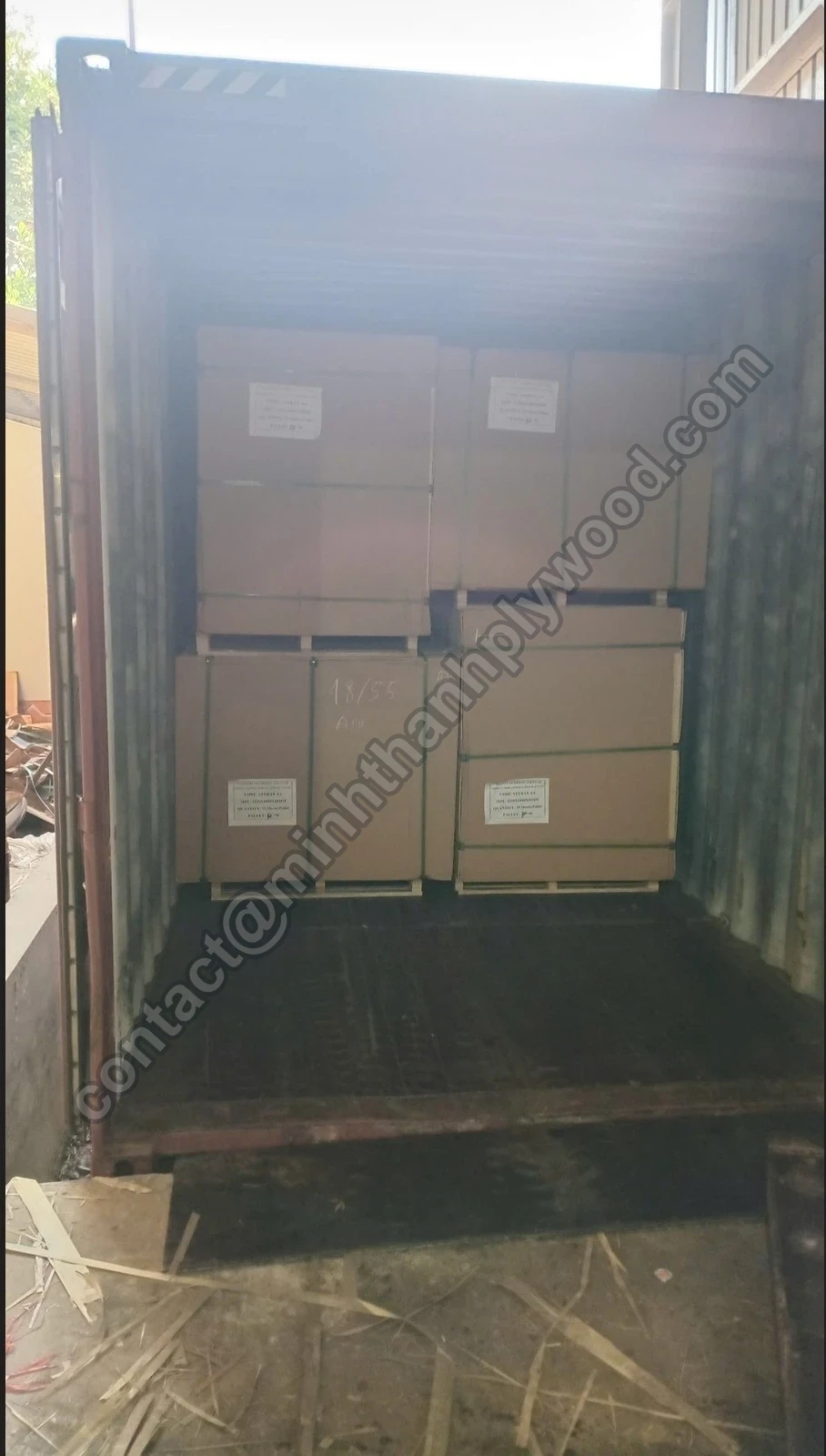
The quantity is a planning input, not a promise to load the same count on every booking. Final loading includes actual measured boards, packing, dunnage and the booking’s permitted cargo weight. Eucalyptus’s 650–750 kg/m³ density range also means the reference mass cannot substitute for weighing the actual shipment.
If the same freight bill F applies to the two reference furniture loads, the freight allocation is F/990 for Styrax and F/795 for Eucalyptus. The formula exposes the loading effect without inventing a market freight rate. Add the quoted product costs before deciding which construction makes sense for the component.
The packing calculator and container-loading page provide the planning context. For a mixed order, use the actual pack schedule rather than averaging the full-container counts for separate cores. Assign freight consistently across lines using the basis the buyer’s inventory system adopts.
When is factory-direct import better than buying locally?
Factory-direct import works when the equivalent landed and usable-output cost beats the local delivered alternative and the buyer can use the shipment within its stock plan. Local purchase works when stock availability, small quantities or immediate delivery justify the channel’s price.
Minh Thanh’s MOQ is 1 × 40HC. Production takes 15–45 days after deposit; transit and clearance follow production. The standard T/T route is 30% deposit and 70% against scanned bill of lading; irrevocable L/C at sight is also accepted. Budget the payment timing alongside material cost.
A wholesaler absorbs stock, local delivery and availability costs that a factory quotation does not automatically include. That service has value for a buyer whose production schedule cannot wait for a shipment. Compare local stock’s exact grade and delivered scope before deciding how much value that availability adds.
For a repeat manufacturer, direct sourcing can align the panel with its component schedule and sample acceptance. The commercial advantage comes from the specified construction, order scale and production route. It should be calculated from the buyer’s actual offers rather than expressed as a universal percentage below retail.
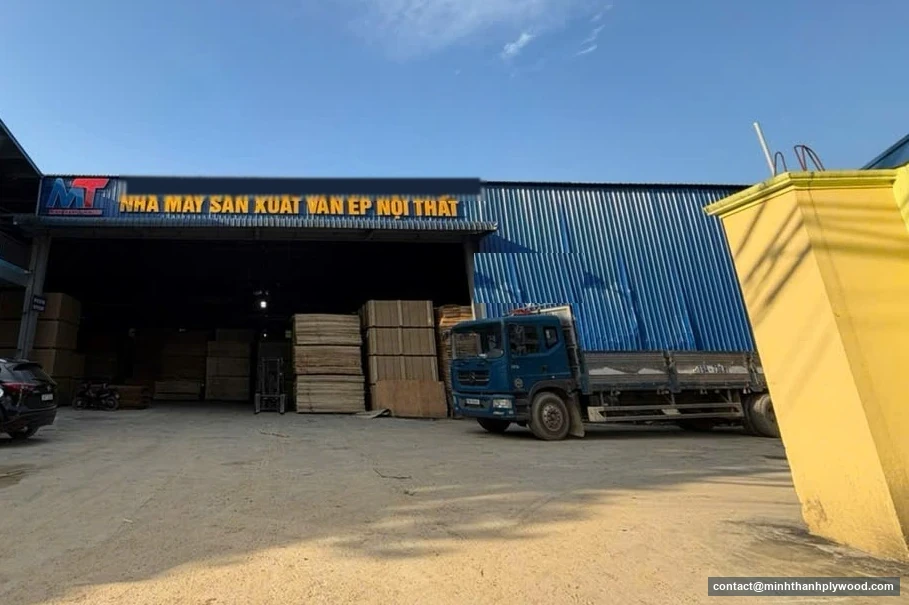
Build the stock forecast from consumption by specification. A full container of the wrong face/back split can create slow-moving stock even if the average sheet price looks attractive. Mixed specifications help align the order with use: usually 1–2 specifications per container, with 3–6 by agreement. The quantities and packing still need a workable load plan.
Before choosing the channel, ask purchasing and production to agree the delivery deadline, acceptable stock cover and approval sequence. A low factory rate cannot repair a missed production launch. The useful comparison is the cost of the specified material available when the workshop needs it.
How should Philippine buyers read a local plywood price list?
Read a Philippine plywood price list as a local purchasing offer with its own dimensions, grade and delivery scope. Compare that offer with the equivalent imported panel at the same receiving point. This guide’s US-dollar factory references do not establish Philippine peso retail prices.
Write actual thickness in millimetres on the comparison. Inch descriptions can be trade labels, while a furniture drawing requires an actual thickness and tolerance. A board called half-inch at a shop should enter the budget with its stated and measured dimensions, not an assumed exact conversion from the name.
Separate ordinary interior stock, an exterior-bonded product and film-faced formwork stock. A local marine label needs the actual construction and specified standard behind it before it can be compared with a different supplier’s panel. The adhesive requirement and a dark face film are separate fields.
Check whether the listed price includes tax, local delivery and unloading, and whether it is for one sheet, a pack or a promotional quantity. Photographs often show a larger sheet or a different thickness from the selected listing. Match the priced variant to the dimensions written on the worksheet.
For an imported alternative, obtain the named-port quote and the broker or forwarder’s destination-cost breakdown. Convert currencies at one stated rate and date. Apply the same receiving point and accepted grade to both options; otherwise the spreadsheet ranks different products as though they were interchangeable.
A local stock inspection also helps establish the benchmark sample. Measure the board, examine the face/back and try the workshop’s machining and finish. The resulting acceptance record is more useful to a factory than a screenshot containing only a low peso price. Send that record with the part drawing so the alternative proposal answers the same production need.
How can buyers reduce plywood cost without weakening the specification?
Reduce unnecessary material, appearance and processing spend while retaining the requirements the component needs. Start with the part schedule and cutting trial. Changing the specification invisibly to reach a target price makes the subsequent comparison unreliable.
Assign premium visible faces to visible parts. Use the agreed hidden-face grade on covered backs and internal components when the design permits it. Retain both surfaces’ requirements for doors, open shelving and cabinet interiors that the customer sees.
Review the sheet format against the real cut plan and grain direction. Group compatible parts so useful offcuts feed another scheduled component. A proposed larger format should earn its cost through accepted output or handling efficiency; additional purchased area alone is not a saving.
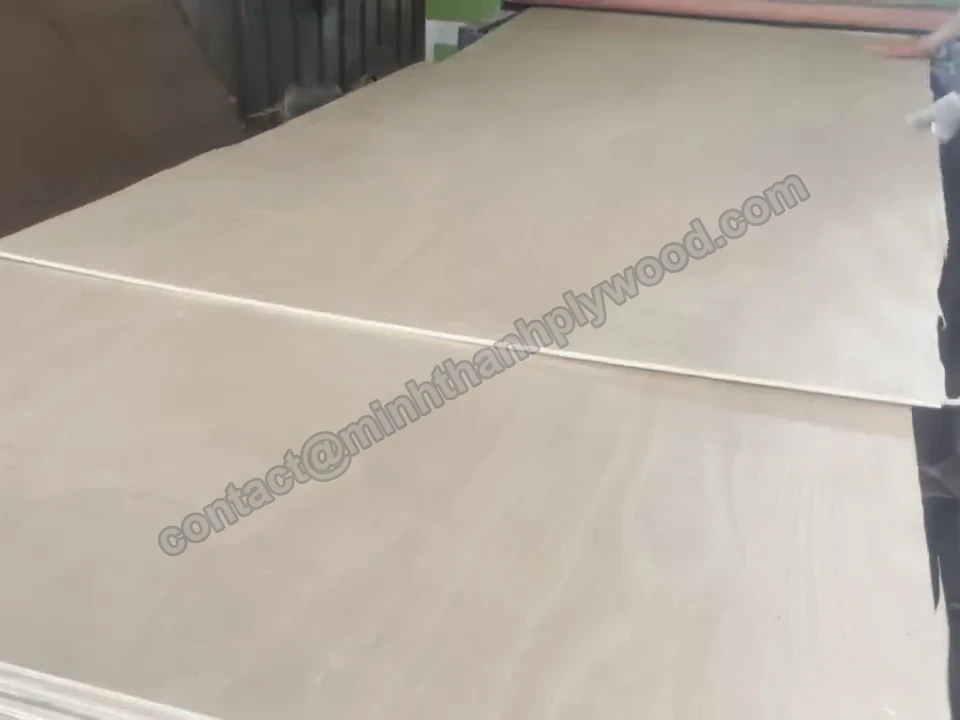
Compare prepared plywood with the workshop’s current incoming material at the same production stage. Minh Thanh’s double pressing, calibration and polished, UV-ready surfaces address the substrate entering furniture manufacture. If they remove a workshop operation, enter the removed operation’s actual cost in the worksheet rather than assigning an unsupported efficiency percentage.
Use one approved construction consistently across repeat orders and identify intentional alternatives separately. Requalifying a face, resin or thickness each time a low price appears consumes production effort. Retain sample references and drawing revisions so repeat purchasing can concentrate on delivery and price movements within the approved specification.
For a material substitution, compare the entire component route. The plywood versus MDF guide and particleboard comparison cover differences in finishing, edges and hardware. A lower raw-board cost needs to survive those differences before it becomes a furniture saving.
Ask the factory to quote clearly described alternatives side by side. Keep the original line intact and show exactly which face, format or preparation has changed. Production can then choose the alternative on evidence, with the price difference visible to purchasing.
What should you check on samples and before loading?
Check the quoted construction through the operations the board will undergo, then carry the approved specification into pre-shipment inspection. Minh Thanh provides free samples and photographs and films each shipment before loading. The buyer receives that shipment record.
- Compare the face and back with the agreed appearance sample, including permitted repairs and grain direction.
- Measure thickness and dimensions against the quoted tolerance at several positions.
- Inspect sawn edges and the actual grooves, drilled holes or routed profiles used in the component.
- Run the intended finish, laminate or edge-banding operation on the representative sample.
- Connect required bond and emission evidence to the ordered panel description.
- Reconcile the production packs, labels, quantities and packing list before loading.
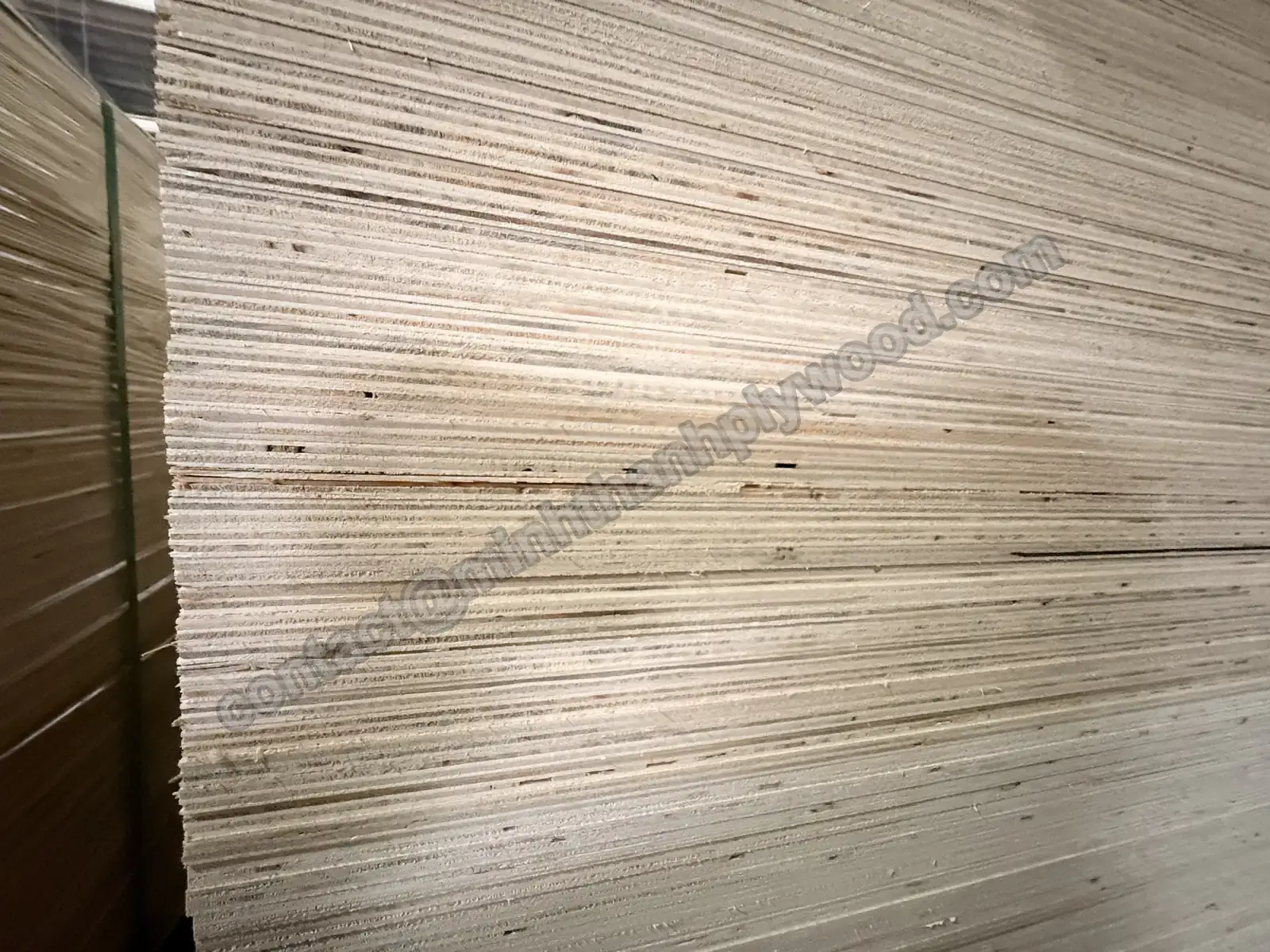
An edge photograph is useful for seeing the layup; it does not chemically identify an adhesive or replace the specified bond evidence. Glue-line colour and sheet weight should not be used as shortcuts for approving resin, service class or appearance grade.
The sample trial needs the defects and operations the workshop actually encounters. A tiny pristine offcut may be convenient to send, but it cannot establish full-sheet face yield for large doors. Describe the critical part sizes and visible surfaces when requesting the sample programme.
At receiving, keep pack identification and record shortages or damage while the shipment can still be traced. Photograph the affected packs before cutting and retain the related shipment documents. That record lets the buyer distinguish transit handling, product deviations and a workshop process problem.
Use the quality page for certificate and test evidence and the export-packing page for pack protection. Purchasing should have a clear acceptance record before comparing repeat quotes; the approved result is the reference for the next order’s price and specification.
What should you send for an accurate plywood quotation?
Send a complete panel and shipment schedule so the factory can quote the goods your workshop will accept. Include the application, face/back grades, core, bond and emission requirements, dimensions, tolerance, preparation, quantity, packing and delivery point.
Use the approved drawing to fill this quotation schedule:
- Furniture component or drawing reference; selected face/back and permitted repairs.
- Styrax or Eucalyptus core; specified bond and emission evidence.
- Width × length × thickness in mm; agreed tolerance and required preparation.
- Sheets per line; packing; FOB Hai Phong, CFR or CIF named port; required shipment window.
Treat this as a specification format, not a predefined product.
Attach the cutting schedule when format or usable yield drives the price decision. Mark grain direction and visible surfaces. Attach hardware or machining details when a groove, connector or exposed edge controls acceptance. A supplier can then propose a relevant alternative without guessing which requirements are optional.
Ask the quotation to state its currency, unit, validity and included documents. For a mixed load, retain one line per specification and a pack plan that reconciles to the shipment total. Keep product value and freight separately visible so a revised freight quotation does not obscure the original panel comparison.
Send the schedule through Contact or email [email protected]. International sales also answers on WhatsApp +84 988 586 601. Request the sample and quotation together so technical approval and purchasing work from the same construction.
The next buying decision is specific: choose the panel that meets the drawing, compare its delivered cost with the actual alternatives, and approve the usable output before committing the order. With those records aligned, a plywood price becomes a reproducible procurement decision rather than a headline number.
Buyer questions, answered
How much does plywood cost?
Minh Thanh's October 2026 starting prices are from US$250/m³ for commercial plywood and from US$350/m³ for furniture/interior plywood. The order quotation identifies face, core, grade, bond, thickness, format, quantity and delivery term. These export starting prices are separate from a local retail price or landed warehouse cost.
How do I calculate the plywood price per sheet?
Multiply the price per m³ by sheet length, width and thickness in metres. A 1220 × 2440 × 18 mm sheet contains 0.0535824 m³; applying the October 2026 furniture starting rate of US$350/m³ gives US$18.75 as an arithmetic reference. This conversion does not establish an 18 mm product offer or include freight and destination charges.
Why are two 18 mm plywood quotes different?
Two 18 mm quotes can specify different face veneers, core species, joining, face/back grades, bond, emission evidence, tolerance and surface preparation. Compare those fields and the same sheet dimensions before comparing prices. Minh Thanh's furniture construction includes stitched cores and double pressing; a birch face alone does not specify that construction.
Is thicker plywood always more expensive?
At the same m³ rate and sheet area, price per sheet rises in direct proportion to thickness: an 18 mm sheet contains 50% more panel volume than a 12 mm sheet. Actual m³ rates also reflect layup, face veneer and processing. Select thickness for the component before comparing supplier prices.
Is birch-faced plywood priced like all-birch plywood?
Birch-faced plywood and all-birch plywood are different constructions. Minh Thanh supplies birch faces with specified Styrax or Eucalyptus cores; it does not manufacture an all-birch core panel. A useful price comparison states the face/back veneers and the complete core construction on both quotes.
What is the difference between FOB and CIF plywood prices?
FOB Hai Phong prices cover the agreed goods and seller costs through delivery on board at Hai Phong; the buyer arranges the main freight. CIF to a named destination port adds seller-arranged freight and insurance, while import clearance and destination charges still need to be budgeted. Under both rules, shipment risk transfers on board at origin.
Is importing plywood cheaper than buying locally?
Direct import is cheaper when the equivalent landed cost plus financing, storage and usable-output costs is below the local delivered alternative. Minh Thanh's MOQ is 1 × 40HC; production takes 15–45 days after deposit, followed by transit and clearance. Compare the same grade and delivery point rather than applying a fixed saving percentage.
How many 18 mm plywood sheets fit in a 40HC?
For 1220 × 2440 × 18 mm sheets, Minh Thanh's reference plans are 990 Styrax, 880 Acacia or 795 Eucalyptus sheets, using a 28,000 kg board-only planning limit and the corresponding pack layouts. These counts exclude packing weight. Final loading uses measured sheet and packing weights and the booking's cargo limit; furniture core selection is Styrax or Eucalyptus.
Does a lower sheet price mean a lower furniture cost?
A lower sheet price saves money only when usable yield, machining, finishing and acceptance remain comparable. Divide sheet cost by accepted parts per sheet, then add processing costs. A premium face, tighter tolerance or prepared surface can earn its cost when it increases accepted output or removes workshop operations.
Can I use Philippine retail plywood prices to budget an import?
A Philippine retail quote is useful for the local delivered alternative when it identifies actual thickness, grade, tax and delivery. A Vietnamese export quote needs its own freight, destination charges and currency conversion before comparison. Write thickness in millimetres instead of assuming a local inch trade label is the exact measured thickness.
Can I mix plywood specifications in a container?
Minh Thanh's MOQ is 1 × 40HC and mixed specifications are arranged with the factory, usually 1–2 specifications per container and 3–6 by agreement. List sheet quantities, dimensions and core for each line. The mixed pack layout and cargo mass determine the loading plan.
What should I send for a plywood quotation?
Send application or drawings, face/back grade, core, bond and emission requirement, sheet dimensions and tolerance, surface preparation, sheet quantity, packing, delivery term and destination. Minh Thanh provides free samples and quotes FOB Hai Phong, CFR or CIF. Send the schedule through the contact page or to [email protected].