
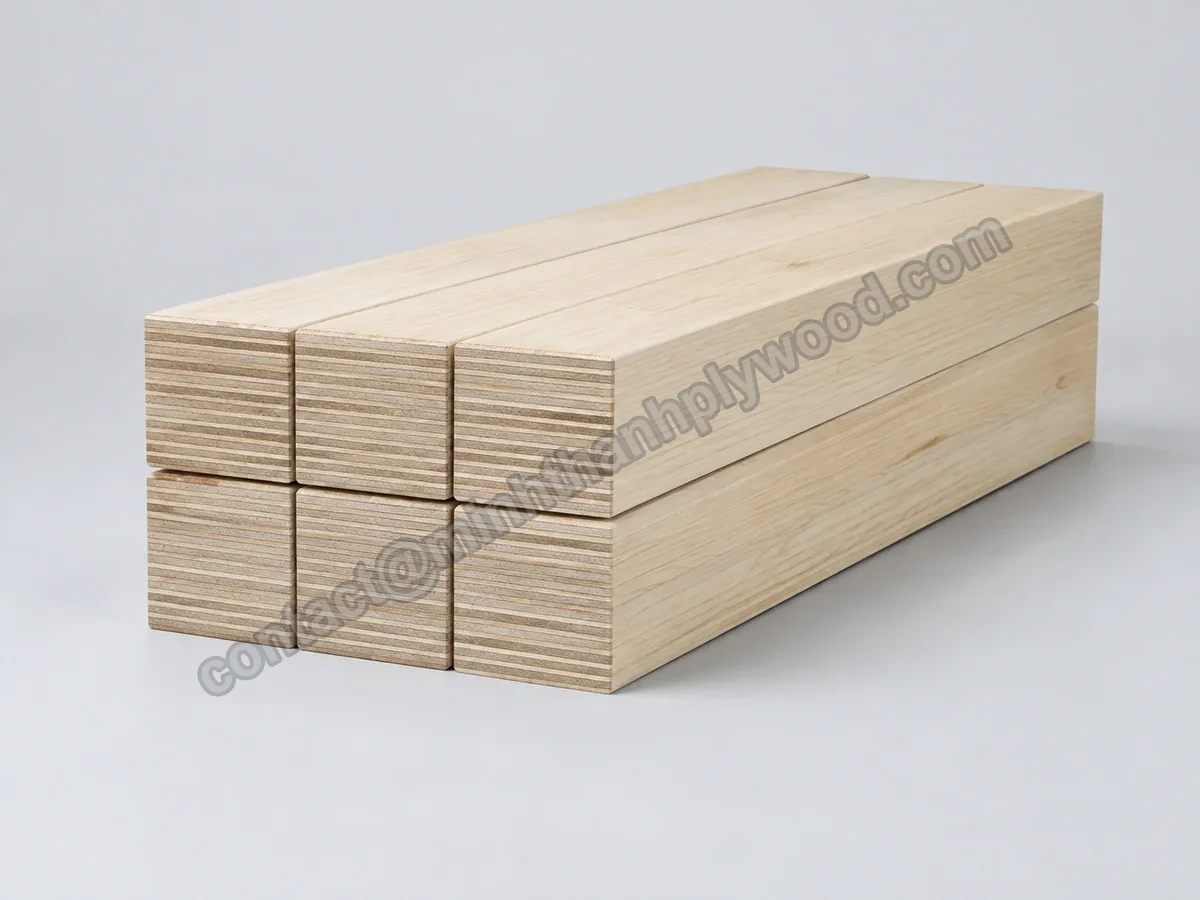
In short, LVL pricing at the mill is a rate per m³ for a defined member: species, glue, section, length and grade. Retailers turn that into a price per foot or per beam. Minh Thanh Plywood makes Acacia and Eucalyptus LVL for furniture frames, door parts and packaging; a 40HC carries about 48 m³ of Acacia LVL at the 28,000 kg plan.
How does LVL pricing work at the mill?
LVL pricing at the mill is a rate per cubic metre for a defined product. The rate is set by species, glue, veneer grade, member section, length and the quantity in the order. Everything else a buyer sees, such as a price per foot or per beam, is a conversion of that rate plus handling.
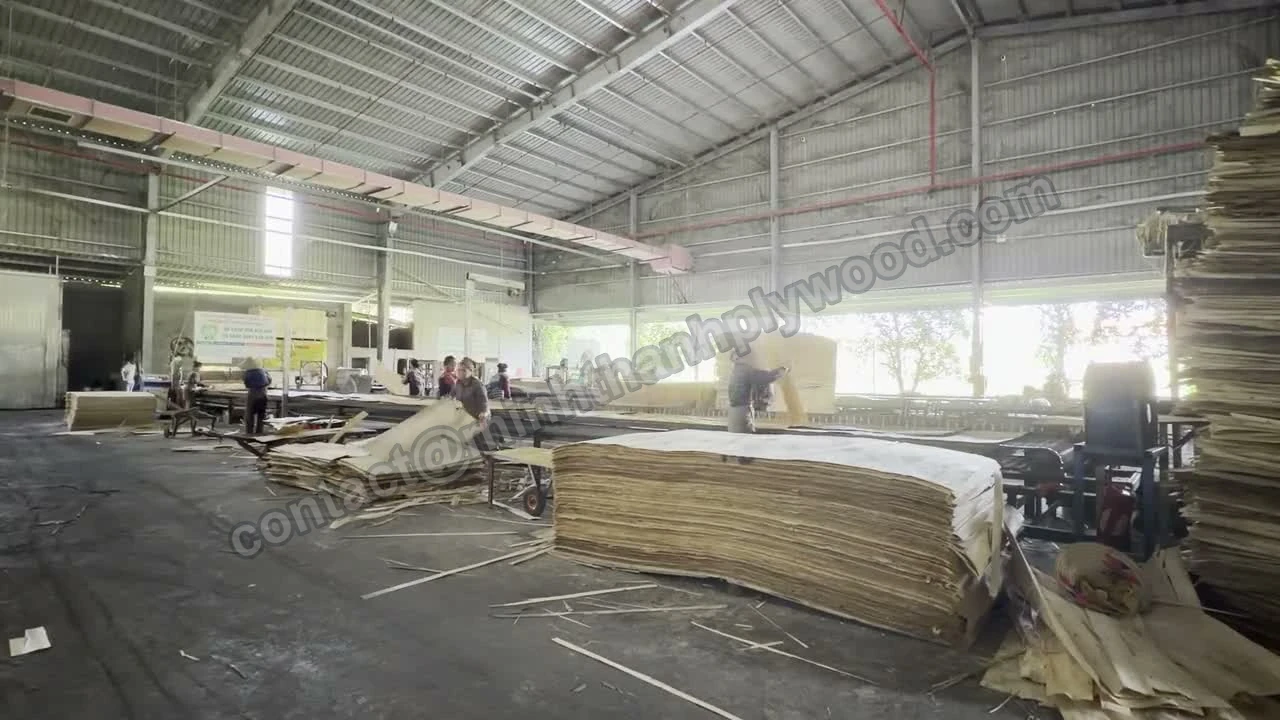
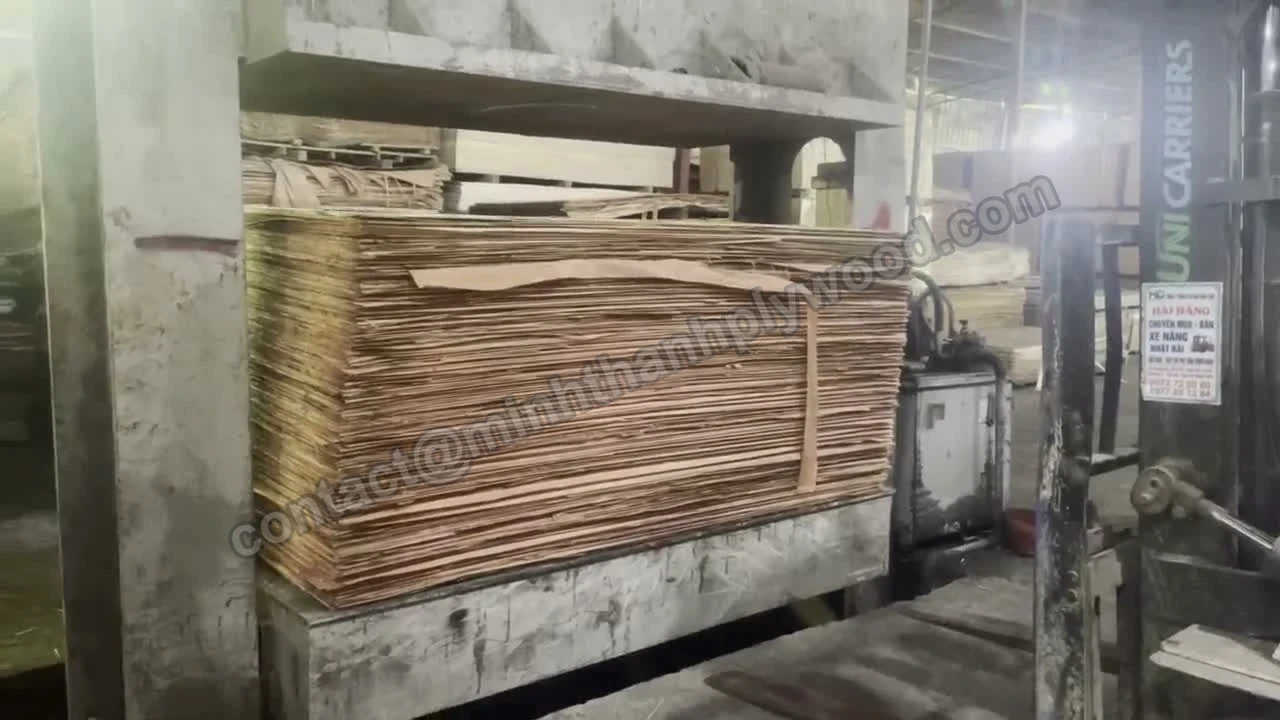
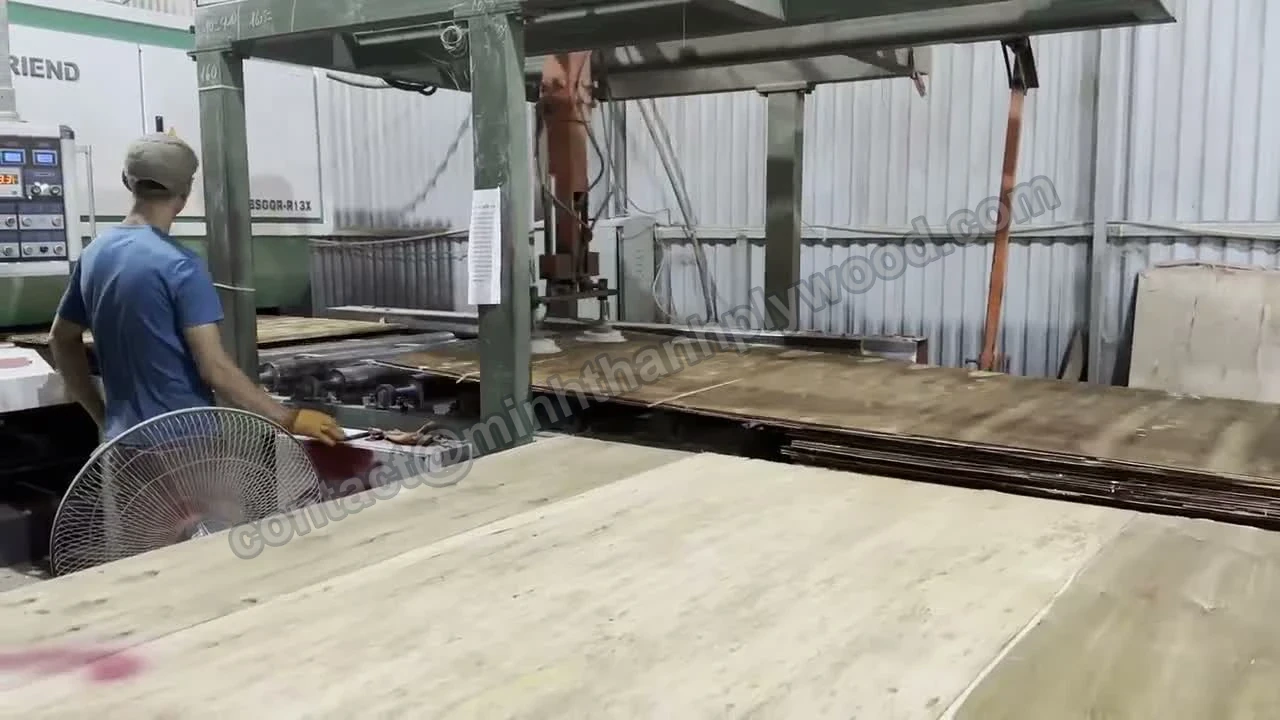
Laminated veneer lumber is made from thin peeled veneers glued with the grain running along the member. That makes it straighter and more even than sawn timber, and it lets a mill make lengths and depths that logs cannot supply. The cost follows the process: peeling, drying, grading, glue spreading, pressing and sawing to size.
Minh Thanh makes LVL from locally grown Acacia and Eucalyptus plantation veneers in Ha Hoa, Phu Tho. Our LVL laminated veneer lumber goes into furniture frames and rails, door components and packaging runners. Billets are pressed in 1220 × 2440 and 1250 × 2500 mm formats and cut to the member sizes on the buyer’s drawing.
What drives LVL beam cost?
LVL beam cost is driven by six factors: species and density, glue type, veneer grade, section size, length, and order volume. The table shows which way each one moves the rate per m³.
| Factor | Lower-cost choice | Higher-cost choice |
|---|---|---|
| Species | Plantation Acacia or Eucalyptus | Imported softwood or birch veneers |
| Glue | UF glue at E0 emission, interior | Melamine-fortified (MR) or phenolic (WBP) |
| Veneer grade | Utility veneers for hidden parts | Selected faces for visible furniture |
| Section | Standard billet thickness, ripped | Thick or deep members, extra press cycles |
| Length | Lengths that fit a 40HC | Over-length members, special transport |
| Volume | Full 40HC, few sections | Small mixed lots, many sections |
Structural certification adds another layer. LVL sold as a rated building beam carries design values, third-party evaluation and stamping, and those costs are part of its price. Furniture and packaging LVL is bought to the component’s own drawing instead.
How do you convert a price per m³ into the cost of LVL beams per foot?
To find the cost of LVL beams per foot, divide the rate per m³ by the number of feet of that section in one cubic metre. The table gives the feet per m³ for common 1-3/4 inch wide sections.
| Section (in) | Section (mm) | Volume per foot | Feet per m³ |
|---|---|---|---|
| 1-3/4 × 9-1/4 | 44.5 × 235 | 0.00318 m³ | 314 |
| 1-3/4 × 11-7/8 | 44.5 × 302 | 0.00409 m³ | 245 |
| 1-3/4 × 14 | 44.5 × 356 | 0.00482 m³ | 208 |
| 1-3/4 × 16 | 44.5 × 406 | 0.00551 m³ | 182 |
The formula is width × depth × 12 in, converted to m³ (1 in³ = 16.387 cm³). For a 1-3/4 × 11-7/8 in beam that is 249.4 in³, or 0.00409 m³ per foot. A mill rate per m³ divided by 245 gives the material cost per foot of that beam.
Metric buyers do the same with metres. A 45 × 200 mm member holds 0.009 m³ per metre, so one cubic metre gives about 111 m of member.
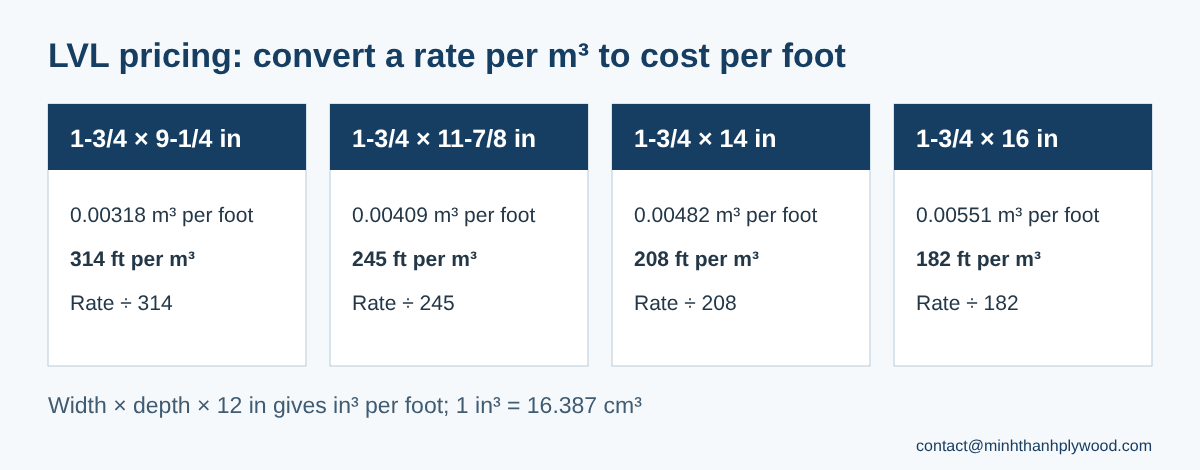
Divide the quoted rate per m³ by the feet per m³ of the section to get the material cost per foot.
What do 20 ft and 30 ft LVL beams cost compared with shorter ones?
At a fixed quoted rate per m³, a 20 ft (6.1 m) or 30 ft (9.1 m) LVL beam costs in proportion to its volume. Ask the supplier whether the unit rate changes with member length. The delivered price per foot rises faster, because long members need special packing, handling and sometimes open-top or flat-rack transport.
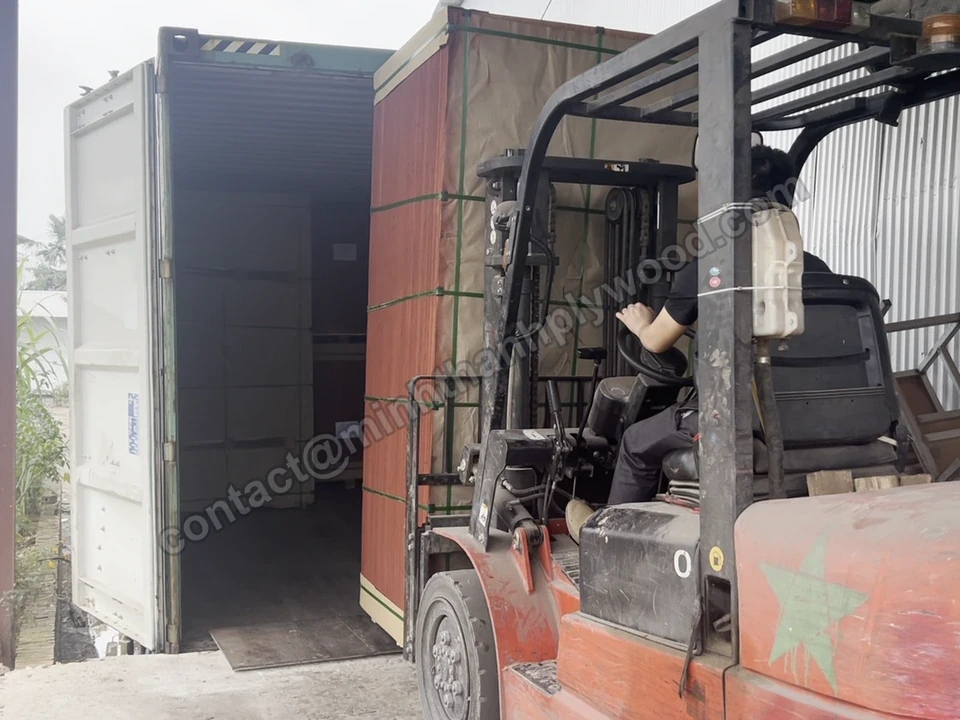
A 40HC has an internal length of about 12 m, so a 30 ft member fits, but loading long bundles by forklift takes more time and care. Members cut to the real span plus bearing length, rather than rounded up to stock lengths, keep the volume you pay for down. These long structural-beam examples do not establish Minh Thanh’s available lengths. Confirm the member sizes that can be supplied from the quoted billet format before ordering.
How much does species and density change LVL pricing?
Species changes LVL pricing through the veneer cost and through weight. Acacia LVL weighs about 580 kg/m³ and Eucalyptus 650–750 kg/m³; the lighter species ships more cubic metres per container, which lowers freight per m³.
| Species | Density | m³ per 40HC at 28,000 kg | Typical use |
|---|---|---|---|
| Acacia | About 580 kg/m³ | About 48 m³ | Furniture frames, door stiles, rails |
| Eucalyptus | 650–750 kg/m³ | About 43 m³ at 650 kg/m³ | Stiffer frames, packaging runners |
The container figures are wood only. Bundles also carry bearers, straps and corner protection, so the final count is set against the booking payload and the weighed bundles. Our packing calculator shows the same weight-first logic for panels.
How does glue type change LVL pricing?
Glue type changes LVL pricing because water-resistant resins cost more and press more slowly. UF glue at E0 emission is the standard for interior furniture and door parts; melamine-fortified (MR) and phenolic (WBP) bonds are made to order for damp or exterior service.
Glue and emission are two separate lines. UF, MR and WBP describe the bond; E0 and E1 describe formaldehyde emission. Our interior LVL is UF glue at E0 emission, with E1 available. Minh Thanh holds CARB P2 / TSCA Title VI certification (ICTT mill no. 23024) for hardwood plywood, and third-party testing to the buyer’s method is arranged through SGS on request. The US limit for hardwood plywood with a veneer core is set by EPA’s emission-limit guidance.
How do section size and machining affect the quote?
Thick or deep sections cost more per m³ when they need more press cycles or laminating billets together. Ripping standard billets into the member width is efficient; very deep beams are not.
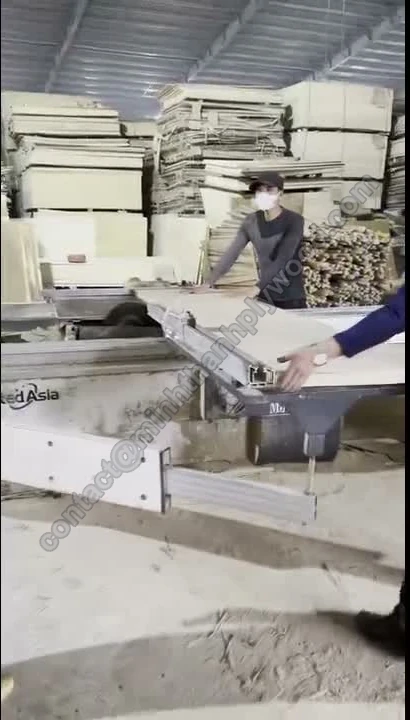
Machining adds cost per piece rather than per m³. Planing all four sides, end trimming, drilling and profiling are quoted from the drawing. Send the finished section and the tolerance on each face so the mill plans the billet thickness with the right planing allowance.
Is installed LVL beam cost the same as the material price?
No. Installed LVL beam cost on a renovation adds engineering, connectors and hangers, temporary propping, labour, lifting and making good, and these often exceed the price of the member itself. The material is one line; the site work is the rest.
For building projects the engineer sizes the beam and names the rated product, and the contractor prices the installation from that schedule. For furniture, door and packaging components the drawing does the same job. Either way, price the member from its section and length, then add the work around it.
How does order volume change LVL pricing?
LVL pricing drops with volume because pressing, sawing and packing are set up once per specification. A full 40HC with one or two sections is cheaper per m³ than the same volume split into many small lines.
Minh Thanh’s MOQ is one 40HC, with mixed specifications by agreement: usually one or two per container and three to six by agreement. A buyer who repeats the same section list each month gets the most consistent rate, because veneer and press time are planned ahead.
How does LVL pricing compare with plywood and sawn timber?
LVL, plywood and sawn timber do not have a fixed price order per m³. Compare quotations for the required species, grade, dimensions, processing and delivery term, then compare the cost per usable part.
| Material | How it is priced | What the buyer pays for | Where it wins |
|---|---|---|---|
| Sawn timber | Per m³ or board foot, by grade | Log grade and drying | Low-cost framing where knots and twist are acceptable |
| LVL | Per m³, then per foot or per piece | Parallel veneer, glue, straightness | Long straight members, frames, rails, runners |
| Plywood | Per m³ or per sheet | Cross-banded layers, face grade | Flat panels stable in both directions |
The comparison that matters is cost per usable part. A cheaper sawn rail that twists or splits in machining costs more per finished frame than an LVL rail that machines straight. Run both through the same cutting and assembly trial before switching.
Why do LVL prices change during the year?
LVL prices move with veneer supply, resin cost and freight. Plantation harvesting in northern Vietnam slows in the rainy season, which tightens veneer supply; urea and phenol prices move the glue cost; container rates move the landed price.
A buyer who books a regular monthly or quarterly volume smooths these swings, because the mill buys veneer and plans press time ahead. Ask for the quotation validity, the shipment window and the currency on every offer, and compare offers from the same week rather than across months.
For a long programme, fix the specification and review the rate on an agreed schedule. Keeping the section list and glue constant means any price change you see is a market change, not a product change.
How do freight and Incoterms change the delivered price?
FOB, CFR and CIF prices cover different parts of the journey, so compare offers at the same delivery point. We quote FOB Hai Phong, CFR or CIF; the ICC Incoterms 2020 rules define which costs each term includes.
Typical days at sea from Hai Phong are 25–35 to the Mediterranean, 30–40 to Northern Europe, 20–30 to the US West Coast and 35–45 to the US East Coast. Freight per m³ is the container rate divided by the cubic metres loaded, which is why the lighter Acacia LVL often lands cheaper per m³ than a denser alternative.
How do you compare two LVL quotations?
Compare two LVL quotations only after the specification lines match. Put the offers side by side and check each line before the price.
- Species and density of the veneer.
- Glue type and emission class.
- Veneer grade on visible faces.
- Finished section and tolerance on each face.
- Length list and cutting.
- Packing, bundle labels and documents.
- Delivery term and named port.
An offer that is cheaper only because the glue changed from MR to UF, or the section shrank by a few millimetres, is a different product. Convert both to price per m³ and per finished piece and compare both numbers.
What documents come with an LVL order?
An LVL export order ships with the commercial invoice, packing list, bill of lading, certificate of origin (EUR.1 for the EU), phytosanitary and fumigation certificates, and insurance on CIF terms. We add the EUDR compliance dossier with origin records and geolocation files, and the formaldehyde documents the market asks for. For the EU, the importer’s EUDR obligations apply from 30 December 2026 for large and medium operators, according to Regulation (EU) 2025/2650 and the European Commission.
Every shipment is photographed and filmed before loading, and the buyer receives the photos and video. Moisture content at dispatch is 8–12 %.
How long does an LVL order take and how is it paid?
Production takes 15–45 days after the deposit, followed by the sea transit to your port. Payment is 30% deposit and 70% against the scanned B/L, or an irrevocable L/C at sight.
Plan the first order with a sample stage. We send free samples cut from production billets so you can check section, straightness and glue lines on your own line before the container is booked.
What should you send for an LVL price quote?
Send one line per member and the delivery details, and we quote the material, cutting and packing together:
- Application: furniture frame, door component, packaging runner or other.
- Section and length list with quantities and tolerances.
- Species: Acacia or Eucalyptus.
- Glue and emission: UF glue at E0 emission, or MR or WBP for damp service.
- Packing, bundle labels and destination port.
For related products read LVL I-beams, or compare panel costs in the plywood price guide. Send your member list or email [email protected]; Minh Thanh replies within hours.
Buyer questions, answered
How is LVL priced?
Mills price LVL per cubic metre for a defined species, glue, section and length. Retailers and merchants convert that rate into a price per linear foot or per beam, adding stocking, cutting and delivery.
What is the cost of LVL beams per foot?
Divide the rate per m³ by the feet of that section in one cubic metre. A 1-3/4 × 11-7/8 in beam has about 245 feet per m³, so its per-foot material cost is the m³ rate divided by 245.
Why do LVL beams cost more than sawn timber?
LVL is made from peeled, dried and graded veneers glued under pressure, so it costs more to make than sawn timber. Buyers pay for straight, consistent members in lengths and sections sawn timber cannot supply.
Does a longer LVL beam cost more per metre?
It can: confirm the rate for the exact section and length. At a fixed rate per m³, material cost rises in proportion to length, while handling, packing and freight can add further cost. Lengths that fit inside a 40HC and the buyer's lifting gear keep the delivered cost per metre lower.
Is Acacia or Eucalyptus LVL cheaper?
Both are plantation species from northern Vietnam. Acacia LVL is lighter at about 580 kg/m³, so more cubic metres fit under the container weight limit; Eucalyptus at 650–750 kg/m³ is denser and stiffer.
How much LVL fits in a 40HC container?
LVL is weight-limited before it is volume-limited. At a 28,000 kg payload, a 40HC carries about 48 m³ of Acacia LVL or about 43 m³ of Eucalyptus LVL, before packing.
Does glue type change LVL pricing?
Yes. UF glue at E0 emission for interior furniture parts is the standard; melamine-fortified (MR) and phenolic (WBP) bonds for damp or exterior use cost more and are quoted to order.
Is installed LVL beam cost the same as the material price?
No. Installed LVL beam cost adds engineering, connectors, temporary support, labour and making good, which usually exceed the material on a renovation. Price the member first, then the site work.
Can I buy LVL cut to length from Vietnam?
Yes. Minh Thanh cuts LVL to the member sizes on your drawing and packs bundles by part, so you pay for usable lengths rather than offcuts.
What should I send for an LVL quotation?
Send the application, member section and length list, quantities, species, glue and emission class, any design values required, packing and destination port. Minh Thanh replies within hours and sends free samples.