
Marine plywood combines controlled veneer construction with a durable exterior bond. For a boat, buy the standard and panel construction required by the designer, then approve the documents and representative samples. For humid fit-outs, match the bond, finish and core to the component. Minh Thanh Plywood supplies okoume-faced furniture and interior panels on Styrax or Eucalyptus cores; these are a separate choice from BS 1088 plywood.
What is marine plywood, and what should the name tell a buyer?
Marine plywood is plywood made with controlled veneer quality and core construction, bonded for demanding moisture exposure under a specified marine panel standard. The buying decision begins with the required standard and the part the panel will make. The word marine on a quotation is too broad to identify the complete product.
For a hull builder, the useful questions concern continuity through the panel, bonding, bending around the designed shape and the evidence required by the designer. A fit-out buyer also cares about appearance, routing, hardware and the finished surface. Those buyers can both search for marine plywood while needing different panel constructions.
Start by separating the component schedule. A structural hull skin, a deck panel and a decorative locker door should each have their own line. Describe the exposure at that part: immersion, repeated splash, sheltered humidity or a dry cabin. Keep the drawing reference alongside the material requirement so a supplier can quote the intended construction.
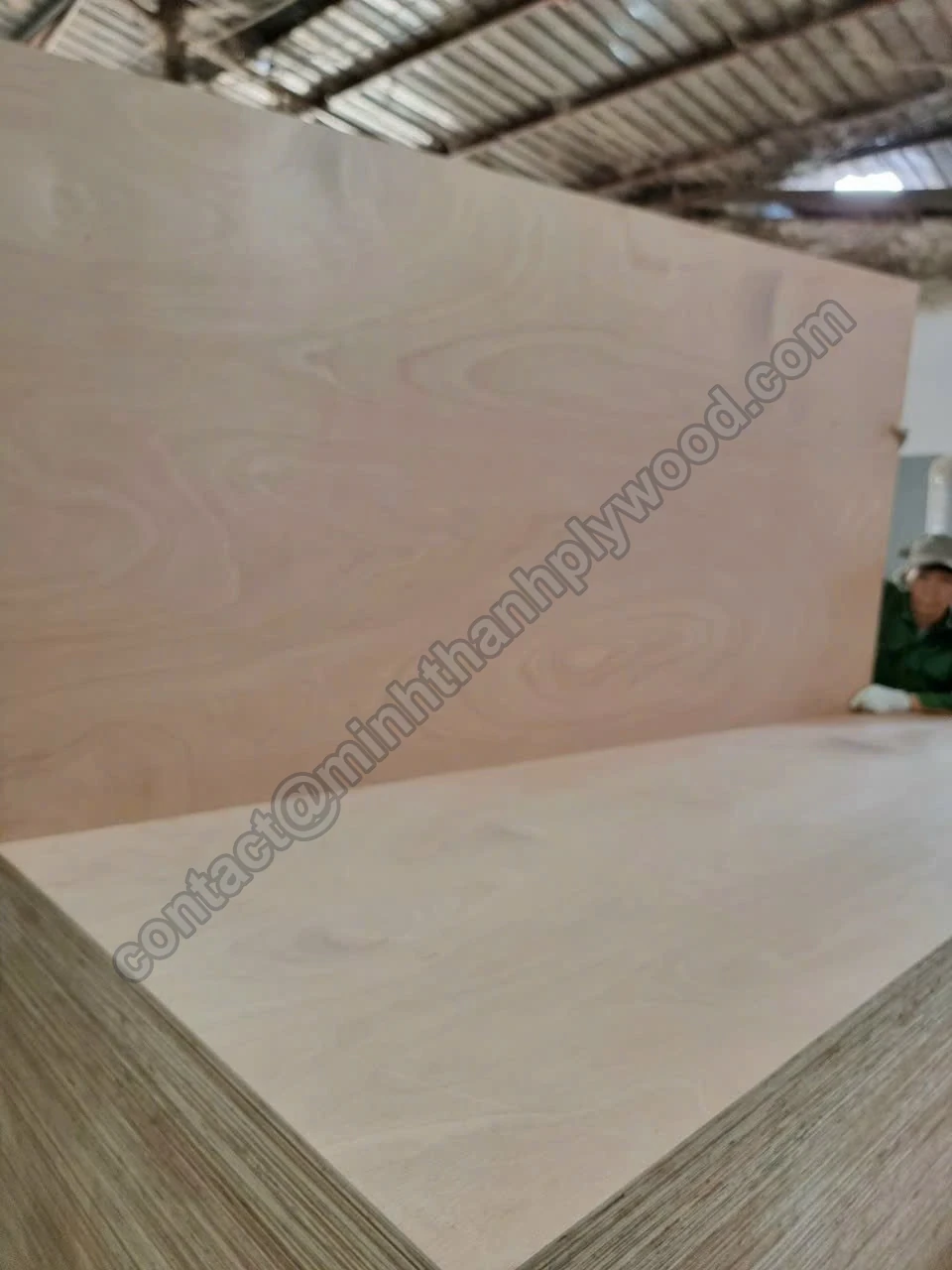
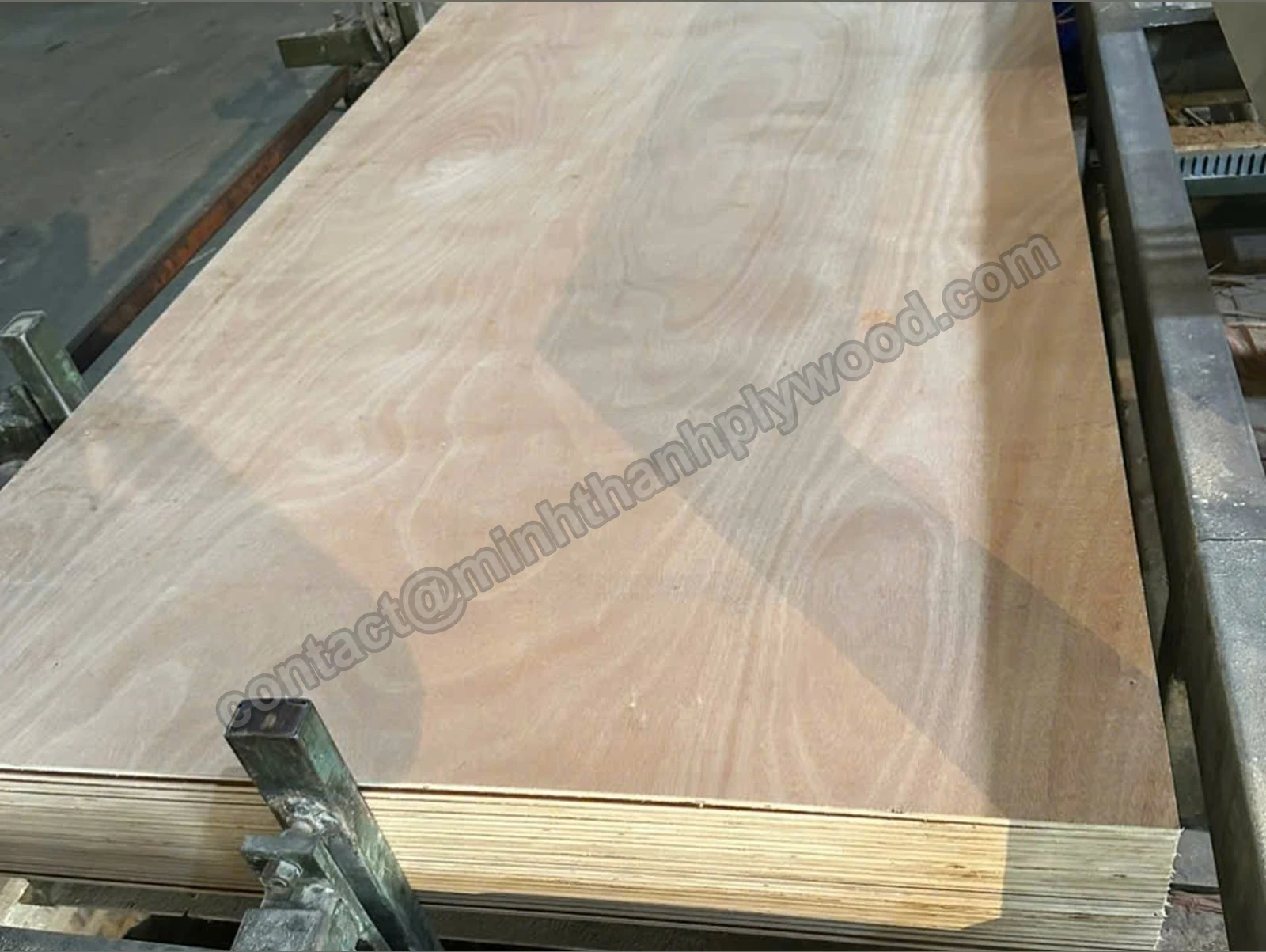
In plywood production, the face veneer and the core are separate selections. At Minh Thanh, imported okoume faces are pressed over plantation Styrax or Eucalyptus furniture cores. That construction gives an attractive interior panel; the okoume surface alone does not establish a marine standard. Buyers comparing these panels with marine material should compare the full layup rather than the colour of the face.
This guide follows the purchase from document review through sample approval and receiving inspection. The types of plywood guide covers the wider panel families; the water-resistance guide explains exposure and edge protection in greater depth. Here the practical question is what to approve before ordering a panel sold as marine.
Which jobs need marine grade plywood?
Specify marine grade plywood when the boat design or project specification calls for its controlled construction and documented marine performance. For sheltered furniture, select a panel for the component’s actual exposure, appearance and hardware. Paying for a marine label without those requirements can leave the important purchasing questions unresolved.
| Component | Buying starting point | Evidence to approve |
|---|---|---|
| Hull skin or structural bulkhead | Designer’s named marine standard, construction and thickness | Product conformity, required mechanical properties and suitability for the designed assembly |
| Structural deck | Panel schedule with support, load and fastening requirements | Thickness tolerance, panel properties, bond and complete deck protection system |
| Cabin joinery and locker doors | Specified appearance, core, moisture-service bond and finished component | Machining, hinge fixing, face finish and sealed openings |
| Bathroom or sheltered coastal cabinetry | Panel suited to humid service with a complete finish | Bond requirement, edge detail, coating trial and interior emission evidence |
| Exposed exterior building component | Project’s structural, durability and treatment specification | Applicable building evidence, treatment where required, drainage and coating design |
Marine construction has uses beyond boats, including finished exterior elements and high-humidity interiors. It does not settle bracing, fire or structural requirements for a building. A preserved structural panel and an untreated marine panel answer different needs; choose the assembly before choosing the grade name.
For a marine-versus-birch decision, choose the named marine construction for boat parts that require it. Choose birch-faced furniture plywood when its pale face, specified core and bond meet the protected interior component requirement. Birch-faced and all-birch panels have different layups; compare the complete construction through the birch plywood specification.
For cabinet work, examine the machined component rather than approving a bare sheet alone. A hinge cup, plumbing opening or unsealed rear edge can become the route for moisture. The buyer should put these features on the trial drawing so the finishing team evaluates the places that will actually be exposed.
Minh Thanh’s okoume-faced plywood leads to furniture and interior applications. Its exterior plywood range addresses a separate bond and service specification. Neither page should be used as a substitute for a boat designer’s marine panel schedule.
What does BS 1088 plywood actually cover?
BS 1088 plywood refers to the British marine plywood standard, with the edition and class forming part of the purchase description. BSI’s official listing, checked on 7 October 2026, identifies BS 1088:2018 as current, with standard and lightweight classes. Its scope addresses biological deterioration and retention of bond strength.
The BSI scope also distinguishes marine panel requirements from additional end-use requirements. For purchasing, request the claimed class, technical construction and applicable conformity evidence. Have the designer specify the mechanical performance and assembly requirements needed for the intended part.
A supplier’s stamp is useful for linking sheets to a declared product. Make the same product code appear on the technical sheet, supporting records and pack identification. When evidence covers a product family, establish how the ordered construction fits within that family. An unexplained difference in core species or layup should be resolved before sample approval.
Use the named standard for veneer acceptance, repairs, gaps and tolerances. Do not assemble a substitute specification from unrelated internet summaries. A buyer’s extra appearance requirement can be stricter than the standard; write it separately so the supplier knows it is an additional purchase condition.
Older drawings sometimes carry older standard references or descriptions such as BS 6566. Take that reference to the specifier for a current material decision before requesting an equivalent. Changing the number on the quote without checking the intended construction creates an avoidable mismatch at receiving inspection.
Is APA Marine the same specification as BS 1088?
APA Marine and BS 1088 are distinct specification systems. Select the system required by the project and evaluate its own permitted construction. A face-grade abbreviation taken from one supplier’s catalogue does not translate the complete panel into the other system.
APA’s Marine FAQ, checked on 7 October 2026, describes Douglas-fir or Western Larch panels with an Exterior bond and veneers graded B or better. It permits a maximum core gap of 1/8 inch, approximately 3.2 mm. These are APA Marine details, not acceptance limits for BS 1088 panels.
That distinction is useful when a quote promises void-free marine plywood. Ask which requirement is being claimed and how the supplier evaluates it. A stricter contractual gap requirement needs an agreed inspection method; a marketing adjective does not specify where cuts are taken or how hidden defects are addressed.
Keep face appearance grading separate from marine construction. A smooth A face can suit clear finishing while the core needs its own acceptance. A repaired face can be acceptable for a painted part while a defect at a structural joint remains unacceptable. Write both requirements rather than treating the face pair as a performance statement.
The APA plywood guidance explains that bond classification concerns exposure suitability, while strength and stiffness are separate properties. This is a useful purchasing distinction across markets: a water-durable glue line and a load-bearing panel rating answer different questions.
How does marine plywood differ from exterior and WBP plywood?
Marine plywood adds specified veneer and construction requirements to a durable exterior bond. Exterior plywood identifies an exposure-capable product within its own grading system; weather and boil proof, or WBP, is a trade description of bonding. Compare the construction and evidence behind each description.
| Quote description | What to establish | What remains a separate requirement |
|---|---|---|
| BS 1088 plywood | Edition, class, product construction and conformity evidence | Component thickness, design properties and finished assembly |
| APA Marine | APA Marine product identification and its prescribed construction | Project-specific design, treatment and protection |
| Exterior plywood | Named panel standard, veneer grade and exterior bond | Marine conformity where the drawing requires it |
| WBP plywood | Adhesive/bond specification and the test method claimed | Veneer construction, marine standard and structural properties |
| Moisture-resistant interior plywood | Intended humid-service bond and panel construction | Repeated exterior exposure or a marine construction requirement |
A phenolic adhesive can provide a durable bond, but choosing the resin name does not complete a panel specification. Veneer drying, glue application, layup and pressing also influence the manufactured panel. Write the bonding test and its acceptance requirement so the supplier works toward an agreed result.
At Minh Thanh, standard furniture plywood uses UF glue at E0 emission; moisture-resistant and WBP constructions are specified separately. E0 describes the emission requirement. It should not be entered into the adhesive box as though it were a glue chemistry or marine classification.
A boiling demonstration is a useful observation of the tested sample under the demonstrated conditions. To approve a purchase, use the named method with its conditioning, evaluation and acceptance criteria. Keep the sample identity with the result. The quality control page shows the checks buyers can request alongside the construction specification.
How do okoume, meranti and mixed constructions compare?
Compare species through the complete layup, measured mass and intended component. Okoume and meranti are familiar names in marine supply, but the same face species can appear on different cores. Appearance gives only part of the purchasing information.
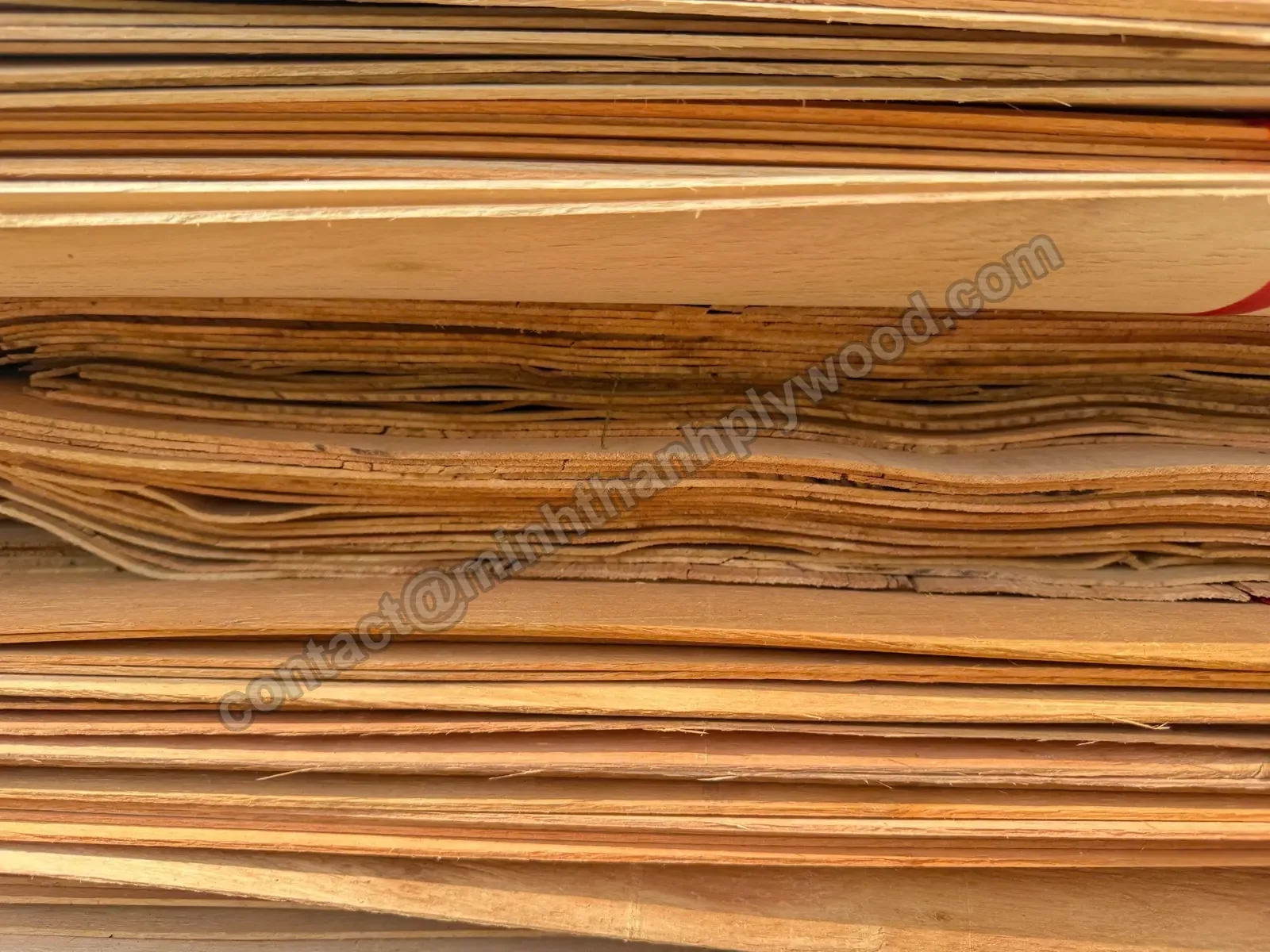
An all-okoume panel and an okoume-faced plantation-core panel are different products. Ask the supplier to name the face, back and internal plies. For a mixed construction, identify the sequence or construction code and its supported performance. A generic hardwood description leaves the quotation open to substitutions that can change mass, machining and finishing.
Meranti is a commercial timber grouping, so the technical data for the actual panel matters more than a blanket comparison with okoume. Assess density and bending data from the proposed construction, then trial the bend or machined feature required by the drawing. A heavier panel is not automatically a better solution for every component.
Minh Thanh’s furniture cores provide a concrete comparison for interior purchasing: Styrax is approximately 500 kg/m³, while Eucalyptus uses a 650–750 kg/m³ planning range. Those values describe the furniture cores offered here. They are not density declarations for imported all-okoume or meranti marine panels.
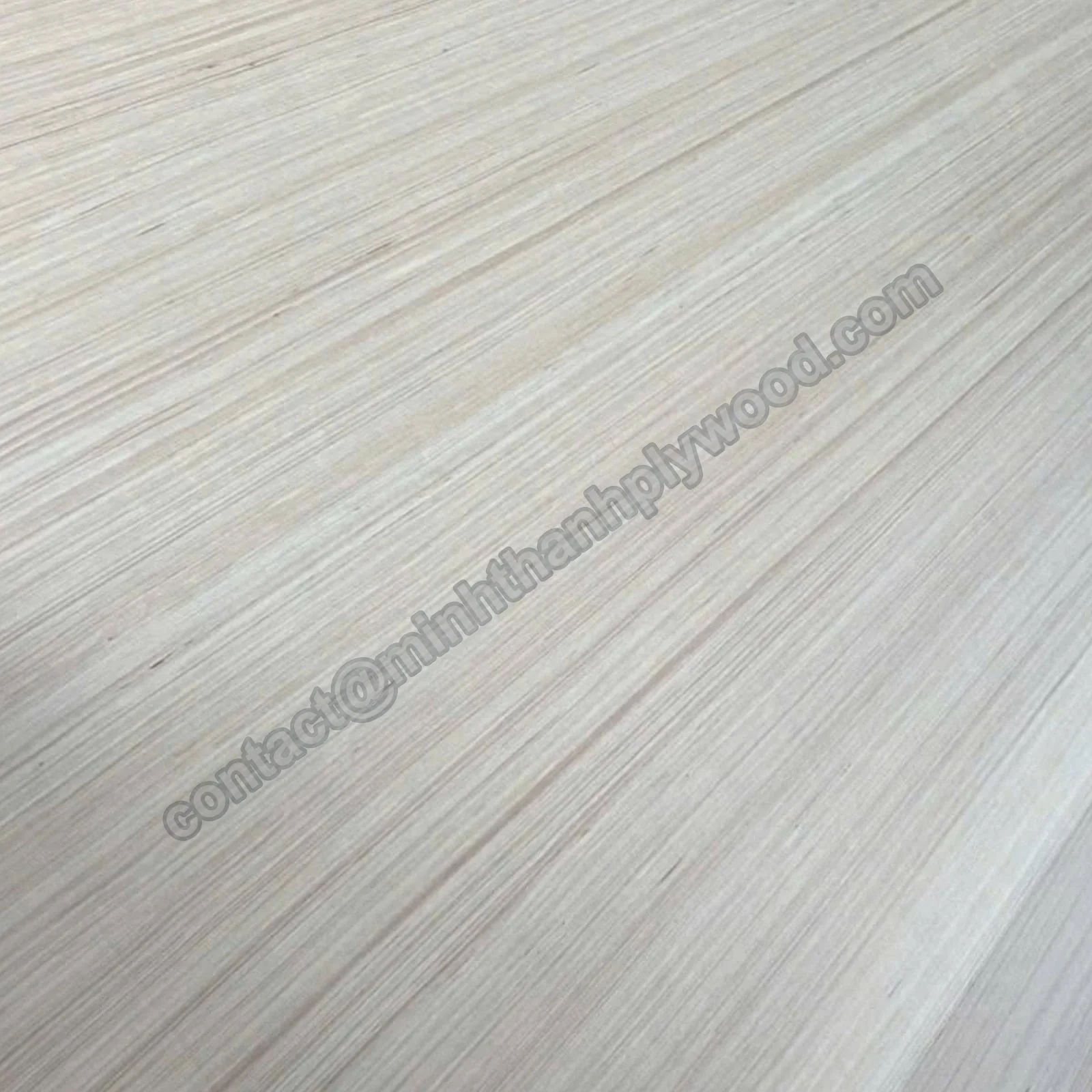
Choose the visible face after choosing the performance construction. A warm okoume face can serve clear-finished cabin joinery; an opaque finish can make elaborate figure unnecessary. Inspect the reverse face too, especially inside lockers or cupboards where it will remain visible.
Which veneer and core details should you inspect?
Inspect representative cross-sections for ply continuity, joints, overlaps and bond-line condition, using the limits of the specified standard. Look at cuts through the sheet as well as the original perimeter. A clean edge on one corner cannot reveal the construction throughout a production lot.
The sample plan should identify how sheets are selected from the proposed material and where offcuts are taken. Include both directions because cross-grained veneers expose different features along different cuts. Examine critical machining locations such as a scarf, routed rebate or fixing zone when those details belong to the design.
Record each observed feature separately. A gap is an interruption in a veneer layer; an overlap can create a locally thick region. Veneer splits, poorly joined strips and local bond separation need different manufacturing corrections. Calling every edge feature a void makes it harder to agree what the supplier must improve.
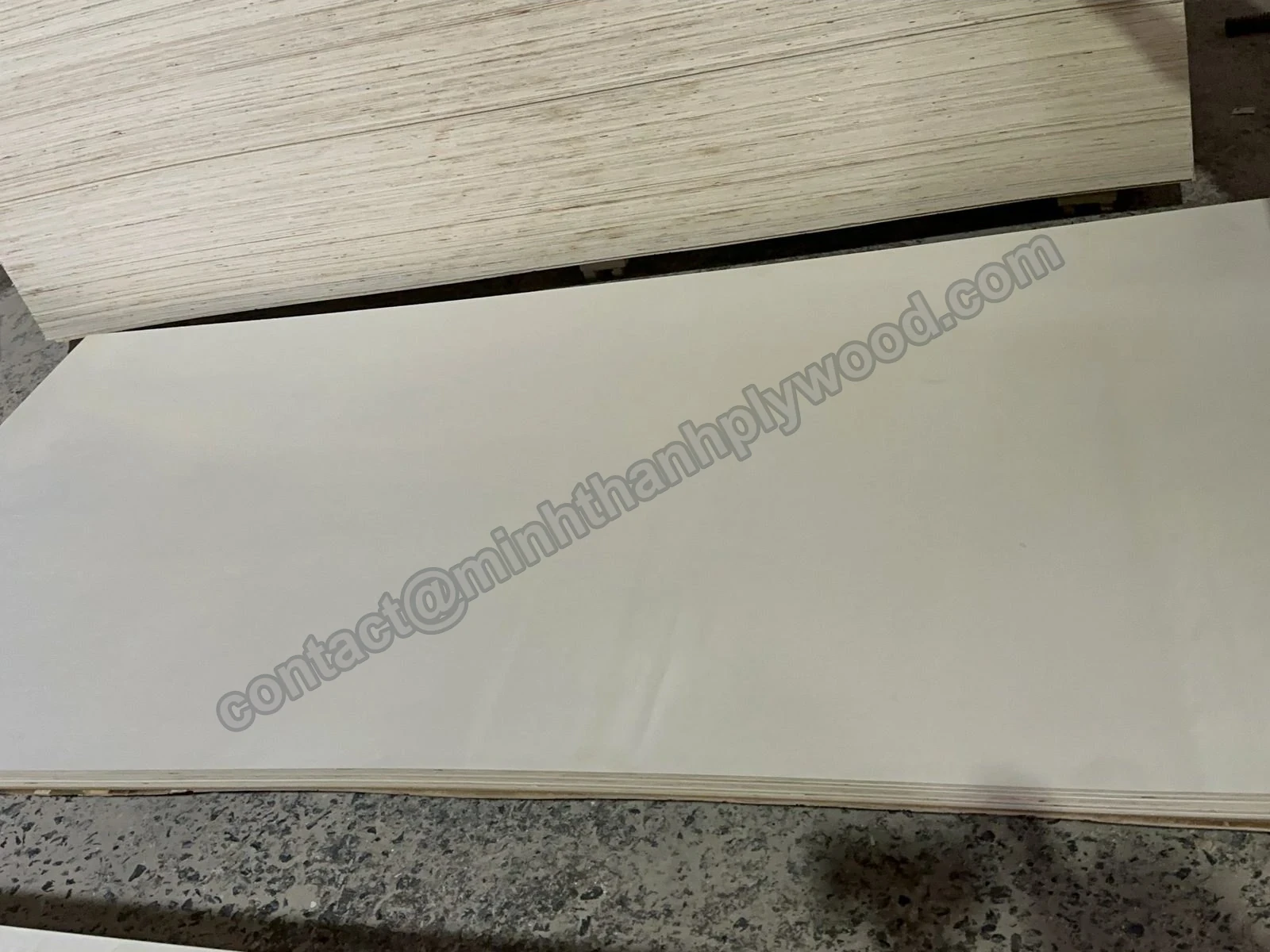
Count the layers and compare the sequence with the declared construction. More plies do not automatically give a higher grade: veneer quality, layer thickness, orientation and bonding still matter. The designer’s panel properties and the standard’s construction requirements govern acceptance.
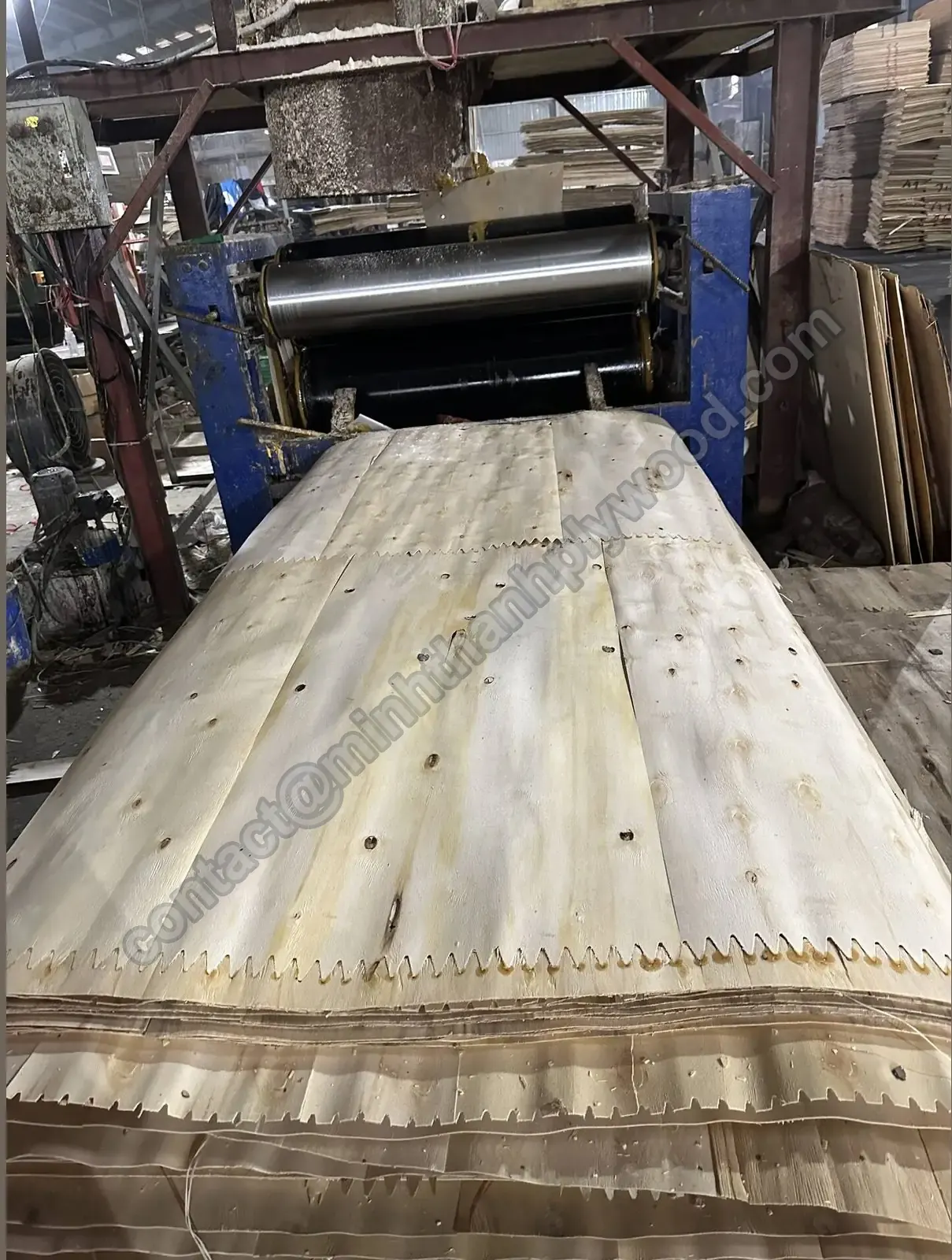
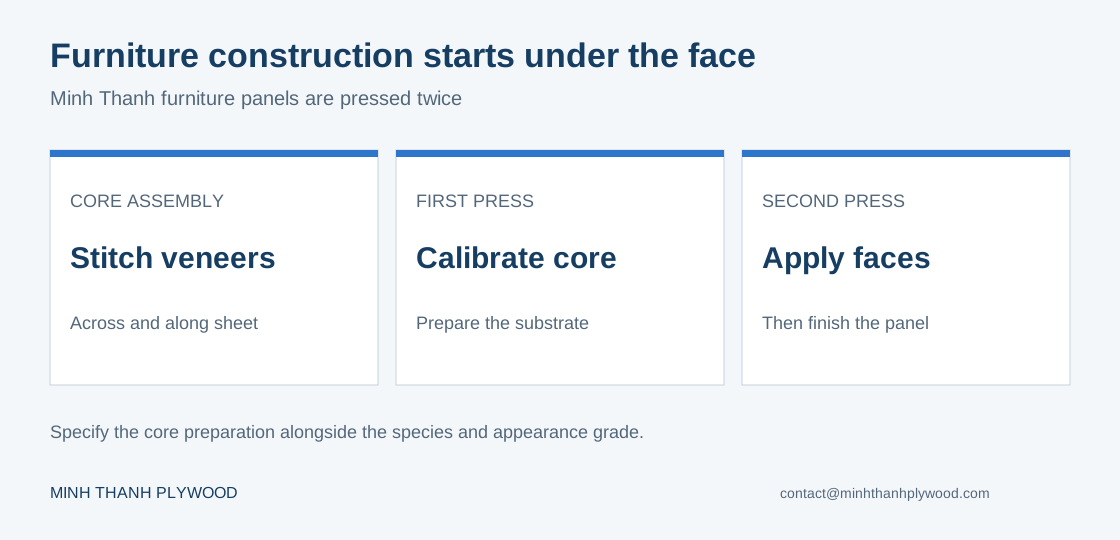
In furniture manufacture, Minh Thanh joins core veneers by two-way stitching and uses double pressing. The core board is pressed and calibrated before the decorative face press. For cabin joinery, this sequence gives buyers a calibrated core and a separately prepared decorative surface. Evaluate a marine product against its declared construction and evidence.
Which supplier documents should you approve first?
Approve a matching product dossier before paying for a marine specification: quotation, technical construction, claimed standard and conformity evidence must describe the same material. The buyer needs a clear connection between what was tested or assessed and what will be supplied.
Request the manufacturer and product identity, standard edition and claimed class, face/back and core description, thickness and tolerance, bonding requirement, and the technical properties the project requires. Where third-party certification is claimed, check the certifier’s product scope and the manufacturing site covered. Keep the product identity consistent through sample and order references.
A laboratory report needs its method, sample description and result. A report for a different core or thickness should prompt a scope question, not an assumption of equivalence. The supplier should explain the relevant product family or provide the evidence needed for the ordered construction.
Make the dossier usable by the workshop. A technical sheet that purchasing understands but production cannot match to a pack label creates a traceability gap. Put the supplier’s construction code into the bill of materials, sample labels and receiving sheet. Record any approved change to core, bond or face before manufacture.
Timber-origin records and forest certification serve different purchasing requirements from marine panel performance. Review the required origin dossier and any applicable claim on the sales documents separately. Minh Thanh supplies the EUDR compliance dossier, including origin records and geolocation files, with orders. Interior emission records answer an indoor-air requirement, separately from marine construction.
For Minh Thanh interior panels, the quality hub provides product and emission documentation, including CARB P2 / TSCA Title VI, ICTT mill number 23024. Those records support the interior sourcing decision.
How should you approve samples before a bulk order?
Approve representative material through document matching, section inspection and an actual component trial. Keep an identified reference sample and a written acceptance sheet so the bulk order can be compared with the same construction. A small display swatch answers appearance better than it answers production consistency.
- Match the product. Label the proposed sample with its construction code and traceable source reference. Compare those details with the technical dossier and quote.
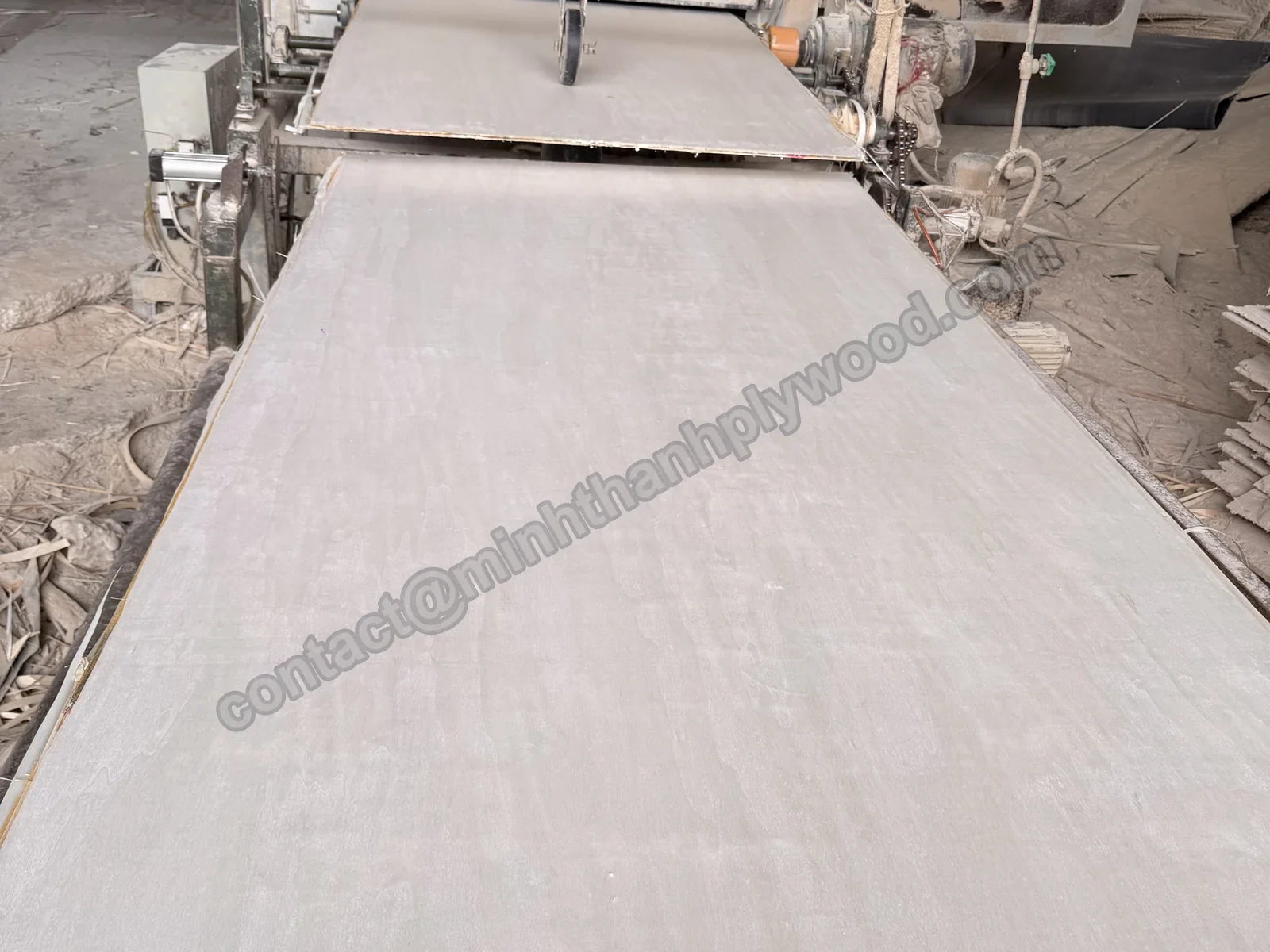
- Inspect the sheet. Check both faces, dimensions, flatness and the agreed thickness measurement positions. Photograph the observations with the sample identity visible in the inspection record.
- Cut sections. Take the agreed cross-sections and inspect veneer continuity, joints and layers against the applicable requirements.
- Run the required bond evaluation. Use the specified method and acceptance criteria through the agreed inspection or testing route.
- Make the component. Trial the relevant bend, scarf, routing or hardware operation and apply the intended finish.
- Freeze the purchase description. Record the accepted construction, deviations resolved, reference samples and inspection plan before the production order.
A component trial should mirror the workshop sequence. Inspect the substrate after machining, after preparation and after the finish has cured. If the part bends, trial the drawing’s radius and orientation rather than proving only that a thin offcut can flex by hand.
Retain an approved reference that is large enough to show the features the buyer judged. Keep a separate destructive-test piece where needed. The receiving team should have access to the inspection photographs and acceptance sheet, especially when the original sample remains with purchasing in another location.
How do you select thickness, strength and sheet weight?
Select thickness from the component design and calculate handling weight from the actual panel density and dimensions. Marine grade is not a load rating. A structural deck needs support spacing, loads and fastening requirements; a supported locker back has a different design task.
Use the plywood thickness guide to prepare the dimension schedule, then obtain the properties required for the chosen marine construction. Specify the relevant direction and method for bending data. If the panel forms part of a bonded or fastened assembly, qualify that assembly rather than relying on a loose-sheet comparison.
For a procurement example, a 1220 × 2440 × 18 mm sheet has a calculated volume of 0.05358 m³. Using Minh Thanh’s interior-core planning densities, its estimated mass is 26.8 kg with Styrax or 34.8–40.2 kg with Eucalyptus. These are calculated planning values for those interior constructions, not marine-panel test results.
The calculation is length × width × thickness × density, with dimensions converted to metres. Obtain the proposed marine panel’s density or measured sheet mass for its own estimate. Weigh a representative sheet when lifting, transport payload or a lightweight vessel design makes mass a purchasing constraint.
Tolerance affects the workshop as well as the drawing. A thickness mismatch can change a groove fit, scarf arrangement or flush joint. Minh Thanh furniture thickness tolerance is ±0.2–0.3 mm, down to ±0.2 mm; the proposed marine order needs its own agreed tolerance under the named standard and project specification.
What should you test about faces, machining and finishing?
Approve the surface after the intended machining and coating, with the face/back appearance requirement written separately from marine conformity. A clear-finished panel needs a different visual sample from a painted structural part. The finished trial gives purchasing a more useful reference than an untouched catalogue face.
For clear finishing, inspect colour variation, grain direction and permitted repairs over the area that becomes the visible part. Include adjoining panels when a cabin wall or cabinet front needs coordinated appearance. If the cutting plan rotates parts to improve yield, check that the grain direction still meets the design.
For an opaque finish, inspect repairs and joints after the specified primer and topcoat. A repaired area that looks flat when bare can become visible under the final lighting. Evaluate the rear face and edges too; coating only the attractive face leaves important surfaces outside the trial.
Machining exposes the core at rebates, scarf joints, handle cut-outs and fixing holes. Check breakout, gaps intersecting a joint and the quality of the finished edge. Compare the tool settings and process the workshop will use, rather than an unusually careful hand-finished demonstration piece.
Minh Thanh supplies sanded and polished interior panels with UV-ready preparation. UV-ready describes a prepared substrate for the customer’s coating process. Trial that process on the ordered face and core when quoting cabin or humid-fit-out furniture.
How should marine plywood be sealed and maintained?
Protect marine plywood with the coating system and detailing specified for its exposure, including edges and every machined opening. The wood still responds to moisture. Reliable service comes from the panel construction working with the finished assembly and its maintenance.
| Finished application | Coating route to evaluate | Workshop check |
|---|---|---|
| Boat parts requiring encapsulation | Designer-approved epoxy system; compatible UV-resistant topcoat on exposed surfaces | Complete protection at joints, holes and fresh cuts |
| Clear-finished cabin joinery | Clear coating compatible with the selected veneer and interior exposure | Colour, repaired areas and edge appearance after curing |
| Painted humid-service cabinetry | Compatible primer and topcoat specified for the exposure | Coverage at plumbing openings, rear edges and hardware cut-outs |
For a boat assembly, follow the designer’s and coating manufacturer’s system for bonding, encapsulation and surface protection. Recoat fresh cuts and holes as part of fabrication. A drill hole made after finishing is a new exposed surface; include it in the workshop sequence rather than treating it as a minor installation detail.
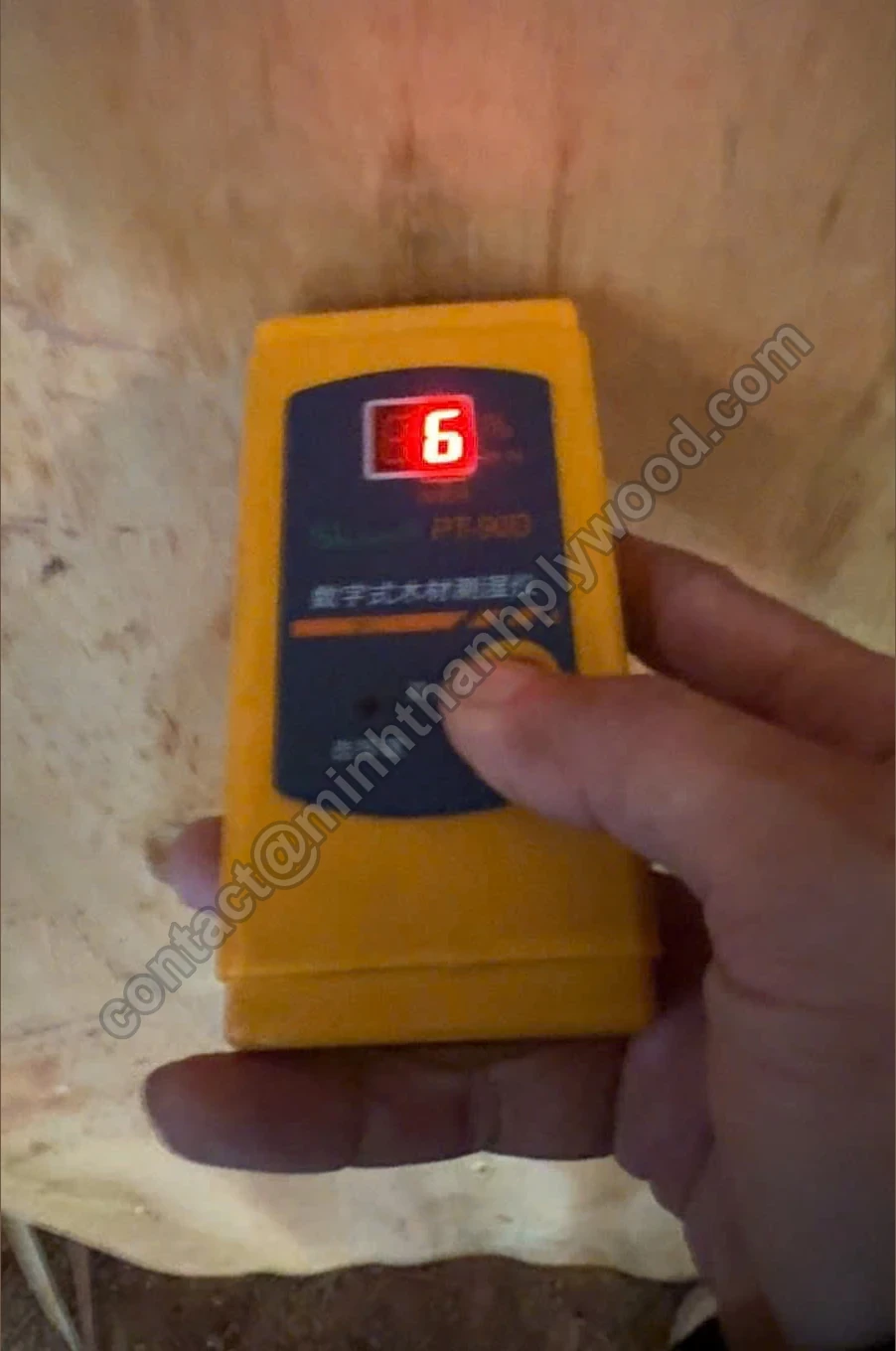
Check coating compatibility with the substrate and any preservative treatment. Prepare the panel at the moisture condition required by the coating instructions and respect their curing sequence. A finish applied over unsuitable material can trap a problem inside an otherwise well-specified panel.
Design for drainage and access to inspection. Standing water at a joint, a wet compartment with poor ventilation or a damaged edge needs attention during service. Preserve access to fixing zones and seams so the owner can find damage before it spreads into a concealed assembly.
Exterior cabinetry has its own maintenance conditions. Select a complete coating system suited to that location; an interior decorative oil should not automatically be transferred to repeated exterior wetting. Put the maintenance instructions with the finished product rather than leaving the end user to infer them from the plywood grade.
Marine panels are not automatically pressure treated. APA’s Marine description distinguishes the grade from preservative treatment. Specify decay protection separately where the design requires it, with the treatment and finish compatibility established before purchase.
How do you compare marine plywood prices fairly?
Compare prices for equivalent construction, acceptance criteria and delivery terms, then calculate the cost of usable finished parts. A quote with weaker evidence or a different core is a different offer. A fixed percentage premium cannot replace a current comparison of the required panels.
Keep the standard and class, face/back, core layup, bond, format and tolerance identical in the comparison schedule. Add the documentation, sample trial, inspection and packing requirements. Record currency, quote date and delivery term so purchasing can see where a price difference comes from.
Marine panels can cost more because veneer selection, construction control and conformity work add manufacturing requirements. The useful question is whether the quoted premium buys the construction and evidence the project needs. For sheltered interior furniture, compare the correctly specified interior alternative against the finished component requirement.
Calculate cost per equivalent full-sheet area as sheet price divided by usable yield, with yield expressed as a decimal. Measure yield from the actual cutting plan, including grain constraints and permitted repairs. Add machining, finish, inspection and rejected-part costs on the same basis for each offer.
Keep the yield record tied to the same face grade and component drawing as the quotation. A price comparison using the best sample’s yield for one offer and a production cutting trial for another is inconsistent. A more expensive sheet can produce a lower component cost, while a small sheet-price saving can disappear at the cutting bench.
For imports, compare FOB with FOB before adding freight, insurance and destination costs. Use the trade terms page to prepare a consistent enquiry. Keep the marine material order separate from Minh Thanh interior quotations so a furniture price is never presented as a BS 1088 price.
What packing and receiving checks protect the order?
Protect an approved order through identified packs, suitable handling and a receiving record that checks the delivered construction. Sample approval is useful only when the production lot stays connected to the material that passed. Agree the lot and pack references before dispatch.
Request inspection records for the agreed checks and photographs of the material before packing. Pack identification should connect the product code, thickness, quantity and lot with the packing list. For mixed specifications, make the separation visible so the receiving team does not need to open every pack to identify it.
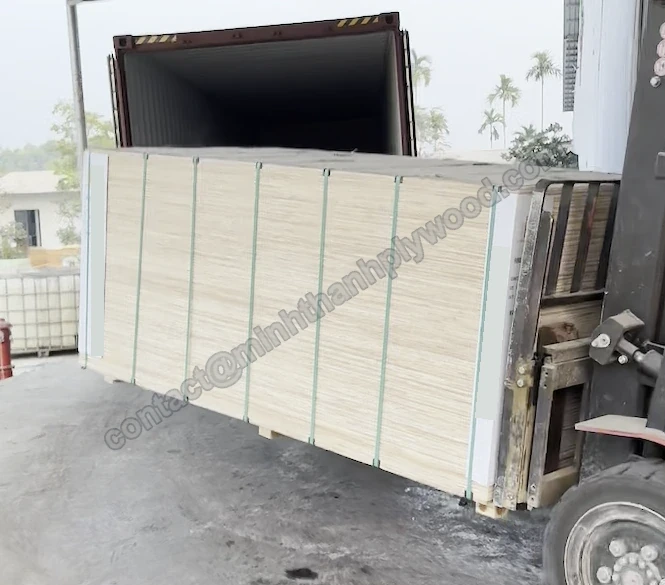
Packing should protect faces, corners and edges without putting damaging strap pressure directly onto useful surfaces. Agree support positions, weather protection and forklift access appropriate to the format. Keep panels protected from wetting during loading and transfer, then store them flat on suitable supports at destination.
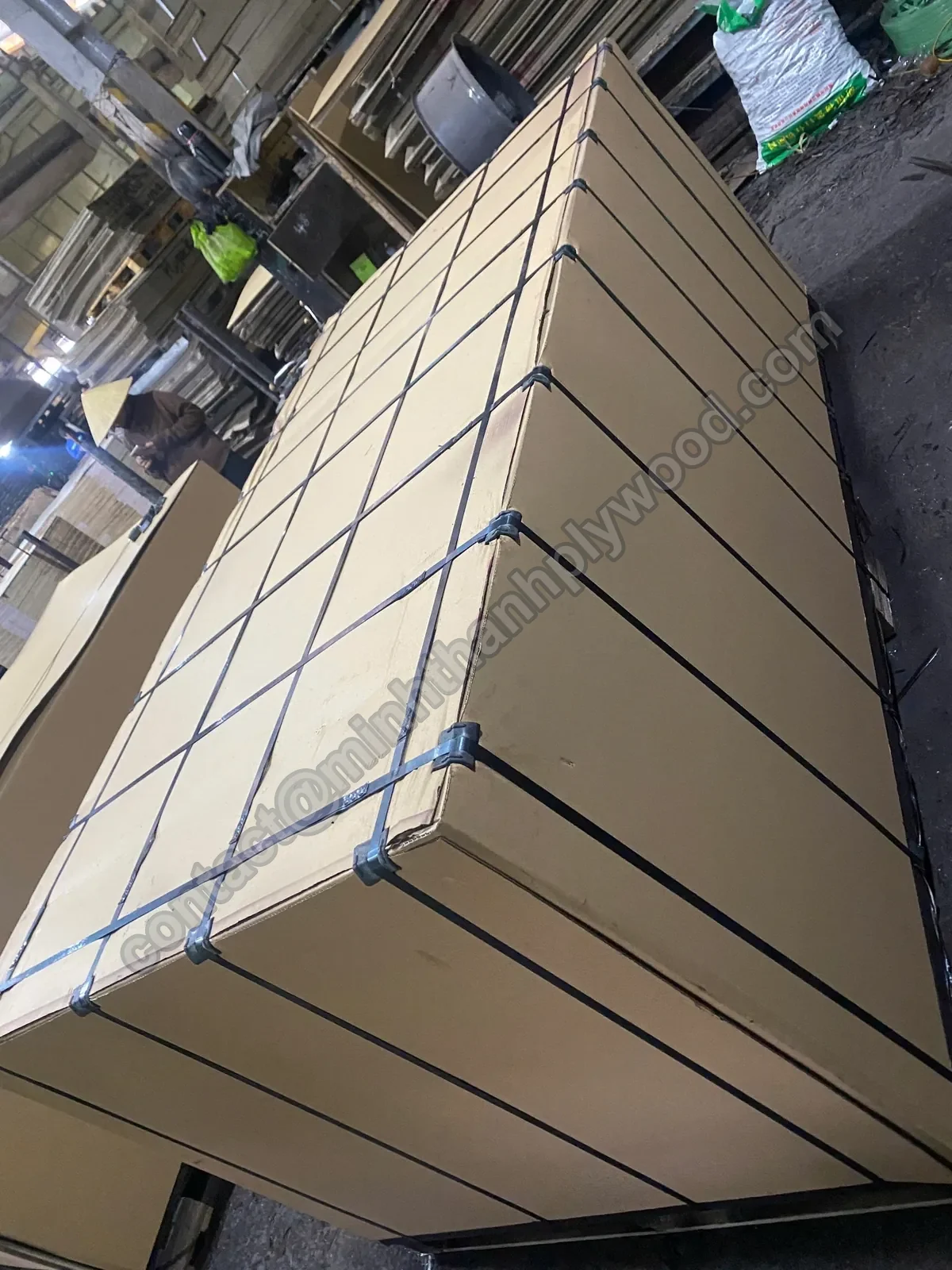
At receipt, photograph the unopened pack and its identification, then record visible transport damage before unpacking. Compare count, format and thickness with the order. Inspect the agreed sample of sheets for appearance and section features, keeping the lot reference with each observation.
If a discrepancy appears, separate affected material while the supplier and buyer compare it against the agreed acceptance sheet. Distinguish transport damage, moisture exposure and a construction mismatch; each needs a different response. Preserve photographs and identified sample pieces so the discussion concerns the delivered material.
Minh Thanh photographs and films shipments before loading and provides buyers with the records. Its export packing guidance shows the practical checks for interior plywood shipments. The same traceability discipline is useful when procuring a separately qualified marine construction.
Which panel should you choose for humid furniture and cabin fit-outs?
Choose a furniture panel with the required moisture-service bond and finished-component performance for protected cabin joinery or humid interiors. Reserve a named marine construction for parts whose design requires it. This keeps the quotation focused on the work the panel will do.
For cabin doors, specify both-face appearance, hinge arrangement and the finished edge. For supported wall linings, identify fastening, joint appearance and access openings. For bathroom cabinets, include plumbing cut-outs and rear edges in the coating trial. These details influence usable yield and service performance more directly than an unexplained premium-grade label.
Minh Thanh supplies okoume-faced plywood over Styrax or Eucalyptus cores in 1220 × 2440 mm and 1250 × 2500 mm formats. Its standard interior bond and moisture-service alternatives are separate order choices. Send the component’s exposure requirement along with its dimensions so the quote describes the intended panel.
Styrax is a practical interior choice where panel mass matters; Eucalyptus gives a denser construction to evaluate with the actual hardware and assembly. Check the component rather than selecting on species density alone. The furniture selection guide covers face grades, component schedules and sample approval for this route.
Interior emissions remain a separate specification when furniture sits inside occupied cabins or buildings. Request the product records and test method required by the project. The resin’s moisture performance and an E0 emission description should remain distinct fields in the quotation and acceptance sheet.
Send a precise interior-panel enquiry when your fit-out belongs in this range. Keep a separately specified marine panel on the schedule for any structural boat parts.
What should you put in the enquiry and purchase order?
Send a component schedule with the required standard, complete construction and acceptance route. For boat structures, use the designer’s named marine specification. For Minh Thanh furniture enquiries, state the interior application and required bond so the quotation stays within the product range described here.
Copy these fields into the request:
- Application: hull, structural deck, bulkhead, cabin door, wall lining or humid cabinet; attach the drawing and exposure description.
- Standard: edition and class where marine conformity is required; list the designer’s additional panel properties and required supporting evidence.
- Construction: face and back species/grades, core species and layup code, bond requirement, interior emission method where applicable.
- Dimensions: thickness and tolerance, sheet format or cut-part sizes, grain direction and any critical bend or machining detail.
- Approval: representative sample selection, section inspection, testing method, finished-component trial and accepted reference.
- Delivery: quantity, pack identification, packing requirements, delivery term and destination port.
Keep that schedule with the purchase order and the accepted sample reference. A change to the bond, core or ply sequence should trigger a documented construction review before manufacture. Repeat orders should reference the accepted construction code so a familiar trade name does not conceal a new panel.
For Minh Thanh interior-panel orders, the standard minimum is one 40HC container, with production 15–45 days after deposit. Delivery terms are FOB Hai Phong, CFR or CIF. Free samples let buyers evaluate the face, core and workshop process before placing the bulk order.
Send your fit-out specification for okoume-faced or other furniture plywood, including application, core, bond/emission requirement, face, dimensions, packing and quantity. International sales: [email protected]. For a hull or structural marine part, keep the named marine standard and designer’s approval at the centre of the sourcing decision.
Buyer questions, answered
What is marine plywood?
Marine plywood is a veneer panel with controlled ply quality, core construction and an exterior bond for specified marine service. The purchase specification must name the standard and product construction because BS 1088 marine plywood and APA Marine are different systems. The panel still needs the coating, detailing and structural approval required for its application.
Is marine grade plywood waterproof?
Marine grade plywood has a water-durable adhesive bond, while its wood veneers still absorb moisture. Seal the faces, edges, holes and machined openings using the specified coating system, and provide drainage where the design requires it. An exterior bond does not make untreated timber rot-proof.
What does BS 1088 plywood mean?
BS 1088 plywood is specified to the British marine plywood standard. BSI lists BS 1088:2018 as current and identifies standard and lightweight classes. Request the claimed class, complete veneer construction and conformity evidence for the supplied product; the standard does not supply a hull thickness or component load rating.
Is WBP plywood the same as marine plywood?
WBP means weather and boil proof and describes a bond claim in trade language. A marine purchase also needs a named standard, acceptable veneer construction and evidence tied to the product supplied. A boil demonstration alone leaves the core quality and standard conformity unanswered.
Can exterior plywood replace marine plywood in a boat?
Use the panel specified by the boat designer for hulls, decks and structural bulkheads. Exterior plywood can have a durable bond while allowing a different veneer grade or core construction. Substitution needs approval against the drawing, panel properties, fastening and coating system before purchase.
Is all okoume plywood marine grade?
Okoume identifies a wood species, not a marine grade. An okoume-faced panel on a Styrax or Eucalyptus core is a different construction from an all-okoume marine panel. Minh Thanh's okoume plywood is supplied for furniture and interior use, without a BS 1088 claim.
Does marine plywood have no core gaps?
Core-gap limits belong to the named standard and class. APA's Marine guidance permits a maximum core gap of 1/8 inch, approximately 3.2 mm; that limit must not be transferred to BS 1088 purchases. Check representative cut sections and the relevant conformity evidence instead of accepting a blanket void-free label.
How thick should marine plywood be for a boat floor?
Boat-floor thickness comes from the designer's panel schedule, support spacing, loads and fastening details. Identify whether the part is a structural deck, removable sole or supported interior panel before comparing quotations. Order the specified thickness and tolerance together with the required layup and panel properties.
How do I check a marine plywood supplier before ordering?
Match the product code, manufacturing site, standard and claimed class across the quotation, technical data and conformity evidence. Agree representative sample selection, inspect sawn sections and test the actual bonding or coating system. Tie the approved construction and acceptance criteria to the production lot and packing-list references.
Is marine plywood pressure treated?
A marine grade does not automatically include preservative treatment. APA describes its Marine panels as untreated for decay resistance. Specify any required treatment separately, including its compatibility with adhesives, coatings and fasteners for the intended service.
Is marine plywood worth the extra cost for bathrooms?
Pay for marine construction when the project specification or component performance needs it. For protected bathroom cabinetry, a suitable moisture-service bond, prepared face, sealed edges and workable detailing can be the relevant purchase requirements. Compare complete finished components and equivalent delivery terms rather than a fixed marine premium.
Does Minh Thanh supply BS 1088 marine plywood?
Minh Thanh's okoume-faced range is furniture and interior plywood on Styrax or Eucalyptus cores. The range serves protected furniture and interior applications. Send cabin furniture, van-fit-out or humid-interior drawings with the required bond, face and finish for a plywood quotation.