
Buy marine plywood by the designer's named standard and panel schedule, then approve the supplier's construction, conformity evidence and representative samples. Local distributors suit urgent or small quantities; a marine manufacturer suits planned repeat specifications. Minh Thanh Plywood supplies okoume-faced furniture and interior plywood on Styrax or Eucalyptus cores, a separate range from BS 1088 marine plywood.
How do you compare marine plywood suppliers?
Compare marine plywood suppliers by their ability to deliver the exact panel standard and construction required by your design. The search term marine plywood for sale can lead to different products, so identify the material schedule before comparing available sheets.
A hull skin, structural bulkhead and decorative locker door need separate purchasing decisions. The designer determines the structural material; the furniture maker also needs the appearance, machining and hardware requirements. Keep each component on its own specification line so a convenient stock item does not become an unreviewed substitution.
Ask the supplier to describe the panel with its product code, standard and class, face and core species, layup and dimensions. Request the evidence associated with that product. A supplier who can identify those fields makes it possible to compare offers and inspect received material against the same description.
The marine plywood buying guide explains the panel families and construction questions. This guide concentrates on the transaction: where to buy, how to qualify the supplied line, what to put on a quote comparison and which checks to carry through to receipt. A useful supplier leaves the buyer with an approved specification rather than a broad marine label.
Which marine standard should the supplier quote?
The supplier should quote the named standard and class in the designer’s material schedule. Preserve that designation throughout the quotation, sample approval and purchase order instead of treating different marine systems as interchangeable.
BSI’s BS 1088:2018 description, accessed 8 October 2026, identifies standard and lightweight marine plywood classes. It addresses bond durability and resistance to biological deterioration, while additional end-use requirements remain relevant. The designation does not choose a hull thickness or approve a finished boat component.
For a US specification calling for APA Marine, consult the APA Marine description, accessed 8 October 2026. APA describes that product using Douglas-fir or Western Larch, with veneers of B grade or better and an Exterior bond classification. An all-okoume panel and an okoume-faced interior panel are different constructions and should be quoted under their own descriptions.
Ask which exact product is claimed to meet the requested standard. Match its manufacturing identity, construction and thickness schedule to the supporting declaration or certification. Keep a proposal under a different standard as an alternative for designer review. That approach gives the buyer room to consider available materials without losing the original acceptance basis.
In construction markets, suppliers also use marine as a trade description for hardwood plywood sold for wet-service work. Establish whether the quotation offers a named marine-standard product, an exterior-service panel or a film-faced concrete-contact sheet. Specify the required construction and performance for the actual job before comparing those offers.
Choose the purchasing route by the component specification
| Requirement | Panel to request | Supplier evidence |
|---|---|---|
| Marine-design drawing naming a panel standard | The specified BS 1088 class or APA Marine product | Identified producer, construction and relevant conformity evidence |
| General construction exposed to moisture | A panel with the specified service bond and construction properties | Named product standard, bond classification and project-required performance |
| Concrete-contact formwork | Film-faced panel matched to the support design and finish | Core, internal bond, overlay, edges and required formwork properties |
| Protected interior fit-out | Furniture plywood matched to face, core and finishing needs | Approved construction, component trial and appearance reference |
The BSI description of EN 314-2, accessed 8 October 2026, defines its scope as bonding-quality requirements. An EN 314-2 class 3 bond claim describes bonding, while BS 1088 conformity addresses the specified marine product. Put the required standard beside each material-schedule line so a wet-service trade name cannot silently change the order. For general construction exposed to moisture, the BSI description of BS EN 636:2012+A1:2015, checked on 8 October 2026, covers plywood for structural and general-purpose use in dry, humid or exterior conditions; the quotation should name the service class it offers.
For concrete-contact purchases, use the film-faced plywood range to frame the enquiry. Specify the surface and internal construction separately. For a sheltered decorative part, Minh Thanh’s okoume-faced furniture panels belong on their own interior specification line.
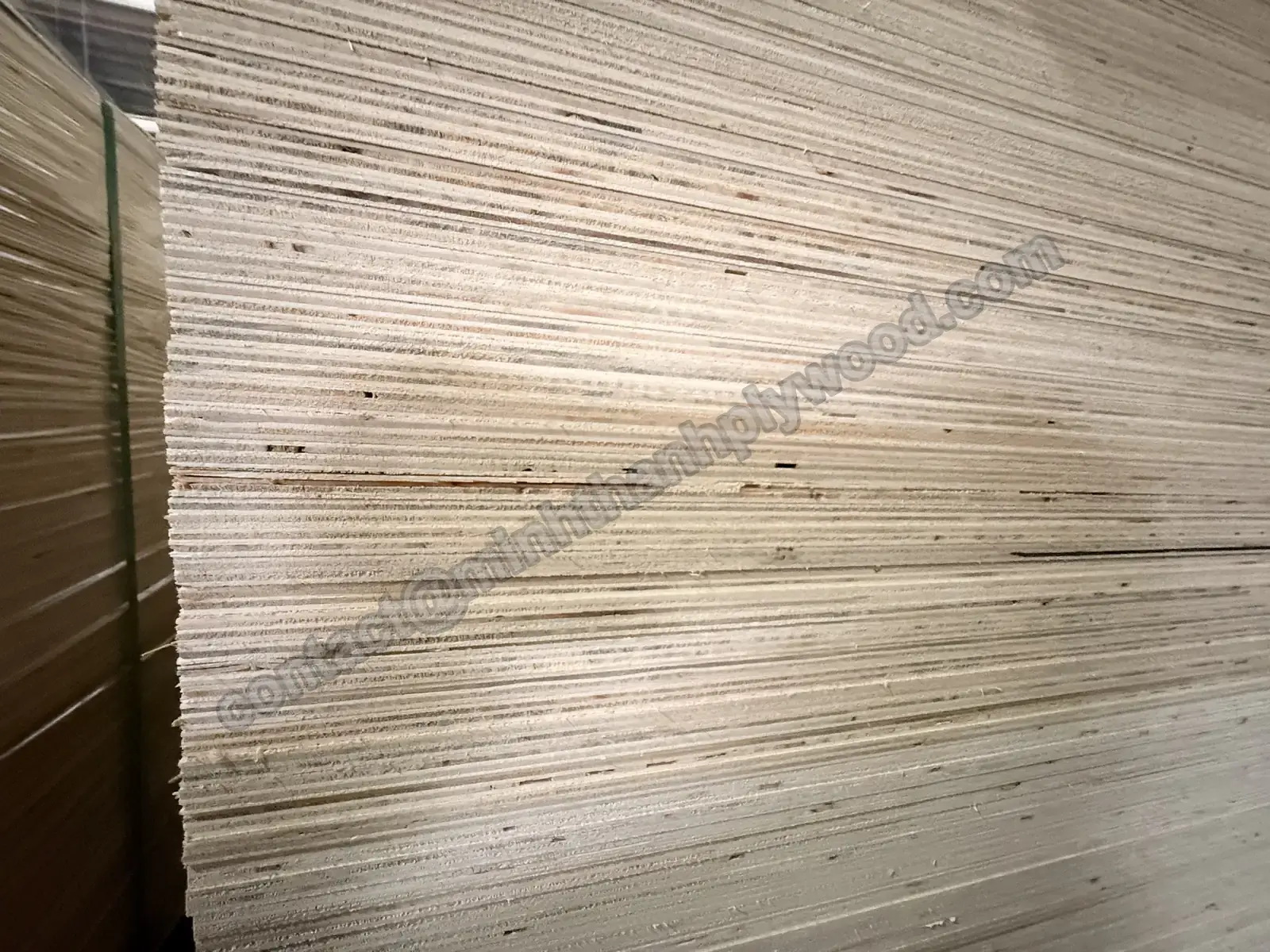
Inspect a representative cut section alongside the product declaration to compare the offered construction.
Where should you buy marine plywood for an urgent project?
Buy urgent quantities from a specialist distributor whose actual stock matches the design requirement and can be inspected before delivery. For a repeat production programme, compare that local route with planned supply from the marine panel manufacturer.
| Route | Best-fit purchase | Useful evidence | Receiving issue to plan |
|---|---|---|---|
| Specialist local distributor | Small quantities and urgent replacement sheets | Stock product code, manufacturing identity and conformity records | Inspect storage condition and reserve the approved stock |
| Marine panel manufacturer | Planned repeat layup, thickness and format | Production specification, representative samples and inspection plan | Allow production, shipping and incoming qualification time |
| Consolidated supply | Several approved panel lines in one shipment | Separate mill and product evidence for each specification | Keep packs and paperwork distinct during allocation |
Marine plywood for sale from local stock
For local stock, ask whether the quoted sheets can be reserved under the approved product code. A quotation for marine ply for sale based on availability at the time of inquiry does not tell the production planner which sheets will arrive later. Inspect pack condition and the exposed edges, particularly if the yard stores full packs and sells individual sheets.
Marine ply for sale in export supply
For export supply, align the quantity with the receiver’s storage and fabrication schedule. A container can suit recurring production; it also commits the buyer to receiving and protecting a substantial quantity at once. Compare the date material becomes usable in the workshop, including incoming inspection, rather than comparing only the dispatch date.
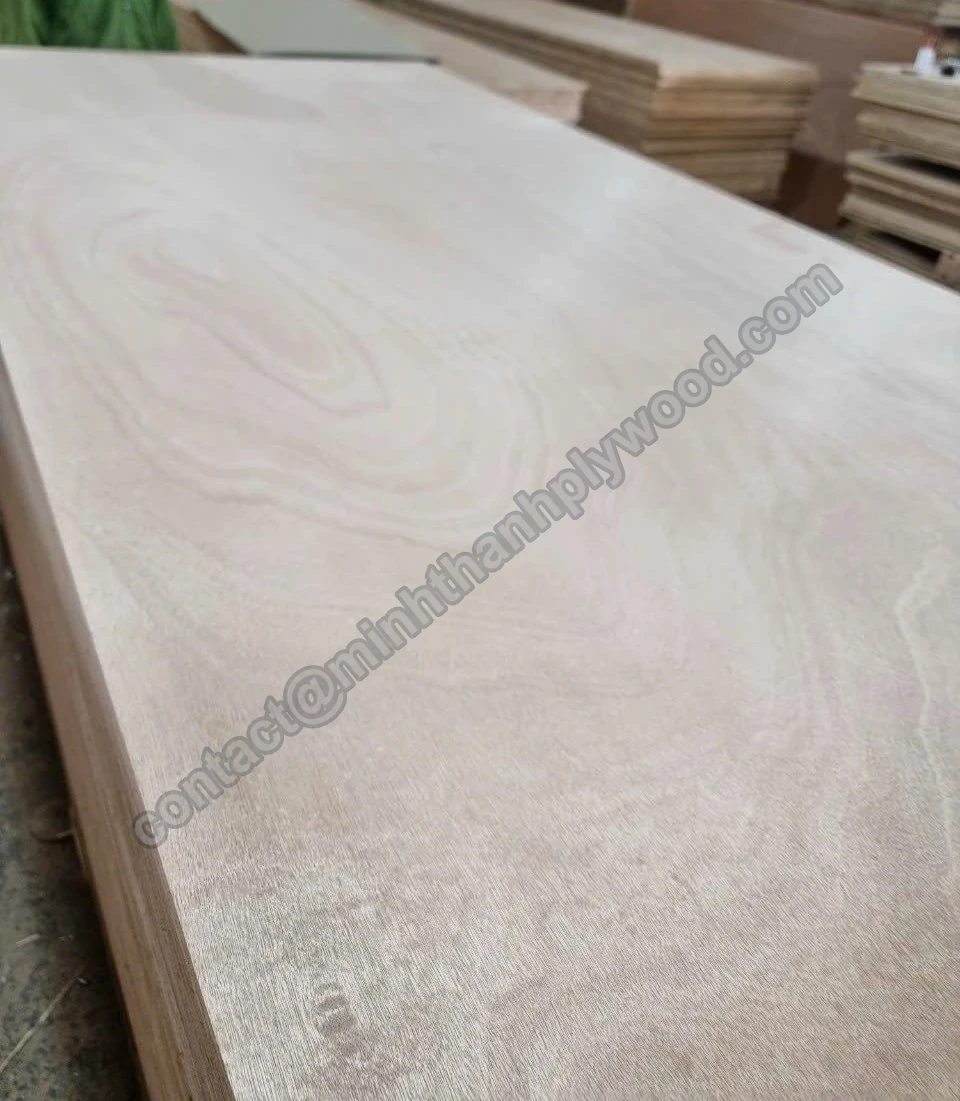
Full-sheet viewing helps assess appearance and flatness. The photographed panel belongs to an interior range.
What must a marine plywood quotation identify?
A marine quotation must identify the complete supplied panel and the evidence used to accept it. Use a consistent line-item structure so the same information appears on the quote, sample record, purchase order and packing list.
Write the component or drawing reference first. Follow it with the named standard and class, proposed product code, face and core species, veneer arrangement, actual thickness, tolerance and format. Include sanding, repair acceptance, coating or treatment requirements and the mechanical evidence needed by the designer.
Keep bond and emission requirements separate. A moisture-service bond describes one aspect of performance; an emission class addresses another. Request the applicable method and supporting product evidence for each requirement. The quality page explains Minh Thanh’s furniture-panel documentation, which should be used for that offered range rather than transferred into an unrelated marine construction claim.
State the quantity by sheets and agreed volume basis, together with pack identification and the delivery term. Add the inspection and document schedule. Where alternatives are invited, require a separate line for each. That makes a change in core construction visible before the price comparison and keeps an approved marine line separate from a sheltered-interior proposal.
How should you check a marine supplier’s documents?
Check that the technical documents describe the product being offered and that the order records preserve its identity. Begin with the actual product code; general company credentials cannot answer a panel-specific construction question.
Compare the quotation against the technical data, claimed standard and conformity evidence. Look for consistent manufacturing identity, class, species, thickness and layup. Read the scope rather than only the document title. A test for one adhesive or thickness is useful evidence for that described specimen; the supplier needs a clear basis for connecting it to the proposed supply.
When a third-party marine product certificate is specified, identify the certified product range and the corresponding markings required on the material or packs. Keep those details available to the receiving team. A purchasing manager can approve the document centrally, but the warehouse still needs a practical way to recognise the accepted line.
Set the document review before order release, with shipment records prepared again for the actual consignment. Separate technical conformity from transport paperwork: an origin document answers where the shipment originates, while the marine product evidence addresses the specified material. This separation makes missing information easier to resolve without treating every document as the same kind of proof.
How do representative samples expose construction differences?
Representative samples expose the proposed layup, surface condition and fabrication behaviour when they are selected and labelled against the offered product. Request a full sheet for operations that involve bending, flatness or large routed parts, and use smaller specimens for the agreed laboratory checks.
Inspect fresh sawn sections at more than one location. Follow the layer arrangement through the edge and around intended fastener or joint areas. Record openings, overlaps or repairs against the limits of the named standard; the acceptance requirement should tell the inspector which observations matter. A single attractive edge photograph cannot represent the whole sheet.
Measure actual thickness at agreed positions and record the readings individually. Use the finished panel to check whether a groove, scarf, rebate or hardware recess can be made without exposing unacceptable internal defects. Preserve orientation on the specimens so results relate to the direction used in the component.
Label the retained offcuts with the supplier, product code, sample date and approval reference. Keep the appearance sample separate from destructive specimens. The retained face is useful for later colour and repair comparison; the cut pieces document the accepted internal construction. Together they give the receiver a more useful reference than the phrase marine quality on its own.
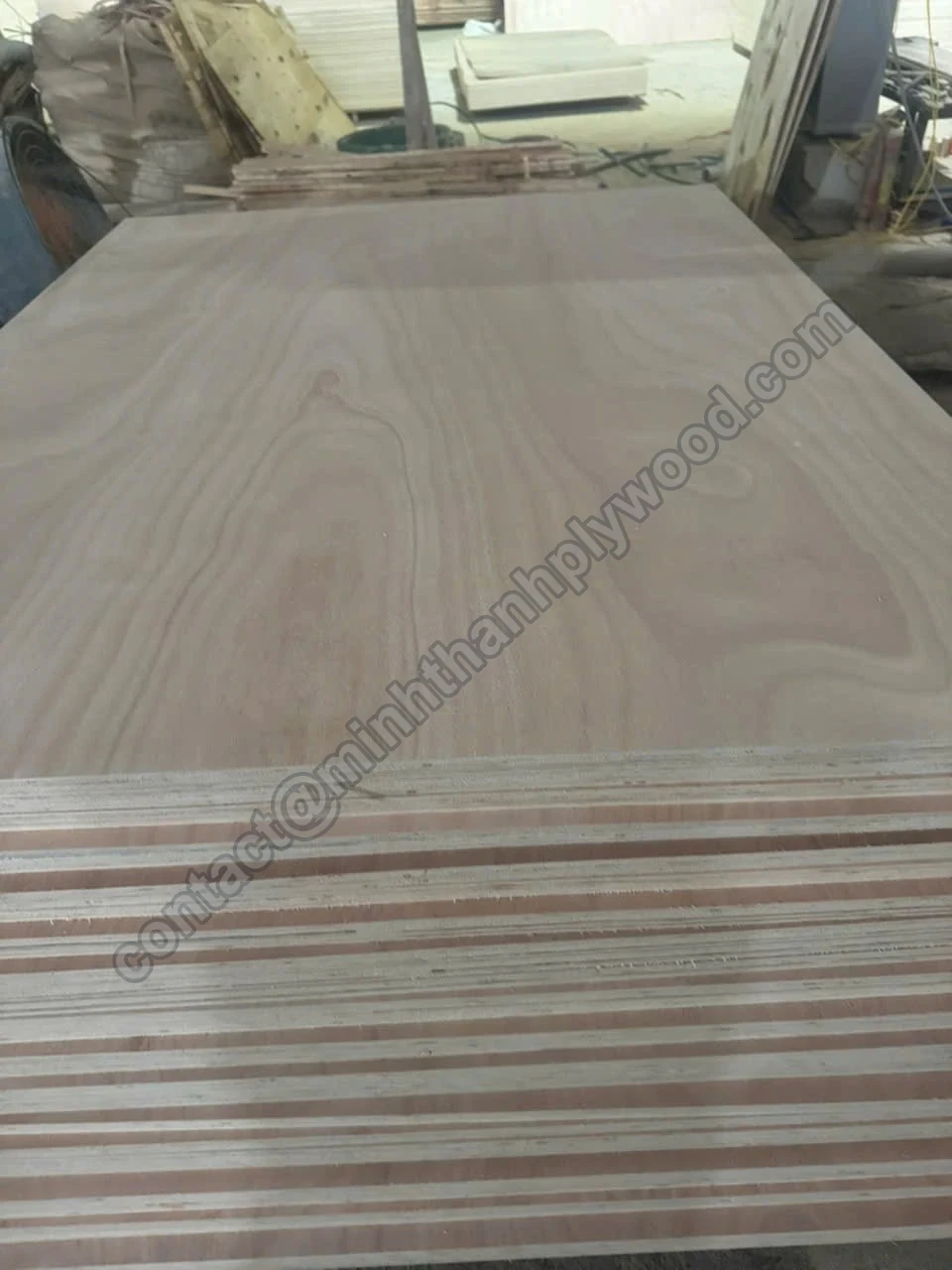
Cut edges show the layer arrangement. Apply the required standard’s own acceptance criteria to the marine product being inspected.
Which tests belong in supplier qualification?
Supplier qualification should include the tests named in the purchase specification and the component trials needed for fabrication. Agree specimen selection and test methods before collecting results so the report answers the intended question.
- Check the proposed construction and marine-standard documents against the material schedule.
- Select and identify representative sheets from the product line being qualified.
- Inspect dimensions, faces and sawn sections using the agreed criteria.
- Conduct the specified bond or mechanical tests with traceable specimens.
- Fabricate the critical joint, curved part or hardware detail using the intended process.
- Trial the coating and edge protection, then retain the accepted references.
A supplier’s boil demonstration can illustrate bond behaviour under that demonstration. It does not replace the complete marine-standard acceptance or the component design. Request the named laboratory procedure and results required for the ordered product, and keep the specimen identity readable from selection to report.
For fabrication, check the failure you most need to avoid. A scarf joint requires consistent material where the joint is cut. A routed hatch needs continuity around its perimeter. A locker hinge needs appropriate fixing in the chosen core. The practical trial connects the supplier’s panel to your process and reduces the risk of approving only the appearance face.
How should you compare marine plywood prices?
Compare prices only after the offers have matched the required construction, evidence and delivery boundary. A different species mix, layup or class is a technical alternative that needs review before its price becomes meaningful.
| Comparison line | Match across offers | Buyer action |
|---|---|---|
| Standard and class | Designer's required designation | Review alternative standards separately |
| Construction | Face/core species and veneer arrangement | Compare representative cut sections and documents |
| Dimensions | Actual thickness, tolerance and usable format | Check joints, cutting yield and design fit |
| Qualification | Same sample, test and inspection requirements | Include any additional approval work |
| Delivery | Same named destination and included services | Calculate complete receiving cost and schedule |
| Usable quantity | Accepted material available for the cutting map | Include trimming and rejects in production planning |
For a small urgent job, local inspected stock can be economically useful because it removes the wait for manufacturing and ocean transport. For repeat production, a stable approved construction at export scale can justify more advance planning. Use the plywood price guide to organise the freight, handling and receiving items without assuming a fixed marine premium.
Do not compare panels by cost per sheet while leaving their dimensions different. Write the usable cutting format and actual thickness, then assess accepted parts per panel. Record necessary coating and edge treatment as component costs. Those operations remain relevant when selecting the panel and should be included in the finished-part decision.
How do you specify thickness without overbuying?
Specify the thickness required by the designer or component drawing, together with its tolerance and layup. Selecting the thickest marine ply available can add weight and alter joints without improving the relevant design outcome.
For structural boat parts, use the panel schedule and mechanical requirements supplied by the designer. The procurement team should preserve orientation, construction and permissible alternatives. If a supplier proposes another thickness, submit that alternative with its supporting data for review rather than changing the order description informally.
For furniture parts, measure the fit at grooves, rebates and hardware locations on the finished sample. A nominal thickness may be adequate for initial discussion, but the machining operation needs an actual target and acceptance band. The thickness guide explains how to keep those dimensions consistent through quotation and receipt.
Available thickness schedules belong to the product line being sold. Minh Thanh’s general plywood range spans 3–40 mm, but that is a furniture and general plywood range, not a schedule of marine-certified thicknesses. For a marine-standard order, request the marine manufacturer’s documented range. For protected interior furniture, send the desired construction and dimensions to Minh Thanh separately.
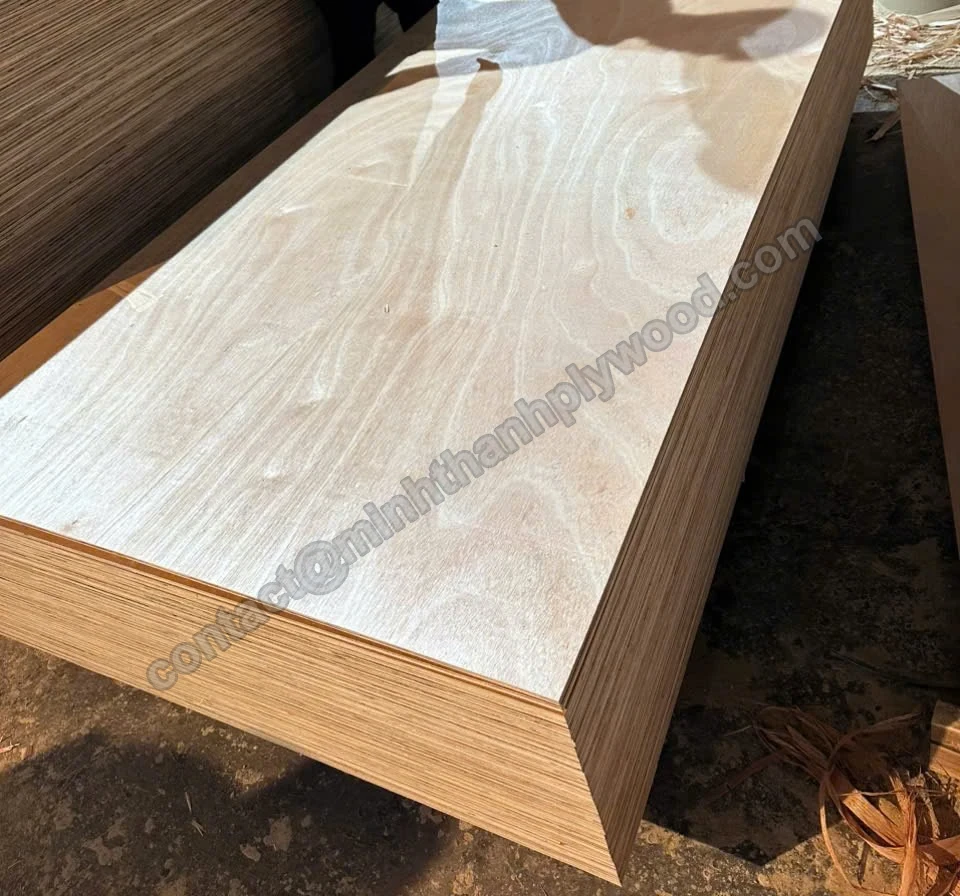
Panel thickness and internal construction should be specified independently of the visible face species.
What coating and treatment questions should buyers settle?
Settle the finished component’s protection system with the designer and coating supplier, then test it on the actual proposed plywood. Include faces, cut edges, openings and joints in that approval.
A durable adhesive bond leaves the wood exposed to moisture unless the assembly protects it. The detail around a fastener hole or routed opening can become more important than a large coated face. Ask how the component will shed water and how damaged coating will be maintained. Record those instructions with the fabrication specification.
If preservative treatment is required, write it as a separate purchase requirement with compatibility evidence for the planned adhesive, finish and fasteners. Marine grade does not automatically include a treatment. APA’s Marine guidance describes its panels as untreated for decay resistance; use the treatment standard required for the specific application.
Trial the coating on representative faces and repairs, then examine the cut edges after the proposed protection is applied. Finish absorption and colour can differ across a repair or veneer patch even when the underlying grade is acceptable. The water-resistance guide explains the wider difference between a moisture-resistant panel bond and a protected finished assembly.
What should the receiving team inspect?
The receiving team should reconcile the delivery with the approved product and inspect condition before releasing sheets to fabrication. Give it the material schedule, reference samples and pack identification instructions before arrival.
Check quantity by specification and compare pack labels with the packing list. Photograph the unopened packs, exposed edges and any visible damage during receipt. Preserve product markings or traceable pack references until the sheets have been assigned to their components. Once mixed sheets enter production without identity, resolving a construction difference becomes much harder.
Inspect the agreed dimensional positions and surface areas, then compare sawn sections where destructive incoming checks were specified. Separate transit damage from a product deviation in the record. A wet wrapper, crushed corner and inconsistent layup require different corrective actions and should not be collapsed into one vague quality remark.
Store panels flat on suitable supports under protected conditions, with access for inspection and allocation. Retain the shipment’s product evidence alongside the receipt record. Use the approved disposition process for deviations before cutting valuable parts, when the supplier can still identify the affected packs and the buyer can avoid making a rejected component.
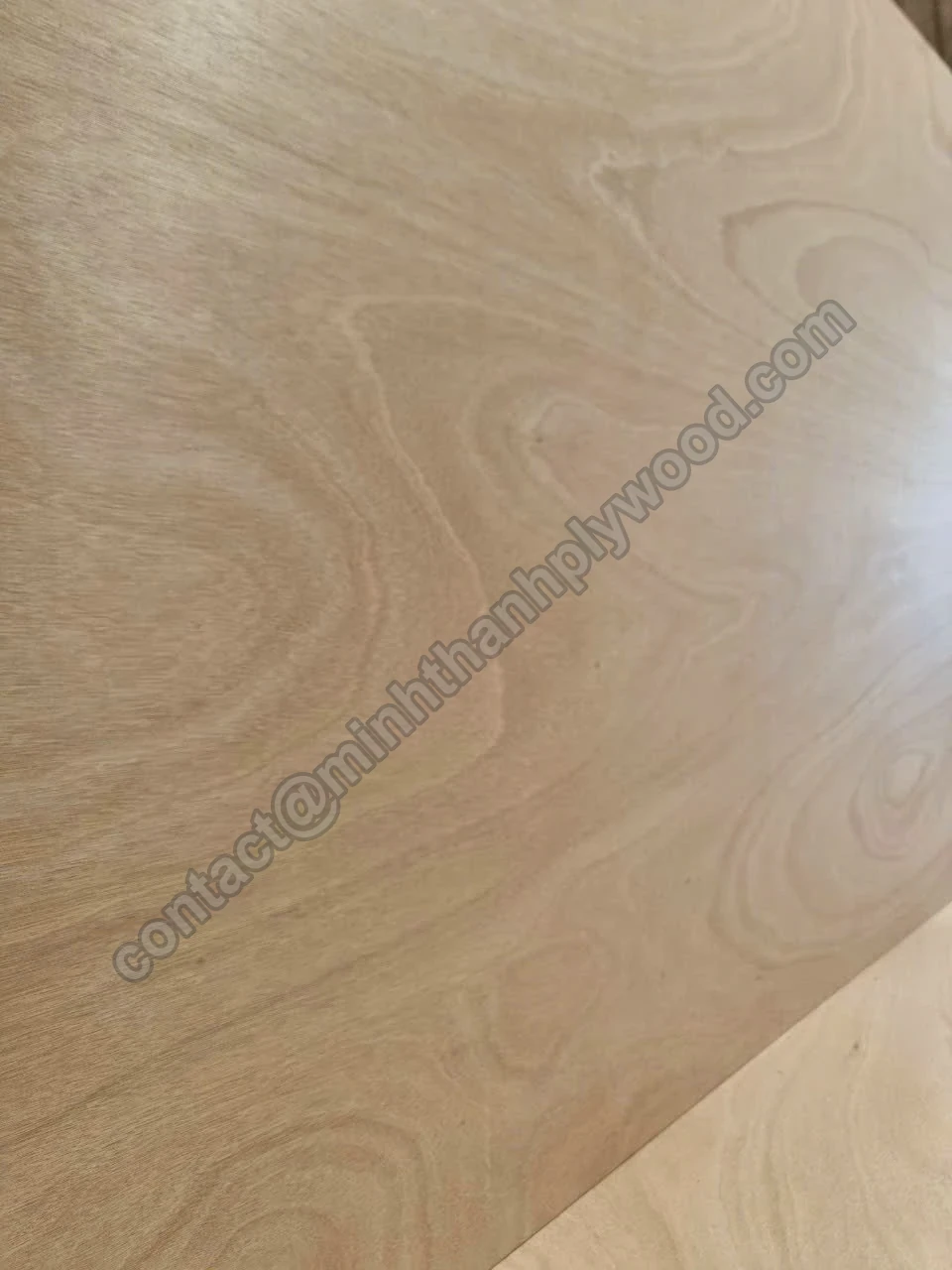
Appearance approval should include the visible grain and permitted repairs after the intended finish.
Where does Minh Thanh’s okoume-faced range fit?
Minh Thanh’s okoume-faced range fits furniture and interior work specified around appearance, a plantation core, machining and the required bond. It is a separate offer from a designer’s BS 1088 marine-standard panel.
The okoume plywood product page describes okoume faces over Styrax or Eucalyptus cores. Those cores should appear explicitly on the quote. A buyer sourcing decorative cabin furniture, protected fit-outs or locker components can compare the proposed interior panel against the actual component exposure and finishing requirements.
Furniture-grade panels are pressed twice as standard: the core board is pressed and calibrated, then the face and back are pressed on. That manufacturing sequence supports thickness control and face preparation for furniture work. State the intended finish and the hardware details in the inquiry so the sample can be assessed in the same production process used for the component.
For a boat project containing both marine structural parts and protected furniture, split the material schedule. Keep hull and other designer-specified marine lines with the approved marine supplier. Send the interior lines to Minh Thanh with their drawings and bond requirements. This makes the available interior range useful while keeping every component’s material identity clear.
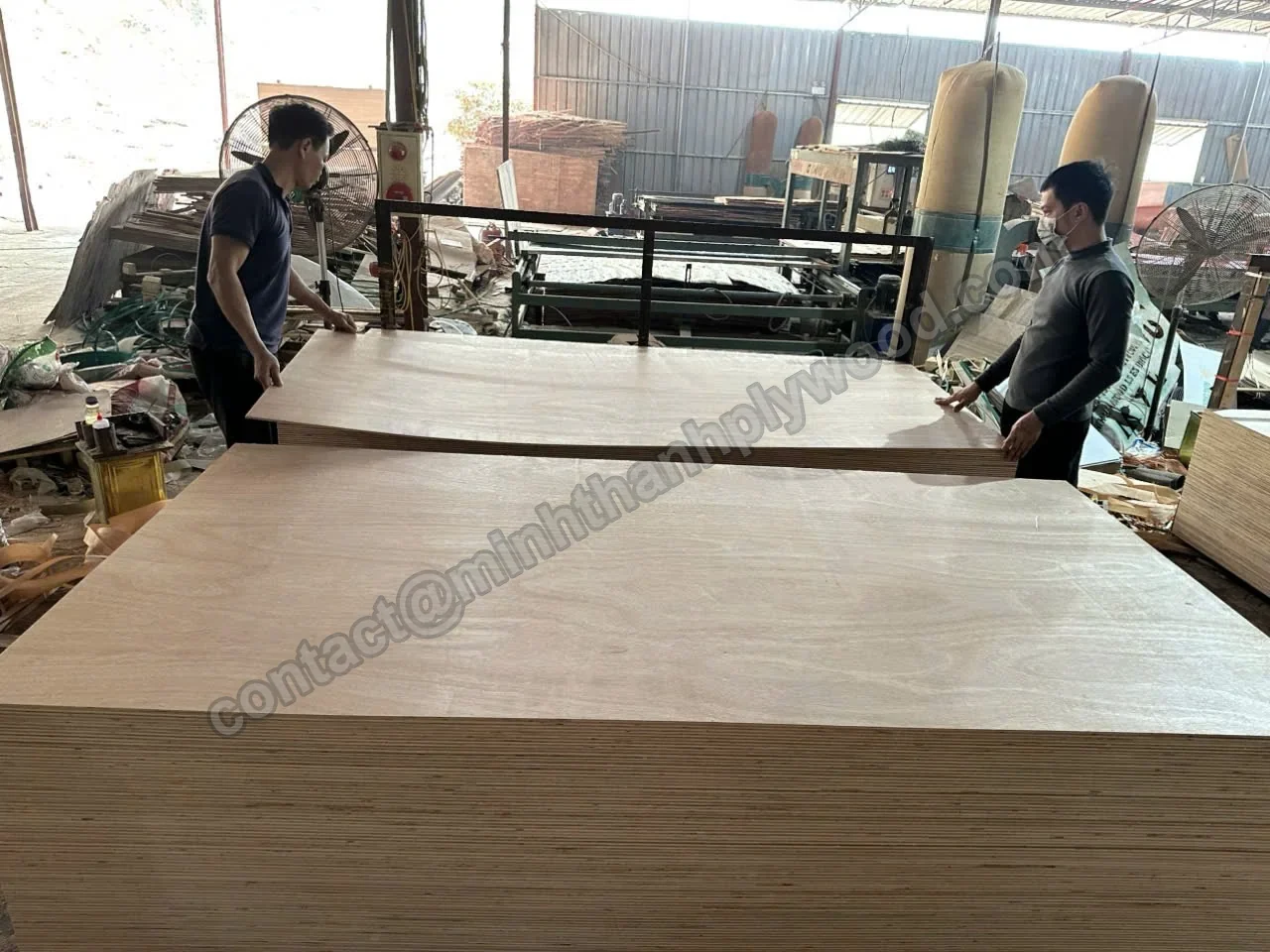
Interior panels are handled in sheet form. Approve the construction and component trial required for the part you plan to make.
What should you send to buy the right panel?
Send a complete component specification to the supplier that offers the required panel family. For a marine-standard order, include the designer’s standard, class, construction schedule and acceptance evidence. For Minh Thanh interior plywood, include the protected application and the furniture requirements.
An interior RFQ should state the application, okoume face/back appearance, Styrax or Eucalyptus core, bond and emission requirement, actual thickness and tolerance, sheet size, finish and hardware. Add quantity, packing, destination port and delivery term. Attach the drawing revision and label any reference sample so the proposal can be assessed against the same part.
Minh Thanh provides free samples, with a minimum export order of one 40HC and mixed specifications by agreement. Its standard production interval is 15–45 days after deposit, distinct from transport time. Quotations are available on FOB Hai Phong, CFR or CIF terms, allowing buyers to compare the receiving boundary appropriate to their programme.
Use the contact form to request a furniture or interior quotation and attach the specification. Keep a marine purchase with its named standard and approved marine product throughout the transaction. Keeping those order lines explicit helps the buyer receive the intended material and gives each supplier a clear requirement to fulfil.
Buyer questions, answered
Where should I buy marine plywood?
Use a specialist distributor for inspected local stock and small or urgent quantities, or a marine manufacturer for a planned repeat construction at export scale. Require the standard, product code and manufacturing identity for the offered sheets. Approve documents and representative samples before purchase.
What should marine plywood for sale state on the listing?
The listing should identify the named marine standard and class, face and core species, construction, actual thickness and format. Request the conformity evidence and available stock or production schedule for that product code. Keep WBP and okoume descriptions separate from the marine-standard claim.
Is BS 1088 the same as APA Marine?
BS 1088:2018 and APA Marine describe different marine plywood systems. BSI identifies standard and lightweight classes, while APA describes Marine panels using Douglas-fir or Western Larch veneers. Buy the system required by the designer and review its own conformity evidence.
Does a WBP bond make plywood marine grade?
WBP is a trade bond description and does not establish the complete marine panel construction. Specify the named standard, veneer requirements, core quality and associated evidence. A bond demonstration answers only the tested bond question.
Is all okoume plywood suitable for boat hulls?
Okoume identifies a veneer species, not hull suitability. Buy the complete panel specified by the boat designer, with the required standard, layup and mechanical evidence. Minh Thanh's okoume-faced interior range uses Styrax or Eucalyptus cores and is a separate purchase.
What is the thickest marine ply I can buy?
Available thickness depends on the specific marine product line and its documented construction. Request the manufacturer's thickness schedule and the designer's required actual thickness rather than selecting the thickest available panel. Minh Thanh's general plywood thickness range is not a marine-product availability schedule.
Should I inspect a marine plywood sample by cutting it?
Inspect representative sawn sections to assess the layer arrangement and permitted core defects under the named standard. Add bond testing and component trials when the purchase specification requires them. Record sheet and specimen identity so the results remain tied to the proposed product.
Does marine plywood need sealing?
Protect the faces, cut edges, holes and joints with the system required by the boat or component design. A durable bond does not stop the wood from absorbing moisture. Include coating compatibility and application instructions in sample qualification.
Can I use interior okoume-faced plywood for cabin furniture?
Protected cabin furniture can be specified by its actual exposure, face finish, core, hardware and bond requirement. Qualify the finished component against the project requirements. Minh Thanh offers okoume-faced furniture and interior panels for such specification-led inquiries.
Does Minh Thanh offer BS 1088 marine plywood?
Minh Thanh's advertised okoume-faced range is furniture and interior plywood on Styrax or Eucalyptus cores. It is offered as interior plywood without a BS 1088 claim. Send protected furniture or fit-out specifications for a quotation on that range.