
Choose rated OSB for economical covered structural sheathing; choose plywood when wetting recovery, a smooth veneer face or exposed edges matter. For OSB vs plywood subfloor decisions, match the panel rating and finished-floor system. Minh Thanh Plywood supplies plywood with specified cores, faces and bonds. Compare OSB vs plywood using actual product data, rather than material names alone.
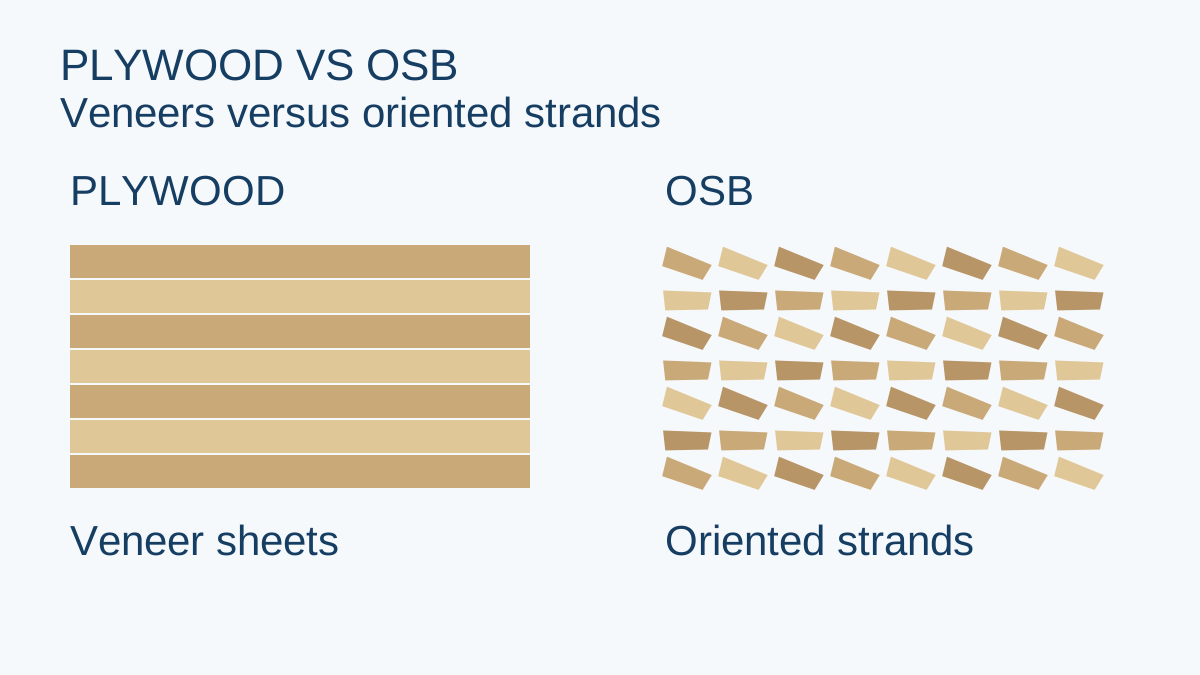
Plywood vs OSB: which material fits the job?
Choose OSB for economical covered sheathing with an accepted structural rating, and choose plywood when veneer appearance, exposed edges or recovery after construction wetting has value. Floors, roofs and walls need rated products of either material. Furniture and concrete formwork bring different surface requirements into the decision.
| Purchase criterion | Plywood | OSB |
|---|---|---|
| Construction | Continuous veneer sheets, normally cross-grained | Wood strands oriented in successive layers |
| Structural selection | Grade, layup, strength axis and declared design data | Grade, strength axis and declared design data |
| Wet-edge response | Generally better recovery after wetting and drying | Conventional grades are more prone to residual edge swelling |
| Visible surface | Selected face veneer; sanded appearance grades available | Visible strand pattern; coated and sanded products available |
| Sheet mass | Calculate from the ordered core and dimensions | Calculate from the selected product and dimensions |
| Ordinary sheathing price | Usually higher initial panel cost | Usually lower initial panel cost |
| Best buying evidence | Product specification, sample and required structural documents | Product specification, sample and required structural documents |
Minh Thanh’s construction plywood range separates exterior panels, film-faced panels and other constructions. Start with the job and specify the panel that performs it. A concrete shutter, a decorative wall and a load-bearing wall sheathing panel can share a nominal thickness while requiring different faces, bonds and documents.
For a purchasing team, the first useful comparison is a schedule of applications. Allocate each panel to its intended assembly, identify what remains visible and mark the expected exposure. Then compare the plywood and OSB quotations against that schedule. This avoids paying for a decorative veneer on concealed sheathing, or buying a low-cost sheathing panel for a finished furniture surface.
OSB vs plywood: how does construction change performance?
Plywood preserves timber as thin continuous veneers; OSB forms a panel from elongated strands arranged in layers. Both use adhesive, heat and pressure. Their different structures affect edge machining, surface appearance and the direction in which bending data must be read.
Plywood layup alternates grain direction to distribute properties across the panel. Face veneer, inner species, veneer quality and the thickness of individual layers all matter. A birch face identifies the surface rather than an all-birch construction. Ask for the core beneath it, especially when a quotation is based on a familiar face name.
OSB means oriented strand board. Strands in the outer layers predominantly follow one direction, with other layers oriented across it. The panel is an engineered product with directional properties. Uniform-looking strands do not mean equal stiffness in every direction, and the absence of veneer gaps does not make every OSB grade structural.
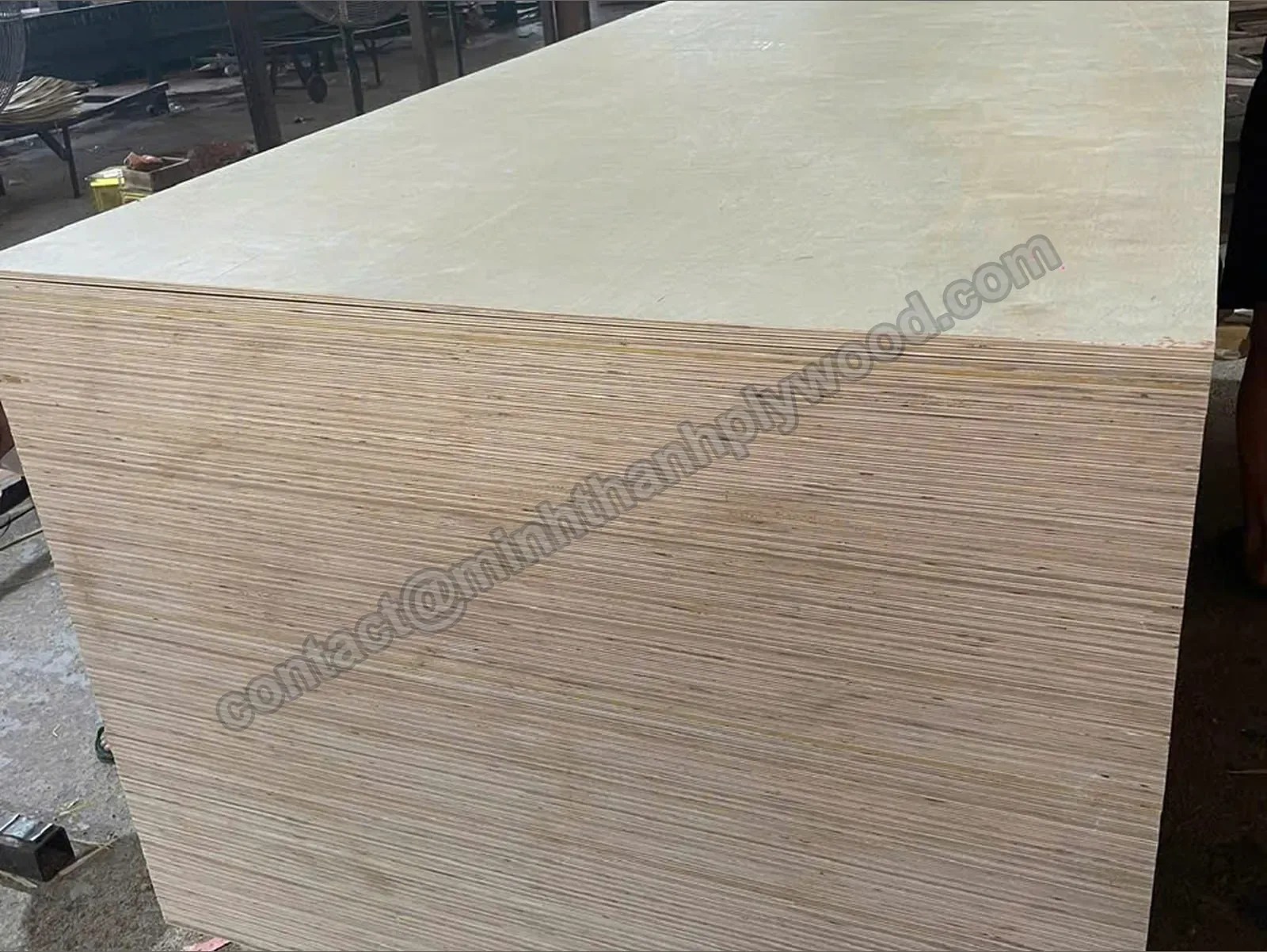
Minh Thanh’s furniture panels use stitched core layers and double pressing: the core board is pressed and calibrated before the decorative face and back are pressed onto it. This produces a prepared substrate for the face veneer. That furniture construction answers a surface and machining need; a structural floor order additionally needs the appropriate rated construction.
A useful sample review includes the face, a sawn edge and the specification attached to that specimen. The edge reveals layers or strands and helps identify the material. Performance comes from the product data, rather than an attractive sample face or a layer count alone.
Which is stronger or stiffer: plywood or OSB?
Compare actual bending strength, bending stiffness and shear properties at the required thickness and load direction. Strength describes resistance to failure; stiffness describes resistance to deflection. A floor can be strong enough yet feel flexible, so one strength value cannot answer every floor question.
For a spanning floor or roof, the designer needs the support spacing, loads, panel orientation and permissible deflection. For a shear wall, connections and the wall assembly matter as well as panel properties. Saying OSB has a fixed multiple of plywood’s shear strength, or plywood always spans farther, skips the product and assembly being compared.
APA’s interchangeability guidance explains that performance-rated panels can provide similar service in their intended applications. Its point is product qualification. It does not assign structural capacity to ordinary decorative plywood or to an unidentified strand board. Source reviewed October 2026.
WISA’s published spruce-panel comparison reports a modulus of elasticity 1.8 times that of OSB/3. Its floor example uses 18 mm WISA-Spruce versus at least 22 mm OSB for a similar structure. These are named-product examples, published in 2024; use the offered panel’s declaration and the project design when comparing other constructions.
Separate two comparisons in the tender: equal-thickness panel properties, and complete assemblies designed for the same duty. The stiffer candidate might meet the design at a different thickness. The correct cost and weight comparison then uses that required thickness, with the specified supports and fixings.
For export plywood, put the required structural grade and evidence beside the ordered core, face and bond. Minh Thanh’s water-resistant plywood options are discussed on the exterior plywood page. Select the exact product records for a load-bearing order; a face grade or adhesive name is a different specification from structural design data.
How do strength axis and span ratings affect the order?
Place the panel’s specified strength axis across the supports and choose a rating that covers the intended use. Both plywood and OSB have a weaker direction. Turning a panel to simplify cutting can change its spanning performance even though its thickness stays the same.
APA’s OSB guidance explains the two-number sheathing rating. In a 32/16 example, the first number refers to roof support spacing and the second to subfloor support spacing, in inches on centre. The rating uses the stated orientation and loading conditions; required edge support still belongs in the assembly. Source reviewed October 2026.
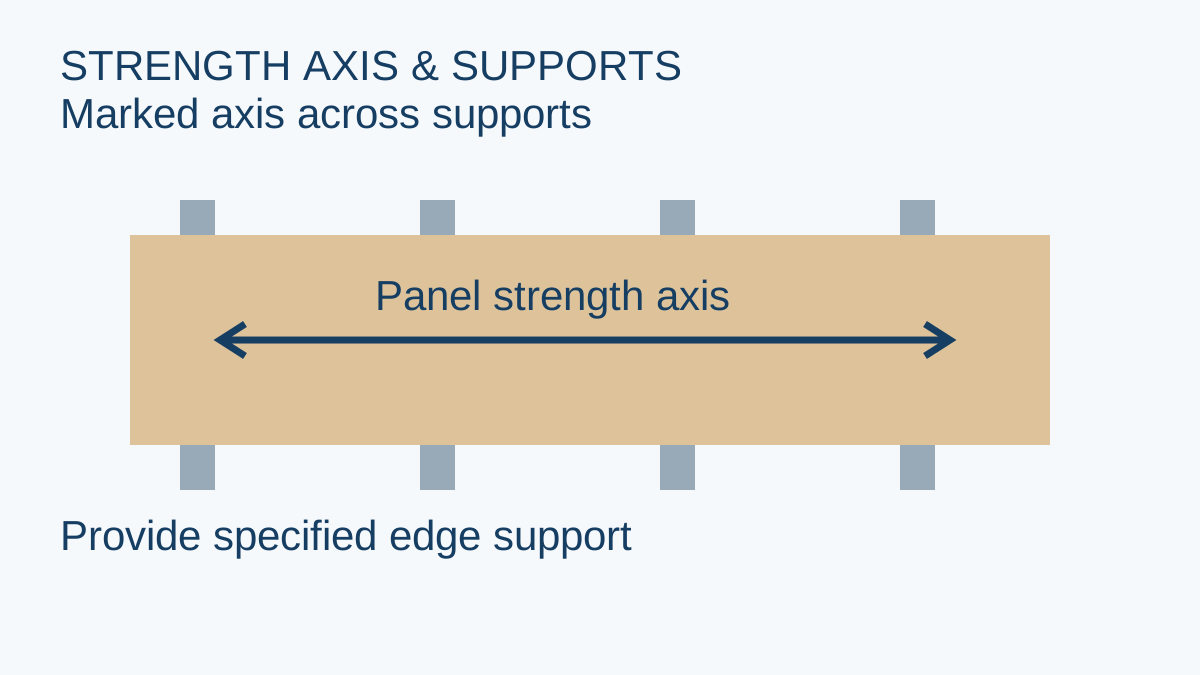
A sheathing rating differs from a single-layer flooring designation. Read the full product marking rather than treating any number printed on a panel as a permissible floor span. Record the rating, performance category, exposure class and producer identity in the purchasing schedule. The product supplied must match that schedule.
On the factory order, distinguish full-sheet panels from cut components. Minh Thanh supplies standard formats and cut-to-size plywood. If panels will be cut before installation, show the strength-axis orientation on the cutting drawing. A correctly rated full sheet can produce a wrongly oriented piece when the layout optimises yield without considering the load direction.
What happens when plywood and OSB get wet?
Conventional OSB is generally more prone to lasting thickness swelling at wet edges, while plywood generally recovers better after drying. Water response still belongs to the selected product. Edge treatments and enhanced grades change the comparison, so use test information for the candidates being offered.
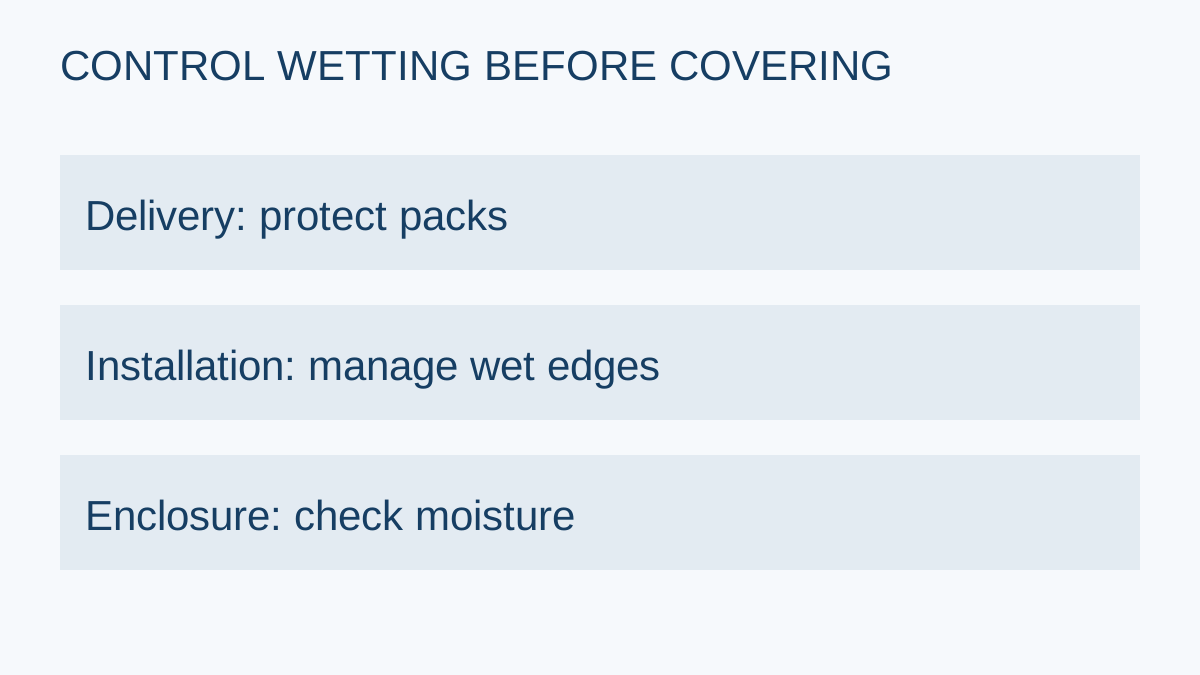
Construction rain, humid indoor service and an ongoing leak are different exposures. A panel that tolerates rain during erection still needs to dry before it is enclosed. Once a floor finish covers a wet substrate, drying becomes harder and moisture can affect adhesive performance or surface flatness.
A published manufacturer comparison illustrates the size of the wetting issue. WISA reports the following thickness expansion at 85% relative humidity and 10 °C in its 2024 article:
| Reported comparison | Thickness expansion | What the buyer should compare |
|---|---|---|
| 18 mm WISA-Spruce plywood | About 1 mm | That named plywood product at the stated climate |
| OSB/3 comparison panel | About 3 mm | The compared OSB grade at the stated climate |
The example concerns that producer’s comparison, rather than Minh Thanh panels. For procurement, compare each candidate’s wetting method, exposure period and residual swelling after drying.
Receiving inspection should check edges as well as the centre of a sheet. Look for raised joints, damaged tongues, softened areas and visible bond separation. Record the moisture condition and the locations measured. A photograph of a dry top face alone does not describe a previously soaked edge or moisture trapped inside a stack.
Minh Thanh’s production moisture target is 8–12%. That is a plywood production target, rather than the acceptance threshold for every flooring adhesive or site. Use the finished-floor system’s moisture limits when releasing an installed substrate for covering. The plywood water-resistance guide explains why the adhesive bond and the wood itself need separate attention.
Compare a delivered sheet with the approved sample before relying on a generic wetting claim. A producer’s exposure documentation and the condition of the installed panel give the buyer more useful information than an unsupported lifespan promise.
Is OSB/3 or exterior plywood waterproof?
Neither a humid-service OSB grade nor an exterior plywood bond makes the finished assembly waterproof. Select the service class, then detail the surface, edges and water path. A weather-resistant bond keeps layers bonded under specified conditions; the timber still responds to moisture.
European OSB classes distinguish dry-use general-purpose panels, dry-use load-bearing panels and humid-use load-bearing panels. OSB/3 is load-bearing for humid conditions; OSB/4 is a heavy-duty humid-use class. A grade label needs the product’s declared performance and instructions before it can become a floor or roof specification. Manufacturer classification source reviewed October 2026.
In North American structural panel terminology, Exposure 1 addresses construction exposure and comparable limited wetting. Exterior addresses repeated wetting and drying or long-term weather exposure. APA’s moisture guidance separates these bond classes and service conditions. Its TT-002 document was revised in 2017; the guidance was reviewed October 2026.
Minh Thanh offers water-resistant melamine-fortified and phenolic plywood bonds. Order the required bond performance alongside the intended exposure. UF resin at E0 emission is the furniture/interior reference, so it should not be substituted into an exterior application merely because its emission class meets an indoor requirement.
For a panel exposed after completion, the design also needs decay protection, drainage and maintenance suited to that use. Bond durability, structural rating and decay resistance are separate matters. A sealed edge helps manage moisture entry; it does not change the panel’s declared structural grade.
OSB vs plywood subfloor: which is the better purchase?
Rated OSB is a cost-effective covered subfloor choice; rated plywood is useful where wetting recovery and a veneer surface bring value. Buy either as part of a specified floor system. Support spacing, edge support and the finished floor decide whether the proposed panel fits the job.
Subflooring carries the floor loads to the supports. Underlayment prepares the surface for the flooring above. A panel can be appropriate as the structural subfloor while needing a separate smooth underlayment for the finish. Buying one sheet to perform both roles requires explicit acceptance of that product and assembly.
For tongue-and-groove panels, specify the profile as well as nominal thickness. Different profiles and machining tolerances do not automatically fit together. For square-edge panels, show the required blocking or other edge support. Carry the same details into the material take-off and installation package.
Squeaks arise from movement within the assembled floor, including supports, joints and fasteners. Adhesive selection, fastening and construction moisture affect that movement. Plywood does not guarantee a quiet floor, and OSB does not inherently produce a noisy one. Assess the connection details rather than buying a material name as a noise-control promise.
The purchasing brief should include any concentrated loads or unusually sensitive finishes. A standard sheet thickness without that context is incomplete. Minh Thanh’s thickness guide separates thickness from application; the related subfloor specification guide develops the plywood configuration after the material choice has been made.
Can you use either panel under tile, vinyl or engineered flooring?
Use the substrate assembly approved by the finished-floor manufacturer, including its panel grades, layers and moisture limits. Both materials can belong in accepted systems. A generic recommendation to put tile directly on any plywood, or to reject every OSB substrate, misses the system requirements.
Ceramic tile and stone need control of floor movement. The assembly specifies panel stiffness, supports and the bonding surface, often with a membrane or approved underlayment. Cement board and membranes perform particular roles; they do not automatically repair a structurally inadequate floor. Check the complete assembly before selecting the substrate price.
For bonded vinyl and other resilient coverings, surface smoothness matters. Strand texture, raised joints and surface coatings can affect the finish or adhesive bond. Use the specified smooth underlayment where required. A sanded plywood face also needs an accepted underlayment grade, repairs and preparation; sanding alone does not establish flooring compatibility.
Engineered wood and laminate systems have their own fastening, flatness and moisture instructions. Compare those requirements with the actual delivered panel, especially after open-site wetting. Release the substrate for covering using documented measurements rather than a visual impression that the room looks dry.
Minh Thanh’s furniture panels have calibrated sanded faces, with thickness tolerances specified for that production line. The quality-control process shows how thickness and surface preparation are checked. Tell the supplier when the panel serves as underlayment, so the quote and sample address that function rather than simply offering a decorative face.
Which panel should you buy for roofs and wall sheathing?
Rated plywood and rated OSB both serve covered roof and wall sheathing when the design accepts the product and connections. Choose by the required rating, exposure plan and installed cost. A roofing or wall system includes layers outside the panel, so sheathing is one component of its water and load paths.
A roof deck needs the appropriate support spacing, edge support and load information. Dead load, snow, maintenance access and roofing attachment can change what is required. Specify these conditions before asking for a thickness. The material comparison does not supply a roof design or make one thickness suitable for every roof.
Wall sheathing needs its designed fastening and panel-joint arrangement, particularly when it participates in resisting lateral loads. A plain exterior plywood sheet with a water-resistant bond is a different purchasing description from structural sheathing with declared racking or connection performance. Keep those requirements explicit.
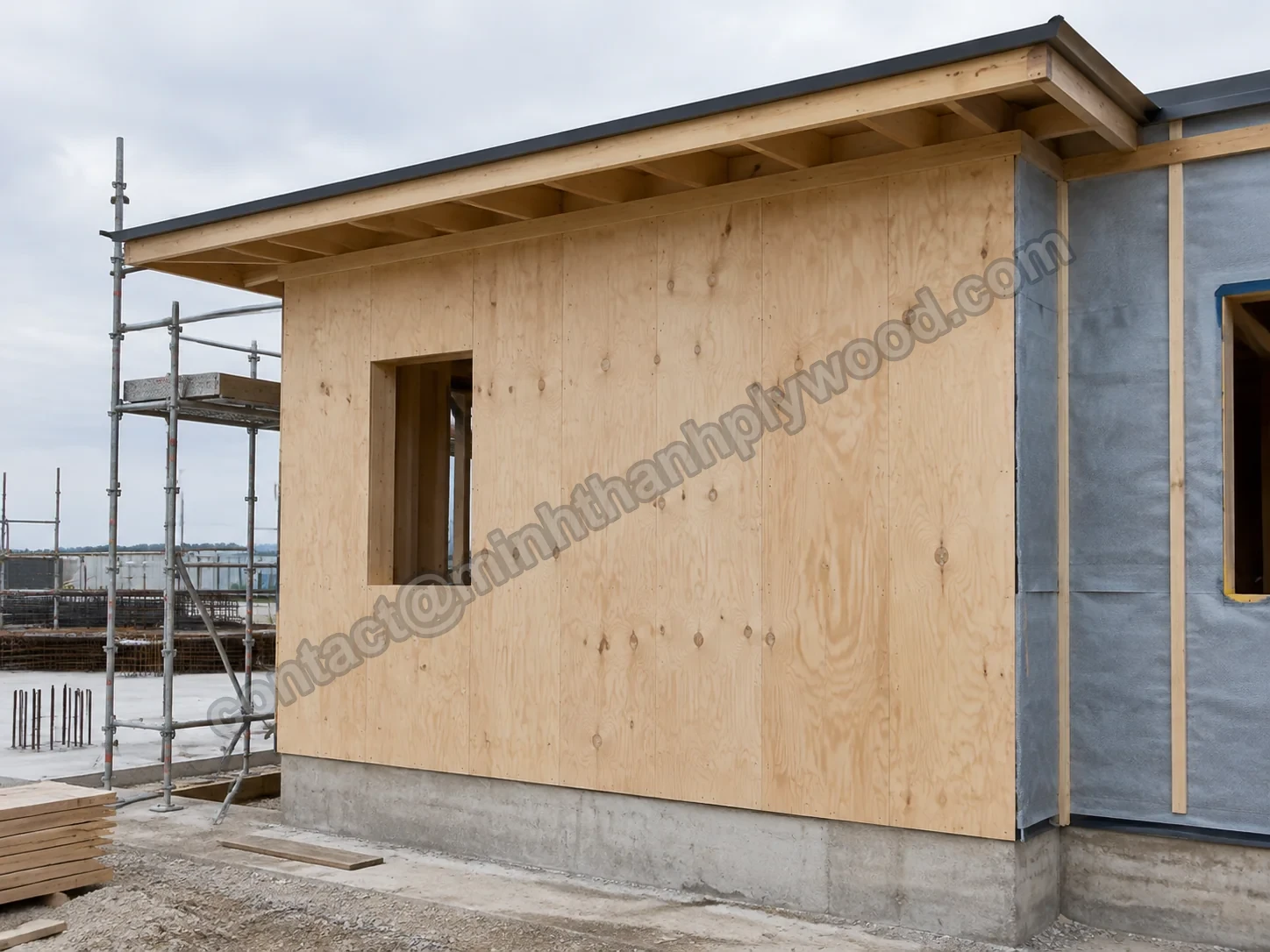
Manage exposure through storage and the enclosure sequence. Protect packs, address standing water and follow the panel producer’s spacing instructions. Gaps allow movement; tight-butting every edge can create a different installation from the one specified. Roof membranes, cladding and flashing need their own accepted substrate and fixing details.
For plywood procurement, send the roof or wall schedule with the quotation request. Minh Thanh can select the face/core/bond construction around the application. Structural records must describe that offered product. The linked roof sheathing guide addresses plywood selection after the project has chosen a plywood system.
Do screws and nails hold better in plywood?
Plywood is a useful choice for furniture joints and exposed veneer edges, but fastener performance needs the actual panel and fixing arrangement. Face withdrawal, edge withdrawal and lateral connection capacity measure different things. Compare like-for-like tests rather than combining them into a single screw-holding claim.
For structural sheathing, the connection schedule identifies fastener type, penetration, spacing and edge position. The framing or other support is part of the connection. A strong panel with the wrong attachment pattern can fail to deliver the designed assembly behaviour. The purchasing specification should retain the fixing requirements used in the design.
For furniture and workshop panels, check pilot holes, edge breakout and the local material surrounding the screw. A void at the fixing point changes a veneer-core joint. Strand breakout can change an OSB edge connection. Compare production samples with the same hardware and positions used in the intended component.
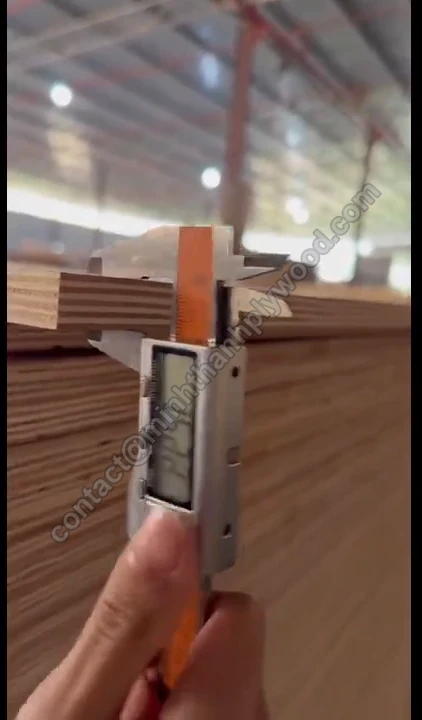
Minh Thanh stitches furniture core veneers horizontally and vertically before pressing. This controls core continuity beneath the decorative face. The relevant buyer check is a sawn sample and the actual joint trial, with the accepted core recorded on the order. It gives a furniture hardware decision evidence beyond a face photograph.
During receiving inspection, separate damage from deliberate machining. Torn tongues, crushed corners and split fixing areas need attention before installation. Replacing a damaged piece preserves the specified joint; driving more screws into a broken edge creates a different connection that needs its own assessment.
Is plywood lighter than OSB at the required thickness?
Calculate panel mass from density and dimensions, then compare the thickness each assembly requires. Plywood is not always lighter than OSB. A light furniture core and a dense hardwood construction produce different sheet masses even with the same nominal format.
For a nominal 1220 × 2440 × 18 mm sheet, the volume is 1.22 × 2.44 × 0.018 = 0.0535824 m³. Minh Thanh’s planning density references are 500 kg/m³ for Styrax and 650–750 kg/m³ for Eucalyptus. Multiplying the nominal volume by those densities gives board-only mass:
| Plywood core reference | Reference density | Calculated nominal sheet mass |
|---|---|---|
| Styrax | 500 kg/m³ | 26.8 kg |
| Eucalyptus lower reference | 650 kg/m³ | 34.8 kg |
| Eucalyptus upper reference | 750 kg/m³ | 40.2 kg |
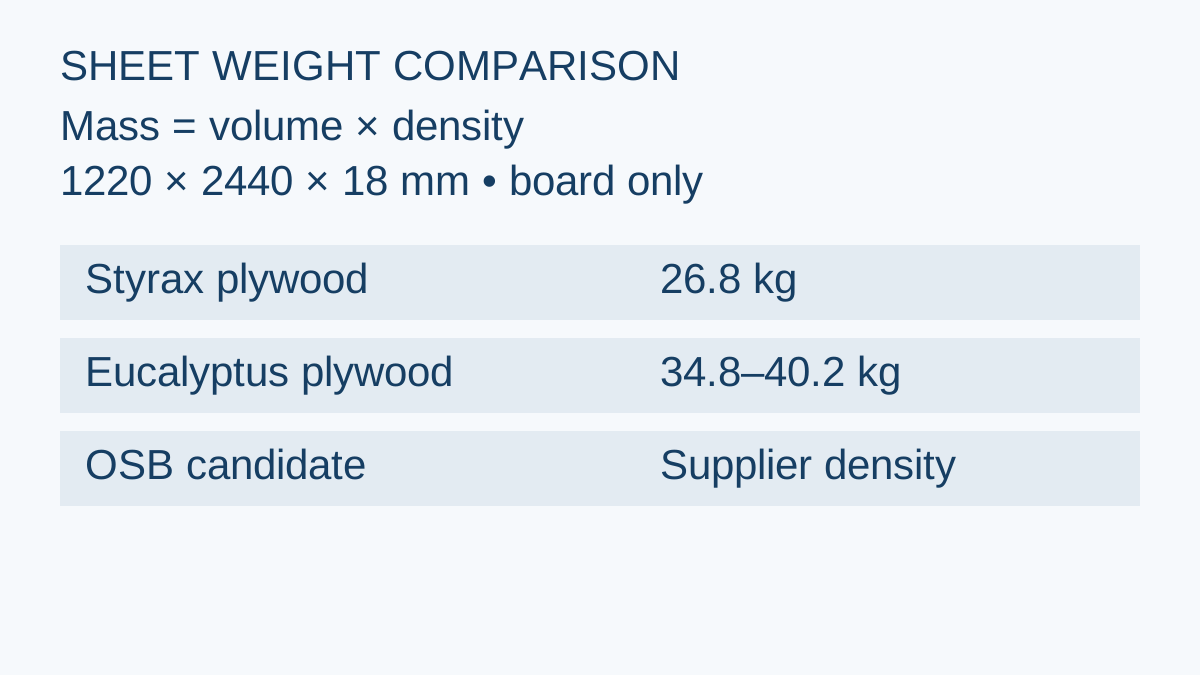
These are planning calculations from the October 2026 production references, rather than measured specimens. Obtain the selected OSB producer’s density and sheet mass for the other side of the comparison. If its approved assembly uses a thicker sheet, calculate that sheet rather than forcing equal thickness for the cost comparison.
Handling and freight introduce separate questions. Panel weight affects lifting and installation; finished component weight includes coatings and hardware. Export cargo includes packing. Use actual packaged weight and the booking limit when planning a shipment, rather than converting a nominal sheet calculation directly into a promised container count.
How do faces, machining and tolerances change the choice?
Choose plywood when a continuous wood veneer or layered exposed edge is part of the finish. Choose OSB when its strand texture suits the design or will be covered. The required surface preparation decides how much finishing work belongs in the purchase comparison.
A decorative wall or cabinet needs face/back grades, allowable repairs and the selected veneer. Minh Thanh supplies birch, poplar, engineered veneer and other face options. A face name alone does not specify the backing core or bond. Keep the complete construction on the sample approval so a good first sample can be reproduced in production.
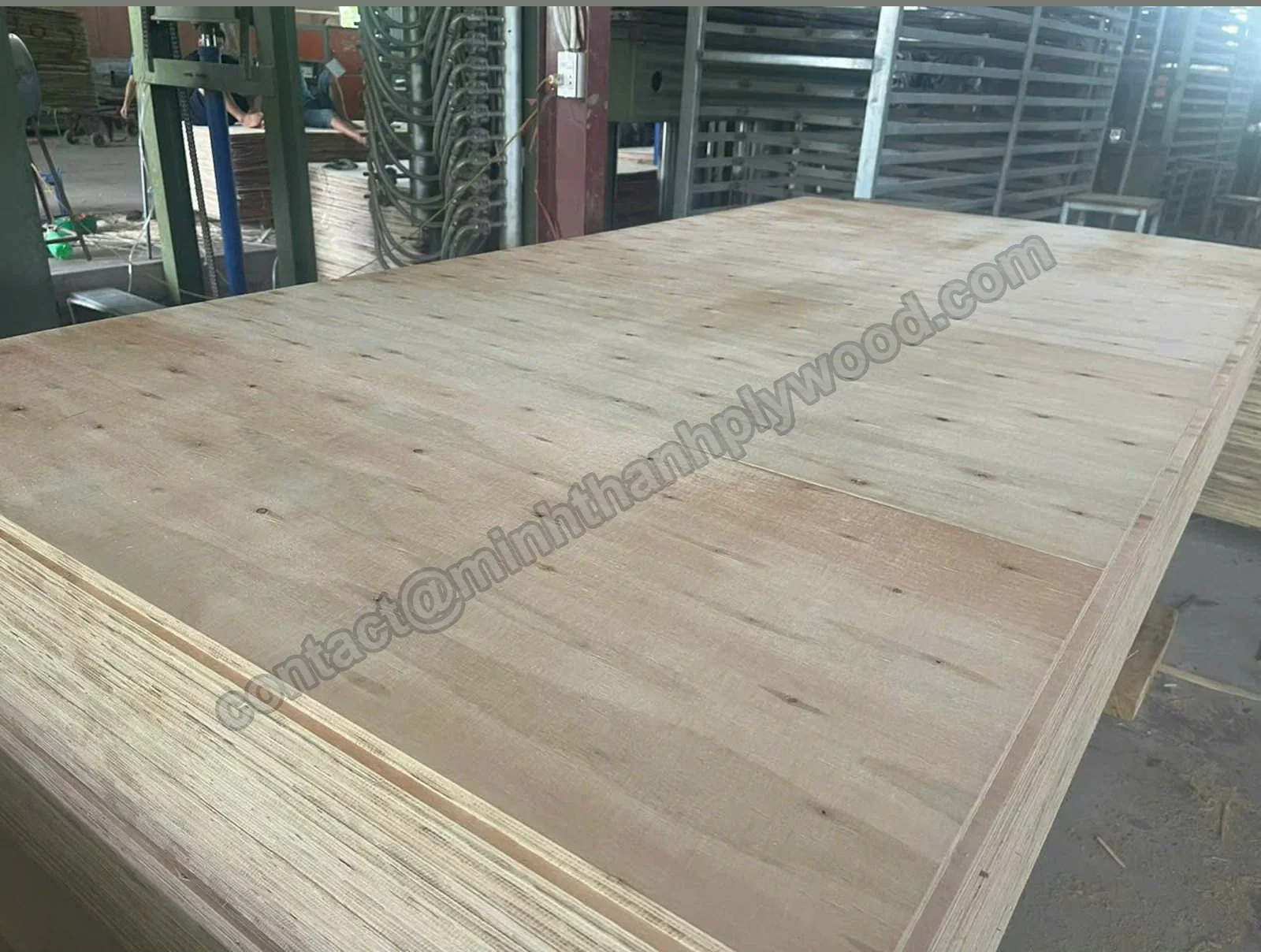
Machining tests should cover the actual tool direction, routed profile and exposed edge. Veneer breakout, loose strands, coatings and edge filling affect labour and yield. Collect representative cut parts from each candidate and compare the prepared finish. A clean sawn square is a different test from a routed hinge recess or a visible profiled edge.
Minh Thanh’s sanded furniture thickness tolerance is ±0.2–0.3 mm, with tight orders down to ±0.2 mm. The commercial and film-faced reference is ±0.5 mm. These are different production requirements. Specify the appropriate tolerance with the panel line rather than carrying the tightest furniture value into every construction quotation.
Use the drawing to identify what matters: groove fit, face alignment, sheet squareness or joint profile. Match the sample trial to those interfaces. This makes tolerance a practical buying requirement rather than a number used to imply that a panel is structurally better than another material.
Which costs less after delivery and installation?
OSB usually costs less initially for ordinary sheathing, while plywood can save finishing work or reduce exposure-related preparation in a suitable assembly. Compare current quotations for the required products and installed systems. A fixed percentage saving between the material names is too crude for an import purchase.
Begin with delivered cost per covered area at the required rating and thickness. An OSB offer per sheet and a plywood offer per cubic metre need conversion to the same area basis. Use actual net coverage for profiled panels and the cutting schedule for components. A larger sheet can change cutting yield even when the unit material price rises.
Add the costs that differ: underlayment, finishing, edge preparation, fasteners, handling and site exposure work. Include the waste expected from the real cutting layout. Keep assumptions visible on the comparison sheet so a purchasing team can see whether a lower panel price survives the next production step.
For export quotations, compare the same delivery term and destination. FOB, CFR and CIF cover different transport and insurance responsibilities. Port charges and inland delivery belong in the landed-cost calculation where applicable. An overseas retail shelf price is a different commercial basis from a factory export offer.
Minh Thanh quotes the ordered core, face, bond and tolerance rather than a generic plywood label. Its trade terms explain the purchase basis. Send the same specification schedule to each candidate supplier; a cheap offer with a different internal construction answers a different order.
What emission and environmental evidence should you compare?
Compare emission reports and environmental declarations for the specific products using compatible methods and boundaries. Neither the plywood name nor the OSB name establishes indoor-air performance or a lower environmental impact. Resin system, production and the product being tested all matter.
Distinguish structural sheathing from decorative composite-wood categories. APA states that its rated plywood sheathing and single-layer flooring panels do not use urea-formaldehyde adhesive. This structural-panel guidance is different from the resin options for interior furniture plywood. State the category before discussing which emission documents apply.
For interior plywood, Minh Thanh holds CARB P2 / TSCA Title VI certification with ICTT mill number 23024. Its emission page gives the test methods and product records. EPA composite-wood guidance, reviewed October 2026, explains the covered product categories.
Six third-party ASTM D6007 chamber reports from April 2025 to June 2026 cover 9, 15 and 18 mm plywood specimens. Their reported averages range from 0.014–0.032 ppm. Shanghai Hongjun issued HJ-QAT-250597, HJ-QAT-251303 and HJ-QAT-261036; ICTT Vietnam issued ICTTVN-QAT-250841, ICTTVN-QAT-251173 and ICTTVN-QAT-260272. Those records describe the tested plywood; compare an OSB candidate using its own emissions evidence rather than assuming it shares the same result.
For environmental comparison, read a product’s Environmental Product Declaration with its service life, declared unit and system boundary. Comparing different declared units or stages creates a misleading ranking. Certified sourcing records and origin information answer different questions from a lifecycle calculation, and none can replace the others.
Minh Thanh supplies origin records and geolocation files for the EUDR compliance dossier. The European Commission EUDR overview describes the due-diligence framework; source reviewed October 2026. Keep the requested traceability documentation on the order schedule. This guide does not rank materials by an unsupported green claim; the buyer can compare product-level evidence for the intended application and destination.
How should you qualify a substitution and inspect delivery?
Approve the replacement panel against the complete assembly before changing the purchase order. A substitution affects dimensions, support details and finishes as well as material cost. The acceptable replacement needs product records and representative samples tied to the construction being supplied.
- Identify the original panel grade, thickness, strength axis, support spacing and service exposure from the design.
- Obtain equivalent information for the candidate, including the structural data and documents the destination requires.
- Check the finish system, edge support, joint profile and fastener schedule against the proposed panel.
- Trial representative material for cutting, fixing, finish preparation and dimensional fit. Record the actual specimen and construction.
- Secure the required design acceptance, then update the purchasing schedule and receiving checks before placing the order.
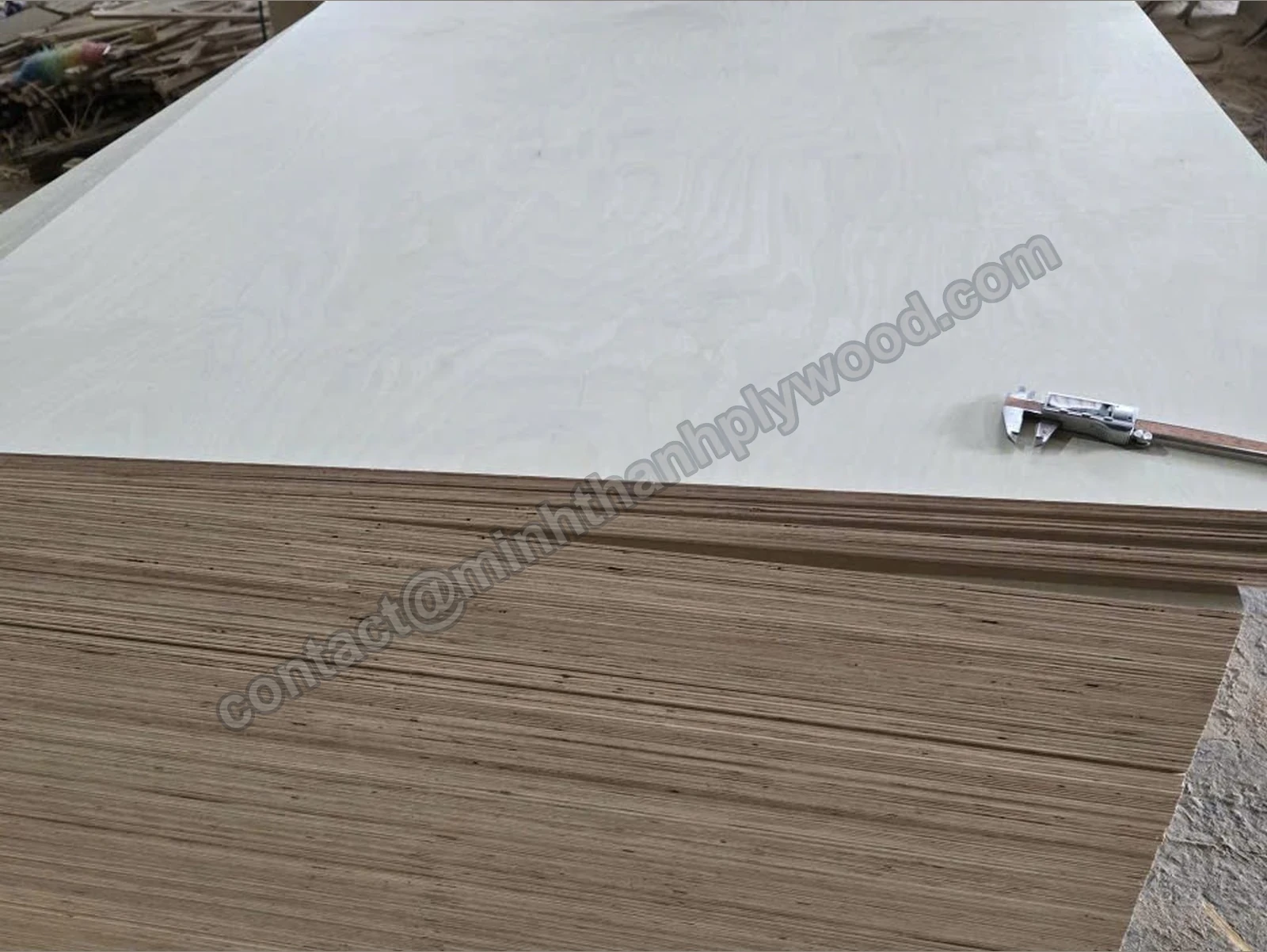
At delivery, match the panel identification and documents to the approved specification. Check dimensions across a representative selection of sheets and inspect the exposed edges. Record handling damage separately from product defects. For any wet shipment or stored pack, assess its condition before covering or machining hides the evidence.
Minh Thanh’s quality process includes core preparation, dimensional checks and export packing. For a furniture substitution, specify the calibrated surface and sample machining requirements. For structural sheathing, use the product identification and acceptance criteria from the design. Both orders benefit from an agreed sample; their performance evidence addresses different duties.
What should you send Minh Thanh for a plywood quote?
Send the application and the required panel construction so Minh Thanh can quote the plywood that fits the job. Roof sheathing, a furniture carcass and a reusable concrete shutter need different specifications. Give the intended use first, then describe the product and documents needed.
Include the following lines in the quotation request:
- Application and environment: floor, roof, wall, furniture or formwork; concealed or visible; dry, humid or exterior service.
- Core and construction: species, joining requirement, layup or structural grade, with product data required for load-bearing use.
- Bond and emission: moisture-service performance and the indoor emission requirement as separate fields.
- Face and back: veneer, paired grade, surface preparation and any finish applied by the receiving workshop.
- Dimensions: nominal thickness, length, width, agreed tolerance, edge profile and cut orientation where relevant.
- Packing and quantity: protection, labels, order volume, destination port and delivery term, plus the target production window.
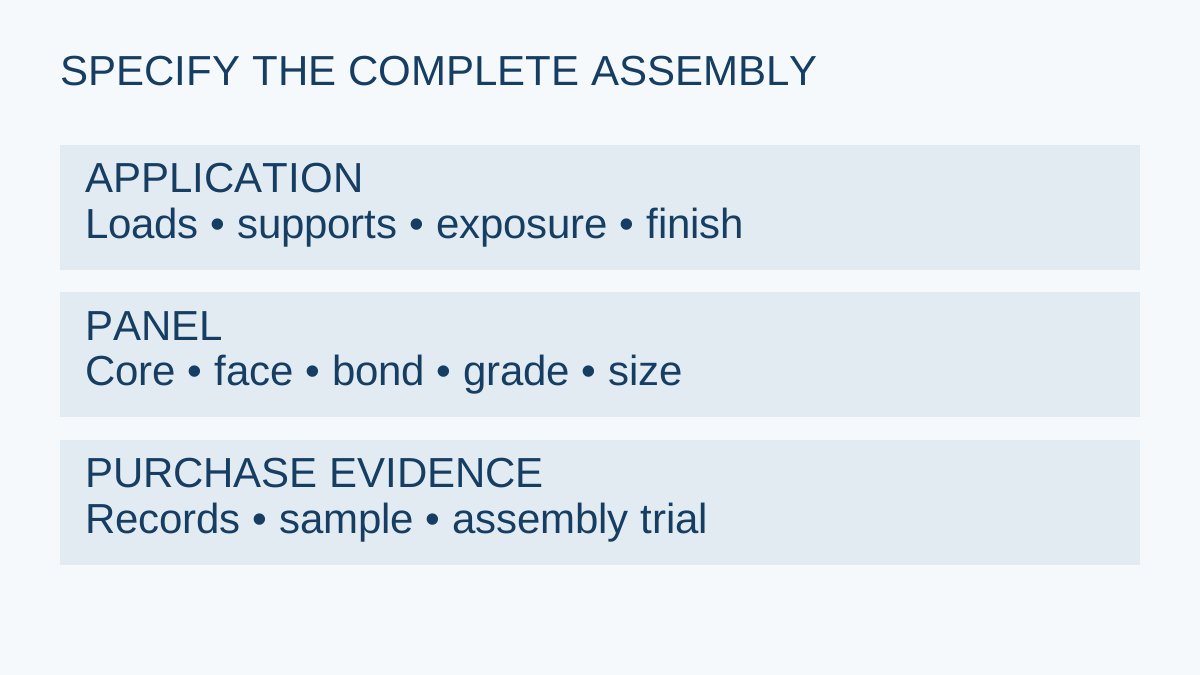
Free samples let the buyer assess construction and machining before production. Use the same sample record to capture the required test documents and acceptable finish. If the order replaces an existing panel, attach that specification and identify the interfaces the replacement must match.
Minh Thanh’s standard minimum order is one 40HC container. Production takes 15–45 days after deposit; standard payment is 30% deposit and 70% against the bill-of-lading scan, with an irrevocable letter of credit at sight also accepted. These are production and payment terms, rather than a promise of arrival on a particular vessel date.
Choose the compliant assembly first and compare its delivered cost. Then send the plywood schedule to Lisa on WhatsApp or email Minh Thanh for a factory quotation. The buyer receives an offer tied to a real construction, with the sample and documentation needed to decide whether that offer fits the project.
Buyer questions, answered
What is the difference between plywood and OSB?
Plywood bonds continuous wood veneers with alternating grain direction; oriented strand board (OSB) bonds wood strands arranged in layers. Both have directional properties. Structural use requires the actual product grade, rating and exposure classification, while visible work also needs an agreed surface and edge finish.
Is plywood stronger than OSB?
Compare bending strength, stiffness and shear data for the actual panels, thicknesses and load directions. Performance-rated plywood and OSB can serve the same approved structural application. Neither a material name nor a decorative face establishes a floor load capacity or a fixed strength advantage.
Is OSB or plywood better for a subfloor?
Rated OSB is an economical covered subfloor option; rated plywood is useful where wetting recovery and a veneer surface matter. Specify support spacing, span rating, edge support, fastening and the finished-floor assembly. Compare the compliant systems at the thickness each requires.
Does OSB swell more than plywood when wet?
Conventional OSB is generally more prone to persistent thickness swelling at wet edges, while plywood generally recovers better after drying. Product grade and treatments affect the result. Keep either panel protected during storage and construction, and check moisture, edge height and bond condition before covering.
Is OSB/3 waterproof?
OSB/3 is a load-bearing grade for humid conditions, rather than an exposed waterproof finish. Its specified use still needs weather protection and appropriate detailing. For either plywood or OSB, distinguish construction wetting from long-term exposure and use the producer's service classification.
Can OSB go under tile or vinyl?
OSB can be part of an approved tile or resilient-floor assembly when that system accepts it. Tile needs the specified stiffness and substrate layers; bonded vinyl needs its approved smooth surface and adhesive compatibility. Plywood alone does not automatically remove the need for underlayment or a membrane.
Does plywood hold screws better than OSB?
Plywood is useful for veneer-edge joints and furniture hardware, but screw withdrawal depends on the panel and fixing details. Compare the same screw, penetration, edge position and test direction on representative material. Structural sheathing also needs the designed fastener schedule and connection capacity.
Is plywood lighter than OSB?
Compare actual density and sheet dimensions. A nominal 1220 × 2440 × 18 mm plywood sheet calculates to 26.8 kg with the 500 kg/m³ Styrax reference, or 34.8–40.2 kg with the 650–750 kg/m³ Eucalyptus reference. Calculate the OSB candidate from its own density and required thickness.
Which is cheaper, OSB or plywood?
OSB usually has a lower purchase price for ordinary covered sheathing. Compare delivered cost per covered area at the required rating, then include underlayment, edge preparation, installation and expected exposure work. A retail sheet-price difference does not establish an export quotation or a guaranteed saving.
Can I replace specified plywood with OSB?
A substitution needs the replacement's grade and design data plus acceptance of the complete assembly. Check thickness, strength axis, support spacing, fasteners, service exposure and finish compatibility. Update the specification and obtain the required design approval before buying the substitute.
Does exterior plywood mean structural plywood?
Exterior identifies a moisture-service or bond requirement; structural suitability needs its own product evidence. Minh Thanh offers exterior/CDX-type plywood with water-resistant melamine-fortified or phenolic bonds. A structural order also needs the exact grade, design values and marking required for its market.
Does Minh Thanh manufacture OSB?
Minh Thanh manufactures plywood, including furniture, commercial, packing and film-faced lines. OSB is the alternative material assessed in this guide. Send the intended plywood application, core, bond, face, dimensions and quantity for a factory quotation and free samples.