
HDO plywood is plywood faced with a high-density resin-impregnated fibre overlay. Choose HDO Concrete Form for smooth concrete and repeated forming; choose MDO Concrete Form for a matte concrete finish, or MDO General for painted signs. In the HDO vs MDO plywood decision, specify the working grade before comparing prices. Minh Thanh Plywood supplies film-faced alternatives for concrete forming.
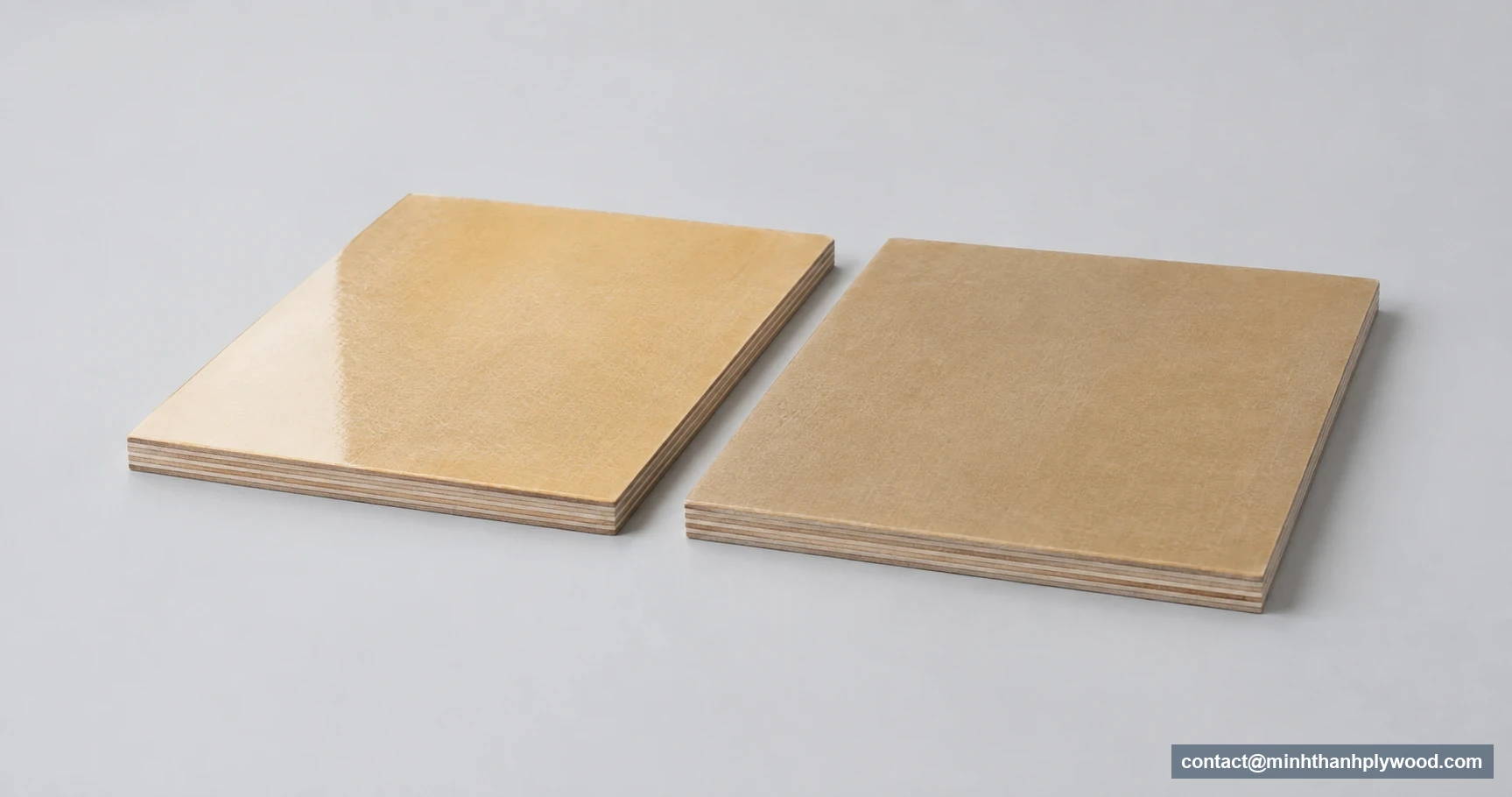
HDO vs MDO plywood: which panel fits the job?
Choose the overlay by the finished surface and the panel’s designated working grade. HDO means High Density Overlay; MDO means Medium Density Overlay. Neither abbreviation tells purchasing everything about the panel behind the face. A contractor ordering smooth wall forms and a sign maker ordering a painted substrate need different products even when their sheets have similar dimensions.
On a phone, swipe the comparison table sideways to see every column.
| Purchase decision | HDO plywood | MDO plywood | Film-faced plywood |
|---|---|---|---|
| Surface family | Resin-rich, high-density fibre overlay | Medium-density resin-fibre overlay | Resin-treated surface film |
| Concrete-contact order | HDO Concrete Form | MDO Concrete Form | Identified forming-panel product |
| Typical concrete appearance | Smooth; gloss level defined by the product | Matte with the designated forming grade | Finish defined by film and forming sample |
| Routine painted sign order | Industrial grade with an accepted finishing system | General grade with primer and topcoat | Select a separate paintable substrate |
| Working-face choice | One or two specified working faces | One or two specified working faces | Film on the specified face/back |
| Strength purchase input | Actual panel grade and design data | Actual panel grade and design data | Actual panel construction and design data |
| Economic comparison | Accepted pours and care cost | Accepted pours and care cost | Accepted pours and care cost |
For repeated architectural forming, start with the required concrete appearance and the form-system engineering. For painted signage, start with paint adhesion and exterior detailing. Buying the hardest face available does not recover its premium when the project cannot use the extra surface life.
Minh Thanh’s film-faced plywood is the relevant factory product for a forming alternative. Quote it as its own construction, then compare an accepted pour sample with the specified HDO or MDO product. This keeps a useful commercial alternative visible without changing the material name on the drawing.
What is inside HDO plywood and MDO plywood?
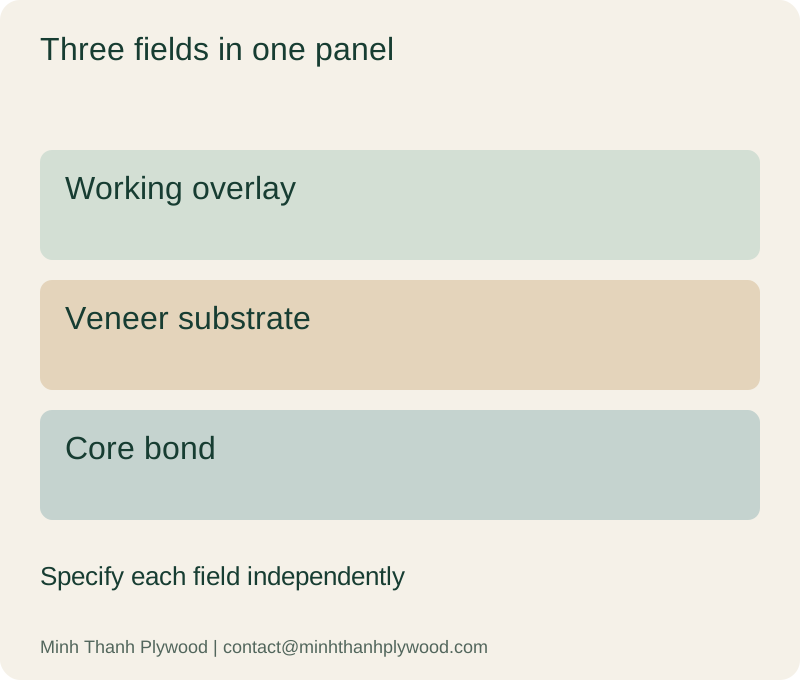
Both families combine a veneer plywood substrate with a resin-impregnated fibre facing bonded in the press. The veneer layup supports the load; the overlay controls the contact surface. Surface resin, overlay fibre and adhesive between veneers are separate parts of the construction. Treating the whole panel as one layer of phenolic material hides those distinctions.
The current APA overlay selection guidance, reviewed 7 October 2026, lists minimum resin contents by grade: HDO Concrete Form 52%, HDO Industrial 45%, MDO Concrete Form 34%, and MDO General 27%. These are grade-specific overlay figures, not resin percentages in the entire plywood sheet. They do not specify a supplier’s film weight or a concrete reuse guarantee.
Ask for a construction description that identifies the working overlay, any cushion or backing layer, face veneer and inner plies. A multi-layer overlay can include a different layer beneath its contact face. Naming that backing layer alone would give the wrong impression about what touches the concrete. Keep the supplier’s construction revision beside the sample identifier.
In receiving inspection, the sawn edge reveals veneer continuity and layers, while the face reveals surface damage. Neither view measures the resin percentage. Use the product documentation for that specification, and use a retained panel sample to recognise the selected build. This division saves time: purchasing evaluates the stated construction, receiving checks what arrived, and the trial evaluates how it performs.
Is HDO plywood the same as phenolic film-faced plywood?
HDO and film-faced plywood belong to different surface specifications, even though both can be selected for concrete forming. HDO describes an overlay family and grade. Film-faced describes a resin-treated film applied to a plywood panel. A brown or black photograph cannot establish an equivalent overlay construction.
Film weights are normally reported in grams per square metre. Minh Thanh’s industry reference for ordinary film is approximately 120–135 g/m², with premium film from 135 g/m². That mass describes the selected film; it is a different measurement from resin content expressed as a percentage of an overlay. A heavier film and a higher resin percentage cannot be ranked on one numerical scale.
The core bond belongs on another line. A film face with phenolic resin can sit above a substrate made with a different adhesive system. Write the core adhesive and required bond performance explicitly. In Minh Thanh’s forming range, the buyer chooses Acacia or Eucalyptus core and the specified bond. The water-resistance guide explains the distinction between protected surfaces, durable bonds and water entry into wood.
For substitution, compare the contact finish, acceptable defects, form fit and measured performance. Keep the proposed film-faced sheet separate from an HDO quotation until the buyer approves the alternative. This matters for repeat orders: a purchase code labelled HDO should continue to identify HDO, while an accepted film-faced alternative needs its own code. A successful alternative is easier to reorder when its actual material name survives procurement.
Which grade of MDO plywood can contact concrete?
MDO Concrete Form is the grade to specify for concrete contact; MDO General is the painting-oriented grade. The shared MDO name does not make them interchangeable. A paintable paper surface and a forming surface have different contact duties and finishing instructions.
APA’s concrete form panel guidance, reviewed 7 October 2026, says forming overlays carry a Concrete Form designation on the trademark. It also separates the panel’s strength class from the overlay. Obtain the product designation, then match its thickness and design properties to the form system. The surface specification and the load schedule need to agree on the same panel.
A procurement shortcut such as “MDO, tan, exterior” leaves the concrete-contact grade unidentified. Replace it with the supplier’s named Concrete Form product and working-face count. Record whether release treatment is factory applied and which release agent the manufacturer recommends. The crew needs that information before the sheets reach the casting bed.
An overseas supplier’s matte formwork film can be a useful alternative, but matte appearance alone does not establish MDO. The same naming discipline applies to HDO-like and formply descriptions. Give the actual overlay construction on the quote, and obtain the buyer’s acceptance against the specified finish. This is quicker than resolving an unexpected material substitution after an exposed wall has been cast.
What concrete finish will HDO or MDO produce?
Select the panel using a cast sample of the required concrete finish. HDO forming products generally serve smooth surfaces; MDO Concrete Form serves matte surfaces. The exact gloss, grain transfer and colour uniformity belong to the specific product and the casting process.
A manufacturer example shows why that distinction matters. Olympic Panel’s Classic HDO technical sheet describes a semi-gloss concrete finish with slight grain transfer. A separate SOCOMI MultiForm HDO sheet describes a non-architectural smooth finish. Both use HDO in their names. Approve the actual finish rather than promising a mirror surface from the abbreviation.
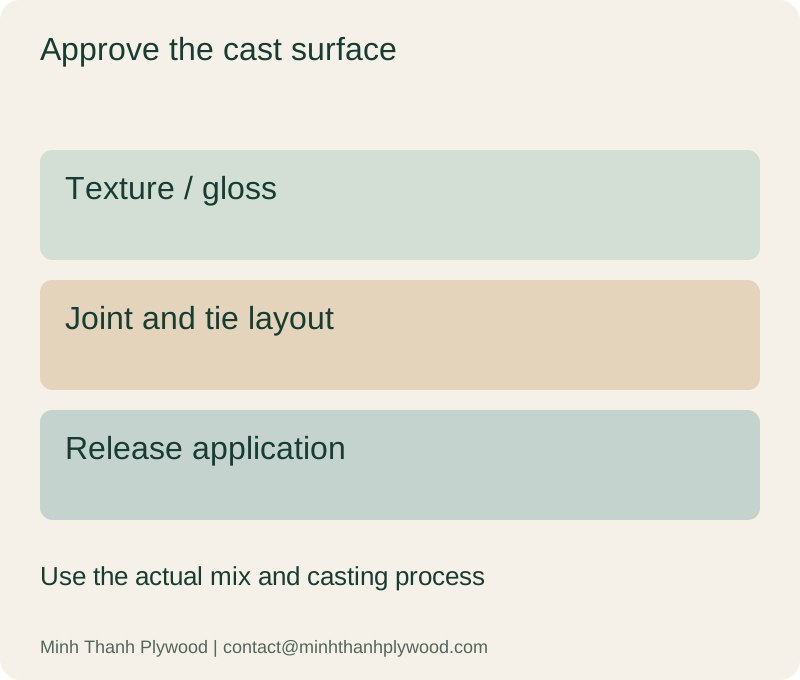
Build the mock-up with the selected concrete mix, release system, joint arrangement and stripping practice. View it under lighting that resembles the final application. A low-angle light can expose ridges or face texture that disappears in a flat product photograph. Include a panel joint and a tie location where those features occur in the real wall.
Specify the acceptance language before the trial: visible grain transfer, joint line, local damage, colour variation and repair allowance. Keep new and used panel faces identifiable. Where an elevation requires a consistent appearance, use panels with comparable surface condition and a controlled release application. The overlay provides the contact face, while the pour process still shapes the final appearance.
Should you order one or two working faces?
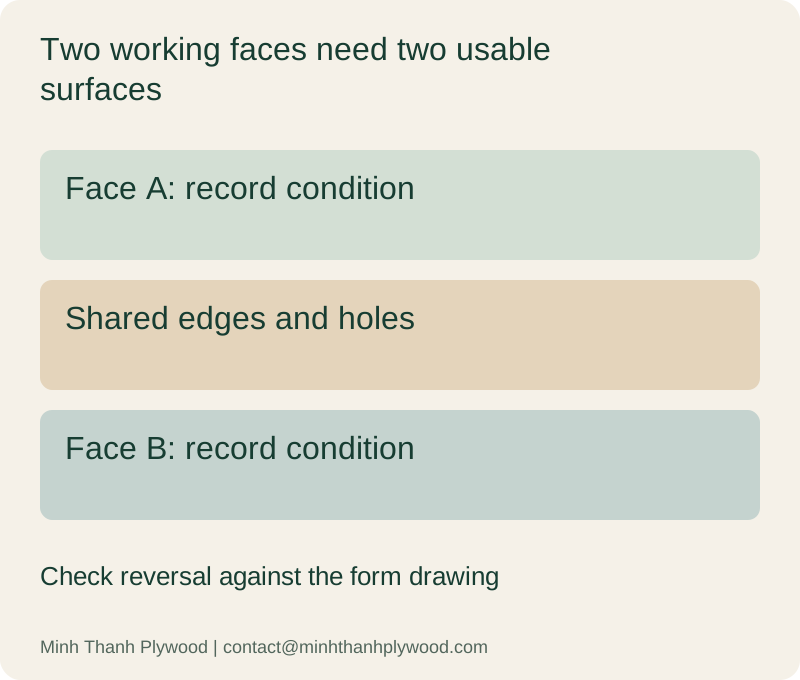
Order two working faces when the form-system design permits reversal and the second surface will be used. Order one when the panel is permanently attached or its back serves another function. A backing sheet used to balance construction is different from a second specified concrete-contact face.
Write each side separately: working overlay on face, treatment on back, and any restrictions on use. Buying a two-sided product makes sense only if fixing patterns, cut-outs and panel condition allow it to be turned. A face that remains trapped against a frame throughout the project contributes no extra accepted pours.
Track panel identity by an edge or back code that does not damage the contact surface. Record face A and face B separately in the trial. One face can lose its cosmetic quality before the other; an edge crack or enlarged fixing hole can affect the whole panel. This gives purchasing a realistic record of how much usable life the second overlay adds.
Panel layout is also part of the decision. Reversal changes where asymmetric openings or cut-outs fall, so check the drawing before counting another life from the back. For sheets cut into narrow components, mark which edges need resealing and how the parts will be supported. If reversing requires dismantling a gang form, include that labour in the price comparison. The second face is an available resource, not an automatic doubling of economic life.
Which thickness, format and engineering data belong on the order?
Specify actual thickness, tolerance, sheet format and engineering properties for the panel selected by the form designer. The overlay gives surface performance; it does not provide a universal allowable concrete pressure. Support spacing, orientation, load duration and deflection limits belong to the form design.
A 3/4-inch dimension converts to 19.05 mm, while 18 mm is 1.05 mm thinner. A nominal performance category can have its own permitted actual thickness. Obtain the product’s actual values before treating these labels as equivalents. Fit against the frame, edge profile and fasteners matters alongside the designer’s load calculation.
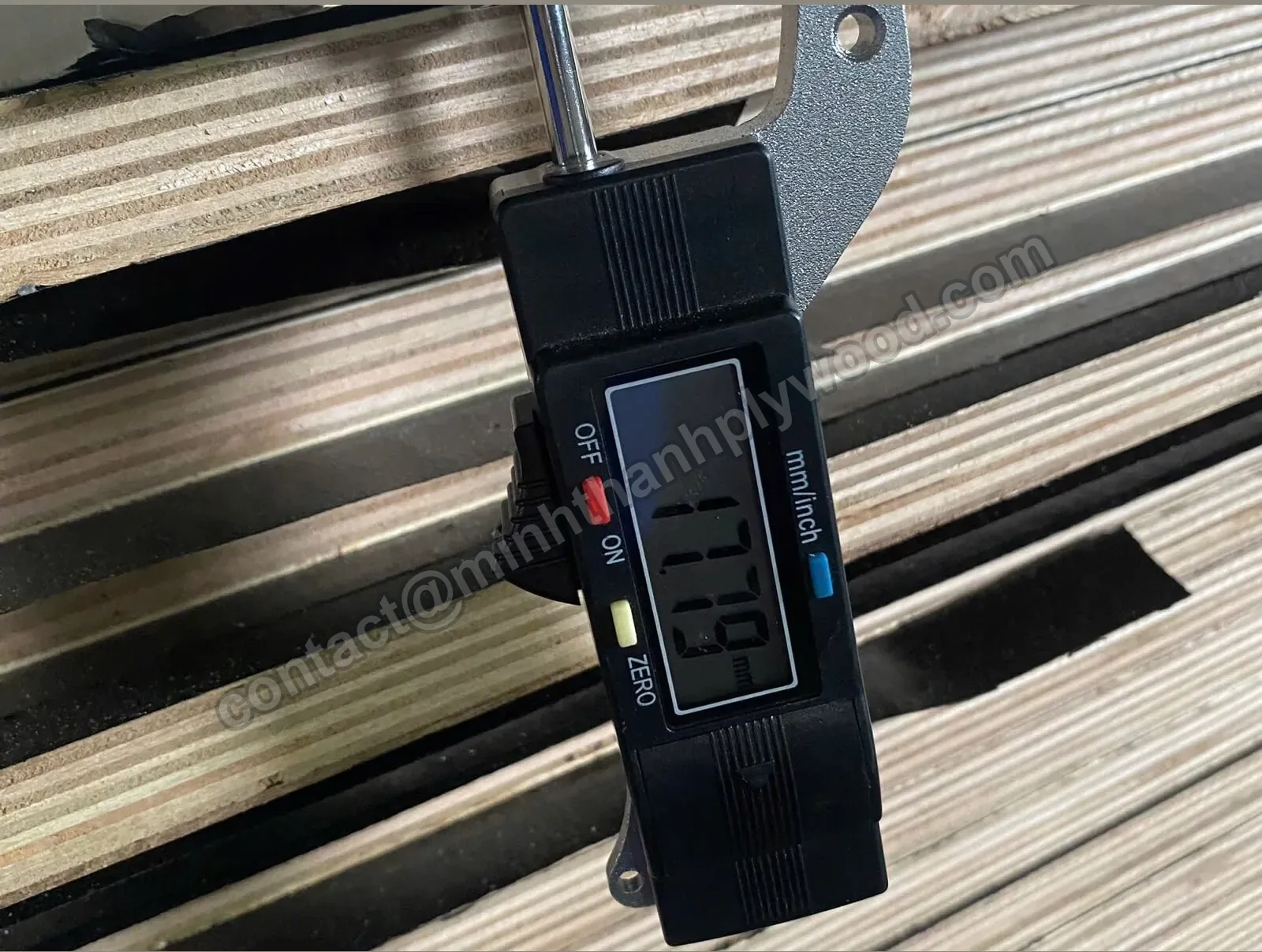
For Minh Thanh film-faced plywood, the reference thickness tolerance is ±0.5 mm. An 18 mm order therefore describes a 17.5–18.5 mm band. The industry reference for length and width tolerance is ±2 mm. Keep these manufacturing tolerances beside the ordered product; another supplier’s HDO panel carries its own specified limits.
Minh Thanh’s standard sheet formats are 1220 × 2440 and 1250 × 2500 mm. The respective face areas are 2.9768 and 3.125 m². A larger face offers more area, but the form layout determines whether it yields more useful contact surface. Cuts, edge clearance and discarded strips belong in the take-off. The sheet-size guide and thickness guide help separate these ordering fields before a form-system engineer evaluates the panel.
Is HDO plywood waterproof, and what does the core change?
Exterior bond and a protective overlay support wet-service durability, while sealed edges and holes protect exposed wood. Water can enter a cut edge even when the broad face remains intact. Treat the bond, overlay and edge treatment as separate checks in the order and receiving plan.
Minh Thanh’s film-faced construction uses Acacia or Eucalyptus core. The planning density references are 580 kg/m³ for Acacia and 650 kg/m³ for Eucalyptus, with an Eucalyptus reference range of 650–750 kg/m³. These describe the supplier’s planning inputs. They do not supply load ratings for HDO or MDO from another manufacturer.
At 1220 × 2440 × 18 mm, board volume is 0.0535824 m³. The density references give approximately 31.1 kg for Acacia and 34.8–40.2 kg for Eucalyptus. Actual overlay construction and moisture affect the finished product, so weigh the selected panel when planning lifting and packed cargo. Use the quoted panel’s design data for stiffness; calculating mass from density answers a different question.
Inspect newly sawn edges for splits, gaps and local damage before sealing. Record defects against the accepted sample and agreed limits. Where fasteners penetrate the face, protect the exposed wood according to the forming-panel instructions. The quality page supports the factory evidence, while the selected product data and trial support the forming decision.
How many times can an HDO plywood sheet be reused?
Use the named product’s care instructions and accepted trial results to plan reuse. A working panel must produce the specified finish and remain fit for the form system. Counting every strip, including pours that need rejected surface repairs, overstates its usable life.
Published reuse numbers describe different products and working systems. Olympic’s Classic HDO sheet lists upper pour ranges of 150 for engineered systems, 50 for gang forms and 30 for job-built forms. Those are that product’s published ranges, with maintenance and site conditions attached. They are useful evidence of how system choice changes life; they are not Minh Thanh figures or a guaranteed minimum for all HDO.
Minh Thanh’s industry reference for film-faced plywood is approximately 12–15 uses with the selected melamine bond and up to approximately 25 with the selected phenolic bond, under proper release application, cleaning, edge sealing and storage. Quote those as film-faced planning references for the selected configuration. Keep them separate from a specialist HDO specification and from the number of accepted pours achieved in a particular trial.
Define the stopping rule with the buyer. A face can still strip concrete while leaving a texture the exposed wall specification rejects. A panel retired from visible work can also be damaged in a way that prevents safe further forming. Separate the finish decision from the engineering decision, and record both. Honest cycle records let the next order improve its material choice instead of repeating an optimistic maximum.
How do you calculate cost per accepted pour?
Divide delivered panel cost plus relevant care and replacement costs by accepted contact area over the project. For equal-size, fully used sheets, panel cost per accepted pour is a useful first comparison. Reuse alone misses labour, trimming losses and the cost of correcting unacceptable concrete.
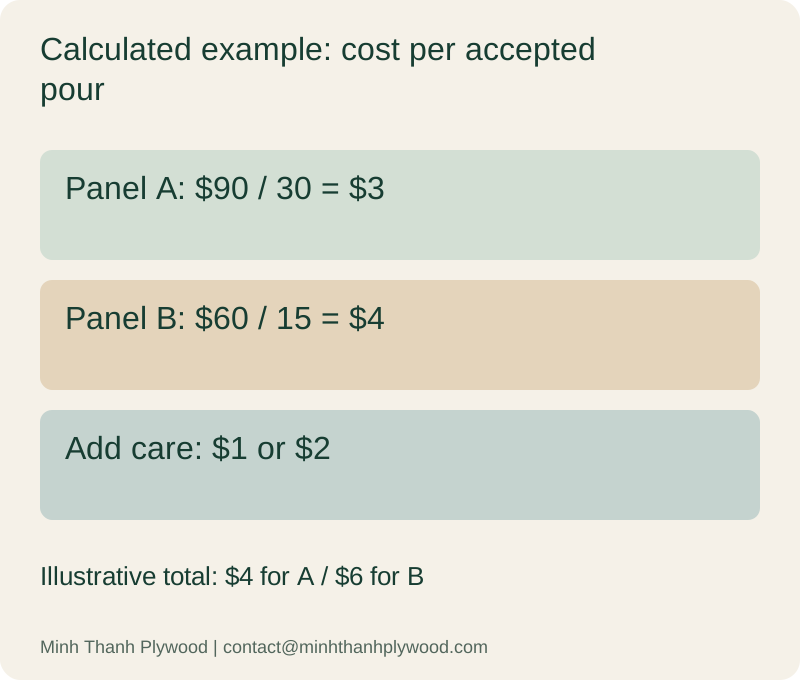
The following figures are a calculated purchasing example, not supplier prices or measured product life. Assume panel A costs US$90 delivered and achieves 30 accepted pours. Panel B costs US$60 delivered and achieves 15. Assume care labour and consumables cost US$1 per pour for A and US$2 for B.
On a phone, swipe the cost table sideways to compare both panels.
| Illustrative input | Panel A | Panel B |
|---|---|---|
| Delivered sheet cost | US$90 | US$60 |
| Accepted pours | 30 | 15 |
| Panel cost per accepted pour | US$3 | US$4 |
| Care cost per pour | US$1 | US$2 |
| Combined cost per accepted pour | US$4 | US$6 |
For a 2.9768 m² sheet used at full area, the combined figures are approximately US$1.34 and US$2.02 per accepted m²-pour. They exclude frames, fixing labour, finance and concrete rework. If A achieves only 15 accepted pours, its combined cost becomes US$7 per pour. The more expensive panel then loses its economic advantage under these assumptions.
Use this sensitivity in the RFQ evaluation. With care costs held at US$1 and US$2, A must achieve at least 18 accepted pours to match B’s US$6 combined cost. Check whether the project has enough repeat work to reach that point. A premium face bought for a short programme can finish beautifully and still be a poor cost choice.
How should release agent and cleaning be specified?
Specify the release agent, application rate and cleaning method recommended for the named forming panel. Start that process before the first use. A release coating left from manufacture and a site-applied agent have different instructions; the receiving team needs to know which condition it has.
Record the selected agent by product and keep its application instructions with the formwork brief. Apply a controlled layer across the working face, including corners and local repairs. Pooling or missed areas can affect concrete appearance and stripping. Check compatibility with any later coating on the concrete when appearance or adhesion matters.
Clean promptly after stripping using the tools permitted by the panel maker. Aggressive scraping can turn a removable residue into permanent overlay damage. Follow the named product’s instructions rather than applying one generic brush recommendation to every resin surface. Look for lifted fibres, scoring and damaged corners before preparing the next pour.
A useful crew record includes panel identification, working face, release product, cleaning method and any repair. Put the cast finish result beside those entries. Changing the agent during a trial changes the test as well as the consumable cost. Hold it constant when comparing panels, or label a separate trial for the revised system. This produces a purchasing record that explains why one construction performed better and what the next delivery must reproduce.
How do you seal, store and retire the panels?
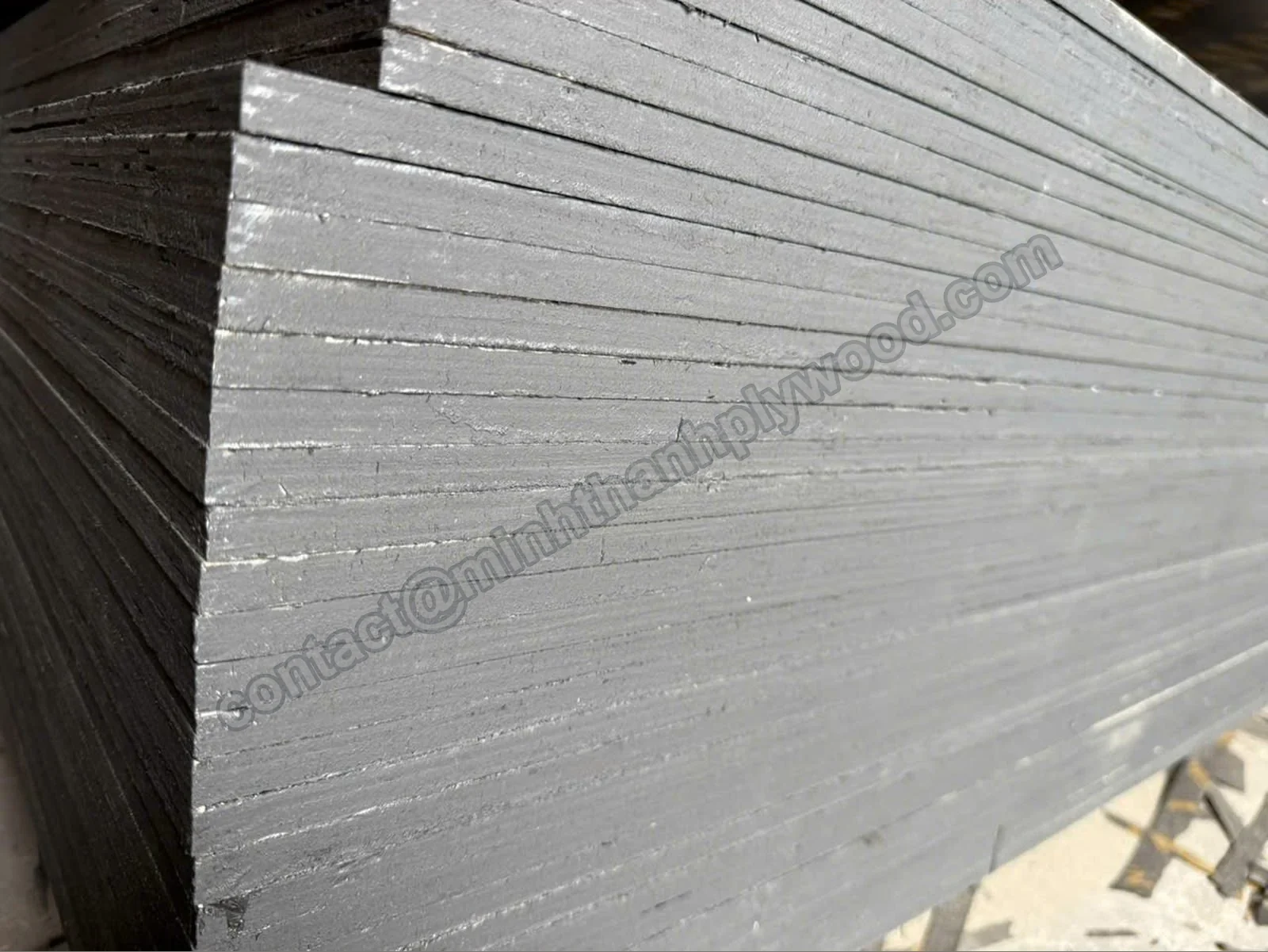
Seal exposed wood after cutting or drilling, store sheets supported flat, and inspect before another pour. Factory edge sealing protects the delivered perimeter. Site modifications create fresh exposure that needs its own treatment.
The storage area should protect working faces from dirt and damage during handling. Separate panels using the manufacturer’s stacking method and keep them clear of standing water. Move full packs with suitable lifting equipment, protecting corners and straps. A clean overlay can be scored by grit trapped between boards even when the adhesive bond remains sound.
Prepare a receiving sheet that distinguishes shipping damage from later handling damage. Photograph representative faces and edges before use, then retain the panel code in the trial record. Repair holes and local defects with the system specified for that panel. A repair that remains visible on the cast surface belongs in the finish evaluation.
Retire the panel from its assigned task when it fails the agreed condition limit. For exposed concrete, the limit includes face appearance; for the form system, it includes integrity and fit. A sheet with a serviceable face can still have a split edge or damaged fastening area. Store rejected panels separately so crews cannot confuse them with approved stock. Reclassifying a panel for a less demanding task requires a fresh assessment of that task, rather than another tick in the original reuse count.
Can HDO or MDO plywood be painted for signs and exterior panels?
Choose MDO General for routine painted signs and exterior painted components, with the specified primer, topcoat and edge treatment. For HDO Industrial, qualify the finishing system on its resin-rich surface. A forming product with a release treatment needs a separate finishing assessment.
The APA HDO/MDO Product Guide, Form B360N, published in 2011 and reviewed 7 October 2026, distinguishes paint-oriented MDO from forming-oriented overlays. Its finishing guidance also covers preparing HDO before coating or applying reflective material. Use the edition and the selected product instructions together when writing the coating schedule.
Test the coating on a sample carrying the same factory preparation as the delivery. Apply primer and finish through the sign maker’s normal process and inspect the cured surface. Include the cut edge and any fixing hole. A successful face-only paint patch does not show how the completed sign will behave at exposed edges.
For a reflective sign, assess the specified reflective film and its adhesive as part of the assembly. For exterior cladding or soffits, detail joints and fixings along with the coating. Record inspection and maintenance requirements in the component instructions. A hard overlay supplies a substrate; the finished sign or building component has its own service design. This makes the purchase reproducible without describing every tan sheet as one universal outdoor sign board.
What about truck linings, worktops and marine applications?
Select overlay plywood for these uses by the complete component duty, including surface wear, fixings, exposure and required product evidence. HDO and MDO surface families can serve industrial and transport applications, but a concrete-form designation alone does not select a floor, food-contact worktop or boat structure.
For truck and trailer linings, check impact points, joints and fixing durability on the actual assembly. A smooth overlay can ease cleaning on a wall; a walking surface needs its specified slip performance and load design. Minh Thanh’s anti-slip plywood provides a separate product route for buyers considering textured surfaces. Keep a friction requirement separate from a claim about overlay hardness.
For benches and bins, write the actual chemical or cleaning exposure into the brief. Obtain compatibility information for that medium, concentration and contact period. A general phrase such as chemical-resistant cannot specify continuous storage of every liquid. If a liner or coating carries the resistance, document it as part of the selected component.
For marine use, select the substrate and construction required by the marine design, then specify the overlay. A protected face does not convert ordinary forming plywood into a marine-grade panel. Water entry at joints, edges and penetrations still needs detailing. The plywood types guide separates these product families so procurement can keep a marine specification intact when discussing surface options.
How do you cut, drill and finish overlay plywood?
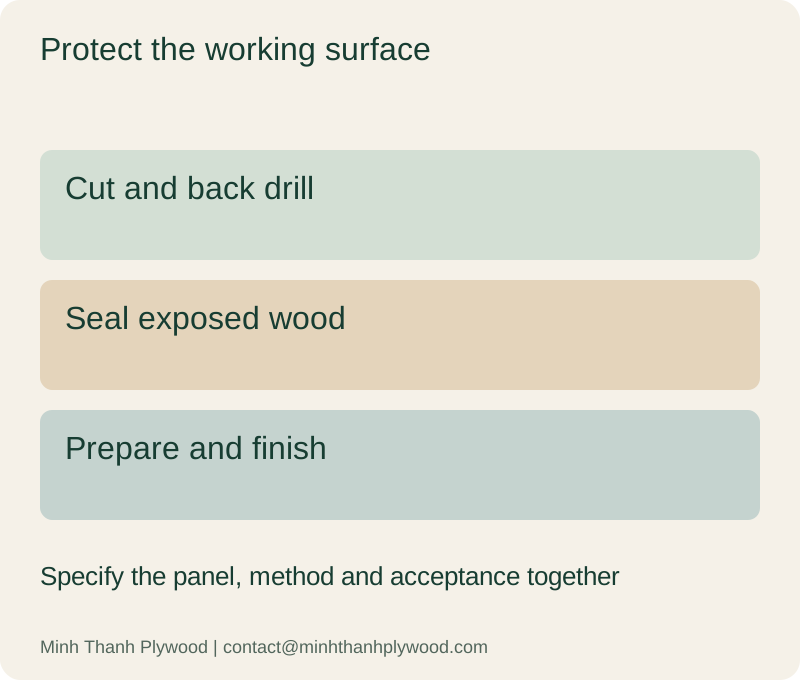
Protect the working face during machining and seal every newly exposed wood edge. Run the production cut on an identified sample before converting the pack. Inspect entry and exit faces for chipping, and check the finished part against its drawing. A damaged overlay edge can mark concrete or disrupt the coating even when the cut dimension is correct.
Back the drill exit with scrap where the back appearance matters. Locate fixings to the component or form-system drawing and control countersinking. Overdriven fasteners damage the surface and expose wood around the fixing. Keep the fixing type and spacing with the drawing so a change in substrate does not become an unrecorded change in assembly.
For painting or adhesive bonding to HDO, the APA 2011 guide describes light surface roughening and cleaning. A practical finishing trial uses gentle scuff-sanding followed by complete dust removal, then the compatible primer or adhesive. Keep the overlay intact. Apply the selected product manufacturer’s preparation instructions where they address its specific factory treatment.
Use that trial to set the workshop sequence: cut, inspect, prepare edges, prepare the face, apply the coating or adhesive, and inspect after cure. Record the tool and coating system alongside the accepted sample. The worker receiving the production pack can then repeat the accepted sequence instead of guessing from a smooth-looking resin face.
Which technical properties need separate evidence?
Request property data for the actual panel and test conditions when the project specifies bending, moisture transfer, thermal or fire performance. Surface appearance does not answer those questions. The APA guide’s historical tables illustrate how construction, orientation and test setup change a value; they are reference data for the stated panels.
On a phone, swipe the technical table sideways to read the conditions and purchase use.
| APA 2011 reference | Stated condition and result | Purchase use |
|---|---|---|
| Water absorption | Edge-sealed panels, room-temperature soak, 48 hours: HDO averages ≤10 g/ft²; MDO ≤50 g/ft² per single panel surface | Define the selected panel’s exposure/test requirement |
| Vapour permeance | HDO both sides, 1/2 and 5/8 categories: 0.1 perms | Obtain matching construction data for the assembly |
| Thermal resistance | MDO 3/8 category: approximately 0.47 °F·h·ft²/Btu | Use the specified thickness and wall assembly |
| Chemical resistance | 24-hour contact with 10% hydrochloric acid: HDO no effect; MDO softened and discoloured | Obtain compatibility for the actual contents and contact time |
| Dry bending | 3/4 category Douglas-fir reference: minimum radius 12 ft across grain; 20 ft parallel | Qualify the selected panel and shaped-form drawing |
| Flame spread | Untreated PS 1 HDO/MDO test reference: 76–200, Class C | Obtain the required current test/classification for the installed system |
These table values come from APA Form B360N, not Minh Thanh testing. When a job specifies a tight curve, use a full trial component with the intended support and grain orientation. For a wall lining, identify the governing fire classification and finishing system. A coating or preservative treatment changes the assembly being evaluated.
Write the evidence request beside the relevant application. A storage liner needs compatibility with its contents, a curved form needs a workable bend, and a building assembly needs its required moisture and fire performance. This keeps useful technical requirements on the purchase schedule without assigning every historical reference property to a newly quoted product.
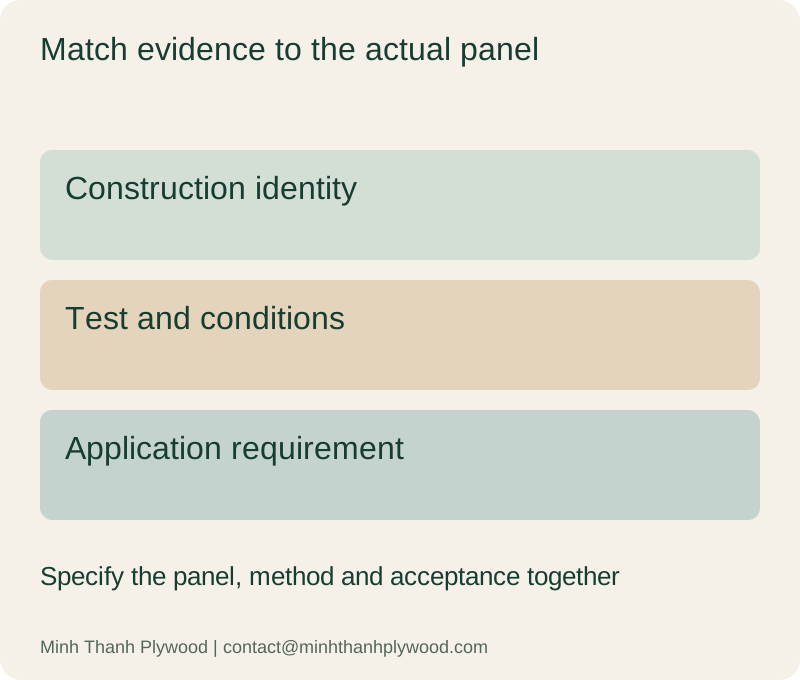
How do you qualify an HDO or MDO substitution before buying a container?
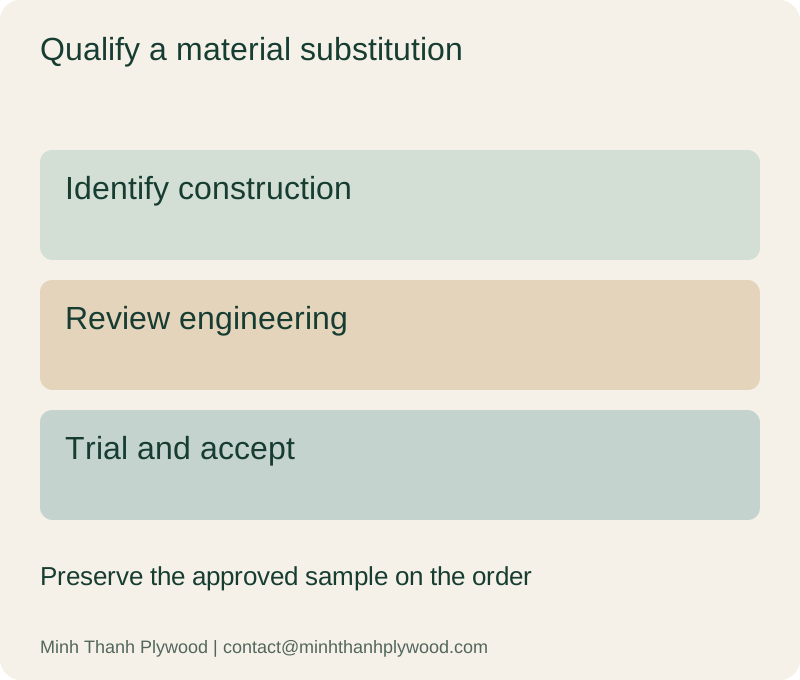
Qualify the proposed construction with a documented component trial before placing a repeat production order. Identify the incumbent panel and alternative separately. The purpose is to establish a construction, working method and acceptance result that the next shipment can reproduce.
- Record the application, form-system drawing and required surface result.
- Identify each panel’s supplier, overlay grade, working faces and construction revision.
- Check delivered thickness, dimensions, edges, mass and visible face condition.
- Obtain the engineering data for the selected support arrangement.
- Prepare both products with their specified compatible release or coating systems.
- Run the actual casting or finishing process and keep the working-face identity.
- Inspect the completed surface against the agreed sample and record care labour.
- Repeat through the planned trial programme, recording damage and accepted output.
- Select the construction and preserve its sample code on the order.
For the forming trial, include the same face layout and joints used in production. A small coupon can check coating adhesion or surface compatibility, but it does not evaluate a full sheet in a frame. An actual form trial answers that larger question with the support, pressure and stripping sequence present.
Minh Thanh supplies free samples for its plywood range. Give the film-faced core, bond, film and thickness needed for the intended comparison. If the project specification calls for HDO or MDO, identify that requirement explicitly and keep the proposed film-faced sample under its own product name. Purchasing can then accept an alternative on evidence instead of treating an attractive surface as an undocumented equivalent.
How should importers compare quotations and shipment documents?
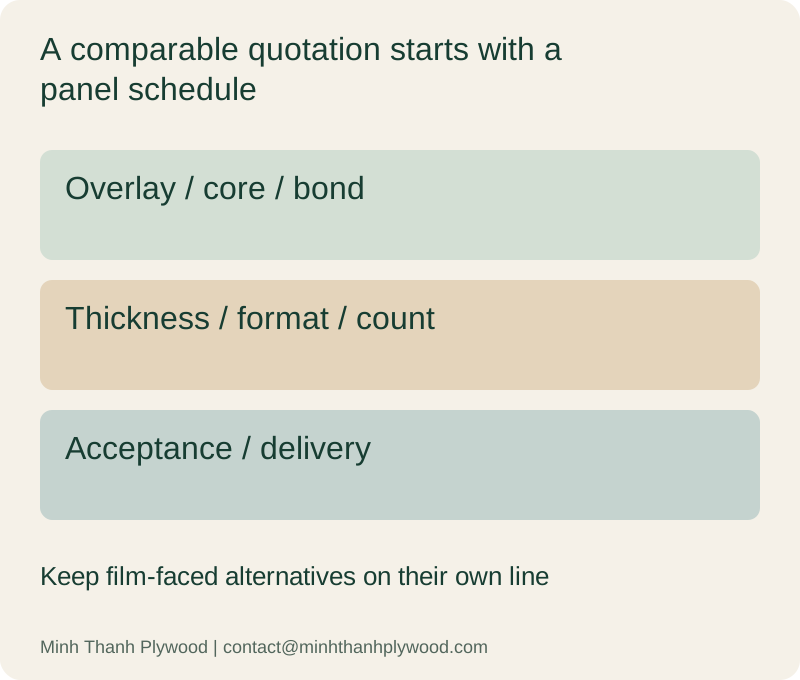
Compare quotations only after matching the construction and delivery scope. List overlay family, grade, working faces, substrate, bond, actual thickness, tolerance, format and quantity on each line. Attach the agreed sample and form-system requirement so the offered sheet can be evaluated against the intended job.
Keep FOB, CFR and CIF amounts in their respective delivery scopes. For a delivered-cost comparison, add current freight and destination costs using the actual packed cargo. Include trimming loss and damaged-sheet allowance from the project records. A lower price per cubic metre can still cost more per useful contact area if the format does not fit the panel layout.
For Minh Thanh orders, the minimum is one 40HC, with mixed specifications by agreement. Production takes 15–45 days after deposit. Standard payment is 30% deposit and 70% against the scanned bill of lading, or irrevocable L/C at sight. FOB Hai Phong, CFR and CIF are available. These terms describe the factory quotation route; they do not identify an HDO/MDO product certification.
Match bundle codes and counts to the packing list. Separate product test evidence from the shipping documents and origin records requested by the importer. The trade terms and packing calculator support the commercial inputs. Minh Thanh holds CARB P2 / TSCA Title VI certification, ICTT mill no. 23024; EPA describes the composite-wood emissions programme; relevant product and test scope is on Quality. Use the selected panel’s engineering evidence for forming performance and the shipment file for the goods actually purchased.
What specification should you send for HDO, MDO or film-faced plywood?
Send the application and selected panel construction together, with the approved finish and delivery requirement. A short RFQ is effective when its fields distinguish the product choices. Keep an HDO/MDO request and a film-faced alternative on separate lines so the buyer can assess both without losing the original requirement.
| RFQ field | Instruction to include |
|---|---|
| Application | Concrete forming, painted sign, lining or another defined component |
| Surface | HDO/MDO grade or exact film-faced product and selected film |
| Working faces | Face and back separately; reversal intended or excluded |
| Substrate and bond | Core/veneer construction, adhesive and bond requirement |
| Engineering | Drawing, supports, design criteria and required panel data |
| Dimensions | Actual thickness/tolerance, sheet format and cut drawing |
| Acceptance | Concrete or coating sample code, defects and trial criteria |
| Working method | Release/coating product, edge treatment and care instructions |
| Shipment | Sheet count, packing, destination, delivery term and documents |
For a Minh Thanh film-faced enquiry, choose Acacia or Eucalyptus core, required bond, film and face/back treatment, then give the format and thickness. Include the forming finish and reuse programme so the proposed construction can be evaluated against the job. The factory’s published range supplies the film-faced route; an HDO or MDO designation needs its own identified overlay evidence.
Email [email protected] or use Contact with the panel schedule and drawing. The next useful step is an identified sample and a comparable quotation. For broader material selection, continue with types of plywood and the construction plywood range. Public technical sources were reviewed on 7 October 2026; calculated examples in this article are labelled and separate from factory prices or guaranteed reuse.
Buyer questions, answered
What is HDO plywood?
HDO plywood is a veneer plywood panel with a high-density resin-impregnated fibre overlay bonded under heat and pressure. HDO Concrete Form is the forming grade; HDO Industrial serves other hard-surface applications. The overlay name identifies a surface family, while the panel construction and grade establish its engineering properties.
What is the difference between HDO and MDO plywood?
HDO has a harder, more resin-rich overlay; MDO provides a different surface suited to its specified grade. Choose HDO Concrete Form for smooth concrete, MDO Concrete Form for matte concrete, and MDO General for painted signs. Both overlay family and working grade belong on the order.
Can ordinary MDO plywood be used for concrete forms?
Choose MDO specifically designated Concrete Form for concrete contact. MDO General is a painting substrate, and a tan paper-faced appearance does not identify forming grade. Obtain the product sheet and use its compatible release system.
Is HDO plywood the same as film-faced plywood?
HDO is a specified resin-fibre overlay construction; film-faced plywood uses a resin-treated surface film. Match overlay identity, working-face count, core bond and approved concrete finish before substituting. A dark colour or a film weight alone does not establish HDO grade.
How many times can HDO plywood be reused?
Olympic Classic HDO publishes upper ranges of 150 pours in engineered systems, 50 in gang forms and 30 in job-built forms, with site handling and maintenance conditions. Those figures belong to that named product; count only pours that meet the project finish requirement. Use the selected product's care instructions and trial results for your programme.
Does HDO plywood need release agent?
Follow the forming-panel manufacturer's release instructions before the first pour and every later use. Apply the compatible agent evenly at its specified rate. A glossy overlay does not identify a factory-treated panel or replace its release instructions.
Is HDO or MDO plywood waterproof?
Exterior-bond overlay plywood resists wet service, while exposed wood edges and drilled holes still need protection. Seal new cuts, control joints and store panels supported flat. Bond durability and resistance of the working face are separate specification fields.
Can you paint HDO plywood?
HDO can be finished with an appropriate surface preparation and coating system. For routine painted signs, MDO General is the more direct specification. Qualify adhesion on the exact panel, including any factory treatment, before coating the production batch.
Should I buy one-sided or two-sided overlay?
Buy one working face for a form system that uses only one side, or two working faces when the design permits panel reversal. Identify the back treatment separately. Two working faces provide another usable surface, but damaged edges and fastener holes remain common to both sides.
Is 18 mm film-faced plywood the same as 3/4-inch HDO?
No. Three-quarter inch converts to 19.05 mm, while nominal performance categories and actual delivered thickness need their own product data. Match the form-system drawing, measured thickness, tolerance and engineering properties before accepting an 18 mm replacement.
Does Minh Thanh manufacture certified HDO or MDO plywood?
Minh Thanh's published construction range includes film-faced plywood on Acacia or Eucalyptus core. Specify that product by film, core, bond, thickness and the approved forming sample. An order requiring HDO or MDO needs that overlay construction and its product evidence identified separately.
What should an HDO or MDO plywood enquiry include?
Include application, overlay family and grade, working faces, core construction, bond, actual thickness and tolerance, format, panel count, concrete or coating sample, release system, packing and delivery term. Give the destination and required product documents. Keep a proposed film-faced alternative as a separate quotation line.