
MDO plywood is veneer plywood with a medium-density resin-impregnated fibre overlay. Buy MDO General for an approved painted surface, or MDO Concrete Form for the required matte concrete finish; specify the grade, working faces and complete panel construction. Minh Thanh Plywood supplies film-faced forming alternatives and raw furniture panels as separate products, quoted by their own construction.
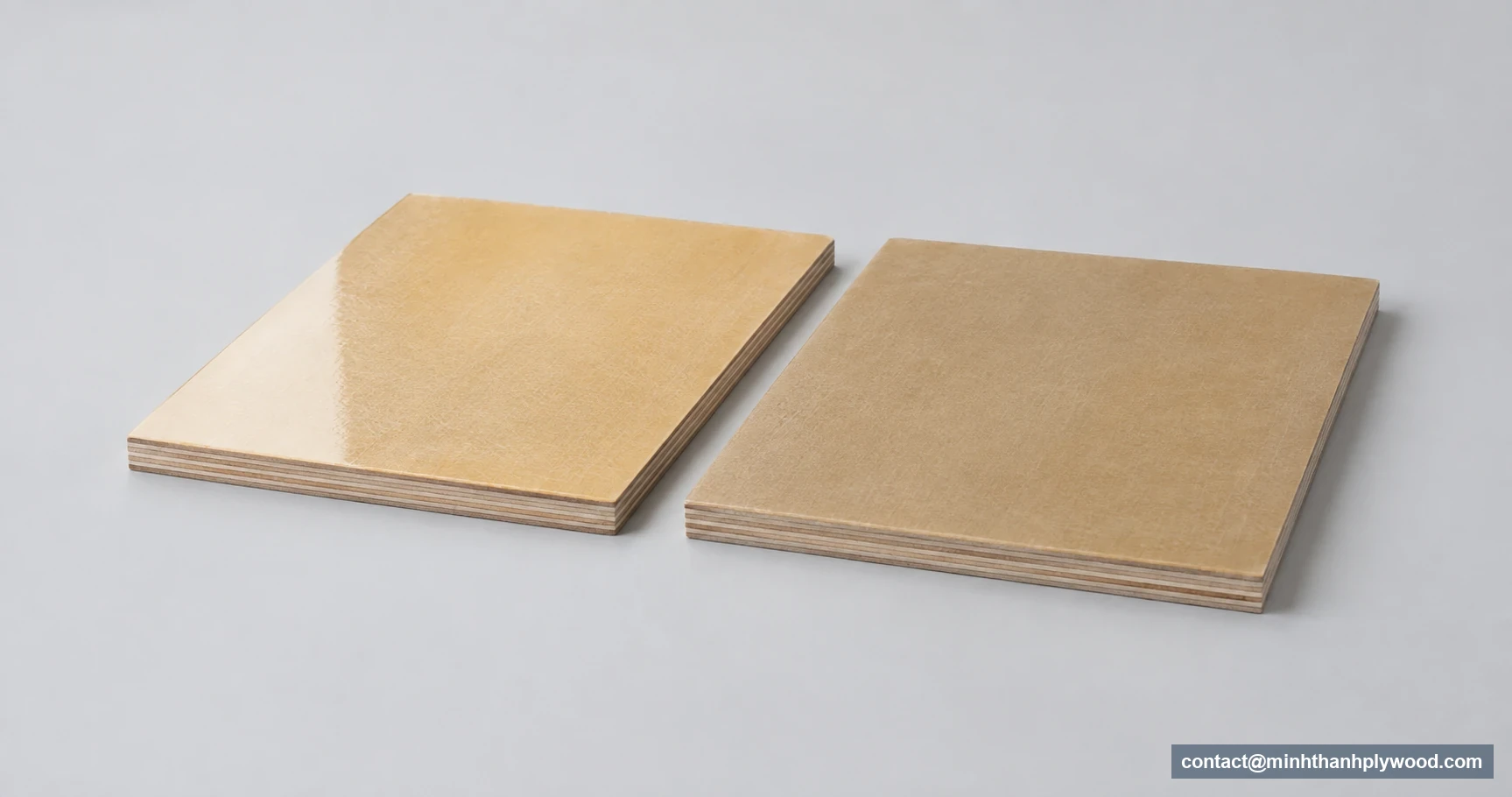
What does MDO stand for, and what is MDO plywood used for?
MDO plywood is a veneer plywood panel with a medium-density resin-impregnated fibre overlay bonded to its surface. The overlay provides the working face; the plywood substrate supplies the panel construction behind it. MDO board and MDO panel are common descriptions of the same product family.
The purchase needs more than the abbreviation. A sign shop ordering a paintable exterior panel and a contractor ordering concrete-contact plywood need different working grades. Write the application in the first line of the enquiry so the supplier knows what the face must do.
Inspect the sample with that distinction in mind. The overlay’s surface texture and condition are visible; veneer continuity and panel thickness are accessible at the edge. Product documents establish the named grade and specified properties. Keep the sample code tied to those documents so a familiar face colour does not become the only receiving criterion.
For the broader surface decision, read the HDO vs MDO plywood guide. This article focuses on buying MDO itself: grade selection, painting or forming requirements, inspection and the complete specification for repeat orders.
Which MDO grade should you buy?
Buy MDO General for the approved paint application and MDO Concrete Form for concrete contact. Keep the working grade beside the overlay family throughout the enquiry and purchase order. The US standard PS 1-22 lists MDO General and MDO Concrete Form grades, both made with thermosetting phenolic resin.
APA’s overlay guidance, checked on 8 October 2026, distinguishes MDO General from MDO Concrete Form and identifies them within Exterior-bond plywood construction. Its grade-specific minimum overlay resin contents are 27% for MDO General and 34% for MDO Concrete Form. Those percentages describe the overlay, rather than the entire sheet or a guarantee of service life.
The simplest commercial safeguard is a separate line for the working-face requirement. For a painted sign, attach the coating schedule and approved surface sample. For a concrete form, attach the finish requirement and form-system drawing. A quote that says only MDO panel leaves both suppliers room to propose different products.
Do the same with replacements. If purchasing changes the grade, the fabricator must review the process that touches the face. Keep release-agent and painting instructions attached to the selected product so one workshop does not apply the other workshop’s finishing method.
How does MDO compare with other panel faces?
Compare working faces by the finished job, then compare the substrate and design data. The table gives each surface a purchasing role without treating a shared colour as equivalent construction. On mobile, swipe sideways to see every column.
| Face or panel family | Direct purchase purpose | Face acceptance | Separate construction decision |
|---|---|---|---|
| MDO General | Painted signs and approved paint-grade parts | Prepared, primed and top-coated sample | Veneer substrate, bond and thickness |
| MDO Concrete Form | Matte concrete finish | Representative concrete sample | Core, design properties and form layout |
| HDO Concrete Form | Selected smooth concrete finish | Representative concrete sample | Grade, core and form-system approval |
| Film-faced forming plywood | Concrete contact using a specified film | Pour sample from that exact panel | Film, core, bond and thickness |
| Raw sanded furniture plywood | Customer’s veneer finish, paint or laminate | Finished component coupon | Face/back, core and interior bond schedule |
| MDF substrate | Approved fibreboard fabrication route | Machined and finished sample | Board grade, exposure and hardware detail |
An MDO surface can solve a finishing problem without changing the support spacing or fastening requirement behind it. Conversely, a more expensive substrate has little value if the working face does not produce the accepted paint or concrete finish.
For Minh Thanh enquiries, film-faced plywood is the relevant forming alternative. Quote it by its own film, core and bond, then test it against the project finish. Keep the MDO requirement and the proposed alternative separately identifiable until the purchase decision is complete.
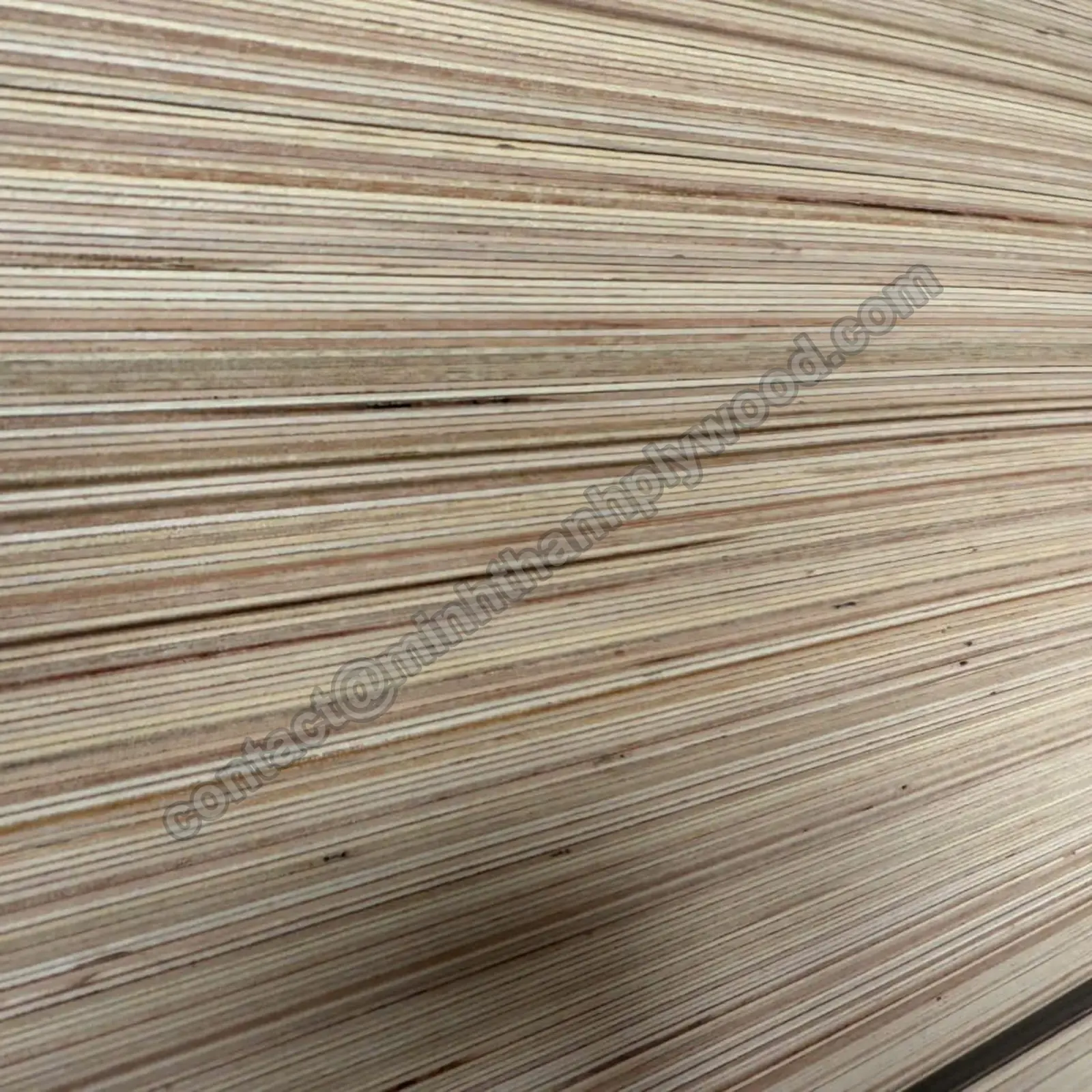 Raw plywood substrate reference. MDO acceptance combines the specified overlay with the construction behind it.
What should the construction sheet tell you?
The construction sheet should identify the overlay, working grade, substrate, bond and face/back configuration. Use it to make the quotation and approved sample refer to the same product.
Ask for core species and veneer layout, actual thickness, tolerance, dimensions and the applicable product standard. Include the published panel properties required by the component designer. Record the manufacturing or product reference used to identify supplied packs.
An overlaid panel can conceal face repairs or veneer texture that would be obvious on a raw sheet. That makes a representative cut section useful for understanding the substrate. The inspector should follow the contract’s construction acceptance rather than infer the whole layup from one tidy edge.
Specify any important machining zones. A sign panel with routed lettering, a form face with repeated fixings and a furniture side with hinge bores stress different parts of the substrate. Put those details on the sample request so the supplier provides a panel the fabricator can evaluate in the correct locations.
Why do one-step and two-step descriptions matter?
One-step and two-step identify manufacturing routes that can influence surface quality and the fabrication comparison. Evaluate the resulting product through its specification and finished sample, rather than buying the process name on its own.
Richmond Plywood’s specialty-overlay overview, checked on 8 October 2026, describes one-step as pressing the overlay and veneer assembly together, and two-step as making the plywood substrate before the overlay stage. It also distinguishes one-side, two-side and backed overlay configurations. These are useful fields when comparing paint-grade products.
For a painted component, inspect how the selected primer and topcoat look over the full sample surface. Include a viewing angle that reveals any underlying texture. Keep the same coating application method for each candidate so purchasing compares the panel rather than two different paint processes.
Minh Thanh’s furniture-grade plywood is pressed twice, with the core board calibrated before faces are pressed on. That is a fact about our raw furniture panel production. An MDO quotation needs its own overlay construction identified; a shared number of press stages does not make different surface products equivalent.
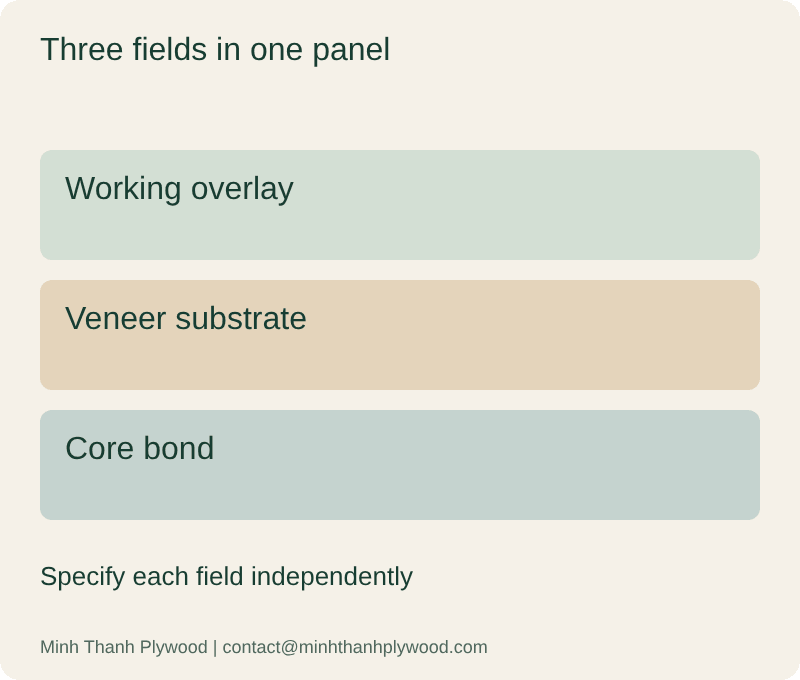 Specify the working overlay, veneer substrate and core bond independently; each field answers a different purchase requirement.
What is the correct painted-sign specification?
A painted-sign order should identify the paint-grade MDO product and the complete finishing and edge schedule. The finished sign sample is the useful acceptance reference, because the visible result combines panel and coating.
Richmond Plywood’s General Purpose MDO guidance, checked on 8 October 2026, describes a paint-grade product with one or two overlay faces. Its exterior use instructions include primer, compatible topcoats and protected edges. Apply the selected product’s own finishing system rather than treating the overlay as a final exterior coating.
Specify which faces remain visible after installation and whether the back needs a decorative finish. Show brackets, fixing holes, routed recesses and panel joints on the drawing. A water path through a fixing or unprotected cut can matter more than the unbroken painted face.
For repeat signs, retain the paint system reference, colour standard, gloss and approved panel sample. Inspect the finished sample after the stated cure, with its actual mounting arrangement. That catches adhesion, texture and fit issues before purchasing commits to a pallet of panels that the sign shop must rework.
How should you specify MDO form plywood?
MDO form plywood needs an identified concrete-contact product and an accepted concrete finish. State the required panel properties and face configuration alongside the form-system drawing. In the US, OSHA standard 1926.703 requires formwork to support all vertical and lateral loads that may reasonably be anticipated.
WISA-Form MDO, checked on 8 October 2026, is one manufacturer example: a cross-banded spruce product intended for matte-finish concrete, listed in 18 and 21 mm thicknesses and 2440 × 1220 mm format. Those dimensions and that core belong to the named product. They should not become generic specifications for every MDO panel.
Ask the form designer to supply support spacing, concrete-pressure assumptions, fastening details and the required actual thickness. Purchasing then checks the product’s design information against that schedule. The overlay texture cannot establish load capacity, and the core species name cannot define the entire strength calculation.
Approve a trial pour using the intended concrete and release system. Record colour, texture, joints and acceptable blemishes in the finished concrete sample. A loose brown paper-faced sheet is a useful product sample, but the concrete face is the surface the project ultimately accepts.
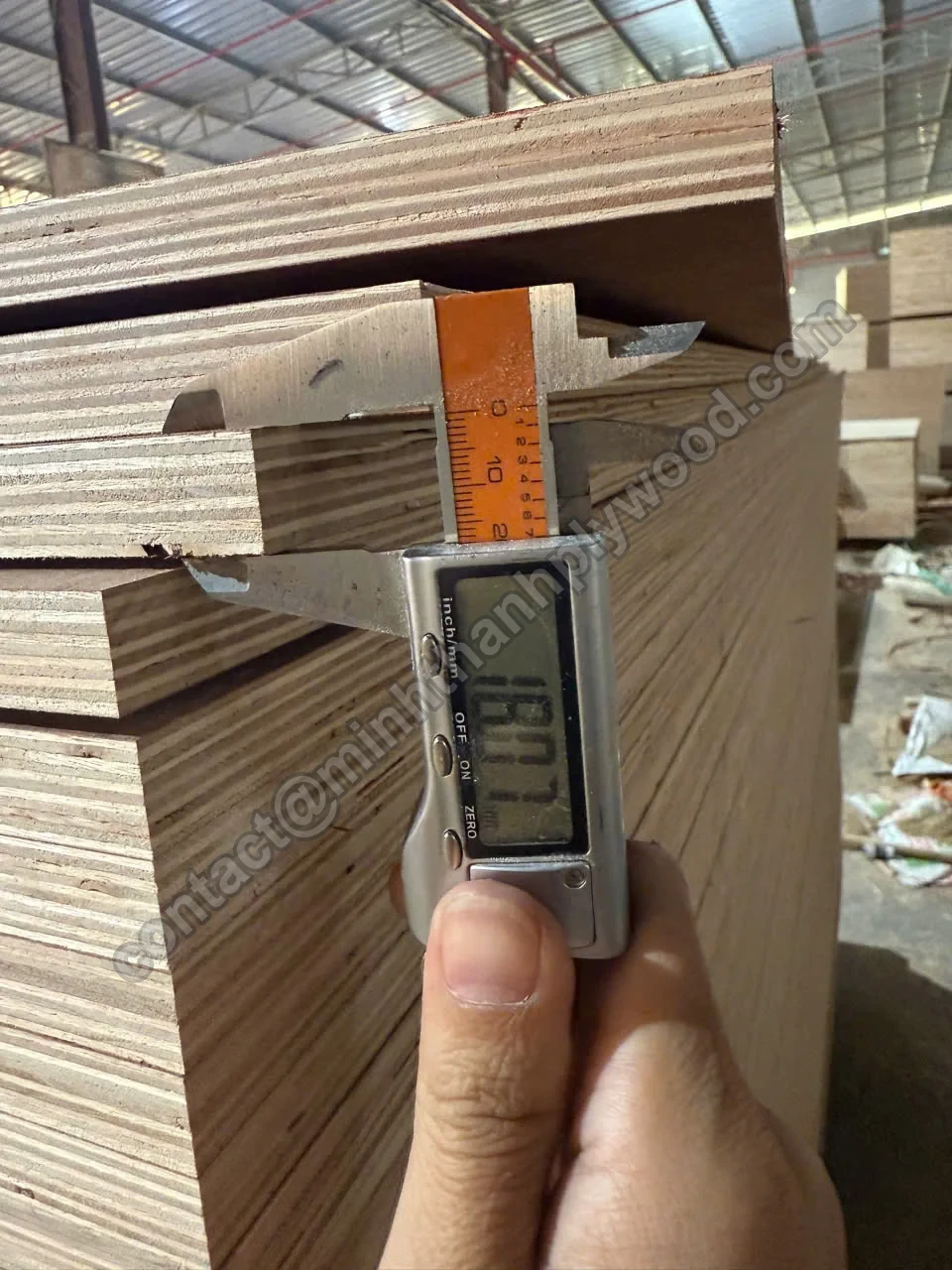 Raw plywood thickness check. A forming-panel order also needs the selected product’s construction and design properties.
What must the release-agent and cleaning trial include?
The trial should use the chosen panel’s release and cleaning instructions from the first pour. Site handling affects the finished concrete and the usable life of the working face.
The WISA-Form MDO site guidance, checked on 8 October 2026, calls for oiling twice before first use and once before subsequent uses for that product. It recommends non-damaging cleaning tools and advises against metal brushes and high-pressure washing. Keep those instructions attached to a WISA purchase rather than applying the same routine automatically to every MDO panel.
Document the release product, application method and rate required by the selected system. Include panel preparation, elapsed time and concrete stripping conditions in the trial record. If the first accepted face changes after cleaning, the comparison needs to identify the cause before the next pour.
Arrange storage between uses so the working face avoids abrasion and debris. Count the time spent cleaning and repairing each panel as part of reuse cost. The buyer needs a programme that produces accepted concrete repeatedly, not a face that survives several cycles while labour and surface repairs make it uneconomic.
How many working faces do you need?
Order the number of working faces that the application can actually use. Specify the reverse-side construction clearly whenever it differs from the front.
A sign viewed from both sides needs two accepted decorative faces. A cabinet part with one show face can have a different back requirement. A form panel can benefit from reversal only when the frame, fixings and edge condition allow the second face to work.
An MDO-on-one-side and film-on-the-other panel combines two different working surfaces. If both sides contact concrete, approve the finish from each side separately. Reversal can otherwise introduce a visible change between adjacent pours even when the core and thickness are identical.
Keep working-face orientation visible in pack and workshop instructions. The loading team, warehouse and installer should recognise which face belongs to the specified operation. For cut parts, preserve the orientation reference through nesting so pieces do not arrive at assembly with the working and backing faces mixed.
How should you compare thickness and tolerances?
Use actual delivered thickness and its tolerance for the component fit, with the relevant performance category and design data where required. Nominal names alone can hide a material difference.
The unit conversion for 3/4 inch is 0.75 × 25.4 = 19.05 mm. An 18 mm product is a different numerical thickness. Whether a particular nominal panel category fits the job comes from that product’s specification and the drawing, rather than the conversion alone.
Measure representative sheets using an agreed method and locations. Record the measuring instrument, results and sample selection. A reading at one corner can be useful, but the required tolerance window needs inspection across the selection defined in the contract.
For a raw Minh Thanh alternative, commercial and film-faced panel tolerance is ±0.5 mm; sanded furniture panels are specified more tightly, down to ±0.2 mm. Apply the tolerance relevant to the ordered product line. A forming system and a cabinet groove use different acceptance windows, so each belongs in its own schedule.
 Raw veneer plywood reference. Actual thickness, tolerance and working-face identity belong in separate inspection fields.
How do you evaluate panel stiffness and fastening?
Evaluate stiffness and fastening from the chosen panel’s properties and the component design. The overlay gives a working surface; the substrate and assembled details carry the load. The USDA Forest Service Wood handbook: wood as an engineering material is the standard US reference on wood moisture, strength and fastenings.
Give the supplier the span, load distribution and fastening arrangement being evaluated. Request the applicable product data, including direction where properties are directional. Keep surface finish criteria separate from engineering acceptance so a successful trial pour does not become the evidence for an unsupported structural substitution.
Machine the representative fixings on the sample. For a sign, include the bracket holes and edge distances. For a form, include the actual fastener pattern and panel-to-frame connection. Inspect local crushing, damaged overlay and the condition of fresh holes after handling.
Where the component needs an engineering change, obtain that decision before purchase. A stronger-sounding species or extra ply does not establish the installed result. The controlled drawing should identify the accepted product, thickness and fastening details that the installer receives.
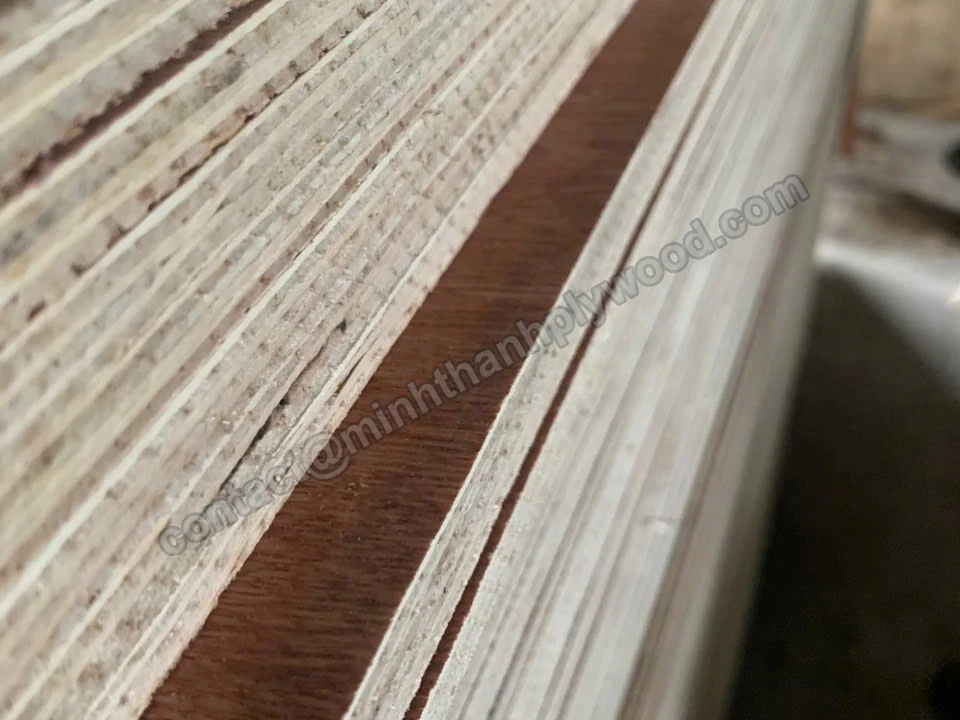 Raw plywood pack edge reference. Inspect the actual ordered construction and the machining zones used by the component.
How do you check MDO panels before shipment?
Check identity, working-face quality and substrate construction against the purchase specification. A surface inspection and a representative construction inspection answer different parts of the order.
Use a receiving or pre-shipment checklist with these steps:
- Match product code, grade and working-face count to the quotation.
- Select packs and sheets using the contract’s sampling method.
- Inspect overlay damage, local blisters, lifting and surface contamination.
- Measure thickness, dimensions and flatness using the agreed acceptance method.
- Inspect representative edge or cut-section construction where required.
- Check machining, coating or concrete samples against the retained approval.
- Match pack labels and quantities to the packing list.
Photograph defects with the sheet reference and an appropriate scale. Record whether they affect a face, an edge or a critical fixing zone. The supplier can then classify and correct the actual problem without guessing from an image that shows only a dark surface.
Retain a reference panel and inspection records for repeat orders. When a panel grade is supplied under third-party product certification, match the appropriate product evidence and identification to the supplied construction. General quality management documents belong in a separate supplier file.
Is MDO plywood waterproof, and how do you protect it?
Protect working faces from abrasion and keep the panel supported during storage and fabrication. Preserve the surface quality you approved until the component enters use.
Specify pack covers, edge protection, supports and handling access around the buyer’s workflow. A pack that works for forklift unloading may need a different opening routine at a small fabrication shop. Agree how the material will be released without dragging sheets across straps, grit or exposed fasteners.
After cutting or drilling, apply the protection prescribed for the selected product and finished assembly. Record who does that work. A factory-treated rectangular sheet still creates fresh edges and holes when the fabricator makes parts.
Keep damaged or wet packs separate during receiving. Inspect packaging and panels before assigning them to production. A short report identifying the affected pack and exposed area is more useful than a warehouse note that all panels felt damp. Good handling records help distinguish transport damage from a panel or finishing issue.
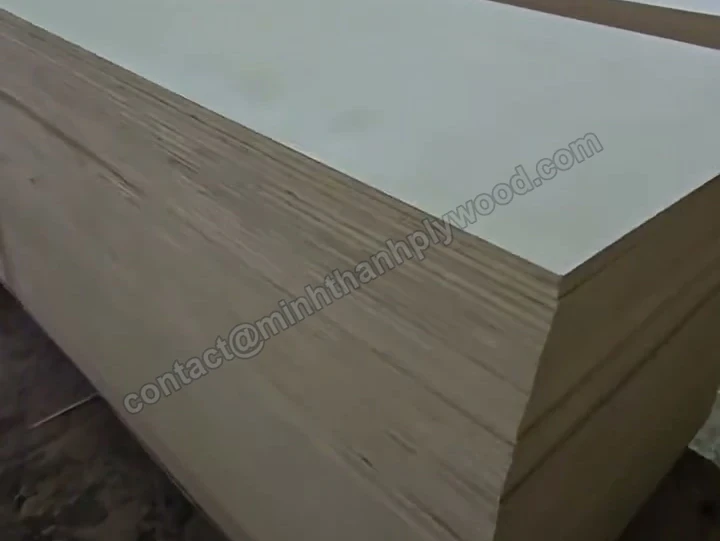 Unfinished veneer plywood reference, not an MDO face. Packaging should protect the working surface selected for the actual order.
How should you compare reuse and cost?
Compare the cost of accepted work over the required programme. An MDO price per sheet and a claim about total pours need the same finish standard and handling conditions to become useful purchasing inputs.
For forming, record accepted pours, release agent, cleaning time, edge repairs, damage and replacement panels. Count a pour only when it meets the project’s finish acceptance. A panel still present on site can have lost the surface quality needed for the next architectural wall.
For painted signs, compare preparation, primer, topcoat, machining and installation as well as panel price. Include the time required to qualify a changed substrate or paint system. The cheapest face sample can become expensive when the shop must add another preparation stage or reject finished components.
Keep named-product reuse ranges within their stated context. Use the sample programme to create your order’s working estimate. That estimate should distinguish the material’s surface behaviour from the site’s storage, cleaning and fastening practices, which purchasing can organise but cannot read from the overlay abbreviation.
What can Minh Thanh supply as a forming alternative?
Minh Thanh supplies film-faced plywood for concrete-forming enquiries as its own panel construction. Specify the film, Acacia or Eucalyptus core, bond, thickness and accepted concrete sample when comparing it with MDO form plywood.
The useful proposal is a separate alternative line. Keep the project’s original MDO requirement visible and attach the forming sample for the proposed film-faced panel. Approval should cover the concrete finish, form-system properties and site care programme required by the job.
For paint or laminate fabrication, Minh Thanh also supplies raw furniture plywood with sanded faces and the specified core and bond. Our furniture panels are UV-ready for the customer’s own coating, rather than supplied as an MDO overlay. Select the appropriate furniture and interior product when that raw substrate is the required purchase.
Our export MOQ is one 40HC, with mixed specifications by agreement. Production takes 15–45 days after deposit. Free samples support the product and fabrication review, and shipment photos and video are supplied before loading. Add the packing and inspection requirements to the quotation so the sample decision carries through to the shipment.
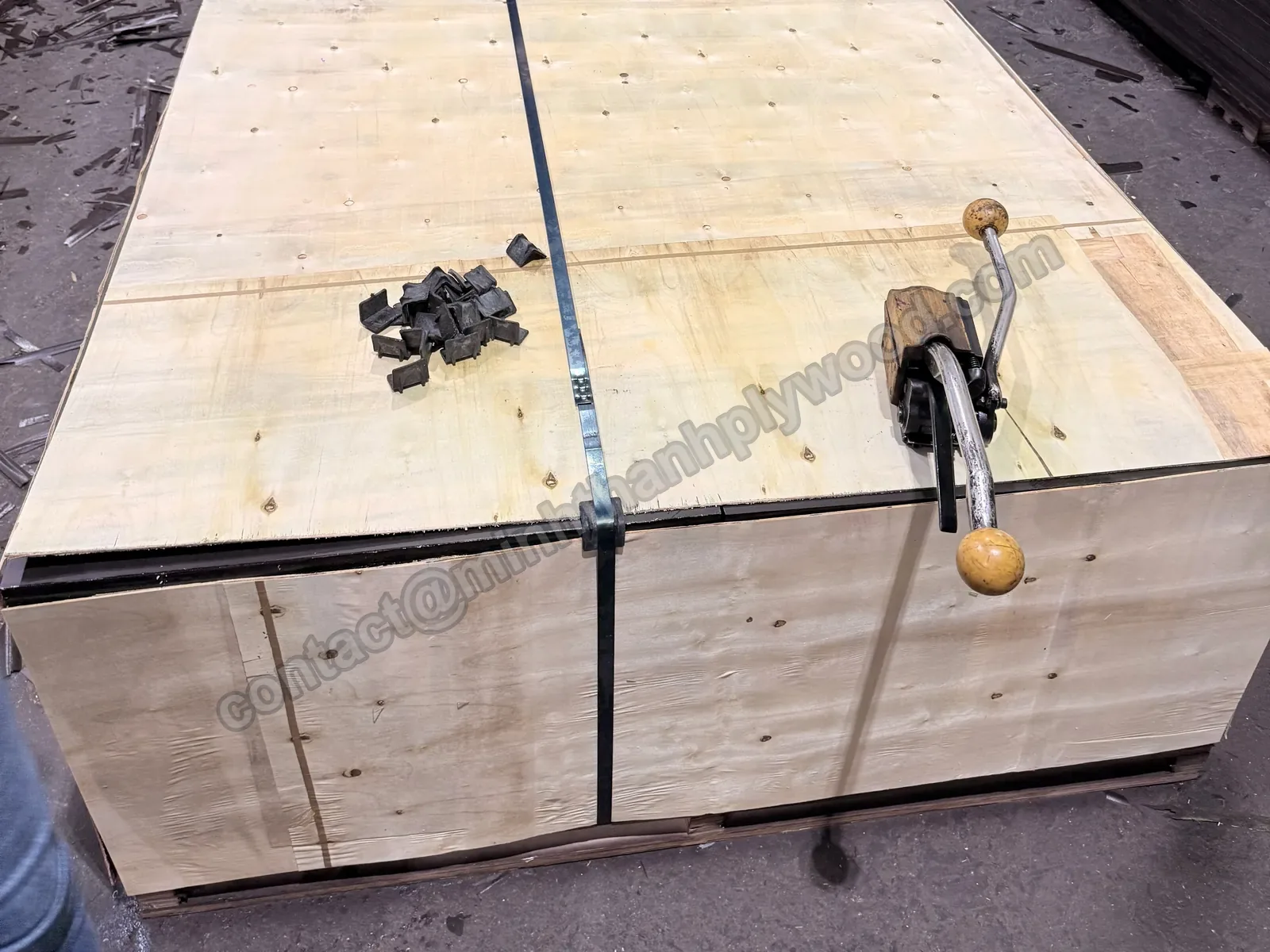 Packing reference for raw plywood. Identify the ordered construction and protect its face and edges through shipment.
Send the working grade and complete panel schedule
Send the application and grade first, then the panel construction and acceptance evidence. This gives the supplier a useful specification rather than a request for an unspecified MDO board.
Include the following lines:
- Application: painted sign, concrete form or another defined component.
- Overlay family and working grade, face count and back treatment.
- Core and veneer construction, bond, emission and required product standard.
- Actual thickness and tolerance, format or cut-part dimensions, quantity.
- Paint or concrete finish sample, coating or release system, and critical machining.
- Component or form design data, packing, delivery term and destination port.
Request a forming-panel quotation, or email [email protected] with the original requirement and the proposed alternative clearly identified. Contact Lisa on WhatsApp for a quick specification exchange. We reply within hours. Use our quality information to frame the inspection and document requirements for the Minh Thanh product you select.
Buyer questions, answered
What is MDO plywood?
MDO means Medium Density Overlay. MDO plywood combines a veneer plywood substrate with a resin-impregnated fibre face bonded under heat and pressure. The working grade identifies whether the ordered surface is intended for painting or concrete forming.
Is MDO board the same as MDF?
MDO board has a veneer plywood substrate and a resin-fibre overlay; MDF is a fibreboard substrate. Check the complete construction, bond, actual thickness and hardware requirements when comparing them. A similar abbreviation does not establish equivalent machining or service performance.
Can MDO panels be used for concrete forms?
Specify MDO Concrete Form or a named MDO product intended for concrete contact. MDO General is a paint-grade construction, so a paper-faced appearance does not identify a forming surface. Approve the concrete finish and use the selected product's release and care instructions.
What is the difference between MDO and HDO plywood?
MDO and HDO are different resin-fibre overlay families with distinct working grades. For concrete contact, compare Concrete Form products against the finish and form design; for painted signs, start with MDO General. The full panel construction and approved surface sample determine the purchase.
Is MDO plywood waterproof?
Exterior-bond MDO is designed for its specified wet exposure, while wood edges, holes and joints still need protection. Finish paint-grade faces with the approved coating system and reseal new cuts. Use the complete assembly's service requirements rather than the overlay name alone.
Does MDO plywood need paint?
Paint-grade MDO needs the selected primer and topcoat system for its finished application. Qualify the system on the exact product, including the back and cut edges. Concrete Form MDO follows the forming manufacturer's release instructions rather than a sign-paint schedule.
How many times can MDO form plywood be reused?
Reuse belongs to the particular panel, concrete finish requirement and site handling programme. Count accepted pours from a representative trial and include release agent, cleaning, edge protection and damage. Use product-specific guidance rather than a universal number for MDO panels.
Should I choose one-sided or two-sided MDO?
Choose the working-face count around the finished component or form design. Specify the back construction separately when only one face carries MDO. A second working face is useful only when the application can use it and the panel's shared edges and fastener zones remain serviceable.
Is MDO plywood the same as brown film-faced plywood?
MDO uses an identified resin-fibre overlay construction, while a film-faced panel has its separately specified working film. Compare core, bond, face count, thickness and accepted concrete finish before substituting. Keep the alternative under its own product description on the quotation.
Is 18 mm plywood equivalent to 3/4-inch MDO?
Three-quarter inch converts to 19.05 mm, while a nominal performance category and actual supplied thickness have their own product requirements. Compare the actual thickness and tolerance with the drawing and design data. Do not accept an 18 mm replacement solely because a catalogue places both products in the same nominal category.
Does Minh Thanh manufacture MDO plywood?
Minh Thanh's published construction range includes film-faced plywood for forming and raw plywood for furniture and interior finishing. Quote those products by their film or veneer, core, bond and approved sample. A purchase requiring MDO must identify that overlay product and its supporting evidence separately.
What belongs in an MDO plywood RFQ?
Include application, MDO working grade, face count, back treatment, core and bond, actual thickness and tolerance, dimensions, quantity and required design documents. Add the paint or concrete sample, release or coating system, packing and destination. List a proposed film-faced alternative as a separate construction.