
In short, Vietnam plywood for EU market programmes works when the panel is fixed by an approved sample and the order plan covers 15–45 days of production plus 25–40 days at sea. Minh Thanh Plywood makes furniture and interior panels for Europe, its main market: Styrax or Eucalyptus cores, double pressing, CARB P2 / TSCA Title VI and an EUDR dossier with every order.
Why is Vietnam plywood for EU market programmes a strong option?
Vietnam plywood for EU market programmes can combine a defined furniture-panel construction with an approved sample, origin records and a planned delivery schedule. Compare the face, core, bond, dimensions and usable landed cost for the intended component. Minh Thanh focuses on furniture and interior plywood, with Europe as its main market.
The practical opportunity is access to prepared veneer-faced panels made around a defined furniture specification. A cabinet maker needs reliable thickness for machining, a face that accepts its finish and a core that behaves well in the selected joint. A distributor needs the same product identity across successive containers. Those needs matter more than a general claim about a country’s exports.
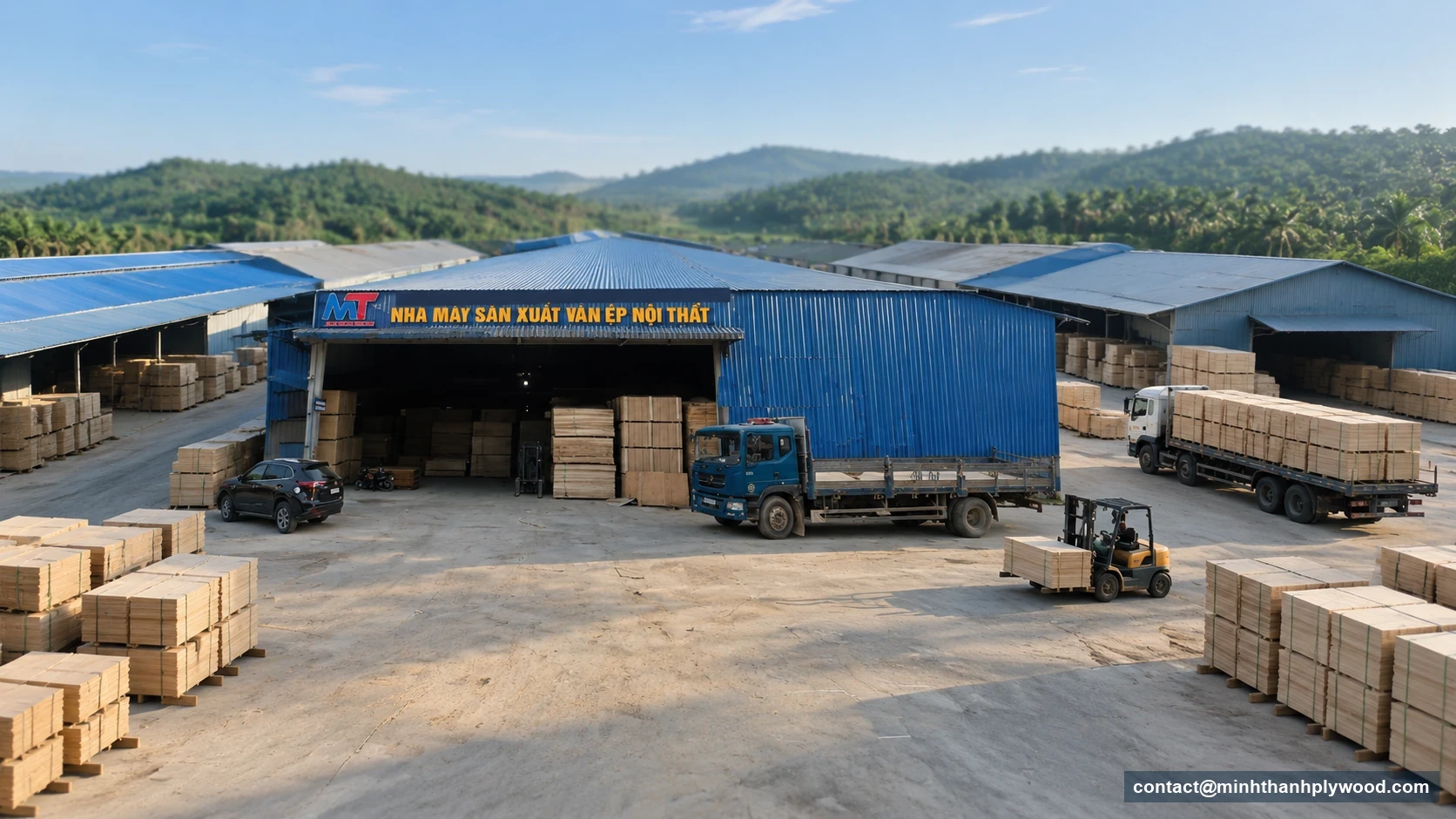
Minh Thanh’s factory in Ha Hoa, Phu Tho focuses on furniture and interior plywood, with Europe as its main market. Standard furniture constructions use white Styrax or Eucalyptus cores. The choice gives procurement teams a concrete starting point: compare the finished panel needed by the customer, rather than request an unspecified “Vietnam hardwood plywood” price.
The ITTO market report for 16–30 September 2026, reviewed 8 October 2026, puts EU+UK plywood imports from Vietnam at close to 229,000 m³ in the first half of 2026, against fewer than 29,000 m³ a year earlier. The next section sets out what drives that shift.
Build the sourcing programme around the accepted part. A pallet of panels is only useful stock when the receiving factory can cut, finish and assemble it without changing its process.
Which product details should the buyer freeze first?
Freeze the application, face/back grade, core construction and finished dimensions before comparing suppliers or reserving production.
A natural-face wardrobe panel and a concealed cabinet back have different purchasing needs. Write whether each face remains visible, receives paint, takes laminate or is hidden inside the furniture. Name the reverse face as well as the front. An attractive sample front cannot settle the reverse-face requirement for a component visible from both sides.
Keep a specification revision that sales, production and the receiving factory all use. Include panel orientation in the cutting layout when visible grain matters. Add finished-part drawings if routed edges or hardware locations affect acceptance. A photograph of a face is helpful, but the production instructions also need dimensions and a description of permitted repairs.
Minh Thanh furniture panels are pressed twice: the core board is pressed and calibrated, then face and back are pressed on. Specify the finished panel you want from that process, including its sanding and coating preparation. The furniture plywood page gives the product starting point for a buying specification.
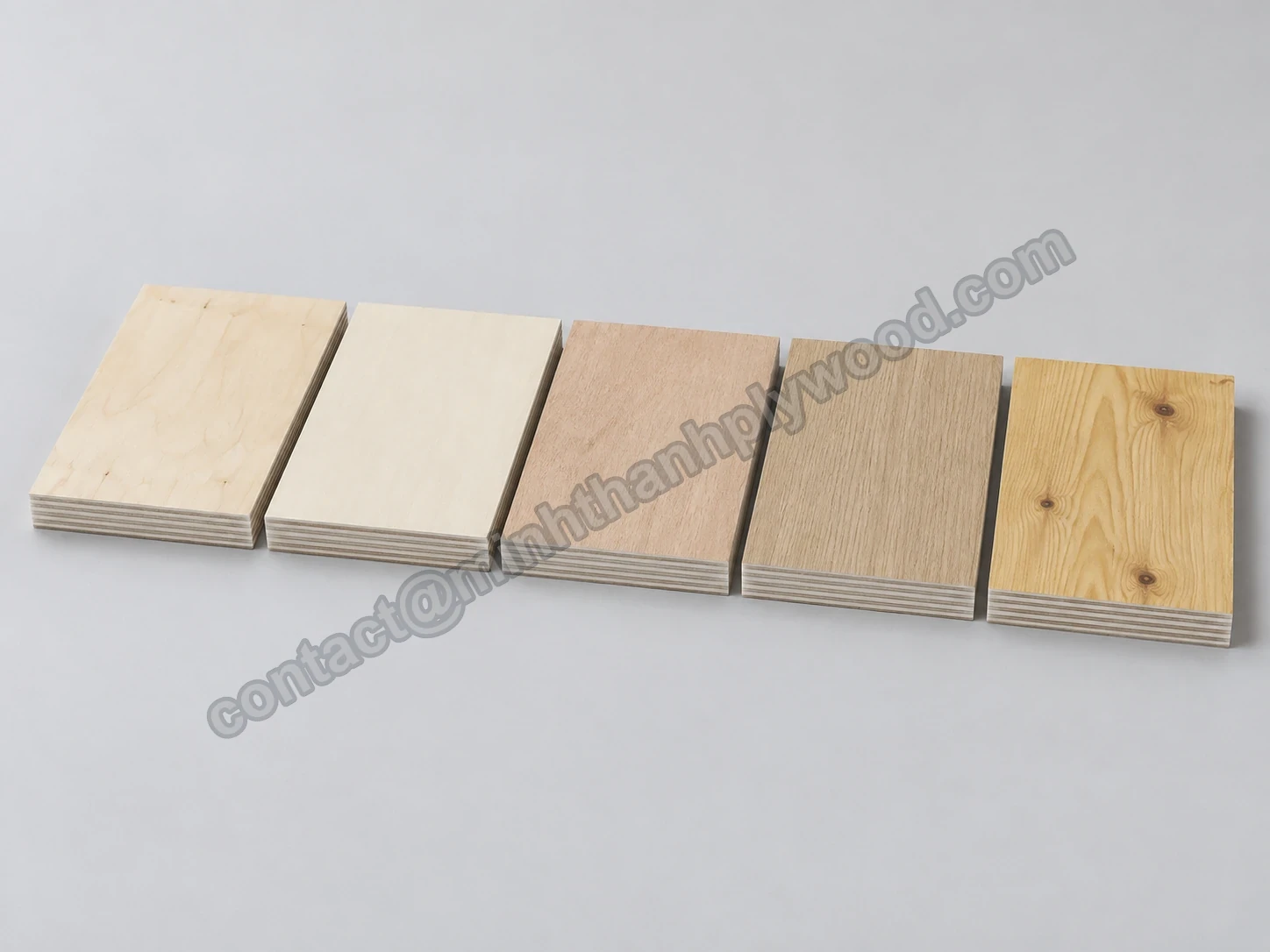 Face selection belongs beside the core and finished-part requirement.
How should European buyers compare face grades?
Compare face grades through a named face/back pair and an approved appearance sample.
Birch-faced orders at Minh Thanh use D+, D and E grades. As a buying comparison, D+ is approximately B, D approximately BB and E approximately CP/C. A D+/D pair is therefore approximately B/BB. Put the chosen pair on the order, then describe the acceptable appearance with the sample. Grade shorthand alone leaves too much room for disagreement over patches, colour and visible natural features.
Poplar-faced panels use A/A, A/B and B/B pairs. A/A is a useful starting point when both faces are seen; A/B fits many one-visible-face components. The buyer’s finishing process still decides what appearance is acceptable. Painted furniture, clear-finished furniture and laminated furniture should not share one vague visual acceptance rule.
Keep the accepted sample accessible to the receiving factory. Procurement may approve a face for a lacquered cabinet, while a warehouse inspector sees raw sheets before coating. Both teams need the same interpretation of the raw surface and the finished result.
What is the difference between face species and core species?
Face species controls the surface identity, while core species and construction affect the panel beneath it.
A birch-faced panel with Styrax core is a different purchase from all-birch plywood. State that distinction explicitly when replacing a familiar European product. The new panel should be evaluated through the component’s edge appearance, mass, machining and hardware performance, rather than accepted solely because its face looks similar.
Minh Thanh’s main furniture cores are Styrax and Eucalyptus. The factory stitches core layers horizontally and vertically. A buyer can use a cut sample to see the layered construction and test it through the actual furniture operation. Cut through an area representative of the intended component, rather than examine only the neat outer edge of the sample square.
For visible exposed edges, put the edge appearance into the sample approval. For concealed routed hardware pockets, focus on machining and joint performance. This separates appearance decisions from functional decisions and helps avoid overpaying for a face specification on a hidden part.
Which sheet format lowers production waste?
Assess the sheet format against the cutting layout, accepted-part yield and total processing cost for the furniture programme.
Minh Thanh supplies 1220 × 2440 mm and 1250 × 2500 mm formats, plus selected custom sizes. Compare these against a nesting layout using your saw kerf, trimming allowance and required grain direction. The larger sheet should earn its place by producing more useful parts or reducing a troublesome offcut. A nominally lower cubic-metre price can lose that advantage if the format cuts poorly.
Run the calculation separately for each thickness. A cabinet programme may use thick carcass panels, thin drawer bottoms and different backs. Their cutting patterns rarely have identical utilization. Keep recovered offcuts visible in the cost model only when a real downstream component consumes them.
Cut-to-size is another purchasing route. Minh Thanh regularly supplies cut pieces to European buyers. Compare their packing, handling and remaining machining against full sheets. The useful question is which route delivers the accepted component at lower total cost, with less stock that cannot be used.
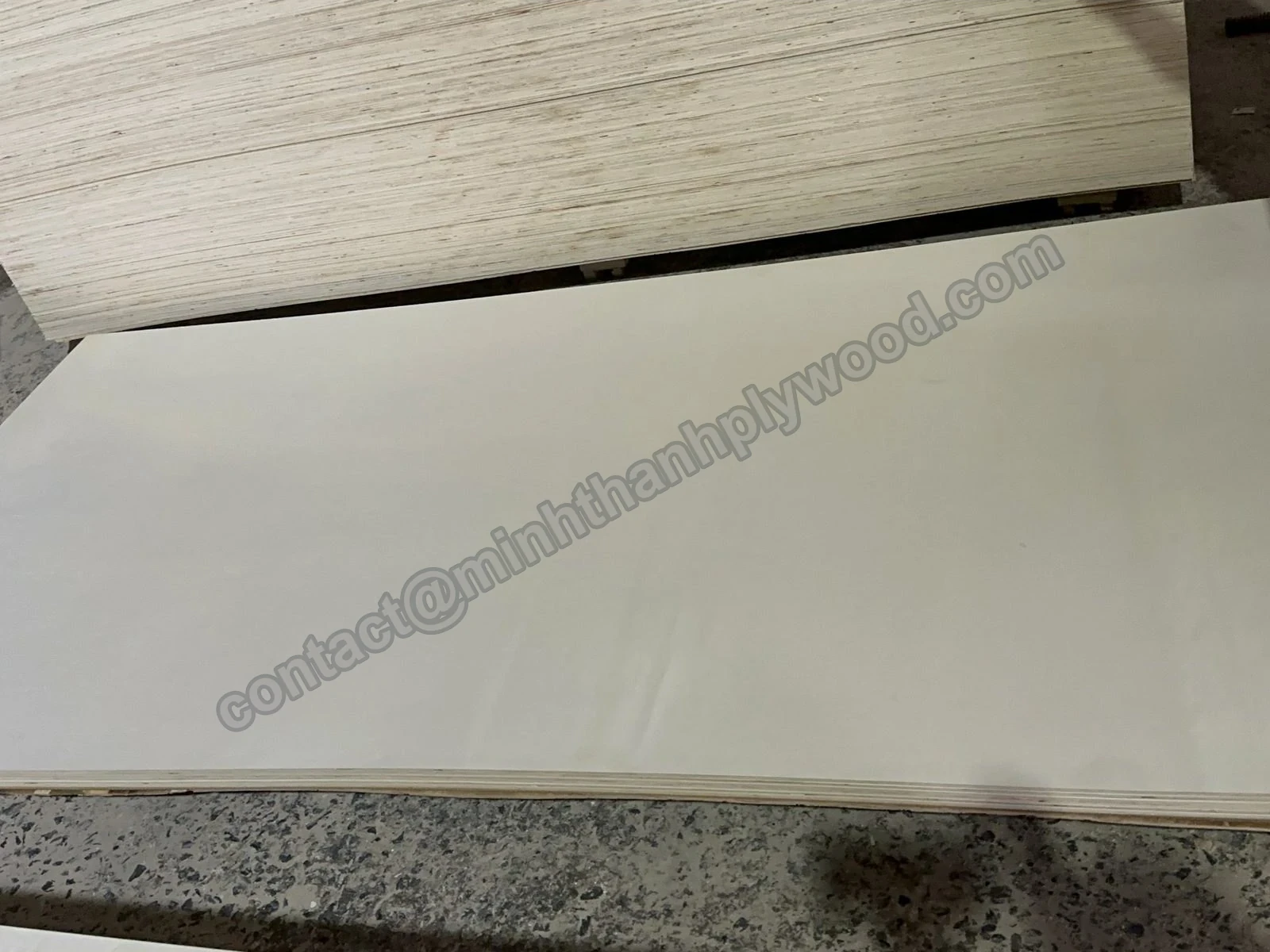 An edge sample helps distinguish the face name from the full panel construction.
How is Vietnam plywood supply to Europe changing in 2026?
Vietnam is the fastest-growing plywood source for Europe. The ITTO report for 16–30 September 2026 gives the first-half 2026 figures for EU+UK imports:
| EU+UK plywood imports, first half | 2025 | 2026 |
|---|---|---|
| All plywood from outside the region | about 2.15 million m³ | 1.96 million m³ (−9%) |
| Temperate hardwood plywood from China | about 633,000 m³ | 405,400 m³ (−36%) |
| Temperate hardwood plywood from Vietnam | 14,500 m³ | 131,400 m³ |
| Tropical-faced hardwood plywood from Vietnam | 14,200 m³ | 97,500 m³ |
| All plywood from Vietnam | fewer than 29,000 m³ | close to 229,000 m³ |
Two forces drive it. EU anti-dumping duties on Chinese hardwood plywood push buyers toward other hardwood sources, and the ITTO names Vietnam as the main beneficiary. Russian birch plywood left EU+UK supply after 2022. Total EU+UK plywood imports from outside the region have fallen from a peak of just over 5 million m³ (rolling 12 months to June 2022) to 3.68 million m³ in June 2026, so the replacement suppliers are taking a larger share of a smaller, more selective market.
The Vietnamese base is plantation timber. Acacia, Eucalyptus and Styrax are grown on short rotations in the northern provinces, including around our factory in Ha Hoa, Phu Tho, so core veneer supply does not depend on imported logs. Vietnam’s wood and wood product exports reached US$11.8 billion in the first eight months of 2026, up 6% on 2025, according to the same ITTO report citing Vietnam Customs.
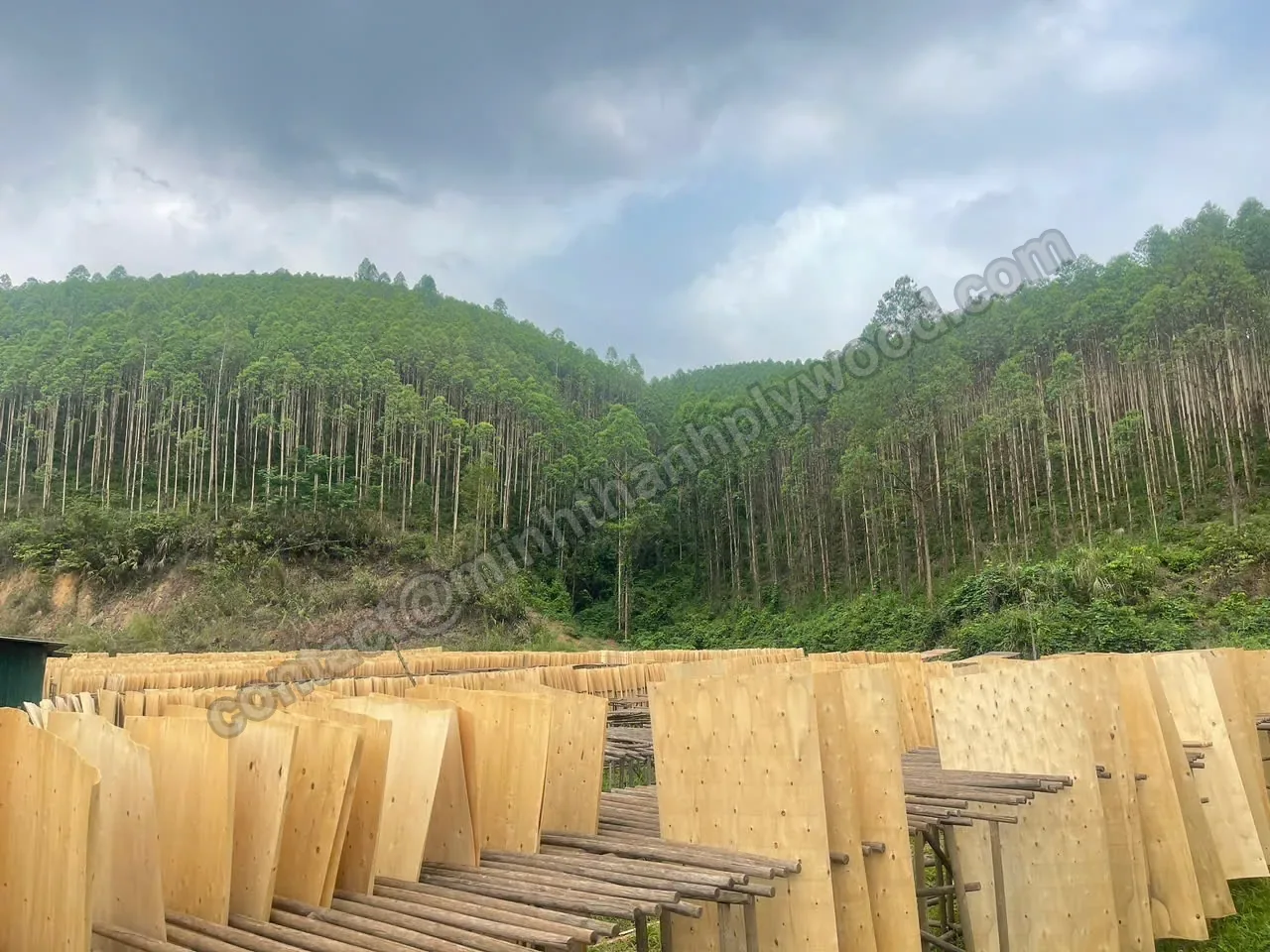 Core veneers sun-drying on racks, with hills in the background.
Which quality checks protect repeat orders?
Repeat-order quality checks should track dimensions, face appearance and construction against the accepted specification.
Thickness is especially important when sheets enter grooves, edge-banding equipment or furniture assembly fixtures. Minh Thanh’s sanded furniture panels have tight thickness tolerances down to ±0.2 mm. Choose the ordered tolerance to fit the process, then record where and how the receiving team measures. Comparing readings taken with different tools or at different locations creates avoidable disputes.
Inspect flatness under a stated support arrangement. A thin sheet hanging over a pallet edge tells you little about the panel under its intended conditioning and support. Examine several positions in the pack, including interior sheets, and keep face damage separate from dimensional findings.
Define the acceptance route for defects before loading. The buyer’s specification should distinguish a cosmetic repair that will disappear beneath paint from a core issue that affects a machined part. An inspector can then make a practical decision rather than reject or accept a whole pack on appearance alone.
How do moisture and finishing affect EU receiving plans?
Receiving plans should preserve the panel’s condition between unloading and the buyer’s finishing process.
Minh Thanh dries veneers and finished furniture panels to 8–12% moisture content at dispatch. That dispatch condition belongs in the shipment inspection, while the receiving factory should also plan covered storage, flat support and conditioning before machining. A journey from export packing into a humid open yard is a different handling sequence from delivery into a controlled furniture workshop.
Keep protective packing until the warehouse is ready to store the panels correctly. Protect the face from dirt, grit and handling marks, especially when it will be clear coated. Separate incoming lots so machining observations can be traced to their own production records.
For UV coating, state the buyer’s actual coating process and surface requirement. Minh Thanh prepares UV-ready faces for customers to apply their own coating. Approval should therefore include the buyer’s coating trial. It is easier to resolve a surface preparation question on a sample than after a container has entered a finishing schedule.
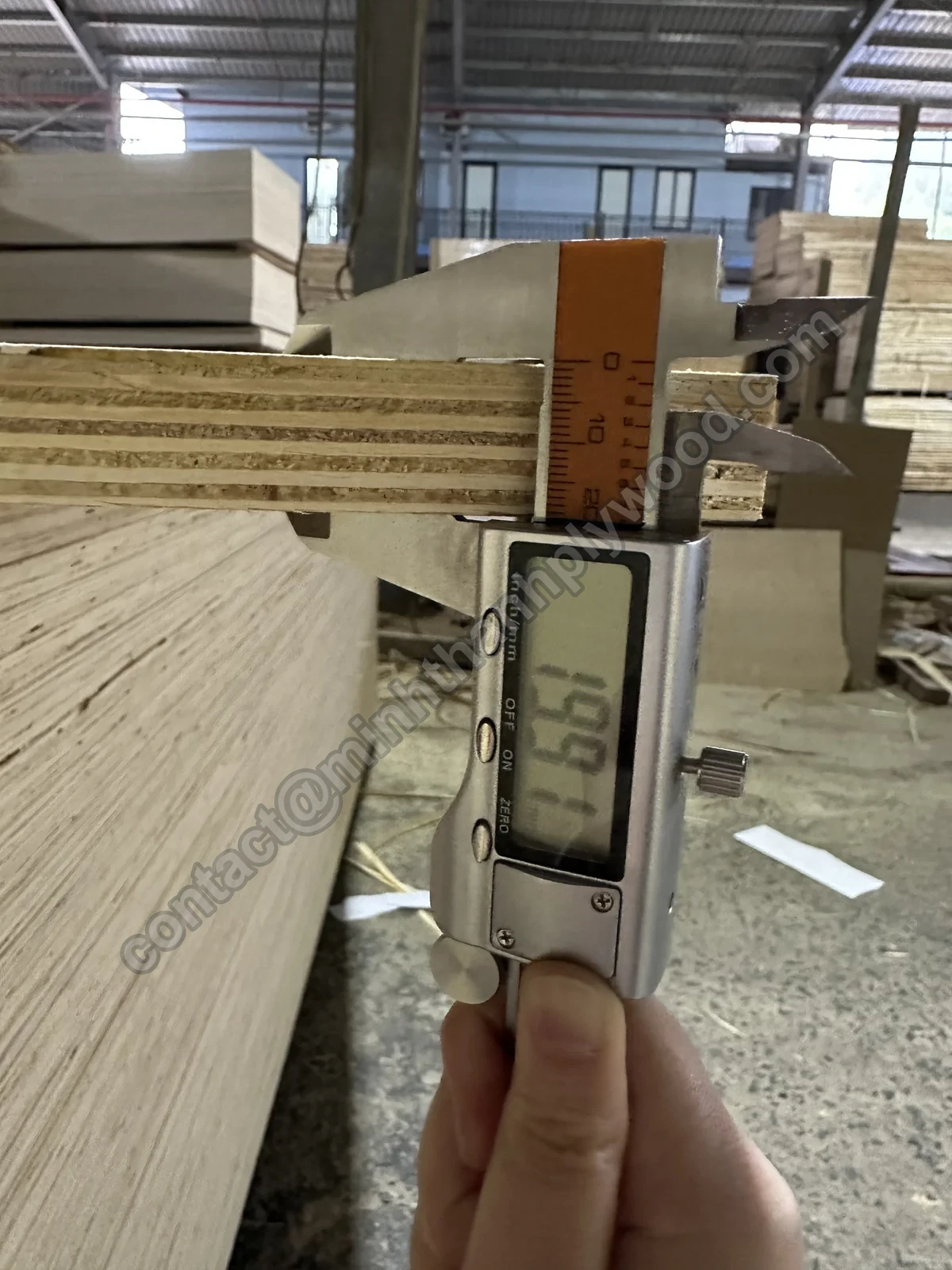 Define the measurement method used to accept the finished thickness.
 Moisture sampling and protected receiving support the panel’s manufacturing condition.
Which Vietnamese anti-slip plywood grade suits trailer and truck floors in Finland?
For trailer and truck floors in Finland, select anti-slip plywood against the vehicle floor design and service conditions. Give the supplier the support arrangement, loads, fixing detail, moisture exposure and required surface-test evidence. Approve the quoted thickness, core, textured face and edge protection for that application.
BS EN 636 covers plywood for structural and general-purpose use in dry, humid or exterior conditions. Its scope excludes the materials and processes used for overlays and coatings. State the panel’s service class separately from the textured surface, and request slip and wear evidence for the offered product.
Which film-faced formwork plywood face, core, glue and thickness suit Finland?
A Finnish buyer should order to the formwork system and concrete-finish requirement. Specify the film face and back, core, bond class, finished thickness and tolerance; agree support spacing, edge treatment and the inspection sample. These construction choices follow the project and approved sample rather than a single national order pattern.
| Specification field | What to agree before ordering |
|---|---|
| Face and back | Film specification, working-face finish and reverse-face requirement |
| Core | Species, veneer construction and sample acceptance for the intended formwork |
| Bond | Required bonding class and evidence for the intended exposure |
| Thickness | The system designer’s specified thickness, tolerance and support arrangement |
BS EN 314-2 specifies requirements for bonding classes of veneer plywood according to end use. Keep that performance requirement separate from the adhesive name. Approve the complete panel and edge treatment for the formwork system before placing the repeat order.
Which documents does plywood from Vietnam to Europe need?
Plywood from Vietnam to Europe ships with the commercial invoice, packing list, B/L, EUR.1 certificate of origin, phytosanitary and fumigation certificates and, from Minh Thanh, the EUDR compliance dossier with origin records and geolocation files. Agree the set while the order is prepared, so product identity follows the shipment from quotation to receiving.
The commercial invoice, packing list and bill of lading should identify the same order and packed quantities. Keep pack labels legible and linked to the specification. The receiving warehouse should be able to find the right thickness without opening every pack or guessing from a face photograph.
Minh Thanh supplies the EUDR compliance dossier, including origin records and geolocation files, with orders. Connect that information to the relevant shipment identity in the importer’s workflow. The European Commission’s EUDR overview, checked 8 October 2026, is the official starting point for the current application timetable and operator requirements.
Furniture emission requirements belong in the technical order as well. Minh Thanh holds CARB P2 / TSCA Title VI certification under ICTT mill no. 23024 and arranges third-party testing to the buyer’s method through SGS on request. The quality page lists the documents.
How should buyers handle EU tariff and origin planning?
Use the actual panel classification, origin rules and entry date when planning customs cost.
The EU–Vietnam trade agreement creates a framework for preferential trade. The European Commission’s Access2Markets guidance, checked 8 October 2026, explains that preferential treatment requires the applicable origin rules and origin evidence. A Vietnamese loading port by itself does not settle that calculation.
Give the customs specialist a complete panel description before the order becomes a shipment: face and core species, layer construction, dimensions and intended product identification. Ask for the cost basis and required document route for that precise description. Put the result into the landed-cost worksheet together with its effective date.
Keep customs duty separate from import tax cash flow, freight and destination handling. That separation helps a finance team compare two shipments without confusing a recoverable tax payment with a permanent material cost. It also makes a later change in one assumption visible instead of hiding it inside a single delivered-price estimate.
How should the buyer calculate usable landed cost?
Calculate usable landed cost from delivered expenditure and the quantity that the factory can turn into accepted parts.
Start with the ordered panel construction and delivery term. Add the charges that the buyer actually pays on that route, such as freight, insurance, destination services and inland delivery. Include inspection and receiving work where they belong in the programme. Avoid adding a freight charge twice when comparing different commercial terms.
| Cost or quantity | Input to record | Decision it supports |
|---|---|---|
| Panel purchase | Matched specification and quoted term | Comparable factory value |
| Transport and handling | Route-specific charges and inclusions | Delivered warehouse expenditure |
| Import charges | Classification, origin and entry-date calculation | Customs budget |
| Usable output | Approved nesting and accepted-part yield | Material cost per finished part |
| Stock commitment | Payment milestones and expected consumption | Working-capital requirement |
Then account for cutting yield and the part’s acceptance process. A more precise thickness or a better matched sheet format earns value through the operation it improves. The plywood price guide develops this comparison; the supply plan adds the date on which the accepted material must be available.
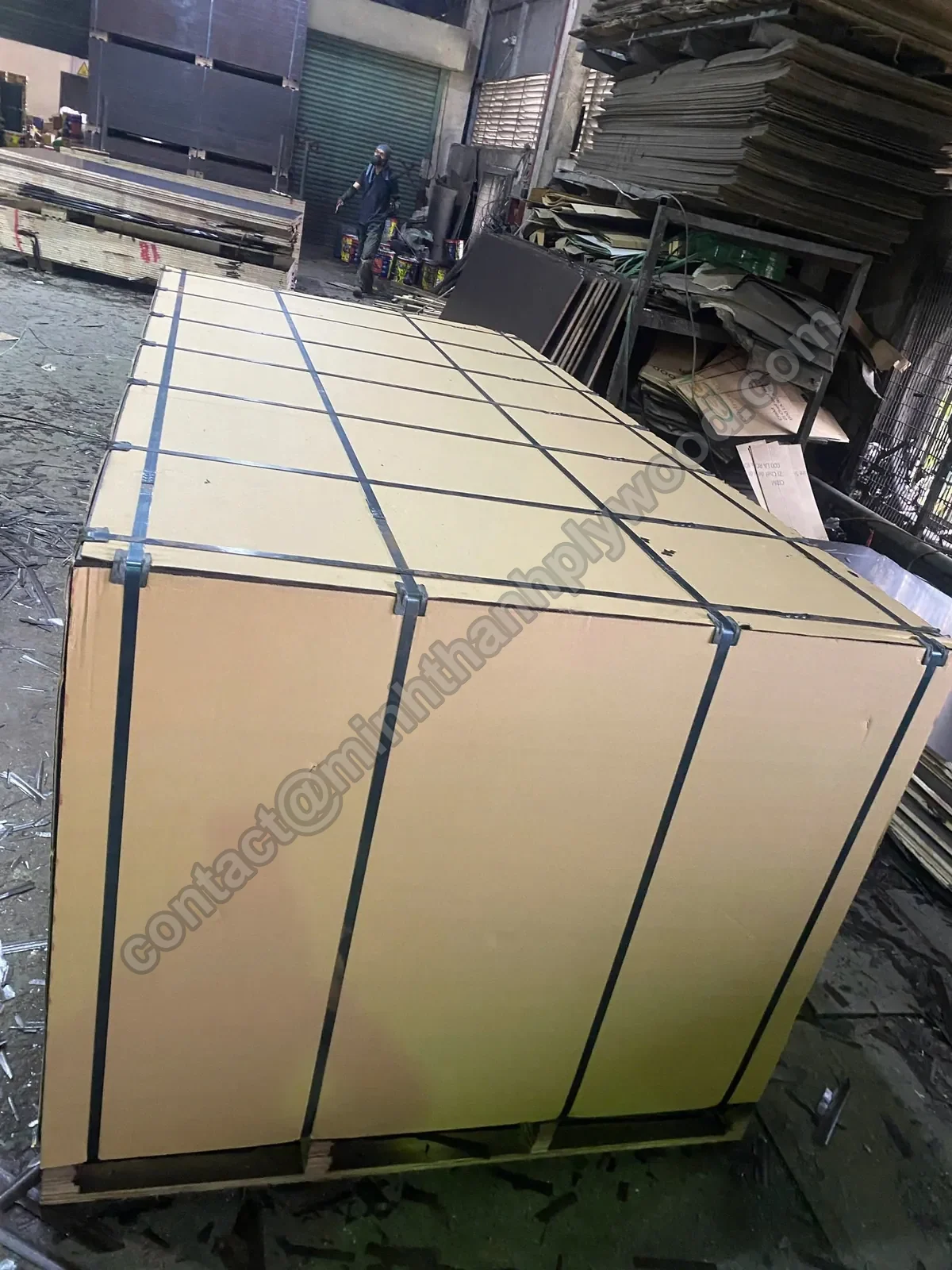 Packing is part of the delivered product, especially for finished-face panels.
How much lead time does Vietnam plywood supply need?
Vietnam plywood supply needs 15–45 days of production after the deposit, then about 25–35 days at sea to the Mediterranean or 30–40 days to Northern Europe, plus clearance and receiving. Plan each stage separately.
Begin with the required warehouse-ready date and work backwards through receiving, clearance, shipping and the factory release milestone.
Reserve time for the first sample and document review outside the repeat-production interval. Once the construction is qualified, preserve its revision so reorders do not repeat the whole technical discussion. A changed face, core or finishing route should trigger a new review of the affected operation.
Use actual consumption by component when deciding the reorder point. Open purchase orders, remaining warehouse stock and panels already committed to production all matter. Thin backs may reach their reorder point before thicker carcass stock, even when both arrived in the same container. Replenish the limiting component rather than buy equal volumes out of habit.
How should mixed loads be planned?
Mixed loads should follow the receiving factory’s component demand and an accessible pack map.
Minh Thanh accepts mixed specifications by agreement, with a minimum order of one 40HC. Combine the right quantities of each specification rather than treat the container as an invitation to add unrelated products. Every extra specification needs a clear label, its own count and a place in the unloading sequence.
Plan container loading against both physical arrangement and permitted cargo mass, including packaging. A volume-based sheet count does not settle the permitted load. The booking and inland route should guide the final loading plan. Keep the packing-list quantity aligned with that plan and with the photographed packs.
Think about what the warehouse needs first. If a small urgent component pack is buried behind long-term stock, the apparent shipping saving creates extra handling. Agree how the packs will be identified and unloaded, especially when the buyer will split them between different production lines or storage areas.
What does Minh Thanh’s capacity mean for an EU programme?
Minh Thanh has plywood production capacity of 50,000+ m³ per year, focused on furniture and interior panels with Europe as the main market. We ship regularly to European buyers, with repeat orders into Italy, and cut panels into 4, 6 or 8 pieces on request. Confirm the product mix and production window for each main-source or second-source programme before booking the order.
The EUDR applies to large and medium operators from 30 December 2026 (checked 8 October 2026). Our plantation-core supply is local and short, so the EUDR dossier with origin records and geolocation files ships with every order already. Buyers moving volume from Chinese or Russian sources can start on the new rules without changing supplier again.
Minh Thanh photographs and films each shipment before loading and sends the records to the buyer. For the step-by-step import process, documents and duty, read how to import plywood from Vietnam.
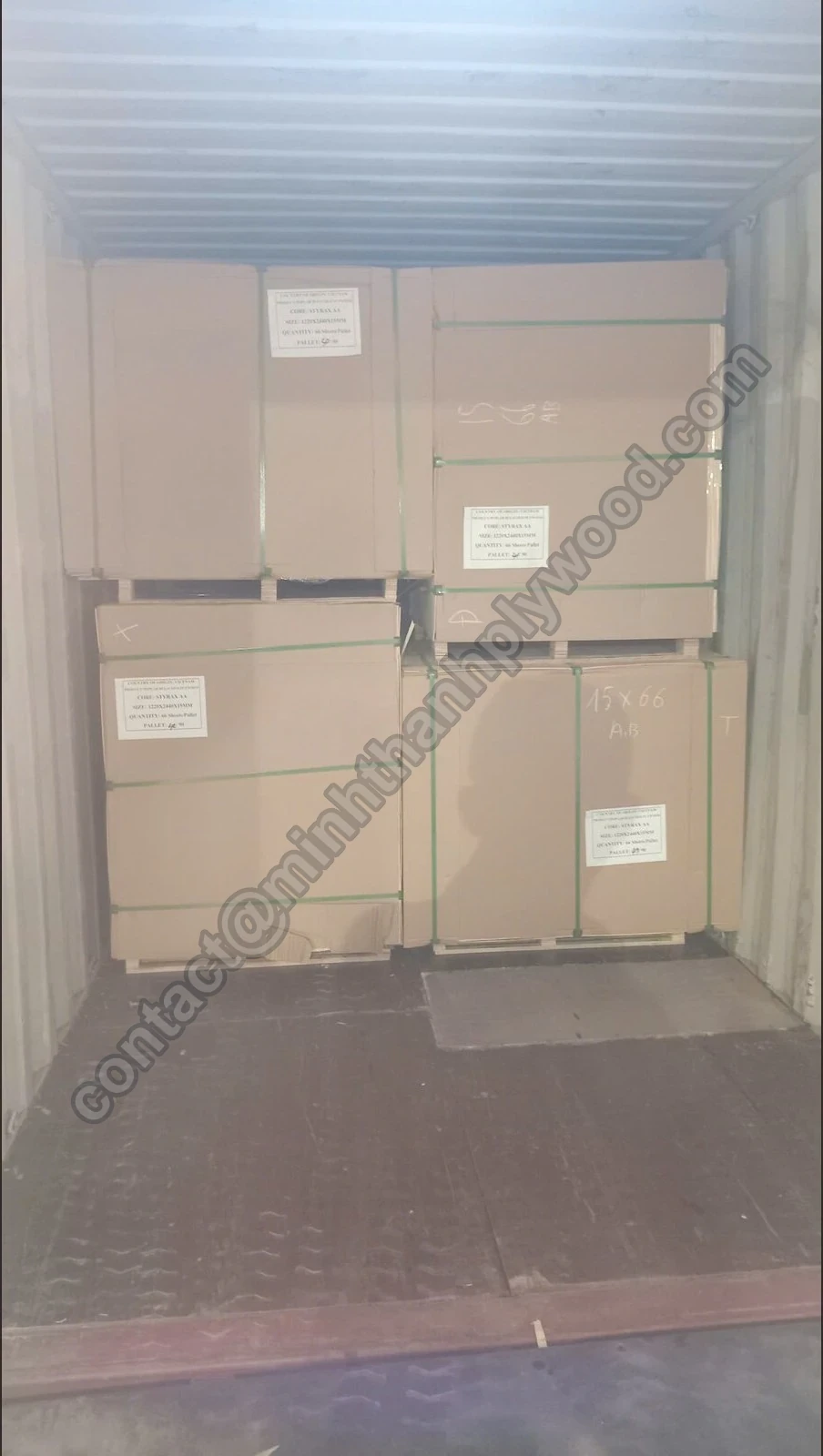 Strapped furniture plywood packs loaded inside a shipping container.
How do you start a repeatable EU buying programme?
Start with a component brief and a dated receiving requirement, then qualify the construction and release a clearly identified first order.
- Describe the furniture part and visible-face requirement.
- Select the face/back pair, Styrax or Eucalyptus core, bond and emission requirement.
- Provide dimensions, thickness tolerance and the cutting or finishing process.
- Approve a sample through the receiving factory’s operation.
- Align document requirements, packing, shipment milestones and the warehouse date.
- Record first-order receiving results before arranging the next release.
The Vietnam plywood price guide frames the material quotation, and the plywood price guide connects it to landed cost.
Send your application, face/back grade, core, bond and emission requirement, size, thickness, packing, quantity and destination to request a quotation. Include the first warehouse-ready date and expected reorder pattern. Minh Thanh can then quote a furniture plywood programme that matches the parts you make and the stock your factory needs.
Buyer questions, answered
What should I specify when buying Vietnam plywood for the EU market?
State the furniture component, face/back grade, core, bond service, emission requirement, dimensions, tolerances, finish process and required delivery date. Add packing, quantity and destination documents to the same specification.
Is birch-faced plywood the same as all-birch plywood?
Birch-faced plywood identifies the surface veneer. Minh Thanh birch-faced furniture panels use selected Styrax or Eucalyptus cores, so the purchase order should name both the face and core.
How long does Minh Thanh plywood production take?
Standard production is 15–45 days after deposit. Ocean transport, destination clearance and warehouse delivery are separate parts of the replenishment schedule.
Can I order European sheet sizes?
Minh Thanh supplies 1250 × 2500 mm alongside 1220 × 2440 mm and selected custom sizes. Choose the format through the component cutting plan and compare usable parts per sheet.
What EUDR information comes with an order?
Minh Thanh supplies the EUDR compliance dossier, including origin records and geolocation files, with orders. Coordinate the shipment identity and importer workflow while arranging production.
Does a Vietnamese shipment automatically qualify for an EU preferential duty?
Preferential treatment follows the product-specific origin rules and the required proof of origin. Have the exact panel description, customs classification and entry date reviewed through the official EU trade tools.
How do I qualify a second plywood supplier?
Test the second supplier's defined construction on the same cutting, coating and hardware process used for the primary panel. Approve its own sample and packing plan before treating it as a replacement.
Can a container contain mixed specifications?
Mixed specifications are available by agreement, with a minimum order of one 40HC. Plan the pack map and labels around warehouse access and the quantity needed for each component.
What should I inspect when the container arrives?
Photograph the seal, container condition and packs before unloading, then check labels, quantities and sampled panel dimensions. Link any damaged pack or sheet to its position and shipment record.
How do I request a supply-programme quotation?
Send the application, face/back grade, core, bond and emission requirement, size, thickness, quantity, packing and destination. Include the first required warehouse date and the expected reorder pattern.