
Compare formwork plywood price as cost per accepted pour: landed panel cost allocated across usable castings, plus the labour and consumables paid each cycle. Minh Thanh Plywood makes film-faced formwork panels in two grades: melamine-fortified for about 12–15 uses and phenolic WBP for up to about 25, with proper handling, release agent and edge sealing. Fix the grade, then compare delivered cost per pour.
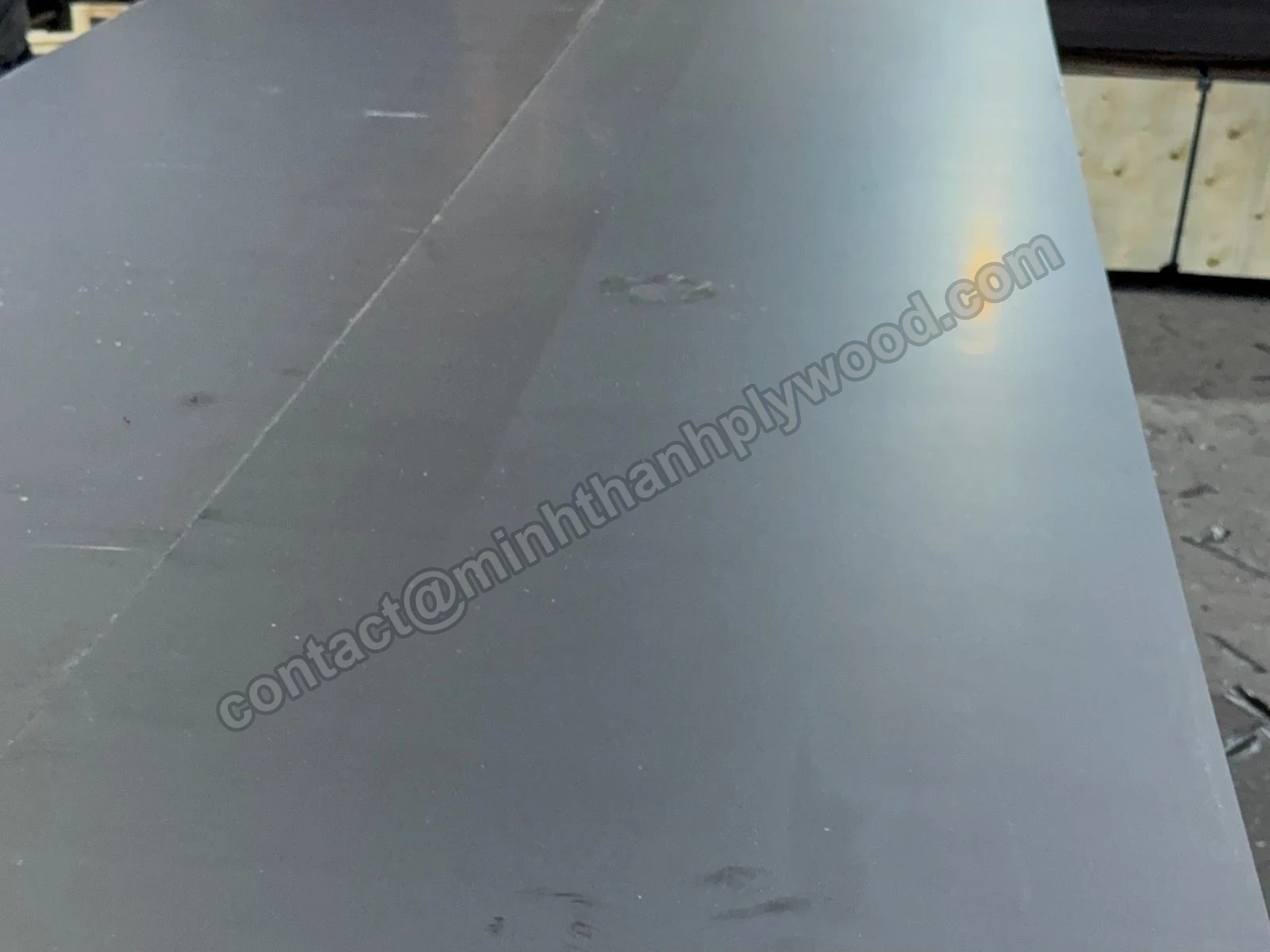
What does formwork plywood price need to measure?
Formwork plywood price needs to measure the cost of delivering an accepted concrete surface through the project’s actual formwork programme.
A sheet price starts the calculation, but the site buys a sequence of uses. Panels are cut, fixed, stripped, cleaned and moved. Some stay in the same gang; others become small edge pieces. The cost comparison should follow those operations and the concrete finish accepted after each casting.
Use a consistent unit. Price per installed area per accepted pour is useful when different layouts use different sheet quantities. Price per sheet per accepted cycle works when the compared panels cover the same area with the same cutting plan. Keep the two units separate so the estimator does not compare a whole-sheet purchase with an installed-area result.
Commercial and construction plywood starts from US$250/m³ (October 2026); film, core and glue set your film-faced quote. This page is the formwork rate analysis: the formula, the worksheet and a worked example. For the price lines of the panel itself, read film faced plywood price.
| Minh Thanh film-faced build | Standard | Premium |
|---|---|---|
| Film | 120–135 g/m² | From 135 g/m² |
| Glue and pressing | Melamine-fortified, pressed at 110–120 °C | Phenolic WBP, pressed at 130–145 °C |
| Reuse with proper handling, release agent and edge sealing | About 12–15 uses | Up to about 25 uses |
| Thickness | 12, 15, 18 and 21 mm, ±0.5 mm | 12, 15, 18 and 21 mm, ±0.5 mm |
| Core | Eucalyptus or Acacia | Eucalyptus or Acacia |
| 40HC, 18 mm | 880 sheets on Acacia, 795 on Eucalyptus | 880 sheets on Acacia, 795 on Eucalyptus |
Which formwork specification should be fixed before pricing?
Fix the approved panel construction, form layout and concrete finish requirement before asking suppliers to compete on price.
Describe the panel face, bond service, core and dimensions, together with the application. A concealed foundation, an exposed architectural wall and a slab system place different demands on panel finish and handling. The quote needs to correspond to the drawing and the finish the contractor must hand over.
The panel belongs inside a designed formwork system. Supports, span, orientation, fasteners and concrete pressure affect performance. The APA concrete-forming resource, checked 8 October 2026, provides official technical guidance on structural-rated forming panels and their selection. Use the project designer’s approved requirements as the purchasing baseline.
Record permitted substitutions in the specification. A different core, overlay or thickness should have a review route before it enters the site inventory. A quoted sheet that sounds similar but requires a changed form layout is a different purchasing option with its own engineering and labour consequences.
How do surface film and bond change the quotation?
Surface film and bond service change different parts of the panel’s performance, so specify them separately.
The face meets the concrete and influences stripping, surface appearance and wear. The bond holds veneer layers together under the selected service conditions. A dark surface does not identify the adhesive used between veneers. A glue shorthand does not fully describe the casting face.
Request a complete product description rather than a broad “waterproof formwork” label. Include the casting face on each side, edge treatment, core construction and the intended bond requirement. Keep film-faced plywood distinct from medium-density overlay and high-density overlay products, commonly called MDO and HDO. Their names should lead to actual supplier specifications rather than substitute for them.
Compare the panel after the operation that matters. A surface can remain attached while becoming unsuitable for the required visible concrete finish. A sound casting face can also be lost through edge damage or handling. The price discussion should connect the construction to the actual retirement rule used by the site.
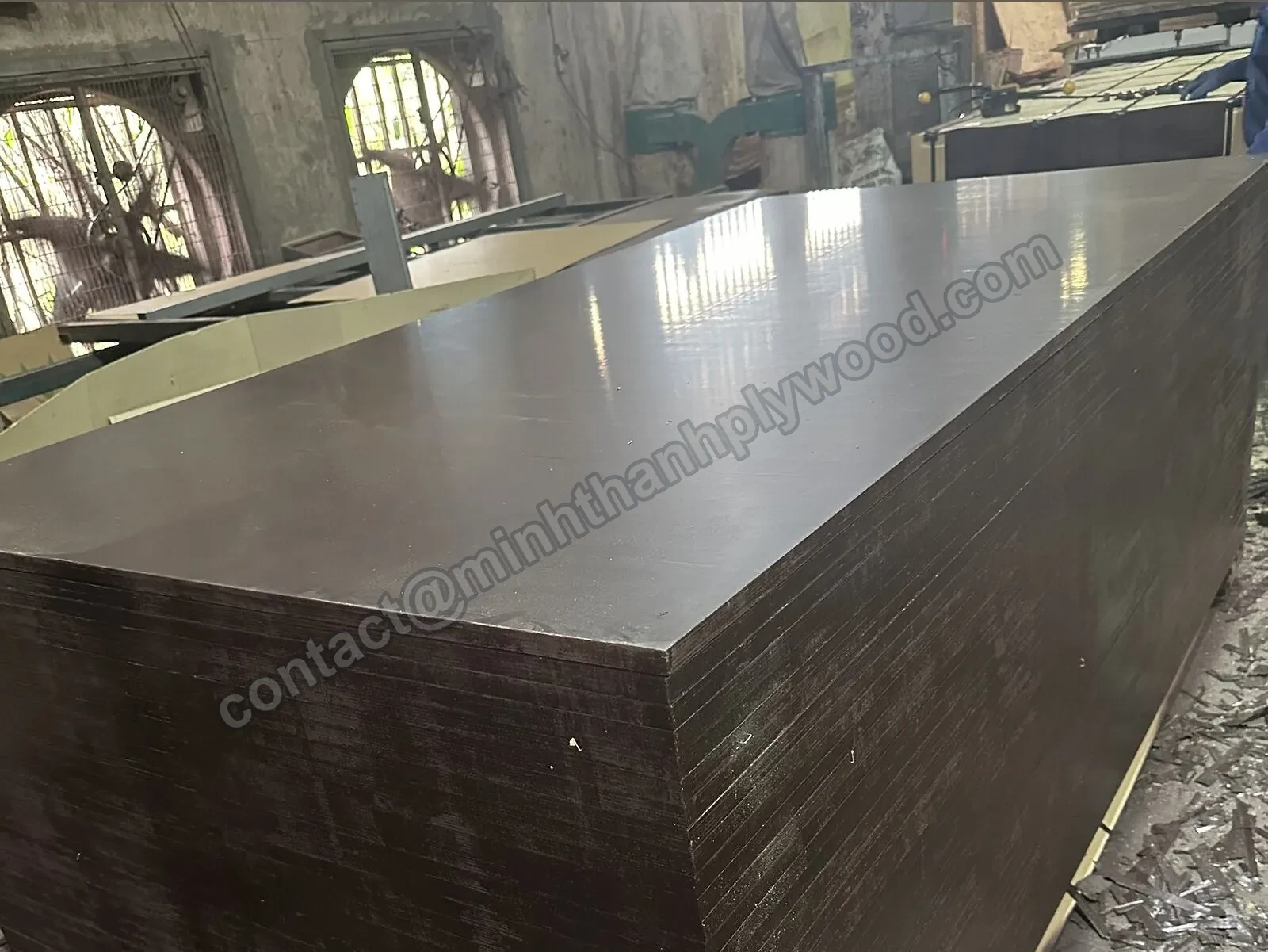 Specify the casting surface, edge treatment and veneer construction separately.
Why is thickness a design input rather than a price shortcut?
Thickness is a design input because the panel must perform within the project’s support and loading arrangement.
A thinner sheet can quote at a lower price while creating a different formwork requirement. A thicker sheet can add material and handling cost without improving a layout that already meets the design. The estimator should compare approved options, rather than infer suitability from the thickness written on a price list.
State the dimensional tolerance needed by the system. Minh Thanh’s film-faced panels use a standard thickness tolerance of ±0.5 mm. Include that requirement when panels meet frames, joints or reusable gang components. A thickness check should use the agreed method and representative sheets, with the tool and measurement positions recorded.
Keep panel size and installed orientation on the same specification. A change that alters joint positions or cutting allowances can change concrete finishing work. If the designer accepts more than one panel option, calculate the complete installed cost for each. The relevant saving is the one preserved after the approved form layout is assembled.
How do you normalise a concrete forming plywood price per sheet and per m³?
A concrete forming plywood price arrives per sheet or per cubic metre; normalise both using the panel’s declared dimensions, then compare the same delivered construction.
A cubic-metre quote and a per-sheet quote can be compared through nominal sheet volume. In metres, sheet volume equals length multiplied by width multiplied by thickness. The per-sheet purchase price equals the quoted price per cubic metre multiplied by that sheet volume. This is a purchasing conversion; use the quote’s stated dimension and invoicing basis consistently.
Do not substitute a different nominal thickness into the calculation because an individual caliper reading differs. Record the ordered nominal size and the acceptance tolerance separately. Likewise, compare full sheets with full sheets before calculating any cutting or usable-area advantage.
The volume conversion does not calculate how many sheets can ship in a container. Loading requires the pack arrangement, actual panel mass, packaging and permitted cargo mass on the booking and route. Keep the purchase-unit calculation separate from loading capacity. That avoids turning a tidy price-per-volume worksheet into an unsupported delivered sheet count.
What is the correct cost-per-pour formula?
Allocate one-time panel cost across accepted uses, and add the operating cost paid on every cycle.
For a panel that stays in one unchanged layout, average material cost per accepted use equals landed panel cost minus any realized residual value, divided by accepted uses. Add average cycle labour, consumables and repairs, calculated from the total costs incurred during those uses. Divide the resulting figure by the installed usable area if the estimate is expressed per area per pour.
Average cost per accepted pour = (landed panel cost − realized residual value + total cycle operating costs) ÷ accepted pours.
The formula’s scope matters. Stripping labour is repeated work. Adding one stripping charge to panel purchase and dividing everything by the full reuse count understates labour unless that charge already represents all cycles. Label every worksheet amount as one-time, per-cycle or lifetime total.
Use observed accepted uses for a completed programme. For a tender, use an explicitly planned service scenario and review it against site evidence. Our reuse ranges give a sound starting figure for the tender; your first container’s log then replaces it with your own.
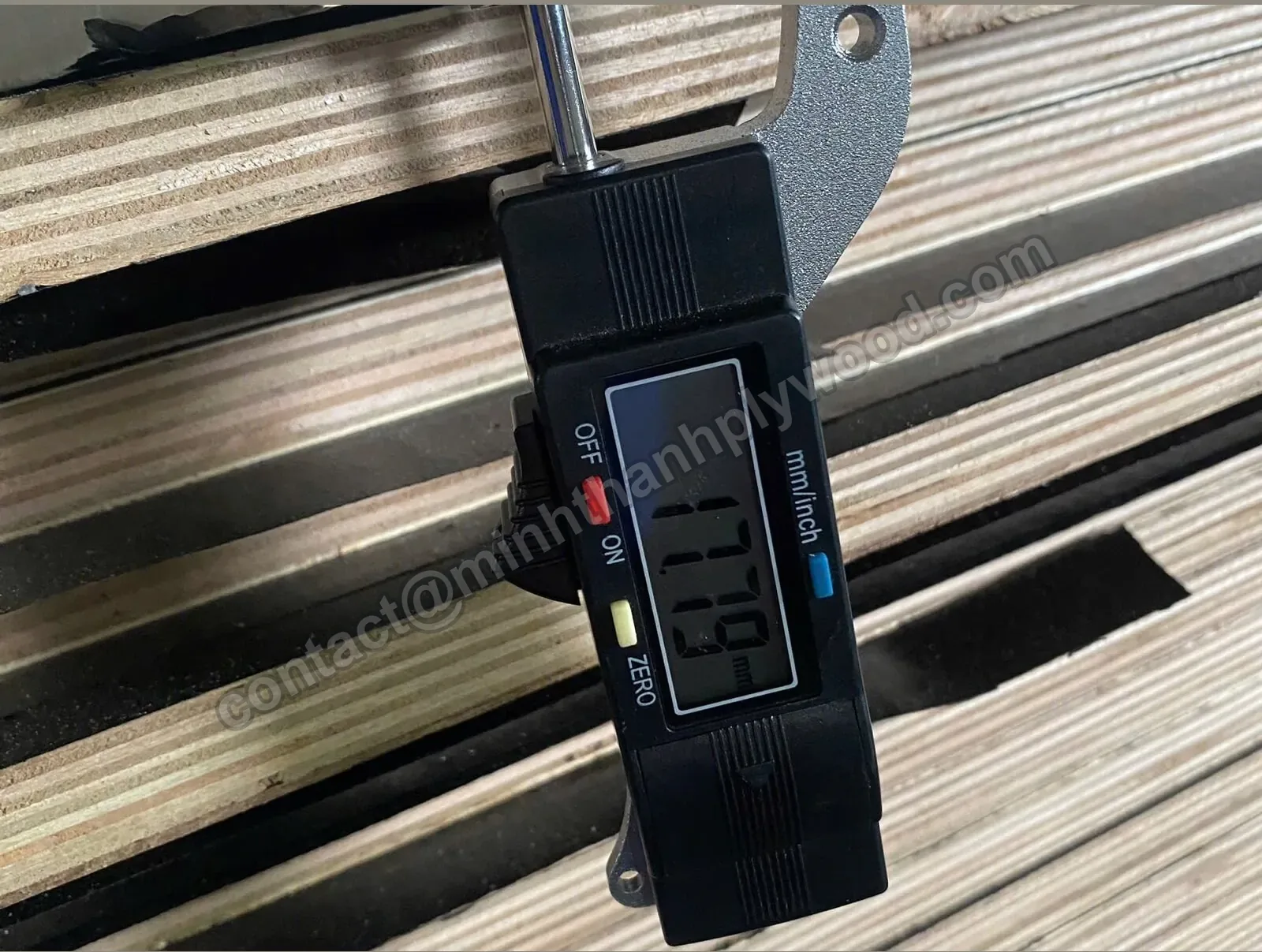 The quote and cost model need the same nominal size and tolerance.
What belongs in a plywood shuttering rate analysis?
A plywood shuttering rate analysis needs the full installed material and operating cost assigned to accepted concrete work.
Start with the take-off and usable face area. Identify full panels, cut pieces, openings and planned joints. Record which material stays in circulation and which is consumed by the first cutting operation. Then add the work that repeats and the work that occurs only when panels are prepared or retired.
| Line | How to record it | Allocation |
|---|---|---|
| Landed panel purchase | Matched quote plus buyer-paid delivery charges | Across accepted uses |
| Initial preparation | Cutting, drilling and specified edge treatment | Across the uses of that layout |
| Cycle labour | Actual stripping, cleaning and handling for each cycle | To each cycle |
| Consumables | Release agent, repair and renewed edge protection | When consumed |
| Concrete finish correction | Panel-related work needed for acceptance | To the affected casting |
| Retirement | Disposal cost and realized recovery value | At programme close |
Avoid counting the same operation twice under different headings. If a gang-handling rate already includes panel stripping, separate only the additional panel-specific work used to compare constructions. A useful analysis explains the difference between options without charging one option for the whole form system and the other for panels alone.
What does a worked cost-per-pour comparison show?
A worked comparison with index prices shows why the premium grade usually wins on repeated sets: a sheet costing 30% more that gives about 25 pours instead of about 13 costs roughly 30% less per pour. The index removes market prices so the logic holds whatever your quotation says.
| Line | Standard grade | Premium grade |
|---|---|---|
| Build | Film 120–135 g/m², melamine-fortified glue | Film from 135 g/m², phenolic WBP glue |
| Delivered sheet cost (index) | 100 | 130 |
| Accepted pours (planning figure) | 13 | 25 |
| Material cost per pour (index) | 7.7 | 5.2 |
| Sealing and repair per pour | Higher: edges open sooner | Lower: face and bond last longer |
The index for the premium sheet is an example; put your own quotation ratio in its place. The pour counts sit inside our reuse ranges, which assume proper handling, release agent and edge sealing. A short job that cuts the sheets up after a few pours never reaches the premium grade’s advantage, so the standard grade is the economical choice there.
Freight enters the same way. Our 40HC plan for 18 mm sheets is 880 on Acacia core and 795 on Eucalyptus core, so a container of Acacia sheets spreads the freight over about 11% more sheets. Divide your freight quote by the sheet count before adding it to the delivered sheet cost.
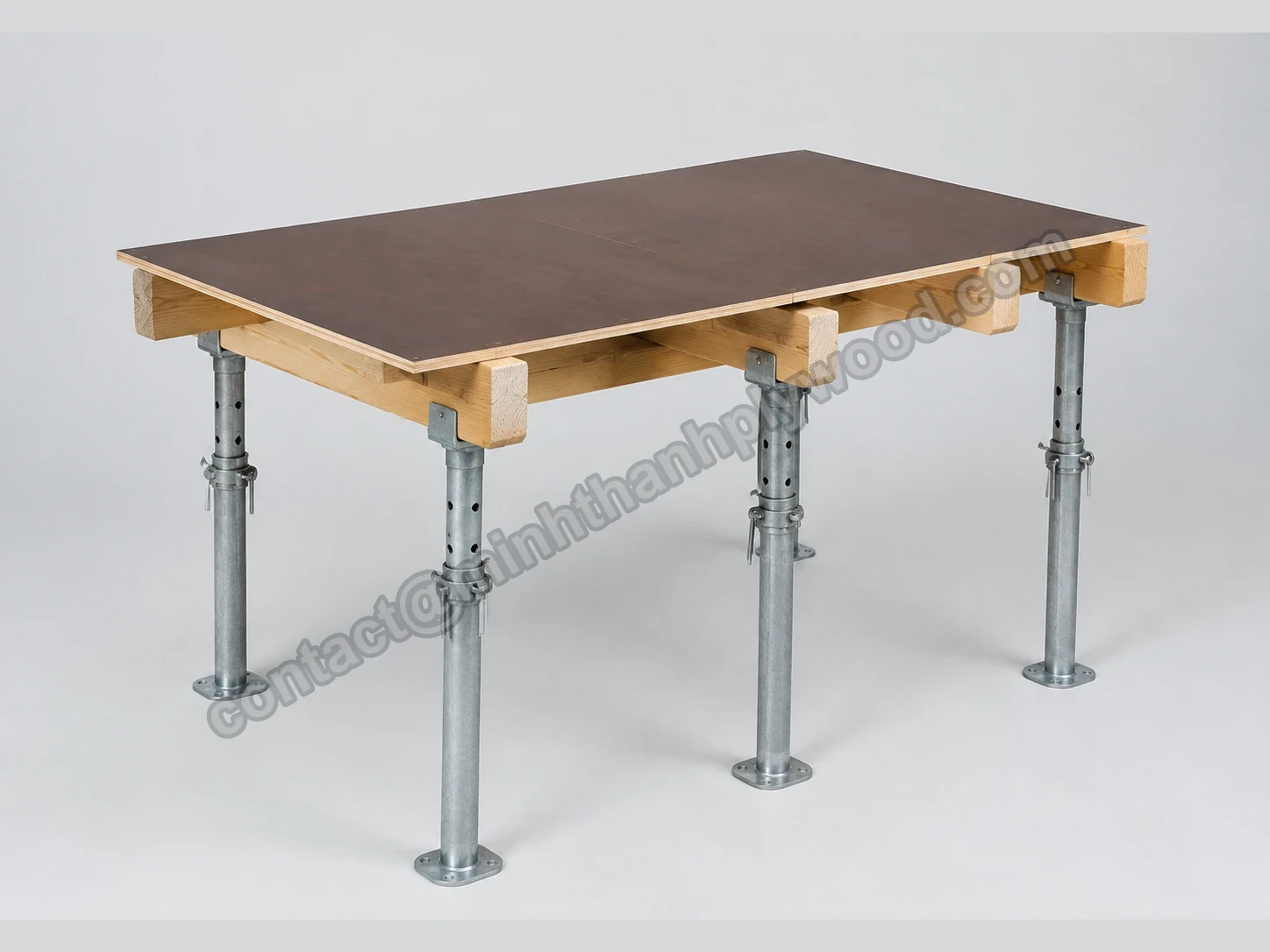
A slab soffit set: one sheet, many pours; the pour count decides the real price.
When does a higher-priced panel earn its premium?
A higher-priced panel earns its premium when its additional accepted service or reduced operating work exceeds the extra landed cost.
Compare the required programme first. If the layout will be dismantled and heavily recut after a short task, much of a long-service face’s potential can remain unused. If the same gang serves repeated pours, a longer acceptable face life can reduce panel replacement and preparation work.
Use the break-even relationship. Hold installed area and operating conditions equal. The material comparison follows landed panel cost divided by accepted uses. Then add the labour and consumable differences that the trial shows. A panel with higher purchase cost can win on material allocation yet lose if it creates more finish correction.
Also review timing. A premium material available after the first required pour does not solve that programme. Compare approved local stock with an import route using their actual delivery dates. The general plywood price guide helps establish an equivalent purchasing basis before site operations are added.
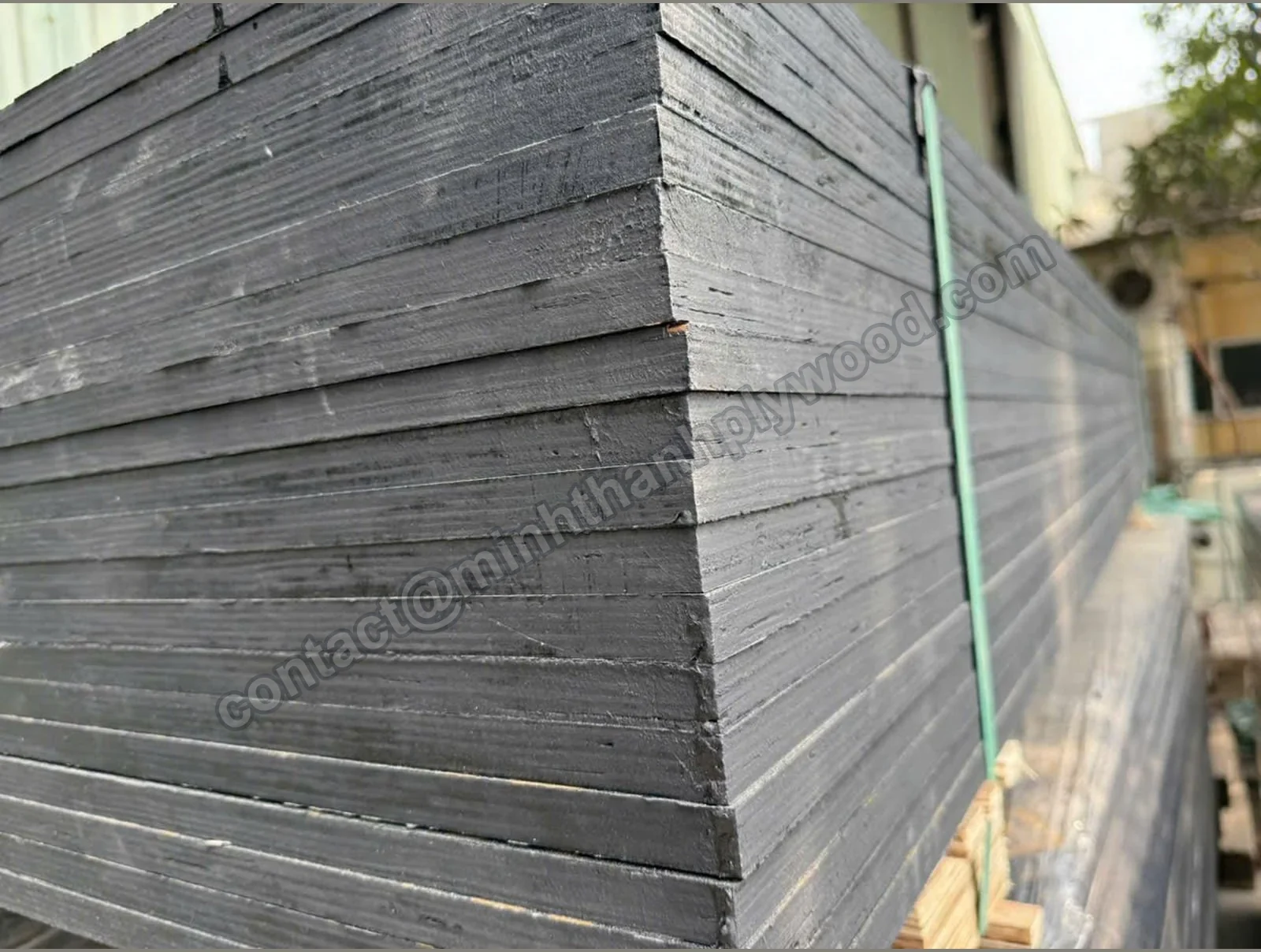 An edge can end useful service before the whole casting face is worn.
How do cutting layouts change formwork plywood price?
Cutting layouts change cost by reducing the area that remains usable and altering the panel’s future service.
Start with the form drawings and the planned sheet orientation. Map openings, tie locations and joints. Cutting a panel for one irregular location can limit where it fits in later pours. Record that panel as a cut component with its own service plan rather than give it the same reuse assumption as an unchanged full sheet.
Compare sheet formats through the approved layout. Minh Thanh supplies standard 1220 × 2440 mm and 1250 × 2500 mm formats, with selected custom dimensions. The useful format is the one that fits the design and reduces real cutting work or unused stock. A larger sheet should not be credited with savings unless the site can use its extra area.
Plan spare panels by the components that need replacement. A reserve of whole sheets can cover several cut parts; a reserve of an unusual pre-cut shape serves a narrower purpose. Keep replacement practicality visible alongside the purchase quantity so material savings do not create avoidable interruptions later.
Which site costs decide the real rate per pour?
Log these on the first container and the rate analysis becomes your own figure:
- Reuse: count accepted castings that met the finish requirement, by panel build and layout; record why each panel was retired (face wear, edge damage, cutting, loss).
- Edges and release agent: factory-sealed edges arrive painted; reseal every saw cut and drilled hole, and apply a release agent compatible with the film each cycle. The APA concrete-forming guidance, checked 8 October 2026, covers cleaning, repair and release-agent application after stripping.
- Stripping and handling: charge stripping and cleaning to each cycle; lift panels, do not drag them, and store them flat with faces protected.
- Concrete finish: agree the finish reference and record panel-related corrections separately from mix or placement causes.
- Receiving and trial: caliper a few sheets per pack against ±0.5 mm, check film and sealed edges, then run one representative casting before setting the reuse figure.
- Early retirement: use the actual accepted casts in the material allocation and count residual value only when the panel is really reused or sold.
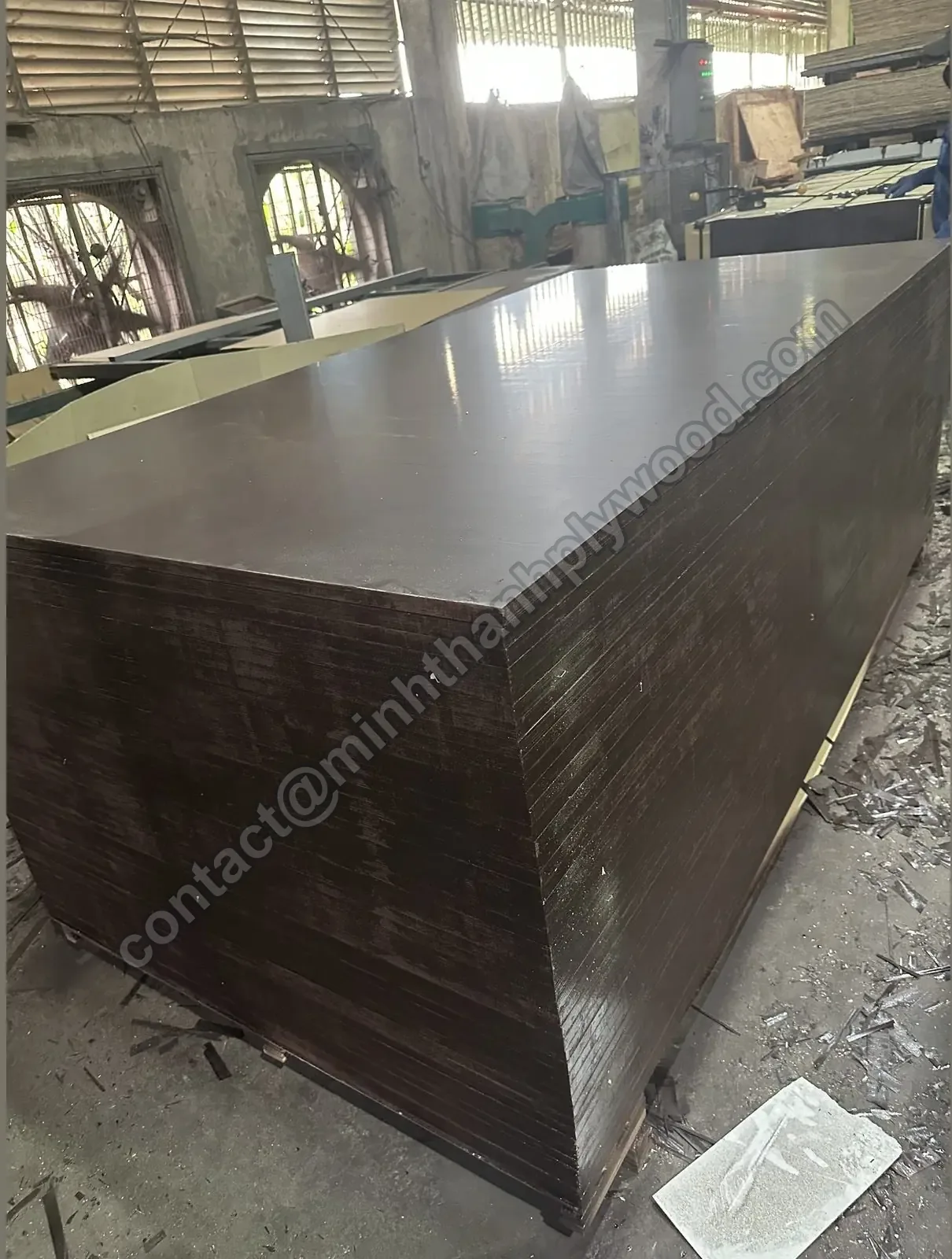 Sealed edges and a protected working face keep a panel in circulation longer.
How should contractors compare local stock with imports?
Compare local stock and imports on approved construction, material ready at the site and the quantity needed by the programme.
Local supply can serve an urgent or small requirement without an ocean shipment. An import programme can support planned volume when the site calendar permits production and delivery. Neither route should be priced using the other route’s lead time or channel costs.
Minh Thanh’s minimum order is one 40HC, with mixed specifications by agreement, and standard production is 15–45 days after deposit. Add shipping, clearance and inland delivery to the release plan. A first order also needs sample and specification approval before the production instruction is stable.
Compare the usable quantity delivered, rather than a volume-only loading estimate. Panel mass, packaging, arrangement and permitted cargo mass set the final loading plan. Identify which expenses the local-stock price already includes and which the importer still pays. This produces a site-ready comparison that an estimator can use without hiding freight or destination handling.
What should an import quote include?
An import quote should identify the exact panel, quantity, packing, delivery term and production release basis.
Ask for face and bond details, core, thickness, dimensions and tolerance. State the required concrete finish and intended use so the supplier can quote the right construction. Put packing protection and pack identification on the order, especially if different sizes or thicknesses share the shipment.
Minh Thanh quotes FOB Hai Phong, CFR or CIF. Each term should be compared through the charges the buyer pays after the quoted point. Your broker sets the duty line from the panel description we write on the invoice.
Minh Thanh photographs and films every shipment before loading and sends you the record. Use the packing list and images to identify the ordered packs. That supports count and condition checks at arrival, while the project-specific technical requirements belong in the quality discussion and approved panel specification.
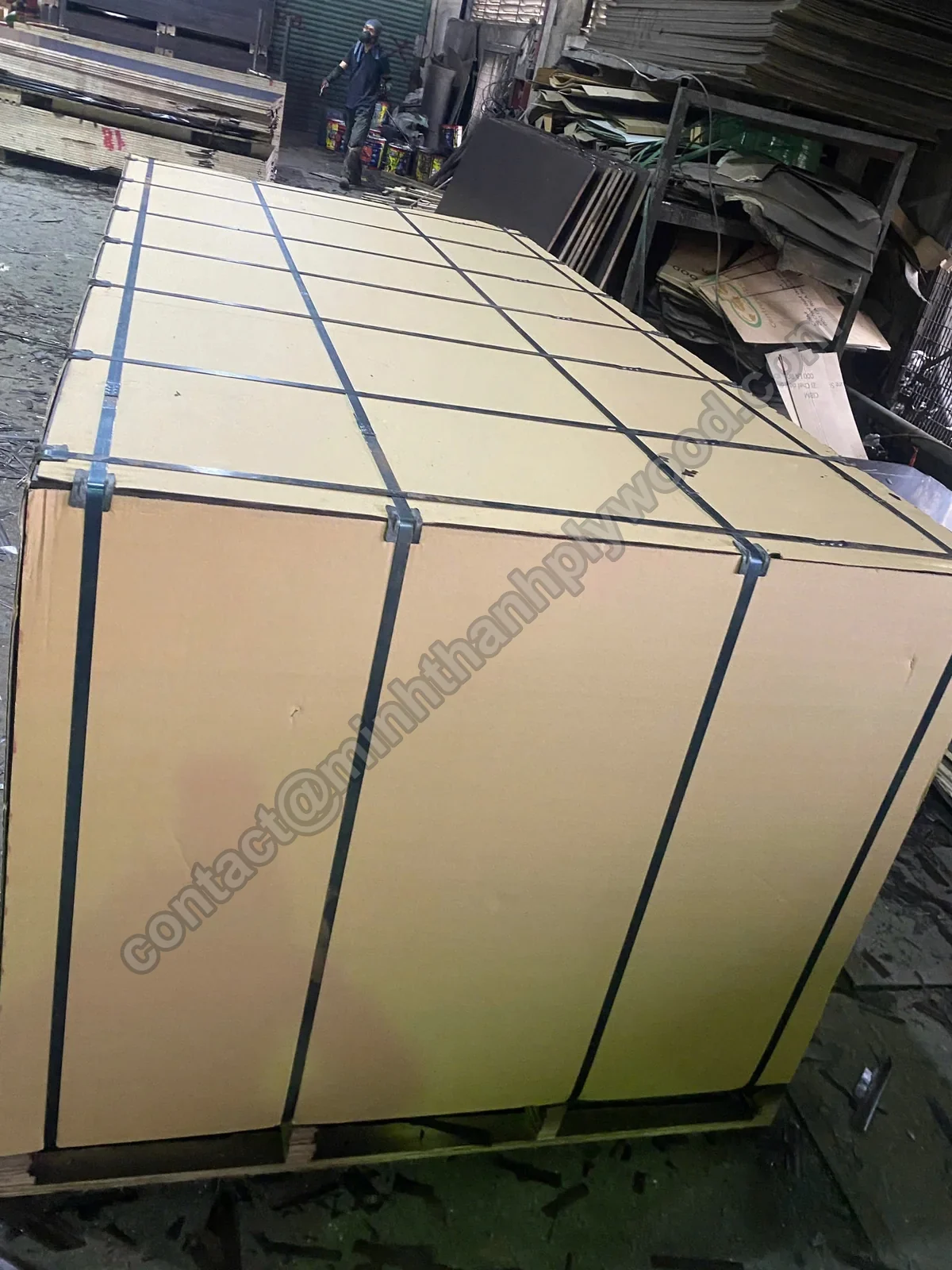 Include protective packing and receiving identification in the delivered-cost comparison.
What should you send for a usable formwork quotation?
Send the approved formwork requirement and site programme so the quoted construction can be compared through accepted service.
- Identify the application and required concrete finish.
- State the designer’s panel requirement, support layout reference and permitted alternatives.
- Name face, bond service, core, thickness, size and tolerance.
- Give quantity, cut-piece requirements, packing and destination.
- Include the first site-ready date and planned reuse sequence.
- Describe the inspection and representative casting trial used for acceptance.
For destination cost planning, read the US purchasing guide or European landed-cost guide. The China quote comparison helps normalize alternative origins without replacing product qualification.
Request a quotation with the panel specification and destination. Add application, bond and emission requirement, face, core, dimensions, packing and quantity. The next useful decision is a matched quote and sample trial that lets the project compare material cost, operating effort and accepted concrete finish together.
Buyer questions, answered
How should I compare formwork plywood price?
As cost per accepted pour. Compare the same panel construction and delivery term, then allocate landed purchase cost across accepted castings. Add stripping, cleaning, resealing, release agent and other costs in the cycle where they are incurred.
What belongs in a plywood shuttering rate analysis?
Record landed panel cost, the installed usable area, accepted reuse, repeated labour and consumables, repairs and disposal. Include the cost of meeting the required concrete finish and compare equivalent form layouts.
Can I divide stripping labour by the number of reuses?
No. Allocate the one-time panel purchase across its accepted uses. Stripping and cleaning happen each cycle, so each cycle's labour remains a separate cost; total lifetime labour can be averaged only after summing all those cycles.
Does an expensive formwork panel always save money?
No. A higher-priced panel earns value when its usable service and finished concrete result fit the project. A short project that retires or cuts up the panel may not recover a premium designed for repeated full-sheet use.
How many times will film-faced plywood be reused?
Minh Thanh melamine-fortified panels give about 12–15 uses and phenolic WBP panels up to about 25, with proper handling, release agent and edge sealing. Log accepted castings on the first container to set your own figure.
Does thicker plywood automatically make a safe form?
No. Panel thickness belongs to the formwork design alongside span, supports, pressure, orientation and fasteners. Use the designer's approved construction when requesting a price.
Are film-faced plywood, MDO and HDO interchangeable?
No. They describe different overlay systems and product specifications. Compare the intended forming face, bond service and concrete finish rather than treating every dark or coated sheet as one product.
How can cut edges affect formwork cost?
Cutting opens new edges that need the specified protection and maintenance. Include the cutting work, edge treatment and the changed useful area in the project rate.
Is an FOB quote the delivered site cost?
No. An FOB quote is one commercial basis. Add the transport, insurance, import and destination services that the buyer pays before comparing material ready at the site.
What should I send for a formwork quotation?
Send the designed application, face and bond requirement, core, thickness, size, quantity and destination. Add the required concrete finish, reuse programme, packing and first site-ready date.