
Film faced plywood price is set by five lines: film mass, glue bond, core, thickness and delivery term, and it is best compared as cost per pour. Minh Thanh Plywood quotes standard melamine-fortified panels (about 12–15 uses) and premium phenolic WBP panels (up to about 25), with proper handling, release agent and edge sealing; commercial plywood starts from US$250/m³ (October 2026).
What should a film faced plywood price describe?
A film faced plywood price should describe the complete panel and where it will be delivered. Buyers also call it phenolic plywood price or shuttering ply price; the overlay name does not identify its core or internal adhesive. Keep those fields separate in the request and quotation.
A useful order line states the film construction, face and back coverage, core, bond requirement, physical size, thickness tolerance, edge treatment and quantity. It also states the intended concrete finish and required product evidence. Without that information, two dark-faced sheets can represent different purchases.
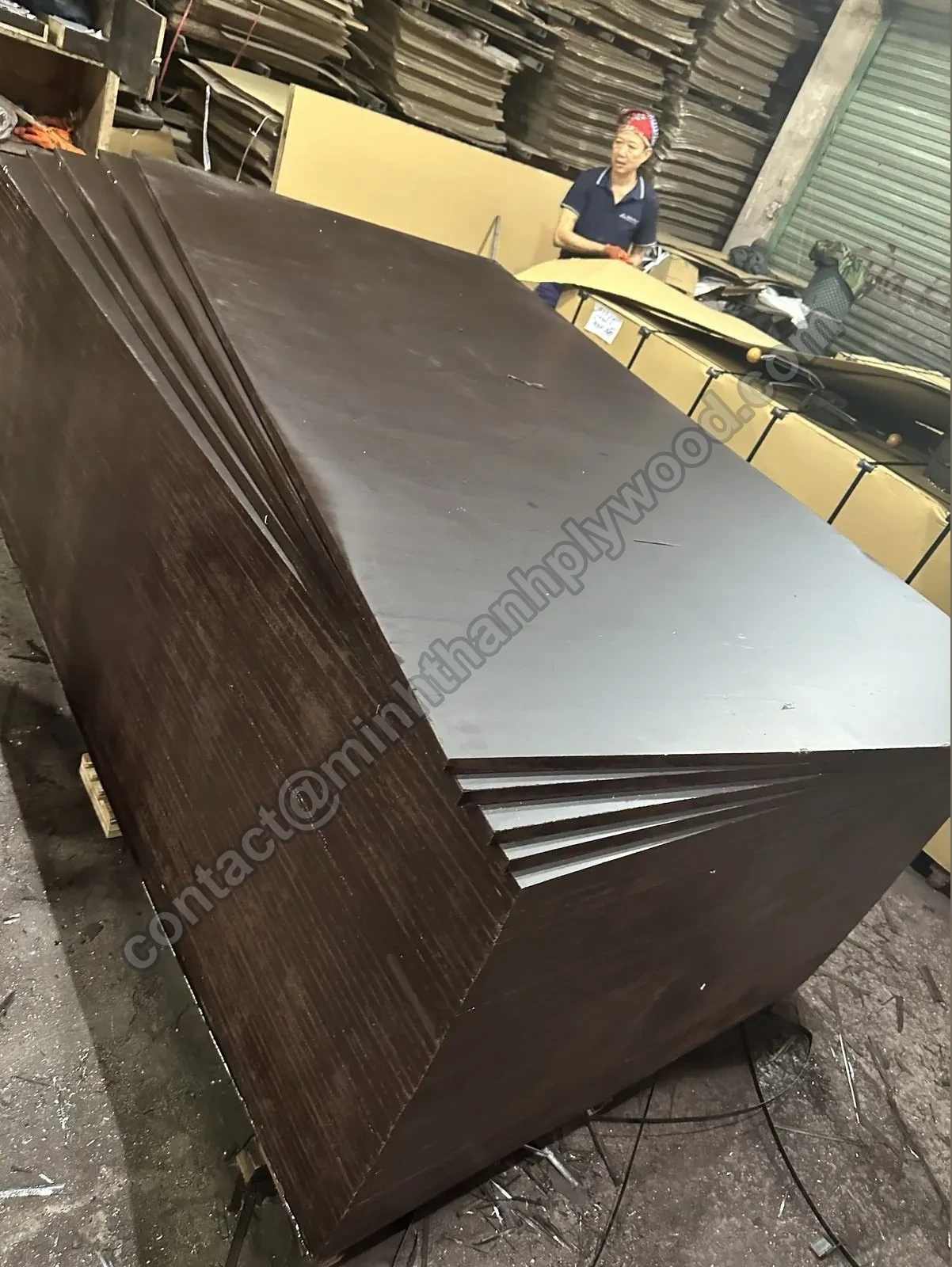
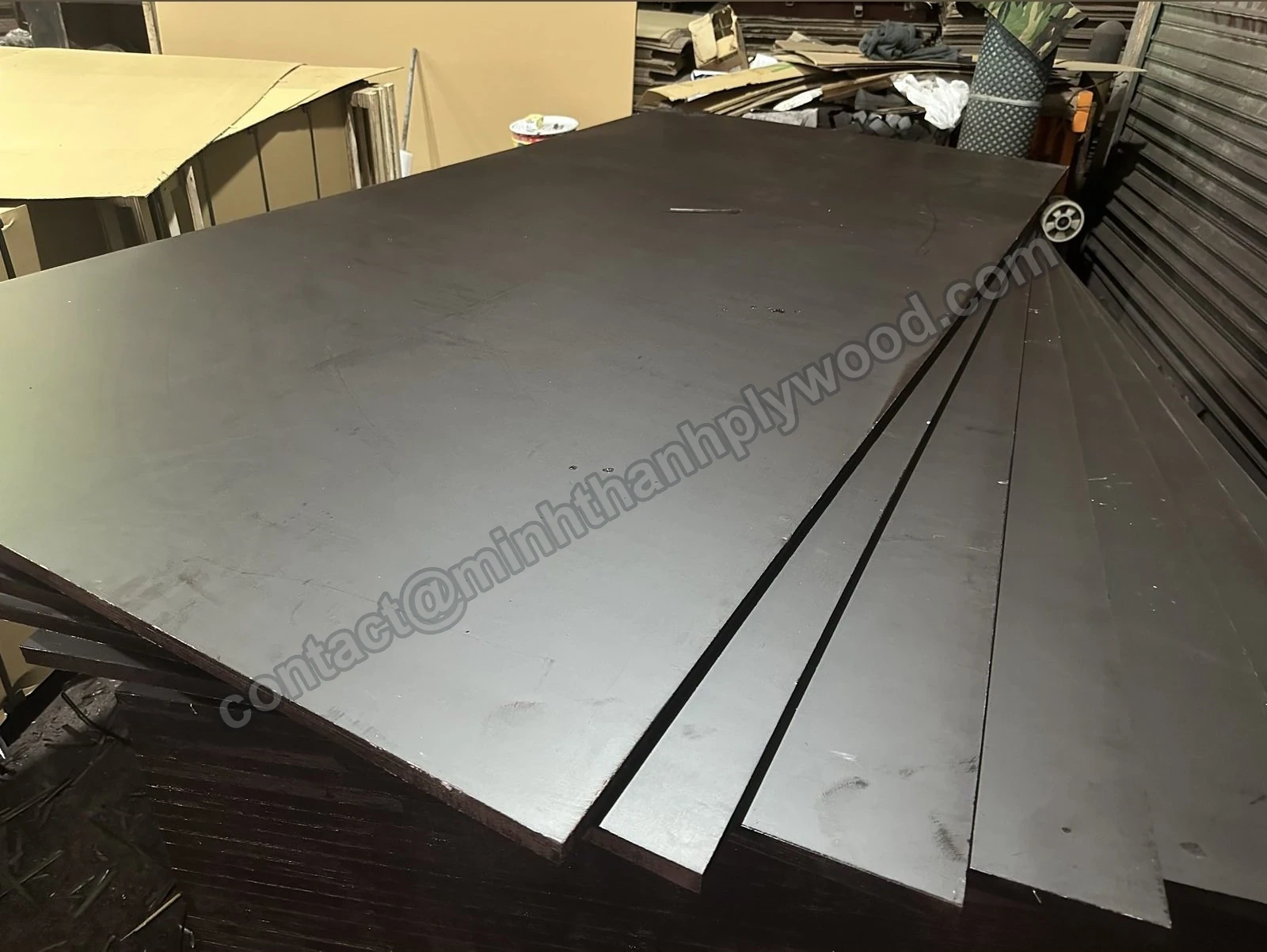
Minh Thanh supplies film-faced plywood to the ordered specification. Compare the pictured surface and edge with the specified core and bond, then qualify the sample for the intended concrete finish. The quotation brings those requirements together in one ordered construction.
For contractors, the aim is an acceptable formwork result. For distributors, it is an accurately described stock item that customers can select for their own designs. Both need the same starting discipline: fix the required panel construction and technical evidence before negotiating the unit price. Keep proposed alternatives on separate lines so a change in core or film remains visible.
What price reference is available from Minh Thanh?
Commercial and construction plywood starts from US$250/m³ (October 2026, FOB Hai Phong); your film, core and glue set the quote. The standard melamine-fortified grade sits near that floor, and the premium phenolic WBP grade with heavier film costs more per sheet but less per pour.
Write the quotation’s date, currency, validity and cargo-ready period next to its rate. Our general plywood price guide explains the cost layers to carry into the comparison.
How do core and veneer assembly affect the price?
Core construction affects the material beneath the film and therefore the panel being purchased. State the species, veneer arrangement and joining description separately from the overlay. A dark surface makes the internal build less visible, which increases the value of a representative cross-section sample.
Ask for the construction to be identified on the quote and sample. Inspect accessible cut edges for veneer continuity and visible gaps. Discuss how the actual cutting and fixing locations interact with that build. A carefully selected display sample cannot replace the order’s agreed inspection plan.
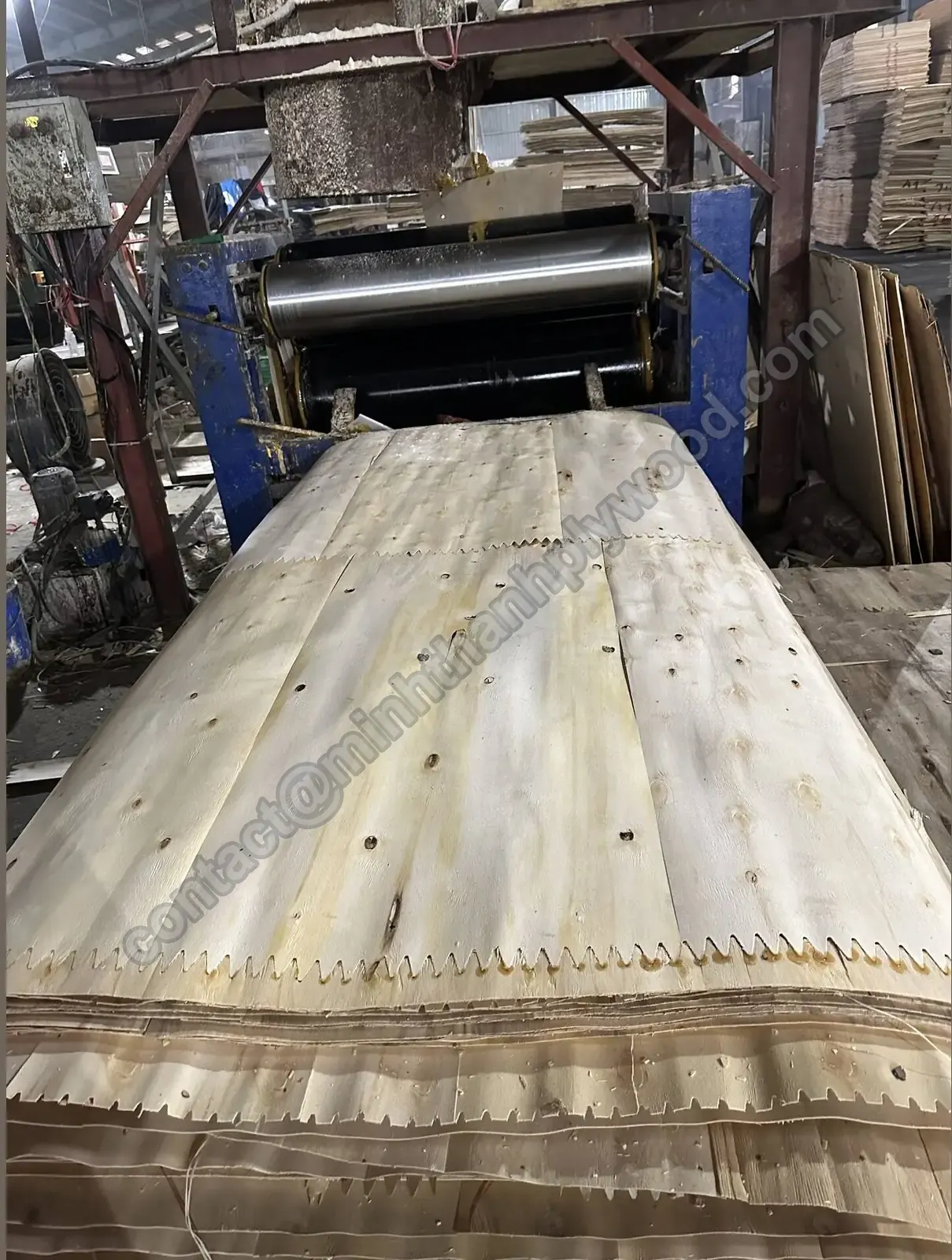
Manufacturing cost includes preparing veneers, composing the core and pressing the board before finishing. Minh Thanh’s published core practice includes stitching both horizontally and vertically. For a film-faced order, retain the ordered construction and its evidence rather than assuming that a familiar core nickname assigns a load capacity.
A supplier can offer a different core as an alternative, but it should carry its own product line, sample and quote. Compare the concrete-finish trial, formwork design acceptance and cargo mass using that actual build. The purchasing saving remains meaningful only when the replacement satisfies the required task.
What is the difference between phenolic film and internal phenolic glue?
Phenolic film is the surface overlay; phenolic glue is one possible internal adhesive between veneers. A panel can only be compared correctly when the quote identifies both independently. Neither the film colour nor the word “phenolic” alone specifies the adhesive throughout the sheet.
For the overlay, request the resin/paper construction, mass, surface finish and coverage on each face. For the core adhesive, request its identity and the required bond evidence. This gives procurement two clear fields instead of one ambiguous product label.
The finished panel also depends on veneer preparation and pressing. A specified resin cannot correct an unsuitable substrate or poor adhesion at the surface. Evaluate the complete product sample and reports against the ordered build. Where a bond method is required, keep it on the quote before comparing totals.
The water-exposure guide explains the relationship between bond, surface and exposed edges. Apply that distinction to the film-faced quotation. An emission class belongs in its own field as well; E0 or E1 does not name a structural adhesive, an overlay or the panel’s service classification.
Should black and brown film have different prices?
Black and brown film should be compared by the construction behind the colour. Colour alone cannot rank adhesive performance, core quality or concrete-finish output. Hold the other fields constant when asking whether a proposed colour change alters the price.
A supplier’s quotation may combine a colour with a particular film formulation or paper weight. Describe that entire specification rather than transferring its performance claims to every panel of the same colour. Film mass is useful information, but it is only one part of the overlay.
For a distributor, keep the complete product description in the catalogue and stock system. A sales label reading only “black phenolic 18 mm” can hide a change of core or bond between replenishment orders. Preserve a specification revision when accepting a different build.
Compare the face under appropriate light for surface damage, bubbles, incomplete coverage and other agreed defects. The sample trial should evaluate the resulting concrete finish as well as the unused surface. Paying for a colour or claimed film premium is useful only when the required output justifies the cost. Request a separately priced alternative if the project can accept another finish without changing its bond or design requirements.
How do you compare film faced plywood 18mm price by sheet and m³?
Convert film faced plywood 18mm price using the exact ordered dimensions and the actual quotation rate. A 1220 × 2440 × 18 mm panel has a volume of 1.220 × 2.440 × 0.018 = 0.0535824 m³. Multiply the m³ rate by that volume to calculate its quoted sheet cost.
| Ordered panel used for volume calculation | Sheet area | Sheet volume | Sheet-price formula |
|---|---|---|---|
| 1220 × 2440 × 12 mm | 2.9768 m² | 0.0357216 m³ | Actual quoted rate × 0.0357216 |
| 1220 × 2440 × 18 mm | 2.9768 m² | 0.0535824 m³ | Actual quoted rate × 0.0535824 |
| 1250 × 2500 × 18 mm | 3.1250 m² | 0.0562500 m³ | Actual quoted rate × 0.0562500 |
| 1250 × 2500 × 21 mm | 3.1250 m² | 0.0656250 m³ | Actual quoted rate × 0.0656250 |
No film-faced rate is assumed in this table. It provides a reproducible calculation for the quotation received. Check the invoice basis, dimensions and rounding rule with the supplier, then retain full precision until the displayed total.
Run the reverse check if an offer states both units: sheet price divided by sheet volume should reproduce its m³ rate on the agreed basis. A discrepancy needs resolution before comparing suppliers. Do not reconcile it by quietly changing thickness or using a different sheet area. Unit conversion must preserve the specified product.
How do thickness and tolerance affect formwork value?
Thickness and tolerance must meet the formwork design and joint requirements. A higher nominal thickness alone does not establish load capacity, permitted support spacing or a reuse count. Preserve the design requirement while comparing the specific panel construction and product evidence.
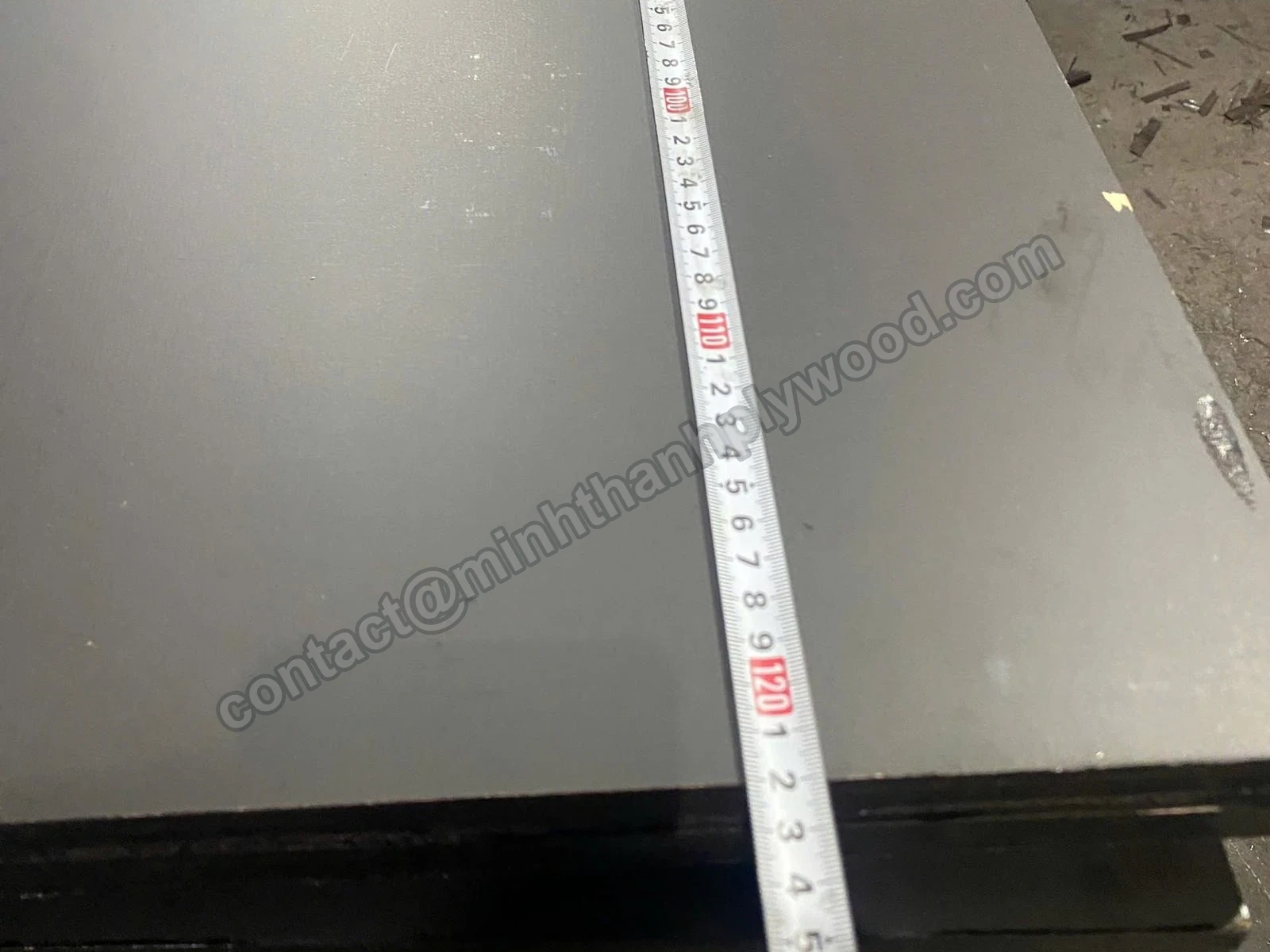
Minh Thanh’s film-faced thickness tolerance is ±0.5 mm, with length/width tolerance of ±2 mm. Write the selected physical dimensions and measurement method on the order. Where adjacent sheets meet, the accepted thickness range and prepared edges become part of the finish comparison.
At equal m³ rate and area, an 18 mm sheet has 50% more volume than a 12 mm sheet. A 21 mm sheet has 16.67% more volume than an 18 mm sheet. These are dimensional calculations, not fixed product price premiums. Actual rates can differ with the build and operations needed to make each panel.
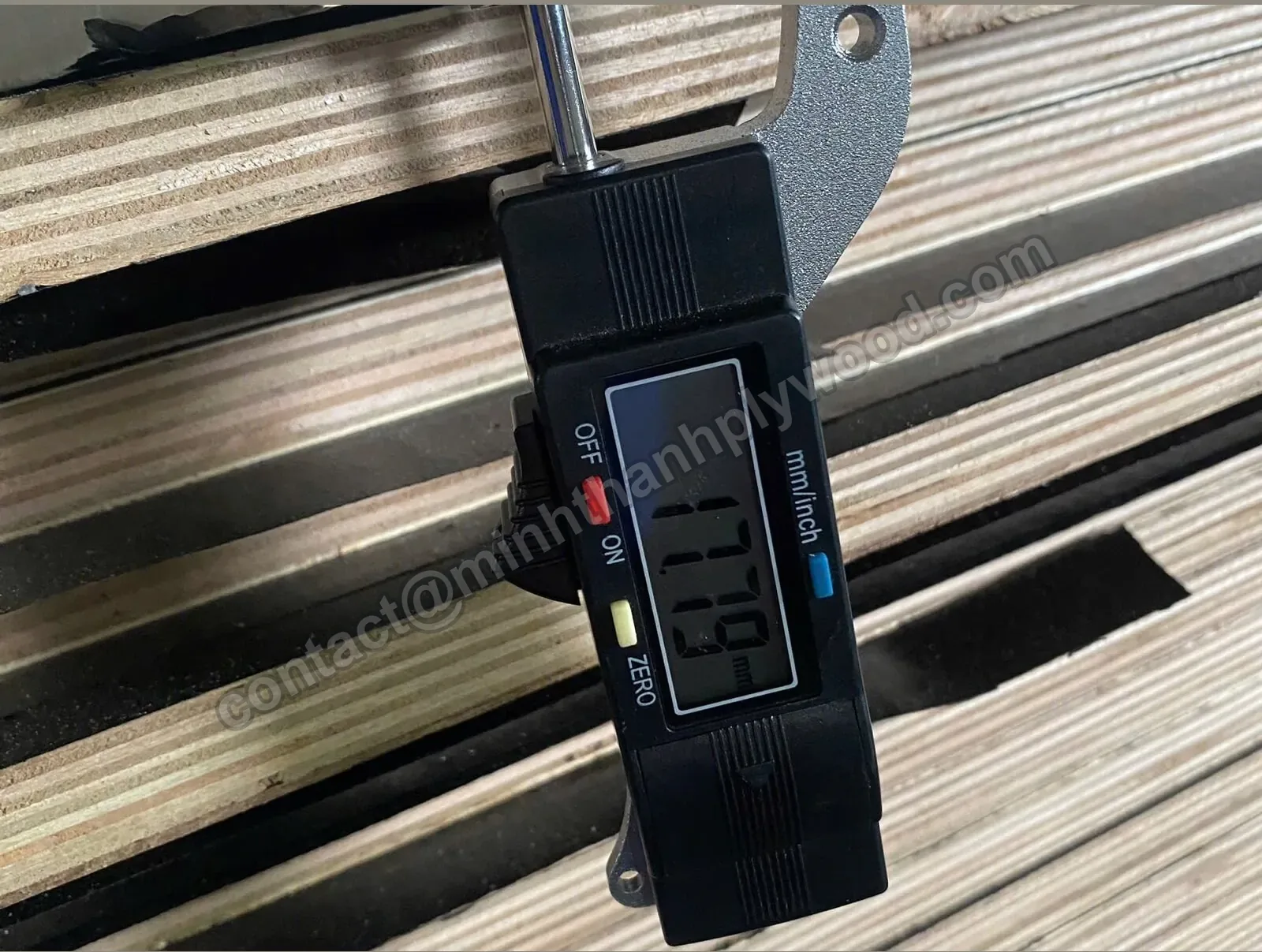
When replacing an existing panel, evaluate physical thickness, face condition and the design’s accepted material evidence together. A thinner substitution made only to meet a price target changes the formwork requirement. Use the thickness guide for measurement discussion and keep the approved formwork drawing with the RFQ.
Why do edge sealing and cutting belong in the price comparison?
Edge sealing and cutting belong in the price because they determine the condition in which the panel reaches the formwork operation. A factory-cut panel with protected edges and a full sheet cut on site create different preparation tasks. Quote the required machining and edge treatment explicitly.
Identify whether the order needs full sheets, cut pieces, holes or a special edge profile. Include the drawing revision and pack identification. After cutting or drilling, exposed veneer surfaces need the treatment specified for the chosen product and use. Price the work at the place where it will actually be done.
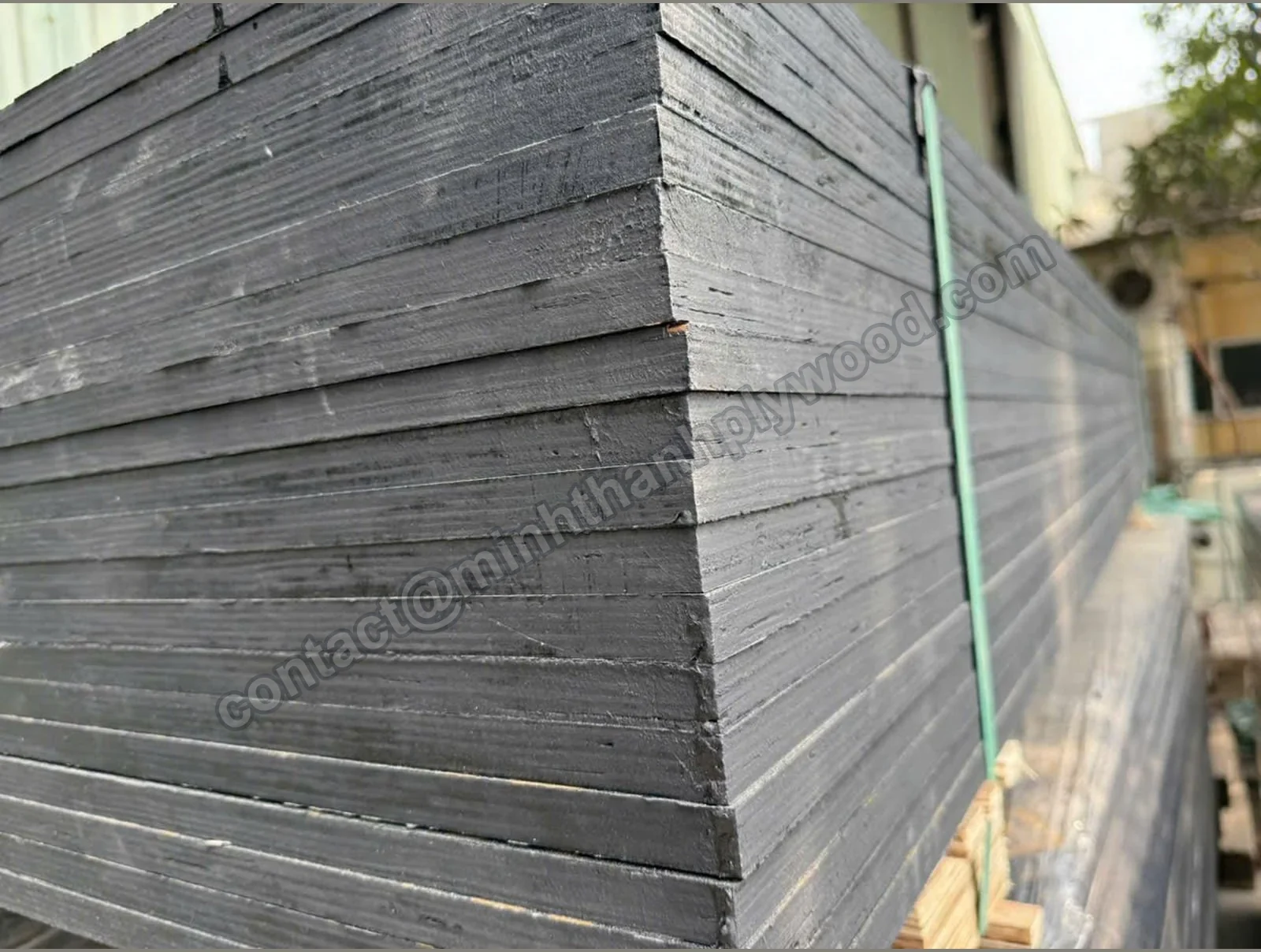
The photograph shows painted edges and pack arrangement. Specify the edge treatment and inspection method on the order, then inspect the delivered panels after cutting or drilling to identify any areas requiring renewed protection.
For a repeat form layout, factory cutting can reduce the operations left on site. Compare it with full-sheet delivery using the actual cutting plan, kerf, trim and handling. Include the remaining material only when a scheduled piece consumes it. The lowest sheet price can lose its advantage when the buyer adds cutting, repair and edge preparation afterwards.
How do you calculate cost per acceptable pour?
Calculate cost per acceptable pour by dividing attributable panel and operating costs by the acceptable output achieved. The denominator must reflect the project’s finish acceptance. Count a downgraded use separately from an equivalent reuse on the original task.
A simple sheet-based measure is landed panel cost ÷ acceptable uses achieved. A fuller measure adds handling, cleaning, repairs, edge treatment, storage and attributable concrete rework. Where panels form different areas, compare cost per acceptable square metre of formed concrete instead of raw cycle counts.
Use this sequence for a project trial:
- Identify the panel specification and delivered material cost.
- Record the formed area and task for each trial use.
- Record handling, cleaning, repairs and release-agent inputs attributable to the panel.
- Inspect the concrete finish against the agreed criterion.
- Count accepted output and record any downgrade separately.
- Divide total attributable cost by that accepted output.
Plan with our reuse figures, about 12–15 uses for the melamine-fortified grade and up to about 25 for phenolic WBP, then confirm them on your first pours. The formwork plywood price guide applies the same cost-per-pour method to a whole formwork budget.
What reuse improvement would justify a higher panel price?
A higher panel price pays when its extra pours outweigh its extra cost. Our two grades show the pattern: the premium phenolic WBP panel gives up to about 25 uses against about 12–15 for the standard melamine-fortified panel, with proper handling, release agent and edge sealing, so it can cost far more per sheet and still cost less per pour.
The rule is simple: the premium panel wins when premium sheet cost ÷ standard sheet cost < premium pours ÷ standard pours. With 25 pours against 15, the premium sheet can cost up to two-thirds more and still break even; against 12 pours, it can cost about twice as much.
| Sheet cost index | Pours | Material cost per pour (index) |
|---|---|---|
| Standard grade, 100 | 15 | 6.7 |
| Premium grade, 125 | 25 | 5.0 |
| Premium grade, 160 | 25 | 6.4 |
The cost indices are examples; replace them with your quotation ratio. Then add the operating difference: the premium face usually needs less repair and less concrete rubbing, which widens its lead on exposed work. On a short job where sheets are cut up after a few pours, the standard grade is the better buy.
What checks keep the cost per pour low?
Five checks protect the panel’s reuse count and the project budget:
- Finish target: agree the concrete finish class and accepted surface defects before choosing the grade; exposed architectural concrete justifies the phenolic WBP grade.
- Handling: store packs flat and covered, seal every cut edge and drilled hole, use a suitable release agent and clean with soft tools, as the WISA site guidance note (July 2025, consulted 8 October 2026) describes for film-faced panels.
- Pre-shipment inspection: Minh Thanh sends shipment photos and video before loading; match face condition, edge sealing and pack counts to the packing list, and check thickness against the ±0.5 mm tolerance on arrival.
- Cut-to-size: order repeated form pieces cut and edge-sealed at the factory, identified by form position, to save site cutting and sorting.
- Order timing: production runs 15–45 days after the 30% deposit, with 70% against the scanned B/L or an irrevocable L/C at sight; order before the site runs short.
How do you build the landed-cost worksheet?
Build landed cost from the exact order quotation and the buyer’s remaining shipment costs. The receiving point must be consistent across the factory and local alternatives. A port quotation and a site-delivered quotation cover different services even when both name the same panel.
| Worksheet line | Required input | Buying check |
|---|---|---|
| Goods | Sheets, ordered construction and rate | Reconcile physical dimensions and invoice volume |
| Packing and inspection | Included protection and agreed inspection | Identify what is included or separately charged |
| Ocean transport | Current route quote for cargo-ready date | Align validity and shipping window |
| Insurance | Agreed coverage and value | Avoid duplicating cover already included |
| Import and clearance | Actual classification, origin and current rules | Use the specified goods and destination |
| Destination handling | Terminal, clearance and related services | Check included versus remaining charges |
| Inland delivery | Receiving site, access and unloading | Compare the same final delivery boundary |
| Finance and loss | Payment timing, bank costs, accepted quantity | Keep estimates separate from trial evidence |
Divide by the actual delivered sheet quantity for landed price per sheet. Then use the accepted-output calculation for the formwork decision. Record currency, dates and source quotations beside each input so the budget can be refreshed without reconstructing the entire comparison.
Keep recoverable taxes separate from permanent cost, while including their cash effect where relevant. No fixed freight or duty percentage can complete the worksheet for every destination. Obtain current inputs for the actual product rather than borrowing an unrelated online landed example.
How should you compare FOB, CFR and CIF offers?
Compare FOB, CFR and CIF offers by reconciling the transport scope and the named port before ranking their totals. Minh Thanh offers FOB Hai Phong, CFR or CIF. State the rule and edition in the order, with the remaining destination-cost inputs shown separately.
The ICC Incoterms 2020 guidance, consulted 8 October 2026, explains the allocation of costs, risk and transport obligations. Its CIF guidance also identifies the default insurance coverage and the option to agree greater cover. If you need wider cover than the CIF default, state it in the RFQ and we quote it.
For CFR or CIF, identify destination charges carried in the freight arrangement and those remaining for the buyer. Add import clearance and onward transport as applicable. Compare the result at the same receiving point as the local offer, with the same unloading and tax treatment.
A seller’s freight estimate and the buyer’s own route quotation must refer to the same equipment and cargo-ready window. Check schedule fit as well as the total. The trade terms page supplies the factory order basis; keep transport planning separate from the technical decision on film, core and bond.
How do container mass and mixed sizes change transport cost?
Container mass and pack arrangement determine the sheet quantity over which freight is allocated. Calculate each specification line from its physical volume and measured mass, add packing, then check the booking’s cargo limit and actual layout. A volume-only loading target cannot establish the delivery quantity.
A 1220 × 2440 × 18 mm sheet contains 0.0535824 m³. Multiply that volume by the quoted construction’s applicable density for a preliminary mass estimate, then replace the estimate with measured sheet and pack weights for the shipment. The fact that the surface is dark does not identify a density.
For mixed thicknesses or sizes, use one line per specification. Packs of different heights and sheet formats can leave unusable space or require another arrangement. Do not apply a full-sheet count calculated for one construction to a mix containing another core or format.
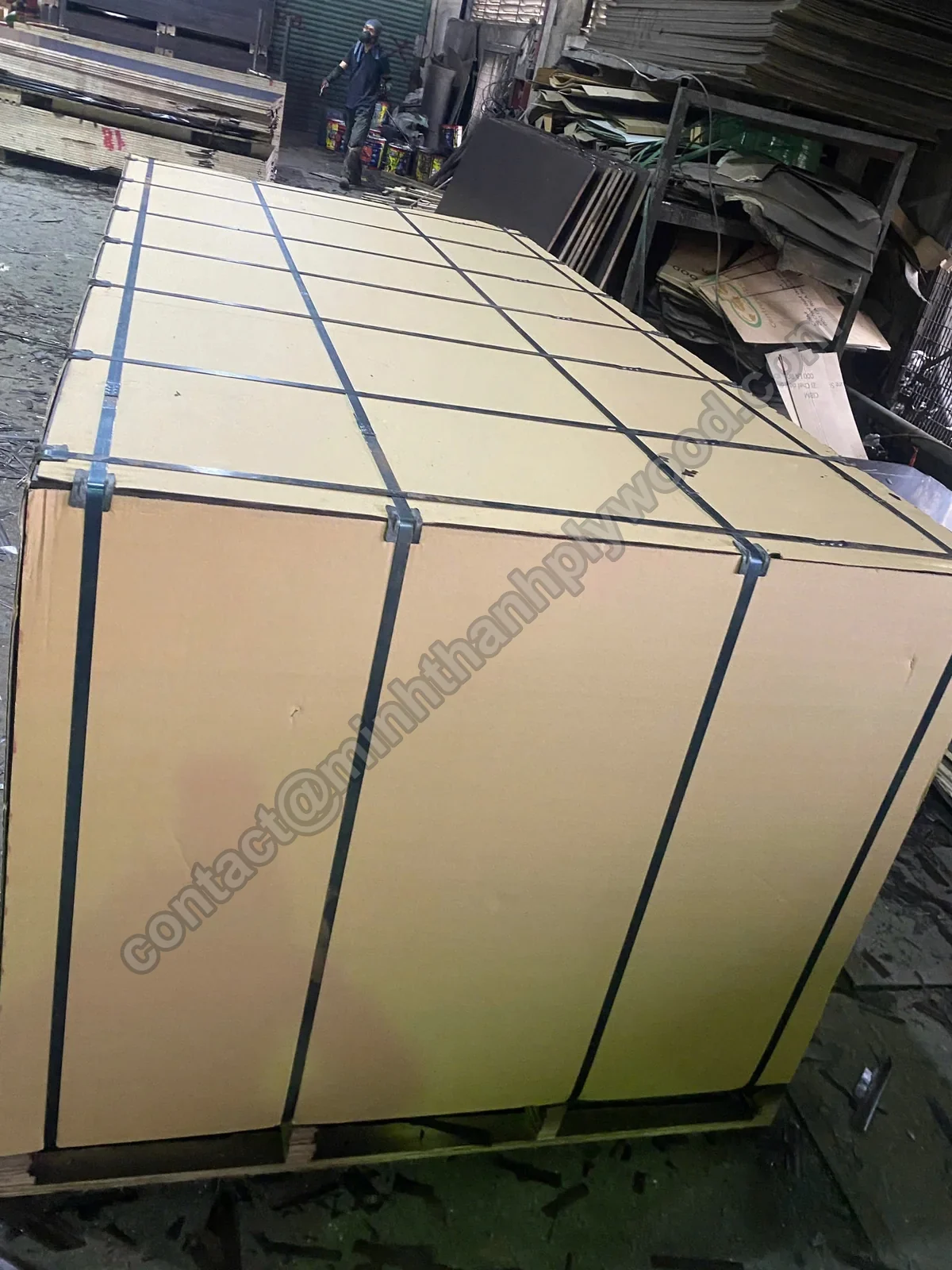
Minh Thanh’s MOQ is one 40HC, with mixed specifications by agreement. Usually one or two specifications are arranged per container, with three to six by agreement. Build the mix from the project’s requirement and stock schedule, then review the layout and mass. Lower transport cost per sheet is useful only when those sheets are the ones the buyer will consume.
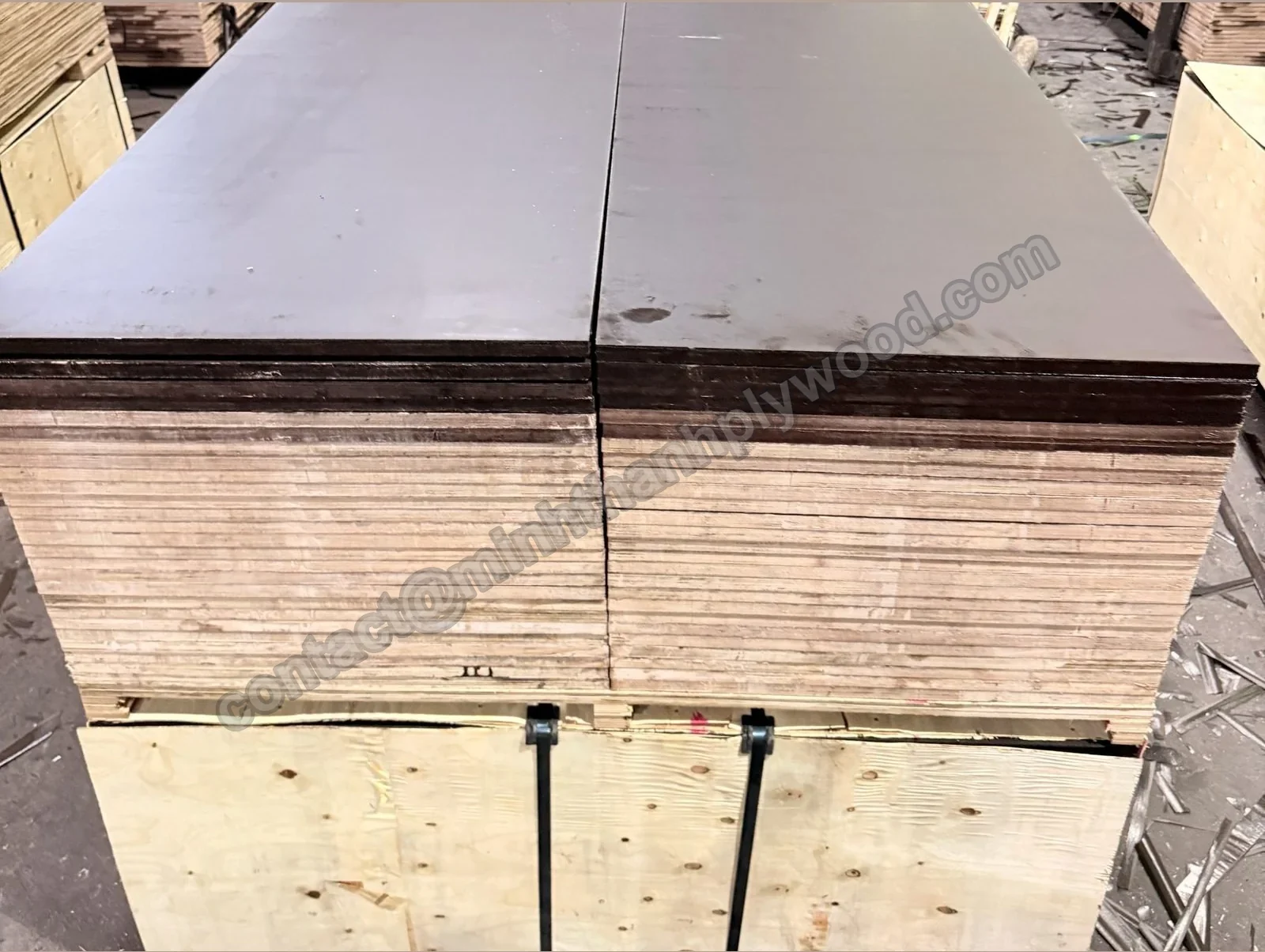
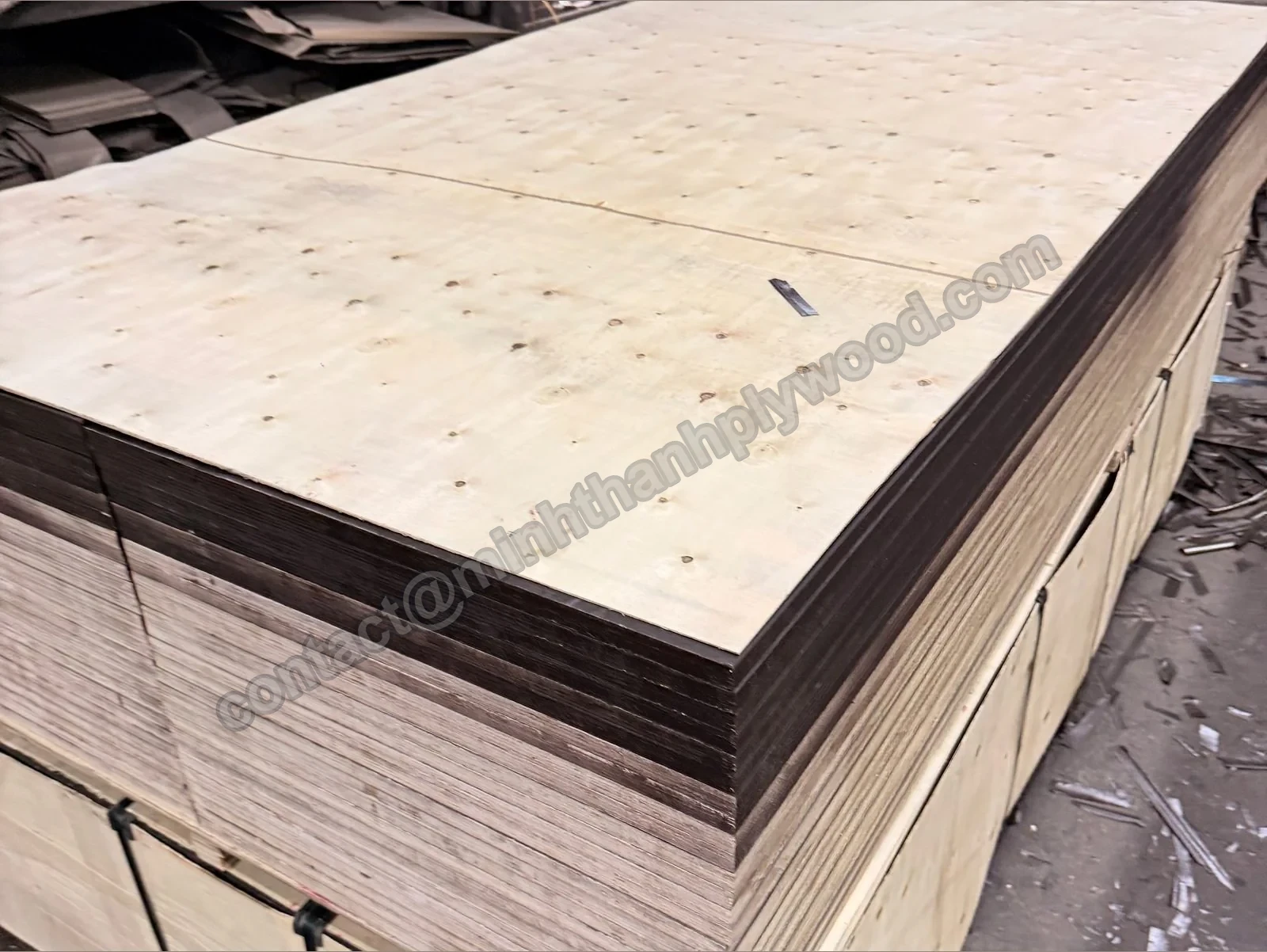 A cover board protects the top film face; packing is part of the delivered price.
How should Philippine buyers read a local phenolic board price?
Philippine buyers should read a local phenolic board price as a delivered offer for a specific product, quantity and tax basis. Use it to compare the local replenishment alternative. A Vietnamese export price requires a separate freight and destination-cost bridge before the two figures are comparable.
Queries such as “phenolic plywood 1/2 price Philippines” and “phenolic plywood 3/4 price Philippines” often use local thickness trade labels. Put physical thickness in millimetres beside the label. One-half inch converts mathematically to 12.7 mm and three-quarters to 19.05 mm; these conversions do not establish the measured thickness of a sheet sold under those labels.
The NIST length-conversion reference, consulted 8 October 2026, supports the exact international unit basis. For the buying comparison, use the actual supplier declaration and inspection tolerance. Do not silently equate a labelled 3/4 board with every 18 mm film-faced offer.
Record the film and internal adhesive separately, core, physical size, delivery address, availability, taxes and unloading. Keep the local price in its quoted currency and convert only with the buyer’s dated budget assumption. This produces a defensible comparison for phenolic plywood price Philippines searches without publishing an invented national retail range.
What should you send for a comparable film-faced quotation?
Send the application, panel construction and complete sheet schedule so each supplier prices the same task. Attach the drawing and concrete-finish acceptance reference. Ask for any deviation to be returned as a separate alternative with its own price and evidence.
Use these specification lines:
- Application: wall, slab, column or other formwork, design reference, required finish and intended planning reuse target.
- Core: species and veneer construction, with the sample and product-evidence requirement.
- Glue and emissions: internal adhesive, required bond method/class and any applicable emission documents.
- Film: resin/paper specification, mass, colour, contact-face finish and back-face coverage.
- Size: length × width × thickness in millimetres, agreed tolerance, cuts, holes and edge treatment.
- Packing and quantity: sheets per specification, bundle identification, receiving equipment and mixed-load schedule.
Add the named delivery term, destination, quotation currency and required document scope. Request validity, production window, packing details and a representative sample. Reconcile m³ and sheet prices, complete the landed worksheet and compare cost per acceptable output before placing the order.
Minh Thanh provides free samples and replies within hours. Send the film-faced specification for a quote or email [email protected]. Use the film-faced product, HDO and MDO comparison and bond guide to complete the technical description that belongs beside the price.
Buyer questions, answered
What is the current phenolic plywood price?
The current phenolic plywood price is the quotation for a named film, core, adhesive/bond, thickness, size, quantity and delivery term. Minh Thanh quotes the actual film-faced specification rather than publishing a film-faced price list. Commercial and construction plywood starts from US$250/m³ (October 2026); your film, core and glue set the quote.
How do I compare film faced plywood 18mm price?
Compare the same physical dimensions and tolerance, core build, internal bond, film specification, edge treatment, packing and delivery point. A 1220 × 2440 × 18 mm sheet contains 0.0535824 m³; multiply that volume by the actual quoted m³ rate. Add the buyer's remaining shipment costs before comparing landed sheet price.
Is black film-faced plywood better than brown?
Black and brown are appearance descriptions, not a complete performance specification. Film resin, paper, mass, curing and adhesion must be identified alongside the core and internal adhesive. Compare those fields and the concrete-finish trial instead of paying a premium for colour alone.
Does a phenolic film mean the plywood has phenolic glue inside?
A phenolic overlay describes the contact surface; the internal adhesive is a separate part of the plywood construction. Put the core adhesive and required bond evidence on the quote alongside the film specification. The film colour and surface name do not identify the internal glue.
How many times can I reuse film-faced plywood?
Minh Thanh melamine-fortified panels give about 12–15 uses and phenolic WBP panels up to about 25, with proper handling, release agent and edge sealing.
How do I calculate plywood cost per pour?
Divide landed panel cost plus attributable handling, cleaning, repair and other project costs by the acceptable pours or acceptable concrete area delivered. Exclude cycles that fail the required finish, even if the panel stays intact. Compare alternatives using the same formwork task and finish acceptance.
Is thicker film-faced plywood always better value?
Thickness must meet the approved formwork design; a higher thickness alone cannot assign the panel a load rating. At equal area and m³ rate, a 21 mm sheet contains 16.67% more volume than an 18 mm sheet. Evaluate design acceptance and project output before comparing the price difference.
Can I use a Philippine 3/4 phenolic board price as an import budget?
A Philippine local price helps compare the delivered local alternative when actual thickness, film, core, taxes and transport are stated. A Vietnamese export quotation requires its own freight, import and destination-cost calculation. Write dimensions in millimetres rather than treating a 3/4 trade label as an exact 18 mm specification.
Does heavier film always justify a higher sheet price?
Film mass is one specification field, alongside resin, paper, curing and adhesion to the substrate. A premium is useful when the complete panel delivers the required concrete finish and acceptable project output. Compare matching constructions and a representative formwork trial, rather than film mass alone.
Does CIF include all film-faced plywood import costs?
CIF names a destination port and includes seller-arranged ocean freight and insurance, rather than every expense to the buyer's site. Budget applicable clearance, duties, taxes, terminal charges and onward delivery separately. Compare all offers at the same receiving point.
Can Minh Thanh supply mixed film-faced thicknesses?
Our 40HC plan for 18 mm film-faced sheets is 880 on Acacia core and 795 on Eucalyptus core; at 12 mm it is 1,328 and 1,200. Minh Thanh's MOQ is one 40HC, with mixed specifications by agreement. List sheets by thickness, size, core and required film/bond construction; the pack arrangement and cargo mass determine the shipment plan. Production takes 15–45 days after deposit.
What should I send for a film-faced plywood quote?
Send the formwork application, drawing and concrete-finish requirement, core, adhesive/bond evidence, film specification, dimensions and tolerance, edge sealing, quantity and packing. Add the delivery term, named destination and required documents. State your reuse target so we quote the matching grade.