
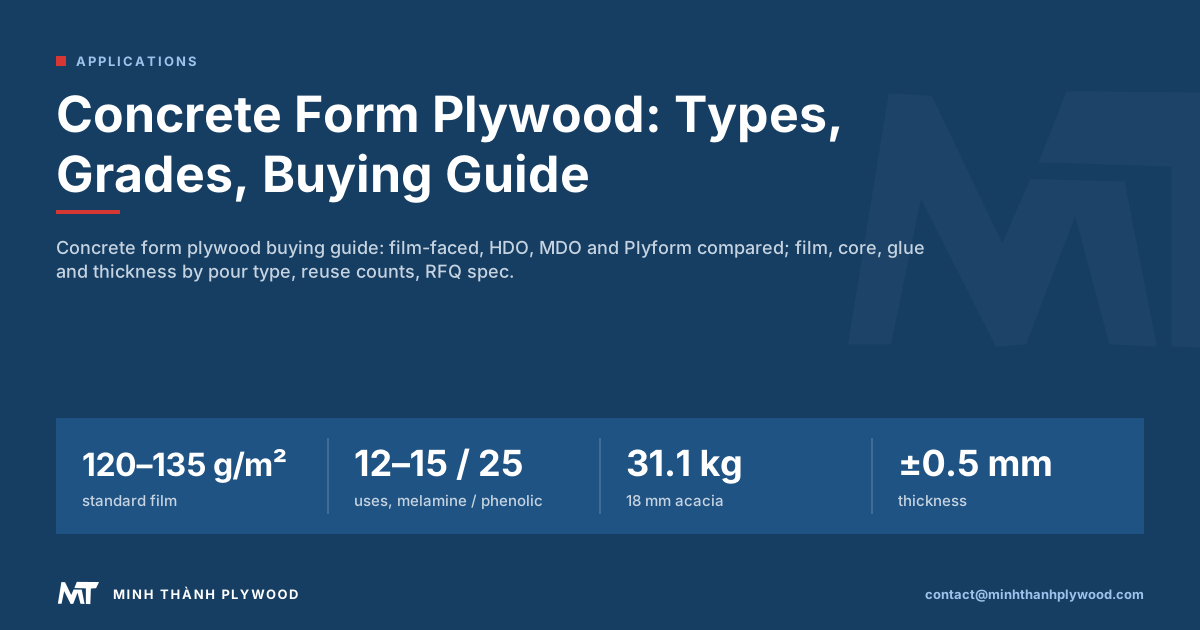
Concrete Form Plywood: Types, Thickness, Buying Guide
Concrete form plywood buying guide: film-faced, HDO, MDO and Plyform compared; film, core, glue and thickness by pour type, reuse counts, RFQ spec.Plywood blog · 333 guides
Concrete Form Plywood: Types, Thickness, Buying Guide
Concrete form plywood buying guide: film-faced, HDO, MDO and Plyform compared; film, core, glue and thickness by pour type, reuse counts, RFQ spec.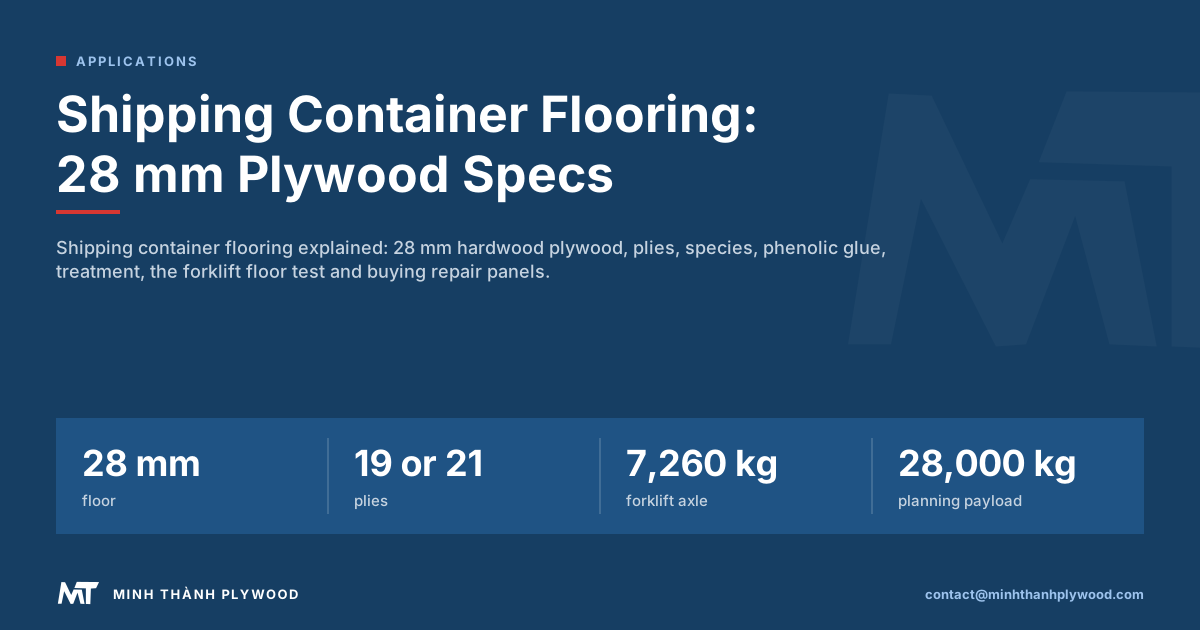
Shipping Container Flooring: 28 mm Plywood Specs
Shipping container flooring explained: 28 mm hardwood plywood, plies, species, phenolic glue, treatment, the forklift floor test and buying repair panels.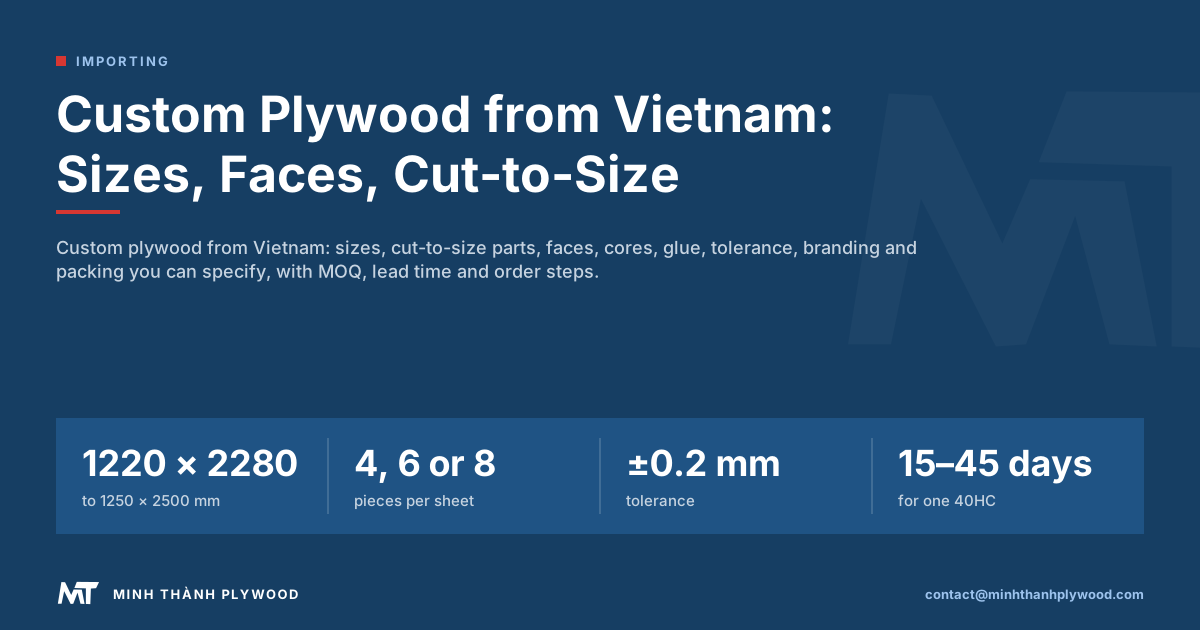
Custom Plywood from Vietnam: Sizes, Faces, Cut-to-Size
Custom plywood from Vietnam: sizes, cut-to-size parts, faces, cores, glue, tolerance, branding and packing you can specify, with MOQ.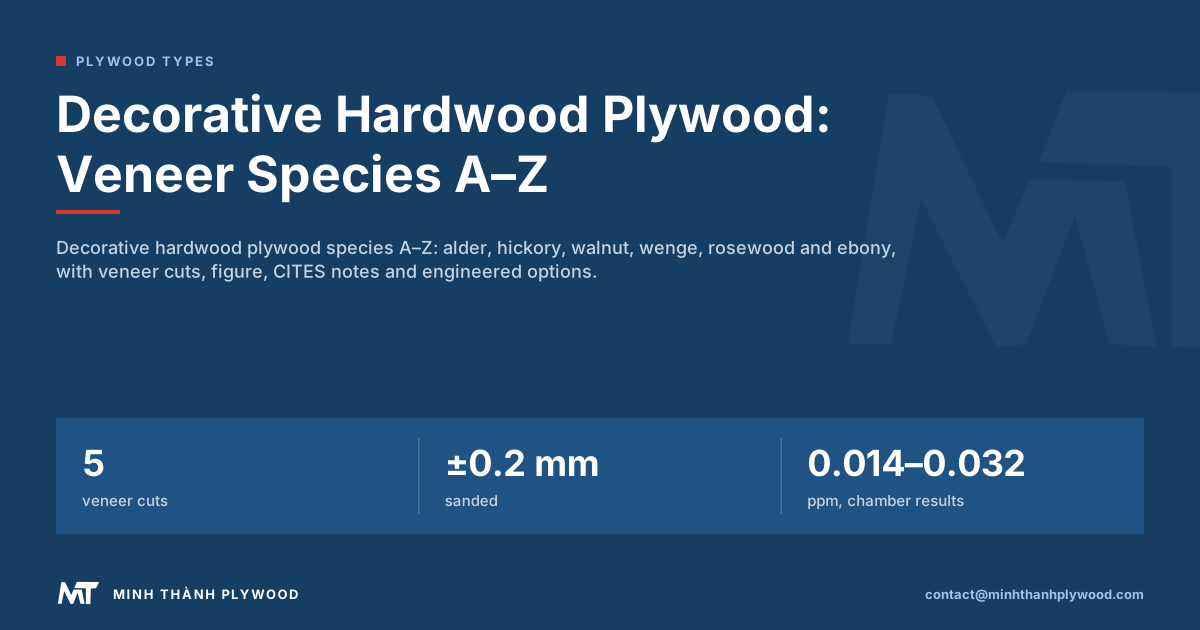
Decorative Hardwood Plywood: Veneer Species A–Z
Decorative hardwood plywood species A–Z: alder, hickory, walnut, wenge, rosewood and ebony, with veneer cuts, figure, CITES notes and engineered options.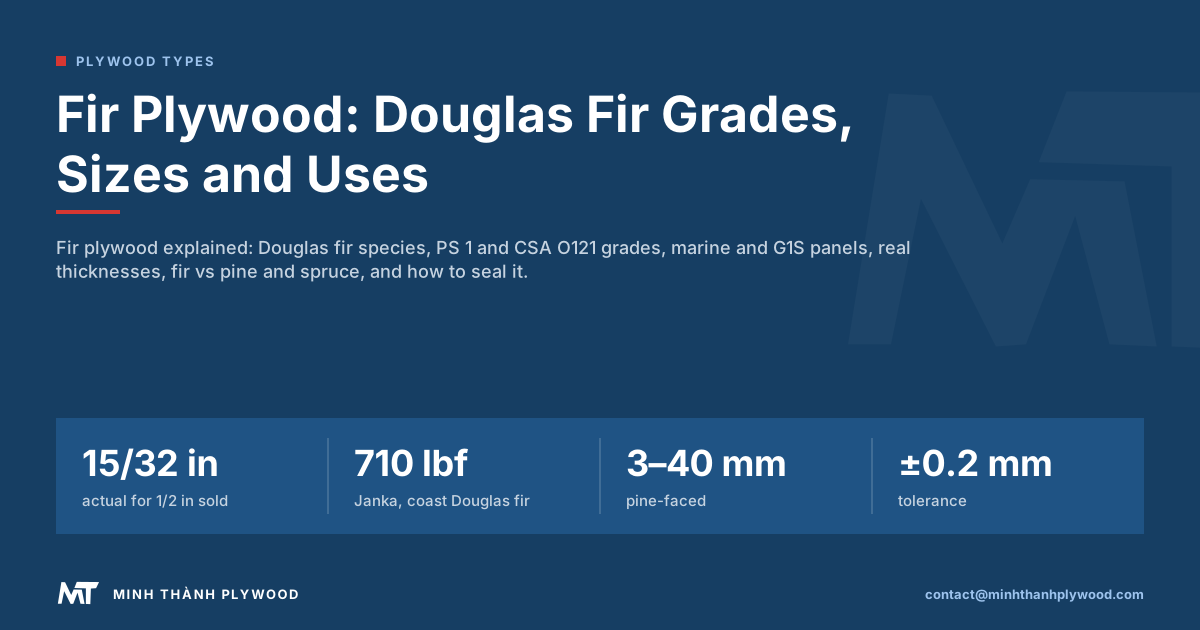
Fir Plywood: Douglas Grades, Sizes and Uses
Fir plywood explained: Douglas fir species, PS 1 and CSA O121 grades, marine and G1S panels, real thicknesses, fir vs pine and spruce, and how to seal it.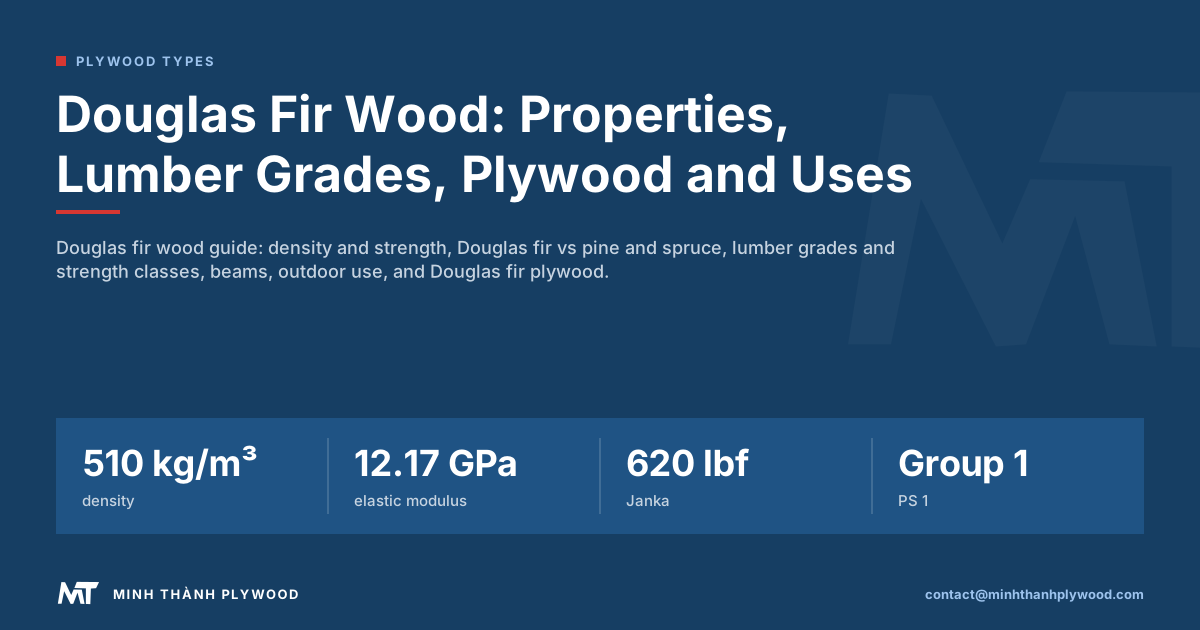
Douglas Fir Wood: Properties, Lumber Grades and Uses
Douglas fir wood guide: density and strength, Douglas fir vs pine and spruce, lumber grades and strength classes, beams, outdoor use, and Douglas fir plywood.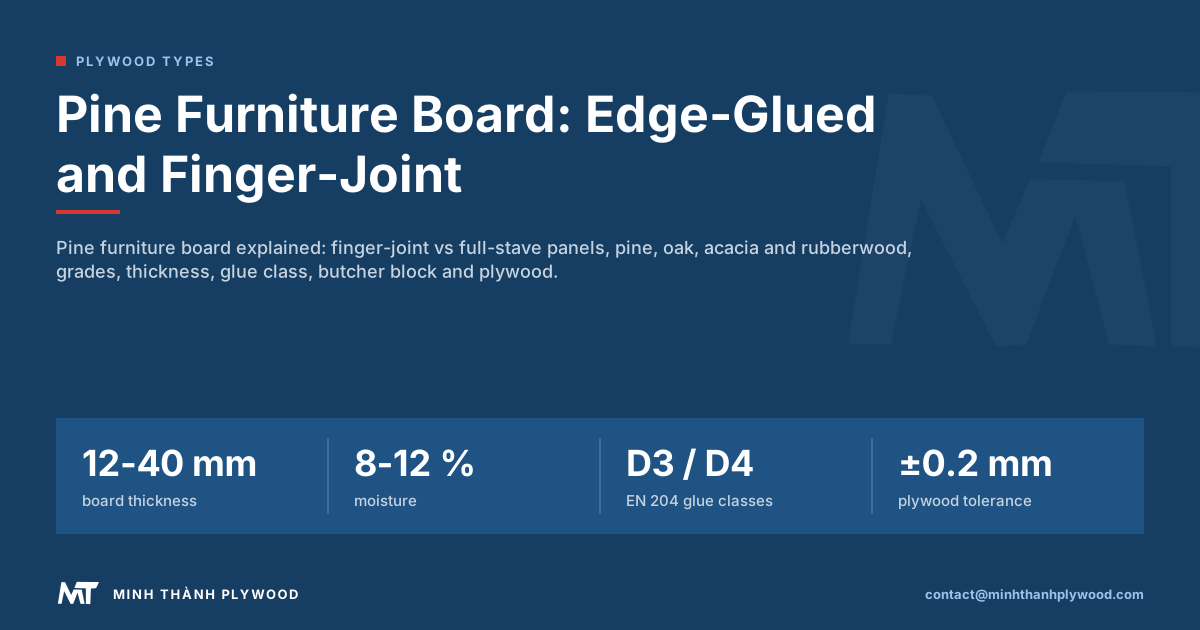
Pine Furniture Board: Edge-Glued and Finger-Joint
Pine furniture board explained: finger-joint vs full-stave panels, pine, oak, acacia and rubberwood, grades, thickness, glue class, butcher block and plywood.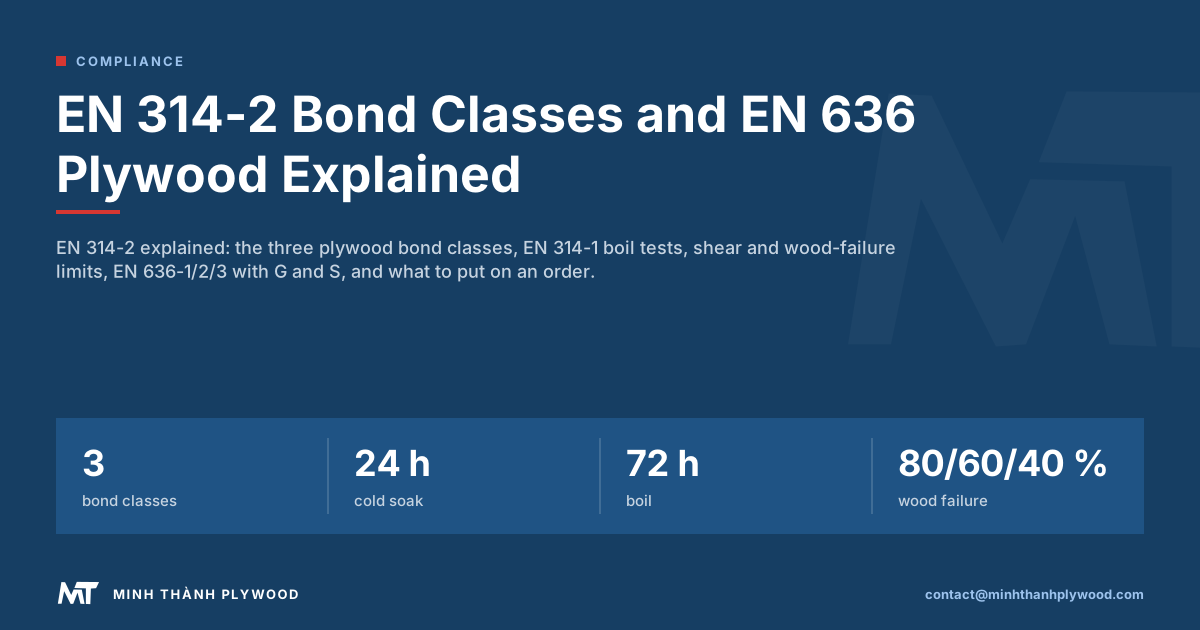
EN 314-2 Bond Classes and EN 636 Plywood Explained
EN 314-2 explained: the three plywood bond classes, EN 314-1 boil tests, shear and wood-failure limits, EN 636-1/2/3 with G and S, and what to put on an order.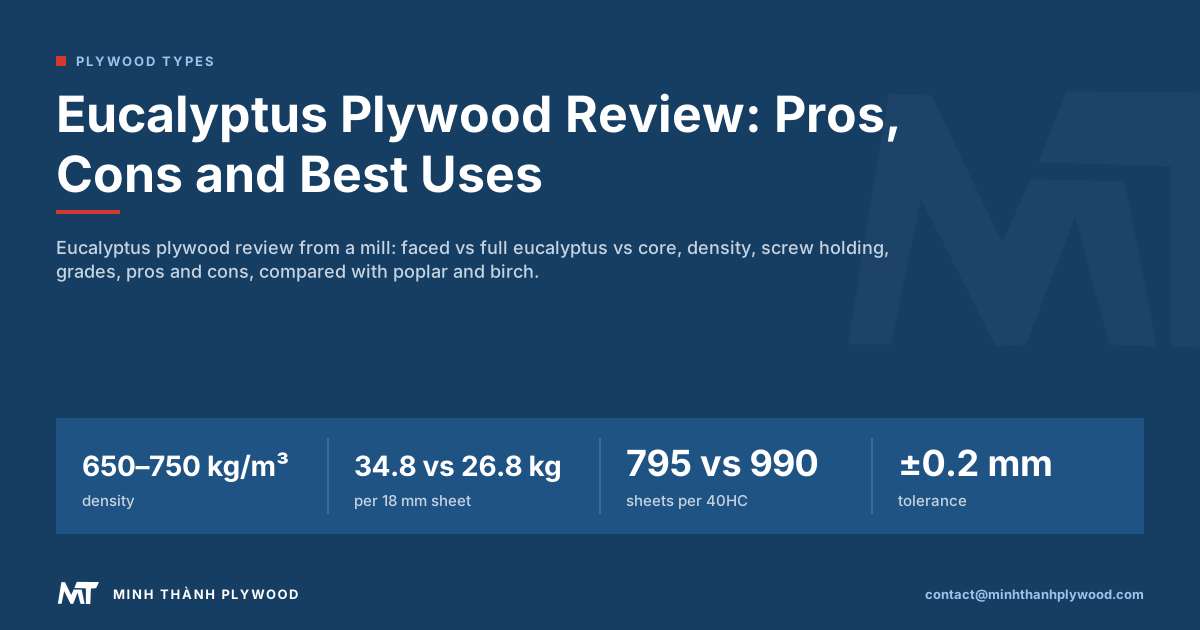
Eucalyptus Plywood Review: Pros, Cons and Best Uses
Eucalyptus plywood review from a mill: faced vs full eucalyptus vs core, density, screw holding, grades, pros and cons, compared with poplar and birch.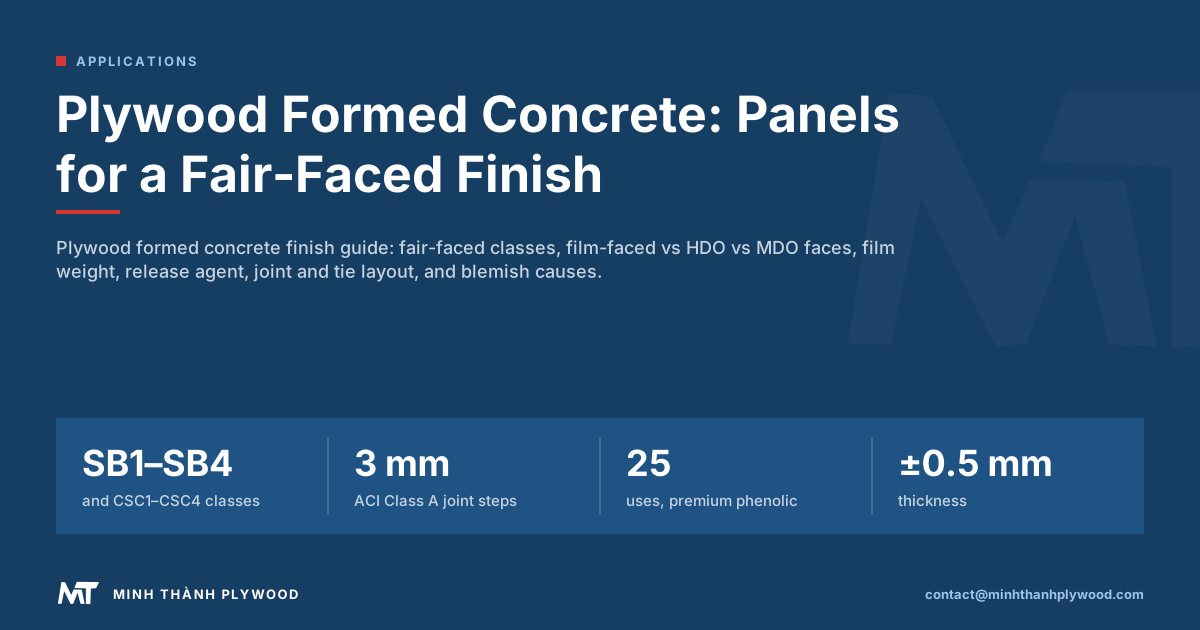
Plywood Formed Concrete: Panels for a Fair-Faced Finish
Plywood formed concrete finish guide: fair-faced classes, film-faced vs HDO vs MDO faces, film weight, release agent, joint and tie layout, and blemish causes.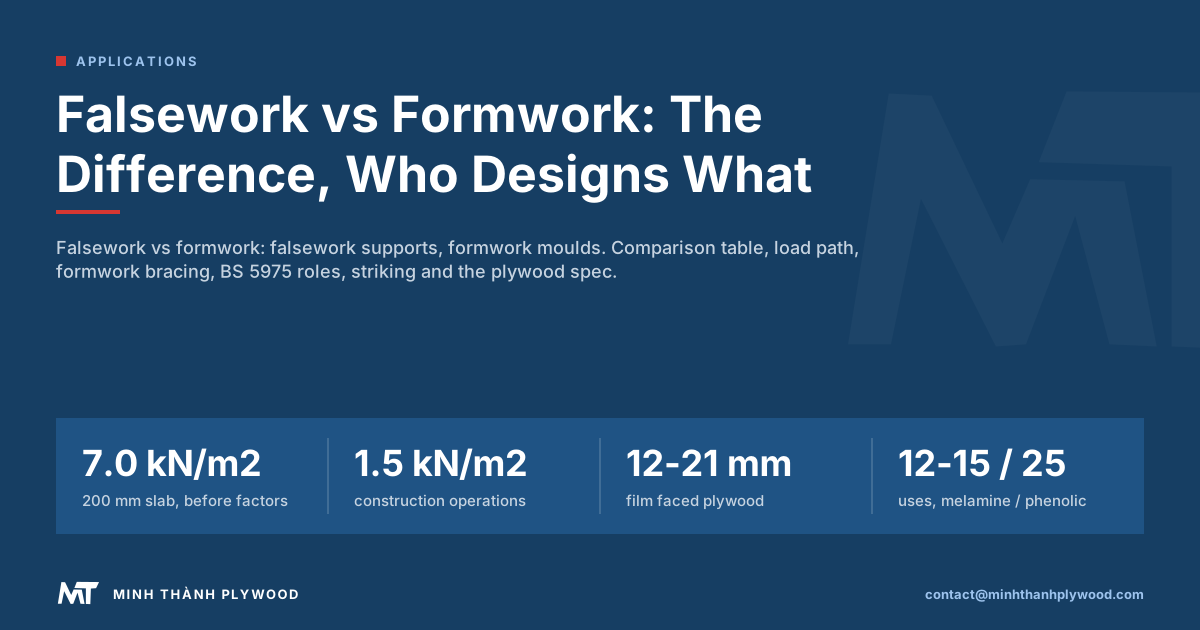
Falsework vs Formwork: The Difference, Who Designs What
Falsework vs formwork: falsework supports, formwork moulds. Comparison table, load path, formwork bracing, BS 5975 roles, striking and the plywood spec.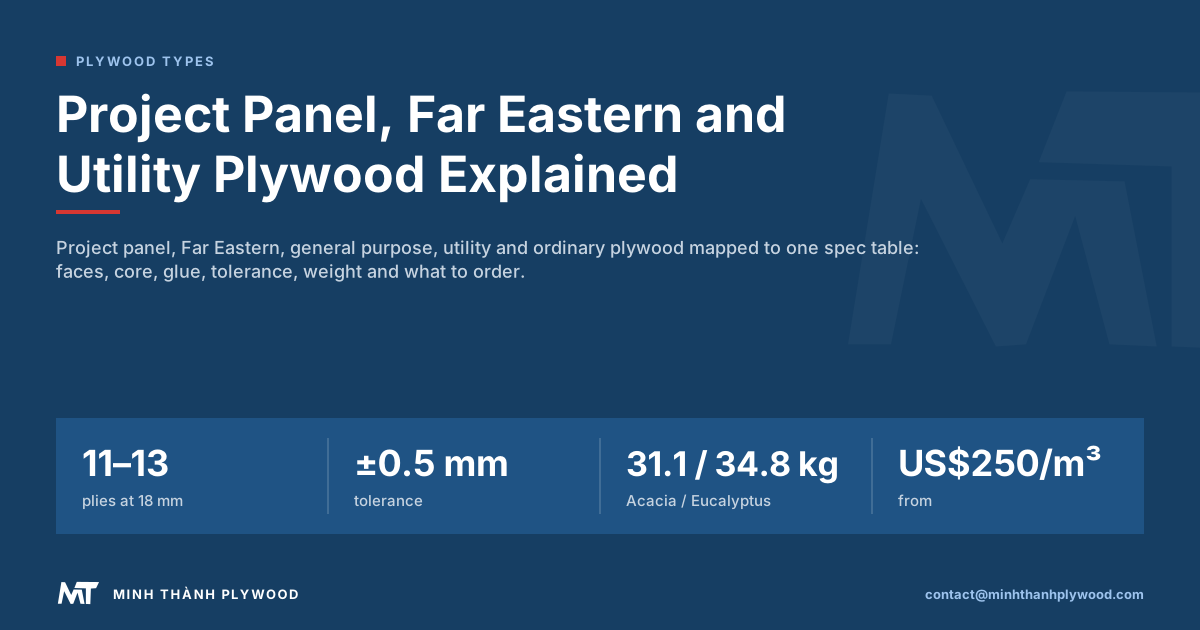
Project Panel, Far Eastern and Utility Plywood Explained
Project panel, Far Eastern, general purpose, utility and ordinary plywood mapped to one spec table: faces, core, glue, tolerance, weight and what to order.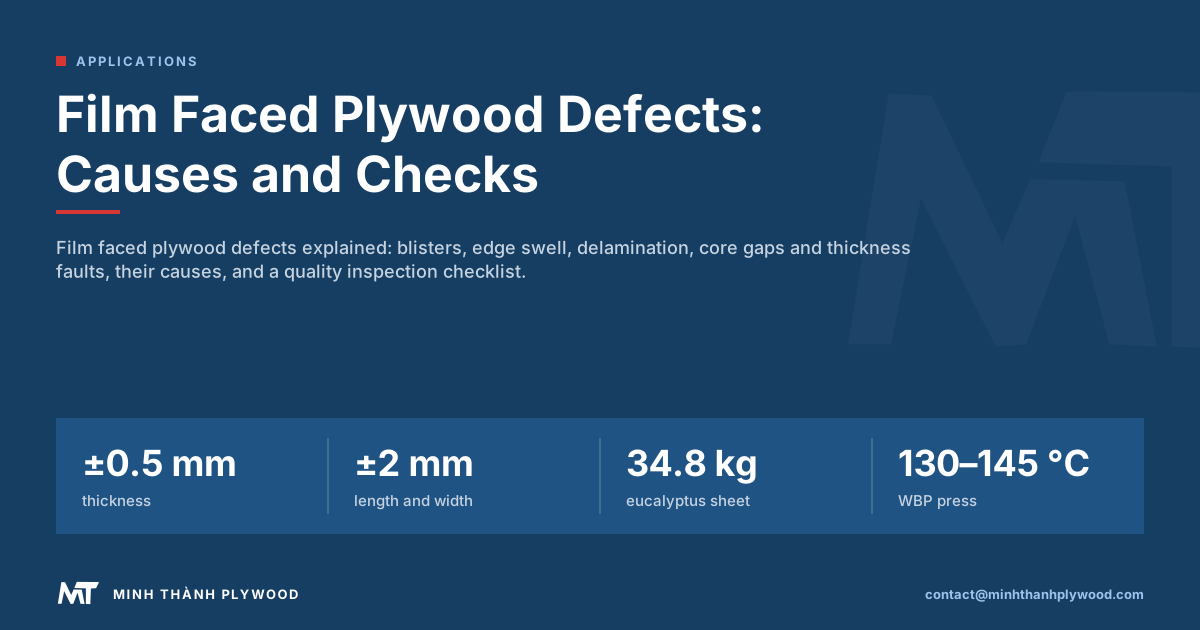
Film Faced Plywood Defects: Causes and Checks
Film faced plywood defects explained: blisters, edge swell, delamination, core gaps and thickness faults, their causes, and a quality inspection checklist.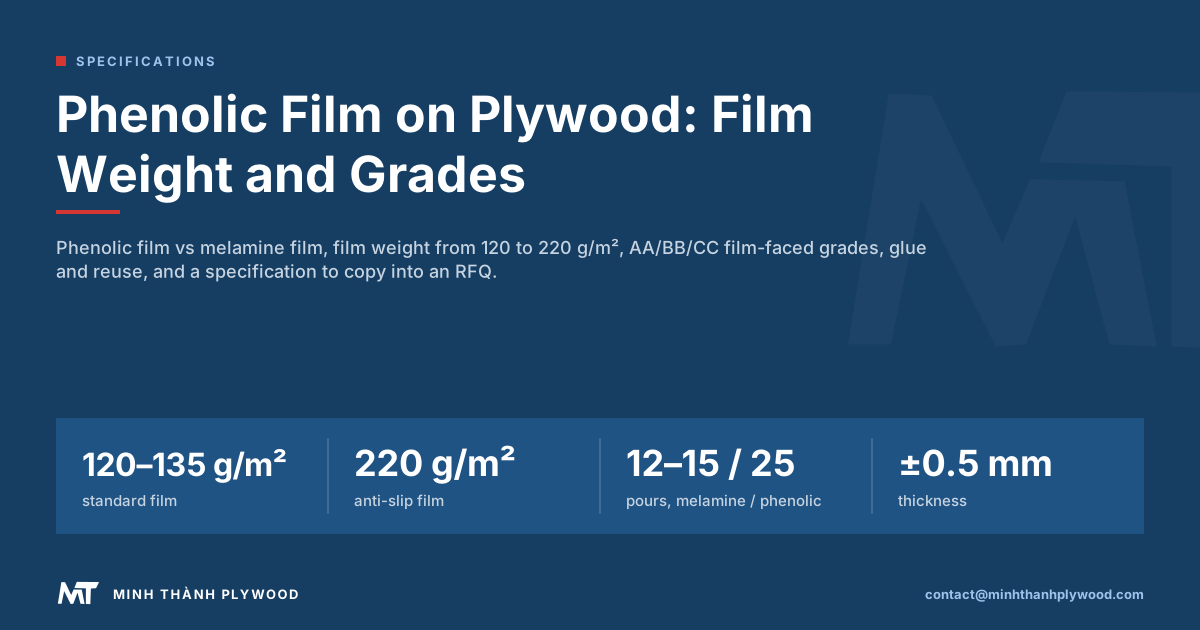
Phenolic Film on Plywood: Weight and Grades
Phenolic film vs melamine film, film weight from 120 to 220 g/m², AA/BB/CC film-faced grades, glue and reuse, and a specification to copy into an RFQ.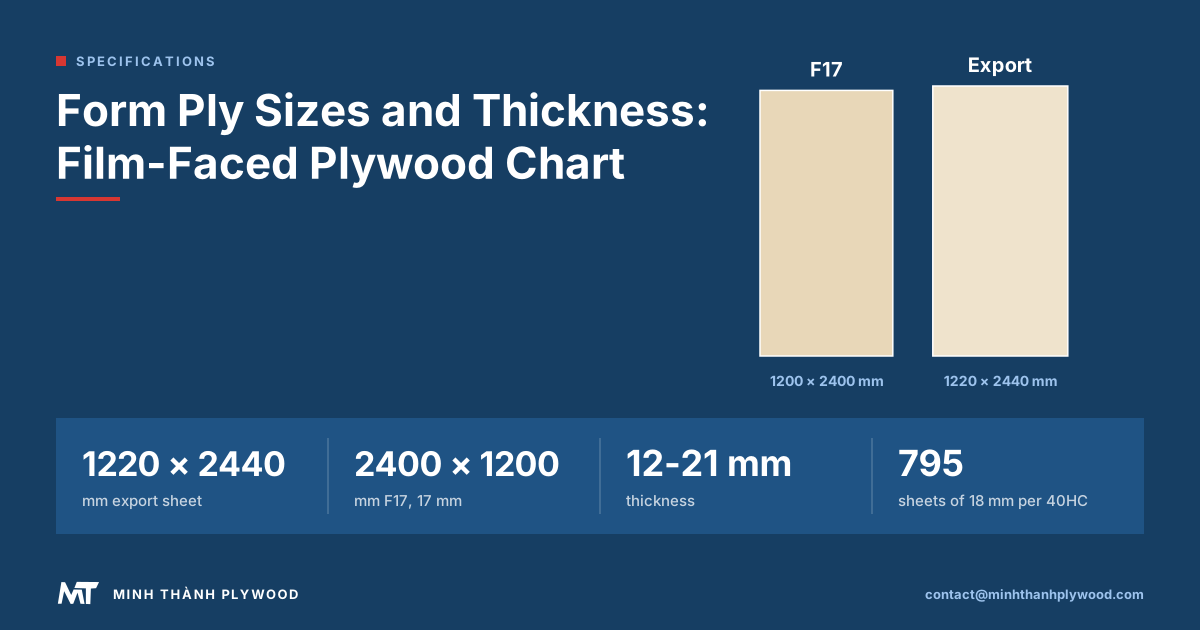
Form Ply Sizes and Thickness: Film-Faced Plywood Guide
Form ply sizes and thickness by market: 1220 × 2440, 1250 × 2500 and 1200 × 2400 mm, 9–21 mm, weights per sheet, what 34 kg means, and how to order.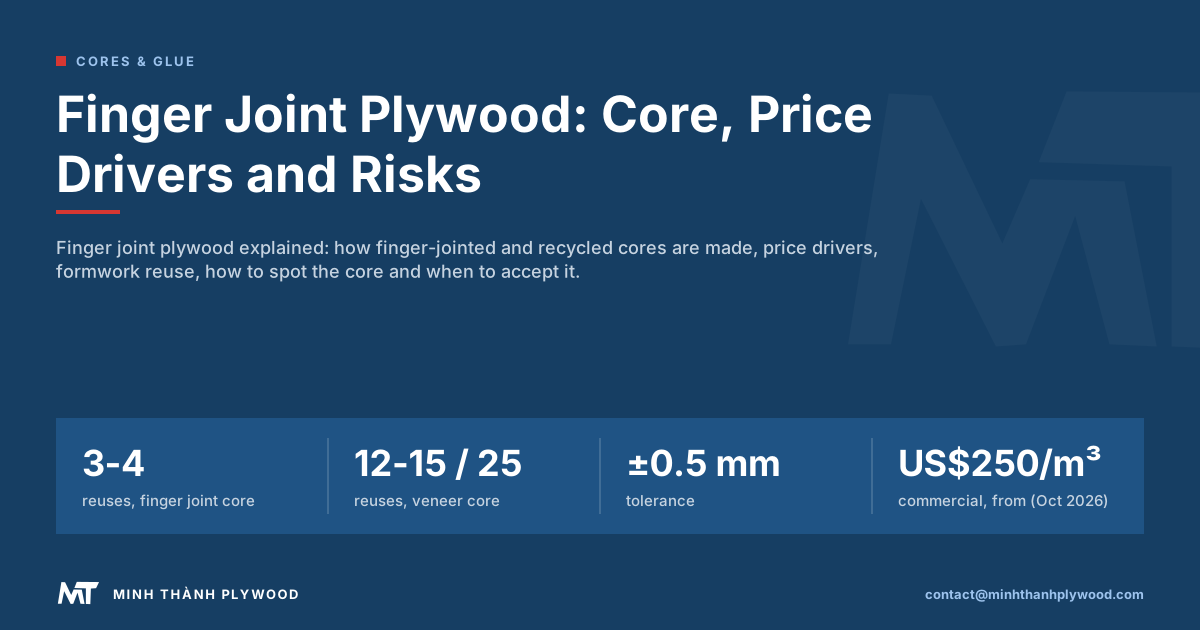
Finger Joint Plywood: Core, Price Drivers and Risks
Finger joint plywood explained: how finger-jointed and recycled cores are made, price drivers, formwork reuse, how to spot the core and when to accept it.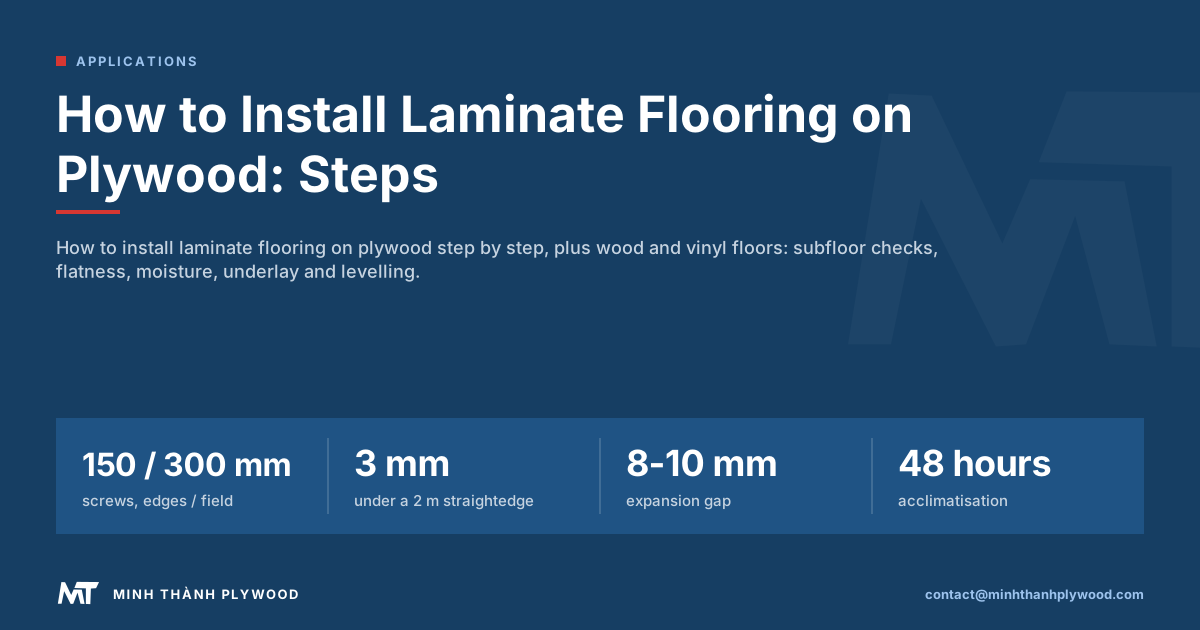
How to Install Laminate Flooring on Plywood: Steps
How to install laminate flooring on plywood step by step, plus wood and vinyl floors: subfloor checks, flatness, moisture, underlay and levelling.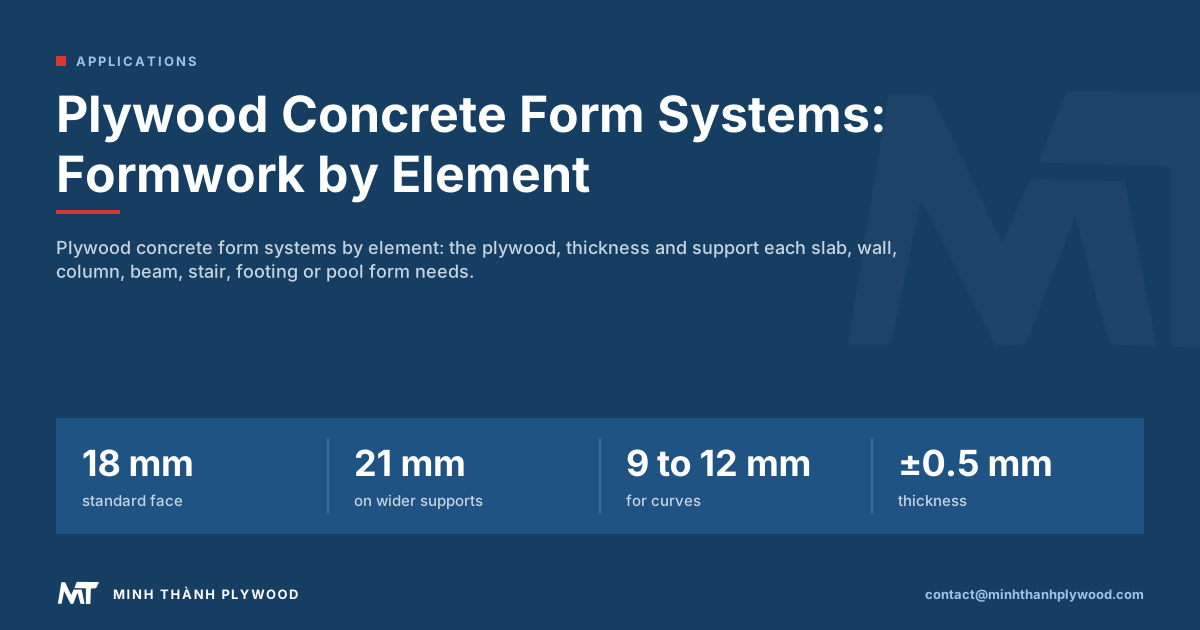
Plywood Concrete Form Systems: Formwork by Element
Plywood concrete form systems by element: the plywood, thickness and support each slab, wall, column, beam, stair, footing or pool form needs.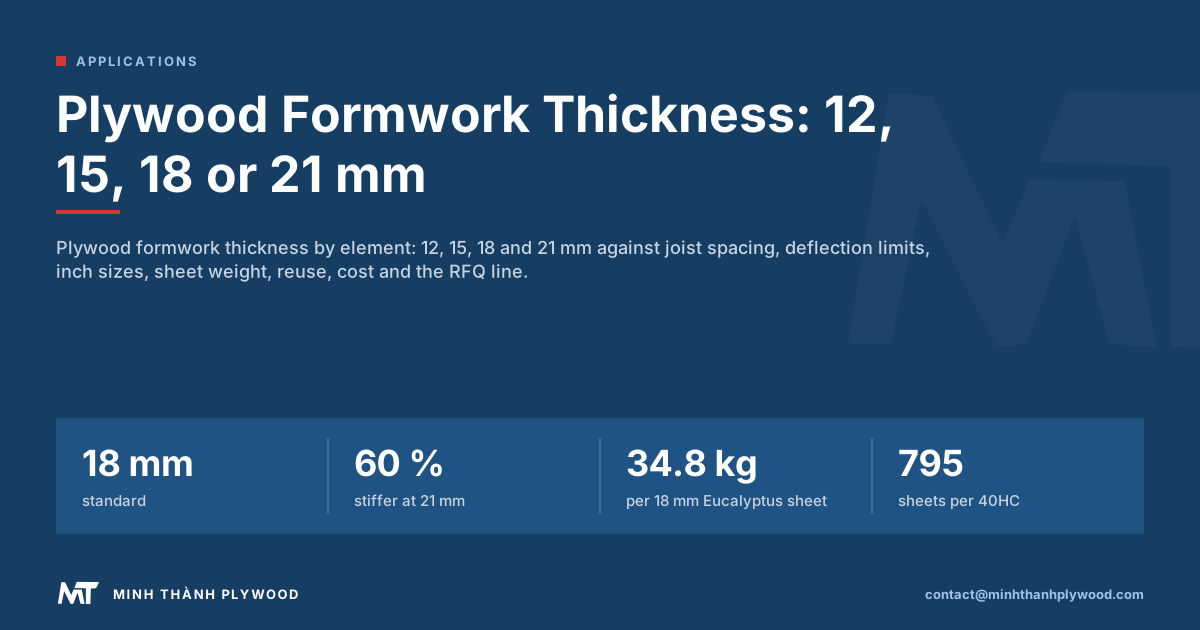
Plywood Formwork Thickness: 12, 15, 18 or 21 mm
Plywood formwork thickness by element: 12, 15, 18 and 21 mm against joist spacing, deflection limits, inch sizes, sheet weight, reuse, cost and the RFQ line.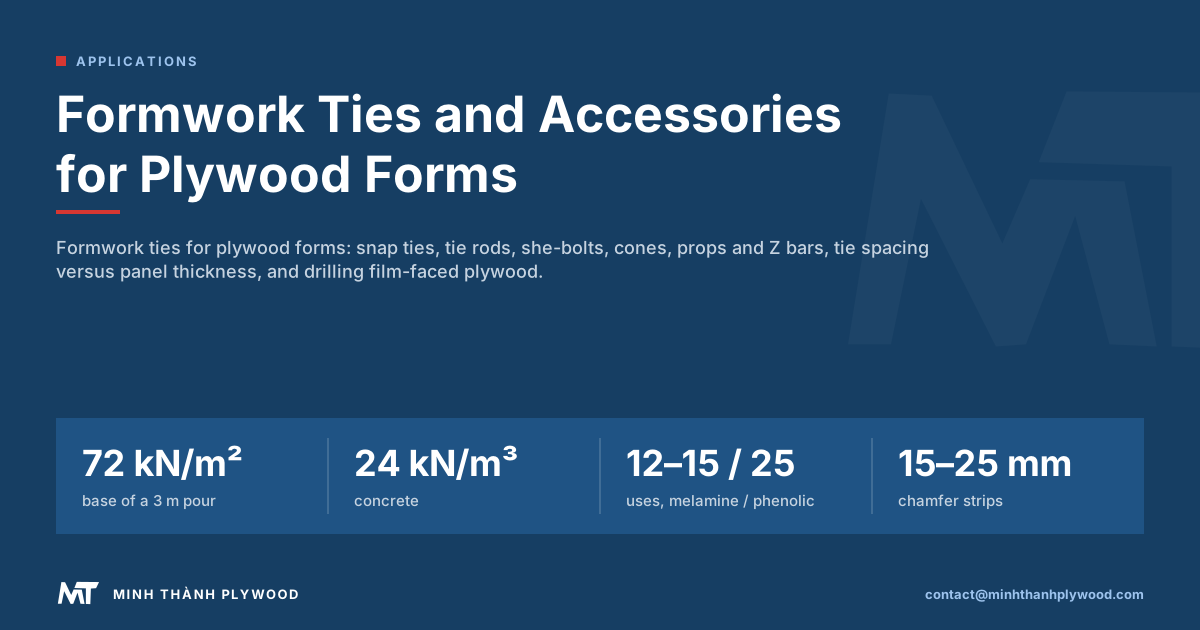
Formwork Ties and Accessories for Plywood Forms
Formwork ties for plywood forms: snap ties, tie rods, she-bolts, cones, props and Z bars, tie spacing versus panel thickness, and drilling film-faced plywood.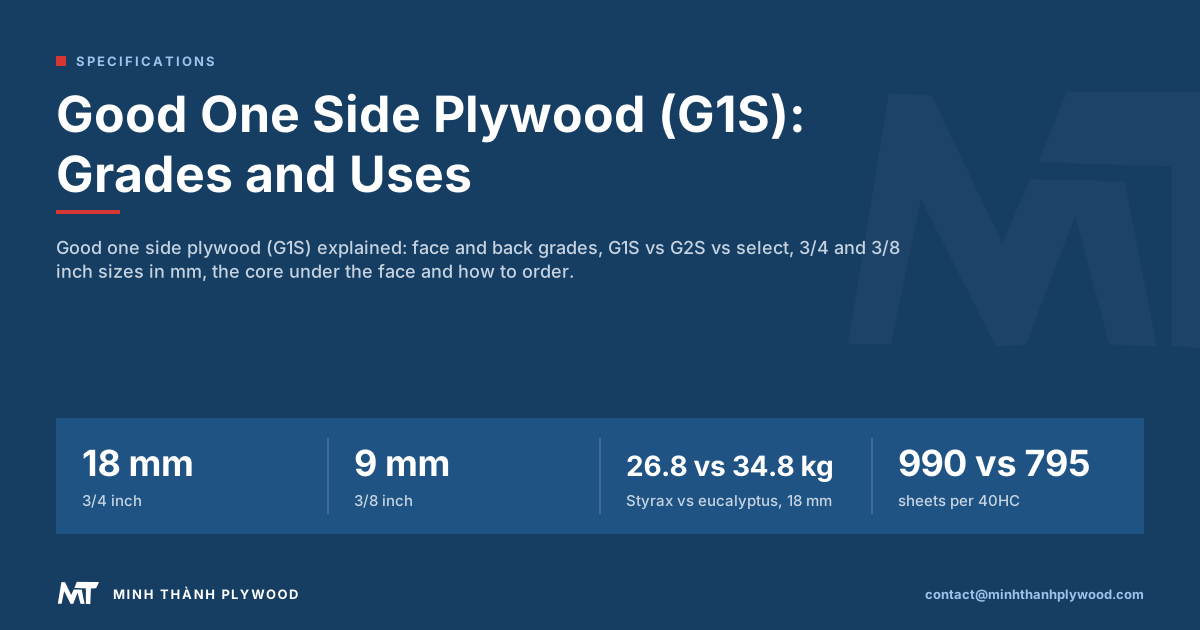
Good One Side Plywood (G1S): Grades and Uses
Good one side plywood (G1S) explained: face and back grades, G1S vs G2S vs select, 3/4 and 3/8 inch sizes in mm, the core under the face and how to order.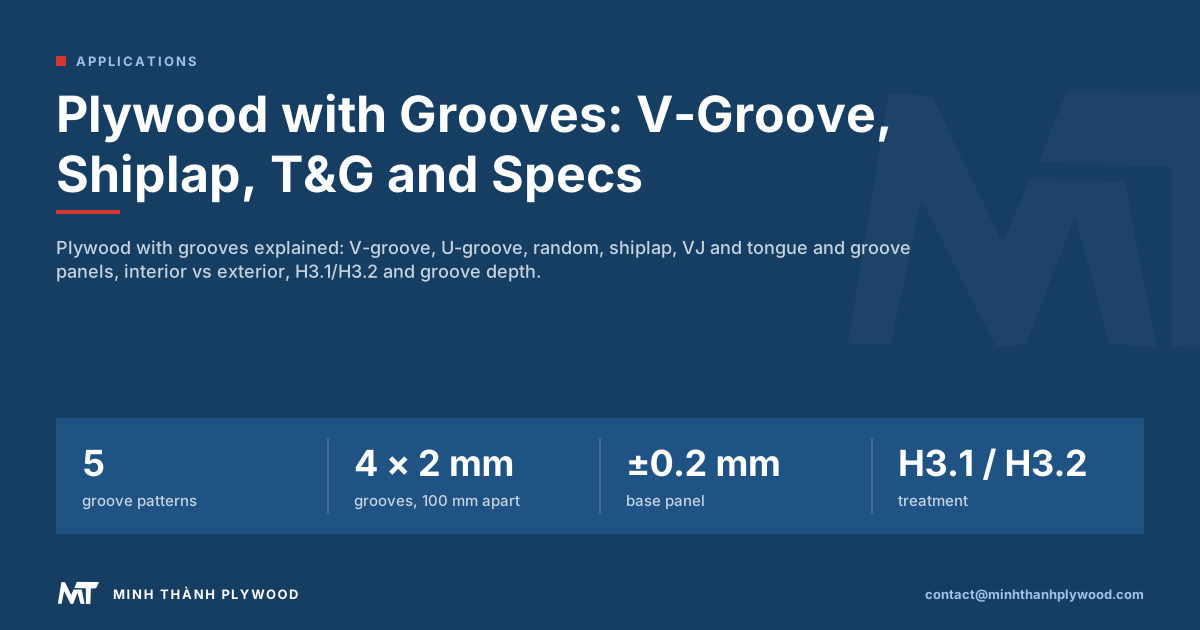
Plywood with Grooves: V-Groove, Shiplap, T&G and Specs
Plywood with grooves explained: V-groove, U-groove, random, shiplap, VJ and tongue and groove panels, interior vs exterior, H3.1/H3.2 and groove depth.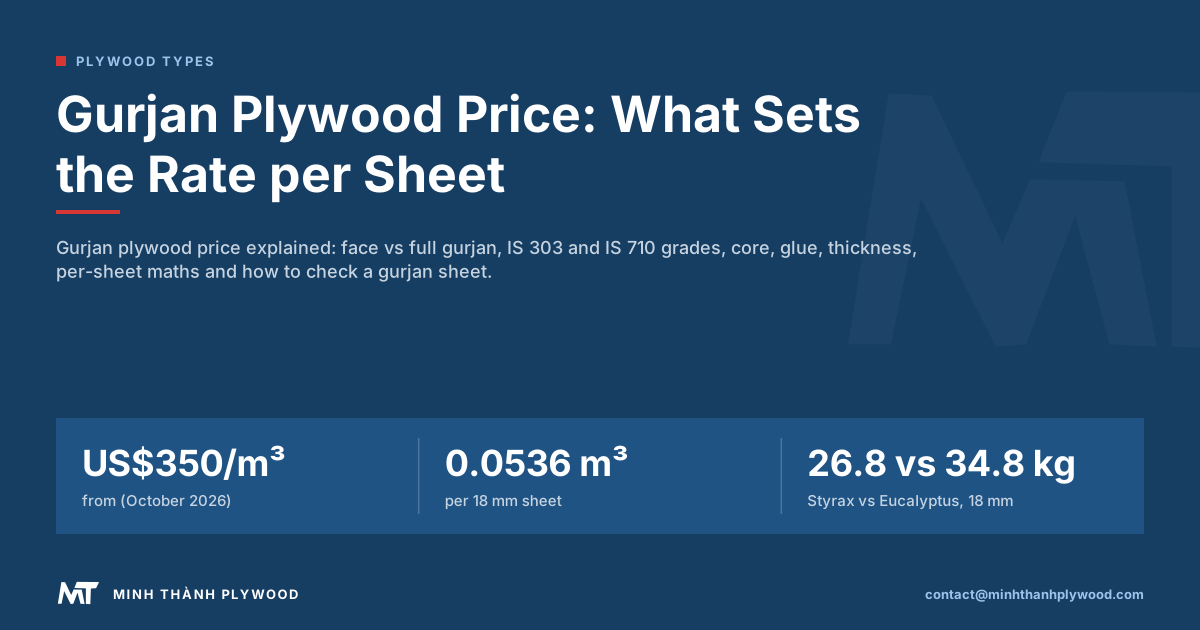
Gurjan Plywood Price: The Rate per Sheet
Gurjan plywood price explained: face vs full gurjan, IS 303 and IS 710 grades, core, glue, thickness, per-sheet maths and how to check a gurjan sheet.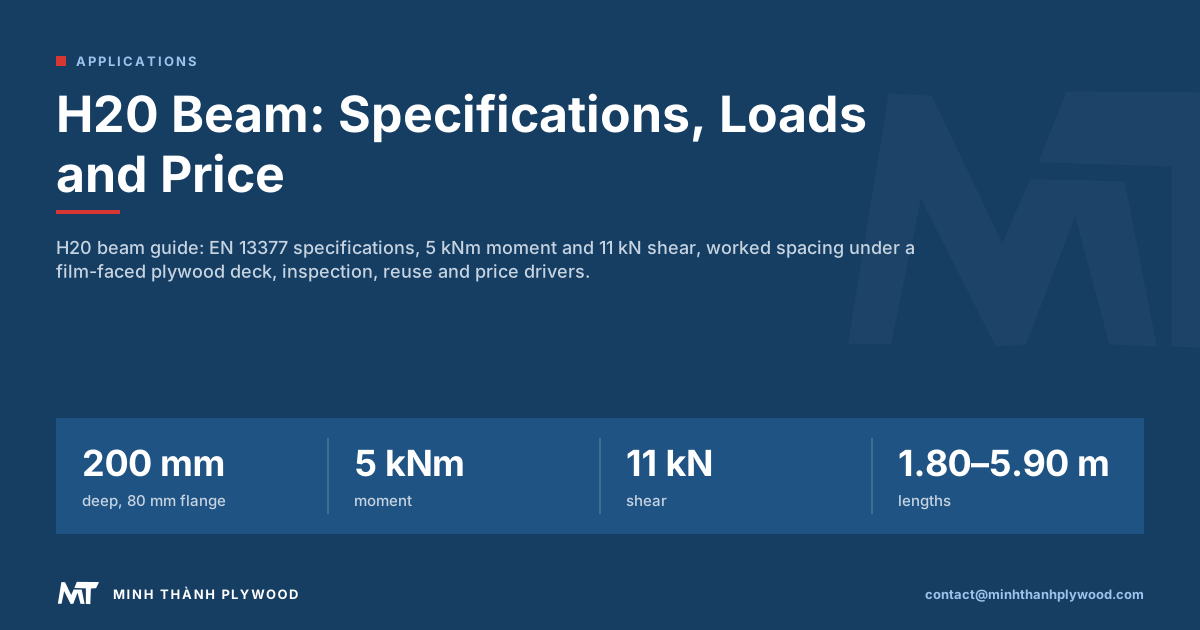
H20 Beam: Specifications, Loads and Price
H20 beam guide: EN 13377 specifications, 5 kNm moment and 11 kN shear, worked spacing under a film-faced plywood deck, inspection.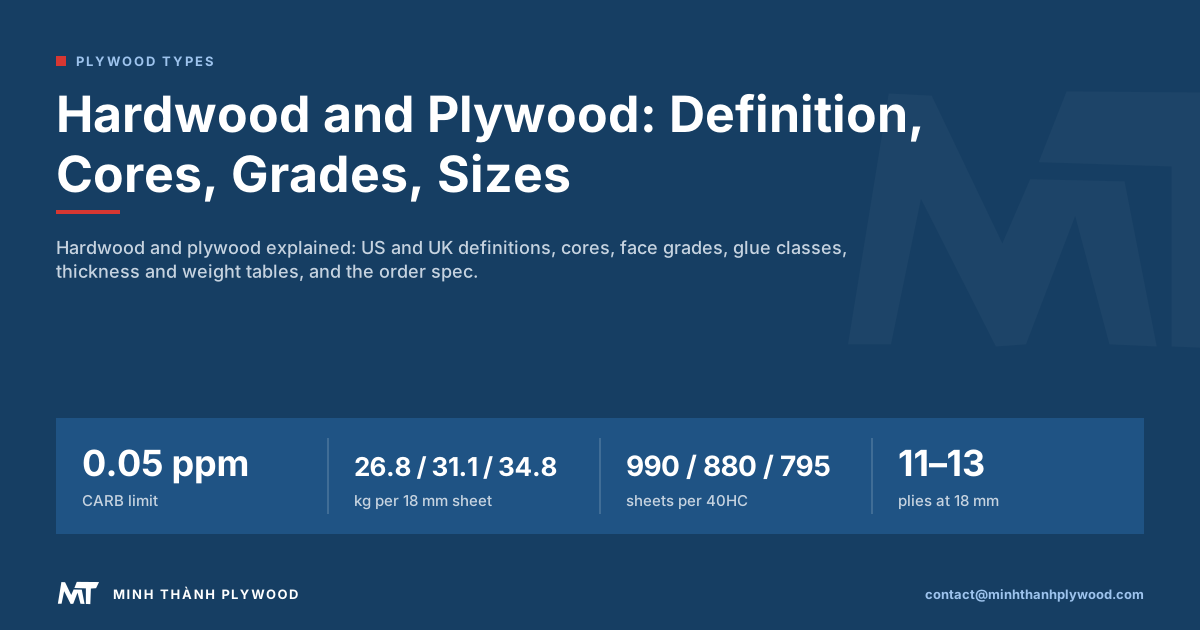
Hardwood and Plywood: Definition, Cores, Grades, Sizes
Hardwood and plywood explained: US and UK definitions, cores, face grades, glue classes, thickness and weight tables, and the order spec.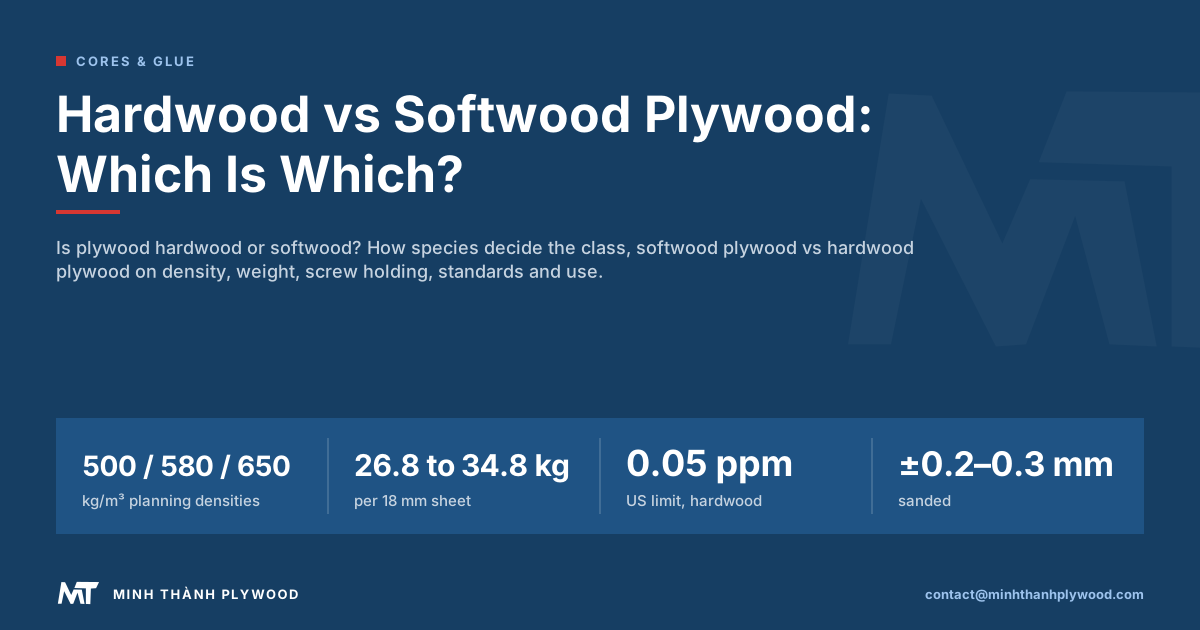
Hardwood vs Softwood Plywood: How They Differ
Is plywood hardwood or softwood? How species decide the class, softwood plywood vs hardwood plywood on density, weight, screw holding, standards and use.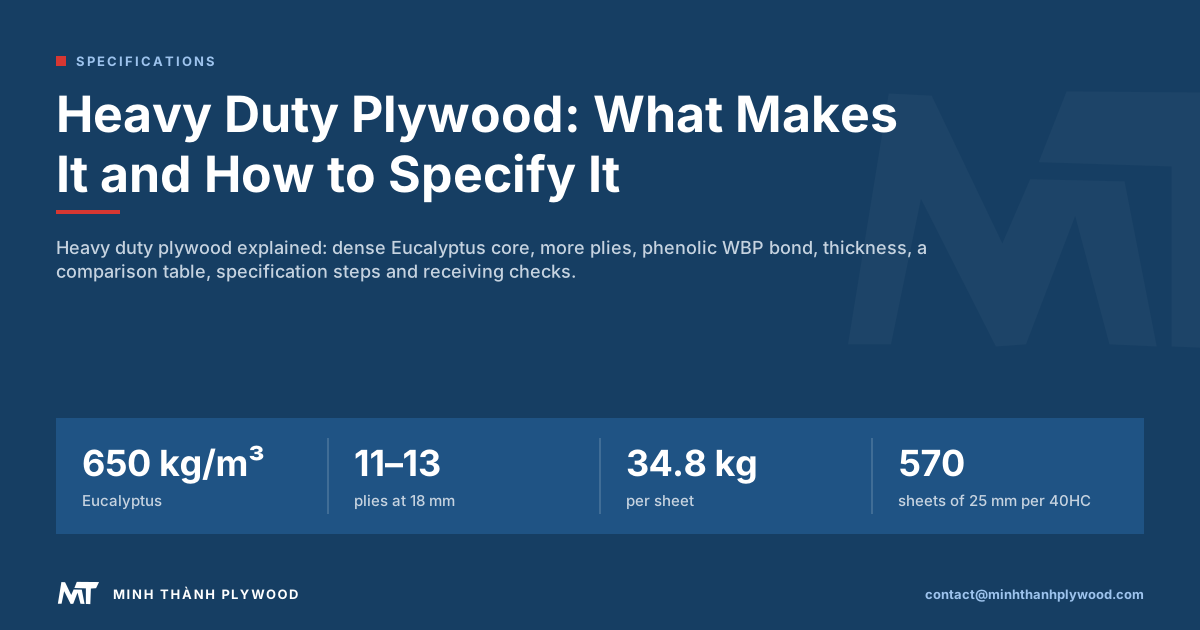
Heavy Duty Plywood: What Makes It and How to Specify It
Heavy duty plywood explained: dense Eucalyptus core, more plies, phenolic WBP bond, thickness, a comparison table, specification steps and receiving checks.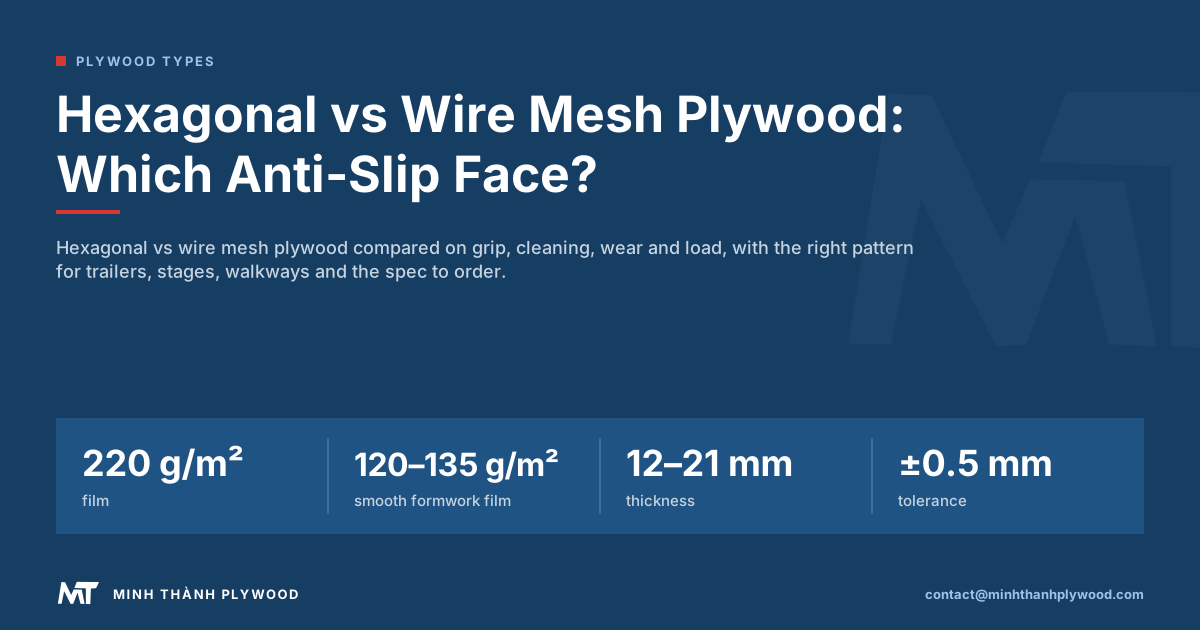
Hexagonal vs Wire Mesh Plywood: Which Anti-Slip Face?
Hexagonal vs wire mesh plywood compared on grip, cleaning, wear and load, with the right pattern for trailers, stages, walkways and the spec to order.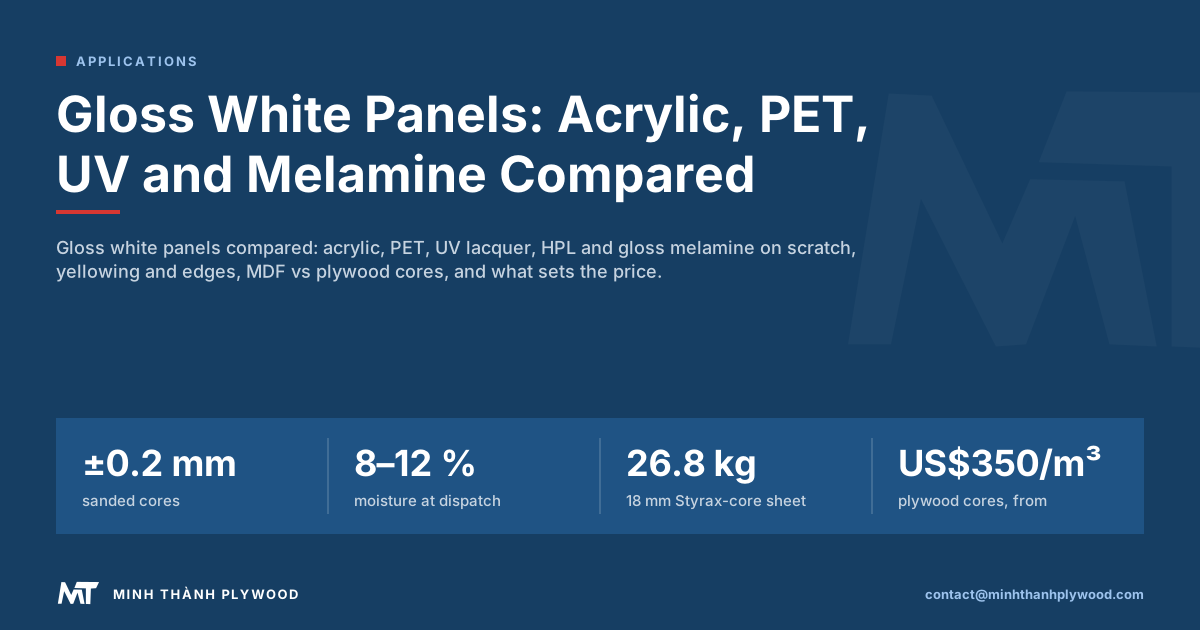
Gloss White Panels: Acrylic, PET, UV and Melamine Compared
Gloss white panels compared: acrylic, PET, UV lacquer, HPL and gloss melamine on scratch, yellowing and edges, MDF vs plywood cores.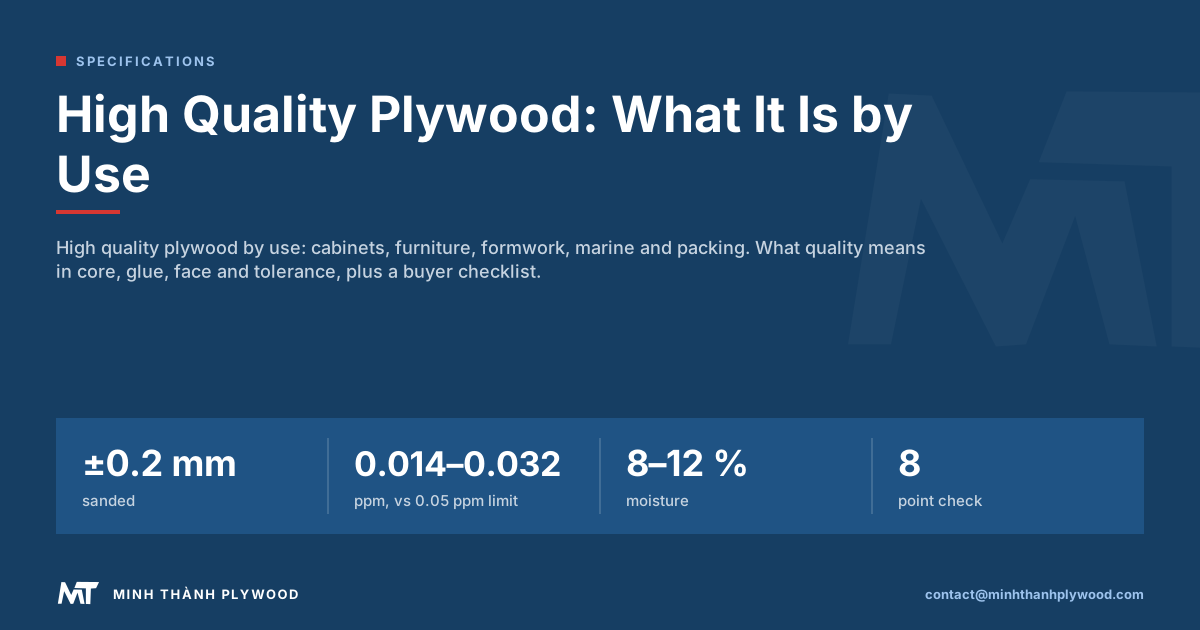
High Quality Plywood: What It Is by Use
High quality plywood by use: cabinets, furniture, formwork, marine and packing. What quality means in core, glue, face and tolerance, plus a buyer checklist.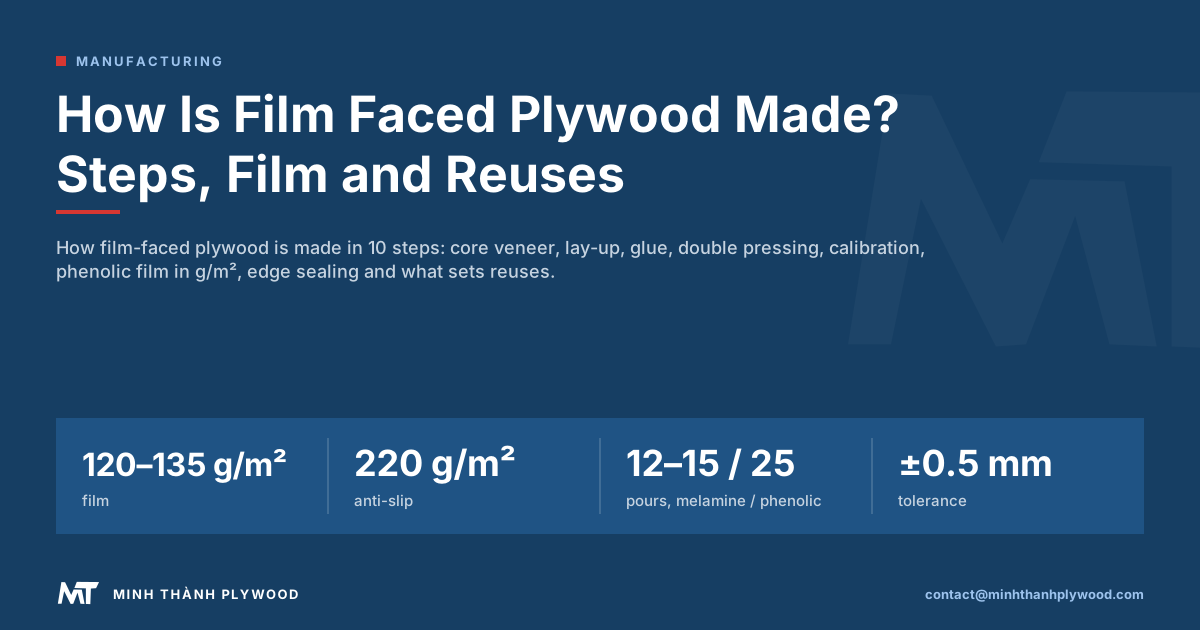
How Is Film Faced Plywood Made? Steps and Reuses
How film-faced plywood is made in 10 steps: core veneer, lay-up, glue, double pressing, calibration, phenolic film in g/m², edge sealing and what sets reuses.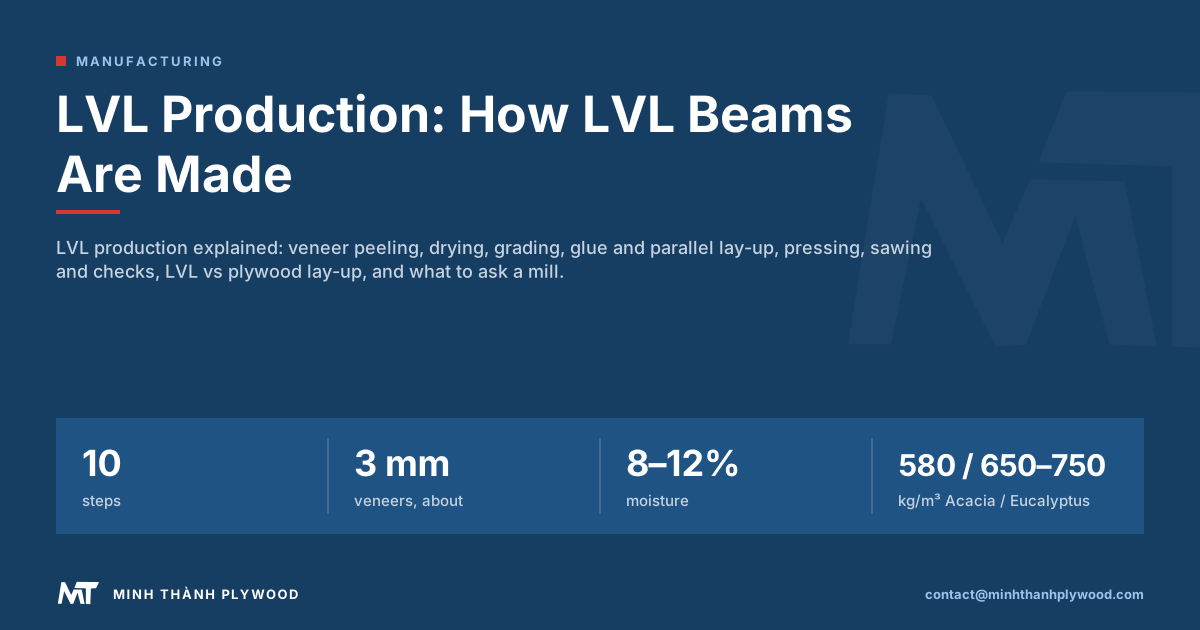
LVL Production: How Beams Are Made
LVL production explained: veneer peeling, drying, grading, glue and parallel lay-up, pressing, sawing and checks, LVL vs plywood lay-up, and what to ask a mill.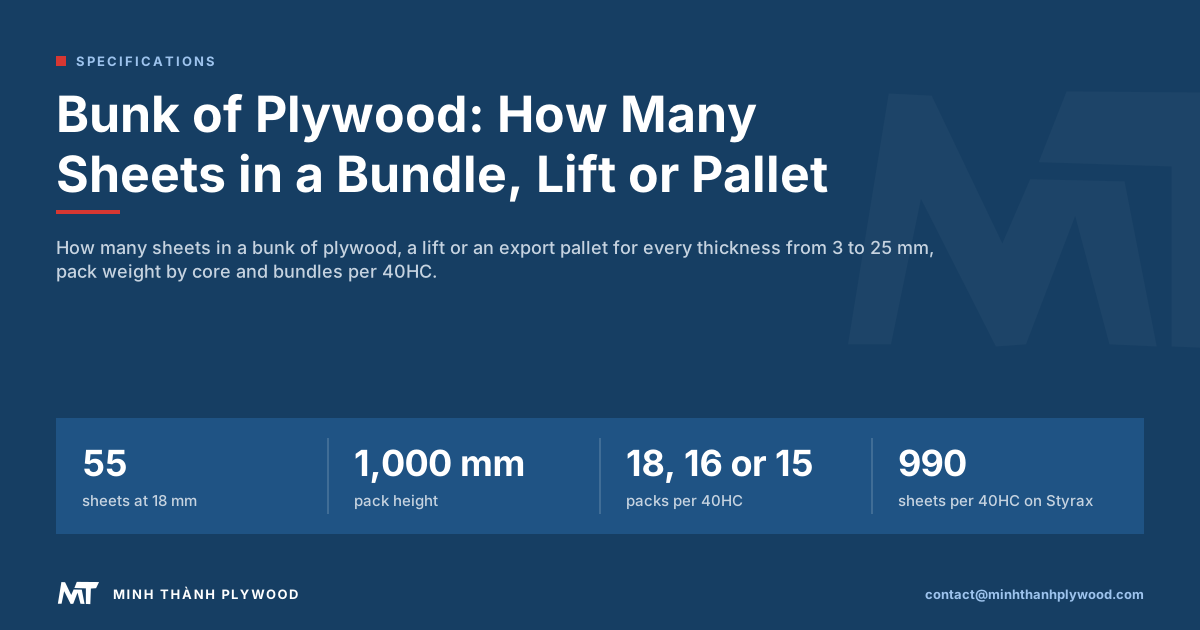
Bunk of Plywood: How Many Sheets in a Bundle, Lift or Pallet
How many sheets in a bunk of plywood, a lift or an export pallet for every thickness from 3 to 25 mm, pack weight by core and bundles per 40HC.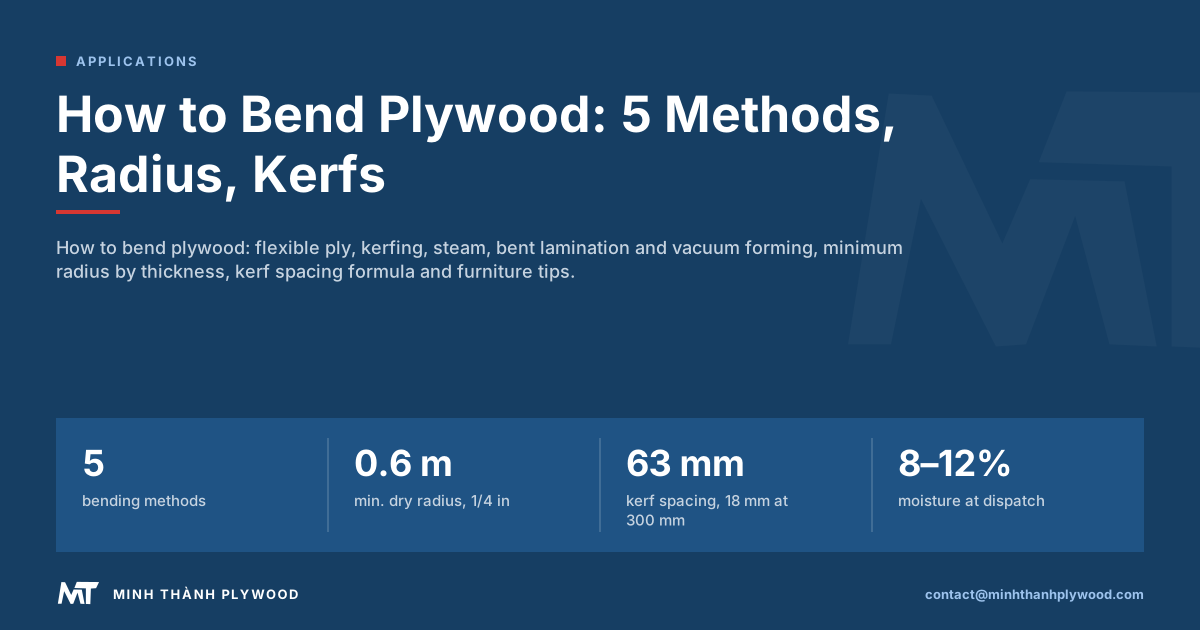
How to Bend Plywood: 5 Methods, Radius, Kerfs
How to bend plywood: flexible ply, kerfing, steam, bent lamination and vacuum forming, minimum radius by thickness, kerf spacing formula and furniture tips.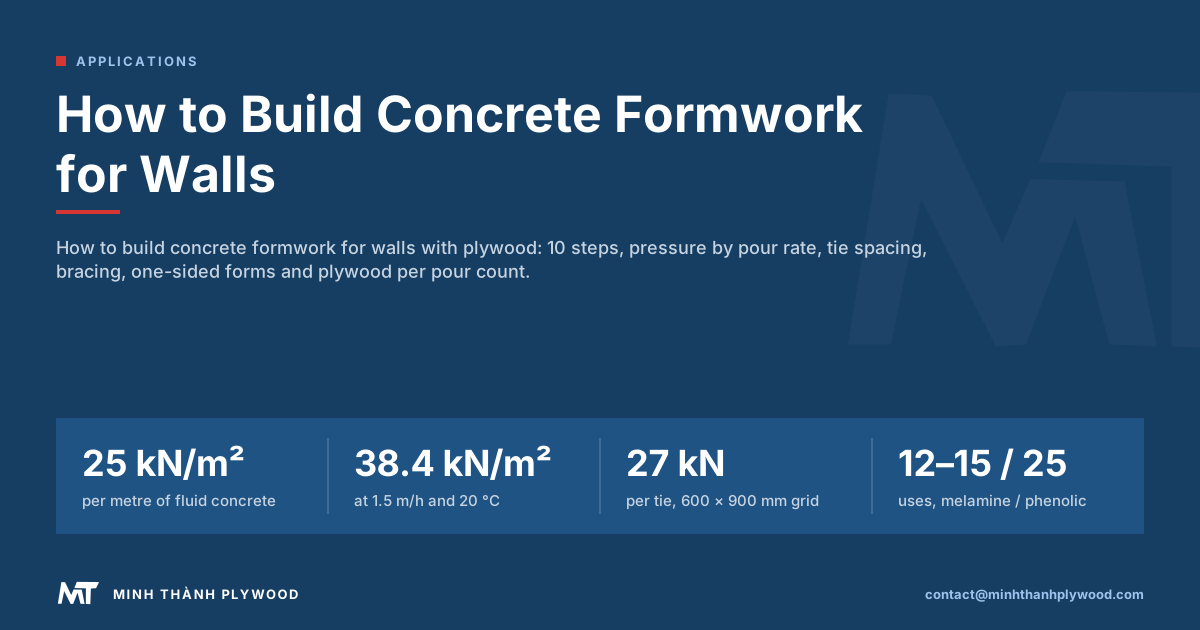
How to Build Concrete Formwork for Walls
How to build concrete formwork for walls with plywood: 10 steps, pressure by pour rate, tie spacing, bracing, one-sided forms and plywood per pour count.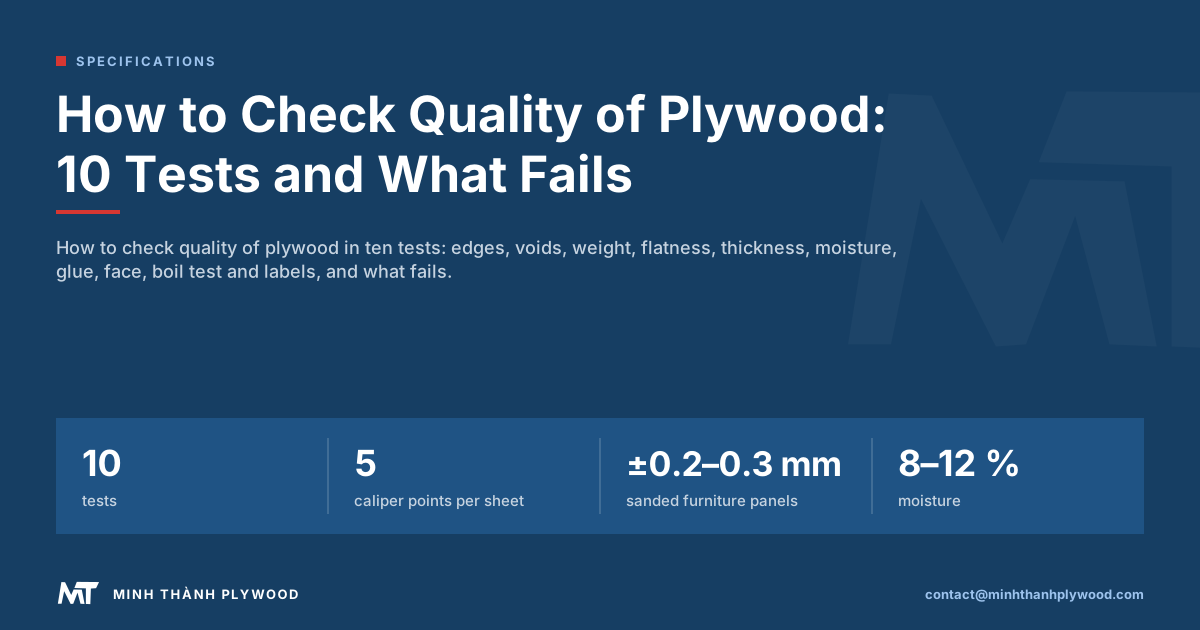
How to Check Quality of Plywood: 10 Tests
How to check quality of plywood in ten tests: edges, voids, weight, flatness, thickness, moisture, glue, face, boil test and labels, and what fails.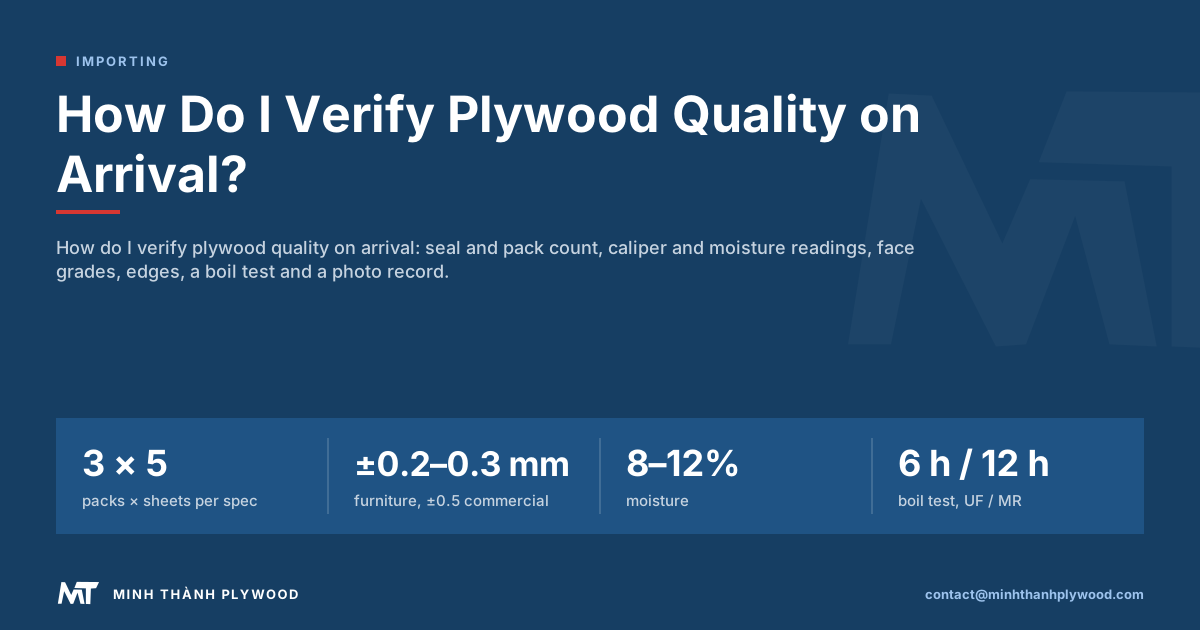
How Do I Verify Plywood Quality on Arrival?
How do I verify plywood quality on arrival: seal and pack count, caliper and moisture readings, face grades, edges, a boil test and a photo record.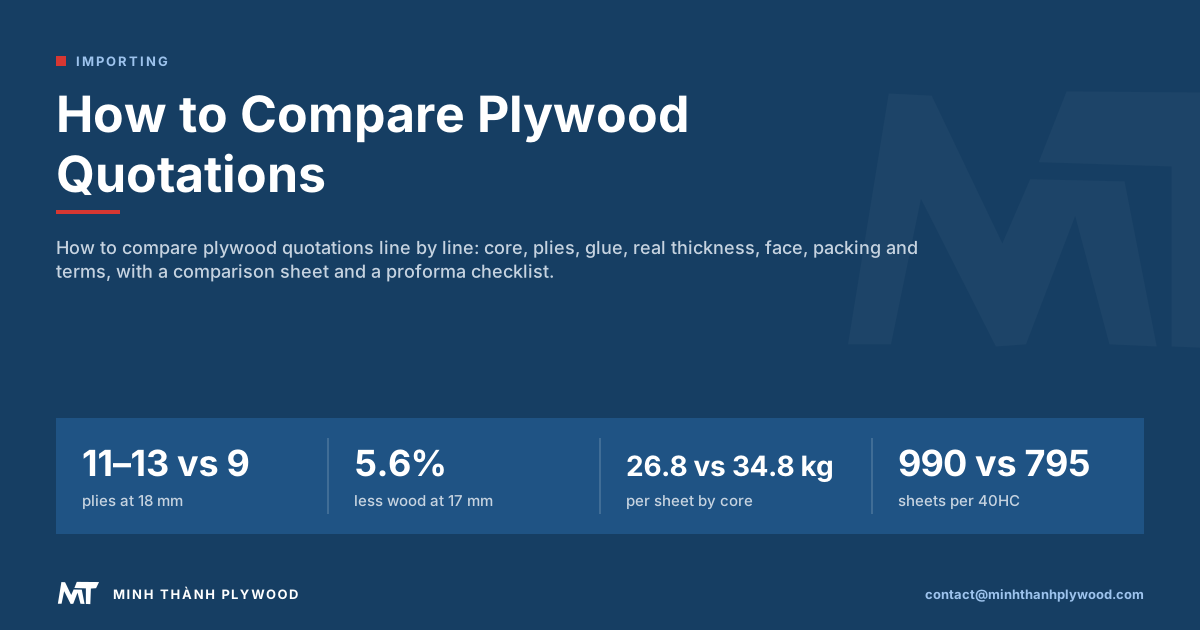
How to Compare Plywood Quotations
How to compare plywood quotations line by line: core, plies, glue, real thickness, face, packing and terms, with a comparison sheet and a proforma checklist.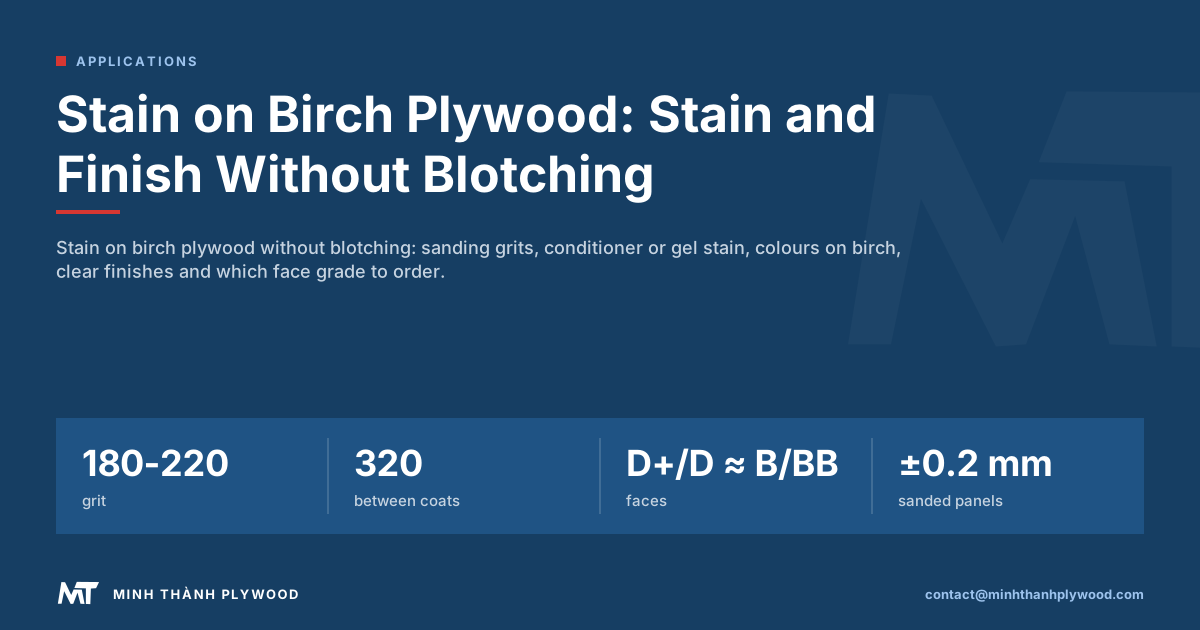
Stain on Birch Plywood: Even Finish That Lasts
Stain on birch plywood without blotching: sanding grits, conditioner or gel stain, colours on birch, clear finishes and which face grade to order.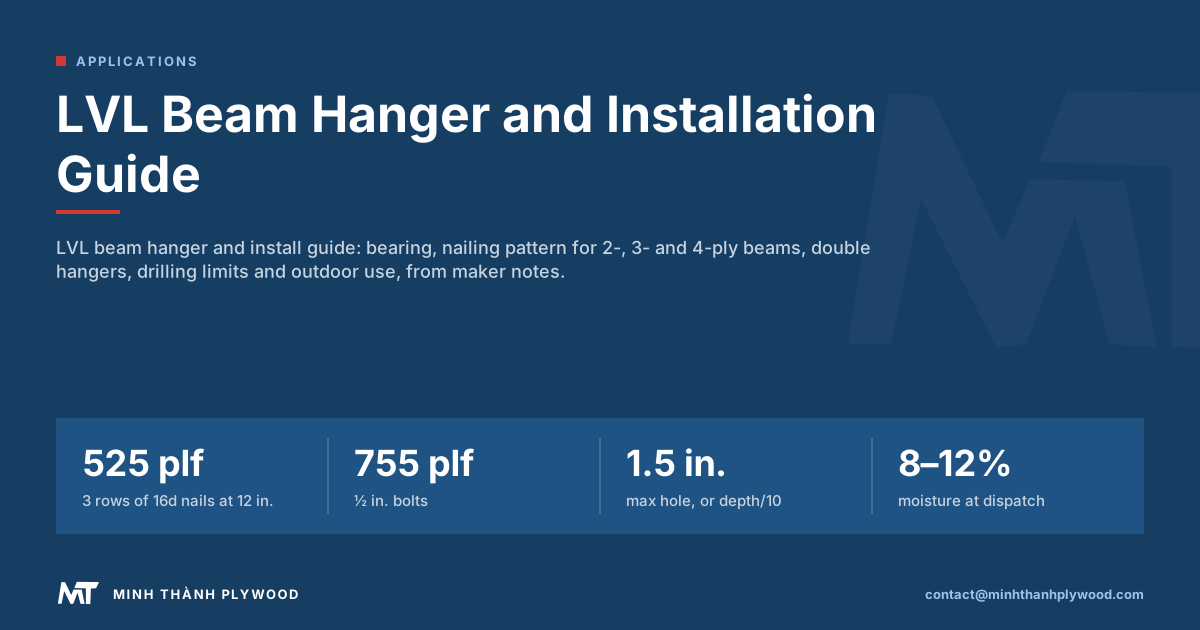
LVL Beam Hanger and Installation Guide
LVL beam hanger and install guide: bearing, nailing pattern for 2-, 3- and 4-ply beams, double hangers, drilling limits and outdoor use, from maker notes.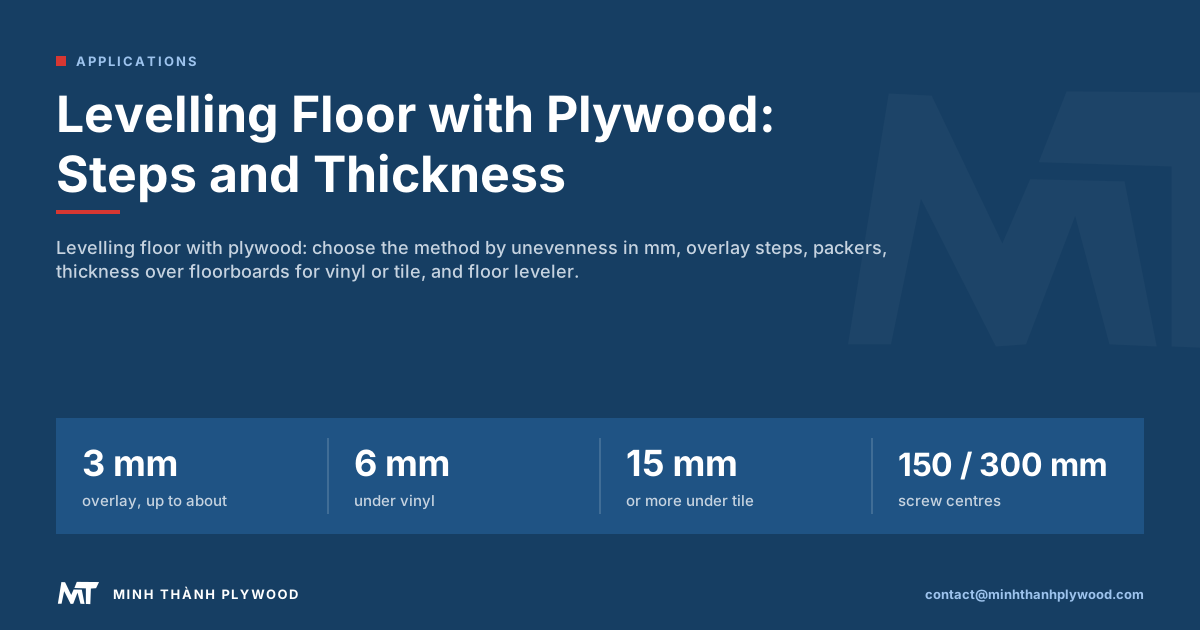
Levelling Floor with Plywood: Steps and Thickness
Levelling floor with plywood: choose the method by unevenness in mm, overlay steps, packers, thickness over floorboards for vinyl or tile, and floor leveler.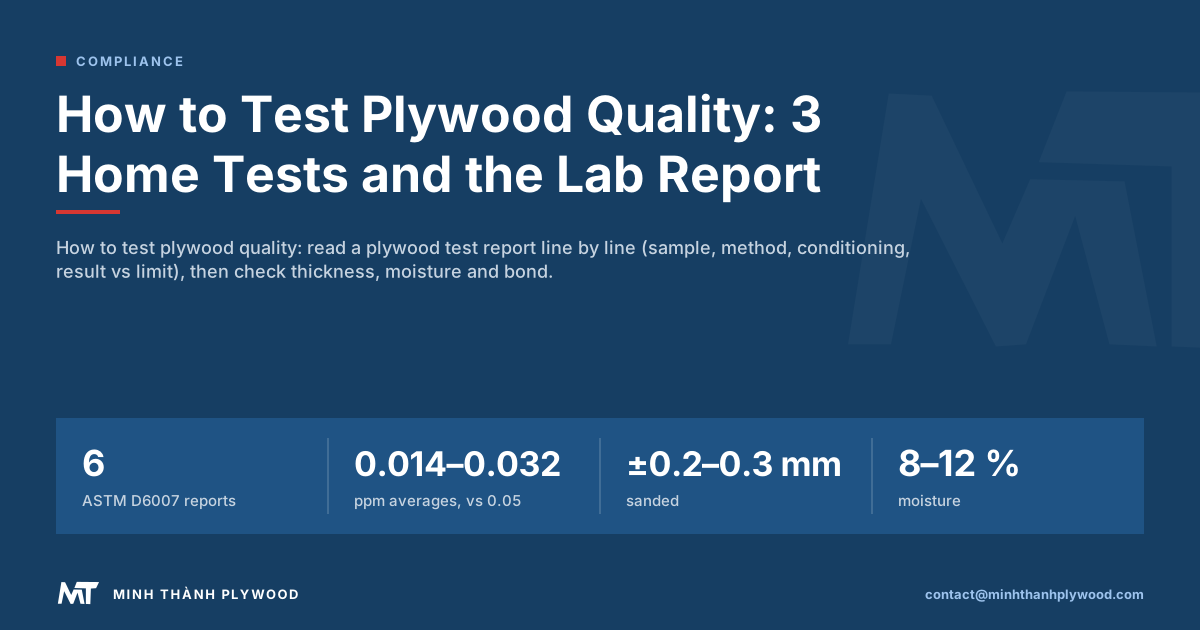
How to Test Plywood Quality: 3 Home Tests and the Lab Report
How to test plywood quality: read a plywood test report line by line (sample, method, conditioning, result vs limit), then check thickness, moisture and bond.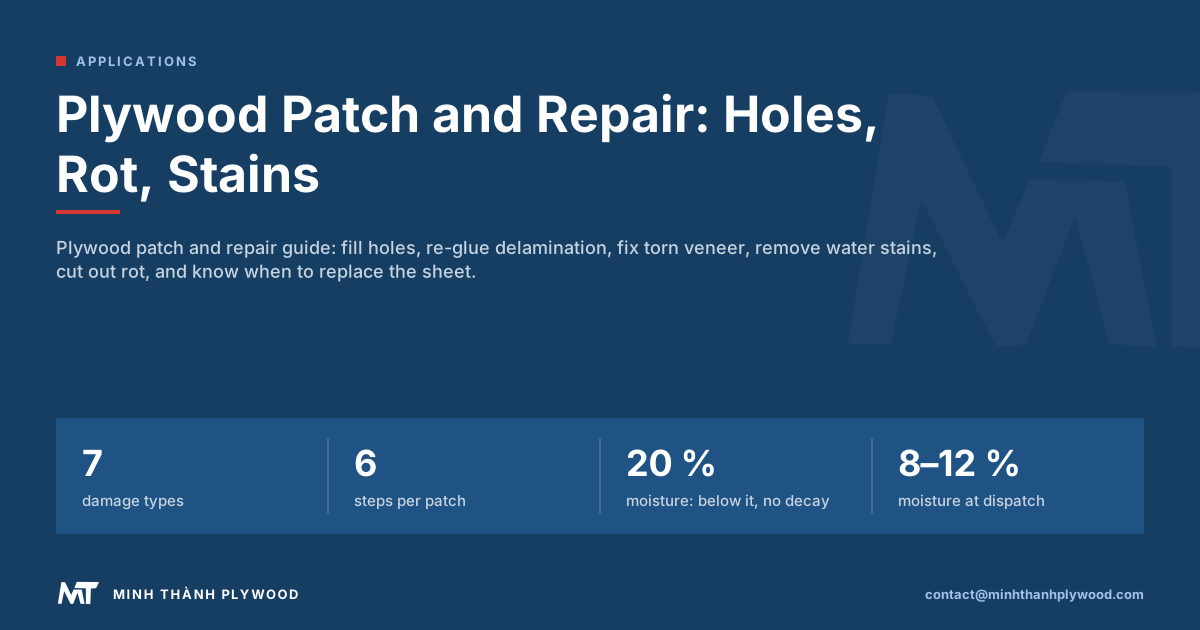
Plywood Patch and Repair: Holes, Rot, Stains
Plywood patch and repair guide: fill holes, re-glue delamination, fix torn veneer, remove water stains, cut out rot, and know when to replace the sheet.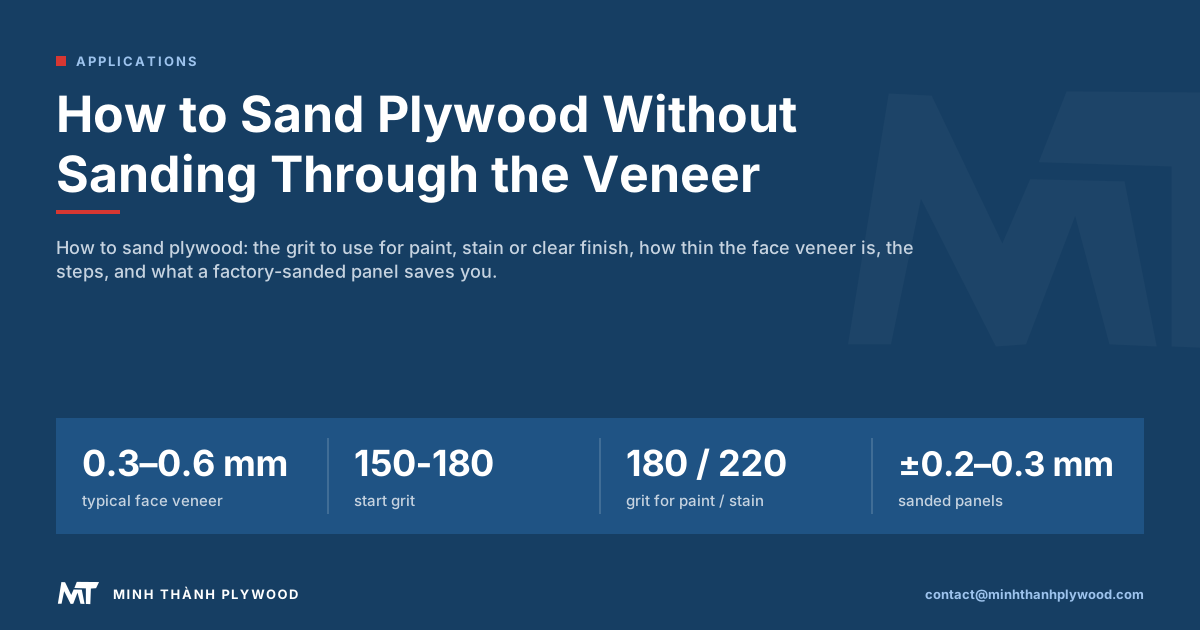
How to Sand Plywood Without Sanding Through the Veneer
How to sand plywood: the grit to use for paint, stain or clear finish, how thin the face veneer is, the steps, and what a factory-sanded panel saves you.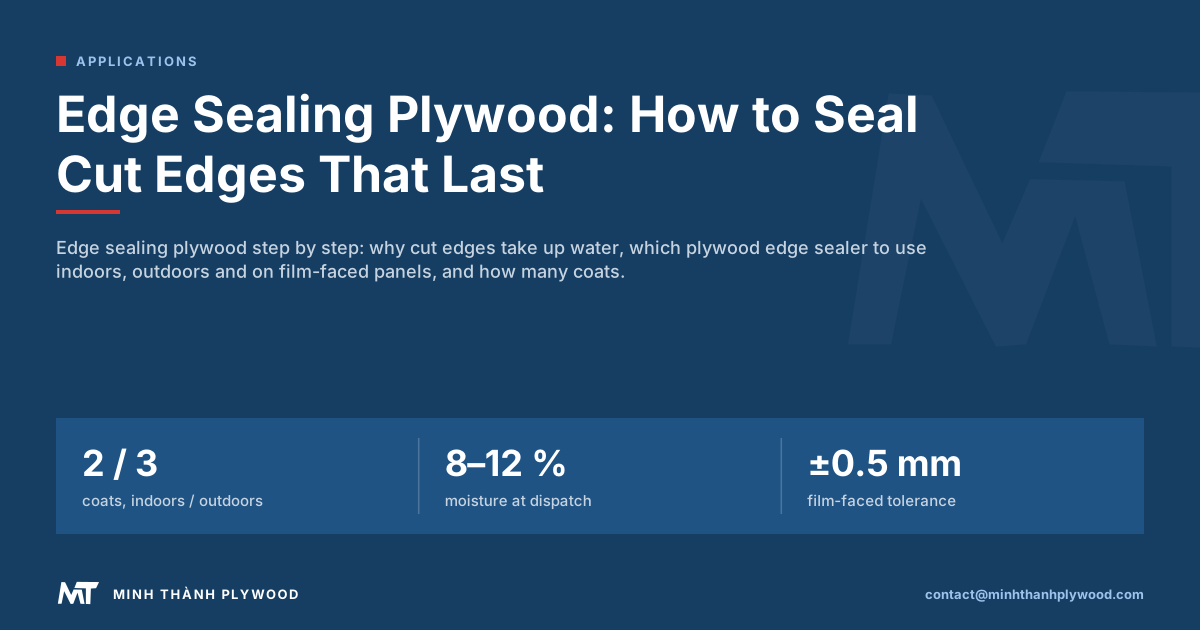
Edge Sealing Plywood: How to Seal Cut Edges That Last
Edge sealing plywood step by step: why cut edges take up water, which plywood edge sealer to use indoors, outdoors and on film-faced panels.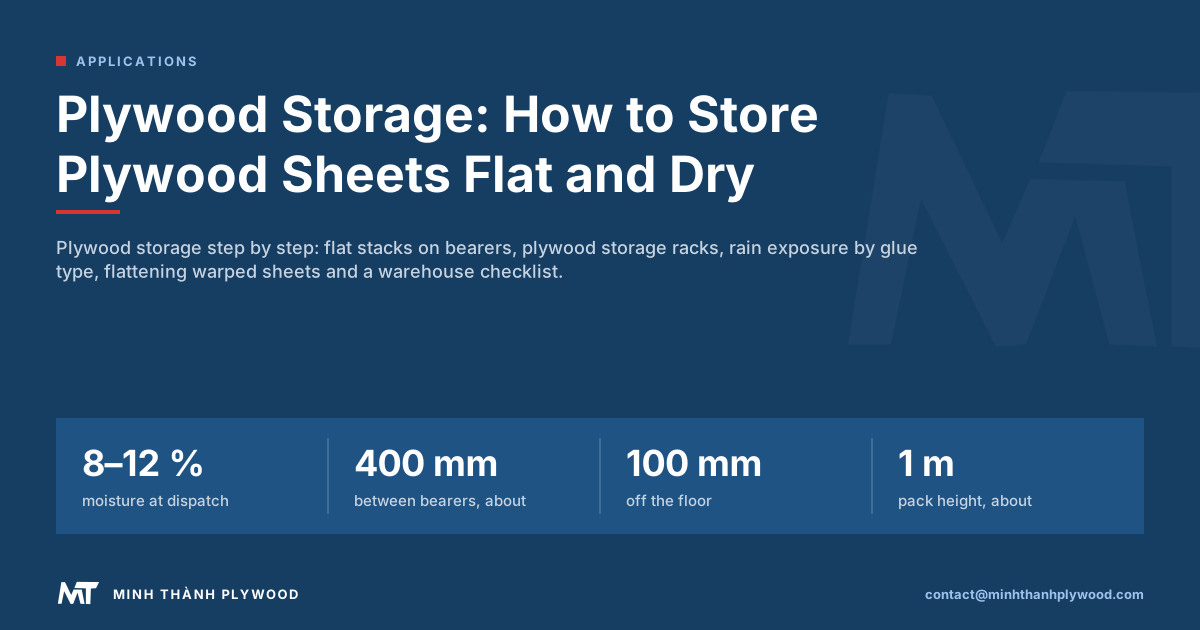
Plywood Storage: How to Store Sheets Flat and Dry
Plywood storage step by step: flat stacks on bearers, plywood storage racks, rain exposure by glue type, flattening warped sheets and a warehouse checklist.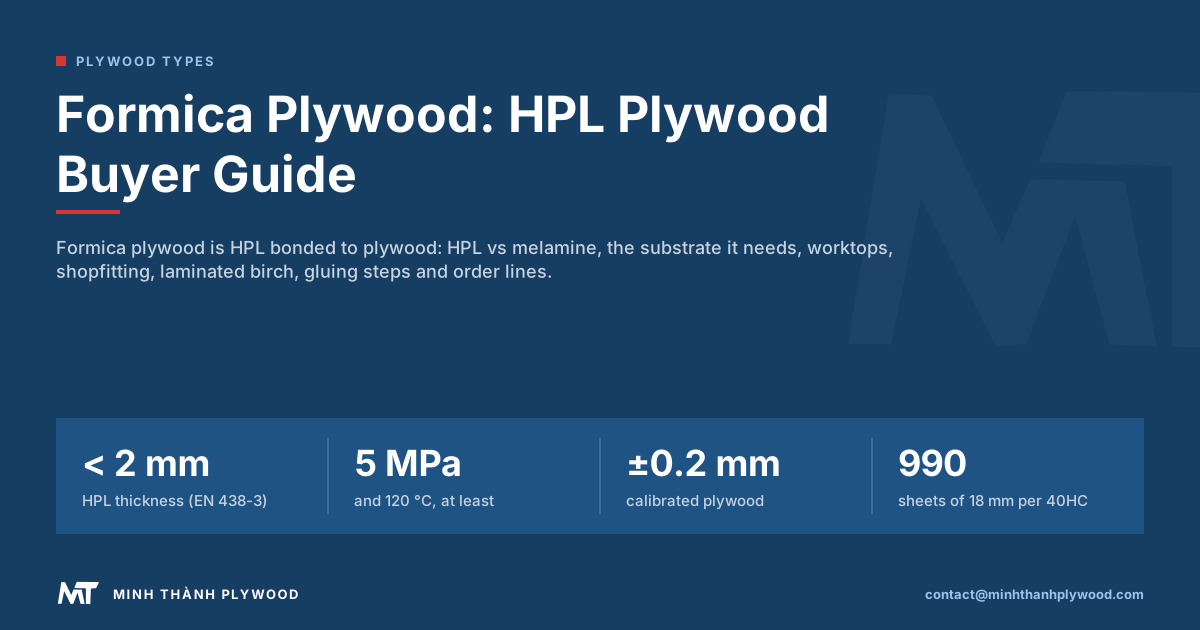
Formica Plywood: HPL Buyer Guide
Formica plywood is HPL bonded to plywood: HPL vs melamine, the substrate it needs, worktops, shopfitting, laminated birch, gluing steps and order lines.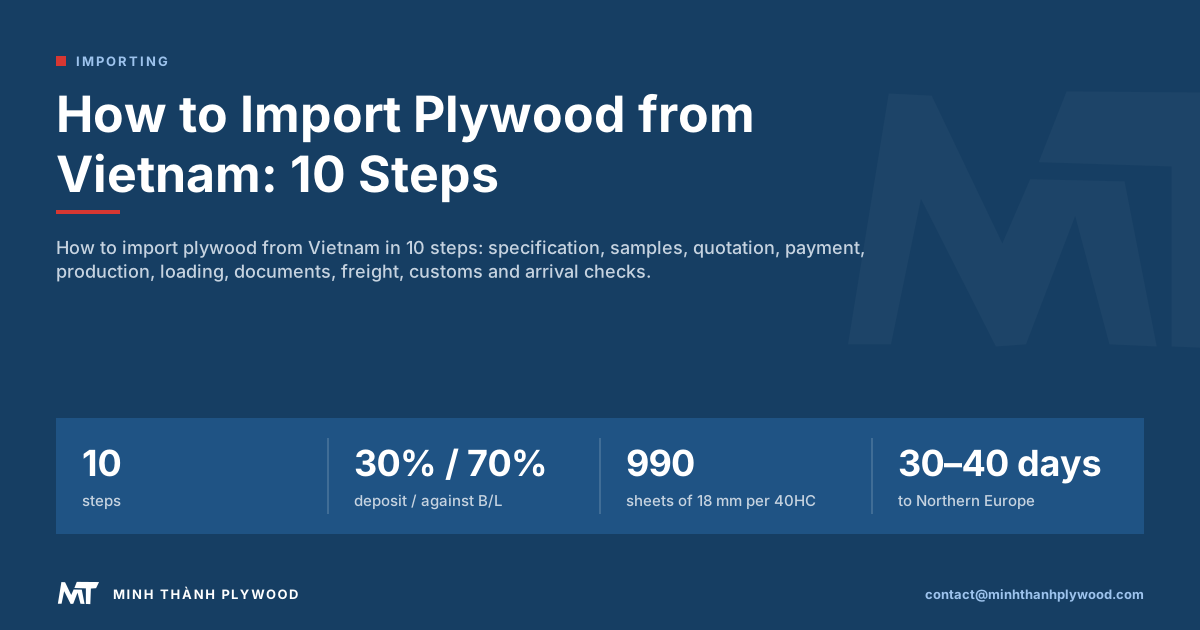
How to Import Plywood from Vietnam: 10 Steps
How to import plywood from Vietnam in 10 steps: specification, samples, quotation, payment, production, loading, documents, freight.Work with Minh Thành Plywood
Tell us the application and destination port. We reply within hours with the panel construction, a dated price and the documents for your market.